This audio is auto-generated. Please let us know if you have feedback.
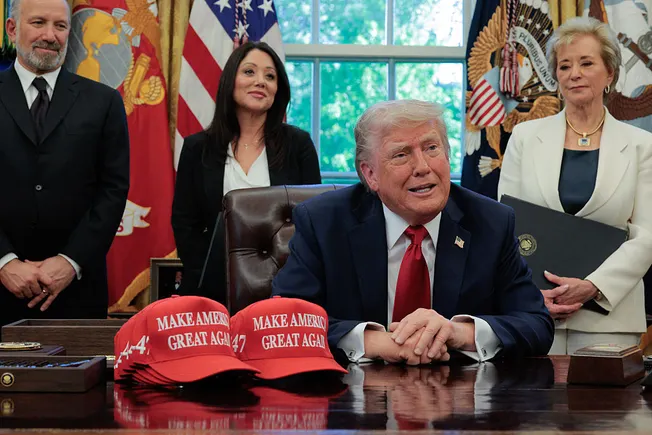
President Donald Trump directed the secretaries of Labor, Education and Commerce to submit a plan within 120 days to “reach and surpass 1 million new active apprentices,” according to an executive order signed April 23.
The fact sheet castigated previous administrations’ investments in higher education, stating that many currently funded programs — including the Workforce Investment and Opportunity Act, signed into law in 2014 — do not have the incentives necessary “to meet workforce training needs.”
The requested plan must identify:
Avenues to expand registered apprenticeships to new industries,
Ways to scale apprenticeships across the country, and
Ways to improve connections between the education system and apprenticeship programs.
The fact sheet suggests that the intention of the administration is to reach this 1 million goal each year.
The order also calls upon the departments of Labor, Commerce and Education to “improve transparency on the performance outcomes of workforce development programs” as well as any credentials that might be supported with federal dollars.
“This decisive action is yet another example of President Trump keeping his promise to American workers, empowering them to fill good-paying, in-demand jobs that will secure our economic comeback,” Lori Chavez-DeRemer, DOL secretary, said in a statement.
The White House called out a shortage of construction and durable goods workers that is projected to persist and grow. The fact sheet also flags AI as a focal point for development.
“As the potential of American AI increases, and as America reshores manufacturing and makes Made in America a mark of international envy, America will need more skilled tradesman [sic] than we’re prepared to train,” the fact sheet said.
Various reports, including one prepared for the DOL Chief Evaluation Office, have shown how registered apprenticeships can help workers access living wages, particularly workers in construction. That report defined a living wage as “the earnings required to pay for minimum basic needs, including food, housing, transportation, clothing, and other essentials.”
During Trump’s first administration, the DOL published an apprenticeship rule that enabled employers to create their own versions of registered apprenticeship programs, called Industry-Recognized Apprenticeship Programs. These programs were vetted and approved by third parties, including industry groups. The Biden DOL rescinded the Trump rule in September 2022.
“A direct assault on the Texas public education system.”
That’s how social justice groups like the Texas Freedom Network are describing the passage of a bill that would create a $1 billion school voucher program in the state. The Texas House passed Senate Bill 2 early Thursday, with support from Gov. Greg Abbott, who has championed school vouchers. These taxpayer-funded subsidies divert money away from public schools, allowing families to use them to cover their children’s tuition at private or religious schools.
“This is part of a coordinated strategy to dismantle public education statewide and nationally, since Donald Trump literally called Republicans and told them that they had to vote yes on this voucher scheme,” said Emily Witt, spokesperson for the Texas Freedom Network, a grassroots organization of religious and community leaders. “Republicans have done a very coordinated job of framing this as something that it’s not. It’s certainly not ‘choice.’ It’s going to really devastate a lot of public schools and rural communities here in Texas.”
The voucher bill’s passage has been characterized as a win for both Abbott and Trump. Abbott tried unsuccessfully to get voucher legislation passed in 2023. Trump, in January, issued an executive order directing the education secretary to explore ways to route federal funding to states and families interested in school choice initiatives, which give students the option to attend their preferred public, private, charter or religious school. Critics of vouchers, a controversial way to facilitate school choice, worry that they take away valuable resources from public schools. They also argue that private schools may exclude students with disabilities or who are LGBTQ+ or have LGBTQ+ parents. Students from low-income or rural areas may also struggle to access private school, as may those from certain ethnic groups or religious backgrounds. The voucher program does not guarantee students admission to private schools.
The approval of a voucher program in the nation’s second most populous state could create a ripple effect across the United States, where the voucher movement has gained momentum in recent years in places like Arizona, Arkansas, Florida and Wisconsin — often with the help of billionaire backers. The Texas bill next goes to the state Senate, where lawmakers in each chamber are expected to work out the disparities in their voucher plans such as how much money participants should get and which participants should be prioritized.
“It is absurd for Gov. Abbott and his pro-voucher allies to claim that a diversion of $1 billion in tax funds to private schools over the next budget cycle will not hurt our underfunded public schools, where the vast majority of our students will remain,” Ovidia Molina, president of education labor organization the Texas State Teachers Association, said in a statement. “That voucher drain will increase to $3 billion by 2028 and more than $4 billion by 2030 if this voucher bill becomes law, the Legislative Budget Board projects.”
Texas Gov. Greg Abbott sits before President Donald Trump arrives to speak at an education event and executive order signing in the East Room of the White House in Washington, Thursday, March 20, 2025. (Ben Curtis/AP Photo)
In Texas, most students attend public schools, with an estimated 6 percent enrolled in private schools. Rural communities overwhelmingly attend public schools because of the dearth of private schools in such areas. Accordingly, voters in the country have typically opposed school vouchers, perceived as vehicles to help families in cities send their kids to private school. Even with the school voucher program, experts do not expect private schools to be inundated with new students from public schools.
“Most kids are still going to have to be served by public schools,” Witt said. “We do know that in other states where vouchers have passed, that most of the kids using those vouchers already were in private schools.”
While vouchers have been promoted as a way to help low-income families choose a quality education for their children, the subsidies often aren’t large enough to cover the tuition and fees associated with a private school education. The school voucher program the Texas House just approved is generous, as it will give families who qualify up to about $10,000 per child. The average K-12 private school tuition in Texas is over $11,000, with tuition for schools that specialize in special education topping $19,000 and elite institutions reaching as high as $40,000. Parents would need to make up the difference for tuition costs that vouchers don’t cover, a move critics of the subsidies say is out of reach for disadvantaged families.
“So it’s still going to benefit mostly wealthy families,” Witt said. “Let’s say that it does cover the cost of tuition. It’s not going to cover extracurriculars. It’s not going to cover transportation. Private schools are not required to offer free transportation to and from school like public schools are, and they also don’t have to accept every child.”
Religious institutions, she said, could turn away students who don’t belong to the faith affiliated with the school. A private school could accept a student with a disability only to discharge them later if the school doesn’t have the resources to educate that child or is no longer interested in doing so.
“They could essentially reject a child that they feel just doesn’t meet the culture of their school,” Witt continued. “That could be because a child comes from a low-income family. It could be because they’re not White. It could be because they’re LGBTQ or their parents are LGBTQ or not married.”
Private schools also don’t have to use standardized tests, like the State of Texas Assessments of Academic Readiness (STAAR), used in public schools to track student progress. The GOP-run Texas House, she said, rejected an amendment that would have required private schools to use standardized testing to measure student outcomes just as public schools do.
“I don’t know how we’ll see if this program works and how it benefits kids, especially kids with disabilities,” she said.
House Republicans tabled 44 amendments to the legislation, including one that would have led to a referendum on school vouchers in November, effectively blocking voters from deciding the issue.
The bill is an additional blow as public schools slash programs and raise class sizes under a budget crunch, Molina said in her statement.
“Texas already spends more than $5,000 less per student than the national average, ranking Texas 46th among the states and the District of Columbia,” she said. “The school finance bill also approved by the House will not come close to ending the state’s financial neglect of public education. The House’s $395 increase in the basic allotment, which hasn’t been increased in six years, will provide only a third of what is needed to cover districts’ losses from inflation alone.”
Supporters of the voucher program may not be happy with it a year from now, Witt predicts. In 2022, Arizona passed its universal school voucher program. It covers expenses related to private school tuition, homeschooling and related academic needs, but now the program faces a backlash as the costs associated with it have led to questions about oversight and funding for public schools.
“Republicans have sold people a lie,” Witt said. “They’ve said repeatedly that it won’t harm public schools, and there’s just no way that it won’t. And I do think that’s their goal. I genuinely think that their goal is to eliminate public education, and this is the first step there. A year from now, people are going to see that the neighborhood schools in their communities are shuttering or having to cut resources for students, and they’re going to be really upset. And I think that there’s going to be hell to pay at the ballot box.”
The Education Department is investigating the University of California, Berkeley, regarding compliance with a federal law that requires colleges to disclose certain foreign gifts and contracts.
A notice of the investigation and corresponding records requests were sent to UC Berkeley on Friday morning after the department found that the university’s disclosures might be incomplete.
“There have been widespread media reports over the last several years of Berkeley’s very substantial—in the hundreds of millions of dollars—receipt of money from foreign governments, in this case, particularly China,” a senior Education Department official said on a press call Friday. But while the development of “important technologies” has been shared with foreign nations, the funding that made it possible “has not been reported to the department, as it’s required by law,” in Section 117 of the Higher Education Act, the official added.
Under Section 117, colleges and universities must report twice a year all grants and contracts with foreign entities that are worth more than $250,000. The department opened a similar review into Harvard last week.
UC Berkeley administrators will have 30 days to respond with the requested records. From there, the Department of Education’s general counsel, in partnership with the Departments of Justice and Treasury, will “verify the degree to which UC Berkeley is or is not compliant.” (Unlike with Harvard, the Department of Education did not disclose the specific records it had requested from Berkeley.)
“The Biden-Harris Administration turned a blind eye to colleges and universities’ legal obligations by deprioritizing oversight and allowing foreign gifts to pour onto American campuses,” Education Secretary Linda McMahon said in a news release. “I have great confidence in my Office of General Counsel to investigate these matters fully.”
Trump and congressional Republicans have been trying to crack down on the enforcement of Section 117 since the first Trump administration. Already this year, House Republicans passed a bill, known as the DETERRENT Act, which would lower the general threshold required for reporting foreign donations from $250,000 to $50,000. Gifts from some countries, like China and Russia, would have to be reported no matter the value. The Senate has yet to move forward with the bill.
When asked how Trump’s executive order differentiates itself from the DETERRENT Act, the department official said the legislation would be “entirely consistent with the EO’s directives” and that the department is “very supportive” of congressional Republicans’ efforts.
“The EO basically just says, enforce the law vigorously, return to enforcement of the law, stop the nonsense and work with other agencies to do it,” the official explained. “So whether the reporting requirement is for $250,000 or more per year or the lower threshold, our approach will be the same.”
Inside Higher Ed asked the department if there would be more investigations but has not yet received a response.
Nearly 2,000 students have had their SEVIS records terminated in recent weeks. On Friday, some records began being restored.
Photo illustration by Justin Morrison/Inside Higher Ed | aapsky/iStock/Getty Images | Chip Somodevilla/Getty Images
Over the past three weeks, several thousand international students received notice that their status in the Student and Exchange Visitor Information System was changed, which threatened their legal ability to stay in the country and resulted in some students being detained or self-deporting. But as of late last night, the federal government is reversing course and reinstating students’ SEVIS records.
Elora Mukherjee, director of the Columbia Law School Immigrant Rights Center, first heard Thursday evening that 50 percent of affected students had had their SEVIS records reinstated. At the time, immigration lawyers didn’t know if it would be a blanket reversal.
But Friday morning, a lawyer for the government told a federal judge that Immigration and Customs Enforcement was restoring students’ SEVIS statuses nationwide while ICE develops a policy framework for record terminations. In the meantime, “ICE will not modify the record solely based on the NCIC [National Crime Information Center] finding that resulted in the recent SEVIS record termination,” according to the court filing.
So far, both students who filed lawsuits and those who didn’t have seen records restored, Mukherjee said.
Federal judges across the country have already ordered the government to restore some students’ records in SEVIS, a key database that tracks international students, after those students sued. The judges, for the most part, have expressed skepticism that the terminations were legal. Of the more than 100 lawsuits, judges have granted temporary restraining orders in at least 50 cases, Politico reported.
The sudden terminations have led to widespread confusion and fear for international students. Lawyers said in court filings and interviews that students affected are afraid to leave their homes or have lost out on income because of the terminations, among other consequences.
As of Friday morning, Inside Higher Ed has identified over 1,840 students and recent graduates from more than 280 colleges and universities who have reported SEVIS record shifts. Many institutions didn’t receive clear communication when student records were changed in the first place, making it likely that they won’t receive updates if and when records are restored.
Two colleges have already seen the changes take place. At the University of California, Berkeley, 23 students had their SEVIS statuses changed since April 4, but overnight a dozen students regained their status without warning or explanation, the university’s student paper, The Daily Californian, reported. Stanford University said late on April 24 that one student whose visa was revoked had their record restored.
This reversal doesn’t eliminate harm, Mukherjee noted. A few students elected to self-deport based on communication from the Trump administration or their own colleges and universities. Others were told to stop attending class or working. Among those who did continue their daily lives, a lapse in their SEVIS status could potentially cause them harm in the future, Mukherjee said.
In the policy update shared Friday, government officials provided more clarity about what prompted the sweeping visa revocations: a search in the National Crime Information Center.
Of students who had their SEVIS status changed, many were classified as “OTHER—Individual identified in criminal records check and/or has had their VISA revoked,” according to court filings. Students who did have criminal records were cited for a variety of reasons ranging from driving without a license and overfishing to underage drinking. Some students didn’t have a criminal record at all.
This audio is auto-generated. Please let us know if you have feedback.
Dive Brief:
Updates to the Children’s Online Privacy Protection Rule are to take effect on June 23, but companies have until April 22, 2026, to fully comply, according to the amended final rule published by the Federal Trade Commission earlier this week.
It remained unclear for months when — or if — the expanded COPPA Rule would go into effect after the FTC announced the finalized changes in January, just four days before President Donald Trump would be inaugurated.
Though the Children’s Online Privacy Protection Act itself does not explicitly mention schools, the updated rule will impact how K-12 leaders interact with ed tech companies, according to student data privacy experts.
Dive Insight:
COPPA is a 26-year-old federal law that gives parents control over the data that websites can collect from children ages 13 or younger. Its regulations and enforcement are overseen by the FTC, which is required by law to review the COPPA Rule every five years.
One of the key changes in the latest COPPA Rule is that companies must obtain parental consent before using children’s data for targeted advertising or disclosing their information to third parties, according to the April 22 notice published in the Federal Register. However, school districts are still allowed to give consent to ed tech companies in lieu of parental consent as long as that data is solely used for educational purposes and not commercially.
Schools should expect to see more transparency from ed tech companies, given that they are required under the new COPPA Rule to provide a direct notice to parents — or in this case school districts — about how they plan to collect and use children’s data upon receiving consent.
The new rule also states that companies must put limits on retaining children’s data and cannot hold onto it indefinitely. Though the FTC did not specify a duration, it said companies can retain data “for only as long as is reasonably necessary to fulfill the specific purpose(s) for which the information was collected.”
In another update, companies collecting children’s data have to bolster cybersecurity plans by, for instance, conducting annual risk assessments and implementing safeguards to protect children’s sensitive information.
The FTC also expanded its definition of any collected “personal information” to include biometric data such as facial recognition or fingerprints. Online contact information and government-issued IDs like Social Security numbers are also now considered personal information.
The updates come as companies increasingly try to profit off children’s data, the FTC said when announcing the finalized changes to the COPPA Rule in January.
The new requirements also come as ed tech companies like PowerSchool have been targeted this year by cybersecurity incidents that have led to mass breaches of sensitive student data.
We just can’t get away from it. AI continues to take the oxygen out of every edtech conversation. Even the Trump administration, while actively destroying federal involvement in public education, jumped on the bandwagon this week.
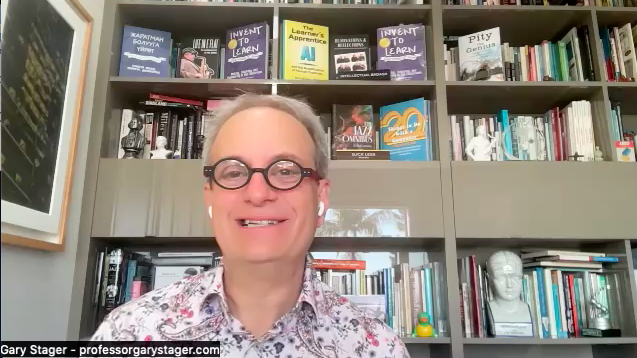
Who better to puncture this overused acronym than edtech legend Gary Stager. In this conversation, he offers a pragmatic perspective on AI in education, cutting through both fear and hype. Gary argues that educators should view AI as simply another useful technology rather than something to either fear or blindly embrace. He criticizes the rush to create AI policies and curricula by administrators with limited understanding of the technology, suggesting instead that schools adopt minimal, flexible policies while encouraging hands-on experimentation. Have a listen:
More News from eSchool News
Simply put, AI can do a lot–it can personalize learning, help students expand on ideas for assignments, and reduce time spent on administrative tasks, freeing up educators to spend more time on instruction.
A recent survey found that 88 percent of U.S. parents believe AI is essential to their children’s education, but most aren’t even sure whether the technology is being used in their child’s classroom.
As AI becomes more widespread in education, more than half of high school students (56 percent) polled think it can go a long way in reducing math anxiety, a new global survey shows.
Teachers often seem to have eyes in the back of their heads. They respond to a murmured question in a class full of conversation. They can tell if someone’s skipping class a floor away by reading faces in the room.
While digital literacy has become an aspirational cornerstone of modern education, the exponential growth of data-driven decision-making across industries reveals critical gaps that demand a stronger focus on data literacy.
Teaching K-12 coding without computers may seem like a daunting task, but it can be a powerful way to introduce students to the fundamental concepts of computer science and problem-solving without the distraction of technology.
The most effective way for students to learn career-ready skills in fields such as advanced manufacturing and robotics is by applying these skills in the context of authentic projects and real-world scenarios.
In the Future of Jobs 2025 report, the World Economic Forum predicts that 60 percent of jobs will require upskilling or retraining, or they’ll be threatened. The skills we have today may not keep us secure for long.
Middle and high school counselors juggle overwhelming caseloads, expanded mental health duties, and additional administrative burdens–all of which limit their ability to provide individualized support for students.
When Adrienne Staten’s fellow teachers first started talking about using artificial intelligence tools in their classrooms, Staten was not on board.
Their suit argues that the thousands of terminations, which to date have left more than 1,800 students without valid status, are “unlawful” and came “without warning, individualised explanation and an opportunity to respond”.
The Presidents’ Alliance on Higher Education and Immigration, which advocates for immigrant and international student rights, and several impacted students from institutions such as MIT and Boston University filed the suit in the District Court for the district of Massachusetts yesterday.
Not only have students been forced out of housing, jobs or their chosen institution mere weeks away from graduation, but the Trump administration’s crackdown on international students has “undermined’ institutions’ being able to “attract, retain, and effectively serve” students from overseas, the group warned.
The court is asked to find that the policy is unlawful and unconstitutional, reactivate the SEVIS records of affected students, halt the policy while the case is being fought and “vacate all improper SEVIS terminations”.
President and CEO of the Presidents’ Alliance, Miriam Feldblum, warned that students would be put off from studying in the US because of the “fear and uncertainty diminishing our global competitiveness and reputation”.
“The unlawful termination of student records without due process strikes at the heart of higher education’s mission. Colleges and universities drive innovation, research, and workforce growth by fostering global talent – but they can’t do that when students’ futures are derailed without explanation,” she said.
“These actions deter future students from studying here in the US, and hinder campus administrators from carrying out their work by the arbitrary upending of established regulations and processes.”
Meanwhile, Sirine Shebaya, executive Director at the National Immigration Project – which is representing the Presidents’ Alliance – blasted the policy vas “not only lawless… [but] cruel” – marking “yet another manifestation of policies that fly in the face of both legal standards and common decency”.
These actions deter future students from studying here in the US, and hinder campus administrators from carrying out their work by the arbitrary upending of established regulations and processes Miriam Feldblum, Presidents’ Alliance
While the surge in visa revocations was at first thought to mainly affect students who had expressed pro-Palestinian sympathies, international education stakeholders have been left baffled at a growing number being issued at institutions where no such protests had taken place.
Some students – including one unnamed Boston University graduate represented in the legal case – are reporting that their visas had been taken away due to minor traffic infractions. Others have been left confused after their visas were revoked despite having no criminal history.
Yet the State Department continues to back the policy.
“The Trump administration is focused on protecting our nation and our citizens by upholding the highest standards of national security and public safety through our visa process,” a State Department spokesperson told The PIE News this week.
“The Department of State will continue to work closely with the Department of Homeland Security to enforce zero tolerance for aliens in the United States who violate US laws, threaten public safety, or in other situations where warranted.”
AI is no longer a distant disruption. It’s already influencing how prospective students and families search, navigate, and make decisions on higher education websites. As teams responsible for delivering seamless digital experiences, we need to understand the behavioral shifts underway and how to respond strategically.
Across the institutions we support, we’re seeing early but consistent signals: users expect smarter, faster, and more personalized interactions. These changes are subtle in some places and dramatic in others. But they’re accelerating.
How AI is changing search behavior
AI tools like Google’s Search Generative Experience (SGE), ChatGPT, and other large language models are changing how people expect to interact with information. According to a 2023 Pew Research study, 58% of U.S. adults are aware of ChatGPT, and younger audiences are among the most active users. Meanwhile, Google continues testing SGE, which presents AI-generated summaries above traditional search results.
Students are learning to type full, natural language questions — and they expect precise, context-aware responses in return. This behavior is now showing up in on-site search patterns.
Across higher ed websites, here are a few things we’re noticing:
A rise in long-form, conversational search queries, especially within internal site search tools
Increased use of search bars over menu navigation (particularly on mobile). A recent E-Expectations Trend report found that half of high school students use the site search to navigate a website.
Across the higher ed websites we support, we see stronger performance on pages that are tailored to high-intent topics like cost, admissions, and outcomes. A recent analysis of over 200 higher ed sites found that 53% of engaged sessions come from organic search — highlighting the importance of content that’s built for both SEO and AI-driven discovery.
Additionally, research indicates that 80% of high school juniors and seniors consider an institution’s website the most influential resource when exploring schools. This highlights the critical role of personalized and relevant content in engaging prospective students effectively.
These findings emphasize the necessity for higher education institutions to develop and maintain website content that is specifically tailored to the needs and questions of their target audiences to enhance engagement and support enrollment goals.
Parents and adult learners demonstrate similar behavior as they vet institutions with a clearer sense of goals and outcomes.
Ready for a Smarter Way Forward?
Higher ed is hard — but you don’t have to figure it out alone. We can help you transform challenges into opportunities.
We still need to get the fundamentals right
It’s important to say: AI-driven search doesn’t eliminate the need for strong site structure. Navigation menus, clear page hierarchy, and thoughtful content design still matter — a lot. Most users move fluidly between browsing and searching. What’s changing is the expectation for speed, relevance, and control.
To meet this moment, higher ed websites should focus on:
Modernizing internal search tools to move beyond keyword matching and support relevance-based or semantic search with tools like Vertex AI in full-site search tools or even program finders.
Designing content around user intent, not just institutional priorities. Emphasize topics that students are searching for — like affordability, flexibility, and outcomes — rather than internal program structures or catalog-style descriptions.
Making calls to action easy to find and easy to act on (especially for first-time visitors.) We help partners optimize for conversion with AB testing for placement, messaging, and functionality that best resonates with your audience.
Better leveraging personalized and dynamic content to deliver tailored experiences based on user behavior, location, or stage in the journey. For instance, high-intent pages like “How to Apply” can be leveraged to serve personalized content blocks based on the visitor’s context. A returning user who previously viewed graduate programs might see a prompt to schedule a call with a graduate admissions counselor. A visitor browsing from New York in the evening hours could be shown a message about flexible online options for working professionals. These dynamic cues guide prospective students forward in their journey without overhauling the entire site.
Why this isn’t a one-time fix
This is not a single redesign or one-time upgrade. Optimizing your site for how people actually use it needs to be a continuous process.
This should include the following:
Reviewing analytics and user behavior regularly
Conducting search query audits to identify gaps
A/B testing calls to action and user pathways
Collecting both qualitative and quantitative research to understand different audience needs
Higher ed website performance is directly tied to enrollment growth. According to a 2024 survey conducted by UPCEA and Collegis Education to better understand the perspectives of post-baccalaureate students, 62% of respondents said not being able to easily find basic program information on the institution’s website would cause them to disengage.
The survey focuses on program preferences, delivery methods, and expectations during the inquiry and application processes and offered insights into how these preferences vary by age and degree level.
How to prepare for what’s next
To stay competitive and relevant, institutions need to invest in both smart search experiences and a streamlined digital journey. Here are some high-level recommendations:
Audit your internal search functionality. How are users searching your site, and are they getting the right results?
Map user journeys for key audiences. This includes traditional students, adult learners, and family decision-makers.
Evaluate AI integration options. Tools like Google’s Vertex AI or other semantic search platforms can enhance search accuracy and personalization.
Don’t overlook AEO (answer engine optimization). As AI-powered tools reshape how students discover and evaluate schools, it’s time to think beyond traditional SEO. AEO focuses on structuring content to directly answer the natural-language questions students now ask in tools like ChatGPT and Google’s SGE. We can help you begin integrating AEO into your strategy and content planning, so your institution stays visible in the next wave of search.
Treat optimization as ongoing. Staying competitive in the AI era requires continuous improvements grounded in data, user behavior, and evolving search trends. Ongoing commitment to this initiative is crucial.
Smarter web experiences start now
The future of higher ed websites isn’t just about making information accessible. It’s about making it findable, meaningful, and actionable – and being able to act fast and stay committed to this work.
Institutions that recognize how AI is already reshaping user expectations, and respond with thoughtful, strategic digital experiences, will meet today’s learners where they are and build trust for the long-term.
We’re paying close attention to these shifts and helping institutions make smart, scalable updates. If you’re rethinking how your website supports recruitment, engagement, or conversion, now is the right time to start. Collegis Education supports institutions with strategic marketing and web solutions designed to meet these evolving needs.
Let’s talk about how we can work together to future proof your web and digital experiences to best support enrollment growth for years to come.
See how your website stacks up — Contact us to request your AI Readiness Assessment.
Innovation Starts Here
Higher ed is evolving — don’t get left behind. Explore how Collegis can help your institution thrive.
In 2024, The PIE Newsreported that the UK Home Office is engaging with the market about proposals to build a new Secure English Language Testing model for an estimated £1.13 billion, known as the Home Office Language Test (HOELT).
At the time, the government set out that it would be engaging with the market about tendering for the deal, which would be split into two parts; developing the Home Office-branded test and the facilitation of the tests around the world.
In an update on April 10 this year, it was revealed that the total value of the tender has been reduced to £680m.
The tender sets out estimated contract dates of August 2026 to August 2031, with a possible extension to August 2034. The estimated “publication date of tender notice” is August 1, 2025, while the deadline for participation in this third round of engagement is May 1, 2025.
It is noted that one of the primary purposes of the latest round is to “confirm the level of interest in the delivery of the service under a single contract”.
Michael Goodine, SELT expert and owner of Test Resources in South Korea, commented: “This suggests that the Home Office may be seeking a single supplier to both develop and deliver the test… The original plan was for those aspects to be handled by separate suppliers. Or at least separate contracts.”
“This sort of change could narrow the range of acceptable suppliers. Not everyone can do both of these things, of course,” Goodine wrote in his blog.
The PIE contacted the Home Office for comment on the changes, but it declined to respond.
The reliability of federal datasets is under scrutiny after an error was identified on the Student and Exchange Visitor Information System (SEVIS) website that appeared to show stagnating international student numbers from August 2024 to the present.
The error, brought to The PIE News’s attention by EnglishUSA, casts doubt on recent headlines and media reports about declining international student enrolments in the US, with SEVIS data appearing to show an enrolment decline of 11% between March 2024 and March 2025.
“Starting in August 2024, the data appears to be duplicated month after month, with flatlined totals for students on F and M visas. These figures show virtually no fluctuation during a period when natural enrolment shifts would be expected,” explained EnglishUSA executive director, Cheryl Delk-Le Good.
“This irregularity comes at a time of heightened concern within the field, particularly as educators and administrators manage the fallout from widespread SEVIS terminations and the resulting confusion around visa status for international students,” added Delk-Le Good.
The US Department of Homeland Security (DHS), which runs SEVIS, was alerted to the error on April 14 and said it was “working to resolve the issue”.
As of April 25, the dataset has not been updated, and DHS has not responded to The PIE’s request for comment.
US International Trade Administration. Market Diversification Tool for International Education. 2023. Retrieved: April 11, 2025.
Notably, the inaccuracies begin in August 2024 and span both US administrations, suggesting “a computer glitch rather than an intentional act,” said Mark Algren – interim director of the Applied English Center at the University of Kansas and a contributor to EnglishUSA’s data initiatives – who noticed the anomaly.
However, Algren added that he had “no idea why someone didn’t catch it,” with the considerable timeframe of the glitch likely to hamper confidence in federal datasets that are relied on by institutions and that ensure transparency in the system.
Total F&M visa holders in the US:
Month
Total F&M
Change from previous month
August 24
1,091,134
-59,822
September 24
1,091,137
+3
October 24
1,091,141
+4
November 24
1,091,144
+3
January 25
1,091,142
-2
February 25
1,091,155
+13
March 25
1,091,161
+11
Source: SEVIS
It is important to note that each monthly dataset recorded by SEVIS is a snapshot of a given day that month, and the drop recorded in August 2024 (which is considered the last accurate figure) could have been taken before many students arrived for the fall academic term.
For this reason, “it’s hard to say that an August report is representative of the following fall term,” said Algren, with the true figures yet to be seen.
At the start of the 2024/25 academic year, IIE’s fall snapshot reported a 3% rise in international student enrolment, building on sustained growth over the last three years.
Despite recent uncertainty in the US caused by the current administration’s recent attacks on higher education, the period of SEVIS’ misreporting represents an earlier timeframe before the impact of Trump’s policies came into effect.