
how do you live in this digital world while keeping privacy top of mind? #shorts
Source link
Blog
-

how do you live in this digital world while keeping privacy top of mind? #shorts
-
We’re essentially an entire city in higher ed – so privacy here feels different #shorts
We’re essentially an entire city in higher ed – so privacy here feels different #shorts
Source link -

Data privacy is something we’ve been yelling about in higher ed for a long time #shorts
Data privacy is something we’ve been yelling about in higher ed for a long time #shorts
Source link -

Chair-Elect and Treasurer Candidates – CUPA-HR
2026-27 Chair-elect and Treasurer Candidates
Learn more about qualifications and the selection process.
Chair-elect
Connie Putland
Kelli Shuman
Kristi Yowell
Treasurer
Clint Eury
Sheri Jungman
Jacob Lathrop
Connie Putland
Eugene Whitlock
-
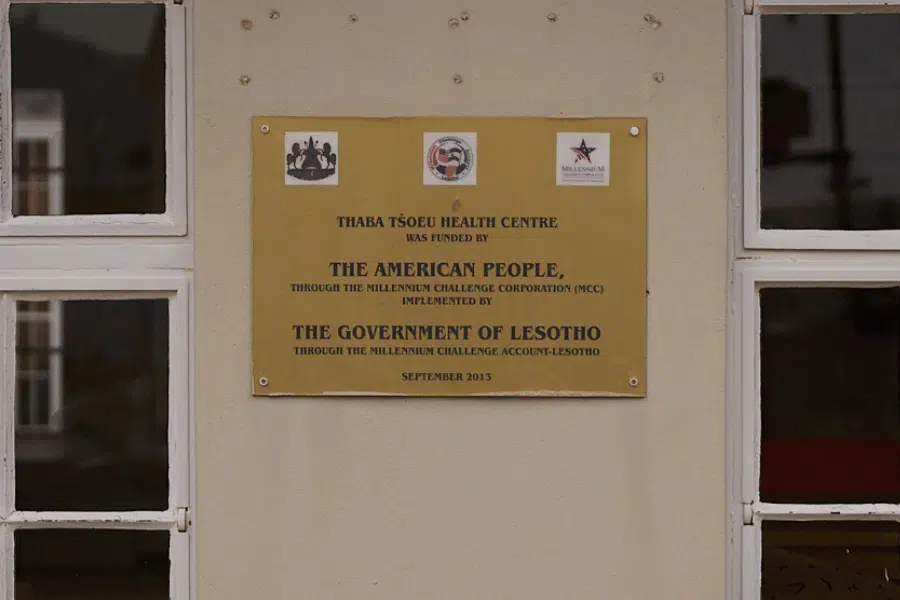
Cuts to U.S. health aid jeopardizes a global success story
Months after U.S. President Donald Trump suddenly cut U.S. international assistance for the prevention and treatment of AIDS and the HIV virus that leads to it, the ripple effects are now changing health programs — and opening new debates — around the world.
More than US$2.5 billion has been stripped from the President’s Emergency Plan for AIDS Relief or PEPFAR, the major U.S. funding stream for global treatment, prevention and research of AIDS.
In 2025, the U.S. National Institutes of Health terminated 191 specific grants for programs to prevent and treat HIV, the virus that causes AIDS. That’s a funding loss of more than $200 million, and more cuts seem likely in the 2026 budget.
Among the casualties of the funding cuts: two million adolescent girls and young women in sub-Saharan Africa no longer have access to a program that offered services for HIV prevention, sexual and reproductive health and protection from physical sexual violence as well as education and empowerment.
Also in jeopardy: prevention of mother-to-child transmission of HIV through counseling, testing, preventive therapy, early diagnosis in infants and pediatric treatment services.
Halting HIV treatment
All this leaves tens of thousands of doctors, nurses and support staff in Kenya, South Africa and Mozambique without needed support. Almost all U.S.-supported research programs on HIV vaccines and tuberculosis were halted.
Some governments have responded. Ethiopia, for example, imposed new taxes to pay salaries of workers previously covered by U.S.-funded projects. Patients who were treated at community-based clinics are now being referred to government-run facilities.
The aid cutoff has hobbled one of the world’s greatest public health triumphs: about 31.5 million people in treatment around the world, according to the World Health Organization.
This has helped avoid the apocalyptic visions of entire generations — mainly of young and productive people — lost to this scourge. The United Nations estimates that 1.3 million people acquired HIV last year. That marks a 40% drop globally and 56% in Sub-Saharan Africa, between 2010 and 2024.
In all, HIV/AIDS has killed more than 44 million people since its emergence in the mid-80s, including 630,000 last year, demonstrating the need for continued HIV/AIDS prevention, treatment and research.
Transformational treatment
The U.S. pullback comes just as a game-changing prevention drug is entering the market: Lenacapavir is a long-acting drug administered twice a year.
But instead of a rapid scale-up of a transformational treatment, the overall cuts in U.S. aid across all diseases could lead to 14 million additional deaths over five years according to a projection in the medical journal Lancet.
UNAIDS has warned that without replacement funding, the PEPFAR cuts could result in an extra six million HIV infections and four million more AIDS-related deaths by 2029.
The UN agency has urged countries to transform their HIV responses. Other nations have started to step in. The Global Fund to Fight AIDS, TB and Malaria has collected pledges of US$11.34 billion from governments and $1.3 billion from private donors, of which $912 million is coming from the Gates Foundation.
An argument is gaining momentum that the crisis is a blessing in disguise for nations and programs that have come to rely too much on U.S. money.
The world working together
Each protracted health threat — Ebola, Mpox, COVID-19 — makes the case for self-reliance and a system of enhanced regional cooperation and collaboration that leverages international agreements such as the International Health Regulations and the WHO Pandemic Treaty while respecting national sovereignty.
Consider the G20 Health Working Group. It brings together all the countries in the G20 — a forum of the world’s largest economies — plus collaboration with the World Health Organization, World Bank and other partners to strengthen global health systems, promote universal health coverage and coordinate responses to major health challenges.
It aims at building resilient, equitable and sustainable health systems worldwide. The G20 Global Health Group has in recent years focused on funding gaps and investments needed to meet 2030 targets: health inequities between high and low-income countries and responses to climate change and migration pressures on health systems.
The ultimate idea is to integrate health with humanitarian, peace and development goals by, among other things, adopting a primary health care approach; strengthening human resources for health; stemming the tide of Non-Communicable Diseases; enhancing pandemic prevention, preparedness and response; and supporting science and innovation for health and economic growth to accelerate health equity, solidarity and universal access.
Restoring, sustaining and scaling-up coverage of essential HIV/AIDS prevention, care, treatment and protection services through countries and communities’ self reliance will be a major indicator of this commitment.
Questions to consider:
1. How can the elimination of U.S. health funding be a “blessing in disguise” for African nations?
2. Why has the funding of HIV/AIDS treatment and prevention around the world been considered a success story?
3. How might access to health treatment be a problem where you live?
-

The three P’s of writing a memorable college essay
Key points:
As a former admissions officer and now an independent education consultant, I’ve read thousands of college essays. The ones that earn students admission to their dream schools aren’t necessarily the most polished. They’re the ones that sound like the student and express that student’s personality and experience. Within a few minutes of reading a file, I could distinguish between an applicant who had checked all the boxes and a real person I could imagine. As I tell my students, “Colleges are admitting you, not your essay.”
Writing that kind of essay starts with what I call the 3 P’s: following a process, showing your personality, and letting go of perfection.
How process removes pressure
The number one challenge my students face with their essays is deciding where to start. They worry that they won’t engage the reader right away or won’t be creative enough. There’s a myth that the opening needs to be shocking, that it needs to be something that’s never been heard before. To help students overcome this hurdle, I encourage them to find their voice through a low-pressure process that begins with exercises such as free writing or simply telling me their story, which I record.
In the past few years, I’ve worked with many students who have solved their “blank page” panic by using AI to draft their essays. Students are often hesitant to admit they’ve used these tools, which creates a barrier between us. While I coach them to use AI responsibly for brainstorming or outlining, many still fall back on it for the actual writing.
I researched tools that could support a student’s voice without replacing it, yet many still worked behind the scenes. I wanted a platform that offered inspiration, feedback, and insights without taking over the creative process. I chose Esslo, which allows me to collaborate with students on their actual writing, along with tools like College Planner Pro and Grammarly.
I was working with a student who was spending too many words of her essay writing about what was happening to her mom, so I asked her to self-assess her “contribution” score and then check it against the AI-powered score from Esslo. Revising an essay is like teaching someone to golf–you can’t fix everything at once. Working on one area at a time creates a process that is more manageable and effective for students and counselors.
Personality over polish
Even an essential process can go too far. If students revise endlessly to chase near-perfect scores on a rubric, they often scrub away the pieces and quirks that make it uniquely theirs. At the end of what we believe is the final draft, I have my students read their essays aloud. Then I ask them, “Is this something you would say? On a scale of zero to 10, would this actually come out of your mouth?” If it’s not seven or above, then we’re not going to submit that essay.
I also ask students, “What part of this essay is written because you think it’s what the reader wants to hear?” And sometimes, if an essay isn’t working, I’ll ask, “What’s the real story behind this? What part of this story are you hiding?” We’ll talk about it, and more often than not, that conversation will uncover the authentic essay. An essay that sounds like the student–even if it’s imperfect–will always do better than a flawless essay that could have been written by anyone.
The problem with perfection
Every student needs a different path to get a finished essay. Some do well with tech tools, but others use them to chase perfection, over-revising their essays until they become overly complicated. Think about the best books you’ve read. They flow naturally and show personality. It’s important to remember that a personal statement isn’t an AP English assignment–it doesn’t need to be academically rigid, but it needs to be honest.
If getting started is the hardest part for many of my students, knowing when to stop can be almost as challenging. When do they stop revising? When do they need to start over? Sometimes I tell students to scrap everything and grab an actual pen and paper. Set a timer for 15 minutes and answer the prompt with a specific scenario, whatever comes to mind, with as much detail as possible. Even if the experience they write about doesn’t end up getting submitted as their answer to that specific prompt, it is usually so vulnerable and unique that they’ll be able to use it for another essay.
Whether it’s a student writing too much about her mom or someone stuck focusing on what they think admissions officers want to hear, my advice is the same: Write about yourself and don’t be afraid to be who you are. Tech tools can be an enormous help in this process–not by pushing students toward perfect rubric scores, but by helping them present the real person behind the application.
Latest posts by eSchool Media Contributors (see all) -
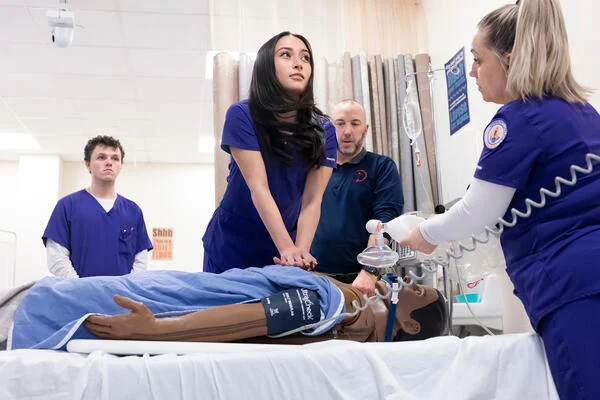
The Rise of Degree Apprenticeships
Degree apprenticeships, programs that let students earn a college degree while gaining paid work experience, are a fast-growing model in education and workforce development. But new research from the think tank New America finds access to them remains limited and uneven.
A report released this month by New America’s Center on Education & Labor found that about 350 institutions nationwide offered nearly 600 degree apprenticeship programs integrated with associate, bachelor’s or master’s degrees, preparing students for 91 different occupations.
Among institutions that offer them, degree apprenticeships are concentrated in a small number of fields, with K–12 teaching and registered nursing accounting for the largest share.
Ivy Love, a senior policy analyst at New America, said degree apprenticeships are especially valuable for states facing teacher or nurse shortages.
“These are two rapidly growing professional areas for degree apprenticeships,” Love said. “There is an opportunity to make these paths into these professions more accessible.”
Degree apprenticeships combine paid work experience, on-the-job training, employer-aligned classroom instruction and recognized credentials with an associate, bachelor’s or master’s degree. Learners participate in work-based learning while completing coursework—known as related technical instruction—at a college or university that aligns with what they are learning on the job.
These programs are emerging at a moment of growing skepticism about the value of a college degree. In New America’s Varying Degrees 2025 survey, just 52 percent of adults—a slim majority—said a postsecondary credential is the minimum level of education they believe a close family member needs to ensure financial security.
At the same time, New America found that earning a postsecondary degree remains the surest path to economic stability and family-supporting wages. In 2024, households with two adults needed to earn more than $100,000 a year to support two children—a level of pay that typically requires at least an associate degree, the report said.
Lancy Downs, a senior policy analyst at New America, said one story that stood out in the report came from an administrator at an Alabama community college where more than half the students attend part-time. The administrator explained that this is because school is optional, but work is not.
“We see [degree apprenticeships] as an effective way to upskill people into higher-paying jobs with more upward mobility,” Downs said. “They also help bring more people into professions well suited for this model, allowing students to earn a paycheck, attend school and take on minimal debt at the same time.”
The findings: The report found that programs that prepare K–12 teachers made up 156 of the nearly 600 degree apprenticeships identified, while registered nursing programs accounted for 51. Other positions represented include electro-mechanical and mechatronics technologists and technicians, electricians, and industrial engineering technologists and technicians.
With the exception of teaching, most degree apprenticeship opportunities are concentrated at the associate-degree level. Two-thirds of the programs awarded associate degrees, 29 percent awarded bachelor’s degrees and 4 percent awarded master’s degrees, according to the report. Most associate-level credentials were associate of applied science degrees.
Love said occupational requirements are the main factor driving these patterns: Careers in teaching typically require a bachelor’s degree, while nursing careers can be started with an associate degree.
“Community colleges have been really involved in degree apprenticeships, many of them for quite some time,” Love said. She noted that although some universities offer degree apprenticeships as well, community colleges’ “workforce orientation” gives them more familiarity with the model, and two-year institutions are more likely to have close connections to employers in technical fields.
The report also found that rural and small-town colleges are disproportionately represented among institutions offering teacher apprenticeships, suggesting degree apprenticeships in teaching are shaped by local workforce needs.
Downs said she suspects the prevalence of the “grow-your-own” model in teacher training explains this pattern.
“It’s possible that the prevalence of those already in teaching contributed to the overrepresentation in many rural communities,” Downs said.
The implications: Downs said degree apprenticeships’ small program size, reliance on public funding and other structural factors must be addressed for programs to succeed.
“We don’t really fund degree apprenticeships the same way we fund K–12 schools or even higher education,” Downs said, noting that most funding comes from “one-off” federal grants.
“More funding is needed to get [degree apprenticeship] programs up and off the ground and figure out how to run them sustainably,” she said.
Beyond funding, Downs said the programs also need to be thoughtfully designed to meet the needs of the students they serve.
“If you can get credit for what you’re learning on the job, you don’t have to sit in a classroom to learn the same thing again. It makes the programs more efficient for learners and employers, which we support,” Downs said.
Love said the degree apprenticeship model allows students to combine the benefits of work and education in a single pathway.
“This is a ‘yes, and’ strategy,” Love said. “Through [degree apprenticeship] programs, we hope to learn more in the coming years about how they open pathways to important professions while giving people another option that brings the best of both worlds together.”
Get more content like this directly to your inbox. Subscribe here.
-
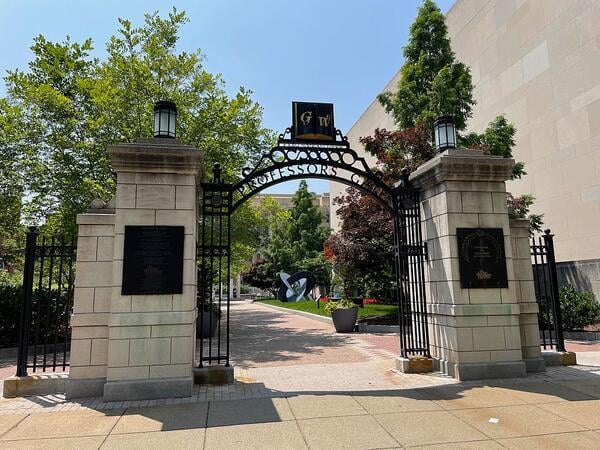
George Washington U Pauses Admissions to 5 Ph.D. Programs
George Washington University is pausing admissions to five Ph.D. programs for fall 2026, citing financial hardships.
According to social media posts, applicants to the programs received emails last week alerting them that the programs “will not be reviewing applications for the 2026–2027 academic year.” The emails went on to say that their application fees would be refunded and offered them the opportunity to be considered for master’s programs instead.
The Ph.D. programs affected are in clinical psychology, anthropology, human paleobiology, political science and mathematics.
A university spokesperson attributed the pauses to financial difficulties.
“Like many universities, we are taking a close look at how best to support our PhD programs while maintaining the highest standards in doctoral education in a difficult fiscal environment. Our recent actions do not reflect a long-term closure or suspension of programs,” the spokesperson told Inside Higher Ed in an email. “Rather, they represent a need to limit new commitments in order to ensure that we fully meet our funding commitments to continuing PhD students” in those five departments.
Two faculty members told Inside Higher Ed that the university was also slashing the total number of Ph.D. packages across all departments within the Columbian College of Arts & Sciences. GWU did not respond to a question about those additional cuts.
The suspensions follow other instances of high-profile institutions slashing admissions to Ph.D. programs due to budget concerns, including Boston University, the University of Chicago and Harvard University. In a recent Faculty Senate meeting, GWU president Ellen Granberg asked the university’s schools and divisions to prepare “budget contingency plans” amid declines in applications from international students, the student newspaper, The GW Hatchet, reported. International students accounted for about 13 percent of the institution’s enrollment this fall, a decrease from the previous year.
Huynh-Nhu Le, who leads the clinical psychology Ph.D. program, said that faculty have been aware for a while that cuts might be coming. In addition to declines in international students, GWU has been a victim of the Trump administration’s research funding cuts. And the program’s cohort size was already shrinking; for fall 2025, the clinical psych Ph.D. admitted a record low three students, down from the typical eight or nine.
But Le didn’t expect that the program would admit no new students for fall 2026. The pause came as a result of the College of Arts & Sciences allocating just two slots for its three doctoral psychology programs combined. Because the American Psychological Association requires a minimum number of students in a clinical psychology Ph.D. cohort to promote “professional socialization,” Le decided not to admit any this year.
The decision is likely to have a “ripple effect” on GWU’s clinic, Le said, where first-year students typically perform vital duties like answering phones and conducting intake appointments.
‘Hoping It’s an Anomaly’
Other departments had to make similarly difficult decisions. According to Joel Brewster Lewis, an associate mathematics professor and the director of the department’s graduate programs, annual Ph.D. funding packages are decided by the dean’s office. This year, the amount of funding available to the mathematics department was equivalent to the number of continuing Ph.D. students in the department, meaning there was no funding available for new students.
“We as a department opted to continue their funding next year rather than defund them and run admissions on those packages,” Lewis wrote in an email.
In the human paleobiology program, funding for an incoming Ph.D. student would have been available only if a current student graduated this summer, according to Alison Brooks, a professor in the anthropology department and a faculty member within the Center for the Advanced Study of Human Paleobiology. One student is on track to graduate this summer, she said, but by the time the department knows for sure, it would be too late to admit another student.
GWU’s human paleobiology Ph.D. program is one of the most recognized at the institution, Brooks said. In a typical year, the program admits roughly three students.
“We have very high numbers of graduates in tenure-track jobs and other prestigious positions. Two members of our small faculty are in the National Academy of Science and Medicine. And generally we get some funding every year to support research initiatives, in addition to outside funding, to carry on with what we do,” she said. “We’re not necessarily being singled out, but we’re not being preferred, either.”
Le, of the clinical psychology Ph.D. program, said she hopes this year is just a “blip.”
“It’s really unfortunate. It’s not only our program—I think other clinical programs in the U.S. are going through the same thing,” she said. “I’m hoping it’s an anomaly for this year.”
-
ED Scraps Biden-Era Regulation for Corporate College Owners
Student advocates say the department’s decision could allow for fraud at the cost of taxpayers.
Greggory DiSalvo/iStock/Getty Images Plus
The Trump administration will no longer automatically enforce an accountability measure for the owners of private institutions that consumer advocacy groups say is critical to protecting students and taxpayers.
The regulation was originally put in place by the Biden administration, first as guidance and then in regulations. Under the policy, primary owners of for-profit and nonprofit colleges were required to sign onto a contract, known as a Program Participation Agreement, in order for their institution to access federal student aid. The aim of requiring the individual or corporation who owns an institution to sign onto the PPA signature requirement was to hold them accountable for unpaid debts, misuse of federal funding and compliance with federal aid law.(PPAs still have be signed by the president or CEO of the institution.)
But now, according to a Jan. 16 announcement, the owners will not always have to assume personal liability after ED voluntarily settled with a Missouri Christian college that challenged the requirement. The education secretary does, however, reserve the right to require signatures on a case-by-case basis if necessary to “protect the financial interest of the United States.”
Education Under Secretary Nicholas Kent said the change will maintain liability standards as much as possible while abiding by the law, which limits the department’s authority to force owners to assume personal liability to circumstances when “institutions have financial problems.” The department intends to further clarify how it will conduct case-by-case evaluations through a rule-making session but did not clarify when that session will be held.
“The Biden Administration’s regulation was over broad as it required all private institutional owners, including at faith-based colleges, to sign program participation agreements,” Kent said in a statement to Inside Higher Ed. “Moving forward, the Trump Administration will adhere to the law … This approach will protect taxpayers while not creating undue burden on institutions.”
Student and taxpayer advocates, however, view the decision as a major mistake—particularly because it extends beyond nonprofit religious institutions like the one behind the lawsuit, granting more flexibility to for-profit institutions as well.
“Taking the blanket signature requirement away does nothing to protect students. It does nothing to protect the taxpayer interest. Really, the only people with benefits are those who could be held financially responsible,” said Dan Zibel, vice president and chief counsel of Student Defense, a legal advocacy group.
He cited news coverage and research reports as evidence that the owners of some for-profit institutions can access federal aid and take advantage of students. But when those owners were forced to sign a PPA contract, they could be less freely inclined to defraud students, he explained.
It forced them to “acknowledge their own skin in the game,” Zibel said. So by halting the enforcement of these contracts, particularly for for-profit owners, the department “is sorely misguided and makes it harder, not easier, for the department to protect students and taxpayers.”
Hannibal-LaGrange University and its sponsor, the Missouri Baptist Convention, argued in the lawsuit that the department’s requirement exceeded the agency’s statutory authority and violated the Religious Freedom Restoration Act. Other private institutions and their lobbyists have also pushed back, saying many of LaGrange’s arguments extend to nonreligious institutions and corporate owners.
Jordan Wicker, Career Education Colleges and Universities’ senior vice president of legislative and regulatory affairs, called the change “a meaningful course correction” for “unintended consequences” and institutional burdens created by the regulation.
“The 2023 rule … made the risk to institutions significantly greater when it comes to routine recertifications, acquisitions, ownership changes, any corporate restructuring or even simple business financial transactions,” Wicker said. “Particularly for proprietary institutions, you’re looking at a dampening effect of the market, or the devaluation of schools because of hesitancy for new capital to enter that space.”
“[Signing on for liability] is an extraordinary risk in the world of business and operations, and so it created a hesitancy,” he added.
Lawyers at Duane Morris LLP, a law firm that represents public, private, nonprofit and proprietary colleges, said the decision was “significant for institutions and their owners, sponsors, investors and lenders because it responds to significant adverse effects” of the rule.
In a breakdown of the announcement, the firm noted that while ED is now requiring officials to sign the agreements only when necessary, the department only has the authority, in their view, to allow individual owners to take on liability—not full corporate entities.
As a result, “the market effects will likely persist to some extent unless the issue is fully resolved through final, legally sustainable regulatory action,” the firm stated.
But Zibel argued that the fact businesses are wary of taking on liability shows why this regulation is necessary and conforms with the law.
“For-profit companies have been able to make sizable profits and scam students, which has cost the federal government and cost taxpayers billions of dollars, with no one at the end of the day held financially accountable for this,” he said. “The federal government should be doing everything in their power to make sure that doesn’t happen.”
Zibel also believes that the way in which the department terminated enforcement of this policy is illegal. Federal law requires the department to go through a specific process, known as negotiated rule making, to both create and repeal regulations. That process includes opportunity for public comment as well as a discussion between representatives of multiple constituent groups and the department. None of those steps were followed in this case.
“Doing things by settlement is not how this is supposed to happen,” he said.
-
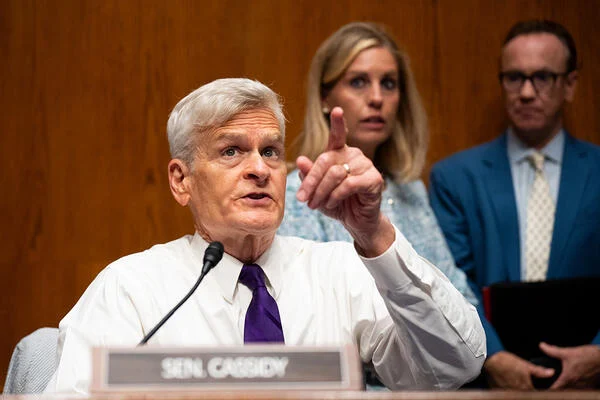
Cassidy Probes Math Course Placements at Selective Colleges
Cassidy sent information requests to 35 universities.
Bill Clark/CQ–Roll Call Inc./Getty Images
A Senate committee chair has launched an investigation into what he says is a decline in how prepared freshmen accepted into selective institutions are for math courses there.
Sen. Bill Cassidy, the Louisiana Republican who chairs the Senate Committee on Health, Education, Labor and Pensions, announced Friday that he’s sent letters to 35 institutions, including Ivy League universities, the Georgia Institute of Technology, Rice University and more.
“The United States faces a crisis in student achievement at the K–12 level that has begun to spill over into higher education, especially in math,” Cassidy wrote in the letters.
He cited the widely discussed November report from the University of California, San Diego, in which a university working group said that one in 12 first-year students in the fall placed into math below a middle school level, despite having a solid math grade point average from high school.
“This state of affairs is unacceptable and demands immediate corrective action,” Cassidy said.
He’s asking each of these institutions to provide data on freshman placement into math courses, explanations of how placements are decided, information on math classes that include precollege content, descriptions of universitywide math graduation requirements and info on whether they require the SAT, ACT or other math tests for admission. The due date is Feb. 5.
A Cassidy spokesperson didn’t respond to requests for comment Friday on why he’s only investigating selective institutions.
The UC San Diego report provided some reasons for its first-year students’ math deficits.
“This deterioration coincided with the COVID-19 pandemic and its effects on education, the elimination of standardized testing, grade inflation, and the expansion of admissions from under-resourced high schools,” the report said. “The combination of these factors has produced an incoming class increasingly unprepared.”