Blog

  • Across All Ages & Demographics, Test Results Show Americans Are Getting Dumber – The 74

    Across All Ages & Demographics, Test Results Show Americans Are Getting Dumber – The 74


    Get stories like this delivered straight to your inbox. Sign up for The 74 Newsletter

    There’s no way to sugarcoat it: Americans have been getting dumber.

    Across a wide range of national and international tests, grade levels and subject areas, American achievement scores peaked about a decade ago and have been falling ever since. 

    Will the new NAEP scores coming out this week show a halt to those trends? We shall see. But even if those scores indicate a slight rebound off the COVID-era lows, policymakers should seek to understand what caused the previous decade’s decline. 

    There’s a lot of blame to go around, from cellphones and social media to federal accountability policies. But before getting into theories and potential solutions, let’s start with the data.

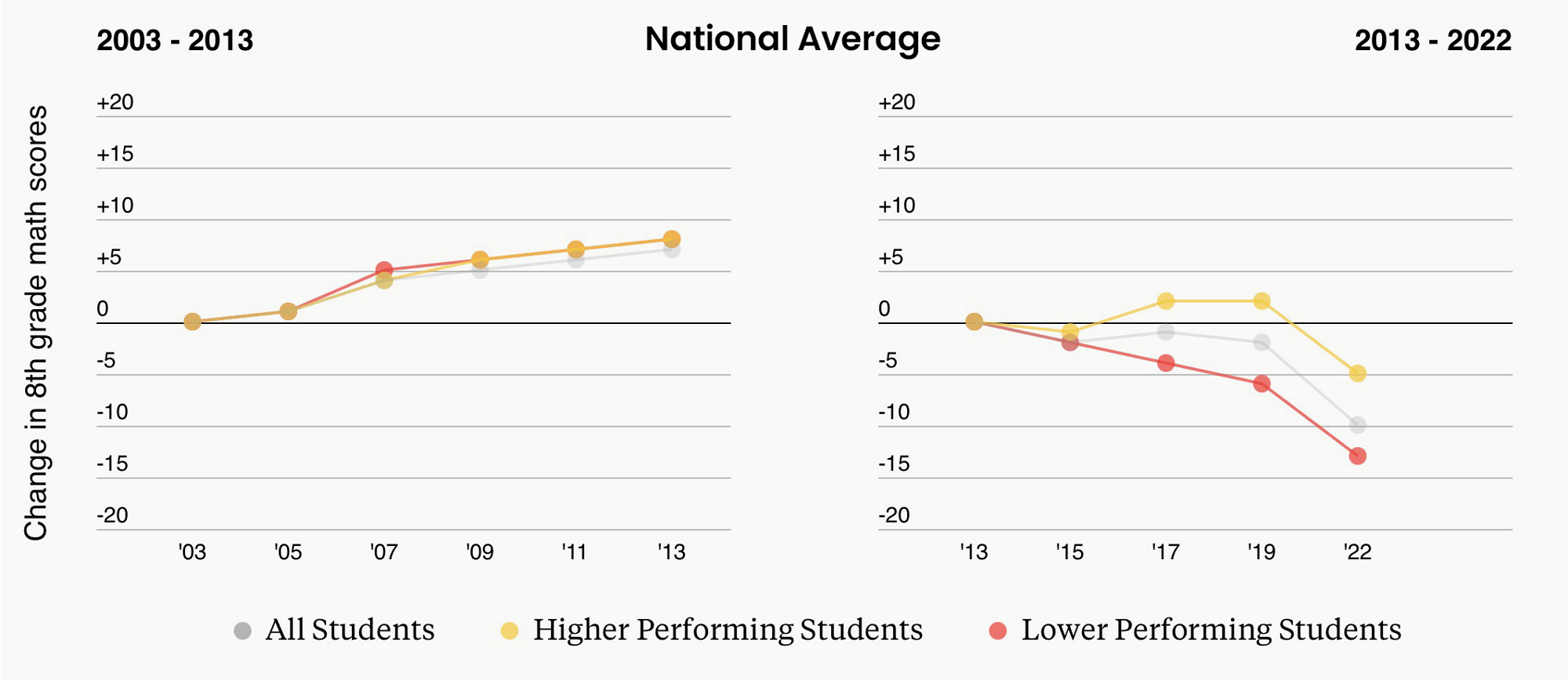
    Until about a decade ago, student achievement scores were rising. Researchers at Education Next found those gains were broadly shared across racial and economic lines, and achievement gaps were closing. But then something happened, and scores started to fall. Worse, they fell faster for lower-performing students, and achievement gaps started to grow.

    This pattern shows up on test after test. Last year, we looked at eighth grade math scores and found growing achievement gaps in 49 of 50 states, the District of Columbia and 17 out of 20 large cities with sufficient data.
    But it’s not just math, and it’s not just NAEP. The American Enterprise Institute’s Nat Malkus has documented the same trend in reading, history and civics. Tests like NWEA’s MAP Growth and Curriculum Associates’ i-Ready are showing it too. And, as Malkus found in a piece released late last year, this is a uniquely American problem. The U.S. now leads the world in achievement gap growth.

    What’s going on? How can students here get back on track? Malkus addresses these questions in a new report out last week and makes the point that any honest reckoning with the causes and consequences of these trends must account for the timing, scope and magnitude of the changes.

    Theory #1: It’s accountability

    As I argued last year, my top explanation has been the erosion of federal accountability policies. In 2011 and 2012, the Obama administration began issuing waivers to release states from the most onerous requirements of the No Child Left Behind Act. Congress made those policies permanent in the 2015 Every Student Succeeds Act. That timing fits, and it makes sense that easing up on accountability, especially for low-performing students, led to achievement declines among those same kids.

    However,  there’s one problem with this explanation: American adults appear to be suffering from similar achievement declines. In results that came out late last year, the average scores of Americans ages 16 to 65 fell in both literacy and numeracy on the globally administered Program for the International Assessment of Adult Competencies. 

    And even among American adults, achievement gaps are growing. The exam’s results are broken down into six performance levels. On the numeracy portion, for example, the share of Americans scoring at the two highest levels rose two points, from 10% to 12%, while the percentage of those at the bottom two levels rose from 29% to 34%. In literacy, the percentage of Americans scoring at the top two levels fell from 14% to 13%, while the lowest two levels rose from 19% to 28%. 

    These results caused Peggy Carr, the commissioner of the National Center for Education Statistics, to comment, “There’s a dwindling middle in the United States in terms of skills.” Carr could have made the same comment about K-12 education —  except that these results can’t be explained by school-related causes.

    Theory #2: It’s the phones

    The rise of smartphones and social media, and the decline in reading for pleasure, could be contributing to these achievement declines. Psychologist Jean Twenge pinpointed 2012 as the first year when more than half of Americans owned a smartphone, which is about when achievement scores started to decline. This theory also does a better job of explaining why Americans of all ages are scoring lower on achievement tests.

    But there are some holes in this explanation. For one, why are some of the biggest declines seen in the youngest kids? Are that many 9-year-olds on Facebook or Instagram? Second, why are the lowest performers suffering the largest declines in achievement? Attention deficits induced by phones and screens should affect all students in similar ways, and yet the pattern shows the lowest performers are suffering disproportionately large drops.

    But most fundamentally, why is this mostly a U.S. trend? Smartphones and social media are global phenomena, and yet scores in Australia, England, Italy, Japan and Sweden have all risen over the last decade. A couple of other countries have seen some small declines (like Finland and Denmark), but no one has else seen declines like we’ve had here in the States.

    Other theories: Immigration, school spending or the Common Core

    Other theories floating around have at least some kernels of truth. Immigration trends could explain some portion of the declines, although it’s not clear why those would be affecting scores only now. The Fordham Institute’s Mike Petrilli has partly blamed America’s “lost decade” on economic factors, but school spending has rebounded sharply in recent years without similar gains in achievement. Others, including historian Diane Ravitch and the Pioneer Institute’s Theodor Rebarber, blame the shift to the Common Core state standards, which was happening about the same time. But non-Common Core states suffered similar declines, and scores have also dropped in non-Common Core subjects.

    Note that COVID is not part of my list. It certainly exacerbated achievement declines and reset norms within schools, but achievement scores were already falling well before it hit America’s shores.

    Instead of looking for one culprit, it could be a combination of these factors. It could be that the rise in technology is diminishing Americans’ attention spans and stealing their focus from books and other long-form written content. Meanwhile, schools have been de-emphasizing basic skills, easing up on behavioral expectations and making it easier to pass courses. At the same time, policymakers in too many parts of the country have stopped holding schools accountable for the performance of all students.

    That’s a potent mix of factors that could explain these particular problems. It would be helpful to have more research to pinpoint problems and solutions, but if this diagnosis is correct, it means students, teachers, parents and policymakers all have a role to play in getting achievement scores back on track. 


    Get stories like these delivered straight to your inbox. Sign up for The 74 Newsletter
    Source link

  • From Small-Town Roots to National Honor: SC Native Receives State’s Highest Award

    From Small-Town Roots to National Honor: SC Native Receives State’s Highest Award

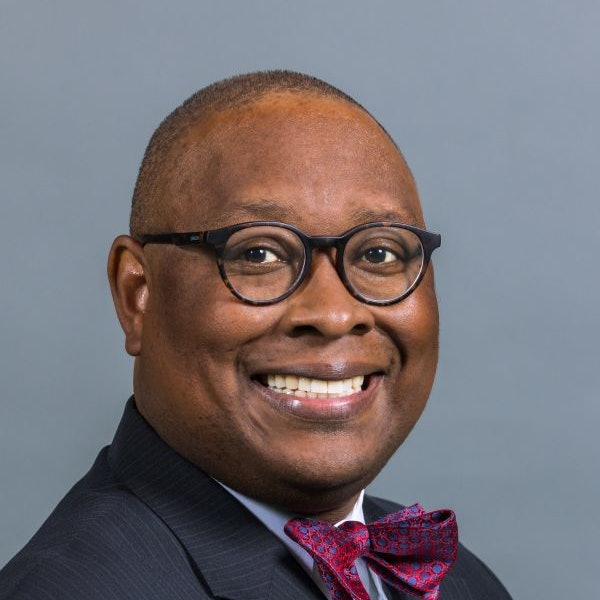
    From the small town of Lyman, South Carolina, Dr. James L. Moore’s journey to success is one he attributes to the steadfast support of his mother and the historical Dr. James L. Moore IIItrailblazers whose influence shaped his path to distinction.

    On Saturday, Jan. 25, Moore—a Distinguished Professor of Urban Education at The Ohio State University (OSU) and executive director of the Todd Anthony Bell National Resource Center—was awarded the Order of the Palmetto—South Carolina’s highest civilian honor established in 1971. The prestigious award is presented by the governor to individuals who have demonstrated extraordinary lifetime achievement, service, and contributions of national or statewide significance.

    “To be honored and to receive the highest honor to a civilian of South Carolina is so humbling,” said Moore in an interview with Diverse. “Service to humanity is the hallmark of philosophy, and in many ways, it shaped who I am and what I’m about in my day to day. All that I am and that I hope to be, has been shaped by my experience growing up in South Carolina.”

    Moore follows in the footsteps of other legendary leaders from South Carolina who’ve received the honor, many of whom broke down barriers throughout history, paving the way for him and others to succeed. Moore said that it’s not lost on him that he’s in the tradition of a long line of South Carolina humanitarians.

    “The state has a complex history, some of which is painful to reflect on, but it is where my family, some of whom arrived as enslaved Africans, created community from the most difficult of circumstances,” he said. “They built opportunities for people like me. South Carolina is special to me, not only for its rich and sometimes painful history, but because 10% to 15% of all Black Americans can trace their roots here.” 

    The state, he said, has produced a legacy of excellence, from singer James Brown and tennis great Althea Gibson to educator Mary McLeod Bethune. 

    “I just want to make sure that I forever acknowledge and recognize the contributions and the giants that I stand on their shoulders,” said Moore, who pointed to the late Dr. Benjamin Elijah Mays—the former president of Morehouse College—as a model for educational and humanitarian excellence.

    A nationally recognized education expert and leader, Moore has had a distinguished career in higher education and has been applauded for his work promoting educational excellence and access for all. Throughout his fabulous career, he has won numerous international and national accolades. 

    His research spans multiple disciplines, including school counseling, urban education, and STEM education. He has co-authored seven books and more than 160 publications, secured nearly $40 million in funding, and delivered more than 200 scholarly presentations globally. Moore’s contributions to education have earned him recognition, including being named one of Education Week’s 200 most influential scholars in the U.S. since 2018.

    Dr. Jerlando F.L. Jackson, Dean of the College of Education and Foundation Professor of Education at Michigan State University, praised Moore’s impact, citing the ripple effect his leadership has created within the American education system.

    “Dr. Moore’s influence extends far beyond his own accomplishments,” said Jackson, who has known Moore since their days as graduate students and have collaborated with him on a number of initiatives and projects, including the International Colloquium on Black Males in Education. “Through his leadership, he is empowering educators, policymakers, and community leaders to reimagine what is possible with South Carolina in mind,” Jackson said.  

    Moore’s focus on education access, preparation, innovation, and opportunities “has not only improved outcomes for today’s students but has also laid the foundation for a brighter future for generations to come,” Jackson added. “He is the kind of leader who sees potential in everyone, and he works tirelessly to help others realize their dreams, regardless of their backgrounds. Whether mentoring a young scholar or speaking at a community event, Dr. Moore connects with people in ways that are deeply inspiring and transformative.”

    Moore’s work has focused on closing opportunity gaps, increasing access to quality education, and addressing disparities that disproportionately affect educational vulnerable student populations. Through his research and leadership, Jackson said that Moore has not only informed policy, but also directly influenced educational practices that all have benefited from, including South Carolina.

    Dr. Eric Tucker, President & CEO of The Study Group, agrees.

    “His tireless dedication to inclusive excellence proves that one visionary can unite and uplift entire communities, sparking transformative educational change at the secondary and postsecondary levels,” said Tucker, who lauded Moore’s efforts to help undergraduate scholars secure prestigious fellowships, including the Rhodes and Truman Scholarships. As executive director of the Todd Anthony Bell National Resource Center on the African American Male, he reimagined OSU’s Early Arrival Program, offering mentorship and leadership opportunities to support young Black men and boys in their pursuit of higher education.

    “From a small-town upbringing to a national and international stage, Dr. Moore has used his expertise to bring fresh opportunities and shape educational transformation across the United States and other parts of the globe,” said Tucker. “His leadership and forward-thinking approaches demonstrate how determination can unite communities and open new doors for students in all zip codes, regions, and jurisdictions,” he added.

    And no matter how many times you ask Moore about his own influences and success, he never forgets his family and the village who raised him. As one of three siblings, he remembers his late mother Edna, whose sacrifices and love shaped her children’s lives in South Carolina.

    “My mother did everything for her three kids, and my mother was an inspiration to not only me, but for those who knew her,” Moore said. “And even though she’s not here with me, she lives inside me, and she always told me that ‘family lives inside of you, and everywhere you go, son, take family with you,’ So I can hear her. She was the best coach I ever had. This is for her,” he said.

    Source link

  • Florida Phone Ban in School Gets Mostly Positive Feedback from Administrators – The 74

    Florida Phone Ban in School Gets Mostly Positive Feedback from Administrators – The 74


    Get stories like this delivered straight to your inbox. Sign up for The 74 Newsletter
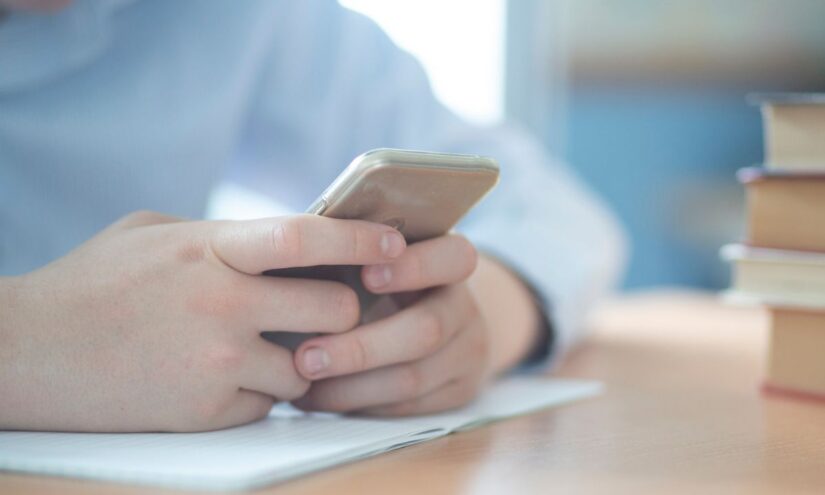
    School administrators provided mostly positive feedback to lawmakers curious about implementation of a 2023 law prohibiting students from using their phones.

    School officials provided the House Student Academic Success subcommittee feedback last week on HB 379, a 2023 law that prohibits phone use during instructional time, prohibits access to certain websites on school networks, and requires instruction to students to responsibly use social media.

    “It’s gone very very well in many of our classrooms, especially I would say it goes really well in our classrooms with struggling learners. The teachers have seen the benefit of that increased interaction with each other, the increased focus,” said Toni Zetzsche, principal of River Ridge High School in Pasco County.

    The law, introduced by Rep. Brad Yeager, a Republican representing part of Pasco County,  received unanimous support before serving as a sort of model legislation across the nation.

    “The first step of this process: remove phones from the classroom, focus on learning, take the distraction out. Number two was, social media, without just yanking it from them, try to educate them on the dangers. Try to help to learn and understand how social media works for them and against them,” Yeager said during the subcommittee meeting.

    An EducationWeek analysis shows Florida was the first state to ban or restrict phones when the law passed, with several other states following suit in 2024.

    Florida schools have discretion as to how they enforce the law, with some prohibiting cellphones from the beginning until the end of the day, while others allow students to use their phones during down times like lunch and between classes.

    Some teachers have taken it upon themselves to purchase hanging shoe organizers for students to bank their phones in during class, Yeager said.

    Since the law took effect in the middle of 2023, Zetzsche said, students in higher level college preparatory classes have partially struggled because of the self-regulating nature of the courses and the expectation that teachers give them more freedom.

    But for younger and lower-performing students, the law has been effective, according to Zetzsche and research Yeager used to gain support for the bill.

    “In some of our ninth and tenth grade classrooms, where the kids need a little more support, those teachers are definitely seeing the benefit,” Zetzsche said.

    Orange County Schools Superintendent Maria Vazquez said schools have combatted student complaints about not having their phones by filling down time, like lunch periods, with games or club activities.

    Zetzsche said she has seen herself and others use the phoneless time as an opportunity to get to know more students.

    “I know I’ve spoken with teachers, elementary teachers, middle school teachers, and high school teachers that have said, ‘I’ve had to teach students to reconnect and get involved or talk to people.’ They are doing a better job of focusing on that replacement behavior now, I think. I think we all are,” Zetzsche said.

    “I think, as a high school principal now, when I see a student sitting in the cafeteria and they’re on their cellphone watching a movie, I immediately want to strike up a conversation and say, ‘Hey, are you on the weightlifting team? Do you play a sport?’” Zetzsche said.

    Bell to bell

    Orange County schools decided not to allow phones all day, while Pasco County chose to keep phones away from students during instructional time, the extent the law requires.

    “It was surprisingly, and shockingly, pretty easy to implement,” Marc Wasko, principal at Timber Creek High School in Orange County, told the subcommittee.

    Rep. Fiona McFarland, a Republican representing part of Sarasota County and the chair of the subcommittee, encouraged further planning to better enforce the law.

    “I will tell you, because not everything we do up here is perfect, there are some schools that I’ve heard of where, even if the teacher has a bag, kids are bringing a dummy phone, like mom’s old iPhone, and flipping that into the pouch where they’ve got their device in their pocket or if you’ve got long hair, maybe you can hide earbuds,” McFarland said.

    “I mean, this is the reality of being policymakers, folks,” McFarland continued. “We make a law, we can make the greatest law in the world, which is meaningless if it’s not executed and enforced properly. We could pass a law tomorrow to end world hunger and global peace, but it means nothing if it’s not operationalized well and planned for well.”

    Yeager told the committee he does not plan to seek to ban phones outside of instructional time, although other lawmakers could push for further phone prohibitions.

    Department of Education obligation

    The law requires the Department of Education to make instructional material available on the effects of social media, required for students to learn under the law.

    “Finding the time to be able to embed that into the curriculum is really difficult. We are struggling with instructional minutes as it is, when we have things like hurricanes impact learnings,” Zetzsche said.

    “We are struggling to get through the content, so it would be nice to have something from the Department of Education that is premade that we can share with students, but maybe through elective courses or some guidance on how they would expect high schools, how they would feed that information to students.”

    Administrators said parental pushback has been limited, and Zetzsche added that parents have sought advice from schools about how to detach their kids from their phones.

    “When we struggle with the student who’s attached to their cellphone, the parents want to put things in place.
They just don’t know what to do,” Zetzsche said, calling for the department to provide additional information to parents.

    Florida Phoenix is part of States Newsroom, a nonprofit news network supported by grants and a coalition of donors as a 501c(3) public charity. Florida Phoenix maintains editorial independence. Contact Editor Michael Moline for questions: [email protected].


    Get stories like these delivered straight to your inbox. Sign up for The 74 Newsletter
    Source link

  • Transforming Education in the Age of AI: Challenges and Opportunities

    Transforming Education in the Age of AI: Challenges and Opportunities

    Today’s weekend reading was written by Dr Andrew Woon, Senior Lecturer in Strategic Management at Queen Mary, University of London.

    Generative AI is revolutionising industries, with education at the forefront of this transformation. Traditional models of knowledge acquisition are being challenged as AI redefines how we access and process information.

    As AI becomes more accessible and accepted by the public, its potential to reshape the majority of jobs in the market has become increasingly evident. Consequently, AI literacy has emerged as a foundational skill for careers and entrepreneurship. Given that universities are not only institutions of learning and development but also the cornerstone of a nation’s competitive advantage, the impact of AI on education attracts significant attention.

    As an educator, I believe that AI has lowered the barriers to accessing knowledge and education, enabling more students, especially those who previously lacked opportunities to benefit. On the other hand, AI has also raised the bar for teaching, as the accessibility of information and knowledge is transforming traditional teaching and learning paradigms. To excel as a teacher today, one must possess not only subject expertise but also advanced pedagogical skills and the ability to stay current with emerging trends.

    I echo the sentiments of computer scientist Professor Argamon, who views AI as a technology that can make education more human-centred rather than replacing teachers. AI enables educators to focus on the most critical aspect of their work—teaching and mentoring students rather than merely delivering courses. By leveraging AI, teachers can spend more time engaging with students and actively supporting their holistic development.

    AI should not simply be seen as a new complementary skill but as a driving force for educational transformation. Our education system must evolve from a focus on traditional knowledge-based learning outcomes to prioritising skill development, reflective thinking, and innovation-driven learning. This shift will better prepare students to adapt to future challenges and enhance their competitiveness.

    The Latin root of the word ‘curriculum’ is ‘currere’, meaning ‘to run’. In academic contexts, a curriculum is defined as a learning plan consisting of a series of activities and courses. Our education system has overly prioritised credit accumulation, often neglecting the ethos of lifelong learning and the importance of continuous self-improvement. Therefore, I advocate that education should not merely be a three- or four-year programme but rather the starting point of a lifelong journey encompassing both depth and breadth of learning in knowledge and skills.

    The rapid development of AI should serve as a catalyst for everyone to pursue personal growth. As Professors David Lefevre and David Shrier of Imperial College Business School have suggested, we need to refocus curricula on skills and capabilities that are challenging for AI to replicate. This shift aligns with a move toward more personalised, socially focused, and mentorship-driven education models. Such a transformation would fundamentally change traditional teaching and learning methods, equipping students to better face future challenges.

    The greatest value of universities lies in their role as intellectual hubs that foster curiosity, critical questioning and new creation. Universities should teach students to think independently rather than simply follow instructions. Our education system must stop producing “cookie-cutter” graduates who cannot compete with AI.

    With the rise of online education and the prevalent use of AI, traditional higher education models are facing unprecedented challenges. Higher education institutions are caught in a paradox: on one hand, they require significant resources to retrain staff in new pedagogies and upgrade facilities; on the other hand, they are grappling with the pressures of cost-cutting. Therefore, balancing cost-effective solutions with quality education remains one of the greatest dilemmas for higher education institutions.

    I believe fostering deeper collaboration with industry is a viable way forward to mitigate the financial pressures associated with AI investment. By engaging with industry-specific AI tools, students gain valuable exposure and hands-on learning experiences that better prepare them for employment. At the same time, employers benefit from graduates who not only meet their expectations but also possess the skills to excel in their roles.

    In conclusion, the mission of education must focus on cultivating well-rounded individuals equipped with critical thinking, adaptability, curiosity, and a strong sense of social responsibility. By embracing AI as a transformative force and equipping both staff and students with the right mindset and values, universities can empower their graduates to thrive in an ever-evolving world. This approach will ensure that education remains relevant, impactful, and aligned with the demands of the future.

    Source link

  • MackinVIA Earns Prestigious Platinum Modern Library AwardFrom LibraryWorks For Its 10th Consecutive Yea

    MackinVIA Earns Prestigious Platinum Modern Library AwardFrom LibraryWorks For Its 10th Consecutive Yea

    Burnsville, MN – January 16, 2025 – Mackin, a leader in providing print and digital
    educational resources for PK-12, is proud to announce that its free digital content management platform, MackinVIA, has earned the Platinum Award in LibraryWorks’ 10th annual Modern Library Awards (MLAs). This prestigious accolade marks MackinVIA’s 10th consecutive win, solidifying its position as a top choice for digital content management in schools worldwide.

    The MLAs, which celebrate the best products and services in the library industry, are awarded based on an unbiased voting process involving over 80,000 librarians from public, K-12, academic, and special libraries. Judges evaluated submissions on a range of criteria, including functionality, value, and customer service. MackinVIA received an outstanding score of 9.25, a testament to its continued excellence and innovation.

    “We’re honored to receive the Platinum Award for the 10th year in a row,” said Troy Mikell, Director of Marketing and Communications at Mackin. “Since launching MackinVIA over a decade ago, we’ve continually focused on creating a powerful, user-friendly platform for educators and students. Our relentless drive for improvement and exceptional customer service has fueled MackinVIA’s success, and it’s thrilling to see that effort recognized once again.”

    MackinVIA is accessible by more than 9 million students worldwide, providing access to over 4 million eBooks, audiobooks, read-alongs, databases, and video resources. Its digital platform offers a dynamic and comprehensive solution for PK-12 schools looking to streamline content management and improve student engagement.

    Jenny Newman, Publisher and MLA Program Manager, noted, “MackinVIA’s consistent excellence in functionality and service is what has kept them at the forefront of the industry for over 40 years. Their innovative approach continues to break barriers and set new standards.”

    About Mackin
    For over 40 years, Mackin has provided PK-12 grade libraries and classrooms with access to nearly 4 million printed and digital titles. The 24-time, multi-award-winning, digital content management system, MackinVIA, along with divisions Mackin Classroom, MackinMaker, Mackin Learning, and the brand-new, whole school resource management system, MackinVision, help to create a truly unique and robust educational resource company that schools and educators have relied on, year after year. For more information, visit www.mackin.com or call 800-245-9540.

    About LibraryWorks
    LibraryWorks helps library administrators make informed decisions regarding technology, automation, collection management, staffing, and other key areas that support efficient library operations. Their resources empower libraries to implement best practices, monitor trends, evaluate products and services, and more.

    About the Modern Library Awards (MLAs)
    The MLAs recognize outstanding products and services that enhance library operations and improve the user experience. Entries are judged by library professionals based on their relevance, functionality, and impact on the library sector.

    eSchool News Staff
    Latest posts by eSchool News Staff (see all)

    Source link

  • SCOTUS to hear Oklahoma religious charter school case

    SCOTUS to hear Oklahoma religious charter school case

    This audio is auto-generated. Please let us know if you have feedback.

    The U.S. Supreme Court on Friday agreed to hear St. Isidore of Seville Catholic Virtual School v. Drummond, a case that could set precedent for religious schools’ access to public funds. 

    The case will determine whether a state violates the First Amendment’s Free Exercise Clause by excluding privately run religious schools from the state’s publicly funded charter school program. It will also decide whether a private religious school’s curriculum and practices are considered “state action” because the state funds the school’s free education.

    St. Isidore — which is to be run by the Archdiocese of Oklahoma City and the Diocese of Tulsa — was set to open for the 2024-25 school year as a virtual school, but did not do so due to the ongoing litigation around its constitutionality. Had it opened, it would have been the nation’s first religious charter school.

    The Oklahoma Statewide Virtual Charter School Board approved the school’s contract in 2023 in a 3-2 vote. At the time, board members acknowledged the decision to be controversial and said they expected litigation whichever way their vote went. 

    That contract was ultimately severed in August 2024 following an Oklahoma Supreme Court ruling that found the school would violate the state’s constitution and the First Amendment’s Establishment Clause. The contract could, however, be reinstated depending on the U.S. Supreme Court’s decision. 

    Justice Amy Coney Barrett plans to recuse herself from the case. No date has been set for oral arguments.

    Source link

  • Trump’s Education Department nixes DEI initiatives and guidance

    Trump’s Education Department nixes DEI initiatives and guidance

    This audio is auto-generated. Please let us know if you have feedback.

    The U.S. Department of Education announced Thursday that it is eliminating its diversity, equity and inclusion initiatives, a move tied to President Donald Trump’s directives to purge DEI from the federal government. 

    The agency said it has “removed or archived” hundreds of outward-facing documentsincluding guidance, reports and training materialsthat mention DEI. That includes links to resources encouraging educators to incorporate DEI in their classrooms, a department spokesperson said. 

    The department also put agency employees tasked with leading DEI initiatives on paid leave.  A spokesperson declined to comment Friday on how many staff members were placed on leave, citing privacy concerns. 

    The move comes after Trump signed several executive orders on the first day of his presidency designed to dismantle the Biden administration’s DEI efforts. That includes an order directing all federal agencies to end their DEI programs and positions “under whatever name they appear.”

    Additionally, the Education Department dissolved its Diversity & Inclusion Council. The agency has also canceled DEI training and service contracts for staff, totaling more than $2.6 million. 

    Department officials said they will continue reviewing the agency’s programs to identify other initiatives and groups “that may be advancing a divisive DEI agenda, including programs using coded or imprecise language to disguise their activity.”

    Source link

  • Trump’s Education Department nixes DEI initiatives and guidance

    Trump’s Education Department nixes DEI initiatives and guidance

    This audio is auto-generated. Please let us know if you have feedback.

    The U.S. Department of Education announced Thursday that it is eliminating its diversity, equity and inclusion initiatives, a move tied to President Donald Trump’s directives to purge DEI from the federal government. 

    The agency said it has “removed or archived” hundreds of outward-facing documentsincluding guidance, reports and training materialsthat mention DEI. That includes links to resources encouraging educators to incorporate DEI in their classrooms, a department spokesperson said. 

    The department also put agency employees tasked with leading DEI initiatives on paid leave.  A spokesperson declined to comment Friday on how many staff members were placed on leave, citing privacy concerns. 

    The move comes after Trump signed several executive orders on the first day of his presidency designed to dismantle the Biden administration’s DEI efforts. That includes an order directing all federal agencies to end their DEI programs and positions “under whatever name they appear.”

    Additionally, the Education Department dissolved its Diversity & Inclusion Council. The agency has also canceled DEI training and service contracts for staff, totaling more than $2.6 million. 

    Department officials said they will continue reviewing the agency’s programs to identify other initiatives and groups “that may be advancing a divisive DEI agenda, including programs using coded or imprecise language to disguise their activity.”

    Source link