Blog

  • Daring students to take risks and be wrong is key to solving the campus culture wars

    Daring students to take risks and be wrong is key to solving the campus culture wars

    Goodbye then, the Higher Education (Freedom of Speech) Act parts A3, A4, A7 and parts of A8 – we hardly knew you.

    The legal tort – a mechanism that seemed somehow to be designed to say “we’ve told the regulator to set up a rapid alternative mechanism to avoid having to lawyer up, but here’s a fast track way to bypass it anyway”, is to be deleted.

    The complaints scheme – a wheeze which allowed an installed Director for Freedom of Speech and Academic Freedom to rapidly rule on whatever it was that the Sunday papers were upset about that week – will now be “free” (expected) to not take up every dispute thrown its way.

    Students themselves with a complaint about a free speech issue will no longer have to flip a coin between a widely respected way of avoiding legal disputes and an untested but apparently faster one operated by the Director which was to be flagged in Freshers’ handbooks. The OIA it is.

    Foreign funding measures – bodged into the act by China hawks who could never work out whether the security services, the Foreign Office or the Department for Education were more to blame for encouraging universities to take on Chinese students – will now likely form part of the revised “Foreign Influence Registration Scheme” created by the National Security Act 2023.

    A measure banning universities from silencing victims of harassment via a non-disclosure agreement will stay, despite OfS saying it was going to ban NDAs anyway – although nobody seems able to explain why their use will still be fine for other victims with other complaints.

    And direct regulation of students’ unions – a measure that had somehow fallen for the fanciful idea that their activities are neither regulated nor controlled by powerless university managements and the Charity Commission – will also go. The “parent” institution will, as has always been the case, revert to reasonably practicable steps – like yanking its funding.

    As such, save for a new and vague duty to “promote” free speech and academic freedom, the new government’s intended partial repeal of legislation that somehow took the old one two parliaments to pass – a period of gestation that always seemed more designed to extend the issue’s prevalence in the press than to perfect its provisions – now leaves the sector largely back in the framework it’s been in for the best part of 40 years.

    That the Secretary of State says that all of the above is about proceeding in a way that “actually works” will raise an eyebrow from those who think a crisis in the academy has been growing – especially when the government’s position is that the problem to be fixed is as follows:

    In a university or a polytechnic, above all places, there should be room for discussion of all issues, for the willingness to hear and to dispute all views including those that are unpopular or eccentric or wrong.

    Actually, that was a quote from Education Secretary Keith Joseph in 1986, writing to the National Union of Students over free speech measures in the 1986 act. But Bridget Phillipson’s quote wasn’t much different:

    These fundamental freedoms are more important—much more important—than the wishes of some students not to be offended. University is a place for ideas to be exposed and debated, to be tried and tested. For young people, it is a space for horizons to be broadened, perspectives to be challenged and ideas to be examined. It is not a place for students to shut down any view with which they disagree.

    The message for vice chancellors who fail to take this seriously couldn’t have been clearer – “protect free speech on your campuses or face the consequences”. But if it’s true that for “too long, too many universities have been too relaxed about these issues”, and that “too few took them seriously enough” – what is it that that must now change?

    Back to the future

    There is no point rehearsing here the arguments that the “problem” has been overblown, centring on a handful of incidents in a part of the sector more likely to have been populated by the lawmakers and journalists whose thirst for crises to crack down on needs constant fuel. And anyway, for those on the wrong end of cancellation, the pain is real.

    There is little to be gained here from pointing out the endless inconsistencies in an agenda that seemed to have been designed to offer a simplistically minimalist definition of harassment and harm and a simplistically maximalist definition of free speech – until October 7th 2023 turned all that on its head.

    There isn’t a lot of benefit in pointing out how unhelpful the conflation between academic freedom and freedom of speech has been – one that made sense for gender-critical academics feeling the force of protest, but has been of no help for almost anyone involved in a discipline attempting to find truth in historic or systemic reasons for other equality disparities in contemporary society.

    Others write better than me, sometimes in ways I don’t recognise, sometimes in ways I do, about the way in which the need to competitively recruit students, or keep funders happy, or to not be the victim of a fresh round of course cuts inhibits challenge, drains the bravery to be unpopular, and is the real cause of a culture of “safetyism” on campus.

    And while of course it is the case that higher education isn’t what it was – which even in its “new universities” manifestations in the 1960s imagined small parts of the population engaging in small-group discussions between liberal-minded individuals able to indulge in activism before a life of elitism – I’ve grown tired of pointing out that the higher education that people sometimes call for isn’t what it is, either.

    What I’m most concerned about isn’t a nostalgic return to elite HE, or business-as-usual return to whatever it was or wasn’t done in the name of academic freedom or freedom of speech in a mass age – and nor is it whatever universities or their SUs might do to either demonstrate or promote a more complex reality. I’m most concerned about students’ confidence.

    The real crisis on campus

    Back in early 2023, we had seen surveys that told us about self-censorship, pamphlets that professed to show a culture of campus “silent” no platforming, and polling data that invited alarm at students’ apparent preference for safety rather than freedom.

    But one thing that I’d found consistently frustrating about the findings was the lack of intelligence on why students were responding the way they apparently were.

    For the endless agents drawing conclusions, it was too easy to project their own assumptions and prejudices, forged in generational memory loss and their own experiences of HE. Too easy to worry about the 14 per cent of undergrads who went on to say they didn’t feel free to express themselves in the NSS – and too easy to guess “why” that minority said so.

    As part of our work with our partners at Cibyl and a group of SUs, we polled a sample of 1,600 students and weighted for gender and age.

    We found that men were almost ten percentage points higher than women on “very free”, although there was gender consistency across the two “not free” options. Disabled students felt less free than non-disabled peers, privately educated students felt more free than those from the state system, and those eligible for means-tested bursaries were less confident than those who weren’t.

    In the stats, those who felt part of a community of students and staff were significantly more likely to feel free to express themselves than those who didn’t – and we know that it’s the socio-economic factors that are most likely to cause feelings of not “fitting in”.

    But it was the qualitative comments that stuck with me. Of those ticking one of the “not free” options, one said that because the students on their course were majority white students, they “often felt intimidated to speak about certain things”.

    Another said that northern state school students are minorities – and didn’t really have voices there:

    Tends to be posher middle class private school educated students who are heard.

    Mature students aren’t part of the majority and what I have said in the past tends to get ignored.

    Many talked about the sort of high-level technical courses that policymakers still imagine universities don’t deliver. “Engineering doesn’t leave much room for opinion like other courses”, said one. “Not a lot of room in my degree for expression” said another.

    And another gave real challenge to those in the culture wars that believe that all opinions are somehow valid:

    My course doesn’t necessarily allow me to express my freedom as everything is researched based with facts.

    Ask anyone that attempted to run a seminar on Zoom during Covid-19, and you get the same story – switched-off cameras, long silences, students seemingly afraid to say something for fear of being ostracised, or laughed at, or “getting it wrong”.

    As a former SU President put it on the site in 2023:

    This year there have been lecture halls on every campus stacked with students who don’t know how to start up a conversation with the person sat next to them. There were emails waiting to be sent, the cursor flashing at the start of a sentence, that the struggling student didn’t know how to word… This question is whether or not the next generation is actually being taught how to interact and be comfortable in their own skin… They have to if they’re claiming to.

    Freedom from fear?

    The biggest contradiction of all in both the freedom of speech and academic freedom debates that have engulfed the sector in recent years was not a lack of freedom – it was the idea that you can legislate to cause people to take advantage of it:

    In lectures and seminars there is often complete silence. The unanimity of asking a question or communicating becomes daunting when you’re the only one.

    Fear you’ll be laughed at or judged if you get it wrong

    In terms of lectures, the students in my class feel shy to share opinions which affects me when I want to share.

    Again this is a personal thing I don’t often like expressing my points of view in person to people I don’t know very well. Also they probably won’t be listened to so I don’t see the point.

    I feel very free amongst my other students in our WhatsApp groups (not governed by the university). However, freedom of expression in support sessions often ends up not occurring as everyone is anxious due to how the class has been set up.

    Once in class I simply got one word mixed up with another and the lecturer laughed and said. ‘yes…well…they do mean the same thing so that has already been stated.’ Making me and also my fellow students reluctant to ask any questions at all as we then feel some questions are ridiculous to ask. How are we to express our thoughts if we feel we will be ridiculed or made to feel ridiculous?

    For those not on programmes especially suited to endless moral and philosophical debates, a system where the time to take part in extracurriculars is squeezed by part-time work or public transport delays is not one that builds confidence to take part in them.

    The stratification of the sector – where both within universities and between them, students of a particular type and characteristic cluster in ways that few want to admit – drives a lack of diversity within the encounters that students do have in the classroom.

    And even for those whose seminars offer the opportunity for “debate”, why would you? Students have been in social media bubbles and form political opinions long before they enrol. And Leo Bursztyn and David Yang’s paper demonstrates that people think everyone in their group shares the same views, and that everyone in the outgroup believes the opposite.

    As Harvard political scientist David Deming argues here:

    Suppose a politically progressive person offers a commonly held progressive view on an issue like Israel-Palestine, affirmative action, or some other topic. Fearing social sanction, people in the out-group remain silent. But so do in-group members who disagree with their group’s stance on that particular issue. They stay silent because they assume that they are the only ones in the group who disagree, and they do not want to be isolated from their group. The only people who speak up are those who agree with the original speaker, and so the perception of in-group unanimity gets reinforced.

    Deming’s solution is that universities should tackle “pluralistic ignorance” – where most people hold an opinion privately but believe incorrectly that other people believe the opposite.

    He argues that fear of social isolation silences dissenting views within an in-group, and reinforces the belief that such views are not widely shared – and so suggests making use of classroom polling tech to elicit views anonymously, and for students to get to know each other privately first, giving people space to say things like “yes I’m progressive, but my views differ on topic X.”

    Promoting free speech?

    Within that new “promote” duty, it may be that pedagogical innovation of that sort within the curriculum will make a difference. It may also be that extracurricular innovation – from bringing seemingly opposed activist groups on campus together to listen to each other, through to carefully crafted induction talks on what free speech and academic means in practice – would help. Whether it’s possible to be positive about EDI in the face of the right to disagree with it remains to be seen.

    Upstream work on this agenda might help too – it’s odd that a “problem” that must be partly about what happens in schools and colleges is never mentioned in the APP outreach agenda, just as it’s frustrating that the surface diversity of a provider is celebrated while inside, the differences in characteristics between, say, medical students and those studying Business and Management are as vast as ever.

    Students unions – relieved of direct scrutiny on the basis that they are neither “equipped nor funded” to navigate such a complex regulatory environment – might argue that the solution is to equip them and fund them, not remove the regulation. They might also revisit work we coordinated back in 2021 – much of which was about strengthening political debate in their own structures as a way to demonstrate that democracy can work.

    Overall, though, someone somewhere is going to get something wrong again. They’ll fail to act to protect something lawful; or they’ll send a signal that something was OK, or wrong, when they should have decided the opposite.

    As such, I’ve long believed that the practice of being “wrong” needs to be role-modelled as strongly as that of being right. If universities really are spaces of debate and the lines between free speech and harassment are contested and context-specific, the sector needs to find a way to adjudicate conflict within universities rather than leaving that to the OIA, OfS, the courts or that other court of public opinion – because once it gets that far, the endless allegations of “bad faith” on both sides prevent nuance, resolution and trust.

    Perhaps internal resolution can be carried out in the way we found in use in Poland on our study tour, using trusted figures appointed from within – and perhaps it can be done by identifying types of democratic debate within both academic and corporate governance that give space to groups of staff and students with which one can agree or disagree.

    If nothing else, if Arif Ahmed is right – and “speech and expression were essential to Civil Rights protestors, just as censorship was their opponents’ most convenient weapon”, we will have to accept that “nonviolent direct action seeks to… dramatize an issue that it can no longer be ignored” – and it has as much a place on campus as the romantic ideals of a seminar room exploring nuance.

    Lightbulb moments need electricity

    But even if that helps, I’m still stuck with the horse/water/drink problem – that however much you promote the importance of something, you still need to create the conditions to take up what’s on offer. What is desired feels rich – when the contemporary student experience is often, in reality, thin. What if the real problem isn’t student protest going too far, but too few students willing to say anything out loud at all?

    Students (and their representatives) left Twitter/X/Bluesky half a decade ago, preferring the positivity of LinkedIn to being piled-onto for an opinion. Spend half an hour on Reddit’s r/UniUK and you can see it all – students terrified that one wrong move, one bad grade, one conversation taken the wrong way, one email to a tutor asking why their mark was the way it was – will lead to disaster. The stakes are too high, and the cushion for getting anything wrong too thin, to risk anything.

    Just as strong messages about the importance of extracurricular participation don’t work if you’re holding down a full-time job and live 90 minutes from campus, saying that exploring the nuances of moral and political debate is important will fall flat if you’re a first-in-family student hanging on by a thread.

    Much of this all, for me, comes back to time. Whatever else people think higher education is there to do, it only provides the opportunity to get things wrong once the pressure is off on always getting things right. Huge class sizes, that British obsession with sorting and grading rather than passing or failing, precarious employment (of staff and students) and models of student finance that render being full-time into part-time are not circumstances that lead anyone to exploring and challenging their ideas.

    Put another way, the government’s desire that higher education offers something which allows horizons to be broadened, perspectives to be challenged and ideas to be examined is laudable. But if it really wants it happen, it does have to have a much better understanding of – and a desire to improve – the hopeless precarity that students find themselves in now.

    Source link

  • The Business Plots, Then and Now

    The Business Plots, Then and Now

    In 1933, a group of American businessman planned a coup to take down the new President, Franklin Roosevelt. In this scheme, General Smedley Butler would be tasked with orchestrating the overthrow. This attempted coup was called the Business Plot.  

    College students today may ask, so what’s so important about this moment in history?  The point is that we have entered an era again where big business has a dominating influence over American politics. In the case of the 1933 moment, the coup was reactive. American business had failed, a Great Depression was in progress, and businessmen were fighting to maintain control, a control that they were used to having under Harding, Coolidge, and Hoover. The man tasked to lead the plot, General Butler, squashed it before it happened. And the story largely faded away. 

    Eight years later, in 1941, the US would be fighting a world war against global fascism and imperialism.  In the aftermath of the war, a stronger nation would arise. Today, we are also a nation facing intense competition and conflict, this time against China, Russia, India and other nations, with global climate change being a factor that wasn’t apparent back then. 

    In 2024, US business people, some of the richest people in the world,
    did something similar, but more proactive and less controversial. Today, folks, in general are OK with American businessmen pulling the strings. The most wealthy man have succeeded where big banks and big business failed before. And they have elected a friend. Today, cryptocurrency is booming. The stock market is booming for now. Unemployment is at record lows–for now. Big business has managed to gain greater control of the US government with little or no uproar. 


    Source link

  • LA Wildfires Reduce Classrooms to Ashes, Uproot Students’ Lives – The 74

    LA Wildfires Reduce Classrooms to Ashes, Uproot Students’ Lives – The 74

    Republish This Article

    We want our stories to be shared as widely as possible — for free.

    Please view The 74’s republishing terms.


    Source link

  • LA Schools Reopen, But Recovery Will Be Long and Painful – The 74

    LA Schools Reopen, But Recovery Will Be Long and Painful – The 74


    Get stories like this delivered straight to your inbox. Sign up for The 74 Newsletter

    It was just after 1 am when Los Angeles charter school superintendent Ian Mcfeat started getting text messages and phone calls at a relative’s house where he was sheltering from the fires. 

    His neighbors said his house was burning down in the wildfires – along with his entire Altadena neighborhood of Los Angeles.

    Aveson School of Leaders, which McFeat runs and where his kids attended school just three blocks from his house, was also burning.

    Unable to sleep, Mcfeat drove away from his in-law’s house that he’d been evacuated to and made the drive back to Altadena.

    He drove through the fire lines and into his neighborhood to see if he could salvage anything, save anyone, or put out the fires that had raged on the east side for more than 48 hours straight, and decimated the Palisades in the west. 

    He was greeted with a scene out of a horror movie. Fueled by a violent windstorm and piles of brush left from a particularly wet winter last year, the firestorm was like a tornado shooting flames, blasting through his neighborhood.

    “It was like driving through a bomb scene,” said Mcfeat. “There were homes exploding. I probably shouldn’t have been there.” 

    Despite the devastating losses, Mcfeat can’t imagine not rebuilding his home and school right where they were in Altadena. But the road to recovery will be a long and painful one.

    “No doubt about it. We are going to rebuild,” said Mcfeat. Aveson has started a GoFundMe. At this point, a new site for the school has not been identified. The district hasn’t been able to help them yet.

    “I don’t know what we’re going to do,” said Mcfeat.

    The wildfires that burned Los Angeles this month are the costliest and most destructive in the city’s history, displacing more than 150,000 residents and killing at least 25 people. Two massive blazes fed by windstorms, the Palisades Fire and the Eaton Fire, simultaneously scorched the city from the sea to the mountains, filling the air with vast plumes of ash and smoke.

    As the wind and flames began to retreat last week, and firefighters gained control of the fires, schools began to reopen. And the kids began to return to class.

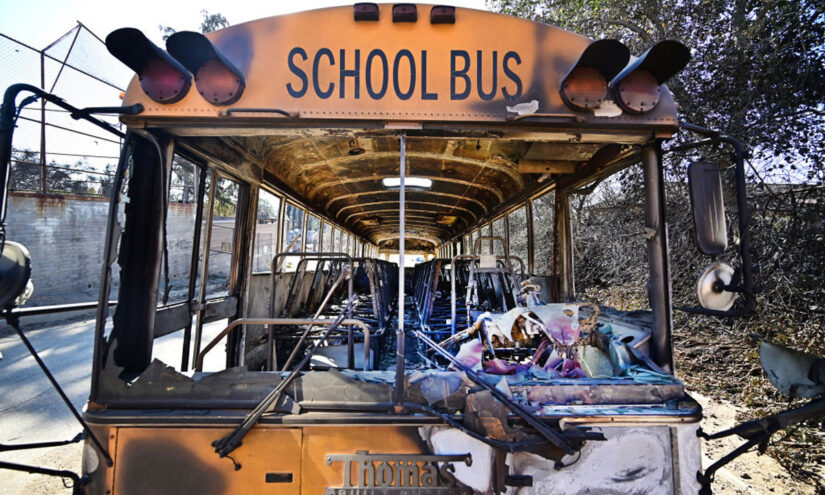
    The Los Angeles Unified School District, which is by far the largest district of about 80 in Los Angeles County, resumed instruction Monday after being totally closed since last Thursday. Seven schools remain shut because they’re located in evacuation zones. Another three won’t reopen because their buildings were badly burned or destroyed in the fires.  

    Dozens of much smaller districts in Los Angeles County also reopened this week, with the exceptions of two districts, Pasadena Unified, which encompasses Altadena, and La Cañada Unified, which neighbors Altadena to the west. 

    The Eaton fire has destroyed at least five schools but was mostly contained by Friday. 

    Kids from two of the LAUSD schools that burned in the Palisades, Marquez Charter Elementary School and Palisades Charter Elementary School, were placed, with intact school rosters, in close-ish LAUSD school buildings that already had other schools in them.

    The students who attended the burned schools were given their own entrances, classrooms and courtyards for kids to play. When parents dropped them off at class this week, there were a lot of tearful reunions.

    Families from Palisades Charter were somber, but excited to return to normalcy with their new space located inside of Brentwood Science Magnet School.  

    Joseph Koshki, a parent from the Palisades whose son attends third grade at Palisades Charter, walked holding hands with his son to their new classroom at Brentwood Science, which had been stacked with balloons.

    “When he saw his school burned on the news he was crying for days,” Koshki said of his child. “But when he heard that he was going to his new school with his old friends, he was so happy”.

    Nina Belden, a parent of a Palisades Charter student who had made an emergency evacuation from her house in the Palisades with her family, said it was important for the students at her daughter’s school to stay together and receive in-person instruction.

    “We were worried they were going to do something like remote learning,” said Beldon.

    Marquez Charter, which also burned in the Palisades fire, has a long history in the community, having opened in 1955 when the Palisades still had a frontier feel, before the neighborhood became a favorite of Hollywood stars and media execs.

    For Victoria Flores, who works as a paraeducator at Marquez, the school is part of her family. Flores went to Marquez when she was in elementary school, and her mother works in the cafeteria.

    “It was my home away from home. We are devastated by what happened,” Flores said.

    But Flores said she and the rest of the staff were glad to be relocated together at a LAUSD school called Nora Sterry, about ten miles from the burned Marquez campus.

    “We are a really close family,” said Flores. “That’s helped us a lot.”

    Upstairs at Nora Sterry, Clare Gardner’s class had about eight of twenty students show up on the first day of relocation.

    Her third-grade class was playing with clay and Mrs. Gardner, who is a twenty-seven-year veteran of Marquez, held back her tears as she helped students arrive into class.

    “We always call it the Marquez family,” Gardner said as the children greeted each other.

    One boy in Mrs. Gardner’s class said he was happy to be around his friends and teacher but sad about his classroom fish and books, which were lost in the fire.

    Later in the morning, LAUSD Superintendent Alberto Carvalho went to visit parents at Nora Sterry.

    After nearly a week off school, Carvalho says attendance is still below normal.

    “I think where that attendance is lacking is in schools that were directly affected” by the fires, Carvalho said.

    Also hurting attendance, Carvalho said, is the fact that many families are enduring temporary relocations, while others lack stable housing entirely.

    LAUSD staff attendance is back to normal, he said, while student attendance is about 88% — down from an average of about 90%, representing about 10,000 fewer students than normal.

     “As conditions of the families begin to normalize and stabilize, those [attendance] numbers will rise,” said Carvalho.

    For other schools in other areas of Los Angeles, recovery may be longer in the making. 

    Bonnie Brinecomb, principal of Odyssey Charter School – South in Altadena, which burned to the ground in the Eaton Fire, estimates that the homes of 40% of the students enrolled in the school also burned.

    Families and school staffers are scrambling to ensure displaced families have food, shelter and clothing, Brinecomb said. Some students are turning up for daycare at a nearby Boys and Girls Club that offered to take them in.  

    Brinecomb said Odyssey has partnered with McFeat’s school Aveson to search for new facilities. But the double loss of students’ homes and the schools’ campuses is a gutpunch.  

    “It’s just heartbreak. Pure shock,” she said. “You don’t even process how bad of a situation just happened.”

    Like Aveson, Odyssey has launched an online fundraiser and Brinecomb says the school will rebuild. How long that will take, though, remains an open question.  

    From the perspective of displaced children and families, the faster things return to normal, the better, said Dr. Frank Manis, professor emeritus of psychology at the University of Southern California. 

    The experience of trauma can intensify if routines are disrupted for longer periods, and the intensity of the disruption matters as well, said Manis. Kids who lost their homes to fires may have a harder time bouncing back than those who only lost their schools, he said.    

    “It’s sort of on that spectrum of wartime PTSD, but not as bad,” said Manis. “So what it could lead to is nightmares, difficulty sleeping, and emotional or behavior problems that can last for quite a while.”

    Children fighting post-traumatic stress from the fires may become withdrawn, or act out in class, said Manis. But mostly, he said, the research from past natural disasters shows that even children badly impacted by the fires may begin to feel normal within a few months. 

    “Kids are pretty resilient,” said Manis. “But trauma can disappear for a while, and then it can resurface later. When everyone’s forgotten how bad it was, it can resurface.” 


    Get stories like these delivered straight to your inbox. Sign up for The 74 Newsletter

    Source link

  • NCAA Adds Women’s Wrestling as Championship Sport, First Tournament Set for 2026

    NCAA Adds Women’s Wrestling as Championship Sport, First Tournament Set for 2026

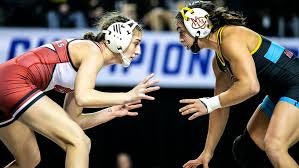
    In a historic move for collegiate athletics, the NCAA has officially recognized women’s wrestling as its 91st championship sport, marking a significant milestone for female athletes across the country. The decision, announced at the Association’s annual Convention in Nashville, Tennessee, will culminate in the first-ever NCAA women’s wrestling championship tournament in 2026.

    The sport’s elevation from the NCAA Emerging Sports for Women program reflects its rapid growth and increasing popularity. Currently, 76 NCAA schools sponsor women’s wrestling programs, with an additional 17 programs expected to join in the 2024-25 academic year. More than 1,200 women wrestlers currently compete at the collegiate level, with at least 45% representing diverse or international backgrounds.

    “This means so much to women’s wrestling and to women’s sports in general,” said Kennedy Blades, a University of Iowa wrestler and 2024 Olympic silver medalist. “Since I was a little girl, I dreamed about being an NCAA national wrestling champion. It will fulfill so many little girls’ dreams, including mine.”

    The path to championship status began in 2020 when women’s wrestling joined the NCAA’s Emerging Sports program. The sport achieved the required minimum of 40 varsity-level programs during the 2022-23 academic year, leading to a recommendation from the NCAA Committee on Women’s Athletics in February to advance to championship status.

    To support this initiative, the NCAA Board of Governors has approved $1.7 million in funding to establish the National Collegiate Women’s Wrestling Championships. The competition will feature athletes from all three NCAA divisions competing against one another in a unified tournament format.

    Rich Bender, executive director of USA Wrestling, celebrated the decision, noting that “Women’s wrestling has been an Olympic sport since 2004 and is the fastest-growing sport for young women in our nation.” The sport joins five other former emerging sports that have achieved NCAA championship status since 1994: rowing, ice hockey, water polo, bowling, and beach volleyball.

    “This milestone for women’s wrestling is a declaration that women deserve equitable opportunities to compete, to lead, and to thrive,” said Ragean Hill, chair of the NCAA Committee on Women’s Athletics and executive associate athletics director at Charlotte. “It’s a step toward gender parity in sports and a powerful reminder that when women are given the platform to rise, they inspire generations to come.”

    A dedicated women’s wrestling committee will now work with NCAA staff to develop the framework for the inaugural 2026 championship tournament. The historic decision not only provides new competitive opportunities for female athletes but also strengthens the NCAA’s commitment to expanding women’s sports participation across collegiate athletics.

    Source link

  • Biden Issues Historic Posthumous Pardon to Civil Rights Leader Marcus Garvey

    Biden Issues Historic Posthumous Pardon to Civil Rights Leader Marcus Garvey

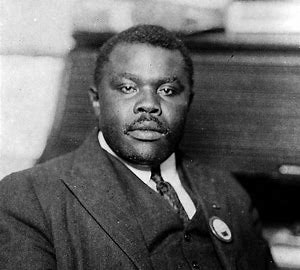
    In one of his final acts as president, Joe Biden granted a posthumous pardon to Marcus Mosiah Garvey Jr., the influential civil rights leader and founder of the UniversalMarcus Garvey Negro Improvement Association (UNIA), clearing his name of a 1923 mail fraud conviction that many have long viewed as unjust.

    The pardon, announced just before the Martin Luther King Jr. holiday, came after years of advocacy from Howard University School of Law professors and students, led by Professor Justin Hansford, who worked closely with Garvey’s son, Dr. Julius Garvey.

    “In the words of Dr. Martin Luther King, Marcus Garvey was ‘the first man of color in the history of the United States to lead and develop a mass movement,’” said Hansford, who published Jailing a Rainbow: The Unjust Trial and Conviction of Marcus Garvey last year. “He was convicted of mail fraud in a trial widely recognized as a miscarriage of justice.”

    The pardon effort gained significant support from 21 members of Congress, primarily from the Congressional Black Caucus, who urged Biden to “honor his work for the Black community, remove the shadow of an unjust conviction, and further your administration’s promise to advance racial justice.” Last year, Diverse featured a podcast on the subject. 

    Garvey, Jamaica’s first national hero, was convicted in 1923 on one count of mail fraud related to his role as president of the Black Star Line shipping company. He received the maximum sentence of five years imprisonment and a $1,000 fine.

    The UNIA founder was a pioneering advocate for human rights and Pan-Africanism, building a movement that reached 6 million members across 40 countries.

    The presidential pardon marks the end of a century-long struggle to clear Garvey’s name. Previous attempts included congressional hearings in 1987 led by Representatives John Conyers and Charlie Rangel, who introduced resolutions to exonerate him.

    The exoneration comes 84 years after Garvey’s death in 1940, affirming his innocence and recognizing his significant contributions to civil rights and human rights advocacy worldwide.

    Source link

  • A bone of contention with secondary legislation

    A bone of contention with secondary legislation

    Statutory instruments – sometimes described as secondary legislation – sit on the boundary between lawmaking and regulation.

    Unlike primary legislation (the Bills we all know and follow diligently through various stages of parliamentary scrutiny before they become Acts), statutory instruments (SIs) are discussed by MPs and Lords only in rare (and usually carefully specified) cases.

    Most of the time, a Secretary of State decides to make regulations (yes, that’s another name for SIs) and publishes them – they become law immediately, although there is a nominal 40 day period for people to complain about them.

    On this basis, you’d expect SIs to be used only in uncontroversial circumstances – to enact previously agreed policy. And that’s the way it is meant to work – policy on the face of the bill, practical implementation in the SIs. And for stuff that is too technical (or dull) to be in an SI – an independent, arms-length regulator, makes the call.

    Spooky, scary

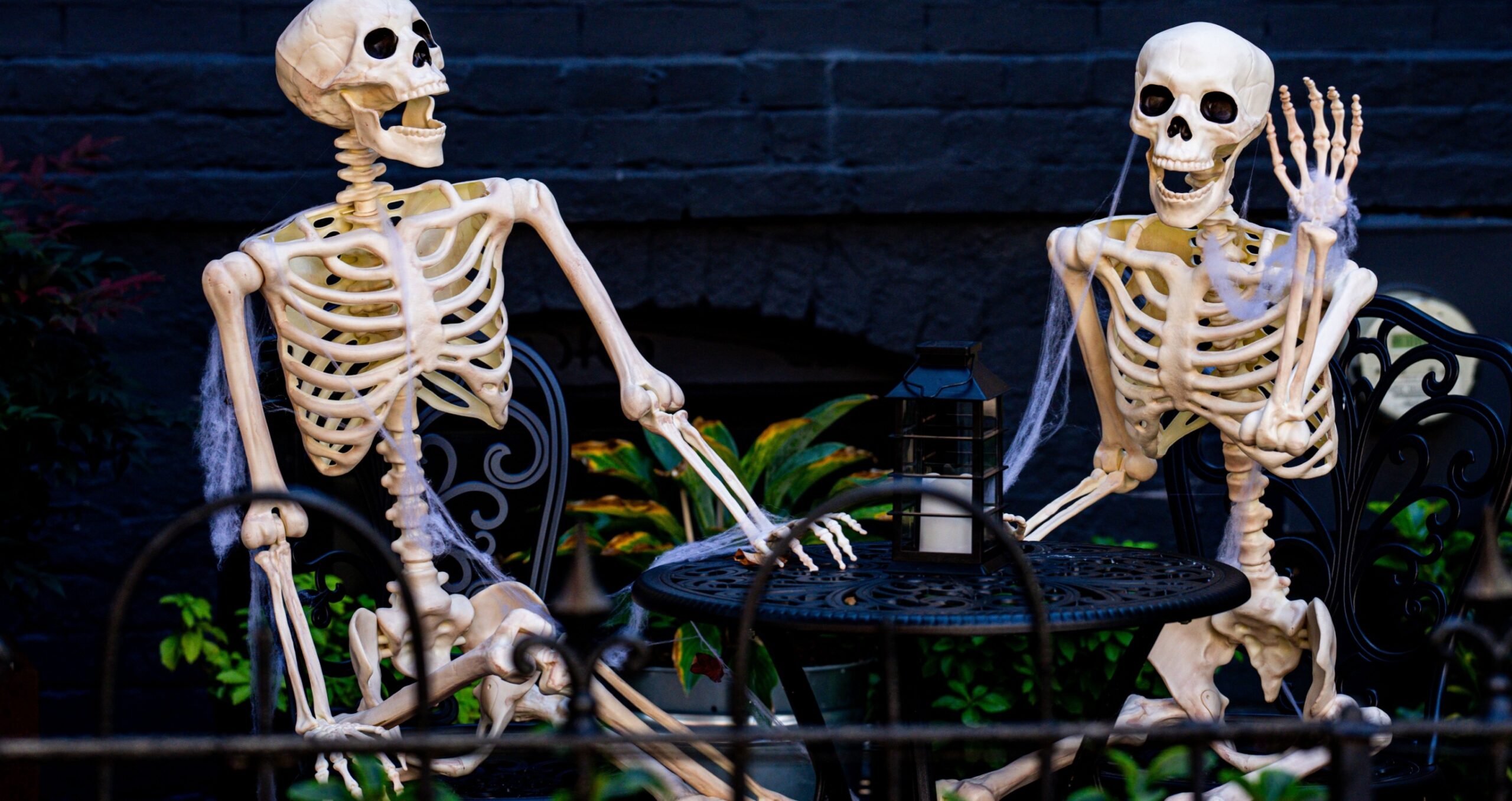
    A “skeleton bill” is a piece of primary legislation that is primarily concerned with giving the Secretary of State powers to do things via SIs. These are unpopular among parliamentarians and informed observers because they put the thing that is meant to be discussed – the policy – out of bounds during parliamentary scrutiny.

    In 2021 the House of Lords Delegated Powers and Regulatory Reform Committee (DPRRC) defined a skeleton bill as:

    where the provision on the face of the bill is so insubstantial that the real operation of the act, or sections of an act, would be entirely by the regulations or orders made under it

    As with other parliamentary bodies (the House of Lords Constitution Committee, the Secondary Legislation Scrutiny Committee) it is of the belief that skeleton legislation should only be used in the most exceptional circumstances – the pandemic was cited as one example of such a situation.

    Skeletons on parade

    In higher education and skills we’ve had more than our fair share of skeletons: very short, technical, bills where the policy action is primarily in SIs. Let’s run them down, from newest to oldest.

    The Institute for Apprenticeships and Technical Education (Transfer of Functions etc) Bill 2024 is supposed to be bringing about a new agency, Skills England. However, you will look in vain for the words “Skills England” on the face of the bill: what is there generally tidies up the implications of getting rid of the Institute for Apprenticeships and Technical Education by assigning powers and responsibilities to the Department for Education.

    The Lifelong Learning (Higher Education Fee Limits) Act 2023 was promoted as providing the underpinnings of the Lifelong Learning Entitlement – in practice everything from fee levels to regulation to the speed of implementation is at the whim of the Secretary of State and a selection of SIs.

    The Skills and Post-16 Education Act 2022 provides further initial LLE underpinnings, alongside a grab bag of other higher education and skills related interventions (LSIPs, essay mills, new and scary powers for OfS). But you’d be hard pushed to identify, much less offer scrutiny to, a central animating policy idea.

    The Advanced Research and Invention Agency Act 2022 was fairly clear in bringing about a new research funding body, ARIA. However, if you want to know what it might research, to what level it will be funded, how it relates to other research funding or research performing bodies, or how it will be held to account for the way it uses public funds, you will be disappointed.

    Let battle commence

    And the Higher Education (Freedom of Speech) Act 2023 is short, and technical, but arguably it is not a skeleton bill. There is plenty of policy in there to get stuck into – indeed, it spent a day under two years before parliament (a record for the modern era). But, as it turns out, SIs held the key to the extent to which measures are implemented, and when.

    It illustrates a point at which every bill may be seen as a skeleton bill of a sort: the use of SIs for commencement.

    In broad terms a bill becomes law at the moment it is given Royal Assent – if the King signs it off (metaphorically) on a Tuesday morning at 10am, it is the law of the land from Tuesday morning at 10am onwards.

    There may be some circumstances where this is not appropriate – for instance if a bill sets up a duty on something or someone, and then provides consequences regarding the way this duty is discharged. For this reason, you sometimes see relative (six months after assent, for example) or absolute (1 August 2025) dates in the “commencement” section of the act, allowing for a delay to get things in order or to give a grace period to allow time to comply with the new rules.

    Even then, it may not always be possible to put a precise date on these things. Perhaps an act makes a new public appointment – this might need time to recruit, interview, and approve a person – and then give that person new powers. As you can’t really give powers to something, or someone, that doesn’t yet exist a Secretary of State may commence these powers only when the post is filled, and (yes) an SI is the tool to do this.

    (as a fun aside, the reason I keep capitalising Secretary of State in this piece is because when an act gives powers to a secretary of state it doesn’t just mean the secretary of state of the department that “owns” the bill – it means any secretary of state. It’s a hangover from a time when there was only one secretary of state for the whole government – and the upshot of this is that, technically, Nadine Dorries could have made regulations about the use of the UK’s nuclear deterrent while she was Secretary of State for Culture. It really is a wonder that we still all exist)

    I choose not to choose

    As I noted the other week, a Secretary of State is equally able to decide not to use their commencement powers. There’s not really any formal or legal comeback on a choice like this – although there could be noisy complaints where the decision is a high profile one and can be seen as the expressed will of parliament. In the comments, Julian Gravatt correctly notes that the Easter Act 1928, which would sensibly fix the date of Easter as being the second Sunday in April each year, has yet to be commenced – I have yet to hear from the Free Speech Union on this breach of the democratic will of the people.

    If it sounds like I’m being flippant here, be aware that there is a serious point too. If you take the fundamental standpoint that policy gets better with scrutiny and that ultimately parliament expresses the will of the people, the idea that a minister could just ignore stuff is a bit of a worry.

    There are sensible reasons for this – I don’t want every element of the HESA Student specification to be discussed on the floor of the commons, I don’t really want the minister explaining to parliament why she wants to give OfS another month to properly make sense of consultation responses – but if you cast your mind over the list of acts above it does feel like an unpleasantly long time since the Commons or the Lords had a serious discussion about higher education policy that had any chance of having an impact on the way things work.

    There’s a part of me that still remembers the low information nature of some of the conversations that did happen during the extended stay of the Higher Education (Freedom of Speech) Act – but if you think back even further (to the 2017 Higher Education and Research Act) it is possible, especially in the Lords, for the government to get useful and meaningful advice on their proposed actions which will have the pleasing upshot of making higher education work better.

    And perhaps we need more of that as we design the next phase of higher education policy.

    Source link

  • PowerSchool Got Hacked. Now What? – The 74

    PowerSchool Got Hacked. Now What? – The 74


    Get stories like this delivered straight to your inbox. Sign up for The 74 Newsletter

    Were you a current or former student in the last few decades? Or a parent? Or an educator? 

    If so, your sensitive data — like Social Security numbers and medical records — may have fallen into the hands of cybercriminals. Their target was education technology behemoth PowerSchool, which provides a centralized system for reams of student data to damn near every school in America.

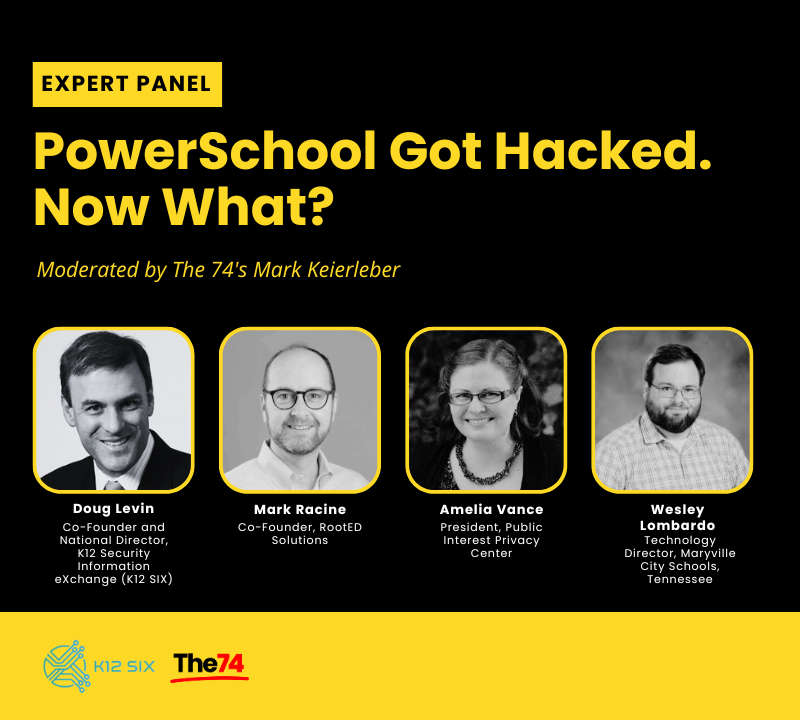
    Given the cyberattack’s high stakes and its potential to harm millions of current and former students, I teamed up Wednesday with Doug Levin of the K12 Security Information eXchange to moderate a timely webinar about what happened, who was affected — and the steps school districts must take to keep their communities safe.

    Sign-up for the School (in)Security newsletter.

    Get the most critical news and information about students’ rights, safety and well-being delivered straight to your inbox.

    Concern about the PowerSchool breach is clearly high: Some 600 people tuned into the live event at one point and pummeled Levin and panelists Wesley Lombardo, technology director at Tennessee’s Maryville City Schools; Mark Racine, co-founder of RootED Solutions; and Amelia Vance, president of the Public Interest Privacy Center, with questions. 

    PowerSchool declined our invitation to participate but sent a statement, saying it is “working to complete our investigation of the incident and [is] coordinating with districts and schools to provide more information and resources (including credit monitoring or identity protection services if applicable) as it becomes available.”

    The individual or group who hacked the ed tech giant has yet to be publicly identified.

    Asked and answered: Why has the company’s security safeguards faced widespread scrutiny? What steps should parents take to keep their kids’ data secure? Will anyone be held accountable?

    Watch the webinar here.


    In the news

    Oklahoma schools Superintendent Ryan Walters, who says undocumented immigrants have placed “severe financial and operational strain” on schools in his state, proposed rules requiring parents to show proof of citizenship or legal immigration status when enrolling their kids — a proposal that not only violates federal law, but is likely to keep some parents from sending their children to school. | The 74

    • Not playing along: Leaders of the state’s two largest school districts — Oklahoma City and Tulsa — rebuked the proposal and said they would not collect students’ immigration information. Educators nationwide fear the incoming Trump administration could carry out arrests on campuses. | Oklahoma Watch
       
    • Walters filed a $474 million federal lawsuit this week alleging immigration enforcement officials mismanaged the U.S.-Mexico border, leading to “skyrocketing costs” for Oklahoma schools required “to accommodate an influx of non-citizen students.” | The Oklahoman
       
    • Timely resource guide: With ramped-up immigration enforcement on the horizon — and with many schools already sharing student information with ICE — here are the steps school administrators must take to comply with longstanding privacy and civil rights laws. | Center for Democracy & Technology

    A federal judge in Kentucky struck down the Biden administration’s Title IX rules that enshrined civil rights protections for LGBTQ+ students in schools, siding with several conservative state attorneys general who argued that harassment of transgender students based on their gender identity doesn’t constitute sex discrimination. Mother Jones

    Fires throw L.A. schools into chaos: As fatal wildfires rage in California, the students and families of America’s second-largest school district have had their lives thrown into disarray. Schools serving thousands of students were badly damaged or destroyed. Many children have lost their homes. Hundreds of kids whose schools burned down returned to makeshift classrooms Wednesday after losing “their whole lifestyle in a matter of hours.” | The Washington Post 

    • At least seven public schools in Los Angeles that were destroyed, damaged or threatened by flames will remain closed, along with campuses in other districts. | The 74

    Has TikTok’s time run out? With a national ban looming for the popular social media app, many teens say they’re ready to move on (and have already flocked to a replacement). | Business Insider

    Instagram and Facebook parent company Meta restricted LGBTQ+-related content from teens’ accounts for months under its so-called sensitive content policy until the effort was exposed by journalist Taylor Lorenz. | Fast Company

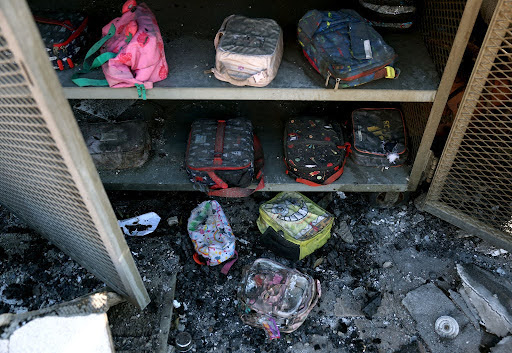
    Students’ lunch boxes sit in a locker at California’s Marquez Charter Elementary School, which was destroyed by the Palisades fire on Jan. 7. (Photo by Justin Sullivan/Getty Images)

    The Federal Communications Commission on Thursday announced the participants in a $200 million pilot program to help schools and libraries bolster their cybersecurity defenses. They include 645 schools and districts and 50 libraries. | FCC

    Scholastic falls to “furry” hackers: The education and publishing giant that brought us Harry Potter has fallen victim to a cyberattacker, who reportedly stole the records of some 8 million people. In an added twist, the culprit gave a shout-out to “the puppygirl hacker polycule,” an apparent reference to a hacker dating group interested in human-like animal characters. | Daily Dot

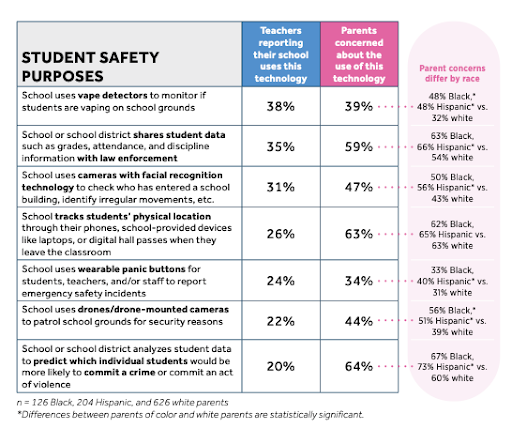
    Not just in New Jersey: In a new survey, nearly a quarter of teachers said their schools are patrolled by drones and a third said their schools have surveillance cameras with facial recognition capabilities. | Center for Democracy & Technology

    The number of teens abstaining from drugs, alcohol and tobacco use has hit record highs, with experts calling the latest data unprecedented and unexpected. | Ars Technica


    ICYMI @The74

    Librarians Gain Protections in Some States as Book Bans Soar

    RFK Jr. Could Pull Many Levers to Hinder Childhood Immunization as HHS Head

    Feds: Philadelphia Schools Failed to Address Antisemitism in School, Online


    Emotional Support

    New pup just dropped.

    Meet Woodford, who, at just 9 weeks, has already aged like a fine bourbon. I’m told that Woody — and the duck, obviously — have come under the good care of 74 reporter Linda Jacobson’s daughter.


    Get stories like these delivered straight to your inbox. Sign up for The 74 Newsletter

    Source link

  • A Solicitation for Black Scholars to Shine Amidst the Storms and Sickness

    A Solicitation for Black Scholars to Shine Amidst the Storms and Sickness

    In this season of ongoing celebrations, as we remember and reflect on the life and legacy of the late civil rights icon and leader, the Rev. Dr. Martin Luther King Jr.,Dr. Ronald W. Whitaker, II we position this op-ed as a prophetic call to Black scholars. This call draws inspiration from Dr. King’s last public address on April 3, 1968, affectionately known as his Mountaintop Speech

    Upon arriving in Memphis, Tennessee, on April 3, 1968, King was physically exhausted, weighed down by the burdens of leadership, and grappling with his lifelong struggle with depression. What is less widely known; however, is that King arrived in Memphis the day before his assassination, in the midst of a fierce storm and tornado warnings.

    Indeed, King began his address to the crowd that evening with the words, “I’m delighted to see each of you here tonight in spite of a storm warning. You reveal that you are determined to go on anyhow. Something is happening in Memphis, something is happening in our world” (King, 1968). The storm King referred to that night symbolizes the socio-political storms that many Black scholars are currently navigating, as turbulence and change rage both inside and outside of campus environments.

    Twelve years ago, in his book Strategic Diversity Leadership: Activating Change and Transformation in Higher Education, DEI scholar and thought leader Dr. Damon A. Williams issued a warning to academics and campus leaders about what he termed a “perfect storm.”Dr. Adriel A. HiltonDr. Adriel A. Hilton

    Williams writes: “The degree shortfall, along with changing demographics and an increasingly turbulent political landscape, has created a ‘perfect storm’ for leaders contemplating the role of diversity in higher education. To understand and overcome the challenges of this perfect storm, academic leaders must fundamentally reframe how they approach issues of diversity in our colleges and universities” (Williams, 2013, p. 31).

    According to Williams, several “critical pressures” are fueling the perfect storm on college campuses. However, one of the most concerning threats, particularly for those advocating for authentic justice within higher education, is the ongoing legal and political assault on diversity and affirmative action. Following the second presidential election of Donald J. Trump, we have already begun to see the promised reverse of DEI initiatives within some of the country’s largest corporations. Similarly, as argued in this article, there is a continued effort to dismantle DEI programs in higher education.     

    Yet, on the evening of April 3, 1968, King was not only confronting a storm; he was also addressing a deeper, more pervasive, and pernicious problem, which he framed as a “sickness.” After introducing the historical context and poetic reflections on the movement, King did not mince words, asserting, “the nation is sick. Trouble is in the land; confusion all around.” 

    At the core of King’s assertion that “the nation is sick” was his identification of three major evils: (1) “the evil of racism,” (2) “the evil of poverty,” and (3) “the evil of war.” As a leading figure within the Black Prophetic Tradition, King understood that a nation rooted in systemic injustice, economic inequity, and racial oppression is inherently “sick.”

    Unfortunately, as we write this article today, we are still confronting a serious “sickness” on campuses. Systemic equity gaps and disparities continue to persist across demographic groups, particularly impacting our most vulnerable students. Additionally, the rising cost of college tuition disproportionately affects students from lower-income families, further exacerbating the barriers to higher education. Economic inequities within higher education also highlight broader systemic inequalities, such as the underfunded programs designed to support vulnerable student populations (Mitchell, Leachman, & Masterson, 2018).

    Despite the rhetoric suggesting that we have entered a “post-racial” society, studies present counternarratives expose widening gap on racial inequality in higher education. In the face of the storms and sickness described in this op-ed, it is easy to feel discouraged and downtrodden.

    This is why we draw from the wisdom and courage of King, who, even in the midst of adversity, possessed the uncanny ability to speak the painful truth while simultaneously offering hope for a better tomorrow. For example, after asserting that the nation is sick, King reminded us that “only when it is dark enough can you see the stars.” 

    We believe this is the focal point of King’s message. Specifically, despite the dark storms and sicknesses in society and within the academy, this may be the moment for us as Black scholars and leaders to shine. Our call to shine is not rooted in the pursuit of promotions, tenure, senior administrator positions, or the building of our professional brands. No, we argue that we must authentically shine in order to critically reflect on the issues plaguing campuses and, more importantly, to find the courage to stand for truth and justice.

    We shine when we, as King urged America to do on April 3, 1968, remind campus leaders and colleagues to be “true to what you said on paper.” Each college has a mission statement, vision statement, code of ethics, values, and strategic plan that underscores the importance of moral behavior. Therefore, when we receive reports and data suggesting that vulnerable populations are being targeted within social catalytic spaces on college campuses, it is an urgent call to remind leadership to adhere to the values stated in official documents, such as websites, marketing materials, and other institutional communications.

    Lastly, we shine when we confront the existential realities of our existence. As those closest to King have shared, on the night of April 3, 1968, he knew his time on earth was short. Similarly, despite our accolades and titles, our time in academia is relatively brief, and we must decide what legacy we wish to leave. In honoring our ancestors, elders, students, and communities we serve, we must stay focused on the promised land—a promised land rooted in justice, democracy, freedom, safety, security, opportunity, and solidarity. As such, we must not lose hope in the belief that things will get better for “we as a people!” 

    In closing, do not give in to pessimism and fear. Instead, choose to shine. By doing so, we might not only be saving the soul of our institutions of higher education, but collectively, we might be saving the soul of this nation.

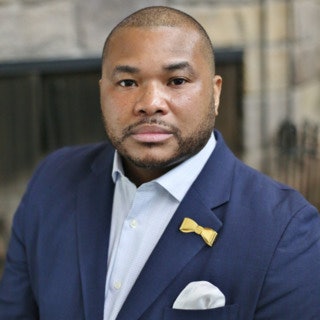
    Dr. Ronald W. Whitaker, II, is a Visiting Associate Professor of Education at Arcadia University, Director of the MEd in Educational Leadership Program, and Co-Director of the Social Action and Justice Education Fellowship Program at Arcadia University.  Additionally, Dr. Whitaker is an inaugural faculty fellow at Vanderbilt University for the Initiative for Race, Research, and Justice. 

    Dr. Adriel A. Hilton serves as Director of Programs, Transition and Youth Success Planning (staffing the Assistant Secretary of Juvenile Rehabilitation) in the Washington State Department of Children, Youth and Families. Most recently, he served as vice-chancellor for student affairs & enrollment management and associate professor of education at Southern University at New Orleans.


    Source link

  • The US is leading us closer to nuclear war (Jeffrey Sachs)

    The US is leading us closer to nuclear war (Jeffrey Sachs)

    Columbia University Professor Jeffrey Sachs says that the United States is steering the world toward disaster. Sachs served as the Director of the Earth Institute at Columbia University from 2002 to 2016 and is considered one of the world’s leading experts on
    economic development, global macroeconomics, and the fight against
    poverty.

    Source link