Blog

  • Check Revised Last Date, Eligibility and How to Apply Online at gujcet.gseb.org

    Check Revised Last Date, Eligibility and How to Apply Online at gujcet.gseb.org

    GUJCET 2026 Application Deadline Extended: The Gujarat Secondary and Higher Secondary Education Board (GSEB), Gandhinagar, has extended the application deadline for the Gujarat Common Entrance Test (GUJCET) 2026. According to the official notification, eligible candidates can submit their online applications until January 6, 2026. The application should be filled out on the official websites gseb.org and gujcet.gseb.org.

    The exam is open to students who have either passed or are currently appearing for the HSC examination in the Science stream, including those from Groups A, B, and AB. The GUJCET 2026 exam will be conducted on March 29, 2026, and only those candidates will be considered eligible for the exam whose application form meets the board’s criteria.

    Eligibility

    –Candidates must be citizens of India and have a domicile in Gujarat.

    –Those who wish to take the GUJCET 2026 exam must have passed or be appearing for their class 12 exam or an equivalent qualification.

    –For those applying for Engineering programmes, it is mandatory to have studied Physics, Chemistry, and Mathematics as main subjects.

    –For Pharmacy programmes, candidates must have studied either Physics, Chemistry, and Mathematics or Physics, Chemistry, and Biology as main subjects.

    Passing criteria

    To be eligible, candidates must have achieved a minimum score of 45% in their class 12 exams. Candidates from reserved categories must have scored at least 40% in their class 12 exams.

    Story continues below this ad

    GUJCET Registration 2026: How to apply

    Step 1: Visit the official GSEB website — gujcet.gseb.org.

    Step 2: On the home page click on the ‘Application for GUJCET 2026’’ link and register.

    Step 3: Enter credentials to log in.

    Step 4: Fill in the application form

    Step 5: Upload the required documents

    Step 6: Make the payment for the application form and download the receipt

    Step 7: Submit the application form.

    Step 8: Download the confirmation page and save it for further use.

    Story continues below this ad

    Application Fees

    The application fee is Rs 350, payable online via SBI ePay using credit card, debit card, or net banking. Applicants may also opt for cash payment at designated SBI branches through the “SBI Branch Payment” option.

    GUJCET serves as the gateway for admission to degree engineering and degree/diploma pharmacy programmes across Gujarat. For more updates on GSEB GUJCET notification, application and more, students can check at education.indianexpess.com.


    © IE Online Media Services Pvt Ltd

    Source link

  • Our top education stories of 2025

    Our top education stories of 2025

    Our top education stories of 2025

    Note that the first one from this “media” outlet for school choice (and by “for” I do mean in favour of) is focused on the proposed Catholic cyber charter school.

    Why We Do This

    Fact-based, nonprofit journalism is the key to shaping better outcomes for America’s students. Support us this holiday season and be part of the solution.

    Good morning,

    We hope you’re enjoying a restful holiday season. At The 74, we’ve been reflecting on a dizzying year in education news. From the dismantling of the Education Department to immigration crackdowns that spurred concerned families to keep children home from school (or leave the country altogether) to why kids aren’t reading for fun anymore and artificial intelligence in the classroom, we have covered a vast array of important stories this year. Below is a roundup of some of our biggest, most important stories of 2025.

    And, in case you missed them earlier this month, we are reupping our lists of the most talked-about and impactful education essays of 2025, the best charts of the year and our annual Jealousy List.

    And a programming note: We’ll be taking a break from our regular lineup of newsletters for the rest of the week. We wish you all a happy and healthy New Year!

    When it comes to education news, 2025 was unprecedented. Tectonic shifts to education policy and child welfare were set in motion — and at a dizzying pace. Plus, many other storylines were playing out, including literacy, the state of teacher pay and the challenges educators face as they grapple with the rapid adoption of artificial intelligence. And we expanded our coverage to include crucial issues facing early child care and education. We hope you take the time to read (and share) these impactful stories. Here are some of the highlights:

    • Supreme Court: The Justice, the Professor and the Friendship That Could Rattle a Pivotal Religious Charter School Case

    [STUFF DELETED]

    Copyright © 2025 The 74 Media, Inc, All rights reserved.

    Our mailing address is:

    The 74 Media, Inc

    200 Broadway, Fl 3

    Suite 601

    New York, NY 10038

    Were you forwarded this email? Sign up here to get it daily.

    No comments yet.

    Source link

  • Get 50% Off New Year (2026)

    Get 50% Off New Year (2026)

    MasterClass New Year Verified Offer – 50% Off

    If you’re looking for the best MasterClass discount right now, here’s the quick answer:

    👉 MasterClass is currently running a New Year’s Sale with a flat 50% off on annual subscriptions.

    • Sale dates: December 28 – January 8
    • No coupon code required — the discount is applied automatically at checkout.

    This is one of the biggest discounts MasterClass offers all year, and it applies to all subscription plans.

    If you want the exact prices, how long the deal lasts, and whether MasterClass is actually worth buying…keep reading.


    Latest MasterClass Discount (New Year Sale – 50% Off)

    The MasterClass Holiday Sale ended on December 28, 2025, and right after that, MasterClass launched its New Year Sale.

    ✅ Current Offer Details

    • Discount: 50% off
    • Valid: Dec 28 – Jan 8
    • Applies to: All annual subscription plans
    • Coupon code: ❌ Not required

    You simply click the official offer link, choose a plan, and the discounted price shows up automatically.


    MasterClass Subscription Price After 50% Discount

    Here’s exactly how much MasterClass costs with the current 50% off sale.

    Regular vs Discounted Price (US)

    • Standard Plan (1 device):
      $60/year (Regular price: $120)
    • Plus Plan (2 devices):
      $90/year (Regular price: $180)
    • Premium Plan (6 devices):
      $120/year (Regular price: $240)

    Important: MasterClass discounts apply only to annual subscriptions. There’s no monthly plan.

    If you’re from India, I’ve explained the complete MasterClass pricing in India (₹) in a separate article – including taxes and region-specific pricing.


    Monthly vs Annual Plan – Which Is Cheaper?

    This is a common confusion, so let me simplify it.

    MasterClass doesn’t really encourage monthly learning. Their platform is clearly designed for slow, consistent learning over time, not binge-watching everything in one month.

    Even if you:

    • Watch just 2–3 full classes in a year
    • Or spend 20–30 minutes a few nights a week

    …the annual plan during a sale still turns out cheaper than:

    • Buying multiple standalone courses elsewhere
    • Or paying for short-term subscriptions you don’t fully use

    From my own experience, MasterClass works best when you treat it like a habit — not a crash course.

    That’s why the annual discounted plan makes the most sense for most people.


    MaterClass – Student / Group / Holiday Discounts Explained

    Let’s clear up some confusion — because many coupon sites don’t.

    • No official student discount
    • No special referral coupon codes
    • Holiday & seasonal sales are the real discounts

    If you see websites claiming “extra student coupons” or “secret discount codes,” be cautious. MasterClass promotions are usually automatic site-wide sales, not code-based deals.

    However, there is a smart way to save more:

    • Choose a multi-device plan and split the cost with family or friends
    • Buy during holiday sales (New Year, Black Friday, etc.)

    That’s the most reliable way to get MasterClass at its lowest price.


    Is There a MasterClass Coupon Code or Promo Code?

    This is one of the most common questions.

    Short answer: ❌ No.

    MasterClass does not use traditional coupon codes, promo codes, or discount codes.

    All official discounts (including this 50% New Year Sale) are:

    • Applied automatically
    • Available only through the official sale page
    • The same for everyone

    So if you see websites claiming “exclusive MasterClass coupon codes”, they usually just redirect you to the same sale page.


    How to Claim the MasterClass Discount (Step-by-Step)

    MasterClass Subscription Plans – Discounts

    Claiming the MasterClass offer is very simple:

    1. Visit the official MasterClass sale page
      (The discount is available only through the official link.)
    2. Choose your subscription plan
      • Standard (1 device) – best for solo learners
      • Plus (2 devices) – good for couples or friends
      • Premium (6 devices) – ideal for families
    3. Create an account or sign in
    4. Confirm the discounted price
      • You should see 50% off already applied
      • No promo code box needed
    5. Complete the payment
      • Credit/debit card or PayPal (availability varies by region)

    Once payment is done, your membership activates instantly.


    Most Popular MasterClass Courses (What People Actually Watch)

    One thing I noticed while using MasterClass is that some courses are clearly more popular than others.

    If you’re wondering what you’ll actually watch after buying a subscription, these are some of the most-loved MasterClass courses right now.

    1. Chris Voss – The Art of Negotiation

    One of the most practical MasterClass courses on communication and persuasion. I found this especially useful for salary negotiations and client conversations.

    2. Gordon Ramsay – Cooking at Home

    Probably the most famous MasterClass ever. Great if you want to actually cook along, not just watch.

    3. James Clear – Building Better Habits

    Based on Atomic Habits. Simple, actionable, and perfect if you like mindset and self-improvement content.

    4. Neil Gaiman – The Art of Storytelling

    Loved by writers and creatives. More inspirational than technical.

    5. Bob Iger – Business Strategy & Leadership

    Great for understanding leadership decisions from a real CEO perspective.

    Note: All these classes are included in a single MasterClass subscription. You don’t pay extra per course.

    Note: I’ve shared my detailed experience with this course here → MasterClass Review : What I Loved, What I Didn’t, Pricing, Trial & Is It Worth It in 2026?


    Is MasterClass Worth It? (Quick Buying Advice)

    I’ve been using MasterClass for over a year and renewed my subscription again – so here’s my honest take.

    MasterClass is worth it if:

    • You enjoy learning from real experts and famous personalities
    • You want to improve mindset, communication, creativity, or leadership
    • You prefer structured, distraction-free learning over random YouTube videos

    It may not be ideal if:

    • You want job-ready technical certifications
    • You need assignments, exams, or live mentor interaction

    If you want my full, detailed experience, including what I liked, what I didn’t, and the exact courses I completed – I’ve shared everything in my complete MasterClass review.


    MasterClass Sale Calendar (Past & Upcoming Deals)

    If you’re wondering when MasterClass goes on sale, here’s a quick overview based on past patterns:

    • New Year Sale: ✅ 50% off (Current – Dec 28 to Jan 8)
    • Holiday Sale: ❌ Ended (Mid-Dec to Dec 28)
    • Black Friday Sale: ❌ Ended (Late November)
    • Cyber Monday Sale: ❌ Ended
    • Labor Day Sale: ❌ Occasionally offered (not guaranteed)

    👉 The New Year and Black Friday sales usually offer the highest discounts — up to 50%.


    MasterClass Refund Policy (Risk-Free)

    Even if you buy during a sale, MasterClass offers:

    • 30-day money-back guarantee
    • Full refund if you’re not satisfied
    • No questions asked

    So you can try it without worrying about losing your money.


    MasterClass vs Alternatives

    MasterClass vs Udemy

    Udemy and MasterClass serve very different purposes.

    Udemy is great when:

    • You want to learn a specific technical skill
    • You need hands-on, job-ready tutorials
    • You want quick results

    MasterClass is better when:

    • You want to learn from the best in the world
    • You care about mindset, thinking, creativity, and communication
    • You want structured, distraction-free learning

    I personally use both.

    Udemy teaches you how to do a job.
    MasterClass teaches you how experts think.


    MasterClass vs Skillshare

    Skillshare is more beginner-focused and project-driven.

    It’s good if:

    • You’re just starting a creative skill
    • You like short, casual lessons
    • You want quick inspiration

    MasterClass, on the other hand:

    • Goes deeper
    • Focuses on long-term thinking
    • Feels more intentional and polished

    In simple words:
    Skillshare helps you start. MasterClass helps you refine.


    Why MasterClass Is Different:

    This is something I didn’t fully understand until I actually used it.

    MasterClass doesn’t try to teach everything.
    It focuses on teaching what actually matters.

    There are:

    • No ads
    • No distractions
    • No rushed content
    • No pressure to finish fast

    Each class feels like a complete learning journey — not just a collection of videos.

    That’s why, even after a year, I didn’t hesitate to renew my membership.


    Final Verdict: Should You Buy MasterClass Now?

    If you’ve been thinking about trying MasterClass, this is one of the best times to do it.

    A 50% discount brings the price down to:

    • $60/year for individual learners
    • Even less per person if you choose a family plan

    That’s less than most streaming subscriptions — except instead of binge-watching shows, you’re learning from people like James Clear, Chris Voss, Gordon Ramsay, Neil Gaiman, and many more.

    I personally found MasterClass enjoyable, inspiring, and genuinely useful — especially when bought during a sale like this.

    If you’re curious, I’d recommend giving it a try before the New Year Sale ends on January 8.

    Happy learning 🙂

    >> You’re covered by a 30-day refund policy if it’s not for you.


    FAQs – MasterClass Discount & Subscription

    When does MasterClass go on sale?

    MasterClass usually runs major sales a few times a year — New Year, Black Friday, Cyber Monday, and Holiday season. The New Year Sale is currently live with 50% off.

    How much does a MasterClass subscription cost?

    Regular prices range from $120 to $240 per year, depending on the plan. With the current 50% discount, prices start at $60/year.

    Does MasterClass offer a monthly plan?

    No. MasterClass subscriptions are billed annually only.

    Can I cancel MasterClass after purchase?

    Yes. You can request a full refund within 30 days if you’re not satisfied.


    Discounts on Other Learning Platforms:

    Source link

  • Top Los Angeles Teacher Encourages Kids To Make a Mess in Her Class – The 74

    Top Los Angeles Teacher Encourages Kids To Make a Mess in Her Class – The 74


    Get stories like this delivered straight to your inbox. Sign up for The 74 Newsletter

    By the time the morning bell rings at Rosewood STEM Magnet, Urban Planning and Urban Design, Monika Heidi Duque has already been in her classroom for hours — reviewing lesson plans, setting out materials, and greeting students by name.  

    Duque, who has taught at the award-winning, urban planning-themed LAUSD elementary school in West Hollywood for 18 years, was one of four teachers named as finalists by the state education department for the 2026 California Teachers of the Year in October. She was the only LAUSD teacher to receive the honor.

    Duque works hard to create a free-flowing vibe in her first-grade classroom to promote the creativity of her students, describing the scene as the “best kind” of messy.  

    “It’s a place where my students are able to wonder, to be curious, to take risks, to be able to make things with their hands and minds,” said Duque, who has been a teacher in Los Angeles Unified since 2000. 

    “It’s a place where you can tell learning is happening,” she said of her classroom. 

    The veteran teacher’s freewheeling approach is apparent in her classroom but there’s a method to the mayhem. Everything her students do is somehow tied back to the school’s theme of urban planning and urban design, topics Duque admits could be heady for her 6-year-old students, were it not for her approach to the subjects, which links them to kids’ everyday lives. 

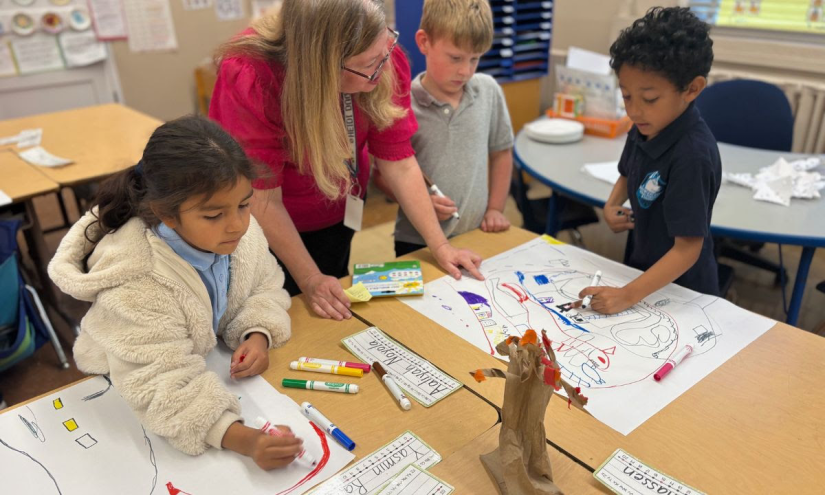
    On a recent school day, students in Duque’s class were drawing pictures of designs for a new community space in Griffith Park after she noticed a news report about the city’s struggle to repurpose the area formerly used for pony rides.   

    Students drew pictures of their ideas for the space, coloring construction paper using markers and drawing their visions for forests and lazy rivers that could be installed in L.A.’s historic park.  

    In subsequent parts of the project, Duque said, students will create three-dimensional models of their ideas for the part using recycled materials such as cardboard and paper.  

    “We’re making an arcade that’s called Fun Time, and then we put a petting zoo next to it called Pig Pig,” said Ben, a student in Duque’s class, who was working on a drawing with a few classmates. “I wonder if it will really happen.”

    Duque often pulls ideas for lessons from real-life events in L.A., finding the sprawling and diverse city offers no shortage of inspiration for classroom activities tied to urban planning. 

    “I just keep my eyes and ears to the news, and I just see what’s happening in our community, and I just get ideas from there,” she said. 

    A favorite lesson from a few years ago was based on an experience the teacher had while walking her dog in Griffith Park, when a coyote approached the two and nearly attacked Duque’s pet. 

    Feral coyotes are common in L.A. and such experiences aren’t unusual, but this event inspired Duque to create a lesson for students to create outfits for pets to repel predatory coyote attacks.

    Students created costumes for pets that featured things known to deter coyotes, such as flashing lights. One student liked the project so much she created a picture book about the lesson with her parents, a copy of which Duque keeps displayed on the wall in her class. 

    “It’s another example of how I really look at what’s in our city, what’s in the news, and what’s relevant to kids and our lives,” the teacher said. 

    Duque’s relentless curiosity and enthusiasm make her a natural leader among her colleagues at Rosewood, said the school’s principal, Linda Crowder.

    “She is a lifelong learner,” Crowder said. “She gets something and she runs with it.”


    Did you use this article in your work?

    We’d love to hear how The 74’s reporting is helping educators, researchers, and policymakers. Tell us how

    Source link

  • Support for student parents at risk due to proposed funding cuts

    Support for student parents at risk due to proposed funding cuts

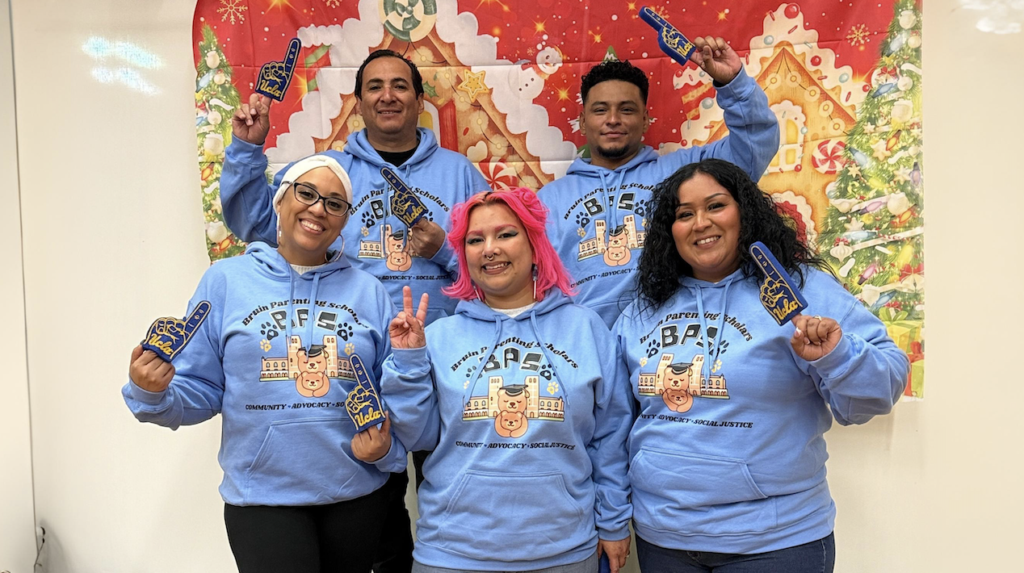
    UCLA Bruin Parenting Scholars (BPS) board at their winter warmth basic needs drive for students with dependents.

    Credit: Photo courtesy of Trina Rodriguez

    As students across the country wrap up their final exams, academic pressure is front and center. For many, this season is stressful. For student parents, however, the stakes are even higher.

    Alongside exams and essay deadlines, student caregivers balance jobs, household responsibilities, and the constant demands of raising children and other family members — often with little institutional support. For them, success in college is not just about grades; it is about securing stability for their families and breaking cycles of economic insecurity.

    More than one in four undergraduate students in the United States are raising children, and 54% are doing so without a partner. Despite this widespread need for support, the programs that make higher education possible for student parents are threatened. Chief among them is the federal Child Care Access Means Parents in School (CCAMPIS) initiative, the only national program that provides campus-based childcare subsidies for low-income student parents so they can stay enrolled and complete their degrees.

    Across the University of California (UC) system, survey data shows nearly 1,000 undergraduate students and 1,500 graduate students are caregivers. These students, often older, first-generation, and low-income, face challenges that traditional student support systems were never designed to meet. Parenting students also experience food and housing insecurity at disproportionately higher rates than their non-parenting peers. Add the cost of childcare, and the financial burden becomes nearly impossible to bear.

    Despite this clear need, support is shrinking. Although Congress allocated $75 million for CCAMPIS in fiscal year (FY) 2025, and there have been previous bipartisan proposals to increase funding to $200 million annually, President Trump’s budget request and the House education spending bill for FY 2026 proposed cutting the program entirely.

    Eliminating this funding would put thousands of families under severe financial strain, intensifying the challenges for caregivers already facing heightened food or housing insecurity and making it much harder to balance school and parenting responsibilities.

    “As a CCAMPIS recipient, I know that without federally supported childcare, I would never have been able to care for my late mother while returning to school, nor would I have completed undergrad with dual degrees,” Schinal Harrington, a masters of social work (MSW) candidate at UCLA, wrote in an email to us. “As a first-generation, system-impacted woman of color, mother, and graduate student, I have spent my academic journey navigating red tape, institutional neglect, and the loss of [fellow] peers whose struggles were shaped by the same barriers student parents face today.”

    Harrington chairs Bruin Parenting Scholars (BPS), a UCLA student advocacy organization that provides resources, mentorship, and community for students with dependents. Every day, she sees how childcare access, trauma-informed services, and flexible policies support not just parenting students, but their families.

    Trina Rodriguez, another UCLA MSW student and student parent advocate, describes this reality with raw clarity: “My lived experience carries many identities, but the first thing I am when I wake up, before anything else, is ‘Mommy.’ When universities do not acknowledge the existence of this marginalized community through institutional supports — like flexible scheduling, affordable childcare, and family-friendly policies — student parents face systemic barriers to completing their education. Universities are, therefore, perpetuating harm on this community.”

    Yet despite systemic gaps, student parents demonstrate extraordinary resilience. UC survey data show that parenting graduate students feel more upbeat about their career prospects and better prepared for the job search than their non-parenting peers. Their determination is evident — even when given modest support.

    “As a parenting scholar [myself], I’ve witnessed how student parents embody perseverance, compassion, and leadership, yet must navigate systems that were never built with their lives in mind,” said Sonya Brooks, the 2025-26 UC student regent. “Supporting student parents means recognizing that higher education is not one-size-fits-all: it must evolve to meet the realities of those raising families while pursuing their dreams. The success of student parents ripples across generations, shaping stronger families, communities, and universities.”

    Other resources for student parents

    BrightLife Kids is a free virtual behavioral health coaching program for families in California with children ages 0–12.

    Part of the CalHOPE initiative, BrightLife Kids offers 1:1 video coaching and secure chat services at no cost, with no insurance or referral required, providing caregivers with helpful tools.

    When Congress passed a short-term continuing resolution (CR) to end the longest government shutdown in U.S. history, longer-term funding questions — including CCAMPIS funding for 2026 — remained unresolved. House and Senate appropriators are now deciding whether to follow the president’s proposal or save the program when the continuing resolution expires in January.

    Congress must restore full funding for CCAMPIS and reject cuts that threaten the educational futures of thousands of student parents nationwide. Undermining these supports jeopardizes not only individual students but entire families.

    Colleges and universities must also do their part by expanding childcare access, adopting family-friendly policies, and offering flexible learning options with integrated advising. Higher education cannot credibly claim to value its students while ignoring the realities faced by the many on campus who are raising dependents.

    Parenting students have shown up for their families. Now it is time for our institutions to show up for them.

    •••

    Duke Dela Rosa is the director, and Amrit Dhillon, Arianna Li, and Sue Jung are associates, of the Associated Students of the University of California (ASUC) federal government relations department at UC Berkeley.

    The opinions expressed in this commentary represent those of the author. EdSource welcomes commentaries representing diverse points of view. If you would like to submit a commentary, please review our guidelines and contact us.

    Source link

  • Duke shows what not to do when feds come knocking

    Duke shows what not to do when feds come knocking

    This op-ed originally appeared in the Duke Chronicle on Dec. 21, 2025.


    Duke’s fight against the Trump administration has a new front: employee speech. After the White House accused the school of maintaining unlawful racial preferences and cut millions of dollars in research funding as punishment, the University ordered its employees to keep silent.

    In late August, Jenny Edmonds, Sanford School of Public Policy’s associate dean of communications and marketing, emailed faculty members that all requests about “Duke and current events” must go through the University’s PR office. She cited increased scrutiny on universities and their policies and admonished faculty to stay in their lanes, discussing only their research with the media. While Edmonds’s message was limited to the public policy school, faculty across the university got similar messages. President Vincent Price and Academic Council Chair Mark Anthony Neal praised the faculty, with Neal remarking it was “pretty amazing” that the Times received no comment from faculty members.

    This kind of restriction is offensive to free speech principles. Students and employees of private universities — that promise not suppress speech — have a right to speak with the media on matters of public concern. At public schools, those rights are protected by the First Amendment, but at Duke, it is the University’s own promises that enshrine employees’ rights to speak freely, without fear of university retaliation.

    Restricting their expression not only hurts these community members’ speech rights but also the rights of other concerned citizens to listen to expert opinions about the institutions they know best. And imposing a restraint — even an implicit one — on what employees can say to the media makes Duke a liar, belying its posturing as a university committed to open discourse.

    Suppressing student and employee speech instead of standing up for an institution’s autonomy and legal rights will always be a losing battle.

    Unfortunately, Duke isn’t alone in targeting speech to avoid political ire. Just ask student journalists at Purdue University, which broke off its longstanding agreement to distribute student newspaper The Exponent, citing a fear that others would conflate the paper’s positions with the university’s. Even though Purdue never cited the Trump administration’s campaign against higher education institutions, the insistence that honoring its agreement would constitute endorsing everything printed in a 135-year-old student newspaper suggests it, like Duke, wanted to make sure nothing its constituents said could draw unwanted government scrutiny.

    And one can understand why Duke and Purdue felt pressure to censor their community members. There are countless examples of the Trump administration bringing the heat to universities, costing them hundreds of millions of dollars in funding. Outspoken students have even led federal officials to investigate — and pause funding for — major institutions.

    What free speech rights do government employees have?

    Does the First Amendment protect public employees when they speak? It depends.


    Read More

    The fear that they could be next has not only chilled institutions; it’s led them to punish their own press corps and cut themselves off from other journalists. These responses, while noxious for a culture of free expression, may seem logical to administrators in the face of a government hellbent on attacking higher education. But even if such efforts seem like a good way to dodge pressure from Washington, universities are chilling speech that the Trump administration dislikes without the White House having to do anything.

    But the Trump administration’s aggression can only explain so much. Some universities, like Harvard, have minced no words in rebuffing attacks on their institutional independence. Why not Duke? Purdue?

    These universities are hurting their own case by targeting employees’ media comments. When they issue edicts restricting what employees can say, what this strongly suggests to an outside observer is that the university is in fact trying to hide something. It’s the higher-ed equivalent of Tony Soprano frantically stashing money in an air vent seconds before the FBI busts down his door. 

    Suppressing student and employee speech instead of standing up for an institution’s autonomy and legal rights will always be a losing battle. Harvard knew that, and has enjoyed numerous court rulings affirming its First Amendment freedoms. Duke and its peers are facing jarring federal overreach, and one can understand their fear. But in choosing censorship over principle, they hurt their students, their faculty and themselves.

    Source link

  • Scholar: Boys kissing, ‘genderfluid pottery artists’ in kids’ lit makes ‘better masculinity role models’

    Scholar: Boys kissing, ‘genderfluid pottery artists’ in kids’ lit makes ‘better masculinity role models’

    In order to reach young boys ‘before they radicalise in dangerous ways’

    The taxpayer-subsidized anti-Trump site The Conversation is at it again, featuring a Christmas Eve article on how boys kissing and diverse Asgardian characters such as “deaf elves, Muslim American female warriors and genderfluid pottery artists” can improve the concept of masculinity.

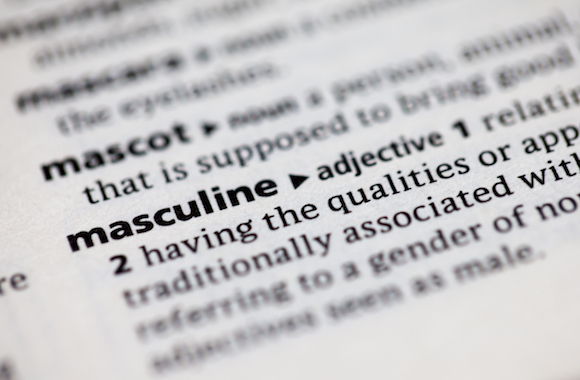
    According to Edinburgh Napier University Senior Research Fellow Adrianna Zabrzewska, “toxic masculinity” not only “marginalizes” women and those in the LGBTQ+ community, but hurts straight males by “discouraging emotional expression, tenderness, and connection.”

    In order to reach young boys “before they radicalise in dangerous ways,” Zabrzewska says children’s and young adult literature can assist in “rethinking masculinity” by focusing on “relationality, vulnerability, and inclination.”

    Two books in particular Zabrzewska recommends are “Two Boys Kissing” and “Magnus Chase and the Gods of Asgard.” In the former, two boys are “hoping to set the world record for the longest kiss,” while the latter features a “sweet, caring” teenaged male protagonist and an “engaging” lesson on intersectionality via “deaf elves […] Muslim American female warriors and genderfluid pottery artists.”

    Cover of Two Boys Kissing; ZayBeachum/YouTube

    She continues:

    Vulnerability refers to the shared human condition of being a body born from another body. We are all finite and fragile, susceptible to harm, loss, and injustice. Through our fragility and dependence, vulnerability can be transformed into resilience and connection. This is especially true when we recognise the diverse experiences of disenfranchisement that we each face.

    In Two Boys Kissing, the chorus of narrators celebrate imperfect bodies, both cis-gendered and trans, that defy unrealistic beauty standards. They whisper encouragement to a lonely teen contemplating suicide and agonise over his pain. They affirm that care, intimacy and affection are not signs of weakness but of strength. Through these voices, [author David] Levithan’s readers learn that self-acceptance comes not from independence or dominance but from reaching out to others.

    Adrianna Zabrzewska/Edinburgh Napier University

    When strategically integrated into stories, educational practices and daily interactions, vulnerability, relationality, and inclination can help us sketch new ethical horizons, and not only for masculinity but for gendered existence as a whole.

    According to her university page, Zabrzewska is a “feminist philosopher” whose research interests include “continental feminist philosophy,” “gendered embodiment and embodied voice,” and “queer-feminist resistances to anti-gender politics across Europe.”

    Zabrzewska also works on the RESIST Project which deals with “‘anti-gender’ politics that imperil equality, gender and sexual diversity, and legitimacy of critical knowledge” in Europe. It is funded by Horizon Europe — “the EU’s key funding programme for research and innovation” — whose current total budget is €93.5 billion.

    MORE: Boston U. students to study ‘gender fluid angels’ in ‘Medieval Trans Studies’ class

    Source link

  • The good and bad of roaming the world

    The good and bad of roaming the world

    In six months I will move again. It will be my seventh move in less than two years.

    I’m not homesick for Calgary, Canada, where I started this journey. But I am tired of searching for new friendships and, sometimes, of carrying more clothes — and emotions — than I can fit into two suitcases

    When I try to describe what moving around is like, I remember one moment. It was my second day in Peru, and everywhere around me were mountains of sand. Not a single plant in sight, not even a cactus.

    The sun was strong and I felt the beginnings of a sunburn. After multiple stops and a wild dune buggy ride through the desert where I held on for dear life, I made it to the top of one of the sand dunes. I moved around to the other side and looked down. There it was: Oasis de la Huacachina, a shimmering pool of water surrounded by palm trees.

    The wind was blowing harshly. In that moment, I was grateful that my face was covered with the brightly coloured bandana I had bought from a vendor who was upset I could pay only in American dollars and warned me he would charge me more. I hadn’t had enough time to convert money to Peruvian soles.

    This is the cost of not being prepared with cash in the right currency for unexpected purchases that happen on a trip.

    Preparing for the unexpected

    Being a nomad is like going through a desert, trying to be as prepared as possible only to be faced with the unexpected — strong winds blowing sand in your face and getting overcharged for the things you didn’t know you would need.

    But once you get to the top of the sand dune and look down at the oasis, you appreciate the journey you’ve made.

    The nomadic life isn’t as romantic as the internet paints it to be. Between the excitement of new places and adventures is the challenge of creating and maintaining a sense of community.

    This journey started back in 2023 in Calgary. I was having dinner with friends and talking about the awful job market and how I’d managed to land only remote work on temporary contract.

    “You know, I think I’m probably going to leave Calgary soon,” I heard myself say.

    Embarking on a journey

    I had absolutely no plan for how that was going to happen. But almost a year later I got married. My husband had finished his first year of residency and needed to move for training opportunities in various cities. We would spend only one to three months in each city before moving on.

    Like most young adults, I left my hometown to start something new. The packing part was easy. The hard part was saying goodbye to the familiarity of Calgary — my family, friends, the parks I visited regularly and my favourite cafés.

    The journey began in Calgary, and carried us to Kingston, a town on Lake Ontario, for four months, from where we relocated to Montréal for one month. We moved to Toronto for three months, where we then traded the snowy weather for the warm desert in Lima, Peru for just over two months. From there, we returned to Toronto for another three months before arriving in Baltimore in the U.S. state of Maryland.

    As we moved from place to place over the course of 13 months, I realized I wasn’t homesick. Instead, I was weighed down by the things I’d grown so attached to. With each move, I faced this dilemma: Pack them up again or let them go before starting over again.

    After almost four months in Kingston, the time had come to pack up again. There was stuff everywhere. Bags of clothes sat on the living-room floor and overfilled boxes of household items covered the kitchen floor.

    What you pack and what you leave

    I couldn’t take everything with me, yet as I was folding clothes I found that my suitcases weren’t filling. The donation bags seemed to be getting bigger and bigger. At that point, I was repulsed by the number of clothes I had. Did I really need four pairs of jeans? In normal circumstances, my answer would have been yes. Then, I needed functionality and I didn’t know how to achieve that.

    What was replaceable if I later changed my mind?

    I was nostalgic as I sifted through the piles — recalling the memories attached to those items. “They’re just things,” I told myself. I found a folder filled with cards from friends and families. I didn’t have it in me to throw them out, so I stuffed them in my backpack. It wasn’t like they were replaceable items you can buy at a store.

    The worst part of moving so frequently is that distance doesn’t make the heart grow fonder. It makes communication challenging and if you can’t catch someone by phone, many things — life updates and check-ins — are lost through text messages.

    The best part of moving so frequently is you get to be a tourist while living like a local: You have the best of both worlds. You learn your neighbourhood so well you find shortcuts to get to your favourite places. You earn the right to learn about local gems and can still visit the cliché tourist spots without feeling the embarrassment a local would. That was the highlight of my month in Montreal — I’d finish work and hop on the subway to explore. Every day was its own adventure, trying new restaurants, shopping at local grocery stores and catching up with work colleagues in the area.

    Finding meaning in new places

    I celebrated my birthday in Montreal for the first time outside of my hometown. I’m not much of a birthday person, but I was disappointed that many of my friends had forgotten my birthday. On a positive note, some friends did remember, and those birthday text messages were special. I decided to celebrate with some “restaurant hopping,” trying a savoury meal at one restaurant, going for dessert at another and trying interesting snacks all in the same night. It was the first time I tried ramen, a Japanese noodle soup, and the first time I ordered in French.

    The month flew by and it was time to move to Toronto. The good news is I hadn’t fully unpacked, because I knew that my time in Montreal was short. I somehow did make friends, but we didn’t keep in touch after I moved.

    For some reason, surface-level friendships were easier than having to worry about whether people would want to keep in touch, and I wouldn’t feel the pressure of having to reach out or go through the cycle of feeling disappointed if they wouldn’t get back to me. I was still grieving how many of my close friendships in Calgary had gone static.

    A few weeks later, we moved to Toronto and I joined a running club. I was shy at first, but I slowly warmed up and made friends. I didn’t bother to take my new friends’ phone numbers or make plans outside of the running club, because I knew I would soon be leaving. One of my best friends in Calgary had a baby girl during my time in Toronto and I couldn’t visit over the holidays to celebrate because I was preparing for my next move.

    For some reason, deciding what stays and what goes never gets easier. You just get better at the time management part of it and start earlier — or stay up later getting the job done. We were packing until 3 a.m. on the day we were leaving for Lima, Peru, where my husband was going to take a tropical medicine course. A few hours later, we boarded the flight.

    Meeting people in Peru

    Lima is one of the most beautiful cities I’ve ever visited. It’s a desert that sits on the Pacific coast, offering the best of both worlds: an ocean and a stunning oasis.

    By this point, my work contract had ended and could not be renewed due to budget changes. I was initially worried that I would be bored or miss out on professional growth. I decided that it would instead be a once-in-a-lifetime opportunity to try new activities, travel and reflect on what I wanted my professional career to look like.

    I expected to encounter many English speakers in Lima, because it was the capital, but I was mistaken. I didn’t want to rely on Google Translate for basic conversations because I wanted to immerse myself in the culture and everyday life. So I enrolled in Spanish-language classes.

    I met people from all over the world who had come to Peru for all kinds of reasons, including business, backpacking across South America and simply to learn Spanish.

    This is probably my favourite part of moving around: You get to meet people from all walks of life, with various backgrounds and experiences, who teach you things you never otherwise would have learned.

    Nomads find each other

    I made friends with a girl my age who worked in marketing in London and was visiting her father, who had a business in Peru. One American man in his late 60s had married a Peruvian woman and was planning to retire in Lima.

    Another was a businessman who opened restaurants all around the world and was looking to break into the Peruvian market.

    And I met a Canadian from the Greater Toronto Area whom I probably would never have crossed paths with had it not been that we were in Peru at the same time. I had wonderful conversations with her during our walks in the Miraflores neighbourhood.

    While learning Spanish, I also stepped out of my comfort zone and tried new activities. I sand-boarded, where I rode down a sand dune in the desert south of Lima, surfed on the Pacific Ocean, hiked the famous Machu Picchu — an ancient Incan citadel located in the Andes Mountains — and took a chocolate-making class during which I roasted my own chocolate beans.

    It was through enjoying all of these adventures and writing about my experiences to family and friends that I decided to try journalism and a few months later,  applied for a fellowship in Journalism and Health Impact at the University of Toronto’s Dalla Lana School of Public Health.

    Accepting the changes that take place

    I returned to Toronto months later. It was spring and I got to see cherry trees in blossom, enjoy walks by the harbour and prepare for my next move, this one to Baltimore, Md. I reconnected with old friends, shared my adventures in South America and realized that although we don’t talk as much as we used to, living far apart does change the dynamic of a friendship. It’s not a bad thing, it’s just different and that’s okay. It’s fine to keep in touch with friends on a semi-annual basis and meet in person when given the chance.

    I discovered that it’s not fair to assume things will stay the same when I was the one who moved away.

    Shortly after moving to Baltimore, my childhood best friend got married in Calgary. The timing was difficult and I had to miss it. My friends who did attend FaceTimed me during the reception. It was like I was there, but I also wasn’t.

    It was difficult, but I came to learn that the way I conducted friendships also changed. Distance created challenges in the way I showed up and, although my friends never called me out on it, I’m certain now that they probably felt emotions similar to mine. Long-distance friendships are not easy and that’s part of the baggage that comes with nomadic living. My best advice is to show up when you can and reach out when you miss them.

    Flash forward to today: I did apply to the journalism fellowship and was accepted. I’m glad I did because I’m enjoying writing and reporting on health topics I’m interested in.

    In the meantime, I have another six months until I move again. I don’t know where I’m going next. I’m riding the wave and ready to embark on my next adventure when the time comes. I have a community of people with whom I meet regularly and, although I’m not sure how those relationships will change when I move again, I know these are the kinds of feelings that can fit in my suitcase.


    Questions to consider:

    1. What was one thing the author learned after moving from place to place?

    2. What is one disadvantage of moving every few months?

    3. If you were to move from the country you now live in what would you miss?

    Source link

  • A Practical Guide – The 74

    A Practical Guide – The 74

    Republish This Article

    We want our stories to be shared as widely as possible — for free.

    Please view The 74’s republishing terms.


    Source link

  • 25 predictions about AI and edtech

    25 predictions about AI and edtech

    eSchool News is counting down the 10 most-read stories of 2025. Story #2 focuses on predictions educators made for AI in 2025.

    When it comes to education trends, AI certainly has staying power. As generative AI technologies evolve, educators are moving away from fears about AI-enabled cheating and are embracing the idea that AI can open new doors for teaching and learning.

    AI tools can reduce the administrative burden so many educators carry, can personalize learning for students, and can help students become more engaged in their learning when they use the tools to brainstorm and expand on ideas for assignments and projects. Having AI skills is also essential for today’s students, who will enter a workforce where AI know-how is becoming more necessary for success.

    So: What’s next for AI in education? We asked educators, edtech industry leaders, stakeholders, and experts to share some predictions about where they think AI is headed in 2025. (Here’s our list of 50 predictions for edtech in 2025.)

    Here’s what they had to say:

    In 2025, online program leaders will begin to unlock the vast potential of generative AI, integrating it more deeply into the instructional design process in ways that can amplify and expedite the work of faculty and instructional designers. This technology, already making waves in instruction and assessment, stands poised to transform the creation of online courses. By streamlining time-intensive tasks, generative AI offers the promise of automation, replication, and scalability, enabling institutions to expand their online offerings at an unprecedented pace. The key is that we maintain rigorous standards of quality–and create clear guardrails around the ethical use of AI at a time when increasingly sophisticated models are blurring the lines between human design–and artificial intelligence. Generative AI holds extraordinary promise, but its adoption must be grounded in practices that prioritize equitable and inclusive access, transparency, and educational excellence.
    –Deb Adair, CEO, Quality Matters

    In 2025, education in the United States will reflect both the challenges and opportunities of a system in transition. Uncertainty and change at the federal level will continue to shift decision-making power to states, leaving them with greater autonomy but also greater responsibility. While this decentralization may spark localized innovation, it is just as likely to create uneven standards. In some states, we’ve already seen benchmarks lowered to normalize declines, a trend that could spread as states grapple with resource and performance issues. This dynamic will place an even greater burden on schools, teachers, and academic leaders. As those closest to learners, they will bear the responsibility of bridging the gap between systemic challenges and individual student success. To do so effectively, schools will require tools that reduce administrative complexity, enabling educators to focus on fostering personal connections with students–the foundation of meaningful academic growth. AI will play a transformative role in this landscape, offering solutions to these pressures. However, fragmented adoption driven by decentralized decision-making will lead to inequities, with some districts leveraging AI effectively and others struggling to integrate it. In this complex environment, enterprise platforms that offer flexibility, integration, and choice will become essential. 2025 will demand resilience and creativity, but it also offers all of us an opportunity to refocus on what truly matters: supporting educators and the students they inspire.
    Scott Anderberg, CEO, Moodle

    As chatbots become more sophisticated, they’re rapidly becoming a favorite among students for their interactive and personalized support, and we can expect to see them increasingly integrated into classrooms, tutoring platforms, and educational apps as educators embrace this engaging tool for learning. Additionally, AI is poised to play an even larger role in education, particularly in test preparation and course planning. By leveraging data and predictive analytics, AI-driven tools will help students and educators create more tailored and effective learning pathways, enhancing the overall educational experience.
    Brad Barton, CTO, YouScience 

    As we move into 2025,  we’ll move past the AI hype cycle and pivot toward solving tangible classroom challenges. Effective AI solutions will integrate seamlessly into the learning environment, enhancing rather than disrupting the teaching experience. The focus will shift to practical tools that help teachers sustain student attention and engagement–the foundation of effective learning. These innovations will prioritize giving educators greater flexibility and control, allowing them to move freely around the classroom while effortlessly managing and switching between digital resources. An approach that ensures technology supports and amplifies the irreplaceable human connections at the heart of learning, rather than replacing them.
    –Levi Belnap, CEO, Merlyn Mind

    The year 2025 is set to transform science education by implementing AI-driven learning platforms. These platforms will dynamically adjust to the student’s interests and learning paces, enhancing accessibility and inclusivity in education. Additionally, virtual labs and simulations will rise, enabling students to experiment with concepts without geographical constraints. This evolution will make high-quality STEM education more universally accessible.
    –Tiago Costa, Cloud & AI Architect, Microsoft; Pearson Video Lesson Instructor 

    In the two years since GenAI was unleashed, K-12 leaders have ridden the wave of experimentation and uncertainty about the role this transformative technology should have in classrooms and districts. 2025 will see a shift toward GenAI strategy development, clear policy and governance creation, instructional integration, and guardrail setting for educators and students. K-12 districts recognize the need to upskill their teachers, not only to take advantage of GenAI to personalize learning, but also so they can teach students how to use this tech responsibly. On the back end, IT leaders will grapple with increased infrastructure demands and ever-increasing cybersecurity threats.
    Delia DeCourcy, Senior Strategist, Lenovo Worldwide Education Team

    AI-driven tools will transform the role of teachers and support staff in 2025: The advent of AI will allow teachers to offload mundane administrative tasks to students and provide them more energy to be at the “heart and soul” of the classroom. Moreover, more than two-thirds (64 percent) of parents agreed or strongly agreed that AI should help free teachers from administrative tasks and help them build connections with the classroom. Impact of technological advancements on hybrid and remote learning models in 2025: AI is revolutionizing the online learning experience with personalized pathways, tailored skills development and support, and enhanced content creation. For example, some HBS Online courses, like Launching Tech Ventures, feature an AI course assistant bot to help address learners’ questions and facilitate successful course completion. While the long-term impact remains uncertain, AI is narrowing the gap between online and in-person education. By analyzing user behavior and learning preferences, AI can create adaptive learning environments that dynamically adjust to individual needs, making education more engaging and effective. 
    –David Everson, Senior Director of Marketing Solutions, Laserfiche

    In education and digital publishing, artificial intelligence (AI) will continue transitioning from novelty applications to solutions that address real-world challenges facing educators and students. Successful companies will focus on data security and user trust, and will create learner-centered AI tools to deliver personalized experiences that adapt to individual needs and enhance efficiency for educators, enabling them to dedicate more time to fostering meaningful connections with students. The ethical integration of AI technologies such as retrieval-augmented generation (RAG) is key to this evolution. Unlike traditional large language models that ingest information from the Internet at large, RAG delivers AI outputs that are grounded in authoritative, peer-reviewed content, reducing the risk of misinformation while safeguarding the integrity of intellectual property. Thoughtfully developed AI tools such as this will become partners in the learning journey, encouraging analysis, problem-solving, and creativity rather than fostering dependence on automated responses. By taking a deliberate approach that focuses on ethical practices, user-centered design, and supporting the cultivation of essential skills, successful education companies will use AI less as innovation for its own sake and more as a means to provide rich and memorable teaching and learning experiences.
    Paul Gazzolo, Senior Vice President & Global General Manager, Gale, a Part of Cengage Group

    Adaptive learning technologies will continue to personalize curriculum and assessment, creating a more responsive and engaging educational journey that reflects each student’s strengths and growth areas. Generative AI and other cutting-edge advancements will be instrumental in building solutions that optimize classroom support, particularly in integrating assessment and instruction. We will see more technology that can help educators understand the past to edit materials in the present, to accelerate teachers planning for the future.
    Andrew Goldman, EVP, HMH Labs

    We’ll witness a fundamental shift in how we approach student assessment, moving away from conventional testing models toward more authentic experiences that are seamless with instruction. The thoughtful integration of AI, particularly voice AI technology, will transform assessment from an intermittent event into a natural part of the learning process. The most promising applications will be those that combine advanced technology with research-validated methodologies. Voice-enabled assessments will open new possibilities for measuring student knowledge in ways that are more natural and accessible, especially for our youngest learners, leveraging AI’s capabilities to streamline assessment while ensuring that technology serves as a tool to augment, rather than replace, the critical role of teachers.
    –Kristen Huff, Head of Measurement, Curriculum Associates

    AI is already being used by many educators, not just to gain efficiencies, but to make a real difference in how their students are learning. I suspect in 2025 we’ll see even more educators experimenting and leveraging AI tools as they evolve–especially as more of the Gen Z population enters the teaching workforce. In 2024, surveyed K-12 educators reported already using AI to create personalized learning experiences, provide real-time performance feedback, and foster critical thinking skills. Not only will AI usage continue to trend up throughout 2025, I do believe it will reach new heights as more teachers begin to explore GenAI as a hyper-personalized asset to support their work in the classroom. This includes the use of AI as an official teacher’s assistant (TA), helping to score free response homework and tests and providing real-time, individualized feedback to students on their education journey.
    –John Jorgenson, CMO, Cambium Learning Group

    The new year will continue to see the topic of AI dominate the conversation as institutions emphasize the need for students to understand AI fundamentals, ethical considerations, and real-world applications outside of the classroom. However, a widening skills gap between students and educators in AI and digital literacy presents a challenge. Many educators have not prioritized keeping up with rapid technological advancements, while students–often exposed to digital tools early on–adapt quickly. This gap can lead to uneven integration of AI in classrooms, where students sometimes outpace their instructors in understanding. To bridge this divide, comprehensive professional development for teachers is essential, focusing on both technical skills and effective teaching strategies for AI-related topics. Underscoring the evolving tech in classrooms will be the need for evidence of outcomes, not just with AI but all tools. In the post-ESSER era, evidence-based decision-making is crucial for K-12 schools striving to sustain effective programs without federal emergency funds. With the need to further justify expenditures, schools must rely on data to evaluate the impact of educational initiatives on student outcomes, from academic achievement to mental health support. Evidence helps educators and administrators identify which programs truly benefit students, enabling them to allocate resources wisely and prioritize what works. By focusing on measurable results, schools can enhance accountability, build stakeholder trust, and ensure that investments directly contribute to meaningful, lasting improvements in learning and well-being.
    Melissa Loble, Chief Academic Officer, Instructure

    With AI literacy in the spotlight, lifelong learning will become the new normal. Immediate skills need: The role of “individual contributors” will evolve, and we will all be managers of AI agents, making AI skills a must-have. Skills of the future: Quantum skills will start to be in demand in the job market as quantum development continues to push forward over the next year. Always in-demand skills: The overall increase in cyberattacks and emerging risks, such as harvest now and decrypt later (HNDL) attacks, will further underscore the continued importance of cybersecurity skills. Upskilling won’t end with AI. Each new wave of technology will demand new skills, so lifelong learners will thrive. AI will not be siloed to use among technology professionals. The democratization of AI technology and the proliferation of AI agents have already made AI skills today’s priority. Looking ahead, quantum skills will begin to grow in demand with the steady advance of the technology. Meanwhile cybersecurity skills are an evergreen need.
    Lydia Logan, VP of Global Education & Workforce Development, IBM

    This coming year, we’ll see real progress in using technology, particularly GenAI, to free up teachers’ time. This will enable them to focus on what they do best: working directly with students and fostering the deep connections crucial for student growth and achievement. GenAI-powered assistants will streamline lesson planning after digesting information from a sea of assessments to provide personalized recommendations for instruction to an entire class, small groups, and individual students. The bottom line is technology that never aims to replace a teacher’s expertise–nothing ever should–but gives them back time to deepen relationships with students.
    Jack Lynch, CEO, HMH

    Looking to 2025, I anticipate several key trends that will further enhance the fusion of educators, AI and multimodal learning. AI-powered personalization enhanced by multimedia: AI will deliver personalized learning paths enriched with various content formats. By adapting to individual learning styles–whether visual, auditory, or kinesthetic–we can make education more engaging and effective. Expansion of multimodal learning experiences: Students will increasingly expect learning materials that engage multiple senses. Integrating short-form videos created and vetted by actual educators, interactive simulations, and audio content will cater to different learning preferences, making education more inclusive and effective. Deepening collaboration with educators: Teachers will play an even more critical role in developing and curating multimodal content. Their expertise ensures that the integration of technology enhances rather than detracts from the learning experience.
    –Nhon Ma, CEO & Co-founder, Numerade

    AI and automation become a competitive advantage for education platforms and systems. 2025 will be the year for AI to be more infused in education initiatives and platforms. AI-powered solutions have reached a tipping point from being a nice-to-have to a must-have in order to deliver compelling and competitive education experiences. When we look at the education sector, the use cases are clear. From creating content like quizzes, to matching students with education courses that meet their needs, to grading huge volumes of work, enhancing coaching and guidance for students, and even collecting, analyzing and acting on feedback from learners, there is so much value to reap from AI. Looking ahead, there could be additional applications in education for multimodal AI models, which are capable of processing and analyzing complex documents including images, tables, charts, and audio.
    Rachael Mohammed, Corporate Social Responsibility Digital Offerings Leader, IBM

    Agentic and Shadow AI are here. Now, building guardrails for safe and powerful use will be key for education providers and will require new skillsets. In education, we expect the start of a shift from traditional AI tools to agents. In addition, the mainstream use of AI technology with ChatGPT and OpenAI has increased the potential risk of Shadow AI (the use of non-approved public AI applications, potentially causing concerns about compromising sensitive information). These two phenomena highlight the importance of accountability, data and IT policies, as well as control of autonomous systems. This is key mostly for education providers, where we think there will be greater attention paid to the AI guardrails and process. To be prepared, educators, students, and decision makers at all levels need to be upskilled in AI, with a focus on AI ethics and data management. If we invest in training the workforce now, they will be ready to responsibly develop and use AI and AI agents in a way that is trustworthy.
    Justina Nixon-Saintil, Vice President & Chief Impact Officer, IBM

    Rather than replacing human expertise, AI can be used as a resource to allow someone to focus more of their time on what’s truly important and impactful. As an educator, AI has become an indispensable tool for creating lesson plans. It helps generate examples, activity ideas, and anticipate future students’ questions, freeing me to focus on the broader framework and the deeper meaning of what I’m teaching.
    –Sinan Ozdemir, Founder & Chief Technology Officer, Shiba Technologies; Author, Quick Start Guide to Large Language Models 

    Data analytics and AI will be essential towards tackling the chronic absenteeism crisis. In 2025, the conversation around belonging will shift from abstract concepts to concrete actions in schools. Teachers who build strong relationships with both students and families will see better attendance and engagement, leading more schools to prioritize meaningful connection-building over quick-fix solutions. We’ll see more districts move toward personalized, two-way school communications that create trust with parents and the larger school community. In order to keep up with the growing need for this type of individualized outreach, schools will use data analytics and AI to identify attendance and academic patterns that indicate students are at risk of becoming chronically absent. It won’t be dramatic, but we’ll see steady progress throughout the year as schools recognize that student success depends on creating environments where both students and families feel valued and heard.
    Dr. Kara Stern, Director of Education and Engagement, SchoolStatus

    As access to AI resources gains ground in classrooms, educators will face a dire responsibility to not only master these tools but to establish guidelines and provide best practices to ensure effective and responsible use. The increasing demand for AI requires educators to stay informed about emerging applications and prioritize ethical practices, ensuring AI enhances rather than impedes educational outcomes.. This is particularly critical in STEM fields, where AI has already transformed industries and is shaping career paths, providing new learning opportunities for students. To prevent the exacerbation of the existing STEM gap, educators must prioritize equitable access to AI resources and tools, ensuring that all students, regardless of background, have the opportunity to engage with and fully understand these technologies. This focus on equity is essential in leveling the playing field, helping bridge disparities that could otherwise limit students’ future success. Achieving these goals will require educators to engage in professional development programs designed to equip them with necessary skills and content knowledge to implement new technology in their classrooms. Learning how to foster inclusive environments is vital to cultivating a positive school climate where students feel motivated to succeed. Meanwhile, professionally-trained educators can support the integration of new technologies to ensure that every student has the opportunity to thrive in this new educational landscape.
    Michelle Stie, Vice President, Program Design & Innovation, NMSI

    Artificial intelligence (AI) is poised to increase in use in K-12 classrooms, with literacy instruction emerging as a key area for transformative impact. While educators may associate AI with concerns like cheating, its potential to enhance human-centered teaching is gaining recognition. By streamlining administrative tasks, AI empowers teachers to focus on connecting with students and delivering personalized instruction. One trend to watch is AI’s role in automating reading assessments. These tools reduce the time educators spend administering and analyzing tests, offering real-time insights that guide individualized instruction. AI is also excelling at pinpointing skill gaps, allowing teachers to intervene early, particularly in foundational reading areas.  Another emerging trend is AI-driven reading practice. Tools can adapt to each student’s needs, delivering engaging, personalized reading tutoring with immediate corrective feedback. This ensures consistent, intentional practice–a critical factor in literacy growth. Rather than replacing teachers, AI frees up educator time for what matters most: fostering relationships with students and delivering high-quality instruction. As schools look to optimize resources in the coming year, AI’s ability to augment literacy instruction can be an important tool that maximizes students’ growth, while minimizing teachers’ work.
    Janine Walker-Caffrey, Ed.D., Chief Academic Officer, EPS Learning

    We expect a renewed focus on human writing with a broader purpose–clear communication that demonstrates knowledge and understanding, enhanced, not replaced by available technology. With AI making basic elements of writing more accessible to all, this renaissance of writing will emphasize the ability to combine topical knowledge, critical thinking, mastery of language and AI applications to develop written work. Instead of being warned against using generative AI, students will be asked to move from demand–asking AI writing tools to produce work on their behalf, to command–owning the content creation process from start to finish and leveraging technology where it can be used to edit, enhance or expand original thinking. This shift will resurface the idea of co-authorship, including transparency around how written work comes together and disclosure of when and how AI tools were used to support the process. 
    Eric Wang, VP of AI, Turnitin

    GenAI and AI writing detection tools will evolve, adding advanced capabilities to match each other’s detectability flex. End users are reaching higher levels of familiarity and maturity with AI functionality, resulting in a shift in how they are leveraged. Savvy users will take a bookend approach, focusing on early stage ideation, organization and expansion of original ideas as well as late stage refinement of ideas and writing. Coupling the use of GenAI with agentic AI applications will help to overcome current limitations, introducing multi-source analysis and adaptation capabilities to the writing process. Use of detection tools will improve as well, with a focus on preserving the teaching and learning process. In early stages, detection tools and indicator reports will create opportunities to focus teaching on addressing knowledge gaps and areas lacking original thought or foundation. Later stage detection will offer opportunities to strengthen the dialogue between educators and students, providing transparency that will reduce student risk and increase engagement.
    Eric Wang, VP of AI, Turnitin

    Advanced AI tools will provide more equitable access for all students, inclusive of reaching students in their home language, deaf and hard of hearing support through AI-enabled ASL videos, blind and visually impaired with real time audio descriptions, tactiles, and assistive technology.
    –Trent Workman, SVP for U.S. School Assessments, Pearson 

    Generative AI everywhere: Generative AI, like ChatGPT, is getting smarter and more influential every day, with the market expected to grow a whopping 46 percent every year from now until 2030. By 2025, we’ll likely see AI churning out even more impressive text, images, and videos–completely transforming industries like marketing, design, and content creation. Under a Trump administration that might take a more “hands-off” approach, we could see faster growth with fewer restrictions holding things back. That could mean more innovative tools hitting the market sooner, but it will also require companies to be careful about privacy and job impacts on their own. The threat of AI-powered cyberattacks: Experts think 2025 might be the year cybercriminals go full throttle with AI. Think about it: with the advancement of the technology, cyberattacks powered by AI models could start using deepfakes, enhanced social engineering, and ultra-sophisticated malware. If the Trump administration focuses on cybersecurity mainly for critical infrastructure, private companies could face gaps in support, leaving sectors like healthcare and finance on their own to keep up with new threats. Without stronger regulations, businesses will have to get creative–and fast–when it comes to fighting off these attacks.
    –Alon Yamin, Co-Founder & CEO, Copyleaks

    Laura Ascione
    Latest posts by Laura Ascione (see all)

    Source link