One of the intended consequences of test-optional admission policies at some institutions prior to the COVID-19 pandemic was to raise test scores reported to US News and World Report. It’s rare that you would see a proponent of test-optional admission like me admit that, but to deny it would be foolish.
Because I worked at DePaul, which was an early adopter of the approach (at least among large universities), I fielded a lot of calls from colleagues who were considering it, some of whom were explicit in their reasons for doing so. One person I spoke to came right out at the start of the call: She was only calling, she said, because her provost wanted to know how much they could raise scores if they went test-optional.
If I sensed or heard that motivation, I advised people against it. In those days, the vast majority of students took standardized admission tests like the SAT or ACT, but the percentage of students applying without tests was still relatively small; the needle would not move appreciably by going to test-optional admission.
On the other hand, of course, I knew the pressure admissions offices were under by trustees, presidents, provosts, and faculty, and as Campbell’s Law and its many variants tells us, what gets measured gets produced. DePaul, a private university with a public mission, was using a test-optional approach to ensure those students who were a part of our mission would not be left behind as applications grew. (I often say how lucky I was to work at a place where–in 17 years–I was never once asked about how to increase test scores or selectivity, but I heard frequently about the Pell percentage in the class.)
If you wanted different outcomes, there were lots of ways to manipulate admissions statistics to effect the same outcome, I’d tell the callers.
Motivations, of course, were different in the summer of 2020, when it had become clear that test-optional admission was a necessary utilitarian decision that also carried with it good reputational benefits: Even if you were doing it to survive, you could at least look like you were being altruistic. And, of course, you could learn something in the process.
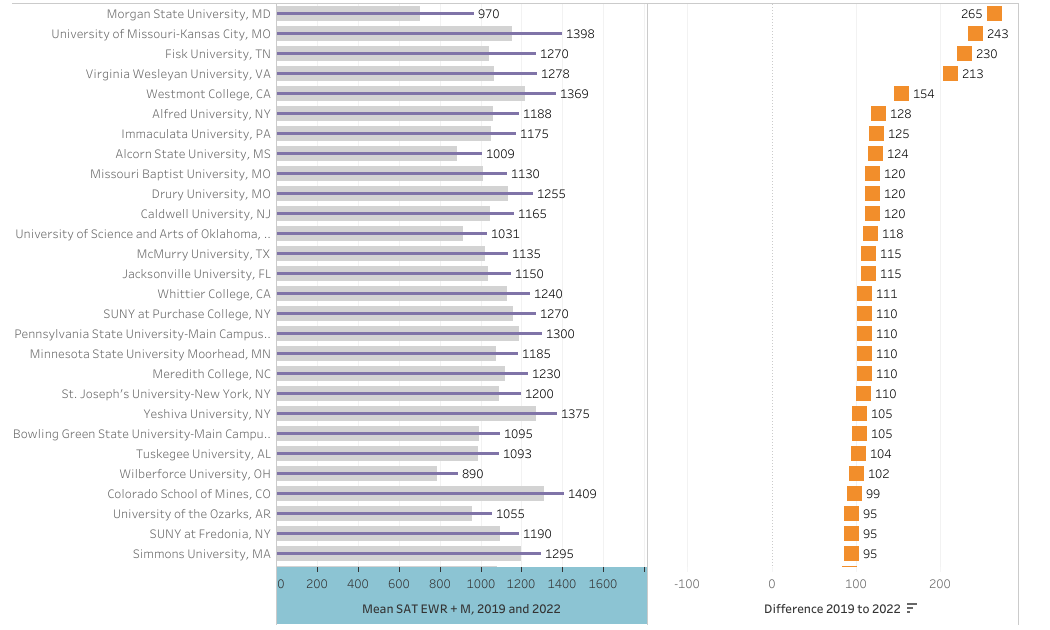
So what’s happened? About what you would expect. At the overwhelming majority of colleges, the Mean SAT EWR+M score has risen between the fall of 2019 and 2022. I used 2019 as the base because the data reported to IPEDS is for enrolling students, and the 2020 term was affected by COVID.
It’s dangerous, of course, to try to figure out exactly why they went up, other than the expected sampling bias. It could be that reputation that drove such things was already increasing. It could be that the college took a lot more or a lot fewer chances in admission (either is possible); it could be location and migration (out on the west coast, people care about tests, it seems, a lot less than they do in the Eastern Time Zone), and students who cross state lines to attend college tend to be wealthier, and wealthier students tend to score higher on tests.
Or it could be all of those things, and others. We’ll never really know. But it’s still fun to look at. So here we go, with just one view this time.
One the left are mean SAT scores in 2019 and 2022, calculated from the reported 25th and 75th percentiles of the two sections. Numbers are rounded. On the left are gray bars with the 2019 figure, and purple bars with the 2022 score. On the right are the changes, and the chart is sorted on the value in descending order.
There are four filters to get the view you want: At top left you can use the control to limit the region; at top right you can look at public and/or private four-year universities. You can also use the sliders to look at colleges by limiting the 2022 selectivity or class size.
Again, this is interesting, but not necessarily instructive. See if you can guess what your favorite college looks like before and after the pandemic. Have fun.
(Note: Some institutions that went test-optional stopped reporting test scores as a result, and they are not included here.)
One key point from the conversation that really resonated with me was how quick and easy it is to assess the AI’s output, it if is doing something that you’re already good at. I have found many examples of that truth, in experimenting with various AI tools.
We use the CastMagic.io service for the first pass at our podcast transcripts, for example. It can identify key quotes from the interviews and recommend discussion questions. For me (or someone on our team) to carve out the time to listen to the entire episode and try to figure out which quotes might be good to share just isn’t practical. Yet we can quickly look and discard what the tool identified as not particularly helpful in illuminating or amplifying the conversation.
In a recent workshop with faculty, they were surprised to learn how easy it is to set up a form for students to make a request for a letter of recommendation or reference for a job or for grad school. Then, an AI can take the first pass at writing a draft, based on your writing style and preferences for length, tone, etc. How much easier is it to correct it for what it got wrong about a particular student’s recommendation vs starting from scratch?
I’ve been using an AI app called Whisper Memos, which is on both my iPhone and on my Apple Watch. When I get an idea or something I want to share with someone, I just tap the complication on my watch face and start talking. The key differentiator for Whisper Memos for me is that it automatically puts in carriage returns, making it that much faster for me to make edits later on.
Another thing I like is that I discovered my favorite “chicken scratch” notes app on my iPhone and Apple Watch, Drafts, has a special email address I can use to send text to it. So now I have Whisper Memos set up to send to my unique Drafts email address and all my thoughts wind up in one place, ready for me to process when I have time.
I was delighted to speak with Cristi Ford, D2L’s VP of Academic Affairs, about durable skills and AI in higher education. You can find the episode in all the usual places:
Cristi is a delightful, thoughtful educator and a pleasure to talk with about these important issues. (Side note: D2L is building up a very impressive staff roster. They have more people I would gladly share a meal with—and more that I would call my personal friends—than any other company in EdTech today.)
The podcast flowed directly from a talk I gave at a D2L Ignite conference in Orlando, which, I’m gratified to say, has brought me more meaningful feedback and new connections than any talk I’ve given in a long time. We often talk aspirationally about AI being a humanizing technology. In my talk, I start by putting the idea of rapid change, including AI, in the context of humans learning from other humans. The heart of the talk is my own deeply personal story about how ChatGPT helped me cope with a terrible crisis. And I close by arguing that teaching skills are durable skills. Cristi was in the audience. Much of our podcast conversation elaborates on some of those themes in what was a packed 45-minute talk.
Below, you can see my original talk, recorded for my hospitalized sister on my iPhone.
AI and Durable Skills Keynote at D2L’s Ignite Orlando Summit
During his recent keynote at CUPA-HR’s Higher Ed HR Accelerator, Commissioner Keith Sonderling of the Equal Opportunity Employment Commission observed, “now, AI exists in HR in every single stage of employment,” from writing job descriptions, to sourcing candidates and scheduling interviews, and well into the career lifecycle of employees.
At some colleges and universities, AI is now a routine part of the HR workflow. At the University of North Texas at Dallas, for example, AI has significantly sped up the recruitment and hiring timeline. “It helped me staff a unit in an aggressive time frame,” says Tony Sanchez, chief human resources officer, who stresses that they use AI software with privacy protections. “AI parsed resumes, prescreened applicants, and allowed scheduling directly to the hiring manager’s calendar.”
Even as AI literacy is becoming a critical skill, many institutions of higher education have not yet adopted AI as a part of their daily operations. But even if you don’t have your own custom AI like The University of Michigan, free AI tools can still be a powerful daily assistant. With some common-sense guardrails in place, AI can help you automate repetitive tasks, make software like Excel easier to use, analyze information and polish your writing.
Three Free Chatbots to Use Now
AI development is moving at a breakneck pace, which means that even the freely available tools below are more useful than they were just a few months ago. Try experimenting with multiple AI chatbots by having different browser windows open and asking each chatbot to do the same task. Just don’t pick a favorite yet. With AI companies constantly trying to outperform each other, one might work better depending on the day or the task. And before you start, be sure to read the section on AI guardrails below — you never want to input proprietary or private information into a public chatbot.
ChatGPT, the AI trailblazer. The free version allows unlimited chats after signing up for an account. Right now, ChatGPT is text-based, which means it can help you with emails and communications, or even draft longer materials like reports. It can also solve math problems and answer questions (but beware of fabricated answers).
You can customize ChatGPT to make it work better for you by clicking on your username in the bottom lefthand corner. For example, you can tell it that you’re an HR professional working in higher education, and it will tailor its responses to what it knows about your job.
Google’s powerful AI chatbot, Gemini (formerly known as Bard). You’ll need to have or sign up for a free Google account, and it’s well worth it. Gemini can understand and interact with text just like ChatGPT does, but it’s also multimodal. You can drag and drop images and it will be able to interpret them. Gemini can also make tables, which can be exported to Google Sheets. And it generates images for free. For example, if you have an image you want your marketing team to design, you can get started by asking Gemini to create what you have in mind. But for now, Gemini won’t create images of people.
Claude, often considered the best AI writer. Take Claude for a spin by asking it to write a job description or memo for you. Be warned that the free version of Claude has a daily usage limit, and you won’t know you’ve hit it until you hit it. According to Claude, your daily limit depends on demand, and your quota resets every morning.
These free AI tools aren’t as powerful as their paid counterparts — all about $20 per month — but they do offer a sense of what AI can do.
Practical Tips for Using AI in HR
For a recent Higher Ed HR Magazine article, I asked higher education HR professionals how they used AI to increase efficiency. Rhonda Beassie, associate vice president for people and procurement operations at Sam Houston State University, shared that she and her team are using AI for both increased productivity and upskilling, such as:
Creating first drafts of and benchmarking job descriptions.
Making flyers, announcements and other employee communications.
Designing training presentations, including images, text, flow and timing.
Training employees for deeper use of common software applications.
Providing instructions on developing and troubleshooting questions for macros and VLOOKUP in Microsoft Excel.
Troubleshooting software. Beassie noted that employees “can simply say to the AI, ‘I received an error message of X. How do I need to change the script to correct this?’ and options are provided.”
Creating reports pulled from their enterprise system.
AI chatbots are also great at:
Being a thought partner. Ask a chatbot to help you respond to a tricky email, to find the flaws in your argument or to point out things you’ve missed in a piece of writing.
Revising the tone, formality or length of writing. You can ask chatbots to make something more or less formal or friendly (or whatever tone you’re trying to strike), remove the jargon from a piece of writing, or lengthen or shorten something.
Summarizing webpages, articles or book chapters. You can cut and paste a URL into a chatbot and ask it to summarize the page for you. You can also cut and paste a fairly large amount of text into chatbots and ask it for a summary. Try using parameters, such as “Summarize this into one sentence,” or “Please give me a bulleted list of the main takeaways.” The summaries aren’t always perfect, but will usually do in a pinch.
Summarizing YouTube videos. (Currently, the only free tool that can do this is Gemini.) Just cut and paste in the URL and ask it to summarize a video for you. Likewise, these summaries aren’t always exactly accurate.
Writing in your voice. Ask a chatbot to learn your voice and style by entering in things you’ve written. Ask it to compose a communication, like a memo or email you need to write, in your voice. This takes some time up front to train the AI, and it may not remember your voice from day-to-day or task-to-task.
Practice Your Prompts
Just 10 minutes a day can take you far in getting comfortable with these tools if you’re new to them. Learning prompting, which may take an upfront investment of more time, can unlock powerful capabilities in AI tools. The more complex the task you ask AI to do, the more time you need to spend crafting a prompt.
The best prompts will ask a chatbot to assume a role and perform an action, using specific context. For example, “You are a human resources professional at a small, liberal arts college. You are writing a job description for an HR generalist. The position’s responsibilities include leading safety and compliance training; assisting with payroll; conducting background checks; troubleshooting employee questions in person and virtually. The qualifications for the job are one to two years in an HR office, preferably in higher education, and a BA.”
Anthropic has provided a very helpful prompt library for Claude, which will also work with most AI chatbots.
AI Guardrails
There are real risks to using AI, especially the free tools listed above. You can read about them in detail here, or even ask AI to tell you, but the major dangers are:
Freely available AI will not protect your data privacy. Unless you have internal or enterprise software with a privacy agreement at your institution, assume everything you share with AI is public. Protected or confidential information should not be entered into a prompt.
AI fabricates, or hallucinates, as it’s sometimes called. It will make up facts that sound deceptively plausible. If you need accurate information, it’s best to consult an expert or trusted sources.
You don’t own copyright on AI-created work. In the United States, only human-produced work can be copyrighted.
Most of these tools are trained only up to a certain date, often a year or more ago for free chatbots. If you need up-to-the-minute information, use your favorite web browser.
New research from CUPA-HR has found that median pay increases for most higher education employees in 2023-24 continued the upward trend seen last year (and exceeded the inflation rate for the first time since 2019-20). However, the findings also show that most higher ed employees are still being paid less than they were in 2019-20 in inflation-adjusted dollars.
The largest gap between pre-pandemic inflation-adjusted salaries and current salaries is for tenure-track faculty (earning 9.7% less), followed by non-tenure-track teaching faculty (earning 8.2% less). The smallest gap is for staff (earning only 0.3% less).
Other key findings from an analysis of CUPA-HR’s higher ed workforce salary survey data from 2016-17 to 2023-24 include:
Non-tenure-track teaching faculty received their highest raise in the past eight years.
Staff (generally non-exempt employees) received the highest increase in pay in comparison to other employee types. This was true last year as well.
Tenure-track faculty continued to receive the lowest pay increases (and were the only group of employees whose raise did not surpass inflation).
Across higher ed, employees are still being paid less than they were in 2019-20 (pre-pandemic) in inflation-adjusted dollars. Tenure-track faculty are the group with the largest gap between median salaries in 2019-20 adjusted to 2023-24 dollars and actual median salaries in 2023-24, earning 9.7% less. This is followed by non-tenure-track teaching faculty (earning 8.2% less). The smallest gap is for staff (earning only 0.3% less).
High inflation has only exacerbated the gaps in pay increases faculty (particularly tenure-track faculty) experience in relation to other higher ed employees. Further, even though most higher ed employee groups received raises that beat inflation in 2023-24, these raises did not reverse the erosion of higher ed employee purchasing power that has been occurring since 2019-20.
CUPA-HR is the recognized authority on compensation surveys for higher education, with its workforce surveys designed by higher ed HR professionals for higher ed HR professionals and other campus leaders.
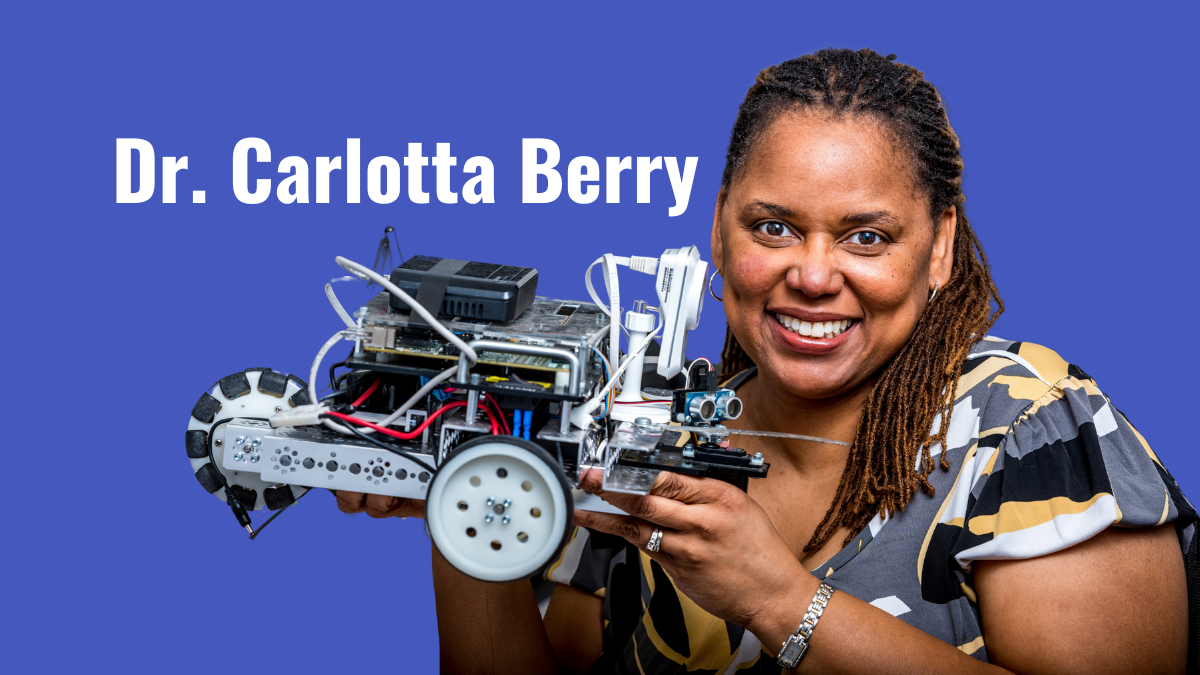
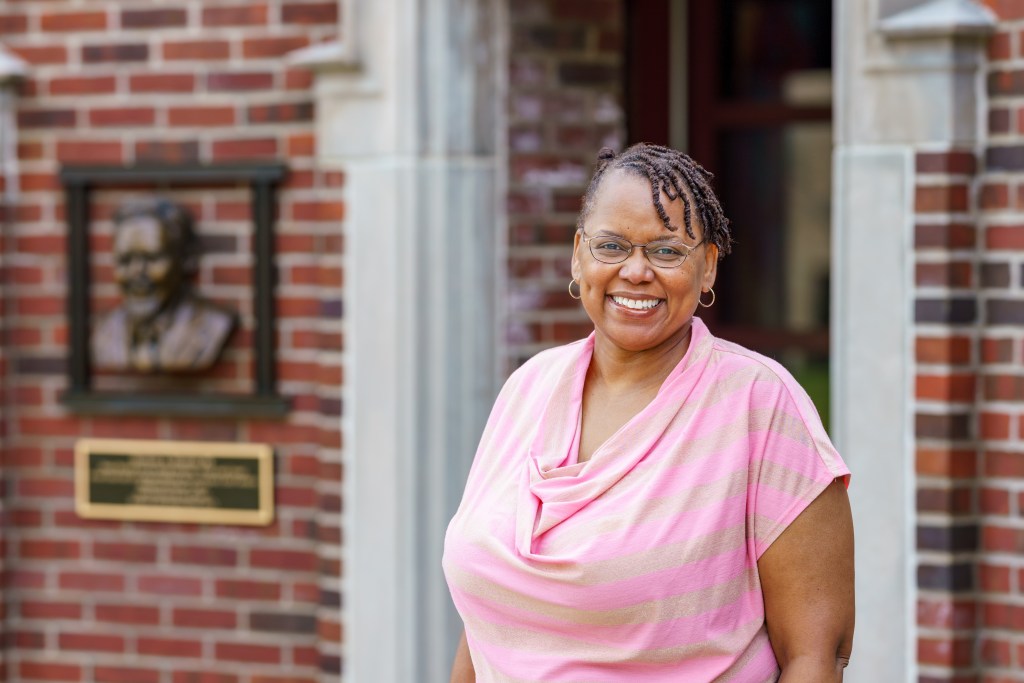
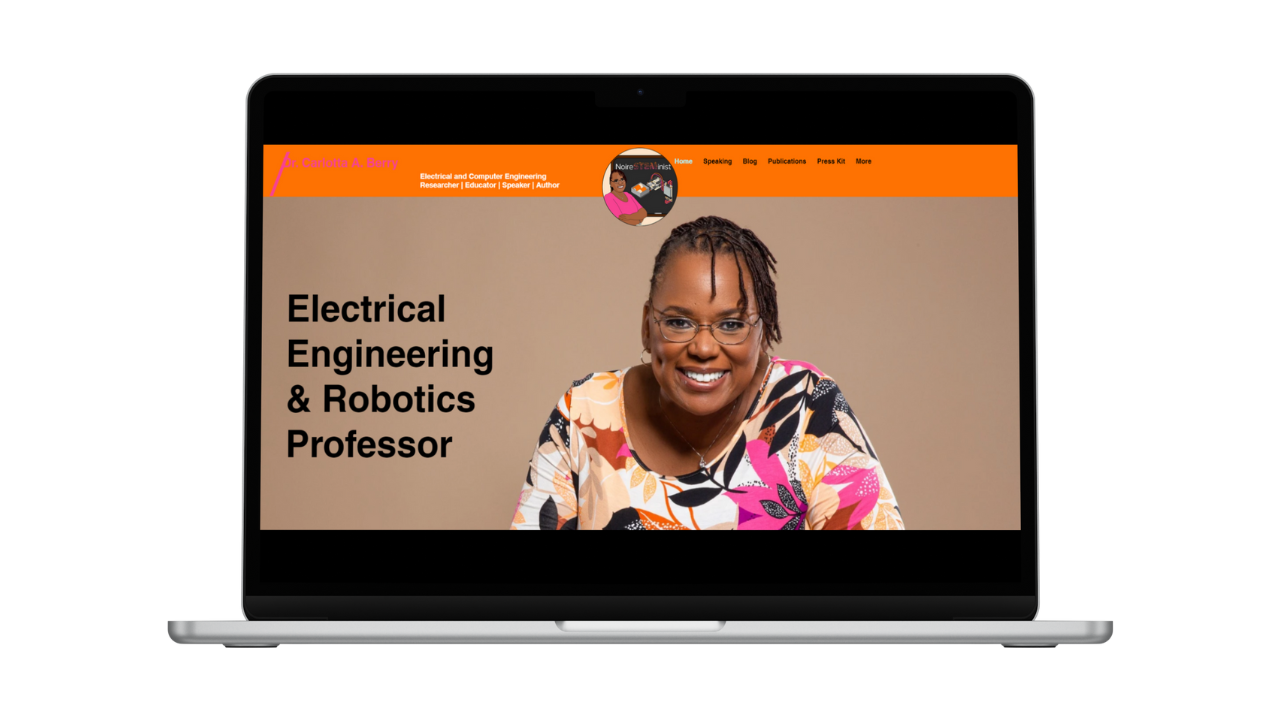
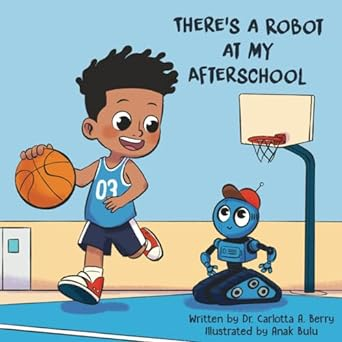
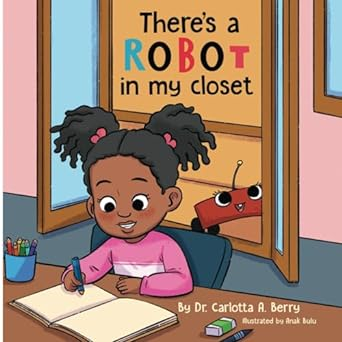
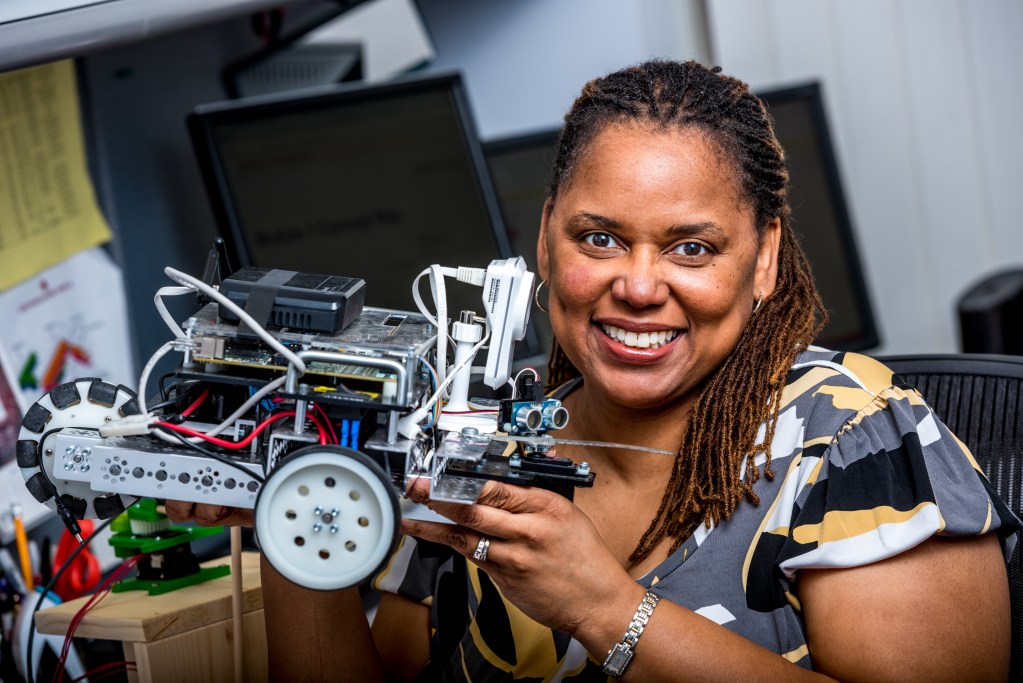
Electrical and Computer Engineering and Robotics Professor, Dr. Carlotta Berry knows her online presence can fit as many of her identities as needed to support her goals to “diversify STEM by being a STEM communicator.” And, to share her black STEM romance books and her children’s book There’s A Robot! Series with the world.
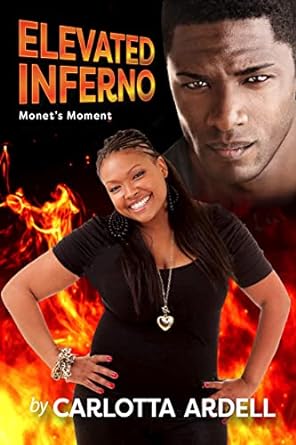
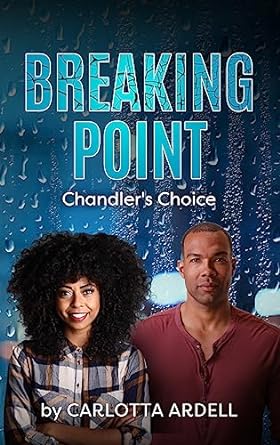
In this featured interview, we talk about what it’s like to be a professor with an extensive online presence with profiles on many platforms and multiple websites. Dr. Berry knows that when she shows up online, when she creates strong black women characters for her books who care about STEM, she helps create “what I really wanted to see when I was an engineering student: was Black women professors in engineering.” We also talk about writing her Black STEM romance books, Elevated Inferno and Breaking Point: Chandler’s Choice and what it’s like to be a professor and an author online. Read her bio.
Meet Dr. Carlotta Berry
Jennifer: Hi everyone, it is Jennifer van Alstyne from The Social Academic podcast where we talk about managing your online presence in academia. Today, I have a featured interview guest I’m so excited about because I’ve been planning this interview for, to be honest, over a year.
Dr. Berry, I’m delighted to have you on The Social Academic podcast. Would you please introduce yourself for people?
Carlotta: Absolutely, my name is Carlotta Berry, PhD and I’m a Professor of Electrical and Computer Engineering and Robotics. I’m also the owner of NoireSTEMinist Educational Consulting, a company that I started during the 2020 pandemic. My area of research is robotics and controls. The theme for my company is ‘my STEM is for the streets,’ and my goal is to use robotics to diversify STEM by being a STEM communicator and having a strong presence online and also by doing speaking and writing books and making GIFs and doing lots of things in order to amplify the importance of diversity in STEM and robotics.
Jennifer: The first time I saw you online was a post that you were sharing on Twitter about robotics. It was so visually engaging for me. I was like, “Oh my gosh. I can’t wait to see more from this professor,” even though I don’t know anything about robotics personally. Just having that visual, just seeing who you were as a person made a difference for me.
I’m curious like, what prompted you to get on social media and to create an online presence for yourself?
Carlotta: I’m gonna tell you, the pandemic was a crazy place. So my initial beginning to social media was actually back in 2013. I had gone to a women’s leadership conference and Paul Carrick Brunson spoke. Paul Carrick Brunson was a famous guy who was a matchmaker actually. And he had gotten famous because he was on Oprah Winfrey. And he came and spoke to this room full of women engineering academics who were all professors. And he said, “I went and looked for the clout score for most of you and most of you’re at zero.” And basically what that means is that we did not have any kind of online presence. And he was saying, “If you’re gonna be the thought leaders of tomorrow, you have to understand that your work has to impact people beyond the ivory tower, beyond conferences, beyond paywall journals.” At that time, I started my social media. I think I just started a Twitter account around 2013, but I never really did anything with it.
Then in 2020, thank God, I got approved to go on sabbatical right before the pandemic struck. So I was going on sabbatical anyway. And once we were all home all day and you can only do but so much, I started playing on social media.
What I realized is that every time I was posting something, I think I had maybe like a thousand followers or maybe 2,000 in 2020, even after seven years on social media, and it just started growing and people loved when I put engineering and robotics quizzes. They’d be like, “I don’t know what any of this is, but put another one.” And I thought it was so crazy.
I like to call 2020 my Jerry McGuire moment. It’s like the beginning of Jerry McGuire. He talks about, “I want to be a agent but I want to learn to be a sports agent in a new way.” And my Jerry McGuire moment was, “If I really wanna diversify STEM and the thing I really wanted to see when I was an engineering student was Black women professors in engineering, then how can I increase my visibility for other people and not for me?”
And social media is great. My STEM is for the Streets. Where more are the streets than social media? So I started on Twitter, and the way I ended up other places beyond Twitter, ’cause Twitter really was my pocket because I didn’t really understand social media. I still don’t understand Instagram. No clue how Instagram works.
A parent said to me, “My daughter is a teenager and she is really into STEM. You gotta go where they are. You gotta get over on TikTok.” And I was like, “Ugh.” You know, ’cause TikTok has kind of a bad rap. I went on TikTok and I wanna say within one year, I had gotten the same number of followers that I got on Twitter after 10 years.
Jennifer: Amazing.
Carlotta: TikTok is the jam.
Jennifer: We’re drawn to you. And TikTok allowed more people to see you probably than anything like Twitter or even Instagram with its more limited kind of reach to people. Oh, they were just waiting for you.
Carlotta: They were, I mean, it’s a total different kind of dynamic. So I can truly say that Twitter and TikTok are really where my pocket is. Everyone else is just kind of there. And that all came from, I went to a branding workshop about a year or so ago and I don’t remember her name unfortunately but she said, “You need to make sure that you at least park your name on any platform that you may eventually have some impact on. Because the worst thing you want to happen is that your brand grows and then somebody else takes your username because you never parked it and they do something inappropriate with it.” And so that’s kind of how I ended up with the same username on all these different platforms even if they don’t get as much attention as that one. Because I remember her saying that like, I have a NoireSTEMinist.com website. She’s like, “You need to have a website with your name.” So I now have a pointer from my name to that website, and that just came from that advice from that woman.
Jennifer: Oh, I love that. So it sounds like having an online presence was something that you wanted to be able to reach people in the streets, to be able to reach people. But it was also something that you realized was valuable for yourself as a researcher, as a professor, and just as a person, like a human being. It sounds like that, almost like that comment from the family member of the high school student.
Carlotta: Yeah, yeah.
Jennifer: How you realize that there were a ton of people waiting to hear from you, that were younger.
Carlotta: If you build it, they will come. But you have to build it in the right place, right? So I had to go where they are, you know. They now think Twitter and Facebook and maybe even Instagram to a certain extent are a little bit, you know, still and crusty. Which is interesting because when I first started teaching my students, Facebook was the place to be. Then probably 2013 or so, it was Twitter. I don’t know when Instagram was hot. Some of my students are on Instagram still, but now some of them are also on TikTok. So it’s just interesting.
I do do a lot of cross-posting and cross-pollinating just so that I can have maximum impact. But like I said, I’m trying to invest mostly in now Instagram and TikTok because we’re just not sure how much longer Twitter’s gonna be here.
Trolling, racism, and responding to hate on social media
Jennifer: I hear that. Now let me ask, it sounds like you’re on a lot of platforms, which one do you like personally enjoy the most?
Carlotta: Crazy as it may sound is still Twitter.
Jennifer: Oh! Okay.
Carlotta: Yeah. Despite the fact that they still have a lot more trolling, a lot more ads, a lot more racist. I actually get the trolling being a Black woman in STEM, having a PhD in my bio, I have probably been trolled on all, actually all of the platforms for someone questioning my credentials, talking about affirmative action, diversity hires and all that. It even happened on LinkedIn as crazy as that may sound.
None of them are safe, but I think Twitter is probably the worst for that. Where you know they just wanna come in and question you, like, are you really a doctor? And I tell them, “Yeah. Maybe I did get my degree from affirmative action, but I have it. Do you have one?” Yeah, because they kind of expect you to get defensive like, “Oh my God, somebody gave you a chance, so you don’t deserve it.” I got a chance and my mama did not have to cut my face on a lacrosse crew captain to do it, you know? So I mean, you know, you just have to get them.
I probably get more of that on Twitter than any other platform. But I like to say I’m a troll take down queen.
My vision for trolls is I’m going to keep going at you until I make you block me. So far I’m batting 1000 and have been since 2020. pic.twitter.com/TTkJIeNBnw
— Dr. Carlotta Berry, PhD #NoireSTEMinist® 👩🏾🎓🤖 (@DrCABerry) August 26, 2022
“I’m a troll take down queen.“
Jennifer: You’re a troll take down queen. I love that. What do you do to take down trolls? What do you do to protect yourself in this situation?
Carlotta: What they want you to do is to get upset, and they also want you to block them and run and hide. And depending on if I have a deadline, like I had one when I’m on deadline, like if I have papers due or I got grading to do, I got to get ready for class, I do block them and move on.
If I have a little bit of time in my day, I will GIF and meme the teeth out of you. And a lot of times they block me first. And at that point I’m like, “Troll 101, baby. You blocked me.” But yeah.
Jennifer: Interesting!
Carlotta: And then I noticed that once I start coming back at them, I’ll start getting comments like, “But you’re a professor. What kind of professor acts like this? How do you think your school would feel? How do you think your boss would feel they knew?”
Okay, first of all, I am tenured, and I am a full professor, but a lot of my colleagues follow me on social media as well as my school follows me. So if you are so concerned, feel free to do that.
I had someone on TikTok also threatened to screenshot a video or something and send it to my school. I don’t believe there’s anything I do that anybody at my university really cares about.
But if you think that that’s going to scare me out of responding to your ignorance, then you got another think coming.
Jennifer: Yeah, professors are reported all the time for things that happen on social media, even in person that are recorded on video and their universities often are like, “Thanks for sending that to us.” And then they don’t really do anything with it the vast majority of the time.
I’m sorry to hear that you’ve gotten so many threats, especially reporting to your employer. I really like your response. It actually sounds like you approach responding to them from a very empowered place of knowing yourself, knowing who your real friends are, and who your real supporters are.
Carlotta: Absolutely.
Jennifer: That is beautiful. Thanks for sharing that with me.
Carlotta: Thank you, I was gonna also say, you know, lemme tell you, when I knew reporting doesn’t do anything: there was a guy at a university and I cannot remember where it was anymore, but he was just tweeting things like, ‘this is why women shouldn’t be in STEM’ and ‘women shouldn’t be in the science classroom because they are not smart enough’ and all of that.
He was saying some horrible misogynistic things about women in STEM and all of these women scientists and engineers like me underneath were tagging the university, reporting him to the university, et cetera.
Eventually the university released a statement, “We are aware of the statements of one of our adjunct or endowed or emeritus professors. We have heard you. We’ve gotten the comments. He’s done this for years. You always report. However, we wanna make it clear he’s emeritus and there’s nothing we can do about it.”
I’m sitting here like, “If this white guy can go on here saying all kind of misogynistic stuff and nothing can happen? Then the fact that me promoting diversity in STEM is bothering somebody, then I know nothing’s gonna happen from that.”
Jennifer: Hmm. So you have all of these profiles, it sounds like you’ve got trolled on every platform that you’ve been on. What prompted you to have so many profiles for different things? I get that you went to the branding workshop, but you don’t just have your name, you have NoireSTEMinist, and I think you have Carlotta Ardell. Is that right?
Carlotta: I do, I do. Yes, so what happened was also during the pandemic, not only did I launch my company, but I also started writing Black STEM romance novels.
I just started brainstorming all the different ways to normalizing Black, oh, thank you, Black women in STEM, Black women in engineering. And my mentor, my writing mentor, ’cause it was not an easy transition from technical engineering journal type writing to fictional writing, understanding view, understanding visual writing and all of that. And my writing mentor was like, “I think your messages are getting crossed up. I know everything relates back to your primary, but you don’t want your romance books getting mixed up with your technical papers. You don’t want people going to learn about your books and they’re on your professor site.”
That was her recommendation, to disconnect the two. And so that’s why I came up with a pen name Carlotta Ardell, which is my middle name, so that if you search on that, only the romance books come up. But if you search on my surname, then my textbook will come up or my journal papers that come up, et cetera.
Then that just immediately transitioned to, you need to have dedicated websites, channels, et cetera for book stuff. So I’m not always the best at it and I do most of the managing of my stuff, which is why I’m crazy most of the time. But I do try to dedicate, if at all possible, the Carlotta Ardell stuff to the Black STEM romance, NoireSTEMinist to the STEMy stuff, the educator stuff, and then my others like my personal Twitter or my personal Instagram. I’m liable to say anything on that one. But I’m not always best about doing that.
But I also had to at some point realize I can’t do it all. And so I do have a virtual assistant and she does a little bit of the managing for me, not that much, but she helps a little bit with content creation.
“Canva has been a game changer, designing things in Canva and automating posts in Canva.“
But Canva has been a game changer, designing things in Canva and automating posts in Canva. Even though I know it’s frowned upon and a lot of people don’t, I like it. AI art has also been a game changer for me because it’s very, very difficult to find little Black girls building robots, little Black girls doing electronics, Black women in research labs.
I’m able to en mass create the vision for the world that I want to see. And through that media, I was able to get an Afro-futurism talk at the National Museum of African-American History and Culture. So because I started generating this content of little Black girls and brown girls being androids and playing with robots, I got the Afro-futurism talk.
Even though I’ve gotten trolled about my AI art as well, it has already led to some opportunities for me.
Carlotta: But yeah, so the GIFs was the same thing. The GIFS came about also 20, I’m telling you 2020 and 2021, the pandemic sabbatical year was crazy. I hated that whenever I wanted to make a reaction to somebody’s post, I would have to scroll forever to find Black teacher, Black woman engineer, Black STEM, Black professor, Black woman laughing, there were like three or four people.
So that’s why I really started making the GIFs because I could never find GIFs that represented me. And so that’s where that came from. And I don’t do it so much anymore, but I have found that some of them have become relatively popular. Like there’s a frustration one that I made that is like extremely popular. People will sometimes DM me a message if somebody used my meme or my GIF in a response. They’d be like, “Look, this person used one of yours.”
Jennifer: That’s great. When you first created your GIFs, did you have that kind of idea or notion that a lot of people would then be using them? You created them for yourself, it felt like personal, but like now other people are using them. What are your thoughts on that?
Carlotta: A hundred percent I did not. It was completely for me. In fact I was on Twitter venting like, where are the GIFs for people who look like me? Where are the GIFs for people that act like me? Where are my GIFs? And it’s been a few times I’ve tweeted something and somebody reached out to me, and I think GIPHY may have responded or GIPHY identity responded. I think GIPHY identity must be maybe their diverse voices channel. And I think they responded and said something make a GIPHY channel and make your GIFs.
I honestly did not know it was that easy. I mean, I already make videos in Canva. I already make videos for my class in Camtasia. Making a GIF really is as easy as having a picture or a video converting it to a GIF and uploading it to that website. I mean, it’s so easy and I don’t think people realized that. And so once I did it, there were a couple of people who reached out and was like, “Can you make me one?” So if you look at my GIPHY channel, there’s probably about three or four other Black women in STEM on there. ‘Cause I don’t think anybody realized how simple it was. But it was me venting in a tweet where somebody responded and was like, “You know, anybody can do this. You just have to make a Giphy channel and get it approved.” Really? I mean, that easy outta debt that done it years ago. Who knew?
Jennifer: It sounds like a lot. So you’ve made your own GIFs in the past, you have all of these channels, you’ve got the websites, you do have some support with your assistant, which is amazing.
Leaving Spill, and considering other social media platforms
Jennifer: But before we started recording, you actually said like it feels messy. Like it feels like a lot. And so I’m curious, like what’s something like a decision that you’ve made for your online presence that you probably wouldn’t make again, you like, wouldn’t repeat it, or wish you could take it back?
Carlotta: I think when people kept saying Twitter was dying and there was a mad rush to other platforms, I probably would’ve slowed down because now that I’ve opened them up, I probably feel kind of obligated to maintain them even though I don’t post a lot. Like I made a post news site. My post news site may have like five things on it. I made a Bluesky site. My Bluesky may have like five or 10 on it. I got on Mastodon. Mastodon is kind of a different kind of place. The format is kind of different. It’s kind of weird. And I have a Spoutible.
But to be honest, if I would’ve just slowed down and been like, everybody’s making a mad rush for the doors on Twitter, I’m not going, I probably would’ve made them.
One thing I made and I did reverse this decision, I made a Spill. Spill was the one that was invitation only and they sent out the little codes and pretty early on, I got a Spill invitation and I went on there. And what I did not like is Spill is visual. It’s more you post images than words.
I was over there sharing some of the same kind of content that I share everywhere ’cause you know, my brand doesn’t change just because I changed platforms. And I started becoming, they were like, “You’re trolling the timeline. You’re spamming the timeline. You don’t engage right. You’re not doing it right.” And for the first time ever, I deleted myself off of a social media account because I felt Spill was a little bit too judgy.
And I’m like, if I’m gonna be criticized, critiqued, and judged, I can go read my course evaluations at work. And you know, in my time of relaxation, I don’t get on social media to be critiqued and criticized about how I do it.
You know, when a troll does it on Twitter, I just slam ’em down. But when I did it on Spill, you know, this person’s saying stuff like “I’m trying to educate her,” “I’m trying to tell her.” And then other people started popping in like, “Well, she just doesn’t know.”
I said, “Well, I know what I am gonna know. I’m about to delete this. That’s what I am gonna know.” And I actually contacted Spill on Twitter and said, “I don’t think you’re ever gonna be successful because you’re letting the members of your community police the way people engage.” And if you don’t want people here, just say you don’t want people here. I thought the whole goal for a social media community was to build community. And I was just like, it was just so negative.
But similarly with Mastodon, I could post the same engineering professor quizzes and engineering STEM content that I put on Twitter or somewhere else and people will engage or just click on things and be like, “I have no clue.”
On Mastodon, I have people coming underneath and trying to, well, actually this is what your question should say or well, actually this is how we, almost every time, and I’m like. So it’s kind of like, interesting to me how you can post the same thing in multiple places and get completely different reactions. Mastodon is not so negative that I’m going to leave it necessarily.
I just think it’s a little irritating that they have a bunch of elite type of intellectuals over there. Some of them who want to constantly try to tell you how to do things like, “I’m not sure that was the correctly framed question and that your multiple choice options are the best ones.”
This is for fun, honey. And to introduce people to STEM. This ain’t my classroom and you are not a peer reviewer. Get over yourself.
Jennifer: Tell me a little bit about NoireSTEMinist and who it’s supporting. I’d love to hear more about your business.
Carlotta: The business was started because, also during the pandemic, is once my social media presence exploded, I started getting contacted and pinged a lot for speaking engagements. I didn’t mind doing the first couple of talks, ’cause academics and professors, we speak for free all the time at conferences, on panels.
But I started having people asking me to speak in person and online to events that might be 500+ people. Sometimes at events, they were charging people to attend but had no budget for the speaker. Or, they had money to fly me there, but nothing to pay me for preparing my slides, leaving my classes, and wanted to share the slides and the recording after I left.
Okay, I’m now giving you my pearls. I’m giving you my intellectual labor.
It took me six years to get this PhD. You count that plus the 13 years of K through 12, that is like 19 or 20 years of education that you’re now asking for for free.
That was my original motivation for starting my business. I had to find a way to monetize my intellectual property because people will use you up dry if you let them.
Now, I do most of my free labor through the organizations. I help co-found: Black in Engineering and Black in Robotics. We do robotics workshops for low cost or no cost for people in the community.
I also do STEM workshops and webinars for adults and kids through my business. I do speaking engagements through my business and I’m also currently the visiting scientist at the Children’s Museum of Indianapolis. So I do STEM activities for them as well.
NoireSTEMinist is now taking her work to the streets. And so I take things that I give my students for their high price tuition and my salary and I scale them down into bite-sized chunks for anybody who wants to get or know a little bit more about STEM.
Jennifer: I love that it’s like your business is enabling you to actually help more people for free by allowing you to produce more content, reach more audiences and having a way to like monetize that so it can continue to do so in the future. I love it.
Carlotta: My business is me, right? So NoireSTEMinist is me. So basically, my business is me doing what I was doing for free and doing what I normally do anyway, but now setting it up into a model where I can ideally start making money in my sleep and leave a legacy for my daughter. And that was the main difference, yes.
Writing Black STEM romance novels
Jennifer: That’s amazing. Oh, that felt really powerful. Thank you for sharing that with me. Oh, okay. So who should definitely be reading these books? Because your books are awesome. When I read this, I was like, “Oh my gosh, this character is just so strong.” And someone who thinks about herself first in a beautiful way because she cares about her education, because she cares about her family, ’cause she values herself.
I’m curious. Tell me more about the books. Tell me about being an author online while having like these multiple identities and multiple hats. Cause it’s all you, right?
Carlotta: Absolutely.
Yeah, the intersectionality, when I became a full professor, I gave a full presentation on the intersectional identities of being a Black woman in STEM, being a mother, being a Black person, being a woman, loving romance novels, loving to cross stitch and saying, “Why can’t these all intersect in that ball of being multidisciplinary, intersectional, interdisciplinary?”
So where this started is that during the pandemic as well, I was chatting with a couple of my colleagues in Black in Engineering, all Black women engineering professors, and we always talk about that MacGyver and Dilbert and Sheldon get all the STEM love online.
“How can we devise a way to start getting more Black women in STEM marketed correctly?“
And so we were like TV shows, comedy series, web series, web comics, and we had just thought maybe we start with books, get those to a certain point and then try to mark it out.
But it was really all about marketing. The romance came later. Originally, and we were called the Catalyst Chronicles Crew. Then the pandemic started to end and we started to go back to work and it became very difficult.
But I didn’t wanna give it up. I now had this social media presence. I had already started honing this fictional writing skill. And the first book, Elevated Inferno was actually birthed out of Instagram of all places. That was a young lady who got stuck in an elevator and it went viral because she was recording her experience. And when the doors opened, there was this gorgeous firefighter there. Of course, everybody’s like, “Ah, love interest. Love interest, love connection!”
And it went viral.
Then, he creates a Instagram account. He didn’t even have one. He said his sister contacted him and said, “do you know you’re going viral on Instagram right now because of you rescuing that young lady in the elevator?”
So he comes on and goes, “I wanted to create an Instagram account and say thank you for everyone and for all the love, and I’m married and have a son.”
I thought it was so hilarious. And so I told my friend, I said, “Okay, I know what my first book’s gonna be. I wanna use this story for my first book except he’s not gonna be married with a child.” And so that was where it was birthed.
I always knew all the women were gonna have some relationship to science, technology, engineering, and math (STEM). And I want all of them to have some kind of meet cute, kind of crazy way to meet. Because I want it to be romance first, but I want the STEM to be injected in a way so that someone doesn’t feel like they’re being preached to, doesn’t feel so high level, they can’t follow or understand it.
The greatest compliment I have gotten is from people who’ve said, “I don’t read romance, I don’t like romance novels, and I’m not a STEM person, but I liked your book” because that means I hit on the right note.
Because I’m the sneak attack, right? I’m proselytizing the STEM in such a way you don’t even know it hits you. You finish the book and you’re like, “Did they STEM me?”
Jennifer: I love it, well, I’m not in STEM. I’m a poet. I’m not a fiction writer. But I love romance novels and I loved your book. So pick up your copy of Elevated Inferno.
Carlotta: Thank you, and because I’m an engineer and my students have found my books, even with a different name as well as some of my colleagues at engineering conferences, they are appropriate for teenagers.
I’ve had colleagues and students talk about, are they the nasty books? You know, this is not 60 degrees of gray or whatever it’s called. These are your high school run of the mill 16+ romance novels.
We fade to black. We make, you know, we allude to the scenes because I’m an engineer and an academic and a professor and my students have found and do read my books. I can’t be talking to them in front of class if, you know, they just done finished reading steam and steamy.
Jennifer: Oh, I love that. Well, I was a writer and went to school for writing. And so a lot of my professors wrote some steamy scenes in their books and it was always a little awkward. That’s very thoughtful of you.
Carlotta: Book two is Moses. Moses was actually in book one. He helped Reese connect with Monet on social media in book one. And book two is all about Moses, who’s a womanizer and a player. And Chandler is a nursing student. So she’s serious about her business. She lost her father some years ago and had a little bit of a detour but she’s on the right track. She’s getting her degree. She’s about her business. And Moses gives off straight player vibes when she meets him. And she’s like, “Uh-uh. I’m not even trying to go there with him.”
He’s a player, but he’s persistent. So eventually, she relents, gives him her number and they start dating. And she tells him, I just don’t have time. I don’t have time for any foolishness. So if we’re gonna date, I wanna be in a situationship. You know, I’m not even gonna put myself out there like that. We know from the very beginning, we are just having a summer fling. We’re flinging it. It’s all good. But he’s great, you know. He’s a great guy.
Even though he’s a player, he’s not a dog. So they have a great summer. And at the end of the summer she goes, “I wanna try this for real. I wanna stop playing at dating and I want to date date.”
And he’s just like, “Uh-uh, you knew what this was.” He wasn’t ready. And so they have a horrible, horrible breakup. It gets really, really ugly. And Chandler walks away. And Moses goes, “Wait a minute. I like her, but she’s gone. She’s gone.”
I don’t wanna give the whole book away, but she goes on with her life. She makes some decisions and does some things in her life. And then some years later, he gets in a motorcycle accident. She’s now a visiting nurse. She does like concierge nursing and he ends up being her nurse. He’s bedridden ’cause he’s broken his leg all the way completely. And so that’s how they come back together. That’s where ‘Breaking Point’ comes from. She reached her breaking point when he couldn’t settle down with her. He reaches his breaking point when he breaks his leg and she comes back into his life.
Jennifer: I love it. I mean, I think you gave a little bit away about the book, but the kind of stuff that’s like making everyone gonna wanna read it. I love it.
Jennifer: Tell me a little bit about the covers. I know, I think I remember that I saw you used AI art for the covers because–
Carlotta: I did not. So that’s one of my challenges. I know you know I do presentations on bias and AI, bias in STEM, bias in robotics. I have one next week. So because of that, I use AI art for marketing, but I don’t use AI, yeah, I don’t use AI art for anything that I want to copyright and sell because you don’t really know what the engine for the AI art is. You don’t really know how it’s being used.
I don’t wanna accidentally ever try to market or sell something that’s somebody else’s work.
So on my website, I think any of the AI art, a lot of it I generate is like 50 cents or a dollar, just whatever the work took for me to put it up. I use real stock photos for the book covers and then I hire somebody to put them together.
The first one my brother did, ’cause he’s a graphic artist. The second one is a stock photos and I just had somebody put it together.
And I don’t want AI art for it, but because my stuff is so very specific, it’s very hard to find stock photos of little kids, Black and brown little kids, building robots, playing with robots, et cetera. It’s just not a lot of them.
So I don’t wanna do AI art, but I gotta find an artist who’s reasonably priced ’cause I’m an independent author and publisher. I don’t have an agent who I can pay to bring my visions to life.
I don’t mind using the AI art for stuff on social media and showing it off. But all of my books need to have either real artists or real stock photos and stuff.
Book three is actually written as well. I’m hoping to get it out this summer. I’m just so crazy busy. I need to get it edited right now. But yeah, this book, I’ve now, because I have a writing mentor, I’ve gone from pandemic taking a year to get a book written.
“I can now write a book in about 35 days and then it takes another two or three months to do the editing, which is where I am right now.“
Jennifer: My mind is blown. That is some work, wow.
Carlotta: Yeah, I just, it’s hard work, but because I’m a professor and busy, I have to get the idea and get it out like that or it won’t get done.
It took so long the first time because I just didn’t know the mechanics of writing. I didn’t know how fictional book writing, I didn’t know how to lay a book out. I didn’t know about changing perspective. And if you notice my books have the male, female thing now, the second one, I just didn’t know how to do that. And so learning a lot of those things really helped me go faster. The editing is what’s slowing me down right now ’cause when I go back to work, it’s all about the students, you know.
Wikipedia and how to connect with Dr. Carlotta Berry
Jennifer: What’s it like to talk about your book online? Do people from your university like, know that you write these books? I’m curious about what it’s like to embrace both of those identities at the same time.
Carlotta: They do, and I love it. I actually, because I was on NPR a couple of weeks ago, one of the young ladies at my school, her parents heard my interview, bought her the books, shipped them to her at school, and she came to my office and had me sign them. And I think it’s really an honor. I had some young ladies who asked to borrow and read the book. And because I didn’t want them to keep taking my one copy outta my office, I had talked, my school library has now purchased copies of my books so that if they wanna read the romance novels, they can go check it out at the school library.
Jennifer: I love it.
Carlotta: But yeah, I think it’s really important for them to know that I practice what I preach and that if I say I promote diversity in STEM and all of those things, then your professor has to do more than just spout those things in the classroom.
I tell them all the time, I’m a STEM communicator, I’m a superstar on social media. And then when I’m not here, you know that I’m off doing an interview or I’m off giving a talk or I’m off doing something important. ‘Cause you know, sometimes they’re like, “Where are you going and why are you going all the time?”
The work I do is important. What I do for you is important. What I do when I’m away from you is just as important. And so helping them to understand that it’s important. And that I tell ’em, “I’m not like any of your other professors, you know.” And I think that’s a good thing.
You know, being the only Black woman engineering professor at my university, the things that I do impact a lot of people.
If I keep all of that in my little box, in my little corner of the world, I’m doing it wrong. I like to say to whom it is given much is required. And if I don’t let my blessing bless other people, then why do I have it?
Jennifer: Hmm, hmm, beautiful, beautiful. Okay, my last question.
What do you most want people to know about you or remember about you when they find you online? What’s that thing that you really want them to bring with them to whatever’s next?
Carlotta: I want them to know that my passion for diversifying STEM is infectious. And I want it to be so exciting to them that they wanna join me on the journey. Whether that’s getting some kids excited about STEM, getting themselves excited by STEM, showing some little kid how to program a robot, helping somebody get excited about being creative, being a designer, being innovative, being curious. That’s all there it is.
Jennifer: Beautiful. Dr. Carlotta Berry, it’s been amazing to have you on The Social Academic. Is there anything that you’d like to add before we wrap up?
Jennifer: Here’s both those books again. Be sure to pick up a copy. I will be linking to those in the interview. How can people find you online after this?
That was something else that happened during the pandemic. There was a Wikiathon to get more Black STEM and Black scientists, engineers and physicians online. And so we did it through the National Museum of African American History and Culture.
One day, we had a Wikiathon and we were all gonna go make Wikipedia pages. I was gonna make a page for somebody. They were gonna make a page for me. Imagine our shock when we went to Wikipedia and somebody had already made me a page. I have no idea who did it. So this was March of 2021 and somebody had made me a page back in September of 2020 and I didn’t even know it. And so I’m going on there.
But I made other people’s Wiki pages ’cause once again, you pay it forward. But I don’t have any idea who made my Wikipedia page. It’s crazy.
But yeah, so really Googling. If you just put in my name, things come up. But probably the easiest is NoireSTEMinist. And I actually purposely selected that word because I wanted it to be something that wasn’t a common term because I was able to trademark it. And also because of that, if you type that in, everything that comes up is me. So NoireSTEMinist.com. And also @DrCABerry on most social social media. NoireSTEMinist is on Twitter and Instagram and Facebook. And then there’s author Carlotta Ardell as well as on Facebook and also my website.
Jennifer: Amazing. Well, Dr. Berry, thank you so much for joining me on The Social Academic. And thank you to everyone who’s been listening to this interview.
Go and pick up a copy of Elevated Inferno, or Breaking Point: Chandler’s Choice. And be sure to follow Dr. Berry on social media. Her videos and posts are amazing and you will not regret it.
Dr. Carlotta Berry is a professor, author, researcher, mentor, role model, and prolific speaker. In her efforts to increase the number of women and historically marginalized and minoritized students earning degrees in computer science, computer, electrical, and software engineering at her university, she co-founded the Rose Building Undergraduate Diversity professional development, networking, and scholarship program.
In 2020, to achieve her mission to diversify STEM by bringing robotics to people and bringing people to robotics, she launched her business, NoireSTEMinist educational consulting. She also co-founded Black In Engineering and Black In Robotics to promote diversity, equity, inclusion and justice in STEM. Her innovative strategies to normalize seeing Black women in STEM including performing robot slam poetry, writing Black STEM Romance novels, conducting robotics workshops, creating open-source robots, and using social media to educate the world about engineering and robotics.
My name is Stephen Kearns and I am the module co-ordinator for the maths module on Go Higher.
I remember when I was in junior school and would rush home to work on my mathematics book because I loved solving the problems and getting the smiley faces on my work. I always considered myself to be quite clever and thought I’d do really well in school. But, secondary school was a different experience. The pupils just wanted to mess around ensuring the teacher spent most of her time dealing with the disturbance rather than teaching the class. Many teachers were absent through illness and substitute teachers struggled to lead the class so the pupils lost interest. It was a difficult environment in which to focus and I struggled. I left school with a couple of GCSE’s and Art A-Level which was all I deserved really, but I knew I should have done better.
After many insignificant roles in thankless jobs I had begun reading about philosophy, spirituality/eastern philosophy, and physics. I had begun to ask meaningful questions about myself and the world; I wanted more from myself and my life. I decided it was time to retrain and get a career possibly in nursing so I started looking at access courses in Liverpool and came across Go Higher. I am from a poor, single parent family of six and was indoctrinated from an early age to think I was not the sort of person who goes to university. Go Higher was not a path to nursing but it taught a variety of modules including philosophy and so I applied thinking I wouldn’t even get accepted. But I got an interview and I remember the day clearly, I parked my car on Grove street, walked past Abercromby Square which looked beautiful in the spring sunlight with the trees in blossom, and nervously made my way to a large Georgian building which was a buzz of student activity. I sat in a dark oak wood room overlooking Abercromby Square wandering if I had made the right decision but the tutor who interviewed me made me feel valued for my life experience and dedication and not looked over because of my lack of academic qualifications. From this point on I never looked back. After completing Go Higher I stayed at University of Liverpool to complete my philosophy degree exceling at formal logic which is a mathematical based system of argumentation. I stayed at Liverpool for master’s degree focussing on ethics, the environment and technology. I am currently a PhD student focussing on the moral status of synthetically generated organisms in a Kantian framework, something I would not have dreamed about before I started Go Higher.
I have worked in several secondary schools and the difficulties I faced in my education are still there. When I started teaching on Go Higher the academic literature on mature student learning of mathematics supports a flipped learning strategy so we redesigned the course to best fit the mature student learner. Learning math on Go Higher is not like school learning, there is a staff team to deliver 1:1 teaching, students have access to all the material at the start of the semester so they can go at their own pace, we have weekly quizzes for students to test themselves and for tutors to check how they’re progressing, and most of all it’s fun! The mathematics module is one that scares mature students the most but it not like mathematics at school, and once students get past that initial reservation it is great to see them understand this, enjoy it, and flourish. It is brilliant to see how many students end up enjoying mathematics on Go Higher, but it’s not surprising as that is why we structured the module the way we have, and it does work. Our pass rate is exceptional but that’s because students are willing to learn the subject and that is all down to them. Last year I went to the graduation of a former student who passed his History degree. He came to Go Higher hating mathematics but he was willing to put in the work and now he has a whole new life ahead of him. Go Higher could change your life if you are brave enough to give it a go.
In 2020, the human resources team at the University of Texas at Dallas was set to launch its leadership and professional development program, the culmination of 18 months of dedicated work. As the pandemic took hold, the question confronting Colleen Dutton, chief human resources officer, and her team was, “Now what do we do?” In their recent webinar for CUPA-HR, Dutton and Jillian McNally, a talent development specialist, explained how their COVID-19 pivot was a blessing in disguise, helping them completely reconstruct leadership training from the ground up.
The resulting, reimagined program — BRIGHT Leaders — received a 2023 CUPA-HR Innovation Award for groundbreaking thinking in higher ed HR. BRIGHT Leaders speaks to the needs of today’s employees, who desire professional development programs that are flexible and encourages everyone on campus to lead from where they are.
An All-Access Pass for Career Development
UTD innovated by first addressing the needs of remote and hybrid employees. Recognizing that “our workforce was never going to be the same after COVID,” Dutton says, they transformed their original plan from an in-person, cohort model into an accessible, inclusive training program they call an “all-access pass.” Any employee can take any leadership training session at any time. No matter their position or leadership level, all staff and faculty (and even students) are welcome to attend, and there’s no selective process that limits participation.
Their new, all-access approach inspired a mantra within HR: “Organizations that treat every employee as a leader create the best leaders and the best cultures.” This open-access philosophy means that parking attendants and vice presidents might be in the same leadership development session. Employees attend trainings on their own schedules, whether on their smart phones or at their home office. UTD also offers three self-paced pathways — Foundations, Leadership and Supervisor Essentials, and Administrative Support Essentials — that employees can complete to earn a digital badge. They’re also encouraged to leverage this training when applying to open positions on campus.
Some of the Microsoft Teams-based programs UTD established in their first year include: Lessons from Leaders series, BRIGHT Leaders Book Club and Teaching Leadership Compassion (TLC). They also partner with e-learning companies to supplement their internal training materials.
Dutton and McNally note that sessions don’t always have to be conducted by HR. Campus partners are encouraged to lead trainings that fall within the BRIGHT framework: Bold, Responsible, Inclusive, Growing, High Performing and Transformative. For example, an upcoming book club will be led by a team consisting of the dean of engineering and the athletic director.
Making UTD an Employer of Choice
In line with UTD’s commitment to workplace culture, the BRIGHT Leaders program speaks to the needs of a changing workforce. Early-career professionals don’t want to wait five years to be eligible for leadership training, Dutton stresses. “They want access to these leadership opportunities and trainings now.”
UTD’s flexible professional development training approach helps confront a concerning trend: almost half of higher ed employees (44%) surveyed in The CUPA-HR 2023 Higher Education Employee Retention Survey disagree that they have opportunities for advancement, and one-third (34%) do not believe that their institution invests in their career development. Offering robust, flexible professional development and leadership opportunities is part of UTD’s commitment to be an employer of choice in North Texas.
For more specifics on the BRIGHT Leaders program, view the recorded webinar. You’ll learn how HR built cross-campus partnerships, how they’ve measured their return on investment and how they’re building on their successes to train future leaders.
I joined the GoHigher programme at just 19, I had always wanted to opportunity to be able to help others and wanted to serve justice and after doubting my self, it gave me an opportunity to follow my dream. I didn’t think I was capable of Law after leaving school so took an NVQ route and planned on going into engineering.
As a woman in STEM, it was extremely difficult to be taken seriously, so I thought, why not just put the shift in to do what I really wanted to do? Not only did I get into my goal university studying my dream subject, but I for the first time enjoyed learning, I felt a real sense of community and belonging in GoHigher, with students from different backgrounds and life experiences; it really is a shared learning experience with your peers. You’re all in it together and everyone in my time at GoHigher was incredibly open minded and accepting, with that being the tone set for the environment.
The Go Higher teachers adore the subjects they teach and it really inspires people and makes the learning experience extremely enjoyable and rewarding. The broad range of subjects that are taught on this course are incredibly thought provoking and eye opening. I was able to engage in creative subjects that I know and love such as literature and arts and cultures, and also be intrigued by philosophy and social sciences, I also found a new liking to maths, which I always struggled with at school. The patience and support from all GoHigher staff is outstanding and all teachers, lecturers and professors should take a leaf out of their book.
Sustainability and the challenges of protecting our environment are key concerns for the Go Higher Diploma and for the University as a whole. A couple of weeks into semester two, our students were invited to work on a PowerPoint presentation and voice over, focusing on the topic of sustainability and / or the environment.
The range of topics which they chose to focus on and research was hugely impressive. The task enabled them to not only develop their investigative and PowerPoint skills but also to highlight an issue which was important to them personally.
Our Go Highers embraced this task, producing work of a high quality: innovative, dynamic, and engaging. By way of example, here are some titles: ‘Sustainability in Fashion’; ‘The important role frogs play in environment’, through to ‘Dogs’ ‘business’’ and its impact on our environment, to the fascinating subject of ‘Light Pollution’, collectively, a wide-ranging and diverse bank of work.
I chatted with one of our Go Higher, who, reflecting on their presentation, highlighted positive aspects of their ‘PowerPoint experience’. They observed that ‘the presentation was a nice way to lead into the start of the new semester’. They noted, with appreciation, the freedom to select their theme within the topic remit, adding that ‘there were opportunities to settle on a subject that might not be widely known’, drawing attention to it, through the medium of PowerPoint.
A further reflection highlighted the usefulness of having a sample presentation, plus rough working notes, as part of the task guidance. This advice served as an alarm bell, warning that not everything, however relevant and interesting, could be included within the five slide limit, so encouraging the development of discerning editing skills. The nature of this task was commented on as being instrumental in ‘taking the pressure off’, affording an opportunity to concentrate efforts on an item of work that would receive constructive comment, rather than a grade.
A positive outcome, resulting from the presentation task, was pinpointed during our conversation – the interconnection between this assignment and the forthcoming Philosophy podcast – feedback evidencing that the path towards making a podcast had been eased, because of the experience of providing a commentary to a PowerPoint presentation, speaking to an audience, a practice run for the podcast. This is a feature of Go Higher: there are linkages throughout the different modules with students supported to develop their skills and potential at a pace that is right for them.
It’s terrific to see how much hard work has gone into producing engaging presentations that are both engaging and informative. Well done everyone!