On April 28, the Department of Labor’s Wage and Hour Division (WHD) will begin enforcing remedies for employer violations of an employee’s right to reasonable break time and space to pump breast milk under the Fair Labor Standards Act (FLSA). These remedies were codified into law under the Providing Urgent Maternal Protections (PUMP) for Nursing Mothers Act, which was included in the Consolidated Appropriations Act of 2023 — year-end legislation to fund the federal government.
As a reminder, the PUMP for Nursing Mothers Act amends the FLSA to expand access to breastfeeding accommodations in the workplace for lactating employees and builds on existing protections in the 2010 Break Time for Nursing Mothers Provision by broadening breastfeeding accommodations and workplace protections. In the new law, protections are expanded to include salaried employees exempt from overtime pay requirements under the FLSA as well as other categories of employees currently exempt from such protections, such as teachers, nurses and farmworkers. It also clarifies that break time provided under this bill is considered compensable hours worked so long as the worker is not completely relieved of duty during such breaks, and it ensures remedies for nursing mothers for employer violations of the bill.
According to a WHD fact sheet on FLSA protections to pump breast milk at work, there will be several legal or equitable remedies employers will be liable for if they are found to have violated an employee’s right to reasonable time and space to pump in the workplace. The document states that remedies may include “employment, reinstatement, promotion, and the payment of wages lost and an additional equal amount as liquidated damages, compensatory damages and make-whole relief, such as economic losses that resulted from violations, and punitive damages where appropriate.” The fact sheet also clarifies that the remedies listed above will be available regardless of whether an employee experienced retaliation.
In addition to the fact sheet, the WHD has issued several resources on the PUMP for Nursing Mothers Act’s provisions since its enactment. On February 9, the WHD issued Field Assistance Bulletin No. 2023-1, “Telework Under the Fair Labor Standards Act and Family and Medical Leave Act.” This bulletin provides guidance for WHD field staff on how to apply protections under the FLSA that provide reasonable break time for nursing employees to express milk while teleworking, among other clarifications. The bulletin explicitly refers to the passage of the PUMP for Nursing Mothers Act and its expanded coverage to more employees. Additionally, on March 16, the WHD held a webinar to provide resources and tools to assist employees who wish to continue breastfeeding after returning to work and to help employers understand their responsibilities under the Act.
For more information on the PUMP for Nursing Mothers Act and FLSA protections to pump at work, the WHD has provided a resource website with general guidance, additional resources and the webinar on the PUMP for Nursing Mothers Act. CUPA-HR will keep members apprised of any updates to this law and others regarding FLSA protections for pregnant and nursing workers.
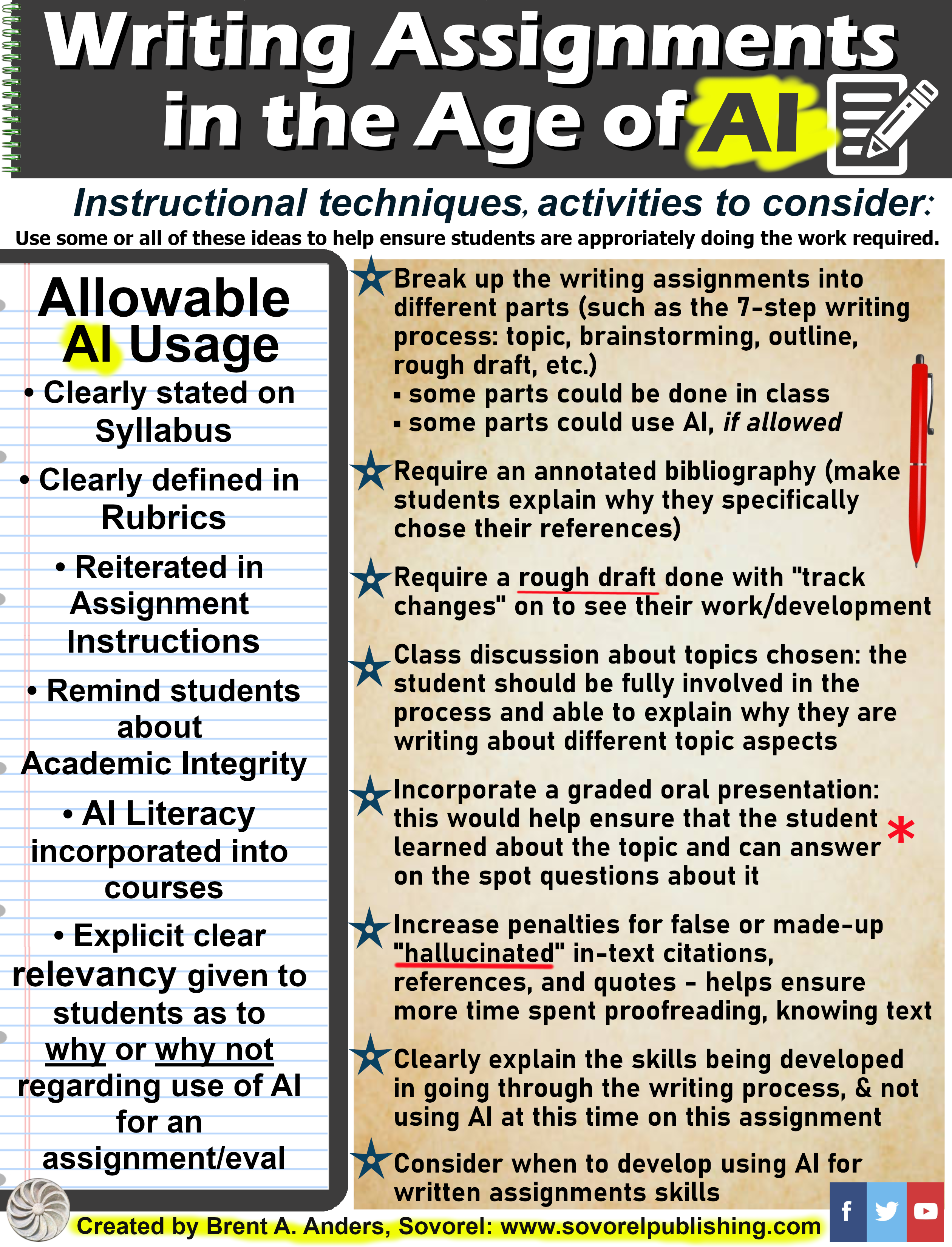
I put this infographic together to help many instructors that are struggling with this issue as they teach and are trying to keep students from using AI when they are not supposed to. Be sure to take every opportunity to help students learn about AI Literacy when you can, even when telling them that for this assignment/eval they won’t be able to use it.
You as the instructor are the subject matter expert and must be the one deciding how AI will be used in your classroom and for your assignments/evaluations. For some assignments, the use of AI may not be the right answer in that you are trying to help them develop skills mastery, so they can properly gain the skill of what “right” looks like. Be sure to fully explain that to them so that they have full relevancy and understanding as to why they can or can not use AI.
As higher ed institutions face pressure to fill open positions and offer more flexible work opportunities, many are responding by recruiting and hiring employees who live and work in a state different from where their institution’s primary campus is located. CUPA-HR’s Multi-State Workforce Survey was developed to better understand institutions’ policies, practices and challenges related to out-of-state workers.
Notable findings:
89% of responding institutions employ out-of-state workers.
The most common types of out-of-state workers are adjunct/part-time faculty and salaried/exempt staff.
On median, institutions employ out-of-state workers from 8 states.
Most institutions have restricted policies for both recruiting and hiring out-of-state workers.
Of the one third of institutions who avoid hiring from certain states, the most common states institutions avoid hiring from were California, New York, Washington and Colorado.
Many institutions provide salary ranges on job postings, but most do not adjust salaries based on location.
Despite the challenges of a multi-state workforce, excluding out-of-state workers can decrease the quality of the candidate pool and may cause institutions to miss out on top talent. Institutions pursuing, or considering pursuing, out-of-state workers may want to look at Clemson University’s hybrid approach to managing a multi-state workforce.
Charged by senior leadership to explore options for out-of-state employment, Clemson University’s HR team, led by Chief Human Resources Officer Ale Kennedy, convened a cross-campus workgroup that reached out to several schools about their out-of-state work approaches. After reviewing the data, the workgroup recommended that in-house HR manage the green or “easy” states and outsource the more challenging states in order to minimize risk. To learn more about Clemson’s approach — and the full findings from the Multi-State Workforce Survey — be sure to watch CUPA-HR’s recent webinar “The State of the Multi-State Workforce: Employment Practices and Challenges.”
For professors and scientists, a personal website is a big project that’s well worth your time. It’s the best way to manage your online presence long-term. Your personal academic website can include a portfolio of pages that showcase your
teaching
research
publications
speaking engagements
service
I’m Jennifer van Alstyne. Welcome to my my blog, The Social Academic. Now also a podcast and YouTube channel. This article was updated for 2024.
A personal website can be life changing professors, grad students, and researchers like you. In this guide, discover the 7 steps to an academic website:
You can make your own personal academic website. You’ve got this. When you do, your website will help people explore your research, teaching, and the things you care about. I’m excited for you! And this guide is here to help.
P.S. Bookmark this page so you can come back to it.
7 steps to take your website from start to launch
Creating a personal academic website is a long-journey. It’s not a 10-minute project like some articles claim. A website is typically a multi-day project. It may take you months. And that’s ok.
Some professors reach out to me for an academic website that
brings it all together for professors who “wear many hats” or feel like it may not be possible to “bring my identities together”
highlights their new book while helping past publications better reach new readers
invites aligned partnerships or relationships (i.e. with researchers around the world, community organizations, corporate partners, funders, and the people your research helps most)
creates a legacy for their work for a retired professor
celebrates their new position and prepares for their future for professors who transition to a new role
shares their research so people can engage in meaningful ways
helps them have a stronger online presence that supports a new goal or achievement
redesigns the website they made themselves years ago that “doesn’t feel like me anymore”
When you’re intentional about creating space for your online presence, you can help more people. For many of the professors I work with, a stronger online presence helps them move from the spark of “I can have a website” to “I deserve this space.” We deserve this space.
As academics, I want you to know that “we can create this space for ourselves.” You don’t need to work with me to have a stronger online presence. A PhD student scheduled a time to meet with me about designing her website for her. She didn’t need to wait to meet with me, “Have you heard about Owlstown? It’s a free academic website builder from my friend, Dr. Ian Li.” I wanted her to know she didn’t need my support. There was an easy solution for her personal academic website. That Owlstown is a solution I trust for most professors.
I have resources to help you on my website on The Social Academic blog, podcast, and YouTube channel. You don’t need to work with me to make your personal academic website. Here are my website resources for you. I hope this guide in particular helps you move forward efficiently to make your personal academic website a reality. Following it will help you get your academic personal website from start to launch smoothly.
The best way to start making your personal academic website is by planning the structure of your website. If you don’t have an idea about what you want to share, you’ll get stuck.
Let’s decide what to include on your professor website.
Planning your website
The structure and organization of your academic personal website determines the written, visual, and video content you’ll want to create. If you plan on sharing a lot of information, you can have more pages on your website.
Your personal academic website might include things like
About page with your academic bio and headshot
Research page
Current project
Research outcomes
Teaching page
Course descriptions
Syllabi
Teaching Statement/Philosophy
Publications page
Abstracts or descriptions
Publication links
Speaking Engagements page
Contact page
Links to your social media profiles
Blog
If you want a simpler website, a smaller structure is recommended:
About page with your academic bio and headshot
Link to your CV
Links to your social media profiles
The simplest website structure is just 1-page. But it isn’t right for everyone. This tends to work well for graduate student websites. And professors who want the easiest website to maintain.
The more you want to share, the more pages your site will need.
If you’re unsure about what to include on your personal website, let’s talk. I help professors think through who they help and the real people who will visit their personal or lab websites with my Website Strategy service. I’m here to help you too if you want support.
Gather written content for your website
Once you’ve decided on a structure and what you want to include, write down all the written content you want to share on your website. If it’s text and you want it on your website, write it down.
Make a list of the pages you need to write content for. A sample for a simple 3-page personal website might include
About Page
Academic bio: 150-350 words
Research interests
Research Page
List of current project(s)
Longer description of current research topics
Important outcomes or other research highlights
Publications Page
Publication details (not in standard citation format), preferably with an abstract or description
Write the content for each page in a document to complete this step. You might decide to hire help from a website designer or developer. It’s helpful to have a document with your written content ready to share with them.
If you can get support with this project, I encourage it! If you know what you want on your website, I’ve got an amazing website development partner who can handle the technical side of launching your website. We can also work together 1-on-1 on your website strategy. Don’t hesitate to reach out if you want professional support on your website project.
Edit your content for the web
Most professors don’t write for the web automatically. Academics like you may use
complicated or dense sentences
jargon / specialized terms
long paragraphs
no headings (or few headings)
Each of these can be found in academic writing, but you should avoid them when writing for your professor website.
I’m going to share with you best practices for writing for your personal website. Take the document you’ve drafted and each time, read through to edit with these changes
Can you simplify this sentence? For instance, if I make this sentence into 2 sentences, will it be easier for people to understand?
Is this word jargon? Is it a specialized term people in my field know but other people may not? Is it a term people in my specialization know, but other people may not? That word or term needs a short definition.
How many sentences is this paragraph? Can I break it into shorter paragraphs to make it easier to read on a mobile phone?
What heading will help someone find what they’re looking for on this particular page? For instance, if I have longer description of my research, what headings can I add to make this easier for someone skimming this page?
Photography and headshots
What images do you want to include on your website? At a minimum I recommend these
cover photo (also called a splash image, header photo, etc.)
a photo of you
If you like taking photos, you may have one already that photos that work for your website.
Many people choose stock images for their cover photo. On my personal website, I have photos I took at the San Francisco Botanic Gardens.
For your headshot, you don’t need to go out and do a professional photo shoot. If you have photos from your work then that’s an option. Selfies are a good option for your headshot too. You just want your photo to be friendly, like of your smiling face. Here are 3 ways to get new photos for your personal website.
Are photos required? No, but it really does help. If you’re uncomfortable with photos, consider making an avatar instead. Whichever photos choose, you need to have the rights or license to share those photos online.
Do you want your academic or scientist website to be super engaging? Try adding a video too!
If you got to the end of this step and you’re like, can you please just do the set-up for me? Yes. Let’s talk about working together on set up of your academic website.
2. Pick a domain name and site title
Once you’ve gathered/written all your content, you want to pick a domain name. Do this before choosing a host because it’s literally going to be the 1st thing most of them ask you to do when you sign-up.
Your domain name is your main website URL, or web address. For instance, the full URL to this page is https://theacademicdesigner.com/2020/how-to-make-an-academic-website
So the domain name for the website is theacademicdesigner.com.
Your site title is what your website is called, in my case, The Academic Designer, which is the name of my company.
For a personal website, my top recommendation for choosing your website domain and title is to use your full name. My personal website is jennifervanalstyne.com (site name: Jennifer van Alstyne).
Using your full name will help your page rank in Google and other search engines. Afterall, the keyword most people will use to find your website when searching, is your name.
An easy way to check if your domain name is in use is by typing it into your internet navigation search bar. If it’s taken a website will show up, and you may need to add a middle initial or keyword (e.g. JenniferSVanAlstyne.com or JenniferVanAlstynePoet.com).
3. Choose a website host
Which website host is best for you will depend on your time, budget and technical skills.
It’s time to set up your website. This is an exciting day, because when you have the content written already, your website can come together quickly.
Start by choosing a theme for your website
Most website hosts have themes or looks to choose from for the design of your website. When choosing a theme for your website look for these 3 things. You want a website that is
mobile responsive, which means your website adapts from desktop to mobile screens well
a clean design with a top menu and social media menu
accessibility-ready, which means the theme has built-in features to help people with disabilities explore your website (Accessibility-ready may be an option depending on your website host)
Once you’ve chosen a theme for your website, you can usually choose things like font and color. For font, choose a sans serif font for your body font. A sans serif font means that you want letters without the little feet. So, no Times New Roman for your body font. You can use a serif font (with the little feet) for your headings font though.
In terms of colors on your website, you want something with a high contrast for easy readability. Dark text on a light background is preferred for accessibility.
Place your content
Once you’ve selected a theme, you’re ready to place your content. Depending on how big your website is, you’ll want to know how to do these things
add a page
place text
insert a URL link
upload a photo
make a header
You may also need to know how to add and edit these site-level items
a menu
social media links
a contact form (Update for 2024: I no longer recommend using contact forms, as they don’t always work across devices/countries)
Titles, tags, and other metadata
When you upload photos and other media to your website, you need to add in information like the title of the photo. There are also other options to add information about your media like Alt Text, a written description of your photo. Providing Alt Text for your photos helps more people understand the photo you’re sharing. Especially people who use screen readers to interact with your website. Alt Text also helps Google’s website crawlers better understand your website, so that it shows up in relevant search results.
When you upload photos or other media to your website, it’s important to check that the metadata and Alt Text are descriptive.
Write descriptive Alt Text for all of the images on your website.
For my splash image of succulents the metadata includes
title of the photo (Succulents)
name of the photo (succulents.jpg)
description of the photo (‘Website header photo of many green echeveria succulents’)
After you’ve placed the writing and photos on your website, preview your website. Check your website for
spelling
formatting
readability
Preview your website on different screen types if you have the option
Try your website on different browsers
Chrome
Firefox
Microsoft Edge
Safari
Ask your friends and family to read over your personal website for you. We often miss our own simple errors. You may learn if something is confusing. For instance, if your family notices a bit of jargon, a term they don’t understand about your research, how would you explain it to them in a phrase or sentence?
You may also learn that something is hard to find. You’d be surprised how many personal websites I’ve come across where it’s difficult to find the name of the person who it’s about. Seriously. I even wrote an article about it for The Social Academic.
6. Is it time to take your website live?
If you sell anything on your website including consulting or editing services, you may be required by law to have a Privacy Policy and a Terms and Conditions page. Look to your country’s regulations about this. You will also need a Privacy Policy and Terms page if you are using Google Analytics or other tracking pixels or tools on your website. Do not take your website live until you have those things.
If that is not the case for you, or if you’ve added those policies…
It’s time to take your website live!
Go ahead and Publish your website.
Congratulations! You have a personal academic website ready to be shared with the world.
7. Share your website
Once your website is live, you need to share it with people.
In the next few weeks, Google will crawl your website (unless you tell it not to, but don’t do that). Then your website will start showing up when people Google your name. But Google and search engines shouldn’t be the only way people find your website.
Announce your website on social media. Invite people to check it out.
Update your social media profiles to include your website address.
Add your new website address to your email signature.
Share your website as a way for people to keep in touch with you after a talk or presentation.
Update your bio to include your website.
And, please share your website with me! Send me a direct message on social media, I’d love to congratulate you on your website personally.
Good luck with your website project!
Well that’s the whole process, step-by-step. Good luck setting up your personal website. Be sure to bookmark this page so you can come back and check the steps.
Please share this guide to making your personal academic website with your friends and colleagues. Ask your university library or faculty development office to share it as a resource. This guide has helped professors and grad students around the world make their website a reality.
I hope it helps you too. You’ve got this! Make 2024 your year to launch your personal academic website. You’ll be happy you did.
Feel like you don’t want to do this alone? Get support for your personal academic website
Professors, would you like 1-on-1 support on your personal academic website or their research lab website? Let’s work together on a done-for-you website customized to meet your long-term needs. My most loved website service typically takes 4+ months.
Websites with me are capacity building. When we do it together, you get to “a website ready to take live” with ease. And, you’ll feel confident to make simple changes so you can keep your website updated.
Each month, CUPA-HR General Counsel Ira Shepard provides an overview of several labor and employment law cases and regulatory actions with implications for the higher ed workplace. Here’s the latest from Ira.
NLRB Rules Graduate Student Fellows With No Teaching or Research Assistant Responsibilities Are Not University Employees and Cannot Unionize
A National Labor Relations Board (NLRB) regional director in Boston recently issued a decision that approximately 1,500 graduate student fellows at Massachusetts Institute of Technology who receive a grant but do not have any teaching or research assistant responsibilities are not employees, cannot unionize, or join the university’s existing union of approximately 3,700 graduate teaching and research assistants (Massachusetts Institute of Technology (N.L.R.B. Regional Dir. No. 01-RC-304042, 3/13/23)).
The existing union of graduate teaching and research assistants is organized by the United Electrical, Radio and Machine Workers of America. According to the decision, those graduate teaching and research assistants who receive an annual compensation package of approximately $120,000, including a tuition subsidy, stipend and medical insurance are university employees. Also according to the decision, the fellows who have no teaching or research responsibilities and typically work on their own thesis projects with some funding from the university are not university employees. The decision holding that the fellows are not employees is tied to a provision in the Columbia University decision, which held that students who have “unfettered ability” to pursue their own goals would not be considered employees because their compensation would be similar to a scholarship.
Union Complaint Dismissed After Employer’s Attempt to Increase a Unionized Employee’s Work Production Ruled Permissible On-the-Job Coaching
An NLRB administrative law judge recently dismissed a union claim that an employer committed an unfair labor practice by unilaterally changing working conditions when it suggested that a unionized staff reporter increase his output of written articles. The judge concluded that when the newspaper editors suggested that the reporter strive to write 15 articles every 30 days, that this action was a permissible attempt to coach, develop and improve the quality and production of the reporter’s work (The NewsGuild-CWA v. The Morning Call LLC (NLRB ALJ No. 04-CA-292410, 3/9/23)).
The newspaper editors began meeting with the reporter every two weeks when they noticed he was lagging behind the paper’s standard article production goal of five articles per week. The judge noted that the editors did not threaten the reporter with penalties if he did not meet the goals. More importantly, the judge concluded that the goals were not a change in working conditions because they were less that the goals given to the rest of newsroom staff. The case clearly enforces an employer’s prerogative to meet with a unionized employee and suggest ways to improve job performance consistent with applicable workplace standards.
EEOC Reports a 20 Percent Increase In Discrimination Charges and a Substantial Increase in Monetary Benefits Garnered for Victims of Discrimination in Fiscal Year 2022
The Equal Employment Opportunity Commission (EEOC) reported a 20 percent increase in the number of discrimination charges it received during fiscal year (FY) 2022 “as the nation emerged from the pandemic.” The charges filed against employers increased from 61,331 charges received in FY 2021 to 73,485 new charges received in FY 2022. The EEOC’s announcement came as the Biden administration proposed an increase in EEOC funding for the new fiscal year.
The EEOC also announced that it increased the amount of monetary benefits it obtained for victims of discrimination in FY 2022. The agency reported that it obtained $513 million in benefits for victims of discrimination in FY 2022, up from $484 million in benefits obtained for discrimination victims in FY 2021.
OSHA Reports a 20 Percent Increase in Inspectors Under the Biden Administration
The number of federal workplace safety inspectors has increased by 20 percent during the Biden administration. The federal safety agency hired 227 inspectors during 2022, bringing its total inspectors to 900. Across all Occupational Safety and Health Administration (OSHA) staff positions, the agency has grown from 1,800 staff members to 2,100 members (17 percent). This enhances OSHA’s ability to perform more workplace safety inspections and investigate more pending employee workplace safety complaints. Another result of this significant increase in inspectors is that one in five inspectors now has less than one year of on-the-job experience.
OSHA has faced criticism that it has not adequately responded to worker complaints, and the Department of Labor’s inspector general recently issued a negative report. The inspector general concluded that the agency in recent years (both 2019 and 2020) “… did not consistently ensure that complaints and referrals were adequately addressed, nor did it regularly enforce hazard abatement timelines.”
Court of Appeals Skeptical of Employees’ “Fundamental Right” to Refuse State-Imposed Hospital Employer’s COVID-19 Vaccine Mandate
In a case involving a group of nurses who refused their hospital employer’s COVID-19 booster requirement for a number of personal, non-religious and non-disability-related reasons, the U.S. Court of Appeals for the 3rd Circuit (covering Pennsylvania, New Jersey and Delaware) appeared skeptical at oral argument (Sczesny et al v. The State of New Jersey, Governor Philip Murphy (3rd Cir. Case no. 22-2230, Arg 3/21/23)). The hospital enforced a state-mandated requirement in New Jersey. The attorney for the nurses argued that they had a “fundamental right” to refuse the vaccine boosters. The Court of Appeals panel noted that a number of courts that have ruled on this issue found no “fundamental right.”
NLRB Issues Warning That Severance Agreements With “Overly Broad” Confidentiality/Gag Provisions Relating to Non-Disparagement Are Illegal Under Recent NLRB Case Law
NLRB general counsel issued guidance on March 23, 2023, that previously negotiated severance agreements with overly broad confidentiality/gag orders relating to non-disparagement of employers are illegal under the March decision of McClaren Macomb. The NLRB considers employer enforcement of such provisions to be a violation of the NLRA.
The NLRB general counsel suggested that in designing new confidentiality agreements, employers should target “dissemination of trade secrets” based on “legitimate business justifications.” Additionally, agreements should be narrowly drafted to prohibit “maliciously untrue statements.”
On April 6, the U.S. Department of Education released a Notice of Proposed Rulemaking (NPRM) on student eligibility for athletic teams under Title IX. The proposed rulemaking focuses on transgender students’ eligibility to participate on athletic teams as legislation and policies at the federal, state and local levels have been introduced to ban transgender student participation in athletic programs.
Under the NPRM, schools that receive federal funding would not be permitted to adopt or apply a “one-size-fits-all” ban on transgender students participating on teams consistent with their gender identity. Instead, the proposal allows schools the flexibility to develop team eligibility criteria that serves important educational objectives, such as fairness in competition and preventing sports-related injuries. The Department further explains that the eligibility criteria must take into account the sport, level of competition, and grade or education level of students participating, and the criteria would have to minimize harm to students whose opportunity to participate on a team consistent with their gender identity would be limited or denied.
The NPRM comes after the Biden administration announced its intention to release such a proposed rule after it excluded language on transgender student eligibility in athletics in its June 2022 Title IX proposed rule. The rule comes as policymakers at the federal, state and local levels have introduced and passed legislation that bans transgender participation on women’s athletic teams. Most recently, the House of Representatives passed H.R. 734, the Protection of Women and Girls in Sports Act, out of the Education and the Workforce Committee, where it now awaits a full floor vote. The bill would prohibit federally-funded education programs or activities to operate, sponsor or facilitate athletic programs or activities that allow individuals of the male sex to participate in programs or activities that are designated for women or girls, defining “sex” as an individual’s reproductive biology and genetics at birth.
Public comments in response to the NPRM will be due 30 days from the date of publication in the Federal Register. CUPA-HR will work with other higher education associations to fully analyze the NPRM and respond accordingly.
New research from CUPA-HR has found that although employees across the higher education workforce saw the most substantial pay raises in 2022-23 than in the past several years, they are still being paid less than they were in 2019-20 in inflation-adjusted dollars.
Some of the key findings from an analysis of CUPA-HR’s higher ed workforce salary survey data from 2016 to 2023:
This academic year, raises for higher ed employees were the largest seen in the past seven years, and all position types (administrators, professionals, staff and faculty) received an increase of at least 1.11 percentage points compared to the previous year.
Tenure-track and non-tenure-track teaching faculty continue to receive the smallest pay increases of any higher ed employee category. In 2022-23, tenure-track faculty saw a median pay increase of 2.9 percent and non-tenure-track faculty saw an increase of 3.2 percent. Tenure-track faculty salary increases have not kept pace with inflation since at least 2015, and non-tenure-track salary increases last met or exceeded inflation in 2016-17, meaning full-time faculty in general continue to be paid less every year in inflation-adjusted dollars.
Staff, which is typically the lowest-paid category of higher ed employees, saw the biggest raises this academic year at 5.3 percent (up from 2.9 percent in 2021-22).
CUPA-HR is the recognized authority on compensation surveys for higher education, with its workforce surveys designed by higher ed HR professionals for higher ed HR professionals and other campus leaders. CUPA-HR has been collecting data on the higher ed workforce for more than 50 years, and we maintain one of the largest workforce databases in existence. CUPA-HR also publishes numerous research publications and interactive graphics highlighting trends and issues around higher ed workforce planning, pay equity, representation of women and racial/ethnic minorities and more. Learn more about CUPA-HR research.
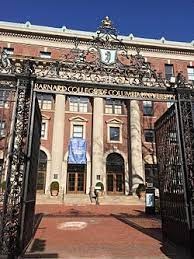
Laura Rosenbury became the Dean of UF law after a failed search in which the central administration was pushing of all people, Alex Acosta. Why she was selected in the second search no one knew. Her faculty interviews were fine but not unusual. Now as everyone knows, she will be the President of Barnard. Quite a step up I would say and a little mysterious since she has had no experience with undergrads, has only a law degree, and writes for non referreed journals.
Still, when she was hired the Law School was pretty much a wreck and, therefore, the Provost must have seen in her a grittiness that would lead to risk taking and major changes. He was right. The improvements she made cannot be underestimated. When she was hired the Law School was an outlaw operation. It ignored University policy on most things and that was corrected. It had so-called centers in specific areas of law that made no sense in terms of UF’s mission and were out of compliance with what it meant to be a center according to University regulations. Most were abolished.
When she arrived students wanting to be associated with a journal by writing on had to write on a different topic for each journal. It made no sense to put then through this torture. That changed. The primary law review advisor, a non scholar, had a vise like grip on the job. He was replaced by a scholar and some practices that I never quite understood were ended.
The LLM in Tax was a sleepy little segment of the law school. It was highly ranked because there were so few LLMs in tax and had at times some big names in the area. When she arrived the applicant pool was poor, few people were regarded as nationally know tax scholars, and there was talk of disbanding it all together. One way or another (there is a whole story on this) the program came under intense scrutiny, Changes were made.
For the first time in 10 years committee assignment began to make sense. This too is a long story but I will cut it short by saying the former dean seemed to have a single objective — to keep being dean. Consequently, committee assignments appeared to be driven by political considerations.
I am positive there are more things she accomplished and I cannot say what role any of these factors entered into her “promotion” to Barnard. Also these changes did not require an infusion of funds from the central administration.
So was there a down side? She was known to lose her temper sometimes and at others break out in tears when things did not go her way. She vetoed faculty candidates, so I have been told, that did not attend the “right” schools. I have heard of but was not witness to instances of abusive behavior toward staff — only those beneath her, if course. As far as those above her he was the ultimate yes person. As an example, when here only a short time she was introduced to a group as young a vivacious, This was a big deal to her an she even wrote about it. But within a few years she was carrying out DeSantis’ orders and labelling the new hand picked right wing President the “embodiment of academic freedom.” Ambition breeds hypocrisy.
Her biggest public claim to fame came by raising the Law School ranking from the mid 40s in the USNews rankings to the high 20s. This is where class bias and ambition over all come in. The large part of raising the ranking was to raise the average LSAT scores of the entering class in two steps. First, she lowered the size of the class. This does not mean she rejected unqualified candidates. Plenty of qualified candidates were rejected. “Qualified” took on a new definition. It was not longer qualified to successfully complete law school and become a productive attorney. No, qualified became who would make Laura Rosenbury look good.
The second step, was to enter the market for high LSATs and GPAs. I mean literally buying students with high scores by paying them thousands of dollars in tuition waivers and stipends. I asked many of them why they chose Florida and the consistent answer was “it made me the best deal.”
What does this have to do with class bias? I know of no studies that do not show a positive correlation between socioeconomic class and standardize tests scores like the LSAT. I do not know you how GPA correlates with socioeconomic class but I suspect it is also positive.
Where does the money come that is used to subsidize students who already have advantages over the less affluent. Quite honestly, I do not know. Clearly the Provost presented her with something like a blank check. But that does not really account for the source of the funding. Maybe some comes from law students and others stuck with paying tuition and taking out loans to do so. Some from grants from alums and some from taxpayers. If it all comes from wealthy alums that is one thing although it still seems crazy to subsidize those who least need it. I doubt Rosenbury gave a damn where it came from. If any comes from taxpayers, no matter how laundered by the State or the University, then it becomes a redistribution from those in lower socioeconomic classes to the relative well off. In short, as all elitists, Laura Rosenbury used those less well off to promote herself and, in some measure, catch the eye of Barnard. The elites always figure out a way to engage in a reverse Robin Hood scheme.
Background independence is a condition in theoretical physics that requires the defining equations of a theory to be independent of the actual shape of spacetime and the value of various fields within it. In particular this means that it must be possible not to refer to a specific coordinate system—the theory must be coordinate-free. In addition, the different spacetime configurations (or backgrounds) should be obtained as different solutions of the underlying equations.
Einstein defined gravity and the shape or geometry of space in terms of its energy density while defining the interaction of gravitating bodies in terms of a gravity wave moving through space. Therefore, to define a background independent quantum gravity one must first show why its energy is quantized and then show why it is independent of the geometry and the value of the various fields within the spacetime it occupies.
Relatively and the science of wave mechanics tells us wave energy moves continuously through space-time unless it is prevented from doing so by someone or something interacting with it. This would result in its energy being confined to three-dimensional space. The science of wave mechanics also tells us the three-dimensional “walls” of this confinement will result in its energy being reflected back on itself thereby creating a resonant or standing wave in three-dimensional space. This would cause its wave energy to be concentrated at the point in space were a particle would be found. Additionally, wave mechanics also tells us the energy of a resonant system, such as a standing wave can only take on the discrete or quantized values associated with its fundamental or a harmonic of its fundamental frequency.
This defines how and why the field properties of space time can evolve to create a quantized increase in the energy density and therefore gravity in a space-time environment.
This suggests the quantization of gravity is not a fundamental property of space but a dynamic one of continuous property of space-time.
As was mentioned earlier Einstein defined gravity and the shape or geometry of space in terms of its energy density. However as was shown above its value would be independent of the value of the various fields within it and the coordinate system in which it is formed because its geometry is only related to the number and quantum properties of particles in a volume of space.
However, some feel that this would contradict the fact that gravity waves cause acceleration when they interact with objects which they feel suggests they are background dependent because they change geometry of space as they move through it.
The reason this is not true is because the energy density associated with a mass is static or unchanging with respect to the geometry of space, it can be defined by the background independent equation of Special Relativity.
However, because Einstein defined the propagation of energy including gravitational in terms of waves moving through space at the speed of light means the energy associated with a collision of two gravitating masses would result in that energy being radiated through space at the speed of light in the form of gravity waves. This suggests they would obey the same laws that govern the relativistic properties of space and time associated with background. independent properties of electromagnetic energy in Special Relativity.
This is how Einstein could have defined a background independent quantum gravity in terms of the relativistic properties of space time as defined by him.
Consider this scenario: An institution hires a new leader who has previously worked in higher ed. Assuming the individual has already acquired the knowledge and skills necessary to get the job done, HR guides them through a brief onboarding and launches them into their new role. Six months later, HR checks in with the leader to see how things are going and discovers a dissatisfied leader and a team in turmoil. What went wrong?
According to Sara Reed, vice president of people and talent at Western Governors University, HR sometimes falsely assumes that new leaders with higher ed experience know how to get the job done. Consequently, expectations may not be clearly articulated, which can create rough patches for the leader to navigate on their own. In the recent CUPA-HR webinar Building Leader Confidence in Transition: We Can’t Do It Alone, Reed explained that to help create a smooth transition for new leaders and ensure success from day one, HR can consider implementing these strategies in the pre-hire and onboarding phases:
Pre-hire: Provide accurate and clear position descriptions. HR should be very clear about what the institution is looking for in the role. Is the institution looking for a different leader than in the past, or a leader who meets the status quo? What context is there surrounding the job description that the candidate should be aware of? For example, will the new leader be leading a team that is in transition or turmoil? If so, what resources and contacts can help the new leader in a situation like this?
Pre-hire: Be clear about the mission of the institution. What mission does this new leader need to advance and further? Do job candidates see the values and beliefs of the institution displayed on the website? Who is included in the interview process? Can a broad number of people be included in the hiring process to send the message that the position is of high importance?
Pre-hire: Have the individual meet the team they’ll be leading. Create an opportunity during the interview process for the potential new leader to meet the team they’ll be leading. Allowing job candidates and future team members to have conversations beforehand could reveal potential areas of conflict between the two parties.
Onboarding: Pair the new leader with a skills mentor and a cultural mentor. While a new leader’s knowledge, abilities and experiences in previous positions can be beneficial in helping them succeed in their new role, they still must learn the cultural and political landscape. In the webinar, Reed shared her personal testament to having a “nuts and bolts” mentor and a cultural mentor when she first began working in higher ed. While a “nuts and bolts” mentor explains institutional policies and how to use systems, a cultural mentor can help clue in a new leader to the cultural and political landscape and serve as a “safe space” to ask questions and get insights. As Reed suggested in the webinar, a cultural mentor is someone you can approach after a meeting and ask, “What just happened?”