On Oct. 6, 2021, the U.S. Department of Education announced a change to the Public Service Loan Forgiveness (PSLF) program rules for a limited time as a result of the COVID-19 national emergency. Millions of non-profit and government employees have federal student loans and may now be eligible for loan forgiveness or additional credit through the limited PSLF waiver. But they need to act fast. The special waiver expires October 31, 2022.
Here are several resources for HR professionals who want to get the word out to employees before the opportunity passes.
Learn More and Get Tips for Educating Employees
In June, CUPA-HR hosted the webinar, Helping Employees Understand and Navigate the Public Service Loan Forgiveness (PSLF) Program, where Department of Education representative Ashley Harrington shared details about the program and how HR can help guide employees through the necessary processes to achieve loan forgiveness. The recorded webinar is available for viewing any time.
Explore the Department of Education’s Employer Toolkit
The Department of Education’s PSLF waiver toolkit is a comprehensive resource that features a PSLF fact sheet, sample social media posts and email templates HR can use to spread the word to campus employees.
Direct Employees to the Borrower Site
For a clear explanation of the program and a simple step-by-step process to determine who is eligible for the program, direct employees to the Federal Student Aid website.
On August 18, the Department of Homeland Security (DHS) published in the Federal Register its anticipated Notice of Proposed Rulemaking (NPRM) on optional alternative examination practices for employers when reviewing an individual’s identity and employment authorization documents required by the Form I-9, Employment Eligibility Verification. Interested stakeholders can submit comments on the NPRM through October 17.
Under current law, employers are required to physically examine an individual’s identity and employment authorization documents within three business days after an individual’s first day of employment. The proposed rulemaking, however, would create a framework under which the Secretary of Homeland Security could allow alternative options for verifying those documents, such as reviewing the documents via video, fax or email.
As explained in the NPRM, the proposal does not directly allow employers or agents acting on the employer’s behalf to use such alternative examination options, but instead would create a framework under which the Secretary would be authorized to extend the flexibilities. The Secretary would be authorized to implement the alternative options in a pilot program if they determine such procedures would offer an equivalent level of security, as a temporary measure to address a public health emergency declared by the Secretary of Health and Human Services, or a national emergency declared by the President.
The DHS is issuing this rulemaking following the success of temporary changes to document verification procedures implemented at the onset of the COVID-19 pandemic. In March 2020, the DHS’s Immigration and Customs Enforcement deferred its physical examination requirements for Form I-9 and relaxed its enforcement. Employers were allowed to review documents through video, fax or email so long as they also retained copies of the documents. The policy proved successful and was extended several times, but is currently set to expire October 31, 2022. It may still be extended as the agency pursues this rulemaking.
In December 2021, CUPA-HR submitted comments to the DHS in response to the agency’s Request for Public Input on remote document examination. In its comments, CUPA-HR reported the results of the survey it conducted of member institutions’ experiences with the agency’s Form I-9 flexibilities. CUPA-HR members reported positive experiences with the changes and said they did not run into challenges with implementation. Respondents strongly supported a permanent option for remote document examination and said the policy provides numerous benefits for higher education institutions, including providing more flexibility for remote work, reducing the time needed to complete document verification and reducing institutions’ paperwork burden. Respondents also criticized physical document examination as overly burdensome.
CUPA-HR plans to submit comments on the NPRM and will likely ask members for their input in the coming weeks.
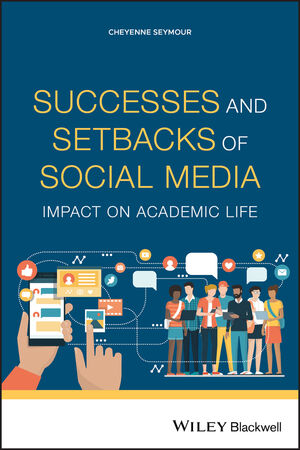
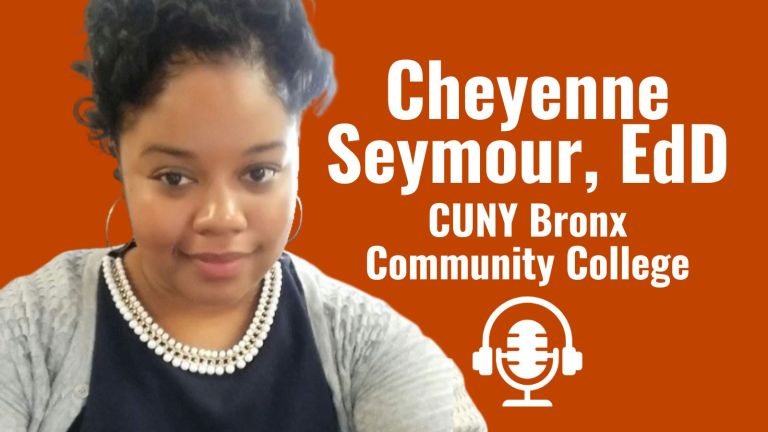
Dr. Cheyenne Seymour wrote the book on the real-life impacts of social media. The collection, Successes and Setbacks of Social Media (Wiley Blackwell 2020), brings together diverse narratives about how social media can influence the pursuit of Higher Education.
Cheyenne joins me for a featured interview about her social media research. She is an Assistant Professor of Communication, Arts, and Sciences at CUNY Bronx Community College. She was an amazing editor for my piece in the book, “Social Media: From Deleted to Private, Private to Public Profiles.” Be sure to get your copy today from Wiley.
Is it okay to not be on social media? Find out in this featured interview.
Jennifer: Hi everyone, this is Jennifer van Alstyne on The Social Academic. Welcome to the featured interview series. Today I’m talking with Dr. Cheyenne Seymour who is an author, a professor. We’re going to be talking about social media, online presence, and what it’s actually like to work on an edited collection about social media experiences in the academy.
Cheyenne, I’m so glad you’re here to talk with me today. Would you please introduce yourself?
Cheyenne: Absolutely, thank you so much for this opportunity, Jennifer.
As you mentioned, my name is Dr. Cheyenne Seymour. I am an Assistant Professor of Communication, Arts, and Sciences at Bronx Community College, which is part of the City University of New York.
I happen to teach various courses on communication including social media. I also teach courses on public speaking, as well as rhetoric. I’m very fortunate to have all of these interests within the communication discipline that I get a chance to explore and help students with.
What inspired your book about social media?
Jennifer: I love that. I work a lot with professors on social media, so it’s awesome to talk with someone who’s really in the classroom and working with students and seeing that kind of larger perspective.
One of the things that I really liked about your book is that it covers academic experiences from a lot of different perspectives from undergraduate students, graduate students, university administrators.
Tell me a little bit more about your book, Successes and Setbacks of Social Media: Impact on Academic Life. What inspired you to work on this collection?
Cheyenne: This is a wonderful, wonderful topic to explore. And I was delighted to have this opportunity. And one of the things that led me to an interest in social media was how it continued to come up in the classroom.
For example, when teaching classes on interpersonal communication, we were exploring the relationships between two people.
It was often interesting that students wanted to talk about mediated communication and how they were forming relationships because of social media, ending relationships because of social media as well.
And we were really thinking about the differences in terms of how people present themselves in person when chatting with someone on the street or in a classroom, in the workplace, versus how they were connecting online.
And there were some clear distinctions that were cropping up.
Jennifer: Wow.
Cheyenne: Also, when we were talking in classes like on public speaking, lots of students were saying, you know what, “I’m starting to go live. And I’m not only talking to people in a live setting, I’m actually talking to people in a virtual setting. And it feels different.” And we were kind of exploring those as well.
I found that social media was kind of like intersecting with so many areas of life that it just was like calling for a little bit more attention. [Jennifer and Cheyenne laugh.]
Jennifer: Oh, I think that’s amazing. It sounds like you were really impacted by your experiences in the classroom. And the conversations that you were having with people, that influenced the research that you were doing. And ultimately this collection that you put together, some of them are firsthand experiences, some of them are more research based.
And I love all of the little introductions to each section that you have that talk about this kind of greater understanding of what social media is and how it’s interactive with our society. That’s fascinating.
Can I ask about the book in terms of the process of releasing it? Is that something you talked about on social media?
Cheyenne: I didn’t really explore that so much on social media. But let’s dive into that a little bit.
Jennifer: Yeah.
Cheyenne: It’s really, really exciting when you get multiple perspectives. And as you’ve kind of described, it does just that. We’re getting student perspectives, we’re getting perspectives of educators and administrators, who are sometimes thinking about themselves when they were in the seats in the classroom. And then also sometimes thinking about themselves in the role.
And it’s really interesting how we see it impacting so many avenues of life. Like how social media was able to help some students, connect with others, understand course content, and meet their academic goals.
Where we had some who just were feeling a little defeated because perhaps they were spending too much time on social media and not using that time to complete their homework. Right?
We kinda see a little bit of a difference here. And it was really important to me to capture that not everyone is going to have this same cookie cutter experience on even the same platform.
It was really, really wonderful that we had various identities reflected, various professional roles reflected in the book. And I worked really hard to try to synthesize the current research on it.
As many of us know, social media is really a young subject, right? Although it has probably consumed a lot of our lives it hasn’t been around for quite so long. There’s so much to explore. But I wanted to take a look at some of the data on the more concrete assessments, the statistics that have been out on the topic. To share those and couple that with firsthand experiences to really paint more of a clear picture in terms of how it’s impacted us in the past and how people began to retool with it currently.
Jennifer: I love that. Can I ask it, was there something in particular that your research showed that you found surprising? That you were like, ‘Oh, I am so glad I can include that in the book.’ [Laughs.]
Cheyenne: That is an excellent question. I think there is a lot of shocking bits of info. But I guess as one who identifies as a woman, I was quite surprised. And then it kinda reflected experiences that I had had, or had heard from others.
I was quite surprised at just how much social media can have a negative impact on women.
Although there’s a lot of great things out there, a lot of women were worrying about self-esteem, about their parents. They were essentially having issues with romantic relationships. With platonic relationships.
Whereas the data was not quite showing that for men, people who identify as men.
We didn’t quite to be fair, assess non-binary. And maybe next time around, we’d love to include that particular demographic in the data.
Jennifer: Yeah.
Cheyenne: But ultimately a lot of researchers were kind of just like finding that anyone who identified as a woman…and I shouldn’t say anyone, but many who identified as a woman was definitely finding a lot more negative experiences.
Jennifer: Mm-hmm [Affirmative].
Cheyenne: That was important for me because we wanna enlighten individuals. And not just make them feel like, oh my gosh, I should log off right now.
No, we wanna empower them so that they can understand, ‘Okay, maybe I need to think about this differently. Maybe I need to limit how much time I’m using it.’ Just so they ensure they understand the full scope, right? Of the impact.
Jennifer: Oh, I think that’s so important. One of the questions that I always ask people when I’m working with them on social media is: how do you use social media now? And is it how you want to be using it?
Because most people have this idea or this preconception about how they should be or how they should appear on social media. And that’s not always gonna work for them. It’s not always something that’s gonna meet their goals, like why they joined Twitter or something in the first place.
Asking that kind of introspective question to people, I always find that the people I ask are surprised, cuz they’ve never really sat down and been like, ‘Okay, let me think about my social media life and like what I want from it. And like what I’m getting from it. And, maybe those two things aren’t the same.
I’m actually really glad that you brought that up because that introspection is something that all the people who were writing for your book, for that collection had to do, but it’s not really something that we do in general in our everyday lives.
Cheyenne: Yeah, that’s a really great point. And I’m glad you bring that up because when I teach social media, which is typically an introduction course, that’s one of the things that I encourage the students to explore.
I ask them to think about how they want to be perceived. Right? And whether or not their activity (their reposts, their posts), whether it’s leading to that perception.
Jennifer: Mm-hmm [Affirmative].
Cheyenne: And many of them find that there are some small changes that they can make that will help them better align with their social media goals.
And it’s something that I think most individuals don’t often think about, just jump right in. “Oh, I like that. I’ll unfollow this person or this organization.”
We just kind of move along. But if we think about our goals, and keep that in mind as we make those choices, it sometimes might even empower us a bit more on these platforms.
Jennifer: Ooh. I love that. I love that. Now, actually, I wanted to ask about your online presence. I mean, you wrote a book about social media. You teach social media. What does your online presence look like?
Cheyenne: That’s a great question, Jennifer. I’ll preface this by saying oftentimes some of my friends are like, why don’t you post more? [Jennifer laughs.]
I get that question a lot. When I think back to when I first joined social media, which was shortly after undergrad…I kind of was like one of those individuals would chat with friends. I would post my thoughts because that was during the time when Facebook asked you what you were thinking.
Jennifer: That’s right!
Cheyenne: Yeah. I was like sure, I’ll tell you what I’m thinking.
And I think now I’m a little more private, if you will, when it comes to things. I love to share content that connects to education, women’s empowerment, culture, politics. Things that kind of reflect my core values, the things that I find important.
But ultimately I try to not necessarily sort of put my personal life on display, if that makes sense.
Jennifer: Yeah, it does.
Cheyenne: And for me it kinda gives me a little bit of, I should say like a curtain. I don’t feel like I have to constantly live on display or perform.
Jennifer: Yeah.
Cheyenne: A lot of things on social media are performative.
That for me has been the difference, I think, as I’ve grown, as I’ve learned.
I decided, okay, I wanna use social media to stay connected with friends, to read about the issues, to make sure I’m current. But I try not to make it so that my entire life has to bleed on the platform. If that makes sense. [Laughs.]
Jennifer: I think it makes so much sense.
And I love that you talked about that distinction, how your specific goals played out in terms of the content that you actually do share. And why you share it because of your values and those things are important to you.
But it’s not the same as like sharing your thoughts with Facebook. I remember that prompt. That was when it was always like, “What is Jennifer thinking? What is Jennifer up to?” [Laughs.]
Thanks for sharing that with me. And I think that gave me a little bit more insight into kind of your motivations for everything. But I would like to hear more about your online presence. It sounds like you do have social media. Which platforms are you on?
Cheyenne: Primarily I tend to use Facebook.
Jennifer: Okay.
Cheyenne: That’s my go to. I know it’s kind of tried and true. I’ve been around for a long time, but I’m a big, big fan of Facebook in terms of its ability to kind of offer various modes of communication.
Meaning of course you can post. You can go live. You can add stories. You can make phone calls.
I think it does a really great job of offering lots of various avenues also. It’s kind of near and dear to my heart in the sense that that’s where I really fell in love with social media.
Jennifer: Me too.
Cheyenne: I continue to use it. And I’ll be frank and say, I really have very intentionally limited my consistent use of other platforms.
Because, not to say that I don’t think that they all have value or that they’re all great. I am definitely familiar with them. But I know that if I were to like really engage on all of those platforms, I would have very little time in the day. [Jennifer laughs.] I try to limit it.
I also utilize LinkedIn quite a bit. Great for networking. I always encourage students to start building their profiles as well. That’s a really good one. Students can add colleagues from their workplace, they can add classmates, professors and really just start to kind of build this wonderful professional catalog of all of the things they’ve done and all of the people they’ve interacted with. Those are the two that I use the most.
Jennifer: Oh, that’s great. Actually, I’m so glad that you brought that up about teaching your students that having that profile early on is really helpful for them on LinkedIn.
I get that question a lot from graduate students and even from early career researchers, like: ‘Should I be on LinkedIn? Is it the right time for me now?’
The answer is definitely yes.
Even if you’re thinking about academic jobs, if you’re thinking about staying in the academy, LinkedIn can still be beneficial because it has really powerful search capabilities.
And you can even ask for recommendations from like your professor, or your advisor, someone you work on a committee with…that helps more people understand kind of what’s important to you, what you’re working style is like. And this is great when you’re talking about research funders, or you’re trying to network with other people in your field from different universities.
I do encourage you as early as you can start a LinkedIn profile. I’m so glad that you brought that up.
Cheyenne: Yes, and I’ll add one more thing. Depending upon where users are in the world, there are different ages that they can start creating a LinkedIn page. But, primarily in the United States, it’s often recommended as early as high school. Right? So to start there, so great advice regarding LinkedIn.
Jennifer: I love that. It sounds like your social media, you share things that are about your values. You share things that are important to you. It’s not like a diary, but you do connect with people personally there, is that correct?
Cheyenne: Yeah, I would absolutely say so. While I may not share what I’m having for lunch on social media, and no shade to anyone who does [Jennifer laughs, holding her hand up] [Cheyenne aughs]…I will typically share things that are kind of a reflection of the current times. If there are topics that are highlighting a cause that really kind of gets me excited, ignited, those are the things that I often share.
I do often share pictures of my travel when I go to a new place, learn about a new culture. Perhaps self snap a pic, share something really interesting that I learned. It’s like, I can take the knowledge that I’ve come across in my travels and share that with those who are on my pages. Things of that nature: articles that are of interest, pictures that kind of represent my experiences.
And oftentimes I love to comment. To like photos. Or posts of jokes and other memes that my friends and family share.
Yeah, I try to stay pretty connected on social media. It’s a great way to feel like you haven’t missed anything. Even during the pandemic, right? We’ve been so far away what feels like from our friends, our colleagues, family. And this is a really nice way to stay close.
And so I love to see what my fellow followers are sharing.
Jennifer: You actually mentioned something that I wanted to talk about and I’m hoping you’re, you’re open to talking about it.
During the pandemic, I feel like social media use and online presence became more important to people who were social distancing, maybe traveling to conferences less to present with other professors and other researchers.
How have you noticed the kind of trends about social media changing over the past couple of years?
Cheyenne: Yeah, that’s a great question.
I think primarily there are two things that stood out to me: the good and the bad. Right? And that’s pretty general. Let me explain a little bit.
So the good: I noticed that there were lots of things that were bringing families together, like the TikTok dances and trends. Those were really, really phenomenal at getting people excited to kind of share content, learn new dances. Even just like something as simple as that. It was a really nice way…And what we saw were multi-generational families doing these things, public figures. It was like a really nice way for us to all say, ‘Okay, you know what? We’re far apart, but let’s grow together.’ Not to mention TikTok had a huge boost in their numbers during the platform in terms of their enrollment, if you will, on their site.
But ultimately then we kind of saw a lot of heavy things. I found out about the loss of some friends through social media who had unfortunately lost their lives to COVID-19. And so it was really heavy. It was like a heavy time to kind of log in, see what’s going on. Lots of people were posting about their illness or their sadness. Or just sort of some of the difficulties that they were dealing with in isolation or just kind of struggling through the unknown.
It was like it was one of those situations where you weren’t really short where you were gonna scroll upon whether it was gonna be something that made you smile or perhaps something that brought some tears to your face.
I think as a result of that, that really shows just how much social media can reflect the times.
Jennifer: Right.
Cheyenne: It’s like a great reflector of what’s going on in our lives in our communities. And sometimes it’s great. And sometimes it’s challenging.
Jennifer: That’s really interesting. When you think about that kind of really early on Facebook prompt that’s like, “What are you thinking?”
And I remember at that time, most people would share like 1 sentence, maybe 2, about what was going on. And a kind of trend that I’ve been seeing more recently is that opening up. These kind of longer posts where people are getting personal and sharing more about the good and the bad.
And people can really connect with that, but they can also be affected by it emotionally. It’s really interesting that you brought that up.
Cheyenne: Yeah, that’s a really great point. I love that connection with that initial question, like the original Facebook question.
Hashtag activism and what your students care about
Jennifer: Now I also wanted to talk about hashtag activism, which is something that you mentioned in the Looking Ahead section of your book at the end, when you’re talking about these bigger trends in social media.
I know that social media can really bring groups together. It can help people share their voices and even be heard, in some cases by universities, even having to address issues that they were experiencing on campus.
What are your feelings about hashtag activism and what are you seeing in those trends?
Cheyenne: Yeah, hashtag activism is something that is really, really widespread. Sometimes, I think students don’t even consider it in terms of that title. They just feel like ‘I’m just sharing hashtags that are passionate.’ Or I should say, that reflect their passions rather.
They’re excited about these topics. They wanna get them out there. And a lot of them really don’t think about it as activism from my experience, talking to college students. They primarily just see it as like a way of life.
But it is a really, really great way for students to have a voice. To learn about getting their thoughts out not only within their college communities, but really across the nation.
It’s a really fast way for lots of trends to start kind of cropping up in areas where there’s a lot of need for change. So I’m noticing that.
I think what’s really great about it though, is that this is also an opportunity for colleges to recognize the needs of their students. If advisors, faculty, staff, administrators are able to really be in tune with what students on their campuses are sharing about, are posting about what’s the hashtag that’s currently trending. It will allow them to say, ‘Okay, you know what? Maybe we need to provide some resources in this area. Or perhaps let’s, let’s arrange an event on this particular topic so we can invite panel speakers to offer some insights.’ Or perhaps it’s even a situation where students are in need of an outlet, right? And maybe they want to bring in more outside resources like counselors or specialists who can help students to essentially address their concerns. There are a lot of ways for students to kind of speak out and for faculty, staff, administrators to respond.
I also think there’s a really great opportunity for employers to intersect as well. Because if you think about college, of course, many of the goals lead to professional goals, professional aspirations. If we can also start to work in a way for businesses, organizations to kind of recognize what students are interested in because those are essentially their employees in the future…They can too start to make sure that their policies, that their procedures are in alignment with what’s going to attract qualified, skilled, thoughtful citizens.
And it’s really a great way to kind of start connecting with not too much effort required, to be honest.
Jennifer: Very cool. Now if I’m listening to this and I’m like a university administrator and I’m all the sudden like, ‘I need to figure out what my students are saying on social media.’ Like, what can they do? I mean, there’s social listening out there, but that can be expensive.
What is something that maybe a college administrator can do to start hearing more of that conversation, to seeing more of it, and actually seeking it out?
Cheyenne: Yeah, that’s a wonderful question. Many colleges and universities happen to have social media teams. Oftentimes, they are the ones who are posting content, inviting students to engage. You might of course start there and ask the team to kind of perhaps start noticing the comments that students are actually posting. To notice that there are hashtags that are trending. And sometimes even just to kind of look at the trending topics, even regionally. That will kind of provide some insight.
If you are following, for example, students on your own pages, or perhaps even students who are using your institution’s hashtag, there’s a lot of popular ones. Sometimes it’s the nickname or the acronym for the school. Again, that will kind of start to open up those trends.
And one might even think about offering some platforms for students to kind of freely do so. It might be like another version of “What are you thinking?” What are our students thinking? What’s important to you?
When I talk to students right now, there are a couple of topics that are really national, topics that are in the forefront. Of course we’ve got things like the right to seek an abortion, social justice, voting rights. These are topics that students are really getting worked up on. Even when it comes to the cost of education or student loans. These are things that are super important to students.
And also it’s a great way for the individuals who are running these institutions, who are teaching at them, to really figure out what the students need. Because sometimes the needs are not only in the classroom. They are outside of the classroom when they’re at home, when they’re in the dorm, when they’re at work. And we wanna make sure that we’re producing well-rounded students.
And so just starting with, again, the staff that you have managing social media platforms. And perhaps even using hashtags that reflect your school to see what is out there’s a great way to open that door to a productive conversation.
Jennifer: Ooh. I love that advice. I think that’s gonna be so helpful for some of the people who are listening.
Jennifer: Now, I know we definitely have some listeners that are like really anxious about social media. Like they’re watching this video on YouTube, or maybe reading it on the blog. But they’re not on Twitter. They’re not on Facebook and they really are trying to find out, is it okay to not be on social media? I mean, you teach social media. You wrote the book on it. [Cheyenne laughs.]
What do you think, do you have to be on social media these days?
Cheyenne: That’s a great question. And I think that individuals can lead themselves to these decisions. In other words, you don’t have to feel like you’re compelled to be on social media.
I know some individuals who have made the choice to stay away. And we actually had a really great contributor in the book who actually wrote about her decision not to engage on social media. And she talks about that in relation to teaching high school students and how that kind of has informed her life, and her decisions.
I don’t think we all have to be on it, but I do think it’s important to be aware of the platforms that exist. And perhaps even you might decide later that there’s a particular platform that suits your needs. Some individuals, for example, like Twitter, because it primarily focuses on short messages. And they don’t have that overwhelming visual content. Whereas some of the younger college aged students love the visuals and that’s really what pulls them in.
It’s okay to not be on social media.
But I don’t think we should ignore it in total. But perhaps just kind of be aware of the ways that it’s reflecting modern society. And perhaps even think about what type of social media you might want to see or use in case one introduces itself. And then, you’re excited to join.
Jennifer: Ah, I love that. What a great response. I think that so many people will feel relieved after hearing that, you know? ‘Okay, well, I don’t have to join. I can really think about what I need and what will make sense for me. And it’s okay. If that changes over time, maybe I’ll wanna join social media later. Gotta be open to it, but I don’t have to do it now.’ So I love that.
Is there anything else you’d like to add? I have had so much fun with this conversation.
Cheyenne: Well, there’s one other thing that I have been doing, and I’d love to just kind of encourage others to maybe even consider this. One of the things that I’ve been doing, Jennifer, is I’ve been using my cell phone to monitor how much time I am on the phone, how much time I’m on certain apps, like social media apps.
And I’ll be honest, [laughs] when I was looking at my time, I thought, “Wow, I’ve been devoting a lot of weekly time to social media.”
In my case, I was like, okay, if I dial this back just a bit, if I spend even 30 minutes less, what could I do with that time? For me, it’s spent going outside, taking walks, hobbies, things of that nature. Just kind of reclaiming that time a little bit.
Jennifer: Yeah.
Cheyenne: And I’ve also invited some younger individuals in my family to do the same. They’ve identified things they’d like to do. One said she wants to spend more time working out. And the other ones said that she wants to spend a little bit more time working on her jewelry hobby. It’s a really nice way to kind of think about how we’re spending our time.
On the flip side, though, you might have someone who says, ‘Gee, I don’t think I’m connecting enough and I really wanna have more of a presence.’
Then maybe you might think about how you can efficiently use maybe another half an hour or so. Maybe there’s a new platform you wanna check out. Or, for perhaps you wanna use that time to create some content.
It doesn’t mean that the time has to be good or bad, but it’s all about the individual in terms of how you interpret it. I think that’s a really helpful tool. All phones are a little different. You might have to play around with your settings to get how much time you’re spending on social media each week. But once you do, most people find it’s kind of mind blowing. You might wanna check that out.
Jennifer: Oh, that’s great. I’ve checked this stats myself and been slightly embarrassed about how much time I was spending. And I really have to break it down and like look at the platforms.
And I realized that even though I was saying Instagram was my favorite platform, I spent way more time on Facebook and I had to admit, [laughs] I liked Facebook more than I thought I did.
It really gave me insight into what I was doing. I wasn’t folk focused on what I was doing at the time. But when you see it all in the data. And you’re like, okay, well that took more hours than I expected it to…that can really help you make better decisions for yourself.
I really liked that. It’s all about that time, what you wanna do with it. And it’s okay if you wanna put more energy into social media. It’s also okay if you wanna put more energy into your hobbies or things that you enjoy doing, or that you need to get done too. Both of those choices are great. And it’s really up to the individual.
Cheyenne: Oh, absolutely. Absolutely. It’s a great point.
Jennifer: Wow. Well, Cheyenne, thank you so much for talking with me. It was so great to feature you for this interview. And if you’re listening, be sure to check out Cheyenne’s book, Successes and Setbacks of Social Media: Impact on Academic Life from Wiley. I’m gonna drop that link in the video Cheyenne Seymour, EdD joins me to talk about her book Successes and Setbacks of Social Media: Impact on Academic Life. below.
Like and subscribe to The Social Academic on YouTube. We’ll see you next time for the next featured interview.
Dr. Cheyenne Seymour aims to instill in her students that carefully crafting messages can increase interest and aid in understanding. Her areas of research include social media, rhetoric, and public speaking. Dr. Seymour is an experienced television news producer with a passion for sharing information that can positively impact individuals and communities.
She has earned a Doctorate of Education from New England College, a Master of Arts in English from Trinity College, and a dual Bachelor of Arts in Journalism and Media Arts from Long Island University. Dr. Seymour enjoys traveling and experiencing new cultures.
When August arrives, Congress leaves D.C. and heads to their home districts for the annual August recess period. To keep CUPA-HR members apprised of recent and future actions on the Hill and in federal agencies, here are highlights of the latest actions by Congress, nominations they’ll have to consider when they return, and regulations that may be issued throughout the month.
Legislative Updates
On August 16, President Biden signed the Inflation Reduction Act into law following its passage, along partisan lines, in both the U.S. Senate and House of Representatives. The Inflation Reduction Act, which is a slimmed down version of the reconciliation bill Democrats have been pushing for, focuses on policies to mitigate the impacts of climate change, reduce healthcare costs and increase tax revenue to reduce the federal budget deficit. This reconciliation bill was narrowed down from the “Build Back Better” agenda, a step necessary to gain support from Senators Joe Manchin (D-WV) and Kyrsten Sinema (D-AZ) to get the bill over the 50-vote threshold. Notably, the final package did not include “Build Back Better” provisions like paid leave, universal community college and childcare.
Additionally, on August 9, President Biden signed the CHIPS and Science Act, which provided new funding to boost U.S. investments in research and manufacturing of semiconductors. With respect to the research investments, the bill includes a five-year, $81 billion authorization of the National Science Foundation to go toward research funding. Additionally, the bill provides new funding to historically black colleges and universities and other minority-serving institutions, and for STEM programs at colleges and universities.
Nominations Awaiting Confirmation
On July 27, President Biden announced Jessica Looman as the new nominee for the Department of Labor (DOL)’s Wage and Hour Division Administrator. Looman has been serving as acting administrator for the agency since June 2021. Her nomination replaces Biden’s previously withdrawn nomination of David Weil, who failed to garner enough support in the Senate to be confirmed. Looman’s nomination will have to go through the Senate Health, Education, Labor and Pensions (HELP) Committee prior to going to the Senate floor for a full vote. Timing on both votes are uncertain at this point.
Additionally, Kalpana Kotagal’s nomination for the Equal Employment Opportunity Commission (EEOC) continues to be held up in the Senate. In May, the Senate HELP Committee deadlocked on a vote to move her nomination to the full Senate, which means the full Senate will have to vote to advance her nomination out of committee — a logistical hurdle in a 50-50 Senate with sparse time on their legislative calendar. The result of this hold up means the EEOC will continue to operate with a Republican majority as federal statute allows Republican Commissioner Janet Dhillon, whose term expired in July, to remain an active member of the EEOC while her successor’s nomination is pending. If and when nominee Kotagal is confirmed, she will replace Commissioner Dhillon and tip control of the EEOC to a 3-2 Democratic majority. Her confirmation vote is also uncertain at this point.
Regulatory Updates
Though not guaranteed, there may be several proposals and final regulations that may be released by the Department of Education, the DOL and other relevant agencies throughout the month. Some of these include the expected proposed rule on Form I-9 remote verification flexibilities from the Department of Homeland Security, which has already had its review completed by the White House; a proposed rule on independent contractor classification, which was sent to the White House for review in July; and a final rule on the Deferred Action for Childhood Arrivals program, which has a target release date set for August.
In addition to these proposed and final rules CUPA-HR is waiting to be released, the Department of Education is still undergoing its notice-and-comment period for the Title IX proposed rule that was released in June. CUPA-HR is assessing the proposal and will put together comments in response to the proposed rule. Comments are due September 12.
CUPA-HR will keep members apprised of legislative and regulatory actions as August recess continues and we move into the fall.
Each year, I look forward to reviewing the results of Jane Hart’s Top 300 Tools for Learning and to submitting my votes for a personal Top Tools for Learning list. I haven’t quite been writing up my list every single year (missed 2020), but I did submit a top 10 list in 2015, 2016, 2017, 2018, 2019, and 2021. I haven’t come across too many others’ 2022 Top Tools for Learning votes, yet, but did enjoy reviewing Mike Taylor’s list.
I avoid looking at the prior year’s lists until I have identified my votes for current year. Once my list was finished for 2022, however, I did compare and realize that I had left Zoom off for this year. Given that I use Zoom pretty much daily for meetings, teaching, speaking engagements, and podcast interviews, I suspect this is one of those things where Zoom has become so integral to my life that it’s become like water that I can’t see because I’m swimming in it.
Another thing I realize as I reflect back on the current and prior years of voting is how much every single tool I use fits into a personal knowledge mastery system, which I have learned so much about from Harold Jarche over decades now. Harold Jarche writes:
Personal knowledge mastery is a set of processes, individually constructed, to help each of us make sense of our world and work more effectively. PKM keeps us afloat in a sea of information – guided by professional communities and buoyed by social networks.
PKM is the number one skill set for each of us to make sense of our world, work more effectively, and contribute to society. The PKM framework – Seek > Sense > Share – helps professionals become knowledge catalysts. Today, the best leaders are constant learners.
Below are my top 10 Tools for Learning for 2022. Jane Hart’s survey methodology has shifted over the years. She now asks us to list each tool and then identify which of three categories we most often use it for: personal learning, workplace learning, or education. Mine overlap quite a bit, within those categories, but I’ve done my best to pick the context in which I use it most often.
1. Overcast | Personal Learning | PKM-Seek
This podcast “catcher” app is a daily part of my life and learning. Overcast received a major design overhaul in March of 2022, which led me to reorganize my podcast playlists to take full advantage of the new features. In October of 2021, I wrote up my podcast favorites, in case you’re interested.
2. Unread | Personal Learning | PKM-Seek
While Overcast is for the spoken word, Unread is primarily for written pieces. Powered by real simple syndication (RSS), Unread presents me headlines of unread stories across all sorts of categories, which I can tap (on my iPad) to read, or scroll past to automatically mark as read. I use Unread in conjunction with Inoreader, which is a robust RSS aggregator that can either be used as an RSS reader, as well, or can be used in conjunction with an RSS reader, such as Unread.
On a related note, if you like the idea of information flowing to you (via RSS) versus you having to go find it – and you like to cook – check out the app Mela. I switched to it in the past year and haven’t looked back.
While the first three tools I mentioned were all about seeking information, Raindrop is all about sense making (in the present and future) for me. It is a digital bookmarking tool. I wrote about how I use Raindrop in late 2020. I continue to see daily benefits with having such a simple-yet-robust way of making sense of all the information coming at me on a daily basis. Raindrop recently added the ability to highlight text on a page you have bookmarked, but I haven’t experimented with that feature much yet. If I want to do something with annotations and highlighting, I tend to gravitate toward Hypothes.is, a social annotation tool.
5. PollEverywhere | Education | PKM-Sense
When I started in a professional career in the early 1990s, I used to work for a computer training company. One regular thing that would happen with less-experienced instructors would be them standing at the front of the class, asking if everyone “got it” or was “with them.” As you can imagine, many times people either didn’t realize that they were lost, or they were too embarrassed to admit it.
Polling tools like PollEverywhere remove the barrier of people not realizing that they don’t understand something, or for those are reluctant to share their confusion publicly. PollEverywhere also has features to support team collaboration, asynchronous and/or synchronous polling, and can integrate with a learning management system (LMS). I primarily use PollEverywhere for formative assessment, allowing people to respond anonymously to the questions being posed. I subscribe to the Present plan, which allows me to have up to 700 people responding at one time on a given poll question. People in an education context who needed to create reports and access archived poll responses would likely need to go with an Individual Instructor premium account, or department/university-wide plan.
6. Padlet | Education | PKM-Sense
One of many collaborative tools I enjoy using is Padlet, a virtual cork board. I use Padlet to create a shared vision for a class or a team, to create a crowd-sourced music playlist for an event or class, as a parking lot, and to collectively come up with ways to extend learning. This year for our faculty gathering, we have Padlet boards for virtual collaboration and have also printed out posters (with QR codes that point back to the Padlet boards) that people can respond in person to using sticky notes. I love the blend of the analog and the digital that is possible using this approach.
7. Loom | Education | PKM-Share
The past couple of years, Loom has become a part of my daily computing life. It is a simple screen casting tool. Record what’s on your screen (with or without your face included via your web cam) and as soon as you press stop, there’s a link that automatically gets copied to your computer’s clipboard which is now ready to paste anywhere you want. I use Loom for simple explanations, to have asynchronous conversations with colleagues and students, to record how-to videos, and to invite students to share what they’re learning. If you verify your Loom account as an educator, you get the pro features for free.
8. Canva | Workplace Learning | PKM-Share
My use of the graphic design website Canva has evolved over the years. I started by using it to create graphics and printable signs for classes. Now I also use it to create presentations (which can include embedded content, slides, videos, etc.). As I just revisited Canva features in writing this past, I discovered even more things I wasn’t even aware that Canva can do.
I find the pro version worthwhile for both work and for Teaching in Higher Ed, as having the ability to include an entire team of people and have everyone be able to access a brand kit(s) to achieve consistent colors, logos, and other brand assets is a game-changer. We haven’t experimented as much with branded templates or comments and sharing, but there’s so much to benefit from with Canva working collaboratively. The free plan is also quite generous and worth signing up for, even if you don’t wind up upgrading to Pro or Canva for Teams.
9. WordPress | Workplace Learning | PKM-Share
The Teaching in Higher Ed website has been on a hosted WordPress site for so long, I can’t even remember where it resided prior to WordPress. My friend and web developer, Naomi Kasa, has helped keep the site beautiful and functional. One of my favorite features of the site is the page Naomi created with all my upcoming and past speaking engagements. It is great having all that information in one place and to see the collection of resources keep growing over time. Take a look at my resources page for a recent speaking engagement and how I embedded a Canva presentation, which includes use of embedded content and video.
10. Blubrry | Workplace Learning | PKM-Share
If you are going to have a podcast and you want to efficiently and effectively get it released to the majority of the various podcast players, you are going to need a podcast hosting company. We have used Blubrry for years now and appreciate its reliability, ease of use, and integration with WordPress.
Your Turn
Would you like to submit a vote with your Top Tools for Learning? You can fill out a form, write a blog post, or even share your picks on Twitter. The 2022 voting will continue through Thursday, August 25 and the results will be posted by Tuesday, August 30, 2022.
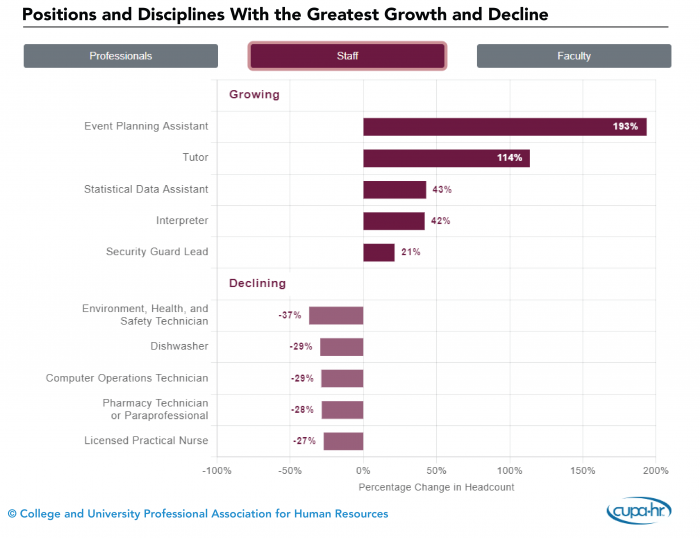
According to data recently released by CUPA-HR, the higher ed workforce positions that saw the greatest growth from 2020-21 to 2021-22 were event planning assistant (up 193%), institutional research analyst (up 161%), head of campus museum (up 120%) and tutor (up 114%). These increases reflect an increase in the number of people hired to fill existing or newly created positions since 2020-21.
The positions that saw the greatest decline in number of employees were environment, health and safety technician (down 37%), head of campus learning resources center (down 36%), online instruction operations manager (down 32%) and dishwasher (down 29%). These decreases reflect a decrease in the number of people in these positions since 2020-21, either because the institution has reduced the number of available positions or because those positions have unfilled vacancies.
In many cases, the growth and decline in these positions over the past year reflect the impact of the COVID-19 recession that began in the spring of 2020. Like so many employers, institutions have experienced the effects of the Great Resignation and the subsequent challenges of talent recruitment amid the growing availability of remote and flexible work options.
Other factors may also be at work. The return to in-person events, the growing demand for data to inform institutional decision-making, and the continued interest in honoring the cultural histories of institutions may have increased demand for the positions that saw the greatest increases. Also, as the high school graduates most impacted by the pandemic’s disruption of classroom learning make their way to college, more tutors may be needed to help them bridge anticipated gaps.
Smaller Shifts in Faculty
Overall, tenure-track faculty saw much smaller increases and declines in the years analyzed. Disciplines with the highest growth were Library Science (up 8.4%), Liberal Arts and Sciences (up 7.0%), and Area, Ethnic, Cultural, Gender and Group Studies (up 2.3%). Disciplines with the greatest declines were Communications Technologies (down 22%), Agriculture (down 9%) and Engineering Technologies and Technicians (down 6.4%).
More About the Results
The data for these results came from CUPA-HR’s annual Professionals in Higher Education Survey, Staff in Higher Education Survey and Faculty in Higher Education Survey. Analyses included more than 600 institutions that participated in each survey in both years of the comparison. For additional details, see the interactive graphic in the Research Center. These data and more are available through CUPA-HR’s DataOnDemand subscription service.
Professor Walter Greason is back with a new in-depth interview
We’re talking about racism in education. This conversation dives into the history of racism in New Jersey. Topics that come up include the January 6th insurrection, the Supreme Court, and how things are affected today.
Walter D. Greason, PhD is Professor and Chair of the History Department at Macalester College in Saint Paul, Minnesota. He is author of 6 books including Industrial Segregation (2018) and Cities Imagined: The African Diaspora in Media and History (2018). His digital humanities projects, The Wakanda Syllabus and The Racial Violence Syllabus reached millions of people, and was translated into 7 languages.
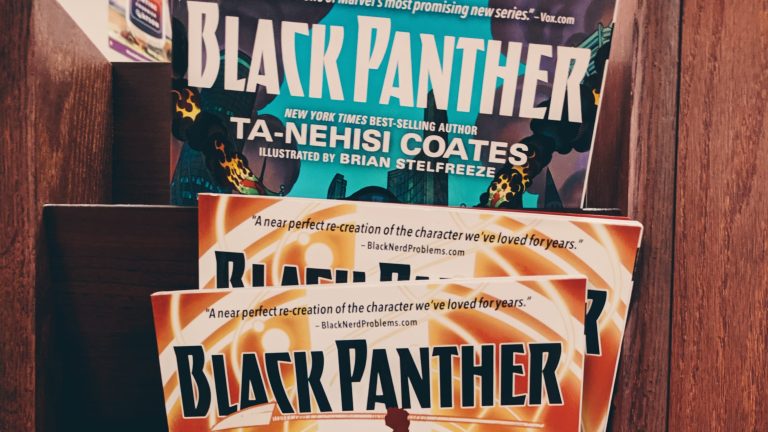
P.S. Black Panther fans, this interview has some exciting tidbits about the upcoming Wakanda Forever movie! Don’t miss it.
Jennifer: Hi, everyone. This is Jennifer Van Alstyne on The Social Academic.
Today, I’m talking with Dr. Walter Greason, who has joined us before. He’s back to talk about racism and education in New Jersey. Professor Greason, would you please introduce yourself?
Walter: Thank you so much, Jennifer. It’s an honor to be here.
Again, Walter Greason. I am a former Dean, Department Chair, 1st African American serving those roles at Monmouth University in New Jersey where we met. And so this is just a tremendous joy for me. [Jennifer graduated from Monmouth U with a BA in English in 2013.]
I’m currently a full Professor and Chair of the History Department at Macalester College in Minnesota. Which is kind of like being in charge of the Honor School [at Monmouth], but the entire campus is the honor school. So it’s been really amazing so far.
Jennifer: Oh, I love that.
It’s a reflection of the change in national politics
Jennifer: Now, today you reached out because you specifically wanted to talk about racism in education in New Jersey. And I know you’re in a new place right now, but this is a topic that you spent your career researching. That you’ve written about in Suburban Erasure: How the Suburbs Ended the Civil Rights Movement in New Jersey (2012).
I’m curious, why is this topic so important to you?
Walter: Right now it’s a reflection of the change in the national politics. That New Jersey is extraordinary place. A brilliant governor, outstanding state legislature, many of my friends currently doing amazing work to make New Jersey an even better place to live.
However in parts and pockets of the state, there are people who are extraordinarily dangerous. And I’ve seen reports in multiple news outlets about the funders in New Jersey who made things like the January 6th insurrection possible. Who throughout the last five or six years have done everything they could to sabotage the society from being an inclusive and free place.
And so now after this January 6th hearings, people are becoming more aware that there is a dangerous white nationalist threat in the United States.
But I still find that folks are underestimating it. And they’re missing the danger, particularly within our school systems.
Jennifer: Ooh. Okay. So people are already missing some of the danger that is out there and that’s because they’re not aware of it, it sounds like.
So, why is this conversation going to help them? Right? Most of the people who are listening to this are going to be professors, people who are doing research. People who are in the process of deciding what their research subject is if they’re in graduate school.
So what kind of message can we share with them that will help them understand why this is important to them?
Walter: So for folks who are going into Higher Education or really Education at any phase of their career, to understand the way the institutions operate. To understand the ways that bias still prevails in hiring, promotion, retention decisions. This is tremendously significant.
And that piece of the institutional, the governance of the school systems, of our institutions of Higher Ed. The barrier that I’ve seen most commonly, not just at Monmouth, but at many institutions is that there are committed leaders at the top of the institution. There are committed leaders at the grassroots, at the teacher’s levels, where they’re doing face to face work with students and families.
But often in the intermediate tiers: assistant principals, principals, assistant and associate superintendents, people who operationalize a lot of strategic vision…There’s enormous hostility against commitments to equity. And so it’s this middle level of administrative leadership that slows down and derails so much of the work. And frankly, underwrites and expands the ways that people can come and attack school boards.
Or, the ways that they can go out on social media and build white nationalist networks where they’re attacking parents, where they’re attacking families, where they’re attacking teachers who are attempting to make schools more equitable for everyone.
And so that’s the danger I live with every day. That’s the danger I see hour-by-hour creeping in multiple contexts. And, again, not even just in New Jersey, I mean, places like Ohio. I was just down in Alabama. There are so many places where the organized institutional commitment to injustice is winning.
And until we actually take stands together as faculty and really organize just as rigorously, we will lose these battles to try and make better school systems, better institutions for young people and for families everywhere.
Can you tell me more about the history of racism in New Jersey?
Walter: Absolutely. And, I mean, this is something that has a lot of data behind it [laugh]. But New Jersey history as a field really tended to focus on either the American Revolution or the Civil War, or to a lesser extent, World War II. There is very little attention to the social history of New Jersey. And so I’m very proud that the work I’ve done for the last 15, 20 years has changed that.
There’s a lot of attention now to history of immigrants, histories of black people, histories of lesbian, gay, transgender populations. That the openness to learn about different perspectives in our past has really grown. So that’s one of the pieces of my career I’m most proud of.
And you mentioned something that at Monmouth University there’s so many good things that I was lucky to be a part of. But the founding of the Social Justice Academy over the last two years…writing the proposal, winning the grant, getting the funding to be able to bring people like Nikole Hannah-Jones, hiring Nicole Pulliam as the Program Director for the Academy. These are things that are at the absolute top shelf of my life. I’m so proud of everything that goes on with the Academy.
That is pointing to the kinds of barriers that continue to exist.
And I think #1, people don’t understand how segregation persisted in the North after the Civil War. That they tend to even see slavery as a Southern phenomenon. They see Jim Crow segregation as a Southern phenomenon. And that’s not the case at all.
That segregation dominated the North through the 1800s while slavery was thriving. And it ultimately became the template by which the South said, ‘Oh, we can do what the North does and just keep everyone separate from each other.’ And so that in entrenched segregation, particularly with the Plessy v. Ferguson decision in 1896.
And even when you saw Brown challenge that and say, no, “with all deliberate speed,” we must desegregate [Brown v. Board of Education].
The movement was called [Massive Resistance], basically a white nationalist movement led by the White Citizens’ Council to resist nonviolently and politically any attempt to integrate schools or public institutions. And so this effort goes on for 60 Years. Like you go into the Obama administration and there are still people fighting to keep segregation and expand segregation.
It reshapes the Supreme Court.
It basically makes it possible in places like New Jersey that the worst feature that could be possible: all of the organizations that were dedicated to civil rights, and integration, and equal opportunity were dismantled after Brown [v. Board of Education].
So places that we look at old ironsides is the Bordentown Manual Training Institute, was serving African American and immigrant communities to get people trained to succeed in a modern economy–We closed it in 1956 and said, ‘No, this is no longer going to be a part of what we do in our state.’
We fired thousands of black and immigrant professionals and said, “No, they will have to learn to comply within white institutions that had created all the problems to begin with.’
So when we talk about desegregation and integration, we have a really poor grasp of how we dismantle the institutions that made the chance for integration possible.
And then we preserved all the institutions that had maintained segregation.
And then we’re surprised 50, 60 years later that so little has changed. It’s that we didn’t embrace the kinds of organizations and institutions that would have led to more equity and more inclusion.
And that meant firing lots of really qualified even overqualified people within the educational system, especially, that could have made a much stronger society overall.
Jennifer: Wow. That is very new to me. All of this information is something I may have heard you talk about before, but hearing it all together…hearing it all at once makes me see how important this was. And how lacking my own education in history in America was.
And so we had these parallel tracks within the state where municipalities essentially partnered with the real estate industry to decide where there would be high quality education. And where there would be an education that really did not prepare students to be competitive for college and for future careers.
And so that track, when that report comes out, it shocks everyone. But for anyone who had studied the way that these institutions evolved over the previous 40 years, the only inevitable outcome was that you were gonna have disparate educational gaps
Jennifer: Right.
Walter: And as a result, lifelong employment gaps, lifelong healthcare gaps, lifelong wealth gaps, and we’re not providing fair and equal opportunity to achieve and succeed in life to people of different backgrounds based on their race.
And then, when it’s not based on their race, it’s based on their zip code. Which is even more pernicious because we allow that within the market system to say that some people should get less opportunities than others based on their income, based on their education. But it’s all deeply tied to these structures about race and ethnicity.
Jennifer: Tell me more about that in terms of zip code, and real estate, and education. That seems much more closely tied together than people often expect. How does real estate and where people live affect education?
Walter: So a state like New Jersey, and many Northern and Midwestern states, education is tied to human municipality.
This is very different than places in the far West or in the South where it’s often state funded. Here in Minnesota, all counties received the same funding for education. And so, there’s remarkably high quality. And there’s still disparities, but nowhere near as extreme as what we see in a place like New Jersey, or Connecticut, or Delaware, or Virginia. These places really struggle trying to actually serve the people who have the greatest need.
And there’s a reward structure for that. There are businesses that make more money because they target very affluent particular towns, or sections of counties.
Yeah, just in Monmouth [County], around where we met, you can look at Rumson, and Deal, and Fairhaven and you see these extraordinary school systems. How do you even say a place like Middletown, doing really well
But if you go down the street to Asbury Park, if you go into parts of Red Bank, if you certainly go into the Freehold Regional System and look at what happens to Freehold borough…There are just places where people turn against majority Black and Latino populations and are angry when they get quality opportunities.
And so my students did a lot of research on this, going back into the early 2000s, where they were interviewing folks who were going out to find homes, to find apartments and talking to real estate professionals. And they’re steering folks to different communities based on their appearance. And this is a common practice.
The National Association of Realtors had to apologize just two or three years ago for ongoing systemic discriminatory practices.
And so opening the door for people to understand–And thankfully I am working with Governor Murphy on this problem–how do we actually commit to open up doors of opportunity for all people and then break down the systems of financial incentives for skilled professionals to kind of maintain segregation and inequality. Those are the things that I’m looking forward to the 2nd half of this year and into next year. We have the ability to open the door for everyone to have a fair chance to find success in economic stability.
Google ‘Massive resistance’ and ways to take action
Jennifer: So what can people do if this is all of a sudden an issue that they’re hearing about learning about and wanting to learn more about…And to take action…
What’s something that they can do in their local communities? Let’s say maybe a teacher in New Jersey.
Walter: So first and foremost, I would say Google the term Massive Resistance. This is the phrase that I was trying to put my finger on a few minutes ago. But this is where the state of Virginia decided after the Brown decision is they were gonna commit every resource to making sure that desegregation didn’t happen.
And we tend to look at it and be like, oh, they lost in court. And eventually they decided to comply. Absolutely not. That through the early 1980s into the mid 1990s, town-by-town, county-by-county, state-by-state, people continued to push back. To deny equal opportunity to all people.
And ultimately they win that fight. By the time we get to 2014 and you’re seeing the reversal of the Voting Rights Act. And you’re seeing the increasing waves over the last decade of abandoning the idea of equal justice for all people…That’s exactly what we’re seeing play out in the 2016, the 2020 election, now in the 22 congressional election.
It’s what sparked the riot in on January 6th was this idea that this is a white Christian nation and that any anyone that doesn’t fit that parameter, especially those who challenge patriarchy, and want to kind of guarantee women’s equal rights, that they are equal citizens, and deserve something like abortion protections and equal healthcare access.
That’s the battle where some people’s like, ‘No, we are going to dictate that that’s not going to happen. And then we’re gonna cut off the legal basis for it.”
And Clarence Thomas’s recent decision concurrence, he spells out all the rights that he wants the Supreme Court to repeal. And it’s largely all of these principles that are reinforced by the January 6th insurrection. Not surprisingly, his wife is having to testify before the January 6th committee because of her organizing in funding for those events.
But no one on the opposite side of these issues, no one pressing for civil rights, and women’s rights, and immigrant’s rights, for recognition of equal treatment of the LGBTQ community…there is not the same level of organization. Things are fractured. People undercut each other. People feel defensive about giving up space so that they can give voice to other people who share their same agenda.
Until folks who are pressing for equal justice come together and get on the same page, these issues will never gain traction. You’ll never be able to defend the rights of all people and guarantee equity for every person to find their American dream.
Jennifer: You talked about the importance of organizing before. And I think you just talked about it again, the importance of coming together when you have similar interests.
Now, what can that look like? What kind of organizational structure is that? How can people connect with each other? Where can people go to find that community?
Walter: So, there’s extraordinary model. I’m fortunate because I do the work, I know a few.
In Princeton, [New Jersey] there is an organization called Not In Our Town that meets every week and they discuss books. They discuss movies. They listen to music together. They share great food and they actually talk about how do they stand up for justice in that community? And Princeton is an elite place. That Route 1 corridor between New Brunswick and Princeton, that is a place where there is a ton of resources. And they have a long history of cutting people out and not getting access to them.
We need something like that along the Route 36 corridor [laughs]. You know, going out from Middletown down to Point Pleasant, like that’s another area where there’s not that same type of engagement.
I know there are folks who are doing work in the arts community in Belmar. There is an Asbury Park book collective that actually does a lot of great work across the state.
I mean, up in Newark, there’s just long tradition of battling against discrimination. That’s very important. We need more of that in Camden. We need more of that in Atlantic city.
But most of all, I’ve been really pleased to see in places like Union County and Morristown, places that are really affluent, more and more people trying to raise these questions and engage these topics.
And it’s not just about doing just a book club, or doing just a cooking society, cooking circle. You can do all of these good things, but raise the difficult issues. And look at the policies.
Attend the school board meetings, not to shout at the people who serve, but to talk with them about the solutions that they may not be aware of.
Work that I was just doing in Freehold was about participatory budgeting as a model that comes out of Brazil, where local people get to choose the budget priorities on an annual basis. They don’t just leave it to the town council to decide how tax money is spent.
Jennifer: Wow.
Walter: And so there are all number of ways. You know, I work on things like universal basic income here in Saint Paul, [Minnesota] where folks who are really struggling, who are facing disabilities, or are out of work can get additional supplemental income just so they don’t fall behind and get further into debt.
Big ones are ideas that go into like a job guarantee at the state or the federal level so that everybody who can work can find the work they want and go out there. We desperately need this right now.
There’s a lot of fights I have with central bankers about inflationary pressures. And should we go into recession? What will that do to the country in the next 6 to 10 months?
So doing things differently than we’ve done them in the last 40 to 50 years is uniform in my commitment. I’m big on the side of economics and teaching folks how to read business news and actually engage in new business creation.
For young people, especially for folks who are 15 to 25, folks following the example of what you’re doing with this show. There is so much to do, and we need people to do it differently than was done in the past.
Those are the kinds of things, if anyone’s interested, they can hit my website where I give out ideas every day in business models and funding so that folks can get underway.
How Walter responds to negative reactions to his tweets on Twitter
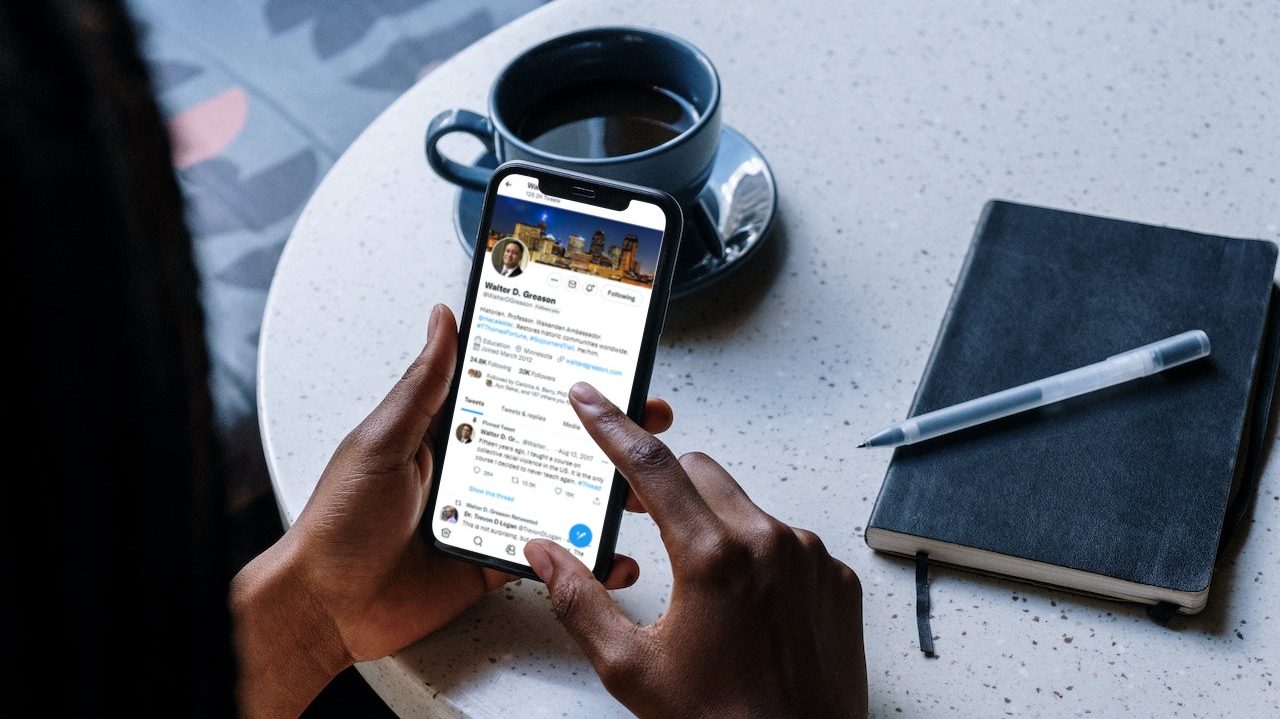
Jennifer: Now Walter, you have almost 33,000 Twitter followers [@WalterDGreason]. That’s a lot of people who are potentially listening when you tweet about racism in education.
What kinds of responses do you typically get to your tweets?
Walter: Wow. So it’s varied a lot.
Jennifer: Yeah!
Walter: So that account has been up now for 10 years. I can’t believe that account is 10 years old now. Early on, you know, there’s just not a lot of acceptance of academic content on social media.
And so that’s another area where I feel tremendously proud that the kinds of models of providing quality graphics to advertise academic content. To emphasize doing things like podcasts and online shows…That these things were just not part of the social media community 2012, 2013, 2014.
Jennifer: Right.
Walter: And then we started to gain traction. Like we started to really change things. And so for me, it was the Racial Violence Syllabus in 2017.
I think I was already in the tens of thousands of followers. But since then, the engagement is just off the chart.
And so by 2017, now you saw a turning point. You know, my profession as a historian embraced social media really aggressively and thousands of well known scholars joined social media and began to promote their books, began to talk about speaking tours.
But Ibram X. Kendi’s (@DrIbram) up there too in How to Be an Antiracist (2019).
These are all folks that kind of were little pups [laughs] and so I had them come up and believe in the vision. And come on board, and it’s been extraordinary to see the success across so many different platforms. And the revolution in publishing in media that came from it.
So yeah, it’s nice. You know, 30,000 followers for an academic is no joke.
Everywhere I’ve taught, whether it is Monmouth, or Drexel, any of these places, Macalester. You know, there’s just an impact where I’m guaranteed to reach 40 to 70 million people with viral impact. And again, for academic content, that’s kind of unheard of.
Most academics in my field, you know, there’s, they’re satisfied if they get 20-25 people to know anything about what they’re talking about.
Jennifer: Right.
Walter: And so I also have to mention the Wakanda stuff was tremendous. And so being able to bring a spotlight to other colleagues. And then to expand the kinds of audiences who engage in these discussions.
You know, there’s a lot of folks who like to attack the idea of being woke. But being aware and having a good vocabulary to communicate effectively about difficult topics. That’s something everybody should have. And then really should not avoid acquiring those skills.
I don’t care if you call it woke, or informed, or discerning. There’s any number of phrases and adjectives we can use to describe it. But the skill set to communicate clearly and find new solutions together, that’s essential. That’s the core of what freedom is. And so, you know, I’m just very proud that we can turn social media into a platform that does that. And not just a platform for disinformation and manipulation for people to just fuel hate and anger.
Jennifer: Now, when it comes to the tweets that you have about your research, there are always going to be people who hate. Or, who very much dislike what you have to say.
When you get those negative reactions, what’s that like for you?
Walter: So I came up in the internet before there were like pictures [laughs]. And so, you know, I was building webpages, and joining list serves, and being on discussion boards when it was so much worse.
[Laughs.] It was so much worse.
I don’t even know if people use this phrase anymore, but there were these things called flame wars where, you know, you would just get into it and try to burn up whoever was disagreeing with you. And shame, them cow them, dox them into submission and drive them from the platform.
I remember being in a lot of those fights in the mid to late 90s and learning that it’s a waste of time going after and trying to destroy people who disagree with you.
And so I typically have a rule, you know, when someone says something snarky, off color, or aggressive…I’ll indulge it, you know, for a message or two. But inevitably I turn to it as an educator and say, well, you clearly haven’t seen X, Y, and Z. Here are some places to continue to kind of learn about what you’re asking about. And then if you take a look at these things, we can kind of continue the discussion.
But I do find, I get bombarded with bot accounts. And that was something I wasn’t prepared for when it really started to happen a lot. And so these are bot accounts that have 0 to 200 followers that are also all bot accounts. And they’re automated. And they repeat their content. And they just spam the communication channel hoping to waste your time and energy. And eventually I just came to the places once I’m able to determine that it’s a bot account. If it’s a network of bots. I just block them and keep moving [laughs].
Cause there are too many people who are sincere and honest about trying to participate in discourse and, and have good conversations that deserve my time.
Not, not these [bot accounts]. And it’s not just from one country or another it’s there are any number of bad actors out there that have learned how to build bots that are designed to disrupt really productive work.
Jennifer: Okay. So that’s really interesting. You have experienced a lot of flame wars, is that what you called it?
Walter: Mm-hmm [affirmative].
Jennifer: So you’ve experienced a lot more direct and kind of like ongoing conversations about that in the past. So you don’t really engage in those conversations now.
But you do respond, it sounds like, if someone does leave a comment or a question. You don’t just ignore it if it’s a negative comment or question.
Walter: No, if it’s an actual person. Yeah. If its an actual person, and one just disagrees, I want there to be a constructive way that they can move forward.
I do put a limit on it. That’s like it can go back and forth three or four times, but you’re not gonna take me away from doing the work that brought me to this place.
Jennifer: Right. Oh, well, thank you for sharing that with me.
A lot of the professors that I work with, you know, they’re really anxious about posting anything at all. They’re scared that someone will report them to their university, or that they’ll get death threats, or that they’ll get doxed and actually have cops or SWAT come into their home.
Because of that fear, it really stops them from speaking out. But you’ve been speaking out and you’ve been talking on Twitter for a long time. And it sounds like even though you do get negative comments, you do respond to those and you do engage in those conversations because occasionally they can be helpful or learning experiences. Is that right?
Walter: Oh, yes. Oh yes, no. It’s funny. I just saw a cartoonist, very conservative cartoonist, that I met years ago on Facebook. And he’s become radicalized. He says, and then writes, and draws a lot of really poisonous kinds of stuff.
Jennifer: Mm-hmm [affirmative].
Walter: But I still stay in touch. I still tell him, you know, like try to moderate this. You’re not accomplishing the thing that you might think you are.
But ultimately, I find with these folks, particularly in that kind of, you know, Trump MAGA circle is, they’re in a lot of pain. They’re very deeply hurt and sad. And they try to then inflict that sadness and injury on other people around them.
And when I can mostly face-to-face honest, honestly, kind of giving them a way to look at their own humanity–could be through their family members, it could be through friends of theirs–but it gets them to kind of be more introspective.
And that slows down the vitriol. I’m not gonna say it wipes it away or completely reverses the issues that they raise. But shutting them down and casting ’em aside, that’s not always the best way.
There are folks, yeah, you can’t. They are dangerous. And then you need to report them to the police and the FBI. And protect yourself from them.
But it’s even with that mob on January 6th that, you know, you had several hundred out of 10,000 that were really dangerous that needed to be arrested, needed to be convicted, needed to be sent to jail for some time. But there were a lot of folks who were there that looked at what was going on, didn’t like what they saw and backed away and had to kind of reevaluate like, ‘How did this happen?’
And those are the folks that will confront me. And they’re doing it in a way where they’re trying to kind of reconcile, ‘Okay. How do I get back into a conversation that is civil? I don’t want to be a part of something that’s about attacking police and destroying government buildings.’
It’s also hard from the left. There are a lot of folks on the left who feel like I’m way too conservative. That I’m not really ready to burn everything down to make freedom happen for people.
And so, you know, like trying to bring people together in a broad middle where they can see a way to make progress together. That’s a really tough position. That’s a time where lots of folks don’t want to be in the middle because you can get attacked from both sides. But again, I’ve been doing it for 30, 40 years now.
I’m committed to Dr. King’s vision, but I am open to Malcolm X’s methods. [Laughs.]
I pull in a lot of different tools to go after what I think will make all of us better people tomorrow.
Collaboration across sectors helps bridge connections
Jennifer: Now you’ve collaborated with people in kind of every sector in government, in local government, in the media. You collaborated with people on what Wakanda, and all of these things.
What do you get out of collaborating with so many different people? Not just people in Higher Education.
Walter: Yeah. I’ve had a long time to think about that and coming to Macalester helped me get a little bit more perspective on that experience.
I’m not just historian. I’ve PhD in history. I’ve studied history for decades. But I also have a lot of literary analysis skills. I have a strong background as a philosopher. I’ve worked in Africana studies, worked in diplomacy, in peace and justice work. Having that kind of multidisciplinary background working–working in a prosecutor’s office as a high school student. Even growing up on a farm and being a carpenter as like my first real job. Those things challenge me to bridge connections.
And I say almost on a daily basis now, I hear from people who think whatever their approach is the only approach, and it’s the best answer. And I never believe that any of the tools that I bring to the table are the only way, or the best way. I always come in with what I hope is great humility to learn from people what tools they have. And then try to see and understand from their perspective how we can move forward while also providing them with resources that maybe they had never encountered before.
And so I used to do a freshman seminar at Monmouth University on ‘why do we have so many different departments at the college?’ And you know, you have 70 majors at a regional university, you know, to serve everybody and help them choose the thing that they feel like they can be good at and succeed in. But that’s 70 different sets of solutions to any kind of social problems that we’re trying to solve out in the real world. And that’s just the big umbrella. Like you break each of those departments, they have 15 or 20 different methodologies within each department. So you’ve got 1,500 different ways of going after solutions at a school like Monmouth.
Imagine when you go to Rutgers, and that system. And how much they’re offering on a daily basis about different ways to go about building a better world. And then you go to Penn State or Michigan and, you know, it’s ridiculous, the amount of solutions we have.
And we need to have more respect and deference for each other so that we find good answers together.
That you know, we’re not just assuming our way is the only way to go about it.
Jennifer: Wow. Oh, I have just loved this conversation. And I’m so glad that you came back to talk with me again. For anyone who’s listening, be sure to check out that first featured interview with Walter. We talk more about his tweets going viral, the Wakanda Syllabus, all sorts of things that you don’t wanna miss.
Black Panther: Wakanda Forever comes out November 11, 2022
Jennifer: Now, Walter, the Black Panther: Wakanda Forever trailer just came out yesterday, I believe. And I remember we talked about Black Panther and your Wakanda Syllabus during our last interview. Are you excited for the new movie?
Walter: Oh, of course. Of course. You know, so I spent a long time working on just the idea that a movie could possibly be made. So it’s a dream. I was teaching Black Panther comics in my classes back in 2002, 2003. Working on drafts of content for the movie.
When I saw the ancestral plane in the first film, I literally cried in the theater. Like it is still one of the great moments of my life to see that something that was so important to me made it onto a Hollywood screen.
And now I’m seeing this sequel and knowing, you know, I knew before the movie came out, there would be a sequel. I was like, this is gonna be too intense. People are gonna wanna see more.
Jennifer: Yes.
Walter: But it’s not just the sequel of the Black Panther. It’s so many other shows. It’s the HBO Lovecraft Country. It’s the way that the Westworld series has evolved. There’s so much good Afrofuturistic content that is out and available now. And so much more to come that’s still in production.
I just saw the Jordan Peel movie, [Nope] just this past weekend. These are things that just couldn’t exist when I was younger, that I was so happy to see emerge.
But yeah, the trailer to come out at San Diego ComicCon. And to see the audience, they had an African dance performance on stage to introduce the section of the program where they brought it out.
Yeah, the change in the sequel because of Chadwick Boseman’s passing is that it’s titled Black Panther, but the more prominent subtitle is Wakanda Forever.
And I said this in the first movie, it’s like, you come for the Black Panther, but you’re gonna stay for the Dora Milaje. Like this entire cast of people who just transformed the way we tell stories. And we imagine what a superhero narrative is about. And there’s so much more layered into the way this sequel’s gonna be done.
So a character named Namor, who was one of Marvel’s earliest characters has been kind of redesigned as a Chicano superhero using Incan and Mayan kinds of expressions in the way it’s costume is designed and the society that he represents.
And I don’t wanna give away too much in the movie, but this movie is really about sadness and loss. And so it’s a way to kind of process the grief of the loyalty of Chadwick Boseman, but it’s gonna be much larger than that.
There’s a devastation to the way that this conflict plays out that is gonna set up a 3rd movie. And the 3rd movie is then gonna lead into the final two Avengers movies over the next 3 years and it’ll make the Thanos conflict, the infinity stone saga, look very, very small in comparison.
And so if anybody has seen the Loki series on Disney+, or the What If series. Those two things are tremendously important.
And I know there’s a lot of folks who are very disappointed that the T’Challa character was not recast for this movie to kind of bring in more audience and honor Bozeman by just not letting the character disappear.
I do think there’s gonna be a surprise at the end of this sequel about the nature of T’Challa character. And so knowing the way the story works, knowing the way the writers work, and then the designers…I definitely think it’s gonna be a different vibe completely from the 1st movie. But it will be something that will be unforgettable. And people will be talking about it for the next 2 years.
Jennifer: Oh, that’s great. Wow. Black Panther: Wakanda Forever comes out November 11, 2022. I’m really excited for it.
And I’m also gonna include the link to that trailer below.
Walter: Yes, please.
Jennifer: Because you should definitely check it out.
Jennifer: Walter, thank you so much for joining me for this interview. Is there anything you’d like to add before we wrap up?
Walter: Oh, this is tremendous. Your work is spectacular. You don’t know. I am so happy to see it every day.
I would say to you specifically tag me every time you have something [Laughter]. So I make sure I am letting everybody know about it.
Your work is so good.
Jennifer: Well, thank you so much for that!
And just on the topic of grief and loss, I do wanna let everyone listening know that my last interview with Dr. Chinasa Elue was focused on grief and loss, especially in these last couple of years during the pandemic. So I want to encourage you to check that out if it’s something that you’ve been experiencing. Your students I’m sure have been experiencing this as well.
Alright, thank you, Walter! I really appreciate it.
Walter: Jennifer, you’re the best. Thank you again.
Dr. Walter Greason is the leading academic expert on Black and Indigenous historic preservation as well as Afrofuturism and the Black Speculative Arts Movement. He is a professor of history and chairs the Department of History at Macalester College, one of the best liberal arts colleges in the world.
Each month, CUPA-HR General Counsel Ira Shepard provides an overview of several labor and employment law cases and regulatory actions with implications for the higher ed workplace. Here’s the latest from Ira.
EEOC Reaches Settlement Banning Employer Collection of Family COVID-19 Testing Results — GINA Implications
In a case involving a dermatology medical practice in Florida, the EEOC reached a settlement of the charge it brought against the employer medical. The case alleged that the employer violated the Genetic Information Nondiscrimination Act of 2008 (GINA) when it collected family COVID-19 testing results of its employees. Title II of GINA bans employers from collecting an employee’s genetic testing results and a worker’s family medical history.
However, the EEOC also issued guidance stating that an employer can still ask its employees if they had contact with anyone who has been diagnosed with COVID-19 or who has had symptoms of COVID-19. Nonetheless GINA prohibits employers from inquiring directly and specifically as to the COVID-19 status of an employee’s family members.
The EEOC also recently issued guidance on July 12, 2022, that, going forward, before requiring employees to submit to COVID-19 testing, employers should consider whether current pandemic circumstances and individual workplace circumstances justify viral screening of employees. Essentially the EEOC’s position is that before going forward with workplace COVID-19 screening, the employer must demonstrate a “business necessity” based on general pandemic circumstances and individual workplace circumstances.
Federal Court Holds That Discharge Proximity to an Employee’s Filing for Extended FMLA Leave Warrants a Jury Trial Over Retaliatory Discharge Claims
A federal district judge recently ruled that a plaintiff’s claim that her discharge shortly after seeking an extension in FMLA leave to deal with mental health problems was retaliatory warrants a jury trial over FMLA retaliatory discharge allegations and dismissed the employer’s motion for summary judgement. The plaintiff was a human resources manager who allegedly suffered from depression and anxiety. The employer argued that it was entitled to summary judgement because the plaintiff was discharged before the employer made a decision on the FMLA extension request. The judge concluded that gaps and inconsistencies in the employer’s explanation of the reasons for discharge warrant a finding of fact by a jury as to the timing and reason for discharge (Moryn v. G4S Secure Solutions USA, Inc. (2022 BL 222775 Dist Minn. No. 0:21-cv-00123, 6/28/22)).
The plaintiff had requested and received a three-month leave of absence based on the recommendation of her physician for mental health reasons. When the three-month leave concluded, the employee requested an additional month followed by a part-time work schedule that progressively added more days to the job.
Separately the judge dismissed the allegations under Minnesota state discrimination law related to disability discrimination and the allegations that the employer failed to accommodate the plaintiff.
Court of Appeals Rules That a State Agency’s Banning of “Black Lives Matter” Adornments to Employee Uniforms Violates the First Amendment
The U. S. Court of Appeals for the 3rd Circuit (covering Pennsylvania, New Jersey and Delaware) affirmed the decision of a federal trial court, which ruled that a Pennsylvania local transit authority violated the First Amendment guarantee of free speech by prohibiting Black Lives Matter adornments on employees’ uniforms as part of its policy prohibiting political and social adornments on employee uniforms.
The court of appeals also ruled that the Allegheny County Port Authority’s policy revision, which allowed employees to wear only certain masks to make it easier for the authority to enforce its ban on Black Lives Matter messaging, violated the First Amendment. The case challenging the transit authority’s policies was brought by the employees’ union in Amalgamated Transit Union Local 85 v. Port Authority of Allegheny County (3rd Cir. No. 21-1256, 6/29/22 ).
U.S. Supreme Court Rules in Favor of Football Coach’s After-Game Prayer, Concluding His Discharge Violates the First Amendment Free Speech and Religion Provisions
In a long-awaited and controversial decision, the U.S. Supreme Court ruled against a school district firing of a football coach who refused to abandon his long-practiced ritual of kneeling in prayer at the 50-yard line at the conclusion of each football game. In doing so, the Supreme Court overruled the decision of the 9th U.S. Circuit Court of Appeals ruling in favor of the school district. The football coach argued that he had agreed to the school district’s demands that he stop leading prayers with his players, but wanted to continue taking a knee in prayer alone after each game.
Justice Neil Gorsuch concluded that the case was about “three quiet prayers,” and because no student joined in those prayers, the coach was acting as a private citizen, not a school employee or coach. The justice concluded that the coach was not acting within the scope of his activities as a coach and therefore his actions were protected by the First Amendment. The Supreme Court decision was a divided one, 6 to 3 (Kennedy v. Bremerton School District ( US 21-418, 6/27/22 )).
NLRB Reports That Private-Sector Union-Organizing Petitions Have Risen 58% and Unfair Labor-Practice Charges Filed by Employees Have Risen 16% in Fiscal Year 2022
The National Labor Relations Board (NLRB) reported a sharp increase in private-sector union-organizing petitions filed during the first three quarters of fiscal 2022 (October 1-June 30), concluding that union-organizing petitions rose by 58%. The increase in union-organizing petitions has been across the board in the private sector and not limited to high-profile organizing nationwide at Starbucks and Amazon. U.S. workers filed 1,892 organizing petitions in the first three quarters of fiscal 2022 as compared to 1,197 petitions in the first three quarters of fiscal 2021.
The data also show that U.S. workers filed 16% more unfair labor-practice charges against employers during the first three quarters of fiscal 2022. Unfair labor-practice charges at the end of June had increased from 11,451 in fiscal 2021 to 13,105 in fiscal 2022.
For the higher ed HR community to thrive there must be a pipeline of early-career professionals waiting in the wings, and one way CUPA-HR equips early-career pros to grow in their role and take steps toward their career goals is through the Wildfire program.
The program, sponsored in part by HigherEdJobs, is a 12-month immersive experience that connects a small, select group of early-career higher ed HR professionals with some of the top leaders in the profession, giving them a variety of learning opportunities.
Rob Keel, a member of the 2019-20 Wildfire cohort and past president of the CUPA-HR Tennessee Chapter, had this to say about the program: “Wildfire helped open my eyes to the possibilities within higher education HR. The network I gained through my involvement with Wildfire has provided so much support as I navigate my career. If you want to develop relationships that have the power to transform, Wildfire has the power to do just that.”
As a new year gets underway, we want to congratulate and welcome the Wildfire program participants for 2022-23:
TJ Bowie, Equal Opportunity and HR Compliance Manager, Elon University
Joy Brownridge, Training and Development Specialist, University of Illinois System
Amanda Burshtynsky, Employee Payroll and Insurance Clerk, Genesee Community College
Kelleebeth Cantu, HR and Employment Coordinator, Trinity University
Audrey Ettesvold, Human Resource Specialist, Idaho State Board of Education
Alexis Hanscel, Benefits Manager, Denison University
Kathleen Hermacinski, Human Resource Coordinator, Eureka College
Anshuma Jain, HR Administrator, Hudson County Community College
Jessica Ludwick, Human Resources Consultant, University of North Carolina Wilmington
Tracey Pritchard, HR Coordinator, University of Iowa
Trevon Smith, HR Generalist, Drake University
Christopher Williams, HR Partner, University of Maine System Office
Interested in joining our 2023-24 cohort? Learn more about the Wildfire program.
Technology in education has transformed over time to better meet the needs of teachers and students. Dan Marrable, founder of 448 Studio in the United Kingdom talks how they’re jumping on this wave of technology to bring solutions for academic conferences and virtual events.
I met Dan back in 2020 when he invited me to speak at the All Day All Night 24 hour conference. It was a production to behold. Well managed, well organized. Speakers from all over the world joined in to share knowledge for Higher Education professionals. I’ve been on the steering committee ever since for this great online event.
In this interview, Dan Marrable opens up about some of the struggles professors have with virtual events (event organizers, speakers, and attendees). And, he asks for your help with their virtual teaching study funded by the Scottish Government and European Commission.
Jennifer: Hi everyone. My name is Jennifer van Alstyne. Welcome back to the new season of The Social Academic. Today, I’m here with Dan Marrable, the founder of 448 Studio, who is an amazing person I met in 2020. We worked together on the All Day All Night Conference.
He’s here to tell you about some ed tech software today that’s really amazing for faculty, for professors. If you’re in Higher Ed, I’m excited to share this interview with you.
Dan, how are you today? Would you start us off by introducing yourself?
Dan: Sure. Well, first of all, Jennifer, thanks for having me on the podcast.
My name is Dan Marrable. I’m the founder and CEO of a company called 448 Studio, launched back in October 2018. After working a stint at the University of Glasgow, I launched it as a consultancy to, to work with a variety of different higher education institutions working on their social media strategy, working on the support for digital media within academia.
That’s been going on for the past 3 years. It’s been quite an interesting time.
Obviously everyone knows that the past 2 years a lot of things had to pivot and change. And I think that’s kind of why I’m really excited to speak to you today about the evolution of not only 448 Studio, but kind of how we managed to jump on that wave of technology in teaching and learning. And what education institutions have had to cope with and deal with them the past couple of years [during the pandemic].
Technology changes for education during the pandemic
Jennifer: Yeah, it’s been increasingly difficult for faculty, but I love that you’re creating solutions for them. I’d really like to just let other people know, you know, what does your company do? Who are you helping and why?
Dan: Yeah. So primarily at the moment, we are very much embedded within higher education.
We have done some work with further ed, and with schools and things like that. That’s kind of more on the horizon. But I think for the company to grow, we’ve had to really focus on what I know. And what the people that worked for me know. And that is within universities.
Primarily we help not only academics, but also people within professional services.
It started out as you know, as workshops and support for social media and working with academics to represent their research in a digestible manner for widening participation as well as for international connections. And we still do that. And it’s still very much the core of 448 Studio.
But two years ago, when everything went into lockdown, we launched a conference called All Day All Night, which is where I met you. That was for education professionals and academics based off the fact that I felt that the core of what we did and the core of networking and knowledge share had almost been stunted as soon as all these conferences closed. And as soon as you couldn’t meet people in person. So we launched this 24 hour conference.
That’s what started me on that journey of saying, okay, well what can we do? And what can we do better? Specifically for education. Now there’s a lot of solutions for private companies and for corporations. But it does seem like at the moment we’re trying to kind of cram corporate technology into education. And trying to kind of balance the two, which I find is working in various degrees, but not necessarily the most fit-for-purpose thing.
Jennifer: It feels like we’re at this explosion of all of this technology all at once. People aren’t always sure where to turn to. And with so much to learn it just becomes difficult because you’re finding lots of solutions for the same problem, not even sure which one to turn to.
Forumm, a solution for virtual events and conferences
Jennifer: I think that’s why I like what you’re doing with Forumm. Can you tell us a little bit about Forumm?
Dan: Yeah. No, of course. So off the back of All Day All Night I met with some of the guys that were doing the live streaming for it. And very quickly realized that there’s kind of two elements to a virtual event. One is a platform that you host the event on. But a very separate element that a lot of people overlook is a broadcast element of it. So I think we had the broadcast…
The platform that we were using wasn’t necessarily fit-for-purpose. It worked fine, but we just felt that maybe we could do a little bit better from an actual event perspective.
As of last year, January, we started Forumm, which is a virtual event space for the education sector. So something that’s fully customizable.
You’re able to change things like the registration and the user journey. Been able to update simple things like branding and stuff like that.
But also have elements, for example, PDF readers or PDF things for journals. We had academic poster competition within the platform. And 3D and virtual spaces as well, embedded in.
So it’s really focusing on the technology and seeing where the technology can make a virtual event better, as opposed to trying to replicate a physical event virtually.
It’s really trying to find those core things that people within education struggle with and try to find a solution for them on a virtual event in space.
It’s been quite a journey. Yeah. We’ve been doing it for a year and a half and learning as we go. We get so much feedback from the institutions and the people that we work with that it’s great. It really feels like a partnership there. They know that we’re dedicated to the sector which I think makes a big difference as opposed to going for everything.
Jennifer: That does make a big difference, especially because it means that you know the types of struggles that professors, that faculty, that other educators are dealing with when they attend virtual conferences. You’re finding solutions to those.
One of the things that I really like about it is that it’s the kind of this all in one platform. Like if you need that conference space to fit a certain way or to fit your needs. Maybe you’re a journal and you have a series of publications to share. Or again, like that poster competition.
Dan: Yeah.
Jennifer: That can make a really big difference in higher education for researchers and for professors to really create that engaging space. I love that.
Dan: Yeah, no. I think it’s been a real learning experience, Jennifer. And I think the big thing that’s come out of it is how much professional services within universities find it a challenge to run events.
It’s either the fact that you know, that they need a bit of upskilling, which we’re happy to do.
It could be a case that, you know, they’ve got a million and 1 different jobs. And all of a sudden they’re like, okay, now I’ve got to run a virtual event.
Where I think we’ve been able to support that. Show that and set and support where we’ll come alongside you help you
Plan the event
Build the platform
Run it
Broadcast it
Wrap-up
So then that’s where we’ve realized we can really provide a lot of support because when you do boil it down to an event platform, they are starting to pop up everywhere. And they do seem a dime a dozen at the moment. But a lot of times it’s just, you know, “Here are the tools,” and they’ll just step away.
Jennifer: Right.
Dan: And then everyone has to become a professional virtual event individual, whereas maybe they’re doing physical events to begin with and now they have to switch over.
Then obviously now, we can go down that hybrid route, which means so many things to so many different people. That’s that’s another challenge.
I think one of the vast refreshing things that I have seen is the fact that we’re not constrained by geolocation anymore. We’re not restrained by how much is it going to take to fly someone over and put them up and speak?
And, I think it also broadened your access to knowledge because you would get speakers that are like, “Sure, I can give you half an hour, 45 minutes of a talk.” Whereas before it would be a major thing saying to bring someone like that in.
I mean, we’ve had events hosted by hosts in Sydney, in Australia, with the actual event taking place in the United Kingdom. They’ll have the event. Then they’ll go into breakout rooms, which need to be recorded with transcripts done because it influences policy decisions.
That was amazing to see, you know, somebody’s hosting it in a completely different time zone, but still being able to, you know, gain the knowledge that they need from individuals within the UK. I think it’s just opening up that space right now.
Jennifer: And with the All Day All Night Conference, you had people coming in from all over the world. And we had presenters in how many different countries? I mean, it was truly amazing to see the power of that kind of platform and that kind of organization.
So it sounds like it’s not just the platform that you’ve created. It’s the system for really supporting the people who are creating that virtual event. So that together with the platform, it can really produce something that’s engaging for all of the participants.
Dan: Yeah. I think that, and that’s just the whole thing as well, Jennifer.
Obviously we would love everyone to use our platform. But some people, you know, they’ve got their own things set up. Maybe they’ve actually developed their own space within university, the university team on the website. Which I think is great. It’s truly ambitious.
And obviously our platform is great, but I think where we’re really leaning to as well is that support mechanism to help people manage and run the events that they need to run.
And I think it does fit hand in hand with what we’re doing as a consultancy at the very beginning and being embedded within higher education. Now we’re continuing that, but then we’re adding on more layers of support where people need it.
Jennifer: Yeah. Well, I like it because it’s almost like the software production of this idea of how can people connect better online? How can people share their research online?
And this product is almost, it feels to me like this evolution of like here we can create this space in which this knowledge sharing can happen in real time. Asynchronously, it can happen. You can have your recordings and go back later and watch those as well. I just think that that’s so cool.
Compared to all of those other platforms for events. You’re actually focused on education in a way that many of the others are not. And I think that stands you apart, especially when paired with that support.
That’s what I would do. I did events like physical events for my university. And I loved that.
But virtual events presents is like whole new set of challenges. And really getting people engaged. Well, that takes extra planning and extra work and creativity to figure out how these academic spaces can also be online.
Dan: Yeah, and I think the physical event in my opinion can, can never really be replaced. I think there is a space for that. Nothing really compares to just being able to sit in a room with someone and just share knowledge and share information and talk about specific tailored topics and things like that based off of conferences.
But, I think in its own right, a virtual event needs to be looked at with different eyes. Trying to run a virtual event the way you would run a physical event is almost impossible.
Yes, there’s probably some crossover in terms of registration. There’s probably some crossover in terms of some of the communication that you send out to people.
But when it actually comes to the event itself, you know, having to organize different broadcasts of things, different tracks. The support that comes alongside of it as well from a technical perspective, when people aren’t able to log in or having trouble doing different things.
And then dealing with your speakers as well. You know, making sure that they’re up to speed on the technology, making sure everything’s running.
So there’s a lot of things from a virtual event in space that people have had to learn quite quickly.
Where we’re talking about the hybrid space, it’s such a broad term. I’m hoping that people are understanding that, you know, a hybrid isn’t just trying to replicate a physical event to virtual audience. Because I’ve found time and time again one of the audiences loses out.
Whether it’s the virtual guys at home where they don’t feel like they’re part of the event. Or maybe the people in person feel like too many things are catered towards making sure the live streaming is happening, everything’s working properly. So that could even cause delays in, in the event.
So I think it’s still just trying to crack that kind of where those two types of events interact with each other. And I think our platform where we’re trying our hardest to try and figure that out. And I think a lot of other people are trying to figure it out too. But yeah. It’s quite an interesting space to be involved in and to watch.
Jennifer: That’s fascinating.
Struggles with virtual events, the problems people encounter often
Can I ask what are some of the biggest struggles that you’re seeing people have with these virtual events? The educators that you work with.
Dan: I think it depends on the question I guess, Jennifer. I think that the struggles are different for an event organizer, as opposed to a participant, as opposed to maybe a speaker.
Jennifer: Oooh, ok.
Dan: I think from an event organizer point of view. Yes, there’s a lot of technical challenges that need to happen. In terms of making sure everyone’s prepared for the event, making sure speakers are ready, making sure all the right communications are going out to the attendees. Not to mention having to promote it and things like that.
But I think the challenges for people that are speaking is the fact that without maybe more of a guiding hand, sometimes they’ll just have to show up and do everything themselves. I think that can be a huge challenge and a bit frustrating from a technical point of view.
Jennifer: Yeah.
Dan: I think there’s a bit of a barrier as well from the audience. And I think this is something that people have been seeing for the past couple of years, you know, from a webinar perspective. Not necessarily getting that instantaneous feedback. So you’re almost just sitting there talking to a screen and trying to be animated for it.
I think from an attendee point of view, some of the challenges are again from the technical side. Being able to even just simple things like log in, and network, and connect.
But also to be able to get as much out of it as possible from a networking point of view. I think a lot of people go to these events or virtual events hoping to make those connections. But we find time and time again, you know, you have your breakout rooms that people can join. But they’re really under utilized. People are scared to go into these spaces and just turn their camera on and talk to people.
We’ve been advising event organizers to really structure those breakout spaces and say, this is a topic. One of our guys will be in there and we’ll make sure that everything’s fine. And trying to facilitate that networking.
I think, yeah, as soon as they try to replicate a physical event, virtually it shows up a whole lot of challenges for organizers.
So I think their approach should be: We’re going to focus on a virtual or focus on a physical event with maybe some virtual elements to it.
Jennifer: Oh, that makes sense. Hearing all of those struggles also makes me understand why as an event organizer, you know, really thinking about the participants and the speakers is why going with something with support like 448 Studio offers, that can be beneficial.
Educators, university staff. They’re so busy. They’re overworked. And they need help and support with this kind of event. So I just love what you’re bringing to the table. And I’m really glad that you joined me for today’s interview.
Developing a new teaching and learning tool for lecturers
Dan: One of our core focuses over the next nine months because we received a grant from the European Commission to actually do a feasibility study.
Jennifer: Oh, congratulations!
Dan: Thank you. Yeah, it was about a year long process that gets it. But I think we realized quite quickly during the pandemic that the traditional tools that were being used by universities had pretty big barriers when it came to actually teaching.
So I guess aside from the event side of things and conferences side, I think, you know, university students and lecturers were really struggling.
I do commend all of the Higher Ed institutions, and further education, and schools as well for trying to utilize the tools that were given to them. And it ends up being, you know, the Teams or Zoom or something like that, where they really had to completely change the curriculum and the way that they taught to adapt to these tools.
Jennifer: Right.
Dan: We’re really focusing a lot over the next 9 months on understanding that learning and teaching process, that hybrid learning teaching process. And hopefully trying to develop a tool specifically for lecturers.
At the moment we’re doing a lot of sending out surveys to different academics and lecturers to find out where their pain points are. And we’ll hopefully have something to show for it,
I just think there’s quite an interesting time from a learning and teaching perspective. And yeah, just seeing if there’s better ways for tools.
Obviously, I think there’s overlap between learning a teaching platform and Forumm. But learning teaching is really is kind of its own space. It needs its own tools as well.
Jennifer: Yeah, I think that’s fascinating.
How are you soliciting those surveys? Do you want people who are listening to, to reach out to you?
Dan: Yeah, of course I would! I’d love to. I’ll send it across to you to share.
Jennifer: Yeah!
Dan: We’re definitely trying to get as much feedback as possible. We just kind of polished it up as of actually today. So we’ll hopefully in the next week or so we’ll be putting it out.
Jennifer: Yay! [Claps.]
Dan: Yeah, no, I think finding as much information as possible is really key for us at the moment. And then we’ll be developing something closer to the end of the year.
We’re really excited about it and really grateful to the European Commission and Scottish government as well for supporting us on this. It’ll be quite an interesting journey as well.
Jennifer: That is excellent. I love seeing how your business is growing, and changing, and adapting to meet the needs of the people that you serve.
I’m so glad that you’re working on all of that. And congratulations on that grant. That is so exciting. I can’t wait to see what you build.
Dan: Thanks. I know. I think it’ll be quite interesting because I think we’re definitely embracing the flexibility of it. I think, you know, going in with blinders on to say we’re going to create a live streaming that does X, Y, and Z that’s going to do this will be detrimental.
I think trying to find as much out as possible from lecturers and from people on the ground is really important.
And really exploiting technology as opposed to trying to replicate things. Getting that application to do things with the tech that you could never do in person. I think that’s what I really want to explore. As opposed to trying to find a way to replicate things.
So, yeah. It’s been a really interesting. We’re in the real thick of it for research at the moment. So it’ll be really interesting. I’ll make sure to keep being informed when we start to release some of the information.
Jennifer: Yes, I’d love to hear more about it. And I think that everyone listening will be very excited as well.
Yeah. Thanks for sharing that sneak peek with us. [Laughs.]
All Day All Night Conference
Jennifer: Well, Dan Marrable of 448 Studio, thank you so much for coming on The Social Academic blog podcast, YouTube channel. It’s going to be on all of it.
Where can people get in touch with you if they want to learn more about 448 Studio or Forumm?
We also have All Day All Night coming up on November 10, 2022. So we’ll, we’ll be sending more information out about that as well. Which I’m very sure you’ll be involved in some capacity, Jennifer.
Jennifer: Yes. I would love to be involved!
Just for everyone who’s listening. They might not know what All Day All Night is. So could you just end us with a couple of sentences about it?
Dan: Yeah, of course. So it’s a conference for the education sector. This year steam is regrowth. It’s a 24 hour virtual conference that starts in the United Kingdom. And then follows the sun around the world with speakers from Canada, United States, Australia, South Africa. Well, people from all over the place, I think.
It’s fully live, 24 hours. And again, it’s hosted on Forumm.
It really is out there for them for digital knowledge sharing. And I think it’ll be a really great event on the 10th of November.
Jennifer: I love it. November 10th, adding it to my calendar now.
Dan, thank you so much for joining me today. I hope you have a great rest of your day!
Dan: Great. Thanks, Jennifer!
Bio for Dan Marrable
Dan Mararable is the founder of 448 Studio, an EdTech company that is committed to the future of knowledge sharing with a product called Forumm; a ground-breaking virtual event platform designed for the education sector.
The company supports institutions such as the University of Glasgow, University of Leeds, LSE, Lancaster University, the Welsh Parliament and Cornell University.