Blog

  • Have You Seen the Rural America Placemaking Toolkit?

    Have You Seen the Rural America Placemaking Toolkit?

    The U.S. Department of Agriculture (USDA)’s Rural Development and the University of Kentucky’s Community and Economic Development Initiative of Kentucky unveiled a free digital toolkit to help rural leaders build placemaking plans in small towns and communities across America. 

    If you are located in (or serve) a rural area and you are are looking for a free digital toolkit filled with amazing resources, please 

    The United States Department of Agriculture (USDA) and the University of Kentucky’s – Community and Economic Development Initiative of Kentucky just debuted their “Rural America Placemaking Toolkit“.

    This toolkit is absolutely dynamic and I encourage academic and practitioners to utilize this amazing guide. It includes:

    Creative Community Conversations

    Community & Cultural Assessments

    Public Spaces & Gathering Places

    Cross-Sector Partnerships

    Also, if you have a rural project that you would like to be considered for the toolkit, you can submit it here.

    *The Rural Communication Institute actually plans to do this soon.

    Think about sending this guide to a local mayor, commissioner, teacher, health worker, volunteer, etc.

    It is an absolutely incredible resource.

    Sincerely,

    Dr. Jennifer Edwards

    ***


    Professor of Communication

    Executive Director of the Texas Social Media Research Institute & Rural Communication Institute

    Source link

  • CUPA-HR Participates in DOL Overtime Regional Listening Sessions – CUPA-HR

    CUPA-HR Participates in DOL Overtime Regional Listening Sessions – CUPA-HR

    by CUPA-HR | June 14, 2022

    In May and June, CUPA-HR participated in five regional listening sessions hosted by the Department of Labor (DOL) on the anticipated Notice of Proposed Rulemaking (NPRM) to update the criteria for the “executive, administrative and professional” exemptions for overtime pay under the Fair Labor Standards Act (FLSA). The listening sessions provided regional employers the opportunity to discuss their support or concerns with changes to the minimum salary level required to be exempt from overtime payments under the FLSA.

    CUPA-HR joined each of the five sessions to express concerns with the timing of the proposed increase to the minimum salary threshold to qualify for exempt status under the FLSA. Specifically, we raised concerns with the timing of such changes, as they would come while institutions, employees and students are still grappling with the challenges of the COVID-19 pandemic, a tight labor market and historically high inflation. Additionally, several CUPA-HR members joined the calls to raise similar concerns and discuss issues more specific to their individual institutions.

    Though many in higher ed and other industries are expressing similar concerns about raising the overtime minimum salary threshold level at this time, labor unions and worker advocates have led efforts to both raise the minimum salary threshold and expand coverage of overtime regulations to workers currently not covered under the FLSA. Notably, the National Education Association sent a letter to DOL urging the agency to remove the teacher exemption that currently exempts teachers from the FLSA requirements to receive overtime payments regardless of how much they are paid.

    The overtime NPRM that was targeted for release in April 2022 is now expected to come anytime within the next couple of months, though more information on when it will be released may be included in the anticipated Spring 2022 Regulatory Agenda. CUPA-HR will continue to monitor for the NPRM and will keep members apprised of any updates to the overtime regulations.


    Source link

  • HR and the Courts – June 2022 – CUPA-HR

    HR and the Courts – June 2022 – CUPA-HR

    by CUPA-HR | June 7, 2022

    Each month, CUPA-HR General Counsel Ira Shepard provides an overview of several labor and employment law cases and regulatory actions with implications for the higher ed workplace. Here’s the latest from Ira.

    Supreme Court to Determine Scope of Highly Paid Executive Employee Exemption Under the Fair Labor Standards Act (FLSA)

    The U.S. Supreme Court will review a 5th U.S. Circuit Court of Appeals decision in favor of an employee who was granted overtime status for his non-executive position that paid him $200,000 a year. This oil industry case will have application to all U.S. employers. The executive employee salary exemption threshold is currently $100,000 a year. At issue is whether compensation alone, absent executive/managerial status will exempt employees from the FLSA’s overtime requirements. The employee was a non-executive toolpusher on a drill rig and was paid $200,000 a year, twice the $100,000 executive salary exemption minimum.

    There is a split in the circuit courts on this issue leaving the Supreme Court to decide the issue. The 6th and 8th Circuits have ruled that non-executive employees should not be exempt from the FLSA no matter how much money they make. The 1st and 2nd Circuits allow an exemption for these workers under the salary exemption test.

    Women’s Basketball Coach Can Proceed With Title VII Sex Discrimination Lawsuit — Not Required to Arbitrate Discrimination Claims Under Her Employment Contract

    A U.S. District Court judge rejected the University of Montana’s summary judgement motion to dismiss a sex discrimination lawsuit and enforce mandatory arbitration under its former women’s basketball coach’s employment contract. The sex discrimination claims related to her performance evaluations, criticisms, and decision not to renew her employment agreement. The employment agreement had a general arbitration clause which covered contract disputes. However the court pointed out that the arbitration clause did not mention sex discrimination or bias claims. Therefore, the court concluded that the arbitration clause lacked the “requisite precision” required by the 9th Circuit for an individual to waive their rights to pursue Title VII claims in court (Schweyen V. University of Montana-Missoula (2022 BL 156392, D. Mont No. 9:21-cv-00138, 5/5/22)).

    The court concluded that the arbitration agreement, at most, was an agreement to arbitrate contract disputes as a basketball coach. The court pointed out that the clause did not mention giving up her right to file suit in court over non-contract issues such as sex bias.

    Federal Court Enjoins EEOC and HHS From Requiring Christian Employers and Healthcare Providers to Cover Gender Transition Surgery 

    A U.S. District Court trial judge in North Dakota has barred the Equal Employment Opportunity Commission (EEOC) and the Department of Health and Human Services (HHS) from requiring Christian employers and healthcare providers, under either Title VII of the Civil Rights Act of 1964 or the Affordable Care Act, to cover the cost of or provide gender transition surgery. The judge granted the injunction requested by the plaintiff, the Christian Employers Alliance, to prevent the EEOC and the HHS from requiring the group’s members to provide gender transition surgery until the case is tried on the merits and it is decided whether such a requirement violates the Christian employers’ First Amendment rights or rights under the Religious Freedom Restoration Act of 1993 (Christian Employers Alliance V. The EEOC, et al  (Case no. 1-21-cv-00195 D.N.D. 5/17/22)).

    The judge concluded that the plaintiff businesses must either violate sincerely held religious beliefs or face monetary losses, fines or civil liability. The judge concluded that the plaintiff’s likelihood of prevailing at trial on the merits, “weighed significantly in favor of granting the injunction.” The judge also enjoined the EEOC and HHS from enforcing the requirement to plaintiff employers’ insurers and third party administrators.

    Court of Appeals Reverses NLRB’s Decision Holding That the Employer’s “Back to the Salt Mine” Tweet Was an Unlawful Threat

    The 3rd U.S. Circuit Court of Appeals recently reversed a National Labor Relations Board (NLRB) decision holding that the The Federalist magazine violated the National Labor Relations Act when, during the union’s organization campaign, the magazine’s publisher tweeted that if the magazine’s employees unionized he would send them “back to the salt mine.” The appeals court ruled that no reasonable employee could actually interpret the publicly available tweet as a veiled threat. The court concluded that Twitter posts are often exaggerated and sarcastic, as Twitter encourages such approaches.

    The court also concluded that the publisher sent the tweet to 80,000 followers, which made it publicly available rather than directing it to the six magazine employees who were subject to the union organization drive.


    Source link

  • HEERF Funds Can Be Used to Support Mental Health Resources – CUPA-HR

    HEERF Funds Can Be Used to Support Mental Health Resources – CUPA-HR

    by Lakyn Whaley | June 7, 2022

    On May 19, the U.S. Department of Education released an FAQ document which confirms that Higher Education Emergency Relief Fund (HEERF) monies can be used to support the mental health of faculty, staff, and students. The document addresses commonly asked questions and provides specific examples on how some institutions have already used HEERF funding to improve their mental health programming and support.

    While the document notes that institutions generally have “broad flexibility” to use these funds to create and maintain mental health resources, it does offer several ideas for acceptable use of HEERF grants to help your campus get started. These include:

    • In-person mental health professionals
    • Telehealth
    • Wellness activities
    • Suicide prevention training
    • Peer support programs
    • Mental health hotlines
    • Screening, brief intervention, and referral to treatment

    The performance period for the HEERF grants has also been extended and will now continue until June 30, 2023.

    CUPA-HR will keep members apprised of any updates related to HEERF grants.


    Source link

  • Attracting International Graduate Students – Edu Alliance Journal

    Attracting International Graduate Students – Edu Alliance Journal

    May 31, 2022, by Don Hossler – Setting a Context for Recruiting International Graduate Students

    There is a dearth of research on the factors that influence international graduate students to select the graduate program in which s/he will enroll. For decades, my advice to enrollment managers has been to look at the research on what influences the enrollment decisions of high ability domestic undergraduates and assume that many of the same factors will be at play. Keep in mind that for these prospective students the decision to enroll out of home country is a risky decision. It is risky because many of these students will have never lived out of their home countries. Students from more affluent families may have traveled abroad, but many  prospective students will not have done so. They are unaccustomed to the cultural norms in other countries.

    Recruiting international graduate students involve different considerations. For example, international students seeking master’s degrees in applied areas such as MBAs, and students looking at Ph.D. programs in STEM fields will have different concerns. Prospective students may have never studied in a setting where the language of the host country was the only language spoken. If a student is from some regions of Africa, Asia, or South America it is possible that the teaching style to which they have been exposed is didactic. But if the student is looking at studying in Western Europe, Canada, the United States the instructional style will be more dialectic, with give and take between students and faculty. All of these factors should be considered when universities/specific graduate programs craft recruitment strategies.

    Female students from Europe or North America, may be reluctant to consider graduate programs in the Middle East or parts of Asia because the roles of women, both inside and outside of the classroom is more constrained. Women from more religiously conservative Islamic countries may not be allowed to travel outside of home country without a male chaperone (Muharem). When graduate programs are considering the applications from students who have not grown-up in western industrialized countries consideration should be given to the fact that GRE score may not accurately reflect the abilities of prospective students. It should be clear by this point those institutions who seek to recruit graduate students from across the globe need to do their homework to be culturally sensitive.

    The Importance of Program Quality

    For graduate programs that seek to attract the best students from around the globe there are some universal truths.

    1. One of the differences between graduate and undergraduate programs is that students are likely to have courses taught by some of the leading scholars in the field. Graduate programs need to capitalize on this when attempting to recruit international students.
    2. The ranking of a graduate program is of great import. The further a graduate program is removed from being ranked among the best programs in the world, the more difficult it becomes to attract top graduate students.
    3. The reputation of individual faculty members also matters. In top ranked MBA programs, or in a STEM field for example, there may be a single professor that is regarded to be amongst the best researchers in the world in his or her field.
    4. For prospective graduate students looking only at elite programs, it is important that they have a chance to interact with faculty members by phone, video conferencing, email, and visits to campus prior to enrollment. There is always the risk that a  world-renowned professors will treat students like they are lucky to be talking to him/her – which is a mistake. Returning to a theme from my last essay on recruiting international undergraduates, graduate programs should court these top students, they will have other choices. Do not treat them like you are their only choice.
    5. Another important consideration for prospective students is the opportunity to participate in internships or to serve as research assistants (and later in post-doc fellowships). For more applied master’s degree programs, the opportunity to be part of consulting efforts can be a consideration. Finally, the longer the time period allowed for time spent in internships or in post-graduate fellowships – the better.
    6. In addition, cost matters. Prospective doctoral students in STEM fields will assume that they will get a research assistantship that will cover all, or most, costs. Most master’s degree programs do not include assistantships, thus tuition and fees, along with the availability of financial aid will influence their decisions.

    In addition to the factors above, there are other considerations for prospective students. In fields and programs, where students hope to become pre-eminent researchers there is often a preference that instruction be in English. There are practical reasons for this preference. For prospective doctoral students, the majority of the top journals in STEM fields are published in English. Often conference papers are presented in English. In the case of business, both spoken and written English is the lingua franca of international business.

    While less important, there are other considerations for prospective students. The permeability of the country culture in which the institution has been admitted can also be a consideration. Can students easily connect with other students and the wider community? Personal safety is also a factor. For example, this is often a concern about studying in the United States. In addition, any recent perceived mistreatment of international students quickly spreads across the globe. The visa process put into place by the Trump administration or China’s decision to expel all international students during the pandemic are examples of government policies that can influence the decisions of future graduate students.

    Many  international students are admitted and enroll in less prestigious graduate programs so high rankings are not always a key factor. Some students coming from Third World Countries may hope to immigrate to the country in which they choose to study. Thus, the probabilities of legal immigration can matter. Proximity to extended family and of course the probability of being admitted can be a factor.

    What Should Graduate Programs Do?

                Graduate programs that seek to enroll international students need to organize themselves to do this effectively. Unlike efforts to enroll undergraduates, where the image of an entire university plays a major role in matriculation decisions, the prestige and structure of an individual graduate program is what matters. The faculty of the program, with the support of the academic unit in which the program is housed, need to be clear eyed about the program’s strength and weaknesses. In addition, graduate programs need  to collect information on all of the students who applied, which ones were admitted, and where they enrolled. The use of data is critical especially for programs that are seeking to move higher in rankings schemes.

                Successful efforts require more organizational structure and focus than is often found at the program level. Any fellowships and scholarships need to be used in a strategic and coordinated manner. Programs need to develop communication strategies and targeted web pages –  this is necessary regardless of how highly ranked a graduate program may be. Both the communication streams and the website need to be customized to reflect the unique interests of international students. The concerns of prospective international doctoral students in Education are different from those of potential master’s students in Bioinformatics, or potential Ph.D., students in Materials Science.

                For universities and for graduate programs that seek to enroll more international graduate students there are a host of factors that influence students’ enrollment decisions. Program leaders need to be thoughtful and strategic in order to achieve their goals. Less prestigious programs may need to consider using recruiting agents, similar to undergraduate recruitment. It is likely to be necessary to assign many of these tasks to a professional staff position who has the time and expertise to create a highly integrated recruitment, admissions, and scholarship function.


    Donald Hossler a member of the Edu Alliance Group Advisory Council is an emeritus professor of educational leadership and policy studies at Indiana University Bloomington (IUB). He currently serves as a Senior Scholar at the Center for Enrollment Research, Policy and Practice in the Rossier School of Education, at the University of Southern California. Hossler has also served as vice chancellor for student enrollment services, executive associate dean of the School of Education, and the executive director of the National Student Clearinghouse Research Center.

    Hossler’s areas of specialization include college choice, student persistence, student financial aid policy, and enrollment management. Hossler has received career achievement awards for his research, scholarship, and service from the American College Personnel Association, the Association for Institutional Research, the College Board, and the National Association of Student Personnel Administrators. He recently received the Sonneborn Award for Outstanding Research and Teaching from IUB and was named a Provost Professor.


    Edu Alliance Group, Inc. (EAG) is an education consulting firm located in Abu Dhabi, the United Arab Emirates, and Bloomington, Indiana, USA. We assist higher education institutions worldwide on a variety of mission-critical projects. Our consultants have accomplished university/college leaders who share the benefit of their experience to diagnose and solve challenges.

    EAG has provided consulting and successful solutions for higher education institutions in Australia, Egypt, Georgia, India, Kazakhstan, Morocco, Nigeria, Uganda,  United Arab Emirates, and the United States.

    Edu Alliance offers higher education institutions consulting services worldwide. If you like to know more about how Edu Alliance can best serve you, please contact Dean Hoke at [email protected] 

    Source link

  • Higher Ed Without Borders Announces Its First Guest – Edu Alliance Journal

    Higher Ed Without Borders Announces Its First Guest – Edu Alliance Journal

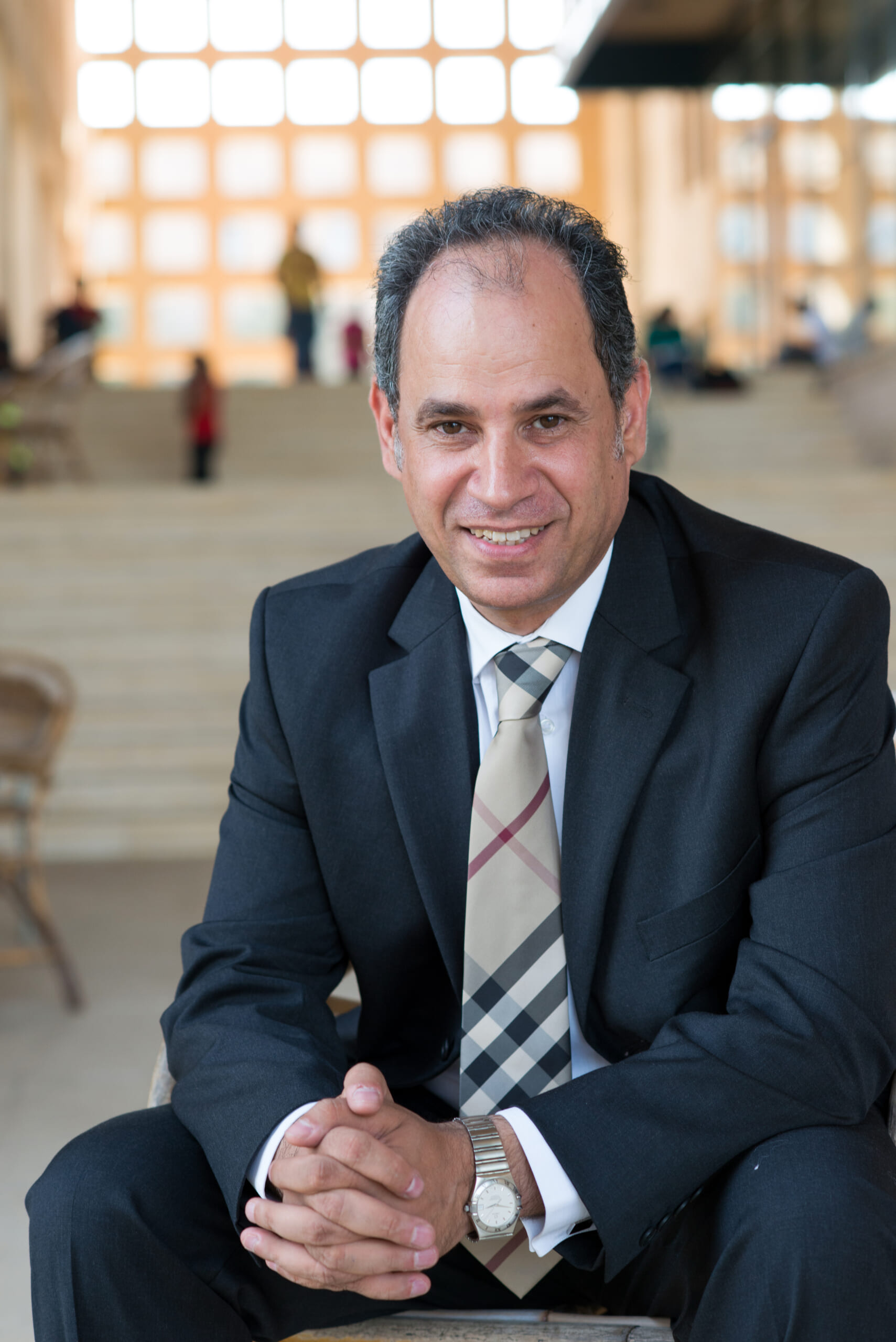
    May 29, 2022 – Higher Ed Without Borders a podcast series dedicated to education professionals worldwide announced its opening guest will be Dr. Ehab Abdel-Rahman, Provost of The American University in Cairo.  The series is hosted by co-founders of Edu Alliance Dr. Senthil Nathan in Abu Dhabi, UAE, and Dean Hoke in Bloomington, Indiana. The episode will be available on June 7th.

    Each episode is a half-an-hour-long conversation with international thought leaders that will enlighten and provide some new thoughts on critical issues facing higher education globally. You can subscribe to this free podcast series by going to Higher Ed Without Borders or searching for “Higher Ed Without Borders” on your preferred podcast app.

    Podcast Guest Dr. Ehab Abdel-Rahman

    Dr. Abdel-Rahman is the Provost of the American University in Cairo (AUC).  The university founded in 1919 has over 7,000 undergraduate and graduate students from over 60 nations. He is the Chief Academic Officer and provides administrative leadership and oversight for all academic components of the University. As Provost, he has twice led the re-accreditations of AUC by the Middle States Commission on Higher Education (MSCHE)  and the National Authority for Quality Assurance and Accreditation of Education “NAQAAE”.

    He also spearheaded the development of AUC’s Strategic Plan, and in 2020, AUC’s QS World University Rankings moved up 25 places, placing it amongst the top 1.5% of universities worldwide.

    Dr. Abdel-Rahman holds his Bachelor’s and Master’s Degrees in Physics from Helwan University in Cairo and his Ph.D. in Physics from the University of Utah.

    Future Guests Include

    • Dr. Allen Goodman, Chief Executive Officer of the Institute of International Education (IIE)
    • Dr. Frank Cooley, Chancellor Purdue University Global
    • Dr. Jim Henderson, President, and Chief Executive Officer of the University of Louisiana System
    • Dr. Gil Latz, Vice Provost of Global Strategies, and International Affairs for The Ohio State University
    • Dr. Mariët Westermann Vice Chancellor of New York University, Abu Dhabi

    Co-Host Biographies

    Dr. Senthil Nathan is Co-Founder and Managing Partner of Edu Alliance Ltd in Abu Dhabi, UAE.  Since the founding of the company in 2014, Senthil has been involved in numerous advisory & consulting projects for higher education institutions and investment firms.

    After spending a decade in the USA on research and engineering design projects, Dr. Nathan joined the Higher Colleges of Technology in 1993, the largest higher education institution in the UAE. He served in various positions and from 2006-to 2014 was Deputy Vice-Chancellor / Vice Provost for Planning & Administration. Dr. Nathan has been involved in numerous advisory and consulting roles in education/training & development engagements. In 2014 he received the Distinguished Alumni Award from the National Institute of Technology in India. He is the Chairman of the Board of Trustees for Livingston University in Uganda. Dr. Nathan is an accomplished speaker and presents at educational events worldwide.

    Dean Hoke is Managing Partner of Edu Alliance Group in the United States and Co-Founder of Edu Alliance Ltd. in the United Arab Emirates. Dean has decades of progressively responsible and visionary leadership roles in higher education, communications & online learning. He has led numerous initiatives that have created innovation & positive change in the higher education & non-profit sector. He has worked since 1974 in senior positions in higher education, broadcasting, and online learning.

    He participates in numerous advisory & consulting projects in the fields of international education, branding, business intelligence, and online learning. He is an active speaker and writer in the field of global higher education and distance learning.  Dean is a member of the Board of the American Association of University Administrators, the Franklin University School of Education Advisory Board, and is a member of the Board of Advisors for Higher Education Digest.

    Edu Alliance

    The podcast is a production of Edu Alliance an education consulting firm located in Bloomington, Indiana, and Abu Dhabi, United Arab Emirates. Founded in 2014 Edu Alliance assists higher education institutions worldwide on a variety of mission-critical projects. The consulting team is accomplished leaders who share the benefit of their experience to diagnose and solve challenges. They have provided consulting and executive search services for over 35 higher education institutions in Australia, Egypt, Georgia, India, Kazakhstan, Morocco, Nigeria, Uganda, United Arab Emirates, and the United States.

    A special thanks to:

    White Rabbit in Bloomington, Indiana is the production partner providing graphics and audio support.

    Higher Education Digest is the media partner for Higher Ed Without Borders podcast. The Digest is an independent Higher Education Portal and Magazine.

    Source link

  • Reading as a Listener | A Conversation with Amy Lombardi

    Reading as a Listener | A Conversation with Amy Lombardi

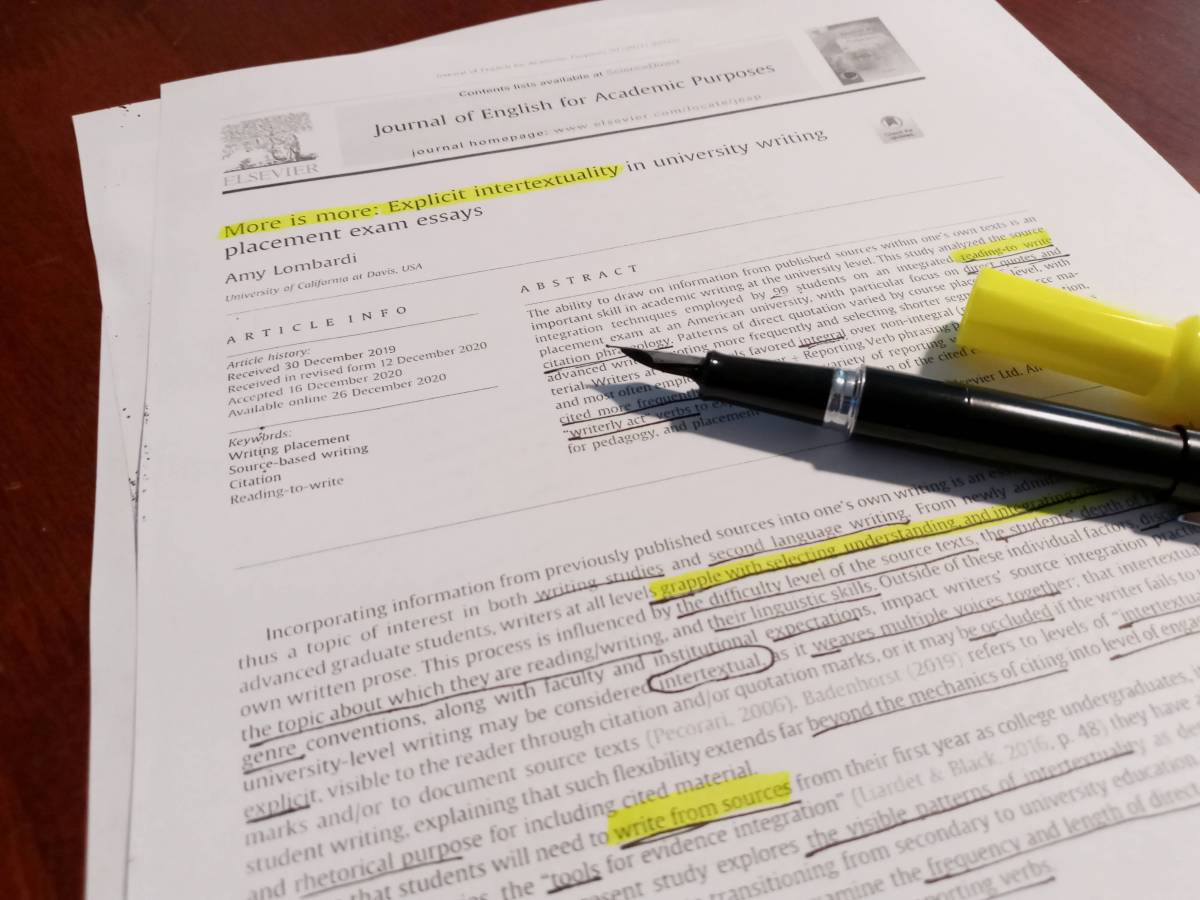
    “We need to learn to listen and read and interpret messages more thoughtfully,” Amy Lombardi told me. A doctoral student at the University of California at Davis, Lombardi says such skills are “undervalued and need to be taught more.” In our conversation recorded below, we talk about Lombardi’s recent article “More Is More: Explicit Intertextuality in University Writing Placement Exam Essays.” This study is an admittedly hyper-specific examination—looking at a corpus of exam essays written by incoming college students to see how they cite sources, including the phrasing (how many times do they say “says” vs. “believes” vs. “opposed”?) and punctuation (does all the mention of the sources get crammed into parentheses or are the sources actually named and discussed in the writing?). But in this very specific focus, this is still a study with bearing on a much broader topic: “receptive skills.” The phrases and punctuation that students use (or do not use) to cite sources are “the techniques they’re using to signal to the reader overtly that they’re bringing in information from other sources.” Looking at how students cite is thus a perfect site for examining larger skills such as “reading as a listener” and “listening to the text.” Isn’t writing often referred to as a conversation? Well, Lombardi notes, “these [details of citation] to me are the elements of that conversation.”

    Source link

  • HR and the Courts – May 2022 – CUPA-HR

    HR and the Courts – May 2022 – CUPA-HR

    by CUPA-HR | May 11, 2022

    Each month, CUPA-HR General Counsel Ira Shepard provides an overview of several labor and employment law cases and regulatory actions with implications for the higher ed workplace. Here’s the latest from Ira.

    Anxiety and PTSD Driving Increase in Both Accommodation Requests and Mental Health Discrimination Bias Claims Under the Americans With Disabilities Act

    The EEOC recently reported a substantial increase in the number of mental health-related accusations of employer discrimination in the workplace filed under the Americans with Disabilities Act (ADA). Mental health-related discrimination claims in the past year accounted for 30 percent of all of the ADA claims filed. That is a 20 percent increase in mental health ADA claims filed over the past 10 years. The rise is partially attributable to the pandemic. Anxiety and post-traumatic stress disorder (PTSD)-related claims appear to be driving the increase and account for nearly 60 percent of all mental health ADA claims filed in the past year. Anxiety and PTSD claims now amount to 17.6 percent of all ADA charges filed in fiscal year 2021 according to the Equal Employment Opportunity Commission (EEOC).

    The EEOC will likely be ramping up its publicity efforts emphasizing employer obligations to enter into the interactive accommodation request process with regard to employee requests for accommodation for mental health ADA claims.

    Maryland Legislature Overrides Governor’s Veto and Becomes Tenth State to Mandate Paid Family Leave Through a State Funded Program of Employer and Worker Payroll Taxes

    Maryland, plus the District of Columbia, recently became the tenth state to mandate paid family leave among all private sector employees through a program funded by employer and worker payroll taxes. The program will guarantee all workers up to 12 weeks of paid leave benefits annually (up to a maximum of $1,000 per week) for care for the birth of a new child, their own medical issue, a family member’s serious illness or military deployment. The benefits will begin January 1, 2025. The payroll tax to fund the program is split between employers and workers and is scheduled to begin October 1, 2023. The tax rate will be determined through a Maryland Department of Labor study. The state of Delaware is also considering similar legislation.

    Gay Married Couple Files Class Action Lawsuit Alleging Discrimination From Employer’s Denial of IVF Benefits

    A former gay male employee of the City of New York has filed a class action lawsuit alleging that the City of New York illegally discriminated against gay male employees in its denial of in vitro fertilization (IVF) benefits available to other employees. The plaintiff, who was an assistant district attorney, and his husband, filed the charge with the EEOC alleging a Title IV violation as well as violations of applicable city and state civil rights laws. They allege that the city has unlawfully denied IVF benefits to 100s of gay males who work for the city and have been denied the insurance coverage for these benefits (Benefits Law 360 4/13/22).

    California Legislature Considers Law to Protect Workers’ Off Hours Marijuana Use

    The California Assembly will consider passing a law protecting employees’ off hours marijuana use from the workplace or applicant discrimination. California lawmakers may fill in the gap that exists in 37 states plus the District of Columbia that have legalized medical marijuana use, and 18 states plus the District of Columbia which have legalized recreational use of marijuana. California and other states have long legalized marijuana for medical and recreational use but have not added its legal use to a protected class under the applicable state employer non-discrimination statute. This could be the first state to do so and the beginning of a growing trend.

    Second Opinion Not Enough to Discontinue Family and Medical Leave Act

    Discontinuing Family and Medical Leave (FMLA) solely on the basis of a contrary second opinion rendered by a doctor chosen by the employer is not enough under the FMLA to terminate intermittent leave status. A federal judge in Pennsylvania denied summary judgment to Pennsylvania State University and held that the employee may present evidence at her upcoming FMLA interference trial that the university unlawfully subjected her to a second opinion rendered by a doctor of the university’s choosing. The court held in such circumstances where there is a difference of opinion between the claimant’s doctor and the doctor chosen to review the situation by the employer, a third doctor acceptable to both parties must review the situation (Wert v. Pa. State Univ. ( 2022 BL 132451 M.D. Pa. No. 4-19-cv-00155, 4/15/22).

    The plaintiff had been on intermittent FMLA leave for about four months as her doctor certified she had been suffering from migraines and needed one day of leave per week. When her doctor upped her authorized medical leave to as many as four days a week the university consulted its own physician who disagreed with the employee’s doctor. The court held that in such situations the FMLA does not allow the employer to simply disregard the original doctor’s conclusions but requires the parties to agree on a third doctor to review the situation.


    Source link

  • CUPA-HR Participates in Hill Meetings With House Ways and Means Committee Member Offices – CUPA-HR

    CUPA-HR Participates in Hill Meetings With House Ways and Means Committee Member Offices – CUPA-HR

    by CUPA-HR | May 10, 2022

    Over the last month, CUPA-HR’s government relations team joined the American Council on Education (ACE) and other higher education organizations in virtual Capitol Hill meetings to discuss tax priorities for the higher education community. Meetings have been held with staffers of Members of the House Ways and Means Committee to advocate for tax policies and proposals to alleviate various burdens placed on students, employees and institutions alike.

    Specifically, the meetings have allowed the higher education community to encourage members’ action on the following issues:

    • Supporting the extension and expansion of the universal, non-itemizer charitable deduction;
    • Repealing the taxability of scholarships and grant aid, specifically for the Pell Grant and other scholarships for graduate and medical students;
    • Enhancing higher ed tax credits like the American Opportunity Tax Credit and the Lifetime Learning Credit;
    • Repealing the endowment tax;
    • Expanding and modernizing tax-free employer-provided educational assistance as granted under Section 127 of the Internal Revenue Code (IRC);
    • Reinstating advance refunding of tax-exempt bonds and expanding debt issuance with a Direct Pay Bonds program;
    • Creating “lifelong learning and training accounts” to provide workers and employers the opportunity to make tax-free contributions to pay for future training and credentials; and
    • Repealing the unrelated business income tax “basketing” provision.

    In June 2021, ACE sent a letter to House Ways and Means Committee and Senate Finance Committee leadership requesting these proposals and others be included in the American Jobs and American Families Plans. CUPA-HR signed onto this letter, along with several other higher education groups.

    CUPA-HR joined the most recent meetings specifically to advocate for the Section 127 expansion and modernization. Section 127 of the IRC is an educational assistance program that allows employers to pay or reimburse an employee tuition or student loan repayments on a tax-free basis up to $5,250. CUPA-HR previously advocated for the program to include student loan repayments, which was granted under the 2020 CARES Act and the Consolidated Appropriations Act of 2021, as well as to increase the annual exclusion cap of $5,250 to an amount closer to $12,000, to expand coverage to employee’s partners and dependents, and to expand coverage to gig workers and independent contractors, all of which were a focus during the meetings.

    CUPA-HR will continue to participate in these meetings and will keep members apprised of any legislative proposals that result from these meetings.


    Source link

  • Edu Alliance Launches New Podcast Series – Edu Alliance Journal

    Edu Alliance Launches New Podcast Series – Edu Alliance Journal

    May 9, 2022 – Edu Alliance announces the launch of Higher Ed Without Borders a podcast series dedicated to education professionals worldwide.  The series is hosted by Dr. Senthil Nathan and Dean Hoke co-founders of Edu Alliance. Each episode is a half-an-hour-long conversation with international thought leaders that will enlighten and provide some new thoughts on critical issues facing higher education globally.

    The series will examine critical issues in higher education that are common to universities throughout the world. The introduction episode titled “What Makes This New Series Unique?” Dr. Senthil Nathan and Dean Hoke, discuss why they created this international higher education podcast series.  

    The initial 13-part series will begin on June 7th and a new episode will air every two weeks. The free podcast series will be available on Spotify, Apple, Google Podcasts, IHeart, Deezer, Player FM, and others, just search for the phrase “Higher Ed Without Borders”.

    Higher Ed Without Borders is conducting a short survey asking members of the higher education community to suggest future topics and guests. You can participate by going to Podcast Topics and Guest Suggestions.

    If your organization wants to know more about how Edu Alliance can best serve you,  please connect with either  Dean Hoke in the United States or Dr. Senthil Nathan in the United Arab Emirates.

    The podcast is a production of Edu Alliance an education consulting firm located in Bloomington, Indiana and Abu Dhabi, United Arab Emirates. Founded in 2014 Edu Alliance assist higher education institutions worldwide on a variety of mission critical projects. Our consultants are accomplished leaders who share the benefit of their experience to diagnose and solve challenges. We have provided consulting and executive search services for over 35 higher education institutions in Australia, Egypt, Georgia, India, Kazakhstan, Morocco, Nigeria, Uganda, United Arab Emirates, and the United States.

    A special thanks to:

    White Rabbit in Bloomington, Indiana who is providing graphics, and audio support.

    Higher Education Digest is the media partner for Higher Ed Without Borders podcast. The Digest is an independent Higher Education Portal and Magazine.

    Source link