“Black History Month is an opportunity to understand the stories of Black Americans as something more than a history of racism and strife. It’s a time to recognize their undeniable impact on our country and culture.” – BestColleges.com
Since 1976, U.S. presidents have officially designated February as Black History Month. This month-long celebration of the historic contributions of the Black community is the legacy of historian and scholar Carter G. Woodson, who worked tirelessly to reform the way Black history is taught in schools.
Today, higher ed institutions recognize and honor Black History Month in myriad ways, but the work required to create and sustain equality, an inclusive workplace culture and a sense of belonging on our campuses is ongoing.
The CUPA-HR resources listed below provide insights and tools to help individuals and institutions build on their understanding of the issues and take action to bring about change. The current 21-Day Equity Habit Building Challenge, in particular, offers a one-of-a-kind opportunity to learn from institutions that are making meaningful strides in this work.
Participate in a 21-Day Challenge. The concept of the 21-day challenge was introduced several years ago by diversity expert Eddie Moore, Jr. to create greater understanding of the intersections of race, power, privilege, supremacy, oppression and equity. There are several challenges to choose from:
Watch the on-demand webinar, Measurements That Matter: Using HR Data to Advance DEI Goals. In this webinar, presenters from the USC Race and Equity Center shared their insights and strategies for increasing diversity in campus workforces. You’ll learn what types of data to collect, how to use that data to get a better sense of your institution’s workforce diversity gaps and how to provide equitable responses to any issues uncovered.
Add DEI resources to your toolbelt. Explore the Diversity, Equity and Inclusion Toolkit (CUPA-HRmembers-only resource). Here you’ll find resources, trainings, policies, forms and templates, and much more to help support your institution’s DEI efforts.
Watch the recording of the virtual town hall, Partners in Justice, We Will Not Be Silent!This discussion features voices from our higher ed HR community and explores what it means to move beyond existing DEI initiatives to create real systemic and cultural change at our colleges and universities.
Throughout the month, take time to dive into one or more of these resources (individually or with a group) and explore new ways to take action now and throughout the year.
Jane CoomberSewell started her website in graduate school, now it’s time for a re-design
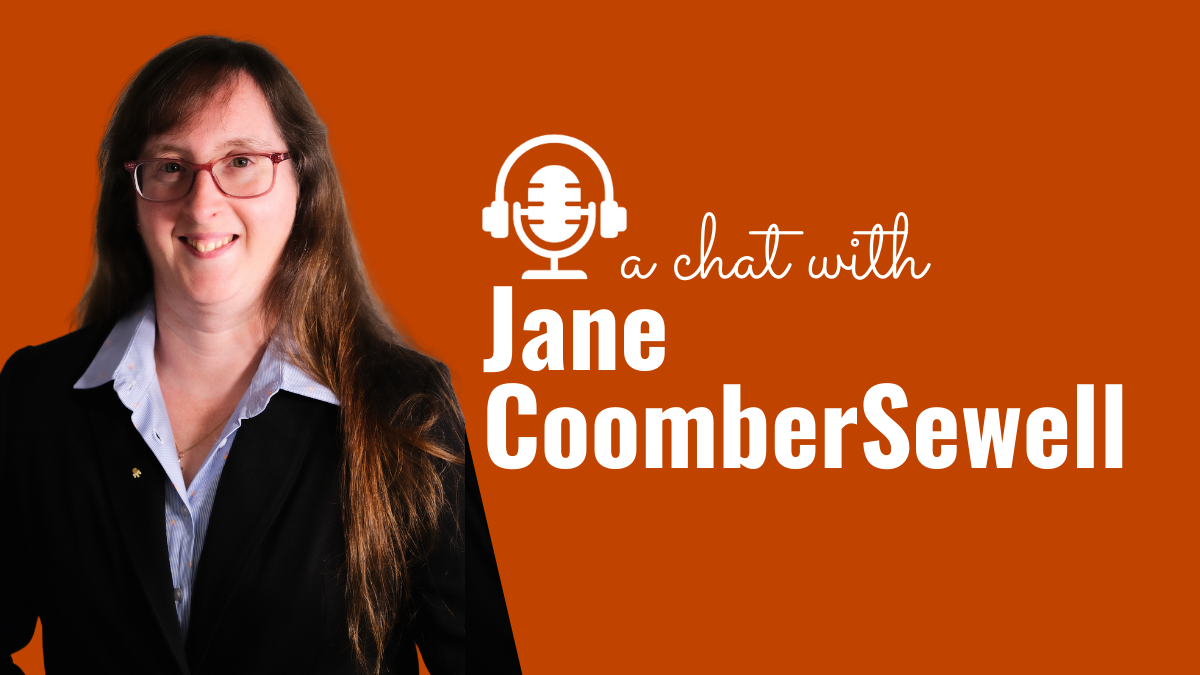
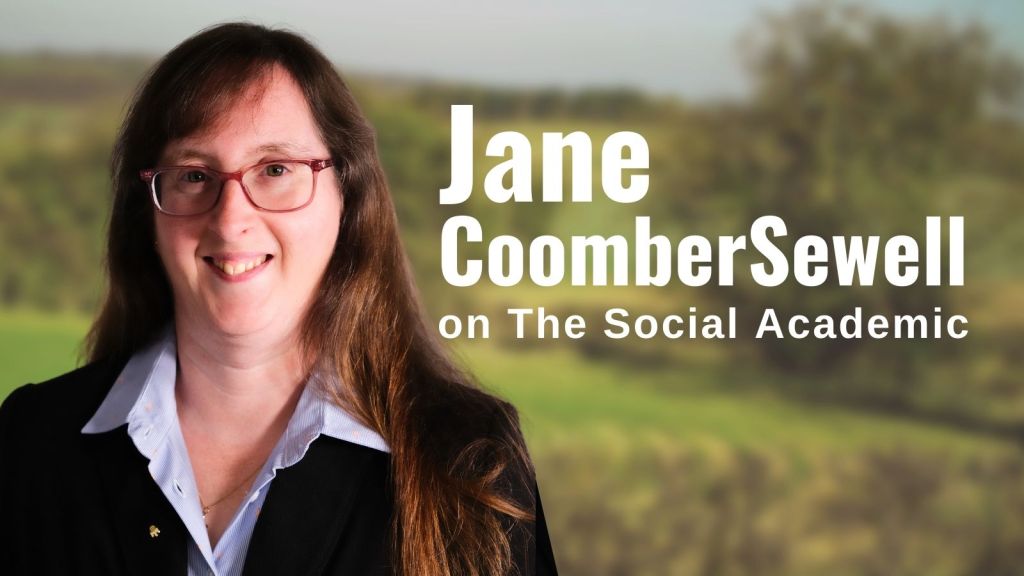
Meet Jane CoomberSewell, PhD in this featured interview. She’s been a business owner throughout graduate school. Jane recently completed her PhD in Media and Culture Studies, researching English entertainer Joyce Grenfell.
Jane’s website has always been helpful. Now as an independent researcher, her website has needed to change over time. That’s what this interview focuses on: how personal website can change over time to meet your needs.
I’m Jennifer van Alstyne. Welcome to The Social Academic blog, where I share articles and interviews on managing your online presence in Higher Education.
Whether you’re just creating your website, or need to re-design your outdated website, I hope this interview helps you. Jane and I talk about
Jennifer: Hello everyone. I am Jennifer van Alstyne. Welcome to the 1st featured interview of 2022. Today. I’m here with Dr. Jane CoomberSewell. We’re going to be talking about how a website can change over time.
Dr. Jane CoomberSewell created her website when she was in graduate school. And it’s been a journey to figure out exactly what belongs on the website, if the website is going to work long term. Now some changes are being planned, they’re ready to be made. So I thought this is a great subject to share with you.
Jane, it’s great to talk with you today. Would you mind introducing yourself?
Jane: I’m Jane. In the networking world in the United Kingdom, I’m now being referred to as Doctor Word Nerd. I run a business with my wife which has two parallel streams. Which is one of the reasons why the website is now websites. Joyce is an autism advocate and specialist.
Jane’s website was originally shared with Joyce. Now they will each have their own website.
Joyce’s one of the few people in the United Kingdom who is qualified to mentor autistic people who is herself autistic. While we’ve worked both work words, I am very much moving from
Proofreading
Editing
Student support
more and more into being a family and company historian and biographer. Because companies have life cycles and stories to tell just as much as individual’s do.
Jennifer: That’s right. And websites because they help us tell those stories to a wider number of people, it needs to be changed and updated with time as our needs change. And as the things that we want to share with those people change as well. So I’m really glad that we’re getting to talk today.
Can I ask, what was your graduate background and what did you do your PhD in?
Jane:So my, my PhD, it comes under media and cultural studies. But very broadly. It was a 4.5 year–cause I started off part-time and then went full time–adventure into the life of a lady called Joyce Grenfell who is a British entertainer. And really considering her as a sociopolitical commentator, hence the history side of it. And a feminist.
Was she a feminist? The answer being probably only with the small ‘f.’
But really looking at the power-knowledge dynamics that she explores in all her sketches which she wrote herself. Now I’m trying to turn that into a book for normal people.
Jennifer: You want to write a book about that for a general audience it sounds like?
Jane: Yeah. There’s 2 books at the moment. One is something that be useful to undergraduates, sort of a different spin on feminism. Feminism moves away a bit more from theory into lived feminism.
And then hopefully something very much more for the general readership.
I am the only person currently that has ever looked at Grenfell academically. There’s been journalistic approaches and there’s a very good biography by her goddaughter who is also a journalist. But that more general approach I think hasn’t been done yet.
Jennifer: Fascinating. Well, thanks for sharing that with me about your research.
Can I ask, is that something that shows up on your website?
Jane is working toward launching a new version of her personal website
Joyce: It is. I suppose there’s been 3, no 2.5 versions of the website so far. There was the one that we launched at the very beginning of my grad school days.
It was fine. Actually, when you look at my website or our websites, they don’t look very much different at all. The colors are the same. The logos haven’t changed.
We’ve updated the photos cause because you get fat, you get thin, you get fat, you get thin.
[The websites] They’ve become a lot more focused I think.
The 2nd version, which was launched about 18 months ago was about giving us a lot more on control our end. It’s when I started blogging.
I have a love-love-bit-of-hate relationship with blogging. In that I would love to spend more time doing it. And I think I could make it better work better than I am. But you just keep rethinking how you blog all the time.
I think that’s my big thing, not just with the blogging, but with websites is that it’s not something static. With the 1st version of the website, the major mistake we made was it was static. It didn’t change it. Didn’t have a blog element. And I may be looked at it once every couple of years. And I sent off a note to our web designer. She would charge me £15 to change 2 words on a page.
The way it is, or the way version 2.5 is that all the actual text and layout I can control myself. It’s only when we want to do more technically advanced things like changing pictures and adding new drop downs that I have to contact my designer for. And that’s the level I’m comfortable with.
Jennifer: And you like, you like being able to do some of those things.
Can I ask, did you work with a designer on version 1 of the website?
Jane: Yes and no. Accessibility was always important to us. I come from a disability services background. That’s what I did when I was a civil servant. For most of the times the civil service disparity employment advisor. I was always aware of making things accessible in terms of scaling font and it still looking good.
We had a young designer to do our logo for us. And I love our logo. Would I change it? Probably not. I might tweak it a little bit, but I don’t think I’d actually change it.
But all the text I’ve always written. Partly because I’m quite…Okay. Yeah, let’s be honest…quite arrogant about my use of English language.
Search engine optimization for academic websites
Jane: That has its downside. Because of course, search engine optimization (SEO) wise, I dislike…balancing got to get 5 versions of the keyword into the box pick-it-up vs. flow. I find that a tricky balance. And getting all your metatags right. I find all those things I find quite tricky. So sometimes I will get a bit of help on that side of it.
Jennifer: For some of our readers, they might not know what SEO is. SEO stands for search engine optimization. It’s something that people with websites do in order to help more visitors actually find their page. There are specific keywords or phrases that you might go search for on Google.
If those phrases or keywords match up with the phrases or keywords on Jane’s website, for instance, it will help you find her website.
Jane is saying that it’s difficult to balance the number of keywords she puts into the copy she writes for her website and actually writing it. I think that’s something that many people with websites struggle with.
If you’re brand new to websites, this is your very first website, you might not be doing so much SEO work as Jane is. But you do want to have keywords, like your name in there.
Being able to put your name on your website is so important for helping people find it.
Jennifer: Thanks, Jane. I appreciate you bringing that up.
Jane: I think there’s also something really important about keywords in that. Often the keywords we end up having to use to get found and not words we’re comfortable with.
My wife’s previous business was that she ran a telecoms billing platform. She wanted her website to say ‘value.’ Okay, but people don’t type into Google value. They type in ‘cheap.’ So she had to change this whole page…to ‘cheap’ to get her SEO to work, which is not the image she wanted to portray. But it’s what she needed to get people to then come and have that conversation with her.
Jennifer: Yeah. I think with academics in particular, keywords might even be a little bit easier than that because they’re looking for a really specific audience. So if your research is on a specific type of microbiology, for instance and you include that phrase in there, it’s pretty likely to, you know, show up in Google.
It’s definitely harder when you’re looking at a keyword that’s as general as ‘value’ or ‘cheap,’ because there’s only one word. It can make a really big difference in the types of visitors you get.
My recommendation for anyone reading is try to be really specific when you’re thinking about the keywords that are going on your website.
Remember, you’re looking for a specific audience. In this case, you may not be needing money that’s tied to that. Maybe you’re just looking for readers for your publication. So there’s lots of options for keywords.
Jane: Yeah. Yeah. That’s true. And it’s very industry specific. You really have to think through a strategy. Which is why it’s useful to use a designer sometimes.
It’s time to update an old or outdated personal website
Jennifer: Tell me more about what your old website was like. It sounds like you really didn’t like that you couldn’t do update yourself. And that you had to pay for updates. What else didn’t you like about it?
Jane: I think it was mainly just the staticness of it. It was very difficult and expensive to keep it current as you know. Obviously when you start a business, especially now, you can’t start a business without a website.
But in those first 2 years–I mean, I think businesses are always evolving and changing–but in those first 2 years, that’s probably when they move most.
Therefore, if you’ve constantly got to be sending information to somebody else to tweak your content…
The layout was very current, which meant of course, it very quickly became very dated because just like clothes, just like hairstyles–there’s style, and then there’s fashion.
Jennifer: Hm.
Jane: Because I don’t do the graphic aspect of it, I find it very difficult to pinpoint what that is. But it’s things like a Hermès scarf is always stylish. There are other things that are very fashionable for a very short period of time.
I think there are elements of website design, which I hope we’re getting now, which is much more about a classic style. While still being able to bolt on [things like] on Joyce’s site, she’s got the live transcription so that she can vlog rather than blog which connects in with the fact that she’s dyslexic. When she vlogs it will transcribe it live. Speaking as somebody who does audio transcription, it’s good. It’s still not as good as me sitting there and doing it for her will ever be, but it’s a lot quicker than me doing it. Cause it does it live.
Jennifer: So live transcription is one of the ways in which your separate websites revisioned the blog that you were, you were both working.
Jane: Yes.
Jennifer: So you still blog. And [Joyce] vlogs.
Jane: Yes. Well, she’s learning to vlog.
How you blog on your personal website may change
Jane: It’s one of those things like the blogging. I always feel that I’ve got more to learn and I could always do more of it.
And as a writer there’s a great discipline in blogging because it keeps you writing and it keeps the ideas flowing.
Jennifer: Right.
Jane: Often, I don’t know about you, but the ideas always come at the most inconvenient moment, you know? When you’re in the car I can’t really scribble an idea down. And then unless you have something like Otter AI on your phone so you can give yourself a quick note, the idea has gone.
Jennifer: I feel like I have a lot of blog ideas. I keep a list of them on my computer. And then I have time to write a lot of them. [Laughs]. That’s my problem.
Jane: When we first relaunched a new [website], we were religious. One of us blogged every single Monday. But we’ve been so busy. I’ve been so busy writing books. I haven’t had the emotional energy, I think, to blog as well.
Jennifer: That’s interesting. Can you tell me a little more about that? What do you mean by emotional energy to blog?
Jane: There are lots of different approaches to blogging, aren’t there? You can be your intellectual expert, or you can be a raconteur. Cause it’s all about engaging with your particular audience.
Because particularly when I’m doing the family biographies, people are telling me things. It’s not supposed to be a therapeutic thing, but often it becomes therapeutic. Often people will tell us things–cause Joyce does the interviewing and I do the writing–very personal and perhaps stuff they haven’t talked about for years.
So I want my blogs to be quite open to. And I often reflect on something that has happened during the week. If I have been very busy writing, I perhaps haven’t had time to process that myself.
I don’t feel I can blog about it until there’s a little bit of distance.
I think the last blog I did was about the phrase ‘self care.’ I really struggle with the phrase ‘self care.’ I think being middle-aged and British…And anything foregrounded with self gets linked just to words like ‘selfish,’ which is not how I feel about it but it’s kind of like a kick reaction. It took me ages to write that blog because I had to kind of balance it out.
And I think if you blog from the heart, which is what I try and do because I want our customers to know us because we feel very strongly that integrity is something that is impossible to attain, but must be your strongest goal. Sometimes those blogs take a lot of emotional energy.
When I used to copywrite blogs for another company, you know, I can churn out 500 words on why certain photocopiers are the best on the market. Really I can probably do that in about half an hour.
And the other thing I find quite time consuming when I’m blogging is sourcing the illustrations. Cause I always try and put in a couple of irrelevant illustrations.
And I think it was you or somebody in the same meeting we met at who told me about Unsplash.
Jennifer: Yeah!
Jane: And that has made that a lot easier, but actually again, we’re back to keywords. Finding the right keywords to get the image you want…
Jennifer: It can be difficult [chuckles].
Have a personal website you can control
Jane: It’s a constant learning thing, isn’t it? I think that’s that’s the biggest message is if you can always have an element of your website that you control. Even if it’s not the techie stuff. Because it’s an absolutely live document. You will never finish your website.
Jennifer: That’s right. That’s what I teach all of my [website design] clients. The process that I worked through with them, you know, we go through an intensive planning process for their websites to figure out what they actually need.
Then we sit down and we create the copy for the website or they do it on their own. Once that copy is placed, I actually teach them how to
update pages on our website
add new pages
navigate the backend so that they can find what they’re looking for
And they get a recording of that so that they can do it themselves afterwards.
I actually don’t do long-term management for websites that kind of nickel and diming that you were talking about changing two words for £15 pounds, I don’t do that. I want to help as many people as possible. That means that I can’t manage websites long-term.
I really need the academics that I work with to be able to do some of that work themselves. So I think that’s really important having some of that control yourself.
It sounds like it’s making a really big difference for you on your website.
Jane and Joyce used to share a website, now they’ll each have their own
Jane: I also find it much easier to help Joyce. So what we’ve done now is we’ve separated [our websites]. I’ve retained CoomberSewell.co.uk.
We’ve done little things so some of the pages mirror each other totally. And others, obviously her autism pages are a lot more detailed than mine. My pages is like a condensed version on autism, but it links to her website.
So silly things like I know for a fact at the moment because I’ve spent more time on her website than mine, her price list for proofreading as much more up to date than the one on my website, but I’m the one who does the proofreading!
In fact I’ve got a list of jobs to do at the weekend. And it’s this knowing that I was going to talk to you. That led to #6, being “Update price list.”
Do this when preparing to update your old or outdated personal website
Jennifer: It’s good to actually create a list like you’re doing right now. Like what are the things that I need to change on my website?
If you are approaching a website update project, I do recommend make a list of all the things that you
don’t like about your website
do like about your website
things that you need to change.
Then once you have that list, go ahead and schedule it in your agenda.
Maybe you don’t have time to accomplish all the things on your list right away, but if you space it out over time, you’re going to get those updates made.
You don’t want to wait 1-2 years between updates on your website. Things get outdated more quickly than you think.
Jane: And that is very, very true. I also think it’s good to have an honest friend. A really honest friend. I had a very amusing phone call today, a video call actually. My longest term friend, we’ve known each other since I was 5 months old, contacted me today on video call.
She’s just about to launch a professional photography website. The one thing that she’s not good at is photos of herself.
And whilst, perhaps that was a little over blunt, it did help her choose the pictures that she was going to choose. And acknowledge the fact that it’s only going to be a holding picture till she can get some new ones done.
Jennifer: Yeah. That’s important. And having that honesty and that rapport with you, it helped her move forward in her thinking of it.
Jane: I think particularly on the visual side. And on the text side, because I mean, as a proofreader, there’s one rule that I have. It’s just proofread to proofread thyself. Because it is almost impossible when you’ve written something and edited it and re-edited it…
I mean, you know, where I’ve been sort of trying to convert my, my thesis into a book, I am aghast at the mistakes have slipped through as I’ve put it to bed for 6 months and then come back to it.
Really, did I say that? Was I on said drugs at the time?
Jennifer: [Laughter]. And you’re a professional, you’re a proofreader.
Jane: It’s the hardest thing in the world to proofread your own work.
Jennifer: That’s so true.
Jane: So having a trusted friend who is good at being straight, but also kind is really, really important.
I think in business, we get very hooked up on should I be paying for this? Should I be paying for that? 99.9% of the time, I would say, Yes. But occasionally it’s okay, especially if it’s just a quick check to ask a friend for a favor because this guarantee there’s a bit of skills barter that can go on.
Jennifer: I think so. That I explain it to my clients is that your friend, they love you and they care about you. They’re actually going to be reading and examining your website with greater depth than your average visitor.
They’re going to stay on it longer.
They’re going to read into it more, try to understand it more so that they can talk with you about it. And that’s more than your average website visitor is doing.
If your friend is telling you that something’s
Confusing
Distracting
That it shouldn’t be there
well that’s something that you should listen to because other people aren’t even going to give you as much time or attention as a friend is. So it’s worth listening to what they have to say.
You don’t have to, you don’t have to respond to it. You know, you don’t have to do it, but getting that opinion is so helpful.
Do it while you remember (or write it down so you don’t forget)
Jane: And I think, I think also we’ve talked about planning and making sure we prioritize, but I think there’s also some times merit in striking while the iron is hot as well.
I mean a year ago you said to me, “Jane, you need to make more of the fact that your ‘bilingual.’” Do you remember this conversation? It was, it was a, it was a comment about my proofreading, the fact that I’m being of Canadian heritage, that I can proofread in
Canadian English
American English
English English
You said you need to make that much clearer on your website and you should blog about it. I still haven’t done it because I didn’t do it in that moment. And if I had done, it would have been very much more impactful.
I am going to get round to it. I am going to blog on it, but I don’t think it will be as good a blog as if I’d done it within 24 hours.
Jennifer: Oh, I don’t know that that’s the case. It’s possible that even that you’re thinking about it for the last year is going to add even just one sentence to that blog that is emotionally in a better space now than it would have been then.
So you never know that. I think it’s totally going to be awesome when you do it now.
Jane: Interestingly though, I have remembered to use the phrase when I’ve been talking to people.
Jennifer: Wonderful.
Jane: And I think I’ve pretty much got every American PhD student at my university now sending me their theses for proofreading.
Jennifer: I love that. I love that. I remember that conversation so well, and you were telling me about all the amazing things you were doing. And I was like, oh, I just read your website and it didn’t say that. Like, that was so awesome how you have a skill that really is going to help people that are English language speakers bet the proofreading that they need.
I also think that the way that you go about updating your website to meet your needs is so awesome. It sounds like version 1 and version 2 were both joint websites. And now version 2.5 is like separating that a little bit.
But what it does is it gives you each more space. So it’s like your website is growing. It’s like your needs are growing, your website’s growing and all of that copy, all of the things that you know, can be updated, hey–everything gets updated with time. That makes sense.
Jane: I think it also provides a lot of clarity. We were trying to be all things to all people. And although we work together and our sides of the business compliment each other. They’re not the same.
Joyce, certainly couldn’t do what I do. I know, I don’t have the patience, I think, to do what she does.
At the moment, they’re very similar. I’ve done a way updates, but I think over time as she grows the vlogging side of it…I’m teaching her how to edit. It’s going to be hysterical cause she’s even more of a Luddite than I am…And as I continue to blog, I think it will give me the room.
How Jane shared her thesis and publications on her personal website
Jane: One of the other things I did based off the conversation you had with me is that I changed one of the pages entirely. You said to me earlier, I’ve just remembered this, you know, is your thesis on your website?
Well, I took a sidebar. And that now has every journal article every, every time I’ve contributed to a podcast. It’s all on there. There’s a publication sidebar. So you don’t even have to go to a separate page for it.
If you’re interested in having me write a biography for you. You can get a sample of my writing by clicking on the sidebar. It was actually me being tight because I didn’t want to pay to have another page created. Actually it works really well.
Jennifer: Well I love that innovation can cause you to adapt. It sounds like you didn’t want to pay for another page so you needed to find another solution and that creative solution ended up working out for you.
That’s what websites are all about: experimenting to see what’s going to work well for you long term. And if it doesn’t, well, that’s something that needs to be changed.
I think that adapting with your website, making room for it to grow, it’s not going to happen all at once.
Jane: Right.
Your website will change, and that’s a good thing
Jennifer: You’ve had now 2.5 versions of this website, and you can still see it changing in the future. So for anyone who’s reading this interview, I definitely want to let you know that your website, it’s probably is going to grow or change over time.
Even if he just have a simple 1-page website that has your bio and a photo on it. Those elements are going to change. Your bio will be updated over time. Your photo. You’re going to want to change that over time so that it looks like you.
I think that being open to that is such a great quality to have when you’re building a website. And when you’re approaching a big update.
Jane, I just want to thank you so much for your candor in talking about how that website change has been for you.
What’s it like to work with multiple designers on your website over the years?
Jennifer: I want to ask a little bit more about what it’s like to work with someone since you worked with, it sounds like multiple designers on your website.
Jane: Two, yeah. So we had our original website designer. There were some design elements that came from other people, but as such, we had our original website designer and then we’ve got our current website designer.
And I think there’s something really important to say about I current website designer, not so much about his technical skills as a designer, although they’re very strong. It’s about personality matching. You know, particularly for, for joy as an autistic.
Choosing a website designer
Her technical skills are very different from mine. Actually, they’re great, but she worries about them. And so we needed a designer who got how you talk to this person on the spectrum. Because actually once you’ve met one person on the spectrum, you’ve met one person on spectrum.
A lot of the problems with our previous version is that I’m not convinced our previous designer was quite on particularly Joyce’s wavelength.
From that point of view, I would encourage people that if you feel like somebody is talking a load of jargon and your constantly running to catch up, they’re possibly not the right designer for you.
Jennifer: Oooh, that’s so important. So picking a designer is not just about budget. It’s not just about location or what their portfolio is. It’s also about how they get along with you and how well you communicate with each other.
Jane: I mean after all. I think we both know that you can go and buy a product. You could go buy website product. Most of my Canadian and American friends tend to use SquareSpace. If they’re building it from scratch and over here, it will be something like GoDaddy. But ultimately if you’re going to invest in that tailored service…People buy people. They don’t buy a product. They buy people. So get to know your designer.
I am fortunate in that our designer is the partner of a friend of ours. And he will come and train Joyce in exchange for a handmade pizza. But, from that point of view, it is worth spending the time not just getting quotes, not just finding out what particular language they’re skilled in, or design they’re skilled in…
You know, have a coffee with them if you can in these days of masks. Take your time. It might not be a big investments in dollars or pounds, but it’s a big investment in terms of your business. Or your future in terms of the academic reputation that you want.
So take your time. Yes, you can change later on. Because we’ve been talking about keeping the websites updated, constantly.
But actually, if you’re going to move that whole relationship to another designer, it is a bit of a hassle. You know, getting them to shift domain names from one host to another, it’s not a big job, but it is a hasley job. So take your time picking your person.
Jennifer: Oh, well, wonderful advice. You know, meeting someone in advance can make a whole difference in how you understand them. Seeing their facial expressions, seeing how they respond to questions or how they ask questions of you can make a big difference for people’s comfort levels.
Thank you so much for sharing that with me.
Jane’s new article on Sara Paretsky’s Guardian Angel
Jennifer: Speaking of academic reputation, you were telling me about a new article that you have out about your favorite lockdown read. Tell me a little bit more about that.
Jane: Oh, that was wonderful. I think that again is something I’ve learned about academia this year. I’ve written or half written or even sent off terribly intellectually worthy articles. And they tend to fall over.
I’m often always telling my students, don’t overcomplicate things. Go with your first instinct. Build on your first instinct. If you’ve made the right choices, it will flow.
I just happened to see this call for paper and I drafted out this article in about 40 minutes.
Jennifer: Pretty quickly.
Jane: It didn’t even have a single edit on it. Because it was passionate. I’m probably underselling my skills here because that’s what I do.
It’s a piece in the South Central Review. They did a lockdown special. I think they chose 25 articles in the end. They ask people to write on their favorite lockdown re-read. I chose a book by Sara Paretsky.
Jane: To be honest, I could have chosen any book by Sara Paretsky because I love them all. It was a joy to write, and I think that’s what comes through in the reading of it.
My major message from it was about independent researchers. I find Paretsky a very brave writer. She’s always gone with the flow and she’s changed publishers when she’s needed to. If she believes in something, she goes for it. Even if people tell her not to.
And I think to be an independent researcher, which is what I am, and to an extent what you are…
Jennifer: That’s right.
Jane: …is a brave place to be. And I think academia needs to take us a little bit more seriously. Because actually for us to stick our necks out with no institution backing us, with no access to other funding. You know, there used to be this attitude and I think there still is this attitude that if you’re not sponsored, you can’t be any good. But actually I think it’s the other way round. I think if, if you survive without an institution backing you or without permanent post, you are brave. You actually you’re showing your metal.
I was self-funded through my PhD. You don’t set out to spend £25,000+ unless you’re sure you can produce the goods or at least you’re brave enough to find out.
I think that was my big message in this article is academic world, you’ve really got to stop underestimating and putting barriers in the way of us independent researchers.
I’m doing a piece of research next week which I feel rushed on because it’s the last piece I was able to get ethical approval on before I finished my PhD.
I have more options in the arts than my wife does in the sciences because there are publications who will take me without being without ethical approval as long as I’ve gone through my own kind of ethical quality assurance.
But stop putting barriers in the way of us independents, because we’ve got plenty to say. Because we’re independent. Sometimes we can do things that you can’t.
Jennifer: I think that academia does need to listen up to independent researchers and where they’re at because so many PhD students that are graduating these days will end up as independent researchers in some way or another.
There are not enough teaching positions to go around at the university level. And the adjunctification of the university is prolific. And it’s and it’s not changing. It’s not going to go down. I mean, I hope it does, but that’s not what the trends are saying.
We do need to have more conversations like this. We do need to talk about things like open access and journals accepting independent researchers and appreciating the contributions that they make unfunded, frankly.
I’m so glad that this kind of lockdown reread inspired you to just kind of jump into a new article and get it out into the world.
Which book did you choose by the way?
Jane: I chose Guardian Angel (1992).As I say, I could have chosen any. There was another one I didn’t choose because I realized the specific remit was what’s your favorite re-read? I could have chosen one of the others.
But I realized it was my favorite purely because I’d won my copy in competition.
And bless her, Sara Paretsky had posted to me herself. And being daft enough bless her—sorry, Sara—to leave her home address on the envelope.
Which I promise you faithfully, Sara I’m not going to come and stalk you. But I do still have the old envelope and it is very carefully preserved.
Jennifer: That’s sweet. It meant a lot to you. And that’s why you felt so strongly about the book.
Well, the people who ran the organization or the competition for that book are like, “Yes! Our competition really inspired someone to love this book.”
Jane: I really hope. Yes, I really hope so.
Jennifer: Well, Jane, thank you so much for our conversation today. I have really loved talking with you about your website and how it’s changed throughout the years.
Is there anything else that you’d like to add before we wrap up?
Jane: No. I think I would just, just underline: your website is never finished and that’s okay.
Jennifer: Wonderful. Well, thank you so much for joining us today, Jane! We’ll see you again in 2022. Bye, bye.
Jane: Lovely. Thank you for inviting me, you take good care.
Having had a previous incarnation as a Civil Servant and public sector manager, Jane CoomberSewell(@JaneCoSe) is an independent researcher/biographer based in Kent, South East England. Jane completed her Doctorate in 2020, with a thesis re-examining the socio-political contributions of monologuist and entertainer Joyce Grenfell. Jane’s research interests include reception theory and female-led detective fiction.
Jane is an advocate for change in the way independent researchers are viewed by the establishment, believing that those who succeed in publication without the support of a University may be some of the strongest researchers in their field, certainly in terms of determination. When not working on one of the several biographies and other research projects she has under way at the moment, Jane can be found walking with her wife Joyce, an autism advocate or working in the garden to progress the couple’s drive for self-sufficiency. This may or may not include having lively conversations with her chickens about the history podcasts she plays to them.
In a recent members-only article from the winter issue of Higher Ed HR Magazine, Britni Elder, associate vice president for human resources and risk management at the University of Central Arkansas, shared tips and resources higher ed HR practitioners can tap into to get ahead of the resignation curve and not only hold onto employees, but keep them engaged and moving up within the institution.
Address employee discontentment at the manager level — Managers with poor people skills can lead to unhappy employees, and ultimately, more turnover within the institution. HR must ensure managers are equipped to manage their teams well and to help each team member reach their potential. This is a great opportunity for HR to partner with upper-level management to teach new managers the skills that will help them be the best leaders for their teams, not just managers.
Educate employees about total compensation — Oftentimes, employees leave for a bigger paycheck only to find that the base pay is better, but the benefits at the new job don’t compete with those of their previous job. When HR informs employees about total compensation (the tangible and intangible benefits offered by the employer), it enriches the employee decision-making process. They have the tools to really see when better pay is better pay, not just better base pay.
Prioritize well-being check-ins — Sometimes, employees are unhappy, and one way they think they can fix it is to change jobs. Unfortunately, the urge to change jobs may be only a deflection of deeper issues. HR can help in this area by keeping mental health resources and access to counseling opportunities in front of employees. Encourage managers to make time for intentional check-ins with direct reports.
Build a path for employees to reach their full potential — Focusing on what’s next for employees can open their eyes to the opportunities right in front of them rather than searching for something else outside the institution. HR should initiate conversations and ask employees about their career goals and construct a path to help them get there. Sometimes all it takes is a conversation to get things moving.
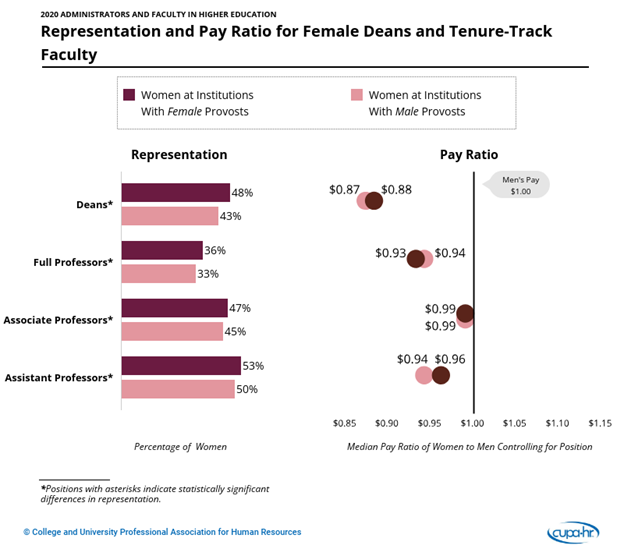
New research by CUPA-HR has found that U.S. colleges and universities with women presidents or provosts have higher representation of women in administrative, dean and faculty positions than institutions led by men. The study also found that colleges and universities with women presidents have higher pay for women in administrative positions than institutions led by men. These positions tend to be pipelines for the senior-most executive positions in higher ed, which underscores the significance of the findings.
Women Administrators Pay and Representation in Institutions With Female Presidents
Findings show that institutions with female presidents have a higher percentage of women in all administrative categories — senior institutional officers, institutional administrators and heads of divisions. Although female administrators are generally paid less than male administrators in the same positions regardless of the sex of the president, female senior institutional officers, institutional administrators, and heads of divisions are paid more equitably at institutions with a female president than at institutions with a male president.
Female Deans and Faculty Pay and Representation in Institutions With Female Provosts
Institutions with female provosts have a significantly higher representation of women in dean positions and in all faculty ranks. Provost sex does not have a strong or consistent impact on pay equity for deans and faculty; however, it is worth noting that better representation at higher faculty ranks and in dean positions has an impact on pay, as these positions make higher salaries.
The representation of women drops with successive faculty ranks (from assistant to associate to full professor). These promotions represent the few times in a faculty member’s career when appreciable salary increases are granted. If women are not being promoted, they are not receiving these pay raises. In addition, those in dean positions are generally promoted from senior faculty ranks. Therefore, if women are not adequately represented in senior faculty, they will not have the same likelihood as men of being considered for a higher-paying dean position.
To sum up the findings, higher ed institutions with female executives have better representation of women throughout their institutions in positions that: a) are paid higher salaries and b) serve as key points in the executive leadership pipeline. Jackie Bichsel, CUPA-HR’s director of research and co-author of the new report, noted that, “In an era where institutions are adapting to shifting workforce expectations, adjusting to continuous decreases in budgets, contemplating changes in enrollment, addressing challenges of recruitment and retention, and rethinking their mission, more openness to change and less tolerance of risk may be just what is needed to navigate this new landscape. Providing more (and more equitable) opportunities for women to advance within higher education seems an obvious path forward in this navigation.”
On January 13, the U.S. Supreme Court blocked enforcement of the Occupational Safety and Health Administration (OSHA)’s Emergency Temporary Standard (ETS) that would mandate vaccines or testing requirements for employers with 100 or more employees, but reinstated enforcement of the Centers for Medicare and Medicaid Services (CMS)’s mandate that would require COVID-19 vaccinations for healthcare workers working at facilities that participate in Medicare and Medicaid.
In December, the U.S. Court of Appeals for the 6th Circuit vacated the 5th Circuit Court’s nationwide emergency motion to stay the OSHA ETS, paving the way for OSHA to continue enforcement of the ETS vaccine and testing requirements. The decision led several business groups and Republican-led states to file emergency applications with the Supreme Court seeking to reinstate the stay. The Supreme Court heard oral arguments on the OSHA mandate on January 7, leading to the court’s decision to block the vaccine and testing mandate.
Additionally, the Supreme Court heard oral arguments on the CMS healthcare worker mandate on January 7. They ultimately ruled in favor of allowing the CMS healthcare worker vaccine mandate to take effect while the mandate is being litigated in several U.S. district courts and circuit courts. The CMS mandate was previously stayed in 25 states after four lawsuits were filed against CMS in district courts in Missouri, Louisiana, Florida and Texas.
Though not heard or ruled on by the Supreme Court, the federal contractor vaccine mandate, which requires all federal contractors to mandate COVID-19 vaccinations for their employees, remains stayed by the U.S. District Court for the Southern District of Georgia, which issued a nationwide preliminary injunction against the mandate on December 7. The Biden administration has appealed the decision to the 11th Circuit Court, which has since upheld the lower court’s injunction but has not yet ruled on the legal merits of the mandate. Litigation continues for this rule in the 11th Circuit Court.
The Supreme Court’s decisions bring the rules back to the lower courts to continue litigation on their merits; however, the recent decisions do signal how the Supreme Court would likely rule on the merits of the cases if they are once again appealed to the higher court.
CUPA-HR will continue to keep members apprised of any legal updates as they relate to the fate of the OSHA ETS, the CMS healthcare vaccine mandate, and the federal contractor vaccine mandate.
Each month, CUPA-HR General Counsel Ira Shepard provides an overview of several labor and employment law cases and regulatory actions with implications for the higher ed workplace. Here’s the latest from Ira.
NCAA Loses Appeal For Expedited Ruling Denying Student-Athletes’ Minimum Wage FLSA Claims — Claims Move to Federal Court Trial
The National Collegiate Athletic Association (NCAA) was denied a request or fast track consideration of its appeal of an adverse trial court order to proceed to trial over student-athlete claims that they are covered by the Fair Labor Standards Act minimum wage and overtime rules as they are employees. The trial court judge ruled that the question of whether the student-athletes are employees is a mixed question of law and fact, which should go to trial. The judge concluded that the NCAA can appeal an adverse trial decision after trial.
The NCAA countered that similar suits in the U.S. Appeals Seventh and Ninth Circuits have been dismissed. The NCAA argued that appeals courts in the Seventh Circuit (covering Illinois, Indiana and Wisconsin) and in the Ninth Circuit (covering California, Oregon, Washington, Nevada, Arizona, Idaho and Montana) both held that the NCAA is not the employer of student-athletes. In rejecting the NCAA’s interlocutory appeal, the Third Circuit (covering Pennsylvania, New Jersey and Delaware) ruled that the NCAA failed to meet its burden in showing exceptional circumstances justifying departing from the normal policy of delaying appellate consideration until a final judgement is issued.
EEOC Issues “Guidance” That COVID-19, Under Certain Circumstances, May Be a Disability Covered and Protected By the ADA From Discrimination
The Equal Employment Opportunity Commission (EEOC) issued “guidance” in mid-December stating that, in certain circumstances, COVID-19 may be a disability covered by the Americans With Disabilities Act (ADA), making it illegal for employers to discriminate against employees with COVID-19. The EEOC chair pointed out that employees with disabilities resulting from COVID-19 may be eligible for a reasonable accommodation. Depending on each employee’s individual circumstances, an employee recovering from COVID-19 may meet the ADA’s definition of a disability as a mental or physical impairment that substantially limits a major life activity, or an employer’s perception that the individual has a disability.
Someone who has COVID-19 and experiences multi-day headaches, dizziness and brain fog attributable to COVID-19 is an example of an impairment covered by the ADA. However, the EEOC pointed out that not every person with COVID-19 will qualify as disabled. For example, if someone has COVID-19 and is asymptomatic or has mild symptoms similar to the flu that lasts only a few weeks, with no other consequences, that person would not qualify as disabled. The EEOC suggests an individual assessment of each employee with COVID-19 might be necessary to determine whether it is a disability.
State and Local Ordinances Regulate the Use of Artificial Intelligence/Automated Job Applicant Screening Tools In Screening Job Applicants
New York City (NYC) just established one of the broadest new laws concerning the use of artificial intelligence tools to screen job applicants by NYC employers. The effective date is unclear and local counsel should be consulted on the new regulations in NYC. Under the NYC law, such artificial intelligence tools will be banned in NYC unless they are subject to a “bias audit” conducted a year before the use of the tool. Illinois passed a law similar to the NYC law. Maryland passed a law banning the use of facial recognition in the employment application process without the applicant’s consent. The attorney general in the District of Columbia is also proposing a related proposal addressing “algorithmic discrimination.” The EEOC recently indicated that it would study the use of artificial intelligence job screening tools to see if they contribute to bias in employment decisions.
Denial of Healthcare Coverage For Transgender Surgery Is Subject to Discovery Squabbles AsArizona Appeals Trial Court Order to Turn Over Attorney Opinions Concluded Its Actions Were Legal
The state of Arizona recently appealed a federal trial court’s decision that it turn over “attorney opinions” and that its actions excluding transgender surgery from health plan coverage were legal, to the Ninth Circuit Court of Appeals. The Ninth Circuit covers California, Oregon, Washington, Arizona, Nevada, Idaho and Montana. The health plan’s exclusions are subject to a lawsuit alleging that the denial of benefits violates the applicable sex discrimination statutes.
The state claimed that its actions excluding such benefits form coverage were legal and relied on “attorney opinions” to that effect. The plaintiff in the case asked that the opinions be turned over as part of the litigation, and the state of Arizona refused, claiming the documents were subject to attorney/client privilege The federal trial court judge agreed with the plaintiff, holding that Arizona waived privilege by implication, concluding that privilege cannot be used as both a sword and a shield.
U.S. Department of Labor and NLRB Sign a Memorandum of Understanding, Agreeing to Cooperate In Enforcement Proceedings
The Biden administration’s Department of Labor and National Labor Relations Board (NLRB) have come to an agreement on a memorandum of understanding (MOU) to collaborate on enforcement investigations and share information on potential violations of the law. The enforcement agreement will target independent contractor misclassification matters and retaliation claims brought by workers. On the DOL side, this agreement involves the DOL’s Wage and Hour Division, which enforces the minimum wage and overtime provisions of the Fair Labor Standards Act.
The MOU partners two agencies with similar goals. It appears to follow through on last year’s tri-agency discussion between the DOL, NLRB and the EEOC when the agencies sought to discuss cooperation on retaliation claims brought by employees.
On December 10, the Biden administration issued the Fall 2021 Unified Agenda of Regulatory and Deregulatory Actions (Regulatory Agenda), providing the public with insights on what various federal agencies expect to work on in terms of regulatory activity in the near- and long-term.
In an effort to keep members apprised of upcoming noteworthy regulatory actions, CUPA-HR has read through the Regulatory Agenda and has flagged the following proposed activity:
In April 2022, the Department of Labor (DOL)’s Wage and Hour Division plans to issue a Notice of Proposed Rulemaking (NPRM) addressing overtime pay requirements for certain “white-collar” employees, including executive, administrative, and professional employees, currently exempt from the requirements under the Fair Labor Standards Act (FLSA). According to the Regulatory Agenda, one of the goals of the NPRM would be “to update the salary level requirement of the section 13(a)(1) exemption [under the FLSA].”
Changes to overtime pay requirements have been implemented through regulations under both the Obama and Trump administrations. In May 2016, the Obama administration’s DOL issued a final rule increasing the salary threshold from $23,660 to $47,476 per year and imposed automatic updates to the threshold every three years. However, court challenges prevented the rule from taking effect and it was permanently enjoined in September 2017. After the Trump administration started the rulemaking process anew, in September 2019, DOL issued a new final rule raising the minimum salary level required for exemption from $23,660 annually to $35,568 annually. This final rule went into effect January 1, 2020, and it remains in effect today.
DOL’s Statement of Regulatory Priorities, a component of the fall Regulatory Agenda that presents additional information about the most significant regulatory activities planned for the coming year, states that this proposed update will “ensure that middle class jobs pay middle class wages, extending important overtime pay protections to millions of workers and raising their pay.” Given this statement, it is likely that we will see the Biden administration’s DOL attempt to increase the salary level in the NPRM to something closer to the Obama administration’s proposed level, if not higher.
In March 2022, DOL’s Employment and Training Administration (ETA) plans to issue a NPRM to establish “a new wage methodology for setting prevailing wage levels for H-1B/H-1B1/E-3 and PERM programs consistent with the requirements of the Immigration and Nationality Act.” The proposal will likely amend the Trump administration’s final rule that was scheduled to take effect on November 14, 2022, but was subsequently vacated by a federal court in June 2021. The new proposal, which is included in the Department’s Statement of Regulatory Priorities will take into consideration the feedback it received in response to a Request for Information (RFI) on data and methods for determining prevailing wage levels “to ensure fair wages and strengthen protections for foreign and U.S. workers”.
CUPA-HR filed comments in opposition to the Trump administration’s regulations on the issue and in response to the Biden administration’s RFI.
According to the Regulatory Agenda, the Biden administration’s Occupational Safety and Health Administration (OSHA) plans to release a NPRM to restore provisions of the May 2016 “Improve Tracking of Workplace Injuries and Illnesses” final rule. The Regulatory Agenda set December 2021 as the target date for release, but as of early January, the regulation is still pending review at the Office of Information and Regulatory Affairs.
The proposal seeks “to amend [OSHA’s] recordkeeping regulation to restore the requirement to electronically submit to OSHA information from the OSHA Form 300 (Log of Work-Related Injuries and Illnesses) and OSHA Form 301 (Injury and Illness Incident Report) for establishments that meet certain size and industry criteria.” In the Regulatory Agenda, OSHA notes that the current regulations only require electronic submissions from the OSHA Form 300A (Summary of Work-Related Injuries and Illnesses), as the Trump administration’s 2019 final rule rescinded the requirements to electronically submit the OSHA Form 300 and OSHA Form 301.
In February 2022, the National Labor Relations Board (NLRB) is planning to release a NPRM to potentially amend the standard determining when two employers may be considered joint employers under the National Labor Relations Act. The new standard will revise the 2020 Trump Administration’s final rule, which reversed the Obama-era NLRB decision in the 2015 Browning-Ferris Industries case and established that an entity can only be a joint employer if it actually exercises control over the essential terms and conditions of another employer’s employees. While details of the Democratic-majority NLRB’s NPRM on joint employer status are up in the air, we would expect them to revise the current standard to look something more like the Obama-era decision.
In April 2022, the Department of Education is planning to release a NPRM to amend the “regulations implementing Title IX (…) consistent with the priorities of the Biden-Harris administration,” such as the priorities set forth in Executive Order (EO) 13988, “Preventing and Combating Discrimination on the Basis of Gender Identity and Sexual Orientation” and EO 14021, “Guaranteeing an Educational Environment Free from Discrimination on the Basis of Sex, Including Sexual Orientation and Gender Identity.” This NPRM will revise the amendments the Trump administration made through the 2020 Title IX final rule.
The Department of Education highlighted this new rulemaking in their Statement of Regulatory Priorities. The addition of the rulemaking to the priorities document and the accelerated expected release date of April 2022 from May 2022 as stated in the Spring 2021 Regulatory Agenda indicate that the agency is likely considering this as one of the top regulatory priorities above other proposed actions.
According to the Regulatory Agenda, the Department of Homeland Security (DHS)’s United States Citizenship and Immigration Services (USCIS) plans to release a NPRM in May 2022 to “amend its regulations governing H-1B specialty occupation workers and F-1 students who are the beneficiaries of timely filed H-1B cap-subject petitions.” The NPRM will specifically propose to “revise the regulations relating to ‘employer-employee relationship’ and provide flexibility for start-up entrepreneurs; implement new requirements and guidelines for site visits including in connection with petitions filed by H-1B dependent employers whose basic business information cannot be validated through commercially available data; provide flexibility on the employment start date listed on the petition (in limited circumstances); address “cap-gap” issues; bolster the H-1B registration process to reduce the possibility of misuse and fraud in the H-1B registration system; and clarify the requirement that an amended or new petition be filed where there are material changes, including by streamlining notification requirements relating to certain worksite changes, among other provisions.”
According to the Regulatory Agenda, DHS is planning to issue a NPRM in June 2022 to “revise employment eligibility verification regulations to allow the Secretary to authorize alternative document examination procedures in certain circumstances or with respect to certain employers.”
Since the outset of the COVID-19 pandemic, DHS has provided temporary flexibility in the Form I-9 verification process to allow for remote inspection of Form I-9 documents in situations where employees work exclusively in a remote setting due to COVID-19-related precautions. While that guidance is only temporary, DHS issued a Request for Public Input (RPI) on October 26, 2021 to determine whether those flexibilities should be kept in place permanently. It is possible that DHS will use that feedback to develop and implement this NPRM.
CUPA-HR has engaged with DHS on the Form I-9 flexibilities through the pandemic. In December, CUPA-HR sent a letter to DHS requesting the Form I-9 flexibilities be extended past December 31, 2021. DHS announced soon after that the flexibilities would be extended until April 30, 2022. Additionally, CUPA-HR submitted comments in response to the RPI based on a recent survey detailing members’ experiences with the Form I-9 verification process flexibilities.
CUPA-HR will keep members apprised of these proposed regulations and others as they are introduced in the coming year.
Throughout 2021, HR practitioners have proven their resilience time and again by positively impacting higher education not only in response to the ever-evolving pandemic, but also in building more flexible, diverse and inclusive workplaces. CUPA-HR captured many of these higher ed success stories, as well as leadership advice, helpful resources and workforce data trends in the following articles, podcasts and blog posts.
As you read and listen to the inspiring work your HR colleagues are doing at colleges and universities around the country, we encourage you to jot down ideas to take into the year ahead:
On December 14, the Equal Employment Opportunity Commission (EEOC) released additional COVID-19 technical assistance to clarify certain circumstances under which employers and employees may consider COVID-19 a disability under the Americans with Disabilities Act (ADA) and the Rehabilitation Act. The guidance, which is presented in a Q&A format, focuses broadly on the definition of disability under the ADA and Rehabilitation Act and provides examples detailing how an individual diagnosed with COVID-19 or post-COVID-19 conditions could be considered to have a disability under these laws.
According to an EEOC press release, the technical assistance adds the following key guidance:
An applicant’s or employee’s COVID-19 may cause impairments that can be considered disabilities under the ADA, regardless of whether the initial case of COVID-19 itself constituted an actual disability.
An applicant or employee with mild COVID-19 symptoms that resolve in a few weeks with no other consequences will not have a disability as defined under the ADA that would make them eligible to receive a reasonable accommodation.
Applicants or employees with disabilities under the ADA are entitled to a reasonable accommodation when their disability requires it, and the accommodation is not an undue hardship for the employer. They are not automatically entitled to reasonable accommodations under the ADA. Employers can choose to do more than the ADA requires.
Employers risk violating the ADA if they prevent employees from returning to work once the employee is no longer infectious and is medically able to return to work without posing a threat to infect others.
The EEOC also clarifies that this technical guidance differs from July guidance from the Department of Justice (DOJ) and the Department of Health and Human Services (HHS), which addresses “Long COVID” as a Disability under Sections 504 and 1557 of the ADA. According to the press release, the DOJ and HHS guidance only focuses on long COVID, while the EEOC’s new technical assistance focuses more broadly on COVID-19 in the context of Title I of the ADA and Section 501 of the Rehabilitation Act, which covers employment.
CUPA-HR will continue to keep members apprised of any COVID-19 guidance as it relates to disability and discrimination under EEO law.
On December 17, the 6th U.S. Court of Appeals vacated the 5th Circuit Court’s emergency motion to stay the Occupational Safety and Health Administration (OSHA)’s COVID-19 Vaccination and Testing Emergency Temporary Standard (ETS), paving the way for OSHA to continue implementing and enforcing the vaccination and testing requirements for covered employers with 100 or more employees.
The ETS requires covered employers and employees to be fully vaccinated or in compliance with testing requirements by January 4, 2022. The stay, which was granted in November, temporarily halted OSHA from implementing and enforcing the vaccination and testing requirements. While the stay was in place, it was unclear whether or not OSHA would be able to fully implement the ETS by January 4 or any time after.
With the recent decision from the 6th Circuit Court, OSHA now plans to implement the ETS as quickly as possible. To account for the timing uncertainty created by the stay, however, OSHA also has announced that it will not issue non-compliance citations for any of the requirements of the ETS before January 10, 2022, and it will not issue non-compliance citations specifically for the ETS’s testing requirements until February 9, 2022, “so long as an employer is exercising reasonable, good faith efforts to come into compliance with the standard.” OSHA has also vowed to provide compliance assistance to help employers navigate these new requirements and timelines.
Shortly after the 6th Circuit’s order, a number of groups challenging the ETS filed emergency applications with the Supreme Court seeking to reinstate the stay. Meanwhile, the federal contractor vaccine mandate and the Centers for Medicare and Medicaid Services’ (CMS) healthcare worker vaccine mandate remain stayed as litigation continues in several federal courts.
CUPA-HR will keep members apprised of any future legal challenges and decisions made on the OSHA ETS, federal contractor vaccine mandate, and healthcare worker vaccine mandate.