
Brendan Carr’s bid to weaponize the FCC’s equal-time rule against late-night TV shows shows why regulators can’t be trusted with speech.
Source link
Blog
-
Bad cop
-
Why Strategic Plans Fail—and What Leaders Can Do Instead
Higher education is facing threats on many fronts in 2026. The disruptive effects of AI, governmental interference, demographic decline, and growing public skepticism about the value of a college degree are all converging at once. In this environment, colleges and universities cannot rely on traditional strategic planning processes that produce lengthy documents but little change.
For many institutions, however, strategic planning has become an exercise in process rather than progress. Comprehensive plans are drafted, vetted, and approved—only to end up on a shelf, gathering dust. Instead of serving as compasses from point A to point B, they too often become expansive wish lists untethered from economic reality.
If institutions are to adapt, they must move beyond planning as paperwork. An alternative approach begins with identifying a clear, achievable vision and aligning measurable goals and financial discipline to that vision.
The Chapman model
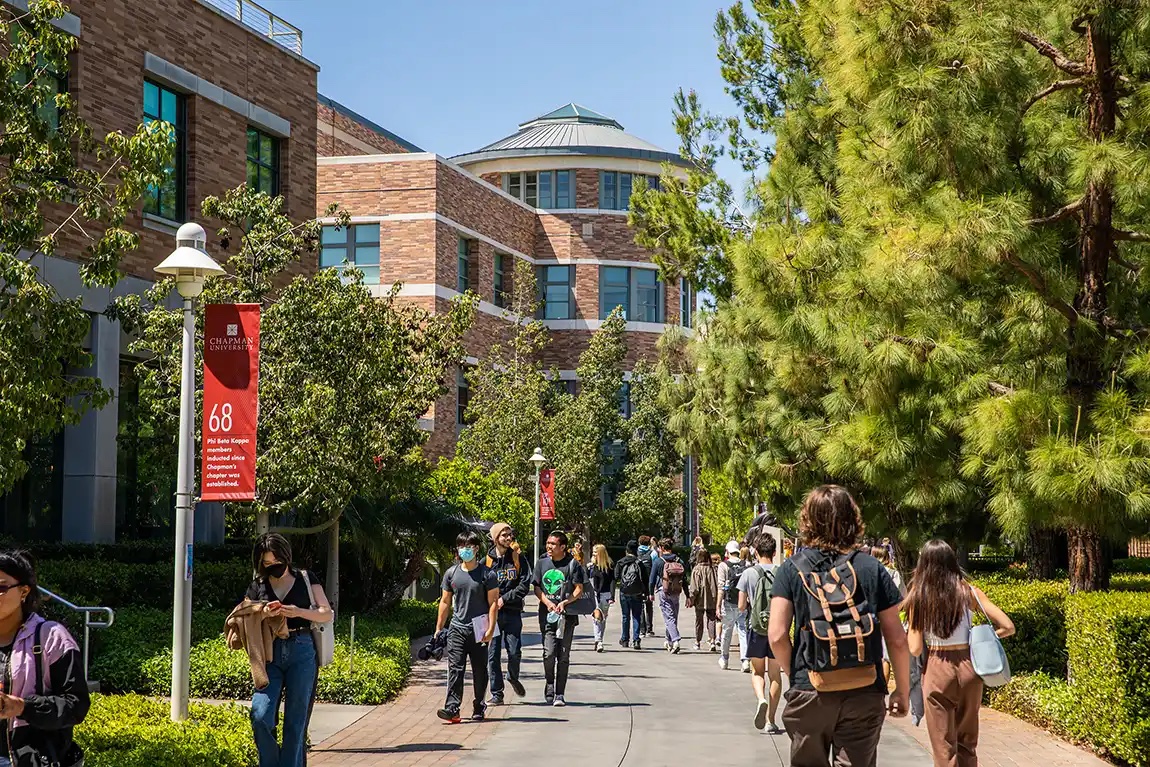
Beginning in the early 1990s at Chapman University, we developed a planning process designed to drive institutional transformation. Many dedicated and visionary academic leaders shaped that effort. But like at many long-established organizations where most people are comfortable with the status quo, bringing about change was not easy. This is especially true at universities because of their complexity and the many claims on their governance and direction.
The strategies Chapman’s academic entrepreneurs pursued were fueled by the recognition that Chapman needed to transform itself not only to survive but to thrive in an increasingly competitive educational environment. Those strategies drove a series of five-year plans, each centered on a primary overarching goal: to transform Chapman from a small regional college into a selective university of national stature.
Over the 25-year period from 1991 to 2016, Chapman’s academic reputation, as measured by a U.S. News survey of presidents, provosts, and chief academic officers, increased from #90 out of 120 schools in 1991 to #7 in 2016. Its student selectivity ranking rose from #66 in 1991 to #3 in 2016. Chapman’s overall U.S. News ranking, representing a weighted average of qualitative indicators, advanced steadily during each of the five-year planning periods, moving from #61 in 1991 to #5 in 2016.
While rankings are imperfect measures, they provide external benchmarks that help sharpen institutional focus and track progress toward clearly defined goals.
Countless paths to transformational change
The higher education environment today is markedly different from the one Chapman faced in the early 1990s. The specific strategies that worked for us may not be the right strategies today—or for other institutions. Chapman’s vision to become a more selective university was its own. Not every institution has to adopt that particular goal to draw useful lessons about transformational change.
There are countless paths to transformation. Instead of working to become more selective, an institution might have good reasons to move in the opposite direction. A university may choose to embrace rather than reject AI in its curricular offerings. Recent economic trends may suggest combining vocational training with a traditional liberal arts curriculum. Another possibility is designing undergraduate degrees that can be completed in three years. An idea that may have real value is designing a general education curriculum that inculcates higher levels of emotional intelligence in students.
The lesson from Chapman’s experience is not to become more selective—or less selective—or to follow any single blueprint. Instead, it is to identify an achievable vision that excites the hearts and minds of the community. Once that vision is clearly defined and embraced, specific goals can sharpen the vision and serve as pathways to achieving institutional objectives.
Transformational change requires breaking through the comfortable allure of the status quo. It requires measurable goals, disciplined use of data, and financial models that provide funding for new strategic initiatives. Above all, it requires clarity of purpose.
From vision to execution
At Chapman, transformational change did not begin with a comprehensive document. It began with a clear overarching goal and a commitment to align institutional decisions with that goal over successive five-year periods.
Data were used not simply for reporting but for direction. Tracking peer institutions through available benchmarks clarified where improvement was needed and where comparative advantage could be developed. The institutional decisions were pursued strategically, with initiatives evaluated in terms of how they advanced the university’s defined objective.
In our first five-year planning period (1991–1996), we focused on increasing our student selectivity, which led to Chapman’s graduation rate increasing significantly. That goal led to moving our NCAA program to Division III, thereby allowing us to transfer athletic scholarship funds to academic merit scholarships.
During our second five-year plan (1996–2001), we focused on expanding enrollment to generate economies of scale. To increase enrollment, we established a new film school and moved our business program to AACSB accreditation.
During our third five-year planning period (2001–2006), we focused on increased investment in new buildings, including a new library and a film studio. To make our case to the faculty and board of trustees, we used buildings and land valuation data, as reported annually by IPEDS, to compare Chapman’s ratio with other schools in the three competitive groupings we identified. The resulting valuation-to-FTE ratio for Chapman made our case for moving forward more compelling, especially with our donor base.
The strategic focus of the 2006–2011 planning period was on faculty development. In addition to placing a higher priority on establishing more endowed chairs, we increased the percentage of the budget allocated to academic expenditures from 54 to 65 percent. The additional funding moved Chapman to the 95th percentile in faculty salaries across all three ranks. It also enabled the university to recruit Nobel laureate Vernon Smith and his experimental economics research team, as well as Richard Bausch, one of the world’s most respected writers. In addition, Chapman created a new class of faculty—designated “Presidential Fellows”—that included distinguished intellectuals and global scholars such as Elie Wiesel and Pico Iyer.
During the final five-year planning period of my presidency (2011–2016), our institutional focus was centered on establishing a new graduate health sciences campus and school of engineering. In order to supplement external fundraising to support these costly initiatives, we used the net income ratio to increase our operating efficiency. That financial model led to a budgetary approach that generated more than $200 million to support our health science and engineering initiatives.
What distinguished this approach was not the production of a plan but the disciplined alignment of goals, resources, and measurable outcomes over time. Strategic planning became less about drafting a document and more about sustaining progress.
Transformational change does not occur because a plan has been written. It occurs when leadership defines a clear institutional vision and consistently aligns decisions, investments, and resources with that vision. Without that discipline, even the most carefully crafted plan risks becoming another document on the shelf.
These ideas are explored in greater detail in my recent book, Using Data Analytics to Drive Transformational Change (Bloomsbury Press, ACE Series on Higher Education). They will also be discussed further in an upcoming webinar on institutional strategy and change.
If you have any questions or comments about this blog post, please contact us.
-

How there are cybersecurity threats targeted towards students and how we can protect them? #shorts
How there are cybersecurity threats targeted towards students and how we can protect them? #shorts
Source link -
We can’t sacrifice capability for compliance. #shorts
We can’t sacrifice capability for compliance. #shorts
Source link -
Before you launch security initiatives, ask what the behavior is that needs to change #shorts
Before you launch security initiatives, ask what the behavior is that needs to change #shorts
Source link -

Cybersecurity pros need to listen to employee pain points to offer solutions #shorts
Cybersecurity pros need to listen to employee pain points to offer solutions #shorts
Source link -

Make cybersecurity more frequent and part of regular work at institutions #shorts
Make cybersecurity more frequent and part of regular work at institutions #shorts
Source link -

Victory! High school clears publication of stalled student articles after FIRE’s intervention
Peruse stories produced by high school student journalists for The Torch at Pine View School in Sarasota, Florida, and you’ll find articles detailing walkouts, the importance of voting, and criticism of public officials.
Torch staffers Ava Lenerz and Alex Lieberman wanted to publish articles on those same topics. But they soon ran into problems with the administration. The difference between their pieces and others? The others weren’t critical of the school board.
Pine View principal Stephen Covert paused the publication of Lenerz’s and Lieberman’s articles on Jan. 28. To justify his censorship, Covert produced a factually inaccurate report created by artificial intelligence listing the “pedagogical” reasons for the rejection. While students are surely discouraged from using AI to do their homework, it appears that rule didn’t apply to the Pine View School principal.
That AI-generated report claimed the students’ pieces were biased against the school board. But that accusation was based on factual errors. The report claimed Lieberman’s coverage of the school district’s resolution to comply with U.S. Immigration and Customs Enforcement demonstrated “source selection bias,” asserting that “nearly all quoted voices” were students opposed to the board’s action, while board members were “absent or minimal” and had “no substantive board voice.” But Lieberman’s reporting, obtained through an open records request, revealed that the piece contained a significant number of direct quotes from the school board member who proposed the resolution.
In another internal report Covert drafted to further justify censorship, Covert again relied on claims that Lieberman’s piece showed bias, writing that it “only include[d] student voices opposing the resolution and present[ed] no documented attempts to interview or include students who support the resolution” — conveniently leaving out the fact the piece did represent the board’s perspective. Further, Covert stalled the piece because it covered a walkout, stating that such coverage could encourage future disruptions to the school.
Covert also had qualms with an opinion piece Lenerz wrote that, similar to Lieberman’s news piece, criticized the school board — specifically pointing out that its decision to move its meeting from 6 p.m. to 10 a.m. would prevent students and many parents from attending. In his internal report, Covert claimed the piece couldn’t be published because it contained “strong criticism of the school board” and coverage of “political dissent or activism,” “voting behavior,” and “opposition to elected officials.”
Of course, a search through The Torch’s web stories shows that the school paper has previously covered walkouts, voting, and opposition to elected officials multiple times in recent years. But those previous stories didn’t include any critiques of the school board, so they weren’t met with pushback.
Lieberman’s and Lenerz’s did. But criticism is not a constitutional basis for blocking publication, nor one that complies with Pine View’s own policies — no matter what an AI model says.
Fortunately, two days after FIRE’s Student Press Freedom Initiative wrote to Sarasota County school officials, urging them to reverse Principal Covert’s decision, we learned that the district will allow the students’ stories to be published online.
FIRE is pleased to have confirmation from the students that the articles will now be published. In response to our letter, a Sarasota County Schools official maintained there was never any “denial of publication,” but rather that “considerations were provided for discussion.” That characterization is difficult to square with the principal’s AI-generated report describing the pieces as “instructionally defensible” and framing the matter as a “curriculum alignment issue.” At a minimum, the pieces were held back for illegitimate reasons.
Disagreement with a student reporter’s viewpoint is no excuse to censor it
While The Torch may be subject to prior review by the Pine View School principal, this review is not without constitutional limits.
The Supreme Court held in Hazelwood v. Kuhlmeier that where a publication bears the imprimatur of the school, is produced as a classroom activity, and is not dedicated as a “forum for student expression,” the school may regulate its content only for “legitimate pedagogical purposes.” These purposes contemplate factors such as the maturity of the publication’s audience and protection of student privacy.
While school administrators frequently misuse Hazelwood to justify viewpoint-based censorship of student publications, the U.S. Court of Appeals for the Eleventh Circuit — which binds Sarasota County Schools — has explicitly held that administrators must be viewpoint neutral when deciding what can and can’t be published under the Hazelwood standard.
In the court’s words: “Although Hazelwood provides reasons for allowing a school official to discriminate based on content, we do not believe it offers any justification for allowing educators to discriminate based on viewpoint.”
Likewise, the school board’s own policy requires the principal to exercise viewpoint neutrality when reviewing a student publication’s content and to base any editorial decisions solely on legitimate pedagogical interests.
The claimed pedagogical interests Covert cited don’t bear weight under pressure. The Supreme Court has characterized “the Nation’s youth” as “primarily the responsibility” of “school officials” — and those young people will be ill-equipped to enter the adult realm of civic engagement if they can’t even read about “voting behavior” in a high school newspaper.
And if prior stories about walkouts, voting, and criticism of elected officials were permitted without objection on pedagogical grounds, why were these stories treated any differently?
The evidence points to one reason: both Lieberman’s and Lenerz’s pieces criticized the school board.
The problem with prior review
Hazelwood opened the floodgates for student press censorship in the K-12 setting. When school officials fail to understand the complexities of Hazelwood and its progeny, stories officials dislike — like Lenerz’s and Lieberman’s — are vulnerable to being censored. That censorship silences important voices, like students who disagree with their school board.
Student journalists aren’t without recourse, though. SPFI is available every day at all hours to answer urgent questions about student press censorship with our hotline. Student press advocates also can explore opportunities to be involved in New Voices legislation, a grassroots movement that protects student media from prior review.
In the meantime, student journalists like those at The Torch need all the protection they can get from censorship, and SPFI is here to help.
FIRE’s Student Press Freedom Initiative (SPFI) defends free press on campus by advocating for the rights of student journalists at colleges and universities across the country and offers helpful resources on student press censorship and information on the role of student media. If you face censorship, call 717-734-SPFI (7734) for guidance, resources, and answers to your legal questions.
-

What is the future for student accommodation?
Nick Hillman, HEPI Director, recently made the following remarks at the QX Student Accommodation Insights Evening in The Shard.
I want to start on a positive as demand for higher education from 18-year olds is up a smidgen year-on-year, at least according to the early UCAS numbers for 2026/27. The small uptick in demand confounds those who thought the declines of recent years would continue. It is a particularly notable feature of recent years that short-term predictions about demand for higher education have often been wrong.
- It was the same back in 2012 when everyone said higher fees would mean lower demand among full-time school leavers, which was comprehensively disproved in the years that followed.
- Then during COVID, the consensus was demand would slump; in reality, as young people realised they did not want to be locked down with their parents any longer than they needed to be, demand for higher education rose.
- Then after COVID, as the world righted itself and people assumed the increase in the number of 18-year olds would further strengthen demand, applications fell as the pig-in-the-python represented by the extra COVID-related demand worked its way through the system.
- Now, just as people were coming to think this slump might represent a new normal encouraged by all those culture warriors attacking universities, it looks like demand is recovering somewhat.
All this chopping and changing makes planning difficult, but it is at least good to know that teenagers continue to do the opposite of what is expected of them.
it is good to know that teenagers continue to do the opposite of what is expected of them
Of course, it is not certain that the modest increase in demand over recent months will continue, especially when some of the first home students to face £9,000 fees back in 2012 are now doing their level best to imply they regret going to higher education. These 30somethings have found themselves in positions of power and influence which they are using to complain vociferously. One thing they are unhappy about is seeing 9% of their income over c.£28.5k taken from them in student loan repayments. Another is the 6.2% interest rate imposed on the outstanding loans of those earning over £51k. A third is the Government’s decision to freeze the repayment threshold for three years, meaning higher repayments caused by fiscal drag. Intriguingly, most of the loudest complaints stem from the left of the political spectrum but they are not making a left-wing argument when they complain about high tax, NI and student loan repayments that together mean they keep less than 50p of each extra £1 they earn. Indeed, they mainly resemble those who lobbied Margaret Thatcher to reduce the top rate of tax down to 40%.
This is not an argument about higher education but one about take-home pay and the risk is that it sends a message that higher education is not worthwhile – even though many of the complaints have come from doctors who would never have reached their current position without attending higher education and who are among the most likely to pay off the entirety of their loans in due course. I do have sympathy for them because the student loan system was endlessly tinkered with after 2012, raising the amount people are expected to repay, but it is still ironic that the people in the forefront of the war against student loans have very well from their (multiple) degrees. Incidentally, if you want to know more about the current row, do take a listen to the new IFS Zooms In podcast on the issue which I recently took part in.
The bigger problem for higher education students today is not, however, the repayment terms they might face long after leaving university; it is the lack of cash in their pockets now. The maximum maintenance package, which is currently worth £10.5k for English students living away from home and studying outside London, goes up each year in cash terms. However, because the inflation rate used (forecast RPI-X) invariably turns out to be nonsense, the real terms value of the maximum maintenance package has declined by 10% since 2020/21. HEPI’s work with Loughborough University and Technology1, published as the Minimum Income Standard for Students, suggests students need a little over £20k a year if they are to get the full benefits of university life. So it is no wonder that most young full-time students now work in paid employment during term time. I was annoyed to see a Treasury Minister (Torsten Bell) explicitly deny this fact the other day on BlueSky, but the chart he used to illustrate his point ended in 2019 and the growth in term-time employment has happened more recently, particularly as a result of the big post-COVID increase in inflation. Indeed, the percentage of students working during term-time doubled from 34% to 68% in just four years between 2021 and 2025 according to our annual Student Academic Experience Survey with Advance HE.Moreover, students’ parents are ever less able to chip in to support their student offspring because the threshold above which they are expected to help cover their student children’s living costs upfront and at which point the maintenance loan is gradually reduced remains at £25,000. This is lower than the annual income of someone on the minimum wage working 40 hours a week. The threshold was first set at this level by Gordon Brown immediately after taking office back in 2007 and the National Union of Students are right to note that, if it had been uprated in line with the changing value of money, then it would be set 75%+ higher at something like £41,000 today.
What does this all mean for student accommodation providers? I fear Martin Blakey, the former CEO of Unipol, may be correct in his assertion that ‘the party’s over’, even if the hangover has yet to sink in. Higher build costs, higher interest rates and higher regulatory costs have raised the price of brand new accommodation to levels such that other countries or other options, such as co-living and Build to Rent, are coming to seem like better investment prospects. I used to think that, if I won the Euromillions, I might invest it all in PBSA; now, I think I would spread my bets elsewhere too.
There are still some major new student accommodation projects of course: until recently, I was on the Board of the second-biggest regular university in the country, the University of Manchester, and their Fallowfield Campus Development is set to replace accommodation that seemed tired even when I was a student there in the 1990s, with over 3,000 new beds. At the other end of the scale, I am still on the Council of one of the UK’s smallest universities, the University of Buckingham, where they have followed a different approach, including taking over a Best Western hotel, rather than building new stuff on their own or with others, and offering much of this space as twin rooms.
One consequence of all that is happening is that more students are living at home. This has been predicted for years but, until recently, data experts like Mark Corver, who is one of the smartest people in UK higher education, said this trend was evident ‘everywhere – except in the student data’. It is not that the data were wrong; it is that the data were either unavailable or out-of-date or both. Now the numbers are catching up with reality. New published UCAS figures suggest that there has been an increase of about one percentage point a year for a decade in the proportion of young ‘accepted applicants intending to live at home’. Over time, that adds up to a lot of beds especially if these students do not change their living arrangements for years 2 and / or 3 of their studies. Perhaps the only silver lining in all this is that it will be harder for a populist government that wants fewer universities to shut some down if more and more people opt to access higher education close to their home rather than much further away and thus come to feel a deep affinity with the institution on their doorstep.Perhaps the only silver lining in all this is that it will be harder for a populist government that wants fewer universities to shut some down if more and more people opt to access higher education close to their home
Finally, and changing tack, my first career was being a History teacher and my own academic research has primarily focused on the history of boarding schools. So I found myself quoted recently in an excellent Times Higher Education piece by Patrick Jack headlined ‘Is it time for the UK to expel the boarding school model of HE?’ saying ‘an all-round education is one of the UK’s great gifts to the world and it would be idiotic to give it up. After all, people don’t just go to university to get a degree; they go to find themselves, to explore life beyond their hometown and to build new social networks’. Paddy Jackman, who understands the boarding school world very well having served as Director of Operations at Ardingly College for many years, makes a similar argument in a forthcoming piece for Upfront, a magazine on student accommodation.
That argument about the value of the residential student experience has to be made loudly and clearly and repeatedly because, given the perfect storm of rising commuter students, falling real-terms maintenance support and an ever-growing number of university critics, the long-standing arrangements that have worked so well for PBSA (Purpose-Built Student Accommodation) providers for so long cannot be taken for granted anymore. However, as I noted at the start, predictions do not always come true and we should not forget our own capacity to make the weather.
So, to end, let me pose three questions about the future:
- Are PBSA providers ready to defend themselves against questions on current pricing trends, including dynamic pricing and ‘cashback’ offers, as these issues will inevitably flare up at some point?
- Are PBSA providers ready to respond to expectations from policymakers, universities and students, for lower-cost developments, perhaps via more retrofitting rather than new builds or providing larger cluster flats with smaller rooms?
- Are you ready for the additional regulation that is hinted at in the Post-16 Education and Skills white paper? This promised a new ‘statement of expectations on accommodation which will call upon providers to work strategically with their local authorities to ensure there is adequate accommodation for the individuals they recruit.’
-

How to Prepare for a Teaching-Track Interview (opinion)
Last year, one of us, Peter, was applying for teaching positions. I was at the end of a three-year teaching postdoc at the University of British Columbia and was searching for my next step. The previous year, I’d applied to three teaching roles and secured interviews for two of them but unfortunately didn’t make the short list for either one. Based on my interview outcomes, I realized I needed a new preparation strategy to succeed in my job search.
I reached out for help from my friend (and co-author on this piece) Dinuka, who was a career coach and leader at another institution in British Columbia. In my final search year, I applied to around 40 positions, landed 12 Zoom interviews and eight short-list interviews, and received five offers: three permanent teaching roles and two three-year positions.
This is what I learned about how to prepare for the various stages of a teaching-track interview.
Prepare More Than You Think
In my first application cycle, I was confident in my preparation. I reread my application package, thought about the highlights I wanted to touch on in the interview and prepared answers for some standard questions. What I missed, and what Dinuka really helped me to understand, was that I needed to actually practice the act of answering interview questions.
During an interview, ideally every answer you give includes a concrete example of something you have done already, and how this concrete example relates back to the question. For example, if the interviewer asks, “How do you teach a class with students from a diversity of backgrounds?” (a common question), you should have a specific example of a previous success that relates to your answer. You can first answer broadly, but then need to tie your answer to a specific experience and demonstrate how it relates back to the question. This is a necessary skill, and it takes practice. As Dinuka explained to me, abstract claims are forgettable, but specific stories are memorable. Your job in an interview is to anchor every answer to evidence.
Dinuka helped me pick out some specific parts of my application that could be used for a variety of different questions. For example, I had revamped a course to use mastery grading, a form of grading where students need to demonstrate mastery of the material to receive credit but can take multiple attempts if they do not demonstrate mastery the first time. I wanted to use mastery grading because the literature suggests this framework can lower test anxiety in a large class, and at the end of the term I chose to give my students a validated test anxiety survey to see if these reductions held true. I indeed found similar reductions in test anxiety, but the students’ grades also ended up higher than expected.
Now I was able to incorporate this specific example of mastery grading into a variety of interview answers. It could be an example of something innovative I tried to improve the student experience in my classroom. It could be an example of something I’ve implemented to teach students from a variety of backgrounds (there’s some evidence that mastery grading reduces some equity gaps). It could be an example of how I adjusted a course based on student feedback (many students said that the course would benefit from a small cumulative final exam, so I added one the following term). Before my first interview, I went through my application package and pulled out a few key experiences that I wanted to highlight and put them on sticky notes in front of my computer to act as real-time reminders of my successes.
Practice Answering Questions
Once you have a few key experiences to highlight, practice actually answering questions in real time. Before my first interview, Dinuka and I met up to simulate an interview. He asked me a variety of interview questions, and I had to answer them succinctly and on the spot. We recorded the entire experience to analyze areas where I could improve.
While watching or listening to a recording of yourself can be an emotionally painful experience, it’s also a quick method for identifying any unconscious behaviors and any questions you stumbled on. Dinuka told me he was listening for two things: whether I could answer a question in under two minutes while still including a concrete example, and whether my answers reinforced a consistent narrative about who I am as an educator. After analyzing the recording, we repeated the process again and again until I was confident in my ability to answer questions succinctly while still highlighting key experiences. Dinuka also helped me practice with an AI interview tool called InStage, which would generate interview questions based on my application package as well as the job description. In the end, I probably ran through 20 practice interviews before my first Zoom interview.
The View From the Other Side
I definitely believe that my preparation for the Zoom interviews helped me land on the short list for on-campus visits. And now that I’ve been on the interviewer side, I’ve clearly seen the impact of preparation. I’ve seen the rank order of the candidates change significantly after both the Zoom and in-person interviews, often resulting in a drastically different ranking then what we’d reach simply from reading the applications. It’s possible to be ranked near the bottom of the candidates on the long list and then near the top of the candidates on the short list. Preparation for the interview matters as much as your CV, and maybe more.
Dinuka pointed out something worth sitting with: If rankings shift that much based on interview performance, it means the system is more responsive to preparation than candidates often assume. That’s empowering. Preparation is a skill that can be developed. While the interviewee has no control over many aspects of the job application process, such as who applies, what the committee is looking for and how many people are selected to the short list, one crucial factor they can always control is their level of preparation.
The Work Isn’t Over
Even though I received three permanent teaching position offers at amazing institutions, for a variety of reasons I decided to take another three-year position that I believe will help me grow even more as an educator and a scholar. Which means that soon I’ll have to prepare again for interviews—and when I do, I’ll make sure to prepare extensively.
A few questions worth asking yourself as you prepare:
- Have you identified specific experiences that can anchor responses to multiple types of interview questions?
- Have you practiced answering questions out loud, in real time, not just in your head?
- Have you recorded yourself and reviewed the footage, no matter how uncomfortable that feels?
- Is your application package coherent, or are there gaps that might make a committee wonder what you’re not telling them?
Preparation isn’t luck. It’s something you can start right now.