Blog

  • CUPA-HR Participates in Hill Meetings With House Ways and Means Committee Member Offices – CUPA-HR

    CUPA-HR Participates in Hill Meetings With House Ways and Means Committee Member Offices – CUPA-HR

    by CUPA-HR | May 10, 2022

    Over the last month, CUPA-HR’s government relations team joined the American Council on Education (ACE) and other higher education organizations in virtual Capitol Hill meetings to discuss tax priorities for the higher education community. Meetings have been held with staffers of Members of the House Ways and Means Committee to advocate for tax policies and proposals to alleviate various burdens placed on students, employees and institutions alike.

    Specifically, the meetings have allowed the higher education community to encourage members’ action on the following issues:

    • Supporting the extension and expansion of the universal, non-itemizer charitable deduction;
    • Repealing the taxability of scholarships and grant aid, specifically for the Pell Grant and other scholarships for graduate and medical students;
    • Enhancing higher ed tax credits like the American Opportunity Tax Credit and the Lifetime Learning Credit;
    • Repealing the endowment tax;
    • Expanding and modernizing tax-free employer-provided educational assistance as granted under Section 127 of the Internal Revenue Code (IRC);
    • Reinstating advance refunding of tax-exempt bonds and expanding debt issuance with a Direct Pay Bonds program;
    • Creating “lifelong learning and training accounts” to provide workers and employers the opportunity to make tax-free contributions to pay for future training and credentials; and
    • Repealing the unrelated business income tax “basketing” provision.

    In June 2021, ACE sent a letter to House Ways and Means Committee and Senate Finance Committee leadership requesting these proposals and others be included in the American Jobs and American Families Plans. CUPA-HR signed onto this letter, along with several other higher education groups.

    CUPA-HR joined the most recent meetings specifically to advocate for the Section 127 expansion and modernization. Section 127 of the IRC is an educational assistance program that allows employers to pay or reimburse an employee tuition or student loan repayments on a tax-free basis up to $5,250. CUPA-HR previously advocated for the program to include student loan repayments, which was granted under the 2020 CARES Act and the Consolidated Appropriations Act of 2021, as well as to increase the annual exclusion cap of $5,250 to an amount closer to $12,000, to expand coverage to employee’s partners and dependents, and to expand coverage to gig workers and independent contractors, all of which were a focus during the meetings.

    CUPA-HR will continue to participate in these meetings and will keep members apprised of any legislative proposals that result from these meetings.


    Source link

  • Edu Alliance Launches New Podcast Series – Edu Alliance Journal

    Edu Alliance Launches New Podcast Series – Edu Alliance Journal

    May 9, 2022 – Edu Alliance announces the launch of Higher Ed Without Borders a podcast series dedicated to education professionals worldwide.  The series is hosted by Dr. Senthil Nathan and Dean Hoke co-founders of Edu Alliance. Each episode is a half-an-hour-long conversation with international thought leaders that will enlighten and provide some new thoughts on critical issues facing higher education globally.

    The series will examine critical issues in higher education that are common to universities throughout the world. The introduction episode titled “What Makes This New Series Unique?” Dr. Senthil Nathan and Dean Hoke, discuss why they created this international higher education podcast series.  

    The initial 13-part series will begin on June 7th and a new episode will air every two weeks. The free podcast series will be available on Spotify, Apple, Google Podcasts, IHeart, Deezer, Player FM, and others, just search for the phrase “Higher Ed Without Borders”.

    Higher Ed Without Borders is conducting a short survey asking members of the higher education community to suggest future topics and guests. You can participate by going to Podcast Topics and Guest Suggestions.

    If your organization wants to know more about how Edu Alliance can best serve you,  please connect with either  Dean Hoke in the United States or Dr. Senthil Nathan in the United Arab Emirates.

    The podcast is a production of Edu Alliance an education consulting firm located in Bloomington, Indiana and Abu Dhabi, United Arab Emirates. Founded in 2014 Edu Alliance assist higher education institutions worldwide on a variety of mission critical projects. Our consultants are accomplished leaders who share the benefit of their experience to diagnose and solve challenges. We have provided consulting and executive search services for over 35 higher education institutions in Australia, Egypt, Georgia, India, Kazakhstan, Morocco, Nigeria, Uganda, United Arab Emirates, and the United States.

    A special thanks to:

    White Rabbit in Bloomington, Indiana who is providing graphics, and audio support.

    Higher Education Digest is the media partner for Higher Ed Without Borders podcast. The Digest is an independent Higher Education Portal and Magazine.

    Source link

  • DHS to Temporarily Increase the Automatic Extension Period of Work Permits for Certain Visa Applicants – CUPA-HR

    DHS to Temporarily Increase the Automatic Extension Period of Work Permits for Certain Visa Applicants – CUPA-HR

    by CUPA-HR | May 4, 2022

    Effective May 4, U.S. Citizenship and Immigration Services (USCIS) announced a Temporary Final Rule (TFR) to increase the automatic extension period of expiring employment authorization documents (EADs) for certain renewal applicants from 180 days to 540 days.

    Specifically, the TFR applies to three groups of applicants in EAD categories currently eligible for the previous 180-day automatic extension of employment authorization and EAD validity. They are as follows:

    • Renewal applicants whose renewal Form I-765 application remains pending as of May 4, 2022, and whose EAD has not expired or whose current 180-day auto-extension has not yet lapsed.
    • New renewal applicants who file Form I-765 during the 18-month period following the rule’s publication to avoid a future gap in employment authorization and/or documentation.
    • Renewal applicants with a pending EAD renewal application whose 180-day automatic extension has lapsed and whose EAD has expired will be granted an additional period of employment authorization and EAD validity beginning on May 4, 2022, and lasting up to 540 days from the expiration date of their EAD.

    Categories that are eligible for the lengthened automatic extension can be found here and include refugees and asylees (a3 and a5), spouses of certain H-1B principal non-immigrants with an unexpired I-94 showing H-4 non-immigrant status (c26), and adjustment of status applicants (c9), among others.

    The TFR is part of a trio of efforts USCIS announced on March 29, 2022, to address the agency’s major backlogs and crisis-level processing delays. According to USCIS Director Ur M. Jaddou, “as USCIS works to address pending EAD caseloads, the agency has determined that the current 180-day automatic extension for employment authorization is currently insufficient,” and this temporary rule is necessary to “provide those non-citizens otherwise eligible for the automatic extension an opportunity to maintain employment and provide critical support for their families, while avoiding further disruption for U.S. employers.”

    CUPA-HR will continue to monitor the implementation of the new auto-extension period and keep members apprised of further developments.


    Source link

  • Award-Winning Work in Higher Ed HR – 2022 HR Excellence Award and Higher Ed HR Rock Star Award – CUPA-HR

    Award-Winning Work in Higher Ed HR – 2022 HR Excellence Award and Higher Ed HR Rock Star Award – CUPA-HR

    by CUPA-HR | May 3, 2022

    From creating diversity efforts and development initiatives to leading change, human resources teams and HR practitioners across the country are doing great work every day.

    CUPA-HR’s regional Higher Education HR Awards program recognizes some of the best and brightest in higher ed HR and honors HR professionals who have given their time and talents to the association.

    Here are this year’s regional award recipients:

    HR Excellence Award

    Honoring transformative HR work in higher education and recognizing a team that has provided HR leadership resulting in significant and ongoing organizational change within its institution

    Office of Human Resources Management, Fordham University (Eastern Region)

    Fordham University’s office of human resources management has transformed from a primarily transaction-focused department to a strategic partner that is relied upon throughout the university. The department has demonstrated its strategic strength on multiple fronts including the management of the university’s COVID-19 shutdown and reopening, return-to-work policies, customer service, technology, communication with employees that resulted in increased engagement and trust, anti-bias training, professional development initiatives and the performance management process. Additionally, in keeping with and living Fordham’s Jesuit mission of Cura Personalis, “caring for the whole person,” the office developed and implemented programs to help employees maintain a healthy work-life balance. Some health and wellness services that were developed include back-up childcare support, on-site and virtual physical fitness classes, and behavioral health services, such as a registered dietician available to employees. In doing so, the HR team has distinguished itself as a trusted advisor to employees, managers and senior leaders alike.
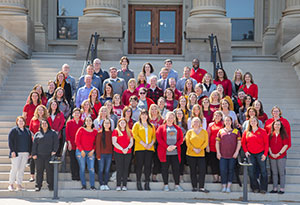
    University Human Resources, Iowa State University (Midwest Region)

    In 2019, Iowa State University implemented a new financial management and human capital management system. In conjunction with the new system, finance and HR service delivery teams were developed, pulling distributed customer-facing finance and HR roles into two centralized teams. University human resources’ performance through this significant and ongoing organizational change has been positive for the entire campus community. The HR delivery model has led to increased consistency and standardization in delivery of services across the university. It has also created a more well-trained and cohesive team of professionals that work together up and down the chain to find creative solutions to HR challenges and opportunities. HR support for leaders across the institution has significantly improved through better access to accurate data, streamlined processes for workforce and position planning, compensation adjustments, support addressing low-preforming employees and behavioral issues, large-scale employee movement and reorganizations, and professional human capital consulting. The new HR delivery systems have resulted in a much more efficient, collaborative and cohesive HR unit that is better equipped to serve employees and supervisors. At the same time, employees and supervisors have benefitted from HR’s reliability, transparency, accountability and consistency in its efforts to support them.

    Talent and Culture Department, Broward College (Southern Region)

    Recognizing that HR alone cannot create culture but that it plays a critical role in ensuring the infrastructure is in place to support the cultural aspirations of an organization, the talent and culture department at Broward College has worked over the last several years to spearhead significant organizational change. Beginning in 2019, the university launched its three-year culture transformation plan. An integral step in the transformation process was the implementation of information-gathering discussions between the HR leadership team and employee groups comprised of administrators, faculty and professional technical staff, which provided substantive feedback on areas that needed the most attention. This organizational change, led by the talent and culture department, has resulted in more substantive collaboration; stronger relationships among faculty, staff and administrators; and greater trust and communication between employees and their supervisors. It has also served as a catalyst for innovative projects throughout the organization designed to maximize the experience of employees, students and the community. Some major initiative highlights include the creation of talent business partner roles, Leadership 360 Assessments, psychological safety workshops, employee resource groups, employee onboarding, and a leadership development program called BC LEAD that educates and empowers managers at all levels to rise to leadership excellence.
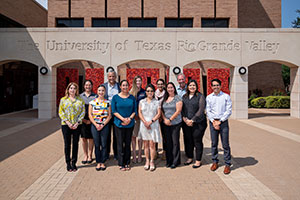
    HR Campus Climate Liaisons, The University of Texas Rio Grande Valley (Western Region)

    After implementing a strategic action planning process, led by an internal HR workgroup called Campus Climate Liaisons, The University of Texas Rio Grande Valley saw double-digit improvements in climate survey results within three years, all amid a pandemic. The liaison group consists of individuals from various HR areas, such as talent development, organizational development, employee wellness and employee relations/business partners. The group was trained to provide support to assigned departments with result-sharing, action-planning and ongoing progress-reporting. This method ensured that all departments received the same level of support and helped the HR team better track progress toward climate goals. It also helped empower all department leaders to have conversations about campus climate and department climate. The biggest improvements were seen in areas of faculty, administration and staff relations; senior leadership; and facilities. The campus climate liaison model has been so successful that it will continue to be used for future campus climate initiatives and to provide ongoing support to all departments.

    Higher Ed HR Rock Star Award

    This award recognizes an individual who is serving in the first five years of a higher education HR career who has already made a significant impact.
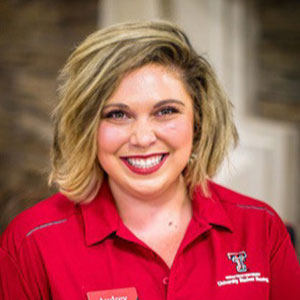
    Audrey Davis, Assistant Director of Personnel, Texas Tech University (Western Region)

    With her enthusiasm and inspirational demeanor, Audrey Davis has built strong and trusting relationships with each department she works with, not only within university student housing, but within each auxiliary services area at Texas Tech University. Since taking over the personnel team, Audrey has demonstrated continuous innovation and creative thinking, which has completely changed the way the student housing personnel team operates and provides services. After only two years in her role, she has identified and eliminated major gaps in the onboarding/offboarding processes. She has also developed a collaborative hiring system that allows hiring managers to communicate efficiently with the personnel team to discuss new hires, promotions and terminations. Audrey’s initiatives have resulted in university student housing being named a center for excellence for human resourcing by the assistant vice president for auxiliary services. Audrey continues to make a positive impact with her role and demonstrates her passion through advocacy, by fostering a welcoming work environment and by building confidence in her team to serve as a one-stop shop for personnel services.


    Source link

  • Reassessing Your Institution’s EAP: Steps for HR Pros to Increase Awareness and Accessibility – CUPA-HR

    Reassessing Your Institution’s EAP: Steps for HR Pros to Increase Awareness and Accessibility – CUPA-HR

    by Lakyn Whaley | May 2, 2022

    May is Mental Health Month. Throughout the month, be sure to join the Connect discussion in the General Discussion group to discuss challenges and successes, as well as pose questions and offer advice to higher ed HR peers on the topic of mental health. A Zoom discussion will also take place mid-May. Stay tuned for the link to be posted in the Connect discussion. 

    Employee Assistance Programs (EAPs) are nothing new. In fact, 97 percent of large employers offer an EAP as part of their benefits package. Yet, the utilization rate of these programs is abysmally low, clocking in at an average of less than 5 percent even as concerns around mental health continue to grow. EAPs should be a key resource for struggling employees, so why isn’t anybody using them?

    Lack of Awareness

    Lack of awareness, on multiple levels, plays a large role in the underutilization of EAPs. Usually, employees are introduced to their organization’s EAP and other benefits during their onboarding process. However, the deluge of information new employees are exposed to during this time can easily wash out any memory of an EAP mention.

    In addition, there’s a general lack of awareness as to how EAPs function. People may form their own incorrect assumptions, such as thinking that participating in an EAP will incur an immediate cost or that EAP use will be reflected on performance evaluations, which keep them from accessing this benefit.

    Distrust and Stigma

    From grief counseling to connecting employees to legal resources, the situations that EAPs are designed to provide support for can often be deeply personal. Because of this, some employees may be concerned that personal details or other information related to their EAP access will be shared with their employers, since the EAP is an employer-sponsored program. Others may be hesitant to interact with EAPs due to the stigma surrounding mental and behavioral health topics.

    Accessibility

    If employees are aware and comfortable accessing their organization’s EAP, the next challenge they often have to surmount is the myriad steps required to connect with the resources and services they need. Many of the individuals who would benefit from using an EAP are already operating under higher levels of stress and may be more fatigued than their peers. This can mean that these employees are less likely to have the energy needed to engage with extended processes, even when they’re the ones who need it most.

    How Can HR help?

    It might feel like the issues listed above are too big for one department — and in some cases one person — to overcome, but there are steps you can take to help.

    Start by looking at your organization’s EAP from an employee perspective and map out the steps someone needs to take to access services. Ask questions along the way such as: How many steps are there? How do employees learn more about their EAP? What options are there for contacting someone? Might the hours of service be prohibitive to some? Are the services provided meeting a variety of needs? Note too where you notice the potential for confusion or frustration within the process and remember that if something can be simplified, it should be simplified!

    Once you’ve reassessed the EAP process, take some time to examine how your campus is talking about mental health in general. While communication about the EAP is necessary for program awareness, by itself it’s not enough to improve utilization. Double down on efforts to reduce stigma around mental health and mental illness. Creating a culture where employees feel safe to talk about their mental health and welcome to bring their whole selves to the table has myriad benefits — only one of which is improving EAP usage.

    Related resources:

    Mental Health Toolkit (CUPA-HR members-only resource)

    Destigmatizing Mental Health on Campus: What Can HR Do (Higher Ed HR Magazine)

    Right Direction – Free Turnkey Resources for Organizations to Address Mental Health in the Workplace


    Source link

  • The DeSantification of a University

    The DeSantification of a University

     I cannot help but think of Joseph  Welch and his historic face off with Joseph McCarthy when he finally said, in effect, ENOUGH, “Have you no sense of decency.” The answer was obvious, Joseph McCarthy had no such thing.

    Nor does the despicable, demagogue  Ron DeSantis who will do anything to appeal to the worst values in people. Rather then lead people to embrace the moral high ground,  he encourages people to wallow in the mud of racism, homophobia, and xenophobia. Rather than ask people to be better he asks them to be worse, much worse.

    And among his staunchest enforcers is the University of Florida particularly President Fuchs, Provost Glover, and Law School Dean Laura Rosenbury. With respect to the latter especially, one would expect some sense of decency, or at least the courage to resist what is clearly a case of moral lawlessness.  But no, in the Desantification of the University of Florida, rather then stand up against a bully, as did Joseph Welch, these so-called leaders cowered and when ask to jump simply asked “how high.” Any one of them could have been a hero in the world of higher education if they had simply said I will resign before I follow the orders of a maniac.

    So, at the height of the covid crisis faculty were allowed to teach remotely but only after weeks of in person teaching.  In the next year, while other schools required masks — a small price to pay perhaps to save a few lives — UF did not require masks.  Fuchs, Glover, and Rosenbury were just trying to keep Florida’s McCarthy happy. And then, when professors were asked to testify as experts witnesses,  they all folded again and decided it would displease their master if a word were uttered to upset his seemingly fascist agenda. 

    When the Desantis’ bizarre choice for Surgeon General appears to have needed a little extra dough, he was appointed to UF Med School. Not sure if the opening was announced ahead of time or whether a search took place. But who cares when it is to please the Governor. What was Fuchs’ response? Once again he simply said “how high.”

    And remember, this cowadise occurred in the context of administrators who all had a guarantee of life time employment. In fact, even their professional aspirations might have been enhanced if they stood up against a demagogue. In short, some show of courage would have been easy but, then again, there are no heroes at UF. 

    Source link

  • Some finance recommendations for activists

    Some finance recommendations for activists

    I have seen some confusions recently on twitter regarding university finances. Here are four recommendations:

    1. Avoid using sector aggregate figures to make your arguments
      The sector is very uneven both in terms of size of institutions and in financial performance, make sure you are familiar with your institution and how it fits into the sector.
    2. Avoid using figures for “reserves” when you mean cash
      In accounting terms, “reserves” does not mean cash. Cash is included in reserves but that is because reserves names the excess of assets over liabilities: that the institution owns more than it owes. If it didn’t have reserves it would be insolvent. But its assets include buildings and land, which can dominate the reserves figure.
      It is a confusion that crops up regularly and is often associated with right-wing arguments about the sector being “awash with cash”. If you want to talk about cash, use the figures for cash – but bear in mind that it is good management to hold significant levels of cash or other liquid assets to manage the day-to-day running of the organisation. Universities are large and have large outgoings!
    3. Revolving Credit Facilities (RCFs) are like overdrafts …
      If you have one, you aren’t necessarily planning to use it.
      It provides extra headroom or is there for an emergency. Universities might simply be using it in their “liquidity” calculations to assure OfS that they have sufficient resources to cover 30 days of expenditure – falling below that level is a “reportable event” – and never intend to use it.
      That your institution negotiated one, but haven’t used it, is not per se a sign of bad management.
    4. Avoid confusing one-off costs with recurrent costs
      There is a clear difference between spending £1million on a one-off purchase and an annual outgoing of £1million.
      Your management may not always present the difference between such items in a very clear way, particularly when they have a certain narrative they wish to present or when they need to hit targets or covenants.
      One to be wary of is “vacancy savings”. Are these higher because of a recruitment freeze? Are these one-offs or recurrent savings? Technically, the former; they would only become recurrent savings, if the posts are made redundant.
      A management highlighting a certain level of vacancy savings may want to convey discipline to governors or lenders, but it can mask issues of sustainability: it isn’t a way to address persistent deficits. If there is an underlying deficit of, say, £2million, you shouldn’t be confident because they covered that through a recruitment freeze this year. And that’s solely from the numbers perspective: before you consider the implications for workload …

    There are a few resources on this site for thinking about university finances. There is also a blog and recorded seminar for UCU on getting started with university accounts and “challenging the financial narrative”.

    If you want more help, please get in touch.

    I have worked with more than 40 UCU branches over the last few years to help with negotiations. Get in touch for details.

    A testimonial:


    Source link

  • Article for History UK on what’s next for English HE

    Article for History UK on what’s next for English HE

    Enter your email address to subscribe to this blog and receive notifications of new posts by email.


    Join 379 other subscribers

    Source link

  • Teacher Appreciation Week 2022…It’s True…  I Teach Because I Can’t Do Anything Else!

    Teacher Appreciation Week 2022…It’s True…  I Teach Because I Can’t Do Anything Else!

    “To find out what one is fitted to do, and to secure an opportunity to do it, is the key to happiness.” ― John Dewey

    it is especially important this years to say… Happy 2022 Teacher Appreciation Week!  The amazing work that teachers have been doing at meeting student needs has really been apparent during this past year. Keep in mind that educators have been doing this all along! As I extend my best wishes to all educators I wish to share with you one of my favorite annual  postings. I hope you find this reflection, one that you will continue to enjoy and share with others!   Also, please take a moment to subscribe to this blog by RSS or email and  join me on twitter at mjgormans . I have some great posts coming your way involving PBL, STEM, tech integration. Most of all, thanks for being one of those over 30,000 visitors a month and over 14,000 subscribers.  I would appreciate it if you pass this special post on to others through email , your blog, school newsletter, or a retweet!  Help me honor all of those amazing educators!

    Sign up and retweet… – Mike Gorman (21centuryedtech)

    Teacher Appreciation Week 2022…It’s True…  I Teach Because I Can’t Do Anything Else! (21centuryedtech.wordpress.com)

    OK, so it’s true! I have spent  over 43 years in education because I cannot do anything else! Today, I travel around the country providing professional development involving all sorts of exciting educational possibilities. In those school districts I do my best to provide learning experiences for students and educators just as I have always done in the classroom. The idea of not being able to do anything else actually is something I have learned in the last ten years,  something I did not know  when I  presented my very first classroom lesson! I actually  began my undergraduate career in the College of Business with an eye on marketing. In the early stages of my teaching career, I became licensed to sell securities with the idea of becoming rich!  Little did I know that because I could only teach, I would find richness beyond monetary wealth! I dedicate this list of reasons to all of those great educators who teach because they cannot do anything else! Again, please retweet and share with all of our colleagues that really can’t do anything else! I would really appreciate you taking the time to share!  Most of all enjoy the week and know that you are appreciated! – Mike Gorman

    “To find out what one is fitted to do, and to secure an opportunity to do it, is the key to happiness.” ― John Dewey

    The List

    1. I can’t be a banker or work in the financial business because while I might enjoy counting money and financial growth, I would rather count and measure the success of my students.
    2. I can’t be a doctor or dentist because  while I enjoy seeing people smile as they leave and are healed, I get even more satisfaction if I see a smile when they first sit down.
    3. I can’t be a professional athlete because while I do enjoy competition, I get even more satisfaction coaching young people to play each game with honor, integrity, and respect.
    4. I can’t be a computer programmer because while creating new digital applications is exciting, finding ways to integrate technology to inspire real learning is rewarding.
    5. I can’t work in agriculture or landscaping because while supplying food and natural beauty is appreciated by all, I enjoy planting seeds of life-long learning knowing that it will nourish one’s life.
    6. I can’t work as a cook or chef because while I appreciate the art in a great meal, I enjoy even more finding just the right ingredients that allow for a child’s success.
    7. I can’t work in sales or marketing because even though I have learned from their great people skills, I would rather sell students on their abilities and possibilities.
    8. I can’t be a pilot even though I appreciate them as I travel to new places, as I would rather facilitate young people as they climb in altitude and arrive at new destinations.
    9. I can’t be an artist despite my appreciation for the beauty they bring, as I have found that my art is the ability to inspire and nurture children as they discover their innate abilities.
    10. I can’t be a scientist or inventor because, while I am aware of the great advances they bring, I wish to create  innovative learning experiences that always end in success.

    I could go on and on! As you can see, I really do appreciate all of the other professions and realize there are so many I can’t do. After all, as teachers, we really are preparing students for what they will do best in the world. Possibly in the future, those we teach will not be able to do anything else, because we have assisted them  in becoming the very best at what they do!  As I continue my journey I have expanded my teaching horizon and understand that a genuine educator, whether being a teacher, administrator, or educational leader, continue to teach and inspire others because they really can’t do anything else.

    Historical Look – Both Political and Educational leaders started discussions for a day to honor our teachers in 1944.  Finally in 1953, Eleanor Roosevelt persuaded the 81st Congress to proclaim National Teachers’ Day. Remember this is a day to not just recognize teachers of today… but all of those teachers that made such an impact in all of our educations.

    Quick Notes – Opportunities and resources you may want to be aware of for Teacher Appreciation Week. Teacher Appreciation Week is May 2 – 6, 2022… the actual day is Tuesday, May 3, 2022. Let a teacher know… or if you are a teacher… how about a colleague or past teacher you had!

    PTO Teacher Appreciation Resources – Popular ideas, pintables, clip art, and planning tools to help you celebrate your teachers in May (and all throughout the year).

    7 Meaningful Ways to to Celebrate Teacher Appreciation Week – Take a look at these ideas and take a moment to recognize those special teachers.

    Waterford.org – 50 ways to help celebrate teacher appreciation week.

    National PTA – During Teacher Appreciation Month, we will honor them for going beyond the call of duty to make a positive impact on our children’s learning and development.

    Donors Choose – Check out these donation possibilities that will help teachers as they help students.

    Booking Info –  Look for contact information at the Booking Site. I have a distance learning workshop and session entitled “STEM is a Verb”. In fact… the Workshop is also a Verb! I also have a new 1 hour workshop “Preparing for  PBL”. It really promotes that 4C Classroom. Perhaps you wish to investigate PBL in the eLearning and Blended Classroom. These can also be built into a 1/2 day or full day session and are very interactive! Schools have loved it! Talk with me about your winter, spring and summer… or even fall planning for 2022. You can also contact me at [email protected].

    A  big shout out to all  educators on a very special week!  Thanks for joining me on another journey dedicated to learning in the 21st Century! As always I invite you to follow me on Twitter (@mjgormans), I will return the favor and we can teach each other! I also encourage you to sign up for this blog by email or RSS.  I invite you to share this posts with others through email or a retweet!  Thanks for your visit and know that I will keep  sharing, teaching, and facilitating all learners, after all, I can’t do anything else! – Michael Gorman (21centuryedtech)


    Source link

  • My Goodbye to Trent University – THE STUDENT LIFE BLOG

    My Goodbye to Trent University – THE STUDENT LIFE BLOG

    Photos and written by Amy Bridges

                This post is not only my goodbye to the 2021-2022 year but my goodbye to the blog and Trent University. The winter semester was my last semester of my B.A. which also means it was my last semester at Trent University. My experience at Trent University has been a long hard journey.

                I knew that my decision to go to university was going to change my life but I did not realize how much. Choosing Trent University was one of the best decisions of my life. While at Trent I was able to find my passion and gain the confidence to follow it, meet people who have made a huge impact on my life and was even able to gain experiences I wouldn’t have anywhere else.  

                In my four years at Trent, I have changed majors, went on an archaeological dig, gained experience working in a museum, worked for a professor and for 2 other departments in the university, moved apartments, had one of the worst seizures of my life, dealt with a pandemic, and was accepted to a Masters program. It has been a rollercoaster of an experience but I would not have traded it in for anything. These last four years have been challenging but the most rewarding.

    Even though I have been finished classes and set to graduate for a couple of weeks now I am still conflicted about leaving Trent. I am excited to be finished and I am proud of what I have accomplished, but I am sad that it means I will be leaving Trent and that I won’t be seeing the same people every week. Moving onto U of T for my Masters is going to be an exciting next step but terrifying at the same time.

                As I struggle with saying goodbye to Trent, I am also saying goodbye to this blog. This will be my last post on The Student Life Blog. I have been writing for the blog for 3 out of the 4 years I have been at Trent. I will be handing off the blog to another writer and in September you will be able to continue your journey at Trent with them. I am sure they will love this blog as much as I have over the past 3 years and I look forward to seeing where this blog goes in the future. Thank you for reading!

    Colour outside the lines,

    Amy Bridges 

    Source link