
Blog

  • Scholarships for LGBT+ Students

    Scholarships for LGBT+ Students

    Martin Gardeazabal / Shutterstock.com

    The lesbian, gay, bisexual, transgender, queer, questioning, intersex, and asexual (LGBT+) community and its allies have made significant strides toward equality in the past few years. The legalization of same-sex marriage in 2015 and LGBT+ adoption in 2016 were huge. But discriminatory laws aren’t the only challenge faced by people who identify as LGBT+.

    Members of this community are more likely to experience hate crimes than any other group, for example. Similarly horrifying: LGBT+ high schoolers are more likely to suffer rapes and attacks than their peers. They may experience bullying, depression, name-calling, and feelings of uncertainty or shame before or after coming out.

    On a smaller scale, but still important: These students may struggle to find an LGBT+-identifying role model, like a teacher, mentor, or guidance counselor, and miss out on specific resources and support in school. It’s not uncommon for these students to get behind in their learning.

    Some organizations are not only recognizing these challenges, but encouraging LGBT+ students to continue their education despite the adversity. How? Scholarships! There are hundreds out there, and you might meet the requirements for some open to LGBT+ students.

    For students across the nation who are making the world better for the LGBT+ community:

    • The League Foundation has five scholarships for LGBT+ students. It evaluates applicants based on their leadership roles in LGBT+ activities, among other criteria. Applications open in January and close in April each year. Students will be required to submit their transcripts, two personal essays, two letters of recommendation, and proof of acceptance to an accredited North American institution.
    • The Point Foundation values applicants who demonstrate leadership and service to the LGBT+ community. High-achieving students who demonstrate financial need receive priority. The application will open on November 1 and close in January.
    • The Queer Foundation invites LGBT+ high school seniors to participate in an essay contest; the prize for winning is a $1,000 scholarship to study queer theory or a related field at a U.S. institution. Its theme changes from year to year, but the foundation always evaluates essays on their arguments, grammar, and originality.
    • Parents, Families, and Friends of Lesbians and Gays (PFLAG) chapters around the country award scholarships to LGBT+ students (and their allies) who are making the world a better place. Requirements and awards vary based on location.

    For residents of Alaska, Idaho, Montana, Oregon, and Washington:

    The Pride Foundation offers more than 60 scholarships for students pursuing postsecondary education, and each values something different. LGBT+ students with well-defined academic interests, leadership experience, and significant financial need may find an opportunity for themselves. Students are considered residents if they have lived in one of the above states for at least three months prior to the application deadline or if they lived in one of the above states for at least one year within the past five years. This year’s application will open on October 11.

    For residents of Connecticut, New Jersey, and New York:

    The LIVE OUT LOUD Educational Scholarship recognizes graduating high school seniors with financial need and a proven track record of leadership and community service. Students can earn up to $10,000 by completing an application, submitting two letters of recommendation, writing two essays, and participating in an interview.

    For students who don’t mind doing a little digging:

    The above list of LGBT+ scholarships is nowhere near exhaustive. In fact, there are hundreds of scholarships for students who identify as LGBT+, and some opportunities are very specific. There are some for LGBT+ students studying aviation or law, for example, and others for students attending specific colleges.

    The following websites maintain databases of these hundreds of opportunities. Sure, it may require a little digging to find the right scholarships for you, but just think of the payoff!

    For students who want to expand their funding options outside of LGBT+-related scholarships:

    To increase your chances of getting a scholarship, apply, apply, apply! Once you’ve scouted out LGBT+-specific scholarships, remember that the search doesn’t have to be over. There are scholarships abound for students of specific cultural backgrounds, races, religions, and genders. You may also qualify for scholarships open to students from your local community or the college you have chosen. Do a Google search, talk to your counselor, and don’t stop applying!

    Source link

  • Claves para una entrevista laboral

    Claves para una entrevista laboral

    tsyhun / Shutterstock.com

    Si has egresado satisfactoriamente de la universidad y sientes que es hora de conseguir un trabajo, o si aún estás estudiando y deseas probar cómo será trabajar en el área de tu especialización—o tienes que asistir a una entrevista para la pasantía que tanto has buscado y finalmente encontrado—estas claves para una buena entrevista te ayudarán a afinar tu acercamiento al puesto que buscas. Adelantarte a las posibles preguntas de una entrevista laboral te ayudará a calmar la normal ansiedad que te abraza. Haber armado un buen currículum fue la clave para que te hayan llamado a una entrevista laboral y seguramente te sientes muy ansioso de que te vaya bien. Las claves para una buena entrevista laboral pueden ser estudiadas y practicadas, y puedes lograr tu objetivo con dedicación.

    Sin embargo, no son solo tus palabras, forma de expresión o discurso lo que no tienes que descuidar, sino también la forma en que irás vestido y el lenguaje corporal vienen al caso. Depende, entonces, del puesto al que te hayas postulado, pero siempre deberías presentarte a una entrevista laboral lo más prolijo posible. Tu aspecto dice mucho sin usar palabras, así que nunca deberías asistir a una entrevista con tu vestimenta sucia. Sé prolijo, sencillo y limpio. Así mismo, aunque es aceptable que llegues diez minutos tarde, lo recomendable es que puedas llegar unos quince minutos antes para ubicarte en el lugar, y recorrerlo para echar un vistazo—en caso de ser una oficina corporativa. Con tantas cosas en qué pensar, no es sorprendente que ya te sienta abrumado. Aquí te dejo las preguntas más comunes y frecuentes en una entrevista laboral.

    Saludo y conversación inicial.

    Al presentarte ante tu entrevistador, normalmente estrecharás su mano y te presentarás con tu nombre. Deja de lado tus costumbres, no te lanzarás a darle un beso, un abrazo, ni tampoco chocar los cinco; mantén la formalidad para esta ocasión. Cuando debas referirte hacia tu entrevistador, es importante utilizar el título de Sr. o Sra. ante su apellido. Él o ella puede preguntarte cómo has llegado al lugar, mencionarte sobre el clima, u ofrecerte algo para tomar; esta conversación se llama “small talk” y te ayudará a romper el hielo. Cualquier cosa que respondas dentro de esta charla deberá ser breve pero no escueta, tu entrevistador no querrá saber cómo ha estado tu día entero con lujo de detalles o si has tenido problemas para dejar a tu perro solo en casa. Debes mantener una conversación relajada pero no profunda. Luego de llegar al escritorio, te invitará a sentarte. Mantén una postura dispuesta durante todo el transcurso de la charla, mostrando interés hacia lo que tu entrevistador menciona. Para tu entrevistador, no solo tus palabras son importantes, sino también tu lenguaje corporal. Él o ella observará cada detalle, por lo que debes mostrarte atento y concentrado. Nunca deberías cruzar los brazos o tocarte repetidamente la nariz cubriendo tu boca; estas son malas señales que a tu entrevistador no le caerá muy bien.

    Cuéntame un poco sobre ti.

    Esta suele ser una de las preguntas que inicia formalmente la entrevista y aunque técnicamente no sea una pregunta, la respuesta puede dispararse hacia múltiples direcciones. No deberías responder contando como eres como amigo, cúal es tu restaurante favorito o cuánto te gusta mirar el fútbol. Deberás concentrarte primeramente en mencionar lo académico, con entusiasmo y desplegando todas tus habilidades de comunicación. Luego, en segundo lugar deberías comentar sobre tu experiencia laboral previa y relacionada con el puesto al que te estás postulando. También es buena idea que comentes tus intereses personales dejando mostrar por qué has estudiado lo que has estudiado. La información provista como respuesta debe ser clara y ordenada, por lo que se recomienda practicar la respuesta la cantidad de veces necesaria.

    ¿Cuáles son tus fortalezas?

    Esta pregunta es muy común en entrevistas laborales. Tu potencial empleador quiere saber cuán consciente eres de ti mismo. Para practicar esta respuesta podrías escribir en un papel: “mi más grande fortaleza es _____.” y completar el espacio. Se te podrá ocurrir una variedad de características en las que tienes solidez y positividad. Puedes completar esta frase la cantidad de veces que desees, utilizando posibles sustantivos y adjetivos a usar en la entrevista. Ya que no memorizarás la respuesta de manual, es buena idea si practicas espontáneamente frente a una cámara y luego mires como has respondido para que mejores las cosas que no te han gustado de tu discurso.

    ¿Cuáles consideras que son tus mayores debilidades?

    Es una pregunta difícil. No solamente porque no queremos mostrar nuestras debilidades a un potencial empleador, sino también porque quizás no sabemos expresar cuales son. Trata de ser honesto. Tómate un momento para pensar cuándo realmente se te ha hecho difícil superar situaciones en el trabajo, y toma nota de cómo has hecho para lograrlo. Recuerda que lo más importante es mostrar que sabes cuales son tus debilidades y que también sabes como hacer para mitigarlos y mejorar en esas áreas. Esto se relaciona con clases que tomas—y por qué estás enfocado en eso—libros que lees, estas son las cosas que querrás compartir con tu potencial empleador.

    ¿Dónde te ves a tí mismo en cinco años?

    Los empleadores quieren saber cuales son tus aspiraciones y tus metas—y si tienes en mente abandonar tu prospectivo puesto más pronto de lo que ellos piensan. La pregunta también puede ser “cómo” te ves a mayor o menor plazo, por ejemplo, a uno o diez años. Quizás ni siquiera tú conoces la respuesta a esta pregunta porque ello no es algo que te preocupa, o quizás también puedas responder que quieres ser el nuevo director de la empresa, ser dueño de una aerolínea, o retirarte a los 35 años. Ninguna de esas respuestas suenan con los pies en la tierra. Ellos quieren ver también cuán comprometido estarás con el puesto al que te estás postulando. Entonces, una buena respuesta sería mencionar que quizás, eventualmente y con la experiencia práctica necesaria, puedes verte en algun puesto de manejo o quizás con gente a cargo.

    Otras preguntas podrían que podrán hacerte en una entrevista laboral son:

    • ¿Qué conoces de nuestra compañía? / ¿Cómo te has enterado de este puesto?
    • ¿Cuán bien manejas los cambios?
    • ¿Trabajas bien bajo presión?
    • ¿Cómo tomas decisiones importantes?

    Finalizando la entrevista laboral, y luego de que tu entrevistador se haya asegurado de haberte conocido bien viene el cambio de rol donde tú tomas el puesto de entrevistador. Es entonces cuando tu prospectivo empleador te pregunta:

    ¿Tienes alguna duda o pregunta que quieras realizar?

    Aquí es donde tu puedes resolver las dudas que tienes, como por ejemplo cuál es el próximo paso de aprobación; si deberás esperar un llamado o un correo electrónico. También puedes preguntar cómo deberías asistir vestido a trabajar o si necesitas un equipamiento especial en caso de que te contraten, o cómo son los grupos de trabajo en la organización y si creen que encajarías bien en alguno de ellos.

    Con toda esta información, estás destinado a ganarte el puesto que tanto buscas. Buena suerte y esperamos que oigas: ¡Estás contratado!

    Source link

  • I was like “whoa” and the rest is history.

    I was like “whoa” and the rest is history.

    We are very fortunate at AskMyClass. Besides helping teachers create a positive classroom experience, we’re also connected to some of the most forward-thinking educators across the country, including a few trailblazers exploring the potential of voice technology and AI.

    We’re excited to introduce you to one of those trailblazers, Rebecca Dwenger. With more than 21 years of teaching experience and a passion for cutting edge technology, Rebecca works with teachers and administrators to improve their productivity and learning. Her fields of expertise include instructional design, voice assistants for education, and differentiation.

    AMC: Where you always into technology? especially for education?

    Rebecca: I’ve always been interested in technology. In my classroom I was always the first one to try out anything and everything… I watched as technology in my classroom became a game changer for many of my students. That experience led me to pursue the job I am in presently.

    AMC: How did you get started with voice technology?

    Rebecca: During the 2016–2017 school year I took a risk and introduced Alexa as a classroom tool during our monthly Technology Leadership Council at Hamilton County Education Service Center in Cincinnati, Ohio. I was a little ahead of the Alexa wave and didn’t gain much traction until August of 2017. My colleague Joe and I gained interest in our area after he introduced Alexa to a room full of curriculum leaders around the Cincinnati area. Our professional development integrating Alexa into the classroom took off and the rest is history. Joe and I presented on Alexa at ISTE in 2018, OETC (Ohio’s Tech Conference), and will be back at ISTE this year. I created the hashtag #Alexa4Edu because I want educators and voice leaders to be able to learn from each other and contribute to a shared vision. I also am finishing up an Alexa pilot of six preschool classrooms measuring student engagement.

    AMC: What was that lightbulb moment that this was going to be a very valuable tool in the classroom?

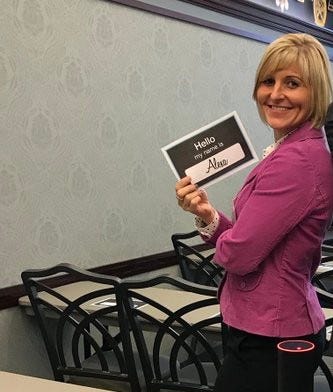
    Rebecca: I’ve had Alexa in my home since 2015. My youngest son Grayden has some attention and language challenges associated with Epilepsy. After school one day he asked Alexa the definition of a word while he was reading instead of asking me. I was like “whoa” and the rest is history. It has made a world of difference since he doesn’t have to stop his reading or working to get help. In this moment I knew Alexa and voice speakers would be a helpful classroom tool.

    AMC: How have you promoted the use of Alexa?

    Rebecca: I promote Alexa as a tool for teacher productivity, student engagement, many student benefits, and more recently as a student creation tool. Teachers have a lot on their plate and showing them how to set reminders, alarms, and routines wins them over! The Ask My Class transitions and body breaks help teachers not waste precious class time searching yet gives students a quick engaging activity. Student engagement equals increased learning. Students aren’t just engaged the first time they use Alexa it continues, and I have yet to see it wain.

    Students aren’t just engaged the first time they use Alexa it continues, and I have yet to see it wain.

    One consistent benefit I have seen firsthand and received feedback on is how student’s speech and language improves as they interact with Alexa. Artificial Intelligence awareness and use has skyrocketed lately. Students today will be solving future problems using this technology so why not begin now. I promote student voice creation since their future jobs will use voice technology.

    AMC: What has surprised you the most?

    Rebecca: I have to tell this story! This year I am supporting a teacher at a high school for autistic students that is using Alexa in her classroom. This teacher shared with me that one of her students that has been mute for some time started talking to Alexa! I mean doesn’t that just give you a warm feeling inside? Those stories (I have many) keep me super passionate about Alexa in education.

    Those stories (I have many) keep me super passionate about Alexa in education.

    AMC: Favorite skill?

    Rebecca: This is a hard question. I have so many favorites. If I have to pick just one it is Akinator. You think of a real or fictional character and it asks you questions until it is ready to guess your character. This skill can be used in most content areas and grade levels. I just love it for It’s simplicity and versatility. Students love trying to stump it. Engagement=Learning

    AMC: What’s missing? What skill would you like to see?

    Rebecca: Oh, I have so many ideas…. I’d want to see a skill that would help a weakness I see in my practice as an instructional technology coach, reflection! So, what about a skill that helps teachers or even students reflect on their day, lesson, or activity… Reflection is so important, yet our teachers don’t get the time. So, Alexa could ask questions about your lesson or activity. Basically, guide them through reflection.

    AMC: What’s your prediction for voice technology 5 years from now?

    Rebecca: I predict voice technology will be in nearly all types of applications within five years. I even read an article recently about it replacing our keyboards. Jobs that require writing for voice technology will infiltrate businesses and education. Voice technology in education specifically will become more personalized.

    More about Rebecca Dwenger

    Rebecca’s educational background includes a Master’s degree in Instructional Design & Technology from Miami University, a bachelor’s degree in education, an Ohio Department of Education Technology Endorsement on her license, and is an ISTE Certified Educator.

    Her most recent work includes creating and launching an online micro-credential ecosystem for professional development, integrating voice activated devices into the classroom, instructional technology coaching, and managing a district G Suite Console. She has presented at ITIP Google Summit, Learn21, High Aims, 4Cs Conference, OETC, 2018 & 2019 ISTE conferences, and recently completed ISTE’s Artificial Intelligence Course.

    Rebecca will be presenting at ISTE, check out more details here: 15 Ways to Use Alexa in Your Classroom Today!

    You can follow Rebecca on Twitter @Rebecca_Dwenger and check out #Alexa4Edu. Here’s Rebecca’s website.

    #Alexa4Edu


    Source link

  • How does your garden grow? |

    How does your garden grow? |

    With silver bells, and cockle shells…and pretty maids all in a row!  Perhaps that is one way of looking at the wonderful record of professional learning that will come to reside in your online learning record of your Thinkspace blog.

    Yes, it could be a beautiful garden, or it could be a collection of weeds with the occasional bright flower.  So it is time for me to write a strong reminder of the importance of keeping a clear focus on your personal learning, which is more than just studying and writing assessments. Your learning is about lifting your knowledge to new levels and reaching out to your new professional community to discover the full dimensions that teacher librarianship can offer you.

    But blogging first.  What have you all been achieving so far in ETL401 with your blogging? There are many many posts written that wonderfully capture the measure of emerging engagement with ideas and interactions with your new knowledge spaces. The confidence that you bring to your writing, however, is not necessarily a natural process for all of you.  Don’t let that be a concern.  Focus rather on the importance of teacher librarianship.  While I am on the topic, a special shoutout to your fellow student Fiona who wrote her first assessment about TLship entitled Would you like an adventure now, or should we have our tea first? 

    I was so taken by this blog post that I could ‘hear’ Fiona in my head – and contacted her to ask if she would record this blog post for me to share at the ASLA conference as part of my closing keynote. It was indeed the perfect wrap up for the whole conference closing.  Thank you Fiona – I was proud of you, and the audience all agreed that her charm and confidence was very special indeed!

    More importantly, you are all ready to be fully badged teacher librarians, but you must always and every day extend your knowledge – and blogging is one space where you can do this well, and push yourself to think and record your knowledge.

    In particular you need to do this for your subjects and your course.

    It really is not enough to just write a few posts, just so that you can write your final blog reflection for a subject. Of course you can ‘get away with it’.  But learning is not about, ”getting away with something”.  Learning, as you well know, is about pushing the boundaries to know more, to challenge ourselves and others around us.  The thing is, for your final subject you are asked to review your learning through all your subjects, and being able to draw on your blog posts is a marvelous way to capture this.  Don’t miss the opportunity to start now, get strong in blogging and learning habits, and have a good record as well as build your collaborative knowledge together.

    As it happens, too many  people have only written one, two or at most three posts.

    Gasp!

    BUT…………I can also see this much needed curiosity and reflection already happening in the posts that are being written in many other examples such as Tanya, Nicola (with clear use of ETL401 and ETL503 categories),  Anastasia, Rebecca (also with good ETL401 and ETL503 categories), and of course Trish who likes to write reams, but whose blog template puzzles me!  So if you are only doing one subject, there is still time for you to polish your blogging tools and get going!

    Forgot to set up your categories?  Just revisit the video we provided in the Introduction module Managing your subjects in Thinkspace.

    It’s no surprise that those who write little on their blogs are those who write little or never on the forums.  Please know that it is through engaging with the subject, the cognitive stress, pull, strain of the subject, that real learning actually happens.  Study is not about content any more – it is all about professional development.  A small tip as well.  Look at the title of your blog.  Does it say “just another CSU Thinkspace blog”, or have you changed the byline?   Take a look at Deborah or Donna‘s blogs which all have something else.  Donna’s A reflective journal of learning by an aspiring Teacher Librarian is particularly apt!

    You set this up in your blog dashboard. Click on Settings > General.  See the Tagline under the Site Title?  Write yourself a nice tagline right there and you too can have something nicer than “just another CSU Thinkspace blog”.

    For more quick tips on blogging, if you need them, take a few minutes to check up the many links provided on the landing page of Thinkspace  to look at the many Tools and Resources provided their for you as your blogging habits improve. http://thinkspace.csu.edu.au/.

    In addition, here is a very short video with a quick run through some basics for you, as a reminder, if you need it.

    Finally, there are a few advanced learners amongst you, who are ready for a bigger challenge. So I wanted to share with you a blog post of one of our graduates who was a champion of both blogging and efficiencies in organisation for study. There was a day when many were asking just HOW to manage everything in a busy day of work, play, and study.  Nadine of course was working full time, studying  through several Masters degrees, and sharing and building connections all the while. Here was her post in response for the cry for help – which I now share with you. Being organised upfront saves time!  Digital reading and studying – teachers are students too. If you are serious about getting organised, you will want to read this! This blog post was subsequently turned into a short contribution to inCite, for ALIA.  Nadine is now working in China.  Nadine has archived her Thinkspace blog, and continues to blog at https://informativeflights.wordpress.com/

    Finally, let me leave you with a final word of encouragement.  I received a phone call yesterday morning from a TL, whose first words to me started with “Judy, you won’t remember me, but…..”  She graduated six years ago, and despite challenges, continued her study.  She is now the keenest advocate and happiest TL in a low socioeconomic area school, ready to tell the world her story.  The journey is not always easy.  Some of you will find blogging easy.  Some of you will not.  I found it hard at first, but now it’s second nature.

    Give it a go! Start writing, recording, reflecting, challenging, keeping pictures, taking videos, sharing memories…anything.  Your students do.  You can too.

    It was a wonderful opportunity meeting up with current and past students at the recent ASLA conference in Canberra, as well as seeing Lori in person again after only interacting online. Those professional conversations we have at big TL gatherings are well worth it.  Keep smiling!  Here are my slides for my final presentation, which included the lovely contribution from our student.

    Photo by Pixabay on Pexels.com 

    Source link

  • Freeing the Ed Tech | Doucette Ed Tech

    Freeing the Ed Tech | Doucette Ed Tech

    In September of 2018 and all of this academic year, I have been releasing all the ed tech kits to the shelves.  In a wildly successful experiment, ed tech like littleBits, Sphero Sprk 2.0, ozobots and OSMO are left to fend for themselves on the open shelves in the library.

    Other years while I was acquiring the ed tech, I had a conversation with almost every student who took out these kits to use in the classroom.  Although this was wonderful in getting to know students and how they were using the tech, it was not sustainable as a model for taking out technology kits.

    As I released the kits to the shelves something wonderful happened.  All of the kits were loaned for classroom use and lesson planning, all the time. Not a one left anywhere.

    It showed me that students know how to use these kits in the classroom and are just waiting for a chance to integrate them into their planning.  The initial training on most of the kits is self taught by Youtube and by the other resources the Doucette has like the research guides.  Students are beyond prepared to introduce technology into their curriculum planning.

    However, I also noticed something else.  Once the kits are gone there is no back up.  Even when I want to teach with the kits to special groups or classes, I am facing the same timelines as students, putting kits on hold 10 days before any time of teaching.

    And so, we are adding MORE of the kits that are most popular to the shelves.  More Ozobots.  More Sphero Sprk 2.0 (and their mini partners).  Thanks to the generous contribution of Werklund School and Dr. Lock, we will have more of everything on the shelf.  Hopefully, this will mean that more students will have more access to more ed tech by the fall.  And if more students are integrating more ed tech into more classrooms, the sky is the limit.  Our next innovators and entrepreneurs will be challenged to take the next steps after technology is embedded in classrooms to make education the most interactive and engaging time in a student’s life.  And that is a very good result.

    Source link

  • Yes Tech!: New Podcast Series: the Classroom Scoop!

    Yes Tech!: New Podcast Series: the Classroom Scoop!


    Yes Tech!: New Podcast Series: the Classroom Scoop!


    New Podcast Series: the Classroom Scoop!

    Check out the new podcast series “The Classroom Scoop” that began in January 2019 as a way to highlight learning experiences and technology use in the Walled Lake Consolidated School District. Pam Shoemaker is the host and she partners with teachers across the Walled Lake Consolidated School District (SE Michigan). Listen to the podcasts with popular apps such as Spotify, Pocket Cast, Breaker, and Anchor. Each episode is about 10 minutes in length. Enjoy!

    Source link

  • End of another era! |

    End of another era! |

    Rather surprisingly to me, I have had this blog since 2006, when writing a web journal was new, and amazingly clunky. But there was a real desire for educators to learn about and become familiar with working, writing, thinking, sharing and in general ‘being online’.  Since then of course we have traversed many platforms, virtual and digital, but some foundational activities remain the same.

    Students in schools and tertiary education still write online. Reflective practice is still highly relevant.  That being said, this blog now remains as an archive of over a decade of thinking and writing while I worked in schools, school education support, and tertiary education.  I am still working as Senior Lecturer and Course Director at Charles Sturt University, but as I plan to take a significant chunk of leave in 2019, I will hold off from a return to this writing here for another year (or so).

    Have a good 2019 everyone!

    Source link

  • Making international academic spaces international – ProfHacker

    Making international academic spaces international – ProfHacker

    In this post on making international academics spaces truly international, Maha Bali (Egypt) teams up with Laura Czerniewicz (South Africa), Catherine Cronin (Ireland) and Tannis Morgan (Canada) to offer tips for conferences and journals.

    This article was co-authored by Maha Bali (Associate Professor of Practice at the Center for Learning & Teaching at the American University in Cairo, Egypt @bali_maha), Catherine Cronin (Strategic Education Developer at the National Forum for the Enhancement of Teaching and Learning in Higher Education, Ireland @catherinecronin), Laura Czerniewicz (Director of Centre for Innovation in Learning and Teaching, University of Cape Town, South Africa @czernie), and Tannis Morgan (Director of the Centre for Teaching, Learning, & Innovationat the Justice Institute of British Columbia, Canada @tanbob).

    Introduction

    Is the title of this piece an oxymoron? Aren’t international academic spaces international by definition? Unfortunately not: “international” too often (one might venture, almost inevitably) means the Global North, and indeed it usually means Europe and the USA. So, for example, announcements at European conferences of international speakers more often than not means those from the US (not even Canada, sometimes). This is a problem for obvious reasons: it perpetuates the skewed geopolitics of knowledge, renders invisible voices, views, and epistemologies from the Global South or even from peripheries within the North. Everyone is the poorer for it.

    Much lip service is paid to diversity and inclusion of diverse voices and knowledge, but little action is taken on the ground to truly challenge the status quo. But it is really a non-negotiable in the context of all that technology affords us today. It is unethical to claim to be international and to exclude, in practice, full participation. It is unacceptable to claim lack of awareness of international actors in all fields of knowledge when we have the resources and networks with which to find them. The reputation and credibility of such spaces (organisations, events and publications) is at stake

    By academic spaces we mean conferences, workshops, summits, journals, organisations and other academic structures which claim to be international. What follows are practical suggestions for genuine inclusion practices to ensure that international really means international.

    Money matters

    The issues here are about acknowledging limited access to funding, recognising real costs, and being aware of punitive exchange rates. What can be done?

    • Ensure that there is funding to bring participants to events. This should be a cost built into the budget of an event, like any other cost. It should prioritize offering funding to those unlikely to be funded by their own institutions or organisations, or who are unaffiliated. Otherwise, an event will be international in theory, but much less so in practice.
    • Be creative about funding structures in order to enable more people to attend. This could include sliding scales for participation (such as different registration fees), allowing people to pay more for their ticket in order to help support someone else to attend (e.g. via a scholarship fund), funded fellowships (e.g. CC Summit and Digital Pedagogy Lab), etc. See further ideas from Ashe Dryden.

    • Where speakers are paid to speak at an event, pay real costs. This includes travel to and from airports, visas, incidental costs, etc. Otherwise participants will have to subsidise their participation, usually at their own expense.

    • When organising accommodation conference special rates, include safe low cost accommodation options.

    • Be mindful of exchange rates. For example, be considerate when eating out at conferences with colleagues from countries where the exchange rates are unfavourable. Some of us have had meals with colleagues and have been appalled by the cost.

    • Many of us don’t drink, so when splitting bills, don’t include alcohol. Some of us won’t go out for dinner because of this cost.

    Genuine participation

    • Pay attention to who is invited to speak There has been, thank goodness, a great deal of attention paid to avoiding “manels” (i.e. all-male panels), although these continue. Our focus here is about including voices from the periphery. Think “outside of the box” about who is invited to speak (see point below about going beyond existing narrow networks). Think about who is invited to speak as keynotes, as well as in plenaries and on panels. Who is signalled as being the experts and who is signalled as being there to learn? In addition, make a conscious effort to make space for new voices.
    • Include a variety of epistemologies and criteria for acceptance. Ensure that criteria are explicit in welcoming and encouraging diversity. One way is to ensure that a Call for Proposals directly cites the work of a wide range of authors. We have seen journal CfPs on issues related to diversity and inclusion that cite exclusively white male authors on the topic. Mind you, any such reference list should be suspect.

    • Pay attention to roles. Think carefully about the roles. Ensure that the “experts” are not all from the Global North and “participants” from the periphery. Ensure that sessions are organized to ensure participants from the North have multiple opportunities to listen to those from the South, and those from the South can hear each other. In addition, ensure that membership of the conference committee, the core team of key conference organisers, and even the conference chairs is diverse. Diverse does not mean a token person from one or two minority groups, but a representative number of participants across relevant minority groups.

    • The shape of the programme. Ensure diversity across the programme. We can think of examples of events where all the Global South participants were in one panel or one stream. This is a form of marginalisation. Include a diversity of contributors on boards, and in leadership/facilitation positions.

    • Formats Small and poorer institutions are unlikely to fund someone to attend an event where the person is not speaking. Events where people go to learn/participate, or Unconference type events, are often unfundable internally — so funding needs to be provided. For many, funding is only available if they are making a contribution that is published in official proceedings, so try to provide them.

    • Lead times How early is the call put out? Many people in Global South people need longer times to get visas, local funds, etc. There are even instances where an invited speaker has not had sufficient time to get a visa, and thus could not travel to participate.

    • Language Consider how a variety of languages can be enabled. Some conferences put in place strategies to enable participation, through technology, buddy systems, etc.

    • Participation guidelines How are the values of the conference (re: safety, inclusion, respect) communicated to participants and others? What avenues are provided so that those who experience exclusion or marginalisation have an opportunity to communicate this to/with conference organisers — before, during, or after the event. The Mozilla Festival (#mozfest) provides one such exemplar of participation guidelines: https://mozillafestival.org/guidelines

    • Offer onsite childcare options or make your event child-friendly. It is much more complex for parents to travel to international (or really any conference not within driving distance) conferences far from home without the option of bringing their children with them. Yes, this is complicated to arrange. But some events do it, so it is not impossible.

    New networks

    • Disrupt “old boys’ networks” Ensure diverse leaders and organizers. This does not mean token diversity (as in 3-4 non-North people in a team of 20, but as international as you want your event to be), and in roles that allow taking action — not just for image. For example, some of us are on several editorial boards but are never consulted on anything related to diversity or anything else. There are cases of other editorial boards where we do have a role.
    • Enable social networking Provide opportunities for people to join up and meet one another at events. Offer a local person to host a handful of people at a local restaurant, for example.

    • Facilitate virtual participation Plan for and design that provisions exist for virtual or hybrid participants and presenters. There are several ways to do this, e.g. see http://virtuallyconnecting.org/ for an effective way of doing this.

    Above all, do not just celebrate diversity by paying lip service to it. Recognize that it takes hard work and a rethinking of the way things have been done in the past, and often some degree of discomfort. Learn from other examples. Accept that this will always be an aspiration and keep reflecting on what you do and iterate towards improving it. You are challenging hegemonic world systems of knowledge and it will take time to do it right. Keep involving diverse participants and organizers to choose the ways that they believe will help to achieve this. Useful links

    [Header image from Pixabay CC0 https://pixabay.com/en/continents-flags-silhouettes-human-975936]


    Source link

  • Yes Tech!: Teaching Media Literacy

    Yes Tech!: Teaching Media Literacy

    Teaching Media Literacy

    Yesterday, I participated in the ISTE EdTechCoaches PLN’s monthly Twitter chat. The topic: Teaching Media Literacy in the Era of Fake News. It was moderated by PLN member Allison Thompson, @AllisonTEDU. It was a fantastic discussion and I’m anxious to share resources and ideas. 

    Information Overload

    How do you teach media literacy in the era of information overload? It takes some time, yet is very important. Students must know how to evaluate online sources and investigate sources. 

    • @grahamict teaches students the CRAAP Test (Current, Relevant, Authoritative, Accurate, and Purpose of information). 
    • @AllisonTEDU focuses on one thing, like looking at news literacy or evaluating an online source. She discusses ways to “trust but verify” with her students and how to investigate sources.
    • @TitiAlvayay uses the RADCAB method to check the reliability of websites. 

    Evaluating Bias

    How do you teach students to evaluate bias without appearing biased yourself?

    • I (@shoemap) suggested starting the exploration under the lens of commercialism. Ask questions such as “Does the site want to make money?” and “Is the site collecting my personal information for later use?” 
    • @TitiAlvayay recommends finding out who the author is and thinking about what his/her intention might be to help uncover bias in the information. 

    Escaping the Echo Chamber

    In the digital age, it’s very easy to avoid information we don’t like. How can we work to become “un-siloed” and escape the echo chamber?

    • @EvanOBrancovic suggests pulling facts from a variety of sourcs as a way to better understand different viewpoints (even those you disagree with) & could begin as an attempt to debate, yet result in getting the whole picture.
    • @EvanOBrancovic also recommends a site called Factitious, which is a game to give students an easy way of looking at recent articles and practicing identify if they are real or fake. There are constant updates which makes it more credible in the eyes of students. 
    • I shared an idea of students writing articles about sports events from the perspective of the winner/loser. 

    Strategies and Resources

    • @MrsMHenning shared one of her favorite curated list of resources from Teachers First on the topic of Media Literacy
    • @EvanOBranovic’s curated list of resources created for Media Literacy Week.
    • @MrsMHenning recommends NewseumEd resources. You need to sign up for an account and it is free. 
    • I (@shoemap) like the resources that can be found on CommonSenseMedia.
    • @mrsbogacz reminds us of using Snopes to evaluate articles and memes with various statistics, as these are things that students will see all the time on social media. 

    Source link