Blog

  • The In-and-Out List: 2026 Edition

    The In-and-Out List: 2026 Edition

    For nine years, Inside Higher Ed published an annual list of predictions known as the In-and-Out List, before taking a four-year hiatus. That ends now. In the last edition, IHE staff called 2020 “a year from hell” and a “rough year for higher ed.” 

    Well, that was then. 

    In many ways, 2025 pushed higher ed to the brink as the Trump administration found new ways to assert control over universities, crack down on international students and seek reforms long sought by conservatives. 

    At the same time, financial issues continue to squeeze institutions’ budgets, state lawmakers are getting more involved in curriculum decisions, and bachelor’s degree holders are seeing worsening employment outcomes in part due to generative AI, which more universities are embracing.

    As another year looms, colleges and universities are bracing for yet more upheavals as they try to navigate the new normal. Time—and 2026—will tell whether the sector is resilient enough to do so.

    Below, we look at the rollercoaster that was 2025 and offer our own very loose predictions for what may lie ahead. Happy 2026.

    Source link

  • Ethical AI in higher education: boosting learning, retention and progression

    Ethical AI in higher education: boosting learning, retention and progression

    This blog was kindly authored by Isabelle Bambury, Managing Director UK and Europe at Studiosity, a HEPI Partner

    New research highlights a vital policy window: deploying Artificial Intelligence (AI) not as a policing tool but as a powerful mechanism to support student learning and academic persistence.

    Evidence from independent researcher Dr Rebecca Mace, drawing on data generated by a mix of high, middle and low-tariff UK universities, suggests a compelling, positive correlation between the use of ethically embedded ‘AI for Learning’ tools and student retention, academic skill development and confidence. The findings challenge the predominant narrative that focuses solely on AI detection and academic misconduct, advocating instead for a clear and supportive policy framework to harness AI’s educational benefits.

    Redefining the AI conversation: from threat to partner

    The initial response of higher education institutions to generative AI has been, understandably, centred on fear of disruption. However, this focus overlooks its immense potential to address perennial challenges in the sector, particularly those related to retention and academic preparedness.

    Understanding the purpose and pedagogical role of different types of AI – distinguishing between AI for learning, AI for correction, and AI for content generation – is crucial for their responsible and effective use in higher education, shaping institutional policy and student experience.

    As Professor Rebecca Bunting, Vice-Chancellor of the University of Bedfordshire, notes in her Foreword to the new research:

    The real conversation we should be having is not about whether students should use AI, but how it can be used ethically and effectively to improve learning outcomes for our students.

    This sentiment was echoed in a recent webinar discussing the findings, where guest panelists argued that framing AI as a constant threat leads to a fundamental misunderstanding of how students perceive and use the technology.

    HEPI’s Director, Nick Hillman OBE, reinforces the policy relevance of this shift in his own contribution to the new report:

    The roll-out of AI is a great opportunity to improve all that higher education institutions do.

    Building on research published in HEPI’s recent collection of essays on AI, he also urges policymakers to move away from simplistic binary thinking:

    It is now becoming increasingly clear that AI is a tool for use by humans rather than a simple replacement for humans.

    The measurable impact: confidence, skills, and retention

    The new research focuses on a specific AI for Learning tool from Studiosity in which the AI acts as a learning partner, prompting reflection and supporting students in developing their own ideas, as opposed to generating content on their behalf.

    The quantitative findings are striking:

    • Retention: There is a positive correlation on retention and progression for students using Studiosity . Students accessing this formative feedback were significantly more likely to continue their studies than those who did not. For high-risk students, in particular, higher engagement with Studiosity correlated with greater persistence. This suggests the tool acts as a ‘stabilising scaffold’, addressing not just academic gaps but also the psychological barriers (like low self-efficacy) that lead to attrition.
    • Academic skills development: Students showed measurable improvement across academic writing types, with the most significant gains observed in text analysis, scientific reports and essays. Critically, lower-performing students improved fastest, suggesting an equalising effect. This is because the Studiosity tool supports higher-order thinking skills like criticality, use of sources and complexity of language, not just mechanics.
    • Student voice and belonging: Students frequently said the Studiosity tool helped them ‘articulate their ideas more clearly’ and to ‘say it right’ rather than generating thoughts for them. During one of the focus groups, as one student said, ‘It’s not the ideas I struggled with; it’s how to start writing them down in the right way’. This function, sometimes called academic code-switching, is crucial for students from underrepresented backgrounds and is vital to fostering a sense of academic belonging.

    Bridging the policy-practice divide and the need for equity

    However, the research revealed a ‘concerning discrepancy’ between student perception and institutional regulation. A ‘low-trust culture’ appears to be developing, driven by vague institutional messaging, which sees students hiding their use of AI even when it is for legitimate support.

    Staff often centre their concerns on policy enforcement and ‘spotting misuse’ while students focus on the personal anxiety of unintentionally crossing ‘ill-defined ethical lines’. As one student explained, ‘I would feel so guilty’ even if the AI would make their life easier, a sign that the guilt is ‘not rooted purely in fear of being caught, but in a deeper discomfort about presenting work as their own’.

    Moreover, there is a clear equity issue. Paywalled AI tools risk deepening the digital divide and penalising students from lower-income backgrounds. Students with low AI literacy are more likely to be flagged for misconduct because they use AI clumsily, while digitally fluent students can blend AI support more subtly.

    Recommendations for an ethical AI strategy

    The solution is not to resist AI but to integrate it with intentionality, strategy and clarity. The research offers clear and constructive policy proposals for the sector:

    1. Choose the right tool for the job: Focus on dedicated AI for Learning tools that develop skills and maintain academic integrity, rather than all-purpose content-generating chatbots.
    2. Design clear and consistent policy: Develop nuanced policies that move beyond a binary definition of ‘cheating’ to reflect the complex and iterative ways students are now using AI, ensuring consistency across the institution.
    3. Promote transparency: Educators should disclose their own appropriate AI use to remove stigma and foster a culture of critical engagement, allowing students to speak openly about their support needs.
    4. Prioritise equitable access: Institutions should invest in institutionally funded tools to mitigate the digital literacy and economic divides, ensuring all students – especially those most at risk – have fair and transparent access to academic support.

    In conclusion

    The report concludes that AI offers a substantial policy opportunity to boost a student’s sense of legitimacy and belonging, directly contributing to one of the sector’s most pressing concerns: student success and retention. Policymakers should now shift their attention from policing to pedagogy. You can access a copy of the full report here.

    Studiosity is writing feedback and assessment security to support students and validate learning outcomes at hundreds of universities across five continents, with research-backed evidence of impact.

    www.studiosity.com

    Source link

  • Probes into racism in schools stall under Trump

    Probes into racism in schools stall under Trump

    by Meredith Kolodner, The Hechinger Report
    December 19, 2025

    LUBBOCK, Texas — The meeting of the local NAACP chapter began with a prayer — and then the litany of injustices came pouring out. 

    A Black high school football player was called a “b—h-ass” n-word during a game by white players in September with no consequence, his mom said. A Black 12-year-old boy, falsely accused last December of touching a white girl’s breast, was threatened and interrogated by a police officer at school without his parents and sentenced to a disciplinary alternative school for a month, his grandfather recounted. A Black honors student was wrongly accused by a white teacher of having a vape (it was a pencil sharpener) and sentenced to the alternative school for a month this fall, her mom said.  

    “They’re breaking people,” said Phyllis Gant, a longtime leader of the NAACP chapter in this northwest Texas city, referring to local schools’ treatment of Black children. “It’s just open season on our students.”

    Just last year, there was hope that the racial climate at Lubbock-area schools might improve. The federal government had launched civil rights investigations after several alleged incidents of racial bullying shocked the community and made national headlines. In fall 2024, a resolution seemed to be in sight: An investigator from the Department of Education’s Office for Civil Rights was planning to visit the area, community members said, for what they hoped would be a final round of interviews before the agency put in place a set of protections negotiated with the Lubbock-Cooper school district. 

    Then the 2024 presidential election happened — and the visit didn’t. In March, the Trump administration closed seven of the Education Department’s 12 regional civil rights enforcement offices, including the one in Dallas, which had been investigating complaints about Lubbock. Emails from the lawyer representing the families to the federal investigator bounced back — like hundreds of other OCR employees, she had been terminated.

    Since then, race relations in school districts in and around Lubbock have taken a turn for the worse, many parents and educators say. Black residents — who make up about 8 percent of Lubbock County — didn’t expect the federal government to bring a halt to racist incidents, but the possibility of an agreement between the government and school districts provided a sense of accountability. Now, parents and students say racial epithets are more common in public, and Black teachers fear drawing attention to themselves. Gant says the NAACP chapter fields frequent calls from parents seeking help in addressing racial incidents they no longer bother to report to the Education Department. 

    Since President Donald Trump took office, the agency has not publicly announced a single investigation into racial discrimination against Black students, instead prioritizing investigations into alleged anti-white discrimination, antisemitism complaints and policies regarding  transgender students. 

    All told this year, the Education Department under Trump has dismissed thousands of civil rights investigations. During the first six months of this year, OCR required schools to make changes and agree to federal monitoring in just 59 cases, compared with 336 during the same period last year, a Washington Post analysis found.

    “In many of our communities where people feel isolated and like they didn’t have anyone to turn to, OCR mattered and gave people a sense of hope,” said Paige Duggins-Clay, a lawyer at the Intercultural Development Research Association, an education policy and legal advocacy group that helped file some of the OCR complaints against Lubbock schools. “And it matters that they’ve essentially destroyed it.”

    In an email, Julie Hartman, press secretary for legal affairs for the Department of Education, wrote, “These complaints of racial bullying were filed in 2022 and 2023, meaning that the Biden Administration had more time to investigate this than the Trump Administration has even been in office. The Trump Administration’s OCR will continue vigorously enforcing the law to uphold all Americans’ civil rights.” She did not respond to a question about whether the agency had opened any investigations into discrimination against Black students. 

    Related: Become a lifelong learner. Subscribe to our free weekly newsletter featuring the most important stories in education. 

    Some white residents have noticed the change too. Lubbock County, located at the bottom of the Panhandle, is home to more than a quarter million people. It is the urban seat for a sprawling county that encompasses several suburban and rural school districts and hosts Texas Tech University at its center.

    Tracey Benefield — who has two children in Hutchinson Middle School in the Lubbock Independent School District, which borders the Lubbock-Cooper district — is from a family that has lived in the area for generations. She says her son has witnessed multiple incidents of racial bullying over the past year.

    “My son was walking down the hall with his friend who’s Black, and some kid shoulder-checked him and called him the n-word. That’s been one of many,” she said. “Things have absolutely gotten worse. The attitudes have always been there, but people acting on their attitudes is completely different.” Lubbock district officials did not directly respond to questions about Benefield’s assertions.

    She thinks OCR’s retreat, among other changes within the federal government, has had an impact. “People are more emboldened,” she said. “People have always had racist ideas, but now there’s no consequences for being racist.” 

    Prior to Trump’s election, the concerns of parents and civil rights groups were quite different: Many were frustrated that Office for Civil Rights cases could linger for years as overworked investigators tracked down details and testimonies. Some were starting to advocate for more OCR staff and speedier resolutions. The outcry from residents, along with the media attention, prompted the Lubbock-Cooper and nearby Slaton school districts — where Black students make up about 3 percent and 5 percent of the student bodies, respectively — to adopt policies of mandatory in-school suspension for students caught making racial slurs and spurred training for staff. 

    But for many, the changes weren’t coming quickly enough.

    Related: Under Trump, protecting students’ civil rights looks very different

    In 2022, Tracy Kemp’s eldest son, Brady, then an eighth grader, was one of nine Black students whose pictures were put on an Instagram page called “LBMS Monkeys,” which stood for “Laura Bush Middle School Monkeys.” (Brady is being referred to by his nickname and his last name is being withheld to protect his privacy.) Kemp was part of a group of parents in the Lubbock-Cooper school district who filed OCR complaints that August over what they said was a toxic racial atmosphere that subjected their children to repeated racial bullying. White students would sometimes play whipping noises on their phones when Black students walked through the halls, according to the complaints. Despite a school district investigation that included reaching out to the FBI, those responsible were never caught. 

    Lubbock-Cooper officials said via email that they “responded swiftly and appropriately” to the 2022 incident at Laura Bush Middle School. “Efforts of the district to ensure all students feel valued, supported, and a sense of belonging have contributed to the positive, nurturing environment our campuses strive to maintain,” wrote Sadie Alderson, the district’s executive director of public information.

    Kemp stayed in the Lubbock-Cooper district for another year, but even though the page was taken down, the taunting and bullying didn’t let up, she says. Her middle son was in sixth grade at LBMS that year and was called racial epithets on the school bus and in the hallways. (His name is being withheld to protect his privacy.) When Brady, who had graduated from the middle school and started at Lubbock-Cooper High School, tried to start a Black Student Union there, she says, a white student ripped the page with signatures from his notebook. Kemp says the principal told her there was nothing he could do. The final straw came one day when the ninth grader didn’t stand for the Pledge of Allegiance. The teacher told him he was a criminal who was breaking the law, Kemp says, and the harassment started up again, this time on Snapchat, with the same language as the “monkeys” Instagram page. 

    In July 2023, Kemp moved with her family to New Mexico and commuted 75 miles each way until she found a job closer to her new home. Leaving Lubbock-Cooper, she said, was life-changing for her kids’ mental health.

    “In eighth grade, you’re going through puberty, you’re learning about yourself, you’re growing and you have all these different feelings. And now you add into the mix, ‘These people don’t like me because of my color’ — that’s a whole different type of aspect to have to deal with,” said Kemp. “And on the flip side of that, I also have to encourage my child that not every white person feels this way, because I don’t want to teach my child hate either.”

    Brady, now a 12th grader, also says he’s happy the family moved. “Honestly, it’s a lot easier,” he said. “There’s no arguments, there’s nothing to worry about, really. I just focus on school more than anything.”

    Related: What’s happened since Texas killed in-state tuition for undocumented students

    Others who have stayed say they’ve paid a price. Last December, Ja’Maury, a then-12-year-old whose last name is being withheld to protect his privacy, learned of rumors that he’d touched a white girl’s breast during school. He went straight to administrators at the school, Commander William C. McCool Academy, to tell them the truth. But the assistant principal believed the girl’s story and radioed a police officer, who interrogated him and threatened him with jail unless he confessed, according to Ja’Maury and his grandfather, Mike Anzley. Alone in a room of adults, Ja’Maury broke down and admitted to something he says never happened. 

    “He was yelling and threatening to send me to juvie if I didn’t say I did it. I was scared,” Ja’Maury recalled in an interview. “It was a white person’s word against a Black person’s word.”

    Ja’Maury was assigned 30 days at Priority Intervention Academy, Lubbock Independent School District’s detention school, where children are sent for offenses determined to be too severe for in-school suspension. Constantly anxious, he reverted to sleeping in his grandfather’s bed like he did as a toddler. At the detention school, he said, he was so afraid of defying adults that he twice wet his pants rather than challenge a teacher who said he couldn’t leave class to use the bathroom.  

    “He had never been in trouble before,” said Anzley. He’d always taught Ja’Maury to trust adults, and said he was devastated by the adults at McCool betraying that trust. “I had to make him distinguish right from wrong in a whole new way.” 

    Anzley filed a formal grievance with the district and, according to a copy of the findings shared with The Hechinger Report, administrators agreed to wipe the incident from his discipline file, issue a formal apology and provide training in discipline and due process to both McCool administrators and the officer who interrogated him. 

    McCool administrators did not respond to requests for comment. Amanda Castro-Crist, executive director of communications and community relations for Lubbock ISD, wrote in an email that the district could not discuss individual students because of federal laws protecting student privacy, but that it “is proud to serve a diverse student body.”

    Related: More first-generation students in Texas are applying to college 

    Gant, the 62-year-old NAACP leader, says that growing up in Lubbock she never experienced the kind of racism she sees now. An accountant who runs her own business, she got involved in community activism about 20 years ago after enduring identity theft and a costly, time-consuming effort to clear her name. “I’m a strong, faith-based woman,” said Gant. “Who else will someone call? Who will go to their meetings for free, come with the facts and the research and not make them feel like they owe anything?” 

    Gant noted changes the districts have made in the wake of the OCR investigation and parent activism, including the new suspension policies. Administrators in Lubbock-Cooper sometimes even proactively contact her about a parent concern, she said. In Lubbock ISD, Gant credits the director of student and parent resolution, Brian Ellyson, with listening to parents and helping them resolve conflicts in a principled manner. 

    Ellyson was one of two Lubbock school officials at the September NAACP meeting, held in an independent living center on the south side of town equidistant between Laura Bush Middle School and McCool Academy. Parent after parent described their children’s mistreatment. 

    Leshai Whitfield said her son was sent to a detention school after a teacher complained that he’d pushed her; she said her son was only trying to leave the classroom because of a fight between two other students. Naquelia Edwards said her son has been repeatedly called the n-word and disciplined for fights while white students went unpunished. Jessika Ogden, mother of the 11th grade honors student who was wrongly accused of having a vape, said she believes her daughter was racially profiled. She filed a grievance against Lubbock Independent School District’s Coronado High School to keep her daughter from being sent to the district’s detention school, which she says she eventually won. But her daughter missed school while the case was being resolved, Ogden said, as she refused to send her to the detention school. “Had I not fought for my daughter, she would have suffered that punishment, missing more class, more credits,” Ogden said.

    In interviews, more than a dozen Black high school students in Lubbock said they regularly heard other students use the n-word. “Slurs happen all the time – it don’t matter what time of day it is,” said a 10th grader from Coronado High School, whose name is being withheld to protect her privacy.

    Gant says the absence of an actual agreement between the federal government and any of the districts means the environment in schools hasn’t fundamentally changed. Those agreements come with teacher training, data collection and penalties for failing to comply. In-school suspension for racist behavior may keep some of it in check, but the changes are cosmetic, she and parents say.

    Emails obtained by The Hechinger Report through public records requests show that Kulsoom Naqvi, the OCR investigator based in the Dallas office, conducted staff surveys, data requests and several rounds of interviews throughout much of 2024, but the work came to a halt that fall. Naqvi, who is not technically separated from the Education Department because of ongoing litigation over the mass firings at the Education Department, said she could not comment on the case.

    “Given the pace that things were moving, I felt confident that we were going to get a resolution before the end of the year,” said Duggins-Clay, the lawyer who helped file some of the complaints. “Had the election not happened, we would have gotten to a negotiated resolution.” 

    Alderson, the spokesperson for Lubbock-Cooper, said that the investigation is still open, but the current superintendent, hired in June, was not aware of any communication from an OCR investigator. She said the district had sought mediation with OCR in spring 2024, but Naqvi had denied that request and had not given Lubbock-Cooper a timeline for resolving the complaints.  

    Related: ‘It was the most unfair thing’: Disobedience, discipline and racial disparity 

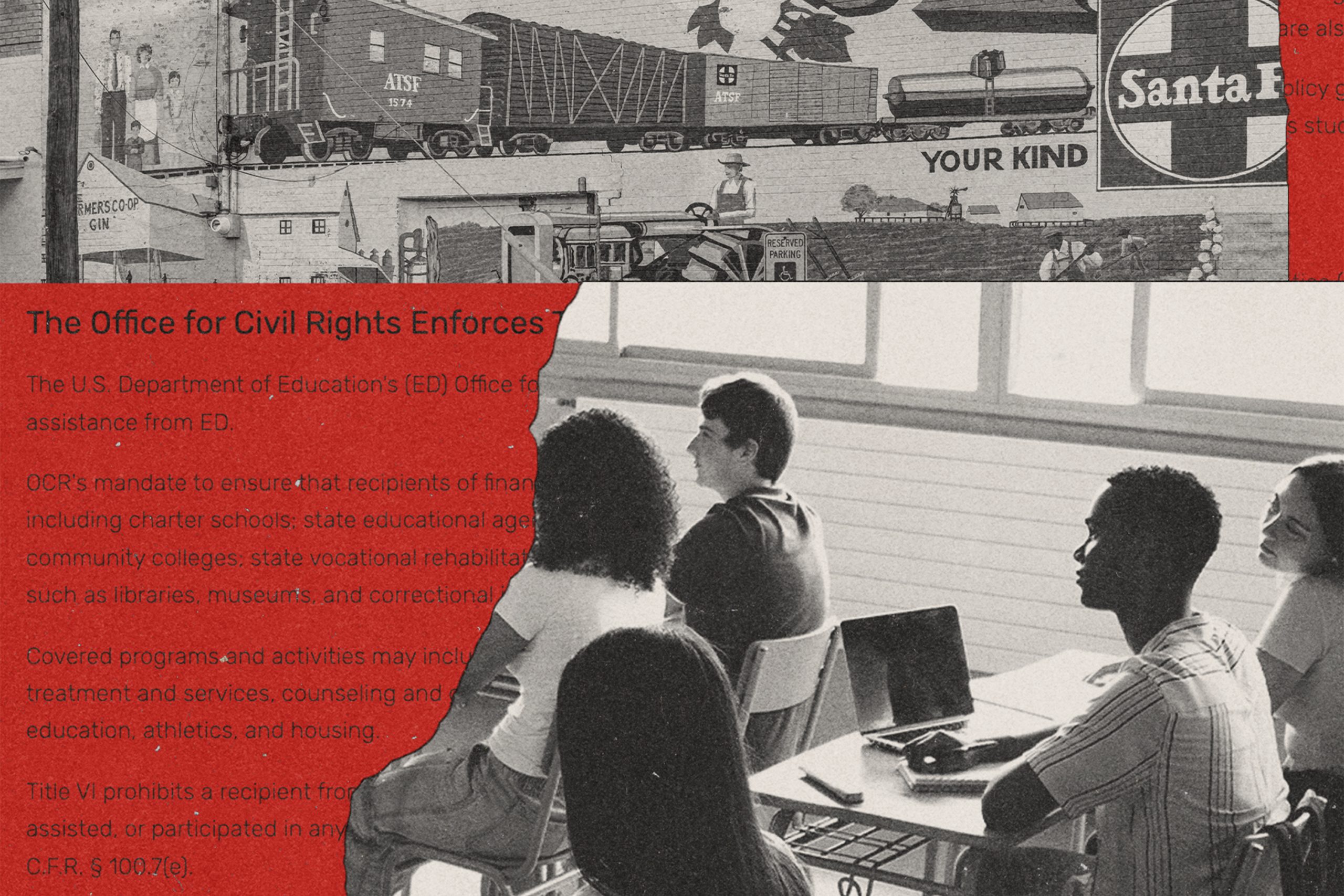
    Just over 20 miles away from downtown Lubbock, in the neighboring town of Slaton, which had its own series of racist incidents and ensuing complaints to OCR, residents say the racial atmosphere has deteriorated even further this year and the school administration has been completely unresponsive. School officials promised to work with local authorities to paint over part of a mural in the center of town that depicts Black men picking cotton under the watch of a white farmer, teachers say. But that never happened. Parents say the n-word is used regularly by white students without consequence in the district, where just 5 percent of students are Black. 

    “I’ve witnessed kids on my campus calling Black kids ‘monkeys,’” said a Slaton teacher who grew up in the town and spoke on condition of anonymity out of fear for her job. “I’m sorry to say that it’s gotten worse. I feel like more of the extremists have come out.”

    Parents say their children continued to be bullied because of their race even after Slaton administrators pledged in 2022 to discipline students for slurs. One mom said her second grader was called an “African monkey” the next year by other kids in his class at Cathelene Thomas Elementary. She says she told the principal, who said, “‘Would you be offended if they called him a cat or something different?’” the mother recalled. “I got up and left. I didn’t even know what to say.”

    After that she started homeschooling her kids. She asked to remain anonymous because her children still participate in community events and she is worried they will face retribution.

    Cathelene Thomas Principal Margaret Francis did not respond to requests for comment. Superintendent Shelli Conkin said in an email that federal law prevented the district from discussing student-related matters and did not respond to additional questions. “Since I became superintendent in 2023, Slaton ISD has experienced many positive developments that highlight our commitment to students and staff,” she wrote, including facility upgrades, a district fundraising effort and a four-day school week.

    Related: Which schools and colleges are being investigated by the Trump administration?

    Anzley, meanwhile, is still fighting for justice for his grandson. After the district declined to discipline the girl for making the accusation, he said, and with OCR no longer seeming like an option for redress, he’s hoping to find a lawyer to file a civil rights lawsuit on behalf of his grandson.

    The district’s apology and commitment to better train administrators did not undo the damage to Ja’Maury, he and his grandfather said. People kept on messing with me about it, saying I was a pedophile, saying I was a pervert,” said the middle schooler. “After that I almost hated life, I didn’t even want to live no more after that. That was horrible.”

    Last spring, four months after Ja’Maury had been back at McCool, he got into a fight with a boy who called him the n-word on the school bus, he said. This fall, Anzley decided to transfer Ja’Maury from the top-rated school he once loved — which is 9 percent Black — to Dunbar College Preparatory Academy, which is 45 percent Black and received an F rating this year from the Texas Education Agency. Ja’Maury says he feels safer there; Anzley says the move was necessary for his grandson’s mental health but that he preferred the learning opportunities at McCool.

    “None of this is new, because the very name Lubbock is the name of a Confederate soldier,” said Gant. “It’s heartbreaking, but it doesn’t surprise me. The aggression of it has been heightened under the Trump administration.” 

    She added, “The districts know that OCR has been dismantled so there’s no urgency to fix these issues. It’s on the community, and it’s on the parents to be factual, vocal and not quit.”

    Contact senior investigative reporter Meredith Kolodnerat 212-870-1063 or [email protected] or on Signal at merkolodner.04.

    This story about federal investigations in schools was produced by The Hechinger Report, a nonprofit, independent news organization focused on inequality and innovation in education. Sign up for the Hechinger newsletter.

    This <a target=”_blank” href=”https://hechingerreport.org/probes-into-racism-in-schools-stall-under-trump/”>article</a> first appeared on <a target=”_blank” href=”https://hechingerreport.org”>The Hechinger Report</a> and is republished here under a <a target=”_blank” href=”https://creativecommons.org/licenses/by-nc-nd/4.0/”>Creative Commons Attribution-NonCommercial-NoDerivatives 4.0 International License</a>.<img src=”https://i0.wp.com/hechingerreport.org/wp-content/uploads/2018/06/cropped-favicon.jpg?fit=150%2C150&amp;ssl=1″ style=”width:1em;height:1em;margin-left:10px;”>

    <img id=”republication-tracker-tool-source” src=”https://hechingerreport.org/?republication-pixel=true&post=114040&amp;ga4=G-03KPHXDF3H” style=”width:1px;height:1px;”><script> PARSELY = { autotrack: false, onload: function() { PARSELY.beacon.trackPageView({ url: “https://hechingerreport.org/probes-into-racism-in-schools-stall-under-trump/”, urlref: window.location.href }); } } </script> <script id=”parsely-cfg” src=”//cdn.parsely.com/keys/hechingerreport.org/p.js”></script>


    Source link

  • The hottest HE policy topics of 2025

    The hottest HE policy topics of 2025

    It’s always fun at this time of year to hop on Google Analytics and see which topics and articles on Wonkhe have been the most read.

    At Wonkhe we don’t generally pursue “clicks” for their own sake. The nature of HE is that there are lots of people who have specialist and specific concerns they want to write about and that others enjoy hearing about – and if you have even a passing knowledge of our site you’ll be aware that as a team we have our own share of hobby horses, and niche interests. Thank you for putting up with us.

    But there are also moments in the policy cycle that seem to bring the sector together at the Wonkhe watercooler, typically major fiscal events like the Budget, or major government policies such as this year’s post-16 education and skills white paper. In those obvious Big Moments it’s clear that Wonkhe’s policy summaries are widely clicked on and shared. These are meant to be an accessible overview that help non-specialists understand the policy agenda in fairly broad strokes, so hopefully that means they are working.

    Beyond the Big Moments you get to the other issues and debates of the year, topics that have needed interpretation and analysis, and sense-making, sometimes with a bit of soap boxing thrown in.

    So here, in no particular order, are the top five topics of the year based entirely on my reading of Wonkhe’s web traffic. Do write in if you have a more robust evidence base – or if proper data is your thing change the channel to DK’s year in numbers on the other side.

    Artificial intelligence

    This conversation just keeps going, and for good reason – as the technology evolves, as students, academics and HE professionals test different use cases and roll out new policies, training and support, the meaning of artificial intelligence in the HE context is also shifting. It started with academic misconduct, but now it’s moving towards learning design, graduate skills innovation and efficiency – and all of those things need unpacking and critical appraisal. If that’s something you’re interested in, do join us at The Secret Life of Students in March 2026.

    Free speech

    Namely, the fine the Office for Students issued to the University of Sussex, which sent enormous reverberations around the sector and turned what was already a fairly fraught issue as higher education institutions grappled with executing their legal and regulatory responsibilities, into a seriously high-stakes challenges for heads of administration, governors and students’ unions. In 2025 the free speech legislation came into force, alongside modest government amendments to try to make the whole thing workable.

    But as the fervid debate over free speech subsides in favour of implementing the regulations the question remains hanging in the air: if 2026 passes without a major regulatory intervention on free speech will it be because regulation has enabled a resurgence of healthy debate on campus, or because higher education institutions are now so terrified of being the next against the wall they are shying away from any possible controversial issue in perpetuity?

    Franchising

    Last year saw interventions from the National Audit Office and Public Accounts Committee raising concerns about the culture around franchised higher education provision – and this year ended with confirmation of government “crack down” plans. Meanwhile Universities UK and GuildHE strengthened the sector’s code of conduct on admissions and its guidance on the use of domestic agents. Over on The Post-18 Project we made some suggestions about how to regulate franchised provision, learning the lessons from FE.

    So are we looking at steps in the right direction or bringing a knife to a gun fight? While there remain bad actors in the system we can’t be confident that it’s not the latter. It’s possible that in 2026 the government will get round to strengthening OfS’ duties to protect public money, as the post-16 education and skills white paper promised, but the whole agenda depends on “when legislative time allows.” In the meantime, the whole issue is being framed as a “governance problem” – increasingly a get-out-of-jail-free card for ministers wishing higher education institutions would act more against the incentives the current system has handed them.

    Mergers

    There’s a healthy market for futurologists prepared to speculate about the future size and shape of the HE sector, and lots of work around the margins to work out how to make the process of structural change, where institutions have decided it’s a good strategic choice, less burdensome.

    Given the scale of the proposal and its unusual nature it’s not surprising that the announcement that the Universities of Kent and Greenwich plan to merge to form a new multi-university group saw a huge degree of interest, especially as it’s offered a solution to the problem of loss of institutional identity in merger – the two institutions will remain distinct as trading entities while combining as a legal entity with single systems and policies.

    Higher education finances

    No, mergers and finances aren’t the same thing. Shame on you for suggesting it. Though it’s not insignificant to the broader prospect of structural change that the government has declined to say what it would do if a higher education institution became insolvent, preferring instead to rely on OfS to try and make sure that doesn’t happen.

    It will come as a surprise to nobody that higher education finance remains a much-engaged-with topic, as the sector tries to make sense of its circumstances and the implications for its future. In particular this year the financial challenges at the University of Dundee, while distinctive to that institution, have thrown into sharp relief the real risks facing the sector and the impact on higher education communities when an institution finds itself in impossible financial circumstances.

    What has changed at the end of this year is some clarity from the Westminster government about the funding settlement, but with a consultation on the Strategic Priorities Grant expected in 2026 plus elections in Wales and Scotland, plus ongoing efforts to manage risks to financial sustainability and/or transform operating models the finances conversation isn’t going anywhere any time soon. But in 2026 let’s change it up so that it’s less about how awful it all is and more about learning how others have managed significant financial changes – and maybe even come out the other side stronger and with a greater clarity of purpose. That’s my Christmas wish, anyway.

    Take a breather

    If you’ve listened to the podcast this week you’ll have heard DK’s annual Christmas song offering – and I think it’s not all that surprising that his main message this year seems to be less about the HE policy landscape and more about escaping from having to think about it for a week or two.

    Not the worst advice by any means – and so to help you switch off we’ll be dialling back our firehose of policy content and commentary to the merest trickle (plus whatever Jim can’t help himself from writing about while he’s supposed to be on holiday).

    Have a peaceful Christmas season and a jolly New Year, and we’ll be here in 2026 for another go on the HE policy merry-go-round. Happy festive season everyone and Wonk bless us, one and all.

    Source link

  • Reimagining Education through Ritual and Beauty – Faculty Focus

    Reimagining Education through Ritual and Beauty – Faculty Focus

    Source link

  • Reimagining Education through Ritual and Beauty – Faculty Focus

    Reimagining Education through Ritual and Beauty – Faculty Focus

    Source link

  • Higher education postcard: Trinity College, Oxford

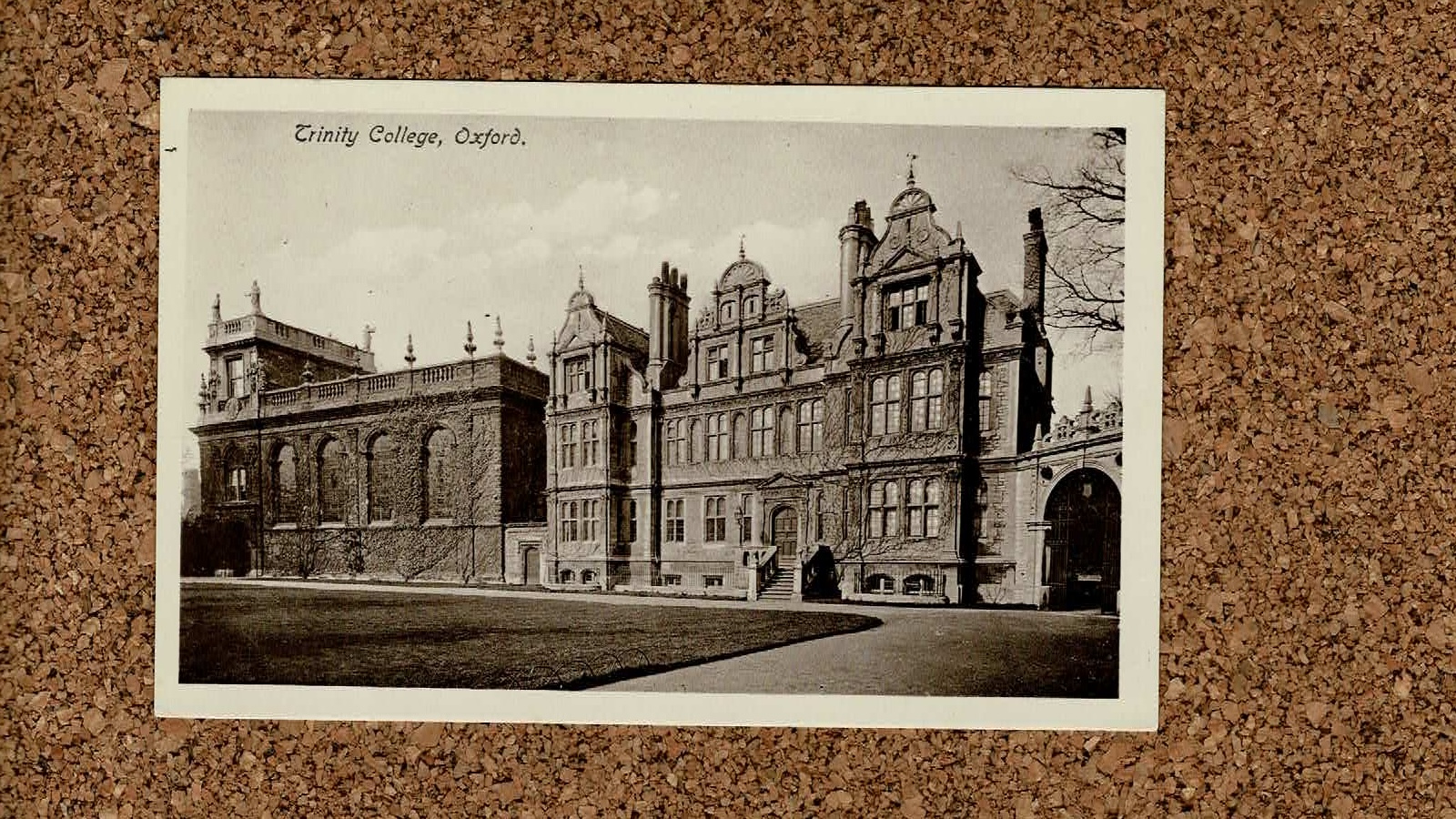
    Higher education postcard: Trinity College, Oxford

    Well, it’s nearly the end of the year, and this is the final higher education postcard of 2025. And as is traditional, this is a bit of a Christmassy edition.

    But when exactly is Christmas? We can imagine that record keeping 2,000 years ago was not as punctilious as the demands of today’s HESA return, and so the question of the precise date of Christmas is a good one. It was fixed as being 25 December by Pope Julius I, who was particularly pontifical between the years 337 and 352.

    As well as fixing the date of Christmas, Julius weighed in on the Arian controversy. Arianism, named for Arius, a Christian clergyman from what is now Libya, held that Jesus was created by God and is thus distinct from God. Which is somewhat at odds with the notion of the trinity (the oneness of God, son and holy spirit) which was part of the Nicene creed. And which in turn was the start of a more managed approach to religious doctrine by the Christian church and the Roman empire. (Don’t worry, there’s not a test).

    Julius was thus a defender of the Trinity, and so it is to a Trinity that we turn. Specifically, Trinity College, Oxford.

    This was founded by another Pope. Sir Thomas Pope, one of Queen Mary’s privy counsellors. In 1555.

    The idea was to provide for the training of Catholic clergy. It used buildings which had previously been occupied by Durham College, Oxford – which you may not have heard of, because it was founded in 1291 and closed in 1545. It was owned by Durham Priory, and abbey associated with Durham Cathedral, and served as a college for monks studying at the university. Durham Priory was dissolved in 1540 and the college followed suit five years later.

    Durham College was dedicated to the Virgin Mary, St Cuthbert, and the Holy Trinity, and it is suggested that the new college was called Trinity College to reflect the last of these.

    Anyway, the new college was established, and used some of the Durham College buildings, which still stand today. Although, sad to say, I think that they are hidden in the picture postcard, extending perpendicularly from the other side of the ivy clad building on the left. I think.

    The college thrived in a way which its predecessor didn’t. In 1882 the college admitted men of all faiths and none, removing its CofE test. In 1979 it did the same but for women.

    A few snippets will help to give a flavour of Trinity.

    In 1618 the president of the college, Ralph Kettell, was concerned about students drinking in town. His plan: to brew beer in college instead. This sounds good in principle, but the plan backfired when the cellar he was having dug for the purpose caused the college’s hall to collapse.

    Saint John Henry Newman, at the time plain John Henry Newman, was a student at the college, and made his first Anglican communion there. He was also, many years later, the first honorary fellow of the college, and this gesture – which aimed for reconciliation between the university and the future saint – was much appreciated by Newman.

    Oxford colleges’ academic performance is ranked in the Norrington table. Norrington was Sir Arthur Norrington, President of Trinity from 1954–69. And the University has a nifty little Tableau presentation, which might appeal to certain wonks frequenting these parts.

    Alumni include three former Prime Ministers – Pitt the Elder, Lord North, and Spencer Compton (who I had never heard of), and two splendid fictional characters: Jay Gatsby and Tiger Tanaka, the Japanese spymaster in You Only Live Twice.

    Here’s a jigsaw of this week’s card. And, as a bonus here’s another of Trinity, this time with the college arms.

    The card above was unposted, but the card with the college arms was sent in 1905 to a Miss Jones in Weybridge. As best as I can make out, it reads:

    Still alive, but not much thinking going on. When do you contemplate sailing and how do you think we are going to be consoled for the loss? Have not sent you many of these Pcards, they will come along slowly. I have been up again this week, feel tired of everything, today may have better time later. Kind regards etc

    May I wish you all the best for the Christmas break, whether you’re with family, working all the way through, or just trying to escape from it all. Thank you for reading my posts, and I’ll be back in the new year.

    Source link

  • The Science of Attention for Better Teaching

    The Science of Attention for Better Teaching

    Myriam Da Silva, CEO of CheckIT Learning, discusses the complexities of attention in education, emphasizing realistic expectations for student engagement. Through research and practical examples, she highlights how teachers can create engaging environments. The episode also shares a poignant story about the impact of a teacher’s attention on a young girl in the 1960s.

    We want kids to “pay attention” But is it realistic that they could actually pay attention all the time? How about the attention at the beginning of class? Or multiple peaks of attention?

    Myriam Da Silva, CEO of CheckITLearning and author of the first AI neuroscience lesson planning tool, Cleo, talks today about the aspects of attention that can help us be better teachers. She dives into practical examples, research, and we share lots of ideas for helping our classroom students learn while having an engaging, exciting environment (and realistic expectations.)

    This show is sponsored by CheckIT Learning. All opinions are that of the respective person.

    The, I share a story of Sue and Mrs. Scruggs about the power of 20 minutes of a teacher’s attention of a young girl living in Alabama in the 1960’s. This is a special story and I hope you enjoy how we’ve retold and remastered it just for high quality radio.

    I hope you enjoy this show. The content is so great, I’m going to also be sharing a full blog post with the ideas in written form, but in the meantime, I hope you enjoy the show.

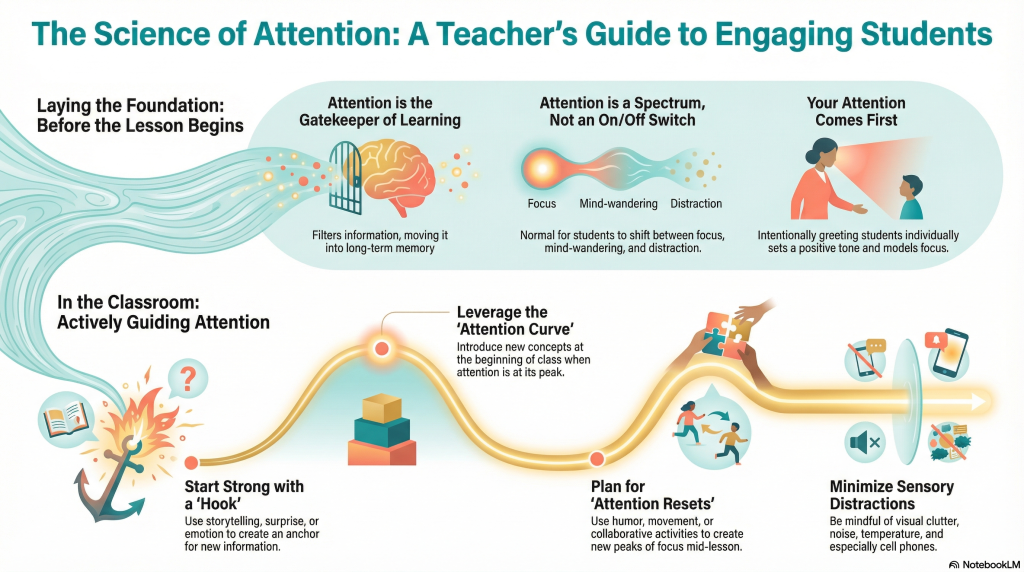
    This infographic was created using the transcript of this episode and Google Notebook LM’s infographic feature based on the content shared in the show.

    Listen to the Show

    The Science of Attention: How One Teacher Changed Everything

    Myriam Da Silva – Bio as Submitted

    Myriam Da Silva, CheckIT Learning CEO

    Myriam Da Silva is a visionary, entrepreneur, AI ethicist, speaker, and artist driven by a singular mission: to inspire people to believe in themselves. Through her work and her story, she empowers audiences to embrace their unique gifts as a force for contribution, leading lives filled with meaning, purpose, and fulfillment.

    As the CEO of CheckIT Learning and President of the CheckIT Foundation, Myriam is pioneering a new vision for education grounded in human development. She is the creator of Cleo, the world’s first AI neuro-mentor designed to support teachers and students through the science of learning, and she developed a widely adopted Science of Learning micro-course that helps educators bring neuroeducation into daily practice.

    Myriam works with global organizations on AI ethics and child-centered design, including UNESCO, iRAISE, and international coalitions shaping responsible AI in education. She will also be featured on Women in Power, an Inside Success TV series highlighting female leaders who are redefining impact and innovation.

    She is the author of the forthcoming book The Black Sheep (2026), a powerful call to reimagine education so that every student’s uniqueness becomes their strength, empowering them to live, lead, and contribute with lasting impact. 

    Blog: www.checkitlearning.com

    Linked In: www.linkedin.com/in/myriamdasilva

    Disclosure of Material Connection: This is a “sponsored podcast episode.” The company who sponsored it compensated me via cash payment, gift, or something else of value to include a reference to their product. Regardless, I only recommend products or services I believe will be good for my readers and are from companies I can recommend. I am disclosing this in accordance with the Federal Trade Commission’s 16 CFR, Part 255: “Guides Concerning the Use of Endorsements and Testimonials in Advertising.”

    You Might Be Interested In

    Never miss an episode

    Get the 10-minute Teacher Show delivered to your inbox.


    Source link

  • Reform Rhetoric and Elite Power Dynamics

    Reform Rhetoric and Elite Power Dynamics

    The 2026 ASU+GSV Summit’s announcement of Rahm Emanuel as a featured speaker paints a portrait of a seasoned education leader: expanding Pre‑K, lengthening school days, and championing accountability in public schooling. It positions him as a “national voice for bold, outcomes‑driven education reform” with the promise that “ALL students can succeed.” But a closer look at Emanuel’s record and the broader political and economic networks he’s part of reveals a gap between reform rhetoric and the structural realities facing American education.

    The summit blurb highlights aspects of Emanuel’s mayoral record—like longer school days and universal Pre‑K—as unequivocal successes. Yet critics note that these reforms came alongside aggressive school closures and policies that often prioritized test scores over community stability and equitable resources for historically underserved neighborhoods. The celebration of “outcomes‑driven” approaches overlooks the real impacts of top‑down accountability regimes on students and educators.

    A deeper problem in education policy today isn’t just about individual initiatives, it’s about who shapes the agenda and why. Investigations into elite influence, such as The Pritzker Family Paradox, show how wealthy political families and private capital can steer education systems in ways that benefit investors as much as—if not more than—students. Members of that same elite class move fluidly between public office, philanthropic boards, and private education ventures, blurring lines between public good and private gain.

    The concerns about elite influence extend beyond k‑12 reform into higher education. The University of Phoenix—the nation’s largest for-profit university—has faced long-running federal scrutiny that has only intensified questions about the role of private equity and political connections in education. In 2018, the Federal Trade Commission was reported to be investigating the University of Phoenix’s practices more than two years after the institution was taken private (in part) by the Vistria Group, a firm led by a longtime Obama associate. The deal pushed the university out of public markets, reducing transparency even as the FTC pursued inquiries into marketing, recruitment, financial aid, billing practices, and more. This story is more than an isolated headline. It links education policy, political networks, and private equity in ways that should make anyone skeptical of sanitized reform narratives. The University of Phoenix’s federal investigation—set against its massive enrollment and heavy reliance on federal student aid—raises serious questions about how for-profit models and political influence intersect to shape student outcomes and taxpayer exposure to risk.

    With Emanuel positioned at the ASU+GSV Summit as a visionary reformer, it’s worth asking what kind of reform is being championed—and for whom. Emanuel’s career path mirrors that of many elite education influencers: from municipal leadership to Washington corridors to national stages, often amplifying narratives that celebrate managerial efficiency and data-driven accountability while underemphasizing power imbalances, market incentives, and community impacts. Putting Emanuel on a summit stage alongside investors and administrators reinforces a reform ecosystem driven by elite networks, where visibility and messaging often outpace substantive change in classrooms or communities that have long been underserved.

    Attendees of the summit and observers of national education policy deserve more than polished bios and upbeat messaging. They deserve transparent discussions about who benefits from current education reforms and who loses, critical engagement with the role of private capital and political influence in shaping everything from early education to college financing, and honest reflection on how policy levers affect students, especially those from historically marginalized communities. Platforms like ASU+GSV should widen the lens beyond elite testimonials and market-friendly case studies to include voices that challenge entrenched interests and demand accountability not just in language, but in structural outcomes. Real transformation will not come from repackaging reform as spectacle; it will come from confronting the systems that continue to produce inequity in American education.


    Sources

    1. The Pritzker Family Paradox: Elite Power, Philanthropy, and Education Policy. Higher Education Inquirer. July 2025. https://www.highereducationinquirer.org/2025/07/the-pritzker-family-paradox-elite-power.html

    2. FTC Investigates University of Phoenix After Sale to Obama-Linked Firm. Daily Caller. July 22, 2018. https://dailycaller.com/2018/07/22/obama-university-phoenix-probe/

    3. ASU+GSV Summit 2026: Rahm Emanuel Speaker Announcement. https://www.asugsvsummit.com

    Source link