Blog

  • Higher education postcard: Teesside University

    Higher education postcard: Teesside University

    In August 1856, Joseph Constantine was born in Schleswig-Holstein (then Denmark, later Germany, famously questionable) to British parents: his father, Robert, was an engineer working on the Schleswig-Holstein railway. Joseph went to Newcastle Grammar School and in 1881 moved to Middlesbrough. There he set up in the shopping business, and did very well for himself.

    He was obviously imbued with a passion for Middlesbrough. We learn from the Yorkshire Post and Leeds Intelligencer on 2 July 1930 that:

    Mr Constantine was an active member of the Tees Conservancy Commission, whose work was closely associated with Mr Amos, the general manager. It was to him that Mr. Constantine first broached the idea, in June 1916, of doing something substantial for Middlesbrough. The idea that should connected with higher education was his own, but it was Mr. Amos who suggested that a visit should be made to Armstrong College Newcastle.

    Mr Constantine was greatly impressed with the good work of that institution, and made up his mind to provide the youth of his own town with similar educational facilities. It was is the office of the Mayor, then Mr Joseph Calvert, that Mr Constantine disclosed his proposal and the terms of his gift. The prolongation of the war prevented Mr Constantine from seeing the fulfilment of his dream, and the changed conditions made the gift of £40,000 inadequate for the scheme. But the generosity of Mr Constantine’s widow and his family in giving the same amount, enabled the building of the college to be accomplished.

    On 6 November 1922 (we read in the next day’s Leeds Mercury) the Middlesbrough Education Committee met, and in order to progress the scheme for a college, constituted itself, with representatives of Joseph Constantine (who may by then have been frail: he died six weeks later), as the governing body of the new college. A site had by then been bought, but commencing the build had run into difficulties. The governing body hence formed a sub-committee to look at other colleges to get ideas for buildings.

    In April 1927 the Town Council awarded the building contract – £65,000 – to Messrs Easton, a Newcastle firm (one alderman objected, arguing that the tender should go to a Middlesbrough firm which had bid at only £100 more). Building work was completed in time for the first students to be enrolled in September 1929. Constantine Technical College was born (Joseph Constantine was, apparently, against the college being named for him, but was persuaded by the mayor).

    It offered what we would now think of as both further and higher education, including University of London external degrees. By 1931 it was appointing its second Principal: Dr T J Murray was appointed from the Smethwick Municipal College, on an annual salary of £900, rising to £1200. ICI was offering scholarships for degree students and the students’ guild was organising its third charity rag, starting on 2 July and lasting for almost two weeks. The events list (from the South Bank Express, 18 June 1932) looked – mostly – good:

    • Saturday: motorized treasure hunt
    • Monday: students night at the Gaumont Palace, including a male beauty chorus and a female beauty competition (the latter open to all girls in Teesside over 16 years old)
    • Wednesday: opening of the amusement park by the beauty queen
    • Thursday: rag dances, three held simultaneously in Middlesbrough, Redcar and Stockton
    • Friday: boxing
    • Saturday: rag day, street collection, parade and jazz concert
    • Monday: mock civic night (presumably some sort of debating competition?)
    • Wednesday: sports day

    The college continued to develop through the 1950s and 1960s. It expanded, as can be seen by the relocation of its art school. In the 1960s there was some agitation for the creation of a technical university for the north east, for which Constantine College must have been in the frame. But these hopes were dashed in 1967, with the Secretary of State confirming that no funds would be available.

    The college renamed itself as Constantine College of Technology before becoming the Teesside Polytechnic in 1969. The local college of education was incorporated in the 1970s, and in 1992 it became the University of Teesside (this is the point where, as I wrote about last week, it was in partnership for a while with Durham University for the creation of University College Stockton). In 2009 it was renamed again, as Teesside University.

    Teesside is one of the few universities to have a biological organism named after it. Pseudomonas teessidea is a bacterium which can help to clean contaminated soil, and was discovered by Dr Pattanathu Rahman, then a Teesside University microbiologist.

    Here’s a jigsaw of the postcard – unposted but I guess dates from the 1930s, not long after the college was opened. Unposted, but there’s still a message:

    Source link

  • Students Should Insure an Investment as Important as College

    Students Should Insure an Investment as Important as College

    To the editor:

    We appreciate the opportunity to respond to the recent opinion essay “Degrees of Uncertainty” (Dec. 15, 2025). The author raises important questions about rising college costs, institutional incentives and the risks of oversimplifying complex financial challenges facing students and families.  We are pleased that she recognizes Loan Repayment Assistance Programs (LRAPs) help address affordability challenges and provide many benefits for students and colleges. 

    However, the author questions whether students should benefit from a guarantee that their college degree will be economically valuable. 

    LRAPs are, at their core, student loan insurance. It can be scary to borrow large student loans to finance an expensive college degree. There is a market failure, however, every time a student does not attend their preferred college, study their preferred major or pursue their preferred career because they are afraid of student loans. Students should be free to pursue their passions—not forced into second-best choices because of the cost of the degree or the prospect of a lower income in the future.  

    Society also loses out—especially if the lower-income career a student wants to pursue is a human service profession, such as education, where they will invest in improving the lives of others. 

    Most purchases come with a warranty or guarantee. Why should college be different? Colleges promise to provide value to students. We applaud those colleges and universities that stand behind that promise with a financial guarantee.

    As consumers, we routinely insure our biggest risks and largest purchases. We insure our homes, cars, boats and lives—and even our pets. Why shouldn’t we insure an expensive investment in college? 

    In any class, we can expect some students will earn less than their peers. It is reasonable for students to fear being among that group. An individual student cannot diversify that risk. That is the function of insurance.  

    LRAPs spread the risk across many students, just as insurance does with other familiar risks. Most drivers can’t protect themselves from the chance of being in a car accident and facing large repair and medical expenses. Insurance spreads that risk, turning a small chance of a very large cost into a small premium that protects against that loss. 

    LRAPs serve the same function for students—without the cost—because colleges cover the program, giving students peace of mind and the freedom to attend their preferred college and pursue their passions. 

    By doing this, LRAPs are a tool that can help colleges increase enrollment and revenue. This additional revenue can be invaluable at a time when colleges face many structural challenges—from regulatory changes to the disruption of AI to declining enrollment caused by the demographic cliff. 

    LRAPs provide meaningful protection to students while maintaining clear incentives to focus on completion, career preparation and postgraduation outcomes.

    Peter Samuelson is president and founder at Ardeo Education Solutions, a loan repayment assistance program provider. 

    Source link

  • Faculty Merit Act Is Meritless (opinion)

    Faculty Merit Act Is Meritless (opinion)

    A recent op-ed by David Randall, executive director of the Civics Alliance and director of research at the National Association of Scholars, argues that faculty hiring in American universities has become so corrupt that it requires sweeping legislative intervention. NAS’s proposed Faculty Merit Act would require public universities to publish every higher ed standardized test score—SAT, ACT, GRE, LSAT, MCAT and more—of every faculty member and every applicant for that faculty member’s position across different stages of a faculty search. The goal, they claim, is to expose discrimination and restore meritocracy.

    Letter to the editor

    A letter has been submitted in response to this article. You can read the letter here, and view all of our letters to the editor here.

    The proposal’s logic is explicit: If standardized test scores are a reasonable proxy for faculty merit, then a fair search should select someone with a very high score. If average scores decline from round to round, or if the eventual hire scored lower than dozens—or even hundreds—of rejected applicants, the public, Randall argues, should be able to “see that something is wrong.”

    But the Faculty Merit Act rests on a serious misunderstanding of how measurement and selection actually work. Even if one accepts Randall’s premise that a standardized test score “isn’t a bad proxy for faculty merit,” the conclusions he draws simply do not follow. The supposed red flags the proposed act promises to reveal are not evidence of corruption. They are the expected mathematical consequences of using an imperfect measure in a large applicant pool.

    I am a data scientist who works on issues of social justice. What concerns me is not only that NAS’s proposal is statistically unsound, but that it would mislead the public while presenting itself as transparent.

    A Statistical Mistake

    The proposed act depends on a simple idea: If standardized test scores are a reasonable proxy for faculty merit, then a fair search should select someone with a very high score. If the person hired has a lower score than many rejected applicants, or if average scores decline from round to round, something must be amiss.

    This sounds intuitive. It is also wrong.

    To see why, imagine the following setup. Every applicant has some level of “true merit” for a faculty job—originality, research judgment, teaching ability, intellectual fit. We cannot observe this truth directly. Instead, we observe a standardized test score, which captures some aspects of ability but misses many others. In other words, the test score contains two parts: a signal (the part related to actual merit) and noise (everything else the test does not measure).

    Now suppose a search attracts 300 applicants, as in Randall’s own example. Assume—very generously—that the search committee somehow identifies the single best applicant by true merit and hires that person.

    Here is the crucial point: Even if test scores are meaningfully related to true merit, the best applicant will almost never have the highest test score.

    Why? Because when many people are competing, even moderate noise overwhelms rank ordering. A noisy measure will always misrank some individuals, and the larger the pool, the more dramatic those misrankings become. This is the same reason that ranking professional athletes by a single skill—free-throw percentage, say—would routinely misidentify the best overall players, especially in a large league.

    How Strong Is the Test-Merit Relationship, Really?

    Before putting numbers on this, we should ask a basic empirical question: How strongly do standardized tests actually predict the kinds of outcomes that matter in academia?

    The most comprehensive recent research on the GRE—the test most relevant to graduate education—finds minimal predictive value. A meta-analysis of more than 200 studies found that GRE scores explain just over 3 percent of the variation in graduate outcomes such as GPA, degree completion and licensing exam performance. For graduate GPA specifically—the outcome the test is explicitly designed to predict—GRE scores explained only about 4 percent of the variance.

    These studies assess near-term prediction within the same educational context: GRE scores predicting outcomes for the very students who took the test, measured only a few years later—under conditions maximally favorable to the test’s validity. The NAS proposal extrapolates from evidence that is already weak even under these favorable conditions. It would evaluate faculty hiring using test scores—often SAT scores—taken at age 17, applied to candidates who may now be in their 30s, 40s or older. Direct evidence for that kind of long-term extrapolation is scarce. However, the limited evidence that does exist points towards weak relationships rather than strong ones. For instance, Google’s internal hiring studies famously found “very little correlation” between SAT scores and job performance.

    Taken together, the research suggests that any realistic relationship between standardized test scores and faculty merit is weak—certainly well below the levels needed to support NAS’s proposed diagnostics.

    What This Means in Practice

    The proposed Faculty Merit Act raises an important practical question: Even if standardized test scores contain some information about merit, how useful are they when hundreds of applicants compete for a single job?

    Taking the GRE meta-analysis at face value, standardized test scores correlate with relevant academic outcomes at only about 0.18. Treating that number as a proxy for faculty merit is already generous, given the decades that often separate testing from hiring and the profound differences between standardized exams and the actual work of a professor. But let us grant it anyway.

    Now, consider a search with 300 applicants. With a correlation of 0.18, I calculate that the single strongest candidate by true merit would typically score only around the 70th percentile on the test—roughly 90th out of 300. In other words, it would be entirely normal for around 90 rejected applicants to have higher test scores than the eventual hire.

    Nothing improper has happened. No favoritism or manipulation is required. This outcome follows automatically from combining a weak proxy with a large applicant pool.

    Even if we assume a much stronger relationship—say, a correlation of 0.30, which already exceeds what the evidence supports for most academic outcomes—the basic conclusion does not change. Under that assumption, I calculate that the best candidate would typically score only around the 80th percentile, corresponding to a rank near 60 out of 300. Dozens of rejected applicants would still have higher test scores than the person who gets the job.

    This is the point the proposal gets exactly backward. The pattern it treats as a red flag—a hire whose test score is lower than that of many rejected applicants—is not evidence of corruption. It is the normal, mathematically expected outcome whenever selection relies on an imperfect measure. Scaling this diagnostic across many searches does not make it informative; it simply reproduces the same expected misrankings at a larger scale.

    Why ‘Scores Dropped Each Round’ Proves Nothing

    The same logic applies to the claim that average test scores should increase at each stage of a search.

    Faculty hiring is not one-dimensional. Early stages might screen for general competence; later stages may emphasize originality, research direction, teaching effectiveness and departmental fit—traits that standardized tests measure poorly or not at all. As a search progresses, committees naturally place less weight on test scores and more weight on other information. When that happens, average test scores among finalists can stay flat or even decline. That pattern does not signal manipulation. It signals that the committee is selecting on dimensions that actually matter for the job.

    Transparency, Justice and Bad Diagnostics

    Randall’s op-ed, published by the James G. Martin Center for Academic Renewal, frames the proposal as a response to injustice. But transparency based on invalid diagnostics does not mitigate injustice; it produces it.

    Publishing standardized test scores invites the public to draw conclusions that those numbers cannot support—and those conclusions will not fall evenly. Standardized test scores are strongly shaped by socioeconomic background and access to resources. Treating them as a universal yardstick of merit—especially for faculty careers—will predictably disadvantage scholars from marginalized and nontraditional paths.

    From the standpoint of justice, this is deeply concerning. Accountability mechanisms must rest on sound reasoning. Otherwise, they become tools for enforcing hierarchy rather than fairness.

    If the goal is genuine academic renewal, it should begin with renewing our understanding of what numbers can—and cannot—tell us. Merit cannot be mandated by publishing the wrong metrics, and justice is not served by statistical arguments that collapse under careful inspection.

    Chad M. Topaz is a faculty member at Williams College; co-founder of the Institute for the Quantitative Study of Inclusion, Diversity and Equity; and winner of the Mary and Alfie Gray Award for Social Justice from the Association for Women in Mathematics. He is the author of Unlocking Justice: The Power of Data to Confront Inequity and Create Change, forthcoming from Princeton University Press in May, and can be found on Bluesky at @chadtopaz.

    Source link

  • FIRE statement on calls to ban X in EU, UK

    FIRE statement on calls to ban X in EU, UK

    In recent days, senior United Kingdom government officials and members of the European Parliament have threatened to ban the social media platform X in response to a proliferation of sexualized images on the platform, including images of minors, created by user prompts supplied to Grok, X’s artificial intelligence application. 

    The following statement can be attributed to Ari Cohn, FIRE’s lead counsel for tech policy:

    Banning a platform used by tens of millions of EU and UK residents to participate in global conversations would be a grave mistake. 

    X and Grok are tools for communication, much like printing presses and cell phones are tools for communication. If those tools are used to create and share unlawful content, the answer must be to prosecute those individuals responsible, not to shut down a vital communicative hub in its entirety. Free nations that claim to honor the expressive rights of their citizens must recognize that mass censorship is never an acceptable approach to objectionable content or illegal conduct. Just as the United States’ attempt to ban TikTok violated core First Amendment principles, so too would an international ban of a social media platform violate basic tenets of freedom of expression. 

    As we navigate the challenges of technological advances like artificial intelligence, we must reject censorship and top-down governmental control. In our interconnected world, censorship abroad affects all of us, wherever we call home.

    Source link

  • Another year, another session of AI overregulation

    Another year, another session of AI overregulation

    As lawmakers kick off the 2026 legislative session, a new and consequential phase in the conversation about free speech and artificial intelligence is already taking shape in statehouses across the country. Yet another crop of AI bills is set to dictate how people use machines to speak and communicate, raising fundamental constitutional questions about freedom of expression in this country.

    The First Amendment applies to artificial intelligence in much the same way it applies to earlier expressive technologies. Like the printing press, the camera, the internet, and social media, AI is a tool people use to communicate ideas, access information, and generate knowledge. Regardless of the medium involved, our Constitution protects these forms of expression.

    As lawmakers revisit AI policy in 2026, it bears repeating that existing law already deals with many of the harms they seek to address — fraud, forgery, defamation, discrimination, and election interference — whether or not AI is used. Fraud is still fraud, whether you use a pen or a keyboard, because liability properly attaches to the person who commits unlawful acts rather than the instrument they used to do it.

    Many of the AI bills introduced or expected this year rely on regulatory approaches that raise serious First Amendment concerns. Some would require developers or users to attach disclaimers, labels, or other statements to lawful AI-generated expression, forcing them to serve as government mouthpieces for views they may not hold. FIRE has long opposed compelled speech in school, on campus, and online, and the same concerns apply when it comes to AI systems.

    Election-related deepfake legislation remains a central focus in 2026. Over the past year, multiple states have introduced bills aimed at controlling AI-generated political content. But these laws often restrict core political speech, and courts have applied well-settled First Amendment jurisprudence to find them unconstitutional. For example, in Kohls v. Bonta, a federal district court struck down California’s election-related deepfake statute, holding its restrictions on AI-generated political content and accompanying disclosure requirements violated the First Amendment. The court emphasized that constitutional protections for political speech, including satire, parody, and criticism of public officials, apply even when new technologies are used to create that expression.

    Another growing category of legislation seeks to restrict “chatbots,” or conversational AI, using frameworks borrowed from social media laws. These include blanket warning requirements telling users they are interacting with AI, sweeping in many ordinary, low-risk interactions where no warning is needed. Some proposals would categorically prohibit chatbots from being trained to provide “emotional support” to users, effectively imposing a direct and amorphous regulation on the tone and content of AI-generated responses. Other proposals require age or identity verification, either explicitly or as a practical matter, before a user may access the chatbot. 

    These kinds of constraints place the government between the people and information they have a constitutionally protected right to access. They censor lawful expression and burden the right to speak and listen anonymously. 

    For that reason, courts have repeatedly blocked similar restrictions when applied to social media users and platforms. The result is likely to be similar for AI.

    Broad, overarching AI regulatory bills have also returned this year, with at least one state introducing such a proposal so far this cycle. These bills, which were introduced in several states in 2025, go well beyond narrow use cases, seeking to impose sprawling regulatory frameworks on AI developers, deployers, and users through expansive government oversight and sweeping liability for third-party uses of AI tools. When applied to expressive AI systems, these approaches raise serious First Amendment concerns, particularly when they involve compelled disclosures and interfere with editorial judgment in AI design.

    Addressing real harms, including fraud, discrimination, and election interference can be legitimate legislative goals. But through FIRE’s decades of experience defending free expression, we’ve observed how expansive, vague, and preemptive regulation of expressive tools often chills lawful speech without effectively targeting misconduct. That risk is especially acute when laws incentivize AI developers to suppress lawful outputs, restrict model capabilities, or deny access to information to avoid regulatory exposure.

    Rather than targeting political speech, imposing age gates on expressive tools, or mandating government-scripted disclosures, government officials should begin with the legal tools already available to them. Existing laws provide remedies for unlawful conduct and allow enforcement against bad actors without burdening protected expression or innovation. Where gaps truly exist, any legislative response should be narrow, precise, and focused on actionable conduct.

    Source link

  • University of Arkansas rescinds dean offer after lawmakers object to legal advocacy in trans athletes Supreme Court case

    University of Arkansas rescinds dean offer after lawmakers object to legal advocacy in trans athletes Supreme Court case

    Last week, Emily Suski, a law professor and associate dean at the University of South Carolina, was named the next dean of the University of Arkansas School of Law. But on Wednesday, her offer was rescinded after state legislators reportedly objected to her signing a “friend of the court” brief that made legal arguments in support of trans athletes.

    The following statement can be attributed to FIRE Legal Director Will Creeley:

    The University of Arkansas’ shameful capitulation to political pressure betrays its commitment to Professor Suski and threatens the rights of all who teach, study, and work there. The message to every dean, professor, and researcher is unmistakable: Your job hinges on whether politicians approve of your views. 

    Political interference in academic decisionmaking must be rejected. When universities make hiring decisions based on politics, left or right, academic freedom gets weaker and campuses grow quieter.

    Source link

  • VICTORY: Jury finds Tennessee high school student’s suspension for sharing memes violated the First Amendment

    VICTORY: Jury finds Tennessee high school student’s suspension for sharing memes violated the First Amendment

    • A Tennessee high school suspended a student after his off-campus posting of satirical Instagram memes about his principal.
    • FIRE sued, and a jury found the suspension violated the First Amendment.

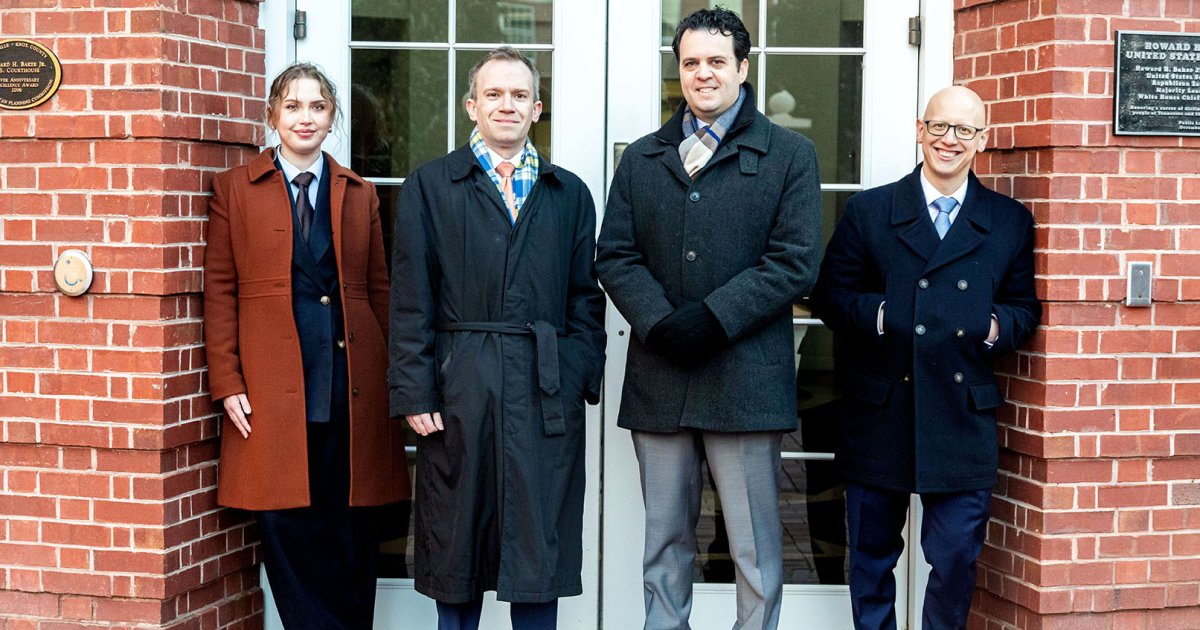
    KNOXVILLE, Tenn., Jan. 15, 2026 — Two years after a Tennessee high school student sued Tullahoma City Schools for suspending him over Instagram memes lampooning his principal, a jury found that the school district’s actions violated the First Amendment. 

    The now 20-year-old former student is represented by the Foundation for Individual Rights and Expression.

    “This isn’t just a victory for our client, it’s a victory for any high school student who wants to speak their mind about school online without fear of punishment,” said FIRE senior attorney Conor Fitzpatrick. “Our client’s posts caused no disruption, and what teenagers post on social media is their parents’ business, not the government’s.”

    FIRE’s lawsuit challenged Tullahoma High School administrators’ August 2022 suspension of the student for three days during his junior year for posting three memes lampooning then-Principal Jason Quick. 

    The school cited its social media policies to justify the suspension. The student’s first meme showed Quick holding a box of vegetables with the caption, “🔥My brotha🔥.” The second depicted Quick as an anime cat wearing whiskers, cat ears, and a French maid dress. The third showed Quick’s head superimposed on a hand-drawn cartoon character being hugged by a cartoon bird. The student intended the images to be tongue-in-cheek commentary, gently lampooning a school administrator he perceived as humorless. 

    But Quick had the school suspend the student anyway, under its social media policy that banned images which “embarrass,” “discredit,” or “humiliate” another student or school staff member. Another school policy banned posts “unbecoming of a Wildcat,” the Tullahoma High School mascot. 

    Shortly after FIRE sued on the student’s behalf, the school district lifted those policies and removed the suspension from the student’s record while litigation continued.

    LAWSUIT: High school student sues after receiving suspension for posting off-campus cat meme

    A Tennessee high school student, backed by FIRE, sued his school after being suspended for posting satirical Instagram memes while off campus.


    Read More

    Today, a jury found the school district liable for suspending the student for his speech in the first place. The verdict confirms that the student’s First Amendment rights were violated by the school’s punishment. A jury also awarded the student nominal damages.

    “Thin-skinned high school principals can’t suspend students for poking fun at them outside of school,” said Fitzpatrick. “The evidence and the jury’s verdict make it clear: High school students get to use the First Amendment, not just learn about it.”

    The Foundation for Individual Rights and Expression (FIRE) is a nonpartisan, nonprofit organization dedicated to defending and sustaining the individual rights of all Americans to free speech and free thought — the most essential qualities of liberty. FIRE educates Americans about the importance of these inalienable rights, promotes a culture of respect for these rights, and provides the means to preserve them. 

    CONTACT
    Katie Stalcup, Communications Campaign Manager, FIRE: 215-717-3473; [email protected] 

    Source link

  • Podcast: Free speech, Scottish budget, Mickey Mouse

    Podcast: Free speech, Scottish budget, Mickey Mouse

    This week on the podcast new polling suggests over a third of students think Reform UK should be banned from speaking on campus – a higher proportion than previous surveys found for the BNP or English Defence League. So what does this tell us about free speech in higher education?

    Plus Scotland’s budget settlement and legislative changes, and unpacking what “Mickey Mouse courses” really means.

    With Andy Long, Vice Chancellor at Northumbria University, Jess Lister, Director of Education at Public First, and Debbie McVitty, Editor at Wonkhe and presented by Mark Leach, Editor in Chief at Wonkhe.

    On the site

    41 per cent of Reform-voting undergraduates don’t think Reform should be allowed to speak on campus

    So you’ve been accused of harbouring “Mickey Mouse” courses at your institution… now what?

    Identifying “mickey mouse” courses

    Scottish Budget 2026 to 2027

    You can subscribe to the podcast on Apple Podcasts, YouTube Music, Spotify, Acast, Amazon Music, Deezer, RadioPublic, Podchaser, Castbox, Player FM, Stitcher, TuneIn, Luminary or via your favourite app with the RSS feed.

    Transcript (auto generated)

    It’s The Wonkhe Show. A third of students want Reform off campus. We’re talking about what’s really going on behind the data. It’s been a big week of fees and funding in Scotland and the Mickey Mouse row returns. But who’s really taking the mic? It’s all coming up.

    And it is obviously reasonable for people to question the value of university courses based on, for example, academic rigour, student outcomes, and broader societal value. But it’s not reasonable for them to arbitrarily decide on this based on no evidence. I’m afraid I see this article as really very lazy journalism.

    Welcome back to The Wonkhe Show, your weekly guide to this week’s higher education news, policy and analysis. I’m your host Mark Leach, and here to chew the fat over this week’s news, as usual, are three brilliant guests. In Newcastle, it’s Andy Long, Vice-Chancellor of Northumbria University. Andy, your highlight of the week, please.

    Thanks, Mark. Yesterday, we had a tour of our soon-to-be-opened North East Space Skills and Technology Centre. It’s going to be the home to some really exciting research and teaching on satellite and space science and technology, and we were accompanied by the North East Mayor, Kim McGuinness, who’s a great supporter of this initiative.

    Lovely. And with us is Jess, Director of Education at Public First. Jess, your highlight of the week, please.

    Hello, yes. Mine is a bit of a brag, I’m afraid. We launched our report this week on national numeracy. And usually when you launch a report, you’re looking for pick-up in The Times or The Telegraph, or one of the broadsheets. But I was delighted that for the first time, our report was discussed on This Morning, on the sofa. So there you go. A report launch first for me.

    Very good. And in North London is Demetri Onakés-Elizadebi. Your highlight of the week, please.

    Well, I had an excellent meeting of the Audit and Risk Committee of the organisation that I’m a trustee of, which is the National Institute of Teaching. It sounds terribly dull, but actually we had a very lively discussion about internal audit, and that was very much the highlight of my week. That’s pretty sad, but there it is.

    The Higher Education Policy Institute has conducted a third wave of polling of student views on free speech. The first of these waves was in 2016, around the time of Brexit. The second was in 2022, around the time of Covid. The latest was conducted in November and published this morning, and it’s trying to explore whether, as some commentators have suggested, the era of “woke” is over, in light of the election of Donald Trump and a supposed sea change in public views.

    What we see here is some really quite mixed results. There’s growth in the number of students who think universities are less tolerant of the expression of a free range of views. That’s up to 47 per cent, which is a little bit concerning. Fifty-two per cent think student societies are typically oversensitive. That tends towards the idea that students are coming away from what would be characterised as anti-free speech positions. But support for safe space policies and trigger warnings has grown over the same period, which points the other way.

    The eye-catching result that is all over the press this morning is that one third, about 35 per cent, think Reform UK should be banned from campus. Earlier waves polled on organisations like the EDL, BNP and UKIP, and around a quarter to a third of students in earlier waves expressed support for those organisations being banned from campus. Reform is obviously something a little bit different.

    DK has unpacked this on the site today, and one of the things he notes that is worth contextualising is that the number includes Reform-voting students, so there is something going on there. He also notes that only 18 per cent of students said that nobody should be banned from campus. There is clearly something going on here about students’ attitudes to political parties. There are loads of other questions in there about events, memorials and curriculum. One thing to take away is that a lot of students are in the “it depends” camp. There is more nuance here than it might look like at first blush.

    Yes, lots going on here. Just where to begin, because a lot of this looks quite contradictory on the face of it. For example, 41 per cent of Reform-voting students don’t think Reform should speak on campus. Is this about students in general and attitudes to politics, or is there a partisan thing going on here?

    One of the first things you learn when you start doing public opinion research is that people can comfortably hold competing views in their heads and not see the logical inconsistencies. This is a large sample of around a thousand students, done by a reputable polling company, and HEPI is a reputable outlet. It’s not possible to look at this and say the sample is wrong or the poll is wrong. What is interesting is thinking about what sits behind some of the questions.

    Take the headline that a third of students would ban Reform UK from campus. I’m interested in whether they want them banned, or whether they just do not want to listen to them. That has always been one of the tensions in free speech policy. You can have a right to lawful free speech on campus, but you do not have a right for anyone to turn up and listen to you, or to like you for your views. Sometimes all of this gets muddled up.

    It’s a really interesting finding. It’s going to wind up all the people who like to be wound up by these things. It should also cause everyone else to pause for reflection. This should not be dismissed. There is a conversation to have about what university leaders can do to break down polar opposites of views. “I do not mind free speech, I just do not want to hear from these people. I do not want to engage.” That is a substantive discussion.

    In terms of the polling, it would be interesting to follow this up. Polling shows what people think. It does not explain why. It would be useful to see more discussion about why students think parties should be banned from speaking, and what they mean by “banned” in this context.

    It makes me wonder whether students have a more nuanced view than this makes out. There is lots of support for safe spaces and content warnings. Does that suggest that this language of banning, and the binary debate that often dominates the free speech conversation, is not where they are in their heads?

    I think Jess captured it well. It may be about whether students want to ban things or whether they just do not want to hear them. Social media, and how people interact through it, colours expectations. In the past you might have expected to hear a range of views through different media. Now your social media channel can be largely focused on things you agree with, and you may be more reluctant to engage with those you do not.

    In the end, a proportion of the population will always want to ban things they do not like. Students may not be terribly different to the rest of the population. What we also know is that 18 to 24 year olds are far less likely to support Reform than, for example, the Green Party. A recent YouGov poll showed that 10 per cent of that age group supported Reform and 30 per cent supported the Greens. It’s interesting in this study that 7 per cent of people want to ban the Greens from speaking on campus. Put together, people often want to ban, or avoid hearing from, people they disagree with. If fewer young people support Reform, more of them want to see Reform banned, or just do not want to hear from them.

    It’s also interesting that in previous waves of this survey, parties asked about were more extreme than Reform. In 2016 and 2022, the survey asked about the BNP and the English Defence League, and similar older, defunct but still culturally present far right organisations. This year, if you put all the parties asked about on a left-to-right scale, Reform is the most extreme. It would be interesting to see whether the polling is showing that people do not want the most extreme parties to come to campus, or whether it is Reform specifically.

    What really matters is how universities respond to this. I see no evidence that they are banning speakers from different political parties. The only evidence I have is when we had hustings for the mayoral elections. Our students’ union organised those, all candidates were invited, and the Reform candidate decided not to come. They would have been welcome to come and put their case forward and answer questions from our students, but they did not want to.

    Student leaders are in a really interesting position here. I’m reminded of a conversation I had at the Festival of Education in November, around the time this polling was being conducted, with a student leader wrestling with her responsibilities around a Reform society on campus. Inevitably it was framed in free speech terms. The students who wanted to set up the society and invite speakers felt strongly about it, as did the students who felt it was inappropriate. As a student leader, she had to navigate that space. That nuance of how you listen to both camps, and what purpose political societies serve on campus in terms of civic engagement and political debate, is part of the picture.

    Mark asks about Reform’s deputy leader Richard Tice, who has jumped on the polling and called the findings appalling. He claims British universities have abandoned being centres of genuine learning, rigorous debate and intellectual challenge, instead becoming echo chambers of far left indoctrination run by activist academics. This is his long-held position already. It plays neatly into how he wants to talk about universities, and it frames the culture war quite starkly. There is a danger the nuance gets lost in the mainstream.

    Students having left-wing views should surprise nobody. That has been true for a long time. Richard Tice believing universities are far left indoctrination camps is also a long-held view. None of this is new. He did not use the “left-wing madrasas” line this time. What is interesting is the second paragraph of his statement, which arguably gives the sector an answer. He says universities bear responsibility for allowing this culture to fester. Universities do now bear responsibility for helping and encouraging as healthy a debate as possible on this topic. If I was a university vice-chancellor, I would be thinking about how to get better debates on campus. We are a long way out from an election, but this issue is going to bubble and bubble unless universities are seen to do something.

    This debate only ever interests the political elite. It is not usually a mass public opinion issue, but it acts like a barnacle on the sector’s reputation. The more work you see on how to have debate on campus, including with people you disagree with, the less weight these “echo chamber” attacks have. This also draws heavily from the US playbook. Under Trump, Republicans had universities in their sights and started stripping out grant funding, often using free speech as a rationale. You can see Reform dipping a toe in the water about something like that here in the UK, without really understanding the funding system they would be trying to reshape. They are pulling from what has happened in the US and trying to make it a UK-wide debate.

    There is also something about “woke” as a category. The origins of the term are about being attuned to social inequality and understanding how different groups can be marginalised, particularly around racial and ethnic marginalisation. But it has expanded and taken on a pejorative life of its own, used from a hostile ideological position towards universities. It would be odd if students themselves, who are not immersed in anti-woke discourse, were to treat a basket of positions around free speech as a coherent “woke” label. That coherence is often assumed by the people asking the questions or analysing the results, rather than by students themselves.

    In Wonkhe polling, there is also a link between a sense of freedom to speak on a personal level and being part of a marginalised group. We can too readily assume freedom of speech means freedom to attack left-wing positions. It can be as much about feeling safe, feeling part of a community, and understanding the purposes of speaking up as it is about entitlement to be exposed to controversial views. Now that the sector has been through the free speech debate, the legislation, the regulator, and the policies, there is a case for going back to students and asking what matters to them in taking part in a conversation, what the purpose is pedagogically, and what it does for development as a graduate and citizen in a complex political environment.

    Let’s see who’s important for us this week.

    Hi, I’m Shine Jackson, an employment partner at Mills & Reeve specialising in the sector. After months of parliamentary back and forth, the Employment Rights Act 2025 finally made it into the statute books just before Christmas, with wide-ranging implications for the sector. From new rules on unfair dismissal and zero-hours contracts, to tougher requirements on sexual harassment and major changes to industrial action, these reforms will have a real impact on how universities manage their people and risk. In my blog I’ve set out five things sector leaders need to know to prepare for these reforms, with a handy table of implementation dates.

    Now, Jess, it’s been a busy month in Scotland. Tell us what’s going on.

    It has. In Scotland we’ve seen the launch of a Future Framework for universities, a joint government and sector initiative to scope out the long-term needs of Scotland’s higher education system all the way to 2045. It’s worth noting this is not a full review. It’s more the start of an evaluation of the sector’s long-term financial sustainability, what it might need, and what Scotland’s economy might need. It is not a promise that anything in the current system is going to change. It is also a reminder that the Scottish system is much more reliant than the English system on direct government funding because students currently do not pay fees. So what the government decides its long-term settlement is going to be is key.

    We’ve seen indications the Scottish government is willing to provide some further support. There’s been an above-inflation increase in teaching and research budgets announced this week, perhaps in the hope of avoiding another Dundee-style incident. The final thing that’s interesting is that, similar to England and Wales, the Scottish government is now trying to scope out not just what a higher education funding strategy looks like, but a tertiary one too.

    Debbie responds that Scotland is already more “tertiary” than England in the sense of a post-16, post-18 offer across the system. There may be politics going on. Before Christmas the minister announced a plan to work with the university sector on the funding framework. Scotland’s universities face a genuine financial crisis, which is also a problem for the country. The framework plan may be designed to get under the skin of the issues and carry the conversation across the Scottish Parliament elections in the spring. The tertiary approach is also connected to the Tertiary Education Bill, and may reflect pressure from Scotland’s colleges that a higher education funding settlement implicates them too.

    Committing to a strategy is a step above annual budgets, and it signals a desire to link system sustainability to national goals. But there is always a risk that strategies keep the conversation going without real action. Funding higher education long term is difficult. The approach may be useful, but delivery remains uncertain.

    Andy notes that Scottish universities receive up to £2,000 a year less per home student than English universities do, and are even more reliant on international student income. There is also a relatively small group of Scottish universities that can do very well in international recruitment, meaning there is less to go around for others. England faces its own pressures, including undergraduate fees being flat for 11 of the last 13 years and recent reductions in international student numbers, but the challenge is greater in Scotland.

    Jess suggests that a joint government and sector review, without promises, could be a model for England closer to 2030. The question is whether it becomes a good conversation without political and funding heft behind it. Andy cites a London Economics statistic from a few years ago that in England students and graduates cover around 84 per cent of the total cost of higher education, with government funding around 16 per cent, and contrasts this with Scotland, Wales and Northern Ireland. The rhetoric from politics recently has often suggested students should pay more, not less, which does not suggest a more generous settlement is imminent.

    There is also an acknowledgement that, despite everyone insisting the Scottish review is not just about fees, it inevitably is. The politics of “free education” remain a touchstone, particularly for the SNP, but there is a sense that without a clever political route to change, the funding crisis will continue. There are alternative models, such as salary-based graduate repayments, but implementing them is difficult. Scotland may choose to try something different.

    That’s about it for this week. Remember you can go in deep on anything we discussed today. You’ll find links in the show notes on wonkhe.com. Don’t forget to subscribe. Just search for The Wonkhe Show wherever you get your podcasts. If you want to get ahead of everything going on in UK higher education, hit subscriptions on the site to find out more. Thanks to Jess, Andy and Debbie, and to Michael Salmon for making it all happen behind the scenes. We’ll be back next week. Jim will be here. Until then, stay Wonkhe.


     

    Source link

  • House hearing: Is now a good time to regulate AI in schools?

    House hearing: Is now a good time to regulate AI in schools?

    This audio is auto-generated. Please let us know if you have feedback.

    Dive Brief:

    • House lawmakers shared bipartisan concerns over the risks of students using artificial intelligence — from overreliance on the technology to security of student data — during a House Committee on Education and Workforce hearing on Wednesday.
    • Whether and how AI is regulated and safeguarded in the K-12 classroom at the federal level continues to stir debate. Democrats at the hearing said more guardrails are necessary, but the Trump administration has made it harder to add those through executive orders aiming to block state-level regulations and its efforts to dismantle the U.S. Department of Education. 
    • Republicans, however, cautioned against rushing new regulations on AI to make sure innovation in education and the workforce isn’t stymied.

    Dive Insight:

    The House hearing — the first in a series to be held by the Education and Workforce Committee — came a month after President Donald Trump signed an executive order calling for the preemption of state laws regulating AI with exceptions for child safety protections.

    During the hearing’s opening remarks, the committee’s ranking member, Rep. Bobby Scott, D-Va, said Congress should not stand idly by while the Trump administration “may be ingratiating itself to big tech CEOs and preventing states from protecting Americans against” the dangers of AI.  

    Instead, Scott said, Congress should take an active role in developing thoughtful regulations to “balance protecting students, workers and families” while also “fostering economic growth.”

    The ability to study and regulate AI’s impacts on education has been hindered under the Trump administration, Scott added, through the shuttering of the Education Department’s Office of Educational Technology, federal funding cuts at the Institute of Educational Sciences, and attempts to significantly reduce staffing at the Office for Civil Rights.

    At the same time, the Trump administration is strongly encouraging schools to integrate AI tools in the classroom. Committee Chair Tim Walberg, R-Mich, praised the administration’s initiatives to support AI innovation in his opening statement.

    For Congress, Walberg said, “the goal should not be to rush into sweeping new rules and regulations, but to ensure schools, employers and training providers can keep pace with innovation while maintaining trust and prioritizing safety and privacy.”

    Some hearing witnesses also called for more transparency and guardrails for ed tech companies that roll out AI tools for students.  

    Because a lot of ed tech products lack transparency about their AI models, it’s more difficult for teachers and school administrators to make informed decisions about what AI tools to use in the classroom, said Alexandra Reeve Givens, president and CEO at the Center for Democracy & Technology.

    Key questions these companies need to publicly answer — but won’t typically disclose — she said, should include whether their tools are grounded in learning science and whether the tools have been tested for bias. “Do they have appropriate guardrails for use by young people? What are their security and privacy protections?” Reeve Givens asked. 

    Adeel Khan, founder and CEO of MagicSchool AI, also said in his testimony that shared standards and guardrails for AI tools in the classroom are necessary to protect students and understand which tools actually work.

    While AI education policy is primarily driven by state and local initiatives, Khan said that “the most constructive federal role is to support capacity and protections for children while investing in educator training, evidence building, procurement guidance and funding so districts can adopt responsibly.”

    The Brookings Institution also released a report Wednesday on AI in K-12 schools based on its analysis of over 400 research articles and hundreds of interviews with education stakeholders. 

    The institution’s report warns that AI’s risks currently outweigh its benefits for students. AI can threaten students in cognitive, emotional and social ways, the report said.

    To mitigate those risks, Brookings recommends a framework for K-12 as it continues to implement AI:

    • Teachers and students should be trained on when to instruct and learn with and without AI. The technology should also be used with evidence-based practices that engage students in deeper learning.
    • There needs to be holistic AI literacy that develops an understanding about AI’s capabilities, limitations and implications. Educators must also have robust professional development to use AI, and there should be clear plans for ethically using the technology while expanding equitable access to those tools in school communities.
    • Technology companies, governments, education systems, teachers and parents need to promote ethical and trustworthy design in AI tools as well as responsible regulatory frameworks to protect students.

    Source link

  • Thomas Paine’s rise and fall

    Thomas Paine’s rise and fall

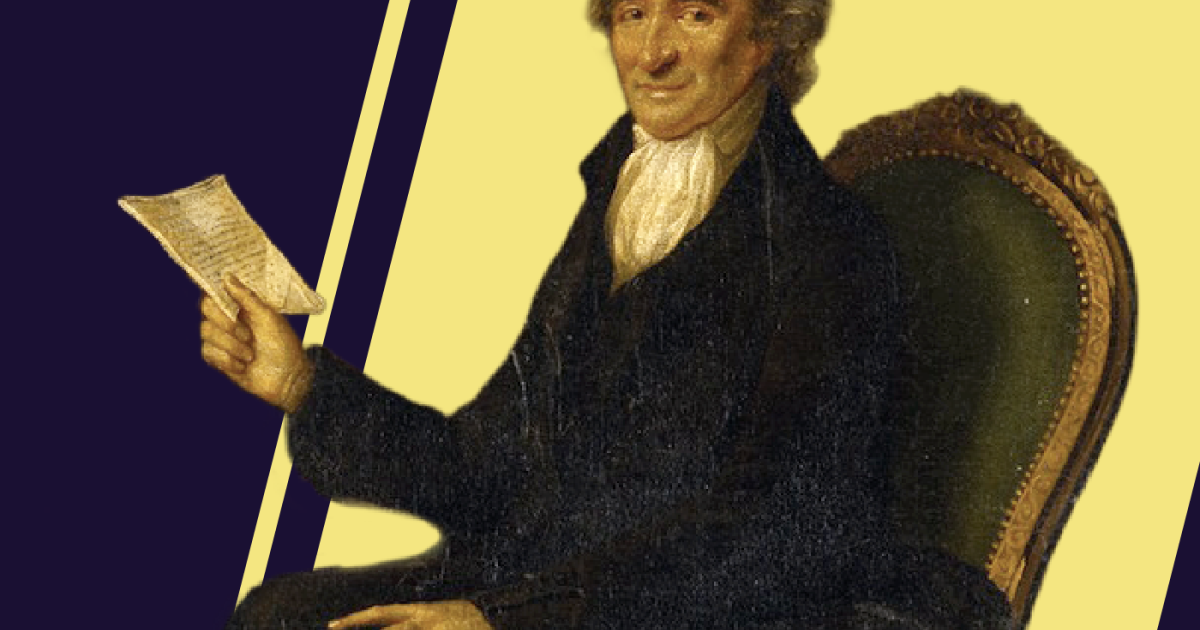
    Thomas Paine arrived in America in 1774 with little to
    his name and a long record of personal failure behind him. Within a
    year, he wrote Common Sense, one of the most influential political
    pamphlets in history, helping to ignite the American Revolution and
    catapulting Paine into the American history hall of fame.

    But by the end of his life, he was widely reviled,
    politically isolated, and personally abandoned. Once celebrated as
    the voice of liberty, he died an outcast, mourned by only six
    people at his funeral.

    How does one man become the voice of the American
    Revolution and end up forgotten? To explore Paine’s complicated
    legacy, we are joined by Richard Bell, professor of history at the
    University of Maryland and author of
    The American Revolution and the Fate of the World
    .

    Timestamps:

    00:00 Intro

    02:41 Thomas Paine’s early life

    10:32 Paine’s arrival in America

    20:02 What did Paine argue in Common Sense?

    25:11 Why Common Sense was so revolutionary

    36:31 The American Crisis and the Revolutionary
    War

    41:35 Why Paine returned to London and wrote The
    Rights of Man

    49:19 Exile from Britain, imprisonment in France, and
    writing The Age of Reason

    01:01:27 Why America turned its back on Paine

    01:12:09 Paine’s final days

    01:18:50 How should we understand Paine’s legacy
    today?

    01:26:58 Outro

    Enjoy listening to the podcast? Donate to FIRE today
    and get exclusive content like member webinars, special episodes,
    and more.

    If you became a FIRE Member
    through a donation to FIRE at thefire.org and would like access to
    Substack’s
    paid subscriber podcast feed, please email [email protected].

    Source link