Blog

  • 3 Takeaways From the CUPA-HR Annual Conference – CUPA-HR

    3 Takeaways From the CUPA-HR Annual Conference – CUPA-HR

    by CUPA-HR | October 7, 2021

    Thank you to all who attended the CUPA-HR Annual Conference and Expo in person and virtually this week! It was wonderful to welcome new and familiar faces, celebrate CUPA-HR’s 75th anniversary, and explore outstanding sessions with so many of you.

    For those who weren’t able to attend, here are three conference takeaways you can put to use wherever you are.

    • The Power of Kindness — Opening keynote and host of the Netflix series, “Kindness Diaries,” Leon Logothetis shared some of his experiences travelling the world fueled only by the kindness of strangers. “Kindness,” said Logothetis, “is simply a portal into human connection.” Overwhelmed by all the work to be done to support your institution’s workforce? Logothetis offered this advice: “To change the world, start by changing one life.” Who can you connect with and invest in at your institution? How can you use the power of kindness to make a difference in their life?
    • Birds and Frogs — Tuesday’s keynote speaker, David Epstein, spoke about the data supporting the value of generalists in a world increasingly focused on specialization. During his presentation, he offered an insightful message on how organizations can adapt successfully to change. Epstein used the example of birds and frogs; frogs are down on the ground, seeing all the granular details while the birds soaring above have a broader view of the big picture. Epstein asserted that we need both of these types of people to enhance our campus “ecosystems,” and should actively seek them out.
    • Ubuntu: I am because we are — Shola Richards topped off the conference with his energetic and inspiring message about the African concept of Ubuntu, which means “I am because we are.” Richards encouraged HR pros to use the spirit of Ubuntu in our various units and teams back on campus and to recognize that we will go a lot farther together than we will if we go alone no matter how small we feel (“be the mosquito, tiny but impossible to ignore”) or how difficult the situation (“be the buffalo, and run toward the storm”).

    We can’t wait to hear about the projects, initiatives, conversations and connections sparked by this year’s conference. Be sure to save the dates for our Virtual Spring Conference, April 19-21, and our 2022 Annual Conference, taking place October 22-24 in San Diego! Registration details coming soon.


    Source link

  • Disagreeing with(in) Antiracism | A Conversation with Erec Smith

    Disagreeing with(in) Antiracism | A Conversation with Erec Smith

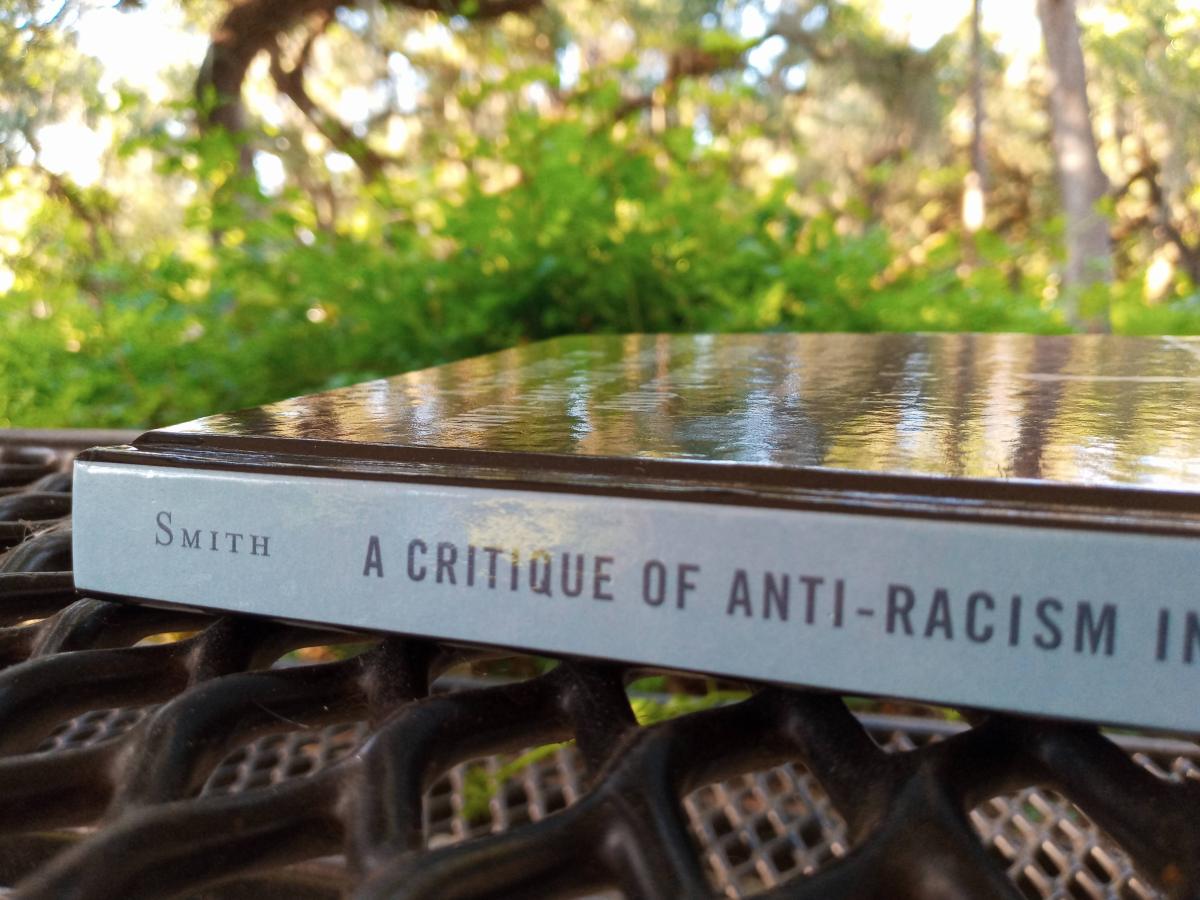
    I sat down with Dr. Erec Smith, Associate Professor of Rhetoric and Composition at York College, to discuss his book A Critique of Anti-Racism in Rhetoric and Composition: The Semblance of Empowerment (Rowman and Littlefield 2019). While Erec, to be clear, opposes racism itself, he also opposes the forms of antiracism he believes constitute the current antiracism movement in writing studies. To be equally clear, I disagree strongly with most of Erec’s take. With one key exception: I agree with Erec about the value, the vital necessity, of disagreement itself.

    In the preface, Erec writes: “I can only tell you that I seek truth and justice and I write this book solely from that interest. I genuinely hope people will read, engage, and critique it to their heart’s content. I want to know why they agree or disagree with my conclusions. One of the main motivations for this book is to encourage a productive and generative approach to disagreement and discourage attempts to silence, shut down, or shame others into submission” (viii).

    My own desire to engage disagreement productively is specifically why I read Erec’s book and why I asked him to have this conversation with me. Now, I don’t think that all disagreements are automatically productive to engage with–and the topic of antiracism seems to draw more than its share of counterproductive ones. Indeed, when we reached the end of our talk, I felt uncertain about just how productive ours disagreement had been. (And Erec may well have felt likewise.) But nonetheless, I think, I hope, I want to believe, that the work of disagreeing together is and can be an important aspect of being and becoming more effectively antiracist. So this conversation is one effort at that, and, disagreements aside, I’m grateful to Erec for participating with me.

    If you see the role of disagreement in antiracism differently, well, I’d love to talk with you about that.

    Source link

  • Markets and Suppliers: HE and Energy

    Markets and Suppliers: HE and Energy

    David Watson once wrote that the answer to the question as to whether universities were in the private or the public sector was “yes”.

    He suggested that universities most resembled BAE Systems: a private company with a host of public contracts. Back in 2011, the Coalition white paper on HE opened by trumpeting “Higher education is a successful public-private partnership: Government funding and institutional autonomy.”

    It was always the aim of second round of public sector reform (“Privatisation 2.0”) to create an education market that could be regulated like public utilities in the UK. And so the recent spate of collapses amongst energy “suppliers” prompted me to think about Watson’s comments through the lens of bankruptcy.

    The measures taken by the regulator, Ofgem, reminded me that the government has pledged to take a similar approach to university “failure”.

    Last summer’s announcement from the Department for Education of an HE “Restructuring Regime” (HERR) was badged as a Covid-related, “last resort” and outlined general principles covering possible government support pre-bankruptcy.

    Consistent with earlier statements regarding its approach to the orderly exit of “unviable institutions”, the opening sections of the HERR made things clear:

    §4 The Regime does not represent a taxpayer-funded bail-out of the individual organisations which make up the higher education sector. It is not a guarantee that no organisation will fail – though current students would be supported to complete their studies, either at that institution or another.

    Providers approaching DfE for support will be considered on a case-by-case basis, to ensure that there is a sound economic case for government intervention, with loans to support restructuring coming from public funds as a last resort.

    A precedent here can be seen in the “Task Force” established in 2012 when the government rescinded London Metropolitan’s right to sponsor international students.

    There, a “clearing house” was even established to distribute around 2000 affected students to alternative courses at different providers.

    HERR made the priorities clear for its case by case consideration of whether to lend to an institution that had exhausted all other options and ‘would otherwise exit the market’:

    • the interests of students;
    • value for money;
    • maintenance of a strong science base;
    • alignment with regional economies;
    • support for “high quality courses aligned with economic and societal needs”.

    Elaborating on the last of those, the 2020 document unsurprisingly picked out “STEM, nursing and teaching”. In sum, an institution in difficulties would be required to show that:

    (i) it had a plan for future sustainability;

    and (ii) that its collapse ‘would cause significant harm to the national or local economy or society’.

    Alongside those points, it is worth recognising that it will be easier for the government to be sanguine about the disappearance of smaller institutions in areas that are otherwise well covered by universities (e.g. London).

    Those that would be offered help will still find the “Regime” a deeply unpleasant experience: they mean it when the write about a “last resort”.

    A bankrupt university will prove a bigger problem than an energy provider. But it is clear that the government will aim along those lines, such that a university bankruptcy will not be like a local authority issuing a “section 114”.

    One should therefore reject any idea that financial deficits do not matter for universities.

    Like private companies they face cash constraints. They can support an excess of expenditure over income so long as the cash outflow can be absorbed by cash reserves. When the latter are exhausted and debts cannot be settled as they fall due, then the institution will fall over without outside support.

    Popular critiques of austerity and theories about governments and money might have misled people here.

    Governments are not like households, but universities are, insofar as they need to generate more income than they spend.

    As Watson noted, his answer about BAE Systems would make a lot of people uncomfortable. It’s even more discomforting to think that the government might view universities more like Igloo, Symbio, Enstroga et. al..

    UPDATE – 7th October

    By coincidence, DfE has just announced the closure of the “Regime” to “new applicants” with a deadline of 31 December 2021. They aim to move all applications “to a conclusion” by July 2022.
    This decision reflects the fact that HERR was a pandemic measure, but, as I outlined above, the process and criteria set out there do give some indications as to how the department and regulatory bodies will approach bankruptcies in general.

    Source link

  • 21 Top Teaching in Higher Ed Podcast Episodes

    21 Top Teaching in Higher Ed Podcast Episodes

    I started producing weekly Teaching in Higher Ed podcast episodes in June of 2014. Since that time, a new episode has aired each week. This is something that I’m both proud of – yet a little horrified that I have got a streak going that may not be sustainable (or make sense) in the long run. As of today (October 2), I also have another streak going… I’ve closed my Apple Watch rings for 334 days straight. That means I’ve done at least 30 minutes of cardio, stood for at least a minute for 12 hours, and burned at least 440 calories during the day. I’m thinking it might be healthy if I were to not focus as much as I have been on maintaining either of these streaks and give myself a bit of a break. But I plan on sticking with them both (if I can) at least until the end of 2021.

    A few years ago, Dave and I switched hosting companies for our podcasts. That’s why, instead of this being a list of the top 21 episodes of all time, I’m sticking with the top 21 since 2019. Someday, I might go back and combine the data from before the switch and now. However, for now, I’m keeping it simple.

    Top 21 of the Most Listened to Episodes since 2019

    1. Episode 324 – Teaching Effectively with Zoom with Dan Levy (2020)
    2. Episode 309 – Hyflex Learning with David Rhoads (2020)
    3. Episode 263 – Recipes for Effective Teaching with Elizabeth Barkley (2019)
    4. Episode 320 – How to Be Together in Learning Online with Jesse Stommel (2020)
    5. Episode 258 – Paying the Price with Sara Goldrick-Rab (2019)
    6. Episode 316 – Designing for the Uncertain Fall with Maria Andersen (2020)
    7. Episode 254 – Stop Talking, Start Influencing with Jared Horvath (2019)
    8. Episode 291 – Learning Myths and Realities with Michelle Miller (2020)
    9. Episode 314 – Culturally Responsive Online Teaching with Courtney Plotts (2020)
    10. Episode 295 – Online Engagement Through Digital PowerUps with Travis Thurston (2020)
    11. Episode 256 – Creating Wicked Students with Paul Hanstedt (2019)
    12. Episode 296 – Toward Cruelty-Free Syllabi with Matthew Cheney (2020)
    13. Episode 273 – Engaging Learners in Large Classes with Bonni Stachowiak (2019)
    14. Episode 264 – Serving Hispanic Students with Melissa Salazar (2019)
    15. Episode 271 – The Missing Course with David Gooblar (2019)
    16. Episode 269 – Removing Learning Barriers with Universal Design for Learning (UDL) with Jennifer Pusateri (2019)
    17. Episode 290 – The Productive Online and Offline Professor with Bonni Stachowiak (2020)
    18. Episode 282 – Using Challenges to Motivate Learners with Mike Wesch (2019)
    19. Episode 277 – Intentional Tech with Derek Bruff (2019)
    20. Episode 253 – Spaces and Places (and Nudges) with José Bowen (2019)
    21. Episode 259 – Intentional and Transparent Assessment with Natasha Jankowski (2019)

    Other Popular More Recent Episodes

    Here are some other more recent popular episodes from 2021:

    Source link

  • 2021 Podcast Favorites – Teaching in Higher Ed

    2021 Podcast Favorites – Teaching in Higher Ed

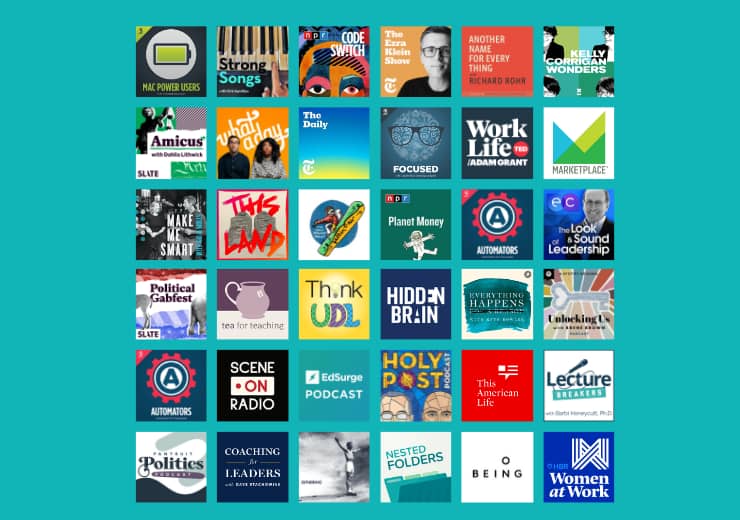
    The first person to inspire me to list out annually which podcasts are taking up my “ear share” was Bryan Alexander. In January of 2021, he wrote up his most recent list of what podcasts he’s listening to, while admitting he hadn’t done this in a while. I have also missed keeping up with what I sometimes think of as an annual list. I wrote up favorite podcast lists in 2019, 2018, 2017, 2014, and also published an article about podcasting in the University of Austin’s Flow Journal in 2017.

    Here’s my 2021 list of favorite podcasts, organized by category. At the end of the list, for the first time, I select ten shows that if I was only allowed that many to listen to each week, I would choose. Note to self: Why did you do that to yourself? Note to readers: Because I listen to a podcast, doesn’t mean I agree with what is said in episodes… I appreciate having my mind-expanded, yet do find that I sometimes wish some of the people I listen to would do a bit more of the same, which you will read about a little toward the end of this post. 

    Teaching and Higher Education

    • Tea for Teaching – “…a series of informal discussions of innovative and effective practices in teaching and learning. Hosted by John and Rebecca, who run the Center for Excellence in Learning and Teaching at the State University of New York at Oswego.” I’ve learned so much from John, Rebecca, and their guests over many years now.
    • Gettin’ Air with Terry Greene – Terry prepares for each interview with care and asks authentic questions about open education.
    • The EdSurge Podcast – I tend to listen more often to the higher education focused episodes. Jeff Young is an excellent interviewer who understands the higher education context well.
    • Lecture Breakers with Barbi Honeycutt – “…a place where college professors… share innovative teaching strategies, practical ideas, teaching tips, and resources to help you break up your lecture, energize your classroom, increase student engagement, and improve learning.”
    • Think UDL – thoughtfully hosted by Lillian Nave. Each episode leaves me knowing more about Universal Design for Learning (UDL) and ways to support learning more effectively.
    • Teacher of the Ear – Formerly named HybridPod, this show is hosted by Chris Friend, who now teaches at Kean University in Union, New Jersey, U.S.A. We can look forward to a new episode about podcasting as pedagogy later in October.

    News and Politics

    • Make Me Smart with Kai and Molly – “Each weekday, Marketplace’s Kai Ryssdal and Molly Wood make today make sense…. Break down happenings in tech, the economy and culture.” I listen to Make Me Smart almost every weekday.
    • Pantsuit Politics – “…a podcast for real conversations that help us understand politics, democracy, & the news – while still treating each other like thoughtful human beings.”
    • Political Gabfest – Emily Bazelon, John Dickerson, and David Plotz discuss the week’s politics in an entertaining and informative way.
    • The Ezra Klein Show – Weekly conversations about “something that matters.” Ezra is a phenomenal interviewer and I find myself waking away from each episode with an issue that will capture my thoughts for some time to come.
    • The Daily – “Twenty minutes a day, five days a week, hosted by Michael Barbaro and powered by New York Times journalism.”
    • Post Reports – “The Post’s premier daily podcast, featuring unparalleled reporting, expert insight and clear analysis, every weekday afternoon.”
    • This Land – “The award-winning documentary podcast This Land is back for season 2. Host Rebecca Nagle reports on how the far right is using Native children to attack American Indian tribes to advance a conservative agenda.”
    • What a Day – “Big news. Short podcast. Can’t keep up with the flood of news every morning? We’ve got you covered.”
    • Amicus, with Dalia Lithwick – smart conversation about the law.
    • Pod Save America – “A no-bullshit conversation about politics hosted by Jon Favreau, Jon Lovett, Dan Pfeiffer and Tommy Vietor that breaks down the week’s news and helps people figure out what matters and how to help.”
    • On the Media – “WNYC’s weekly investigation into how the media shapes our worldview.”
    • The Dig – “… goes deep into politics everywhere, from labor struggles and the political-economy to imperialism and immigration.”

    Technology

    • Mac Power Users – “Learn about getting the most from your Apple technology with focused topics and workflow guests. Creating Mac Power Users, one geek at a time since 2009.”
    • Connected – “Weekly panel discussion on Apple and the impact of technology on our lives.”
    • Accidental Tech Podcast – “Three nerds discussing tech, Apple, programming, and loosely-related matters.”
    • The Talk Show with John Gruber – “The director’s commentary for Daring Fireball,” an Apple-oriented technology blog by John Gruber.
    • Upgrade – Upgrade looks at how technology shapes our lives, from the devices in our hands and pockets to the streaming services that keep us entertained.
    • Automators – “Automation makes your life easier and everyone can do it. We tell you how.” The show is Mac-centric, though it also covers web services that enable automation.

    See more technology-oriented podcasts that I listen to under the: Podcasts I Pay For section.

    Mind-expanding Shows

    • Scene on Radio – “…two-time Peabody-nominated podcast from the Center for Documentary Studies at Duke University.” This is not one of those shows where you have to go back to the first session to understand what’s going on now. However, earlier seasons were breathtaking and life-changing. I still regularly think about Season 2: Seeing White and Season 3: Men and highly recommend them, in addition to the current season of Scene on Radio.
    • Strong Songs – “Music: It’s good. On each episode, host Kirk Hamilton takes listeners inside a piece of music, breaking it down and figuring out what makes it work.” Some of my favorite episodes include: “September” by Earth, Wind, & Fire, “Babylon Sisters” by Steely Dan, and “I Will Always Love You” by Dolly Parton.
    • Hidden Brain – “Hidden Brain Shankar Vedantam uses science and storytelling to reveal the unconscious patterns that drive human behavior, shape our choices and direct our relationships.” Thanks for recommending it such a long time ago, Isabeau Iqbal.
    • This American Life – “This American Life is a weekly public radio program and podcast. Each week we choose a theme and put together different kinds of stories on that theme.” (One of the all-time greatest podcasts!)
    • Code Switch – “What’s CODE SWITCH? It’s the fearless conversations about race that you’ve been waiting for. Hosted by journalists of color, our podcast tackles the subject of race with empathy and humor. We explore how race affects every part of society — from politics and pop culture to history, food and everything in between. This podcast makes all of us part of the conversation — because we’re all part of the story.” Thanks to Rob Parke for recommending this show on Episode 126 of Teaching in Higher Ed.

    Business, Economics, and Leadership

    • Planet Money – “The economy explained. Imagine you could call up a friend and say, “Meet me at the bar and tell me what’s going on with the economy.” Now imagine that’s actually a fun evening.”
    • Marketplace – “…helmed by Kai Ryssdal, examines what the day in money delivered, through stories, conversations, newsworthy numbers and more. “
    • Coaching for Leaders – “Leaders Aren’t Born, They’re Made. It’s a myth that leadership skills can’t be learned. Almost nobody is a born leader. Most leaders I know learned how to lead through the school of hard knocks, good training, years of hard work, effective coaching, and great mentors.” (Hosted by this guy I know – who I happen to be married to – Dave Stachowiak.)
    • The Look & Sound of Leadership – Candidly, if I hadn’t have had this podcast recommended to me by Dave (my husband), I may not have listened. Given that we both have doctoral degrees in organizational leadership, let’s just say that one of us (that would be me) doesn’t always gravitate to doing a bunch of listening on the topic in my “free” time. Tom is a fantastic storyteller and coach, however, and I’ve learned a great deal from him over the years. “Using an uncommon blend of storytelling and coaching, Tom Henschel created a unique and influential podcast. Eavesdrop on a monthly coaching conversation and get practical tools you can apply the minute the episode ends.”
    • Women at Work – Produced by Harvard Business Review. It sometimes goes on hiatus for a while – but it is well worth browsing prior episodes. Excellent interviews to helps us all fulfill our potential with excellence and joy!
    • Worklife, with Adam Grant – “Organizational psychologist Adam Grant takes you inside the minds of some of the world’s most unusual professionals to explore the science of making work not suck. From learning how to love criticism to harnessing the power of frustration, one thing’s for sure: You’ll never see your job the same way again.”

    Work/Productivity

    • Nested Folders with Rosemary Orchard & Scotty Jackson – “…ways of thinking, working, and using technology salutations to achieve more and feel good about doing their best work.”
    • GTD – “Our GTD podcasts are here to support you at every stage of your GTD practice. … The podcasts include personal and professional stories, as well as practical tips about GTD systems for desktop and mobile, using apps and paper. Start listening now and you’ll be well on your way to stress-free productivity.”
    • Focused – Great productivity show, hosted by David Sparks and Mike Schmitz.
    • The Productivity Show – The team from Asian Efficiency helps us up our game on this practical podcast.

    Life and Faith

    • Unlocking Us with Brené Brown – When this podcast moved to Spotify, I dropped my listening frequency way down. But each time I consume anything by Brené Brown, my life gets better.
    • On Being – “A Peabody Award-winning public radio show and podcast. What does it mean to be human? How do we want to live? And who will we be to each other? Each week a new discovery about the immensity of our lives. Hosted by Krista Tippett.”
    • Everything Happens with Kate Bowler – “Life isn’t always bright and shiny, as Kate Bowler knows. Kate is a young mother, writer and professor who, at age 35, was suddenly diagnosed with State IV cancer. In was, insightful, often funny conversations, Kate talks with people about what they’ve learned in dark times. Kate teaches at Duke Divinity School and is author of Everything Happens for a Reason (And Other Lies I’ve Loved).
    • Kelly Corrigan Wonders – “…a place for people who like to laugh while they think and find it useful to look closely at ourselves and our weird ways in the hopes that knowing more and feeling more will help us do more and be better.” Her episode with Anne Lamott nourished my soul right down to my core. Another vital episode was her conversation with Tressie McMillan Cottom, which explored Tressie’s “thoughts, emotions and deeply ingrained habits when it comes to money… both new and old.”
    • Another Name for Every Thing with Richard Rohr – Despite the podcast ending in March of 2021, I still go back and listen (or re-listen) to older episodes. “Another Name for Every Thing with Richard Rohr is a conversational podcast series on the deep connections between action and contemplation. Richard is joined by two students of the Christian contemplative path, Brie Stoner and Paul Swanson, who seek to integrate the wisdom amidst diapers, disruptions, and the shifting state of our world.”
    • The Evolving Faith Podcast – Despite having ended in late October, 2020, this is another show I go back to revisit regularly. These are timeless conversations about faith, belonging, identity, disability, embodiment, wonder, politics, empathy, injustice, and courage.
    • The Holy Post – I did not think I would like this podcast at all. Multiple friends recommended it. Still, I resisted. When I finally listened, it quickly went up near the top of my listening queue, each time a new episode was released. “Conversations about culture, theology, politics, and living a thoughtful Christian life.” Each episode starts with a few news-related items, including occasional bits about “news of the butt.” Then, Skye Jethani interviews a guest, including a recent interview with one of my all-time favorite Christian authors – Philip Yancey.

    Podcasts I Pay For

    The overwhelming majority of podcasts remain free in 2021. However, some podcasts have ad-free options, while others use some form of a subscription model. I pay for two podcasts (one directly; the other, as a part of a broader, content subscription).

    • Dithering – A podcast hosted by Ben Thompson and John Gruber, two technology experts. They air episodes twice per week that are exactly 15 minutes in length.
    • MacStories – I subscribe to Club MacStories Premier, which includes a number of subscriber-only podcasts, as well a a number of other geeky benefits for Mac and iOS users.

    Attempt at a Top 10

    Narrowing down all of the wonderful podcasts, above, to just ten is incredibly hard to do. The world of podcasting is rich with compelling content. Additionally, I enjoy some shows because they are “easy” to listen to – in that I don’t have to think very hard while taking them in. I’m trying to be realistic about which ones I tend to move to the top of my listening queue versus ones I “think” I should be listening to more. I suspect I would change my mind on this attempt at narrowing my favorites down to an arbitrary number of them, were I to compile such a list tomorrow.

    In no particular order:

    1. Make Me Smart
    2. Kelly Corrigan Wonders
    3. Scene on Radio
    4. Everything Happens with Kate Bowler
    5. Dithering
    6. The Ezra Klein Show
    7. Mac Power Users
    8. MacStories – I’m cheating here, a little, since there are multiple MacStories shows under this umbrella.
    9. The Holy Post – While I continue to hold out hope that the hosts will continue to experience an evolving faith in their lives (perhaps even by listening to the Evolving Faith podcast back catalog?), the combination of lighthearted conversation in the beginning, along with humor and humbleness has me moving this one to the top of my queue more often than I might like to admit.
    10. Automators
    11. Teaching in Higher Ed – Kidding about this one. But I do listen back to every episode, always trying to get better at what I do. It’s hard to listen, often, but I force myself to do it, in the interest of continuing to grow my ability to have these conversations about teaching.

    Source link

  • NLRB General Counsel Releases Memo on Employee Status for Student Athletes – CUPA-HR

    NLRB General Counsel Releases Memo on Employee Status for Student Athletes – CUPA-HR

    by CUPA-HR | September 29, 2021

    On September 29, National Labor Relations Board (NLRB) General Counsel Jennifer Abruzzo released a memorandum stating her position that student athletes (or “Players at Academic Institutions,” as she refers to them in the memo) are employees under the National Labor Relations Act (NLRA) and are afforded all statutory protections as prescribed under the law. Abruzzo declares, “The broad language of Section 2(3) of the [NLRA], the policies underlying the NLRA, Board law, and the common law fully support the conclusion that certain Players at Academic Institutions are statutory employees, who have the right to act collectively to improve their terms and conditions of employment.”

    Abruzzo also states that misclassifying such individuals as non-employees and leading them to believe they are not afforded protections under the NLRA has a “chilling effect” on Section 7 activity. She said she would consider this misclassification an independent violation of Section 8(a)(1) of the NLRA. Abruzzo further stated that the intent of the memo is to “educate the public, especially Players at Academic Institutions, colleges and universities, athletic conferences, and the NCAA” about her position in future appropriate cases.

    The memo revives issues surrounding employment status of student athletes that the NLRB has previously ruled on. In March 2014, the NLRB’s Regional Director in Chicago ruled that Northwestern players receiving football scholarships are employees and have a right to organize under the NLRA. In August 2015, the NLRB released a unanimous decision dismissing the representation petition filed by a group of Northwestern football players seeking to unionize. In doing so, however, the board’s decision did not definitively resolve the issue of whether college athletes are employees and have a protected right to unionize under the NLRA. After considering arguments of both parties in the case and various amici, including CUPA-HR, the board declined to assert jurisdiction on the issue, stating that “asserting jurisdiction would not promote labor stability [because the] Board does not have jurisdiction over state-run colleges and universities, which constitute” the vast majority of the teams. The board noted, however, its “decision is narrowly focused to apply only to the players in this case and does not preclude reconsideration of this issue in the future.” Another issue in the Northwestern decision was the board’s lack of jurisdiction over “walk-on” players who do not receive scholarships. It remains to be seen how Abruzzo will overcome in future cases the two jurisdictional obstacles identified in Northwestern.

    CUPA-HR will keep members apprised of NLRB actions and cases that may prompt the agency to rule on the issue regarding student athlete employment status.


    Source link

  • Something is Wrong at UF LAW

    Something is Wrong at UF LAW


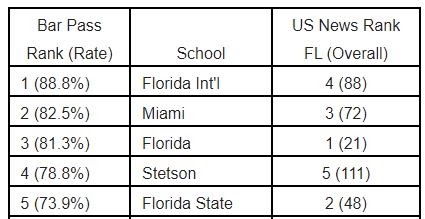
    The latest Bar exam results show that about 1 of 5 UF law grads fail the bar exam. Maybe that is not so bad but something is amiss.

    First, remember that these students are hand picked because of their high LSAT scores and GPAs in order to raise the school’s ranking. And it has worked. When last reported the School was ranking 21st.

    But there is more. The school, in order to raise its ranking by also increasing bar passage, has an army of people working to make sure students prepare for the bar by pre testing and attending help sessions. But there is more. Students who are in jeopardy of failing are activity encouraged not to take the exam. Yes, if they fail he passing percentage will decline and the ranking might suffer so they are, in effect, urged to put their own goals aside because perusing them might reflect badly on the School,  the elitist, rankings-obsessed dean, the University, and even Desantis yes man, Fuchs. 

    At this point in this little exercise I suppose I am supposed to say what I think is the problem. Frankly, I do not know. The smartest admitted class in the State, educated at a School ranked leaps and bounds above any other in the State, with extreme hand-holding when it comes to bar prep, and with a relentlessly elitist hiring policy still does so poorly. Actually, maybe I did just say what is wrong. You’ve got to wonder what is going on in the classroom. 

    Source link

  • IRS Issues Employer Guidance on COVID-19 Paid Leave Tax Credits – CUPA-HR

    IRS Issues Employer Guidance on COVID-19 Paid Leave Tax Credits – CUPA-HR

    by CUPA-HR | September 22, 2021

    On September 7, the U.S. Treasury Department and Internal Revenue Service (IRS) issued Notice 2021-53, which includes guidance to employers on reporting the amount of qualified sick and family leave wages paid to employees for leave taken in 2021 as provided by the Families First Coronavirus Response Act (FFCRA) and as amended by the Consolidated Appropriations Act of 2021 and the American Rescue Plan Act of 2021.

    The FFCRA required private sector employers with 500 or fewer employees to provide emergency paid family and medical leave and emergency paid sick leave to employees who could not work or telework due to certain COVID-19 complications. The FFCRA also established fully refundable tax credits that employers may receive after providing the emergency paid family and sick leave. The tax credits under the FFCRA were set to expire on December 31, 2020, but they were extended to cover wages voluntarily paid through March 31, 2021 under the Consolidated Appropriations Act of 2021 and again through September 30, 2021 under the American Rescue Plan Act of 2021. Employers were no longer required to provide the paid sick and family and medical leave wages to employees after the enactment of the Consolidated Appropriations Act, but employers that voluntarily provided paid leave that would have satisfied the paid family leave and paid sick leave requirements under the FFCRA were eligible for the same fully refundable tax credits.

    The new IRS notice states that employers will be required to report the amount of qualified sick and family leave wages paid to employees between January 1 and September 30, 2021 either on the Form W-2, Box 14, or in a separate statement provided with the Form W-2. The notice also includes model language to help employers communicate information about the qualified sick leave and family and medical leave wages to employees, as well as the impact these wages may have on tax credits the employee may be entitled to with respect to self-employment income.

    CUPA-HR will keep members apprised of any additional tax-related guidance from the IRS as it relates to COVID-19 policies and guidance.


    Source link

  • HR and the Courts – CUPA-HR

    HR and the Courts – CUPA-HR

    by CUPA-HR | September 21, 2021

    Each month, CUPA-HR General Counsel Ira Shepard provides an overview of several labor and employment law cases and regulatory actions with implications for the higher ed workplace. Here’s the latest from Ira.

    EEOC Brings Its First COVID-19 Teleworking Denial Lawsuit Under the Americans With Disabilities Act  

    The Equal Employment Opportunity Commission (EEOC) recently brought its first denial of a disability accommodation lawsuit connected to the pandemic. The employer in question denied an employee’s request to continue teleworking. The employee claimed that her heart problems heightened her COVID-19 risk. The case was filed in federal district court in Georgia (EEOC v. ISS Facility Services Inc. (N.D. Ga., No. 1:21-CV-3708-SCJ-RDC, comp filed, 9/7/21)).

    The employee’s accommodation request was that she be allowed to work from home two days per week. The plant where she worked reopened following a multi-month period where all employees telecommuted, including the plaintiff. The employee also asked to be allowed to take frequent breaks when working on-site three days per week because her pulmonary condition caused her to have difficulty breathing. The EEOC alleged that while the employee’s accommodation request was rejected, other employees were allowed to work from home. Additionally, the EEOC alleged that the employee was terminated after her accommodation request was denied.

    The EEOC released the following statement about the case: “In light of the additional risks to health and safety created by COVID-19, it is particularly concerning that an employer would take this action several months into a global pandemic.” The EEOC is seeking back pay, compensation for past and future pecuniary and non-pecuniary losses, punitive damages and a permanent injunction.

    Union Decertification Elections and the Percentage of Actual Union Losses Rise in the First Half of 2021 Compared to 2020

    Union decertification elections in the first half of 2021 increased by 30 percent over the number of decertification elections supervised by the National Labor Relations Board (NLRB) during the same period in 2020. In contrast, NLRB-supervised certification elections increased by only 4 percent during the same period in 2021 as compared to 2020 according to NLRB reports published by the Bloomberg Daily Labor Report.

    Unions lost two-thirds of the decertification elections supervised by the NLRB in the first half of 2021. This is an increase of 64 percent over the number of losses unions incurred in the first half 2020.

    Community College Disability Plans Exempt From ERISA as a Governmental Plan — Federal Court Remands Plaintiff’s Case to State Court to Proceed Under Applicable State Law

    A former community college employee can seek relief from denial of disability benefits under state law as the federal court hearing the case ruled that community college plans are exempt from the Employee Retirement Income Security Act of 1974 (ERISA) as a governmental plan. The federal court ruled that relief may be available to the employee under state law, as there is no federal jurisdiction.

    The case involved a former employee of St. Louis Community College who had been receiving disability benefits under the plan for about five years. Disability benefits continuation was denied by the plan administrator. The plan was administered by American General Life insurance. The case was originally filed in state court but was removed to federal court alleging jurisdiction under ERISA. The federal district court judge dismissed the case, concluding that the plan was established by a governmental entity and as such there was no ERISA jurisdiction. The judge remanded the case to proceed in state court to determine whether the plaintiff is subject to relief under state law (Glover v. American General Life Insurance Company (2021 BL 297552, N.D. Ill., no. 3:21-cv-50205, 8/6/21)).

    Former Director of University Family Law Clinic Who Was Denied a Permanent Position to Head the Clinic and a Professorship Alleges Ageism

    A Pennsylvania attorney who was over 60 when he was recruited to run the University of Pittsburgh’s School of Law Family Law Clinic has filed an age discrimination lawsuit under the Age Discrimination in Employment Act of 1967 after he was passed over when the position became a full-time faculty position and the university allegedly chose an attorney who was under 40 with little experience in parental custody issues routinely handled by the clinic (Congelio v. University of Pittsburgh (W.D. Pa. No. 2:21-cv-902, complaint filed 7/13/21)).

    According to the age discrimination complaint, the plaintiff alleged that the person who was hired for the position and as a faculty member was not licensed to practice law in Pennsylvania where the university and the law clinic are located. The plaintiff was a visiting professor at the law school when he was not selected for the position to continue running the clinic with the accompanying full-time faculty appointment.


    Source link

  • OSHA Provides Details on Upcoming COVID-19 Emergency Temporary Standard – CUPA-HR

    OSHA Provides Details on Upcoming COVID-19 Emergency Temporary Standard – CUPA-HR

    by CUPA-HR | September 14, 2021

    On September 9, President Biden released his COVID-19 Action Plan, which includes a six-pronged plan to combat COVID-19 through increased vaccinations, testing and other strategies. The plan will require employers with 100 or more employees to test nonvaccinated employees on a weekly basis. The White House also announced it will require vaccinations for those working for the federal government, federal contractors and establishments providing healthcare services that accept Medicare and Medicaid.

    The Biden administration is using different agencies to implement and enforce the different requirements. The Occupational Safety and Health Administration (OSHA) will require employers with 100 or more employees to test nonvaccinated employees on a weekly basis through an Emergency Temporary Standard (ETS). While OSHA has yet to release many specifics about the timing and the content of the ETS, the agency did release some information late last week.

    General Timeline of the ETS

    In a call last week with stakeholders, OSHA said it plans to publish the ETS in the Federal Register in the next few weeks, at which time the ETS will become effective immediately in states where OSHA has direct jurisdiction. The 22 states with OSHA-approved State Occupational Safety and Health Plans must adopt the ETS or a standard at least as protective within 30 days of OSHA publishing the ETS in the Federal Register.

    Because the ETS will be effective immediately once published in the Federal Register, stakeholders will not have the opportunity to provide input on the standard prior to its implementation. Instead, stakeholders may comment on the ETS after it is published in the Federal Register. OSHA will use those comments to shape the subsequent final rule that will replace the ETS, which OSHA plans to issue six months after the initial release of the ETS.

    Content and Policies of the ETS

    OSHA also said on the call that it will be working with other federal agencies to ensure the language included in the ETS is consistent with the vaccination mandates imposed on federal contractors through President Biden’s Executive Order. Additionally, OSHA clarified that it will consider the employers’ workforce and not just a single worksite in evaluating employers that meet the 100-employee threshold for coverage. The ETS testing and vaccination requirements are also not likely to extend to remote employees who are physically isolated from coworkers or customers.

    Consistent with the COVID-19 Action Plan, the ETS will also require employers to provide employees with paid time off (PTO) or allow employees to use existing PTO to obtain vaccinations and recover from post-vaccination side effects.

    Finally, OSHA reviewed several issues where it does not currently have an answer, but it intends to address in the ETS. These questions include who pays for the required employee testing and what level of vaccination is required under the ETS (i.e. one shot, two shots or even a booster shot). In addition to these questions, information on the procedures of how employers will verify vaccinations, tests and procedures for handling employees who refuse to get vaccinated or undergo routine testing will likely be addressed in the ETS.

    CUPA-HR will continue to monitor for any information on the upcoming ETS and keep members apprised of any additional policies or requirements likely to be included as OSHA continues to work towards implementation.


    Source link