Using Data to Inform Your Institution’s Year-in-Review Process
Strategic organizational development, when applied to higher education institutions, demands setting accountability standards across the student journey — from staffing and advising to course planning and graduation. In my previous post, I discussed the importance of performing an annual review to set the strategy for the coming year. Now, let’s take a look at the importance of using data to inform that strategy.
At the start of the annual review process, teams should look at all the available data, starting at the beginning of a prospective student’s journey. Institutions should ask questions such as:
How are leads coming in?
How are prospects converting to admitted students who are registering for class?
Are there peak enrollment seasons to plan for?
Are students receiving sufficient support during classes?
Institutions need to evaluate their transparency in the reporting on and ownership of every touchpoint. By ensuring that all available metrics are digested to inform their strategy, rather than only using data points that paint a picture that is different from reality, institutions are better able to avoid confirmation bias.
For planning that bears fruit, teams must be truthful about what changes are necessary, and data should always be used to identify issues and inform an institution’s direction.
Tools to Support Institutional Goal Setting
When it comes to considering their goals for the next year, an essential principle that institutions need to remember is that the efforts of the team executing a process and the student experience must go hand in hand. Success and satisfaction must be considered not only for the students but also for the staff, the faculty, and the communities they serve.
Feedback Analysis
Universities should gather feedback on the student experience early and often. Examining feedback loops throughout the student journey — including in lead nurturing, enrollment, and course surveys — offers clues into where to focus an institution’s energy and resources in future plans.
Interviews with team members from all functional areas in the organization help leaders align the institution’s operations with its growth goals. Open communication also can reduce the effects of departments functioning independently, becoming a catalyst for more collaboration across teams and better consistency in the institution’s messaging.
Real-Time Data Dashboards
Executive dashboards need to be used consistently to track progress across marketing, enrollment, and academics. Points to analyze include audits of marketing campaign performance and student enrollment trends. Using this real-time data to inform the decision-making at assessment checkpoints ensures teams stay aligned on the institution’s long-term goals.
Organizational Development Frameworks
Leaders can use postmortem frameworks and planning worksheets to translate data-driven insights into manageable plans and timelines. Tools such as Archer’s Readiness Assessment and Good, Better, Best framework can help institutions gain a better understanding of where they are and where they want to be in the near future.
Applying Learnings to Daily Operations
Conducting an annual review will start an institution on the path toward creating smarter, evidence-based strategies. Once the past year’s operations have been analyzed, leadership teams must compare the institution’s progress against its vision and locate where adjustments are needed — such as in student enrollment support, resource planning, or program design processes — to support the institution’s growth.
Employing effective change management processes can ensure an institution’s plans are actionable instead of theoretical. Establishing effective change management policies can help the institution navigate the operational shifts and cultural adjustments that are needed to maintain and scale its programs while maintaining collaboration and communication among its different departments.
Leadership and teams must be held accountable with targeted checkpoints and milestones throughout the year. With agreed-upon dates for delivery, leaders can identify where additional support is needed and what adjustments to make, if necessary.
The task of analyzing large volumes of institutional data and turning it into actionable strategies can be overwhelming. When an institution decides to engage with a partner to help it conduct a thorough review, it should look for a vendor that offers flexible contracts that allow teams to adapt instead of restrictive long-term agreements. This also applies to any third-party partnerships that an institution enters to fill its capacity gaps, such as with partners that provide course planning, digital systems development, or marketing and enrollment management services.
Key Takeaways
Institutions should connect lessons from 2025 to their 2026 priorities to create a strategic road map that fosters high-quality growth in the following year and beyond.
By leveraging data, collaboration, and iterative improvement strategies, institutions use proven organizational development techniques to stay competitive.
Scheduling routine check-ins across departments helps institutions maintain forward momentum and ensure all contributors and stakeholders are engaged and have what they need to reach their goals.
Let Archer Support Your Data-Informed Strategic Review Process
At Archer Education, we understand that deep discovery, organizational development, sufficient investment, best-in-class technology, and a laser focus on the student experience are essential for institutional growth.
Are you ready to expand your student enrollments, deepen your online program offerings, and future-proof your team? Archer’s team of higher education experts can help your institution establish an annual review process that will set you on the path toward scalable, sustainable growth.
If you’d like to learn more, contact our team and explore our technology-enabled strategy, marketing, enrollment, and retention services today.
UKRI has two functions. The first is to coordinate the work of seven research councils to improve research quality, impact, and infrastructure. The second is to use this convening power to achieve social good such as economic growth. The National Audit Office criticised the impact of UKRI against both of these missions.
The standard approach of UKRI has been to fund blue-sky research, things that universities and others do that push the boundaries of accepted knowledge, and to fund a portfolio of other projects, buildings, and people, to achieve a broader set of missions shaped by DSIT.
The forever tension is that this approach can lead to a great sprawl. The internal competition to establish grants underneath each research council requires a great degree of internal coordination. The bidding process for these grants is even sprawlier still. And there is no guarantee that blue-sky research will produce the kinds of things the government wants in order to achieve its mission of economic growth.
Until now, research funding has been the story of nudges toward the things government wants through bodies it influences but does not control, and through setting the legal and reporting guardrails for the train of unrestricted and unhypothecated research funding largely allocated through QR. This is now going to significantly change.
Bucketing down
UKRI’s budget allocation process is the single most powerful tool it has to shape the research ecosystem.
Today’s new settlement for the next four years of research investment has gone all in on developing cross-disciplinary funding to meet government priorities such as the industrial strategy, targeted investment in key technologies, protecting curiosity-led research, and significant increases to skills and infrastructure. It is funding that follows a government’s plan, and it’s also a marked shift in how the funder operates as an organisation.
One instructive way in to what’s going on is to compare the newly published allocations explainer to the one covering 2025–26. That previous document was a slim six-page, 1000-word canter through how much each of the funding councils was getting, in essence. UKRI’s new allocations for the rest of the spending review period are a very different beast.
First up, we’re told that it is “not possible to directly compare these allocations to previous budgets,” such is the nature of the overhaul. And while this sounds like it could be spin to distract from subtle cuts in less politically trendy areas, it is basically true – the whole budget process has been reimagined. It’s also worth observing from the get-go that the generous overall R&D spending review settlement makes it much easier to get away with these big and potentially thorny changes – compare the prompt announcement here with the ongoing wait for news about how the Office for Students’ strategic priorities grant will be reformed.
In headline terms, it should come as little surprise to see the “bucket theory” front and centre – this had already been established by the Liz Kendall and Ian Chapman speeches last month. To recap, though, overall across the four years there is £14.5bn for curiosity-driven, foundational research (Bucket 1), £8.3bn for targeted R&D addressing strategic government and societal priorities (Bucket 2), and £7.4 billion to support innovative companies’ growth (Bucket 3), as well as £8.4bn for what is basically a fourth bucket, “enabling and strengthening UK R&D”.
What we see today is that while Bucket 1 will be the largest part of the overall settlement, the increases on offer are located elsewhere – the exact figures are tricky to definitively pinpoint, given how certain elements are slowly moved from one bucket to another over the four years.
Most surprising is how fundamentally the new way of thinking about what UKRI funds translate into research council settlements. The only per-council announcements we get are for applicant-led research, where each council is seeing increases over the period. It’s tempting to try to draw lines back to previous settlements – but it fundamentally doesn’t work like this.
For buckets 2 and 3, there is no breakdown by funding council. Rather, each industrial strategy area gets its own separate item (in fact, for the digital and technologies sector, it’s split into four: engineering biology, AI, quantum, and the other stuff). The majority of the investment in bucket 2 for these areas “will be delivered by research councils,” we are advised – but this will be a separate process. Aside from specific investments such as the R&D Missions Programme and the Edinburgh supercomputer, this will flow via programmes, each led by an executive chair but described clearly as cross-UKRI.
Over in bucket 3 we can find HEIF, but much of the rest will be run through Innovate UK, with a growing focus on industrial strategy sectors. After plenty of debate within the sector about where QR should sit, it’s firmly in bucket 1 despite some suggestions that this would both misunderstand its role as a flexible fund and leave it more at risk to future cuts. The UKRI thinking is that basically QR is not government-directed, and therefore it goes in the first bucket.
Elsewhere we see a substantial investment in the collective talent doctoral funding line item (up to more than £800m next year and over £900m by 2028–29). And we understand that other doctoral funding could come from, for example, bucket 2 cash where linked to industrial strategy priorities.
A single mission
UKRI chief executive Ian Chapman describes the budget as being aligned to a “single mission”. He’s talking about the mission of advancing knowledge, improving lives and driving growth – but there’s also a clear sense that the way in which the funding landscape is being restructured gives a much firmer central UKRI steer regarding what gets spent and why, with the role of the funding councils, and Research England, more focused on delivery and detail.
The role of the industrial strategy in choosing what research investment will be made is even more prominent than many will have expected. Predictably, it’s also very lopsided – AI-related programmes will swallow £400m a year by the end of the decade, while other areas see much less frugality.
Whether this focus on the IS-8 sectors will translate through to choices about where funding gets invested, as we looked at earlier this week, remains to be seen. But the other issue with the industrial strategy lens, one that as the decade progresses will come into ever sharper focus, is what this will mean for the year after the spending review period, when a new government is likely and other priorities will suddenly have to be accommodated.
For now, it’s a big ambitious reordering of how research money gets invested, which will have to be reflected within UKRI and its component parts, as they are being asked to work in different ways and pursue fundamentally different goals.
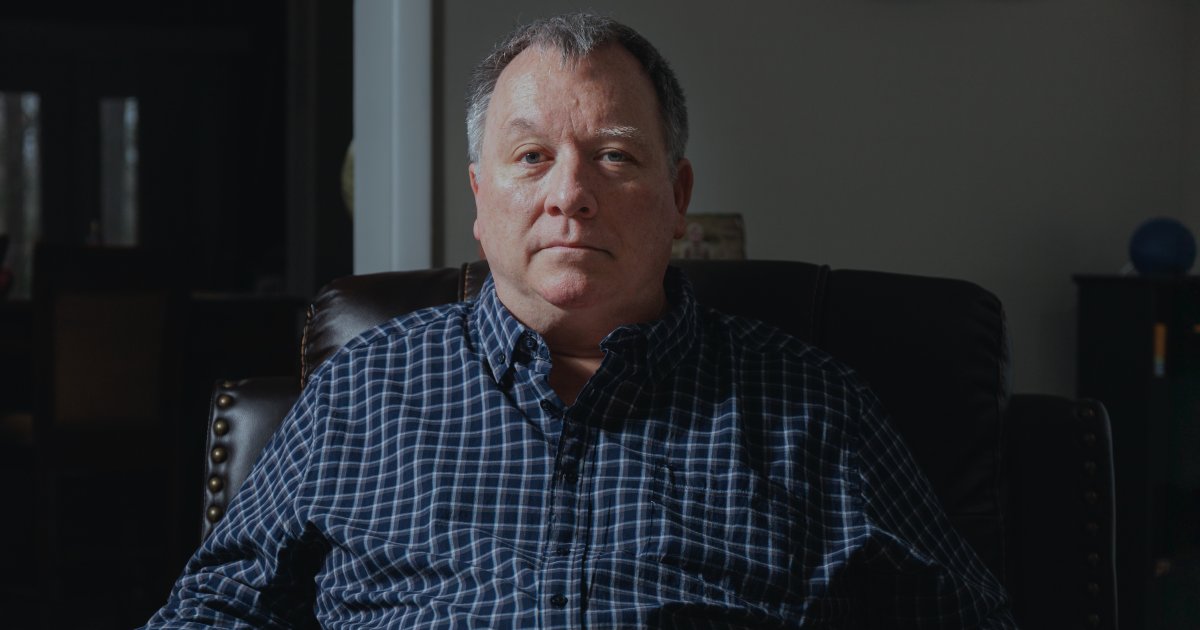
NASHVILLE, Dec. 17, 2025 — On Sept. 21, the police came for Larry Bushart. They handcuffed him and hauled him away in the dead of night. He spent 37 days in jail while held on a $2 million bond — an amount the retired police officer could not afford.
It’s the sort of treatment one expects for accused murderers and thieves. But Larry’s only “crime”? In the aftermath of Charlie Kirk’s assassination, he posted a meme on Facebook quoting President Trump’s remarks about a different shooting a year earlier and in a different state.
“I spent over three decades in law enforcement, and have the utmost respect for the law,” said Larry. “But I also know my rights, and I was arrested for nothing more than refusing to be bullied into censorship.”
Today, with the help of the Foundation for Individual Rights and Expression, Larry filed a federal civil rights lawsuit against Sheriff Nick Weems and Perry County, Tennessee, for violating his constitutional rights in retaliation for his protected speech.
The meme that Larry Bushart shared on Facebook.
“If police can come to your door in the middle of the night and put you behind bars based on nothing more than an entirely false and contrived interpretation of a Facebook post, no one’s First Amendment rights are safe,” said FIRE senior attorney Adam Steinbaugh.
Larry’s ordeal began when he commented on a Facebook post for a Kirk vigil in Perry County. The meme — which Larry did not create — used a picture of Donald Trump, quoted him saying “We have to get over it” following the January 2024 school shooting at Perry High School in Iowa, and included the commentary, “This seems relevant today…”
Weems concocted the pretext that because the meme referenced the 2024 shooting at Perry High School in Iowa, it could be interpreted as a threat against Perry County High School in Tennessee. At his request, the local police first visited Larry’s home around 8 p.m. to inform him the sheriff’s office might be in contact with him.
Bodycam footage indicates the officer was just as confused as Larry was. “So I’m going to be completely honest with you, I have really no idea what they’re talking about,” he said. “He just called me and said there were some concerning posts that were made… I don’t know, I just know they said something was insinuating violence.”
“No it wasn’t,” Larry responded. “I’m not going to take it down.”
Hours later, Perry County issued a warrant for his arrest, and local police returned after 11 p.m. to arrest him for “threatening mass violence at a school.” Again, bodycam footage indicates local police were just as perplexed about why they were taking him into custody. “I threatened no one . . .” Larry told them. “I may have been an asshole, but . . .”
“. . . that’s not illegal,” the officer finished for him.
Based on Weems’ flimsy justification alone, Larry was locked up for over a month. He lost his job and missed his wedding anniversary as well as the birth of his grandchild. Amazingly, Weems admitted in a later interview that he knew at the time of the arrest that Larry’s post used a pre-existing meme and was not threatening a local high school. But law enforcement left out that extremely important context from their warrant application.
Larry went free only after a media firestorm and widespread backlash. Weems still insisted he was justified in having Larry arrested because the post caused “mass hysteria” in the community. But none of the Facebook responses to Larry interpreted his post as a threat, the Perry County school district has no records of any complaints about Larry’s post, and Perry County and Weems have refused to respond to multiple public records requests requesting evidence of this “mass hysteria.”
With FIRE’s help, Larry is suing Perry County and Weems in the U.S. District Court for the Western District of Tennessee for violating his First Amendment right to free speech and his Fourth Amendment right against unlawful seizure. Larry is also suing Investigator Jason Morrow who, on Weems’ orders, helped procure the misleading arrest warrant. And because Weems and Morrow knew their actions were egregiously unconstitutional, FIRE is suing them in their personal capacities, meaning they would be on the hook for monetary damages. Rounding out Larry’s legal team is Phillips and Phillips, PLLC, in Lexington, TN, which also defended Larry in criminal court.
“This lawsuit goes beyond Larry,” said FIRE attorney David Rubin. “It’s about making sure police everywhere understand that they cannot punish or intimidate people for sharing controversial opinions online. Law enforcement across the country should be on notice: Respect the First Amendment, or prepare to face the consequences.”
The Foundation for Individual Rights and Expression (FIRE) is a nonpartisan, nonprofit organization dedicated to defending and sustaining the individual rights of all Americans to free speech and free thought — the most essential qualities of liberty. FIRE educates Americans about the importance of these inalienable rights, promotes a culture of respect for these rights, and provides the means to preserve them.
CONTACT:
Alex Griswold, Communications Campaign Manager, FIRE: 215-717-3473; media@fire.org
Last year, FIRE launched the Free Speech Dispatch, a regular series covering new and continuing censorship trends and challenges around the world. Our goal is to help readers better understand the global context of free expression. Want to make sure you don’t miss an update? Sign up for our newsletter.
For challenging the CCP, Jimmy Lai may spend the rest of his life behind bars
The result press freedom and human rights advocates feared has arrived: 78-year-old media tycoon, Chinese Communist Party critic, and Apple Daily founder Jimmy Lai was found guilty in Hong Kong this week. After five years in detention, much of it in solitary confinement, a West Kowloon Magistrates’ Court found him guilty of sedition and collusion with foreign forces on Monday morning.
He will be sentenced at a later date. Lai, who has suffered deteriorating health amidst his detainment, may very well die in prison.
Authorities launch censorship campaign after Hong Kong’s tragic Wang Fuk Court fire
It’s a page straight out of the authoritarian playbook: Censorship after a crisis to protect the interests of the state from the fallout. Unfortunately, authorities in Hong Kong are not straying away from this strategy. In the aftermath of a deadly residential fire that took at least 159 lives, some of those who have spoken out about the tragedy are now themselves at risk. Hong Kong officials warned they would punish those who “exploit” the tragedy and threatened foreign media against “spreading false information, distorting and smearing the government’s disaster relief and aftermath work” or “provoking social division and opposition.”
Miles Kwan, a university student, started a petition calling for “four big demands” including more regulation, investigation, and assistance to displaced residents after the fire. His position caught the attention of authorities, but not in the way he’d hoped — Kwan was quickly arrested on sedition charges. Other arrests followed, including of a solicitor who intended to speak at a pre-emptively canceled press conference about the fire and a former district councillor. Hong Kong Baptist University suspended the campus student union and “blocked from sight by tall barriers” a union notice board featuring messages about the fire. Separately, authorities also charged a man with sedition for encouraging others on social media not to vote in the latest “patriots only” election.
Proposed Trump admin policy could make self-censorship a condition of entry for tourists
Last week, the U.S. Customs and Border Protection announced its intention to impose a new policy on tourists from dozens of countries that do not require visas for short visits to the country. Under the proposal, tourists will have to provide five years of social media history in their Electronic System for Travel Authorizations applications, just so they can visit Yellowstone or Disney. Tourists will no doubt worry that their travel plans could be disrupted over years-old tweets and social media commentary.
“Requiring temporary visitors here for a vacation or business to surrender five years of their social media to the U.S. will send the message that the American commitment to free speech is pretense, not practice. This is not the behavior of a country confident in its freedoms,” FIRE warned in response. Keep an eye out for a forthcoming formal comment from FIRE on the matter.
China’s censorship targets underground pastors — and the global internet
After dozens of arrests, 18 leaders of the underground Zion Church were charged with “illegally using information networks,” which can result in up to three years in prison. The church is not sanctioned by the government.
Meanwhile, Chinese tech conglomerate Tencent is reportedly abusing trademark claims to pressure U.S. based cloud hosting service Vultr to halt operations of FreeWeChat, a censorship watchdog tool run by GreatFire.org. FreeWeChat monitors censorship on WeChat, Tencent’s immensely popular social app. After months of back and forth over Tencent’s allegations, Vultr issued “a formal 30-day notification of termination of services.” FreeWeChat has moved to another hosting provider, but expects the new one to face similar threats.
Prosecutors seek to reverse important UK free speech victory
In October’s Free Speech Dispatch, I celebrated the overturning of Hamit Coskun’s conviction for burning a Quran outside the Turkish consulate in London. But that victory, a rare one in the UK these days, may be short-lived.
Late last month, the Crown Prosecution Service appealed the Southwark Crown Court’s ruling in favor of Coskun, where Justice Joel Nathan Bennathan said that free expression “must include the right to express views that offend, shock or disturb.” The CPS asserts that Quran burning itself is not a criminal act but Coskun “demonstrated hostility towards a religious or racial group, which is a crime.”
In Quran burning conviction, UK judge uses violence against defendant as evidence of his guilt
UK judge cites violence against Quran-burning protester as proof of his guilt, Brazil sentences comedian to over eight years for telling jokes, and France targets porn.
“Our case remains that Hamit Coskun’s words, choice of location and burning of the (Quran) amounted to disorderly behaviour,” CPS said in a statement. “We have appealed the decision, and the judge has agreed to state a case for the High Court to consider.” The CPS may be claiming this doesn’t amount to a restriction on blasphemous expression, but the UK’s National Secular Society rightly worries that “CPS seems determined to establish a blasphemy law by the back door.”
Meanwhile, former Premier League player Joey Barton was found guilty of 6 out of 12 counts of sending grossly offensive electronic communications with intent to cause distress or anxiety, earning a suspended prison sentence over a series of social media posts. In them, Barton attacked commentators Eni Aluko and Lucy Ward, calling them “the Fred and Rose West of football commentary,” a comparison to a notorious serial killer couple, and photoshopped their faces onto the Wests in a photo.. In another post he said Aluko was “only there to tick boxes” and because of DEI and affirmative action. Barton also called another broadcaster a “bike nonce” and implied he had been on Jeffrey Epstein’s island.
Trump minimizes Jamal Khashoggi murder, transnational prosecutions, and other press freedom news
Last month, President Trump welcomed Saudi Crown Prince Mohammed bin Salman to the Oval Office — and berated an ABC journalist in the room who asked about MBS’s role in the gruesome murder of Washington Post columnist Jamal Khashoggi. “You don’t have to embarrass our guest by asking a question like that,” Trump said to the journalist, and called Khashoggi “extremely controversial.” Trump also said of Khashoggi, “Whether you like him or didn’t like him, things happen, but he [gesturing toward Mohammed] knew nothing about it and we can leave it at that.” U.S. intelligence previously confirmed MBS’s involvement in ordering the killing.
After Trump’s repeated threats to sue the BBC in U.S. courts for its edits to his Jan. 6, 2021 speech, FCC Chair Brendan Carr announced an investigation targeting the BBC. In a letter to NPR and PBS, which sometimes broadcast BBC material, Carr said he sought “to determine whether any FCC regulations have been implicated by the BBC’s misleading and deceptive conduct.” And this week, Trump did indeed file his suit against the BBC in Florida, seeking $10 billion in damages — yet another frivolous lawsuit filed by the president.
Carr’s threats to ABC are jawboning any way you slice it
ABC suspended Jimmy Kimmel hours after FCC Chair Brendan Carr suggested they could face consequences for remarks Kimmel made in the aftermath of Charlie Kirk’s murder.
Vietnamese police are targeting a journalist over his reporting — and he doesn’t even live in Vietnam. Authorities have issued an order to prosecute and arrest Berlin-based Le Trung Khoa for “making, storing, spreading information, materials, items for the purpose of opposing the state.”
Malaysian authorities are also pursuing a transnational prosecution, with the assistance of Thai courts. Australian academic and Thai resident Murray Hunter will go on trial this month in Thailand on criminal defamation charges over Substack posts about Malaysia’s internet regulator. He could face a fine or up to two years imprisonment.
American right-wing journalist Andy Ngo is suing the UK’s Guardian News and Media for libel over its description of Ngo as an “‘alt-right’ agitator” in a Mumford and Sons album review.
Bianet editor Tuğçe Yılmaz is facing charges of “insulting the Turkish nation, the state of the Republic of Turkey, and its institutions and organs” for her reporting on Armenian youth today and their relationship to the Armenian genocide.
Turkish police arrested a man, and the YouTuber who interviewed and broadcast him, over a poem the man read that prosecutors claim insulted President Recep Tayyip Erdoğan and “incit[ed] hatred among the public.”
British musical duo Bob Vylan are suing Irish public broadcaster RTÉ for defamation, alleging that RTÉ defamed the duo in a report calling the band’s “death, death to the IDF” chant at this summer’s Glastonbury music festival “anti-Semitic.”
American writer in Germany receives another visit from police
Berlin-based American writer CJ Hopkins, whose prosecution FIRE covered last year, is in trouble with authorities again. Hopkins says Berlin police arrived at his home on the morning of Nov. 26 and proceeded to interrogate him and his wife and seize his computer. He is apparently facing new charges over the “publication and distribution” of his book The Rise of the New Normal Reich: Consent Factory Essays, Vol. III (2020-2021). The cover art of the book, which showed a swastika and medical mask, was the root of Hopkins’ previous legal trouble. He had posted the image to social media to compare European COVID policies to Nazism and was charged with “disseminating propaganda.”
So to Speak Podcast Transcript: CJ Hopkins compared modern Germany to Nazi Germany. Now he’s standing trial.
J Hopkins is an American playwright, novelist, and political satirist. He moved to Germany in 2004.
Tech censorship news from Australia, India, Russia, and more
Reddit is challenging Australia’s age restrictions on social media, citing the country’s free expression protections, and the application of that ban to the message forum. Australia’s government is digging in, though. Health Minister Mark Butler, who promised to “fight this action every step of the way,” said, “It is action we saw time and time again by Big Tobacco against tobacco control and we are seeing it now by some social media or big tech giants.”
The under-16 social media bans are spreading. Following Australia’s lead, the Malaysian government is planning for a system of age verification to limit social media access to people 16 and older. Denmark and Norway are pursuing similar plans.
Due to privacy and security concerns, Apple said it would not comply with an order from the Indian government to require its phones to automatically come with Sanchar Saathi, a cybersecurity app the government says addresses phone theft. The pushback was successful — the government shortly after announced it was rolling back its mandate to phone manufacturers.
Claiming to combat “content that can negatively impact the spiritual and moral development of children,” particularly LGBT content, Russian media regulator Roskomnadzor cut off access to the popular online game platform Roblox.
Italian YouTube channel Parabellum, which has covered Russia’s invasion of Ukraine, also says it’s received warnings from Roskomnadzor, particularly over its map of operations within Ukraine. Parabellum analyst Mirko Campochiari shared that he received an order from a Russian court to “remove information prohibited in the Russian Federation, to block traffic from Russia to the map, and to notify the Russian authority of the censorship carried out.”
Award-winning director Jafar Panahi sentenced in absentia
Iranian director Jafar Panahi was sentenced in absentia to a year in prison by a Tehran court for “propaganda activities against the system.” Panahi is also subject to a two year travel ban. Panahi filmed It Was Just an Accident, which recently received the Palme d’Or at Cannes, “clandestinely in Iran following a seven-month stint in prison.”
“There is a perception that diplomats lead a comfortable life throwing dinner parties in fancy homes. Let me tell you about some of my reality. It has not always been easy. I have moved 13 times and served in seven different countries, five of them hardship posts. My first tour was Mogadishu, Somalia.”
So said Marie Yovanovitch, a veteran U.S. diplomat who was the first witness in a congressional inquiry held to find out whether President Donald Trump abused his power as president by extorting a foreign president into investigating a Trump rival, former Vice President Joe Biden, in the race for the 2020 U.S. elections.
The congressional hearings, only the third in the nation’s 243-year history to target a president for impeachment, have dominated the U.S. political debate for weeks and will continue making headlines for months both in the United States and elsewhere.
It is a case that highlights, among other issues, widespread perceptions that diplomats have cushy jobs and play a lesser role in implementing foreign policy than soldiers.
Yovanovitch, who was recalled from her post as ambassador to Ukraine for reasons that are at the heart of the impeachment proceedings, went on to tell a hushed meeting chamber: “The State Department as a tool of foreign policy often doesn’t get the same attention and respect as the military might of the Pentagon does, but we are — as they say — ‘the pointy end of the spear.’”
“If we lose our edge, the U.S. will inevitably have to use other tools, even more often than it does today. And those other tools are blunter, more expensive and not universally effective.”
Exhibit A is Cuba.
Those tools include military force and economic sanctions, the latter being Trump’s favourite method to try to bend antagonistic governments to his will. The limits of military force are particularly obvious in Afghanistan and Iraq, where American troops have been waging war for 18 and 15 years, respectively.
Exhibit A for the limits of economic sanctions is Cuba, which withstood an American embargo for more than 50 years. More recently, “maximum pressure” to cripple Iran’s economy has yet to persuade the government there to drop its nuclear ambitions, curb its quest for regional supremacy or curb support for groups hostile to the United States and Israel.
The impeachment hearings have brought into focus the interplay between diplomacy and military strength.
According to a parade of witnesses, all of whom except one were professional diplomats or career civil servants, Trump made the release of $391 million in military aid to Ukraine contingent on its president, Volodymyr Zelenski, launching an investigation into Biden and his son Hunter, who worked for a Ukrainian energy company while his father was the point person for Ukraine in the administration of ex-President Barack Obama.
For the past five years, Ukraine has been fighting Russian-backed separatists in a low-intensity war in the east of the country. It needs the American aid, including anti-tank missiles, to keep control of its territory.
According to administration witnesses in the impeachment hearings, Trump had ordered a freeze on the aid — which had been allocated by Congress — as a lever, thus using public funds for personal advantage.
Big military spender
The main conduit for the request for an investigation was President Trump’s personal attorney, Rudy Giuliani, who is a private citizen, rather than the U.S. ambassador to Ukraine, the State Department or the National Security Council.
Giuliani saw Yovanovitch as an obstacle for the aid-for-investigations deal and he spread false rumours about her being a Trump critic. The end result: she received a middle-of-the-night call telling her to leave her post and take the next flight to Washington.
Ivanovitch’s testimony at the impeachment hearing echoed complaints, voiced mostly in private, from foreign service diplomats almost as soon as Trump assumed office. Now, she said, there is “a crisis in the State Department as the policy process is visibly unraveling, leadership vacancies go unfilled and senior and mid-level officers ponder an uncertain future and head for the doors.”
By word and by tweet, Trump has made clear his disdain for the institutions of state, from the State Department to the Central Intelligence Agency, the FBI and the Justice Department. This year, for the third year in a row, the administration is cutting the budget for the State Department while increasing the Pentagon’s.
The United States already spends as much on its military as the next eight countries combined. It tops the list of global arms sellers. U.S. armed forces outnumber the diplomatic service and its major foreign aid agency by a ratio of around 180:1, vastly higher than other Western democracies.
Beyond military solutions
Curiously, the imbalance between the size of the U.S. armed forces and the civilian agencies that make up “soft power” — chiefly the foreign service and the United States Agency for International Development — have long been a matter of concern for military leaders.
Often used in academic discourse, the term “soft power” was coined in the 1980s by Harvard political scientist Joseph Nye. It embraces diplomacy and assistance to foreign countries as well as cultural and exchange programs meant to improve the image of the United States. Hard power, in contrast, includes guns, tanks, war planes and soldiers.
Last year, budget cuts for diplomacy and development so alarmed the military that 151 retired generals and admirals wrote to congressional leaders to plead for greater emphasis on civilian foreign policy and security agencies. “Today’s crises do not have military solutions alone,” the officers’ letter said.
It quoted an observation by General James Mattis, the Trump administration’s first Defense secretary: “America’s got two fundamental powers, the power of intimidation and the power of inspiration.”
Soon after taking office in January 2017, Trump promised “one of the greatest military buildups in military history” and put forward an “America First budget. It is not a soft power budget, it is a hard power budget.”
There were not then, nor are there now, provisions to boost the power of inspiration.
THREE QUESTIONS TO CONSIDER:
1. In what ways are economic sanctions limited?
2. What is “soft power”?
3. How might you use a form of diplomacy to bring them together two people angry at each other?
I don’t remember much about my experiences at work some forty-odd years ago, but one event I recall vividly is the discussion provoked by a case study at a training event. The case was simple, just a few lines:
Sam was working late one evening, and happened to walk past Pat’s office. The door was closed, but Sam could hear Pat being very abusive to Alex. Some ten minutes later, Sam saw Alex sobbing.
What might Sam do?
What should Sam do?
Quite a few in the group said “nothing”, on the grounds that whatever was going on was none of Sam’s business. Maybe Pat had good grounds to be angry with Alex and if the local culture was, let’s say, harsh, what’s the problem? Nor was there any evidence that Alex’s sobbing was connected with Pat – perhaps something else had happened in the intervening time.
Others thought that the least could Sam do was to ask if Alex was OK, and offer some comfort – a suggestion countered by the “it’s a tough world” brigade.
The central theme of the conversation was then all about culture. Suppose the culture was supportive and caring. Pat’s behaviour would be out of order, even if Pat was angry, and even if Alex had done something Pat had regarded as wrong.
So what might – and indeed should – Sam do?
Should Sam should confront Pat? Or inform Pat’s boss?
What if Sam is Pat’s boss? In that case then, yes, Sam should confront Pat: failure to do so would condone bad behaviour, which in this culture, would be a ‘bad thing’.
But if Sam is not Pat’s boss, things are much more tricky. If Sam is subordinate to Pat, confrontation is hardly possible. And informing Pat’s boss could be interpreted as snitching or trouble-making. Another possibility is that Sam and Pat are peers, giving Sam ‘the right’ to confront Pat – but only if peer-to-peer honesty and mutual pressure is ‘allowed’. Which it might not be, for many, even benign, cultures are in reality networks of mutual ‘non-aggression treaties’, in which ‘peers’ are monarchs in their own realms – so Sam might deliberately choose to turn a blind eye to whatever Pat might be doing, for fear of setting a precedent that would allow Pat, or indeed Ali or Chris, to poke their noses into Sam’s own domain.
And if Sam is in a different part of the organisation – or indeed from another organisation altogether – then maybe Sam’s safest action is back where we started. To do nothing. To walk on by.
Sam is a witness to Pat’s bad behaviour. Does the choice to ‘walk on by’ make Sam complicit too, albeit at arm’s length?
I’ve always thought that this case study, and its implications, are powerful – which is probably why I’ve remembered it over so long a time.
The truth about GCSE, AS and A level grades in England
I mention it here because it is relevant to the main theme of this blog – a theme that, if you read it, makes you a witness too. Not, of course, to ‘Pat’s’ bad behaviour, but to another circumstance which, in my opinion, is a great injustice doing harm to many people – an injustice that ‘Pat’ has got away with for many years now, not only because ‘Pat’s peers’ have turned a blind eye – and a deaf ear too – but also because all others who have known about it have chosen to ‘walk on by’.
The injustice of which I speak is the fact that about one GCSE, AS and A level grade in every four, as awarded in England, is wrong, and has been wrong for years. Not only that: in addition, the rules for appeals do not allow these wrong grades to be discovered and corrected. So the wrong grades last for ever, as does the damage they do.
To make that real, in August 2025, some 6.5 million grades were awarded, of which around 1.6 million were wrong, with no appeal. That’s an average of about one wrong grade ‘awarded’ to every candidate in the land.
Perhaps you already knew all that. But if you didn’t, you do now. As a consequence, like Sam in that case study, you are a witness to wrong-doing.
It’s important, of course, that you trust the evidence. The prime source is Ofqual’s November 2018 report, Marking Consistency Metrics – An update, which presents the results of an extensive research project in which very large numbers of GCSE, AS and A level scripts were in essence marked twice – once by an ‘assistant’ examiner (as happens in ‘ordinary’ marking each year), and again by a subject senior examiner, whose academic judgement is the ultimate authority, and whose mark, and hence grade, is deemed ‘definitive’, the arbiter of ‘right’.
Each script therefore had two marks and two grades, enabling those grades to be compared. If they were the same, then the ‘assistant’ examiner’s grade – the grade that is on the candidate’s certificate – corresponds to the senior examiner’s ‘definitive’ grade, and is therefore ‘right’; if the two grades are different, then the assistant examiner’s grade is necessarily ‘non-definitive’, or, in plain English, wrong.
You might have thought that the number of ‘non-definitive’/wrong grades would be small and randomly distributed across subjects. In fact, the key results are shown on page 21 of Ofqual’s report as Figure 12, reproduced here:
Figure 1: Reproduction of Ofqual’s evidence concerning the reliability of school exam grades
To interpret this chart, I refer to this extract from the report’s Executive Summary:
The probability of receiving the ‘definitive’ qualification grade varies by qualification and subject, from 0.96 (a mathematics qualification) to 0.52 (an English language and literature qualification).
This states that 96% of Maths grades (all varieties, at all levels), as awarded, are ‘definitive’/right, as are 52% of those for Combined English Language and Literature (a subject available only at A level). Accordingly, by implication, 4% of Maths grades, and 48% of English Language and Literature grades, are ‘non-definitive’/wrong. Maths grades, as awarded, can therefore be regarded as 96% reliable; English Language and Literature grades as 52% reliable.
Scrutiny of the chart will show that the heavy black line in the upper blue box for Maths maps onto about 0.96 on the horizontal axis; the equivalent line for English Language and Literature maps onto 0.56. The measures of the reliability of the grades for each of the other subjects are designated similarly. Ofqual’s report does not give any further numbers, but Table 1 shows my estimates from Ofqual’s Figure 12:
Probability of
‘Definitive’ grade
‘Non-definitive’ grade
Maths (all varieties)
96%
4%
Chemistry
92%
8%
Physics
88%
12%
Biology
85%
15%
Psychology
78%
22%
Economics
74%
26%
Religious Studies
66%
34%
Business Studies
66%
34%
Geography
65%
35%
Sociology
63%
37%
English Language
61%
39%
English Literature
58%
42%
History
56%
44%
Combined English Language and Literature (A level only)
52%
48%
Table 1: My estimates of the reliability of school exam grades, as inferred from measurements of Ofqual’s Figure 12.
Ofqual’s report does not present any corresponding information for each of GCSE, AS or A level separately, nor any analysis by exam board. Also absent is a measure of the all-subject overall average. Given, however, the maximum value of 96%, and the minimum of 52%, the average is likely to be somewhere in the middle, say, in the seventies; in fact, if each subject is weighted by its cohort, the resulting average over the 14 subjects shown is about 74%. Furthermore, if other subjects – such as French, Spanish, Computing, Art… – are taken into consideration, the overall average is most unlikely to be greater than 82% or less than 66%, suggesting that an overall average reliability of 75% for all subjects is a reasonable estimate.
That’s the evidence that, across all subjects and levels, about 75% of grades, as awarded, are ‘definitive’/right and 25% – one in four – are ‘non-definitive’/wrong – evidence that has been in the public domain since 2018. But evidence that has been much disputed by those with vested interests.
Ofqual’s results are readily explained. We all know that different examiners can, legitimately, give the same answer (slightly) different marks. As a result, the script’s total mark might lie on different sides of a grade boundary, depending on who did the marking. Only one grade, however, is ‘definitive’.
Importantly, there are no errors in the marking studied by Ofqual – in fact, Ofqual’s report mentions ‘marking error’ just once, and then in a rather different context. All the grading discrepancies measured in Ofqual’s research are therefore attributable solely to legitimate differences in academic opinion. And since the range of legitimate marks is far narrower in subjects such as Maths and Physics, as compared to English Literature and History, then the probability that an ‘assistant’ examiner’s legitimate mark might result in a ‘non-definitive’ grade will be much higher for, say, History as compared to Physics. Hence the sequence of subjects in Ofqual’s Figure 12.
As regards appeals, in 2016, Ofqual – in full knowledge of the results of this research (see paragraph 28 of this Ofqual Board Paper, dated 18 November 2015) – changed the rules, requiring that a grade can be changed only if a ‘review of marking’ discovers a ‘marking error’. To quote an Ofqual ‘news item’ of 26 May 2016:
Exam boards must tell examiners who review results that they should not change marks unless there is a clear marking error.…It is not fair to allow some students to have a second bite of the cherry by giving them a higher mark on review, when the first mark was perfectly appropriate. This undermines the hard work and professionalism of markers, most of whom are teachers themselves. These changes will mean a level-playing field for all students and help to improve public confidence in the marking system.
This assumes that the legitimate marks given by different examiners are all equally “appropriate”, and identical in every way.
This assumption. however, is false: if one of those marks corresponds to the ‘definitive’ grade, and another to a ‘non-definitive’ grade, they are not identical at all. Furthermore, as already mentioned, there is hardly any mention of marking errors in Ofqual’s November 2018 report. All the grade discrepancies they identified can therefore only be attributable to legitimate differences in academic opinion, and so cannot be discovered and corrected by the rules that have been in place since 2016.
Over to you…
So, back to that case study.
Having read this far, like Sam, you have knowledge of wrong-doing – not Pat tearing a strip off Alex, but Ofqual awarding some 1.5 million wrong grades every year. All with no right of appeal.
What are you going to do?
You’re probably thinking something like, “Nothing”, “It’s not my job”, “It’s not my problem”, “I’m in no position to do anything, even if I wanted to”.
All of which I understand. No, it’s certainly not your job. And it’s not your problem directly, in that it’s not you being awarded the wrong grade. But it might be your problem indirectly – if you are involved with admissions, and if grades play a material role, you may be accepting a student who is not fully qualified (in that the grade on the certificate might be too high), or – perhaps worse – rejecting a student who is (in that the grade on the certificate is too low). Just to make that last point real, about one candidate in every six with a certificate showing AAA for A level Physics, Chemistry and Biology in fact truly merited at least one B. If such a candidate took a place at Med School, for example, not only is that candidate under-qualified, but a place has also been denied to a candidate with a certificate showing AAB but who merited AAA.
And although you, as an individual, are indeed not is a position to do anything about it, you, collectively, surely are.
HE is, by far, the largest and most important user of A levels. And relying on a ‘product’ that is only about 75% reliable. HE, collectively, could put significant pressure on Ofqual to fix this, if only by printing “OFQUAL WARNING: THE GRADES ON THIS CERTIFICATE ARE ONLY RELIABLE, AT BEST, TO ONE GRADE EITHER WAY” on every certificate – not my statement, but one made by Ofqual’s then Chief Regulator, Dame Glenys Stacey, in evidence to the 2 September 2020 hearing of the Education Select Committee, and in essence equivalent to the fact that about one grade in four is wrong. That would ensure that everyone is aware of the fact that any decision, based on a grade as shown on a certificate, is intrinsically unsafe.
But this – or some other solution – can happen only if your institution, along with others, were to act accordingly. And that can happen only if you, and your colleagues, band together to influence your department, your faculty, your institution.
Yes, that is a bother. Yes, you do have other urgent things to do.
If you do nothing, nothing will happen.
But if you take action, you can make a difference.
Don’t just walk on by.
Dennis Sherwood is a management consultant with a particular interest in organisational cultures, creativity and systems thinking. Over the last several years, Dennis has also been an active campaigner for the delivery of reliable GCSE, AS and A level grades.If you enjoyed this, you might also like https://srheblog.com/tag/sherwood/.
This audio is auto-generated. Please let us know if you have feedback.
Dive Brief:
A group of 20 states filed a lawsuit Friday alleging that President Donald Trump’s proclamation implementing a $100,000 fee on new H-1B skilled worker visas is unlawful, and should be vacated and set aside.
The plaintiffs in California v. Noem, each of them being an attorney general for a Democratic state, claimed that the fee is arbitrary and capricious in violation of the Administrative Procedure Act, and fails to adhere to that law’s procedural requirements. The complaint alleged the administration exceeded statutory authority and usurped congressional authority over immigration and revenue collection.
Friday’s complaint in the U.S. District Court for the District of Massachusetts is at least the third such lawsuit challenging Trump’s H-1B policy. Other challenges include a California lawsuit filed by several unions, industry groups and other co-plaintiffs, as well as a challenge filed in Washington, D.C., by the U.S. Chamber of Commerce.
Dive Insight:
California and Massachusetts are the lead state plaintiffs in the lawsuit, which alleged several anticipated negative effects could result from Trump’s proclamation. The complaint identified public colleges, schools and healthcare systems as entities whose operations are particularly threatened by the $100,000 fee.
Illinois, for example, alleged that the new fee “effectively eliminated” the Chicago Public Schools’ use of H-1B visas to fill roles such as those in bilingual and special education. Maryland similarly said a loss of access to the visas would pose a “grave risk” to classroom staffing in its Baltimore City Public Schools district.
The plaintiffs alleged that the U.S. Department of Homeland Security’s authority to assess fees in connection with H-1B visas is limited to levels that are commensurate with agency costs and that the $100,000 fee “bears no connection to any costs” borne by immigration and customs authorities.
“The Trump Administration thinks it can raise costs on a whim, but the law says otherwise,” California Attorney General Rob Bonta said in a press release announcing the lawsuit. “We are going to court to defend California’s residents and their access to the world-class universities, schools, and hospitals that make Californians proud to call this state home.”
Trump issued the proclamation imposing the new fee in September. At the time, the president justified the decision by noting “systemic abuse” of the H-1B program that “has undermined both our economic and national security.” Trump also criticized employers, saying some abused the visa program to the disadvantage of American citizens.
The proclamation spawned confusion for participating employers and an array of questions, some of which the government addressed in an October regulatory update. The announcement noted that employers could pay the fee at a Treasury Department website and clarified that it would not be applied to petitions requesting an amendment, change of status or extension of stay for noncitizens who are inside the U.S., so long as the request is granted by the U.S. Citizenship and Immigration Services.
In a blog post, law firm Fragomen said employers and foreign nationals “should stay on top of developments in the lawsuits because court orders, government guidance, or both could mean new instructions with little notice.”
This audio is auto-generated. Please let us know if you have feedback.
Dive Brief:
A group of faculty and students at Alabama public collegeson Monday appealed a ruling keeping in placethe state’s law barring public colleges and K-12 schoolsfrom sponsoring diversity, equity and inclusion programs or having DEI offices.
In their lawsuit against Alabama Gov. Kay Ivey and the University of Alabama’s trustees, the plaintiffs argued the 2024 law violatestheir free speech rights and undermines due process because it is too ambiguous for them to know what is prohibited.
The appeal, filed with the 11th U.S. Circuit Court of Appeals, is necessary because the law “continues to undermine academic freedom and the integrity of higher education in Alabama,”according to Dana Patton, a political science professor at the University of Alabama and one of the plaintiffs.
Dive Insight:
Since Oct. 2024, Alabama law has prohibited public colleges and K-12 schools from offering any programming, training or events that base attendance on “race, sex, gender identity, ethnicity, national origin, or sexual orientation.”
The law, SB 129, also requires these institutions to designate multiple occupancy bathrooms based on “biological sex”and prohibits them from promoting or endorsing “divisive concepts.”
The legislation’s examples of such concepts include that “meritocracy or traits such as a hard work ethic are racist or sexist”and that people are “inherently racist, sexist, or oppressive, whether consciously or subconsciously” based on their federally protected personal characteristics.
Colleges can teach or discuss divisive concepts if they do so objectively and “without endorsement as part of a larger course of academic instruction,” the law says.
In January, Alabama public college faculty and students, along with the NAACP’s Alabama State Conference, sued to end the law. In addition to being too ambiguous, the legislation places viewpoint-based restrictions on what students and professors say, the lawsuit alleged.
U.S. District Judge R. David Proctor declined the plaintiffs’ request to block the new law in August, ruling that public colleges could “reasonably control” the content of their classes. He also disagreed with their argument that the law’s language is impermissibly vague.
The plaintiffs, represented by the nonprofit Legal Defense Fund and the American Civil Liberties Union of Alabama, appealed that decision on Monday.
Patton and the other professor plaintiffs argued in their appeal that Proctor had misconstrued the First Amendment by ruling that public college instructors have no right “to teach free of viewpoint discrimination,” according to a Monday press release.
“This law has created a climate of fear on campus that narrows what students can learn and what educators can teach,” Patton said in a Monday statement.
Patton reported censoring herself and changing the curriculum in “a freshman honors course that she has taught, without incident, for numerous years” following a university investigation and a threat from a state lawmaker to pull back funding for the honors program, according to the appeal.
The student plaintiffs also pushed back on Proctor’s conclusion that they hadn’t been sufficiently harmed to necessitate a preliminary injunction, arguing he had overlooked important facts and incorrectly applied the law.
“SB 129 continues to harm my campus community in the months since it went into effect, and that’s why this appeal is so important,” Sydney Testman, a student plaintiff studying at University of Alabama at Birmingham, said in a statement.
Prior to SB 129, Testman served as finance coordinator for her campus’s Social Justice Advocacy Council, according to the appeal.After the law took effect, the university closed the multicultural diversity center that had funded the council and the stipend for Testman’s position.
The University of Alabama at Birmingham cited SB 129 when eliminating funding for the council and at least one other student group, but its leaders “failed to identify which divisive concept or component” motivated the cut, Monday’s appeal said.
“I have watched our campus change overnight, as students are afraid to speak, opportunities for thoughtful engagement have disappeared, and students’ shared sense of belonging has eroded,” Testman said Monday.
In today’s schools, whether K-12 or higher education, AI is powering smarter classrooms. There’s more personalized learning and faster administrative tasks. And students themselves are engaging with AI more than ever before, as 70 percent say they’ve used an AI tool to alter or create completely new images. But while educators and students are embracing the promise of AI, cybercriminals are exploiting it.
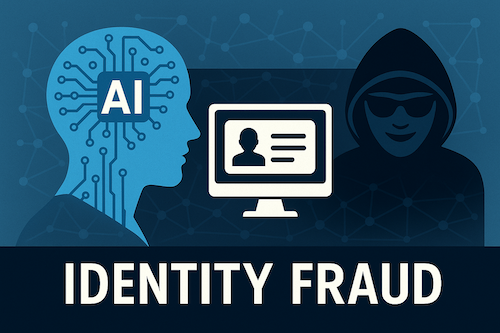
In 2025, the U.S. Department of Education reported that nearly 150,000 suspect identities were flagged in recent federal student-aid forms, contributing to $90 million in financial aid losses tied to ineligible applicants. From deepfakes in admissions to synthetic students infiltrating online portals and threatening high-value research information, AI-powered identity fraud is rising fast, and our educational institutions are alarmingly underprepared.
As identity fraud tactics become more scalable and convincing, districts are now racing to deploy modern tools to catch fake students before they slip through the cracks. Three fraud trends keep IT and security leaders in education up at night–and AI is supercharging their impact.
1. Fraud rings targeting education
Here’s the hard truth: Fraudsters operate in networks, but most schools fight fraud alone.
Coordinated rings can deploy hundreds of synthetic identities across schools or districts. These groups recycle biometric data, reuse fake documents, and share attack methods on dark web forums.
To stand a fair chance in the fight, educational institutions must work with identity verification experts that enable a holistic view of the threat landscape through cross-transactional risk assessments. These assessments spot risk patterns across devices, IP addresses, and user behavior, helping institutions uncover fraud clusters that would be invisible in isolation.
2. Deepfakes and injected selfies in remote enrollment
Facial recognition was once a trusted line of defense for remote learning and test proctoring. But fraudsters can now use emulators and virtual cameras to bypass those checks, inserting AI-generated faces into the stream to impersonate students. In education, where student data is a goldmine and systems are increasingly remote, the risk is even more pronounced.
In virtual work environments, for example, enterprises are already seeing an uptick in the use of deepfakes during job interviews. By 2028, Gartner predicts 1 in 4 job candidates worldwide will be fake. The same applies to the education sector. We’re now seeing fake students, complete with forged government IDs and a convincing selfie, slide past systems and into financial aid pipelines.
So, what’s the fix? Biometric identity intelligence, trusted by a growing number of students, can verify micro-movements, lighting, and facial depth, and confirm whether a real human is behind the screen. Multimodal checks (combining visual, motion, and even audio data) are critical for stopping AI-powered identity fraud.
3. Synthetic students in your systems
Unlike stolen identities, synthetic identities are crafted from real–and fake–fragments, such as a legit SSN combined with a fake name. These “students” can pass enrollment checks, get campus credentials, and even apply for financial aid.
Traditional document checks aren’t enough to catch them. Today’s identity verification tools must use AI to detect missing elements, like holograms or watermarks, and flag patterns including identical document backgrounds, which is a key sign of industrial-scale fraud.
AI-powered identity intelligence for education
As digital learning becomes the norm and AI accelerates, identity fraud will only get more sophisticated. However, AI also offers educators a solution.
By layering biometrics, behavioral analytics, and cross-platform data, schools can verify student identities at scale and in real time, keeping pace with advancing threats, and even staying one step ahead.
Ashwin Sugavanam, Jumio Corporation
Ashwin Sugavanam is currently the VP, AI & Identity Analytics at Jumio Corporation. Ashwin is a visionary Data and Analytics leader with two decades of overall experience out of which he has spent the last decade in helping organizations incubate and scale Data & AI practices. Over the last couple of years Ashwin has helped organizations drive measurable business outcomes by responsibly scaling Data and AI initiatives, implementing modern concepts like Data Mesh and MLOps, and leveraging tools such as the Data Scientist Co-Pilot to accelerate impact. He can be reached on LinkedIn and at the company website https://www.jumio.com/ .
Latest posts by eSchool Media Contributors (see all)