Blog

  • Hunger Is Squeezing California Students — and it Could Get Worse – The 74

    Hunger Is Squeezing California Students — and it Could Get Worse – The 74


    Get stories like this delivered straight to your inbox. Sign up for The 74 Newsletter

    This has been an especially challenging year for Rosalba Ortega’s family. 

    It’s been a cold, soggy winter in Bakersfield, and Ortega said her two granddaughters, ages 4 and 7, don’t have warm coats for their walk to school. Rent and food prices have been climbing, and as a farmworker, she’s struggled to find work in the fields. Last month’s delays to the Supplemental Nutrition Assistance Program (SNAP) — known in California as CalFresh — hit her grandkids at a time when her family is already struggling to put food on the table.

    “There’s not much food for them,” said Ortega, in Spanish. “We have to look for low prices to buy for them. Sometimes the shelters give us food and that helps us a lot.”

    Ortega said her family never had to rely on shelters and churches for food in the past, but this year has been different.

    She isn’t alone. Disruptions to SNAP amid the government shutdown last month came at a time when California families say they are increasingly struggling to meet basic needs, including putting food on the table. 

    Three in 10 Californians — and half of lower-income residents — say they or someone in their household has reduced meals or cut back on food to save money, according to a survey conducted in October by the nonpartisan Public Policy Institute of California.

    Experts say that hunger and economic distress can affect students’ academic performance and determine whether they decide to attend — or finish — college.

    “What’s happening out of school can have a huge impact on their ability to learn while they’re in school,” said Natalie Wheatfall-Lum, director of TK-12 policy for EdTrust-West, a nonprofit that advocates for justice in education.

    Research shows children struggle to pay attention at school when SNAP benefits run out mid-month, and families turn to ultra-processed foods, according to Martin Caraher, a food policy expert at City University London who has worked with the World Health Organization.

    “You see it in behavior and performance at school,” Caraher said.

    Federal cuts reduce food aid 

    President Donald Trump’s budget and tax bill, passed by Congress in July, made cuts to SNAP and Medicaid, called Medi-Cal in California. California’s low-income students and their families will likely see federally funded food support and health care shrink or vanish under the law.

    This is coming at the same time that the Trump administration says it wants to dismantle the U.S. Department of Education to “break up the federal education bureaucracy and return education to the states,” a move that conservatives have long advocated since the creation of the Cabinet-level department in 1979.

    Wheatfall-Lum said that the federal government has been making cuts and laying off staff at programs aimed at those who are already hardest hit by hunger and economic distress, such as migrant students, multilingual studentshomeless students, and students of color.

    In its upcoming budget cycle, California should address the needs of families — both in and outside of education, she said. 

    “What the state can do is make sure not to back away from programming in place to support these same students,” Wheatfall-Lum said.

    EdTrust-West is advocating for the state to continue its commitment to a school funding formula that offers extra support to schools to help low-income and vulnerable students. Continuing to fund the community schools model is especially important, she said, because it is more responsive to families’ needs.

    Families with young children hit hard

    The number of struggling California parents with young children is especially alarming, researchers say. Nearly 3 in 4 families in California with children under age 6 report struggling with one or more basic needs, such as utilities, housing, food, health care and child care, according to the RAPID California Voices survey conducted in July.

    The project, conducted by Stanford University, has been surveying parents and caregivers with young children since November 2022. During that time, more than half of families surveyed said they struggled with basic needs, but over the last year, struggles with health care, food and utilities reached 73% — one of the highest levels since the survey began.

    “It’s pretty stark data,” said Philip Fisher, director of the Stanford Center on Early Childhood. “Our research shows consistently that economic hardship translates subsequently into parent stress and distress, which then gets passed along to child distress. So if you want to know how kids are doing, these are not great trends.”

    Fisher noted that supports rolled out during the pandemic, such as the expanded Child Tax Credit, increased SNAP and WIC (Women, Infants, and Children) benefits, and stimulus checks, resulted in fewer parents of young children experiencing material hardship and emotional distress. As those benefits expired, that trend reversed, he said.

    Researchers at Stanford asked caregivers to explain the biggest current challenges for their family in their own words. They shared those anonymized answers with EdSource.

    “We’re working hard, but it’s not enough anymore,” wrote one caregiver in San Joaquin County. “We need our leaders to understand that even full-time workers can’t afford rent, health care, and food in this state. Wages haven’t kept up.”

    One caregiver in San Bernardino County said they are worried about how the cuts from Trump’s budget will affect their Medi-Cal and CalFresh benefits.

    “They might get cut because the [Big Beautiful Bill] passed,” the caregiver wrote.

    College students struggle with basic needs

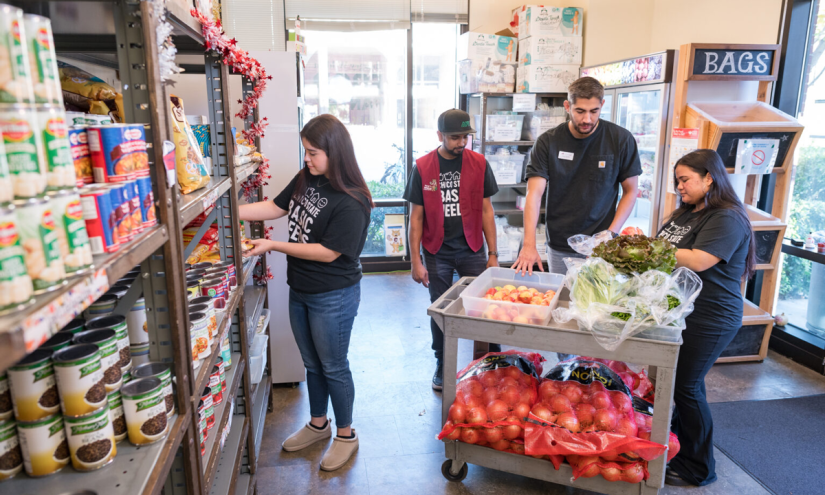
    College students are also struggling — and unlike K-12 students who receive breakfast and lunch at school, they don’t have guaranteed meals.

    Typically, students come into Long Beach State’s Basic Needs center because of a specific crisis, such as losing their job, said the center’s director, Danielle Muñoz-Channel. But now, students tend to come in just because they’re getting squeezed all around by rent, utilities and food prices.

    “They can’t pinpoint any one factor,” she said. “We ask what changed, and they say, ‘Nothing, I just can’t afford it anymore.’”

    Muñoz-Channel said she’s monitoring whether federal cuts to CalFresh and Medi-Cal benefits, such as tightened work requirements, could affect students and the future workforce. She said students need to have their basic needs met so that they can focus on school — otherwise they risk not graduating on time or not finishing their degree at all.

    “I’m worried about how it will affect our most needy students who use college to break generational cycles of poverty,” she said.


    Did you use this article in your work?

    We’d love to hear how The 74’s reporting is helping educators, researchers, and policymakers. Tell us how

    Source link

  • How AI in Public Education Is Evolving: Inside El Salvador’s Partnership with Elon Musk’s xAI

    How AI in Public Education Is Evolving: Inside El Salvador’s Partnership with Elon Musk’s xAI

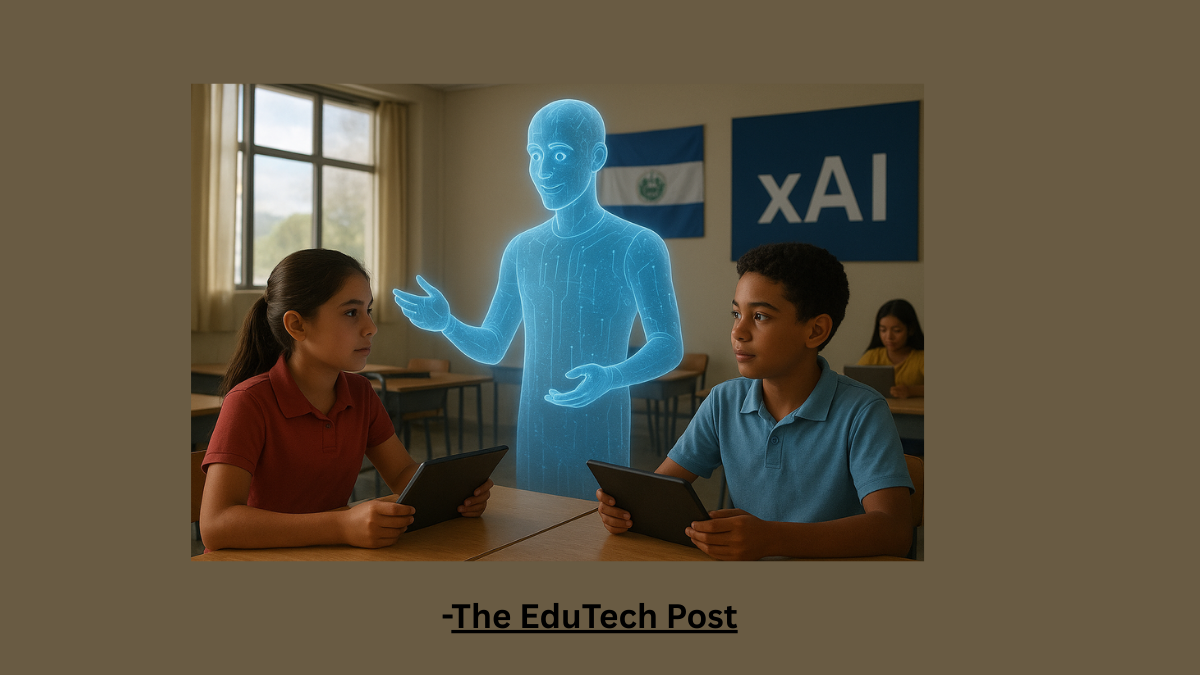
    In a world where classrooms are racing to keep up with rapidly evolving technology, El Salvador has taken a bold leap that is capturing global attention. In partnership with Elon Musk’s xAI, the country has launched what is being celebrated as the world’s first nationwide AI-powered education program—a move that could redefine how children learn, teachers teach, and nations prepare their next generation.

    The initiative aims to introduce personalized AI tutoring to more than one million students across public schools, creating a blueprint for what the future of AI in public education could look like.

    🎥 Elon Musk’s xAI Enters Classrooms: AI Education in Action

    🌎 A Historic Education Partnership

    On December 11, 2025, the Government of El Salvador announced a landmark two-year collaboration with xAI to integrate advanced artificial intelligence across more than 5,000 public schools, from bustling cities to remote rural regions.

    At the heart of this transformation is Grok, xAI’s powerful language model—now entering classrooms as an intelligent tutor designed to adapt to each student’s unique learning journey.

    For the first time, an entire national education system is embracing AI tutoring at full scale. This isn’t a pilot. This isn’t an experiment in a few select schools. This is a nationwide rollout, positioning El Salvador as a global pioneer in educational innovation.

    🤖 What Grok Will Bring to Classrooms

    According to the joint announcement from the government and xAI, Grok’s role goes far beyond simply answering questions. It has been designed as a full-spectrum learning companion.

    Here’s what Grok will do:

    • Deliver personalized, curriculum-aligned tutoring, adjusting explanations based on each child’s pace and learning style.
    • Break down complex concepts in simpler, more relatable ways—reducing classroom confusion.
    • Generate custom practice exercises for students who need extra support or want additional challenge.
    • Support teachers, not replace them, by taking over repetitive tasks so educators can focus on creativity, critical thinking, and emotional development.

    This initiative is expected to uplift over one million students and thousands of teachers, offering differentiated learning opportunities on a scale never seen before in the developing world.

    🗣️ Vision, Leadership & Global Ambition

    President Nayib Bukele has positioned this initiative as a cornerstone of the nation’s educational transformation. His vision is clear and bold.

    “El Salvador doesn’t just wait for the future of education — we build it with xAI.”

    This statement captures the spirit behind the project: a desire not just to follow global trends but to lead them.

    On the other side of the partnership, Elon Musk emphasized the historic nature of the program:

    “By partnering with President Bukele to bring Grok to every student in El Salvador, we’re putting the most advanced AI directly in the hands of an entire generation.”

    Together, these viewpoints underscore a shared conviction: AI can facilitate more equitable access to high-quality education, providing every child—regardless of their background—a genuine opportunity to succeed.

    📊 Why This Matters for the Future of Education

    1️ Personalized Learning at Scale

    Traditional classrooms frequently face challenges in addressing the diverse needs of dozens of students simultaneously. While some students grasp concepts quickly, others require more time and support, leading to disparities in learning progress and the risk of some quietly falling behind.

    With Grok:

    • Lessons can be personalized in real time
    • Students can learn at their own speed
    • Remedial support becomes instant and accessible
    • Advanced learners can progress further without being held back

    For the first time, every child can receive individual attention.

    2️ A Powerful Tool for Teachers

    Instead of competing with educators, Grok is designed to empower them.

    AI can:

    • Generate worksheets, quizzes, and differentiated materials
    • Help explain tough topics when students need extra support
    • Allow teachers to focus on emotional, social, and creative growth

    With AI as an assistant, teachers gain more time for meaningful teaching.

    3️ Global Implications

    If the program succeeds, El Salvador could become a case study for the world—a proof of concept showing that AI in public education isn’t just possible, but game-changing.

    This model could influence:

    • National education reforms
    • Digital transformation policies
    • How countries approach AI equity in schools
    • Long-term strategies for bridging learning gaps

    Many education systems are watching closely—and some are already considering similar programs.

    📍 Challenges & Concerns

    Despite the excitement, experts agree that the approach must remain thoughtful and responsible.

    Key concerns include:

    • Curriculum alignment: Ensuring AI does not stray from national learning goals.
    • Data privacy: Preventing the exploitation of private student information.
    • Algorithmic bias: Making sure AI treats all students fairly.
    • Human connection: Preserving the teacher-student bond that shapes emotional intelligence and values.

    These conversations are not unique to El Salvador—they mirror global debates about AI’s role in the classroom. The country’s experience will provide critical insights for the world.

    El Salvador’s partnership with xAI represents a pivotal milestone in the advancement of AI in public education. By implementing AI tutoring nationwide, the country is not only enhancing academic achievement but also fundamentally transforming the educational experience for the 21st century.

    Whether this model becomes a global standard will depend on careful implementation, measurable improvements, and thoughtful oversight. But one thing is undeniable:

    El Salvador has taken a bold step toward the future—and the world is watching.

    Find more edutech articles and news on this website

    Source link

  • As Feds Crack Down on Huge Ed Tech Data Breach, Parents and Students Left Out – The 74

    As Feds Crack Down on Huge Ed Tech Data Breach, Parents and Students Left Out – The 74

    School (in)Security is our biweekly briefing on the latest school safety news, vetted by Mark KeierleberSubscribe here.

    The Federal Trade Commission announced this month plans to crack down on technology company Illuminate Education over a massive 2021 data breach. The move added to a long list of government actions against the firm since hackers broke into its systems and made off with the sensitive information of more than 10 million students.

    Three state attorneys general have also now imposed fines and security mandates on the company following allegations it misled customers about its cybersecurity safeguards and waited nearly two years to notify some school districts of the widespread data breach.

    The ones that haven’t made progress in their efforts to hold Illuminate accountable are parents and students.

    Their pursuit hit a wall in September when the Ninth Circuit Court of Appeals dismissed a federal lawsuit filed by the breach victims. The court, ruling on a case filed in California, found that the theft of their personal data — including grades, special education information and medical records — didn’t constitute a concrete harm.


    In the news

    Students walkout of East Mecklenburg High School in protest of U.S.Border Patrol operations targeting undocumented immigrants on Nov. 18 in Charlotte, North Carolina. (Getty Images)

    The latest in President Donald Trump’s immigration crackdown: In many cities across the country, from New Orleans to Minneapolis, resisting federal immigration enforcement means keeping kids in school. | The 74

    • Trump’s mass deportation effort has had a particularly damaging effect on the child care industry, which is heavily reliant on immigrant preschool teachers — most of them working in the U.S. legally — who have found themselves “wracked by anxiety over possible encounters with ICE.” | The Associated Press
    • ‘Culture of fear’: Immigrant students across the country have increasingly found themselves targets of bullying since the beginning of Trump’s second term, according to a new survey of high school principals. | The Guardian

    A Kansas middle school will no longer assign Chromebooks to each student: Computers have had “a wonderful place in education,” the school’s principal said. But schools have “simply immersed students too much in technology.” | KWCH

    A Florida middle school went into lockdown after an automated threat detection system was triggered by a clarinet. A student was walking in the hallway “holding a musical instrument as if it were a weapon.” | News6

    Sign-up for the School (in)Security newsletter.

    Get the most critical news and information about students’ rights, safety and well-being delivered straight to your inbox.

    ‘Got what he deserved’: A California teacher has filed a federal First Amendment lawsuit against her school after she was suspended for a Facebook post calling right-wing political activist and Turning Point USA founder Charlie Kirk a “propaganda-spewing racist misogynist” a day after he was murdered. | NBC News

    • In Florida, two teachers have filed separate First Amendment lawsuits after they were punished for social media posts critical of Kirk after his death. | First Coast News
    • Texas Gov. Gregg Abbott announced a partnership with Turning Point USA to create local chapters of the group at every high school campus in the state, vowing “meaningful disciplinary action” against any educators who stand in the way. | The Texas Tribune
    • Kirk’s wife, Erika Kirk, will field questions from “young evangelicals, prominent religious leaders and figures across the political spectrum” during a live town hall Saturday on CBS News moderated by its new editor-in-chief, Bari Weiss. | CBS News
    • ICYMI: The Trump administration’s First Amendment crackdown in the wake of the activist’s violent death has left student free speech on even shakier ground. | The 74
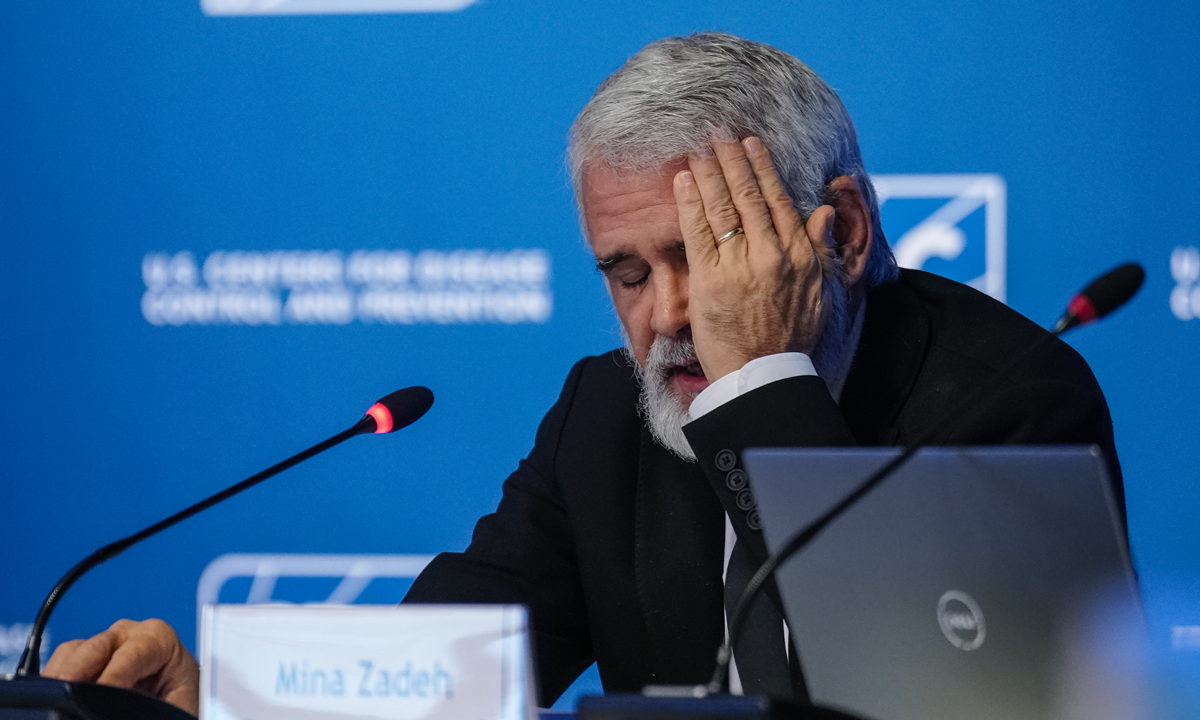
    Vice chair Robert Malone during a meeting of the CDC Advisory Committee on Immunization Practices on Dec. 5 (Getty Images)

    Following a shakeup in its ranks by vaccine skeptic and Health and Human Services Secretary Robert F. Kennedy Jr., a Centers for Disease Control and Prevention advisory committee voted to overturn a decades-long recommendation that newborn babies be immunized for hepatitis B — a policy credited with decimating the highly contagious virus in infants. | The 74

    • A measles outbreak in South Carolina schools is accelerating, with some unvaccinated students in a second 21-day quarantine since the beginning of the academic year. | NBC News  

    A photo that circulated online depicted California high school students lying in the shape of a swastika on the grass of a football field. Chaos ensued. | The Guardian

    ‘It feels nasty. It’s gross.’: Controversy has come to a head at a California high school after an adult film producer rented out the campus gym for a raunchy livestream. “The first thing I see is a full-grown adult, an adult man wearing a baby costume and being fed milk from a baby bottle,” one student observer noted. | NBC San Diego

    Two Texas teenagers allegedly conspired to carry out a school shooting at their high school but the plot was thwarted after classmates reported text messages with their plans to school police. “Don’t come to school on Monday,” one of the messages warned. | KHOU


    ICYMI @The74

    To Ease Civil Rights Backlog, McMahon Orders Back Staff She Tried to Fire

    A GOP push to limit public borrowing by graduate students could exclude many nursing students, as well as those training for several other professions. (Glenn Beil/Getty Images)

    Nurses, Social Workers Face ‘Bad Situation’ Under Proposed Loan Limits

    In New Mexico, Grandparents Caring for Grandkids Can Also Get Free Child Care Now(Co-published with The 19th)


    Emotional Support


    Did you use this article in your work?

    We’d love to hear how The 74’s reporting is helping educators, researchers, and policymakers. Tell us how

    Source link

  • WEEKEND READING: Hard, Soft, Green, Mad, AI: The Skills Squeeze

    WEEKEND READING: Hard, Soft, Green, Mad, AI: The Skills Squeeze

    This blog was kindly authored by Dr Fadime Sahin, Senior Lecturer in Accounting and Finance at the University of Portsmouth, London.

    According to the latest available data, approximately 264 million students worldwide were enrolled in higher education in 2023. Reasons for attending include the desire to acquire knowledge and skills, enhance employment prospects, boost social mobility and contribute meaningfully to society. Nearly three million students were enrolled at UK higher education institutions in 2023/24 (the most recent figures).

    The role of universities is increasingly debated across public discourse, shaping policy documents and household discussions, considering the tension between traditional academic skills, employability demands, sustainability imperatives and the accelerating influence of AI. The skills agenda currently sits at the heart of policymaking in England due to the skills gap facing the UK. The Lifelong Learning Entitlement, a flagship UK policy initiative that was introduced as a central plank of this agenda, seeks to expand access to flexible, modular study across a lifetime, reinforcing the policy emphasis on reskilling and employability.

    In a recent HEPI blog, Professor Ronald Barnett argued that policy discourse speaks almost exclusively of skills (employability, reskilling, skills gap) – the new currency of education – moving away from education and knowledge acquisition; while academic discourse speaks of education, but rarely of skills, especially in the humanities and social theory, resulting in a polarised and disconnected debate.

    Dr Adam Matthews, in another HEPI blog, echoed that policy discourse has become increasingly concerned with doing (skills) rather than knowing (knowledge). He analysed both the Post-16 Education and Skills White Paper and TEF (2023) submissions and found a similar imbalance: ‘skills’ outnumbered those to ‘knowledge’ by a ratio of 3.7, even higher among large, research-intensive universities that might be expected to focus more on knowledge production. The Post‑16 Education and Skills White Paper used the word ‘skills’ 438 times, but ‘knowledge’ only 24. The shift has been shaped by economic and growth imperatives, accountability and the instrumental role of universities for economic and social engineering, however it also risks eroding universities’ identity as knowledge producers. The same pattern is evident in the WEF’s Defining Education 4.0: A Taxonomy for the Future of Learning, which references ‘skills’ 178 times, but ‘knowledge’ only 32.

    In a blog post, Professor Paul Ashwin cautioned that a tertiary education system built only on skills, without knowledge, will deepen inequality and suggested a knowledge-rich understanding of skills. He stressed that skills without knowledge are hollow and insufficient, because they lack the contextual and disciplinary knowledge that makes them meaningful and adaptable. He pointed out that the Skills England report champions skills, but offers little clarity on what they actually mean. The listed skills (teamworking, creative thinking, leadership, digital literacy, numeracy, writing) are generic and detached from a specific context.

    The knowledge society was built on this promise. Yet in a post-truth era, that promise is faltering. Over the years, the emphasis on knowing the pursuit of structured, disciplinary knowledge has diminished, eroded by information overload, easy accessibility, erosion of trust in experts and an increasing policy focus on application and skills, even before the advent of AI. This decline sets the stage for Ashwin’s concern that a skills‑only system risks becoming hollow and inequitable.

    Understanding skills

    Amid this tension, it is useful to trace how different categories of skills have been constructed and prioritised within higher education.

    Hard skills

    Over the decades, hard skills have dominated classrooms, a result of education systems built around industrial-era priorities, reinforced by measurability bias through standardised testing and the privileging of tangible qualifications. These skills refer to technical, tangible, quantifiable,  job-specific and measurable abilities that are closely linked to knowledge acquisition and reflected in formal qualifications. Hard skills include coding/programming, engineering, data analysis, bookkeeping/accounting, foreign languages and other technical and occupational skills. Yet, the balance has shifted in recent decades as employers and policymakers emphasise 21st‑century competencies, including soft skills, green skills, digital and global skills and now increasingly AI skills. The fastest-growing skills (AI) category in higher education did not exist in mainstream curricula three years ago.

    Soft skills

    Soft skillshave long been undervalued and sidelined in classrooms. Strikingly, the term itself was first formalised not in education by the U.S. Army in 1972, when the Continental Army Command defined interpersonal and leadership capabilities as ‘soft skills.’ What began as military doctrine has since become central to employability discourse. Soft skills are interpersonal, intangible, non‑technical, transferable and context‑dependent abilities. They are closely linked to personal attributes and social interaction and reflected in behaviours, relationships and adaptability rather than formal qualifications. Soft skills can be categorised as personal qualities and values; attitudes and predispositions; methodological and cognitive abilities; leadership, management and teamwork; interpersonal capabilities; communication and negotiation; and emotional awareness and labour.

    Digital skills and AI literacy

    Computer literacy emerged in the 1980s and 1990s; with the spread of the Internet, this evolved into digital literacy, which in turn laid the foundation for today’s broader category of digital skills. The digital revolution prompted reforms. The core 21st-century digital and global skills include technical proficiency, information literacy, digital communication and networking, collaborative capacity, creativity, critical thinking, problem‑solving, intercultural understanding, emotional self-regulation and wellbeing. Since the end of 2022, the rapid uptake of generative AI tools has further expanded this landscape, introducing new forms of AI literacy and human-AI collaboration as essential competencies.

    Green skills

    Beyond interpersonal competencies, sustainability imperatives have introduced a new category: green skills. Green skills have emerged as a central focus in policy frameworks, driven by growing awareness of climate change, environmental degradation and the imperative of sustainability. Green skills refer to ‘the knowledge, abilities, values and attitudes needed to live in, develop and support a society which reduces the impact of human activity on the environment’, together forming green human capital. Green competencies are increasingly linked not only with green jobs, but with the broader transition toward sustainable economies. Green skills include technical and practical (heat pump installation, domestic recycling, energy grid engineering, peatland restoration), enabling skills (project management, collaboration, public engagement, digital skills) and knowledge and attitudinal capacities (carbon and climate literacy, systems thinking, environmental stewardship).

    Mad skills

    Alongside sustainability imperatives, a newer emergent HR discourse is the so‑called ‘mad skills’ unconventional, disruptive and non-linear thinking or experiences in a rapidly changing labour market. Mad skills stem from personal passions, hobbies, creative ventures or extraordinary experiences or resilience stories. Although mad skills haven’t found its place in academic literature, it might have become part of the vocabulary of recruiters.

    Taken together, these categories illustrate the expanding and overlapping landscape of skills. Yet the very language we use to describe them is increasingly problematic. The label ‘soft skills,’ for instance implies that they are secondary, less important or less measurable than ‘hard’ skills, which risks undervaluing them. As AI increasingly automates hard skills (coding, data analysis, translation), the distinction begins to blur. What remains uniquely human empathy, judgement, creativity becomes central, better captured by the term ‘human skills.’ After all, we may end up dealing only with human skills and human‑AI collaborative skills.

    The role of the university

    Hard, soft, green, digital, global, AI… the list keeps expanding. Today’s workplace pressures candidates to master them all to stand out. These categories are overlapping and often co-developed. Universities, increasingly framed as providers of every imaginable skill, risk being reduced to training centres. When universities behave like training centres, the focus of education shifts from broad academic exploration, research and innovation to specific, narrowly vocational skill acquisition, designed for immediate employment needs. In the process, their identity as institutions of knowledge and civic purpose begins to erode. The problem is not the existence of these skills, but their policy dominance as output metrics. It is important to recognise that universities have historically embedded broad, intellectual and transferable capabilities alongside disciplinary knowledge; the current shift is toward narrow, vocational, immediately marketable packages. Cross-cutting skills are valuable when embedded within knowledge-led curricula, not as substitutes for knowledge production.

    Yet employment needs are never static. The skills taught today may lose relevance within five or ten years after graduation, with AI expected to further compress the lifespan of many skills. Universities will inevitably try to keep pace with the ever-evolving skills agenda, but graduates may still find themselves holding qualifications in skills that have become obsolete, even more so now with AI. This emphasis places considerable weight on cross-cutting competencies such as soft skills, green skills, digital/AI literacy and global awareness.

    However, in certain disciplines, e.g., accounting and finance, the accreditation requirements of major professional bodies (ACCA, CIMA, ICAEW) remain heavily exam‑driven, privileging technical knowledge and hard skills while leaving only a limited scope for the development of broader competencies. Universities do adjust, increasingly embedding diverse skills alongside technical skills, but structural constraints, sometimes necessary, remain.

    Changing student landscape adds a layer to this dynamic. HEPI’s 2025 Student Academic Experience Survey shows that almost 70% of full-time students in the UK 65% of home students and 77% of international students are engaged in paid employment during the academic term. More students are trading off study time for work to manage financial pressures. Students are now expected to master more skill categories than any previous generation, with less time to learn them. Universities must therefore navigate not only the shifting skills agenda, but also the reduced availability of students for independent study and, in some cases, even class attendance to develop these skills.

    Amid these pressures, universities are increasingly judged by the employment status of their graduates, yet such measures often ignore the realities of the job market, particularly for the young. A mismatch arises when well-prepared graduates with relevant skills remain unemployed, underscoring that graduate outcomes alone are not a reliable proxy for educational quality. In fact, the latest Graduate Labour Market Statisticsshow that only 67.9% of graduates in England were in high-skilled jobs in 2024. Nearly a third were in roles not requiring graduate-level skills. The proportion of graduates in high-skilled employment has hovered around 65–67% for a decade (2015-2024). The 2024 figure (67.9%) is the highest in the series, but only marginally above previous years. This pattern is not new. High-skilled employment rates for graduates were 69.5% in 2006, 67.3% in 2009, 65.3% in 2012 and 66.2% in 2015. In other words, for nearly two decades, the proportion of graduates entering high-skilled roles has remained stubbornly flat. This persistent underemployment, despite years of skills-focused reform, may challenge the assumption that expanding skills provision alone can resolve graduate underemployment.

    Universities find themselves caught between competing pressures: policymakers emphasising immediate employability skills; students juggling financial pressures and limited study time; and labour markets struggling to provide suitable graduate opportunities.

    This tension ultimately circles back to the principle of lifelong learning. We need to recognise that education cannot be reduced to a finite set of skills, but must remain a continuous process of adaptation, renewal and knowledge creation.

    Faced with the skills squeeze, it seems increasingly likely that ‘human skills’ and ‘human‑AI collaborations’ may matter most.


    Source link

  • Federal judge denies request for 18-month delay in landmark borrower defense settlement

    Federal judge denies request for 18-month delay in landmark borrower defense settlement

    Dive Brief: 

    • A federal judge on Thursday denied the U.S. Department of Education’s request for an 18-month extension to decide borrower defense claim decisions due by the end of January, according to lawyers representing the borrowers. 
    • The affected borrowers belong to the last of three groups covered under a landmark 2022 settlement with the Education Department to resolve a class-action lawsuit that accused the agency of stonewalling borrower defense applications. Under that agreement, the borrowers were set to receive automatic relief if the agency didn’t decide their cases by Jan. 28
    • U.S. District Judge William Alsup declined to provide any extension on claims filed by borrowers who attended one of 151 institutions that the Education Department previously said had strong indications of engaging in “substantial misconduct.” For other borrowers, Alsup extended the deadline for the Education Department to resolve their cases to April 15. 

    Dive Insight: 

    The Sweet v. McMahon lawsuit, originally filed in 2019 during the first Trump administration, accused the Education Department of improperly delaying decisions on borrower defense to repayment claims. The program provides debt relief to borrowers who were defrauded by their colleges. 

    Three years later, under the Biden administration, the Education Department struck a settlement that promised either timely decisions or automatic relief to three separate groups of borrowers. 

    The agency said it would automatically clear debts for the first group, roughly 200,000 borrowers who attended one of 151 colleges listed by the Education Department. In court documents, the Education Department said that “attendance at one of these schools justifies presumptive relief” because the institutions had strong signs of misconduct. 

    The second group is composed of borrowers who didn’t attend one of those colleges. The Education Department promised to make decisions for them by certain dates depending on when those borrowers applied for relief — or automatic relief if it didn’t meet those deadlines. 

    The majority of those borrowers have had their claims approved, with only a small share still pending, according to a court filing earlier this month. 

    The last group is composed of those who filed borrower defense applications after the Education Department had already struck the settlement but before it received final approval. That group is composed of roughly 207,000 people who filed over 251,000 claims following the settlement’s announcement. 

    Alsup denied granting any extension to the Education Department for borrowers in that group who attended the agency’s list of 151 colleges. Around 80% of borrower defense applications filed by the last group involve one of those institutions, according to the Project on Predatory Student Lending, a legal nonprofit representing the borrowers. The remainder will face a roughly 2 and ½ month delay. 

    “The Court sent a clear message today: borrowers deserve fair, timely decisions, not years of uncertainty,” Eileen Connor, president and executive director of PPSL, said in a statement Thursday. “This is a critical victory for people who have waited far too long for justice and relief, but this case isn’t over.” 

    The Education Department is still “evaluating the impact of the order,” Ellen Keast, the agency’s press secretary for higher education, said in a Friday email. 

    “We remain committed to doing the right thing for students, families, and taxpayers,” Keast said.

    The Education Department asked for the delay in early November, projecting that it still would not have reached decisions on roughly 193,000 borrower defense applications from the final group by the Jan. 28 deadline. The agency argued it didn’t have the resources it needed to adjudicate the group’s claims and had seen “staffing dwindle at the time when resources for postclass adjudication are most needed.”

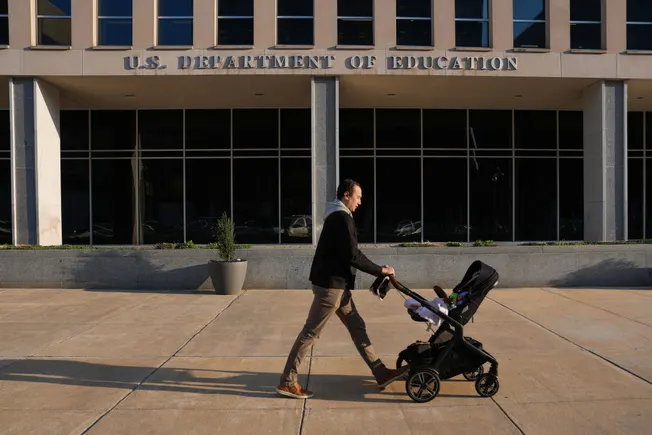
    The Education Department has cut roughly half of its staff under President Donald Trump, who signed an executive order in March for the agency to close by the “maximum extent appropriate and permitted by law.”

    The final group in the settlement has a total outstanding loan balance of $11.8 billion, according to the agency’s court filing. The Education Department said it had issued decisions on roughly 54,000 borrower defense applications for the group by October, and it had denied roughly half of them.

    Source link

  • After-school meal participation still below pre-COVID levels, FRAC finds

    After-school meal participation still below pre-COVID levels, FRAC finds

    This audio is auto-generated. Please let us know if you have feedback.

    Dive Brief:

    • While the number of children receiving after-school snacks and suppers through the federal Afterschool Nutrition Programs increased slightly from October 2023 to October 2024, participation still remained below pre-pandemic levels, according to a report released Wednesday by the Food Research & Action Center.
    • The Afterschool Supper Programs, for instance, served 1.26 million students on an average weekday in October 2024 — a 2.8% rise from October 2023, FRAC found. Despite those gains, the report said, roughly 173,400 fewer children received after-school suppers in October 2024 compared to October 2019.
    • Many more children could benefit from after-school meals, FRAC said, adding that only 1 in 16 children who participated in the federal free or reduced price school lunch program in October 2024 received a meal from the Afterschool Supper Programs.

    Dive Insight:

    Even though the recent data shows more students were served after-school suppers compared to before the COVID-19 pandemic, the FRAC report said that the program reached “far too few children.” 

    Historic one-time federal pandemic emergency aid helped boost funding for after-school programs and ultimately expanded after-school meal access, but those federal dollars have mostly expired and been spent, the report added. 

    The two federal Afterschool Nutrition Programs are the Child and Adult Care Food Program and the National School Lunch Program, which both provide funding to serve snacks and suppers to children during educational and enrichment programming. The funding is distributed by the U.S. Department of Agriculture through state agencies, typically state departments of education, health or agriculture.  

    The CACFP At-Risk Afterschool Supper and Snack Program reimburses public and private

    nonprofit schools, local government agencies, and private nonprofit organizations for serving food to children 18 years and younger during educational programs running after school, on weekends or during school holidays. NSLP also reimburses public and private nonprofit schools for providing after-school snacks to children, but it does not include supper.

    The FRAC report noted that if every state served supper to 15 children out of every 100 who come from low-income families and participated in school lunch in October 2024, then over 1.8 million students would have received an after-school supper. That also means another $163.5 million in federal reimbursed funds would have been available to support after-school meal programs in that month alone if all qualified states participated. 

    Crystal FitzSimons, president of FRAC, said in a Wednesday statement that Congress and local communities must do more to help increase the number of children who access quality after-school programs that offer suppers and snacks.

    “Families are facing rising food costs, and many parents are working long hours just to get by,” FitzSimons said. “The Afterschool Nutrition Programs help families stretch tight household budgets and ensure children get the nutrition and programming they need to learn and thrive.”

    To boost student participation in after-school supper and snack programs, FRAC recommends some of these policy changes:

    • Consolidate after-school and summer nutrition programs. Many local organizations and government agencies have to switch between operating the Afterschool Meal Program under CACFP and the Summer Food Service Program, even though the same children are often served throughout the year. Consolidating the two programs into a single year-round operation under SFSP would allow programs to reach more children effectively.
    • Expand NSLP to allow school food authorities to also serve suppers. Schools would be more incentivized to serve suppers if NSLP didn’t limit their after-school programs to serving only snacks. Currently, schools must operate under the CACFP to serve a full meal during after-school hours, which adds “unnecessary administrative burden.”
    • Lower the area eligibility threshold.  To qualify for after-school nutrition programs, sites must be in areas where at least 50% of children qualify for free or reduced price school meals. That eligibility percentage should drop to 40% to expand access to more communities, particularly in rural and suburban communities with high needs but less concentrated poverty. 

    Source link

  • Meet the Speakers Transforming Higher Ed at InsightsEDU 2026

    Meet the Speakers Transforming Higher Ed at InsightsEDU 2026

    Higher ed doesn’t need just another conference. It needs transformation.

    Legacy strategies are cracking under demographic pressure. AI is rewriting how students search and the Modern Learner is calling the shots. Institutions that cling to “what’s always worked” are watching the ground shift under their feet.

    InsightsEDU 2026 is built for leaders who are done settling. Presidents, marketers and enrollment teams who know reputation and revenue can’t live in separate silos anymore—and who are ready to align both around the needs of today’s learners.

    From February 17–19, 2026 in Fort Lauderdale, you’ll hear from university leaders, higher ed innovators and Modern Learner experts who are actively rebuilding how institutions compete, communicate and grow. More than 40 sessions will dig into real playbooks, not theory—unifying brand and enrollment, elevating student experience and turning AI disruption into advantage.

    Here’s a preview of a few of the voices taking the stage and how they’re already reshaping what’s possible.

    The Leaders Rewriting Higher Ed’s Playbook

    Gregory Clayton

    President of Enrollment Management Services at EducationDynamics
    With over 30 years of experience in the higher education space, Greg brings valuable expertise in enrollment management and performance marketing. As President of Enrollment Management Services at EducationDynamics, he leads a comprehensive team offering agency marketing, enrollment services, strategic consulting, and research, all tailored to the higher ed sector. His leadership and career position him as a visionary strategist, equipped to offer insightful commentary on the higher education landscape and enrollment solutions. Join his session to learn more about how to better serve the Modern Learner and implement strategies that drive institutional success.

    Session: Opening Session: From Framework to Action

    Amanda Serafin

    Associate Vice President of Enrollment at Indiana Wesleyan University 
    With more than twenty years in higher education enrollment, Amanda serves as the Associate Vice President of Enrollment at Indiana Wesleyan University, where she leads strategic initiatives and a high-performing team supporting IWU’s National & Global programs.

    At InsightsEDU, Amanda joins EducationDynamics’ Vice President of Enrollment Management Consulting to unpack three years of competitive research—revealing what secret shopping uncovered about competitor strategies, the depth and quality of student nurturing across the market and how IWU leveraged those insights to strengthen enrollment outcomes.

    Session: Mystery Shopping 2.0

    Alex Minot

    Client Partner Lead at Snapchat
    As Client Partner Lead at Snapchat, Alex helps higher ed institutions and nonprofits modernize their marketing through full-funnel strategies built for Gen Z and Millennial audiences. With experience spanning Snapchat, Reddit, Facebook and Google, he brings a deep understanding of how today’s learners discover, evaluate, and choose their next step.

    At InsightsEDU 2026, Alex will break down why traditional enrollment marketing no longer works—and what it takes to earn trust in a world where Gen Z is curating their own narratives. Joined by EducationDynamics’ Senior Social Media Strategist, Jennifer Ravey, he’ll explore how to design a content ecosystem that creates belonging, builds confidence and inspires advocacy from first touch to final decision..

    Session: From Awareness to Advocacy: Designing a Full-Funnel Strategy for Gen Z Engagement

    Chris Marpo

    Head of Education Partnerships at Reddit
    As Head of Education Partnerships at Reddit, Chris leads the charge in building high-impact collaborations with higher ed institutions and agencies. At InsightsEDU 2026, he’ll share how Reddit’s unique communities—and the behaviors driving them—are reshaping the way universities reach and influence the Modern Learner.

    Drawing on his experience helping scale advertising businesses at LinkedIn, Pinterest and Quora, Chris brings a sharp understanding of the digital landscape and what truly resonates with today’s audiences. Attendees can expect actionable insights on how institutions can meet prospective students where they are and stay relevant in an era of rapid change.

    Session: From Keywords to Conversations: Winning Student Mindshare in the Age of AI Search

    Kevin Halle


    VP of Enrollment at Wayne State College
    With more than a decade of experience leading undergraduate, transfer, graduate, and financial aid teams, Kevin brings a deep understanding of how to build enrollment pipelines that serve diverse learner groups.

    At InsightsEDU, he’ll unpack what it takes to break down the silos separating traditional, graduate and adult learner strategies and how institutions can create one unified approach that works for all students.

    Session: Unifying Your Enrollment: Building a Cohesive Strategy for the Modern Learner

    Katie Tomlinson

    Katie Tomlinson

    Senior Director of Analytics and Business Intelligence at EducationDynamics
    Prepare to unlock insights with Katie Tomlinson. As the Senior Director of Analytics and Business Intelligence, Katie expertly manages data and reporting, uncovering key trends to support EducationDynamics in delivering data-driven solutions for the higher ed community. Learn from her as she discusses findings from EducationDynamics’ latest report, where attendees will gain a deeper understanding of the evolving learning environment and the significant factors that influence Modern Learners’ educational choices.

    Session: Opening Session: From Framework to Action

    Matt Loonam

    Lead Enterprise Account Executive, Education at LinkedIn
    With 20 years in digital media across programmatic, video, mobile and social, Matt has spent the last six years helping colleges and universities strengthen their brands and drive enrollment with more precise, student-centric outreach. At InsightsEDU, he will share how LinkedIn’s rich audience signals can help institutions reach career-focused prospects who are closer to a decision, while building the kind of trust that moves students to choose their school.

    Session: How to Win High Intent Students on LinkedIn

    Leila Ertel

    Vice President of Marketing at Rocky Mountain College of Art + Design
    As Vice President of Marketing at Rocky Mountain College of Art + Design, Leila brings a bold, data-informed approach that helps more students uncover their creative potential and pursue rewarding careers. Attend her InsightsEDU session to see how your institution’s website can move from overlooked asset to true engine of enrollment growth.

    Session: The Evolution of Website Marketing

    The voices shaping InsightsEDU continue to grow. Check out the full speaker lineup and new additions on our speakers page

    Be In the Room Where Higher Ed Resets 

    InsightsEDU is where presidents, marketers and enrollment leaders pressure test old assumptions and build new playbooks around the Modern Learner. Over three days you’ll connect with peers who are aligning brand and enrollment, experimenting with AI and digital and proving that you don’t have to choose between revenue and reputation to achieve institutional success.  

    Don’t watch the next era of higher education happen from the sidelines. Get a front-row seat. Register for InsightsEDU 2026 today. 

    Source link

  • DeSantis wants to give USF’s Sarasota campus to New College of Florida

    DeSantis wants to give USF’s Sarasota campus to New College of Florida

    This audio is auto-generated. Please let us know if you have feedback.

    Dive Brief:

    • The New College of Florida could take control of the University of South Florida’s Sarasota-Manatee campus under a new proposal from Florida Gov. Ron DeSantis. 
    • Under DeSantis’ 2026-27 state budget,  New College would assume control of USF Sarasota-Manatee’s 32-acre property and related liabilities by July. In exchange, the college would pay USF roughly $166,600 per month for debt tied to the property. 
    • Current USF Sarasota-Manatee students would have a “reasonable opportunity” to finish their degrees at the campus before New College could fully take over the property, according to the proposal. If the proposal takes effect, USF could not enroll new students at its Sarasota-Manatee campus going forward.

    Dive Insight:

    With DeSantis’ proposal, the liberal arts-focused New College, also based in Sarasota, would undertake a major expansion. However, the governor’s budget proposal essentially represents a legislative wish list, making the ultimate outcome still uncertain. 

    This is a policy matter that is going to be discussed, debated and worked through over the coming months of the Legislative Session,” Will Weatherford, chair of USF’s governing board, said at a meeting on Thursday, according to local media. We don’t control the outcome of that discussion.”

    The proposal would not transfer USF’s Sarasota-Manatee students or employees to New College.  

    USF would retain its intellectual and other intangible property, as well as records and equipment, and have priority over the space while its current students finish their degrees. 

    However, the budget provision states that the two institutions could forge a “mutual agreement to share or use space in any of the transferred properties or facilities when it is in the best interest of both institutions or their students.”

    News of such a plan for New College to take over the campus broke earlier this year. 

    Emails unearthed in March by WUSF — a public news outlet owned by USF — included a draft press release penned by New College announcing it would integrate the Sarasota-Manatee campus. The draft release trumpeted millions of dollars in potential savings and the elimination of redundancies between the two institutions. 

    The draft said the “strategic partnership between the next door colleges aims to create a unified, world-class institution that maximizes resources, eliminates redundancies, and elevates opportunities for students, faculty, and the region.”

    New College’s rapid growth will immediately benefit from the additional physical space provided by the USF-SM campus,” the draft release also stated. “The integration also addresses longstanding inefficiencies, consolidating administrative functions and aligning academic offerings.”

    In New College’s envisioning, according to the draft, the integration would create “streamlined transfer pathways” for USF Sarasota-Manatee students to the university’s Tampa flagship or St. Petersburg campuses, or New College. 

    Prior to those discussions of a transfer, New College in 2024 took over a 9-acre waterfront property, originally set aside for USF Sarasota-Manatee, which the college said would grow its student population. 

    New College has become a lynchpin in DeSantis’ efforts to remake higher education in Florida. In 2023, the governor revamped the college’s board and named his longtime ally Richard Corcoran — former Republican state House speaker and Florida education commissioner — as its president. 

    In the intervening two years, Corcoran and the board have killed the institution’s once-robust diversity, equity and inclusion efforts and dismantled its gender studies department, among other changes favored by conservatives. 

    In October, New College became the first to publicly volunteer for President Donald Trump’s higher education compact, which offers colleges priority in research funding in exchange for adopting a slate of policies put forward by the Trump administration. 

    The legal foundations of the compact have been widely questioned, and most of the nine research universities directly offered the deal rejected it over concerns about free speech, institutional independence and maintaining meritocracy in funding. New College, on the other hand, said it would “happily be the first” to embrace the compact. 

    We have no affirmative action or DEI, and we have been building a campus where open dialogue and the marketplace of ideas are at the forefront of everything we do,” Corcoran said at the time. 

    Meanwhile, USF Sarasota-Manatee has been growing its physical footprint. The campus, long a commuter-only institution, last year opened a new 100,000-square-foot combined residence hall and student center that it billed as the campus’s first student housing and major expansion since opening in 2006. 

    New College is renting space in USF Sarasota-Manatee’s new facility to house some of its students. That expense, combined with renting nearby hotel rooms for the same purpose, is costing the college millions of dollars each year, according to WUSF.

    Source link

  • Trump calls for federal policy framework preempting state AI laws

    Trump calls for federal policy framework preempting state AI laws

    This audio is auto-generated. Please let us know if you have feedback.

    President Donald Trump signed an executive order Thursday challenging the growing ecosystem of state AI laws and setting the stage for a federal policy to oversee the technology, citing concerns over compliance challenges for businesses and stymying innovation. 

    The executive order tasks U.S. Attorney General Pam Bondi with creating an AI Litigation Task Force in the next 30 days to challenge state AI laws that “unconstitutionally regulate interstate commerce” or clash with existing federal laws. Trump also called for a national policy framework for AI that would preempt state AI laws, add child safety protections, ensure copyright safeguards and hinder censorship. 

    “My administration must act with the Congress to ensure that there is a minimally burdensome national standard – not 50 discordant State ones,” the order said. “The resulting framework must forbid State laws that conflict with the policy set forth in this order.” 

    States will face evaluation of their AI laws under the executive order, as well as potential restrictions on funding if their laws are found to be burdensome, according to the document.

    The proposal was met with sharp criticism from some advocates and lawmakers including Sen. Amy Klobuchar (D-Minn.), who described the executive order as “dangerous, and most likely illegal,” in a post on social media platform X

    “Trump’s new executive order tries to eliminate state AI laws – in both red and blue states – that are protecting Americans from harmful deepfakes, scams, and online exploitation,” Klobuchar said on X. “We shouldn’t remove the few protections Americans have as Congress fails to act.” 

    Trump’s move to create roadblocks for state AI law implementation aligns with the interests of tech companies, which have worked against state regulations in 2025 as new models, agentic tools and applications spread among enterprises. 

    Despite its attempt to slow state efforts regulating AI, the executive order isn’t likely to shift enterprise compliance or AI governance strategies as a result, said Forrester Principal Analyst Alla Valente. 

    “They can’t pull back on what they’re doing when it comes to AI standards, assessments, controls and governance,” Valente said. “They’re going to have to stay the course on it.”

    Companies building AI products, particularly in highly regulated fields such as healthcare, are aware they can’t adopt a technology without managing risk, said Alaap Shah, an AI, privacy, cybersecurity and health IT attorney at Epstein Becker Green. Many companies that have already adopted compliance frameworks based on consensus-based standards will likely continue to implement them, he added.  

    Still, businesses will continue to advance AI development and deployment regardless of the state of the regulatory landscape, Shah said. 

    “It’s sort of like a build now, fail fast, mentality and investors are continuing to invest,” Shah said. 

    The pushback against state AI regulation comes at a time when tech companies like Google, OpenAI, AWS, Microsoft, Meta and more are investing billions in building out infrastructure in the U.S. and globally. Gartner estimated that global AI spending will reach $1.5 trillion in 2025

    Google and OpenAI earlier this year advocated for a federal policy preempting state AI laws. Meta also launched a lobbying effort to support political candidates who aligned with the company’s views on AI oversight, marking another step by Big Tech against state AI regulation after a proposed 10-year moratorium on state AI laws failed to pass in Trump’s One Big Beautiful Bill Act. 

    What CIOs can expect from U.S. states  

    As the AI market rapidly expands, U.S. states including California, Colorado, Connecticut and Texas have passed AI legislation in an attempt to regulate AI model developers and deployers. California’s AI law requirements stand to have a particular effect on CIOs and businesses because the law imposes direct obligations on companies that run data centers or are building their own AI models. 

    Source link