This prize-winning student podcast explores how faith and power — forces that can be used for good — may be misused for personal gain. The result is tragic.
A photo of the Guyanese rainforest superimposed on a map showing Guyana. (Image adapted from Canva/Getty Images)
This podcast, by high school student Catherine Dowuona-Addison, tied for third place in the 18th News Decoder Storytelling competition. The story was produced out of News Decoder’s school partnership program. Catherine is a student at SOS-Hermann Gmeiner International College in Ghana. Learn more about how News Decoder can work with your school.
The Jonestown massacre took place in northwest Guyana on 18 November 1978. Jim Jones, leader of the Peoples Temple, an American religious cult, convinced 918 of his followers to take their own lives in what is the largest cult mass murder-suicide to date.
This tragedy is at the heart of a podcast submitted to News Decoder’s 18th Non-Fiction Storytelling Contest. Student Catherine Dowuona-Addison of SOS-Hermann Gmeiner International College in Ghana takes on the topic of the Jonestown massacre and explores how faith can be used for personal gain and lead to such tragedy.
The 20-minute podcast has been split into four parts. To read along with the podcast, click on the links to access the PDF transcripts.
Making a podcast.
Hear from Catherine about her experience of researching, writing and recording her podcast by watching the YouTube short (right)
Want to create your own podcast?
Check out News Decoder’s WePod Guide to Audio Storytelling, a mini podcast series and accompanying PDF booklet that covers the basics of how to create a podcast — everything from finding a story and crafting your piece to recording and editing your podcast.
Questions to consider:
1. What was the Jonestown massacre?
2. Why did Jim Jones and his followers move to Guyana?
3. What makes a cult a cult?
Catherine Dowuona-Addison is a student at SOS-Hermann Gmeiner International College with a passion for crime and investigative journalism. She enjoys sharing stories through podcasts and mini-documentaries, shedding light on topics of equal opportunity and human rights abuses across the globe.
This audio is auto-generated. Please let us know if you have feedback.
Declining birthrates and growing competition from school choice threaten public school enrollment counts — and therefore school district budgets. Student data privacy concerns are on the rise and only complicated by the explosive rise in artificial intelligence tools and usage. And administrators are continuing to adjust to new policy priorities for curriculum, staffing and more under the second Trump administration. These are but a few of the challenges facing public schools in 2026.
As we head into a new calendar year — and the second half of the 2025-26 school year — here are six trends for K-12 leaders to watch.
Education funding faces pressure from multiple directions
Education funding will face pressures on several fronts in 2026, including strained state coffers, unpredictability in federal funding and competition for local dollars.
Marguerite Roza, director of Edunomics Lab and a research professor at Georgetown University’s McCourt School of Public Policy, predicts flat but stable federal funding for schools in 2026.
Still, state and local education systems are bracing for more uncertainty when it comes to federal funding cycles, according to education researchers and professionals. Last summer, many states and districts were caught off guard when the Trump administration froze federal funding for multiple programs. Likewise, some states and districts worry about potential federal funding restrictions if their policies don’t align with the Trump administration’s priorities.
Roza said that while federal education funding in 2025 was “very drama-infused,” states were level-funded from the previous year, with allocations for Title I and the Individuals with Disabilities Education Act — the two largest pots of federal K-12 money — distributed to states as usual.
And since Congress did not finalize a fiscal year 2026 budget for the U.S. Education Department in 2025, all eyes will be on actions to be taken before the next appropriations deadline on Jan. 30.
At the state level, a fall 2025 fiscal survey from the National Association of State Budget Officers found that 23 states projected general fund spending to decline or remain flat in FY 2026 budgets compared to FY 2025 levels.
This has school systems jockeying for state dollars against other state-supported programs like healthcare and public safety. “If districts were hoping for some big new investment from the states, I would say, ‘This is not your year,’” Roza said.
At the local level, shifting public school enrollment will influence allocations for per-pupil spending, leading to less funding fordistricts with declining enrollments. That drop in revenue means school systems will need to make tough decisions on closing or consolidating schools and shrinking their workforce, Roza said.
Closing schools is “hard for communities,” and localities will likely approach this in a variety of ways in 2026, Roza said.
Competition for students heats up
Several factors influencing shifts in public school enrollment will continue into the new year, including a shrinking population of young children and a growth in private school choice programs.
The public school versus private school choice debate will intensify as more states launch voucher programs in the 2026-27 school year that use taxpayer dollars to fund private school tuition — and while a nationwide school choice program prepares for a 2027 launch.
Robert Enlow, president and CEO of EdChoice, a nonprofit research and school choice advocacy organization, predicts more families will choose options that aren’t necessarily their neighborhood public school.
“There’s no doubt that the demand for choice has continued since COVID,” Enlow said.
The number of students participating in state-led universal private school choice programs has grown from about 64,000 in 2022-23 to 1.3 million in 2024-25, according to EdChoice. Still, most students — about 49.6 million — attend public schools, based on fall 2022 numbers, the most recently available federal data.
The large population of public school students is why federal and state investments are needed for public schools, according to private school choice opponents. Vouchers leave public schools with fewer resources to meet the needs of their students, which contributes to equity gaps, they say.
Opponents also say that private school choice programs lack transparency and accountability.
“Voucher students lose most of their legal protections under special education and civil rights laws, and voucher programs use public dollars to fund private schools that can and do discriminate against students and employees in ways that are not lawful in public schools, said a Dec. 18 letter from Public Funds Public Schools, a nonprofit advocating for investments and support for public schools. The letter sent to the Internal Revenue Service was in response to calls for public comments ahead of formal rulemaking for the national private school choice program.
Enlow and others predict that some Democratic-led states will join Republican-led states in opting into the national school choice program, which will fund certain expenses for both public and public schools. Those expenses could include tuition and fees, books and supplies, tutoring, payments for services for students with disabilities, computer equipment and internet, and transportation.
“Any traditional public school that says they can’t afford computers or transportation is not thinking how this program could help them,” Enlow said.
District leaders will navigate more teacher layoffs, retention challenges
As student enrollment in public schools is expected to continue declining, and thereby strain K-12 budgets in 2026, states and districts will have to “reimagine and redesign the teacher workforce” — looking at how to best use new technologies, what roles only teachers can fill, and “how to best attract, support and retain the most effective teacher workforce,” said Heather Peske, president of the National Council on Teacher Quality, in an email to K-12 Dive.
More staff layoffs are likely as dropping enrollment leads to deeper district budget cuts, Peske said. This will force district leaders to reckon with any “reduction in force” policies that ignore teacher performance, she added.
Peske also predicted that shrinking state and local K-12 budgets will create more opportunities for districts to consider differentiated pay models — which compensate certain educators more than others — to attract and retain teachers in high-need schools, subjects and regions.
Some K-12 researchers have said declining enrollment and related budget cuts, alongside mass pandemic-era hiring of teachers supported by federal emergency aid funds, have led to a reversal in widespread teacher shortages.
But Paige Shoemaker DeMio, senior analyst for K-12 education policy at the Center for American Progress, said she expects district budget cuts to strain working conditions for teachers and retention rates to drop. Tighter budgets will mean less funding to support teachers, and more responsibilities will be put on their plate, which in turn will increase teacher burnout and drive educators out of classrooms, she said.
Uncertainty to persist as federal changes continue
Districts in 2025 already felt the pressure to change their diversity, equity, inclusion and LGBTQ+ policies after the Trump administration cracked down on race-based and sex-based initiatives. In many instances, the administration has attempted to strong-arm states and districts into complying with its policies by threatening the loss of federal funding. That tactic, rarely used under other administrations, is likely to continue under this one in 2026, civil rights enforcement experts said.
The departments of Education and Justice, for example, have suggested continued use of stringent compliance methods to enforce Title IX and Title VI, which protect students from discrimination based, respectively, on sex and race.
Federal policies are also impacting immigration enforcement on or around school grounds, pushing districts to consider virtual learning options and to offer know-your-rights training or legal counsel for families. The aggressive enforcement has affected students’ attendance, performance and sense of safety, district leaders have said.
In 2026, the trickle-down from federal policies to districts and students will likely continue to impact school operations, said Sasha Pudelski, director of advocacy for AASA, The School Superintendents Association.
“For traditional federal funding and policy processes, it’s been challenging for superintendents to determine what the ‘new normal’ is, compared to a one-time aberration or one-off,” Pudelski said. That’s making planning and preparation difficult for district leaders, she added.
“School district leaders are facing mounting uncertainty and should brace for more in 2026,” Pudelski added.
States will take reins on achievement and absenteeism
The new year will see schools doubling down on supports to raise achievement and lower chronic absenteeism, according to education researchers, professionals and nonprofit organizations.
The stubbornness of low achievement rates — as indicated by last year’s release of 4th and 8th grade math and reading results from the 2024 National Assessment of Educational Progress — means there will be continued momentum to drive scores up, according to education experts.
States will take the helm on much of this work, said Nakia Towns, president of Accelerate, a nonprofit organization that conducts research and provides grants for learning interventions. Some of those efforts will include ensuring that the use of high-quality curriculum materials is driving desired student outcomes, she said.
To that end, Towns predicts states will take more leadership in guiding districts toward outcomes-based contracting for academic resources like tutoring and professional development. They’ll be looking at “which interventions get you the best bang for your buck,” she said.
To help raise achievement and drive up student engagement, schools and districts will home in on strategies to combat chronic absenteeism by expanding real-world educational experiences and opportunities like career and technical education courses, internships and STEAM offerings, according to education experts.
District and school leaders also will monitor whether 2025’s shift in prohibiting student cell phone use during the school day will move the needle on achievement.
Additionally, education experts are watching out for how federal influence will impact academics under the Trump administration. That includes, for example, how the U.S. Department of Education will react to states’ requests for waivers for accountability measures under the Every Student Succeeds Act, according to education professionals and stakeholders.
During a Sept. 18 panel discussion at the Reagan Institute Summit on Education in Washington, D.C., several education leaders said they were open to state assessment flexibilities from the federal government, but they predicted states will want to retain accountability standards.
“I think for a state, accountability and accountability systems might be the most important lever that we have to drive academic results for kids in systems and schools,” said Cade Brumley, Louisiana’s superintendent of education, during the discussion.
Work remains for AI literacy, guidance and online protections
In 2025, Congress increasingly debated and explored federal policy solutions for protecting children and teens online, especially as newer artificial intelligence tools rapidly became available. Jeremy Roschelle, co-executive director of learning sciences research at Digital Promise, said he expects to see more legislative action on student online privacy and safety, especially at the federal level, in 2026.
“We need it,” Roschelle said. “I think people have lived through social media and the harmful effects there can be for youth, and there’s lots to worry about as we get even more powerful tools.”
Pati Ruiz, director of learning technology research at Digital Promise, said she’s hopeful that in 2026 there will be a greater focus on prioritizing teachers input when implementing AI tools in classrooms. That means more lessons on AI literacy for educators will roll out to help instructors critically and appropriately use AI tools, she said.
With at least 32 states having already released their own AI guidance for schools, Ruiz predicts that even more states will continue to put out K-12 recommendations on these tools. Ruiz added that she expects some states will update and revise their initial AI education guidance to be more comprehensive and useful for districts and schools, especially involving their responsible technology use policies.
This audio is auto-generated. Please let us know if you have feedback.
Dive Brief:
Iowa became the first state approved for a waiver for certain federal education regulations that will allow the state to have greater decision-making in academic programming and fiscal management, according to a Wednesday announcement by Iowa leaders and U.S. Education Secretary Linda McMahon.
The state’s waiver allows the Iowa Department of Education to combine four federal funding streams into one and will reduce compliance costs by $8 million, according to a U.S. Department of Education statement announcing the waiver.
The application for waivers under the Elementary and Secondary Education Act was announced last year and aligns with the Trump administration’s goal of reducing the federal education footprint. However, some policymakers and disability rights groups are concerned that the waivers would reduce state and district accountability for federal requirements and add to educational inequities.
Dive Insight:
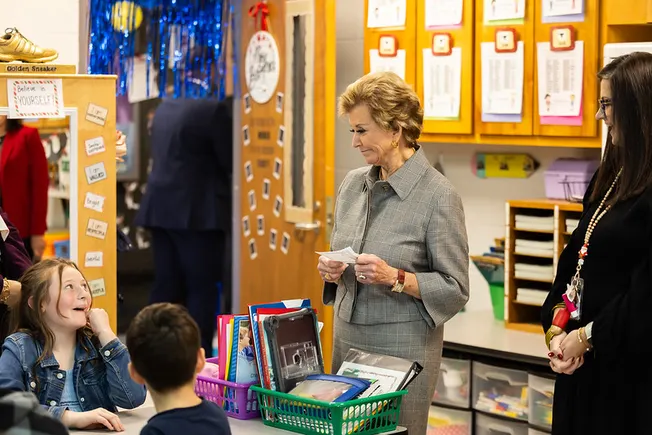
At a press conference at Broadway Elementary School in Denison, Iowa, on Wednesday, McMahon praised the state’s ESEA waiver as the “groundbreaking first step that gives state leaders more control over federal education dollars.”
Iowa’s waiver applies to the state activities funds set-aside under:
Title II, Part A — Supporting effective instruction.
Title III, Part A — English language acquisition.
Title IV, Part A — Student support and academic enrichment.
Title IV, Part B — 21st Century Community Learning Centers.
ESEA, also known as the Every Student Succeeds Act — a decades-old law last updated by Congress in 2015 — details statewide K-12 accountability and assessment requirements, among other provisions. Other presidential administrations have offered and granted ESEA flexibilities.
The Education Department has also approved Iowa’s application for Ed-Flex authority, which allows the state to grant waivers to districts from certain federal requirements without first having to submit individual waiver requests to the federal Education Department.
“This approval cuts through federal red tape, eases compliance burdens for districts and empowers them to implement strategies that best meet the needs of their students,” McMahon said.
Iowa Gov. Kim Reynolds, speaking at the press conference, said the state is “confident that we can do even more by reallocating compliance resources. Iowa will begin shifting nearly $8 million and thousands of hours of staff time from bureaucracy to actually putting that expertise and those resources in the classroom.”
Specifically, the state wants to invest in increasing student achievement, building professional development resources, strengthening teacher recruitment and retention, supporting local ESEA flexibilities and modernizing fiscal reporting, according to Reynolds and McKenzie Snow, director of the Iowa Department of Education.
“States are best positioned to serve families, and we’re committed to reduce the barriers that stand in the way,” Reynolds said.
Even as the Education Department is working with six other states on waiver requests, there is opposition to these flexibilities from those concerned they potentially violate the intention of ESEA’s accountability framework, sidestep rules on funding formulas, and lead to a reduction of high standards for student performance.
In September, a coalition of 24 disability rights organizations urged the Education Department to deny any state or district requests to waive accountability and assessment requirements, because the standards help set high expectations for all students, including those receiving special education services.
“Any action to subvert federal law through waivers that illegally promote or support the block granting of ESSA funds would have lasting negative impacts on students, families, educators, and the future of millions of children with disabilities,” the coalition said in a letter to McMahon.
This audio is auto-generated. Please let us know if you have feedback.
The first year of President Donald Trump’s return to office brought unprecedented and far-reaching changes to the higher education sector, and 2026 is poised to continue the trend.
The conservative-led spending and tax bill, dubbed the One Big Beautiful Bill Act, is set to go into effect in July. But effects of the forthcoming policy changes, including how certain students can finance their college educations, are still in flux.
The Trump administration also looks poised to continue opening investigations into colleges as a means of gaining influence over the sector, putting higher ed leaders in a tight spot. And federal officials are likely to further restrict the ability of certain international students to study in the U.S.
All that comes as analysts predict a tough financial year ahead.
To help higher education leaders prepare for the year ahead, we’ve rounded up six trends we expect to shape the sector in 2026.
Enforcement actions against universities may escalate
The federal government under President Donald Trump last year launched a flurry of investigations into colleges, often suspending or canceling their federal research funding to pressure them into implementing vast policy changes. If the final days of 2025 offer any clue, the Trump administration doesn’t plan to slow down this tactic.
On Dec. 22, the U.S. Department of Education opened a Clery Act investigation into Brown University over the shooting on its campus earlier that month that left two dead and nine injured. The Clery Act requires federally funded colleges to warn their campuses of emergencies in a timely manner and provide support to victims of sexual assault, domestic and dating violence, and stalking.
“After two students were horrifically murdered at Brown University when a shooter opened fire in a campus building, the Department is initiating a review of Brown to determine if it has upheld its obligation under the law to vigilantly maintain campus security,” U.S. Education Secretary Linda McMahon said in a statement.
The new investigation capped a year in which the Trump administration pursued probes against dozens of colleges over potential civil rights violations.
Notably, Brown is one of a handful of institutions that struck formal agreements with the administration to settle these investigations in 2025. But its July deal did not prevent the Education Department from opening a probe into Brown over its actions that occurred after the deal — and does not preclude more such activity from the Trump administration in the future.
And in its ongoing battle with Harvard University, the Trump administration has even threatened to take over patents for inventions made with the help of government research funding. The U.S. Department of Homeland Security also revoked Harvard’s ability to enroll international students, but a federal judge blocked the move.
James Finkelstein, professor emeritus of public policy at George Mason University, said he expects federal enforcement actions to ramp up in 2026.
“They’re going to weaponize almost every available tool, whether it’s Title VI investigations, adding new conditions to federal grants and contracts, reviewing tax exempt status, putting pressure on accreditors, [or] going after individual presidents,” Finkelstein said.
Will college boards stand up for their leaders?
In the latter half of 2025, the Trump administration tried a new tactic in its quest to reshape the higher education sector — pressuring college presidents to step down.
The U.S. Department of Justice successfully deployed this strategy in June, when then-University of Virginia President Jim Ryan abruptly resigned. He said he was leaving to avoid endangering federal funding for the university, which faced a Trump administration investigation into institutional diversity efforts pursued under his tenure.
Ryan was not alone. Following a short investigation, the U.S. Department of Education found George Mason University in violation of civil rights law and called out its president, Gregory Washington, for what it has described as illegal diversity, equity and inclusion efforts.
Washington has pushed back on the Trump administration, calling the allegations a “legal fiction” through his attorney.
For its part, George Mason’s board said it would focus on its “fiduciary duty” to serve the best interests of the university. So far, the board — which has too few members to have a quorum — hasn’t announced any major actions.
Finkelstein said other colleges will experience what happened at UVA “unless you find real pushback on a campus and within a community, whether it’s faculty, students, alumni or civic leaders.”
“The boards themselves really are not going to be there to support presidents,” Finkelstein said, arguing that many boards “are being captured by governors and legislatures,” which in turn pack them “with political operatives.”
“Those aren’t really trustees who are going to defend presidents against these attacks,” Finkelstein said. “They’re really there to ensure that the institutions submit.”
As a case in point, Finkelstein pointed to the head of George Mason’s board, Charles Stimson. The lawyer had held several positions at The Heritage Foundation, the conservative think tank that spearheaded the Project 2025 blueprint for Trump’s second term. He left the group in December.
Lindsey Burke, who previously led the Heritage Foundation’s Center for Education Policy and authored Project 2025’s chapter on education, served on George Mason’s board until she stepped down last year to take a position within the Education Department. Both Stimson and Burke were appointed to the George Mason board by Gov. Glenn Youngkin, a Republican.
“The boards are being built for compliance today,” Finkelstein said. “They’re not being built for independence.”
In Virginia, the ideological tilt of university boards may soon change following the Jan. 17 inauguration of Gov.-elect Abigail Spanberger, a Democrat.
“The question is, in Virginia, will the pendulum swing too far the other way, and will Gov.-elect Spanberger try to balance the board by going to the other extreme?” Finkelstein said. “That doesn’t seem to be in her political nature, given her record. But who knows?”
Another year of college cuts?
Last year marked more downsizing for many U.S. colleges. But in addition to the now-perennial enrollment and inflation laments, many major universities slashed their ranks of staff and faculty to adapt financially to the torrent of policy changes brought on by the Trump administration.
The federal government disrupted research funding, targeted institutions with investigation and threats, and introduced obstacles to international student enrollment. Student loan caps, higher endowment taxes and other recent statutory changes could add further pressure to college budgets this year.
In its 2026 outlook for higher education, Moody’s Ratings estimated 3.5% growth overall in revenue for the higher education sector, down from 3.8% in 2025. Meanwhile, the credit rating agency forecast that costs would increase by 4.4%.S&P Global Ratings and Fitch Ratings have similarly predicted a gloomy year ahead for colleges and universities, which could well mean more budget cuts.
“We are definitely expecting more expense control measures, and layoffs are certainly one of those,” said Patrick Ronk, a vice president and senior analyst with Moody’s. “Inflation is tempering, which is nice for the sector, but at the same time we see the revenue growth being more constrained.”
While more cuts may be ahead for large institutions trying to weather the political landscape and macro trends, Ronk pointed out many smaller colleges don’t have much wiggle room left in their budgets after enduring pandemic disruption and historic inflation.
“There’s not much left to cut” for those institutions, Ronk said. “A lot of these smaller liberal arts colleges have been downsizing for years.”
Not only that, but institutions are also under pressure to spend. Moody’s and other higher ed observers have pointed to a massive backlog of facility and capital needs that colleges can’t put off addressing forever.
“At some point you have to make the dorms look nicer,” Ronk said. He added that Moody’s analysts expect capital spending in higher ed to pick up in 2026, with a potential boost coming from lower interest rates as the Federal Reserve eases its inflation fight.
OBBA goes live
Republicans’ massive spending and tax bill that passed last summer, dubbed the One Big Beautiful Bill Act, contained some of the most sweeping changes to federal higher ed policy in years. At the time, one policy leader in the sector described it as “akin to a Higher Education Act reauthorization,” referring to the primary federal law governing higher education and student aid last reauthorized in 2008.
Changes under OBBA include ending Grad PLUS loans — which became the largest new student aid program when Republicans created it two decades ago — and capping total student borrowing. Specifically, federal loans will tap out at $100,000 for graduate students and $200,000 for professional students. That latter cap has come under debate with the definition of “professional” up in the air, and some programs, including nursing, excluded.
OBBA also increased tax rates on the income of the wealthiest college endowments, expanded Pell Grants for accredited short-term programs, and developed a new accountability system that would cut off access to federal student loans for college programs whose graduates don’t meet earnings thresholds.
The new limits to student borrowing could have broad impacts on colleges. Many worry that the end of Grad PLUS and the new borrowing caps will reduce access to programs and lessen student demand. That, in turn, could weigh on colleges’ finances and drive some institutions to cut graduate programs.
Ronk said the loan system changes will likely deliver the heaviest financial impact for institutions under OBBA. But there are still many unknowns, including how private lenders will respond to the end of Grad PLUS and the start of the caps.
“It’s just a little uncertain how much the private market is going to step up, or how much the private market needs to step up,” Ronk said. For student loan caps, he said it remains unclear to what extent graduate program costs will run up against the borrowing limits.
Meanwhile, the endowment tax could amount to a hefty government payment, causing financial pain for a subset of institutions. Yale University, for example, in December announced budget measures and likely layoffs that leaders tied, in part, to a looming $300 million annual tax bill under the new law.
Yet, as Ronk noted, the tax will land hardest on colleges that typically have the highest credit ratings and the most resources and flexibility to weather the financial hit.
“Those happen to be the wealthiest institutions, with really sophisticated investment offices and really big donor bases,” Ronk said.
Ronk predicted their overall wealth would stay “pretty strong,” though he said the tax could lessen their operating activities due to lower endowment income.
Likewise, the new accountability system is not expected to have a massive impact on most colleges. Only 2% of programs are at risk of failing the earnings test, according to a recent analysis from the policy organization HEA Group of data released by the Education Department in late December.
The new accountability test is “going to put a lot more focus on specific programs and outcomes,” Ronk said. “If there is a greater scrutiny of post-grad outcomes for programs, that will lead to generally better student outcomes and benefits for the sector.”
Shifting policies for international students
Higher education is bracing for a 2026 decline in international enrollment, following a slew of Trump administration policies that have targeted foreign students and sought to clamp down on the visa programs that allow them to study at U.S. institutions.
The following week, a study from NAFSA: Association of International Educators found that polled colleges reported an average of 6% fewer new international students enrolling in bachelor’s programs and 19% fewer in master’s programs.
NAFSA is entering 2026 expecting to see “a sharp drop” in graduate degree enrollment among international students “due to the current administration’s policy decisions,” said Fanta Aw, the group’s executive director and CEO.
In Fitch Ratings’ “deteriorating” 2026 outlook for the higher ed sector, analysts predicted that last year’s federal policies would continue to weaken the international student pipeline to the U.S. For colleges, that could mean the further erosion of growth in tuition and fee revenue, the credit rating agency said.
Less than a month after Fitch issued its outlook, Trump expanded his travel ban to include 39 countries. Among the newly added is Nigeria, one of the top 10 countries of origin for international students in the U.S.
Higher ed experts say that even if foreign students have the chance to study here, they may not want to.
Neal McCluskey, director of the libertarian Cato Institute’s Center for Educational Freedom, said prospective international students are increasingly seeing the U.S. as an unfriendly place for them to study.
And Aw said the U.S. can expect to lose students to “nations that have clear, consistent welcoming policies to attract, enroll, and retain international students.” She predicted an uptick in foreign enrollment in Asian and Middle Eastern countries, as well as in Western Europe.
“Unless we reverse course on current policies, we risk a major loss of talent and innovation along with social and economic benefits,” Aw said.
McCluskey noted one factor that could change the sector’s course — Trump’s comments regarding international students as “a good business decision.”
At times last year, Trump voiced support for international students during interviews and extemporaneous remarks. But those comments have stood in contrast to his policy priorities.
“It is possible he will increasingly take that position and work to ease obstacles to international enrollment,” McCluskey said. “But that is not reflected in current administration policy.”
Standardized test requirements in flux
A new round of colleges will return to requiring prospective students to submit standardized test scores with their applications this fall.
The University of Miami, for example, said last January it would require test scores from fall applicants for the first time since the pandemic. Ohio State University made a similar announcement in March.
COVID-19 shuttered testing sites across the country in 2020 and forced colleges that required SAT and ACT scores to go test optional. But a steady trickle of institutions — selective and well-known ones in particular — have since reinstated mandatory test scores.
Many officials have cited internal research that tied test scores to collegiate success and that found students held back scores they incorrectly believed would hurt their chances of being admitted.
Increasingly, conservative politicians have favored the testing metrics as well.
The Trump administration is seeking to incentivize high-profile colleges into adopting standardized testing requirements via the president’s wide-ranging compact. The compact — first offered to nine research institutions in the fall — would give priority for research and other federal funding in exchange for adopting numerous policy changes. Seven of the nine institutions have turned down the deal, while the other two have yet to comment publicly.
But Trump appears to have opened the compact up to all colleges since, with at least a few voicing interest. Two such institutions — New College of Florida and Valley Forge Military College — are currently test optional and would have to change their admissions structure should the president accept their signatures.
Whether due to institutional or external pressures, the switch from test optional to requiring scores seldom goes into effect right away.
Applicants to Cornell University will have to include test scores in their packet this fall, more than a year and half after the Ivy League institution said it would step away from test optional.
In October, Princeton University announced it would reinstate test score requirements for applicants in the 2027-28 admissions cycle, citing internal data that found students who submitted scores had stronger academic performances than those that didn’t. Prospective students applying this year will still be able to submit without scores should they so choose.
Some institutions are taking an even more tapered approach.
The University of Alabama System announced last month it would phase out its test-optional policy over the next few years. For the 2026-27 admissions cycle, applicants with GPAs below 3.0 will be required to submit either an ACT or SAT score. Test scores will be required of all applicants beginning in the 2027-28 cycle.
This audio is auto-generated. Please let us know if you have feedback.
ORLANDO, Fla. — College leaders face no shortage of challenges in the year ahead. They’re up against an uncertain federal policy landscape, challenges to international enrollment and, for some institutions, operating models that may no longer be working.
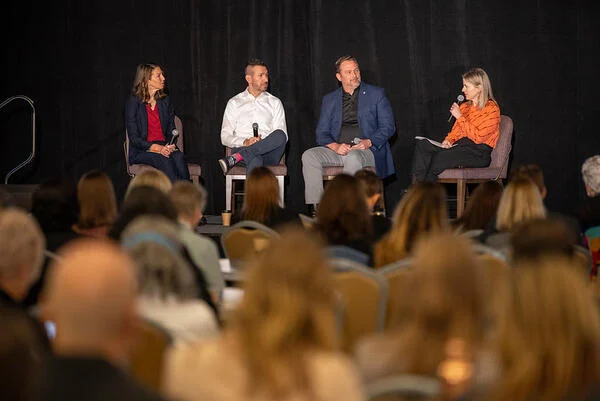
This week, top leaders attending the Council of Independent Colleges’ Presidents Institute — an annual gathering of hundreds of leaders of private nonprofit institutions — shared those woes and more with Higher Ed Dive.
They pointed to the end of Grad PLUS loans, which will be phased out starting this year. Graduate students will also soon face federal student lending caps of $100,000 for most programs and $200,000 for professional degrees.
The U.S. Department of Education hasn’t yet put out formal regulations that define which programs will be considered professional. But late last year, during a process called negotiated rulemaking, the agency reached consensus with a group of stakeholders on regulatory language that would exclude some major programs, such as graduate nursing degrees, from the higher lending caps.
Despite these challenges, college presidents also pointed to several opportunities such as focusing on workforce development, using artificial intelligence and striking partnerships with other institutions.
On the last front, a handful of private nonprofit colleges formalized plans to combine in the past couple of years.
Below, we’re rounding up responses from seven college presidents on what they see as the biggest challenges and opportunities in the year ahead.
Responses have been lightly edited for brevity and clarity.
President: Bryon Grigsby
Institution: Moravian University, in Pennsylvania
HIGHER ED DIVE: What do you see as the biggest opportunity in the year ahead?
BRYON GRIGSBY: Workforce development is the biggest opportunity. We’re starting an aviation program, and it’s because aviation programs are in crisis right now. Pilots are needed. People work in the airlines, in the airports, air traffic controllers — we saw all the problems that were happening with that. This is just going to get worse over the next 10 years. So I think all of us are involved in workforce development — real, substantive workforce development for our communities.
What do you see as the biggest challenge?
GRIGSBY: Funding the workforce development. It costs an incredible amount of money to create pilots. And the federal government just restricted how much loans they can take out, which prevents people who want great jobs but don’t have rich families to be able to afford that.
We’re seeing that in the healthcare industry. You know, not counting nursing and [doctor of physical therapy degrees] and [physician associates programs] as professional programs damages the ability of those students to be able to get those jobs and to be contributing members to society.
I wish the federal government would see that we’re trying to solve the workforce. We need the funding for the students so they can solve that as well.
President: Valerie Kinloch
Institution: Johnson C. Smith University, in North Carolina
What do you see as the biggest opportunity in the year ahead?
VALERIE KINLOCH: The biggest opportunity is deepening partnerships with people across different types of institutions, thinking beyond where we are to think more nationally and globally about building those types of partnerships.
What do you see as the biggest challenge?
KINLOCH: I would say the biggest challenge is a lack of resources. To sustain the types of educational institutions that we know we should requires more resources, and not just finances, but also partnerships, talent, and I think those things are going to be really important.
President: Donald Taylor
Institution: University of Detroit Mercy
What do you see as the biggest challenge in the year ahead?
DONALD TAYLOR: We don’t really know ultimately what the federal financial aid budget is going to look like for next year. And now there’s talk about, maybe there’s going to be another government shutdown.
My biggest challenge right now is not knowing because half of our students are first generation. If the House budget ends up cutting Pell by 25% and they eliminate [Federal Supplemental Educational Opportunity Grant program] and all these others, that’s going to significantly impact first-generation, low-income students.
What do you see as the biggest opportunity?
TAYLOR: There’s tremendous opportunity and willingness and interest by Congress, and all the way through the White House, about better leveraging and better understanding how we can utilize AI for efficiencies, for tutoring. There’s all kinds of possibilities in our sector. The thing that we were always criticized about was we’re way too slow. We’re like one of these giant tanker ships in Alaska — it takes forever to turn, but I think that’s changing.
President: Amy Novak
Institution: St. Ambrose University, in Iowa
What do you see as the biggest challenge in the year ahead?
AMY NOVAK: The unknown of the regulatory environment and certainly the impact it might have on graduate student loans. But I’m confident we’ll work our way through that and be able to make sure our students have access to the funds to secure their overall enrollment.
What do you see as the biggest opportunity?
NOVAK: For me,it is about partnerships, strategic alliances and thinking creatively about how higher education serves the populations that we know need to have higher education, and to do so in a way that reduces costs while expanding access and opportunity. I’m excited about the mergers, the acquisitions and the partnership opportunities that are really coming forward through discussions that we’re having among colleges.
President: David King
Institution: Ursuline College, in Ohio
What do you see as the biggest challenge in the year ahead?
DAVID KING: The biggest challenge, very simply stated, is our business model no longer is such that we can really meet the marketplace demands.
What do you see as the biggest opportunity?
KING: The opportunity is to think differently about a business model without moving away from the mission. That’s critical. Merger and acquisition is one answer to that question. How might we think differently about a business model as a way to sustain — not change — our mission, our core values, the objective of our students?
President: Todd Olson
Institution: Mount Mercy University, in Iowa
What do you see as the biggest challenge in the year ahead?
TODD OLSON: With the federal context in the U.S., there’s just a lot of complexity and some unknowns about how things will play out at a time when higher education remains really vital in our country, to our students and to our communities.
That’s the thing I’m probably most worried about — uncertainty around things like the Grad PLUS loan program, status of international students, access to higher education in the U.S. That constellation of issues seems like the biggest challenge.
What do you see as the biggest opportunity?
OLSON: As we’re coming together with another university in this strategic combination, we are really part of a move to reinvent what undergraduate education — and in some cases, graduate education — looks like in this country.
The chance to hold onto the shared Catholic mission that our two universities have, the chance to hold onto a central focus on the well-being and flourishing of our students, and at the same time, the chance to invent something brand new, and to take some bold steps as our economic conditions change, as our society changes, it is a privilege and a great opportunity to be part of a moment of reinvention. That is something I’m enthused about and optimistic about.
President: Walter Iwanenko Jr.
Institution: Gannon University, in Pennsylvania
What do you see as the biggest challenge in the year ahead?
WALTER IWANENKO JR.: About a quarter of our enrollment has been global students, and we’ve seen a significant drop, which is definitely hitting the budget and causing us to do some restructuring to adjust for the loss in revenue and student population. That’s a huge challenge.
What do you see as the biggest opportunity?
IWANENKO: With the change in demographics and the pressure on the traditional four-year experience, I think workforce, work-based learning, the two-year certification tech world — where traditional four-year institutions have maybe stayed out — I think there’s going to be an opportunity for institutions to start to dive into that world, to really try to diversify our student populations.
Teacher evaluations have been the subject of debate for decades. Breakthroughs have been attempted, but rarely sustained. Researchers have learned that context, transparency, and autonomy matter. What’s been missing is technology that enhances these at scale inside the evaluation process–not around it.
As an edtech executive in the AI era, I see exciting possibilities to bring new technology to bear on these factors in the longstanding dilemma of observing and rating teacher effectiveness.
At the most fundamental level, the goals are simple, just as they are in other professions: provide accountability, celebrate areas of strong performance, and identify where improvement is needed. However, K-12 education is a uniquely visible and important industry. Between 2000 and 2015, quality control in K-12 education became more complex, with states, foundations, and federal policy all shaping the definition and measurement of a “proficient” teacher.
For instance, today’s observation cycle might include pre- and post-observation conferences plus scheduled and unscheduled classroom visits. Due to the potential for bias in personal observation, more weight has been given to student achievement, but after critics highlighted problems with measuring teacher performance via standardized test scores, additional metrics and artifacts were included as well.
All of these changes have resulted in administrators spending more time on observation and evaluation, followed by copying notes between systems and drafting comments–rather than on timely, specific feedback that actually changes practice. “Even when I use Gemini or ChatGPT, I still spend 45 minutes rewriting to fit the district rubric,” one administrator noted.
“When I think about the evaluation landscape, two challenges rise to the surface,” said Dr. Quintin Shepherd, superintendent at Pflugerville Independent School District in Texas. “The first is the overwhelming volume of information evaluators must gather, interpret, and synthesize. The second is the persistent perception among teachers that evaluation is something being done to them rather than something being done for them. Both challenges point in the same direction: the need for a resource that gives evaluators more capacity and teachers more clarity, immediacy, and ownership. This is where AI becomes essential.”
What’s at stake
School leaders are under tremendous pressure. Time and resources are tight. Achieving benchmarks is non-negotiable. There’s plenty of data available to identify patterns and understand what’s working–but analyzing it is not easy when the data is housed in multiple platforms that may not interface with one another. Generic AI tools haven’t solved this.
For teachers, professional development opportunities abound, and student data is readily available. But often they don’t receive adequate instructional mentoring to ideate and try out new strategies.
Districts that have experimented with AI to provide automated feedback of transcribed recordings of instruction have found limited impact on teaching practices. Teachers report skepticism that the evolving tech tools are able to accurately assess what is happening in their classrooms. Recent randomized controlled trials show that automated feedback can move specific practices when teachers engage with it. But that’s exactly the challenge: Engagement is optional. Evaluations are not.
Teachers whose observations and evaluations are compromised or whose growth is stymied by lost opportunities for mentoring may lose out financially. For example, in Texas, the 2025-26 school year is the data capture period for the Teacher Incentive Allotment. This means fair and objective reviews are more important than ever for educators’ future earning potential.
For all of these reasons, the next wave of innovation has to live inside the required evaluation cycle, not off to the side as another “nice-to-have” tool.
Streamlining the process
My background at edtech companies has shown me how eager school leaders are to make data-informed decisions. But I know from countless conversations with administrators that they did not enter the education field to crunch numbers. They are motivated by seeing students thrive.
The breakthrough we need now is an AI-powered workspace that sits inside the evaluation system. Shepherd would like to see “AI that quietly assists with continuous evidence collection not through surveillance, but pattern recognition. It might analyze lesson materials for cognitive rigor, scan student work products to detect growth, or help teachers tag artifacts connected to standards.”
We have the technology to create a collaborative workspace that can be mapped to the district’s framework and used by administrators, coaches, support teams, and educators to capture notes from observations, link them to goals, provide guidance, share lesson artifacts, engage in feedback discussions, and track growth across cycles. After participating in a pilot of one such collaborative workspace, an evaluator said that “for the first time, I wasn’t rewriting my notes to make them fit the rubric. The system kept the feedback clear and instructional instead of just compliance-based.”
As a superintendent, Shepherd looks forward to AI support for helping make sense of complexity. “Evaluators juggle enormous qualitative loads: classroom culture, student engagement, instructional clarity, differentiation, formative assessment, and more. AI can act as a thinking partner, organizing trends, highlighting possible connections, identifying where to probe deeper, or offering research-based framing for feedback.”
The evaluation process will always be scrutinized, but what must change is whether it continues to drain time and trust or becomes a catalyst for better teaching. Shepherd expects the pace of adoption to pick up speed as the benefits for educators become clear: “Teachers will have access to immediate feedback loops and tools that help them analyze student work, reconsider lesson structures, or reflect on pacing and questioning. This strengthens professional agency and shifts evaluation from a compliance ritual to a growth process.”
Real leadership means moving beyond outdated processes and redesigning evaluation to center evidence, clarity, and authentic feedback. When evaluation stops being something to get through and becomes something that improves practice, we will finally see technology drive better teaching and learning.
Jena Draper, RefynED
Jena Draper is the CEO and founder of RefynED and a proven edtech entrepreneur who previously built CatchOn and led it through two successful acquisitions after reshaping how schools use data for instructional decision-making. She is now applying that same foresight to reinvent teacher evaluation as a catalyst for educator growth rather than compliance. Draper is recognized for turning systemic challenges into category-defining innovation that improves instructional practice at scale.
Latest posts by eSchool Media Contributors (see all)
The latest episode of The Key, Inside Higher Ed’s news and analysis podcast, features a discussion between higher ed leaders and IHE editor in chief Sara Custer on how colleges can harness data to better support students.
Speaking at the Student Success 2025 event in November, Courtney Brown, vice president of strategic impact and planning at the Lumina Foundation; Elliot Felix, higher education advisory practice lead at Buro Happold; and Mark Milliron, president of National University, offered unique perspectives to the question of how institutions can be data-driven and student-centered.
“You are not going to serve a student population well unless you do your data work,” said Milliron. The “data work” includes establishing good data governance and data mapping, building a data warehouse, and facilitating data integration across support platforms such as a learning management system and student information systems, he said.
Putting processes and best practice in place is what allowed National to expand its capacity, he said. “I don’t think we could’ve scaled some of the strategies we’ve done unless we did the plumbing work upfront.”
On the question of scale, Felix encouraged institutions to combine their resources to serve more students. “How many institutions are creating their own, bespoke AI policy when they can do [it] as a group or borrow from Educause? There are so many ways to work together to go farther, to go faster.”
While colleges might be teeming with data, Felix encouraged institutions to look at external sources to gain a clearer picture of students’ learning journeys. “I do think more data beyond the walls—employer data, labor market data, employment outcomes—would be really helpful.”
Meanwhile, Brown argued that the needs of the modern-day student are varied and institutions must adapt to their students, rather than students adapting to colleges. Institutions that use data to understand whom today’s students are will be better placed to support their success, she said. “[Students] are parents, they are working, they are financially independent from their own parents. But most policymakers and others don’t think about that. So we need to understand who they are and then transform the system to better serve [them].”
Not long ago, chalky tofu and limp lettuce constituted some of the only vegetarian meal options available at campus dining halls. But that’s changed in recent years as more colleges and universities have set broader sustainability goals, which often include pledges to offer more plant-based foods.
Nowadays, students have access to more adventurous plant-based dishes, such as cauliflower ceviche, japchae and sesame tempeh, to name just a few.
In November, the University of California, Riverside—where meatless meals already make up about 45 percent of its dining options—became one of the latest universities to commit to expanding its meatless offerings, pledging to make 50 percent of meals plant-based by 2027.
While such pledges are rooted in sustainability goals, they’ve also led to the creation of more diverse and healthier menu options—both things students have called for. And regardless of students’ motivation for consuming more plant-based food, prioritizing such options at campus dining halls—which feed millions per year—has the power to affect environmental change at scale.
“Without question, institutional procurement is a massive lever for climate solutions at school and an often-overlooked tool for public health,” said Sophie Egan, co-director of the Menus of Change University Research Collaborative housed at Stanford University. Founded in 2012, the collaborative is a network of 85 colleges and universities that are using campus dining halls as living laboratories to research promotion of plant-forward options, food-waste reduction and increasing food literacy. “The decision-makers at universities who hold the purse strings and design menus are the potential heroes in this story. They can make small tweaks to menu sourcing and operations that can have a huge impact at scale.”
For colleges, the shift satisfies multiple goals.
“There are so many things that play into sustainability that are low-hanging fruit, including trying to offer menu items that don’t require a lot of water,” said Lanette Dickerson, director of culinary operations at UC Riverside. At the same time, she’s also focused on creating menus that reflect students’ varied and changing tastes. “UC Riverside is a really diverse campus—more than 40 percent of students are Latino and 34 percent are Asian—which makes it easier for us to offer these items because they’re already deeply rooted in these cultural diets.”
She added that offering vegetarian foods—which tend to be lower in fat, cholesterol and other ingredients associated with an increased risk of chronic disease—may also help some students adopt healthier overall eating habits.
Vegan Labels a ‘Turn-Off’
Reaching the university’s new plant-forward menu goals will require more training for Dickerson’s staff. “Our team needs to know how to prepare these items to make sure they’re palatable,” she said. What won’t work is advertising plant-based menu options as meatless, vegan or vegetarian. “We got such bad feedback on our ‘meatless Mondays,’” she said, noting that students assigned more value to meat-based proteins. “We did still try to do it, but without such heavy marketing behind it.”
Experts say that kind of reaction to food labeled vegetarian, vegan or meatless is exceedingly common, despite consumers’ increased appetite for plant-based foods and the growing availability of plant-based ingredients.
“The term ‘vegan’ has a bit of a bad connotation. ‘Plant-based’ seems a lot sexier,” said Scott Zahren, director of culinary development at Aramark, which provides dining and food services to more than 275 U.S. colleges and universities. “Plant-based products these days are much better than they were 10 or 20 years ago. We have such great alternative dairy products now that we can offer a lot more dishes.”
Vegetarian dining at Smith College
Jessica Scranton/Smith College
But Zahren and his team recognized that “vegan” can be a “turn-off,” and Aramark recently updated its marketing content to describe its menu items as “plant-based” instead. “The marketing reads a lot better for the masses.”
Presenting plant-based foods as a default menu item rather than an alternative also increases the likelihood that students will eat them. According to a 2024 study published in the Journal of Environmental Psychology, on days that dining halls set up food stations with a vegan default—say, stir fry with tofu—those stations saw a 58 percent increase in plant-based dining, and meat consumption declined anywhere from 21 percent to 57 percent. In short, students don’t run away from plant-based dishes when they’re presented as the norm.
‘It’s About Good Food’
In addition to sustainability initiatives, changing food preferences are also driving dining halls to offer more meatless options.
In 2020, the global market for plant-based foods was valued at $29.4 billion; by 2030, it is expected to grow more than fivefold to $162 billion, according to a report by Bloomberg Intelligence. While data also shows that about 22 percent of Gen Z are actively limiting their meat consumption, what students really want out of campus dining is more options. According to a 2023 Inside Higher Ed Student Voice survey, respondents said that if dining halls want to improve their offerings, they should prioritize variety and quality of flavors, reduce ultra-processed foods and offer a variety of cuisines.
“Campus dining programs are responding to customer preferences,” said Robert Nelson, president and CEO of the National Association of College and University Food Services. “The focus is on making great-tasting dishes that happen to be plant-forward. What’s important for dining halls as they expand their plant-forward, vegan and vegetarian offerings is to market them with descriptive, flavorful language. It’s not meatless curry, it’s coconut curry; it’s amazing mushroom pasta; it’s crispy cauliflower tacos.”
That’s the approach Smith College has taken in its quest to offer more plant-based meals.
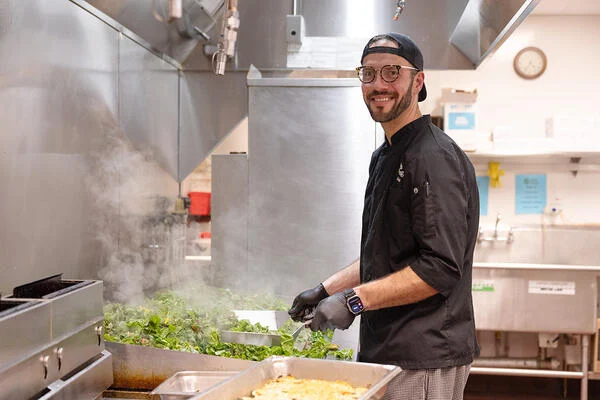
Chef Adam Dubois sauteing local greens at Smith College.
Jessica Scranton/Smith College
“We’re showing students that it’s not about the words ‘vegetarian’ or ‘vegan’—it’s about good food. It doesn’t have to have meat to be good,” said German Alvarado, director of culinary services at Smith. “With all of the technology that’s available, students are seeing all the variety of food out there and they want to see it in front of them. What’s trending is variety and healthy choices.”
In 2015, the college pledged to reduce meat consumption by 5 percent each year, aiming to make 55 percent of its entrées plant-based by 2025. As of December, it was around 51.5 percent, according to Alvarado.
“We’re not that far off,” he said, adding that the college just needs to add a handful of additional menu items to reach its goal. “We don’t want to do this for the sake of doing it. We want to make sure students are enjoying it and we’re creating good recipes.”
Choice Is Key
But Smith, UC Riverside and many other colleges have no plans to stop serving meat entirely. A dustup in the opinion pages of the Williams College student newspaper already showed limited appetite for that: In November, a student wrote an op-ed suggesting the college go vegan to mitigate animal cruelty, prompting blowback.
“When accepting the invitation to attend the College, students did not sign up for a vegan menu,” Ella Goodman, a freshman at Williams, wrote in response. “Suddenly restricting our meal offerings would be unfair to students for whom a vegan menu could have been a dealbreaker in choosing between colleges.”
Preserving personal choice is key for institutions undertaking plant-based dining initiatives, said Egan, the co-director of Menus of Change.
“The word ‘meatless’ really backfires. People tend to not like being told they can’t have something,” she said. “The behavioral science is very clear: Having something taken away or restricting choice is a very good way to make people not excited about what’s left. Plant-forward is really about celebrating what’s in a dish.”
And those initiatives at campus dining halls can also shape student relationships with food, which has implications that stretch far beyond the campus.
“A person’s college years are a particular formative time for developing food identity, food preferences and making decisions about food,” Egan said. “Showing students that healthy, sustainable, plant-forward ways of eating can be delicious, comforting, satisfying and help them perform well in sports, academics and their different pursuits—those preferences stay with them long after their college years.”
College leaders return to campus this term appearing steady and resolved. After a year of tumult, they remain vigilant about more attacks from Washington but are ready to refocus on the other crises knocking at their doors—million-dollar deficits, declining enrollments and AI’s disruption. And now that higher ed has gone through nearly 12 months of Trump 2.0, it’s learned a few things.
First, we now know that nothing is sacred. Funding for cancer research? Canceled. Support for colleges serving low-income students? Chopped. Due process? Passed over. The sector was caught off guard by the administration’s creativity in its attacks last year, and colleges should continue to expect the unexpected. But in an interview before Christmas, Education Secretary Linda McMahon toldBreitbart that her department would “shift a little bit away from higher education” in 2026 and focus more on K–12 reform.
The year didn’t just teach colleges what to expect—it also showed them how to respond. And we’ve seen that fighting back works. Harvard is holding firm against the administration’s pressure to strike a deal and has not publicly conceded anything (though rumors abound an agreement is nigh). George Mason University president Gregory Washington came out swinging when the Department of Education accused him of implementing “unlawful DEI policies” on his campus. That’s a sharp contrast to University of Virginia president Jim Ryan, who resigned in June after the Department of Justice’s successful bid to topple him. So far, Washington remains in his post, with unanimous support from his board, campus community and state lawmakers. And in a collective act of defiance, the nine institutions initially invited to sign the White House’s “Compact for Academic Excellence in Higher Education” declined without repercussion.
Leaders have also woken up to the fact that visibility matters. At the Council for Independent Colleges’ Presidents Institute in Orlando, Fla., this week, presidents seemed ready to play offense. They spoke with a newfound political savviness about recruiting board members and alumni to do advocacy work, hiring in-house government relations professionals and spending more time on the Hill. “We all let our guard down on government relations in the lead-up to 2025,” one president said. “Being able to brand yourself in D.C. is now a necessity, not a luxury.”
At times the administration has appeared sloppy, sending “unauthorized” letters, issuing threats and never following up, or publishing typo-riddenmandates. But beyond the culture-war accusations that colleges are factories of woke indoctrination, it’s clear the government is serious about wanting to effect change in higher ed. Cost transparency, graduate outcomes and greater emphasis on workforce training are all sound policy issues lawmakers are pursuing through legislation.
Whether or not McMahon follows through on her intention to shift focus away from higher ed, the fallout from 2025 persists. We’ll be looking to see how college budgets weather new loan caps for graduate courses and the loss of international students impacted by stricter visa requirements—or turned off by the country’s hostile environment.
In December, Education under secretary Nicholas Kent vowed to “fix” accreditation. The administration’s unofficial playbook, Project 2025, suggests that could mean more accreditors, including states authorizing their own accrediting agencies, or ending mandatory accreditation to access federal financial aid. Congress will continue to apply pressure on the sector to lower the cost of college and improve transparency regarding fees and tuition. Meanwhile, negotiated rule making has begun on the accountability measures mandated by the One Big Beautiful Bill Act. And will colleges take responsibility for their role in the loss of public trust in their institutions?
We shouldn’t normalize the lasting harm the Trump administration has done to institutional independence, minoritized students and scientific research in just 12 months. And there is a risk that more is coming. But after surviving a dizzying year of attacks, the sector will face its challenges a little wiser and more informed.
Sara Custer is editor in chief at Inside Higher Ed.
Transcripts from the videos in which Claudio Neves Valente admitted to the crimes were released Tuesday.
Bing Guan/AFP/Getty Images
The man accused of carrying out last month’s mass shooting at Brown University that left two students dead admitted to the crime in a series of four videos, the transcripts of which were released Tuesday by the U.S. Attorney’s Office for the District of Massachusetts.
Claudio Neves Valente, the 48-year-old suspect who previously attended Brown, was found dead by a self-inflicted gunshot wound at a storage facility in New Hampshire just days after the campus attack, preventing investigators from interrogating him. But in the videos, which were pulled from an electronic device at the storage facility and have been translated from Portuguese to English, Valente admitted to the Brown shooting and the subsequent killing of a Massachusetts Institute of Technology professor near Boston.
And while the suspect said that he would not apologize, the motives of the attack remain unclear.
Throughout the more than 11 minutes’ worth of video, he spoke about how he had planned the shooting for years. In multiple instances, Valente vaguely referenced “the people” his violent actions were made in response to, saying, “I did not like any one of you. I saw all of this shit from the beginning.”
He noted that he sent three emails, seemingly to “the people” he’d referenced. But beyond that, he was “not saying anything else.”