
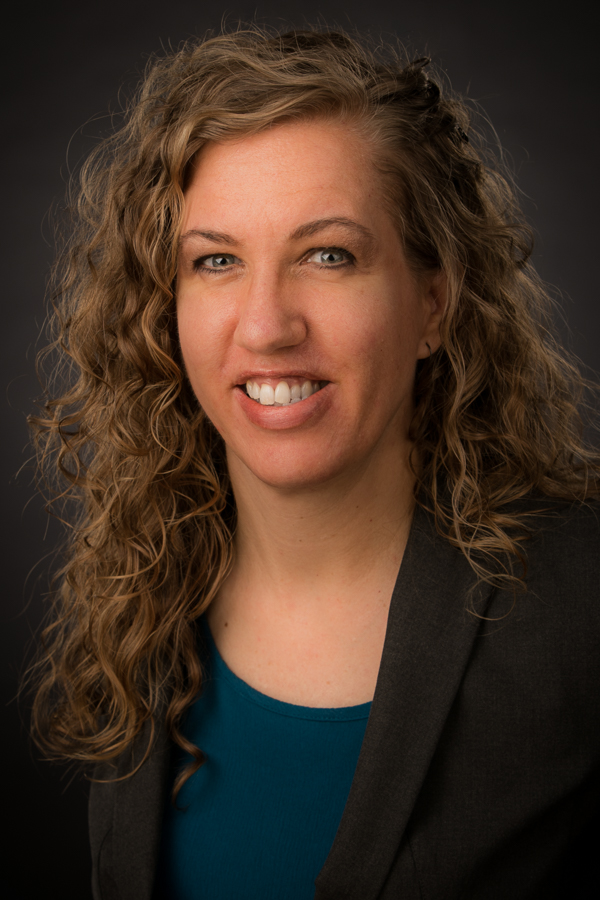
Public writing vs. academic writing. How do you choose? Writing coach, Lisa Munro, is back on The Social Academic podcast to talk about writing for the public for faculty and researchers.
Quotes
Scholarship for the People
“Audience, I think is very different… public writing I think, it’s a lot bigger. You might be writing for people who are not specialists in your field. People who are smart people, but not necessarily specialists.”Public Writing
“I don’t think academic writing has to be boring, and I don’t think it has to suck. I think it can be interesting. I think it can be well written. I think it can be accessible.”On Rejection
“If you get desk rejected, it is not you. It’s fit… It’s just never you. It feels like it’s you, but it’s not you.”
Interview
Jennifer van Alstyne: Public Writing vs. Academic Writing: that is the topic of today’s episode of The Social Academic. Hi there, I’m Jennifer van Alstyne and this is my friend Dr. Lisa Munro, who is back on The Social Academic to talk about the difference and the things that she is thinking about and experimenting with her own public writing. Lisa, hi!
Lisa Munro: Hi!
Jennifer: Would you, oh, sorry. Interrupting you.
Lisa: I was just going to say nice to see you. That was it.
Jennifer: I know, except I feel like we see each other and talk with each other all the time. And so-
Lisa: I know, but it’s always nice to see you.
Jennifer: That’s very sweet. It is nice to see you, but I’m especially excited for this conversation publicly because I have personally been thinking about a lot of the difference between writing that I do in private, which is mostly my poetry these days. I don’t publish poetry as much anymore. And writing that I do in public, which is The Social Academic blog and creating interview series like this one. I’m curious about you because you are a writing coach. You help people with their academic writing, with their books. What is public writing? What’s the difference?
Lisa: Yeah, yeah. I mean, I think that’s a really good question, and there is some overlap as well. I mean, some academic writing is, some journals really do try and be public facing, doing things like not having paywalls and encouraging accessible writing and those kinds of things. But generally when we’re talking about academic writing, usually it’s very analytical, it’s for a very small audience. It’s persuasive, but those are not it’s only characteristics. But public writing I think, it’s a lot bigger. I think the audience is bigger. You might be writing for people who are not specialists in your field. People who are smart people, but not necessarily specialists in your field. And full disclosure, I’ve just been starting to really experiment with public writing, so I’m not an expert by any means, but I kind of get a bang out of creating it and making it and writing it, and it’s been fun.
But I think audience, I think is very different. And I think purpose, being you are still oftentimes trying to persuade people. It’s not like the persuasive piece. It’s not the argumentative nature of academic writing goes away when you’re writing for certain publications. I mean some publications are, god there’s so many, but some publications are like, here’s kind of a journalistic kind of thing. It’s like who, what, when, why. It’s very kind of factual. But then there are a lot of what I’ve been discovering and what’s been fun to see is that there are a lot of long form outlets that are, they’re just as analytical. They’re just as persuasive as academic outlets, but they get read by more people. I think that’s probably the biggest difference that I’ve seen.
Subscribe to The Social Academic blog.
The form above subscribes you to new posts published on The Social Academic blog.
Want emails from Jennifer on building your online presence? Subscribe to her email list.
Looking for the podcast? Subscribe on Spotify.
Prefer to watch videos? Subscribe on YouTube.
Jennifer: What made you want to start experimenting with public writing? Because you’ve been coaching people on academic writing so long that I’m curious what was like, “Ooh, I want to explore this.”
Lisa: Yeah, I was feeling really burned out on academic writing. I really love a lot of academic writing. I think, I mean it gets a bad rap from people, from all, “Oh, it’s unreadable. It’s all behind these paywalls. It’s not meant to be interesting. It’s kind of boring,” etc, etc. But I don’t think academic writing has, my unpopular opinion is that I don’t think it has to be boring, and I don’t think it has to suck. I think it can be interesting. I think it can be well written. I think it can be accessible, but a lot of journals don’t reward those kinds of things. I wanted to, let’s see, I put together an essay recently. I was feeling really kind of despondent about just general, my other job is in international education and feeling really despondent about the collapse of international education, which the more I thought about it, I was like, “Oh yeah, this has a history to it and it has reasons and it has,” it’s related to sort of larger political things that are happening right now, etc, etc.
Just in kind of a weekend, I got really angry and I sat down and I wrote this essay and I was like, “Okay, this is what I want to say about this.” And I thought, “Oh, right, this is not academic writing. Where would this go, who would publish this?” And as I started thinking more about it, I started doing research. I was like, “Okay, what are some long form?” I mean, it turned out to be my rage apparently is 3000 words. I was like, alright, so 3000 words. This is long. I mean, I’ve done op-ed writing before and op-ed writing I feel is much shorter. A lot of op-eds that you’ll read are around 1200 words, and I can absolutely write 1200 words, but it’s a different kind of animal than it is writing 3000 words. I mean, when you’re writing short op-eds, you get a whole lot less space to make the knockout punch.
I mean, you really have to be efficient and you have to be economical about it. But 3000 words gives you a lot more space to talk about stuff. And I was like, “Oh,” I was, “this is really, I feel this is the length that I can write. This is a good length for me.” So started looking at places to submit that. First submitted to Boston Review, desk rejected within days, and I was like, I’m just not going to give up on this. I mean, this is what I tell writers all the time, academic and otherwise, if you get desk rejected, it is not you. It’s fit. Usually it’s like, oh, this doesn’t quite do what we need it to do, or this isn’t, we recently ran a similar piece, or it’s just not the way we want to go right now. There’s lots of different reasons that journals of all public facing and academic would reject something.
And I was like, I’m not going to give up on it. Did a little revising, reframed it a little bit, and I sent it back out. Yeah, it hasn’t been desk rejected yet. I’m like, “Okay, that’s the first hurdle.” Yeah, so did that. And then while I’m still waiting for a decision on that, I recently went to Albuquerque and I started writing another essay about the city of Albuquerque cause I got really inspired there. I now have a list, probably seven or eight pieces that I want to write, and probably three or four books. I was like, oh, I’m actually really, I think I’m a pretty good academic writer. I might be a better long essay writer is what I’m discovering.
Jennifer: That is fascinating to me. And you’re someone who is so articulate when you’re speaking about things that it sounds like the act of writing these essay ideas that come to you, it’s like, “Ooh, let me focus my brain in this.” You get it out and then you’re like, “Okay, let me figure out where to place it.” Whereas I know in academic writing, sometimes we’re focusing on a specific goal for publication in terms of where we’re going. Maybe we’re tailoring it to that specific journal depending on what your professional needs are. But I think that what is really lovely about this kind of start of your journey is that it’s so driven by what you’re already thinking and wanting to get out of your head.
Lisa: Yeah, absolutely. I mean, I tell academic writers all the time, you need to think about and hello, if anyone is an academic writer, here’s some free writing advice. Pick your journal early. I mean, one of the biggest mistakes that academic writers make is they wait until they have written the article and then try and figure out where it goes. And it’s like, oh, you can’t really do that because you need to be shaping your work towards a conversation that a journal is developing. That’s really how that needs to happen. Pretty early on in your process, maybe figure out your article’s argument and then figure out your journal, like that early, and then figure out how your work is going to fit in there. And this has felt very bad, and maybe I’m doing it wrong, I don’t really know, but here’s how I’ve been doing it. I’ve just been writing about what I think is interesting, and then thinking about who else is interested in that. And that’s been a really different way to approach writing.
Jennifer: I really like that. And I think that this has come up for me recently in terms of this more, “How can we all engage with online public scholarship?” Maybe it’s not always writing, but the things that we do and think about and share online. How can that be part of who we are? And not totally separate from the academic writing or academic life that you have. If it’s all you, that’s the thing that ties it together and you are special. And so I really like when public scholarship happens, but oftentimes for the academic writers who are coming to me, it happens out of circumstance, out of chance, out of having that idea that really doesn’t fit into any journal that they can find and thinking, “Where does this belong?” And I’m thinking of one researcher in particular. We had worked together on her LinkedIn profile and she came back for our follow-up consultation a year later, and we were talking about something that really mattered to her.
I don’t want to give it away. I don’t think she’s released it yet, but something that really mattered to her. It wasn’t right for academic writing. She’d actually brought it to her university research office and said, “I want to do something with this. I’m not exactly sure what that looks like.” And they were like, “Well, it’s not really the academic things that we support with. We want you to do it too.” But they didn’t have a direct pathway to recommend, and public scholarship is totally an option for all the things she was dreaming about, and I’m so glad that she was open to taking that chance. She was even taking photographs for her next set that’s going to inform her writing. It became almost like a multimedia project, something that is really about the people that she’s engaging with and connecting with. And that’s a totally different shape from the traditional academic and science writing that she’d been doing for her entire career.
Subscribe to The Social Academic blog.
The form above subscribes you to new posts published on The Social Academic blog.
Want emails from Jennifer on building your online presence? Subscribe to her email list.
Looking for the podcast? Subscribe on Spotify.
Prefer to watch videos? Subscribe on YouTube.
Lisa: Nice. And I think your academic writing can also inspire your public writing. I mean, I know that for myself, my book is always in progress, isn’t it? It’s just permanently in process, but it’s going to get finished eventually. But my book is tentatively titled Desire’s Empire and really about how intangible desire drives empire in Latin America. And so having that lens has enabled me to see a lot of other things, thinking about, “Oh, right, what is the role of cultural mythology? How does this change how we see everyday objects?” I mean, there’s lots of different kinds of questions that have come out of that work, and I’m like, “Oh yeah, this has given me a lens to look at things in a different way and then talk to the public about it.”
Jennifer: You are someone who is excellent at arguments, not just making your own arguments, but pulling arguments out of the academic goals of the people that you’re working with. How does argument play into public scholarship? Is that still something that is important?
Lisa: Yep, absolutely. I think anytime you do persuasive writing, it’s argumentative, and I think a lot of public writing I think can be argumentative. Read a piece in The New Yorker. I mean, that’s all persuasive writing. It’s designed to get you to either believe something or to believe something more strongly than you do now. And I think that’s absolutely something that you can carry into public writing. I mean, the new thing I’m writing now on Albuquerque, I wrote, the first sentence I wrote was, “Nostalgia is killing people,” and that’s an argument. I have to support it with evidence, and I have to explain it and unpack it and blah, blah, blah. But I was like, yep, that’s an argument.
Jennifer: One time you shared that even the title should have arguments. Is that right?
Lisa: Oh, yeah. Yep. Absolutely. Absolutely. Yeah, your title should absolutely be argumentative because it’s the only part of any piece of writing that you do, whether it’s academic or public facing that you can guarantee people will read. Either they read it and they’re like, “Oh, I don’t want to read this.” Or they read it and they’re like, “Okay, I kind of know what this is about.”
Jennifer: Oh my gosh, I have the same approach to writing academic bios. The first sentence is the one I know people will read, so we’re going to get the most important thing to you up there first. Fascinating. I love that. How are you thinking about titling your public scholarship? Is it a different approach than how you title academic writing?
Lisa: I think I get to have more fun with it. I think I get, or not even more fun maybe. Maybe it’s just more creative. The Albuquerque piece is called The Cultural Romance with Death on Route 66.
Jennifer: I love that. I can’t wait to read it. That’s like, that title would just pull so many people in. I love that you traveled to Albuquerque for work and also celebrating your birthday ended up being this inspiration for something that is going to last and reach people for potentially years to come. That’s so cool.
Lisa: I think it’s really good. The rage-fueled international education article was called When the State Opts Out of Knowledge, and that’s an argumentative title. What happens when the state opts out of knowledge? I’m making this argument that the state has and it’s had these effects. Yeah, absolutely. I think you get to be more, I think you can be equally argumentative, but you also, I think you can have a little bit of creativity with it as well.
Jennifer: Do you have a tip for titling for folks who are listening? I feel like maybe the people who are on this call are like, I’m not really doing Academic Writing Month, but I know that they’re a hundred percent going to have another thing that they’re putting out there in the world. What’s maybe one tip for titling that you could share with people?
Lisa: Oh my God, I have the best tip. Are you ready for this? And this isn’t even my tip. This comes from Wendy Belcher herself, and I have applied this in many different ways. Verbs, use verbs. Academic writers are always coming up with titles that are a thing of a thing, a thing of things, and you’re like, “Oh my god, no force on earth can make me want to read that,” literally. You should use some verbs, use interesting verbs. I like verbs that are kind of zingy. I like verbs that are unusual. I like verbs that kind of punch hard. I try and avoid boring verbs to have to do to make, I could go my whole life without reading another article that’s the making of the X, Y, Z. That’s been done to death. We know that things are socially and historically constructed.
We’re there, I understand your argument, but maybe you can have a different title. I like titles. I’m a huge fan of alliteration and kind of mirroring, so I really love my book title, Desire’s Empire. Oh my god, it rhymes. God, it’s so good. That’s really good. I also really like titles that kind of have some alliteration. God, I came up with the title for somebody recently, and I think it was, let’s see, okay, give me just a second to collect my thought here. My suggestion was failed state policies, forging youth politics. There’s that mirror there.
Jennifer: As a poet, my brain is like, “Oooo!” I love it.
Lisa: It’s different parts of your brain are lighting up, and if you were to read that title, you were like, “Oh, I understand what the writer is doing. This is a book about the fact that the state has failed. And so it’s really up to young people to come up with a new politics to deal with those problems. And that was exactly what it was about. Yeah, I think you can absolutely have fun with academic titles, and then I think you can have fun with public facing titles as well.
Jennifer: Very cool.
Subscribe to The Social Academic blog.
The form above subscribes you to new posts published on The Social Academic blog.
Want emails from Jennifer on building your online presence? Subscribe to her email list.
Looking for the podcast? Subscribe on Spotify.
Prefer to watch videos? Subscribe on YouTube.
Lisa: I was like, oh my god, if the Albuquerque piece right, nostalgia is killing us, and that’s not the title. The title is The Cultural Romance With Death, but if that does end up getting published, I was like, “Oh, that’s almost a book chapter.” And I was like, “It’s a book chapter in a book that’s probably called something like Faded Neon and Rusted Chrome.” Because it’s a book about nostalgia. It’s a book about looking backwards, looking at what was, and I was like, “Yep, that’s probably the title.” And as the author, you of course never have total control over the title, but you can suggest.
Jennifer: You can suggest and if your suggestion is good. And it lights up your editor’s brain too, that’s a plus.
Lisa: Yes, exactly. When you start seeing little lights off, coming off people’s heads, you’re like, “Oh, I’m on the right track.” Fantastic, yeah.
Jennifer: Before we get to my next question, for everyone who’s listening, I just want to point out Black and White and Read All Over, which is the new website home for #ScholarSunday from Dr. Ben Railton and Dr. Vaughn Joy, that combined public scholarship website has a page on it that has a lot of places where you can submit your public scholarship to be published. They have that as a resource for you. And I will find the link and put it below this video to make sure that you have direct access to that. I guess maybe that’s my next question. Lisa, what is next for you when it comes to your own public scholarship? What are your hopes or goals?
Lisa: Yeah, I want to grow my public scholarship. This is fun. And one of my roles in life is that you should do what seems fun and interesting at the moment. I’m really hoping to score a TED Talk. That’s the next step. The TED Talk is either about one of two things, either it is about the Albuquerque piece because I’m bringing a cultural studies lens to the question of highways and their outcomes and their fatality rates. That’s an interesting thing to talk about. And then the other thing that I’ve been talking about for a while now is adoption history and politics, and that’s a talk that I’ve given for classes of students and they are always, I think they are surprised by what I have to tell them.
Jennifer: Just for anyone who’s listening who’s like, “Wait, I have a class where adoption politics comes up, I want Lisa to come speak.” What is the main argument or insight that you’re hoping folks feel by the end of the class?
Lisa: Yeah, I hope people understand that, I mean, if I could name one takeaway, it would be that sometimes systems of care can hide systems of harm because I think that’s often, so often how those dynamics work. We oftentimes see the nice parts about adoption and then don’t see sort of things like dispossession and exploitation and dislocation, and I mean just all kinds of things that people don’t usually talk about.
Jennifer: For anyone who’s listening, if you are looking for a speaker workshop facilitator on adoption politics, please get in touch with Lisa. As adoptees, we’ve had a lot of conversations about this, but Lisa is the one who I send people to, who I meet because the resources, the insights, the space that she creates to talk about things that are quite often hid under the rug, it’s really meaningful for people. And so I encourage you to reach out. Dr. Lisa Munro, go-to expert on adoption politics.
Lisa: Thank you. Thank you. Yeah, it’s something I feel really strongly about. I mean, people oftentimes will say to me, “Why should we be talking about this?” And I’m like, “Oh, because it intersects with all kinds of things.” I mean, it intersects with things like race and class and gender and disability and Indigeneity and science and eugenics, and I mean, there’s a lot there that you can really see if you stop looking at adoption through Hallmark lenses and start looking at it through some really analytical lenses.
Subscribe to The Social Academic blog.
The form above subscribes you to new posts published on The Social Academic blog.
Want emails from Jennifer on building your online presence? Subscribe to her email list.
Looking for the podcast? Subscribe on Spotify.
Prefer to watch videos? Subscribe on YouTube.
Jennifer: I really appreciate that. Okay, before we wrap up, I have one question that is really about your hope for other writers. It’s Academic Writing Month. Let’s say, a lot of people are really busy, but maybe some people have that time or are prioritizing that time to focus on their writing. What hope do you have for them for this month?
Lisa: Yeah, I hope people realize that writing doesn’t just happen. It never just happens in your day. People are like, “Oh, I’ll see if I have some time.” You can’t just see if you have some time. You have to make that time. You literally have to create that time on your calendar and get stuff done, and I think you’ll be surprised by how much you get done when you start doing that. You can get a whole lot more done in 45 minutes of focused writing than an hour and a half, as my mother would say, dinking around with it. Stop dinking around with your writing. Yeah, make some time on your calendar and get that stuff done.
Jennifer: I like your mom. Dinking around.
Lisa: Dinking around, I know. She’s always like, “Are you still dinking around with your book?” I’m like, “Yep, I sure am.”
Jennifer: Oh my goodness. Thanks, mom.
Lisa: Thanks for all the help. Thanks for the encouragement.
Jennifer: Well, one way I know that people can get a jumpstart and really get focused on their book is working with you on your Quick and Dirty Argument Consultation. Is that something you’re still doing.
Lisa: Yes. I’m still doing the Quick and Dirty Argument Consult, and here’s how it works. We meet for an hour. You send me whatever you think your argument is, and it doesn’t even have, you could send me some ideas. I think this is what my article is about. I think this is what my book is about. I’m not really sure. It’s okay. Send me what you’ve got. I’ll read it. We’ll come together in an hour and we will get absolutely clear on what you’re really trying to say because that’s one of my superpowers. If there’s an argument in there, I will find it. I will help you find it. We will find it together. It will be transformative. And then you go and take your new argument and you revise for a couple weeks. We come back together and we talk about what you’ve done. We talk about how your argument is now, and we talk about where it needs to still develop and where you need to go from here. And that is an absolutely quick and dirty thing that has gotten a lot of people out of the rut.
Jennifer: That is my favorite thing that you offer because I can so clearly describe to all of my clients, here’s why you need this thing. And I feel, so I’ve been working with my father-in-law Bob Pincus, who is an art critic about sharing videos on his channel and a lot of his writing. It’s great. He’s been writing for 40 years, but his arguments aren’t as formed because I think that they could be, and I was like Bob should go work with Lisa on his arguments, and he’s working on a new book, so I’m going to for sure recommend you for that argument.
Lisa: Yeah, please do. I love working with people on their arguments because it’s like once you get clear on the argument, everything else gets easier. Literally everything else.
Jennifer: Any last thoughts to share with people about academic writing, public writing?
Lisa: Yeah, I think you just have to do it. This year I did turn 50, and so this is the year of doing everything I haven’t done yet, so that includes sending things to The Boston Review and getting desk rejected, and that’s okay. I’m just going to keep on trucking.
Jennifer: Thank you for being open about your rejection. I think that’s something that doesn’t happen enough in our writing. I remember the last year that I sent out stuff for publication. Since I started my business, I have literally not sent out anything, and I don’t feel bad about it. It’s a very intentional choice, but the last year that I sent things out, I was going for 200 rejections. I literally had a goal for how many rejections I would get that year, and I overachieved.
Lisa: Well done, well done there. Yes. I think we should normalize rejection. It happens to everybody, and 9 times out of 10 it’s like, “Well, fine. I don’t want to publish in your stupid publication anyways. I’m going to go somewhere else.” And you find success somewhere else. And I mean, that’s success too.
Jennifer: Yeah, it is success. It is success, and I think about a lot of the things that have been rejected ended up getting accepted elsewhere. Some with minor revisions, but many with no revisions at all. Oftentimes it’s in the eye of the beholder. As a former poetry editor, I have rejected a lot of brilliant work that just didn’t quite fit with our journal, and I think that’s true for a lot of journals out there, whether you’re academic writing or writing for the public. There is possible space for you, but also a potential space in many other places too.
Lisa: Absolutely. I mean, it’s not you, right? It’s just never you. It feels like it’s you, but it’s not you.
Jennifer: Lisa, anything else you want to add before we wrap up today? This was so fun.
Lisa: No, I think this is great. It’s been so nice to talk to you.
Jennifer: Wonderful, everyone. Thank you so much. Happy Academic Writing Month. Be sure to subscribe to The Social Academic and hit the notification bell if you want an email next time we go live.
Subscribe to The Social Academic blog.
The form above subscribes you to new posts published on The Social Academic blog.
Want emails from Jennifer on building your online presence? Subscribe to her email list.
Looking for the podcast? Subscribe on Spotify.
Prefer to watch videos? Subscribe on YouTube.
Bio
Lisa L. Munro, PhD is a historian, writer, and editor who helps scholars translate their expertise for broader audiences. Trained as a historian, she has built a successful writing and editing practice that supports researchers in turning good ideas into great scholarship and clear, compelling prose.
Her own writing explores U.S.–Latin American relations, adoption politics, and international education, connecting historical insight to contemporary global issues.
About the Quick and Dirty Argument Consultation with Lisa Munro.