Tag: 100K

  • No Cost for Undergrads With Family Income Below $100K

    No Cost for Undergrads With Family Income Below $100K

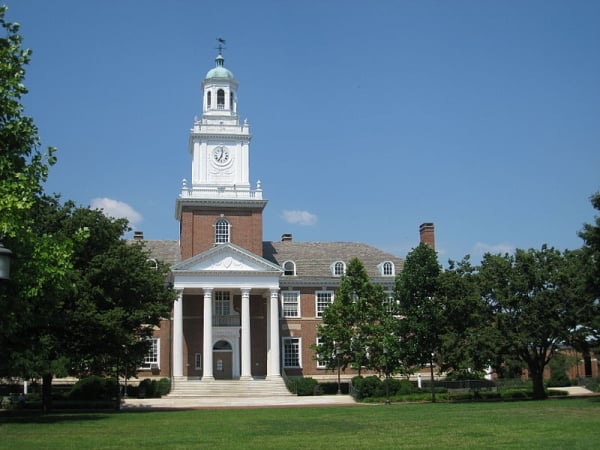
    Johns Hopkins University announced Thursday that it’s eliminating tuition, fees and living expenses for its Homewood campus undergraduates whose families make less than $100,000 a year; students whose families earn up to $200,000 will pay no tuition. It joins a wave of other institutions—especially private, selective ones—that have announced tuition guarantees.

    In a news release, the university said the change “means students from a majority of American families, including middle-class families earning above the national median household income of $87,730, can attend Hopkins at no expense.”

    Further, Hopkins said, “Most families with incomes up to $250,000 will continue to qualify for significant financial aid. Even those with annual incomes exceeding $250,000 may qualify, especially when there are multiple children in college at the same time.”

    Most of the university’s undergrads study on the Homewood campus, in North Baltimore. The release said the new aid levels “will go into effect for eligible current students in the spring 2026 semester and for new, incoming students next fall.”

    In a message to the university community, JHU president Ron Daniels said that since businessman and former New York mayor Michael Bloomberg donated $1.8 billion to the university in 2018, Hopkins’s share of Pell Grant–eligible students rose from 15.4 percent to 24.1 percent, the highest proportion in university history.

    “Our financial aid investment has continued to grow, inspired by Mayor Bloomberg’s transformative gift, with generous contributions by more than 1,200 donors who have given $240 million for financial aid at Hopkins over the last several years,” Daniels wrote. “We are in their collective debt.”

    Source link

  • What college leaders should know about the $100K H-1B visa fee

    What college leaders should know about the $100K H-1B visa fee

    This audio is auto-generated. Please let us know if you have feedback.

    President Donald Trump caught the higher education world by surprise on Sept. 19, when he signed a proclamation announcing a new $100,000 fee for H-1B visas. Before the new policy, employers paid between $2,000 and $5,000 for new H-1B petitions, according to the American Immigration Council. 

    Colleges, especially large research universities, rely on H-1B visas to recruit foreign faculty, scholars and researchers. Stanford University, the University of Michigan and Columbia University all employed over 200 workers through H-1B visas in fiscal 2025. 

    The new fee could impede colleges’ ability to recruit those workers — potentially curtailing research, slowing scientific innovation and even leading to reduced course offerings for students, according to higher education experts. 

    “There’s no doubt that it will deter global talent that is not in the U.S.,” Miriam Feldblum, president and CEO of the Presidents’ Alliance on Higher Education and Immigration. “We lose the benefit of their skills, expertise and talent. It is not only a loss for them, it is just clearly a loss for campuses and other employers.”

    Higher education and legal experts are still trying to understand some elements of the new policy, such as if colleges and other employers can secure exemptions to the $100,000 fee for workers they’d like to sponsor. However, they shared insights about who the policy impacts, what could change in the future and how colleges can navigate this moment. 

    Which workers are impacted by the $100,000 fee? 

    When the Trump administration first rolled out the policy, confusion abounded about which types of workers would trigger the fee. That’s in part because U.S. Commerce Secretary Howard Lutnick initially said the fee would be paid annually, according to Reuters

    But a day after the policy’s rollout, White House Press Secretary Karoline Leavitt walked back Lutnick’s remarks and said on social media that it would be a one-time free for new petitions only. Since then, the Trump administration has provided guidance further narrowing the policy’s impact. 

    U.S. Citizenship and Immigration and Services said in October that the fee would not apply to someone already in the U.S. that is requesting a change of status. According to Joshua Wildes, associate attorney at immigration law firm Wildes & Weinberg, that means that students on F-1 and J-1 visas may not be subject to the fee if they are in the U.S. and are seeking to switch to H-1B status. 

    However, they would have to stay within the U.S. until they secure H-1B status to avoid incurring the fee. 

    “They’re going to have to decide whether or not they are willing to stay put in the U.S.,” Wildes said. That could include forgoing traveling to see their families or taking vacation outside of the country, Wildes said. 

    Those who already have H-1B visas, however, can travel outside the U.S. and return without triggering the fee. 

    Even with the latest guidance, colleges are still reeling from the new policy, as it still applies to new petitions for workers who are outside of the U.S.

    No institution wants to pay the fee, “regardless of how small or big you are,” Wildes said. “The smaller ones that don’t have the funds, they simply cannot afford it. The bigger ones that do have the funds, they don’t want to do it because it’s a lot of money.”

    The guidance said the U.S. secretary for the Department of Homeland Security could grant exemptions to the fee for certain workers, though it added they will be “extraordinarily rare.” 

    To qualify, the secretary would have to determine a worker “is in the national interest,” doesn’t pose a security risk to the U.S. and that no American citizen is able to perform the role they would be brought in to fill. The secretary would also have to determine if requiring the new H-1B fee from the sponsoring employer would “significantly undermine” the nation’s interest.

    USCIS on Thursday referred Higher Ed Dive to the proclamation and existing guidance when asked for details about which workers would qualify for these exceptions. It added that those requests are handled by DHS and not USCIS. 

    Will the $100,000 fee stay in place for the higher education sector? 

    Source link

  • Higher ed groups push for colleges to be exempt from $100K H-1B visa fee

    Higher ed groups push for colleges to be exempt from $100K H-1B visa fee

    Dive Brief:

    • Nearly three dozen higher education organizations are urging U.S. Homeland Security Secretary Kristi Noem to exempt colleges from the new $100,000 fee for H-1B visa petitions, arguing in an Oct. 23 letter that these employees do work “crucial to the U.S. economy.”
    • President Donald Trump caught the higher education sector by surprise when he announced the large fee last month. Large research universities heavily rely on the H-1B visa program to hire international scholars. 
    • Ted Mitchell, president of the American Council on Education, said in the Thursday letter that colleges’ H-1B workers educate domestic students for “high-demand occupations, conduct essential research, provide critical patient care, and support the core infrastructure of our universities.” 

    Dive Insight: 

    Trump shocked the higher ed world sector on Sept. 19 when he declared that new petitions for H-1B visas must come with a $100,000 payment to be processed. Yet colleges were left unsure which of their workers would be impacted amid scant details on the new policy and mixed messages from administration officials. The federal government is facing at least two lawsuits over the fee.

    In the days and weeks since the fee was announced, the Trump administration has released additional information about the new policy. Just last week, U.S. Citizenship and Immigration Services released guidance that said the new fee wouldn’t apply to visa holders inside the country who are requesting a change of status or extension of stay — potentially exempting international students who recently graduated and have H1-B sponsorship. 

    Mitchell’s letter asked Noem to confirm that the new USCIS guidance includes those on F-1 or J-1 visas — both of which cover international students — converting to H-1B status. He also asked if the government would return the $100,000 fee if a petition is denied and how USCIS would process H-1B applications in a timely manner given the new requirements. 

    The letter points out that the proclamation included language that allows DHS to issue exemptions for workers if government officials deem hiring them is in the nation’s interest and doesn’t pose a security risk. 

    The continuing education of our postsecondary students is in the national interest of the United States,” Mitchell wrote. 

    He cited recent CUPA-HR data showing that 7 in 10 faculty on H-1B visas in the U.S. are in tenured or tenure-track positions, with the largest shares in business, engineering and health disciplines. 

    Mitchell contended that exempting colleges from the new fee would be similar to the higher education sector’s current exemption from the cap on H-1B visas, which are awarded via a lottery process. The cap limits annual H-1B visa awards to 65,000 workers, with an additional 20,000 for international students who finished U.S. graduate programs. 

    Congress exempted higher education from the cap in recognition “of the special role that institutions of higher education play in hiring H-1Bs on our campuses,” Mitchell wrote. 

    ACE also took issue with a recent proposal that would change how the lottery system works. Under the new proposal from USCIS, visas for higher-wage applicants would be given more priority. 

    Mitchell urged USCIS to withdraw the rule in a public comment submitted Friday on behalf of ACE and 19 other higher education groups. He argued the change would harm international enrollment, as foreign students entering the workforce after completing their degrees at U.S. institutions would have much lower access to the H-1B visa program. 

    A central reason for the excellence of our postsecondary institutions is their ability to attract and enroll talented, motivated, and curious students, whether born in this country or abroad,” Mitchell wrote. “This proposed rule will limit the ability of our institutions to recruit and retain these students, especially those that wish to remain in the United States.”

    Source link

  • New Promise Programs Launch for Families Making Under $100K

    New Promise Programs Launch for Families Making Under $100K

    When Jake Winston began looking at colleges in fall 2019, he was primarily looking at public colleges in his home state of North Carolina, as he felt those would be the only institutions he could afford. He was interested in Washington & Lee University, in Virginia, due to its location—far enough for a change of scenery, but not so far he couldn’t visit home—and its rich and complex history. But he didn’t think he could afford the high price tag.

    At a presentation by admissions officials, though, he learned about the W&L Promise, which covers the full cost of tuition for all students whose families fall into a specific income bracket. Once he got his aid offers back from colleges, WLU was the obvious choice, costing him just $5,000 annually, a sum that he paid out of pocket using money he made from summer research jobs.

    “Being able to know I was going to graduate debt-free from the start allowed me to pick what I was passionate in, and that’s teaching, which is not the highest-paying role in the country,” said Winston, who now teaches seventh-grade history in Northern Virginia. “But it is what I wanted to do with my life.”

    WLU has one of the oldest tuition-guarantee programs in the country. It launched in 2014, offering free tuition to students whose families make less than $75,000 each year; now, that number has surged up to $150,000, and students whose family income is less than $75,000 also get free room and board.

    Since then, more and more colleges—especially, but not only, selective private institutions—are offering completely free tuition to students whose families fall under a certain income threshold. Nowadays, that maximum is typically $100,000 annually, an income bracket that includes about 57 percent of U.S. families as of 2024, according to an analysis by the Motley Fool. But some have expanded the offer of free tuition to those whose families make as much as $200,000, encompassing all but 16 percent of American households. (Most programs also require the families to have typical assets, and some are only open to in-state students.)

    In the past year alone, a slew of universities has announced new free tuition programs or expanded their existing programs, including Wake Forest University, Reed College, Emory University, Macalester College, Tufts University, the Massachusetts Institute of Technology, Harvard University and Lasell University.

    Administrators at more than half a dozen institutions with promise programs told Inside Higher Ed that they hope that the move will attract low-income students who didn’t realize how financially accessible higher education, even at expensive institutions, can be. It’s also an effort to improve cost transparency—an area that has frequently come under scrutiny as the actual cost of college has become increasingly obscured by scholarships, aid, fees and books and other indirect costs.

    Breaking the Cost Barrier

    For many institutions offering tuition guarantees—also called promise programs—it’s more of a change in rhetoric than in actual financial aid policy.

    Carnegie Mellon University in Pittsburgh, for example, announced a program last November guaranteeing free tuition for students with family incomes under $75,000 and promising those with incomes under $100,000 wouldn’t have to take out any student loans to access a CMU education, beginning with the incoming class in fall 2025. But according to Brian Hill, the university’s associate vice provost for student financials and enrollment systems, that’s how the university had already been quietly operating since 2016.

    “In truth, it was to make sure that prospective students knew that CMU was an affordable option for them. That was the primary reason,” he said. “We’ve been saying that we met full demonstrated financial need for our students … [but] a barrier we don’t know if we’d gotten through or not is students that would look at the sticker price [of $67,020 per year] and just completely write CMU off before they even explored it.”

    The surge of these programs comes amid concerns about the growing cost of higher education and that the return on investment of a bachelor’s degree doesn’t warrant the seemingly exorbitant cost; a few institutions in the U.S. now have a sticker price upward of $100,000 a year.

    At the same time, experts argue that the price of higher education has actually gone down when accounting for inflation and the high rate of aid students generally receive. For several decades, higher education has followed a model in which institutions advertise a high cost of attendance but a significant number of students receive large scholarships. This approach helps to make higher education look like a luxury product while students and families feel like they’re getting a good deal. But that strategy has come to bite institutions in the butt, according to W. Joseph King, former president of Lyon College and a higher education consultant, as many low- and middle-income students now feel the high cost of college makes an education unattainable.

    “What this led to was almost like an arms race of rising stated tuition numbers and a fall in net tuition numbers. All sorts of groups, including the federal government, have been trying to get to numbers that are more reflective of the actual cost,” he said.

    Promise programs aim to change that narrative by showing low- and middle-income families that getting an education even at a seemingly pricey school can be achievable.

    Colleges have made other attempts to communicate that message to students and parents. That includes developing net price calculators, which often show that low-income students would be paying just a fraction of the sticker price, or announcing that their institution is able to meet all of a student’s demonstrated financial need—a number based on a federal student aid formula that determines how much a family is able to pay.

    But many families have no idea what demonstrated financial need means or are unaware of net price calculators, enrollment professionals say. Simply saying that an institution offers free tuition can be the ultimate tool for price transparency, according to Milyon Trulove, vice president and dean of admission and financial aid at Reed College, which announced plans to expand its regional promise program—currently available only to students in Oregon and Washington—to all students with family incomes under $100,000 in 2026.

    The institution also has a net price calculator, he said. But if presented with both that calculator and the promise of free tuition, the latter will immediately be meaningful to students, whereas the former won’t.

    “[Students] say, ‘This makes sense to me, today, right now … and now I can listen to all the other stuff about fit and anxiety about money is no longer in the way of me fully participating in the college admission process,’” he said.

    Along with institutions offering free tuition to any student who fits within a certain income bracket, even more institutions offer tuition guarantees to students based on grade point average or for transferring from a local community college system.

    ‘Rigorous Financial Planning’

    Most of the university officials who spoke with Inside Higher Ed said that their institution was in a very strong financial position and able to afford to support so many students because of large endowments and generous donations, including fundraising specifically aimed at increasing student aid.

    From 2016 to 2024, Carnegie Mellon, for example, increased its undergraduate financial aid budget 86 percent.

    “We truly made a massive commitment to making affordability a real thing at CMU,” said Hill. “I think we’re in a very positive position in terms of finances, but it took a lot of commitment from … executive leadership to make this a priority.”

    Wake Forest, which announced last week that it will offer free tuition to all North Carolina students with family incomes below $200,000, is one of the few schools that said that its promise program, called the North Carolina Gateway, would substantially increase the total amount of aid it gives out. President Susan Wente said that, similarly to CMU, the funds for the initiative come in large part from a massive fundraising effort that has raised over $150 million for financial aid since 2022.

    “This involved rigorous financial planning and analysis and knowing we could meet the commitment, should we announce it,” she said.

    But not every university with a promise program is leaning on massive donation campaigns. Radford University, a public institution in Virginia, was able to begin offering free tuition to all students from Virginia with incomes below $100,000 simply because of the ample amount of funding it gets from the state, according to Dannette Gomez Beane, vice president for enrollment management and strategic communication.

    Virginia tends to be generous toward higher education, Beane said, but the two regional public universities in southwest Virginia, which has the lowest college-going rate of higher education of any area in the state, receive the most funding. That’s what allowed Radford to begin its promise program, which the institution promoted heavily in the 60-mile radius around its campus, in 2024.

    “With all things higher ed and higher ed financial aid, not everything is sure, and we’re learning that this year more than ever,” she said. “I think that state funding, federal funding—if you have models that are dependent on those, you have to constantly be adjusting your models … there is that vulnerability, but we’re just gracious that we’ve had favor with the state.”

    Boosting Low-Income Enrollment

    Although many of these programs are new, those that have been around for multiple years have seen positive results. At Washington & Lee, Sally Richmond, vice president for admissions and financial aid, said that there have been massive jumps in enrollment of rural students, first-generation students and Pell-eligible students since she joined the university in 2016.

    It’s impossible to say whether those changes can be attributed specifically to the university’s promise program, she noted. But, she said, “our financial aid office, who is certainly on the front line of having these conversations along with our admissions team, speaks to the fact that this concept of the promise is the one that resonates most with our prospective students and families.”

    Reed College, similarly, saw a 25 percent increase in middle-income students in its program’s first year, during which it was only available to students from Oregon and Washington.

    Wente, Wake Forest’s president, said she is eager to see how the university’s newly announced tuition guarantee program will impact low- and middle-income enrollment.

    “As a scientist myself, we’re going to pilot this, look at its impact, look at how we can ensure that it’s really achieving what we hope in terms of offering students greater access,” she said. “In terms of the middle and lower income bands, those are the students who often don’t have as many options. So, how do we give them as many options as possible?”

    Source link

  • Wellesley Surpasses $100K Sticker Price

    Wellesley Surpasses $100K Sticker Price

    Jessica Rinaldi/The Boston Globe/Getty Images

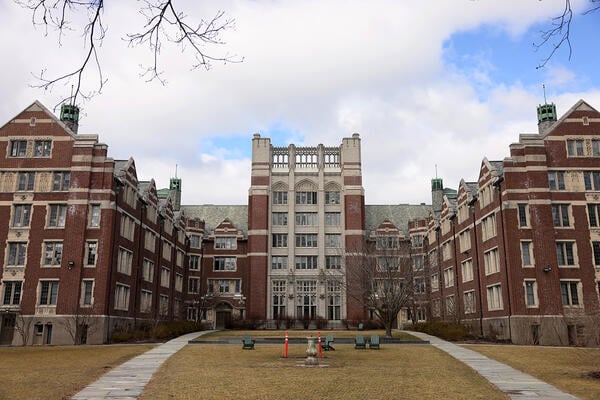
    Wellesley College appears to be the first higher ed institution in the nation to hit the $100,000 annual sticker price.

    The cost to attend the all-women’s college this coming fall will be $100,541, as Boston Business Journal first reported. That includes direct costs of $92,440—which covers undergraduate tuition, housing, fees and meals—plus indirect costs, such as books, personal expenses, travel, transportation, and optional health insurance. Wellesley now appears to be the most expensive college in the country.

    Various other universities have approached the six-figure mark for undergraduate tuition and indirect costs in recent years but managed to remain below it. When Inside Higher Ed explored this issue last year, it appeared that Vanderbilt University might be the first to cross the threshold, with estimated costs for undergraduate students in certain programs, such as engineering, hitting almost $98,000. Others at or over the $90,000 line include the University of Chicago, the University of Southern California, Washington University in St. Louis and Tufts University, and a handful of other highly selective, private institutions.

    Wellesley spokesperson Stacey Schmeidel wrote in an email to Inside Higher Ed Tuesday that the college “meets 100% of the calculated need for all students” and is “committed to making a Wellesley education accessible to all.” Additionally, she noted that “loans are eliminated for students with total parent income less than $100,000 and calculated family contribution of less than $28,000. The average indebtedness of our 2023 graduates is $18,500, well below the national average.”

    She added that indirect costs vary by student and “the majority” do not pay sticker price.

    Schmeidel also wrote that more than 50 percent of students decline the optional health insurance, which, at $4,051, is the most expensive item on the list of indirect costs. Of those who do opt in, nearly half receive institutional grants to cover the entire cost, she noted.

    Despite the potential sticker shock, Wellesley’s website plugs an education that is “more affordable than you think.” Wellesley has a financial aid budget of more than $84 million, according to its website.

    That is also the case at many other well-endowed colleges where, regardless of the listed price, most students don’t pay the full amount. Tuition discounting has soared in recent years and remains well over 50 percent across the U.S. A recent study of 325 private nonprofit colleges conducted by the National Association of College and University Business Officers pegged the average tuition discount rate for first-time, full-time students at 56 percent, and 52 percent for all undergraduate students. Both numbers are all-time highs.

    While public concerns about higher education have often focused on college costs, debt and the return on investment, Wellesley and its high-priced peers are outliers in terms of cost. A recent College Board analysis found that in the 2024–25 academic year, the average sticker price was $43,350 for private nonprofit four-year institutions, $30,780 for out-of-state students attending public universities, and $11,610 for in-state students at public universities.

    Bryan Alexander, a senior scholar at Georgetown University who has been writing about college costs nearing the $100,000 mark since 2018, correctly predicted in 2023 that Wellesley would be one of the first institutions to reach six figures by the 2026–27 academic year.

    Asked what he thought about his prediction coming to pass, Alexander responded with multiple questions.

    “Will this pricing make the college more desirable, as a luxury good? Or will it drive away would-be students from sticker shock?” he wrote by email. “How many universities, scared of [the Trump administration], will make such a price hike to raise funds when grants are cut?”

    He also pondered what it might mean for public perception, writing, “Wellesley is a small liberal arts college, but some universities are also playing this pricing game. Will [small liberal arts colleges] become seen as too pricey, or will all of higher ed get tarred with this brush?”

    Source link