Tag: 100m

  • U Austin Announces $100M Gift, End to Tuition “Forever”

    U Austin Announces $100M Gift, End to Tuition “Forever”

    The University of Austin announced Wednesday that Republican megadonor Jeff Yass is donating $100 million, it’s “ending tuition forever” and it will also “never take government money.” At the same time, it said Yass’s gift represents the first third of “a $300 million campaign to build a university that sets students free.”

    University president Carlos Carvalho told Inside Higher Ed he doesn’t plan for this $300 million to become an endowment meant to last forever. Instead, he said it will be invested but spent down as a “bridge” until the institution produces enough donating alumni to keep tuition free. He estimated this will take 25 years, “give or take.”

    “We understand there’s risk in this approach,” Carvalho said. But he said he believes in the product, calling his students his “equity partners”—but stressed that “all they owe is their greatness.”

    When the institution welcomed its first class of students last fall, it said annual tuition was $32,000, but Carvalho said nobody has ever paid tuition. The university still hasn’t earned accreditation, which can take years, but the state of Texas allowed it to grant degrees and the Middle States Commission on Higher Education, an accrediting body, has granted it candidate status on its path to recognition. The university says it expects to complete “the first accreditation cycle” between 2028 and 2031.

    Yass—a billionaire co-founder of financial trading firm Susquehanna International Group and a significant investor in TikTok owner ByteDance—was very recently in the news for other gifts. He had backed Republicans in a bid to end the Pennsylvania Supreme Court’s Democratic majority, but voters reappointed all three justices up for re-election to another decade on the bench (though one is required to retire in a few years). He’s also provided millions in support of private K–12 school vouchers and electing Republicans to Congress.

    He told The Wall Street Journal, which broke the news of the University of Austin gift, that he’s been impressed by the university, wants to eliminate stress for parents and supports separation between education and government. His donation to the fledgling institution—which Carvalho said is atop Yass’s previous $36 million gift—is another example of its continued support from prominent conservatives. Carvalho said the university has raised more than $300 million, including the $100 million going toward the new $300 million campaign. The Journal reported that real estate developer Harlan Crow, who controversially funded trips for U.S. Supreme Court Justice Clarence Thomas, and Peter Thiel, a co-founder of Palantir and friend to Vice President JD Vance, have been among the donors.

    Such donations may enable the university to do what other universities can’t: rely neither on student, nor state, nor federal contributions to survive. Instead, the university says it’s banking on alumni sustaining it. The first group of students is slated to graduate in 2028.

    “Our bet: Create graduates so exceptional they’ll pay it forward when they succeed, financing the tuition of the next generation,” the university said in its announcement. “When our students build important companies, defend our nation, advance scientific frontiers, build families, and create works that elicit awe, they’ll remember who made their excellence possible. And they’ll give back.”

    It went on to say that “other Americans will take notice” and invest. “Every other college gets paid whether students succeed or fail. At UATX, if our graduates don’t become essential to American excellence—and if their work doesn’t inspire others to fund this mission—we’re done.”

    Some higher ed observers are skeptical. Mark DeFusco, a principal at Prometheus Education, which performs mergers and acquisitions for troubled colleges, said running a “serious college … a college as we know it” on just a $300 million fund would be “nearly impossible.”

    “If they can pull it off, God bless ’em,” DeFusco said. “While I really understand their urge, the practicality doesn’t seem like it’s possible, and I’d like to see the details.”

    Carvalho said the university currently has 150 students in its freshman and sophomore classes, and he plans to grow total enrollment to 400 to 500 for now. “We need this first phase of growth to be small,” he said.

    “We talk about building the Navy SEALs of the mind,” he said. “The Navy SEALs are not a class of thousands and thousands.”

    He said the university offers courses in, among other things, computer science, journalism and prelaw, and wants to launch programs in all three areas. One of the university’s founders is Bari Weiss, who also founded The Free Press and recently became editor in chief of CBS News.

    Other universities have also tried to jettison tuition in favor of alumni support. In 2021, Hope College in Michigan aimed to raise $1 billion for its endowment in order to go tuition-free. As part of that plan, students would commit to donate to the college after graduation. The first cohort graduated this past spring, and 126 students have participated over the first four years, according to an annual report from the college. Roughly 85 percent of the graduating seniors and 70 percent of freshmen through juniors have donated.

    Neal Hutchens, a university research professor and faculty member in the University of Kentucky’s College of Education, said the no-tuition, no-government-funding plan raises questions about how large UATX could grow and whether its model could be replicated elsewhere.

    He also noted that the university’s marketing of itself as against the grain of academe isn’t unique. A video on UATX’s homepage critiques “coddling,” “virtue signaling” and the “disastrous” state of higher ed “in the Western world,” complete with images of a building with a rainbow-colored sign above an entrance, people wearing cloth masks while blowing into instruments and pro-Palestine protesters being arrested. In the video, Weiss says to understand why “the museums you love, and the publishing houses you love, and the newspapers you used to trust” are “hollowed out, you have to look at the nucleation point for this—and that is the university.”

    Hutchens said New College of Florida, a public institution taken over by Gov. Ron DeSantis’s conservative board appointees, appears to be charting “a similar iconoclastic path.” He noted New College took a public stand early against what some call wokeness.

    “That’s not necessarily been an easy fix for New College to just automatically thrive,” he said. He said he’s curious if such institutions are going after the same donors, and they may eventually be competing more with one another than the institutions they’re setting themselves apart from.

    However, Hutchens said, UATX might be able to gain currency in the tech industry and make further inroads with people with deep pockets.

    “It doesn’t take too many $100 million gifts to add up to a pretty good endowment,” he said.

    Asked about assertions that his university pushes conservative ideology, Carvalho said, “We have a core curriculum that is teaching the best that has been done and has been seen in the Western tradition,” from philosophy to science, literature and more. He said none of those things are conservative.

    “We do have an institution that’s very patriotic,” he said, adding that if that’s a “conservative statement these days—again, not my choice.”

    Source link

  • Creighton Receives $100M Gift for Athletics Facilities

    Creighton Receives $100M Gift for Athletics Facilities

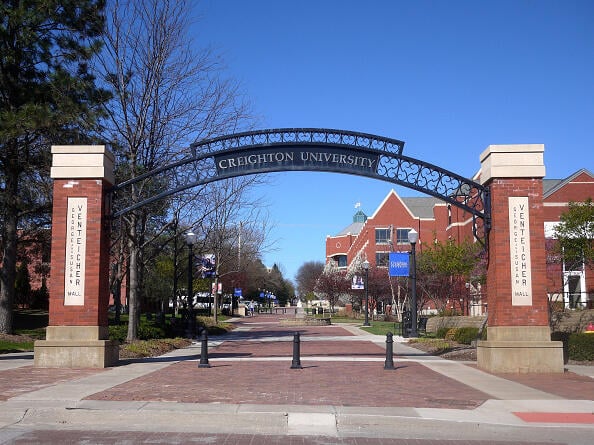
    Creighton University has received a $100 million gift from the Heider Family Foundation to launch a nearly $300 million campaign for a sprawling recreational and athletic development on the east side of the Omaha campus.

    Creighton’s Fly Together plan will establish or upgrade athletic facilities and outdoor spaces covering 12 blocks and roughly 700,000 square feet. It includes a new student fitness center, a pedestrian walkway connecting the private Jesuit campus to a downtown business district and a new sports performance center for Creighton’s student athletes.

    “Fly Together will serve students and student-athletes, but importantly, it will serve the Omaha community itself,” said Scott Heider, a university trustee as well as a trustee of the Heider Family Foundation, which was established by his parents, Charles and Mary.

    “We are incredibly grateful to the Heider family and the additional donors who are making this moment possible,” said Creighton president Daniel Hendrickson. “This gift … benefits everyone. It enhances student life, intramurals, premier club sports and intercollegiate athletics. It also strengthens Creighton’s connection to downtown and the broader Omaha community.”

    Source link

  • Week in review: University of Chicago to cut $100M from its budget

    Week in review: University of Chicago to cut $100M from its budget

    Most clicked story of the week:

    The University of Chicago will move to cut $100 million from its budget, citing “profound federal policy changes” and multi-year deficits. Paul Alivisatos, president of the private institution, said that goal would require staff reductions.

    Number of the week:


    15%

    The decline in the U.S. Department of Education’s fiscal 2026 budget under a new proposal from House Republicans. The steep cut, which lawmakers paired with reduced funding for certain federal student aid programs, echoes President Donald Trump’s budget proposal. The House Appropriations Committee’s education subcommittee advanced the proposal Tuesday evening.

    The latest in the Trump administration’s battle with higher ed:

    • A federal judge Wednesday ruled in favor of Harvard University in its lawsuit against the Trump administration, concluding the federal government failed to follow proper procedures and acted arbitrarily and capriciously when it froze $2.2 billion of the university’s federal funding in April. The move also violated Harvard’s First Amendment rights, the judge ruled. 
    • George Mason University’s governing board announced it would negotiate with the Trump administration in hopes of resolving federal allegations that the public institution illegally used race and other protected characteristics in hiring and employee promotions. George Mason’s president summarily rebuked the accusation.
    • The University of California will need at least $4 billion to $5 billion to staunch the budgetary bleeding if it loses its federal funding, the system’s president told state lawmakers. The Trump administration has set its sights on the system — particularly University of California, Los Angeles, which recently had $584 million of its grants suspended.

    Federal agencies complicate life for international and undocumented students:

    • The U.S. Department of Homeland Security and the U.S. Immigration and Customs Enforcement proposed setting a four-year cap on the length of time international students can stay in the U.S. If approved, student visa holders would need to apply for extensions and undergo “regular assessments” to stay beyond that time.
    • The U.S. Department of Justice sued Illinois over its laws allowing select undocumented college students to pay in-state tuition rates and receive state-administered scholarships. That makes Illinois the fifth state the DOJ has taken action against over such policies.

    Quote of the Week:

    “The First Amendment doesn’t set when the sun goes down. University students have expressive freedom whether it’s midnight or midday, and Texas can’t just legislate those constitutional protections out of existence.”

    That was JT Morris, senior supervising attorney at the Foundation for Individual Rights and Expression, in a statement Wednesday. FIRE sued the University of Texas system on behalf of students over a new state law that directs public colleges to prohibit “any speech or expressive conduct protected by the First Amendment” on campuses from 10 p.m. to 8 a.m.

    Source link

  • University of Chicago braces for job cuts amid effort to shed $100M in costs

    University of Chicago braces for job cuts amid effort to shed $100M in costs

    This audio is auto-generated. Please let us know if you have feedback.

    Dive Brief:

    • The University of Chicago is looking to cut $100 million in expenses after two years of deficits and “profound federal policy changes” under the Trump administration, according to university President Paul Alivisatos
    • In community messages Thursday, Alivisatos said that goal requires staff reductions. This year, the university plans to eliminate 100 to 150 staff jobs, including through layoffs, mostly tied to discontinuing university programs and activities. 
    • The institution also plans to reduce senior leadership roles, pause admissions for over a dozen Ph.D. and master’s programs, decrease the number of spots for doctoral students, scale back capital projects, and review its research spending with an eye toward potentially cutting some academic centers.

    Dive Insight:

    Like many university presidents in recent months, Alivisatos pointed to the past eight months of policy disruption under the Trump administration as having “created multiple and significant new uncertainties and strong downward pressure on our finances.”

    In that environment, “steps ahead have become much steeper in the face of proximate challenges,” Alivisatos said in a message to staff.

    University of Chicago already faced financial pressure from rising expenses before the year began. In fiscal 2024, the institution reported a $193.7 million operating deficit — even as its revenue grew. That shortfall represented an improvement from the year before, when it posted a $201.7 million deficit.

    Despite important progress that all of you worked so hard to contribute to over the last two years, our annual income still falls short of our expenses,” Alivisatos said in a message to faculty. “That is not something that we can allow to persist.”

    The university is taking a kitchen sink approach to its budget, reducing spending in multiple areas while also trying to ensure its core operations and services remain strong. But employee compensation remains the university’s largest expense and a major area for cutting. 

    University of Chicago Provost Katherine Baicker noted Thursday that the latest round of budget cuts will build on previous institutional efforts to reduce costs, which included voluntary retirements, layoffs and hiring freezes.

    The staffing cuts will be tied to specific activities and programs that the institution plans to end, rather than an across-the-board cut, the university said in a FAQ on the operational restructuring

    The aim is to do fewer things well, rather than doing the same things with fewer people,” it said.

    The university is not planning any faculty cuts, instead opting to maintain the current number after past years of growth. 

    However, the University of Chicago will pause Ph.D. enrollment of 19 programs for the 2026-27 academic year — nearly all of them in the liberal arts and humanities, including anthropology, political economics, English, theater, art history and public policy. The move has garnered national attention amid concerns the reduction could harm the academic landscape at the university and beyond.

    The University of Chicago is also rethinking its approach to campus construction. The institution can no longer afford to build primarily via debt financing, and newly established rules require philanthropic or other external support for building projects before starting them, according to Alivisatos. The university has “substantially” scaled down plans for a new engineering and science building, Alivisatos said.

    Source link

  • US scraps $100m in study abroad programs

    US scraps $100m in study abroad programs

    • Stakeholders warn that the funding cuts will probably result in furloughs, redundancies or – in the worst cases – organisations being forced to close.
    • The move comes after months of policy turmoil in the US, as the Trump administration wages war on international education.
    • Experts question the legality of the move as a campaign is launched to save State Department international exchange programs.

    State Department regional bureaus were informed of the cuts on August 13, via internal communications stating that government officials would work with them to “pull down” the affected programs “with the least possible disruption”.  

    The directive explained that the programs “were lower funding priorities in the current fiscal environment, so they are being removed from FY25 Funding”, according to communications from the Bureau of Educational and Cultural Affair (ECA).  

    “It’s an existential crisis for these programs and possibly for ECA,” said Mark Overmann, executive director of the Alliance for International Exchange – whose members make up 13 of the impacted programs, facing cuts of $85m.  

    According to Overmann, the 22 programs were all due to be renewed and were expecting to receive FY25 funds before September. Now, they will no longer be allowed to go through their awards process or renewal, and thus will be terminated.  

    “These organisations will now suddenly lose funding they’ve long anticipated and been promised, and this will likely result in furloughs, layoffs, and even organisational closures,” warned Overmann.  

    “Cancelling $100 million in programs which impact 10,000 students is devastating on many levels,” Bill Gertz, chairman of American Institute for Foreign Study (AIFS) told The PIE News.  

    “It means students’ plans and dreams are impacted… it means layoffs and financial disruption at the many fine cultural exchange organisations,” added Gertz, who sponsors the YES Abroad program which has been cancelled.

    “These folks have worked tirelessly to make the world a better place,” he said.  

    Typically, the State Department’s funding process would be in full swing in the spring and summer, though this year has been plagued by delays and uncertainty for program organisers and students alike.  

    Following the lifting of the State Department’s funding freeze this March, stakeholders have been concerned about the lack of movement on the ECA’s FY25 funding process, which has caused delays in the opening of applications and interfered with students’ plans.  

    According to a former staff member of the Republican Senate Foreign Relations Committee: “The variety of programs impacted are too broad to point to a single issue or justification – everything from community colleges to disability and education exchanges.” 

    They warned that the cuts would isolate the US in the long term, raising particular concerns about the discontinuation of the Kennedy-Lugar Youth Exchange and Study (YES) Program. 

    This initiative “was created after 9/11 specifically to bring young people from predominantly Muslim countries to the US to build long-standing relationships with communities and individuals who might not otherwise every get to see our nation in anything other than filtered news and anti-US social media,” they explained. 

    The value of study abroad for US soft power and public diplomacy was echoed by Gertz, who said the cuts came “at a time in our history when cultural understanding is needed the most”.  

    If OMB is allowed to cut these Congressionally appropriated FY25 awards, it will give them license to do it again and again, opening the door to effectively eliminate international exchange programs

    Mark Overmann, Alliance for International Exchange

    Beyond the programs, their participants, alumni and staff, the move raises alarm bells about the White House’s ability to cut congressionally appropriated grants. 

    Historically, Congress has approved ECA awards, but this year the Office of Management and Budget (OMB) inserted itself “irregularly” into the process to stop congressionally approved funds from being spent, said stakeholders.  

    According to Overmann, the move could be illegal, with Gertz also stating it was unconstitutional for OMB to override Congress in such a way.  

    “OMB found a way to use a small, previously arcane piece of administration process to stop ECA program awards from moving forward,” Overmann explained, leading to the defunding and termination of 22 cultural exchange programs. 

    “If OMB is allowed to cut these Congressionally appropriated FY25 awards, it will give them license to do it again and again, opening the door to effectively eliminate international exchange programs,” Overmann warned.  

    The cancellations have shocked the US study abroad community, which recently received a vote of confidence in Congress, which drastically reduced the planned cuts for study abroad in the FY2026 budget.  

    “We believe we have the support of the majority of Americans who have supported our efforts for decades,” said Gertz. ” We are actively engaged with Congress on the future of ECA programs. 

    Sector leaders have already kicked into action, warning that the elimination of funding would “greatly damage 75+ years of exchange activity and the legacy of Senator Fulbright. It would destroy many of our programs and much of our work,” said Overmann. 

    The Alliance today launched a campaign to save State Department international exchange programs, urging stakeholders to write to members of Congress.  

    The State Department has not issued a formal announcement or replied to The PIE’s requests for comment.  

    It appears that the following programs are impacted, though the list may not be exhaustive:  

    • Community College Administrator Program (CCAP) 
    • Community College Initiative Program (CCI) 
    • Community Engagement Exchange (CEE, Leahy Initiative on Civil Society) 
    • Council of American Overseas Research Centers 
    • English Access Scholarship Program 
    • English Language Fellow Program 
    • Global Undergraduate Exchange Program 
    • IDEAS Program 
    • International Center for Middle Eastern-Western Dialogue (Hollings Center) 
    • Kennedy-Lugar Youth Exchange and Study (YES) and YES Abroad Program 
    • Leaders Lead On-Demand 
    • Mandela Washington Fellowship for Young African Leaders 
    • Mike Mansfield Fellowship Program 
    • National Clearinghouse for Disability and Exchange (NCDE) 
    • Professional Fellows Program 
    • Survey of International Educational Exchange Activity (IEEA) in the United States 
    • TechWomen 
    • The J. Christopher Stevens Virtual Exchange Initiative 
    • U.S. Congress-Korea National Assembly Exchange Program 
    • U.S.-South Pacific Scholarship Program (USSP) 
    • Young Southeast Asian Leaders Initiative (YSEALI) Academic Fellowship 
    • Young Southeast Asian Leaders Initiative (YSEALI) Professional Fellowship Program (PFP) 

    Source link

  • $100m Coalition election promise to fund 200 regional medical students matches Labor – Campus Review

    $100m Coalition election promise to fund 200 regional medical students matches Labor – Campus Review

    Regional and rural Australia’s doctor shortage is being targeted as an election issue by the Coalition, which is promising to fund an extra 200 students to train as general practitioners to work in the bush.

    Please login below to view content or subscribe now.

    Membership Login

    Source link