Tag: AAUP

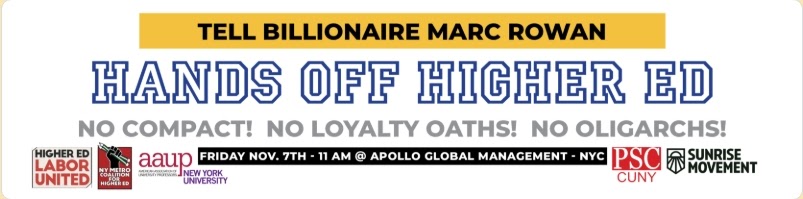
  • BORROWERS AGAINST APOLLO EVENT, FRIDAY NOVEMBER 7TH, NEW YORK CITY (HELU, AAUP, AFT)

    BORROWERS AGAINST APOLLO EVENT, FRIDAY NOVEMBER 7TH, NEW YORK CITY (HELU, AAUP, AFT)

    Higher Ed Unions, Student Unions, and For-Profit College Borrowers Unite Against Trump’s “Higher Education Compact”

    Several higher education unions, student unions, and former students of for-profit colleges are organizing in opposition to the Trump administration’s proposed “higher education compact”—a plan heavily shaped and promoted by private-equity billionaire Marc Rowan.

    Rowan, the CEO of Apollo Global Management, has played a central role in advancing this proposal. Apollo owns several predatory for-profit institutions, including the University of Phoenix, one of the most notorious offenders in the industry.

    In a recent New York Times op-ed, Rowan took public credit for the compact, writing:

    “The evidence is overwhelming: outrageous costs and prolonged indebtedness for students; poor outcomes, with too many students left unable to find meaningful work after graduating…”

    Yet, under Rowan’s leadership, the University of Phoenix has become the largest source of Borrower Defense claims of any for-profit school, with more than 100,000 pending applications as of July 2025. Borrower Defense is a federal protection that allows students to seek loan forgiveness if their school misled them or violated state or federal law.

    The University of Phoenix has faced multiple law enforcement investigations for deceptive recruiting tactics that targeted veterans, service members, and working adults nationwide. The school’s misconduct led to a $191 million settlement with the Federal Trade Commission for falsely claiming partnerships with major employers. More recently, the university attempted to portray itself as a public institution while seeking to sell to two states—both of which ultimately rejected the deal after public backlash.

    While Rowan’s personal fortune exceeds $7 billion, borrowers continue to shoulder crushing debt from degrees that delivered little to no value. His leadership has fueled a system that profits from student harm—and now, through this compact, he is setting his sights on reshaping major public universities.

    We refuse to stay silent. Borrowers, students, and educators are standing together to demand accountability and defend higher education from predatory perpetrators.

    Source link

  • AAUP President Exacerbated “Organizational Antisemitism”

    AAUP President Exacerbated “Organizational Antisemitism”

    U.S. Senate Committee on Health, Education Labor and Pensions

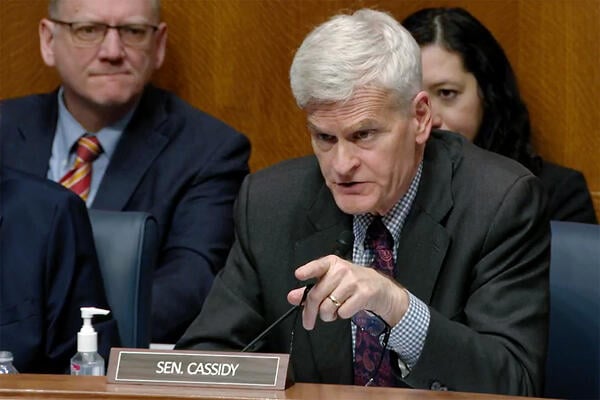
    In a letter to American Federation of Teachers president Randi Weingarten, Sen. Bill Cassidy, the Louisiana Republican who chairs the education committee, accused American Association of University Professors president and AFT vice president Todd Wolfson of promoting “organizational antisemitism” within the AAUP. 

    Cassidy cited an August Inside Higher Ed interview with Wolfson in which the union leader stood against sending weapons to Israel, accused the Trump administration of weaponizing antisemitism for political gains and advocated for the Jerusalem Declaration on Antisemitism, a definition of antisemitism that does not include anti-Zionism.

    Cassidy also referenced a statement from Wolfson calling Vice President JD Vance a fascist as well as a March letter to the AAUP from the Anti-Defamation League and Academic Engagement Network that said “the AAUP [is] being perceived as increasingly moving in a virulently anti-Israel direction, and as a result, growing insensitive and even hostile to the concerns of its Jewish and Zionist members.”

    “In the six months since he received this warning from one of the nation’s leading organizations dedicated to fighting antisemitism [ADL], Dr. Wolfson has not only failed to address these concerns but has exacerbated them,” Cassidy wrote. “Jewish faculty members deserve to carry out their work free from discrimination. As an association with a national presence, it is concerning that AFT has not only failed to help solve this problem but has made it worse by allowing Dr. Wolfson to continue to serve in a leadership role.”

    The AAUP is an affiliate of the AFT, one of the largest unions nationwide for K–12 and higher education professionals. The two became formally affiliated in 2022 and share some leadership, including Wolfson.

    Wolfson replied to Cassidy’s letter in a statement to Inside Higher Ed Monday.

    “It appears Senator Cassidy and his GOP colleagues are furious that seven universities have rejected Trump’s absurd Higher Ed Loyalty Oath. Rather than reckon with their failed attempt to strong-arm higher education, they’ve chosen to complain to our national affiliate, AFT, because AAUP dared to hold a webinar,” Wolfson wrote, referring to an AAUP webinar called “Scholasticide in Palestine” that Cassidy referenced in the letter. “I would respectfully suggest they spend less time trying to undermine my constitutional rights and more time focusing on what Americans actually care about—like reopening the government, lowering healthcare costs, and addressing the cost-of-living crisis.”

    Cassidy wants Weingarten to tell him by Nov. 6 how AFT is addressing the concerns raised by the ADL and to share more details about how she’s working with the AAUP to ensure Jewish members aren’t experiencing antisemitism. He also asked Weingarten whether AFT publicly condemns Wolfson’s remarks.

    Source link

  • Elon University AAUP demands larger faculty role in Queens University combination

    Elon University AAUP demands larger faculty role in Queens University combination

    Dive Brief:

    • Elon University’s chapter of the American Association of University Professors is seeking more faculty involvement in the merger process as the institution looks to take over Queens University of Charlotte.
    • In a statement Wednesday, the group described faculty as being blindsided by the merger announcement in September and left out of the planning process. They called for faculty to elect representatives on integration teams and for officials to formally include of the universities’ faculty councils in merger advising. 
    • The Elon AAUP also said faculty should have a role in deciding whether to formally approve the merger. The two private nonprofits expect their boards to approve final parameters in November.

    Dive Insight:

    Elon and Queens, about 115 miles away from each other in North Carolina, said last month that their combination “creates new advantages of scale, bringing together resources, faculty expertise, research capacity and student services across both universities.”

    They also said their merger would accelerate the creation of new programs meant to address the Charlotte area’s workforce needs, such as a growing shortage of nurse practitioners, physician assistants and lawyers and a rising demand for graduate offerings.

    Since that announcement, Elon has said hundreds of employees, students and other stakeholders have attended town hall events about the combination and listening sessions and that officials are using their feedback to shape the plan. It has also seen public pushback from faculty, students and alumni.

    Faculty feedback has been “important to the extensive work of a team with representatives of both campuses discussing questions related to the academics, operations, and programming of a merged institution,” the university said Thursday in an emailed statement.

    But the university’s AAUP chapter said faculty need a larger, more formal role in the process.

    “Shared governance is not a courtesy; it is a cornerstone of higher education and a safeguard for academic quality,” the faculty group said in its statement, which was published by Elon’s student news organization. “It only functions when faculty are partners in major institutional decisions.”

    The chapter said officials didn’t consult with Elon’s academic council before the merger announcement. That’s despite stipulations in the university’s faculty handbook for the council to “advise the President on the setting of priorities and the planning of long-range goals for the University.”

    Going forward, Elon’s AAUP called for a “meaningful” advisory role for the full council and its Queens counterpart on the combination. They acknowledged scheduled meetings that included the chairs of those bodies, but the Elon AAUP pushed for the full involvement of the councils.

    With a fleshed-out merger plan still to be approved, the Elon AAUP is pressing for faculty to have a say in the ultimate decision. 

    “If faculty will be called upon to help make the merger a success, then faculty should be included in the decision of both institutions to move forward with the merger,” the group said. 

    In its Thursday statement, the university said, “There have been, and will continue to be, opportunities for Elon faculty, in their individual capacities and through involvement with Elon’s Academic Council, to participate in strategic conversations as work progresses toward a final decision by the boards of trustees of Elon and Queens.”

    Elon is the larger institution of the two, with 7,207 students in fall 2023, an increase of 3.1% from 2018. Queen’s fall 2023 headcount of 1,846 students was a 27.2% decline from five years earlier.

    Elon is also on firmer financial footing. It had $1.2 billion in assets in fiscal 2024, more than three times that of Queens. That year, Elon logged a $70.4 million operating surplus while Queens reported an $8.7 million deficit. However, in a FAQ page on the merger, the universities said that the combination plan is “not driven by crisis.”

    Source link

  • AAUP, Other Unions Sue Trump Admin Over H-1B Fee

    AAUP, Other Unions Sue Trump Admin Over H-1B Fee

    A slew of unions, including three that represent university faculty and staff, are suing the Trump administration over its proposed $100,000 fee for new H-1B visas, The New York Times reported.

    The plaintiffs, which include the American Association of University Professors, UAW International and UAW Local 481, allege in the lawsuit that numerous researchers and academics will lose their jobs as a result of their institutions not being able to afford the new fee. (An H-1B visa previously cost $2,000 to $5,000.) Universities, along with national labs and nonprofit research institutions, were also exempt from the annual cap on the number of new visas, and it’s unclear whether the new fee will apply to higher ed.

    The New York Times reported that this lawsuit “appears to be the first major challenge to the new fee.”

    The fee, the complaint states, “will result in significant and potentially catastrophic setbacks to research that benefits the American public and ensures the United States remains a leading source of innovation and expertise. For example, the fee will likely result in sharp cutbacks in the employment of highly talented foreign workers and severe setbacks for university research, graduate programs, and clinical care, compounding an anticipated shortfall of 5.3 million skilled workers over the next decade.”

    The lawsuit highlights several specific examples of researchers whose work would be interrupted by this change, including an unnamed plaintiff who studies conditions and diseases that cause blindness.

    “Her departure will set back the crucial research she is conducting, disrupting the lab’s ongoing work and ability to secure future research funding, preventing her department from getting any future funding through her, and potentially delaying the availability of treatment for the conditions that are the focus of her research,” it states.

    The plaintiffs note in the lawsuit that the $100,000 fee “applies even where workers are already lawfully present in the United States under, for example, a student visa or another immigration status, and are seeking to change to H-1B status.”

    They argue in part that the president does not have the statutory authority to increase the fee for H-1B visas. They are asking the judge to nullify the $100,000 fee and allow H-1B visas to be processed as they were previously.

    Source link

  • AAUP Accuses Trump of Weaponizing Civil Rights Law

    AAUP Accuses Trump of Weaponizing Civil Rights Law

    Photo illustration by Justin Morrison/Inside Higher Ed | Etienne Laurent/AFP/Getty Images | Scott Olson/Getty Images

    A new report released Monday by the American Association of University Professors and its Committee A on Academic Freedom and Tenure argues that the Trump administration has weaponized federal civil rights laws with a goal of discrediting colleges and compromising their academic freedom and institutional autonomy.

    The report focuses in part on a surge of investigations that have been launched by the Department of Education since Oct. 7, 2023, especially those that involve national origin and religion. Based on an analysis of those cases, AAUP argues that in many instances the Trump administration has targeted types of speech or programming that do not actually qualify as legally actionable discrimination. Rather, the association says, the Trump administration has used this surge to sidestep historical procedures and enforce its own interpretation of the law.

    Both the Biden and Trump administrations stepped up their enforcement of Title VI of the Civil Rights Act of 1964, which prohibits discrimination based on race, color, religion, sex or national origin, after the Hamas attack on Israel prompted a number of protests on college campuses and an increase in reports of antisemitism. Their approaches, however, have been quite different.

    Biden civil rights officials took issue with how colleges responded to reports of antisemitic harassment and found several colleges in violation of that law.

    However, the Trump administration has moved aggressively to cut off funds and to demand sweeping changes at institutions—all in the name of combating antisemitism. More recently, the administration has used Title VI as a way to restrict and investigate race-based practices and programs as well as admissions decisions.

    “In a perverse reading of DEI, the administration makes it an instance of racial discrimination rather than an attempt to dismantle the structures of discrimination based on race,” the report notes.

    Over all, the AAUP argues that the Trump administration is attempting to “unmake” and “hijack” Title VI.

    The Trump administration is “unmooring the Civil Rights Act from its foundational commitments to addressing structures of discrimination that prevent educational access,” the report stated. And doing so “is nothing less than an attempt to rewrite the history of the nation.”

    Source link

  • AAUP Academic Freedom Statement Needs a Refresh (opinion)

    AAUP Academic Freedom Statement Needs a Refresh (opinion)

    I am a lifetime member of the American Association of University Professors. It is an organization that has done remarkable work in defending academic freedom for people who teach in this nation’s colleges and universities.

    But as I contemplate returning to teaching this fall, I worry that the AAUP’s understanding of academic freedom is dangerously behind the times. The AAUP’s understanding of academic freedom urgently needs updating to take account of dangers that could not have been contemplated in 1940 when its statement on academic freedom was issued.

    It is time for the organization to think anew about what academic freedom means and what must be done to protect it in an era when the federal government and some state governments are seeking to curtail it. We can understand why its failure to do has been problematic by taking a look at lawsuits filed by the AAUP and its campus-based chapters at universities that have been attacked by the Trump administration.

    But before looking at those suits, let me say a bit about the 1940 statement.

    The AAUP tells the story of its “Statement of Principles on Academic Freedom and Tenure” this way: “In 1915 the Committee on Academic Freedom and Academic Tenure of the American Association of University Professors formulated a statement of principles on academic freedom and academic tenure known as the 1915 Declaration of Principles … In 1940 … representatives of the American Association of University Professors and of the Association of American Colleges agreed on a restatement of the principles. This restatement is known to the profession as the 1940 Statement of Principles on Academic Freedom and Tenure.”

    Thirty years later, the AAUP considered updating the 1940 statement but ultimately decided not to undertake a wholesale revision. Instead, it added a series of “Interpretive Comments” to the existing document. Those comments, the AAUP explains, were intended to update the document in light of “the experience gained in implementing and applying it for over thirty years and of adapting it to current needs.”

    This history reminds us that the thinking guiding that statement goes back more than a century, to a time when the modern university was just taking shape. As Yale Law School professor Robert Post notes, “The American concept of academic freedom was forged early in the 20th century. It emerged from struggles between the newly professionalizing American professoriate and the governmental, business, and parochial powers that controlled American universities.”

    And it has been more than half a century since the AAUP’s influential statement on academic freedom was refreshed at all.

    The 1940 statement imagined that the main threat to the “full freedom” in research, teaching and extramural speech would come “from institutional censorship or discipline.” The statement was, in that sense, addressed not just to teachers and scholars, but to university administrators.

    That is why if they do not follow the principles laid out in the AAUP statement, they can be subjected to censure. As the AAUP explains it, censure is reserved for institutions “that, as evidenced by a past violation … are not observing the generally recognized principles of academic freedom and tenure approved by this Association.”

    I searched the censure list, looking for the Trump administration. Alas, it was nowhere to be found.

    Not surprising, because by the AAUP’s standards, the Trump administration cannot violate academic freedom except indirectly by pressuring higher educational institutions to do so on its behalf.

    To be fair, the AAUP has not been silent about what the administration has done since Jan. 20. In February, it joined a suit seeking to prevent the Trump administration “from using federal grants and contracts as leverage to force colleges and universities to end all diversity, equity, and inclusion programs, whether federally funded or not, and from terminating any ‘equity-related’ federal grants or contracts.”

    In March, it sued the Trump administration for “unlawfully cutting off $400 million in federal funding for crucial public health research in an attempt to force Columbia University to surrender its academic independence.” As the AAUP noted, “This move represents a stunning new tactic: using cuts as a cudgel to coerce a private institution to adopt restrictive speech codes and allow government control over teaching and learning. “

    But here again, consonant with its existing approach to academic freedom, the focus was on what Columbia would do to its faculty.

    Also in March, the AAUP joined a lawsuit “seeking to block the Trump administration from carrying out large-scale arrests, detentions, and deportations of noncitizen students and faculty members who participate in pro-Palestinian protests and other protected First Amendment activities.” But note, the primary claim is about freedom of speech, not academic freedom.

    In April, the AAUP and its chapter at Harvard University sued “to block the Trump administration from demanding that Harvard University restrict speech and restructure its core operations or else face the cancellation of $8.7 billion in federal funding for the university and its affiliated hospitals.”

    Like the suit brought on behalf of Columbia University, it focused on what Harvard might do to restrict the academic freedom of those who teach and do research there.

    In one sense, this is a remarkable record for which the AAUP deserves enormous credit. But, as I pointed out in January, there are new threats to individual faculty members “to intimidate them into silence,” as Darrell M. West put it. It is time that the AAUP acknowledged them in its foundational statement on academic freedom.

    Protecting academic freedom now requires that colleges and universities not only refrain from abridging it themselves but that they take measures to protect and support members of their faculties in the face of governmental or other external threats targeting them directly. The AAUP should revise its 1940 statement to make clear that higher education institutions have an affirmative obligation to advance and protect academic freedom. Doing so would encourage recognition of academic freedom as a positive good in which the universities and their faculties have a joint interest.

    For colleges and universities, implementing that affirmative obligation requires, among other things, that they stand ready to provide legal assistance, make public statements of support and offer help in devising crisis communication strategies for faculty whose freedom in research, in teaching or in their use of academic expertise as citizens is threatened or abridged by external forces.

    That’s a big ask.

    It calls on universities to provide resources, spend reputational capital and stand behind faculty whose views administrators might not share. The university, in this new understanding, has to put itself more at risk to promote and protect academic freedom.

    Universities won’t do this easily, which is why the AAUP would play such an important role in advancing this goal. Redrafting the 1940 statement is a good place to start.

    As the history of its current statement suggests, the AAUP does not move easily or quickly to reconsider its principles. But the need is great, and the time for action is here. By meeting the challenge of the moment, the AAUP will once again demonstrate its essential role in the world of American higher education.

    Austin Sarat is the William Nelson Cromwell Professor of Jurisprudence and Political Science at Amherst College.

    Source link

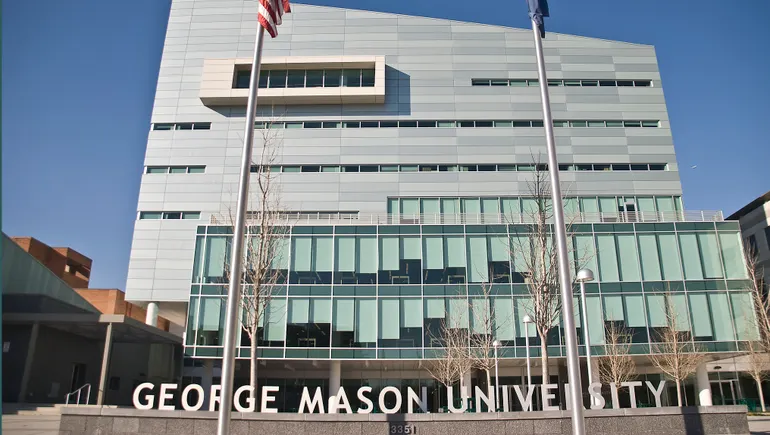
  • ‘Inadequate and deeply troubling’: George Mason AAUP votes no confidence in board

    ‘Inadequate and deeply troubling’: George Mason AAUP votes no confidence in board

    This audio is auto-generated. Please let us know if you have feedback.

    Dive Brief:

    • A faculty group at Virginia’s George Mason University this week adopted a no-confidence resolution aimed at the institution’s board for its handling of recent attacks on the university by the Trump administration. 
    • George Mason’s chapter of the American Association of University Professors described the board’s response to four government investigations, launched in less than a month, as “inadequate and deeply troubling” in a letter Tuesday to members of George Mason’s board of visitors and state officials. 
    • The group called on the board to publicly defend George Mason President Gregory Washington and to “reaffirm the university’s unwavering commitment to academic freedom, diversity, equity, and inclusive excellence.”

    Dive Insight:

    Over the course of roughly three weeks, the Trump administration has opened multiple civil rights probes into George Mason through the U.S. Department of Education and U.S. Department of Justice. 

    The most recent investigation, launched by the Justice Department’s civil rights unit, is looking at whether George Mason’s admissions and scholarship practices violate Title VI, which forbids discrimination based on race, color or national origin at federally funded institutions. It is also probing the university’s response to antisemitism. 

    A letter this week to the head of George Mason’s board from Harmeet Dhillon, the assistant attorney general for the Justice Department’s civil rights division, didn’t contain any specific allegations against the university, but stated that “a school administration’s deliberate indifference to a racially hostile educational environment is illegal.” 

    It followed the Justice Department’s earlier announcement of a probe into racial discrimination in George Mason’s employment practices. In informing officials of that investigation, Dhillon cited past comments by Washington about George Mason’s efforts to diversify its ranks and support women and faculty members of color.   

    The probes come just weeks after former University of Virginia President Jim Ryan abruptly announced his resignation in June amid pressure from Trump’s Justice Department and a similar investigation into the public institution’s diversity efforts.

    In public statements, George Mason’s board — headed by Charles Stimson, who holds leadership positions at The Heritage Foundation, a conservative think tank — has said little beyond that it will provide government agencies with requested information and comply with law.

    In a statement Tuesday in response to the latest probe, the board said it will “ensure GMU complies with all federal anti-discrimination laws.” In an earlier statement, it said it had a fiduciary obligation to “ensure that the University continues to thrive as the largest public university in Virginia.”

    George Mason’s board did not immediately respond to a request for comment.

    Washington himself has defended the university’s diversity efforts, writing last week, “It is inaccurate to conclude that we created new university policies or procedures that discriminated against or excluded anyone.”

    In the resolution, the George Mason AAUP chapter defended Washington’s record at the university where the board has been publicly silent. 

    “President Washington has demonstrated exceptional leadership by advancing the university’s longstanding commitment to inclusion and diversity, overseeing significant improvements in the university’s national rankings, while still maintaining Mason’s ethos of access and affordability, particularly for first-generation students,” it stated.

    The resolution also blasts the board as having “utterly failed to support President Washington and George Mason University during this period of unprecedented and increasing federal scrutiny and political targeting,” adding that “the silence from the Board has become deafening.”

    The faculty group additionally called out the board’s choice of attorneys to represent it in talks with the Trump administration, noting that the firm Torridon Law was co-founded by former Attorney General Bill Barr, who served under Trump, and has several prominent Republican lawyers on staff. 

    Among them is Mike Fragoso, who is handling communications about the investigations for George Mason and was previously chief counsel to former Senate Republican Leader Mitch McConnell.

    “The hiring of Torridon Law PLLC to defend GMU against the Trump administration’s ideological attacks is like hiring a wolf to protect the sheep,” the faculty group wrote. 

    Torridon’s Fragoso did not immediately respond to a request for comment.

    The George Mason AAUP “overwhelmingly” voted in favor of the no-confidence resolution, according to the letter to the university’s board.

    Source link

  • AAUP v. Rubio Reveals Details of Deportation Efforts

    AAUP v. Rubio Reveals Details of Deportation Efforts

    Today is the final day of the American Association of University Professors v. Rubio trial, in which the association, its chapters at Rutgers and Harvard Universities, and the Middle East Studies Association sued to stop the Trump administration from the “ideological deportation” of international students.

    The lawsuit argues that the deportations violate international students’ right to free expression and their Fifth Amendment right not to have laws enforced against them arbitrarily or discriminatorily. It also claims that the arrests of student protesters chilled speech on campuses—something witnesses corroborated.

    The trial, conducted during the last two weeks, revealed new details about the administration’s targeting of international students, including high profile cases like those of graduate students Mahmoud Khalil and Rümeysa Öztürk, who were detained by Immigration and Customs Enforcement in March. (Both have since been released.)

    Here are some of the key takeaways from the trial ahead of the parties’ closing statements.

    1. Dossiers about the targeted students included information about their protest activities.

    On Friday, John Armstrong, the most senior official at the State Department’s Bureau of Consular Affairs, testified that the memos written by state department officials recommending deportation actions and visa revocations contained details about student and faculty members’ activism.

    The memos have been designated as for “attorneys’ eyes only”—the most restrictive possible designation for sensitive information in a trial, which prevents even the plaintiffs and defendants from viewing them. But attorneys and witnesses quoted excerpts of them during the trial.

    The action memo for Öztürk highlighted an op-ed she had co-written supporting a call for her institution, Tufts University, to divest from companies with ties to Israel, Armstrong said, according to trial transcripts published by the Knight First Amendment Institute at Columbia University, which is representing the plaintiffs. But he insisted that the op-ed was not a “key factor” in the decision to revoke her visa and detain her.

    Another memo, regarding Columbia student activist Mohsen Mahdawi, specifically noted that “a court may consider his actions inextricably tied to speech protected under the First Amendment,” according to an excerpt read by Alexandra Conlon, an attorney for the plaintiffs.

    2. Investigators weren’t given guidance about what constitutes antisemitism.

    The State Department hasn’t release any guidance as to what, exactly, should be considered antisemitism, Armstrong acknowledged on Friday. He also stated that, to his knowledge, the officials who have written action memos about protesters haven’t received any training about what constitutes antisemitism.

    That’s significant, because at least one memo, Mahdawi’s, referred specifically to “antisemitic conduct.”

    “I do know that there’s a common understanding in our culture, in our society of what antisemitism is,” Armstrong said.

    When U.S. District Judge William G. Young pushed him to describe that “common understanding,” he responded: “In my opinion, antisemitism is unjustified views, biases, or prejudices, or actions against Jewish people, or Israel, that are the result of hatred towards them.”

    3. ICE officials leaned on the Canary Mission website to find students and professors to target.

    For over a decade, the anonymously operated site Canary Mission has been publishing the identities of students and professors they deem antisemitic. Several of those listed on the website, including Khalil, Mahdawi and Öztürk, have been targeted since the Trump administration began taking aim at student protesters.

    On the third day of the trial, Peter Hatch, a senior ICE official, stated that “many of the names, even most of the names” on a list of noncitizen students presented to ICE’s “Tiger Team” for investigation came from the Canary Mission site.

    Hatch said that other names came from Betar USA, the American chapter of an international Zionist organization, which the Anti-Defamation League has labeled an extremist group.

    4. ICE agents said they prioritized the arrest of activists at the urging of their higher-ups.

    ICE agents who oversaw the arrests of Öztürk, Khalil, Mahdawi, and Badar Khan Suri, a Georgetown University professor, said last Tuesday that the cases were unusual not just because of the legal grounds on which the activists were detained but also because the orders came from high-ranking officials in the organization.

    Patrick Cunningham, an agent with ICE’s Homeland Security Investigations office in Boston, said that the agency’s leaders were “inquiring” about Öztürk’s case, leading his office to prioritize her arrest.

    “I can’t recall a time that it’s come top-down like this with a Visa revocation, um, under my purview anyway,” Cunningham said, according to the transcript. “And so with the superiors that were, you know, inquiring about this, it made it a priority, because we worked for them.”

    5. Students and faculty confirmed they stopped protesting out of fear.

    Over the trial’s first two days, five noncitizen faculty members took the stand to describe how news about activists being targeted had caused them to stop engaging in various political activities. They said they decided not to attend protests or sign statements related to Israel’s war in Gaza after hearing about Khalil’s and Öztürk’s arrests.

    One Brown University professor, Nadje Al-Ali, said she cancelled longstanding plans to travel to Beirut and Baghdad for research into women artists and gender-based violence in the Middle East.

    “Following the arrest and the detention and the threat of deportation of several students, graduate students, and also I think one post-doc—I mean, most prominently Mahmoud Khalil but others as well—I started to think that it is not a good idea,” she said. “I felt that it was too risky for me to do research in the Middle East, come back, and then my pro-Palestinian speech would be flagged. And as a green card holder and also as a prior director for the Center For Middle East Studies that had been under attack, and there are a lot of sort of false allegations about, I felt very vulnerable.”;

    The fear also extended beyond speech related to the Middle East; Al-Ali also refrained from attending a protest on No Kings Day, a massive day of demonstration that opposed President Donald Trump’s policies in his second presidency, including cutting federal government offices, defunding research and social services, and his mass deportation campaign.

    Source link

  • Preliminary Injunction Halts Dismantling of the Department of Education (Todd Wolfson, AAUP)

    Preliminary Injunction Halts Dismantling of the Department of Education (Todd Wolfson, AAUP)

    We got great news yesterday: In a suit we brought with Democracy Forward, the AFT, and other allies in the labor movement, a district court in Massachusetts issued a preliminary injunction halting the Trump administration’s unlawful effort to dismantle the Department of Education. 

    The massive reduction in force proposed by the administration would decimate crucial services the department provides to families across the country, severely limit access to education, and eviscerate funding for HBCUs and tribal colleges.

    We can’t do this work without your support. Will you become a member or make a donation to the AAUP Foundation today?

    Here’s some background on the case. In March, after having repeatedly expressed a desire to eliminate the Department of Education, the Trump administration announced a reduction in force that would cut its staff in half. Recognizing that the department was created by an act of Congress and was mandated to carry out a number of statutorily required programs, the administration claimed that it was not trying to eliminate the department but rather was seeking to improve “efficiency” and “accountability.”

    The court definitively rejected this claim, saying that the “defendants’ true intention is to effectively dismantle the Department without an authorizing statute. . . . A department without enough employees to perform statutorily mandated functions is not a department at all. This court cannot be asked to cover its eyes while the Department’s employees are continuously fired and units are transferred out until the Department becomes a shell of itself.”

    The court also highlighted the impact of the cuts on students, educational institutions, and unions. For example, the court found that “higher education is also likely to become more expensive for students” as the staffing cuts “will put federal funding for Pell grants, work-study programs and subsidized loans at risk, reducing the pool of students able to attend college and posing an existential threat to many state university systems such as those intended to serve first generation college students.”

    The court found that the administration had violated two clauses of the US Constitution, and that its actions were beyond its authority as well as arbitrary and capricious. Therefore, the court issued a preliminary injunction requiring the department to reinstate staff and resume operations disrupted by the cuts.

    Perhaps because of skepticism about the administration’s willingness to follow directives of the judiciary, the court specifically required that the administration provide notice of this order of preliminary injunction within twenty-four hours to all its officers, and that it “file a status report with this Court within 72 hours of the entry of this Order, describing all steps the Agency Defendants have taken to comply with this Order, and every week thereafter until the Department is restored to the status quo prior to January 20, 2025.”

    What’s next: It is almost certain that the administration will appeal this decision and will likely seek to have the preliminary injunction stayed by the court of appeals while the case is pending.

    Trump’s agenda is a clear path to setting America back in quality and fairness in education. The AAUP will continue to stand up against these attacks and fight for a higher education system that serves all Americans. We can’t do it without you.

    Please join us as a member or make a donation today!

    In solidarity,
    Todd Wolfson, AAUP President
    Veena Dubal, AAUP General Counsel

    Source link

  • AAUP Report Backs Tenured Pro-Palestine Prof. Who Was Fired

    AAUP Report Backs Tenured Pro-Palestine Prof. Who Was Fired

    A new American Association of University Professors investigative report concludes that Muhlenberg College violated the academic freedom of a tenured associate professor who said the institution fired her for pro-Palestinian speech.

    Maura Finkelstein’s situation made headlines last year as the first instance that major academic freedom advocacy groups had heard about of a tenured faculty member being fired for pro-Palestine or pro-Israel statements. Complaints against Finkelstein also became the subject of a U.S. Education Department Office for Civil Rights investigation.

    Finkelstein previously said she was fighting her May 2024 termination and was continuing to be paid during the appeals. But a college spokesperson told Inside Higher Ed this week that Finkelstein has now “resigned from the college to pursue other scholarship opportunities.” Finkelstein didn’t respond to Inside Higher Ed’s requests for comment.

    Finkelstein, who is Jewish, had said a panel of faculty and staff recommended axing her over her Instagram repost that told readers not to “normalize Zionists taking up space” and called Zionists “genocide-loving fascists” who shouldn’t be welcome “in your spaces.”

    Members of the college’s Faculty Personnel and Policies Committee later unanimously concluded that Finkelstein shouldn’t be fired, according to the AAUP report released Tuesday. The report is from a Committee of Inquiry composed of three faculty from other higher education institutions, and it’s been approved by the AAUP’s Committee A on Academic Freedom and Tenure.

    The report concludes, among other things, that “by initially dismissing Professor Finkelstein from the faculty solely because of one anti-Zionist repost on Instagram and without demonstrating—in fact, without ever seeking to demonstrate” that she was professionally unfit, “the Muhlenberg administration violated Professor Finkelstein’s academic freedom of extramural speech.” The report says the firing has “severely impaired the climate for academic freedom” at the college.

    A college spokesperson said the institution “has not been afforded the opportunity to review the amended report,” but pointed to the administration’s response to an earlier AAUP draft. That response, included in the final AAUP report, says Finkelstein “was afforded a fair and equitable process” and that “the cumulative effect of Professor Finkelstein’s conduct and post that called for the shaming of Zionists and to ‘not welcome them into your spaces,’ violated College policy.”

    Source link