Florida is now the second state to drop its requirement that lawyers in the state hold a degree from a law school accredited by the American Bar Association, The Tallahassee Democrat reported Thursday.
The Florida Supreme Court, which sets law-licensure requirements, said the decision is designed to open the door for more law school accreditors.
“The rule changes create the opportunity for additional entities to carry out an accrediting and gatekeeping function on behalf of the Court,” the Jan. 15 opinion read. “The Court’s goal is to promote access to high-quality, affordable legal education in law schools that are committed to the free exchange of ideas and to the principle of nondiscrimination.”
Republicans, including Florida attorney general James Uthmeier, who called the ABA “a captured, far-left organization,” have targeted the ABA, which accredits the vast majority of law schools in the country, as part of a broader crusade against diversity, equity and inclusion efforts. Last year, the ABA suspended its DEI standards in response to conservative criticism.
On Thursday, Gov. Ron DeSantis praised the state Supreme Court’s decision as a “Good move” in a post on X. “The (highly partisan) ABA should not be a gatekeeper for legal education or the legal profession.”
For now, though, a new law school accreditor has yet to emerge. And experts say it’s unlikely most law schools will abandon their ABA accreditation any time soon, because it’s created reliable professional standards that make it easier for lawyers to practice in multiple states.
Justice Jorge Labarga, the only dissenting vote in the Florida opinion and the only justice who wasn’t appointed by DeSantis, cautioned that a new law school accreditor would have a tough time rivaling the ABA.
“[The ABA] has cultivated unmatched proficiency in dealing with Florida law-school-specific issues that would require decades for any successor to develop,” he wrote in his dissent. “Refinements can always be made. However, replacing an established entity with an unknown alternative is detrimental in the context of disputes.”
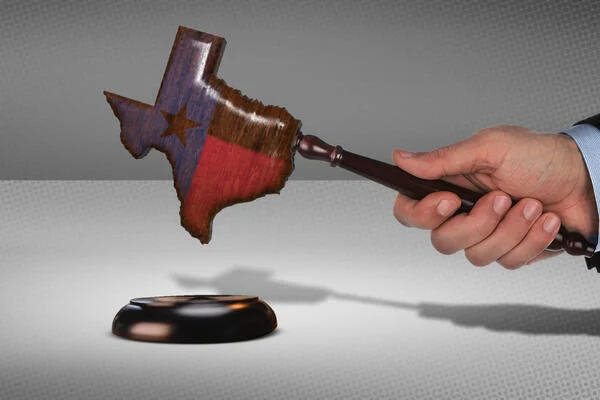
For the first time in 43 years, lawyers who want to practice in Texas will no longer be required to hold a degree from a law school accredited by the American Bar Association, the Texas Supreme Court decided last week.
While the ABA is “continuing to work with the Texas Supreme Court—and all other state supreme courts and bar admitting authorities—to help preserve the portability of law school degrees throughout the country,” the policy “reinforces the authority that the Supreme Court of Texas has always had over the licensure of JD graduates,” Jenn Rosato Perea, managing director of the ABA’s accrediting arm, wrote in an email to Inside Higher Ed.
Since 1983, Texas has ceded some of that authority to the ABA, whose Section of Legal Education and Admissions to the Bar accredits the majority of law schools in the United States. Most other states have similar ABA oversight in place; it became a popular move in the 1980s because law was becoming increasingly national business. Widespread adoption of ABA accreditation as a licensure standard offered more uniformity and has made it easier for lawyers to practice in multiple states.
The new Texas policy comes amid the broader crackdown on higher education accreditors by the Trump administration and its allies, and specifically on the ABA, which has become a target of the Republican-led anti-DEI crusade in recent years. Indeed, the ABA suspended its diversity, equity and inclusion standards last year. Now Texas has become the first state to say it will no longer rely on the accreditor to help to set law licensure standards.
“[The Court] intends to provide stability, certainty, and flexibility to currently approved law schools by guaranteeing ongoing approval to schools that satisfy a set of simple, objective, and ideologically neutral criteria (such as bar exam passage rate) using metrics no more onerous than those currently required by the ABA,” read a Jan. 6 order signed by all nine justices of the Texas Supreme Court. “[It] does not intend to impose additional accreditation, compliance, or administrative burdens on currently approved law schools.”
While the policy likely won’t change much in the short term, critics say it invites the creation of alternative law school accreditors, which could make it harder for lawyers to move their practice across state lines.
Republican-controlled Florida, Ohio and Tennessee are weighing similar measures.
“This could be the beginning of the end of the ABA as the accreditor of choice for law schools nationally,” Peter Lake, a law professor at Stetson College of Law’s Center for Excellence in Higher Education Law and Policy, told Inside Higher Ed. “It’s a little too early to call the game, but this is a significant step toward a goal the Trump administration and many states want to see happen.”
Part of that goal involves asserting more control over higher education accreditors.
In April, Trump issued an executive order directing the Department of Education to suspend or terminate the federal recognition of accreditors found “to engage in unlawful discrimination in accreditation-related activity under the guise of ‘diversity, equity, and inclusion’ initiatives.” It specifically called for an investigation of the ABA and the Liaison Committee on Medical Education, which accredits medical schools. In June, six states—Florida, Georgia, North Carolina, South Carolina, Tennessee and Texas—announced the launch of a new regional accreditor, the Commission for Public Higher Education; at the time, Florida governor Ron DeSantis described it as part of an effort to root out “woke ideology” in higher education and break up the “accreditation cartel.”
The federal government made adjacent arguments in supporting the Texas Supreme Court’s plan to minimize the ABA’s oversight of legal education, also announced last April. In December, the Federal Trade Commission submitted a public comment letter in support of the policy, accusing the ABA of having a “monopoly on the accreditation of American law schools” and of imposing “rigid and costly requirements” mandating “every law school follow an expensive, elitist model of legal education.”
Texas Open to ABA Alternative
While the Texas court stopped short of establishing a new law school accreditor, it acknowledged that it might in the future consider “returning to greater reliance on a multistate accrediting entity other than the ABA should a suitable entity become available,” according to the final version of the policy.
Lake said that could happen eventually, especially if other states decide to follow Texas and ditch the ABA’s oversight. “This is an open invitation to form a [new law school–accrediting] organization,” he said. “And I suspect that whatever group forms will probably be a little more aligned with the Trump administration’s goals and ideas.”
Educators and experts believe such a move will only impede the goals of legal education and practice.
“ABA accreditation provides a nationally recognized framework for quality assurance and transparency; portability of licensure through recognition of ABA accreditation by all 50 states, which is critical for graduates’ career flexibility; consumer protections and public accountability through disclosure standards; and a baseline of educational quality that correlates with higher bar passage rates and better employment outcomes,” the deans of eight of the state’s 10 ABA-accredited law schools wrote in a letter to the Texas Supreme Court in June.
The dean of South Texas College of Law Houston was among those that objected to minimizing the ABA’s oversight of law licenses in the state.
JHVEPhoto/iStock/Getty Images
A degree from an ABA-accredited law school is generally required to pursue a career as a lawyer, said Oren R. Griffin, a law professor at the University of Tulsa College of Law.
“ABA accreditation is a national stamp of approval,” he said. “Law schools may differ on what they prioritize, such as curriculum or clinics they offer, but the standards have identified some basic requirements that allow all law schools to operate at an efficient, effective level.”
And even if a state says it will license lawyers who didn’t graduate from an ABA-accredited law school, graduates from such institutions may still face limited opportunities.
“Law schools have been very well served by these standards,“ Griffin said. “If other states were to follow suit and begin to not require ABA accreditation as a national standard, you could end up with some real disparities or differences among the 50 states, which could increase the complexities for students who are graduating and want to be able to practice in multiple states.”
Regardless of the Texas Supreme Court’s new policy, law schools won’t likely abandon ABA accreditation anytime soon, said Austen L. Parrish, dean of the University of California, Irvine, School of Law and president of the Association of American Law Schools.
“For example, a school like the University of Texas—where about 40 percent of students come from out of state and some 30 percent of graduates are placed out of state—cannot afford to not be ABA accredited. And I suspect that’s true for all of the ABA-accredited schools,” he said, adding that any school that eventually gives up ABA accreditation would be charting “a very dangerous path.”
Students who are not held to the ABA’s national accreditation standards are less likely to receive a quality legal education, Parrish said—a result long demonstrated by the poor outcomes at California’s handful of non-ABA-accredited law schools, which have high attrition and low bar-passage rates, he added.
“The unraveling of the national accreditation system would be really harmful to students and law schools,” Parrish said. “We’re in a world where schools need to recruit from all over and students end up practicing all over. To have a school that doesn’t do that makes them less attractive to students and more likely to create some of the problems at some of the unaccredited schools in California.”
And even if Texas and other states do band together to form their own law school accreditor, rivaling the ABA’s influence would be a challenge.
First, “it’s very difficult to set up an accrediting body and takes quite a bit of money,” Parrish said. “They could set up a regional accreditor, but it’s not necessarily clear who will see that as sufficient for licensing eligibility, which means the schools in those states will still have to go with ABA accreditation … I’m skeptical that more progressive states are going to buy into something that’s blatantly political.”
For now, he interprets the Texas order as a placeholder.
“There probably won’t be many changes right now,” he said, “other than keeping the pressure on the ABA, because [Texas] has signaled a willingness to move to a different approach, though it’s not clear what that is right now.”
The Federal Trade Commission accused the American Bar Association of having a “monopoly on the accreditation of American law schools” in a letter to the Texas Supreme Court at a time when the state is considering minimizing the ABA’s oversight of legal education.
In April, the Texas Supreme Court announced it was looking intoeliminating ABA requirements for licensure. Justices wrote in a tentative opinion in the fall that the ABA “should no longer have the final say on whether a law school’s graduates are eligible to sit for the Texas bar exam and become licensed to practice law.” It also invited the public to comment on a proposal to potentially undercut the ABA as an accreditor for Texas law schools.
FTC officials Clarke Edwards and Daniel Guarnera signaled support for potentially moving away from ABA accreditation in a nine-page letter submitted to the Texas Supreme Court on Monday. In addition toclaiming the ABA was a monopoly, they argued it had “rigid and costly requirements” and that it mandates “every law school follow an expensive, elitist model of legal education.”
The two FTC officials also accused the ABA of driving up the costs of law school.
“The ABA’s standards for accreditation appear to go far beyond what is reasonably necessary to assure adequate preparation for the practice of law in Texas, increasing the cost of a legal education. The current rule therefore likely causes Texas to forgo admitting many potentially qualified lawyers who could provide needed legal services to the Texas public,” they wrote.
Monday’s letter reflects rhetoric from President Donald Trump and his allies who have taken aim at accreditors in recent years. Trump blasted the ABA in an April executive order, accusingit of discrimination for its diversity, equity and inclusion standards. (The ABA suspended DEI standards for accreditation in February, before the executive order.)
The ABA did not respond to a request for comment from Inside Higher Ed.
A group of Texas law school deans is urging the state Supreme Court to uphold American Bar Association accreditation standards for public law schools. The state’s highest court announced in April that it was considering dropping the ABA requirement for licensure, opening a public comment period on the matter that closed July 1.
“We strongly support continued reliance on ABA accreditation for Texas law schools and licensure eligibility,” the deans of eight of the state’s 10 ABA-accredited law schools wrote in a letter to the Texas Supreme Court. “ABA accreditation provides a nationally recognized framework for quality assurance and transparency; portability of licensure through recognition of ABA accreditation by all 50 states, which is critical for graduates’ career flexibility; consumer protections and public accountability through disclosure standards; and a baseline of educational quality that correlates with higher bar passage rates and better employment outcomes.”
Though the Texas justices did not say why they were reviewing ABA accreditation, the law deans’ letter noted that the body has already suspended its DEI standards—a move it announced in February and then extended in May through Aug. 31, 2026. That means “the language of the Standard can be revised in accordance with federal constitutional law and Texas state law that bar certain diversity, equity and inclusion practices at state universities,” the deans wrote.
Of the state’s ABA-accredited law schools’ deans, only Robert Chesney of the University of Texas and Robert Ahdieh of Texas A&M didn’t sign the letter, Reuters reported.
In his own nine-page letter to the state Supreme Court, Chesney urged the justices to look at “alternative” pathways for ensuring law school standards “to help pave the way for innovative, lower-cost approaches to legal education.”
Ahdieh told Reuters that whatever the court decides about ABA accreditation, it’s “critical” that law degrees earned in Texas remain portable.
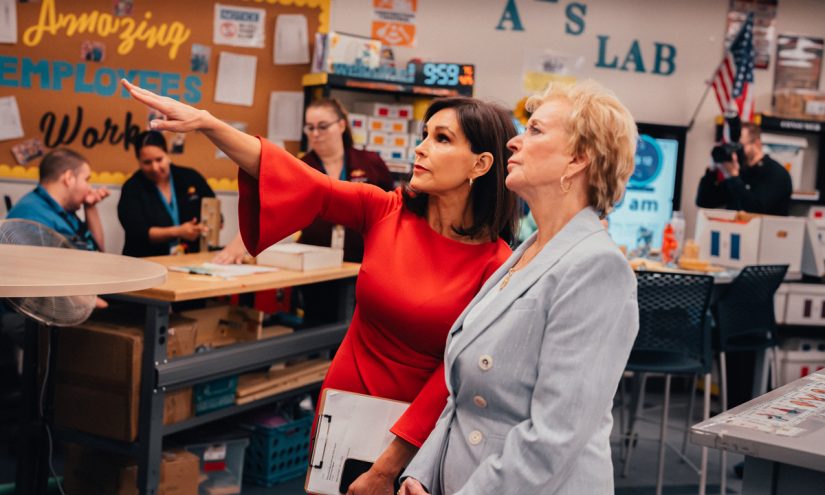
The founder and executive director of a network of Arizona charter schools serving autistic children has been named the U.S. Education Department’s deputy assistant secretary for special education and rehabilitative services. Education Secretary Linda McMahon made the announcement while touring the Arizona Autism Charter Schools’ Phoenix location.
Diana Diaz-Harrison, whose son is autistic, said that in her new job she hopes to continue her efforts to help others launch autism charter schools throughout the country. Her schools, she said in remarks captured on video by AZ Central, are a testament to what happens “when parents like me are empowered to create solutions.”
“My vision is to expand school choice for special needs families — whether through charter schools, private options, voucher programs, or other parent-empowered models,” she said in a statement to The 74. .
The five-school network uses a controversial intervention that attempts to train children to appear and behave like their neurotypical peers. Created by the researcher behind LGBTQ conversion therapy, applied behavior analysis, or ABA, is widely depicted as the gold standard despite scant independent evidence of its effectiveness and mounting research documenting its harms.
Diaz-Harrison opened the network’s first school in 2014 as a free, public alternative to private schools for autistic children, which are popular in Arizona but typically charge tens of thousands of dollars a year in tuition. Her Arizona charter schools are a 501(c)3 nonprofit financed by state and federal per-pupil funds. ABA is specifically endorsed by Arizona education officials as a strategy to use with autistic students.
In the time since those charters opened, ABA has grown to be a national, multi-billion-dollar industry, with for-profit companies tapping public and private insurance to pay for as much as 40 hours a week of one-on-one therapy. The intervention uses repeated, rapid-fire commands that bring rewards and punishments to change a child’s behavior and communication style.
A 74 investigation last year showed that most data supporting ABA’s effectiveness is drawn from research conducted by industry practitioners. Independent analyses, including a years-long U.S. Department of Defense review, found little evidence the intervention works. Former patients who underwent the therapy as children reported severe, lasting mental health effects, including PTSD.
Diaz-Harrison told The 74 the therapy is both valuable and sought-after. “For the autism community, specifically, many families seek schools that integrate positive behavioral strategies,” she says. “The evidence supporting behavioral therapy is extensive and well-established. It has been endorsed by the U.S. surgeon general and the American Academy of Pediatrics as an effective, research-backed approach for individuals with autism.”
During her visit, McMahon told students and staff she was eager to tell President Donald Trump about the schools. “He doesn’t believe any child, whether they have neuro-difficulties or any other problems, should be trapped in a school and not have the facilities that they need,” she said.
Since Trump’s second inauguration, he has issued numerous orders that have alarmed disability advocates and the autistic community. Though both edicts contradict longstanding federal laws, in March he ordered the closure of the Education Department and said responsibility for special education will be transferred to the U.S. Department of Health and Human Services.
About half of the Education Department’s staff has been fired, including most of the people responsible for investigating what had been a backlog of some 6,000 disability discrimination complaints. Though it’s unclear whether Trump and McMahon may legally disregard special education funding laws and allow states to spend federal dollars as they see fit, both have said they favor giving local officials as much decision-making power as possible.
Meanwhile, HHS Secretary Robert F. Kennedy Jr. has stoked fear in the autistic community by announcing a new effort to tie autism to vaccines or other “environmental toxins” — a hypothesis discredited by dozens of studies. The man he appointed to head the study has been cited for practicing medicine without a license and prescribing dangerous drugs to autistic children.
Last week, the new head of the National Institutes of Health announced that an unprecedented compilation of medical, pharmaceutical and insurance records would be used to create an autism “disease registry” — a kind of list historically used to sterilize, institutionalize and even “euthanize” autistic people. HHS later walked back the statement, saying the database under construction would have privacy guardrails.
Among other responsibilities, the offices Diaz-Harrison will head identify strategies for improving instruction for children with disabilities and ensure that as they grow up, they are able to be as independent as possible. The disability community has raised concerns that the administration is retreating from these goals.
Advocates have said they fear the changes pave the way for a return to the practice of separating students with disabilities in dedicated special ed classrooms rather than having them attend class with typically developing peers. The Individuals with Disabilities in Education Act guarantees special education students the right to instruction in the “least restrictive environment” possible.
Families’ preferences vary widely, with some parents of autistic children refusing any form of behavior therapy, while others want their kids in settings with children who share their needs. Many insist on grade-level instruction in general education classrooms
Diaz-Harrison has a master’s degree in education and worked as a bilingual teacher in California early in her career. From the late 1990s until she began supporting her son full time, she worked as a public relations strategist and a reporter and anchor for the Spanish-language broadcast network Univision.
In 2014, frustrated with her son’s school options, she organized a group of parents and ABA providers who applied for permission to open what was then a single K-5 school serving 90 children. The network now has about 1,000 students in all grades and features an online program.
At the end of the 2023-24 academic year, 9% of the network’s students scored proficient or highly proficient on Arizona’s annual reading exam, while 4% passed the math assessments.
In December 2022, the network won a $1 million Yass Prize, an award created by Jeff and Janine Yass. The billionaire investors have a long track record of donating to Republican political candidates and organizations that support school choice.
One of the award’s creators, Jeanne Allen, is CEO of the Center for Education Reform. The center nominated Diaz-Harrison for the federal role.
Yass award winners were featured at the 2023 meeting of the American Legislative Exchange Council, or ALEC, a conservative forum where state lawmakers are given model bills on education and other policies to introduce in their respective statehouses.
Diaz-Harrison has partnered with a Florida autism school to create a national charter school accelerator program to help people start schools like hers throughout the country. She told The 74 the effort has so far supported teams of hopeful school founders from Louisiana, Texas, Florida, Alabama and Nevada.
Parents of young autistic children and autistic adults often disagree about ABA. Told by their pediatrician or the person who diagnosed their child as autistic that they have a narrow window in which to intervene, families fight to get the therapy. Adults who have experienced it, however, report lasting trauma and have lobbied for research — much of it now at risk of being defunded by Kennedy — into more effective and humane alternatives.
This week on the podcast we discuss new research on student regret, as a report from the University of Bristol reveals that while two-thirds of current undergraduates are happy with their choice of degree, it drops to less than half among recent graduates. Are improved advice and guidance really the answer?
Plus we look at the collapse of the Advanced Business Academy (ABA) and its aftermath, as an Office for Students (OfS) investigation uncovers serious concerns about student placements and course delivery. And we examine new research on widening participation “cold spots” and the stark disparities in teachers’ expectations for students based on geography and school ratings.
With Mary Curnock Cook, non-executive in education and edtech, Pete Quinn, inclusion consultant, Mack Marshall, Community and Policy Officer at Wonkhe and presented by Jim Dickinson, Associate Editor at Wonkhe.
The American Bar Association is suspending diversity, equity, and inclusion standards for the law schools it accredits amid President Donald Trump’s crackdown on DEI efforts, Reuters reported.
An ABA council reportedly voted on the change Friday, suspending DEI standards through August as the organization—which accredits nearly 200 law schools—considers permanent changes.
ABA officials did not respond to a request for comment from Inside Higher Ed.
The change comes as the ABA has clashed with the Trump administration in recent weeks, accusing the president of “wide-scale affronts to the rule of law itself” in issuing rapid-fire executive orders that have targeted DEI and birthright citizenship, and sought to shrink the federal government through mass firings and other actions that some legal scholars have deemed unlawful.
In the aftermath, the Trump administration barred political appointees to the Federal Trade Commission from holding ABA leadership posts, participating in ABA events, or renewing their memberships. FTC Chairman Andrew Ferguson accused the ABA of a “long history of leftist advocacy” and said “recent attacks” on the administration made the relationship “untenable.”
State officials have also pressured ABA to drop its DEI standards. In January a group of 21 attorneys general, all from red states, sent a letter to the ABA urging it to drop DEI standards.
The ABA has reportedly been reviewing its standards on DEI since 2023, when the U.S. Supreme Court upended affirmative action with its ruling in favor of Students for Fair Admissions against Harvard and the University of North Carolina at Chapel Hill.
Some Republican officials have celebrated the ABA’s move. “This is a victory for common sense! We are bringing meritocracy back to the legal system,” U.S. Attorney General Pam Bondi wrote on X.