Tag: academic

  • University of Wisconsin academic freedom panel back on after effort to disinvite speaker

    University of Wisconsin academic freedom panel back on after effort to disinvite speaker

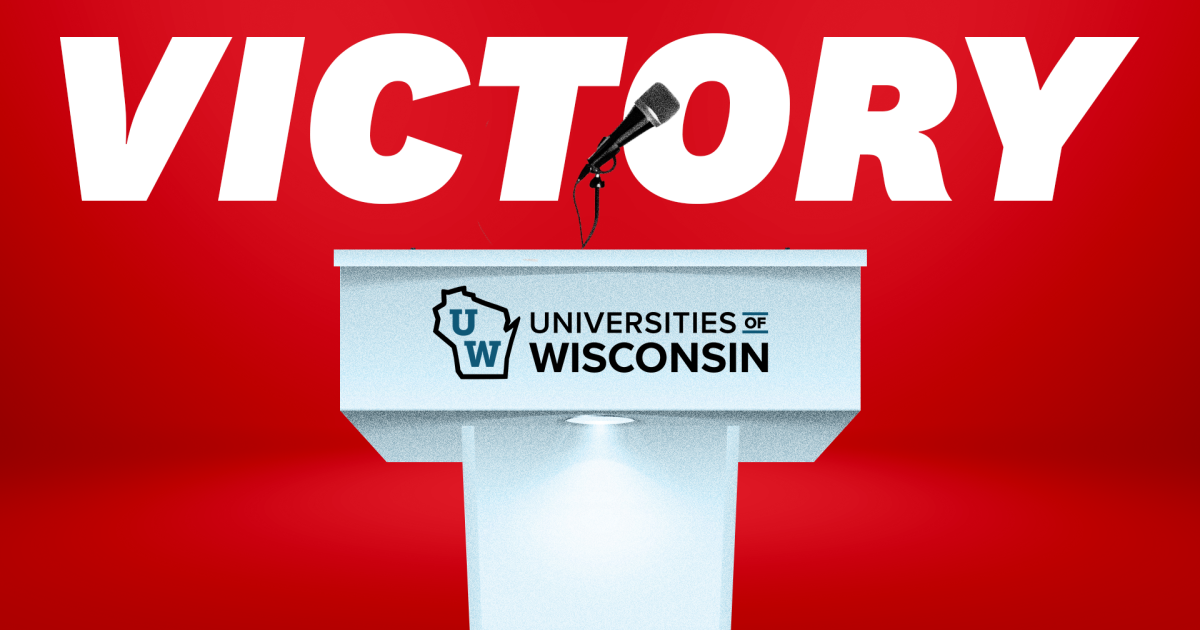
    Disinviting a professor from a panel on academic freedom for exercising her academic freedom is, to put it mildly, a bad look. That’s why FIRE is glad to report the Universities of Wisconsin system backed off such an ill-advised course of action. 

    The Wisconsin Institute for Citizenship and Civil Dialogue will host a discussion on academic freedom at a faculty retreat next month with UW-Milwaukee professor Rachel Buff, the former head of the UW-Milwaukee chapter of the American Association of University Professors, and FIRE’s Director of Campus Rights Advocacy Lindsie Rank. 

    But last week, UW officials privately demanded that Buff be disinvited. Their reason? Buff’s criticisms of Israel and advocacy for the Palestinian cause, as well as her involvement in the encampment protest on campus last May. 

    On Friday, FIRE wrote UW system President Jay O. Rothman to demand that the UW system reverse its decision. As we told the university: 

    While the University of Wisconsin system does exercise some authority over WICCD’s activities, it should wield that authority in ways that maximize the atmosphere for academic freedom for its faculty and may not do so in ways that compromise that freedom. By demanding Buff’s disinvitation because of her political speech, UW sends a deeply chilling message to WICCD’s leadership and to UW faculty as a whole.

    On Monday, UW responded by affirming its commitment to academic freedom and confirming that the retreat will proceed as originally planned, clearing the way for Buff to speak at the panel. 

    “It is appropriate to review an individual’s adherence to both the First Amendment and time, place and manner restrictions when determining who to contract and pay to speak at a private professional development conference,” wrote UW Vice President for University Relations Chris Patton. “It was this type of review that I requested be performed.”

    WICCD is a subunit of the Universities of Wisconsin system intended to promote viewpoint diversity, free inquiry, and academic freedom, both within UW schools and society at large. In its public releases, UW has crowed that WICCD “seeks to enhance democracy through civil dialogue in a robust marketplace of ideas.”

    We give the system credit for backing off and getting its priorities straight, allowing WICCD to fulfill its commendable mission. 

    Source link

  • How Being a Mother and Academic Helped Me Fix Higher Education’s Transfer Crisis

    How Being a Mother and Academic Helped Me Fix Higher Education’s Transfer Crisis

    Dr. Alicia M. AlveroWhen my daughter transferred to Queens College in Spring 2019, I could not have been more excited. As associate provost at the college, I’ll admit I was biased but even two decades of experience in higher education couldn’t fully prepare me for her struggle to transfer credits. 

    Queens College is one of The City University of New York’s 25 colleges. My daughter transferred from another school within the system yet despite mastering course material, she was told to take what was basically the same course all over again. 

    Fortunately, I understood the appeals process and was able to point her in the right direction. As a result, she obtained credit for the course, which counted toward her major. At the same time, reality struck: A student should not need to have an associate provost as a parent to transfer college credits. Frankly, they shouldn’t even need to appeal credits within the same system. 

    Nationally, the transfer system has been set up to let students fail for decades. On average, students lose a fifth of their credits when transferring to a four-year college, according to the U.S. Government Accountability Office. This leads to wasted tuition dollars and makes it more challenging to earn a bachelor’s degree. A 2023 report by the Community College Research Center found that only 16% of community college students earned a bachelor’s program within six years and just 10% of low-income students did

    As the largest public urban university system in the nation, CUNY had a real opportunity to make a change. In 2023, CUNY’s Board of Trustees charged the University’s leadership – including myself – to fix the transfer system. 

    CUNY has long been dedicated to eliminating the obstacles that result when a student transfers. In fact, the expectation that CUNY should provide a seamless ability to transfer between its constituent colleges dates to its formation as a centralized system in the 1960s. 

    Enshrined in New York state education law is the mandate for CUNY to “maintain its close articulation between senior and community college units.” Each year, up to 15,000 CUNY students – like my daughter – transfer between campuses, most commonly from a community college to a four-year college. 

    The purpose of an integrated university system is to offer an array of options for students which transfer seamlessly across all colleges. And over the years there have been efforts to achieve that at CUNY.  

    In 2013, the University implemented the Pathways initiative which established the seamless transfer of general education courses across its undergraduate colleges.  There are also many individual articulation agreements between colleges. But such agreements, between a singular CUNY community college’s program and a corresponding bachelor’s level program at another college, could only go so far in addressing a systemic problem and sometimes result in credits transferring as blanket elective, which does not help a student make progress in their major. Truly universal transferability would require faculty buy-in and better digital tools. 

    And so, one of the first things I knew I needed to do was engage our University Faculty Senate, both out of respect for their role in our decision-making process as part of shared governance and to leverage their expertise. This would come to be one of the most important steps in making this effort successful. 

    As we engaged faculty in discussions about transfer, we shifted the focus from simply identifying equivalent courses to defining the essential competencies students must master in the first half of their major. Faculty across institutions readily reached consensus on the core knowledge and skills students needed to succeed in the second half of their program.

    This competency-based approach then led to productive conversations about how specific courses developed these critical skills. Initially, the goal was to group courses into equivalent “blocks,” ensuring students could transfer seamlessly. In some cases, this process led faculty to align their individual courses more closely; others maintained course groupings but ensured consistency across institutions. Both approaches resulted in universal transfer pathways, guaranteeing students full credit toward their major at any receiving college. 

    At the same time, faculty helped us navigate practical roadblocks. For instance, we recognized that a universal approach could not always apply to programs leading to licensing exams— such as the CPA exam— where external accrediting bodies impose strict curricular requirements. While this nuance was clear to accounting faculty, it underscored for others the importance of discipline-specific constraints in shaping transfer policy. 

    Ultimately, this collaborative process ensured that transfer credit advances students’ progress toward degree completion rather than being lost as elective credit. Through collaboration, more than 300 courses, or blocks of courses, are now universally equivalent to each other across all colleges. 

    Starting in fall 2025, for over 75% of students transferring anywhere within the system, they will carry over most credits in their major. The University tackled the six most common transfer majors first – accounting, computer science, biology, math, psychology and sociology – ensuring credits transfer retroactively. We will work to align 100% of majors next. 

    The new system creates consistency on what students across CUNY campuses need to learn in the first half of their major and is expected to save students an average of $1,220 in wasted credits. 

    The CUNY Transfer Initiative extends beyond curricular alignment; it also involves evaluating the tools, policies, and practices that affect transfer student success. By reviewing policies, we identified gaps where new policies were needed and determined where existing policies required adjustments to better achieve their intended outcomes. We enhanced the CUNY Transfer Explorer (T-Rex), a tool that shows students how their credits transfer across the system, by adding leaderboards with key transfer metrics for each college and a feature that estimates how much of a degree would be completed at any CUNY school. 

    On January 21, the University automated a critical process in its student information system, known as CUNYfirst, ensuring admitted transfer students can immediately see how their credits apply at their new college. Previously, this was a manual, campus-specific process that required student advocacy and often caused delays. On its first day, the automation benefited 18,850 students, reducing stress and supporting informed academic decisions. 

    Fixing the transfer crisis will take continued effort. 

    To make sure that this system does not break again, we will be working with faculty to  adjust how we develop the curriculum for new courses. This means we will now proactively consider how a potential new course will transfer across the CUNY system before it even exists. As the initiative grows, we will have 100% of credits in the first half of a major count towards a degree when students transfer from one of CUNY’s associate programs to the same major in a CUNY bachelor’s degree program.

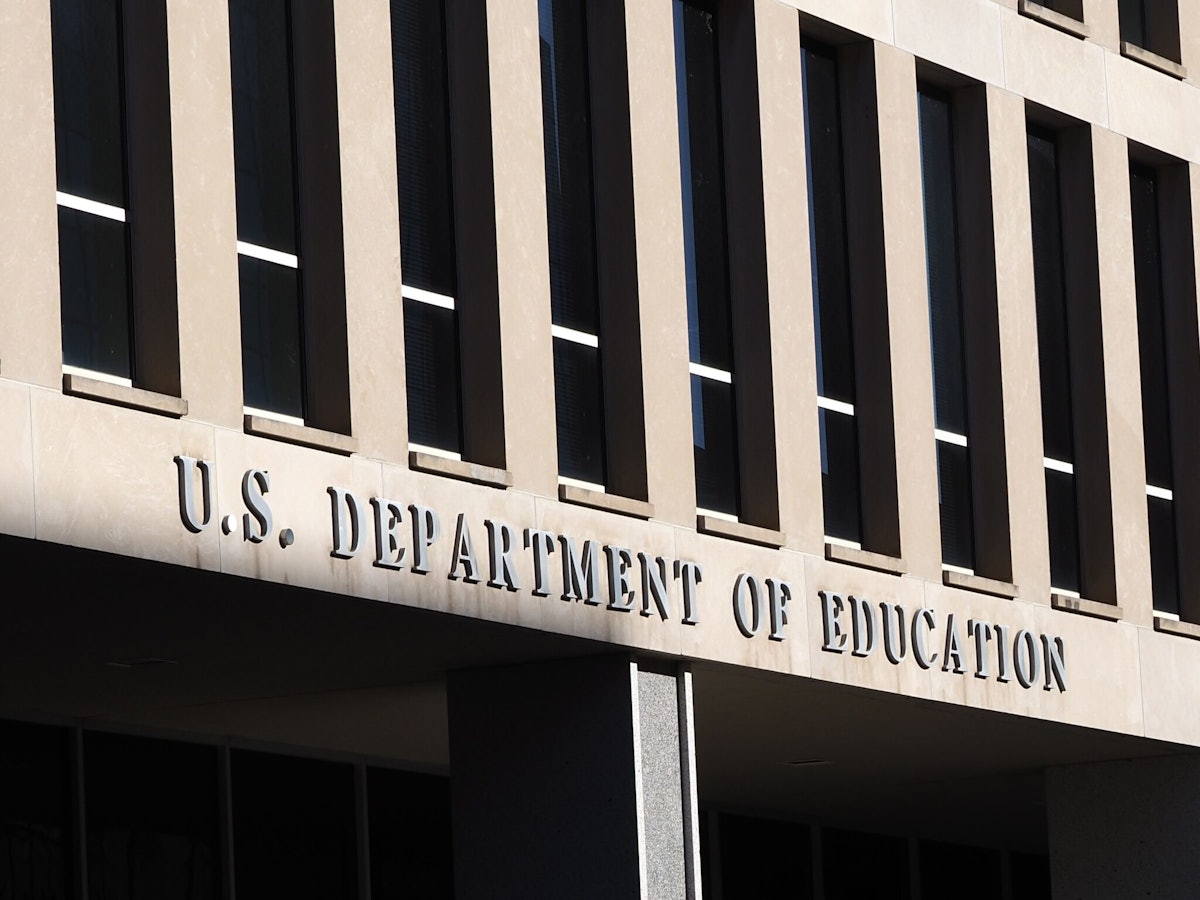
    The conversation is also continuing across the country. In 2023, the United States Department of Education hosted a summit of 200 higher education leaders on improving the transfer process. Then-U.S. Secretary of Education Dr. Miguel Cardona acknowledged that the current state of the college transfer system is broken, saying that it, “stacks the deck against community college students who aspire to earn four-year degrees.” 

    As part of my research when starting this effort, I reached out to my colleagues from colleges across the country to see what I could learn about what may work in improving outcomes for our transfer students. The collective response? “If you find a solution, please let us know.” 

    Everyone sees that the current state of our higher education system does a great disservice to students who transfer, presenting logistical and financial challenges that derail students who are otherwise dedicated to enhancing their education. While there is still work to be done, I am proud to say that we’ve truly begun to dismantle those barriers in an effort that I hope other public institutions of higher education will take inspiration from. 

    Dr. Alicia M. Alvero is the interim executive vice chancellor and university provost at The City University of New York. A professor of organizational behavior management for nearly two decades at CUNY’s Queens College, she also served as the college’s associate provost for academic and faculty affairs.   

    Source link

  • Yes, Academic Job Loss Really Is Different (opinion)

    Yes, Academic Job Loss Really Is Different (opinion)

    If you’ve been watching the rolling thunderstorm of executive orders affecting higher education and thinking, simultaneously, “what a loss to the world” and “what a loss for those scholars” … you are right.

    It is a massive and increasingly uncorrectable loss to the world that life-enriching and life-saving research is being stopped in its tracks. We will now not know things that we might have otherwise learned, and we will not think thoughts that might have otherwise given us joy or revelation. These consequences are now unavoidable.

    But societal impacts are not the only consequences to consider. The loss of knowledge that is being widely grieved right now goes hand in hand with immediate or forthcoming loss of livelihood for individual scholars. And even though academics have become adept at mourning these individual losses—we write mike-drop essays, lobby our professional associations and contribute to GoFundMe accounts—we have generally limited ourselves to catharsis and critique.

    Our current moment calls for more. What we are now experiencing in American higher education and what we will continue to experience for the foreseeable future is a generational loss. We need to understand why it is this kind of loss. We need to be able to explain this to others in ways that do not trigger fresh complaints about ivory tower academics. And we need to grasp the nature of the obligation on those of us left behind.

    Put simply, we need to acknowledge, contextualize and equip. With apologies to Erin Bartram for repurposing her excellent title—without any of the irony—we have to sublimate the grief of the left behind.

    Academic Job Loss Is Different

    Industries change, businesses close and employers lay off existing employees or fail to hire new ones. While this is never easy, people find new jobs all the time. Why can’t a tenured professor or a recent hire or an eager postdoc do likewise? Why isn’t this just another instance of scholars being snowflakes?

    Here are just three reasons why job loss is especially fraught for academics. There are more than three reasons, of course—and I discuss many in my forthcoming book, The War on Tenure. But these three are a good place to start.

    Institutionalized Employment

    To begin with, academia is a highly institutionalized industry.

    What does that mean? It means that if you want to be a professor, you need to find one specific type of employer—a university—that will hire you to be that. Sure, without a university employer, you can still be a scholar, a public intellectual, a researcher, a writer or a teacher. Often you can be two or more of these simultaneously. But you cannot be a professor if you are not employed by a university.

    Many of academia’s peer professions are not institutionalized to the same degree. You can be a lawyer, an accountant, an architect or a psychologist—you can even practice many types of medicine—all without being hired by specific types of employers. You can, for example, practice the very specific type of law that I teach, employment law, as a solo practitioner, or in a law firm that’s small, medium or large, or as part of a company’s in-house counsel, or for the government (in which case you are exceptionally busy right now). You are not limited to one type of employer if you want to practice employment law. In other fields—like human resources, information technology, sales or communications—you not only can work for different types of employers, you probably should do so to become a well-rounded practitioner.

    But there is only one way to be a professor: get hired (and stay employed) by a university.

    Because of this institutionalization, when universities stop hiring, as they are increasingly doing in response to federally induced chaos, it isn’t simply that a difficult job market has become harder: It’s that a difficult job market is ceasing to exist altogether. That’s the first reason why academic job loss—and specifically academic opportunity loss—really is different.

    Quasi Monopsony

    The institutionalized nature of academic employment makes the academic labor market difficult. But that bad situation is made worse by the fact that the academic market consists of a few geographically dispersed employers seeking highly specialized employees. This makes academia a quasi monopsony.

    As of 2020, according to U.S. News, there were around 1,400 accredited nonprofit institutions offering four-year degrees and serving at least 200 students each. That may sound like a wealth of job opportunities for aspiring professors. But having just half a dozen potential employers within driving distance of one another is considered an exceptionally dense job market in academia. In other industries—again, say, law—the same market would be considered exceptionally shallow. (Try comparing the number of law schools in Atlanta, where I currently live, with the number of law firms and companies that maintain in-house counsel.)

    Thanks to this shallow, thin and quasi-monopsonistic job market, aspiring professors know that whenever a job does arise, you go where it takes you and whether or not it suits you and your family. Or, particularly if you’re a heterosexual woman, maybe you just forgo having family at all.

    (The same job market picture gets worse still when you remember that universities don’t just hire professors or even law professors: They hire, for instance, labor and employment law professors or intellectual property law professors … and they usually only need one or two of each. And that job market keeps getting worse when you factor in the adjunctification that has characterized academia for decades, and that I’m largely bypassing in this essay. Forget driving distance: In many subfields, job candidates are lucky if there are half a dozen jobs available nationwide in a given year.)

    Given all these difficult market dynamics, what happens when a job that you already have disappears? What happens when four years into a tenure-track position—or 20 years after tenure—your lab or your department is forced to close?

    Well, if you’ve committed to a labor market characterized by “a few geographically dispersed employers seeking highly specialized employees,” either you find a comparable employer within your existing geographic market, or you relocate to a new geographic market, or—if neither of these options is available to you—you exit the industry altogether.

    This is a second reason why academic job loss is different. Although I can’t offer statistical evidence of this given the lack of prior data collection (and the unlikelihood of future data collection), the scholarship strongly suggests that institutional exits are likely to coincide with industry exits because academic workers often have no other choice.

    Autodepreciation

    In the influential essay whose title I’ve borrowed, Erin Bertram notes that we avoid grappling with the loss of colleagues who have been forced out of academia by “reminding the departing scholar about all the amazing skills they have.” We tell the departing scholar, “You can use those skills in finance! Insurance! Nonprofits! All sorts of regular jobs that your concerned parents will recognize!” But as Bartram and other commentators observe, you could probably have won those jobs just as easily without the Ph.D. at all.

    What even these critics often overlook is that you could actually have won many of those jobs more easily without the Ph.D.

    I’m not talking about the mountain of debt and the lost decade or so of earning capacity that come with many Ph.D.s. I’m not even talking about the way in which academic training leaves you with valuable but fairly generic skills (“critical reading”) as well as specific skills that won’t help you in the general labor market (e.g., assembling a syllabus that students find interesting, that strikes the right balance between challenging and feasible assignments, and that accounts for institutional resources, for different learning styles and for applicable accommodations, all without relying on an overly pricey set of books). These things matter, but they are still only some of the ways in which competing to enter and succeed in academia harms the people who do it.

    Instead, what I’m referring to here is a phenomenon that many commentators implicitly understand but few explicitly articulate: Academic training, expectations and norms force you to unlearn or forgo skills you might have otherwise had that could have served you well in the general labor market. Put differently, academic training forces you to engage in a kind of autodepreciation.

    In my book, I use the example of Judith Butler’s famously critiqued and parodied writing to illustrate this. Butler’s writing is notoriously difficult—characterizing it as such is probably one of the few things their supporters and critics can agree on—but it’s just an extreme example of how scholars are often required to write and speak in ways that won’t serve them well outside academia. Phrases like “Althusserian theory” and “homologous ways,” both taken from Butler’s award-winning “bad sentence,” can be efficient shorthand for people who must contribute to complex debates that have evolved over decades or centuries. It’s not always possible to communicate complicated ideas via relatively short sentences written in the standard American English that I’m using right now. I certainly don’t write this way when I’m discussing worker classification doctrine or theories of democratic sovereignty.

    To stand a chance of succeeding in academia, you need to regularly use that type of expert vocabulary and complex sentence structure. You need to write in it to publish scholarship, you need to speak in it to present research and teach students, and this means you must also learn to think in it. But once you’ve had to think, speak and write using expert shorthand for decades—for up to nine years of graduate school, a year or three of postdoctoral fellowships, not to mention any time spent as a full-fledged professor—you will understandably struggle to sound … not like Judith Butler.

    What happens, then, if an acute financial shock prompts most universities to stop hiring new professors just as you’re finishing your degree? Or, supposing you’ve already scrambled into a full-time job, what if the same shock forces your department or program to be eliminated? Where does that leave you?

    Where it leaves you, in many fields, is holding a too-fancy degree, a handful of irrelevant publications, skills that are either widely possessed (critical reading) or overly specialized (syllabus writing), and a tendency to speak and write in ways that nonacademics find unappealing or confusing, or unappealing because they’re confusing. Where it leaves you, in other words, is having depreciated your own generally valuable skills in order to become competitive for the highly specialized job you tried to get—or actually got—but that no longer exists. This is a third reason why academic job loss really is different.

    Whither Now?

    What I’ve just said is not uplifting. There is no uplifting way to spin the individual effects of the current assault on higher education. My goal in discussing dynamics like institutionalized employment, quasi monopsony and auto-depreciation was not to set the stage for a happy ending: It was to provide an explanation and a language for the trauma of job loss in academia. It’s not just you. It really is different.

    But it’s not enough for us to understand and name these dynamics. If we believe that knowledge is power (and I’m assuming that if you are reading this article, you subscribe to that view on some level), then there must be some way to derive power from this knowledge. Here are a few possibilities.

    First, having understood the nature of this loss and some reasons why it is so profound, acknowledge both publicly. Explain the dynamics that make academic job loss different. Explain them to your uncle, your cousin, your neighbor, your college friend. Learn to say them partially, and therefore inadequately, instead of either keeping silent or holding forth in the grocery aisle. It’s true that many nonacademics do not understand why our industry is so difficult and so seemingly distinct from the industries that are familiar to them. But that’s at least partly because we do not explain things to nonacademics nearly as often as we explain—and decry—them to each other. Hand-wringing illuminates nothing and helps no one.

    Second, don’t be afraid to encourage early-career researchers to develop Plan B’s and Plan C’s (which they should already have, but that’s a different and well-trodden path). In fact, don’t be afraid to encourage them to pursue those alternative plans right now and even if it comes at some expense to their academic progress. Obviously, the A.B.D. who is one chapter away from finishing should probably finish that chapter given her sunk costs. But discuss with her whether she should postpone graduating until she can develop an alternative income stream.

    Third, when academic hiring thaws—whether that is six months from now or several years into the future—give serious consideration to candidates with CV gaps dating to this period, the person who worked in a retail job or in an industry research position for which she was grossly overqualified needed to buy food and pay rent. If she is still qualified for the position you are later lucky enough to offer, do plan to consider her for it—and do plan on indicating that you will do so in the job advertisement so that she knows to apply.

    And, fourth, don’t be afraid to ask colleagues who are forced out of academia whether they would like to stay involved somehow. Maybe they would like to work in journal operations (and maybe they would appreciate the small income this kind of work occasionally generates). Maybe they would like to participate in free virtual reading groups or brown-bag lunches. Maybe they would even like to join a mentorship circle, whether as mentor or mentee. Regardless of the nature of the opportunity, don’t be afraid to ask—and don’t take it personally if they decline. Bearing the discomfort of a curt no (or even a verbose one) is something those of us who are left behind can and should do.

    Job loss is difficult in all industries, but it is not equally difficult. For the most part, we can’t avoid or undo the job loss that is now unfolding in academia. But we can understand it, name it and explain it to our nonacademic friends and family so that they better understand our grief. And we can work to mitigate the effects of job loss and opportunity loss for our colleagues in whatever small ways are open to us. It is time for academics to hunker down and try to keep each other warm, because winter, as they say, is coming.

    Deepa Das Acevedo is a legal anthropologist and associate professor of law at Emory University. Her book, The War on Tenure, is forthcoming this fall from Cambridge University Press.

    Source link

  • Academic Publishers Braced for Slowdown as Trump DEI Purge Bites

    Academic Publishers Braced for Slowdown as Trump DEI Purge Bites

    Academic presses may face a slump in sales as U.S. university librarians become more cautious about buying books related to gender, politics or race in light of Donald Trump’s attack on “woke” research, publishers have warned.

    With the Trump administration seeking to slash what it calls “radical and wasteful” spending on government diversity, equity and inclusion programs, American science agencies have begun cancelling active research projects on transgender populations, gender identity, environmental justice and any studies seen to discriminate on race or ethnicity.

    Peer review panels have also been halted to ensure new grants align with “agency priorities,” with researchers urged to steer clear of diversity-linked language.

    There are now fears that U.S. university libraries might soon be targeted if they are seen to be buying new titles related to politically sensitive areas.

    Nicola Ramsey, director of Edinburgh University Press, told Times Higher Education that the DEI crackdown could significantly impact the global academic publishing industry.

    “If librarians are told they cannot purchase content that references topics on gender, race, sexuality or minorities, sales will be negatively affected due to the nature of our publishing,” said Ramsey who noted the U.S. academic library market is “key for most university presses and other academic publishers as it’s so large and [universities] traditionally have had much bigger budgets.”

    The “real commitment to bibliodiversity” among U.S. university libraries “especially among the Academic Research Libraries” underscored their importance to publishing, she added.

    “Those libraries which had sought to build big collections—with a real commitment to bibliodiversity—might soon have to make difficult decisions on what they can buy,” explained Ramsey.

    The Trump administration’s antipathy toward DEI initiatives was also likely to reduce research related to diversity that might lead to academic books on such subjects, she said.

    “Most academic publishers have been committed in recent years to diversifying our lists, both in terms of author base and research areas [but] this research has relied heavily on federal grant funding, which is being cut from areas connected to DEI initiatives.”

    Some university presses, such as Edinburgh, are still committed to publishing on diverse topics from a range of authors, added Ramsey. “This [crackdown] will not deter our editors from continuing to diversify in our publishing—it’s a fundamental commitment that can’t be swayed by one administration,” she said.

    That need to uphold diversity in publishing was echoed by Anthony Cond, president of the Association of University Presses and director of Liverpool University Press.

    “Many university presses have long histories of publishing on topics that could be construed as DEI. Recent policy announcements make that work more important, not less,” he said.

    “In a challenging higher education sector across several countries, including financial pressure on libraries, the university press focus on values-based publishing will remain an essential component for the bibliodiversity of scholarship.”

    Source link

  • UPDATE: Another federal appeals court backs academic free speech for public employees

    UPDATE: Another federal appeals court backs academic free speech for public employees

    The U.S. Court of Appeals for the Seventh Circuit just sided with free speech, joining five of its sister circuits in holding the First Amendment protects academic research, writing, and teaching at public colleges and universities. This carves out an important exception to the Supreme Court’s 2006 decision in Garcetti v. Ceballos holding that public employees’ speech pursuant to their official duties is not protected.

    This is a big deal. Just ask Jason Kilborn, a law professor at the University of Illinois Chicago suspended in late 2021 for using a redacted racial slur “n___” on a final exam question about employment discrimination. He also used the redacted term “b___” in the same question.

    UIC suspended Kilborn and launched an investigation into his (non-)use of the terms. That’s when FIRE stepped in — defending Kilborn, writing to UIC administrators, and securing him a lawyer through our Faculty Legal Defense Fund. With help from that lawyer, UIC briefly reached a resolution with Kilborn but it later reneged on that agreement and forced him to write reflection papers and participate in months-long training sessions before he could return to teaching.

    Kilborn sued, alleging administrators violated his constitutional right to academic freedom — and while the district court had dismissed the case, on Wednesday, the Chicago-based Seventh Circuit agreed the First Amendment protected Kilborn’s speech. That court rejected UIC’s “invitation to extend Garcetti to speech involving university teaching and scholarship when the Supreme Court was unwilling to do so,” and sent the case back to the district court. 

    With the rejection of that application of Garcetti, the district court will analyze this case using the balancing test from Pickering v. Board of Education, which directs courts to weigh “the interests of the [employee] in commenting upon matters of public concern” against “the interest of the state, as an employer, in promoting the efficiency of the public services it performs through its employees.” 

    This is now the sixth federal appeals court to establish this exception to Garcetti, extending academic freedom protections to public university faculty throughout Illinois, Indiana, and Wisconsin. FIRE is currently awaiting a decision from the Atlanta-based Eleventh Circuit, where we’ve asked that court to do the same with respect to the Garcetti exception. Stay tuned for more as we continue to press and follow this issue closely. 

    Source link

  • One Million Behind Bars Now Have Access to Academic Research Through JSTOR

    One Million Behind Bars Now Have Access to Academic Research Through JSTOR

    In a significant development for educational access in correctional facilities, the JSTOR Access in Prison (JAIP) program has reached a remarkable milestone, now serving over one million incarcerated learners across the United States. This achievement represents a doubling of the program’s reach in just over a year.

    The program, which provides incarcerated individuals with access to scholarly materials including academic journals, books, and research papers, crossed this threshold in December 2024. Two pivotal agreements helped fuel this expansion: a new partnership with the Federal Bureau of Prisons that introduced JSTOR to two federal facilities, and an expansion of an existing arrangement with the Arizona Department of Corrections, Rehabilitation, and Reentry (ADCRR).

    The ADCRR agreement is particularly noteworthy as it evolved from initially serving approximately 3,000 people enrolled in higher education programs to now reaching nearly 40,000 individuals in Arizona’s prison system, regardless of their educational enrollment status.

    “People in prisons use JSTOR the same way as people on the outside,” said Stacy Burnett, senior manager for the Access in Prison program. She explained that while many users pursue structured educational goals like degrees and certificates, others engage in self-directed learning, highlighting the diverse educational needs being met.

    The impact of this access extends far beyond traditional education. Users have reported that JSTOR has helped them build community connections, save money on research-related expenses, and gain new perspectives on their circumstances. In one remarkable case, research conducted through JSTOR led an incarcerated individual to request a health screening that ultimately saved that individual’s life.

    Some users have even leveraged their research to draft legislation supporting prison reentry programs, with one such proposal currently under consideration in North Carolina’s legislature.

    These success stories underscore the program’s value in developing academic research and analytical skills that can serve as important bridges to life after incarceration. “It’s a valuable reentry tool for civic engagement. It gets people to think more deeply,” Burnett explained.

    Since 2019, the program has seen dramatic growth, supported by grants from the Mellon Foundation and the Ascendium Education Group. Today, more than 95% of U.S. state and federal prison facilities provide access to JSTOR, with the program active in 24 countries worldwide.

    Building on this momentum, the JSTOR Access in Prison program has secured $800,000 in new funding commitments to support expansion into U.S. jails, which typically operate at local rather than state or federal levels.

    Despite the impressive one million user milestone, Burnett emphasizes that this represents just half of the incarcerated population in the United States and only 10% of those incarcerated globally. ITHAKA, JSTOR’s parent organization, has stated its ambition to eventually make educational resources available to all incarcerated individuals worldwide.

    As the program continues to grow, supporters add that it’s a powerful example of how access to educational resources can transform lives, even within the constraints of incarceration.

    Source link

  • VICTORY! 9th Circuit rules in favor of professor punished for criticizing college for lowering academic standards

    VICTORY! 9th Circuit rules in favor of professor punished for criticizing college for lowering academic standards

    SAN FRANCISCO, March 10, 2025 — Today, the U.S. Court of Appeals for the Ninth Circuit ruled in favor of Lars Jensen, a math professor unconstitutionally punished for criticizing what he believed was his college’s decision to water down its math standards.

    Reversing a federal district court, the Ninth Circuit held Jensen suffered wrongful dismissal of his claims against Truckee Meadows Community College in Reno, Nevada, and that he should have his day in court to prove college administrators violated his First Amendment rights. The court also held Jensen’s right to speak out about the math standards was so clearly established that the administrators were not entitled to dismissal on qualified immunity grounds.

    “This decision is a major victory for the free speech rights of academics,” said Foundation for Individual Rights and Expression attorney Daniel Ortner, who argued the case before a Ninth Circuit panel in November 2024. “This decision will protect professors from investigation or threats of termination for their speech, and promote accountability for administrators who violate the First Amendment.”

    The dispute began in 2020, when Jensen planned to comment at a TMCC conference about what he perceived to be diminishing academic standards at the college. After administrators prohibited Jensen from sharing his views at a Q&A session, he printed out his planned comments critiquing the college for allowing for “a student graduating from college” while only being “ready for middle school math,” and handed them out to his colleagues during the break. TMCC Dean Julie Ellsworth told Jensen not to circulate his fliers during the break, but he continued to do so without interrupting the session.

    Ellsworth then accused Jensen of “disobeying” her and warned him he had “made an error” defying her. Following through on her veiled threats, Ellsworth sent Jensen an official reprimand. Over the next two performance reviews, Jensen’s department chair suggested he receive an “excellent” rating, but Ellsworth retaliated by giving him “unsatisfactory” ratings for “insubordination.” As a result, Jensen automatically had to undergo review for possible termination.

    “The college’s actions tarnished my reputation and chilled my speech,” said Jensen. “The Ninth Circuit’s decision vindicates my First Amendment rights and allows me to have my day in court.” 

    COURTESY PHOTOS OF PROFESSOR JENSEN AND HIS ATTORNEYS

    TMCC might have fired Jensen if not for the speedy intervention of FIRE, which wrote a letter objecting that the administrators were violating the First Amendment, which protects faculty at public colleges in commenting as citizens on matters of public concern. TMCC announced that Jensen would not be fired, but the damage to his First Amendment rights was already done, especially with the negative performance evaluations remaining on his file.

    Jensen sued Ellsworth and other TMCC administrators in 2022, arguing the college’s retaliatory actions violated his First Amendment rights as well as his right to due process and equal protection. A district court dismissed the case in 2023. 

    The Ninth Circuit ruled today that the district court erred in dismissing Jensen’s First Amendment claim, because his speech about the college’s academic standards involved a matter of public concern related to scholarship or teaching, and thus receives First Amendment protection. 

    The Court also held the university’s retaliatory actions were likely to chill Jensen’s speech, and that a university’s “interest in punishing a disobedient employee for speaking in violation of their supervisor’s orders cannot automatically trump the employee’s interest in speaking.” The Court warned, in fact, that if an employer could fire an employee solely for refusing to obey an order to stop speaking, a university could unconstitutionally enjoy “carte blanche to stifle legitimate speech.”

    The Court further held the district court erred when it held that claims against the college administrators were barred by qualified immunity, a doctrine that requires plaintiffs to show a government official violated their “clearly established right” before they can hold those officials accountable for damages. The Ninth Circuit held that at the time Jensen spoke out, “it was clearly established that a professor has a right to speak about a school’s curriculum without being reprimanded, given negative performance reviews, and put through an investigation and termination hearing.”

    The ruling remands the case back to the District Court of Nevada, where Jensen’s First Amendment claims can proceed. He may also choose to amend his other claims as necessary to proceed alongside them. Jensen is also represented by Nevada attorney John Nolan, who brought the lawsuit and wrote the briefs filed with the Ninth Circuit. 


    The Foundation for Individual Rights and Expression (FIRE) is a nonpartisan, nonprofit organization dedicated to defending and sustaining the individual rights of all Americans to free speech and free thought — the most essential qualities of liberty. FIRE educates Americans about the importance of these inalienable rights, promotes a culture of respect for these rights, and provides the means to preserve them.

    CONTACT:

    Alex Griswold, Communications Campaign Manager, FIRE: 215-717-3473; [email protected]

    Source link

  • Govs. DeSantis, Hochul threaten academic freedom with political interference

    Govs. DeSantis, Hochul threaten academic freedom with political interference

    It’s no secret that politicians are getting more involved in higher education. And while some level of involvement with how colleges and universities operate is appropriate given the amount of taxpayer money spent on campuses, nobody should be surprised to learn that greater political involvement can pose academic freedom risks.

    Last Monday, for example, Florida Gov. Ron DeSantis announced the creation of Florida’s own Department of Governmental Efficiency (DOGE), named after the Trump Administration’s Elon Musk-led initiative to cut federal spending. The Florida task force is to conduct “a deep dive into all facets of college and university operations and spending and make recommendations to the Board of Governors and State Board of Education to eliminate any wasteful spending.”

    There are viewpoint-based decisions that governors and legislatures have to make about colleges as part of the political and appropriations process. But the more granular those decisions, the more they threaten to substitute academic judgment with political judgment.

    During his live announcement, DeSantis expanded on what he called “the DOGE-ing of our state university system,” saying it would include “examining courses, programming, and staff” with an aim towards helping students gain “meaningful employment.” But the governor also, troublingly, made clear that he’s continuing to take aim at a particular set of viewpoints:

    [S]ome of the ideological studies stuff, we just want to prune that and get that out, and we want to make sure that these universities are really serving the classical mission of what a university should be. And that’s not to impose ideology.

    Politicians have long complained about taxpayer money spent on what they see as frivolous academic pursuits — the proverbial degree in “underwater basket weaving” — but what DeSantis posits goes further. This task force won’t simply be focused on (say) eliminating majors that offer no real job prospects. Rather, it will seek out courses involving “ideological studies stuff,” presumably by reviewing course descriptions or syllabi, that in the task force’s view is not worth teaching. 

    That’s not just an invitation to viewpoint discrimination — it’s an explicit mandate.

    It’s not hard to see how this could threaten academic freedom by pressuring faculty members to substitute state-level politics for their academic judgment. 

    For example, let’s say the University of Florida’s Chinese Studies department decides that, to understand contemporary China, students need to take a class on Marxist-Leninist political thought. It’s easy to see how this could be relevant given that China is a Communist country. It’s also easy to see how an outside agency like Florida DOGE might view this as an effort to propagandize students into Marxism.

    What’s the likely result?

    • Most obviously, the department might decide to avoid conflict with the government by eliminating the class altogether despite believing it was needed, therefore impoverishing students’ education.
    • Even if it did decide to require the class, the department is likely to pressure its instructor not to include things that look pro-Marxist, regardless of whether the professor thinks it would be the best material for the course. That poorly serves students and limits a professor’s ability to engage in the intellectual pursuit of teaching, to boot.
    • Finally, even if the department were to offer the class without compromising on content, its instructor will most certainly feel “in the crosshairs,” restricted from following his or her academic conscience lest he or she get the class eliminated through an incautious word.

    Colleges should not be immune from investigations into waste and abuse. And there are viewpoint-based decisions that governors and legislatures have to make about colleges as part of the political and appropriations process. But the more granular those decisions, the more they threaten to substitute academic judgment with political judgment. It remains to be seen whether this is how Florida DOGE will actually operate, but the governor’s remarks create plenty of cause for concern.

    Lest there be any doubt that governors of any party are capable of interfering in isolated academic decisions if given the opportunity, New York Gov. Kathy Hochul (no friend of DeSantis) last Tuesday ordered the immediate removal of a CUNY-Hunter College job posting for a professor of Palestinian Studies. Hochul also ordered “a thorough review of the position to ensure that antisemitic theories are not promoted in the classroom.”

    The job listing certainly listed plenty of controversial topics, calling for a “historically grounded scholar who takes a critical lens to issues pertaining to Palestine including but not limited to: settler colonialism, genocide, human rights, apartheid, migration, climate and infrastructure devastation, health, race, gender, and sexuality.” Yet the very next sentence stated, “We are open to diverse theoretical and methodological approaches.”

    Critics are unlikely to believe that the job was really open to scholars with diverse approaches to whether, say, Israel is an “apartheid” state. Maybe it was, maybe not. But one can’t make that determination simply based on the language of the listing, and there is no reason to believe that the governor of New York is (or should be expected to be) the best-qualified person to make that call.

    Faculty members are supposed to be hired because they are subject-matter experts who have the ability and knowledge in the field to make informed academic judgments. Readers may recall that Winston Churchill famously opined that democracy is “the worst form of government except for all those other forms that have been tried.” That’s just as true when it comes to academic faculty making academic decisions — like it or not, there are no better alternatives. Even if one believes a particular group of public college faculty is, itself, making decisions that harm higher education, as DeSantis and Hochul both seem to believe, there’s one thing we can know for sure: transferring that job to politicians will only make it worse.

    Source link

  • Lawsuit slaps heart of academic freedom (opinion)

    Lawsuit slaps heart of academic freedom (opinion)

    A lawsuit filed in July against the Columbia University chapter of the American Association of University Professors, along with 20 other organizations and individuals, alleged that our public statements in support of antiwar and pro-Palestinian student protests last spring harmed other students by contributing to the campus shutdown that followed. Unraveling the cynical logic of this claim is for the courts. But what is clear from this lawsuit is that the purpose of such recourse to legal theater is not to ameliorate harm. It is to silence public and academic speech.

    This effort is part and parcel of a broader attack on higher education, one characterized by legislative attacks on diversity, equity and inclusion; instruction; and tenure; and an epidemic of jawboning by public officials meddling into curricula, campus programming and even the careers of individual faculty members. Following a series of executive orders from President Donald Trump, colleges and universities across the country now find themselves in the crosshairs.

    The tactic used against us is what is known as a strategic lawsuit against public participation (SLAPP). These suits are brought principally not to win in court but to harass and intimidate individuals or groups into curtailing speech. By entangling defendants in costly and invasive litigation—or even just threatening to do so—plaintiffs can frighten those with whom they disagree into silence. In the context of higher education, this comes at an incalculable cost.

    On its own, this lawsuit certainly threatens the speech of Columbia-AAUP. But in the current climate, it also opens a front in the widespread attack on universities as sanctuaries of critical inquiry and reasoned debate. In their mere filing, lawsuits like this one aim especially to chill dissenting speech, including speech that takes place at the intersection of the classroom and the public square. Such legal instruments are a dangerous cudgel that could be used to threaten broad swaths of political and academic speech on American campuses.

    Our chapter has precisely sought to combat this hostile environment in the speech over which we are being sued. In multiple public statements made during the height of the campus protests last spring, we condemned partisan congressional meddling in Columbia’s affairs, arguing that this “undermine[s] the traditions of shared governance and academic freedom.” We called for a vote of no confidence in university leadership, who we believe “failed utterly to defend faculty and students” and “colluded in political interference.” And we affirmed the Columbia Faculty of Arts and Sciences’ subsequent vote of no confidence in our then-president for her “failure to resist politically motivated attacks on higher education,” whereby she endangered students and undermined our rights as faculty.

    In challenging our statements in support of faculty and students, this particular SLAPP targets both our constitutionally protected public speech and our academic freedom. We are fortunate enough to be represented by the American Civil Liberties Union and civil rights firm Wang Hecker LLP, who have filed a motion to dismiss on our behalf that utilizes New York State’s anti-SLAPP law, one of the 35 state-level anti-SLAPP laws on the books across the United States. But the outcome of a SLAPP shouldn’t depend on your counsel, or the state in which you live. Unfortunately, for many faculty and students faced with a SLAPP, the only available option may well be to self-censor.

    Interests committed to the mainstream political consensus have found pro-Palestinian political advocacy on American campuses to be unacceptable. To silence dissent, they have shown themselves willing to use every instrument at their disposal in a manner that recalls the red scares of the early and mid-20th century, when character assassination and blacklists were employed in industry and civil society, including academia. This SLAPP revives such measures, as do the theatrical congressional grillings of college presidents, including our own, and the wave of censorship that has swept over higher education during the course of the past year. In this context, attacks on public speech are also attacks on academic freedom.

    Academic freedom depends essentially upon a social contract that remains under perpetual debate both inside and outside the academy. SLAPPs like this one aim at the very heart of that contract, which accords to academics relative autonomy to explore difficult and often uncomfortable truths on the assumption that those truths will ultimately benefit society. Although the classroom, the laboratory and the library are classic sites for the practice and protection of this freedom, the truths pursued there translate to worlds outside the campus gates. Bullying faculty and students into self-censorship in the public square, SLAPPs seek to further silence and constrain the pursuit of uncomfortable truths in the classroom.

    Scholarly knowledge consists of truth claims, not dicta. Whether exercised in the classroom or in the public square, academic freedom is therefore the freedom to make and to contest such claims. This goes for all sides in a debate, including the debates still quietly raging on our campuses. However, a stark reality disclosed by SLAPPs is that political force is now poised to govern the contest over truth in place of enlightened reason and democratic deliberation.

    If such high-minded concepts as truth claims, enlightened reason and democratic debate seem too lofty for the dirty realism of the day, it is important to remember that these still lie at the core of any academic freedom worthy of the name. Academic freedom is not a narrowly academic matter; it is a matter of determining whether something is or is not true. SLAPPs are designed to decide such questions in advance, in favor of those who can afford the attorneys, or on whose behalf politically motivated law firms work. It is time for us to exercise our freedoms and responsibilities as academics, in defense of our right and that of our students to speak.

    Reinhold Martin is president of the American Association of University Professors chapter at Columbia University, on whose behalf he wrote this piece, and a professor of architecture.

    Source link

  • Melbourne has the best academic reputation of any Australian uni, Times Higher Education says

    Melbourne has the best academic reputation of any Australian uni, Times Higher Education says

    Melbourne University Campus in Carlton.
    Picture: NCA NewsWire / David Geraghty

    The University of Melbourne has topped the list of Australia’s most prestigious higher education facilities globally.

    Please login below to view content or subscribe now.

    Membership Login

    Source link