There are over 4,000 universities and colleges in the United States employing over 1.5 million faculty, over half of which are either tenured or on tenure track. The National Center for Educational Statistics estimates that there are 160,000 assistant professors at any one time, so given the approximate time to tenure, it is therefore reasonable to conclude that there over 20,000 newly minted faculty hitting the ground running every year on their quest for academic establishment—most of them with relatively little preparation, training, or even awareness of the rigors and pitfalls of the tenure track journey ahead.
Much has been written about the substantive pedagogic aspects of the profession—research methodologies, student success and satisfaction, diversity and inclusiveness, etc.—but relatively little about the fundamental survival strategies necessary in the early days of a fledgling appointment while struggling with a new environment, a hefty teaching load, and demands of students and colleagues. Balancing these multiple demands can be stressful; mistakes can be made and the success rate in some disciplines can be unnervingly low.
Here, then, are 10 very basic, practical strategies for new faculty to consider during their early exploratory quests in the profession, based upon my experience of faculty development over the past 40 years. They are not necessarily appropriate for all institutions or all disciplines but offer a preliminary checklist of actions that put the challenges of academic career building in a realistic perspective. Plunging headlong into the process without any planning, forethought, or guidance is not a recipe for success, so a little reflective thinking beforehand may be prudent, even for the most talented and confident amongst you.
1. Know Your Institution
Even if you land a job at the institution that educated you, take time to find out the official philosophical and administrative underpinnings of the place. There are considerable differences between private institutions and public ones, shared governance and union campuses, and factors such as size, program mix, and location that will determine the character of each institution. Start with reading the rules, regulations, byelaws, and any recent accreditation reports that are available. Review the official website, recent news stories, and major committee minutes and note any interesting programs and initiatives that define the academic environment. Familiarization with your department and campus can help ease your transition, enable you to avoid any obvious political pitfalls, and concentrate on the immediate challenges of the new job.
2. Know Your Colleagues
If you didn’t do it before the interview, find out more about your new departmental colleagues. Web searches are quick and easy, and more detailed information on faculty backgrounds, achievements, and curricula can often be found in recent accreditation reports. Showing a general awareness of and interest in your colleagues’ work is flattering (although, should not extend to an appearance of unhealthy obsession) and can indicate shared fields of interest that could complement your own teaching and research agenda.
3. Find a Friend
The tenure process should not be a hazing exercise, and senior colleagues and academic leaders have a responsibility to mentor new faculty. However, institutions vary in their commitment to faculty development. Sadly, some still rely on the sink-or-swim approach, but others have excellent, supportive approaches to developing their new talent, so check into institutional and departmental programs that might be on offer. If none exist, explore national opportunities for mentorship within your discipline or, if appropriate, ask your departmental leader or senior colleagues to take on the role, meeting with you regularly and providing feedback and guidance.
4. Build a Network
A mentor is good, but a whole cohort of colleagues at the departmental, institutional, and national/international level can be invaluable as you shape your academic persona. Consciously seek out appropriate senior faculty whose work you admire at scholarly meetings, conferences, and online and try to engage them. Ask about their work and whether you may send them your own recent accomplishments in teaching or research. This might appear pushy and may be met with indifference, but you’d be surprised how willing some really impressive scholars can be in nurturing the next generation. If they know about (and are impressed by) your work, they may even see opportunities to work with you collaboratively or nominate you for guest lectures or conference roles.
5. Make a Plan
There is always a danger of trying to do too much too fast in the quest for tenure, so it is important to pace yourself (see #7). As a preliminary exercise, try writing a first draft of a case statement:
outlining your academic focus,
how you are exploring it in teaching, research and service,
and listing your collective accomplishments in each area to date.
Reflect on how you might continue this trajectory over the next few years to establish what you hope will be an adequate record of achievement to merit tenure. As you are unsure what that is, share the plan—which should only be a short, reflective narrative of your academic essence and activities—with your mentors and network to make sure you’re on the right track.
6. Juggling the Big Three
One of the fundamental challenges new faculty wrestle with is maintaining a balance between the seemingly conflicting demands of teaching, research, and service. On many campuses and in some disciplines, research and scholarly activity are likely to be emphasized as the primary vehicles for tenure success. However, this approach may seem disadvantageous to those who entered the profession for a love of teaching and can also result in the role of service being diminished or trivialized (see #9).
Obviously, consult with your colleagues about the appropriate balance—they after all will play a major role in your future—but rather than compartmentalize the three areas, think creatively about blending them. Can you ‘piggyback’ your efforts in teaching, research, and service and form a coherent whole that exceeds the sum of the parts?
Can, for example, student work completed in a teaching assignment form the basis of scholarly papers, exhibitions, or newspaper/journal articles? Can the work be submitted for awards for either students or yourself for teaching excellence? Similarly, could service activities for a community group or similar organization generate grant funding or recognition that could be expanded into a paper or article?
This approach, which requires some flexibility and ingenuity, helps to elevate teaching and service by transforming their outcomes into more conventional means of enquiry and recognition more consistent with tenurability. It enables an individual to concentrate on their field of focus, avoid seemingly pointless work, and still develop a coherent career profile embracing all the aspects of a well-rounded academic.
7. Pace Yourself
One downside of thinking a lot about your career and tenure too early—such as reading too many cautionary articles like this—is an increased awareness and subsequent panic in the face of the rigorous challenges ahead. Theoretically, sound foreknowledge of the process and careful, reflective planning should minimize career-focused worries and free up time for the real joys of teaching, research, and practice. Establish your annual and long term gameplans, engage regularly with your colleagues, and remember, there are six long years to achieve them all.
Of course, there may be pitfalls, missteps, and diversions into academic cul de sacs along the way. That big research grant or killer article for the top journal in your field you’ve spent the summer preparing? Both rejected—but don’t panic. Nothing is ever really wasted. Can the work be resubmitted or sent in a modified form to another funding agency or publication, less prestigious or financially impressive maybe, but still a potential win. Can either be reconfigured into a conference paper or online outlet? Could it be the genesis of a new course or even a news story? There are a number of ways to demonstrate acceptance of your academic worth (see #8). They may have less scholarly impact, but by assembling a portfolio of success indicators of varying perceived worth, the collective impact can add up to a significant body of work.
8. Making the Grade
What do I need to do to get tenure? Is this enough? These are questions asked by generations of faculty, understandably looking for quantifiable benchmarks of achievement. Obviously, there is no answer that fits all. Some disciplines and departments may quantify their standards—which journals for publication, how much grant funding, etc. But many are less specific and leave it to the candidate to prove their case. So, what if that prestigious journal rejects your masterpiece after two years of consideration? Or the national granting agency you are depending on for support is cutting back or refocusing its funding elsewhere? Or your book proposal is turned down by a major publisher? Consider other means of demonstrating your quality and achievement. An individual’s worth should not be reduced to a list of publications or a tally of funding successes, and other means of determining impact and peer recognition are possible. This, by the way, is a personal perspective that may only be appropriate for some disciplines. Discuss it with your colleagues first, but consider framing your academic worth in three ways:
a. Peer Review
Obviously, the most recognized form of demonstrating quality is through the impartiality of blind peer review, preferably by the most recognized publications, grants organizations or awards programs in your field. However, putting all your eggs in one basket is a risky proposition. Don’t focus exclusively on the best, but explore other opportunities at the same time. Building a portfolio of more modest achievements that can supplement major accomplishments (or replace them if necessary) and can collectively demonstrate an impact on your discipline.
b. Peer Approval
This is probably not a recognized criterion, but is based upon your worth as an academic, rather than solely on your published work. You may be invited to review a book, to chair a workshop, or give a lecture at another institution. In such cases, it is not just your work but your reputation that is being validated. A cluster of such invitations and activities can be a helpful supplement to your peer reviewed work to demonstrate your impact upon the discipline, a process that can be accelerated by establishing a network of colleagues nationally and even internationally as early as possible (see # 4).
c. Dissemination and Impact
All too often, discussion of a tenure candidate revolves around the number of publications or grants rather than how the individual is enriching the department’s teaching excellence and adding to the advancement of their discipline. Remember, your work can reach broader audiences than just your department, so think about the differences you have made and the impact you have created. For example, has your work been included in the curricula of other institutions? Has your work been referenced in other publications? Have you been asked to consult on local or national issues, or has your opinion/input been sought on discipline-related matters? Have your ideas been implemented in tangible ways, such as the creation of a neighborhood park or a local sustainability plan?
Remember, this three-point breakdown is a personal one and tenure criteria vary considerably across campuses and disciplines. As always, check this viewpoint out with your colleagues. Even if it is not appropriate to your situation, it may be useful in opening a dialogue as to how it differs from their understanding of tenurability, and in clarifying their expectations of your performance.
9. Making a Difference
Service always appears last in the trinity of academic expectations and is all too often sidelined to perfunctory appearances on a moribund committee that meets infrequently (I remember my time on the Contagious Diseases Committee with mixed emotions). Frankly, this is a waste of time, opportunity, and initiative.
Service can be defined in a number of ways, some of which will hopefully match your interests and passions. It can be undertaken to enrich your department, your institution, your academic discipline, your professional affiliation, or your community. Look for opportunities to constructively engage and bring your strengths to bear on relevant issues to make a positive contribution. And remember ‘piggybacking’ (See #6). Can you focus your coursework on real world issues of the community, or reflectively rework that governmental report or committee action into a paper or article?
10. Getting Ready for Tenure
Obviously, it’s way too early to spend a lot of time on tenure preparation, although there are a couple of steps you could take now that will make the final push a little easier.
Firstly, review the tenure regulations for your department (and institution) and familiarize yourself with their requirements. Ask your colleagues about any questions you have, especially the ones who have recently passed through the process themselves. Being aware of the parameters should demystify the process and help to avoid any pitfalls or unpleasant surprises in a few years.
Secondly, start collecting evidence (articles, papers, press cuttings, curricula, student work etc.) of your academic achievements and activities now, while they are fresh in your mind and easily accessible. Don’t be too selective and keep as much as possible—a modest contribution to a local newsletter isn’t much on its own but, added to a batch of similar activities, may grow into an impressive collection. It may not, but it is easier to discard something later on than try to find evidence of it if you change your mind. Collect all press releases, journal statistics (readership, approval rate, editorial board members, etc.), student work examples, and other materials that might be useful in your tenure documentation. Add to the file as you progress. You do not want to be scrabbling about collecting materials in the final months before tenure when files may be hard to access, editors may have retired or passed, or materials may have been discarded or long forgotten.
Finally, consider your approach to seeking tenure as a process akin to an attorney making a legal case. If you prepared a rudimentary case statement in your first year as recommended (see # 5), this one-page narrative, updated and refined each year, provides an effective introduction to your documentation. It should clearly justify your role within your department and your discipline and enumerate your contributions to both, in quantitative and qualitative terms, providing evidence of success. It is a powerful route map to what has become a complicated document, and an early start on outlining the case statement guides your progress through tenure track.
There is no magic formula of performance that can guarantee tenure and, ultimately, a worthwhile academic career. Too many variables connected to the discipline, institution and personal circumstances will be major determinants in success or failure. However, reflective planning at the beginning of the process—a review of the basic issues outlined here coupled, of course, with full engagement of your colleagues—can help to set the parameters for sound progress, prevent wandering into academic backwaters, or getting lost in the minutiae of everyday activities. Good luck.
Robert Greenstreet, PhD, is professor and dean emeritus at the University of Wisconsin-Milwaukee. He has authored/coauthored over 200 papers and articles and 8 books, including The Junior Faculty Handbook 2nd Edition (Association of Collegiate Schools of Architecture 2009)
Institutional neutrality at universities is having its moment in the aftermath of a year of nationwide campus protests over the Israel-Gaza war. The list of universities that have adopted neutrality has grown over the course of the past 12 months. The concept necessarily is expanding to include conversations around university investments. Yet, academic unions have slipped under the radar as purveyors of positions on political issues. They should not be neglected in the push for neutral stances except for those that directly pertain to an institutional mission. In the case of the union, this should be to promote labor interests. Professors from a range of ideologies should be able to find common cause for collective bargaining purposes without being forced into supporting other political positions.
The lack of neutrality of professors’ unions on non-labor-related issues is a pernicious problem. Federal law and some state laws that pertain to unions work to compel professors’ speech. Under the federal National Labor Relations Act, if a majority of private sector workers voting in a union election choose to unionize, all workers in that bargaining unit must be exclusively represented by that union. New York’s Taylor Law requires the same for public employees. And, if workers want the benefits of membership, like voting for union leadership and contracts, they must pay dues.
While public employees could choose not to be union members before the Supreme Court’s 2017 Janus v. AFSCME ruling, that case now guarantees their right to not pay agency fees. But even if workers wish to eschew membership and not pay fees,they cannot dissociate entirely. They are required to be represented by a union that speaks via statements at the local, state and national level on many non-labor-related subjects. Therefore, with their veneer of solidarity, unions quash viewpoint diversity and suppress First Amendment rights. They tie one of the only forms of dissent possible (withdrawing dues) to disenfranchisement from the union, the organization that negotiates their wages and labor conditions.
Professors who do stop paying their dues are often derided as “free riders.” They risk offending union leadership, who have a say in university processes that can impact their employment, like grievances and denial of reappointment. The union is formally required to provide equal advocacy as their exclusive representative. However, even if one believes biases will never prevail against “free riders,” there is still the suppressive impact of professors’ perception that paying dues and keeping quiet is best for their careers.
And so, professors are forced into a kind of protection racket, paying unions that may endorse positions with which they may disagree. The National Education Association has opined on everything from ending private prisons to climate change, from promoting women-led businesses to helmets for motorcyclists. They have issued statements on the Israel-Gaza conflict, advocated for codifying Roe v. Wade into law and called for Donald Trump’s ouster. They have adopted progressive ideological lenses throughout such statements, arguing for instance that “white supremacy culture” is prevalent in the current U.S., and that “intersectionality must be … addressed … in order to advance the [NEA’s] social justice work.”
To be clear, I am not arguing that these positions taken by unions are bad. I am not reflecting my own political preferences. I am not highlighting progressive examples to critique only progressive examples: I could find none that can be considered conservative. I am not saying that it’s not possible that a majority of members agree with the statements. I am also not arguing that workers do not have the right to form associations to advocate for political causes.
What I am arguing is that due to laws making exclusive representation compulsory, unions should adopt neutrality on political issues that do not impact the primary purpose of academic unions: advocating for professors’ interests as workers. This lets ideological diversity exist and prevents coerced speech and dues payments. This neutrality is of paramount importance with public sector unions, where union leadership activities may receive taxpayer-subsidized administrative benefits.
This neutrality should extend to political endorsements of individual candidates. While there may be some argument to be made that endorsing a pro-union or pro–higher education candidate over their opponent directly pertains to professors’ interests as workers, this carries with it implicit endorsement of a wide slate of other policies. A better approach would be for unions to support (or critique) candidates’ specific policy proposals or voting records. It would also reduce antagonism between unions and candidates they did not endorse, should those be elected.
Recent examples show the perils of academic unions not having a neutrality standard. In 2018, a University of Maine professor sued his union, noting his opposition to its stances, like endorsing Hillary Clinton for president. More recently, in 2022, six City University of New York professors filed suit against the Professional Staff Congress (PSC), which passed a pro-Palestinian resolution they viewed as antisemitic. They resigned their memberships, along with approximately 263 other professors. But because of the Taylor Law, they are required to be represented by the PSC, which did not give evidence it could be fair in representing them. The PSC called them free riders, claiming their lawsuit was “meritless … funded by the notoriously right-wing National Right to Work Legal Foundation,” and described the “‘Right to Work’ agenda” as “rooted in white supremacy.”
After lower courts ruled to dismiss their suit, the CUNY professors appealed to the Supreme Court, which just this month declined to hear their case. Yet, while this case could have been a victory for viewpoint diversity and free speech and an impetus for unions to get on the institutional neutrality bandwagon, future such suits will doubtless arise and reach a court favorable to their claims. Academic unions should get ahead of such a court ruling and make union membership attractive to all who may want to participate based on advocacy for improved working conditions, but not for particular solutions to international wars—or for wearing motorcycle helmets.
Colleen P. Eren is a professor of sociology and criminal justice at William Paterson University and a research fellow at the Segal Center for Academic Pluralism. Her commentaries on higher ed and other topics can be found across a range of publications, including The New York Times, Discourse, Reason, and the Foundation for Economic Education.
In each of those cases, the “offending party” invoked academic freedom or freedom of speech as a defense to pressures brought on them, or procedures initiated against them, by university administrators. The traditional discourse of academic freedom or free speech on campus has focused on threats from inside the academy of the kind that led Franke and others to leave their positions.
Today, threats to academic freedom and free speech are being mounted from the outside by governments or advocacy groups intent on policing colleges and universities and exposing what they see as a suffocating orthodoxy. As Darrell M. West wrote in 2022, “In recent years, we have seen a number of cases where political leaders upset about criticism have challenged professors and sought to intimidate them into silence.”
We have seen this act before, and the record of universities is not pretty.
During the 1940s and 1950s, an anticommunist crusade swept the nation, and universities were prime targets. In that period, “faculty and staff at institutions of higher learning across the country experienced increased scrutiny from college administrators and trustees, as well as Congress and the FBI, for their speech, their academic work, and their political activities.”
Today, some believe, as Nina Jankowicz puts it, that we are entering “an era of real censorship the likes of which the United States has never seen. How will universities respond?”
If academic freedom and freedom of expression are to be meaningful, colleges and universities must not only resist the temptation to punish or purge people whose speech they and others may find offensive; they must provide new protections against external threats, especially when it comes to extramural speech by members of their faculties.
They must become active protectors and allies of faculty who are targeted.
As has long been recognized, academic freedom and free speech are not identical. In 2007, Rachel Levinson, then the AAUP senior counsel, wrote, “It can … be difficult to explain the distinction between ‘academic freedom’ and ‘free speech rights under the First Amendment’—two related but analytically distinct legal concepts.”
Levinson explained, “Academic freedom … addresses rights within the educational contexts of teaching, learning, and research both in and outside the classroom.” Free speech requires that there be no regulation of expression on “all sorts of topics and in all sorts of settings.”
Ten years after Levinson, Stanley Fish made a splash when he argued, “Freedom of speech is not an academic value.” As Fish explained, “Accuracy of speech is an academic value … [because of] the goal of academic inquiry: getting a matter of fact right.” Free speech, in contrast, means “something like a Hyde Park corner or a town-hall meeting where people take turns offering their opinions on pressing social matters.”
But as Keith Whittington observes, the boundaries that Levinson and Fish think can be drawn between academic freedom and free speech are not always recognized, even by organizations like the AAUP. “In its foundational 1915 Declaration of Principles on Academic Freedom and Academic Tenure,” Whittington writes, “the AAUP asserted that academic freedom consists of three elements: freedom of research, freedom of teaching, and ‘freedom of extramural utterance and action.’”
In 1940, Whittington explains, “the organization reemphasized its position that ‘when they speak or write as citizens,’ professors ‘should be free from institutional censorship or discipline.’”
Like the AAUP, Whittington opposes “institutional censorship” for extramural speech. That is crucially important.
But in the era in which academics now live and work, is it enough?
We know that academics report a decrease in their sense of academic freedom. A fall 2024 survey by Inside Higher Ed found that 49 percent of professors experienced a decline over the prior year in their sense of academic freedom as it pertains to extramural speech.
To foster academic freedom and free speech on campus or in the world beyond the campus, colleges and universities need to move from merely tolerating the expression of unpopular ideas to a more affirmative stance in which they take responsibility for fostering it. It is not enough to tell faculty that the university will respect academic freedom and free expression if they are afraid to exercise those very rights.
Faculty may be fearful that saying the “wrong” thing will result in being ostracized or shunned. John Stuart Mill, one of the great advocates for free expression, warned about what he called “the tyranny of the prevailing opinion and feeling.” That tyranny could chill the expression of unpopular ideas.
In 1952, during the McCarthy era, Supreme Court justice Felix Frankfurter also worried about efforts to intimidate academics that had “an unmistakable tendency to chill that free play of the spirit which all teachers ought especially to cultivate and practice.”
Beyond the campus, faculty may rightly fear that if they say things that offend powerful people or government officials, they will be quickly caught up in an online frenzy or will be targeted. If they think their academic institutions will not have their back, they may choose the safety of silence over the risk of saying what they think.
Whittington gets it right when he argues that “Colleges and universities should encourage faculty to bring their expertise to bear on matters of public concern and express their informed judgments to public audiences when doing so might be relevant to ongoing public debates.” The public interest is served when we “design institutions and practices that facilitate the diffusion of that knowledge.”
Those institutions and practices need to be adapted to the political environment in which we live. That is why it is so important that colleges and universities examine their policies and practices and develop new ways of supporting their faculty if extramural speech gets them in trouble. This may mean providing financial resources as well as making public statements in defense of those faculty members.
Colleges and universities should also consider making their legal counsel available to offer advice and representation and using whatever political influence they wield on behalf of a faculty member who is under attack.
Without those things, academics may be “free from” the kind of university action that led Franke to leave Columbia but still not be “free to” use their academic freedom and right of free expression for the benefit of their students, their professions and the society at large.
Austin Sarat is the William Nelson Cromwell Professor of Jurisprudence and Political Science at Amherst College.
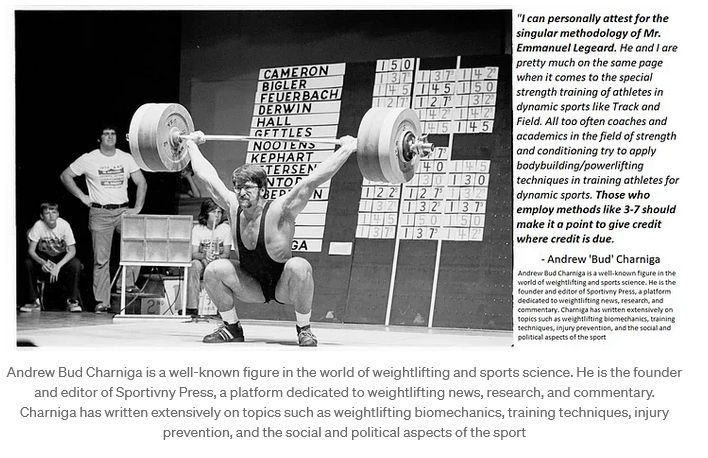
A Flagrant and Repeated Breach of Academic Ethics (Université Libre de Bruxelles and European Journal of Applied Physiology)
For
several years now, Jacques Duchâteau and his team at the Université Libre de Bruxelles (ULB) have sought to misappropriate the 3/7 Method, a
strength-training protocol I independently developed more than 20 years
ago. Jean-Pierre Egger revealed the method — while respecting its
intellectual property — during seminars and university lectures in 2012.
Regardless of this elementary fact, ULB’s claims are contradicted by
ample evidence proving my authorship, such as correspondence with Egger
dating back to 2008, his documented public presentation at the
University of Lausanne in 2012 within the ISSUL Master’s program, and
Duchâteau’s recorded presentations at the French National Institute of
Sport (INSEP).
THE 3/7 METHOD, ALSO KNOWN AS THE LEGEARD PROTOCOL (Presented by Jean-Pierre Egger at the University of Lausanne in 2012)
Initially,
Jacques Duchâteau organized conferences about me — curiously, without
my involvement or consent — where the 3/7 Method was even referred to as
“Legeard’s Method”. Gradually, Duchâteau resorted to insinuating that
the method might not solely be my creation, a claim he knew was false.
My method has never been modified by anyone. At the time, I dismissed
these rumors as baseless. However, it became clear that this was a
calculated strategy to dilute my rights and claim ownership of my work.
2014: DUCHÂTEAU PRESENTS THE “LEGEARD’S METHOD” AT INSEP
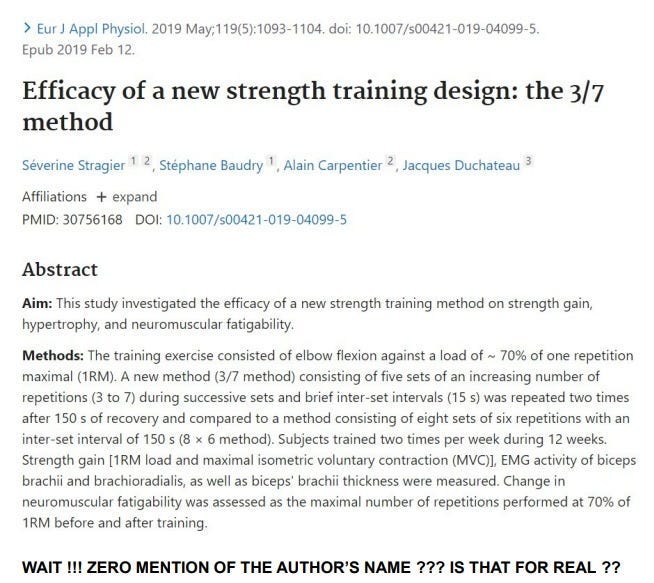
Subsequently, Duchâteau’s team — including Séverine Stragier, Stéphane Baudry, and Alain Carpentier — published a 12-page article in the European Journal of Applied Physiology about my method. Shockingly, my name, Emmanuel Legeard, WAS ENTIRELY OMITTED
! This publication, titled “Efficacy of a new strength training design:
the 3/7 method”, audaciously describes the method as “new”, a blatant
misrepresentation given its development over two decades ago and its
public introduction in 2012 by Egger.
European
Journal of Applied Physiology’s predatory publishing — Predatory publishing, also write-only publishing or deceptive publishing, is an
exploitative academic publishing business model, where the journal or
publisher prioritizes self-interest at the expense of scholarship. It is
characterized by misleading information, deviates from the standard
peer-review process, and is highly opaque.
The
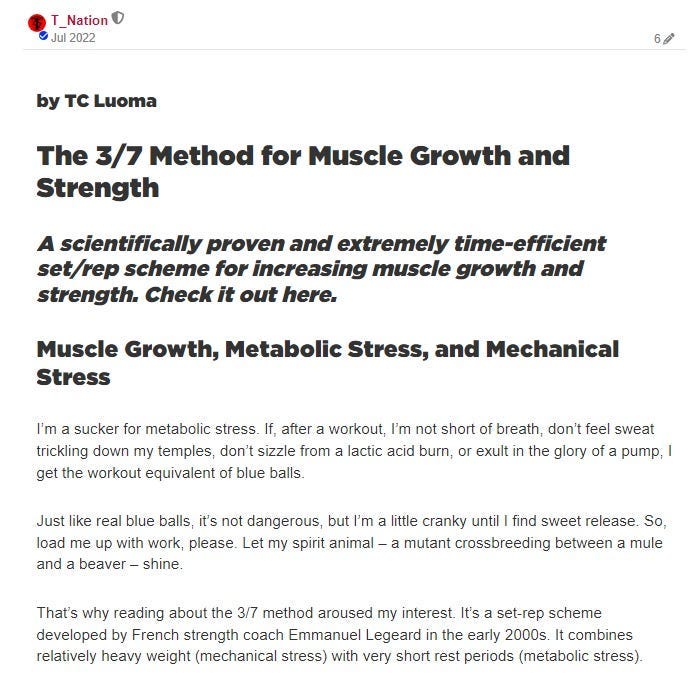
misrepresentation has not gone unnoticed. T.C. Luoma, a renowned
American sports journalist and editor of T-Nation — a site with over
three million monthly visitors — highlighted the issue, stating:
“That’s
why reading about the 3/7 method aroused my interest. It’s a set-rep
scheme developed by French strength coach Emmanuel Legeard in the early
2000s.”
(Source: T-Nation Forums)
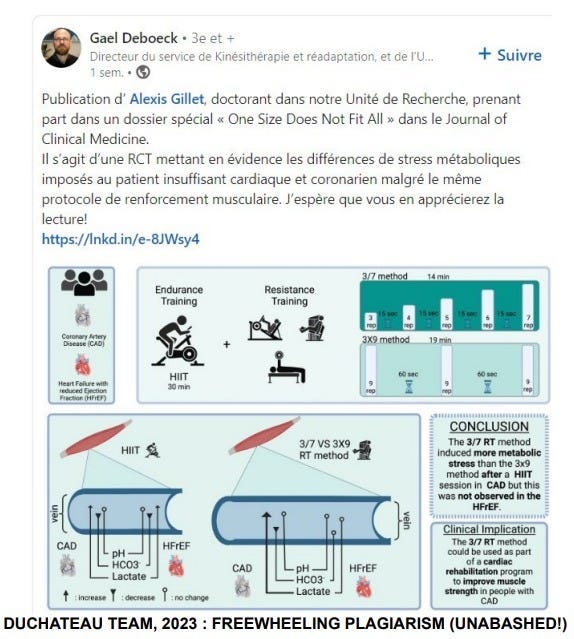
2023: THE DUCHÂTEAU TEAM’S UNABASHED IDEA THEFT
Last year, Grigoraș Diaconescu, an international rugby player, shared his outrage after discovering a post by Gaël Deboeck, identified as the head of Physical Therapy and Rehabilitation at ULB. Deboeck congratulated Alexis Gillet,
a doctoral student, for using the 3/7 Method to “prove” what I
demonstrated 20 years ago. Unsurprisingly, the publication made no
mention of the method’s original creator. It is now evident that ULB
intends to mislead the public into believing that their laboratory
developed the 3/7 Method. These unethical actions demand accountability.
2023: THE DUCHÂTEAU TEAM’S UNABASHED IDEA THEFT
CONSEQUENCES OF THIS ACADEMIC MISCONDUCT
If
the Université Libre de Bruxelles believes I will quietly accept the
theft of my work, they are mistaken. This scandal, indicative of
dishonesty incompatible with academic integrity, must result in
sanctions. Public funding cannot continue to
support crooked research where my work is falsely attributed to
impostors like Jacques Duchâteau, Séverine Stragier, Stéphane Baudry, Alain Carpentier, Gael Deboeck or Alexis Gillet. I
have been lenient for years, but my patience as the rightful creator
has reached its limit. I have begun publicly correcting this falsehood
online, as seen in similar cases — such as one involving the University
of Zurich — which have led to severe consequences for academic dishonesty.
Dr Emmanuel Legeard, Ph.D. — Creator, among quite a few others, of the 3/7 Method, also known as the “Legeard Method”.
This audio is auto-generated. Please let us know if you have feedback.
WASHINGTON — The transition from high school to higher education is often tumultuous, and students can face a unique disadvantage their first year. With so few credits banked, one or two bad final grades can tank their cumulative GPA and risk their academic standing.
One institution undertook an experiment to assist such students and saw promising results after just one semester.
In summer 2024, Stony Brook University launched the Summer Academic Resilience Program, or SARP, a pilot program designed to support first-year students who had been placed on academic probation after their first semesters.
Leaders at the public New York institution presented the results Wednesday at the American Association of Colleges and Universities‘ annual conference.
In just a few months, the program — which offered one-on-one coaching and wraparound services — improved the students’ GPAs and raised the institution’s overall first-year retention rate by 1 percentage point, they said.
A common challenge
A 2.0 GPA is the typical threshold for academic probation. The higher education research nonprofit California Competes found that 1 in 5 students end their first years with a cumulative GPA below that.
Research has also shown that students’ likelihood of academic success and on-time graduation diminishes once they’re put on probation.
At Stony Brook, 210 first-year students were placed on academic probation in fall 2023. Just 22 were reinstated to good standing in the spring. And 24 went on to be suspended, the last step before being dismissed.
And that was an improvement from the year before, according to Rachelle Germana, senior associate provost for undergraduate education at Stony Brook.
“In fall of 2022, we reinstated one first-year student who had been suspended — only one,” she told conference attendees. Another 32 students were suspended that term.
The situation led Stony Brook, a member of the State University of New York system, to design the pilot program to improve student outcomes more quickly and prevent suspension after probation.
In summer 2024, SARP enrolled 30 first-year students on probation. Michelle Setnikar, associate director and academic standing coordinator at Stony Brook, described the cohort as both racially and economically diverse.
Nearly all participating students reported facing a significant personal challenge, such as mental health concerns, a family crisis or financial difficulties. Almost half said they were experiencing two or more such challenges at once.
The pilot offered participants full financial support, covering the cost of two summer courses, housing and meals. It also conducted a needs assessment for each student and connected them with wraparound support services, including a dedicated academic advisor and one-on-one financial aid consultations.
Before the program, the pilot group’s average cumulative GPA was 1.62, Germana said. After the summer semester, the average increased to 2.03. And by the end of fall 2024, the group’s cumulative GPA had risen to 2.65.
More than a third of participants, 11, finished 2024 with GPAs above 3.0, Germana said.
“What became even more impressive for us was the way in which the students demonstrated improved academic skills, which was reflected in their summer term GPA,” she said. “For five credits across these 30 students, they averaged a 3.67 GPA with the support that was provided.”
Probation also carries nonacademic consequences, including loss of financial aid, Germana said. Even if affected students stay enrolled, the loss of funds can force them to take fewer classes and slow their progress through their programs.
“We covered some balances for some of these students to help promote their retention, because they had been so successful as far as their GPA was concerned,” Germana said.
Stony Brook will continue the SARP program this summer and aims to slowly increase the number of students it serves, Germana said. For 2025, the goal is to enroll up to 50 students and put a more robust financial aid plan in place.
SARP has also inspired ideas for other student support programs, Germana said. Stony Brook is now working on a pilot to provide needs assessments for a wider swath of students and another one to offer campus employment to students on probation.
While many students experience growing pains in the transition from high school to college, today’s learners face an extra challenge emerging from the COVID-19 pandemic. Many students experienced learning loss in K-12 as a result of distance learning, which has stunted their readiness to engage fully in academia.
Three faculty members in the communications division at DePaul University noticed a disconnect in their own classrooms as they sought to connect with students. They decided to create their own intervention to address learners’ lack of communication and self-efficacy skills.
Since 2022, DePaul has offered a two-credit communication course that assists students midway through the term and encourages reflection and goal setting for future success. Over the past four terms, faculty members have seen demonstrated change in students’ self-perceptions and commitment to engage in long-term success strategies.
The background: Upon returning to in-person instruction after the pandemic, associate professor Jay Baglia noticed students still behaved as though their classes were one-directional Zoom calls, staring blankly or demonstrating learned helplessness from a lack of deadlines and loose attendance policies.
“We were seeing a greater proportion of students who were not prepared for the college experience,” says Elissa Foster, professor and faculty fellow of the DePaul Humanities Center.
Previous research showed that strategies to increase students’ collaboration and participation in class positively impacted engagement, helping students take a more active role in their learning and classroom environment.
The faculty members decided to create their own workshop to equip students with practical tools they can use in their academics and their lives beyond.
How it works: Offered for the first time in fall 2022, the Communication Fundamentals for College Success course is a two-credit, five-week course that meets for two 90-minute sessions a week, for a total of 10 meetings. The class is housed in the College of Communication but available to all undergraduate students.
The course is co-taught and was developed by Foster and Kendra Knight, associate professor in the college of communication and an assessment consultant for the center for teaching and learning. Guest speakers from advising and the Office of Health Promotion and Wellness provide additional perspective.
(from left to right) Jay Baglia, Elissa Foster and Kendra Knight developed a short-form course to support students’ capabilities in higher education and give them tools for future success.
Aubreonna Chamberlain/DePaul University
Course content includes skills and behaviors taught in the context of communication for success: asking for help, using university resources, engaging in class with peers and professors, and learning academic software. It also touches on more general behaviors like personal awareness, mindfulness, coping practices, a growth mindset, goal setting and project management.
The demographics of students enrolled in the course vary; some are transfers looking for support as they navigate a university for the first time. Others are A students who wanted an extra course in their schedule. Others are juniors or seniors hoping to gain longer-term life skills to apply to their internships or their lives as professionals and find work-life balance.
Throughout the course, students turned in regular reflection exercises for assessment and the final assignment was a writing assignment to identify three tools that they will take with them beyond this course.
What’s different: One of the challenges in launching the course was distinguishing its goals from DePaul’s Chicago Quarter, which is the first-year precollege experience. Baglia compares the college experience to taking an international vacation: While you might have a guidebook and plan well for the experience beforehand, once you’re in country, you face challenges you didn’t anticipate or may be overwhelmed.
Orientation is the guidebook students receive before going abroad, and the Communication for Success Class is their tour guide along the way.
“I think across the country, universities and college professors are recognizing that scaffolding is really the way to go, particularly with first-generation college students,” Baglia says. “They don’t always have the language or the tools or the support or the conversations at home that prepare them for the strangeness of living on their own [and navigating higher education].”
A unique facet of the course is that it’s offered between weeks three and seven in the semester, starting immediately after the add-drop period concludes and continuing until midterms. This delayed-start structure means the students enrolled in the course are often looking for additional credits to keep their full-time enrollment status, sometimes after dropping a different course.
The timing of the course also requires a little time and trust, because most students register for it later, not during the course registration period. Baglia will be teaching the spring 2025 term and, as of Jan. 10, he only has two students registered.
“It has not been easy convincing the administrators in our college to give it some time … Students have to register for this class [later],” Baglia says.
The results: Foster, Knight and Baglia used a small grant to study the effects of the intervention and found, through the data, a majority of students identified time management and developing a growth mindset as the tools they want to keep working on, with just under half indicating self-care and 40 percent writing about classroom engagement.
In their essays, students talked about mapping out their deadlines for the semester or using a digital calendar to stay on top of their schedules. Students also said they were more likely to view challenges as opportunities for growth or consider their own capabilities as underdeveloped, rather than stagnant or insufficient.
The intervention has already spurred similar innovation within the university, with the College of Science and Health offering a similar life skills development course.
Course organizers don’t have plans to scale the course at present, but they are considering ways to collect more data from participants after they finish the course and compare that to the more general university population.
CHRISTCHURCH, New Zealand — Many students in New Zealand have a story to tell about “streaming” — being grouped into separate math classes based on their perceived ability to master the subject.
Manaaki Waretini-Beaumont, now 18 and an environmental science major at the University of Canterbury, learned about the downside of streaming when she enrolled in Avonside Girls’, a 1,000-student high school in Christchurch.
Avonside starts at Year 9, equivalent to eighth grade in the United States, and ends at Year 13, equivalent to 12th grade. Before the start of her Year 9 term, Waretini-Beaumont and her fellow students were divided up into groups to take tests in “maths,” reading comprehension, and patterns and shapes.
Afterward, the students were separated into lettered groups that spelled out the word B-I-N-O-C-U-L-A-R-S. Waretini-Beaumont was a “9-N” student in mathematics — as she describes it, “the top of the middle block.”
But she said she didn’t feel comfortable as one of the few Māori students in the class.
“I felt like I wasn’t good enough to be in that space,” said Waretini-Beaumont, whose iwi, or tribal affiliations, are Te Āti Haunui-A-Pāpārangi, Ngāti Rangi, Ngāti Apa, Ngāti Paoa. “If there was something I wasn’t understanding, I felt like I wasn’t able to say that, because I’m supposed to be in the smart class with all these smart people.”
So she shifted to another mathematics class with her Māori friends, who were in the “S” classes.
“Being in two different spaces, I could really see the change,” Waretini-Beaumont said. “At the top classes, the teachers’ language towards the students was always positive and it was always encouraging. And they really wanted students to learn and were trying to help them.”
Manaaki Waretini-Beaumont experienced the effects of “streaming,” or academic ability tracking, during her time as a high school student at Avonside Girls’ School in Christchurch, New Zealand. Credit: Image provided by Richie Mills/Ngāi Tahu
In the classroom where her friends were assigned, in contrast, the mathematics work mostly amounted to simple worksheets — “coloring pages and word find,” Waretini-Beaumont said.
For years, much like in the United States, New Zealand has worried about sliding student proficiency in mathematics, as captured by both national and international test scores. Later this month — the beginning of the New Zealand school year — the country is launching an overhaul of mathematics instruction that education leaders hope will reverse the trend.
But other groups in the country have been trying to approach the problem of academic achievement from a different angle. They believe that streaming is driving achievement gaps in the country, including in mathematics. Tokona te Raki/Māori Futures Collective, a think tank focused on youth, has been working since 2019 to persuade schools to voluntarily end the practice by 2030. The initiative is called “Kōkirihia”— Māori for “take action.”
Streaming is just one of many ways that schools group students by academic ability. Ability grouping can include separating students into vocational or university tracks at different schools as early as age 10, as is common in Germany and other Western European countries. But it could also include teachers creating informal and non-permanent groupings within their own classrooms to provide enrichment or extra support to students who need it.
In New Zealand, critics say streaming pushes two groups into so-called “cabbage,” or lower-level mathematics, at a disproportionate rate: Māori students, who are indigenous to New Zealand, and students who are Pasifika, the New Zealand term for people from Samoa, Tonga and other nations in the Pacific Islands.
In the 14th century, the Polynesian ancestors of today’s Māori migrated thousands of miles by canoe to what they called Aotearoa, the land of the long white cloud. Hundreds of years later, English settlers came to engage in trade and now represent the majority ethnic group in New Zealand. In 1840, the two groups signed the Treaty of Waitangi that established New Zealand’s bicultural identity.
Many youth with Pacific Island backgrounds are descended from people who were encouraged to move to New Zealand after World War II to address a labor shortage.
Both Māori and Pasifika are a fast-growing, and young, population. By the 2040s, more than a third of children in the country are expected to identify as Māori, according to Stats NZ, the country’s official data agency.
The New Zealand Ministry of Education’s official stance discourages streaming, but the country’s more than 2,500 schools operate with a great deal of independence: Principals have similar powers and responsibilities as school superintendents in the United States, and each school has an elected board that sets policy and manages budgets.
New Zealand does not track streaming or ability grouping by race or ethnicity, but surveys show it is common: Eighty percent of students are in schools that group students by ability level in mathematics, according to a 2022 survey conducted by the Program for International Student Assessment.
Other data shows a wide academic gap among students of different ethnicities in New Zealand.
Students at May Road School in Auckland, New Zealand, work through a lesson on fractions. Credit: Becki Moss for The Hechinger Report
In the Auckland region, the country’s most densely populated of 16 regions in all, 76 percent of Asian students left secondary school with the highest of three levels on the country’s National Certificate of Educational Achievement in 2022. Like a high school diploma, the NCEA Level 3 is a minimum qualification to enter college in New Zealand.
About 66 percent of Pākehā, or white, students left school with that credential. About 46 percent of Pasifika students and 40 percent of Māori students did the same.
In comparison, the high school graduation rate by race and ethnicity in the United States in the 2021-22 school year was 94 percent for Asian American/Pacific Islander students, 90 percent for white students, 83 percent for Hispanic students, 81 percent for Black students and 74 percent for American Indian/Alaskan Native students.
Misbah Sadat, the newly appointed principal at Kuranui College, a high school 50 miles northeast of the capital of Wellington, began actively working to “destream” mathematics courses soon after emigrating to New Zealand in 2009 and becoming a teacher there.
As head of mathematics at a high school called Horowhenua College, she started by identifying promising Māori students on her own, moving them to higher level classes, and mentoring them, as described in a Ministry of Education newsletter.
Eventually she convinced her colleagues at Horowhenua to create mixed-ability classes rather than dividing the students. She continued the same work as deputy principal at Onslow College in suburban Wellington, where she worked before her new appointment.
The streaming practice comes from a patronizing mindset, said Sadat, who was also a math teacher in Montgomery County, Maryland.
Schools are telling parents that their children might be lost and overwhelmed in a more rigorous class. In actuality, “We have demoted some students to learn crap,” she said. “And then we are saying that at age 16, ‘You are dumb at maths.’ How dare we decide what a young person is capable of or not capable of?”
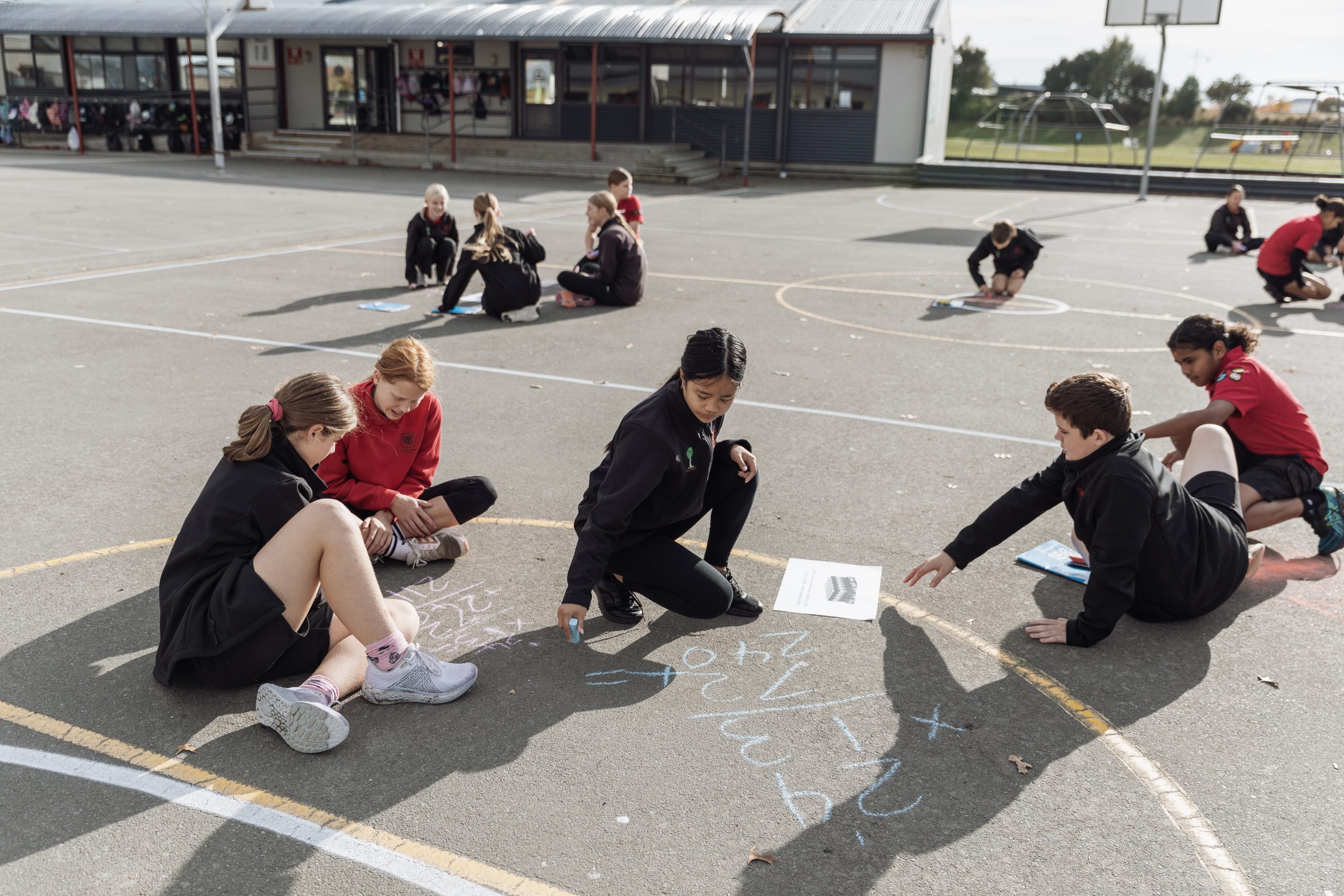
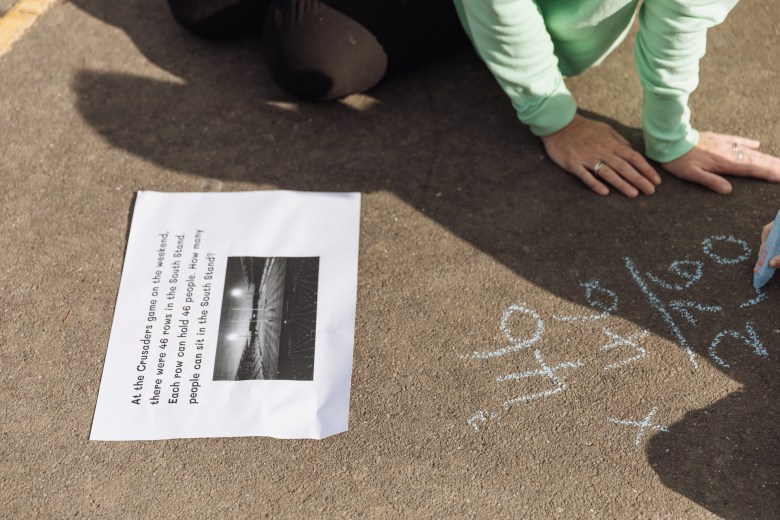
Students at Kaiapoi North School in suburban Christchurch, New Zealand, work through a multiplication problem in chalk on the playground blacktop. Credit: Becki Moss for The Hechinger Report
Both of New Zealand’s unions for elementary and secondary teachers signed onto the pledge to end streaming by 2030. In a newsletter to members, the elementary teachers union noted that its members have noticed “a sense of ingrained hopelessness that comes with being in the ‘cabbage’ classes.”
But in the same newsletter, another teacher said educators struggle with the mix of abilities in one classroom, along with managing behavior challenges.
David Pomeroy, a senior lecturer in education at the University of Canterbury in Christchurch, is studying schools that have committed to reducing their reliance on streaming.
It’s a difficult task, he said. So many teachers are accustomed to the practice, since they went through it in school themselves. Parents of students in high-level classes are worried their children will be shortchanged. Teachers also say that it is easier to work with students who are all roughly on the same skill level.
And then there is an emotional connection to the practice, Pomeroy said. Unlike in the United States, lower-level mathematics classes are often taught by teachers who have a lot of classroom experience and who express real fondness for their students, he said. Pushing students too hard is seen as setting them up for repeated failure, which teachers were reluctant to do.
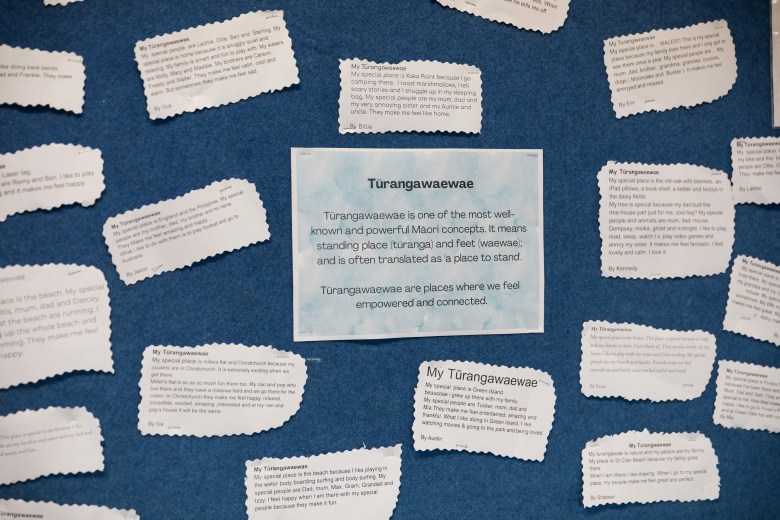
Abby Zonneveld’s bulletin board at St. Clair School in Dunedin, New Zealand, asked students to describe their “tūrangawaewae,” or place where they feel a special connection. Credit: Becki Moss for The Hechinger Report
“Even if they accepted streaming wasn’t the right next step, they wanted to protect them from anything that could damage their confidence,” Pomeroy said.
For schools that have made a commitment to reducing or ending streaming, he said, one useful tool has been to bring mathematics teachers in different schools together so they can work through challenges, such as lesson planning, and share successes.
The research into the benefits or harms of academic tracking or streaming show mixed results. In 2016, a group of researchers compiled all the best U.S-based research on ability grouping and acceleration at that point, going back for a century. They found certain kinds of ability grouping, such as placing highly gifted students together, was a benefit to those students. But grouping students in high- or low-performing classes did not show any benefit or detriment for students.
The New Zealand Initiative, a right-of-center think tank, said that the country should conduct its own research on the effects of streaming in the country, rather than relying primarily on research done elsewhere and on qualitative reports that primarily capture feelings about the practice. “Research suggests that lowerstream students are often taught less engaging content by less experienced teachers. So, it may not be streaming itself that increases gaps in achievement but streaming done poorly,” the initiative said in a report.
But the efforts to reduce streaming voluntarily seem to be catching on.
When looking at all academic subjects, not just mathematics, principals on a 2022 PISA survey said 67 percent of students in New Zealand are grouped by ability into different classes for at least some subjects. That’s a drop from 2015, when 90 percent of principals reported that students were grouped into different classes in their schools.
The change is welcome, said Waretini-Beaumont, who works on social media for Tokona te Raki. Streaming “has more impact than just cutting off some opportunities and stopping someone from doing calculus,” she said. “Our grandparents have been streamed and they don’t know it was even a thing. They just thought they were dumb.”
The Hechinger Report provides in-depth, fact-based, unbiased reporting on education that is free to all readers. But that doesn’t mean it’s free to produce. Our work keeps educators and the public informed about pressing issues at schools and on campuses throughout the country. We tell the whole story, even when the details are inconvenient. Help us keep doing that.
Personal life events impact students’ ability to meet academic expectations, which can result in academic dismissal, according to new research.
visualspace/E+/Getty Images
Around 40 million Americans have some college credit but no credential. While some of these students left higher education voluntarily, others left involuntarily due to academic dismissal, or repeated low academic achievement.
Recently published research from a Texas A&M University, San Antonio, faculty member seeks to understand how students who experienced academic dismissal fared and how institutions can support these learners as they return to college.
Author Ripsimé K. Bledsoe found a majority of learners experienced a major life event that contributed to their academic shortfall, including loss of a loved one or illness of self or others. Students who have returned to college after dismissal demonstrated greater self-awareness, help-seeking behaviors and understanding of how to achieve success.
The background: While students stop out for a variety of reasons—with recent studies pointing to the high costs of higher education as a major driver—academic challenges are a common factor. At many colleges, students whose cumulative grade point average falls below 2.0 are placed on academic probation, followed by academic dismissal if they make insufficient academic progress.
Previous research shows a gap in creating a model of academic dismissal reinstatement, one that has created challenges for institutions who want to assess readmission policies or create programs to address the issue, according to the report.
The present study uses community college student survey and interview data to understand the factors that influenced them to return to college and what assisted in this process.
Methodology
All students who participated in the study had left a two- or four-year college due to academic dismissal; re-enrolled at a large, urban community college; and were taking a Strategies for Student Success course. The survey includes 171 respondents from 13 course sections, and researchers conducted semistructured interviews with 11 of the respondents. Data was collected in fall 2018.
Students say: The survey results demonstrated that academic readiness from high school did not directly predict success in college, as a majority of students took key college preparatory coursework in high school, including AP classes or Algebra 2 or higher, and only 40 percent took developmental courses in college.
Further, almost half of students were “downward transfers,” with 45 percent admitted to a four-year college, and 41 percent attended a four-year institution at some point. Around 75 percent of students had enrolled in college within three months of completing high school or a GED, and half of respondents passed some type of first-year seminar.
The greatest share of students on academic dismissal (43 percent) appealed to return immediately after being placed on dismissal. One-third returned a year later or more time.
Two-thirds (67 percent) of dismissed students said a life-changing event was the strongest reason their grades dropped, including the death of someone close to them (26 percent), sickness (24 percent), the birth of a child (17 percent), moving away from home (11 percent), involvement in a violent experience (8 percent), loss of a job (7 percent) or spousal problems (6 percent).
Put in practice: In interviews, researchers identified five factors that affected students’ dismissal and could, conversely, impact academic momentum.
College readiness. For some students, transitioning to college contributed to their dismissal because the environment was more challenging and less structured. To combat this upon their return, students sought more structure and community to ensure academic achievement, including investing in study skills, note taking, time management and self-monitoring.
A critical incident. While many learners experienced dismissal following a challenging experience in their lives, academic dismissal provided a turning point, particularly for learners who spent their time away from college working, to reassess their goals and ambitions. The institution where study participants attended required learners to reflect on their experiences prior to re-enrolling, which also helped students’ self-evaluation. “Consequently, institutions with automatic reinstatement, loose structuring, or no policies at all, can potentially rob students of the critical impact of academic dismissal and an appeal process,” according to the report.
Effective teaching. Students said faculty interactions and support was one of the most important factors of success in the classroom upon their return. Faculty who created an atmosphere for active learning and participation were more engaging and effective. Students also identified their own learning strategies, including metacognition and self-regulation, as previous barriers to success and now a focus area.
Academic resilience. Learners who returned had motivational attributes including a strong growth mindset, clear goals, self-determination and sense of personal responsibility. Students also demonstrated resilience when they faced setbacks and found solutions for the obstacles in their way, including turning to peers, tutors or faculty members.
Supportive guidance. All participants in the study participated in specialized advising to guide them through the appeal process as well as help around course choices, loads and majors. These experiences were relational, not transactional, and helped affirm students’ help-seeking behaviors in positive ways, mitigating students’ feelings of confusion or like they must navigate higher ed on their own.
So what? While this study provides characteristics of students returning from academic dismissal, there is a need for more data around probation, time away after dismissal or forced withdrawals versus voluntary departure, according to the report.
College and university leaders should also consider their appeal process to create greater connections between students and staff or faculty, rather than an automatic reinstatement policy or a loose policy.
“Formulating a well-crafted, institution-specific policy provides a meaningful milestone for students to stop, seek support, and reassess,” Bledsoe wrote.
The study does not advocate for dismissal programs but does ask institutional leaders to create policies with more awareness of the different factors that impact academic success and to tie dismissal to support systems.
Get more content like this directly to your inbox every weekday morning. Subscribe here.
“Who controls what is taught in American universities
— professors or politicians?”
Yale Law professor Keith Whittington answers this
timely question and more in his new book, “You Can’t Teach That!
The Battle over University Classrooms.” He joins the podcast to
discuss the history of academic freedom, the difference between
intramural and extramural speech, and why there is a
“weaponization” of intellectual diversity.
Keith E. Whittington is the David Boies Professor of
Law at Yale Law School. Whittington’s teaching and scholarship span
American constitutional theory, American political and
constitutional history, judicial politics, the presidency, and free
speech and the law.
Your online presence creates a legacy for your work and supports your professional goals for your research, teaching, and leadership. And yes, you probably have been putting it at the bottom of your to-do list… Join us and let’s change that!
This Q&A was hosted by Ana Pineda, PhD, of I Focus And Write on October 10, 2024.
Introduction
Ana: This happens a lot to me too. Just quickly for the rest of us watching the recording. I started the recording a bit late, but I was introducing you to Jennifer Van Alstyne, and she’s the expert on having an online presence, not only academic, but personal branding, especially for academics. Although I think your profile goes much further and you all should start following her, and I will send you some links later for her social media, her channels, her website.
I discovered [Jennifer] very early on in this business and something that I hope we are going to speak more about it, I was struggling with my, my online presence as an academic and also as a business. I thought, “Ah, Jennifer one day she, she should come and tell us more. I teach you, this is something I encourage you all when you want to connect with someone, send them an email, send them a message in social media, tell them what you would like to maybe have a coffee with them or organize something with them. And that’s it. This is how Jennifer and I contacted and now she’s here talking with all of you and I’m super excited. Thank you. Jennifer, do you want to tell us a bit about you to start?
Jennifer: Hi everyone. I’m so happy to be here and to talk with you all. Let’s see, I have been helping professors one-on-one with their online presence since 2018. And it really started off as, as thinking that I would help with websites specifically, but most of my clients needed help with more than just their website because being online isn’t just about having a website. You can actually be online without a website, too. And so really figuring out online presence wasn’t a one size fits all solution. A website wasn’t going to be the answer for everyone helped me evolve my business over time.
Now, it’s been like, what, six and a half years and I help people with websites, social media, and bio writing. And really I’d say our work is about confidence. Our work is about the confidence to be able to show up and to feel like you’re worthy enough, and that you deserve space online. I love getting to help people with that.
Ana: Oh, so nice. And I love that you linked to, to this, to the aspect of feeling confident because I was telling to Jennifer like, I think 90% of my audience, of you here, of our students suffer severe imposter syndrome, and this feeling that we are not good enough. And I see that for me, but also probably for many of you that here, this stops us from showing up online and sharing our words. We always feel, I sent an email today with some of those thoughts. The, “who am I to say this on LinkedIn,” or, “am I bragging if I’m sharing this paper that got published.” Something also like, “What is this person going to think when it says that I post this,” right? Something some of my students say is I think on that teacher I had once or something a supervisor said that you had 10 years ago. Sometimes you still have these thoughts of, “What is this specific person going to think? And this stops us. It truly stops us. I hope that also for all of you that you live with some ideas of how to stop these imposter thoughts when it comes to your online presence today. Love it. So for today, it’s a, Jennifer told me, I love interactive sessions and we need your help. Please, we need your help for the, of course I have questions here ready for Jennifer, but we would love to hear your questions.
Jennifer: I have a question if that’s okay for everyone who’s listening. This is one of the questions that I, I like to ask people when we start working together because it really is different for everyone, no matter where you are on feeling imposter syndrome, no matter where you are in your career.
How you feel about your online presence is, is very internal. It’s very personal. So I’m curious if 0 is like, “I don’t have an online presence at all,” and 10 is like, “I have a great online presence, I’m really confident in it. It’s the exact online presence I want.” Where are you on that range? From like zero of no online presence at all to 10, amazing online presence.
How would you rate yourself? 4, 2, 3. Yeah. Quite low. Good. This is very, very normal. Very normal to feel like maybe there’s a lot more you could do or maybe want to do to have a stronger online presence.
I’m curious, those of you who feel like you’re on the really lower end of the scale, 0, 1, 2, 3, I’m curious, have you done something for your online presence already or is this like, “There’s a bunch of things that I want to do that I know I’m not doing and I really don’t have an online presence at all.”
Where are you thinking when you’re at the lower numbers? Is it more about actions that I haven’t taken or actions that I’ve taken that don’t feel like enough?
‘I think I’ve tried a lot.’ Yeah. Oh my, ‘the university forces me to,’ I love that answer. For a lot of people that is perfect. Yeah. Okay.
I just wanted to show even though we’re all here and we’re all here together and there is a range for where people feel for your online presence, my hope is that by the end of this workshop you’ll feel like there’s at least one small step that you can take to improve that in a way that’s really meaningful to your life. If not more. My hope is for more, but at least one.
‘I haven’t done anything because I thought why do I have to be online?’ Well, we’ll chat about that. It’s different for different people. So, saying that you have to be online for your research, you have to be online for a job market or you have to be online for, you know, any specific reason. It’s not going to work for everyone. And finding the true reason (or reasons), it’s going to be helpful for you. Hopefully we can get closer to that today as well.
What are reasons scientists and academics should have an online presence?
Ana: Oh, I love that. And actually that is how I would like to start. So what are the main reasons, Jennifer, that you say why you should, everyone have an online presence? Maybe there are a few things that you think, oh this situation, these moments, you really need to, to work on this.
Jennifer: Well, I’ll tell you why I thought when I started people should have a stronger online presence. I really thought that if you put your publications online and you create a way to help people find them, that more people from your potentially really niche topic would be able to read them, engage with them, and share them.
And that’s true, but that’s not actually a motivating reason for the majority of people that I work with. I would say for most of the professors that I work with, they want to help more people.
They want to help more people. They want to invite opportunity for themselves, but not just any opportunity. They want to invite aligned opportunities aligned with their research, aligned with their values, aligned with what they want to be focusing their time on.
Attracting opportunities is all about finding the right people. It’s about making sure that people can see and engage with what you share. That can potentially lead to greater connection, collaboration, or a long-term working relationship. I would say it’s mostly about people and making sure that that connection is possible even when you’re not in the same space.
Ana: Oh, I love this. And actually, you know, I mainly started using as online presence, let’s say Twitter, on social media. And I don’t know if you, you also said this, but in the past there was some, they did some study and they saw that the more people tweeted about papers, than the more citations they have.
Jennifer: Yes, that is definitely true. It’s also a bit limited in how we think about it.
Ana: Yes.
Jennifer: Yes, more people will see your paper when you share it online. The question is, is it the right people? Is it the right timing? Are they still going to see it after your one post?
There’s so many ways that we can share publications, really thinking about who we want it to reach and how we want to be able to help people with the hard work we’ve already done makes a really big difference for how we show up online.
So yes, always sharing your work gets more citations, gets more readers, which is great. My hope is that it’s really engaged readers, aligned readers. Readers who could potentially cite and use your work.
Jennifer: So I’ve actually gotten more narrow in my focus for who I’m hoping to reach in my work with professors.
Ana: Yes, I love that. And actually, it was later on that I think there was another paper that also, like you said, it was like, “more citations, really, but what was then the impact of this effect?” But what they saw is that the big impact in the end, like you said in people, in networking, in collaborations, in relationships. And this is really beautiful.
Lenny says here, ‘they trying to build multidisciplinary approach of a problem, building a network is the only way and networks are so important, right?’ Networks of the right people, like you said. I love that. Yeah. So good.
Why do professors want a website, social media, or blog?
Ana: And continue with the why Jennifer. I would also like to know why your clients come to you. So do they come, do they want a website? Do they want social media? Do they want blog? What is it? Tell us more please.
Jennifer: I would say most people come to me because they want, or are thinking about a website. Oftentimes it’s something that they’ve wanted for a long time. Maybe they tried to do themselves or did do themselves, but it isn’t meeting their needs.
My most popular service is like a big website plan where we either redesign or create a website that really meets their long-term needs. That takes in-depth interviews, I mean we spent about five hours talking before I even start planning the website. That’s because for a lot of people, their needs are are so nuanced. And we really get to understand what’s going to be exciting for them, what’s going to be engaging for the people that they hope their research or their teaching research reaches.
And then some people also have different areas of their life that they want to be able to share on their website. A lot of people also come to me because they want to bring together multiple identities into one personal academic website.
Or, occasionally a website that works for both your personal website and your lab website.
The website that’s right for you doesn’t necessarily look like the website that was right for someone else. That’s why professors like to work with me, cause we find that together. They feel like they don’t have to do it alone and if they don’t want to. They don’t have to touch the website themselves, they can just have it done for them.
So especially the people a bit later in their career, like to be a little bit hands off. People who are early career researchers, we get more involved and do more things together. So yeah, it’s really fun. We customize it to what best meets the professors need.
Ana: Yes, I love that also that you said it. Every need will be different, right? And I think that’s the problem with university websites, that they are very standard first and you don’t have much there to say. So actually, if you have any questions about websites right now, please share it in the chat. So maybe we can go through there.
Holly has posted a a question, Jennifer. Maybe you can read it.
Professional website vs. Academic website vs. Lab website
Jennifer: [Holly]: ‘What are the main differences between a professional website vs. an academic website?’
I’d say there, there’s not really one. I mean it’s just the label that we’ve called the website that is meant to represent you. So, if you as a person feel like your professional identity is different from your academic identity, which is true for many people, sometimes those people actually prefer two websites.
Or they prefer to focus their website on just their professional identity vs. their academic identity. When I say that, it’s more about the audience that you hope comes to the website. If you’re hoping to mostly focus on other academics and researchers, you might have academic content there even if you have a separate professional life and maybe you’re picking and choosing what goes on there. But overall, they could be the exact same website. You could have the same label for it. It’s more how you think about your own identity, if that makes sense.
Ana: And yes, jumping in the to the effort example, I find something really useful of websites that you can attract like stakeholders, right? Like people more like maybe policy makers or companies who might be interested in applying what you are working on or, or the press, right? More for science communication. Do you then recommend to have like one single website but maybe with different sections or apps? How, how do you recommend people to deal with that?
Jennifer: I always recommend one website when possible. The websites I recommend separating out are if you have a research lab where you’re going to be highlighting your team, oftentimes the professional/academic website, the personal website version of that. It makes better sense when it’s separate.
That’s not to say that a research lab website can’t support a personal identity. It’s just that the website that you may want to build out for yourself, maybe as extensive as the research lab website, but highlighting different things. I often, often recommend separate personal website and research lab website.
In terms of consulting or like a professional identity that is separate from an academic one, I often don’t recommend dividing it. Now, if you have a business that is like officially registered, you may have to divide it for like legal reasons for. Maybe for a Terms and Conditions page or a Privacy Policy that is specific to your country.
But for most people I would say that that one website works. You can have two in one. Adding a Consulting page, adding a Services page to your academic website can really enhance how people who are at NGOs, at corporations, at other universities, at federal and foundation funders. All sorts of people like publishers, people that are outside of academia, or outside of your institution will be able to better understand you and your services and your consulting. How you approach those things from the academic pages on your website as well. I don’t typically recommend splitting your identities when possible.
It’s also easier to manage one website. So less less work overall.
Stories about opportunities from your online presence
Ana: Yeah. That’s great. And actually I was wondering, do you have any win story of people after making their websites for us? We love those.
Jennifer: I’ll be really honest and say that I’m bad at keeping up with professors that I’ve worked with after the fact. But when I have, I get really delightful stories. So one of them, this is just like a few weeks after we’d launched his website and we were adding something in. We were meeting again live. He told me this funny story that he was just at a conference in his field. This was someone who was on sabbatical this year, so he wasn’t engaging as much with the research community. He was working for the federal government at the time for the year so he hadn’t been super engaged in the research community.
When he was at this conference and someone came up to him, they recognized him, like they’d seen his photo. They said, ‘I’ve explored your whole website, I learned all about you. I would like to talk with you about a job offer.’ Now my client was not job searching, he was very happy in his position. He had his next few years very planned out. But just the fact that someone knew so much about him, about the things that he cared about and brought this actually quite aligned conversation into an actual meeting space in person so soon after the website was launched was shocking.
Also, a PhD student whose dissertation was requested by a national publication. Like they wanted them to do a writeup for a national publication just a week after launch. That’s another example of opportunities that can just come essentially as soon as you have a stronger online presence.
But those are really kind of short-term things. And the long-term things that I care more about are really about how you feel about sharing what you do.
Most of the professors that come to me, no matter where they are in their career, I wouldn’t say it’s necessarily imposter syndrome, but there is a feeling that people might not care. Like, you can know that your research is really good, you can know that you’re respected, you can know that you have people who care about you and still feel like there’s not someone who will care when you celebrate something that might feel small in comparison to other things. Or, that might feel big but almost too overwhelming to share.
What I like about working with professors is that by the end of our work together, there is this transformation of, “I deserve to have this space.” Like, “I deserve to take up this space and when I take up this space, it helps more people. It helps more of the people that I’m already trying to reach with my research. It helps more people and more students that I’m teaching,” find maybe the network or connection that they’re hoping to. There are ways to help far more people than just yourself with your website or with your online presence.
Ana: Yes. This is so nice. Connecting how you can help others is a big thing. And you just pointed also to the students, it is said that many of my colleagues, especially those that have websites, they’re also very popular with students who want to do their master thesis with them.
Jennifer: Yeah.
You can have a website for your teaching (even when research isn’t your focus)
Ana: And and that’s really nice, right? That you are also sharing your work and students can find their passions thanks to that too. Eh, love it. Oh, there are some questions.
Jennifer: Before we jump into questions, I just wanted to say that I’ve had clients who are very research focused with their website and I’ve had clients who are very teaching focused with their website.
And you can be both, but some people who are more teaching focused in life sometimes feel like they don’t deserve that same space online. But teaching resources are so valuable for students, for other faculty, for other graduate students or PhD students who might be starting to teach in your field.
Oftentimes when we get into those interviews about: What can we create with your website? How can it change and impact your life? We find really nuanced ways that it’s going to be meaningful for you. Whether it’s creating a Recruiting page or sharing a Student Internships list. There’s just so many options for how to talk with and connect with your students through your online presence. If you want to.
Having an online presence when your research is about sensitive topics
Ana: Yes. So nice. Yes. So there are some questions coming in. So, something that was asked, “How can we deal with being out there online when we research sensitive topics such as police violence?”
Jennifer: Ah, that’s a great question. Actually, one of the examples that we can look at today with Dr. Cheryl L. Johnson, she’s an early career researcher who works with violence and weapons and guns, especially juveniles who carry weapons.
Sensitive topics is something that makes a lot of people stop in whatever actions they’re taking to have a stronger online presence. Part of that is for self-protection. Part of that is also knowing the reactions that people might have based on what you share.
Whenever you have a sensitive topic, I really want you to think about the people that you want to help. Think about the people who really you do need to reach rather than thinking about all the people you want to avoid focusing on who needs to see your research to make that difference. That’s the introspective part that I recommend starting with.
For many of the professors I work with who have a sensitive topic, I would say that is another reason why people come to me to work together. We have found that sometimes posting on social media feels less safe. There are some spaces online that feel less safe and that maybe they don’t want to explore at this time.
Whereas having a stronger online presence, it doesn’t mean that it’s necessary to be on social media. And so we found what they felt and we felt together were safer options was through having their personal website and through having a LinkedIn profile that was filled out to a point where it would show up in Google quite easily and people would be able to find them based on that particular research topic online. But, they wouldn’t feel like they had to post about their topic specifically inviting potential negative reactions in order to help people find them.
If you’re someone who has a sensitive topic and you’d like to be talking about that online, I also want you to consider your safety, your personal safety, but also your emotional and mental safety and think about how you’d like to respond to things and come up with kind of like worse, like what you’re going to do in a worst case scenario. Like, let’s say you do post about a sensitive topic and it goes viral and you know, this is really bad. You’re getting, you know, messages and comments and it just feels so overwhelming. What are the steps you’re going to take at that time to make yourself feel safe to, to help yourself move past this hopefully momentary situation? Yeah.
Ana: Yes. And just for everyone also to realize that indeed in social media, people comment, but on your website you don’t need to activate any comments, eh?
Jennifer: Yes.
Ana: So that is, it’s a way of keeping yourself safe and it, so social media platforms, you can deactivate comments too, right? That nobody can comment on your posts.
Jennifer: You can, but I do want to say that deactivating comments, having, having a website, like not inviting comments doesn’t mean that you won’t get comments. People who feel really strongly about things may still email you.
Ana: Yes.
Jennifer: People will report you to your university. I just want you to know that anything you do or say online, it can be screenshotted, it can be shared, it may be reported.
This isn’t to create fear in you. It’s to let you know that universities typically do not do anything on the other end of that. They get reported to all the time and oftentimes, there’s not a lot that happens.
Ana: Okay, thank you. Thank you for that Jennifer.
When social media doesn’t feel authentic to your personal values
Ana: Now actually, you are making recommendations about social media. So indeed we have another question from Vidal: “What to do when our online presence does not feel authentic to our personal values, especially in social media, but our field is very much dependent on that?” Do you have any advice for this?
Jennifer: I wouldn’t recommend anyone be on social media unless they want to. There have been scientists and researchers for decades who have not used social media and still found connection.
But then you’d want to potentially be intentional about how you are connecting with people and keeping those long-term relationships in some other way.
I like social media because it means I can connect with those people and I can still message them or communicate with them at some point in the future, even if we haven’t talked in years. And so if you’re someone who’s open to being on social media but not posting, that could be a good way to still get that kind of interaction online.
But if it goes against your values, like I’m not going to ask you to change your values and your university shouldn’t ask you that either. In fact, universities sometimes come and ask me to do workshops and I have said no depending on what they’re asking because I won’t force any professor to accept the terms and conditions of a social media platform. You know, there are, there are some things that they just don’t agree with.
I’m also not going to force any professor to have a website if they don’t want one. I really think that it is a personal choice and there are other ways to create connection lasting networking in your field beyond social media, even if that’s the norm in your field.
Ana: Yes, thank you so much. And actually a couple of comments about that that I only realized later, right? That social media is a type of marketing, social media marketing, but it’s not the only one. Actually something very common with scientists is to do PR, public relations and speaking and going to conferences. This is also a powerful way of marketing that you are doing. I don’t know if in, if it is required for social media, but maybe what is required is to do more of this marketing. So you could also consider to, well go to conferences which are more scientific, but maybe also work more with the press in journals, interviews with the radio, maybe block platforms that publish blog posts. There are indeed, definitely there are other ways.
What is your online presence for professors and scientists?
Jennifer: Now when I say online presence, what I mean is that when someone goes to Google or another search engine, if they put in your name (or maybe your name + the area of your research), are you going to come up?
And when you do appear in search results, can they find what you hope for them to find quickly? What you hope for them to find is probably a bit about you, potentially a photo of you, contact information, your areas of research.
Now when you’re hoping to communicate with journalists in the press, you want to come up pretty high. Like you want to come up high in those search results. You want to make sure that they’re able to find you for topics that you actually want to speak about. You don’t have to have a website, you don’t have to have social media profiles in order to attract media attention. But you do have to, if you go to Google, you have to be findable with your name and also with your areas of research.
Ana: And actually I want to drop there a little tip for everyone. If you don’t have Google Scholar, activate it. Please do so because Google Scholar is from Google. So if you search your name in Google and you have a Google Scholar account, that will pop up, often quite high. And when we do this, actually if you, I hope you all know how to add Incognito window in your browser. Maybe just now do this exercise. Open an Incognito window if you know how to do it. Otherwise just open a browser window and Google your name and research and see where do you appear.
Tell us in the chat, I’m curious. Count the number of position and are you the number one, are you the number 10, you are not on the first page. We’d love to see how that is because if-
Jennifer: Yeah, let’s do that.
Ana: Yeah, if you are not high, definitely there is more there to do. But if not, indeed Google Scholar, please be sure everyone has it with a picture, it’s really with the papers that are yours because otherwise Google Scholar puts random papers. So have a, an updated Google Scholar profile. We would love to see that.
Ana: In the meantime Jennifer, we can see more of the questions that came in. Jacqueline asks, ‘Are there specific website hosts domain you can recommend? I’m always a bit concerned about hidden costs with publishing a website.’
Jennifer: Yeah. Easiest way to make a website for free or very low cost is Owlstown.
Ana: Love that.
Jennifer: Owlstown is run by my friend Dr. Ian Li. He wanted to help more professors and scientists be able to create a website with ease.
And when I tell you it can go up in as little as 15 minutes, like if you start it now, it could be done by the end of our workshop. That is true. We have done it together live on a demo. So I really recommend that for a lot of people.
If you don’t care deeply about how your website looks and feels in terms of having control over all of the parts of it, Owlstown is an excellent option for you. I recommend it to a lot of people.
For professors who do want more control over the look and feel of your website, you want to be able to change all of the colors and have different types of pages and formats and layouts. I love WordPress.com.
WordPress.com has great customer service. It’s more affordable than some of the other hosts and it has built-in security and protection. If something goes wrong with your website because someone’s trying to attack it, they have a whole office that will deal with that.
If your website goes down like mine has twice, they have resolved that for me within an hour. I really like WordPress.com. That’s what I set up most of my clients on.
I also like Squarespace.
I do not like Wix. Wix is very buggy and glitchy. In fact, most of the people who’ve come to me for website redesigns have been quite unhappy with their experience on Wix. And so we’re migrating their site to typically WordPress.com.
If you like WordPress, but you don’t want WordPress.com, you want more control over your WordPress, Reclaim Hosting has really great prices for academics and they focus on the academic community. Yeah, Reclaim Hosting is my recommendation for a managed WordPress host where you have full control.
WordPress.com is my number one recommendation.
No Wix, no Weebly.Does that answer your questions?
Oh, Google Sites. I should mention that because my friend Brittany Trinh, who does websites for scientists, she likes Google Sites for people who are just starting out.
But if you like that personalization, WordPress.com or Squarespace is probably going to be a better fit.
Oh, for people who are trying to decide between WordPress.com and Squarespace ’cause they’re both very trusted, highly recommended companies? Squarespace is a little bit more sleek, but its features are a little bit more geared towards ecommerce and selling products. So, in the future you’ll see that some of the changes are more geared towards that.
Whereas WordPress has been a blogging platform for so long that it’s never going to lose all of those capabilities and it’s going to continue to improve them. I like WordPress if you ever plan to have a blog, podcast, or YouTube channel in the future ’cause it’ll give you more, like backend options for the structure of your website that helps Google better understand it. So if you think, “I don’t want to blog now, but I want one in like six years,” start your website on a WordPress site.
Ana: I just want to add something really funny. I have your worst recommendation that is Wix.
Jennifer: Sorry, sorry, If you have a Wix website and you like it, please keep it. Don’t worry.
Ana: No, but I recognize if I were to start over for what I do, which indeed I need much more capabilities, I would definitely do WordPress.
But I always recommend also Owlstown for academics who wants a simple solution because you can also do quite a lot and they show examples and they are really nice actually. Maria Jose, yes. Did hers and really enjoyed the process. Yeah, she was very fast in making it. It was amazing. This also is great. How funny. Okay, so I see Jennifer a lot of people are ranking number one. Amazing! But they had a very nice point, which links to another question we had.
Website, LinkedIn, X, or ResearchGate for scientists?
Ana: Natalia actually was asking also, “What is the difference between the website being active in LinkedIn, X, or ResearchGate? Do they have similar impacts? What’s your opinion?
Jennifer: Academic social media platforms are mostly for academics. And by that I mean that if you’re hoping to reach people in policy, if you’re hoping to reach practitioners, if you’re hoping to reach maybe researchers outside of the academy, if you’re hoping to reach nonprofits, NGOs or foundation or fellowship funding, all of these people like may not have access to or may not regularly use those academic social media platforms.
And that’s one of the reasons why having Google Scholar set up, making sure that when you Google yourself people can find you is really beneficial because there’s so many people beyond the researchers who like to read peer reviewed research who would benefit from finding and connecting with you and who you would benefit from finding and connecting with as well.
Because of that, I really like LinkedIn profiles because it’s where most of those professionals outside of academia do at least have a presence, even if they’re not actively spending time there. Google Scholar because it helps you better show up in Google search results.
And having any of the places that show up at the top of those search results. So maybe your faculty profile, maybe you have a bio on another website of some kind. Making sure those places that do show up at the top of Google search results are updated when possible. That’s going to help.
Anything else you do is going to enhance that. So like if you create a website that’s then going to show up at the top of search results, so it’s going to be an even better and more engaging experience where people can learn even more. But if, when you Google your name, you’re finding the search results that you want, you probably don’t need to increase your online presence in that kind of way unless it’s something that you want for yourself. Did that make sense?
Ana: Yes. We have Natalia there. I also always recommend, in terms of social media, for those of you who want to do social media, to do either LinkedIn or X, Twitter, is through, you hear and see in Twitter and X that there’s quite some haters, but at least in my experience in the academic world, no. And again, not in my academic world, but maybe indeed if you work in sensitive topics, you might get more of these haters. In my world, not really.
Jennifer: I would also say if you are a minority, if you are a person of color, again, yeah, sensitive topics, if you identify as LGBTQ+, there are haters on every platform.
So it’s not like if you go to Instagram over X, it’s going to drastically improve your experience. The people that I’ve interviewed on The Social Academic who’ve experienced really negative reactions experience them everywhere they go.
So I just want you to know that it’s not like you can avoid everything just by being on one, you know, the, the one platform where that doesn’t happen. People thought that Mastodon was going to be like that and it wasn’t. There was just as much hate people thought that Bluesky was going to be like that and it wasn’t.
There’s just as much negative reaction everywhere you go. I just want to put that out there. Like if you are feeling unsafe, it may not be the platform. It may be how you’re interacting with it. It may be that how you feel means that you shouldn’t be there at all.
And as someone who survived domestic violence and had to escape an abusive ex-husband, there have been points in my life where being online was not the safe choice. Where I really wanted to hide. And so I just want to put that out there if something happens that makes you feel unsafe online, it’s okay to remove yourself.
Ana: Yes. Thank you so much for sharing Jennifer. Because there might be people here who also feel like that. And you shouldn’t feel like also guilty for not being online.
Jennifer: Right, that’s what I wanted.
Ana: Yeah. Yes, exactly. I love that you pointed to that. So good. Just to add something to this conversation that adds something that I also recommend when you’re trying to choose like, “Okay, I cannot be doing everything. What should I choose?”
I always say like, what do you enjoy the most? Right? Yeah, some people really have fun on Twitter, others is on LinkedIn, others is maybe in ResearchGate. So just also maybe put more effort on that platform that you enjoy the most.
You also said the key word that I always tell my students, like updated, that’s the key word. I wonder whatever you choose is updated. Not with that. The last paper that you are showing is from four years ago. Have that profile updated and be where you also enjoy it.
I don’t know if I told you all this story, but I started, I just wanted to be a lurker. I just wanted to be there and not interact with anyone and just see what people were doing. So first a colleague told me, ‘but you can create a fake account so nobody knows it’s you, nobody’s going to follow you.’ And I say, ‘oh great.’ But my fake account had a name that was a little bit similar to mine. So of course once I started following the people I knew, they started following me back and this was like, okay, this fake account is not working.
But for years I would not do anything, just look at post. And this was great to stay updated about research, new papers. And then later I did my next step, which was liking and reposting. That would be it. I would never write a comment, I would never write a post, that was it.
And then came the next level which will be commenting to things of my friends, right? Like celebrating with them, they got a new job, you know, they got this grant, this paper and that will be it. There was all these levels that for me at least, each level was more and more challenging. So you also gotta decide what is your level that you feel comfortable with.
Jennifer: Yeah, I’ve actually had professors come to me because maybe they were on Twitter and they’re like, I don’t want to be be on Twitter anymore. Like, ‘I don’t like Elon’ or something like that. And they want to learn Instagram. So then we talk about Instagram, we talk about what that might look like. There’s so many features on Instagram. How you use Instagram isn’t going to be the same way someone else uses Instagram.
But when we talk about it, like they’re like, “Oh, I don’t like that.” They’re like, “I don’t like images.” or “I don’t want to do video.” And, and you know, realizing that actually they like writing text, they like thinking about things in text.
Thinking about what you like, thinking about what you don’t like, thinking about what you want to try, or what you don’t want to explore. Do that before you start a platform or do it as you’re starting a platform.
Don’t feel like once you create your account you’re going to have to have that forever. You can delete anything that you’re feeling like isn’t really a good fit.
Ana: Yeah, so good. And, and actually people also were asking like also alternatives for example to X or Twitter. Well I think we covered this. Probably LinkedIn is a good idea in that case.
Do I have enough publications to set up my faculty profile?
Ana: And Sabrina also had a very nice question. “Hey, my university has a website where I can set up a profile yet I’m hesitant to set up a profile because I don’t have any publications yet. Any advice?”
Jennifer: If your university let’s you set up a profile, you should, even if you don’t have any publications. Having one or two sentences in that area that just says what your research is focused on and who you’re hoping to connect with about that research is going to be just as effective as listing publications.
I have seen thousands of faculty profiles and a huge portion of those wherever they are in their academic career don’t have publications listed. Oftentimes that’s because the person who the profile is about hasn’t updated it or hasn’t provided information. Or, the process to update it or provide information just doesn’t exist or isn’t being managed in a way that can actually facilitate updates happening on the website.
I just want to say if you feel the publications or what’s been holding you back, you don’t have to wait because there’s so many faculty profiles out there that don’t have any publications on them. So I really encourage you to do, make that profile.
Whereas if your university offers you a website space, I would actually recommend not using it and making an external website yourself. So profiles, definitely have on your university website. Websites, I don’t recommend quite as much and we can talk about that if you want. But yeah, generally WordPress.com, Squarespace is a better option, or Owlstown. Better options for you.
Ana: Yes, I love that. And I also always recommend that too because yeah, at the end of the day you might leave that university, right? And your, I see your web website, like your home-
Jennifer: Yeah, but also your university may just decide to stop posting websites, which I’ve seen happen at like six universities before. So your website could just be gone next week and you’ll get an email that’s like, “Oh, we’re discontinuing this service,” and it disappears. I don’t want that to happen to you. And that’s why I’m saying it more so than the potential of you moving universities.
Sometimes if you move universities, you can actually keep that website space. I’ve seen that from people too. So it’s not like if you have a space already that like you should delete it. I’m just saying if you’re starting a website project, I would recommend it being on WordPress.com or Squarespace or somewhere outside of your university server when possible.
Do I have to be online every day as an academic?
Ana: Yes. Lovely. And we have here a question also from Elaine. “Can an academic build an online presence by not being online every day?” And this, I love this because we can also connect be with the how what, what would you recommend, and I guess this means more for social media because of course once you have the website, there it is. So what would you say about, about being online in social media?
Jennifer: That’s a good question. So actually I have a question for you, [Elaine]. When you say you don’t want to be online, does that mean you don’t want to post on social media or does that mean you don’t want to check social media at all for an extended period of time? Both answers are totally fine. I’m just curious how using it less looks like for you, if you don’t mind answering in the in the channel, I would love that.
Ana: Maybe Elaine can answer that.
Jennifer: Yeah, or or unmute yourself if you prefer.
Elaine: I meant that I don’t want to post every day. You know, I don’t want spend so much of time there.
Jennifer: That’s totally, that totally makes sense.
Elaine: I think that the algorithm forget you.
Jennifer: Ah, the algorithm.
So yeah, a lot of people feel like the algorithm forgets you. But the people that you’ve connected with do not.
When you think about who you’re connecting with, it’s actually more important than you posting because when people decide to connect with you, it means that they’re choosing to potentially see your post in the future.
Now with Twitter, it makes it really feel like the algorithm is kind of like working against you because you only get that kind of 10 minute window to reach potential people. Maybe they have you in the For You section, so you show up towards the top. But Twitter is the one platform that sometimes feels like you might be more beholden to that. I would just say, post the same thing twice and call it a day.
But other platforms like LinkedIn, if you post once, that post could continue to show up for people for not days, but weeks and months. I want you to think about your content that you share out there in any capacity as something that can last, something that can be useful for people beyond the time that you’re posting it.
Because of that, you do not need to post every day. Not only do you not need to post every day, you don’t need to post every week. In fact, for most of the professors that I work with, I recommend if you can consider, you don’t have to commit to it, but like if you can consider sharing one post per month that can really impact your online presence. Just one post per month. So people know when they visit your profile, you’re still somewhat active. That makes a really big difference.
You don’t have to post every day, definitely don’t have to post every week. And if you want to take extended months off from social media, but you have that stronger online presence when people Google you, you could do that. You could delete all your social media if people are finding you in those Google Search results with ease and they’re finding what you want them to see.
If you don’t want to be on social media at all or you just want to lurk, that’s an option too. I just want you to have that other side of being findable for the things that you’d like people to find you for that that also be something that supports you.
Ana: Yes, thank you. Okay, we’re going to then start moving into the section of the, the how. I think we indeed covered the, the why, the where.
Would you give us Jennifer some ideas of post that people can access easily I could post about this or about this other topic. Content pillars. Or type of post that they could work on.
Jennifer: There, there’s so many things that you can post about. It really depends on what your personal needs are. So like, I mean, if you have a new publication, there’s a ton of posts that we like, you want to do, we could talk about that for a sec?
Ana: Please, yes.
Jennifer: Yeah, so let’s say you have a a new thing. It doesn’t need to be a publication. Like let’s say a new publication, an upcoming conference talk, an event that you’re attending. There’s a thing that you can share.
That is something that can and probably should be shared more than once. So the first, easiest content pillar is sharing things multiple times.
Let’s say you have a publication. One way to start sharing it is actually before you have the publication, I really recommend talking about research in advance. I’m not saying to give away like all of the secrets that you feel like are really new research on Twitter, but what I am saying is sharing that you’re working on something in a particular topic is a great way to clue people in that there may be something to engage with or read in the future. And honestly, depending on where you’re at, if you’re in like the data collection stage, it might help shape and inform your research. So talking about publications even before their publications is great.
When you submit a publication is probably the most popular time for people to celebrate you. When your publication is accepted is the second most popular time for people to celebrate you. People are actually more excited by the process of publication than they are from the publication itself. And that’s not that your publication isn’t important. It’s that what people care about when they connect with you is you. And the publication itself is just the outcome of what you personally have done.
I’m not trying to downplay your publication at all. It’s amazing and there’s a ton of ways to share it once it’s out in the world, but I just wanted to encourage you to consider sharing it early and those kinds of mindsets about sharing things early is true for events, conferences, things that you care about.
If you’re on a committee, if you’re on any kind of service type thing that you’re doing that is important to you, share it while it’s in process, share it while it’s happening because people love that behind the scenes stuff. They love hearing a little bit more about what you’re doing.
If that feels uncomfortable for you and you’re someone who wants to wait until your publication is out, that’s absolutely fine.
We want to share the things that people really need to know. So that’s what is the publication about? Where can I find more information about it? Who should read this? Should I share it with any particular type of people? Answer questions for people who are unfamiliar with your research area and subject because far more people are going to see your tweet or your post about your publication then are going to be excited to read it.
And that’s not a bad thing, but we have to trust that those people have the potential to share it with someone else who might care, even if they personally do not benefit from reading your research themselves. I think that that’s something the scientists and professors that I’ve worked with have struggled with. There is even a feeling that like if I share this with my friends and family members, like they won’t care. Or like, ‘I celebrate this with my husband, but like my friends on Facebook, no one’s going to care about this.’
And that’s actually an assumption that I think a lot of people have. But when we take those extra steps to invite people into why it’s important to us, why it’s something that we spent that time on, who we want to help, it makes a really big difference. And it can really open your eyes to how much people care about you and the things that you’re doing.
Ana: Yeah, I love, I love that.
Jennifer: Sometimes we’re actually doing this like live on the call because the professor that I’m working with is so anxious about sharing this particular publication or sharing with this particular audience that it feels uncomfortable for them.
One time we were sharing a client’s new book. Their book had come out years before, but it was being released as paperback. And she was like, ‘No one is going to care about this book from 2012. This is so old.’
But when we did it together, she had such a response, not just from people who had read the book the first time, but people who were excited to share it with their students, excited to share it with other people, people who said and felt like it was relevant today. That’s the kind of engagement we can invite when we’re more open about what we do and why we care about it. Even if it’s years after the fact, it can still help people. And because of that you still have an opportunity to share it.
Ana: Whoa, this was so nice, Jennifer, because actually I want to share with all of you also that one of my biggest things was like I thought that we could never share anything again.
Jennifer: Yeah, right. So many people feel that way.
Ana: Like, I already did the post about this paper, I cannot talk about it. Yeah, never again. Right? And then indeed that’s not the game of social media. The game is that first, like for I have here the data for, for Twitter, only 5% of your followers are going to see that post, not to start. So yes, keep sharing even the same post.
But then what Jennifer said, all these ideas like before, before when you see me, right when it’s published, I always say when it’s online first, when it’s the final version. So out of one paper you can write different 10 different posts.
Jennifer: Oh at least. Not saying you have to. If you just like the one post, that’s fine. Try to include your why, like why this is important to me, why I want to help people.
But if you are open to posting more, I want you to know that there are many natural ways to do that. In fact, some, one of the exercises that I’ve done with professors is we take a larger piece of content, maybe it’s their article or a book or like a talk something, something that is quite long and figuring out all the ways we can take this one long piece and break it into different social media posts.
And before we do that, before we do this, like sharing, like lots of sharing things, that’s like a lot of time, right? We really think about who we want to help with that. So for instance, if your scientific paper is aimed at helping other researchers in a particular field, maybe all of your focus is reaching those researchers at different times of day so that someone who’s over in Europe and someone who’s in Australia and someone who’s in South America can see it has the possibility to see it. So just posting that same tweet three times at different times of day might make it easier for a variety of people globally to be able to see it.
Now thinking about the who and how we want to help them is what motivates us to then do the work of sharing it. And if you don’t have a good answer to that who and how it’s going to help them or me, it’s probably not going to be worth the time. And that’s okay.
It’s okay when things aren’t worth the time because that’s helping us better focus on other things. It’s helping us better prioritize. So before you start writing things just to write them, think about you know, who you want to talk with and how you want to help them because that’s, that’s going to help you feel like it’s a good use of your time.
Ana: Yes, that’s good. And then still something that helped me was batching. So although indeed it might take time, but for me it was also that moment of saying, okay, now the paper is coming out, let me write four or five posts thinking yeah, for different purposes and then scheduling. And then you have pause for a couple of months. You don’t need to worry about that anymore, eh. And the same, eh. And I love also the perspective again that Jennifer is giving us about the people.
Talking with some of our students, they were telling me, ‘I hate to talk about my own research but they were saying, okay, what about celebrating the people in your team?’ And then their face was like, ‘yeah, that’s fun.’ So they were very excited to, yes, make posts then about their students either like presenting in a conference or a paper of their student or whatever the student did and that motivated them to do this type of post.
So that’s also something that if some of you struggle to talk about your own work, you could start getting this practice talking about your students in your team, your favorite colleagues, why not, and other people that is not you.
Can you share your struggles and challenges on social media?
Ana: And thinking about that, there is a very nice question from S- now. “So what about sharing about challenges? I do like those posts that are very real and natural, but I be hesitant myself to share those like perfection is kicking in, right now.”
What about sharing about challenges, like personal challenges, that we go through?
Jennifer: Ooh, personal challenges really engage people. It really can actually shift someone else’s mindset or perspective and help them with what they’re going through too. So I love when people are open about posting their struggles or a problem that they’re having.
It’s great if you invite your network to get involved with that. If you find that you want support from people beyond your institution or your colleagues, you can ask social media for support. There’s also ways to ask for support anonymously, depending on what your situation is, there may be another account that can post it for you. I love that there are ways to be more open about your struggles.
I did an interview on The Social Academic on my podcast with Dr. Monica Cox, where she talked about her workplace struggles on social media and how actually posting things helped protect her in legal issues with the university. It actually made a big difference that she had posted these things and shared them in something that was admissible in court. I don’t think that that is a likelihood for everyone, but I do want people to know that posting about your struggles for whatever reason, may be beneficial for you. But it also may be beneficial for other people.
Ana: Yes, thanks for sharing. And here of course, it depends the style, your style, what you want to share, what you don’t want to share. Sometimes you might feel also more comfortable to share that struggle once you have overcome. Sometimes we say we don’t speak from the books anymore.
Jennifer: That’s true.
Ana: So that’s something that maybe some of you feel better or, I love personally, this is part of storytelling, right? The, the problem. And, and seeing, seeing you overcoming this problem. For example, when you, when we are talking about publications, if you tell us also something that was hard for that paper, right? Because we have this bias, bias image of paper finish everything successful while there is behind all those struggles that we all go through. So if you share something about that, that’s also a great way of, of connecting.
We are coming to the end. So I just wanted to show quickly. So Jennifer, I know you love examples and I wanted to show you also some examples of the websites that Jennifer has done. Let me see.
I pulled examples from two early career researchers. You’re going to see three websites. One is a personal website, one is a research lab website from the same person. And then another one is a personal website. So I hope that you find them hopeful, inspirational, and you get some ideas from them.
You do not need to work with me to have your own website. You can definitely make it yourself. And if not, you can hire support locally. You don’t have to work with me (but you can if you want my support). So there’s many ways to create your website and I would love if you shared it with me, if you have one, or if you’re thinking about creating one when it’s live, please email me. I always get excited when people have created websites.
Ana: Oh, this is so nice, Jennifer. Thanks for sharing. Let me drop them then here. And as I have a look, I have a look at them indeed. And we have at least one example of, of something that can be sensitive topic, eh? So you can have a look there also for inspiration.
Jennifer: They may be both sensitive topics to be honest ’cause one is sexual health including transgender people, and the other one is juvenile weapons and gun violence.
Ana: Oh, okay. So actually that the two you mentioned. This is amazing. So good. We are going to close trying to stay on time. I want to thank Jennifer for this super interesting talk. I hope all of you enjoyed. And if you have questions, send them over to me, to Jennifer also on social media. You can please all follow her, interact.
Jennifer: Oh yeah! Let’s get in touch.
Ana: Yes. And I’m going to send the replay tomorrow. We’ll send a replay of this talk in an email and also the links so you can also learn more about Jennifer.
And please, if you have the budget and you want help with this, here you have an amazing person to hire because it’s something important and something that more and more we are giving more attention of also ways of, there is so much time and effort and energy going into your research.
And I always say having this only presence, yes, it takes work, but it can boost that many times. And, and the hard work that you have done is a pity when we just give all that power to the journals to let know about your papers, right?
Jennifer: Yeah.
Ana: That’s it. When you can also boost all that, all that visibility.
Can I use research or professional development funding for my online presence?
Jennifer: Whether you work with me or not, you don’t have to always pay for this out of pocket.
Universities are becoming more and more open to the idea of funding this kind of professional development for PhD students, postdoctoral researchers, professors, other people who work at universities. So I want you to know that there are options that you can explore on campus or through your funders who may be able to support your work on your website or social media.
Ana: Yes, totally. And linking to that, I also work with a lot of people who are grant writing grant proposals. And I, this is also where we basically speak about how the importance of having a, a personal website. Scientists, these people, they don’t have yet a website.
Through that process, they use part of that money to build that website and boost that, that online presence. Because yeah, when you want, especially when you want to go to big funding and big, big funding calls, having a website, it can be quite helpful.
Jennifer: Yeah, funders love when you have an online presence ’cause it means you’re more likely to share the research that you’re doing, that they’re funding and helping the people that, that research ultimately supports. So they are very excited if you have a stronger online presence, whether it’s your LinkedIn or your website, they’re really happy.
Ana: Yes. So totally a moment for you also to, to work on this. Thank you! Thank you so much. Thank you to all of you here. Also those who stay till the end.
Jennifer: Thank you! So nice to meet you all.
Ana: So good. Stay in touch and see you all very soon. Bye bye.