

Tag: accept

  • Our mission –  if we choose to accept it…

    Our mission –  if we choose to accept it…

     This blog was kindly authored by Andy Westwood, Professor of Public Policy, Government and Business at the University of Manchester. It is the sixth blog in HEPI’s series responding to the post-16 education and skills white paper. You can find the other blog’s in the series here, here, here, here and here.

    Now we’ve had time to consider the post-16 white paper, we can think seriously about implementation and what’s needed to deliver its vision. Both in the governmental architecture that will oversee and drive it, and in the universities and colleges charged with its delivery. We know the overall vision is broad – the Departments for Education; Science, Innovation & Technology; and Work & Pensions have signed the strategy, but Business, the Treasury and the Home Office also retain interests in its success. As Philip Augar notes in the Financial Times, it’s right to prioritise such a ‘system-wide approach’. Labour will be hoping these proposals, alongside their industrial strategy, endure for the longer term and support both economic growth and improved living standards. But as Augar and Theresa May know, this cannot be guaranteed.

    Overall, it’s a radical shift from the last decade in three specific ways – first bringing them all together into a coherent whole; second for a single system to be more planned and coordinated than market driven; and third, to intervene, shape and direct both institutions and provision within it.

    Trailed in the PM’s conference speech in Liverpool, the white paper offers an expansive tertiary vision – with both R&D and welfare alongside teaching and learning. But ‘tertiary’ isn’t the term the Government prefers, and it doesn’t feature in the document nor in the speeches and statements that have launched it.

    Nevertheless, the shift from markets and competition to specialisation, collaboration and direction is quite a departure from the reforms of 2010 and 2017. Not just scaling back competition between different institutions, but also the central assumption in the 2017 Higher Education and Research Act that new providers would be the ‘rising tide lifting all boats’ or that ‘market exit’ and institutional failure would be necessary parts. In place comes the Industrial Strategy and missions, deliberately driving the broader system, including both teaching and learning and research.

    But how do we get from here to there? The white paper relies on a host of actors – colleges, universities, employers, individual learners – responding positively. It also requires dramatically improved coordination across government – not just across Whitehall but also between the agencies where much work will take place, including the Office for Students, UKRI, Mayoral Authorities and Skills England.

    It is ambitious because this new vision is grafted onto existing infrastructure as well as to systems, incentives and behaviours. In particular, the OfS now has enhanced roles and powers, index-linked tuition fees, the access agenda, and the LLE. UKRI remains largely intact, but is also charged with directing more of its funding towards new government priorities.  For all the complaints and problems, institutions have become used to these systems and cultures. For some, there may be enough to carry on as they are –  managing risk and maximising income with current models, rather than adapting their existing strategies.

    But the government wants to see change, setting priorities across both the economy and public services. There will be legislation –  necessary to index fees but also to consolidate extra powers and levers across the whole post-16 system so that government can drive priorities more deeply and quickly. If specialisation and innovation aren’t happening quickly and skills aren’t being driven into the most important firms and sectors, then they can be ramped up. In neither economic nor political terms can the government afford to hang around.

    But driving the system in particular directions requires a practical understanding of places, economies, firms and people that a more market-led system does not. This has to be created (or recreated), and the white paper relies on a mixture of recommendations – enhancing the powers and capacity of OfS and UKRI and also creating Skills England, the Industrial Strategy Council and the Labour Market Advisory Board.

    As crucial to the reconfiguring of the broader architecture will be the priorities and institutional strategies of colleges and universities. Innovation, specialisation and growth cannot all be mandated from above. Successful industrial strategy and economic growth will also depend on strong institutions working strategically and creatively together with firms, sectors and in clusters. It will be these day-to-day relationships and actions that determine the ultimate success of the white paper’s vision.

    This will be an important issue for existing colleges and universities, but also as new institutional forms emerge – ‘super’ or collaborating universities, new specialists and all when expected to come together in particular regions and places. 

    A lot depends on a reconfigured OfS, grafting these new powers onto existing remits and also building new capacity to drive change in FE, including at Levels 4 and 5 and through new Technical Excellence Colleges. Much will involve rediscovering the techniques and networks that HEFCE deployed. Often, this included sector expertise and the appointment of Derby Vice Chancellor Kathryn Mitchell to lead a review of ‘cold spots’ is a promising step.

    It will be hard work and will involve building new capacity, incentives and insights, as well as rewiring governance, funding and regulation. But it will also require institutions to committo building new capacity and to develop strategies that can translate new objectives into practice. While many have planning and policy capacity, too much is tied up in compliance. So if we are building a system that, in the words of Michael Heseltine is ‘intervening before breakfast, lunch, tea and dinner’ – then we’d better make sure there is institutional appetite and capacity with which to do so. 

    The stakes are high. This isn’t just a new technical vision for delivering skills or knowledge to meet the needs of employers. Markets and competition have not helped us break out of the economic doom loop endured since the financial crisis. In turn, this has damaged the fabric of society as well as the life chances of too many people and places within it. Both colleges and universities will play a critical role in turning all of this around, but they will need the capacity and incentives to think and act differently. The white paper offers a new mission, but its success and longevity will depend on whether they decide they want to sign up.
    Source link

  • Can the world’s largest democracy accept all faiths?

    Can the world’s largest democracy accept all faiths?

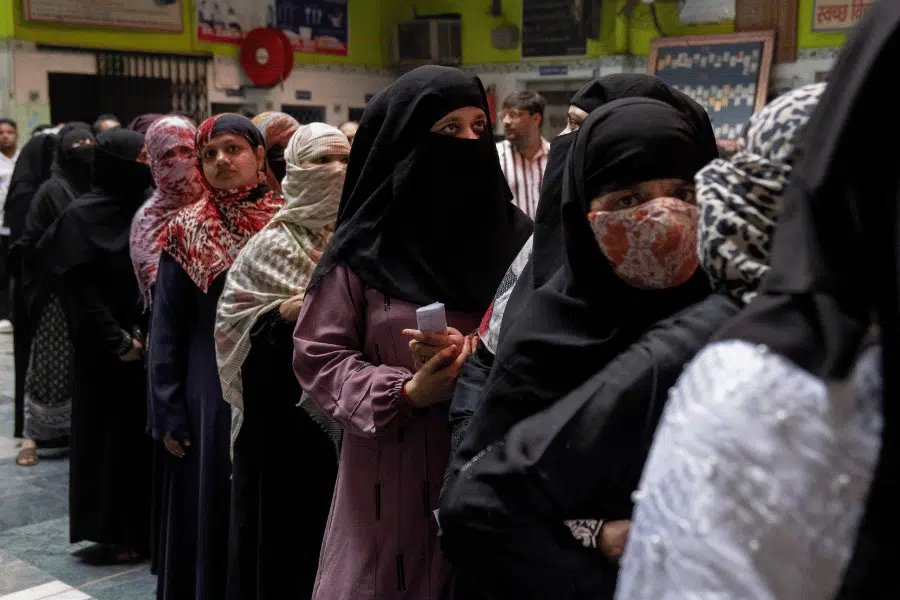
    Sidra Khan is a young Muslim woman in India who aspires to be a lawyer. Since early childhood, she has valued and respected Islam, the religion she was born into. But her headscarf now meets eagle eyes when she travels on public transport or tries to make a point during college lectures. 

    She feels that anti-Muslim rhetoric in India is causing her peers to judge her on the basis of religion and not merit. This, many Muslim students like Khan feel, is a casualty of having the government of Prime Minister Narendra Modi rule India.

    Over the last decade, the government of this secular country long considered the world’s largest democracy has introduced religious-based laws and politicians have incited anger and hatred against those who aren’t Hindu through rhetoric in speeches and AI campaigns. In northeast India’s Assam state, Wajid Alam, a college history student, watched a new election video from the ruling Bharatiya Janata Party with unease.

    An AI generated video shared by BJP’s official social media handles suggested that if the BJP loses power, Assam would be overrun by Muslims. It used AI-generated imagery to depict Muslims in hijabs and skull caps allegedly taking over airports, stadiums, tea gardens and other public spaces.

    It concluded with a message claiming Muslims could grow to 90% of Assam’s population, provoking other religious groups to choose the BJP to get rid of Muslims.

    The politics of religion

    For Alam and millions of Muslims in Assam, the video felt like an attack. And it is not the first time the BJP has been accused of demonizing religious minorities. Under Prime Minister Narendra Modi, India — a country founded on principles of secularism and religious freedom — has seen growing hostility toward Muslims and Christians.

    Some 200 million people in India practice the Muslim faith, making it the world’s third largest population of Muslims.

    Modi became India’s 14th prime minister in May 2014. Not long after, reports of attacks on religious minorities began to climb. In June 2014, Mohsin Shaikh, a young Muslim IT worker in Pune, was beaten to death by Hindu extremists — the first of several lynchings that followed. 

    A year later, in 2015, a Hindu mob in Dadri, Uttar Pradesh, killed Mohammad Akhlaq on suspicion of eating beef — considered a serious offense in the Hindu religion. That made global headlines and signalled the rise of cow-protection vigilantism. 

    By 2016–17, assaults on Muslims accused of trading or transporting cattle spread across northern India, with cases like the lynching of dairy farmer Pehlu Khan in Rajasthan. Christians, too, came under pressure during this period: nationalist groups staged forced reconversion campaigns, disrupted prayer meetings, vandalized churches and invoked new anti-conversion laws to arrest pastors and worshippers.

    Muslims under Modi’s rule

    Together, these incidents marked the early years of the Modi era as a turning point, when both Muslims and Christians began to face growing hostility in daily life.

    At the same time, hostile rhetoric against minorities became increasingly common in election campaigns. BJP leaders and affiliated Hindu nationalist groups framed Muslims as “outsiders” or “invaders,” with speeches warning of demographic “takeovers” or linking entire communities to terrorism and cow slaughter.

    Christians were accused of running covert “conversion factories,” with pastors painted as threats to India’s cultural identity. These narratives — echoed at rallies, on television debates and, more recently, through AI-generated propaganda — blurred the line between campaign messaging and hate speech. For many analysts, this marked a shift: politics was no longer just influenced by religion, but actively weaponizing it to polarize voters.

    These speeches were not isolated slips but part of a larger pattern. Muslims were painted as “infiltrators,” “termites” or participants in a supposed “love jihad” plot to convert Hindu women, while Christians were accused of running “conversion factories” and threatening India’s culture.

    Senior BJP figures, including party president Amit Shah and Uttar Pradesh Chief Minister Yogi Adityanath, used such language at rallies to mobilize support. Over time, this messaging blurred into mainstream political discourse, normalizing suspicion and hostility toward entire communities.

    Political divisions

    India’s experience is part of a wider global pattern. Around the world, political movements are blending nationalism and religion to define who “belongs.” A recent Pew Research Center study found that while the United States ranks lower than many countries on overall religious nationalism, it stands out among wealthy democracies for how many adults say the Bible should influence national laws or that being Christian is essential to being truly American.

    In the United States, debates over Christian nationalism have become a powerful current within the Republican Party and Donald Trump’s political rhetoric.

    Trump and allied evangelical leaders increasingly frame America as a “Christian nation,” a message that blurs the line between faith and state power. Commentators warn that this effort to link patriotism with religion mirrors broader global trends — from India to Israel to Turkey — where religious identity is being harnessed for political gain.

    Both the U.S. and Indian constitutions enshrine secularism, which is the idea that the state would keep equal distance from all religions. In India’s case, that principle mattered in a country where Hindus form the majority but millions of Muslims, Christians, Sikhs and Buddhists also call the nation home. 

    A history of strife

    Even before Modi, religion and politics were sometimes entwined: the Congress Party drew on Hindu symbolism, the 1984 anti-Sikh riots scarred the country and the destruction of the Babri mosque in 1992 shook faith in secularism. Still, the political consensus was that India was not to be defined by one faith.

    “But a lot has changed under Modi and the BJP,” said Sneha Lal, a Hindu student studying to become a primary school teacher. “We did not grow up in this India.”

    Lal is bothered by some of the BJP’s tactics that have promoted anti-conversion laws in several states, laws often used against Christians and Muslims accused of proselytizing. 

    In 2019, the Citizenship Amendment Act introduced fast-track citizenship for non-Muslim refugees, a move widely criticized as discriminatory toward Muslims. That same year, Delhi revoked the autonomy of Jammu and Kashmir, India’s only Muslim-majority state. Alongside these legal changes, election campaigns have increasingly featured polarizing rhetoric, and propaganda — including AI-generated videos — has circulated warning of demographic “takeovers.” 

    Critics say these policies and messages together mark a break from India’s founding secular vision, pushing the country toward a Hindu-first identity.

    Can there be a unified national identity?

    Seema Chishti, a senior journalist who has witnessed India’s journey from secular to right-wing, said that mixing religion with politics and diluting India’s unified national identity across religious and ethnic groups is a stated core principle of the ruling party, based on its militant roots. 

    “The Indian Constitution recognises no barriers to being Indian, i.e. nationality is not contingent on faith, caste, region, creed, gender or political views,” Chishti said. “BJP has loudly proclaimed ‘Hindu-India’ and instilled ‘Hindu’ nationalism in politics, education, the armed forces and every other facet of Indian life.”

    An example of Modi’s attempt to link Indian-ness with Hinduism is the Citizenship Amendment Act of 2019 which fast-tracks Indian citizenship for non-Muslims from three neighbours: Pakistan, Bangladesh and Afghanistan. “This action echoes ideas of India being a Hindu homeland,” Chishti said.

    On 15 August 2025, on India’s 79th Independence Day, Modi addressed crowds gathered at Delhi’s historical Red Fort, as he did the last 11 years that he has been in power. 

    On a day which commemorates India’s long struggle for self-rule that culminated in self-governance and independence from the British empire, Modi referred to the right-wing paramilitary organization Rashtriya Swayamsevak Sangh or RSS as a philanthropic organization. RSS has espoused an India for Hindus only. 

    Intolerance and violence

    All this has had tragic consequences. On 25 September, a seven-year-old Muslim boy was abducted from his neighborhood and brutally murdered in northern India’s Azamgarh. 

    But religious hate crimes haven’t only targeted Muslims. On 11 June, a mob allegedly linked to Hindu extremist groups attacked guests at a Christian wedding and set fire to a utility vehicle. And on 25 July, two Catholic nuns were arrested in central India’s Chhattisgarh state following a complaint by a member of an extremist Hindu group.

    India’s United Christian Forum reported that in 2024, Christians across the country witnessed 834 such incidents, up 100 incidents from 734 in 2023 — that comes out to more than two Christians being targeted every day in India simply for practising their faith. 

    These incidents of attacks and even public hate speeches against Christians are not limited to vandalism, they extend to physical assaults, disruption of prayer gatherings, financial boycotts and even motivated arrests. 

    This anti-Christian sentiment has been fanned by Hindu extremist groups in the country, which are indirectly and sometimes directly backed by the ruling BJP and other Hindu nationalist groups. These groups are increasingly using anti-conversion laws created in the Modi era to harass Christians. 

    Christians in India

    Arun Pannalal, president of the Chhattisgarh Christian Forum, said that two things are happening: Lawlessness of mobs who target Christians is ignored by police, while Christians often find themselves subject to seemingly random arrests. 

    “On random calls by Bajrang Dal goons the Police arrested the nuns, without evidence of anything,” Pannalal said. “But when the nuns wanted to complain against the goons, it was not lodged.

    Chishti said that more than politicising religion, by inserting religion into politics, the BJP is trying to portray itself as the only ‘Hindu’ party and the others consequently as not. She maintains that the BJP has fought elections on issues that polarise Indians, divide them and not on its performance or electoral record. Its electoral dominance has also meant that other parties in the fray, the opposition too find themselves playing on the BJP’s turf. 

    “The BJP has done its best to make the political discourse about faith, symbols of religion — Hindu and Muslim — and portraying themselves as saviours of the Hindu faith and righting so-called historical wrongs,” Chishti said.

    As a result, the media focuses on the religious conflicts, instead of other pressing issues, such as the economic well-being of people, the public health or education systems, joblessness and inflation, Chishti said.

    As India heads toward future elections, the blending of religion and politics raises questions not just for its own democracy but for others around the world. For young people in India, the stakes are immediate: whether their country remains true to its founding promise of secularism and equal rights.

    But for readers everywhere, India’s story is part of a larger global trend from the United States to Turkey to Israel, where religion and nationalism intertwine to shape politics. Understanding how these forces play out in the world’s largest democracy can help us make sense of how faith and power continue to influence politics across the globe.

    India’s struggle shows that when religion becomes a political weapon, democracy itself can become the battleground.


    Questions to consider:

    1. How is freedom of religion protected in India?

    2. In what ways are Muslims being treated differently by the Modi administration?

    3. In what ways to you feel comfortable or uncomfortable in your community expressing your faith?


    Source link

  • Can France accept its past as an oppressor?

    Can France accept its past as an oppressor?

    The captives were taken to a centre where masked Algerian informers picked out suspected rebels. “Those were detained, interrogated, with a lot of violence. The rest were released.”

    Worse followed. Kihn was on guard duty when he first saw a suspect being tortured with electricity from a hand-cranked generator. “It was unbearable. The man was yelling, jerking around. I had tears in my eyes,” he said, his eyes filling again as he re-lived the moment.

    When he was discharged, no one in his village wanted to hear his war stories, so for decades he clammed up. But memories, nightmares and panic attacks kept tormenting him. When he was 70, a film-maker cajoled him into an interview. He later wrote a book and found a measure of relief.

    Kihn, disgusted by his experiences, would not touch his military pension. Instead, he and some other former soldiers send the money to local NGOs in Algeria.

    “What we need is recognition of the truth,” he said. “Yes, we were criminals in Algeria.”

    France has tried to turn the page, but the past will not die.

    It took France until 1999 to recognise formally that its struggle in Algeria had been a “war,” even though it had mobilised up to two million conscripts for “operations to restore order” against the independence-seeking fighters of the Front de Libération Nationale (FLN).

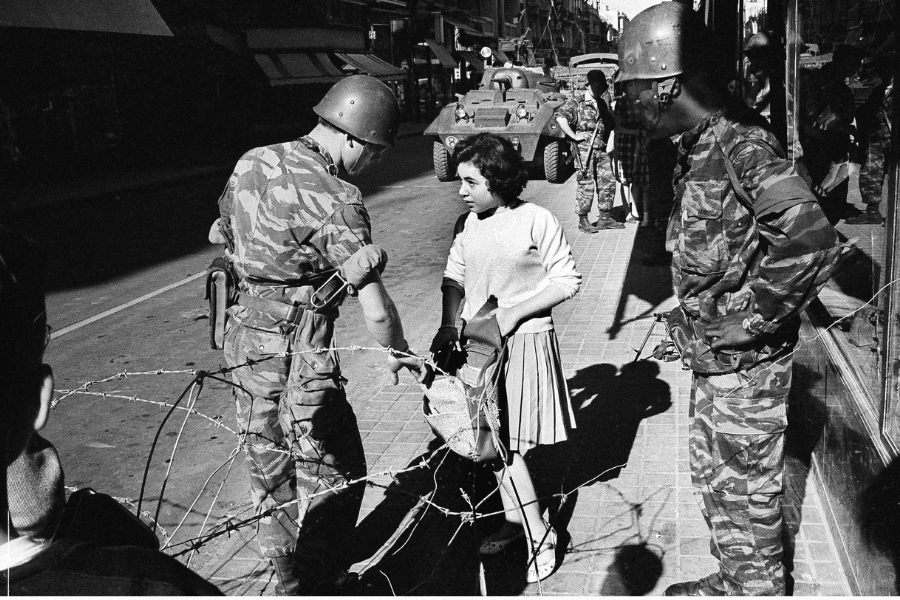
    The French campaign led to widespread torture, the forced displacement of two million civilians to cut the FLN from its rural base and countless summary executions and “disappearances.”

    The FLN was ruthless, too, terrorising French and Algerian civilians and eliminating its political rivals and eventually factions within its own ranks.

    The conflict, which brought violence to both sides of the Mediterranean, exposed deep divisions within France, toppled the country’s Fourth Republic and raised the spectre of civil war.

    After President Charles de Gaulle set Algeria on course for independence with a 1961 referendum, some French die-hards formed the Organisation de l’Armée Secrète (OAS), an armed group that mounted bomb attacks and assassinations, including at least one attempt to kill the French leader.

    OAS members eventually benefited from sweeping post-war amnesties. France sought to draw a veil and forget, but the past refused to die.

    Keeping the past alive

    Suzy Simon-Nicaise, 67, who heads one of the main associations of pieds-noirs, is determined to preserve a particular vision of the lost world of French Algeria, its culture, history and lifestyle.

    In her memory, it was a cosmopolitan place where Europeans mixed freely with Muslims based on mutual respect, where the French colonists had promoted development from the ground up.

    France, she concedes, may have committed some “not very glorious” deeds early on in its conquest of Algeria. “But Algeria did some things that were just as unbearable, if not more so,” she said.

    At a memorial event in Perpignan, Simon-Nicaise, wearing a dress as bright as her red hair, recounted a massacre of pieds-noirs in the mainly European city of Oran on July 5, 1962, the day Algeria became independent.

    She said 700 to 1,200 people were killed that day while French troops, in their barracks since the ceasefire in March, stood by with orders not to intervene. An exact toll has never been established. Macron, in his address to the pieds-noirs this year, said “hundreds” had died.

    Simon-Nicaise’s family had planned to stay on after independence, but an Algerian friend working with her father warned them to leave urgently, advice driven home by a French official who told her father that his name was on an FLN death-list. The family raced to the port with four suitcases.

    Around 800,000 pieds-noirs, the vast majority of the Europeans living in Algeria, also voted with their feet, believing their only choice was “la valise ou le cercueil (the suitcase or the coffin).”

    The French government had not anticipated such an exodus, and the flood of new arrivals met a chaotic and chilly reception.

    “We were treated worse than foreigners,” Simon-Nicaise said, recalling how she, then five, and her family were put up in a holiday village. “My family was crying, and everyone else was dancing the twist.”

    Later, her family had to share a cramped, squalid apartment with another family in Le Havre. Simon-Nicaise went to school there, where she heard a classmate declare: “Don’t talk to her. She’s a dirty pied-noir.”

    France’s rejected allies in Algeria

    If the pieds-noirs were mostly unwelcome in France, the harkis — Algerians who had served with the French military were doubly so. De Gaulle had rejected any idea of taking them in, effectively abandoning tens of thousands of men and their families to FLN vengeance.

    Nevertheless, up to 90,000 harkis made it to France, many helped by their French commanders. They were consigned to grim army camps behind barbed wire, most of them for many years.

    “There were no toilets, one washbasin for 10 families,” said Abdelkrim Sid, who was six on arrival and spent the next 15 years with his sprawling family in isolated camps.

    His father, like many other harkis, was later put to work in forestry settlements on the minimum wage but never fully integrated into the wider economy.

    “My father was a spahi (cavalryman). He really believed in France,” said Sid at the bleak Rivesaltes camp near Perpignan.

    In Rivesaltes, a museum now commemorates successive waves of inmates dumped there from 1939 onwards, among them refugees from the Spanish civil war, Gypsies and Jews interned by the wartime Vichy régime, German prisoners of war and then harkis.

    Sid, a burly retired truck-driver, says he can’t forget how shamefully the harkis were treated in the camps, which he likened to pens for animals.  “It was as if we had the plague.”

    Troubled identity

    The war deeply marked the Algerian diaspora, swelled by migration that also drew in Moroccans and Tunisians whose labour was in demand as the French economy revived after World War Two.

    North Africans today make up the bulk of France’s estimated 5-6 million Muslim citizens, roughly 8% of its total population, the biggest ratio in any European country.

    France, which prides itself on its principle of laïcité, which makes the secular state neutral towards religion, has found it difficult to come to terms with its Muslim minority. The complex relationship is made no easier by mutual mistrust that has lingered since the colonial venture in Algeria.

    Magyd Cherfi has tried hard to integrate in his native France, with outward success as a musician and songwriter, a devotee of French literature and an author in his own right.

    Yet as he explained at a café in a mostly Arab quarter of Toulouse, the city where he grew up, he has never felt fully accepted as French. Ironically, he knows that many in the deprived milieu of his childhood resent him as a traitor to his origins.

    “It’s as if being French is a mountaintop. You climb and climb, and it’s never far enough,” he said.

    “In the street, they ask, ‘Oh, where are you from?’ That means you are not French, because if you are, no one asks that question.”

    Cherfi’s father, a building worker, fled to France after four of his brothers were killed fighting in the maquis, or underground, during the Algeria war. “He only told us fragments of what happened then, about bad things the French did to his family, girls raped, cousins killed, imprisoned, tortured.”

    So Cherfi grew up with an uneasy sense of difference from his French chums because France had been the enemy in Algeria. Yet when his parents decided to stay in France, when he was about 15, they told him, “You must respect the French. They give us work. They feed us.”

    He admires much of what France offers, notably freedom and secularism, but says it fails to honour its own principles when it comes to its non-white citizens.

    “That’s the big rip-off of the republic. France is unable to build a narrative that is anything other than exclusively white. We barely exist in French history,” he said.

    “So France is still sausages, accordions, traditions, villages, and now, with millions of Muslims here, you feel they cling to this even more. So it’s quick, get out the accordions!”


    Questions to consider:

    • What was Algeria’s relationship to France before it gained independence in 1962?

    • How were the post-war experiences of the pieds-noirs and harkis similar and different?

    • Why do you think it took until 1999 for France to recognize the conflict over Algeria as a war?

    • What would you do to improve the integration of France’s Arab/African-origin citizens?


    Source link