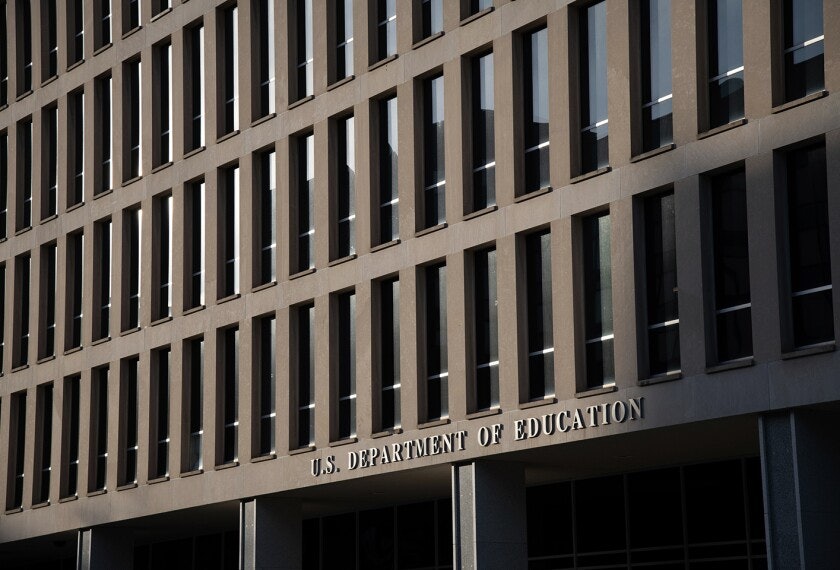
The U.S. Department of Education announced Thursday it will eliminate the rigorous review process previously required for colleges and universities seeking to change accreditors, a move critics warn could undermine educational quality standards.
The announcement, which implements parts of President Trump’s Executive Order on “Reforming Accreditation to Strengthen Higher Education,” simultaneously lifts a moratorium on reviewing applications for new accrediting bodies.
In a statement, Education Secretary Linda McMahon framed the policy change as promoting competition.
“We must foster a competitive marketplace both amongst accreditors and colleges and universities in order to lower college costs and refocus postsecondary education on improving academic and workforce outcomes for students and families.” she said.
However, higher education policy experts expressed concerns that the streamlined process could enable institutions to evade accountability by shopping for less stringent accreditors.
The Department’s new Dear Colleague Letter revokes guidance issued by the Biden administration in 2022 that had established a pre-clearance process for institutional accreditor changes. The new guidance explicitly allows institutions to change accreditors for reasons including finding one that “better aligns with a religious mission,” accommodating shifts in academic programs, complying with state law requirements, or avoiding accreditors that impose “discriminatory Diversity, Equity, and Inclusion (DEI) practices and principles.”
Education advocates worry the policy shift prioritizes institutional freedom over student protections.
“When we make it easier for colleges to switch accreditors without thorough vetting, we risk creating a race to the bottom where standards are compromised,” said one higher education researcher. “The students who will suffer most are often those from historically underrepresented groups who depend on accreditation as an assurance of quality.”
The Department characterized its previous approach as overreaching, stating in the new guidance.
“It is not the Department’s prerogative to infer any other meanings from the basic requirements or contrive a multi-step investigation. This guidance re-establishes a simple process that will remove unnecessary requirements and barriers to institutional innovation.”
The policy change also rescinds the October 2024 pause on reviewing applications for new accrediting agencies. At least one prospective accreditor that had its application temporarily paused has now been notified that its review will proceed.
Critics contend that enabling more accreditors with potentially varying standards could fragment the higher education quality assurance landscape in ways that confuse students and employers.
“The fundamental question is whether reducing oversight will actually improve educational outcomes or simply make it easier for underperforming institutions to avoid consequences,” said a public university president, who asked to remain anonymous, for fear of retaliation. “History suggests the latter is more likely.”
The Department has not announced specific metrics to evaluate whether the policy changes lead to improved outcomes for students or institutions.
Some higher education experts slammed President Donald Trump’s executive order aiming to reshape the accreditation system, raising warnings about government intrusion into academic matters, while the accreditation sector defended its work.
The president took aim at accreditor criteria related to diversity and equity while calling for new requirements of what he called “intellectual diversity” in faculty. He also called on U.S. Secretary Linda McMahon to “resume recognizing new accreditors to increase competition and accountability.”
The order was part of a bevy of higher education-related executive orders that Trump signed late Wednesday night affecting different aspects of the sector, including workforce development and historically Black colleges.
Dive Insight:
In his order on accreditation, Trump decried the quality-control bodies as “the gatekeepers that decide which colleges and universities American students can spend the more than $100 billion in Federal student loans and Pell Grants dispersed each year.”
He accused the organizations of having “failed in this responsibility to students, families, and American taxpayers,” and also of having “abused their enormous authority.”
In the order, Trump launched into a 350-word castigation of accreditors’ diversity, equity and inclusion criteria.
He specifically named the Liaison Committee on Medical Education, which accredits medical programs, and the American Bar Association’s Council of the Section of Legal Education and Admissions to the Bar, which accredits law schools.
“Federal recognition will not be provided to accreditors engaging in unlawful discrimination in violation of Federal law,” Trump said in the order, without specifying which DEI criteria and laws may come in conflict.
Trump also directed McMahon to hold accreditors “accountable” by denying, monitoring, suspending or terminating of accreditation powers for those who “fail to meet the applicable recognition criteria or otherwise violate Federal law.”
His order specifically mandates that accreditors require institutions to use program data on student outcomes “without reference to race, ethnicity, or sex.”
Other elements of the order would smooth the path for federal recognition of new accreditors.
The order also includes a provision directing McMahon to ensure “institutions support and appropriately prioritize intellectual diversity amongst faculty in order to advance academic freedom, intellectual inquiry, and student learning.”
Trump’s accreditation order drew a fierce rebuke from the American Association of University Professors, among others.
Accreditors have been “important mechanisms for ensuring that academic institutions areaccessible and inclusive, and provide high-quality education for all students,” the faculty group said in a statement Wednesday.
It added, “This executive order, however, uses the administration’s cruel and absurdist weaponization of antidiscrimination and civil rights law to prevent accrediting agencies from requiring that institutions take basic steps to ensure they are accessible to and inclusive of all students.”
AAUP President Todd Wolfson described the order’s call for “intellectual diversity” as “code for a partisan agenda that will muzzle faculty who do not espouse Trump’s ideological agenda.”
Sameer Gadkaree, president of The Institute for College Access & Success, similarly condemned the order, saying that it “undermines the aspects of the accreditation process that are designed to protect classroom instruction from political interference.”
Gadkaree also panned the order’s ban on using demographic data to evaluate programs, warning that without that option “accreditors — along with researchers, evaluators, and policymakers — will lack the information they need to truly assess quality.”
Responses from the accreditation sector were quieter, but they defended the work of accreditors.
Accreditor’s DEI standards are “predicated on institutions implementing such requirements in accordance with applicable state and federal laws,” the Council of Regional Accrediting Commissions said in a statement Wednesday.
C-RAC called for the order’s required changes to be worked out through the Education Department’s negotiated rulemaking process, which brings together higher education representatives to hash out policy details. The organization also pointed to the regulated process for removing accreditor recognition, noting, “Ultimately, concerns about accreditor recognition can be escalated to federal court.”
The Council for Higher Education Accreditation, an industry group that both vets and advocates for accrediting bodies, issued a statement Wednesday largely describing the work, standards and innovation already in place at accreditors and institutions.
“Our focus is and always will be academic assurances,” said Cynthia Jackson Hammond, the organization’s president. “CHEA-recognized accreditation organizations meet those standards.”
She closed by saying, “The independence of the accreditation process is essential in order to preserve and protect the integrity of quality assurance in higher education.”
President Donald Trump took aim at college accreditors in an executive order signed Wednesday that targets two accrediting agencies for investigation and suggests others could lose federal recognition altogether.
The order was one of seven issued Wednesday as Trump nears the end of his first 100 days. Others directed the Education Department to enforce the law requiring colleges to disclose some foreign gifts and contracts, aimed to support historically Black colleges and universities, and outlined several policy changes for K-12 schools. With the accreditation order and the others, Trump and White House officials argued they were refocusing the education system on meritocracy.
Education Secretary Linda McMahon, who was in the Oval Office for the signing, opened her follow-up statement by praising the accreditation order and saying it would “bring long-overdue change” and “create a competitive marketplace.”
“America’s higher education accreditation system is broken,” she wrote. “Instead of pushing schools to adopt a divisive DEI ideology, accreditors should be focused on helping schools improve graduation rates and graduates’ performance in the labor market.”
Some of the immediate public reactions from higher ed groups criticized the accreditation order, describing it as yet another attempt to put more power in the hands of the president and threaten academic freedom.
The Council of Higher Education Accreditation said Trump’s directive would “affect the value and independence of accreditation,” while the American Association of University Professors said it would “remov[e] educational decision making from educators and reshap[e] higher education to fit an authoritarian political agenda.”
Overhauling Accreditation
Rumored for weeks, the accreditation order was perhaps the most anticipated one of those signed Wednesday, and it will likely have widespread ramifications as Trump seeks to scrutinize and reform the system.
Historically, accreditors have operated under the radar with little public attention, but in recent years conservatives have focused on the agencies and their role in holding colleges accountable. (The accreditors do hold a lot of power, because universities must be accredited by a federally recognized agency in order to access federal student aid.)
During his presidential campaign, Trump himself called accreditation reform his “secret weapon” and accused accreditors of failing “to ensure that schools are not ripping off students and taxpayers.”
The order calls for McMahon to suspend or terminate an accreditor’s federal recognition in order to hold it accountable if it violates federal civil rights law, according to a White House fact sheet. The executive order specifically says that requiring institutions “to engage in unlawful discrimination in accreditation-related activity under the guise of ‘diversity, equity, and inclusion’ initiatives” would be considered a violation of the law.
The order also singles out the American Bar Association, which accredits law schools, and the Liaison Committee on Medical Education, which accredits medical schools, and directs cabinet secretaries to investigate them. (The American Bar Association suspended DEI standards for its members in February, as did some other accreditors.)
Beyond that, McMahon is tasked to “realign accreditation with student-focused principles.” That could include recognizing new accreditors, prioritizing intellectual diversity among faculty and requiring “high-quality, high-value academic programs,” though the fact sheet doesn’t say how that would be measured.
White House staff secretary Will Scharf said during the event that accreditors have relied on “woke ideology” instead of merit and performance to accredit universities. He didn’t provide evidence for his claims, but the fact sheet cites the national six-year undergraduate graduation rate, which is at 64 percent, as one example of how accreditors have “failed to ensure quality.”
“The basic idea is to force accreditation to be focused on the merit and the actual results that these universities are providing, as opposed to how woke these universities have gotten,” Scharf said.
The Trump administration also wants to streamline the process to recognize accreditors and for institutions to change agencies. Some states that have required their public colleges to change accreditors have claimed that the Biden administration made the process too cumbersome.
Scharf said the order charges the Education Department “to really look holistically at this accreditation mess and hopefully make it much better.”
Trump didn’t say much about the order or what actions he hopes to see McMahon take next.
Enforcement of Foreign Gifts
The president is not the first government official this year who has sought to limit foreign influence on American colleges and universities.
The House recently passed a bill, known as the DETERRENT ACT, which would amend Section 117 of the Higher Education Act to lower the threshold for what foreign gifts must be reported from $250,000 to $50,000. It also would require the disclosure of all gifts from countries of “concern,” like China and Russia, regardless of amount. The legislation advanced to the Senate in late March following a 241–169 vote.
Rep. Tim Walberg, a Michigan Republican and chair of the committee that introduced the bill, praised Trump’s action Wednesday, saying it “underscores” a Republican commitment to “promoting transparency.”
“Foreign entities, like the Chinese Communist Party, anonymously funnel billions of dollars into America’s higher education institutions—exploiting these ties to steal research, indoctrinate students, and transform our schools into beachheads in a new age of information warfare,” Walberg wrote in a statement shortly after Trump’s order was signed. “I am glad the Trump administration understands the grave importance of this threat, and I look forward to working with President Trump to protect our students and safeguard the integrity of America’s higher education system.”
Colleges’ compliance with Section 117 has been a key issue for Republicans over the years. House lawmakers repeatedly criticized the Biden administration’s efforts to enforce the law, but former education secretary Miguel Cardona defended his agency’s actions. They also tried to pass the DETERRENT Act last session, but it was blocked by Democrats in the Senate.
The executive order is broader than the DETERRENT Act and does little to distinguish itself aside from directing McMahon to work with the attorney general and heads of other departments where appropriate and to reverse or rescind any of Biden’s actions that “permit higher education institutions to maintain improper secrecy.”
More Support for HBCUs
Another order creates within the White House an initiative focused on historically Black colleges and universities and revokes a Biden executive order titled “White House Initiative on Advancing Educational Equity, Excellence, and Economic Opportunity Through Historically Black Colleges and Universities.”
During his first term, Trump moved an HBCU initiative at the Education Department to the White House as a largely symbolic gesture to show his support for Black colleges. That initiative continued under Joe Biden, though it was returned to the Education Department. Biden also created initiatives focused on Hispanic-serving institutions and tribal colleges. Trump ended those newly created initiatives during his first week in office.
The executive order also established the President’s Board of Advisors on HBCUs at the Education Department, which appears to already exist. The panel last met in January, according to a Federal Register notice.
Scharf said the order would ensure that HBCUs are “able to do their job as effectively and as efficiently as possible.”
This audio is auto-generated. Please let us know if you have feedback.
Dive Brief:
Saint Augustine’s University announced Thursday that its appeal to keep its accreditation has been denied,striking a major blow to the struggling historically Black institution.
Officials at the North Carolina university said they are entering a 90-day arbitration process in another bid to remain accredited. That will also ensure students graduating through May 2025 will earn their diplomas from an accredited institution, according to the university.
Brian Boulware, Saint Augustine’s board chair, struck an optimistic tone in Thursday’s announcement about the arbitration process, saying that the university’s “strengthened financial position and governance will ensure a positive outcome.”
Dive Insight:
Saint Augustine’s has been on the precipice of losing its accreditation for over a year. In 2023, the university’s accreditor — the Southern Association of Colleges and Schools Commission on Colleges — voted to terminate the university’s accreditation.However, college officials successfully contested that last year through arbitration.
Yet in December, SACSCOC once again voted to terminate Saint Augustine’s from its membership, citing issues with the university’s finances and governance.Saint Augustine’sThursday announcement says that it lost its appeal of that decision, but arbitration once again gives the university another shot at retaining its accreditation.
Since the December vote, the university has sought to shore up its budget through widespread cuts and new sources of funding.
Still, Saint Augustine’s is grappling with steep declines in enrollment, with just 200 students in the 2024-25 academic year, WRAL reported. That’s down from over 1,100 students just two years ago.
In Thursday’s announcement, Saint Augustine’s officials announced they had secured up to $70 million, which they described as a bridge loan, “at competitive market rates and terms” in a deal that they expect to close later this month. University officials did not disclose where the $70 million in funding is coming from, citing nondisclosure agreements.
The announcement comes after Saint Augustine’s failed to get approval from the state attorney general’s office to enter a land lease deal with 50 Plus 1 Sports, an athletics development firm.
In January, the attorney general’s office said the deal could put the university’s nonprofit status at risk,arguing that the upfront lease payment of up to $70 million was far too low for Saint Augustine’s103-acre property. The office said the campus had been appraised at over $198 million.
Following the decision from the attorney general’s office, the two parties began restructuring the deal to lease less than half of Saint Augustine’s campus to50 Plus 1 Sports, INDY Week reported. Under the new terms — which circumvent the need for the state office’s sign-off — the sports development firm would also share some of its revenue from its use of the land with the university.
Saint Augustine’s did not mention 50 Plus 1 Sports in Thursday’s announcement.
“This funding is a game-changer,” Hadley Evans, vice chair on Saint Augustine’s board, said in Thursday’s announcement. “We now have the financial leverage to protect SAU’s legacy, enhance academic offerings, and create sustainable revenue streams through strategic campus development.”
Saint Augustine’s has also drastically cut its workforce amid its financial woes. In November, the university said it was cutting over 130 staff and faculty positions to shave $17 million from its budget.
The Southern Association of Colleges and Schools Commission on Colleges denied Saint Augustine’s University’s appeal to remain accredited, SAU announced Thursday.
The decision is the latest blow to the embattled historically Black university in North Carolina, which has struggled to maintain its accreditation since December 2023, when SACSCOC voted to strip it of its membership due to compliance issues related to governance and finances. Following that decision, SAU lost an appeal to remain accredited; it won a reprieve in the courts last July but lost accreditation again in December. Now that SASCOC has denied SAU’s latest appeal, the university will again pursue a legal remedy, officials announced.
“We have made substantial progress and are confident that our strengthened financial position and governance will ensure a positive outcome,” Board of Trustees chairman Brian Boulware said in a Thursday statement announcing plans to contest the accreditation decision in court. “SAU is resilient, and we are resolute in our commitment to academic excellence.”
Beyond accreditation issues, Saint Augustine’s has navigated severe fiscal issues that left it teetering on the brink of closure for months as it pursued various financial lifelines. SAU recently attempted to lease its campus to 50 Plus 1 Sports, a fledgling Florida company. The $70 million deal to lease property for 99 years with development options would have provided much-needed funds for SAU, but following a review required by state law, North Carolina officials declined to sign off on the arrangement due to the transfer of nonprofit assets.
SAU had unsuccessfully sought approval of the deal before its appeal to SACSCOC last month.
The North Carolina attorney general’s office, which reviewed the deal, cited insufficient documentation and concerns that SAU was only receiving $70 million for property appraised at $198 million. Saint Augustine’s and 50 Plus 1 Sports have since restructured the terms of the deal.
In Thursday’s statement, SAU announced it “secured up to $70 million in sustainability-focused funding at competitive market rates and terms,” which it expects to close later this month. It added that nondisclosure agreements “prevent SAU from publicly disclosing the partners’ names.”
The American Bar Association is suspending diversity, equity, and inclusion standards for the law schools it accredits amid President Donald Trump’s crackdown on DEI efforts, Reuters reported.
An ABA council reportedly voted on the change Friday, suspending DEI standards through August as the organization—which accredits nearly 200 law schools—considers permanent changes.
ABA officials did not respond to a request for comment from Inside Higher Ed.
The change comes as the ABA has clashed with the Trump administration in recent weeks, accusing the president of “wide-scale affronts to the rule of law itself” in issuing rapid-fire executive orders that have targeted DEI and birthright citizenship, and sought to shrink the federal government through mass firings and other actions that some legal scholars have deemed unlawful.
In the aftermath, the Trump administration barred political appointees to the Federal Trade Commission from holding ABA leadership posts, participating in ABA events, or renewing their memberships. FTC Chairman Andrew Ferguson accused the ABA of a “long history of leftist advocacy” and said “recent attacks” on the administration made the relationship “untenable.”
State officials have also pressured ABA to drop its DEI standards. In January a group of 21 attorneys general, all from red states, sent a letter to the ABA urging it to drop DEI standards.
The ABA has reportedly been reviewing its standards on DEI since 2023, when the U.S. Supreme Court upended affirmative action with its ruling in favor of Students for Fair Admissions against Harvard and the University of North Carolina at Chapel Hill.
Some Republican officials have celebrated the ABA’s move. “This is a victory for common sense! We are bringing meritocracy back to the legal system,” U.S. Attorney General Pam Bondi wrote on X.
Let’s get into the actual difficulties surrounding accreditation. You Directors of Accreditation are well-versed in the process and are very much aware that accreditation is not a game. It’s not enough to merely do the necessary compliance tasks, is it? Meeting accreditation criteria, establishing your institution’s value, enduring the never-ending audits, and keeping up with changing regulations are all part of it. The stakes are high and the pressure is intense. It remains constant. Traditional methods? They won’t cut it anymore.
Imagine, though, if the tables could be turned. Envision yourself to use technology to not just complete the certification process, but to turn it into an asset. Think of real-time data, seamless procedures, and openness at every level. It’s time to go beyond the minimum and leverage approval to your benefit. Automating, cloud computing, and utilizing artificial intelligence-powered analytics will not only enhance the reputation of your university but also enhance the efficiency of operations.
To help Directors of Accreditation use technology to improve institutional standards, ease compliance, and streamline accreditation data administration, we have put together this handbook. This will empower you to make critical decisions.
A Dynamic Challenge for Directors: Redefining Accreditation
As Directors of Accreditation, you are aware of the rapidity with which accreditation standards can evolve. Meeting accreditation standards necessitates a more comprehensive examination of student outcomes, diversity metrics, and the degree to which the institution aligns with its own objectives. No longer is it sufficient to simply mark off boxes.
One of the hardest things to do? The stress that comes from having up-to-date, correct information at your hands. For accreditation reviews to be valid, the proof must be complete and up-to-date, leaving no room for doubt. Still, getting this information can feel like a race against the clock, especially when old methods can’t keep up with how needs change. Here, technology can really make a difference if it is used in the right way.
Tech-Driven Solutions: Streamlining the Accreditation Journey
Technology is the game-changer. Think about using AI-powered data analytics to revolutionize your accreditation data management. These smart tools can turn those stacks of paperwork into clear, insightful reports, making the process of proving your credentials not just easier, but a whole lot smarter! No more searching through spreadsheets or endless emails—just clear, usable information that shows your school is following the rules.
Furthermore, cloud-based accreditation systems are very useful. Consider them as a safe, central location for all of your compliance-related info. It’s possible to get important data from these options, so your team can work together easily whether they’re at the office or traveling. Adopting these technologies doesn’t just keep you current; it sets a new standard for how quickly and clearly the approval process can be done.
Automation: The Secret to Simplifying Repetitive Accreditation Tasks
Imagine having more time to work on big-picture projects instead of doing the same old things over and over again. That’s how powerful technology can be in the process of getting accreditation. With the right tools, you can cut down on your work and free up your team to focus on raising institutional standards instead of just checking off tasks.
Accreditation Data Management and Reporting Automation
Consider the time used in gathering information and writing up reports for accreditation. Reducing the time and effort required to compile metrics in real-time is possible with automation technologies. As a bonus, you’ll spend less time worrying about mistakes and more time presenting accurate, up-to-date information.
Smart Templates and Dashboards
Meeting certain accreditation body criteria calls for customization, which is absolutely important. Smart templates let you quickly construct evaluations, audits, and self-studies that exactly fit what is required. Imagine having customized dashboards right at hand that clearly show your measurements and progress—no more poring over spreadsheets!
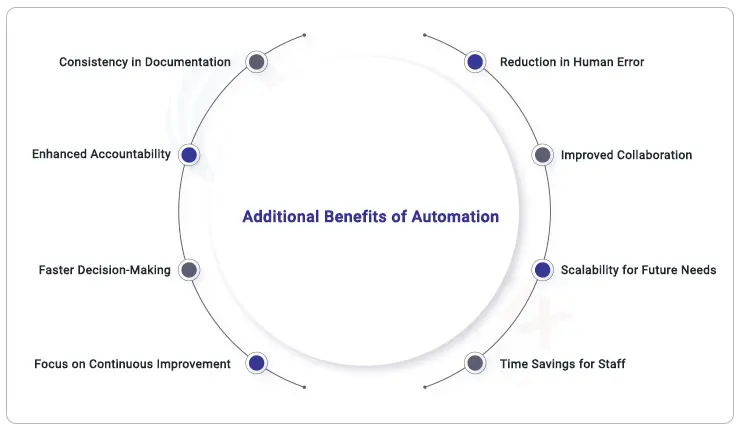
Additional Benefits of Accreditation Data Management Automation
Maintain accurate, consistent, and up-to-date documentation without the need for manual updates.
Maintaining Accountability: A transparent audit trail for all your accrediting operations may be easily created by keeping track of who made changes and revisions.
Faster Decision-Making: With real-time insights and easy access to data, your team can make informed decisions quickly, keeping the accreditation process moving forward.
Focus on Continuous Improvement: By automating routine tasks, you can spend more time analyzing data and implementing improvements that enhance your institution’s performance and outcomes.
Building Transparency and Trust Through Technology
Let’s discuss something absolutely important for modern society: openness. Directors of Accreditation have a special opportunity to use technology to establish confidence among all those engaged in the accreditation process. How can you make this happen?
Real-time dashboards available for stakeholders
Imagine having real-time dashboards at your fingertips. These tools let you instantly share your accreditation progress with stakeholders—no more waiting for quarterly updates! With just a glance, everyone can see where you stand, thanks to clear visuals of your metrics, timelines, and benchmarks.
This degree of openness helps everyone to be responsible as well as promotes teamwork. Trust naturally comes when your stakeholders know you are always trying to meet and surpass accreditation criteria.
Blockchain for Academic Integrity
Let’s now explore something somewhat more novel—blockchain technology. Consider blockchain as your new best buddy helping to maintain the integrity of your certification records. Using this technique makes an unchangeable record of all information connected to accreditation. Your accreditation data management is thus not only safe but also transparent and easily verifiable. Imagine being able to assure other stakeholders and accrediting authorities of your absolutely perfect data. Blockchain helps you to reduce the possibility of conflicts over data accuracy and inspires confidence among all the players. This kind of confidence helps to protect the reputation and integrity of your university.
Enhanced Reporting Capabilities
Now, let’s be honest: reporting can get draggy unless you trigger the right gear! Imagine being able to quickly and accurately create detailed reports that show your commitment to regulatory compliance and continuous growth. You can easily show accreditation groups how much progress you’re making like you have a superpower. By doing more than just checking off boxes, you’ll be showing that your institution is ready to take on any tasks that come its way. Therefore, why not use that report writing duty as a chance to shine? Using technology can help you stay prepared and make a great impression!
Joining the Community
In addition to internal partners, transparency also applies to the public and the rest of the academic community. Sharing your accreditation path will help your university project more professionalism and draw professors and students. Who would not want to be a part of an open and reliable institution?
Using technology to track your certification procedures and results helps you to identify possible problems before they become serious ones. This proactive strategy lets you act early to maintain everything in line.
Enhancing the Student Experience While Meeting Standards
Outcome-Based Education (OBE) and Competency Tracking
Using technology to track your certification procedures and results helps you to identify possible problems before they become serious ones. Being proactive keeps you on target. Improving the Student Experience While Complying with Outcome-Based Education (OBE) and Competency Monitoring.
Here’s the stars: your pupils! The right technology will improve their experience and satisfy all needs. This is where Outcome-Based Education (OBE) really shines. Imagine a system that not only makes sure that educational results are in line with accreditation standards but also makes sure that student success is the most important thing. You definitely need to keep track of students’ skills and make sure they get the help they need to do well by using technology.
That’s not all, though! Real-time feedback tools and polls are your secret weapons for improving quality. These resources allow you to ask students for honest opinions, which might reveal where you’re succeeding and where you might need some improvement. Engaging with your students and listening to what they have to say goes beyond simply completing goals for continuous improvement.
In this way, you make a place where students feel appreciated and supported, and you also show accreditation bodies that you’re dedicated to continuous improvement.
Preparing for the Future: Tech Trends Directors Should Watch
EdTech Innovations
As the Director of Accreditation, it’s important to stay on top of things. Take a look at what next year holds! First, EdTech innovations are coming soon and will supposedly make the process of getting accredited even easier. Consider banking on cutting-edge software that makes data analysis better, streamlines reports, and automates tasks!
Being Prepared to Virtual Accreditation Visits
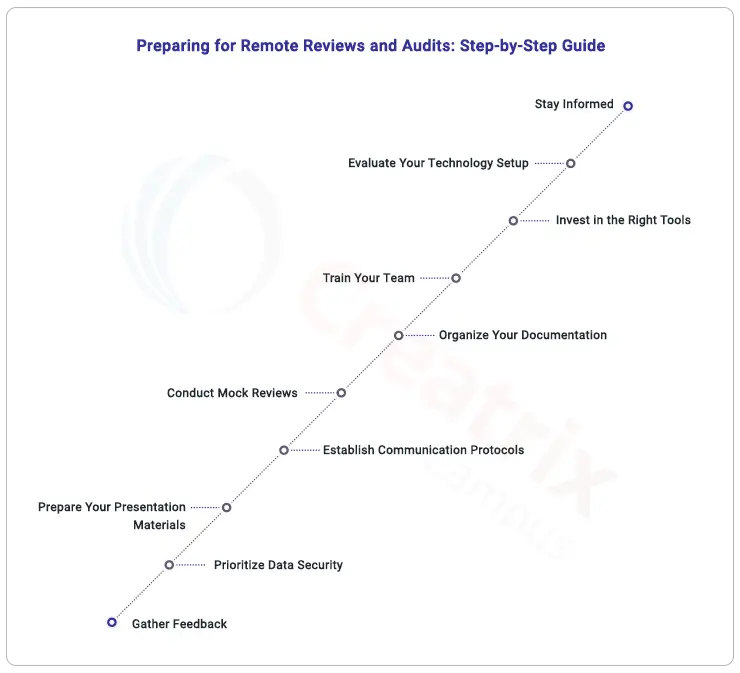
Next, we’ll go over the basics of preparing for accreditation visits that take place virtually. As more and more things happen online, reviews and audits done from afar are becoming routine. In what ways can you become ready for this change? By acquiring robust technology that facilitates online participation and emphasizes your organization’s achievements. Ensure that all team members are informed about the use of virtual presentation techniques, online document sharing, and video conferencing. Not only will these novel concepts facilitate the acquisition of accreditations, but they will also facilitate collaboration among partners.
Turn Compliance into a Strategic Advantage with Creatrix Campus Accreditation Platform
By incorporating the appropriate technology, such as the Creatrix Campus Accreditation platform, Directors of Accreditation can elevate compliance from a mundane obligation to a strategic advantage. This strategy will help you satisfy accreditation criteria and match the main objectives of your institution.
This is the time to simplify your certification application. Explore the Creatrix Campus platform for a smarter, more efficient way to meet standards. Let’s team to surpass simple compliance!