Guilford College’s accreditor has removed the institution from probation after what its president described as significant improvements in financial management and operations, the college announced Tuesday.
Guilford President Jean Parvin Bordewich and a five-person delegation made their case over the weekend during a meeting with the Southern Association of Colleges and Schools Commission on Colleges.The delegation pointed to expense cuts and a balanced budget for both fiscal 2025 and the first five months of the current fiscal year.
SACSCOC initially put Guilford, in North Carolina, on probation in 2023,flagging the college for weak financial processes and later for inadequate financial resources.“Now we are on sound financial footing and well positioned to fulfill our mission,” Bordewich said in a statement Tuesday.
Dive Insight:
Just six months ago, Guilford was on the hunt for cash as it raced to balance its budget for fiscal 2026 — a necessity for maintaining its accreditationbeyond the December meeting with SACSCOC. At the time, Bordewich said the private, Quaker-founded collegewas “between the proverbial rock and a hard place.”
Guilford has since “turbo-charged” its fundraising,doubling last year’s number of alumni donors in just four months, Bordewich told SACSCOC in prepared remarkslast weekend. The college has received $7 million in unrestricted donations for the first third of fiscal 2026, more than 66% of its goal for the year.For the calendar year 2025, Guilford has received $12.6 million in unrestricted cash, nearly five times what it had last year.
The college has also made painful cuts and now operates with one-third fewer employees compared to a year ago.
In June, Guilford’s governing board optednot to declare financial exigency — a process invoked by institutions in financial distress so they can lay off tenured faculty.
However, some faculty chose early retirements and exits. Faculty also, with staff, accepted suspended retirement contributions, according to Bordewich.
In all, Guilford cut its operating expenses by $5.7 million in fiscal 2025 and by another $6.6 million in 2026.
“The College needed serious pruning,” Bordewich told SACSCOC. “We dug into the core of Guilford’s financial dysfunction, implemented changes, and month by month, the institution grew stronger.”
Along with slashing its budget, the college has also raised new revenue. Beyond donations, it has sold some $400,000 in art and struck a $7.5 million development deal with the Piedmont Land Conservancy for 120 acres of the Guilford Woods. The land deal will open up access to the green space for the public whileGuilford retains ownership.
Many of Guilford’s financial woes have stemmed from sagging enrollment. Between 2018 and 2023, fall headcount declined 23.4% to 1,208 students. That number is down 57.3% from 2010.
Prior to this year, the college reported a $2.4 million operating deficit in fiscal 2024and $4.7 million operating deficit in fiscal 2023.
“This has never been about the student experience in or out of the classroom, which has remained exceptional,” Bordewich said Tuesday. “This has been about finances, and SACSCOC has now affirmed that we have the financial resources to support Guilford’s unique approach to a liberal arts education.”
These institutions are the backbone of American higher education. They serve the largest share of students by far, and state-supported colleges and universities play an outsize role in providing economic mobility for Americans of all backgrounds. I’ve spent my entire career working on behalf of public universities, most recently as president of the Association of Public and Land-grant Universities. I know the enormous good they do for their students and for society at large. We have the best publicly supported system of higher education in the world. We can and must continue to improve it.
I also understand why our public institutions will benefit from an accreditor that aligns with their mission and their public obligations. They need an accreditor that offers true peer review and a disciplined focus on improving student outcomes. They need an accreditor familiar with the mechanics of state oversight, able to promote academic quality while also being more efficient by eliminating redundant bureaucracy in the accreditation process.
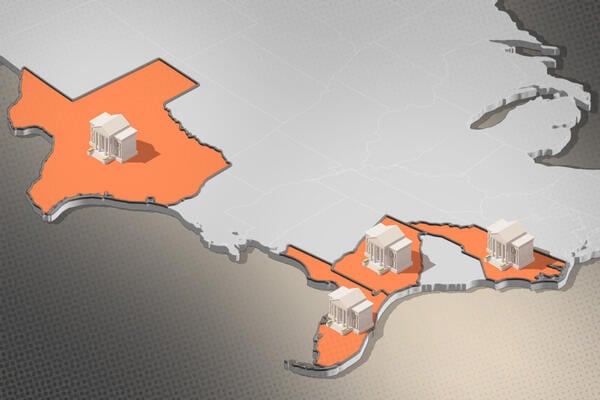
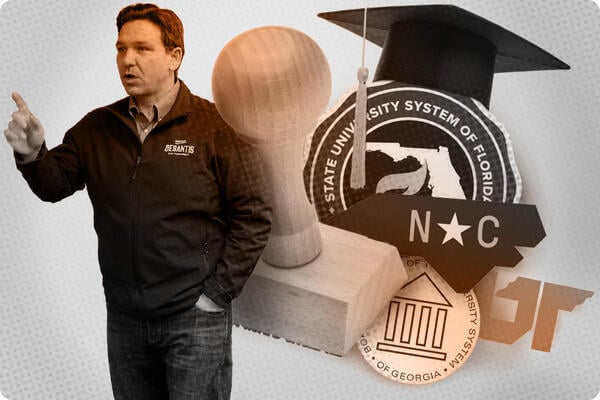
The Commission for Public Higher Education was formed earlier this year to answer those needs. Established by a consortium of six public university systems—the State University System of Florida, the University System of Georgia, the University of North Carolina System, the University of South Carolina System, the University of Tennessee System and the Texas A&M University System—the aim of CPHE is to offer public universities across the country an alternative to the regional accreditors that have long dominated higher education, each claiming a geographical monopoly that lumped together for-profit schools, bespoke private colleges and open-access public institutions under the same set of rules and regulations.
I agreed to serve as chair of the Board of Directors for CPHE because I believe there’s a need for innovation in accreditation. We are seizing the opportunity to improve institutional accreditation by focusing on outcomes, as well as streamlining the process by taking advantage of the considerable oversight that public institutions are subject to at the state level. An accreditor purpose-built by public institutions, for public institutions, can promote academic quality while driving innovation in student success and eliminating unnecessary costs in the legacy model of accreditation.
There is clearly enthusiasm for the vision behind CPHE. Ten diverse institutions have already signed on to join CPHE’s initial cohort (full list below), and the commission is fielding additional inquiries from across the country. We’ve just issued a call for public university faculty and administrators to join our first group of peer-review teams, and we look forward to pioneering a new model of more straightforward and more transparent accreditation review.
CPHE Initial Cohort
Appalachian State University
Chipola College
Columbus State University
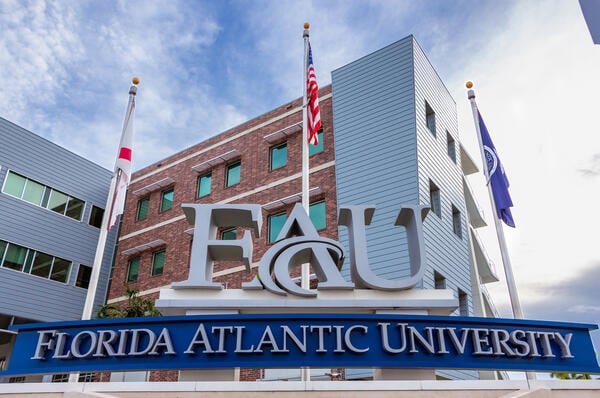
Florida Atlantic University
Florida Polytechnic University
North Carolina Central University
Texas A&M–Kingsville
Texas A&M–Texarkana
University of North Carolina at Charlotte
University of South Georgia
University leaders and state policymakers nationwide see the value in a streamlined approach to accreditation that shifts the focus from inputs and operational minutiae to meaningful outcomes for students and taxpayers.
The legacy approach to accreditation is plagued by the need for each accreditor to serve the huge diversity of institutional missions and governing structures that underlie the American system of higher education. Trying to impose the same set of criteria and procedures on every institution, from small private colleges to huge public flagships, has led to decades of ineffective oversight and wasted effort. There is little or no evidence that institutional accreditation has driven quality improvements across the sector, while it is abundantly clear that it has imposed arbitrary and opaque regulatory demands on institutions that already are subjected to multiple layers of oversight as public agencies.
Institutions like Georgia State University, where I served more than a decade as president, are closely scrutinized by their governing boards, by state regulators and legislative bodies, by auditors and bond ratings agencies. They have public disclosure and consumer protection requirements above and beyond what is demanded of private and for-profit colleges. I have firsthand experience with how costly and cumbersome accreditation reviews divert institutional resources that would be better spent supporting student success, and I am confident a public-focused accreditor can streamline reporting and compliance costs without compromising oversight.
An accreditor attuned to the nuances of public oversight can add value by focusing on academic quality and student success, using a process of peer review to promote continuous improvement through the dissemination of best practices and innovations. That’s why CPHE’s accreditation standards are tailored toward public purpose and academic excellence, with provisions for measuring student learning, promoting academic freedom and intellectual diversity, and driving continuous improvement of student outcomes.
At core, the purpose of accreditation is to reassure students and taxpayers that universities are delivering on their promise to provide a quality education that leaves students better off. An accreditor tightly focused on that public mission can go a long way in shoring up the trust that higher education needs to thrive.
Mark Becker is the chair of the Board of Directors of the Commission for Public Higher Education. He formerly served as president of the Association of Public and Land-grant Universities from 2022 to 2025, and before that he was president of Georgia State University from 2009 to 2021.
Just four months after the launch of the Commission for Public Higher Education, the aspiring accreditor has received letters of intent from a cohort of 10 institutions, making them the first potential members.
The initial group to submit a letter of intent seeking CPHE accreditation comes from four states: Florida, Georgia, North Carolina and Texas. All are currently accredited by the Southern Association of Colleges and Schools Commission on Colleges. They are:
Appalachian State University (N.C.)
Chipola College (Fla.)
Columbus State University (Ga.)
Florida Atlantic University
Florida Polytechnic University
Georgia Southern University
North Carolina Central University
Texas A&M Kingsville
Texas A&M Texarkana
University of North Carolina at Charlotte
With its inaugural cohort and draft standards in place, the newly formed commission—introduced by Florida governor Ron DeSantis at a June press conference in which he railed against existing accreditors—is making progress toward its eventual goal of recognition by the U.S. Department of Education, which is a years-long process. Now the first 10 potential member institutions will offer CPHE a chance to show how it might offer a different approach to accreditation, even as it simultaneously battles accusations that it is aligned with DeSantis and his partisan attacks on higher ed.
The Initial Cohort
The aspiring members are all public colleges or universities—in keeping with CPHE’s stated mission—and represent a range of institution types. Several, including Florida Atlantic, are large research institutions, while NCCU is a historically Black university and Chipola College mostly offers two-year programs, though it does confer some bachelor’s degrees as well.
“I think it’s an extraordinary group. It’s beyond, both in terms of number and in terms of breadth, where I think anyone could have reasonably thought we would be when we started this project,” said Daniel Harrison, vice president for academic affairs at the UNC system, who has worked from the beginning of the project to launch the Commission for Public Higher Education.
Harrison noted that those institutions were the first to express interest before the fledgling accreditor capped the initial cohort at 10, though he anticipates bringing more in next year.
Those institutions will maintain SACSCOC accreditation while going through the recognition process for CPHE, which will include a self-study by the universities, meeting with teams of peer reviewers and site visits—all typical parts of the recognition process for any accreditor.
While Harrison said CPHE encouraged individual institutions to discuss the endeavor with Inside Higher Ed, only three of the 10 provided responses to requests for statements or interviews.
Appalachian State University provost and executive vice chancellor Neva Specht wrote in an email that “we welcome a peer review process that recognizes the characteristics that distinguish institutions of public higher education.” Specht added that they “anticipate that an accreditation process that emphasizes clear outcomes and helps focus our work in alignment with public higher education standards will help bolster confidence not only in our institution, but in our industry, as we continue working together on improving value and return on investment for our students, their families, and the taxpayers of North Carolina.”
Chipola president Sarah Clemmons also offered a response, writing in an emailed statement that the college “believes that a competitive environment fostered by multiple institutional accreditation options promotes innovation and continuous improvement in accreditation practices. Quality assurance is strengthened when accreditors must demonstrate their value and effectiveness to their member institutions. This healthy competition ensures quality which ultimately benefits students, institutions, and the broader higher education community.”
Others either did not respond or referred Inside Higher Ed to system officials or CPHE. When asked for comment, the University System of Georgia pointed back to CPHE.
The Specter of Politics
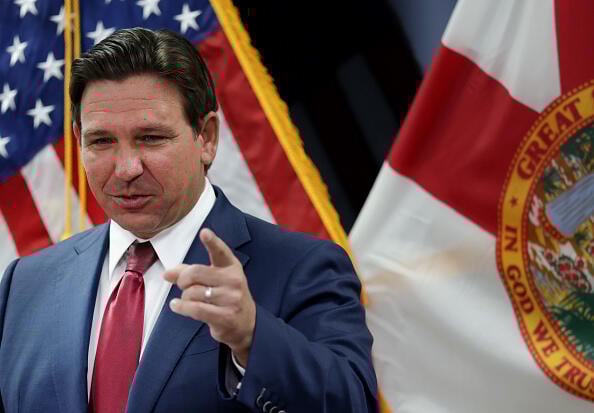
The public first learned about CPHE during the June press conference where DeSantis blasted the failings of higher education broadly and accreditors specifically. The Republican governor attacked the “accreditation cartel” and claimed SACSCOC sought to impose diversity, equity and inclusion standards on Florida universities, though the organization has never had standards on DEI practices. (Asked about that topic, DeSantis falsely claimed it does have DEI standards.)
While DeSantis emphasized conservative political grievances with accreditation in the initial announcement, CPHE leaders have sought to temper the governor’s remarks.
Harrison—who was traveling to Appalachian State University to meet with professors the same day he spoke to Inside Higher Ed—said the commission is working in a “personalized way” to address concerns about politicization by seeking faculty input at potential member institutions.
“We are coming very earnestly to our faculty and asking them to engage with us and help us to make this what it should be,” Harrison said. “And I think that if faculty will continue to allow us the room to grow and to operate, they’re going to be very pleased by what they see here.”
He also highlighted the appointment of Mark Becker to CPHE’s board.
Becker, the former president of the Association of Public and Land-grant Universities and former leader of Georgia State University, said in a news release announcing his role that “the time is ripe for innovation in higher education accreditation,” adding that CPHE “is poised to take advantage of that opportunity to become a powerful engine for improving student outcomes across the sector.”
Harrison argued that Becker’s “entire career has been built on serious nonpartisanship—not bipartisanship, nonpartisanship. And that is the model that we are following here as well.”
But critics persist.
Faculty voices have been the most critical of CPHE thus far, especially the American Association of University Professors, which held a webinar on “politicizing accreditation” earlier this fall highlighting concerns about the new accreditor.
Matthew Boedy, a University of North Georgia professor who led the AAUP webinar, expressed worry about how state governments might impose their political will on CPHE. In a follow-up email to Inside Higher Ed, he cited CPHE’s “lack of independence” from states as the most significant concern.
“Whatever power SACS or others had to limit political interference or leveraging campus expansions on bad economics or even cuts in programs—all that would be gone,” Boedy wrote. “Administrations at the campus and system level can’t be both the referee and player in this game. There is also a concern that this new ‘state run’ accreditation will not just limit itself to schools but also professional programs like law and medicine that have stuck to diversity goals.”
The AAUP has also encouraged members to contact lawmakers and trustees to express their apprehensions, sharing talking points in a tool kit circulated last month that took aim at the organization.
“CPHE is not an academically credible accrediting body,” reads part of a proposed script in the AAUP tool kit designed to help members organize against the new accreditor. “It is structured to advance political agendas by allowing state government control over institutional accreditation. It threatens academic freedom, faculty shared governance, and institutional autonomy.”
But CPHE officials continue to urge critics to focus not on DeSantis’s partisan rhetoric but rather on how the organization has proceeded since it was launched. Speaking to Inside Higher Ed at the APLU’s annual conference on Monday, Cameron Howell—a University of South Carolina official and CPHE adviser—argued that the organization has eschewed politics in its operations.
“I believe there is nothing political or ideological about what we are doing,” Howell said.
While he said he didn’t “want to end up in a rhetorical argument with the governor of Florida,” Howell emphasized that other speakers involved in the rollout who followed the governor in the June press conference focused on innovation and efficiency. He also emphasized transparency in CPHE operations.
“We have tried very, very diligently to be transparent in the way we’re making decisions and in the way we’re seeking feedback, in part to demonstrate in a way that’s completely aboveboard that nothing that we’re doing is political or ideological,” Howell said. “Now, of course, there are benefits to having stakeholder involvement in and of itself, but I think that we’ve done a pretty good job of convincing a lot of faculty with whom we’ve been working … a lot of other administrators, that we take this very seriously, that it’s about process and results. It’s not about politics.”
After two decades with Belle Wheelan at the helm, the Southern Association of Colleges and Schools Commission on Colleges is under new leadership since she retired earlier this year.
New SACS president Stephen Pruitt comes from the Southern Regional Education Board, which he led from 2018 until June, when he stepped down, before starting his current job in August. Pruitt previously served as the commissioner of education in Kentucky, worked for the Georgia Department of Education and taught both at the K–12 level and as an adjunct faculty member.
Pruitt arrives at a time when accreditors are increasingly under fire from federal and state officials, who have accused such bodies—and SACSCOC specifically—of overstepping, and as the Trump administrationaims to make it easier for new accreditors to enter the market. In a phoneinterview last week with Inside Higher Ed, Pruitt discussed how he intends to approach the job, his 100-day plan, the current landscape for accreditation and more.
The interview has been edited for length and clarity.
Q: First, what interested you in the job? What drew you to the accreditation world?
A: I enjoyed my time at the Southern Regional Education Board. It was really a fantastic place to work and [has] great people, and we did a lot of good stuff there, but when the opportunity to move over to SACS came up, I had a desire to help shape policy that can improve how we see higher ed and hopefully improve aspects of higher ed. And it felt like the right avenue.
Q: What’s it like to follow in the footsteps of Belle Wheelan, who was an institution unto herself?
A: It helps that Belle is a good friend. I’ve known Belle for a good while now, so our transition has been a good one. She was our longest-serving president; she was there for 20 years, and I kept joking with her that her record was safe. I don’t see myself there for 21 years. But following her has been an absolute pleasure and honor to get to build on the things that she started, to realize that now’s a good time, because we also need to look to the future and see that the world and how we approach things in higher ed has to change.
Q: How does one dive into a job like this? I imagine there’s so much to learn and take on.
A: Part of my background was in accountability. Given, it was at the K–12 level, but there’s a lot of parallel there. Jumping into something like this, the No. 1 thing—whether it’s this or any other job, and I did the same thing when I was commissioner of education in Kentucky—you have to listen to people, learn the dynamics of accreditation, learn the current system. My staff will tell you that I ask probably a thousand questions a day, because I tend to get into the weeds so I can understand it. Every day I’m in a different office asking questions. But there was a month in the transition where I had no managerial responsibilities. I was able to take that month and get on calls with presidents, with liaisons, spend time with staff and spend a lot of time listening.
Q: Did your predecessor give you any advice on how to approach the job?
A: She did. I don’t know that I could sum it up in a single statement, but she gave me advice on different aspects. She gave me a list of things that she felt like I needed to address early, and some of the things you do see in the 100-day plan. She provided some ideas. But at the end of the day, the most poignant advice, probably, was that it’s important to listen to membership.
Q: You announced a 100-day plan not long after you started. What’s in it?
A: Our focus as we move forward is thinking about, how do we really need to respond and be flexible, to be able to manage things in this current year, this current environment, so that our institutions are both being held accountable appropriately, but also to be able to incentivize the behaviors that that we know [are] our best for students? … Students first, always, is our No. 1 pillar. Everything has to be about, is what we’re doing actually making the world better for our students?
Second thing is we’ve got to have leadership and transparency. We want to make sure that everything we’re doing is aboveboard and transparent. We want to have some service with accountability … To me, it’s about walking alongside our institutions, working with our state agencies, so that we build a common vision of what we believe higher ed can be, and then we invest in that vision.
We are going to have our own communications department, which we’ve never had. We are conducting a communication audit right now of the way we communicate with our members and the general public. Probably one of the big things that has the most impact is that we’re going to be doing a principles-of-accreditation review—in other words, a standards review. We’re going to be announcing and launching that in October … Arguably, right now, I think that we need to have a focus on streamlining our principles.
[Reporter’s note: Full details of the First 100 Days Plan are available on the SACSCOC website.]
Q: Does SACS plan to expand or do you want to keep membership numbers where they are?
A: I think we’re going to continue to expand. Right now, I’m more focused on getting our house in order, so to speak. Like our sister organizations, we would prefer to not go out and recruit away from other places, but we also want to be available. We do have members that are international, and I think that we may see some potential expansion there when people come to us. But at the end of the day we’re going to be open for business. If there are other institutions out there that like what we’re doing, that like that we can offer value, then of course, we’ll be glad to bring them in.
Q: SACS has been caught up in political headwinds in recent years and is often targeted by conservative politicians. Given the current political climate, does that concern you as you seek renewal of federal recognition later this year? What do you expect from that process?
A: I’ve spent the last 20 years of my career working with state legislators and governors, and one thing that I hope people will see in the new SACSCOC is that we’re going to be completely free of ideology. We want to ensure that we’re fiercely nonpartisan and make sure that the things that are divisive in our country right now—and things that a lot of our legislatures and the [Trump] administration are saying are divisive—that we are stepping away from those things, and we’re focused on the business at hand. And that business at hand is ensuring quality for higher ed.
So does it worry me? Not really, because I can’t control any of that. What I can control is doing our best to ensure that we are not going to be seen as an organization that pushes a particular doctrine or particular ideologies. One of the things that we are planning on doing is creating a legislative advisory council of legislators that will help us ensure that we are staying in the proper bounds of focusing in the right way to ensure that we don’t get crossways with any of those ideologies. I think they need to be part of the process. They’ve never really been part of the process here; I’m not sure if they are anywhere else. Legislators that we’re going to invite to the table will be representative of our states. We want to hear from them and hopefully let them help guide us in how to avoid some of the pitfalls that we’ve gotten caught up in in the past.
Q: Related to conservative backlash, several state systems with universities accredited by SACS announced that they were getting into the accreditation business themselves with the launch of the Commission for Public Higher Education. How do you view the launch of CPHE?
A: I personally have always believed that competition makes us better. My understanding is they are working to make sure that their mission is supporting public institutions, but that all of them are making it another option versus making it required. Again, it’s something that’s not in my control. I certainly hope that as we all go through affirmation with the U.S. Department of Education that we all are going through the same affirmation, and I believe we will. We’re going to be supportive of one another. From my side, I’m not going to speak ill of any of them.
Q: Broadly speaking, given the political landscape, what do you see as the future of accreditation?
A: I don’t know completely how to answer that. I get asked that question a lot. I don’t know where it goes, but—if I have, maybe not a crystal ball, but my magic wand—my hope is that what we do is we really focus on the things that are important around accreditation, which is improving our schools, providing an environment that students can go to that feels fully supported, that they have structures in place to help them get through to attainment.
That attainment can be anything from a certificate through a doctorate degree, and it’s preparing students to go out into the workforce and to be productive members of society. And I think accreditation has a role to play in that. And it’s way more than counting library books or any of that. It is more about, how do we evaluate the progress that our institutions are making? And so my hope is that the future of accreditation is, frankly, where I believe we’re headed, and that is a place that believes in achievement, a place that believes in flexibility based on the size and mission of the institution, and a place that also provides opportunities for excellence.
Q: What else would you want readers to know?
A: Welcome to the new SACSCOC. We have an incredible foundation and great people who have led and worked in this organization, but we also are at a point that it’s time for us to look to the future. So for me, we are grounded in certain things—like peer review—that have been the hallmark and the gold standard of what’s happened in the past. But we also are in a new day and the way we want to approach the work, I hope people will look at us and [recognize our flexibility].
And to reiterate some of your political questions earlier, states’ rights matter. We need to acknowledge that, and as an organization, we will acknowledge that. I think, historically, we’ve maybe dabbled in that more than we should. So we’re going to recognize state authority, the work that happens with our institutions at the state level, from governors all the way through boards of governors, through boards of higher ed. So that matters, and then we just want to make sure that we’re free of the ideologies that have created some of the divisiveness and some of the real angst and some of the slings and arrows that have come our way.
The accreditor’s new public-facing dashboards will include data on how long it takes for graduates from different programs to recover educational costs.
Nuthawut Somsuk/iStock/Getty Images
The Accrediting Commission for Community and Junior Colleges is launching new tools to give members of the public more insights into student outcomes at the institutions under its purview.
Those tools include dashboards with different student achievement data points as well as a new metric to gauge return on investment. Like the Western Association of Schools and Colleges Senior College and University Commission, ACCJC is planning to measure ROI using price–to–earnings premium. Developed in part by Third Way and the College Futures Foundation, the earnings premium tracks how long it takes for graduates from different programs to recover educational costs.
The accreditor wrote in a white paper on different value metrics that the earnings premium is an “approachable and understandable way for students and their families to discuss the value education adds to earnings potential. It also allows for institutions, reviewers, and policy makers to contemplate a measurable target and drive improvement.”
ACCJC chair Kathleen Burke said in a news release that a key takeaway from developing the white paper and dashboards is that federal policy leaders want institutions to demonstrate their value.
“These efforts by ACCJC help policy makers and the public understand the incredible value proposition offered by ACCJC member institutions,” Burke added.
Louisiana will join the new accrediting body Florida established earlier this month in conjunction with five other states, according to an executive order Gov. Jeff Landry signed Tuesday.
Florida governor Ron DeSantis announced the formation of the new accreditor, the Commission for Public Higher Education (CHPE), last month, decrying higher education’s “woke ideology” and vowing to take down the “accreditation cartel.” CPHE’s business plan said the idea arose from “growing dissatisfaction with current practices among the existing institutional accreditors and the desire for a true system of peer review among public institutions.”
In addition to the state university system of Florida, Louisiana now aims to join public university systems in Georgia, North Carolina, South Carolina, Tennessee and Texas in switching to the new accreditor.
“Louisiana stands to benefit from early engagement with CPHE, both by diversifying accreditation options and by shaping the standards and procedures that align with the public mission of its institutions,” Landry’s executive order said. “CPHE will focus on student outcomes, streamline accreditation standards, focus on emerging educational models, modernize the accreditation process, maximize efficiency, and ensure no imposition of divisive ideological content on institutions.”
The order establishes a task force “to lead statewide engagement on accreditation reform aligned with institutional autonomy, academic excellence, and federal requirements.”
Landry will appoint the 13 members of the task force, which is required to reports its findings and recommendations no later than January 30, 2026.
CPHE still needs to secure recognition from the Department of Education, a process that could take years. In the meantime, higher ed institutions can retain their current accreditors, according to the CPHE business plan.
Louisiana’s public institutions are currently accredited by the Southern Association of Colleges and Schools Commission on Colleges (SACSCOC).
Plans for a new accreditor, announced by Florida governor Ron DeSantis in June, are becoming a reality.
The Florida Board of Governors voted Friday afternoon to create a controversial new accrediting agency, in coordination with five other state university systems. The decision came after about an hour of heated discussion between board members and the State University System of Florida’s chancellor regarding details of the plan.
Chancellor Raymond Rodriguez argued that the new accreditor, called the Commission for Public Higher Education, would eliminate the bureaucracy that comes with existing accrediting agencies and focus specifically on the needs of public universities.
“The Commission for Public Higher Education will offer an accreditation model that prioritizes academic excellence and student success while removing ideological bias and unnecessary financial burdens,” he said. “Through the CPHE, public colleges and universities across the country will have access to an accreditation process that is focused on quality, rooted in accountability and committed to continuous improvement.”
But before voting in favor of the motion, board members repeatedly pushed back, arguing that the plans for starting an accreditor from scratch were half-baked. They raised a litany of questions about how the CPHE would work in practice.
Some wanted to hash out the details of the would-be accreditor’s governance structure before voting. According to the CPHE business plan, the Florida governing board would incorporate the accreditor as a nonprofit in Florida and serve as its initial sole member, using a $4 million appropriation from the Florida Legislature for start-up costs. (Other systems are expected to put in similar amounts.) A board of directors, appointed by all the university systems, would be responsible for accrediting decisions and policies.
But multiple BOG members worried that the roles of the governing board and board of directors were not clearly delineated.
“With us as the sole member, it appears, or could appear, to stakeholders that the accreditor lacks independence from the institution being accredited,” said board member Kimberly Dunn.
Alan Levine, vice chair of the Board of Governors, called for a clear “proverbial corporate veil” between the two in corporate documents.
“Our role is not to govern or direct the activities of this body,” Levine said of CPHE. “It has to be independent or it won’t even be approvable by the Department of Education.”
Board member Ken Jones pressed for greater detail on the governing board’s “fiduciary or governance obligation to this new entity.”
“I’m in support of this … I really believe this is the right path,” he said. “I just want to be sure that we all go in, eyes wide-open, understanding what is our responsibility as a BOG? … We’re breaking new ground here, and we’re doing it for the right reasons. But I want to be sure that when the questions come—and I’m sure they certainly will—that we’ve got the right answers.”
Members asked questions about the accreditor’s future cybersecurity and IT infrastructure, as well as its associated costs. Some asked whether accreditors have direct access to universities’ data systems and raised concerns about potential hacking and the board’s liability; they were given reassurance that colleges themselves report their data. Some board members also asked for budget projections of what CPHE would cost.
“I have an internal, unofficial estimation around the funds and revenues, but nothing I’d be prepared and comfortable to put forward publicly,” said Rachel Kamoutsas, the system’s chief of staff and corporate secretary, who fielded questions about the initiative.
The answers didn’t seem to fully satisfy the governing board.
“I do think the chancellor and team have a lot of work to do to continue to educate this board, to be blunt,” said BOG chair Brian Lamb, “because a lot of the questions that we’re asking—forecast, IT, infrastructure, staffing—every last one of those are appropriate.”
He emphasized to other board members, however, that voting in favor of the motion would jump-start the process of incorporating the new accreditor and provide seed money for it. But, he added, “not a penny is going anywhere until we have an agreed-upon document on how this money will be spent.”
Accreditation expert Paul Gaston III, an emeritus trustees professor at Kent State University, raised similar questions in an interview with Inside Higher Ed.
“The credibility of accreditation really is directly related to whether the public can accept it is an authoritative source of objective evaluation that is in the public interest,” he said. “And the question that I would ask as a member of the public is, how will an accreditor that is created by and that is answerable to the institutions being evaluated achieve that credibility?”
Despite all the pushback, the BOG ultimately voted unanimously to approve the measure. Now CPHE can file for incorporation, establish its Board of Directors and set out on the multiyear process of securing recognition from the Department of Education.
Gov. DeSantis has called the current system an “accreditation cartel.”
Photo illustration by Justin Morrison/Inside Higher Ed | Joe Raedle/Getty Images | ricul/iStock/Getty Images
The governing board of the State University System of Florida is set to vote Friday on whether to form a new accrediting agency focused on public universities, known as the Commission for Public Higher Education. While some accreditation experts say the move could be a positive development, they also worry it may lead to undue political influence in the accreditation process.
If the vote goes as planned, the Florida governing board will create the proposed agency along with five other public university systems: the University System of Georgia, University of North Carolina system, University of South Carolina, University of Tennessee system and the Texas A&M University system.
“The launching of a new institutional accreditor is a major undertaking, and CPHE’s Founding University Systems have not undertaken it lightly,” reads the business plan for the Commission for Public Higher Education. “Growing dissatisfaction with current practices among the existing institutional accreditors and the desire for a true system of peer review among public institutions have led to this endeavor.” The plan accuses some existing accreditors of “bureaucratic bloat, delays, and increased costs.”
University of North Carolina system president Peter Hans dropped the news in May that UNC was in talks with other public university systems to launch a new accrediting agency—an idea Inside Higher Ed discovered they’d been discussing for at least a year. The project has taken on distinct political undertones; last month Florida governor Ron DeSantis announced the effort in a speech largely focused on what he calls “woke ideology.”
“What we’ve seen develop is an accreditation cartel,” he said in his address. “And the accreditors by and large are all singing from the same sheet of music, and it’s not what the state of Florida wants to see reflected in its universities in many different respects.”
According to the business plan, the new agency “will laser-focus on student outcomes, streamline accreditation standards, focus on emerging educational models, modernize the accreditation process, maximize efficiency without sacrificing quality, and ensure no imposition of divisive ideological content on institutions.”
How It Would Work
The Commission for Public Higher Education would be incorporated as a nonprofit organization in Florida, initially funded by a $4 million appropriation from the Florida State Legislature, according to the business plan. Other involved higher ed systems are expected to cough up similar funds. A board of directors representing each of the founding systems would oversee the new accreditor.
The goal is to accredit six institutions by next summer and secure Department of Education recognition by June 2028, according to the business plan. (A new accreditor typically has two years to prove it is operating in accordance with federal regulations to receive federal approval.)
In the meantime, higher ed institutions pursuing accreditation from CPHE can retain their current accreditors, the plan notes. Later, when CPHE gains department recognition, they can adopt CPHE as their primary accreditor.
Accreditation experts say that the time frame is doable but optimistic if the Department of Education maintains the rigor of its current recognition process for new accreditors.
“The timeline proposed by Florida seems aggressive since in the past, it usually took the [Education Department] more time to approve new accreditors,” Cynthia Jackson Hammond, president of the Council for Higher Education Accreditation, wrote in a statement to Inside Higher Ed.
But the Trump administration has shown interest in making it easier for new accreditors to form. President Trump signed an executive order in April that spoke of “recognizing new accreditors” among other reforms.
Mixed Views
Jackson Hammond said CHEA isn’t against new accreditors, as long as they go through the standard recognition process and show they’re following federal regulations for ensuring institutions’ quality. But she and her colleagues have qualms about the idea of state-sponsored accrediting bodies like the Commission for Public Higher Education.
“CHEA does not believe that states are likely to be effective accreditors,” she wrote. “Historically, states have not had the staff, experience, or knowledge necessary to create a higher education accreditor. It is critically important that higher education reflects an impartial and unbiased accrediting review process that is focused on student learning outcomes. To date, there has not been a state that has accomplished this.”
Robert Shireman, a senior fellow at the Century Foundation, a progressive think tank, worries the structure of the new accrediting agency may make unbiased evaluations more challenging, given the involvement of state policymakers.
State university systems are “essentially run by the governors and their appointees,” said Shireman, who was a deputy under secretary at ED during the Obama administration. So “it really detracts from the independence of public institutions from political meddling. This feels like it’s part of an effort for closer political control over colleges and that would just embroil them in culture war issues and sort of the political issue of the day.”
But he doesn’t rule out the potential positives of having an accreditor focused on public universities. He said such an agency could emphasize college access and affordability in ways that accreditors that oversee private colleges don’t.
As state higher ed systems, “they’re all government actors,” he said. In an ideal scenario, “they can work together [to say], ‘Let’s be affordable. Let’s make sure students get served.’”
Jamienne Studley, former president of the WASC Senior College and University Commission, also emphasized that agencies that accredit “like-type” institutions can benefit from their similarities—“as long as the federal oversight of agencies is consistent, the standards are solid and their application is rigorous.”
Last month, Peter Hans, president of the University of North Carolina system, casually dropped a bombshell announcement that the system and others were in talks to launch a new accreditor.
“We’ve been having a number of discussions with several other major public university systems, where we’re exploring the idea of creating an accreditor that would offer sound oversight,” Hans said at a UNC system Board of Governors meeting last month, The News & Observer reported.
Since then, no additional details have emerged, though Hans teased an update to come in July.
But public records obtained by Inside Higher Ed show UNC system officials have been quietly engaged in conversations about launching a new accreditor for at least a year, including discussions with unnamed collaborators in Florida, where the effort could be headquartered. UNC officials have also spoken with officials at the U.S. Department of Education, even getting a heads-up on what an April 23 executive order from the Trump administration on accreditation would entail.
Here’s what those documents show.
‘The Florida Project’
In early April, UNC officials appeared ready to tell the world about their plans for a new accreditor that “would be publicly accountable, outcomes-based, and more efficient and effective in its reviews,” according to the draft of a statement that was never publicly released.
“We believe it is past time for the creation of a new accreditor focusedon the unique needs of public colleges and universities,” the statement said. “We have worked collaboratively over the past year to explore and develop such a cross-state partnership.”
Andrew Kelly, a senior adviser to Hans, sent a draft of the statement to other UNC officials. The statement argued that accreditors “wield enormous power, but too often have opaque and counterintuitive governance” and fail to “focus on matters that are significant to students.” He argued in the statement that the current model “creates unnecessary duplication and cost, conflicts with the authority of state governments, and does little to ensure educational quality.”
An unidentified number of state systems of higher education were supposed to sign the statement, according to the draft.
Kelly drafted the statement in response to the Trump administration’s anticipated changes to accreditation, which included streamlining the processes for ED to recognize accreditors and for institutions to switch agencies, among other changes to the system that serves as gatekeeper to federal financial aid.
But the public did not hear about the UNC system’s quiet effort to launch a new accreditor until Hans spoke up at the May board meeting.
Other emails yielded some insights into whom the UNC system might be partnering with.
Daniel Harrison, vice president for academic affairs at the UNC system, sent an email on April 23 to fellow officials recapping a call with the U.S. Department of Education and what could be expected in the coming executive order on accreditation (which was issued shortly after his email).
In that email, Harrison also pointed to potential partners in the accreditation effort.
“An update on the Florida project—we met with the new entities [sic] attorneys and made substantial progress toward determining the legal structure of the new accreditor. It is likely to be a single member Florida nonprofit corp. Florida would be the sole member, but would delegate all delegable powers to a Board of Directors made up of the participating states,” Harrison wrote.
But despite having met with potential partners, UNC considered going its own way.
In a response to Harrison, Hans asked him to convene several system officials involved with the effort to weigh the pros and cons of “joining [a] multi-state coalition” or “forming a NC entity.” Email records obtained by Inside Higher Ed don’t show what the group recommended, but remarks made by Hans at May’s meeting indicate the system opted for the coalition approach.
UNC system officials did not respond to requests for comment from Inside Higher Ed.
System leaders also appear to have discussed the effort with state legislators in private. On May 15, Hans asked senior vice president of government relations Bart Goodson to set up a meeting with Michael Lee, the Senate majority leader in the Republican-dominated Legislature. When Goodson asked about the topic, Hans replied, “accreditation update with good news.”
Lee did not respond to a request for comment from Inside Higher Ed.
Potential Partners?
Like their UNC counterparts, other public systems are staying quiet on the effort.
Inside Higher Ed contacted a dozen public university systems, all in red states, to ask if they are partnering with UNC or others in an effort to launch a new accreditor, or if they participated in such discussions. Only two replied: the Arkansas State University system and the University of Alabama system. Both noted they had not been involved in those accreditation discussions.
The State University System of Florida—which did not reply to media inquiries—is the most likely potential partner, given the details in Harrison’s email and the governor’s recent political fury with accreditors.
In 2022, Florida’s dark-red Legislature passed a law requiring state institutions to switch accreditors regularly. That move came after the Southern Association of Colleges and Schools Commission on Colleges, which accredited all 40 of Florida’s public institutions, inquired about a potential conflict of interest at Florida State University, which was considering Richard Corcoran for its presidency despite his role on the Florida Board of Governors. (He now leads New College of Florida.)
SACS also raised questions about an effort by the University of Florida to prevent professors from testifying against the state in a legal case challenging voting-rights restrictions. (UF later dropped that policy amid a torrent of criticism.) Both incidents occurred in 2021.
Florida governor Ron DeSantis has been a vocal critic of the federal accreditation system.
Joe Raedle/Getty Images
Following the 2022 law, some institutions began the process of switching accreditors,though state officials argued that the Biden administration slowed down that effort and Florida tried unsuccessfully to get a federal judge to rule the current system of accreditation unconstitutional.
Outside of Florida, North Carolina is the only other state with a similar law. In 2023, legislators quietly slipped a provision into a state budget bill that required state institutions to change accreditors every cycle. The law was passed with no debate among North Carolina lawmakers. The change came after UNC clashed with SACS in early 2023 over shared governance.
Florida governor Ron DeSantis did not confirm to Inside Higher Ed whether the state is launching a new accreditor, but recent remarks from the GOP firebrand suggest, albeit vaguely, that something is in the works.
“For too long, academic accreditors have held our colleges and universities hostage,” DeSantis said in an emailed statement. “These accreditation cartels have worked behind the scenes to shape university behavior, embedding ideological concepts like Diversity, Equity, and Exclusion Indoctrination into the accreditation process. If you weren’t meeting politically motivated standards, like enthusiastic participation in DEI, they would hamper your accreditation and access to federal funding. In Florida, we refuse to let academic accreditation cartels hold our colleges and universities hostage to ideology at the expense of academic excellence. Stay tuned.”
Wade Maki, Faculty Assembly chair and a philosophy professor at UNC Greensboro, said he and other faculty members recently met with system officials to share their thoughts on the plan.
“We had a very open conversation with the system office and shared our hopes that we get an accreditor that is independent, that maintains the strong reputation of the UNC system and helps keep the politics out of higher ed and the curriculum, whether that’s from the politicians or the accreditors themselves,” Maki said. “We’ve seen it come from both directions over the years.”
He also thinks the narrow focus of such an accreditor could be a positive.
“My leadership team, the Faculty Assembly Executive Committee and the faculty that we’ve talked to on campuses, we see the potential benefits of trying something like this, of having an accreditor that focuses just on the accrediting of state-supported public institutions,” Maki said.
Outside observers were more critical of the UNC system’s plans.
Accreditation expert Paul Gaston III, an emeritus trustees professor at Kent State University, argued that building an accreditor composed only of public institutions would omit valuable perspectives in review processes. He argued that colleges undergoing accreditation reviews benefit from the diversity of experiences from evaluators working at a broad range of institutions.
“What would be the advantage of, in a sense, separating classes of institutions for accreditation? I think one of the strengths of accreditation has been that it brings a variety of perspectives to the evaluation of a particular institution,” Gaston said.
Then there’s the arduous process of getting a new accrediting agency up and running; gaining federal recognition, which is required, takes years. Although Trump’s executive order on accreditation promised a smoother pathway to recognition for new entrants, it does not supersede federal regulations.
“Becoming federally recognized, typically, is a five-plus-year process,” said Edward Conroy, a senior policy manager at the left-leaning think tank New America. Under current federal regulations, Conroy doesn’t expect the new accreditor to be recognized until 2030 or so.
Conroy also questioned whether the effort to create a new accreditor is about institutional quality assurance or political control.
“Everything Florida has done on accreditation over the past few years appears to be politically and ideologically driven, rather than about what is best for students and ensuring that they go to high-quality institutions and get a good education when they’re paying a lot of money for it and when taxpayers are investing a lot of money in public funding for higher education,” he said.
Conroy worries that state lawmakers in either Florida or North Carolina would require public colleges in their state to be accredited by their new accreditor. That would undermine the current requirement that colleges get to choose their own accreditor.
“It undercuts the principle of the higher education accountability triad, where states, accreditors and the Department of Education are all meant to do different things,” Conroy said. “If you have a state that becomes both, to some degree or another, the accreditor, as well as the state authorizing entity, then we’ve combined two legs of a three-legged stool.”
The Department of Education has publicly called on Columbia University’s accreditor, the Middle States Commission on Higher Education, to take action against the university’s alleged noncompliance with federal nondiscrimination laws.
In a Wednesday news release, officials wrote that Columbia was found to have acted “with deliberate indifference towards the harassment of Jewish students, thereby violating Title VI of the Civil Rights Act of 1964.” Officials said, “Columbia failed to meaningfully protect Jewish students against severe and pervasive harassment on Columbia’s campus and consequently denied these students’ equal access to educational opportunities to which they are entitled under the law.” As a result of that finding, ED called on MSCHE to take action on the matter.
Education Secretary Linda McMahon accused the university of failing to protect Jewish students on campus in the wake of Hamas’s Oct. 7 terrorist attacks against Israel, arguing that such a lapse “is not only immoral, but also unlawful.”
McMahon added that accreditors are obligated to ensure members abide by their standards and called on MSCHE to inform the department of compliance actions taken against Columbia. ED indicated that MSCHE should require Columbia to develop a plan to ensure compliance.
“We are aware of the press release issued today by the United States Department of Education (USDE) regarding Columbia University and can confirm that we received a letter regarding this matter this afternoon,” MSCHE president Heather Perfetti said in a statement. “This letter is part of the commitment reflected within the Executive Order to promptly provide to accreditors any noncompliance findings relating to member institutions issued after an investigation conducted by the Office of [sic] Civil Rights. Consistent with our Commission’s management of investigative findings, we will process these in accordance with our policies and procedures.”
The call for MSCHE to take action on Columbia is the latest effort by the Trump administration to force further changes at an institution that has been in its crosshairs over how it handled a pro-Palestinian student encampment and related demonstrations in the aftermath of Oct. 7.
Columbia has already yielded to the Trump administration’s call for sweeping changes, agreeing in March to revise disciplinary processes, hire campus police officers with the authority to make arrests and appoint a new senior vice provost to oversee academic programs focused on the Middle East, among other changes—despite concerns around academic freedom. However, university officials appear to have rejected the administration’s desire for a consent decree.
The Trump administration has also frozen hundreds of millions of dollars in federal research funding, an effort that has continued even after university officials agreed to various demands.
Columbia officials acknowledged the exchange between ED and MSCHE in a statement.
“Columbia is aware of the concerns raised by the U.S. Department of Education’s Office for Civil Rights today to our accreditor, the Middle States Commission on Higher Education, and we have addressed those concerns directly with Middle States. Columbia is deeply committed to combatting antisemitism on our campus. We take this issue seriously and are continuing to work with the federal government to address it,” university officials wrote in a statement posted online.
Wednesday’s news sparked confusion (and celebrations from some critics) online, as many social media users incorrectly interpreted the news to mean Columbia had lost accreditation. However, the federal government does not have the power to strip accreditation. Only accreditors can determine if universities are out of compliance, as experts have previously noted.
(This article has been updated to add statements from MSCHE and Columbia.)