
Tag: Adapt

  • How modern HR tools are helping higher education adapt – Campus Review

    How modern HR tools are helping higher education adapt – Campus Review

    As budget cuts continue to ripple across the education sector, many institutions are being forced to reassess how they manage their workforce. From widespread restructures to heavier workloads, staff are feeling the strain.

    Some academics are now working the equivalent of nine-hour days, 365 days a year. At the same time, some institutions are making difficult staffing decisions in response to multi-million dollar funding gaps.

    These pressures are compounding existing workforce challenges. Human resource (HR) and payroll teams are navigating complex employment arrangements, evolving compliance requirements, and increasing scrutiny around underpayment.

    Without the right systems in place, even minor errors can have significant consequences.

    The limitations of outdated systems

    For many universities and TAFEs, HR and payroll systems haven’t kept pace with the realities of modern education. What may have once worked for a more stable, less fragmented workforce is now creating unnecessary complexity.

    When systems aren’t integrated, data is difficult to reconcile and even harder to act on. Payroll teams are left cross-checking spreadsheets, while HR teams struggle to track performance, training, and entitlements across multiple roles and contracts.

    Manual processes create more room for error, and a lack of visibility makes it harder to ensure compliance. According to McKinsey, automating finance processes can free up 30 to 40 per cent of a team’s capacity.

    Disparate platforms also limit the experience for staff. Employees struggle to access their information, update details, or understand how their workload impacts their pay and entitlements. In a climate where staff are already stretched, that lack of clarity can further impact morale and retention.

    A smarter approach to HR and payroll

    Education providers are turning to integrated enterprise resource planning (ERP) software to automate tasks like timesheet management, onboarding, and performance tracking, thereby freeing up teams to focus on more strategic work.

    We have identified eight benefits of an integrated HR and payroll solution. Payroll becomes more accurate, compliance becomes easier to manage, and leaders gain clearer insights into workforce trends.

    How institutions are making it work

    While workforce challenges persist across the sector, some institutions are proving that the right technology can deliver meaningful change.

    Instead of relying on fragmented systems, organisations like GOTAFE and Victoria University have shown how ERP software, like TechnologyOne’s, can play a critical role in improving payroll accuracy, streamlining HR tasks, and boosting overall efficiency and decision-making.

    These are just two recent TechnologyOne success stories among many, but their experiences reflect a broader shift happening across the sector. More institutions are recognising the value of embracing ERP software that can grow with them.

    How GOTAFE transformed payroll and people management

    We recently saw this shift in action at GOTAFE, which replaced its ageing payroll system with TechnologyOne’s modern enterprise software.

    By moving to our Human Resources & Payroll product, GOTAFE was able to unify its systems and reduce its reliance on manual processes. Staff could manage leave and payslips through self-service tools, while HR teams gained real-time insights into workforce activity and performance.

    The improvements were significant. Contract generation dropped from four days to five minutes. Workforce reports that once took weeks could now be produced in two days. These changes helped the organisation make faster, more informed decisions and improve the employee experience.

    Importantly, the shift was also cultural. GOTAFE moved away from customising the platform to match legacy processes, instead adopting standard functionality to unlock ongoing improvements.

    The result is a more agile, data-driven workforce environment that supports both staff needs and strategic planning.

    Read more about the GOTAFE story here.

    Victoria University improves student experience

    Victoria University recently completed a major digital transformation, replacing legacy platforms with a single enterprise solution with TechnologyOne’s OneEducation. While the project was initially focused on improving the student experience, the impact on staff productivity, reporting, and decision-making has been just as significant.

    Before the shift, the university was operating across a patchwork of disconnected systems. Frequent outages and manual workarounds meant that staff were spending more time managing technology than using it effectively. Reporting was cumbersome, making it difficult to generate insights or respond to changes with confidence.

    By unifying core systems across student management, finance, and scheduling, Victoria University has created a more connected environment for both staff and students. Manual tasks have been replaced with automated workflows. Reporting is no longer a reactive process but an embedded part of everyday decision-making.

    Overall, the university fixed nearly 180 pain points. The result is a more agile workforce environment where time is spent on higher-value work and institutional knowledge is easier to share and act on.

    You can find out more about Victoria University’s transformation here.

    Embrace the future of education software

    From shifting compliance requirements to the increasing complexity of workforce management, legacy systems are no longer equipped to support long-term success.

    Modern enterprise platforms are changing that. In an environment where every hour counts, the ability to streamline tasks and remove administrative roadblocks makes a real difference.

    The next generation of education software is already here. Institutions that embrace it will be better positioned to support their people, respond to challenges, and plan with confidence.

    Invest in TechnologyOne’s Human Resources & Payroll today

    TechnologyOne Human Resources & Payroll (HRP), part of our OneEducation solution, provides universities with real-time workforce insights, automated payroll processing, and self-service HR tools.

    Designed for the unique needs of higher education, it streamlines recruitment, onboarding, and workforce planning, helping institutions manage staff efficiently while ensuring compliance.

    Adapt, evolve, and stay ahead with a solution built for the future of education.

    Do you have an idea for a story?
    Email [email protected]
    Source link

  • No More One-Trick Ponies: Adapt, Evolve, or Step Aside

    No More One-Trick Ponies: Adapt, Evolve, or Step Aside


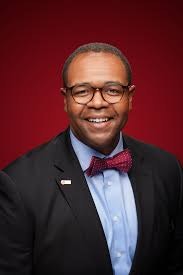
    Dr. Mordecai Ian Brownlee 
    The year 2025 has been marked by numerous legislative changes, resulting in a state of legislative whiplash that has directly impacted institutions of higher education nationwide. From executive orders, to the dismantling of the Department of Education, to call of regional accreditation reform, to the discontinuance of federal funds, to the national erosion of Diversity, Equity, and Inclusion programs (and anything that remotely resembles it), higher education have been conditioned to brace daily for the next social media post or breaking news update that can send our colleges and universities into a frenzy. With the passage of H.R.1 by the 119th Congress, known as the One Big Beautiful Bill Act, the higher education sector will need to work quickly to fully understand the Act’s impact on our institutions, students, and communities as the 2025-2026 school year begins. As we seek understanding, it is essential to distinguish fact from fiction, separate narratives from actualities, and prioritize responsibility over fear.

    Leadership in the next era of higher education

    Now is the time for leaders serving in this evolving era to make an explicit declaration that, regardless of the circumstances, their respective institutional missions must not and will not fail. The dreams of our students, as well as the livelihoods of our faculty and staff, are at stake. Not to mention, in such a disruptive era, higher education must normalize the assessment of its academic and student support services to determine the relevance and impact of colleges and universities on the broader communities they serve. Far gone are the days of piddling the same old student experiences and academic programs that fail to lead students to livable wages, let alone failing to provide social care for learners seeking to realize brighter futures. Far gone should be the days when institutional legacies prevent institutions from making necessary changes to ensure institutional vitality and sustainability. In addition to addressing wasteful processes and systems that continue to strain the institution’s ability to serve its enrolled students responsibly.

    Equitable student success reimagined

    It is essential to note that this work must be envisioned, designed, and implemented differently, given the internal and external political realities prevailing within the respective states of our institution. How we lead this work in the state of Colorado, where I serve as a college president, will undoubtedly differ from how it is led in other states. From coast to coast, from metro to rural, from public to private, and from four-year to two-year institutions, the real power for equitable student success lies in our ability to bring our institutional missions to life in new ways that build bridges to fulfill academic rigor and provide opportunities for the disenfranchised. Regardless of the environment, I encourage us, as educators, to recognize the dynamic shift that must occur within our perspectives and approaches.

    Our profession doesn’t need any more one-trick ponies – people who can only serve and have an impact if the conditions are ideal or to their liking. What we need are those who deeply understand that the failure of our students and the missions of our institutions is not an option. We need those who understand the power of environmental scanning and program assessment, as well as the ethical responsibility we have to those we serve, to provide transformative and meaningful learning experiences that account for the political and cultural differences present in each community.

    It is this educational versatility paired with agility that will ensure our ability to do “the work” despite the times. Yes, our job titles may change, our departments may be reorganized, and our funding may be discontinued. However, I challenge every college president and their respective institutional boards not to become distracted. Instead, cultivate your awareness of the times, re-center yourself around your respective missions, and embrace the changes that our institutions must implement, recognizing that through disruption, genuine innovation can emerge. And while that change may not be ideal, it is indeed necessary.

    Dr. Mordecai Ian Brownlee is President of Community College of Aurora.


    Source link

  • Digital Darwinism in Higher Ed: Adapt Your Marketing for AI — or Get Left Behind [Webinar]

    Digital Darwinism in Higher Ed: Adapt Your Marketing for AI — or Get Left Behind [Webinar]

    Your students are already running to AI for answers. The only question is — what’s it saying about your institution? More importantly, are you in the conversation or being left out? If you’re not actively shaping how your school shows up in AI-driven search and decision-making platforms, you’re not just invisible — you’re irrelevant.  

    Digital Darwinism in Higher Ed:
    Adapt Your Marketing for AI — or Get Left Behind
    Date
    : May 29, 2025
    Time: 2:00 p.m. ET / 1:00 p.m. CT

    In this webinar, Collegis Education’s Ashley Nicklay, Sr. Director of Marketing, and Jessica Summers, Director of Web Strategy, will unpack what “AI-ready” really means for higher ed marketing and enrollment leaders. We’ll explore how generative AI influences the student journey from search to selection, why most websites and content strategies are falling short, and what forward-thinking institutions are doing to lead the algorithm, rather than get buried by it. 

    This isn’t just about better SEO or smarter ads. It’s about understanding how AI evaluates your institution — and making sure you’re feeding it the right data, signals, and story to stay in the game.  

    What You’ll Learn 

    • How AI impacts the early stages of the enrollment journey: Understand how tools like ChatGPT and Google’s AI Overviews influence what students see when exploring colleges.  
    • Why AI prompt bias is real — and how to beat it: Learn how content, structured data and reputation shape AI responses. 
    • What AI actually sees when it looks at your website (and what it may miss): Explore how site structure, clarity and technical markup shape what AI-based tools can find and summarize – and what they may overlook.  
    • What it really means to have an AI-optimized website: We’ll show you our checklist of what your .edu needs to show up in AI-generated answers.  
    • How to future-proof your marketing model in an AI-driven search landscape: Assess your current channels and content strategy for resilience as search becomes more conversational and less click-based.  

    Future-Ready Starts Here: Secure Your Spot 

    The institutions that will thrive tomorrow are learning how to market to machines today. Reserve your seat and find out what it takes to survive the AI era of higher ed marketing. 

    Complete the form on the right to reserve your spot.

    Source link