Tag: Address
-

Missouri President Wants Local Officials to Address Crime
University of Missouri president Mun Choi is pressing local officials about crime rates near the Columbia campus after a student from neighboring Stephens College died Sunday following a downtown shooting, KCUR and the Columbia Missourian reported.
The president’s demand to address the city’s “rampant crime rate” has gathered some support, but critics say that his characterization of the local climate is overexaggerated, pointing to data from the local police department.
The shooting, which also resulted in serious injuries to two others, took place early Saturday morning on the college town’s main street. One individual, not from the city, got into a verbal dispute and then opened fire toward the people he was confronting. The three individuals he hit, however, were bystanders.
In a letter sent the same day as the shooting, Choi called on city and county leaders to bolster the police presence and prosecute crimes to the fullest extent of the law. He also urged them to take down encampments of unhoused individuals, pass a loitering notice and repeal policies that “attract criminals to the region.”
But when asked during a press conference Monday what policies and practices he believes “attract criminals,” the MU president said he had none to cite. Neither the shooter in the Saturday incident nor any of the victims have been identified as unhoused, according to local reporting.
“That is why I am asking [local leaders] to evaluate the processes that we have and the practices,” he explained. “Are we giving the impression to potential criminals that this is a region that doesn’t take crime enforcement as well as the punishment that comes with it seriously?”
Choi later added that students and local business owners have been raising safety concerns about the city’s unhoused population. According to university data, the number of arrests and trespassing violations issued to the unhoused has “gone up dramatically” since 2019, he said.
That is different, however, from what some local police department data shows.
In a Facebook post Monday, the city’s mayor, Barbara Buffaloe, said there have been 58 gunshot incidents since the beginning of the year. That’s down from 105 in the first nine months of 2024.
Columbia Police Department chief Jill Schlude did note in a separate letter, however, that since 2019 more crimes have been concentrated downtown, occurring between midnight and 3 a.m.
“The connection between late-night social activity and violence is clear, and that is where we continue to focus our efforts,” Schlude said.
Regardless of any disputes over the data, multiple government officials—including Gov. Mike Kehoe, several members of the Columbia City Council and Mayor Buffaloe—have voiced support for Choi’s general call to improve safety. Buffaloe has also committed to forming a task force on the matter, and the CPD has outlined plans to increase the police presence downtown.
“Statistics cannot be used solely as a reason for us to move away from what needs to be done in the city of Columbia,” Choi said.
-

We cannot address the AI challenge by acting as though assessment is a standalone activity
How to design reliable, valid and fair assessment in an AI-infused world is one of those challenges that feels intractable.
The scale and extent of the task, it seems, outstrips the available resource to deal with it. In these circumstances it is always worth stepping back to re-frame, perhaps reconceptualise, what the problem is, exactly. Is our framing too narrow? Have we succeeded (yet) in perceiving the most salient aspects of it?
As an educational development professional, seeking to support institutional policy and learning and teaching practices, I’ve been part of numerous discussions within and beyond my institution. At first, we framed the problem as a threat to the integrity of universities’ power to reliably and fairly award degrees and to certify levels of competence. How do we safeguard this authority and credibly certify learning when the evidence we collect of the learning having taken place can be mimicked so easily? And the act is so undetectable to boot?
Seen this way the challenge is insurmountable.
But this framing positions students as devoid of ethical intent, love of learning for its own sake, or capacity for disciplined “digital professionalism”. It also absolves us of the responsibility of providing an education which results in these outcomes. What if we frame the problem instead as a challenge of AI to higher education practices as a whole and not just to assessment? We know the use of AI in HE ranges widely, but we are only just beginning to comprehend the extent to which it redraws the basis of our educative relationship with students.
Rooted in subject knowledge
I’m finding that some very old ideas about what constitutes teaching expertise and how students learn are illuminating: the very questions that expert teachers have always asked themselves are in fact newly pertinent as we (re)design education in an AI world. This challenge of AI is not as novel as it first appeared.
Fundamentally, we are responsible for curriculum design which builds students’ ethical, intellectual and creative development over the course of a whole programme in ways that are relevant to society and future employment. Academic subject content knowledge is at the core of this endeavour and it is this which is the most unnerving part of the challenge presented by AI. I have lost count of the number of times colleagues have said, “I am an expert in [insert relevant subject area], I did not train for this” – where “this” is AI.
The most resource-intensive need that we have is for an expansion of subject content knowledge: every academic who teaches now needs a subject content knowledge which encompasses a consideration of the interplay between their field of expertise and AI, and specifically the use of AI in learning and professional practice in their field.
It is only on the basis of this enhanced subject content knowledge that we can then go on to ask: what preconceptions are my students bringing to this subject matter? What prior experience and views do they have about AI use? What precisely will be my educational purpose? How will students engage with this through a newly adjusted repertoire of curriculum and teaching strategies? The task of HE remains a matter of comprehending a new reality and then designing for the comprehension of others. Perhaps the difference now is that the journey of comprehension is even more collaborative and even less finite that it once would have seemed.
Beyond futile gestures
All this is not to say that the specific challenge of ensuring that assessment is valid disappears. A universal need for all learners is to develop a capacity for qualitative judgement and to learn to seek, interpret and critically respond to feedback about their own work. AI may well assist in some of these processes, but developing students’ agency, competence and ethical use of it is arguably a prerequisite. In response to this conundrum, some colleagues suggest a return to the in-person examination – even as a baseline to establish in a valid way levels of students’ understanding.
Let’s leave aside for a moment the argument about the extent to which in-person exams were ever a valid way of assessing much of what we claimed. Rather than focusing on how we can verify students’ learning, let’s emphasise more strongly the need for students themselves to be in touch with the extent and depth of their own understanding, independently of AI.
What if we reimagined the in-person high stakes summative examination as a low-stakes diagnostic event in which students test and re-test their understanding, capacity to articulate new concepts or design novel solutions? What if such events became periodic collaborative learning reviews? And yes, also a baseline, which assists us all – including students, who after all also have a vested interest – in ensuring that our assessments are valid.
Treating the challenge of AI as though assessment stands alone from the rest of higher education is too narrow a frame – one that consigns us to a kind of futile authoritarianism which renders assessment practices performative and irrelevant to our and our students’ reality.
There is much work to do in expanding subject content knowledge and in reimagining our curricula and reconfiguring assessment design at programme level such that it redraws our educative relationship with students. Assessment more than ever has to become a common endeavour rather than something we “provide” to students. A focus on how we conceptualise the trajectory of students’ intellectual, ethical and creative development is inescapable if we are serious about tackling this challenge in meaningful way.
-

Productivity roundtable should address RPL – Campus Review
Treasurer Jim Chalmers delivers his “Our Second Term Economic Agenda” address at the National Press Club in Canberra. Picture: Martin Ollman
Streamlining recognition of prior learning (RPL) is one way the tertiary education sector can boost the economy during the Albanese government‘s mission to tackle declining productivity.
Please login below to view content or subscribe now.
Membership Login
-

How to address harassment and sexual misconduct experienced by PGRs
The experiences of postgraduate researchers (PGRs) have not received the same level of attention as undergraduate students in relation to tackling harassment and sexual misconduct.
PGRs have very different conditions of study than undergraduate or taught postgraduate students, and they may be at a different stage in life with significant professional experience.
It would be a mistake, however, to assume that PGRs’ maturity and longer tenure within higher education institutions means that they are less likely to experience these issues.
PGRs face significant risks – particularly in relation to abuses of power from staff both within and outside their institution – that can have deleterious impacts on their lives, careers, and health, requiring a different approach to provisions for students at other levels.
As a result, implementation of the Office for Students’ (OfS) regulatory requirements, coming into force on 1 August 2025, needs to ensure that it takes into account the specific situations and needs of PGRs.
At The 1752 Group, to support HEIs to do this, in partnership with the UK Council for Graduate Education we have published a toolkit to guide work in this area. It draws on our own, as well as international research in this area, to give a snapshot of current good practice.
It also addresses the obligations outlined in the Worker Protection Act – in force since October 2024 – which requires employers to take reasonable steps to prevent the sexual harassment of employees.
While the OfS regulations apply to England only, the toolkit can also be used outside England to guide institutional work on addressing harassment and sexual misconduct experienced by PGRs.
Prevalence
Perhaps the most problematic misconception in the sector about harassment and sexual misconduct is that it is rare. A 2023 survey conducted on behalf of OfS (n=5090) found that 6 per cent of PGRs had experienced unwanted behaviours of a sexual nature in the previous year.
The findings also show there is work to be done on confidence in reporting – 32 per cent of PGRs were not confident in knowing where to seek university support, while 35 per cent were not confident in knowing how to report sexual misconduct.
However, the OfS survey only had a small number of PGR respondents. Larger-scale studies from Australia (n=31,000) and the US (n=181,752) indicate that as many as 15 per cent of postgraduate students experience sexual harassment in a university setting each year, with 58 per cent being targeted by another student and 10 per cent being targeted by a tutor or lecturer from their university (the data is not disaggregated for PGRs specifically).
Of course, sexual harassment intersects with harassment on the basis of other protected characteristics – non-binary and trans people are subjected to higher rates of sexual harassment at university than women (45 per cent and 32 per cent respectively), and lesbian, bisexual, gay and queer students, as well as women, also experience significantly higher rates of sexual harassment than heterosexual, cis-gendered men.
On top of sexual harassment, LBGTQ+ doctoral students may also be experiencing homophobic and/or transphobic behaviour or feel that they have to conceal their sexual orientation/expression and/or gender identity/expression. There is also a risk that, following the Supreme Court’s recent judgement on the legal definition of sex, trans and non-binary students and staff (as well as those perceived to be trans, non-binary or gender nonconforming) face an even higher risk of harassment.
OfS regulatory requirements around E6 cover all forms of harassment on the basis of protected characteristics. Data on experiences among PGRs is often unavailable. However, in a 2020 survey of 828 students across all levels of study in the UK, 24 per cent of respondents from an ethnic minority background had experienced racial harassment since becoming a student.
That figure rose to 45 per cent of Black respondents, with the most common form of harassment being racist name calling, insults or “jokes”. Research specifically focusing on the experiences of racially minoritised PGRs in the UK shows that they face “multiple challenges, which are often triggered and amplified by circumstances specific to their ethnicity and result in their disempowerment within HEIs”, with women and international racially minoritised PGRs being especially marginalised.
Similarly, Muslim doctoral students, who may also be racially minoritised, face Islamophobia, overt and covert racism, and marginalisation.
What, then, do higher education institutions need to do to address this issue? A first step is to make sure that appropriate institutional governance and oversight is in place. Beyond that, institutional provision can be divided into three stages (based in public health models of primary, secondary and tertiary prevention):
- Preventing harassment before it occurs
- Short-term responses that should be in place when gender-based violence or harassment occurs, including to prevent it from recurring
- Longer-term actions to deal with the lasting consequences of gender-based violence
Preventing harassment
The first stage, preventing harassment before it occurs, should be where the most substantial amount of work occurs. One area is in preventing abuses of power. OfS requires institutions to take one or more steps which could (individually or in combination) make a significant and credible difference in protecting students from any actual or potential conflict of interest and/or abuse of power.
This is a significant challenge in relation to PGRs, given deeply hierarchical nature of academia. Ways in which HEIs can prevent abuses of power include clarifying professional boundaries, introducing a staff-student relationships policy, minimising power imbalances in admissions processes and supervision arrangements, and safer staff recruitment.
For example, discussions of professional boundaries with supervisors and PGRs within departments and schools can feed into an institution-wide policy in this area. Institutional requirements in terms of professional boundaries could then be added to existing staff training and PGR professional development programmes, as well as induction procedures.
More generally, training is required not only for PGRs themselves, but most urgently for staff, not least because any staff member could potentially receive a disclosure of harassment or sexual misconduct. Staff involved in making decisions or providing ongoing support will need further training on the required knowledge and skills.
The OfS guidance does not discuss addressing inequalities as part of prevention work. Nevertheless, this is an essential part of preventing harassment and sexual misconduct. For example, racialised inequalities can support a culture where harassment on the basis of race is normalised and accepted, or a predominance of male students or staff can enable a culture where sexualised humour or derogatory comments about women or gender minorities are seen as normal.
These inequalities can shape the culture in different disciplines or departments; some disciplines – medicine, engineering, and law – have been found in the US to have higher rates of sexual harassment by staff and/or postgraduate students, which may relate to gender inequality in some of these disciplines.
As such, it is important to link up work to gather data and address inequalities in higher education with initiatives to prevent harassment and sexual misconduct. These could include programmes on increasing diversity in recruitment and admissions to PGR programmes, “People, Culture and Environment” statements for the Research Excellence Framework, and where relevant to PGRs, Athena Swan, Race Equality Charter, and Access and Participation Plans.
Data collected for these programmes of work can reveal areas of the institution where gender and other inequalities exist, and therefore where there is a heightened risk of harassment and sexual misconduct occurring.
One area where many if not most institutions have a long way to go is in gathering and using data to assess risk, as required by the Worker Protection Act. Data to assess risk relating to harassment and sexual misconduct can be obtained from online reporting systems, formal reporting, informal disclosures, or institutional surveys. In the toolkit, we highlight a good practice example from the University of Bath. They use quantitative data from their online reporting system as well as qualitative data from independent advisers to understand PGRs’ experiences and to report to the university’s Governing Body. This data then feeds into the content of mandatory in-person training for doctoral supervisors.
Short-term responses when harassment occurs
Often PGRs do not wish to make a formal, named report about their experiences. Wherever possible, choice and control as to next steps should be left with the person who has been targeted. As well as supporting the person/people targeted, an HEI should consider informal/precautionary actions and a risk assessment, and/or a proactive investigation instigated by the institution.
For formal reports, E6 requires HEIs to have an effective reporting mechanism and an investigatory approach that is fair, credible, and in line with natural justice, and to include in their central information hub details on how students, staff and others can report harassment and/or sexual misconduct and how the information received in connection to harassment and/or sexual misconduct will be “handled sensitively and used fairly.”
This is of course a complex area that we have previously written about for Wonkhe, and in the toolkit we highlight some areas of good practice, for example, completing an investigation even where the responding staff member leaves the institution in the middle of it.
Longer-term response after harassment has occurred
Finally, while not addressed in the OfS guidance, to minimise the impacts harassment and sexual misconduct have on gender and other inequalities, longer-term responses are required.
These could include remedies at the end of a reporting process, addressing wider cultural issues that may have been revealed by reports or investigations, or taking steps to enhance transparency and openness in institutional responses to harassment and sexual misconduct.
For example, UCL’s relevant policy states that the reporting party will be informed if someone is dismissed or expelled from the institution as a result of their complaint. This might seem like a very minor step, but many HEIs do not even share this much information with complainants, even though the Equality and Human Rights Commission guidance clearly states that it is possible to do so.
HEIs should also consider how PGRs with relevant lived experience (whether they disclose this or not) can be consulted on policy and practice in accessible, trauma-informed and non-exploitative ways.
Working across the sector
Addressing harassment and sexual misconduct require a cross-sector approach and cannot be addressed solely on the level of individual institutions. This is especially applicable to PGRs, who on top of their doctoral studies may also be employed in (often precarious) roles within other institutions or may have supervision arrangements or affiliations outside their primary institution.
The risk of harassment from third parties outside the institution extends to conferences, online, on field trips, or in relationships with external mentors. These issues draw our attention to the importance of sector-wide work in this area – for example through initiatives such as the Misconduct Disclosure Scheme, which supports safer staff recruitment practices – as well as the role of disciplinary communities in addressing harassment and sexual misconduct.
PGRs may be equally or more aligned to their disciplinary community than their institution, and as such, HEIs need to work in partnership with professional societies on addressing harassment and sexual misconduct. Another example of cross-institutional work comes from research funding organisations (RFOs).
In recognition of their role in setting out and upholding expectations in relation to unacceptable behaviours in research, many RFOs require notification of upheld findings (and sometimes open investigations) relating to any personnel working on research they have funded. RFOs often require funded organisations to have relevant policies and reporting mechanisms.
Moving forward
Throughout the toolkit we have featured PGRs’ own voices about their experiences of harassment and sexual misconduct in higher education. One PGR, Polly, described how:
“The harassment I received is one of the reasons why I don’t want to go into academia. And I did. I passionately did. And I was a good student. I had an exemplary record, I still have an exemplary academic record. And I just thought, I can’t bear the secrecy and the hypocrisy.
Polly’s words remind us what is at stake if this work is not done, and why we continue to press for change. The amount of work that is required may seem daunting, but the toolkit offers an opportunity for institutional leaders to co-create with colleagues and PGRs a bespoke package of work which addresses the local context. As the examples highlighted in the toolkit demonstrate, some HEIs are already making good progress, and continue to review and develop their prevention efforts.
Overall, our hope is that in five years’ time this toolkit will be outdated as good practice will have moved on significantly. As such, work in this area can be seen as part of an ongoing – and, we hope, rapidly changing – movement for preventing and responding to harassment and sexual misconduct in higher education.
We would like to thank the Enhancing Research Culture fund from Research England via the University of York for supporting the development of this toolkit and the UK Council for Graduate Education (UKCGE) for partnering with us to consult on the development of the toolkit and to disseminate it.

-

States balance supports and discipline to address troubling student behaviors
This audio is auto-generated. Please let us know if you have feedback.In Arkansas, a $7 million program approved last year aims to support students’ mental health by restricting their cellphone use and using telehealth to connect more students to mental health providers.
In Texas, a multiyear effort to study student mental and behavioral health yielded a host of recommendations, including putting Medicaid funds toward school-based mental health supports and better tracking of interventions.
And in West Virginia, state education leaders and partnership organizations have amassed a trove of resource documents and built out training to help schools address student mental health challenges.
All three states are working to proactively to respond to the student mental health crisis that worsened due to the COVID-19 pandemic.
All three states are also considering or expected to pass laws allowing schools to implement tougher discipline policies.
Likewise, many states are tweaking their discipline policies at the same time they are putting more resources toward supporting students’ mental well-being.
Although school discipline and mental health supports are mostly addressed at the local level, state leadership is critical for setting expectations for accountability and requiring transparency in disciplinary actions, said Richard Welsh, founding director of the School Discipline Lab, a research center that shares information about school discipline.
And states are using a variety of measures from proactively providing mental health supports to loosening restrictions for exclusionary discipline, said Welsh, who is also an associate professor of education and public policy at Vanderbilt University.
Post pandemic, “we did have an uptick in student misbehavior,” Welsh said. “But I think what also gets missing in that was we also had an uptick in student and teacher needs.”
The COVID factor
Post-COVID, schools have reported a rise in unruly behaviors, including among young students. Some of the behaviors have been violent and have even injured teachers, leading them to turn away from the profession.
Research published by the American Psychological Association last year found an increase in violence against K-12 educators over the past decade. After COVID restrictions ended in 2022, a survey of 11,814 school staff, including teachers and administrators, found that 2% to 56% of respondents reported physical violence at least once during the year, with rates varying by school staff role and aggressor.
Data also shows that student verbal abuse occurring at least once a week on average, doubled from 4.8% in the 2009-10 school year to 9.8% in 2019-20, according to APA.
Students’ mental health needs increased during and after the pandemic, according to studies. Additional research showed that teachers, administrators and other school staff lacked resources to properly address students’ needs.
Some educators, parents and advocates worry that harsher student discipline policies will undermine evidenced-based practices for decreasing challenging behaviors and keeping students in school. They are also concerned that after several years of expanding positive behavior supports and restorative practices, a focus on stricter discipline policies will disproportionately affect students of color and those with disabilities.
The legislative activity at the state level is occurring at the same time President Donald Trump is calling for “reinstating common sense” to school discipline policies. An April executive order calls for the U.S. Department of Education to issue guidance to districts and states regarding their obligations under Title VI to protect students against racial discrimination in relation to the discipline of students. Title VI of the Civil Rights Act prohibits discrimination based on race, color or national origin in federally funded programs.
The Trump administration has called for the federal government to enact policies that are “colorblind,” not favoring one race over others.
The order also directs the Education Department to submit a report by late August on the “status of discriminatory-equity-ideology-based school discipline and behavior modification techniques in American public education.”
Welsh predicts that the executive order will lead to more state activity addressing student behavior and a specific focus on the guidelines for administering punitive discipline.
Some groups are urging caution over stricter discipline policies, concerned that harsher approaches will harm students from marginalized groups. Black boys were disciplined at higher rates than boys of other races during the 2021-22 school year, according to the Civil Rights Data Collection. While Black boys represented 8% of K-12 student enrollment, they accounted for 22% of those receiving one or more out-of-school suspensions, and 21% of those who were expelled.
“Reinstating ‘common sense’ school discipline policies may have significant adverse effects on Black students, who already face disproportionate disciplinary actions in educational settings,” said the Congressional Black Caucus Foundation in an April 23 statement. “By eliminating considerations of racial disparities in discipline, the order risks exacerbating existing inequities.”
Welsh said states can address racial disparities in discipline through accountability measures and by not conflating school discipline with school safety. “When that happens, we tend to bring safety reforms as a response to student behavior,” he said.
As districts and states consider reforms to school discipline policies, leaders should view school safety and school discipline concerns as distinct issues with overlapping yet separate opportunities for improvement and interventions, said a recent National Education Policy Center report.
This includes investing in supportive measures to behavior management; providing resources to educators and interventions for students; and addressing the causes for students’ challenging behaviors and educators’ perceptions and responses to misbehavior, the report said.
State proposals
According to the National Conference of State Legislatures, 97 state bills concerning school discipline and behavioral supports have been introduced so far this year. Of those, 10 have become law as of June 13.
Some of the introduced bills harden discipline policies.
West Virginia’s Senate Bill 199, signed by Gov. Patrick Morrisey in April, allows teachers to remove from the classroom students who are threatening or intimidating other students.
“This legislation provides teachers with the tools to regain control of the classroom and ensure safe learning environments for our kids,” Morrisey said in an April 15 statement.
Texas House Bill 6, which is awaiting Gov. Greg Abbott’s signature, extends in-school suspensions from a maximum of three days to the length of time administrators deem appropriate, although they would need to evaluate on the 10th day whether to extend the suspension or bring the student back. The legislation also would allow a teacher to remove a student from a classroom who “demonstrates behavior that is unruly, disruptive, or abusive toward the teacher, another adult, or another student.”
In Arkansas, HB 1062, known as the Teacher and Student Protection Act, dictates that if a student is removed from a classroom for violent behavior, that student may not re-enter a classroom that has the teacher or student who was the target for the violent behavior. The bill was signed into law in April.
However, a bill that would give teachers authority to remove a disruptive student from a classroom languished in the Montana legislature.
Other states are seeing a mix of legislation, including reforms to encourage discipline data analysis, expand behavior interventions, and provide student protections during discipline or emergency situations.
For example, HB 1248 in Colorado clarifies when physical restraint can be used and the limitations for such actions. That bill was signed into law May 24.
A bill being considered by the Illinois General Assembly, HB 3772, would limit who could determine if a preschooler can be suspended and for how long.
At the same time, a bill to prohibit corporal punishment failed in the Indiana General Assembly, while a bill to allow corporal punishment in schools lost momentum in the West Virginia Legislature, according to NCSL.
There are 23 states that permit corporal punishment in schools, a National Education Association report said last year.
-

Harvard Eyes Changes to Address Antisemitism, Anti-Muslim Bias
Harvard University is introducing changes to its admissions, curriculum and orientation and other aspects of campus life as recommended by two internal task force reports on discrimination and harassment released Tuesday. The goal is to support civil discourse and address concerns raised by the two task forces, which were convened more than a year ago to review antisemitism and anti-Muslim bias at the university.
The university also plans to initiate a research project on antisemitism and provide support for a “comprehensive historical analysis of Muslims, Arabs, and Palestinians at Harvard,” officials announced Tuesday. Harvard will also invest in Jewish studies and organize events featuring experts on the Israel-Palestine conflict. Deans will work with faculty to ensure students are treated fairly regardless of political and religious beliefs and prevent professors from taking political positions in class that create feelings of exclusion, according to the task force reports.
A review of disciplinary policies and procedures is also planned.
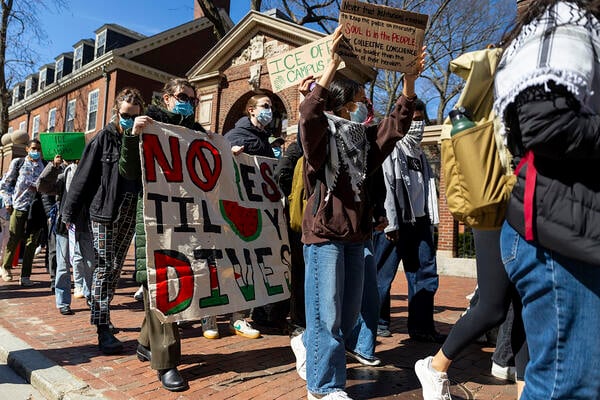
The announcement comes as the nation’s wealthiest university is locked in a standoff with the Trump administration over how officials handled pro-Palestinian campus protests last spring, which has prompted the federal government to freeze billions in research funding for Harvard and led the university to fire back with a lawsuit. Now, amid withering federal scrutiny and an ongoing Title VI investigation, Harvard has released more than 500 pages detailing the recent concerns of Jewish, Muslim, Arab and Palestinian students along with recommended improvements.
Of the two task forces, one focused on combating antisemitism and anti-Israeli bias while the other took on anti-Muslim, anti-Arab and anti-Palestinian bias. Those task forces, launched in January 2024, were asked to examine Harvard’s recent history, identify root causes of bias, evaluate evidence on the frequency of such behaviors and recommend steps to combat bias.
That work is now done. And the end result finds Harvard lacking—but aiming for improvement.
Harvard president Alan Garber noted that the report “revealed aspects of a charged period in our recent history” that required addressing. While the university has already made various changes since he became president last January, he noted the work is far from finished.
He also expressed concerns about the findings.
“Especially disturbing is the reported willingness of some students to treat each other with disdain rather than sympathy, eager to criticize and ostracize, particularly when afforded the anonymity and distance that social media provides. Some students reported being pushed by their peers to the periphery of campus life because of who they are or what they believe, eroding our shared sense of community in the process,” Garber wrote in a Tuesday statement.
The Findings
The dual task force reports show a campus sharply divided in the aftermath of the deadly Hamas attack on Israel on Oct. 7, 2023, which prompted a brutal counteroffensive in Gaza and the deaths of tens of thousands of civilians, children among them. The antisemitism task force report makes clear that tensions had been building on campus since the mid-2010s as the Israel-Palestine conflict became more divisive. The report found that after Oct. 7, “our Harvard community fell apart.”
Authors of that report noted that since the 2010s, pro-Israeli events and guests were targeted, and some Jewish students with pro-Israel views found themselves excluded socially. They also found that Jewish students and others on campus faced instances of bullying, intimidation and harassment and were shunned for expressing pro-Israel or moderate views. Students also alleged that university programming skewed in favor of Palestinian views. But then after Oct. 7, some Jewish students noticed a shift in the campus climate.
“My experience has been different before and after October 7th,” one student wrote to the task forces. “Before October 7th, being Jewish was largely irrelevant. It was not a barrier. I was proud to be Jewish. When it came up, it was positive. After October 7th, I experienced the following in this order: first there was pressure, then there was chaos, then hostility, and in certain spaces, the normalization of subtle discrimination like, ‘We’ll welcome you in this space if you align in a certain way. If not, you can’t come here.’ This has to do with the enforcement of rules.”
Jewish students also expressed concerns about speaking up.
“I do not feel mentally safe on campus. Though I am not Israeli, I have openly expressed sympathy for October 7th survivors and attended events for Holocaust survivors. I have faced many social consequences for not thinking in ways my classmates would deem progressive, which I find unreasonable,” one student wrote in response to a survey by the two task forces.
The task force exploring anti-Muslim, anti-Arab and anti-Palestinian bias yielded similar findings, with students and employees alike reporting threats and concerns related to their identities.
“The feeling over and over again for Palestinians is that their lives don’t matter as much,” one student said. “Sometimes it’s explicit. It’s really hard when it’s your family that matters less.”
Others expressed free speech concerns.
“It would be close to impossible to express views at Harvard sympathizing with Palestinians,” one Harvard faculty member said, as quoted in the report. “The idea of ‘antisemitism’ has been expanded so much that anything that even remotely expresses concern about the calamity that’s facing Palestinians is prohibited at Harvard. I’m not Arab/Muslim and have no ethnic or religious affiliations with Palestinians other than having a connection as a fellow human being.”
Both reports also expressed safety concerns regarding doxxing trucks and related online campaigns as well as about the role those outside the Harvard community had in amplifying campus divisions.
Respondents to task force surveys also saw Harvard as complicit in failing to address concerns.
“I’ve had positive interactions with the administration. They just don’t know what to do,” one graduate student wrote in a response. “They didn’t expect this level of anti-Zionism. [My school] didn’t expect having to draw a line between free speech and harassment. Anti-Zionism is considered an intellectual exercise and not as discrimination by some in the administration.”
The Next Steps
In his statement, Garber noted the university has already “made necessary changes and essential progress on many fronts” including campus protest rules and various other areas.
But more changes are coming as a result of the task force’s recommendations. On admissions, Harvard has committed to reviewing its processes to emphasize candidates who “engage constructively with different perspectives, show empathy, and participate in civil discourse.”
The university will also offer additional training for Office for Community Conduct staff on antisemitism and hire a staffer to oversee all antisemitism and shared-ancestry complaints. Mental health professionals at Harvard have already received cultural competency training on anti-Muslim bias and antisemitism to give them a better understanding of student needs.
Harvard has also committed to partnering with an Israeli university.
Additionally, deans will work with faculty “to define shared expectations for teaching excellence,” a process intended to ensure “appropriate focus on course subject matter” and to ensure “that students are treated fairly regardless of their identity or political/religious beliefs.” That effort also aims to promote “intellectual openness and respectful dialogue among students” and urges faculty members to refrain “from endorsing or advocating political positions in a manner that may cause students to feel pressure to demonstrate allegiance.” The stated aim of a related curriculum review is to uphold “standards of academic excellence and intellectual rigor.”
The university will also host a series of events on the Israeli-Palestinian conflict.
Harvard is further investing in Jewish studies, including hiring additional personnel. The university will make similar investments in Arabic language and cultures and Islamic and Palestinian studies.
Harvard is also “exploring the creation of a major initiative to promote viewpoint diversity.”
-

US Department of Education’s Failure to Address Food Insecurity Among College Students (Government Accountability Office)
Nearly 25% of college students in 2020 reported
limited or uncertain access to food. Despite being potentially eligible,
most didn’t receive Supplemental Nutritional Assistance Program (SNAP)
benefits—formerly known as “food stamps”—which could help them pay for
food.A recent law gave the Department of Education
authority to share students’ Free Application for Federal Student Aid
data with federal and state SNAP agencies to identify and help students
who may be eligible for benefits.But Education hasn’t made a plan to start sharing this data—nor have states received guidance about this opportunity.
We recommended ways to address these issues.
What GAO Found
The U.S. Department of Agriculture (USDA) and the Department of
Education have taken some steps to connect college students with
Supplemental Nutrition Assistance Program (SNAP) benefits to help them
pay for food, but gaps in planning and execution remain. Effective July
2024, a new law gave Education authority to share students’ Free
Application for Federal Student Aid (FAFSA) data with USDA and state
SNAP agencies to conduct student outreach and streamline benefit
administration. However, according to officials, Education had not yet
developed a plan to implement these complex data-sharing arrangements.
This risks delays in students getting important information that could
help them access benefits they are eligible for. Following the passage
of this new law, Education began providing a notification about federal
benefit programs for students who may be eligible for them. However, it
has not evaluated its method for identifying potentially eligible
students. According to GAO analysis of 2020 Education data, Education’s
method could miss an estimated 40 percent of potentially SNAP-eligible
students.USDA encouraged state SNAP agencies to enhance student outreach and
enrollment assistance. However, USDA has not included important
information about the use of SNAP data and other student data in its
guidance to state SNAP agencies. These gaps in guidance have left states
with questions about how to permissibly use and share students’ data to
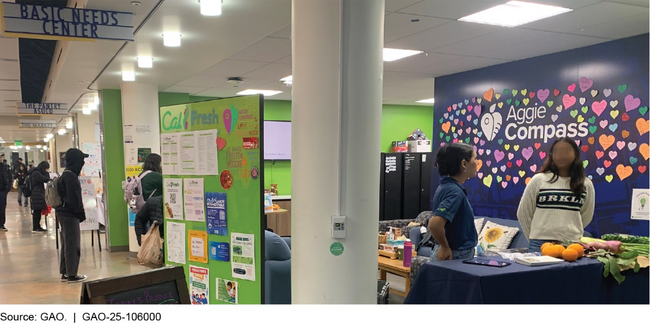
help connect them with benefits.Student Food Assistance at a College Basic Needs Center
Officials from the three selected states and seven colleges GAO
contacted described key strategies for communicating with students about
their potential SNAP eligibility. These include using destigmatizing
language, linking students directly to an application or support staff,
and coordinating outreach efforts with SNAP agencies. Officials from the
states and colleges GAO contacted said it is helpful to have staff
available on campus to assist students with the SNAP application. Some
colleges have found it helpful to partner with their respective SNAP
agencies to obtain information on the status of students’ applications.Why GAO Did This Study
According to a national survey, almost one-quarter of college
students were food insecure in 2020, yet GAO found many who were
potentially eligible for SNAP had not received benefits. The substantial
federal investment in higher education is at risk of not serving its
intended purpose if students drop out because of limited or uncertain
access to food. Studies have found using data to direct outreach to
those potentially eligible can increase benefit uptake.GAO was asked to review college student food insecurity. This report
addresses (1) the extent to which Education and USDA have supported data
use to help college students access SNAP benefits, and (2) how selected
states and colleges have used student data to help connect students
with SNAP benefits.GAO reviewed relevant federal laws and agency documents. GAO also
interviewed officials from Education, USDA, and national higher
education and SNAP associations. GAO selected three states and
interviewed officials from state SNAP and higher education agencies and
seven colleges in these states. GAO visited one selected state in person
and interviewed two virtually. States were selected based on actions to
support food insecure students and stakeholder recommendations.Recommendations
GAO is making five recommendations, including that Education develop a
plan to implement FAFSA data-sharing and assess its benefit
notification approach; and that USDA improve its SNAP agency guidance.
The agencies neither agreed nor disagreed with these recommendations.Recommendations for Executive Action
Agency Affected Recommendation Status Department of Education The
Secretary of Education should develop a written plan for implementing
provisions in the FAFSA Simplification Act related to sharing FAFSA data
with SNAP administrators, to aid in benefit outreach and enrollment
assistance. (Recommendation 1)Department of Education The
Secretary of Education should, in consultation with USDA, evaluate its
approach to identifying and notifying FAFSA applicants who are
potentially eligible for SNAP benefits and adjust its approach as
needed. (Recommendation 2)Department of Education The
Secretary of Education should inform colleges and state higher
education agencies that FAFSA notifications are being sent to applicants
who are potentially eligible for SNAP benefits. (Recommendation 3)Department of Agriculture The
Administrator of USDA’s Food and Nutrition Service should, in
consultation with Education, issue guidance to state SNAP agencies—such
as in its SNAP outreach priority memo—to clarify permissible uses of
student data, including FAFSA data, for SNAP outreach and enrollment
assistance. (Recommendation 4)Department of Agriculture The
Administrator of USDA’s Food and Nutrition Service should issue
guidance to state SNAP agencies—such as in its SNAP outreach priority
memo—to clarify the permissible uses and disclosure of SNAP data to
support SNAP student outreach and enrollment assistance. (Recommendation
5) -

39% of colleges rely on donors to address food insecurity
Anabel’s Grocery at Cornell University addresses basic needs insecurity for students.
Jason Koski, Cornell University
College students are more likely to experience food insecurity, compared to the general population, but funding and support for programs that address basic needs in higher education remains limited.
A 2024 survey by Swipe Out Hunger, a nonprofit group that addresses hunger among college students, found while a majority of colleges have a pantry for student supports, most are supported by philanthropy and not the institution.
The campus leader survey, released last month, included responses from 347 of Swipe’s 850 partner campuses, representing over 766,600 students who engaged with basic needs resources, whether through the food pantry, SNAP enrollment program or a basic needs hub.
The most popular campus support program was a food pantry, with almost all respondents (95 percent) indicating their college offers one for students. In 2024, campus pantries distributed over eight million meals and 687,000 additional items, such as toiletries, diapers or appliance lending.
Campus leaders shared their primary win in the past year was expanding their program (56 percent) and supporting students (20 percent), but only 1 percent of respondents said they had administrative support, and 8 percent indicated they earned additional funding to aid expansion.
In a similar vein, when asked what their primary challenges were, the greatest share identified funding (47 percent), followed by staffing (16 percent), space (11 percent) and support (10 percent).
Two in five campuses identified donations as their primary funding source, which included staff payroll deductions and crowdsourcing. Only 5 percent of campus leaders said they had a dedicated budget from campus as their primary source of funding for programming.
“This severe lack of sustainable funding for antihunger programs is preventing students from accessing the food they need to survive, which in turn affects their ability to stay enrolled,” says Jaime Hansen, executive director of Swipe Out Hunger. “With rising food costs and the lack of government support, campus food pantries and similar resources are becoming the only lifeline for students. If these programs continue to be overburdened and underfunded, we can expect to see less students being able to afford to stay in college.”
A corresponding student experience survey found 40 percent of program users engaged with on-campus services weekly, and an additional 8 percent used resources every day.
The top barriers to accessing nutritious food, students reported, were time constraints due to multiple responsibilities; the cost of meal plans, including on-campus food costs; anxiety about resource scarcity (taking away from peers who need it more); elevated costs of diet-specific foods; and living far away from affordable foods.
Tackling basic needs insecurity: Some of the ways other organizations and institutions are addressing college student hunger include these efforts:
- Believe in Students created an online curriculum to empower faculty to engage in basic needs support, providing relevant data and insights as well as how-to advice and encouragement.
- Community colleges utilize FAFSA data to notify learners of their eligibility for SNAP or other state-level food assistance programs.
- A group of students at Anne Arundel Community College contributed to a faculty-led cookbook featuring students’ nostalgic recipes adapted to utilize campus pantry ingredients.
- New Jersey built a centralized website to help college students identify basic needs resources across the state.
- Virginia Commonwealth University built miniature food pantries, modeled off little lending libraries, to increase access to shelf-safe food items across campus.
How is your campus addressing food insecurity among students? Tell us more.