
Tag: ADL

  • NEA Executive Committee Reverses Member Vote to Boycott ADL Educational Materials

    NEA Executive Committee Reverses Member Vote to Boycott ADL Educational Materials

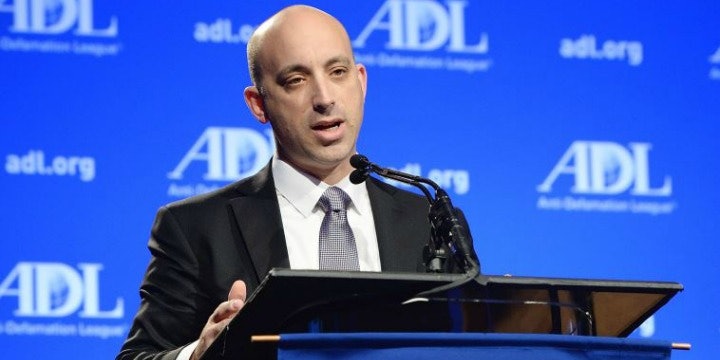
    ADL CEO Jonathan GreenblattThe National Education Association’s (NEA) executive committee has rejected a resolution passed by union members that would have severed ties with the Anti-Defamation League (ADL), preserving access to educational materials on antisemitism and Holocaust education amid rising campus tensions.

    The decision, announced Friday by NEA President Becky Pringle, came after the union’s Representative Assembly voted last week in Portland, Oregon, to cut ties with the civil rights organization over its characterization of campus protests related to the Gaza conflict as antisemitic.

    “Following the culmination of a thorough review process, it was determined that this proposal would not further NEA’s commitment to academic freedom,” Pringle said in a statement. The rejection preserves educators’ access to ADL curricula and professional development programs that address antisemitism in educational settings.

    The controversy highlights the complex challenges facing educational institutions as they navigate discussions about antisemitism, campus climate, and academic freedom in the aftermath of increased tensions following the October 7, 2023 Hamas attacks and subsequent Gaza conflict.

    The executive committee’s decision followed an unprecedented coalition effort, with nearly 400 Jewish organizations and dozens of elected officials urging the NEA to reject the boycott proposal. The coalition argued that excluding ADL materials would harm efforts to combat antisemitism in schools and marginalize Jewish educators and students.

    “This resolution was not just an attack on the ADL, but a larger attack against Jewish educators, students, and families,” said a joint statement from ADL CEO Jonathan Greenblatt, American Jewish Committee CEO Ted Deutch, Conference of Presidents of Major American Jewish Organizations COO Stephanie Hausner, and Jewish Federations of North America Executive Vice President Shira Hutt.

    The Jewish leaders emphasized that the proposed boycott would have normalized “antisemitic isolation, othering, and marginalization of Jewish teachers, students and families in our schools,” even as teachers’ unions have limited power to dictate curriculum.

    The debate reflects broader tensions on college and K-12 campuses nationwide, where Jewish students and faculty have reported increased incidents of antisemitism alongside pro-Palestinian advocacy efforts. The ADL’s annual reporting on antisemitic incidents has itself become a point of contention, with some progressive Jewish leaders questioning whether the organization conflates legitimate criticism of Israeli government policies with antisemitism.

    Amy Spitalnick, CEO of the Jewish Council for Public Affairs, offered a nuanced perspective: “It’s possible to disagree with ADL without cutting off all engagement — which would undercut our shared goals of countering antisemitism and broader hate and bias.”

    Pringle clarified that rejecting the boycott proposal was not an endorsement of “the ADL’s full body of work” but acknowledged the organization’s role in addressing rising antisemitism. She met with ADL CEO Greenblatt to discuss the union’s processes and reaffirm the NEA’s commitment to combating antisemitism.

    Source link

  • ADL, other pro-Israel groups condemn AAUP Palestine webinar

    ADL, other pro-Israel groups condemn AAUP Palestine webinar

    The Anti-Defamation League and four other pro-Israel groups accused the American Association of University Professors of “demonizing Israel” in its framing of and publicity around a webinar titled Scholasticide in Palestine.

    Scholasticide is the intentional eradication of an education system. In a joint letter Thursday, the same day as the webinar, the ADL, the Academic Engagement Network, Hillel International, the American Jewish Committee and the Jewish Federations of North America condemned the event’s use of this term.

    “Language used in the event’s description—including ‘scholasticide’ and ‘exterminationist’—suggests the adoption and promotion of a one-sided and inflammatory narrative which deviates from the mission of the AAUP,” the letter said. The groups said there’s “no evidence of any intent by Israel to ‘systemically destroy’ the education system in Gaza or elsewhere. The destruction of institutions, including educational ones, is a tragic byproduct of war, exacerbated when terror groups like Hamas embed their operations within school buildings and other civilian centers.”

    Six months into the latest war in Gaza, a group of independent United Nations experts said in a news release, “It may be reasonable to ask if there is an intentional effort to comprehensively destroy the Palestinian education system.” By then, the release said, the last Gazan university had already been destroyed and “more than 5,479 students, 261 teachers and 95 university professors have been killed in Gaza, and over 7,819 students and 756 teachers have been injured.”

    Miriam Elman, the Academic Engagement Network’s executive director, provided Inside Higher Ed with an email from Donna Murch, a member of the AAUP’s elected national council, inviting members to the webinar. Murch said the event would feature “academics and right-to-education organizers who have experienced, documented and challenged Israel’s ongoing and systematic destruction of the education system in Palestine.”

    An AAUP spokesperson told Inside Higher Ed, “We are not aware that anyone who is objecting to AAUP’s programming actually attended the event, which is part of an extended series of conversations about diverse topics of interest to our members. We take antisemitism very seriously and plan our programming consistent with the principles of academic freedom and academic responsibility that AAUP vigorously defends.”

    The pro-Israel groups also criticized the AAUP event’s promotional material for not mentioning Hamas’s Oct. 7, 2023, attack on Israelis. The letter says, “We note with dismay that this divisive event is taking place within a wider context of the AAUP being perceived as increasingly moving in a virulently anti-Israel direction.”

    The AAUP has received criticism for its council’s August decision to abandon the group’s nearly 20-year categorical opposition to academic boycotts—such as those often called for against Israel.

    Source link