This audio is auto-generated. Please let us know if you have feedback.
The U.S. Department of Education on Friday moved to terminate federal K-12 funding for the Maine Department of Education, following through on its promise to cut off the state and ultimately others if they do not enforce Title IX so as to keep transgender students from girls’ locker rooms, restrooms and athletic teams.
The move marks the first time the Trump administration has officially initiated a cut in federal funding to a state K-12 school system over civil rights violations.
The department at the same time referred its Title IX investigation of Maine to the U.S. Department of Justice for enforcement — after multiple threats that it would do so if the state did not sign onto a resolution agreement within 10 days of the agency finding Maine in violation of Title IX.
“The Department has given Maine every opportunity to come into compliance with Title IX, but the state’s leaders have stubbornly refused to do so, choosing instead to prioritize an extremist ideological agenda over their students’ safety, privacy, and dignity,” said Craig Trainor, acting assistant education secretary for civil rights in an April 11 statement.
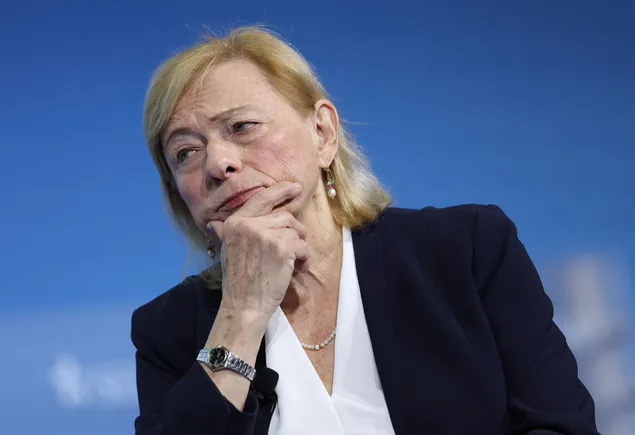
Gov. Janet Mills “would have done well to adhere to the wisdom embedded in the old idiom — be careful what you wish for,” Trainor said. “Now she will see the Trump Administration in court.”
Mills has maintained since the investigation’s launch that the state is not in violation of Title IX. The governor has said the federal investigation is “not just about who can compete on the athletic field,” but rather “about whether a President can force compliance with his will, without regard for the rule of law that governs our nation. I believe he cannot.”
A swift investigation
The directed investigation — meaning one initiated without a public complaint — was initiated by the department on Feb. 21 and concluded less than a month later in March. The move was precipitated by a public spat between Mills and Trump in February over the state’s transgender athlete policies, during which Mills threatened to see Trump in court.
The day the investigation was launched, alongside a nearly identical one into Maine by the U.S. Department of Health and Human Services also over Title IX, Mills said the outcome was “all but predetermined.”
Indeed, the investigation’s directed nature, quick turnaround time, high stakes attached, and referral to the Department of Justice — which traditionally has been reserved for egregious cases — has raised eyebrows in the education civil rights community.
The seemingly targeted, quick and aggressive enforcement strategy marks a significant shift from education civil rights enforcement under past administrations. Investigations traditionally took months or years, involved interviews and other investigative tools, and concluded with a negotiation with schools to bring them into compliance with federal law. Resolution agreements often included changes to school district operations like conducting climate surveys or hiring or training staff to ensure all students have access to an equal education.
Resolution agreement rebuffed
In this case, however, the administration gave Maine 10 days to sign a draft resolution agreement that would change state and district policies to define “females” by “a reproductive system with the biological function of producing eggs (ova),” and “males” by having “a reproductive system with the biological function of producing sperm.” “Gender” would be the same as “sex” under the agreement.
The draft agreement also would have required the state to apologize to each cisgender girl impacted by the state’s transgender female athlete policy “for allowing her educational experience and participation in school sports to be marred by sex discrimination.”
After the state refused to sign the agreement, the department warned officials on March 31 that it would send the case to the Department of Justice by April 11.
“Under prior administrations, enforcement was an illusory proposition. No more,” said Trainor in a March 31 statement. “The Trump-McMahon Education Department is moving quickly to ensure that federal funds no longer support patently illegal practices that harm women and girls.”
While cutting off states or districts from funds was always within the Education Department’s power, it was a stick that was rarely used in past administrations, and especially not over Title IX, according to the Association of Title IX Administrators.
Within three months under this Trump administration, the department has threatened the cancellation of more than $9.5 billion for Ivy League universities over alleged Title VI and Title IX violations related to alleged antisemitism and LGBTQ+ policies, threatened some 60 colleges and a handful of districts with additional loss of funding over allegations of antisemitism, and promised that “this is only the beginning.”
This audio is auto-generated. Please let us know if you have feedback.
Dive Brief:
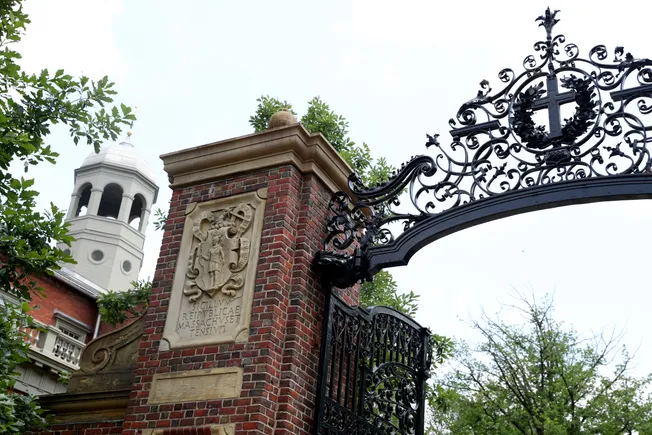
Harvard University on Thursday received a list of wide-ranging demands from the Trump administration tying the Ivy League institution’s federal funding to its complete compliance.
Among the requirements are that Harvard review and change programs and departments that the Trump administration described as “biased” and that “fuel antisemitism,” according to a copy of the letter obtained by Higher Ed Dive. It also calls for the university to make “meaningful governance reforms” that will selectively empower employees “committed to implementing the changes” demanded in the letter.
The demands came the same week the Trump administration put $9 billion of Harvard’s federal grants and contracts under review. The government alleged the probe stemmed from reports that the university failed to protect Jewish students from antisemitism.
Dive Insight:
The three federal agencies behind the letter— the U.S. Department of Education,U.S. Department of Health and Human Services, and U.S. General Services Administration — said the list of nine demands represent “broad, non-exhaustive areas of reform” that Harvard must enact “to remain a responsible recipient of federal taxpayer dollars.”
Their letter called on Harvard to eliminate all diversity, equity and inclusion efforts and prove it does not offer preferential treatment based on race, color or national origin in admissions or hiring “through structural and personnel action.”It also called for increased scrutiny of student groups and a comprehensive mask ban, with exemptions for religious and medical reasons.
But the agencies, operating as members of President Donald Trump’s Joint Task Force to Combat Anti-Semitism, offered few details on how Harvard could meet the demands.
For example, the letter did not outline which programs or departments it considered biased, nor did it say whether Harvard or the task force would determine which ones needed reform.It also didn’t describe how Harvard officials could determine why someone is wearing a mask.
The Education Department declined to answer questions on Friday. HHS and GSA did not respond to requests for comment.
Thursday’s letter marked the first time Harvard officials saw the demands, according to a university spokesperson, who did not respond to further questions. The letter did not set a hard deadline for the ultimatums, instead calling for Harvard’s “immediate cooperation.”
Before the Trump administration issued its demands, Harvard President Alan Garber acknowledged antisemitism exists on campus and said he had experienced it directly “even while serving as president.”
“We will engage with members of the federal government’s task force to combat antisemitism to ensure that they have a full account of the work we have done and the actions we will take going forward to combat antisemitism,” he wrote in a Monday message to campus. “We resolve to take the measures that will move Harvard and its vital mission forward while protecting our community and its academic freedom.”
Many members of the Harvard community, however, had a stronger response.
As of Friday afternoon, over 800 Harvard faculty members had signed a letter dated March 24 calling on the university’s governing boardsto publicly condemn attacks on universities and “legally contest and refuse to comply with unlawful demands that threaten academic freedom and university self-governance.” More than 400 alumni of the university have so far signed their own version of the same letter.
The demands made of Harvard echo the situation faced by one its Ivy League peers, Columbia University, last month.
The federal task force is threatening billions in federal funds and grants at Columbia, and it has canceled $400 million worth thus far. When the Trump administration sent Columbia a then-unprecedented list of demands, the university quickly capitulated— to the consternation of faculty and academic freedom advocates alike.
The Trump administration lauded Columbia’s compliance as a “positive first step” for maintaining federal funding but has not publicly announced that it has restored the $400 million in canceled grants and contracts.
“Columbia’s compliance with the Task Force’s preconditions is only the first step in rehabilitating its relationship with the government, and more importantly, its students and faculty,” the task force said in a statement at the time.
We’re rounding up recent stories, from one Ivy League university facing a multibillion-dollar federal review to another losing its president in under a year.
The Trump administration plans to block $510 million in federal contracts and grants for Brown University in retaliation for the university’s alleged failure to address antisemitism on campus, The New York Times reported.
The Daily Callerfirst reported the news, writing that “an administration official” said Brown’s grants “would be paused” while the government conducts a review of the university’s response to claims of antisemitism.
Brown provost Frank Doyle sent an email to campus leaders Thursday, acknowledging “troubling rumors emerging about federal action on Brown research grants,” but noting that they had received “no information to substantiate any of these rumors,” the Times reported.
Brown was among the 60 higher ed institutions to receive a letter last month from the Office for Civil Rights warning of “potential enforcement actions” if they failed to comply with federal antidiscrimination law.
After Columbia became the first institution to have its grants frozen, Brown president Christina Paxson issued a statement reiterating the university’s commitment to upholding both federal law and academic freedom. She noted that if Brown were prevented from performing “essential academic and operational functions, we would be compelled to vigorously exercise our legal rights to defend these freedoms, and true to our values, we would do so with integrity and respect.”
On Thursday night, leaders of the Brown Corporation and of Brown’s Jewish community, released a statement praising Brown’s commitment to Jewish students.
“Brown University is home to a vibrant Jewish community that continues to flourish with the steadfast support of the administration,” it read. “Amidst broader concerns about antisemitism on college campuses, Brown stands out as an inclusive environment where Jewish life is deeply integrated into campus culture.”
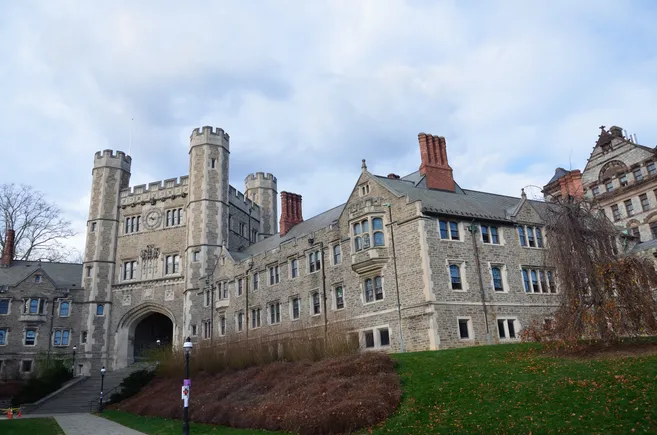
Federal agencies have suspended “several dozen” federal research grants to Princeton University, the Ivy League institution announced Tuesday. The move comes as the Trump administration attacks high-profile colleges over campus antisemitism allegations.
Multiple agencies, including the U.S. Department of Energy, the U.S. Department of Defense and NASA, notified the university of the freezes on Monday and Tuesday, Princeton President Chris Eisgruber said in a community message.
He noted that “the full rationale” for the agencies’ cancellation wasn’t clear yet but stated the university will comply with the law and is “committed to fighting antisemitism and all forms of discrimination, and we will cooperate with the government in combating antisemitism.”
He added that Princeton would at the same time “vigorously defend academic freedom and the due process rights.”
A reporter for The Daily Caller, a conservative outlet, reported late Monday that the Trump administration was pausing $210 million in funding to Princeton amid an ongoing campus antisemitism investigation.
The Education Department on Tuesday did not immediately respond to a request for confirmation of the pause.
Like many college campuses, Princeton saw significant protest activity last spring, including a hunger strike, an encampment lasting three weeks and over a dozen arrests. During that time, the Biden administration opened an investigation into the university after a complaint was filed by a conservative activist, who filed more than 30 similar complaints at U.S. educational institutions.
In March, the U.S. Department of Education under President Donald Trump named Princeton as one of 60 institutions that could face enforcement action over unaddressed antisemitism, though the agency didn’t specify any specific civil rights law violations.
The suspension of Princeton’s research grants is just the most recent of the Trump administration’s escalating financial attacks on colleges and the higher education sector.
On Monday, the administration announced it was reviewing billions of dollars in federal grants and contracts at Harvard University, another well-known institution mentioned on the Education Department’s March list.
Those moves come less than a month after the Trump administration canceled $400 million in research funding to Columbia University.
The Ivy League institution ceded to many of the government’s demands — including by adding three dozen security officers and appointing a senior vice provost to review its regional studies program. Late last month, the Trump administration called it “a positive first step in the university maintaining a financial relationship with the United States government.”
Following the weeks of turmoil at the university, Columbia Interim President Katrina Armstrong stepped down late last week after less than eight months.
The Tufts student, Rumesya Ozturk, was abducted by plainclothes ICE agents on the street. At a press conference Thursday, U.S. secretary of state Marco Rubio said that any international student whose visa was revoked could be forcefully deported in such a manner.
“Once you’ve lost your visa, you’re no longer legally in the United States,” he said. “If you come to the U.S. as a visitor and create a ruckus for us, we don’t want it.”
Axios also reported that the administration has discussed using a small arm of the Immigration and Customs Enforcement office to strip colleges they deem to be “pro-Hamas” of their ability to enroll international students.
“You can have so many bad apples in one place that it leads to decertification of the school,” an unnamed White House official told Axios. “I don’t think we’re at that point yet. But it is not an empty threat.”
The Student and Exchange Visitor Program normally investigates student visa fraud and international student recruiting practices, sometimes withdrawing colleges’ certification to enroll foreign students if there’s evidence that students are primarily enrolling as a pretext to reside and work in the U.S. instead of earn a degree.
Now, the SEVP may be tasked with a very different mandate: punishing colleges that have been the site of large pro-Palestine protests.
“What you’re going to see in the not-too-distant future is the universities … not doing anything to stop these demonstrations in support of Hamas … we can stop approving student visas for them,” a senior Justice Department official told Axios. “That’s one of their biggest cash cows, foreign students. That’s a meaningful source of revenue.”
A day after White House officials said the Education Department would administer the student loan program, President Donald Trump announced that the Small Business Administration would be taking over the $1.7 trillion portfolio.
He told White House reporters that the move would happen “immediately,” though he didn’t say how that process would work. Currently, federal law requires the Education Department to manage student loans, so the president doesn’t have the authority for the move, several experts and advocates said Friday.
Neither the White House nor the Small Business Administration responded to requests for more information or details about the plan.
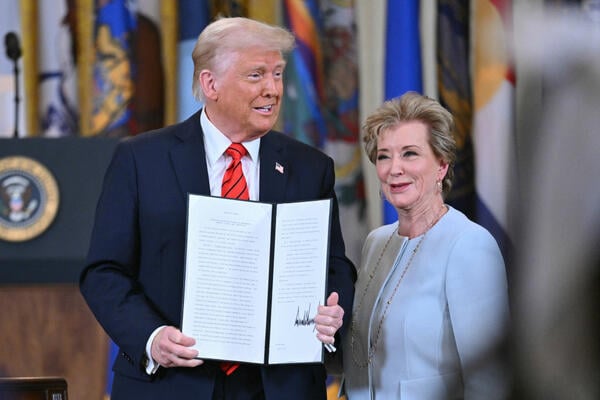
In response to questions about how moving loans to SBA would work, the Education Department referred Inside Higher Ed to an interview that Education Secretary Linda McMahon did Friday with Fox News. McMahon said she’s working with the SBA on a strategic plan.
The announcement follows Trump’s executive order, signed Thursday, directing McMahon to close her department “to the maximum extent of the law.” McMahon and others have said a smaller version of the department would focus on core functions, which many experts presumed to include the student loan program. (Trump also said Friday that the Department of Health and Human Services would take over programs that support students with disabilities.)
Kelly Loeffler, who leads the SBA, wrote on social media that her agency “stands ready to take the lead on restoring accountability and integrity to America’s student loan portfolio.” Whether the department has the capacity to take on the program is an open question; Loeffler is planning to cut 43 percent of the staff, Politico and other news outlets have reported. The SBA runs several programs to support small businesses, including providing loans and helping with disaster recovery.
The Education Department issues about $100 billion in student loans each year and disburses $30 billion in Pell Grants. That funding is crucial to students who rely on the government to help pay for college.
But borrowers have struggled over the years to navigate the cumbersome student loan system and often have faced difficulty in repaying their loans. Meanwhile, the federal government’s growing loan portfolio has become a key issue for lawmakers on both sides of the political aisle. Former president Joe Biden’s fix was in part to make student loan forgiveness more accessible and make loan payments more affordable.
Trump said Friday that the loan system “will be serviced much better than it has in the past,” adding, “it’s been a mess.”
Agency Blindsided
It wasn’t clear Friday afternoon whether SBA would also take over the Pell Grant program and the Free Application for Federal Student Aid—a form that millions of students rely on to access federal, student and institutional aid. Currently, the Office of Federal Student Aid, which is part of the Education Department, administers those programs. That office was hit hard by recent mass layoffs at the department, and experts have questioned whether it will be able to fulfill its many responsibilities, which also include overseeing colleges and rooting out fraud in the federal student aid system.
Trump’s executive order pointed out that the Education Department manages a portfolio the size of Wells Fargo but with significantly fewer employees. “The Department of Education is not a bank, and it must return bank functions to an entity equipped to serve America’s students,” the order said.
An official high up at Federal Student Aid said Friday that the office was blindsided by the announcement. Just a day before, the official said, the plan was to move the loans to the Treasury Department. Agency officials have yet to receive any plans or communication about handing over the reins to SBA or what that would entail, the official said.
‘Clear Violation’
The federal statute that created FSA specifically gives that office authority to administer student financial assistance programs. Additionally, laws dictating how federal funding is allocated explicitly send money to the Education Department for the student aid programs. A former department staffer told Inside Higher Ed that the administration is “clearly circumventing the spirit and intent of the law if you were to move to functions.”
Sen. Patty Murray, a Democrat from Washington State, agreed, writing on social media that the announcement “is a clear violation of education [and] appropriations law.”
Beth Maglione, interim president of the National Association of Student Financial Aid Administrators, added in a statement that only Congress can move the student loan portfolio to a different agency; if the legislative branch agreed, doing so would take time.
“The administration would first need to articulate a definitive strategy outlining how the work of administering student aid programs would be allocated within the SBA, determine the necessary staffing and resources, and build the requisite infrastructure to facilitate the transition of these programs to another federal agency,” she said. “In the absence of any comprehensive plan, a serious concern remains: how will this restructuring be executed without disruption to students and institutions?”
Not a ‘Crazy Idea’
Some conservative policy experts who support shutting down the department cheered the move. Lindsey Burke, director for the Center for Education Policy at the Heritage Foundation, wrote on social media that “without student loans at ED, there will be little left at the agency. Just a few programs—certainly not enough to justify a cabinet-level agency.”
Beth Akers, a senior fellow at the American Enterprise Institute, like the Heritage Foundation a conservative think tank, acknowledged in an email to Inside Higher Ed that there are a lot of open questions about how the SBA move would work. But she said the announcement shows that the Trump administration understands that the recent staffing cuts “will likely make it too difficult to keep these programs properly administered otherwise,” she wrote.
Akers noted that since SBA currently manages its own loans, “it isn’t a crazy idea that they could pull this off.”
“Frankly, the department has handled student loan administration poorly, so the bar is pretty low on what would constitute an improvement,” she added. “I expect that the existing student loan infrastructure (and remaining staff) will likely move over to SBA, and there won’t be immediate changes in how these programs are run. That’s my hope. Because if things change too quickly, I expect that students will see disruptions that could affect their enrollments and personal finances.”
Earlier this month, Immigration and Customs Enforcement (ICE) agents arrested Mahmoud Khalil, a green card holder and recent Columbia University graduate, and threatened him with deportation. The Trump administration said Khalil, who is of Palestinian descent, was a national security threat and accused him of terrorist activity for leading student protests at Columbia last year.
“The Trump administration is targeting me as part of a broader strategy to suppress dissent,” he said. “Visa holders, green-card carriers, and citizens alike will all be targeted for their political beliefs.”
That prediction has begun to come true. In the past three weeks, immigration officers have targeted international students they suspected of participating in pro-Palestinian protests, raiding their dorm rooms and revoking their visas. In recent days, the administration’s dragnet has widened to include faculty members, postdoctoral fellows, visiting scholars and researchers.
At least two of those international scholars were employed by U.S. institutions and in the country on valid work or academic visas. An Indian postdoctoral research fellow at Georgetown University was detained outside his home for alleged pro-Palestinian activity that the administration has yet to specify; and a Lebanese professor at Brown University’s medical school was denied reentry after attending the funeral of assassinated Hezbollah leader Hassan Nusrallah.
Another case involves an unidentified French scientist, who, according to a statement from the French Minister of Higher Education and Research, was denied entry into the U.S. because of his “personal opinion on the Trump administration’s research policy.”
Isaac Kamola, director of the American Association of University Professors’ Center for the Defense of Academic Freedom and an associate political science professor at Trinity College in Connecticut, said the administration’s “completely arbitrary” crackdown on foreign scholars threatens academic freedom and undermines the role of U.S. institutions in global research exchange and scholarship networks.
“I think it’s pretty clear that the administration has decided it’s going to use the force of the state to intimidate faculty and students,” he said. “They’re basically doing a kind of stochastic terrorism.”
The administration is also targeting international doctoral candidates who participated in pro-Palestinian protests last year, revoking their visas and sending ICE agents to apprehend them.
Momodou Taal, a British Ph.D. candidate at Cornell University who made national headlines when he overturned an academic suspension for protest activity that would have forced him to leave the country, received a visit from ICE agents on Wednesday. Just days earlier, Taal filed a lawsuit against the Trump administration seeking to block immigration officials from deporting international students for protesting.
Taal told Inside Higher Ed he’d been expecting a knock on his door since Trump’s inauguration, and that immigration officials were targeting students and scholars for protected pro-Palestinian speech.
“It goes against the ideals that this country espouses, or at least claims to espouse,” Taal said. “I’ve not been convicted of a crime, I’m not being charged with any crime or accused of any crime. So why should I be living in fear over what I decide to say and the causes I support?”
Teresa R. Manning, director of policy at the conservative National Association of Scholars, said, “We see it as more an issue of security and safety than an issue of academics or free speech.”
“The real threat to free speech is the complete leftwing domination of American education,” Manning said. “No conservatives are allowed. That’s the real threat, not our attempt to guard the nation’s security and safety and protect against potential terrorist threats.”
The White House did not respond to a request for comment Thursday, nor did a spokesperson for ICE. A spokesperson for the State Department’s Bureau of Educational and Cultural Affairs, which oversees and promotes global academic and research exchange, did not respond to a request for comment in time for publication.
Georgetown Fellow Detained
On Monday night, immigration officials arrested and detained Badar Khan Suri, an Indian postdoctoral fellow at Georgetown University, outside his home in Rosslyn, Virginia. Suri was in the country on a J-1 visa, a nonimmigrant document meant to promote academic and cultural exchange that is usually reserved for students and scholars; according to his lawyers, Department of Homeland Security agents told him his visa had been revoked.
A peace and conflict studies scholar, he was at Georgetown’s School of Foreign Service conducting research for his dissertation on the U.S. peace process in Iraq and Afghanistan.
“If an accomplished scholar who focuses on conflict resolution is whom the government decides is bad for foreign policy, then perhaps the problem is with the government, not the scholar,” Suri’s lawyer Hassan Ahmad wrote in a statement Thursday.
After his arrest, Suri was first brought to a migrant holding cell in Virginia before being transported to Louisiana, where he’s currently awaiting trial in the same detention center as Khalil, according to Suri’s lawyers.
Tricia McLaughlin, a spokesperson for the Department of Homeland Security, said in a statement on X that Suri had been detained for “spreading Hamas propaganda and promoting antisemitism on social media,” though she failed to provide any evidence.
Suri’s wife, a U.S. citizen of Palestinian descent and a graduate student at Georgetown, is the daughter of Ahmed Yousef, former adviser to the late Hamas leader Ismail Haniyeh, The New York Times confirmed. Yousef, who has called the Oct. 7, 2023 Hamas attacks a “terrible error,” told The Times that he left his position a decade ago and that his daughter and son-in-law have no involvement in political activism on behalf of the organization.
On Thursday, a federal judge in Virginia ordered that Suri be kept in the country until a lawsuit brought by his lawyers is resolved, according to The Washington Post.
In a post on BlueSky Thursday, Virginia representative Don Beyer wrote that “the arrests of academics like Suri and Mahmoud Khalil are intended to have a chilling effect and discourage the free expression of political views which Trump dislikes.”
A Georgetown spokesperson told Inside Higher Ed that the university was “not aware of [Suri] engaging in any illegal activity, and we have not received a reason for his detention.”
“Suri is an Indian national who was duly granted a visa to enter the United States to continue his doctoral research on peacebuilding in Iraq and Afghanistan,” the spokesperson wrote in an email. “We support our community members’ rights to free and open inquiry, deliberation and debate, even if the underlying ideas may be difficult, controversial or objectionable. We expect the legal system to adjudicate this case fairly.”
Brown Professor Denied Entry
Media outlets have reported that Rasha Alawieh, an assistant professor of medicine and clinician educator at Brown, was flown out of the U.S. last week despite a court order requiring the government to inform a judge ahead of any deportation. The federal government said Alawieh was returning from Lebanon, where she had attended the funeral of Hezbollah leader Hassan Nusrallah. Officials also said she had deleted “sympathetic photos and videos” of Hezbollah leaders from her phone.
Alawieh never made it past Boston’s Logan International Airport. On Monday, a DHS spokesperson posted on X that Nusrallah was “a brutal terrorist” and that Alawieh had “openly admitted” attending his funeral and supporting him.
“A visa is a privilege not a right—glorifying and supporting terrorists who kill Americans is grounds for visa issuance to be denied,” the spokesperson wrote. “This is commonsense security.”
The White House then reposted DHS’s statement with a photo of President Trump waving goodbye out of a drive-thru window at McDonald’s during a campaign stop.
Kamola, of the AAUP, said claims of Alawieh’s supposed connections to Hezbollah were “spurious.” One of Alawieh’s lawyers didn’t respond to requests for comment Thursday.
Asked whether Brown is defending Alawieh’s academic freedom or disciplining her, Amanda McGregor, a spokesperson for Brown, replied only that “Alawieh is an employee of Brown Medicine with a clinical appointment to Brown University.”
“Such appointments carry a faculty title, though the employment resides with Brown Medicine,” McGregor wrote in an email.
Interrogated for Anti-Trump Texts
Meanwhile, foreign academics traveling to the U.S. are being hassled and turned away by border agents.
Philippe Baptiste, France’s minister of higher education and research, told Agence France-Presse that a French scientist from the country’s National Center for Scientific Research was heading to a conference near Houston, Texas, when the scientist was denied entry and expelled. The minister did not reveal the scientist’s name.
“This measure was apparently taken by the American authorities because the researcher’s phone contained exchanges with colleagues and friends in which he expressed a personal opinion on the Trump administration’s research policy,” Baptiste said. “Freedom of opinion, free research and academic freedom are values we will continue to proudly uphold.”
On Wednesday, Baptiste met with counterparts from other European Union nations to discuss “threats to free research in the United States,” according to a post on X.
As the Trump administration escalates its attacks on foreigners in American academe, international students are increasingly apprehensive about studying at U.S. institutions and scholars worry about attending conferences or accepting fellowships in the country. Kamola said the end result may be the destruction of America’s reputation as a bastion of academic freedom.
“I think the message is: Everybody who wants to speak about Palestine, everybody who wants to argue that higher education should be more inclusive or diverse, anybody who wants to defend free speech in ways that the current regime finds unacceptable could potentially face retaliation,” Kamola said. “The intention is to not only sow chaos but to sow fear.”
This audio is auto-generated. Please let us know if you have feedback.
Columbia University received a daunting laundry list of tasks Thursday from the Trump administration: Suspend or expel protesters. Enact a mask ban. Give university security “full law enforcement authority.”
The Ivy League institutionmust comply with these and other demands by March 20 or further endanger its “continued financial relationship with the United States government,”according to a copy of the letter obtained by multiple news sources.
Last week, the Trump administration’s newly created Joint Task Force to Combat Anti-Semitism canceled $400 million of Columbia’s federal grants and contracts,alleging the university had failed to take action “in the face of persistent harassment of Jewish students.” It also noted that Columbia has $5 billion in federal grant commitments at stake.
The stunning move came only four days after the task force opened an antisemitism investigation into the university.
On Monday, the U.S. Department of Education also sent warnings to 60 colleges — including Columbia — that it could take punitive action if it determines they aren’t sufficiently protecting Jewish students from discrimination or harassment.
In Thursday’s letter, Trump administration officials said they expected Columbia’s “immediate compliance” after which they hope to “open a conversation about immediate and long-term structural reforms that will return Columbia to its original mission of innovative research and academic excellence.”
The letter’s edicts are just the latest in a series of decisions made by the Trump administration and Columbia officials that have put the well-known New York institution into a tailspin.
Strong language, few details
Officials at the Education Department, U.S. Department of Health and Human Services, and U.S. General Services Administrationsent Columbia Interim President Dr. Katrina Armstrongnine policy changes the Trump administration expects the university to make to retain federal funding.
The agencies — all of which are part of the Trump administration’s antisemitism task force — accused Columbia of failing “to protect American students and faculty from antisemitic violence and harassment,” along with other alleged violations of civil rights laws.
But despite the high stakes, the task force’s demands are ambiguous.
For example, its letter orders the university to deliver a plan on “comprehensive admissions reform.”
“The plan must include a strategy to reform undergraduate admissions, international recruiting, and graduate admissions practices to conform with federal law and policy,” it said.
The task force’s letter offers no further insight into what it expects Columbia to change or how it believes the university is out of line with federal standards.
The letter goes far beyond what is appropriate for the government to mandate and will chill campus discourse.
The Foundation for Individual Rights and Expression
The GSA directed an emailed request for comment to the Education Department. Neither the Education Department nor HHS responded to inquiries Friday.
The task force also ordered the university to ban masks that “are intended to conceal identity or intimidate others,” while offering exceptions for religious and health reasons.But it did not give criteria to determine why someone is wearing a mask.
“We are reviewing the letter from the Department of Education, Department of Health and Human Services, and General Services Administration,” a spokesperson for Columbia said Friday. “We are committed at all times to advancing our mission, supporting our students, and addressing all forms of discrimination and hatred on our campus.”
The Foundation for Individual Rights and Expression, a civil rights watchdog, criticized the federal officials’ demands Friday.
While the group has been critical of Columbia’s handling of student protesters, it said the letter does not follow “the normal procedure for revocation of federal financial assistance for violations of Title VI.” Title VI refers to the law barring discrimination on race, color and national origin at federally funded educational institutions.
“While these include some policy steps that Columbia should already have taken, the letter goes far beyond what is appropriate for the government to mandate and will chill campus discourse,” FIRE said in a statement.
A change in due process
The Trump administration’s task force is demanding Columbia completeongoing disciplinary proceedings against pro-Palestinian protesters who occupied campus buildings and organized encampments last year. The university must dole out meaningful discipline — meaning expulsions or multi-year suspensions — the letter said.
The same day the task force’s letter is dated, Columbiaannounced it had issued “multi-year suspensions, temporary degree revocations, and expulsions” related to the occupation of Hamilton Hall.
In April 2024,pro-Palestinian protesters occupied the university’s Hamilton Hall after then-President Minouche Shafik announced Columbia would not divest from companies with ties to Israel.
Columbia brought New York City Police onto its private campus for the second time that month — and only the second time since 1968— against the authority of the University Senate. Officers arrested more than 100 people.
The disciplinary rulings from Columbia’s University Judicial Board, the panel that reviews misconduct cases and issues sanctions, came 11 months later.
It is unclear if the UJB issued its rulings before or after Columbia received the task force’s letter. And a university spokesperson said in an email Friday that Columbia could not confirm who or how many protesters had been sanctioned due to student privacy laws.
Columbia University Apartheid Divest, a coalition of student organizations that helped organize the protests, said on social media Thursday that 22 students had been disciplined.
Columbia University’s immediate submission and betrayal of the core mission of higher education reflects cowardice and capitulation to a government that seems intent on destroying US higher education.
Todd Wolfson
President of the American Association of University Professors
And the United Auto Workers union announced that the university had expelledGrant Miner, president of UAW Local 2710, which represents student workers at Columbia.
The move, effectively firing Miner, came “one day before contract negotiations were set to open with the University,” the union said in a statement.
“It is no accident that this comes days after the federal government froze Columbia’s funding, and threatened to pull funding from 60 other universities across the country,” it said. “It is no accident that the University is targeting a union leader whose local went on strike in the last round of bargaining.”
Todd Wolfson, president of the American Association of University Professors, condemned Columbia’s decision against Miner as “a severe violation of student and worker rights aimed at silencing all voices of dissent who have spoken out for peace and against the war in Gaza.”
He also accused the university of being willing to “sacrifice its own students to the demands of an authoritarian government.”
“Columbia University’s immediate submission and betrayal of the core mission of higher education reflects cowardice and capitulation to a government that seems intent on destroying US higher education,” he said in a Friday statement.
The task force also told Columbia to dissolve UJB.The five-member board includes representatives from the faculty, student body and the university’s noninstructional employees such as librarians and administrative staff.
In lieu of this due process system, the letter instructed the institution to shift its disciplinary proceedings entirely under Armstong’s office.
Columbia must enact “primacy of the president in disciplinary matters,” giving the president’s office unilateral power to suspend and expel students and oversee the appeals process, the letter said.
Law enforcement on campus
The Trump administration also demanded that Columbia give its security force the power to arrest and remove “agitators who foster an unsafe or hostile work or study environment” or interfere with classroom instruction.
President Donald Trump has sought to crack down on campus demonstrations, threatening to pull federal funding from colleges that allow “illegal protests” and to arrest, deport and expel student demonstrators.
U.S. Immigration and Customs Enforcement took the first step toward fulfilling that promise last week, again putting Columbia at the center of a firestorm.
On Saturday, ICE agents arrested Mahmoud Khalil, a Columbia student who completed his graduate studies in December, in his university housing.
Khalil, a permanent U.S. resident who holds a green card, served as a driving force behind the pro-Palestinian protests onColumbia’s campus and represented student activists in negotiations with the university’s administration.
A U.S. Department of Homeland Security spokesperson alleged that he “led activities aligned to Hamas,” according to The Associated Press.
Khalil’s arrest and continued detention by ICE immediately drew condemnation from free speech and civil rights groups, including the American Civil Liberties Union, which joined his legal team this week.
His detainment, which is shaping up to be a landmark civil rights case, has not deterred the Trump administration.
An official at the U.S. Department of Justice, which is also on the antisemitism task force, said Friday that the agency is investigating if campus protesters broke federal anti-terrorism laws and whether Columbia’s handling of earlier incidents violated civil rights laws.
“This is long overdue,” Deputy Attorney General Todd Blanche said at a press conference.
And on Thursday, agents from Homeland Security searched two on-campus residences at Columbia, according to Armstrong.
“The University requires that law enforcement have a judicial warrant to enter non-public University areas, including residential University buildings,” she said in a statement. “Tonight, that threshold was met, and the University is obligated to comply with the law.”
No one was arrested or detained, and nothing was taken from the residents, Armstrong said.
“I understand the immense stress our community is under,” Armstrong said. She closed the letter with counseling and well-being resources for students and, in a separate statement that day, reiterated Columbia’s commitment to its international community.
On Friday, over 100 demonstrators gathered outside of the campus’ gates to protest the sanctions against the Hamilton Hall occupiers and the university’s response to Khalil’s detainment, according to the Columbia Daily Spectator.
This audio is auto-generated. Please let us know if you have feedback.
Millions in cuts to federal funding. Letters from the highest education official in the country expressing disappointment. Enforcement directives to immediately address a “backlog” of antisemitism complaints.
The U.S. Department of Education’s Office for Civil Rights has taken sudden and unprecedented actions in the past month highlighting its desire to protect Jewish students from discrimination. At the same time, no such imperative has been evident in investigations into or statements on Islamophobia on school or campus grounds.
“This administration appears to be focused solely on responses to antisemitic incidents on campus,” said Jackie Gharapour Wernz, an education civil rights attorney who worked at OCR under the Obama and the first Trump administrations. “But schools need to be focused on both.”
‘Lip service’ to protecting all as Muslim students are targeted
The same civil rights law that protects Jewish students from antisemitism — Title VI of the Civil Rights Act — also protects Muslim students from Islamophobia.
Under the Biden administration, and especially in light of the Israel-Hamas war protests after Oct. 7, 2023, the Education Department repeatedly expressed to schools that they must protect Jewish, Muslim, Palestinian and Israeli students equally.
“Jewish students, Israeli students, Muslim students, Arab students, Palestinian students, and all other students who reside within our school communities have the right to learn in our nation’s schools free from discrimination,” Catherine Lhamon, assistant secretary for civil rights for the Education Department under the Biden administration, warned in a Dear Colleague letter in November 2023.
The Biden administration issued the letter amid what it called an “alarming rise” in both antisemitic and Islamophobic incidents at schools.
Conversely, the Trump Education Department has made at least five announcements related to ending antisemitism in schools — none of which also expressed protections for students of Muslim, Arab or Palestinian backgrounds.
“They are centering Jewish students or others who are experiencing antisemitic behaviors, and they’re very clearly going after Palestinian and or Muslim students, as in the example at Columbia [University],” said Brett Sokolow, a Title VI and Title IX education civil rights expert who often works with school district administrators seeking to comply with federal regulations. “So while there’s some lip service to protecting all, I think the [Title VI] enforcement tool is going to be used primarily to the benefit of those who are experiencing antisemitism.”
Last week, the Trump administration cut $400 million in funding to Columbia University over what it called “inaction” in harassment of Jewish students, and warned of more cancellations to follow. Referring to anti-Israel protests that erupted on campuses over the Israel-Hamas war, the Education Department said “any college or university that allows illegal protests and repeatedly fails to protect students from anti-Semitic harassment on campus will be subject to the loss of federal funding.”
“This is only the beginning,” said Leo Terrell, senior counsel to the assistant attorney general for civil rights and head of the federal Joint Task Force to Combat Anti-Semitism, in a joint March 7 statement with the Education Department.
Just a few days later, Trump vehemently supported Immigration and Customs Enforcement’s arrest of prominent Palestinian activist Mahmoud Khalil, saying the move was the first of “many to come.” Khalil, a legal permanent resident of the United States and recent Columbia graduate, helped lead campus protests opposing the war in Gaza.
Addressing a ‘backlog’ of antisemitism complaints
Israel-Hamas war protests erupted on higher education and K-12 campuses under the Biden administration.
As part of its broader effort to crack down on Title VI after Oct. 7, 2023, the Education Department’s OCR opened civil rights investigations into complaints of both Islamophobia and antisemitism. Its caseload had gotten so unwieldy that Lhamon and then-Education Secretary Miguel Cardona pleaded at the time with Congress for more funding to support investigative staff and address the high number of complaints.
In one high-profile example in 2023, the department opened an investigation into New York City Public Schools, the nation’s largest school system, for allegedly failing to protect students from a hostile environment resulting from both antisemitism and Islamophobia.
Toward the tail end of Biden’s presidency, the administration had begun resolving the influx of Title VI complaints raised after the latest Israel-Hamas war.
But the Trump administration, in a March 7 statement, has referred to this OCR’s Title VI caseload as a “backlog of Biden Administration-era complaints alleging antisemitism” and said the resolution agreements under Biden were “toothless” and continue to provide “little to no remedy for Jewish students.”
While curtailing awareness around Islamophobia and Muslim students’ protections, the new administration has also reopened Title VI investigations into many of the same institutions that had already reached settlement agreements over alleged antisemitism with OCR under Biden, said Harold Jordan, nationwide education equity coordinator at the American Civil Liberties Union of Pennsylvania.
However, quantifying the Education Department’s efforts to resolve both Islamophobia and antisemitism cases under the Trump administration is difficult. Although the administration has been publicly lighting a fire under schools for their handling of alleged antisemitism incidents, it has not updated its website to reflect any pending civil rights investigations since Jan. 14, 2025 — the Tuesday before Trump’s Jan. 20 inauguration. Prior to the inauguration, OCR updated its pending and settled investigations every Tuesday for the sake of public transparency.
“The Office for Civil Rights should not be picking and choosing whose rights are important,” said Lhamon, who cracked down on Title VI violations following Oct. 7 while at OCR. “So you know, it’s very disturbing to me to hear only about some kinds of harm in the press releases and the public announcements of the department now.”
The Education Department did not respond to K-12 Dive’s multiple requests for comment on whether it intends to protect Muslim students and students from Muslim-majority countries as it is protecting Jewish and Israeli students, or on the status of complaints involving alleged Islamophobia especially in light of increased incidents following Oct. 7.
Backdrop of rising Islamophobia
As the Trump administration is seemingly sidelining Muslim and Arab students, incidents of Islamophobia on school grounds rise.
In 2024, education discrimination was among the most common types of complaints filed with the Council on American-Islamic Relations, the nation’s largest Muslim civil rights advocacy organization, according to the group’s annual report released March 11. That’s in addition to complaints of bullying of Muslim students, the CAIR report said.
CAIR is expecting Muslim students’ Title VI civil rights complaints to only increase under the current administration and is urging the Trump administration to oppose both antisemitism and Islamophobia, along with all forms of bigotry.
The ACLU agrees. “We want every allegation of discrimination that falls within the purview of that department — you know, race, gender, national origin, etc. — to be taken seriously,” said Jordan.
“That includes students who have complained that they are being mistreated because they are Muslim. And that does not appear to be happening in the current administration at this moment.”
Clarification: This article has been updated to clarify Harold Jordan’s affiliation.