

Tag: Adviser

  • Indiana Censors Newspaper, Fires Adviser

    Indiana Censors Newspaper, Fires Adviser

    First Amendment advocates are condemning Indiana University’s decision this week to suspend print publication of the Indiana Daily Student, a move that comes after administrators fired its adviser for allegedly rejecting demands to censor the student newspaper.

    The Foundation for Individual Rights and Expression called the decision “outrageous,” while officials at the Student Press Law Center cast the move as a classic case of censorship. Editors at the newspaper say they want to work with the university to address the issue but pledged “to resist as long as the university disregards the law.”

    “Any other means than court would be preferred,” wrote IDS editors Mia Hilowitz and Andrew Miller in an op-ed Wednesday.

    The decision is the latest flare-up between student journalists and institutions. Earlier this year, Purdue University ended its partnership with the student paper, citing “institutional neutrality.” The move also echoes Texas A&M University’s unilateral decision in 2022 to end its student newspaper’s print edition.

    The IDS editors first brought attention to the firing of Director of Student Media Jim Rodenbush in a Tuesday op-ed. They accused IU of ousting Rodenbush after he refused to follow directions from administrators to censor a homecoming edition of the newspaper. Administrators reportedly told Rodenbush the newspaper was only to contain information about homecoming and “no traditional front page news coverage.” But when he resisted, and editors at the Indiana Daily Student pressed Media School administrators for clarity, Rodenbush was fired.

    A termination letter shared with Inside Higher Ed and signed by Media School dean David Tolchinsky accused Rodenbush of a “lack of leadership” and inability “to work in alignment with the University’s direction for the Student Media Plan,” which he called “unacceptable.” Tolchinsky added that Rodenbush “will not be eligible for rehire at Indiana University.”

    The termination letter sent to Jim Rodenbush.

    After Rodenbush was ousted, administrators canceled publication of the newspaper, citing a plan adopted last year that outlined a shift for the student newspaper from print to digital platforms.

    “In support of the Action Plan, the campus has decided to make this shift effective this week, aligning IU with industry trends and offering experiential opportunities more consistent with digital-first media careers of the future,” Tolchinsky wrote in an email to student editors obtained by Inside Higher Ed.

    Indiana administrators deny that the university censored the paper, despite telling the student publication not to publish news. IU officials say that the newspaper retains full editorial control.

    Accelerating a Shift

    In a statement shared with Inside Higher Ed and attributed only to an IU spokesperson, officials wrote, “Indiana University Bloomington is committed to a vibrant and independent student media ecosystem.” The statement added that the shift from print to digital is geared toward “prioritizing student experiences that are more consistent with today’s digital-first media environment while also addressing a longstanding structural deficit at the Indiana Daily Student.”

    Chancellor David Reingold also pointed to the action plan in his statement, noting that “the campus is completing the shift from print to digital effective this week.” He added that the decision “concerns the medium of distribution, not editorial content,” and IU upholds “the right of student journalists to pursue stories freely and without interference.”

    Tolchinsky, President Pamela Whitten and members of the Board of Trustees did not respond to requests for comment from Inside Higher Ed. IU did not answer specific questions sent by email.

    Although Indiana officials have denied censoring the student newspaper, some officials were concerned about the optics of shutting down coverage, according to the Indiana Daily Student.

    When Rodenbush pushed back on the directive to censor the newspaper in a Sept. 25 meeting, Ron McFall, assistant dean of strategy and administration at the Media School, reportedly asked, “How do we frame that, you know, in a way that’s not seen as censorship?”

    McFall did not respond to a request for comment from Inside Higher Ed.

    ‘Textbook Case of Censorship’

    Rodenbush told Inside Higher Ed in a phone interview that he was surprised by his firing and open to exploring all legal options. He also cast the happenings at IU not as a business decision but pure censorship.

    “This is a textbook case of censorship,” Rodenbush said.

    He also disputed the notion that what happened was part of a shift to a digital product. In fact, Rodenbush argued, that shift largely already happened when university administrators decided last year to scale back the publication of the print edition from weekly to seven editions across the spring semester. Those seven printings were special editions, Rodenbush said, given that those “are generally our biggest revenue generators.” Special editions this year have been printed as supplemental sections, or essentially inserts into the regular editions of the paper.

    Prior to the fall semester, Rodenbush said, he never heard concerns from administrators about that practice until they objected to publishing the homecoming edition as an insert in the regular newspaper in September. When asked to ban news coverage from the homecoming edition, Rodenbush told Media School administrators, including Tolchinsky, he “wasn’t going to participate in censoring the paper,” which he said led to his firing.

    Hilowitz and Miller, the IDS editors, also disputed the notion that the cancellation of the print publication, which was communicated to them by Tolchinsky, was anything but censorship.

    “IU decided to fire Jim Rodenbush after he did the right thing by refusing to censor our print edition. That was a deliberate scare tactic toward student journalists and faculty. The same day, the Media School decided to fully cut our physical paper, fully ensuring we couldn’t print news. We’re losing revenue because of that decision,” they wrote in a joint emailed statement.

    The duo accused IU of trying to “irrationally justify” censorship as a “business decision.”

    Mike Hiestrand, senior legal counsel at the Student Press Law Center, told Inside Higher Ed that IU’s actions amount to content-based censorship and are “a clear violation of the First Amendment.”

    Asked to weigh in on IU’s response, Hiestrand commented, “No censor wants to be called a censor,” but “that’s clearly the case.” He added that being told not to publish certain information is “as content-based an action of censorship as you can get.” In an interview at a media conference in Washington, D.C., with hundreds of student journalists and advisers in attendance, Hiestrand said that there has been a sense of shock and outrage from attendees over the situation.

    “I think there’s shock that this happened here. We have strong laws that protect against this,” Hiestrand said.

    Free Speech Under Fire

    The censorship flap comes amid broad criticism of the state of free expression at IU, which FIRE ranked as one of the nation’s worst institutions on campus speech. Of 257 universities, FIRE ranked IU at 255 in its free speech rankings.

    IU has seen a flurry of campus speech controversies since Whitten became president in 2021.

    Whitten, who is also facing allegations that she plagiarized parts of her dissertation, has been accused of retaliating against a professor for criticizing her and stifling academic freedom. Under her leadership, IU has also imposed broad restrictions on campus speech in the wake of 2023 student protests and attempted to bar faculty who took buyouts from criticizing the university.

    Amid censorship concerns at IU, FIRE sent a letter to Whitten, released a statement and launched a national petition.

    “Censoring a student publication after it reported on a university’s dismal record on free speech isn’t just a stunning display of lack of self-awareness, it’s a violation of the First Amendment,” FIRE student press program officer Dominic Coletti said in a statement. “If Indiana University is embarrassed about its terrible showing in the College Free Speech Rankings, it should put down the shovel and start caring more about its students’ constitutional rights than its own image.”

    Indiana’s Student Government Association also condemned IU’s handling of the matter.

    The university’s chapter of the American Association of University Professors urged administrators to reconsider their decisions to fire the adviser and cut the print edition, saying the situation further deteriorates IU’s commitment to free speech.

    “In refusing to be cowed by demands to voluntarily abrogate constitutionally protected rights, Director Rodenbush and the Indiana Daily Student have indeed shown themselves out of alignment with a University Administration that has consistently silenced dissenting voices with a seeming disregard for First Amendment protections,” the chapter said in a statement.

    This latest controversy is also gaining national attention from big-name donors such as Mark Cuban, the billionaire entrepreneur and IU alum. Cuban, who previously donated money to support the Indiana Daily Student, called out administrators in a post on X.

    “Not happy. Censorship isn’t the way,” Cuban wrote Wednesday. “I gave money to [the] IU general fund for the IDS last year, so they could pay everyone and not run a deficit. I gave more than they asked for. I told them I’m happy to help because the IDS is important to kids at IU.”


    Source link

  • Trump Adviser Blames “Scientific Slowdown” on DEI, Red Tape

    Trump Adviser Blames “Scientific Slowdown” on DEI, Red Tape

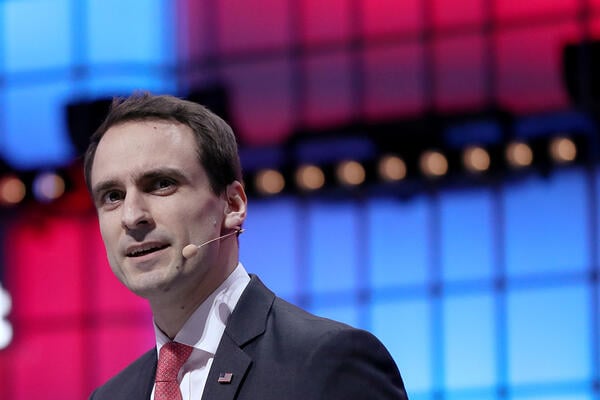
    President Donald Trump’s science adviser and director of the White House Office of Science and Technology Policy believes the recent, seismic cuts to federal research funding offer “a moment of clarity” for the scientific community to rethink its priorities, including the government’s role in supporting research.

    Michael Kratsios, who is pushing for increased private sector support of research, said that federal investment in scientific research—much of which happens at universities—has yielded “diminishing returns” over the past 45 years.

    “As in scientific inquiry, when we uncover evidence that conflicts with our existing theories, we revise our theories and conduct further experiments to better understand the truth,” Kratsios, a former tech executive with ties to tech titan and conservative activist Peter Thiel, said at a meeting of the National Academy of Sciences on Monday. “This evidence of a scientific slowdown should spur us to experiment with new systems, new models, new ways of funding, conducting and using science.”

    But some experts believe Kratsios’s comments mischaracterized trends in the nation’s academic research enterprise, which has been faced with decades of declining federal funding.

    “Kratsios may have things exactly backward. Our growth has slowed down over decades—the same decades where we have been funding science less and less as a share of GDP,” Benjamin Jones, an economics professor at Northwestern University and former senior economist for macroeconomics for the White House Council of Economic Advisers, said in an email to Inside Higher Ed. “Federally supported research is near its lowest level in the last 70 years. If the U.S. really wants to be ‘first’ in the world, the key will be how fast we advance. Cutting science is just a huge brake on our engine.”

    A wide body of literature confirms that federally funded research and development continues to produce enormous social returns. A 2024 paper from the Federal Reserve Bank of Dallas showed that rates of return on nondefense R&D spending range from 140 to 210 percent. Another report from United for Medical Research determined that for every dollar the National Institutes of Health spent on research funding in 2024, it generated $2.56 of economic activity. And yet another science policy expert has estimated that an additional dollar of government-sponsored R&D generates between $2 and $5 in public benefits via economic growth.

    But those facts were absent from Kratsios’s remarks, which accused scientists of focusing on “trying to score political points” and diversity, equity and inclusion initiatives instead of so-called gold-standard science. “Spending more money on the wrong things is far worse than spending less money on the right things,” he said. “Political biases have displaced the vital search for truth.”

    Kratsios also cited “stalled” scientific progress despite “soaring” biomedical research budgets and “stagnated” workforce training as proof that “more money has not meant more scientific discovery, and total dollars spent has not been a proxy for scientific impact.” Since 1980, he specified, “papers and patents across the sciences have become less disruptive,” and since the 1990s, “new drug approvals have flatlined or even declined.”

    The White House OSTP did not respond to Inside Higher Ed’s request for Kratsios’s sources of information, but some outside experts said those specific claims have merit, even if they lack additional context.

    A 2023 paper in Nature shows that patents and papers are indeed becoming less “disruptive” over time. But the authors themselves said the slowdown is “unlikely to be driven by changes in the quality of published science, citation practices or field-specific factors,” but rather “may reflect a fundamental shift in the nature of science and technology,” which is presenting increasingly difficult and complex problems for researchers. The authors also called on federal agencies to “invest in the riskier and longer-term individual awards that support careers and not simply specific projects.”

    (Many of the federal research grants the Trump administration has terminated in recent months supported those aims, including funding for graduate and postdoctoral students and multiyear projects that weren’t yet complete.)

    And even though new inventions may be decreasingly likely to push science and technology in new directions, as the Nature paper indicated, federally funded research has nonetheless expanded its reach to consumers since 1980—the same time frame Kratsios claims has been marked by diminishing returns that warrant an overhaul of federal research policy.

    Prior to the 1980s, the government owned the intellectual property of any discoveries made using federal research dollars. The policy gave universities little incentive to find practical uses for inventions, and fewer than 5 percent of the 28,000 patents held by federal agencies had been licensed for use, according to the U.S. Government Accountability Office.

    That changed when Congress passed the Bayh-Dole Act in 1980, allowing universities, not-for-profit corporations and small businesses to patent and commercialize federally funded inventions. Universities began transferring inventions to industry partners for commercialization. Between 1996 and 2020, academic technology transfers in the U.S. contributed $1.9 trillion in gross industrial output, supported 6.5 million jobs and resulted in more than 126,000 patents awarded to research institutions, according to data from the Association of University Technology Managers (AUTM).

    As for Kratsios’s claim that drug approvals have “flatlined,” Matt Clancy, a senior research fellow at Open Philanthropy, said that’s a matter of interpretation. “If you think it means discovery is dead and not happening, that’s clearly false,” he said, noting that while drugs had been getting steadily more expensive to develop in the late 20th and early 21st centuries, costs have started falling over the past decade. “If you think it means the rate of discovery has not increased in proportion to the increase in spending, I think that is correct.”

    ‘The Enemy of Good Science’

    Kratsios also tied those alleged declines in innovation to the assertion that researchers have fallen victim to a misguided “professional culture” and to “social pressures.” As an example, he pointed to the scientific community’s insistence on keeping schools closed to prevent the spread of the COVID-19 virus as an example of scientists’ unwillingness to question dominant viewpoints. “Convention, dogma and intellectual fads are the enemy of good science,” he said.

    Administrative burdens have also hamstrung the scientific enterprise, he added.

    “The money that goes to basic and blue-sky science must be used for that purpose, not to feed the red tape that so often goes along with funded research,” Kratsios said. “We cannot resign our research community and the laboratory and university staff who support them to die the death of a thousand 10-minute tasks. To assist the nation’s scientists in their vocation, we will reduce administrative burdens on federally funded researchers, not bog them down in bureaucratic box checking.”

    Expanding the role of private funders is part of Kratsios’s solution.

    “In particular, in a period of fiscal constraints and geopolitical challenges, an increase in private funding can make it easier for federal grant-making agencies to refocus public funds on basic research and the national interest,” he said at the NAS meeting, which was attended by university lobbyists and senior administrators.

    “Prizes, challenges, public-private partnerships and other novel funding mechanisms can multiply the impact of targeted federal dollars. We must tie grants to clear strategic targets while still allowing for the openness of scientific exploration and so shape a general funding environment that makes clear what our national priorities are.”

    According to Kratsios, private industry is well positioned to step in. He claims the sector spends “more than three times on R&D than does the federal government,” though it’s not clear from where he drew that statistic. Data from AUTM shows that in 2023, industry expenditures made up just 6.8 percent of all research spending in the United States, compared to 56.6 percent from the federal government. (Inside Higher Ed has previously reported on the challenges of looking to private funders to meaningfully make up for the Trump administration’s current and proposed cuts to academic research.)

    Shalin Jyotishi, senior adviser for education, labor and the future of work at the left-leaning think tank New America, said that while some of the issues that Kratsios raised regarding federal science policy have merit, the administration hasn’t put forth a clear vision for reform.

    “Instead, what we are seeing is ‘creative destruction’ playing out across the federal research enterprise—without the ‘creative’ part,” he said. “It’s not too late. The administration can and should still salvage the federal research enterprise and enact reform to make it even better.”

    Source link