

Tag: Advisers

  • Financial Aid Advisers Question Trump’s ID Verification Efforts

    Financial Aid Advisers Question Trump’s ID Verification Efforts

    Many financial aid advisers are worried that the Trump administration’s latest effort to bolster identity verification in the student aid system could have unintended consequences. Instead of simply catching fraudulent grant applicants and borrowers, some fear that the verification process could also prevent real, eligible students from accessing public benefits.

    Education Department officials, however, assure aid advisers that one of their top priorities is to distribute aid smoothly to the students who have a right to it, even as they protect the integrity of the taxpayer-funded programs.

    In an electronic announcement published Aug. 12, Federal Student Aid officials said they would be checking the identities of an additional 300,000 aid applicants, on top of the 125,000 students already flagged in June. Some college advisers said they were alarmed by the sheer scale of the requests—especially given what they describe as a very tight timeline.

    While aid officers generally support the concept of catching identity thieves, they fear that requiring students to complete the verification process so quickly could delay or even block aid access for some legitimate students, putting them in a financial hole. FSA says the program will eventually be automated, limited to first-time students and managed by agency officials. But at the moment, it’s a manual process that can affect students midway through their program; financial aid officers say it is becoming increasingly complicated and burdensome.

    “Schools have been asking for help on how to find these people and prevent fraudulent identities from obtaining Title IV aid, so we’re very supportive of the Department of Ed’s attempts to assume responsibility,” said Karen McCarthy, vice president of public policy and federal relations at the National Association of Student Financial Aid Administrators. “Unfortunately, the timing and how long it took ED to get this off the ground means that it’s August … We are entering, if not already in, the season of really large-scale disbursement. If verification is outstanding, schools may have to hold disbursements for those students.”

    The largest unknown seems to be what the consequences of an incomplete or overdue identity verification will be.

    The majority of students in the latest wave of verification requests are returning to college and need to verify their identity for the 2024–25 academic year as well as secure their awards for 2025–26. But some were flagged solely for last academic year and in most instances have already graduated or stopped out, making it harder to track them down and complete the process.

    Verification results for 2025–26 can be submitted up to 60 days after the data portal opens Aug. 31. At the same time, according to a Federal Register notice, verifications and any other changes to aid applications for 2024–25 must be completed by Sept. 13, making for a busy two weeks for students and aid officers.

    Experts have raised a number of questions about whether missing this tight deadline for 2024 could have repercussions. Some fear it could block students from completing future identity verifications or receiving upcoming disbursements; others worry that aid already disbursed in 2024–25 will need to be retracted. Either way, they say, it could have a crippling effect on low-income students.

    “There’s going to be a variety of impact,” one financial aid adviser said. “The monetary impact could be anything from a few hundred dollars to 10-, 15- or 20,000.”

    However, the Office of Federal Student Aid told Inside Higher Ed that missing that deadline shouldn’t be a problem—except in rare situations.

    Verifications for 2024 don’t have to be reported through the portal the same way upcoming 2025 ones do, one agency official said on background. Rather, aid officers just need to verify the student’s identity and determine internally whether a student’s 2024 aid should be awarded; therefore, “there’s no deadline that people are going to hit and fall afoul of,” he added.

    And in the “rare” scenario where an institution discovers inaccuracies on a 2024 FAFSA form, the department said, colleges can reach out to FSA to ensure a student’s eligibility is not impacted.

    ‘We Are Not Blocking Students’

    “If anyone has any examples of that Sept. 13 deadline actually being a blocker for students, we can move the deadline back, because we are here to make sure we are not blocking students,” the FSA adviser said. “There is no reason” a 2024 verification delay should affect a student’s ability to complete the 2025 process and have their award disbursed.

    Department officials also noted that they have streamlined the process to reduce the administrative burden, cutting steps such as making students provide a statement of purpose or notarizing the verification.

    And of the 300,000 aid applicants flagged in the most recent set of verification requests, the external vendor that helped identify them says that at least 50,000 are examples of fraud. The vendor is “very confident” that the other 250,000 are as well, the FSA official said, but the agency is playing it safe and having colleges check each case for good measure before stripping those recipients of aid.

    Ellen Keast, the department’s deputy press secretary, said it’s all part of the agency’s “student- and taxpayer-first mentality.”

    “We are committed to ensuring that every single dollar is spent on eligible students, not fraudsters,” she said. “This is not about putting a burden on postsecondary institutions; it’s about warning them, before they disburse both taxpayer money and their own, that the ‘student’ in front of them is most likely not a real person.”

    But representatives from NASFAA and college financial aid officers are still not clear on how the process will play out.

    Caleb Williams, director of enrollment management at Northern Arizona University, said that in addition to the typical verifications that occurred before the Trump administration’s new campaign was announced, selection rates for 2024–25 verification at his institution rose by 54 percent in June and another 13 percent in August. As he understands it, he added, a student “flagged for Identity verification cannot receive aid in any year until the process is completed.”

    Meanwhile, Charles Mayfield, the director of financial assistance at Northwest Missouri State University, believes that if an institution misses the September deadline for 2024 verifications, it will not be able to reinstate any of last year’s aid. But it would still be able to complete the 2025 verification and process that year’s aid.

    Mayfield hopes that the department will put out clarified guidance to relieve aid advisers’ confusion and explain exactly what the September deadline means, how it will be enforced and what the consequences will be for students. But like the staff at NASFAA, he said his greatest frustration is not the general need for clarification but its timing at the end of an academic year.

    “These students have received financial aid for the whole academic year, and now it’s all going to be taken away, and they’re at risk of not being able to enroll for the next academic year,” he said. “In the industry, we all know that students who stop out are much less likely to finish their degree.”

    It would be one thing if these concerns and challenges were specific to one college, Mayfair said, but when there are 15 or 20 colleges expressing the same confusion on a Listserv on the same day, the department should be more responsive.

    “It feels like when something doesn’t go right, we have to prove to the FSA that it didn’t work the way it was supposed to,” he said. “And until we can outright prove that—using data that’s on their system, that they should already have access to—they won’t acknowledge it.”

    McCarthy from NASFAA said that what the department told Inside Higher Ed about 2024 and 2025 verification being handled separately “sounds promising,” but as of Aug. 22 she hadn’t received the same notification from FSA.

    Other smaller concerns, such as whether the system for flagging fraud is accurate and if the new portal is functional, also have yet to be addressed, she added.

    “It’s an awful lot of work being pushed onto schools,” she explained. “So we want to make sure that it’s useful, beneficial work and that these are actual, really concerning applications, not sloppy work on the Department of Ed which then leads to delays for students.”
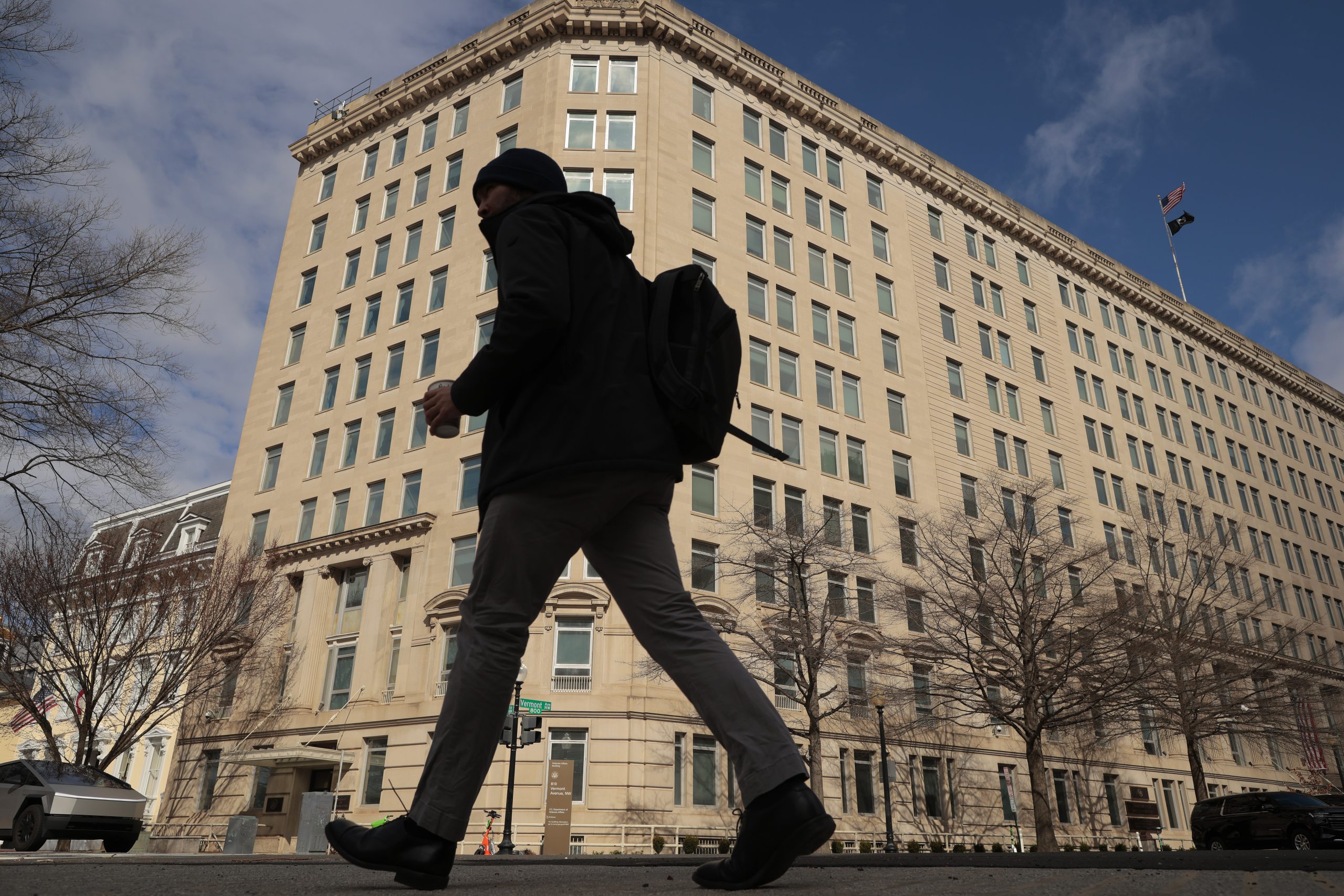

    Source link

  • Student veterans, advisers say VA cuts are derailing their educations

    Student veterans, advisers say VA cuts are derailing their educations

    As the spring semester got under way in January at the University of Colorado at Colorado Springs, a dozen military veterans waited for their GI Bill student benefit checks to show up.

    Then they waited, and waited some more, until the money finally arrived — in April.

    By that time, three had left.

    Getting GI Bill benefits from the Veterans Administration, which student veterans use to pay for their tuition, textbooks and housing, already took weeks. Since federal government staffing cuts since President Donald Trump took office, it’s been taking at least three times longer, said Jeff Deickman, assistant director for veteran and military affairs at the student veteran center on that campus.

    Deickman’s counterparts at other colleges say the VA’s paperwork often has errors, causing further delays. They say some student veterans are dropping out.

    “I can spend, on bad days, three hours on the phone with the VA,” said Deickman, himself a 20-year Army veteran and a doctoral student. “They’ll only answer questions about one student at a time, so I have to hang up and start over again.”

    Nearly 600,000 veterans received a total of about $10 billion worth of GI Bill benefits last year, according to the VA.

    The start of the new administration brought big personnel cuts to both the VA and the U.S. Department of Education, which manages some student aid for veterans. Now, advocacy groups and universities and colleges that enroll large numbers of veterans are bracing for the planned layoffs and departures of nearly 30,000 VA employees and additional cuts at the Department of Education.

    Many are also concerned about the potential for reduced scrutiny of the for-profit college sector, which critics contend has taken advantage of veterans’ tuition payments without providing the promised educational benefits.

    Related: Interested in innovations in higher education? Subscribe to our free biweekly higher education newsletter.

    Veterans who are just starting to feel the effects of federal cuts, and organizations that support them, worry things will only get worse, said Barmak Nassirian, vice president for higher education policy at the advocacy group Veterans Education Success. The nonprofit has been getting calls from students anxious about confusing information they’re receiving from federal agencies, he said, and it’s been hard to get answers from the government.

    “Part of the challenge of wrapping our arms around this is the opaqueness of the whole thing. We’re sort of feeling our way around the impact,” Nassirian said.

    “The whole process” has become a mess, said one 33-year-old Navy vet in Colorado, who used a more colorful term common in the military and asked that his name not be disclosed for fear of reprisal. “It’s making a lot of us anxious.”

    Social media lays bare that anxiety — and frustration. In posts, veterans complain about stalled benefits and mistakes.

    “I just wish I could speak to someone who could help but all of the reps seem to be unable to assist and simply tell me to reapply, which I have 4x, just for another denial,” wrote one on Reddit, about attempts to have a student loan forgiven.

    Related: How Trump is changing higher education: The view from 4 campuses

    “Complete nightmare,” another Reddit poster wrote about the same process. “Delays, errors, and employees that don’t know anything. No one knows anything right now.”

    Federal law guarantees that disabled vets’ student loans will be forgiven, for instance, but veterans with total permanent disabilities have reported that their applications for their loans to be discharged were denied. One said the Department of Education followed up with a letter saying the denial was a mistake, but the agency hasn’t explained how to correct it.

    The Education Department did not respond to an interview request. The VA declined to answer even general questions about benefit delays unless provided with the names of veterans and colleges that reported problems.

    A VA spokesman, Gary Kunich, said no one had been laid off from the agency, which in fact cut 1,000 probationary employees in January and another 1,400 workers in February, though some were temporarily reinstated by a judge. It has announced plans to lay off 30,000 more by the end of September.

    Such cuts threaten to “disrupt access to veterans’ education benefits, just as even more veterans and service members may be turning to higher education and career training,” top officials at the American Council on Education, or ACE — the nation’s largest association of colleges and universities — wrote in June.

    That’s on top of existing frustrations. Veterans already struggle to get the benefits they’ve earned, college administrators and students say.

    Related: Veterans are tangled in red tape trying to get their student loans canceled as promised

    Many colleges and even some prominent veterans’ advocacy groups didn’t want to talk about this. Student Veterans of America, one of the largest advocacy groups for veteran students, did not respond to repeated interview requests. Ten of the colleges and universities that boast large veteran enrollments — including San Diego State, Georgia State, Angelo State, Arizona State and Syracuse — also did not respond or declined to answer questions.

    Veterans and advocates are concerned that ongoing Education Department cuts will erode oversight of education institutions that take GI Bill benefits but leave veterans with little in return — primarily for-profit colleges that were found guilty of, and have been punished repeatedly for, defrauding students. In some cases, those colleges suddenly closed before students could finish their degrees, but kept their tuition while leaving them with useless credits or credentials.

    Veterans are already twice as likely as other students to attend for-profit colleges, according to the Postsecondary National Policy Institute.

    While it might take years until the effects of weakened scrutiny are fully visible, Nassirian said, it already appears that staffing cuts at the divisions within the Education Department that kept an eye on for-profit colleges have led those schools to start targeting veterans again.

    “Without a doubt it is now easier for schools that want to push the envelope to get away with it,” he said. “When you have fewer cops on the beat you’re going to see higher crime. And we’re still just a nanosecond into this new environment.”

    Veterans can lose their GI Bill benefits even when a college defrauds them.

    The risk is particularly high for low-income veterans and those from diverse backgrounds, said Lindsay Church, executive director of Minority Veterans of America. Those student veterans are less likely to have parents who have experience with higher education, Church said, making them more vulnerable to fraud.

    But the most immediate problems with staffing cuts are payment delays and paperwork errors, student veterans and their advisers said.

    At Pikes Peak State College, a community college in Colorado Springs, some veterans still hadn’t received their GI Bill benefits as the semester wound down in May, said Paul DeCecco, the college’s director of military and veteran programs. Because of trouble reaching counselors at the VA, others were never able to enroll in the first place, DeCecco said.

    “Counselors are just overwhelmed and not able to respond to students in a timely manner,” he said. “Students are missing semesters as a result.”

    Related: Behind the turmoil of federal attacks on colleges, some states are going after tenure

    In the military city of San Diego, where thousands of former and current service members go to college, student veterans at Miramar College this year waited months to hear about VA work-study contracts. Previously approved within days, those contracts allow students to get paid for veteran-related jobs while attending school, said LaChaune DuHart, the school’s director of veterans affairs and military education.

    Other veterans went weeks without textbooks because of delayed VA payments, DuHart said.

    “A lot of students can’t afford to lose those benefits,” she said, describing the “rage” many student veterans expressed over the long wait times this year. “A lot of times it’s that emotional reaction that causes these students not to come back to an institution,” she said.

    Colleges routinely see student veterans quit because of benefit delays, numerous experts and administrators said, something that has gotten worse this year. Several recounted stories of veterans without degrees choosing to look for work rather than continue their education because of frustration with the VA — even though studies show that graduating from college can dramatically increase future earnings.

    Those who stayed have faced the added stress of waiting for their benefits, or not being able to get their questions answered.

    “We always tell them to be prepared for delays,” said Phillip Morris, an associate professor of education research and leadership at the University of Colorado at Colorado Springs who studies student veterans. “But if you can’t pay your rent because your benefits are not flowing the way you’re expecting them to, that’s increasing anxiety and stress that translates to the classroom.”

    Contact editor Jon Marcus at 212-678-7556 or [email protected].

    This story about student veterans was produced by The Hechinger Report, a nonprofit, independent news organization focused on inequality and innovation in education. Sign up for our higher education newsletter. Listen to our higher education podcast.

    The Hechinger Report provides in-depth, fact-based, unbiased reporting on education that is free to all readers. But that doesn’t mean it’s free to produce. Our work keeps educators and the public informed about pressing issues at schools and on campuses throughout the country. We tell the whole story, even when the details are inconvenient. Help us keep doing that.

    Join us today.

    Source link

  • Student Success Resources for Academic Advisers

    Student Success Resources for Academic Advisers

    Martine Doucet/E+/Getty Images

    Academic advising is key to helping students navigate their institution and critical for student engagement and retention. However, not every student receives high-quality advising.

    A 2023 Student Voice survey by Inside Higher Ed and College Pulse found that just over half (55 percent) of college students said they were advised on their required coursework for graduation. And a 2023 survey by Tyton Partners found that only 65 percent of students were aware of academic advising supports on campus, compared to 98 percent of college employees who said the service was available.

    In a 2024 Student Voice survey, 75 percent of students said they had at least some trust in academic advisers on their campus, while 20 percent said they had not much trust in them.

    High caseloads, a lack of coordination among departments and low student engagement with resources are some of the top challenges advisers face in their work, according to a 2024 report by Tyton Partners.

    Inside Higher Ed compiled five resources to support academic and faculty advisers in their goal of promoting student success.

    1. Advising Journey Map

    NASPA’s Advising Success Network hired a group of student fellows to create advising support resources for colleges and universities that reflect students’ identities and educational goals. One resource, a journey map, was developed by three students and highlights the ideal and lived experiences students had navigating the institution, as well as any gaps in awareness or support. For example, while students expect to feel empowered and supported during their class registration period, in reality, according to the map, they feel confused but ready. In fact, the word “confused” is used four times in the 13 steps along the map, and “scared” appears three times.

    The resource is designed to help college advisers recognize the discrepancies between expectations and reality, as well as the ways nontraditional learners may feel differently about their college experience compared to their traditional-aged peers.

    1. Understanding Generative AI Tools

    While many advisers want to better engage and support students, burnout and high caseloads can reduce the time and ability staff have to work with them.

    Reports from Tyton Partners and EAB find opportunities to implement generative AI tools to help reduce redundancies and increase human-to-human interactions between advisers and advisees.

    Course registration, in particular, is one area ripe for generative AI support, according to Tyton’s report, because the technology can enhance student autonomy, facilitate more informed decisions and allow advisers to focus on issues like safety or financial aid that can’t be addressed by technology. A student survey included in Tyton’s report also shows that students prefer using generative AI for academic advising and course registration, making it a more natural fit.

    The University of Central Florida employed CampusEvolve.AI to aid with course registration and the University of Michigan developed its own tool, U-M Maizey, to provide 24-7 advising resources to students.

    1. Trauma-Informed Support

    College students today are increasingly diverse in their lived experiences, socioeconomic backgrounds, disabilities and racial and ethnic identities. A greater number of students also report trauma and significant mental health challenges, which makes providing student-centered care essential in all settings across the university. Inside Higher Ed’s 2023 Student Voice survey found that 38 percent of respondents believe advisers have a responsibility to help students who are struggling with mental health concerns.

    InsideTrack and the Corporation for a Skilled Workforce created a resource to advise staff on how to reduce trauma and toxic stress at higher education institutions in order to improve employee morale and, in turn, address student outcomes.

    1. Advising Summit

    Campus-specific training supports can also enhance services and ensure staff are confident enough to engage with students.

    The University of Pittsburgh helps upskill its academic advisers and others across the institution with support and awareness for historically marginalized student groups at the Mentoring and Advising Summit.

    The annual conference is a free, one-day experience open to anyone interested to share ideas and explore tools used by departments. In addition to the event, early career staff can join a Pitt Mentoring and Advising Community Circle to receive support and encouragement as they navigate their roles and seek to improve their work.

    1. Digital Courses

    In addition to providing reports and white papers that focus on boosting advising support for a variety of learners, including incarcerated students, HBCU students and student parents, the Advising Success Network offers online course opportunities.

    The six courses are asynchronous and free, providing attendees with evidence-based advising practices focused on equity and closing opportunity gaps for student from racial minorities or low-income backgrounds.

    Course topics include facilitating cross-campus collaboration, holistic advising efforts and leveraging technology, among others.

    We bet your colleague would like this article, too. Send them this link to subscribe to our newsletter on Student Success.

    This article has been updated to reflect the University of Pittsburgh’s advising summit is open to the public, not just campus members.

    Source link