Tag: affected

  • Data: who’ll be worst affected by England’s international fee levy?

    Data: who’ll be worst affected by England’s international fee levy?

    Long-awaited details of the mooted levy on international students at English universities – due to take effect in 2028 – were released with Rachel Reeves’ Budget earlier this week to a largely negative reaction from international education stakeholders.

    Instead of the expected 6% tax on international student income suggested in the immigration white paper, the Treasury is instead consulting on a £925-per-international-student flat fee.

    However, under the proposals, each provider will receive an allowance covering their first 220 international students each year – meaning that many small or specialist institutions will be spared the tax.

    But larger institutions with higher numbers of international students will bear the brunt of the levy.

    HESA data from the 2023/24 academic year – the most recently available figures – gives an indication of which providers could be worst hit by the levy, although enrolment numbers may have changed since then and could shift dramatically before the policy finally comes into effect.

    London is the region set to be most impacted by the levy, with England’s capital welcoming the most international students. Meanwhile, the North East had the fewest.

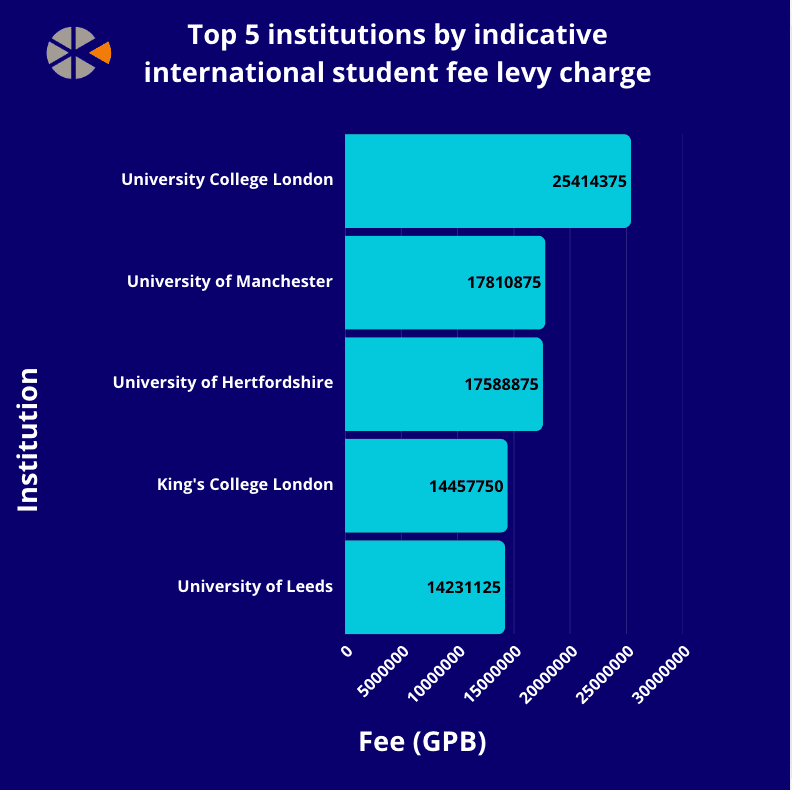
    Here’s our round up of the top five institutions that risk losing out the most.

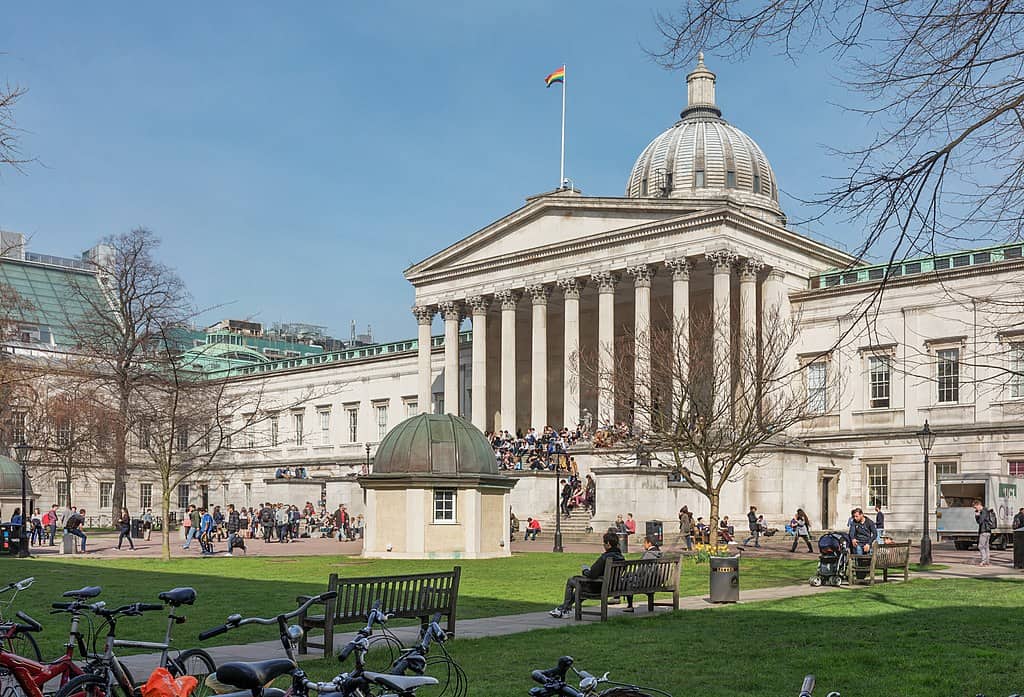
    University College London (UCL)

    Of the 614,000 international students at English institutions in the 2023/24 academic year, UCL was home to the largest amount, at 27,695.

    Under the proposals, if UCL had the same number of international students under the levy, it would be liable to pay over £25 million.

    The University of Manchester

    Coming in second is the University of Manchester, which had 19,475 international students in 2023/24. This would mean it would have to pay almost £18m under the levy proposals.

    The University of Hertfordshire

    In third place is the University of Hertfordshire, with 19,235 international students in 2023/24 – a levy amount of just over £17.5m.

    Kings College London

    Up next is Kings College London, with 15,850 international students, meaning it would be taxed a little under £14.5m

    The University of Leeds

    Another large metropolitan university set to be hit hard by the levy is the University of Leeds, with 15,605 international students. If enrolments numbers stay the same into 2028, it could face costs of over £14.2m.

    Source link

  • How colleges can help students affected by SNAP disruption

    How colleges can help students affected by SNAP disruption

    This audio is auto-generated. Please let us know if you have feedback.

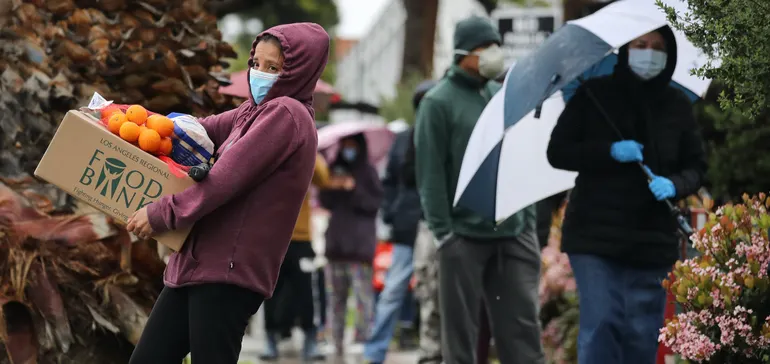
    As the longest federal government shutdown in U.S. history drags on, student advocates are urging colleges to step up and support those affected by a loss of food benefits.

    The Supplemental Nutrition Assistance Program, the government’s largest anti-hunger program, supports about 1 in 8 Americans in an average month. And its funding has never before lapsed during a government shutdown.

    However, the Trump administration refused to use emergency funds to sustain SNAP this time, with the U.S. Department of Agriculture in October claiming that “the well has run dry.”

    Last week, two federal judges ordered the federal government to fund SNAP, at least in part, via emergency reserves during the shutdown. Then on Thursday, one of those judges issued another ruling requiring the administration to fully fund the program by Friday.

    But when SNAP recipients will actually receive their benefits is unclear.

    The Hope Center for Student Basic Needs, a resource and policy center at Temple University, estimated that 1.1 million college students are affected by the lapse in SNAP, citing 2024 data from the U.S. Government Accountability Office.

    Colleges seeking to support affected students should expand their services and regularly communicate updates to their campuses, according to a toolkit published by the center.

    Where colleges can make a difference

    The Hope Center warned that the recent court rulings ordering the Trump administration to keep SNAP running with contingency funds will not immediately solve the hunger crisis for recipients, who receive their benefits once a month. 

    “It may take weeks for November benefits to arrive in SNAP recipients’ accounts,” the center’s toolkit said.

    The document, which the center is regularly updating, outlines some programmatic changes colleges can undertake to help mitigate the “damaging effects on student basic needs security during this delay and period of uncertainty.”

    Colleges that have campus food pantries should extend those services’ hours and work to increase the food available, the center said. They should also host donation drives on campus and expand support for emergency aid programs.

    To aid these efforts, the center recommended tapping into alumni networks and advancement campaigns.

    Institutions can offer direct financial assistance to students, such as through grocery gift cards. And campus dining services can provide discounted or free meals for SNAP recipients, the toolkit said. They can also establish or expand programs that allow students to donate unused meal plan dollars.

    At the administrative level, bursars can offer relief by pausing collections on institutional debts or offering waivers to affected students, The Hope Center said. 

    College leaders can also partner with local businesses, asking that the establishments provide discounts or free meals to affected students and their children, the center said.

    While the Trump administration has continued to fund WIC — a federal hunger program specifically for children under age five and women who are pregnant, breastfeeding and recently postpartum — college fathers and students parenting older children are not eligible. 

    However, it may be difficult for colleges to partner with grocery stores to offer affected students a break on their bill.

    The USDA last week warned grocery stores against offering discounts to SNAP recipients amid the lapse in benefits. Doing so without a waiver from the agency could result in the stores losing their ability to accept SNAP funds — a crucial source of income for small grocers and those in low-earning areas.

    Communication confusion

    Throughout the shutdown, the executive branch’s chaotic messaging about SNAP funds has added confusion for students and colleges.

    On Tuesday, after the initial court orders, USDA told state and regional leaders overseeing SNAP said it would fund the program with recipients getting at most 50% of their benefits. The agency then said the following day that they would receive up to 65% of their benefits. Neither update gave a timeline for distribution.

    But President Donald Trump broke from his administration’s message via social media.

    Source link

  • Students are being affected by strangulation

    Students are being affected by strangulation

    When translating international research on strangulation during sex specifically, an estimated 1.2-1.6 million students across UK higher education institutions will have had this experience.

    Content warning: strangulation, choking, sexual violence, suicide, homicide

    Strangulation is not widely discussed in UK university settings, but it should be, and universities can be very well-placed to respond to this topic across many different contexts.

    With a new academic year beginning, particularly in the context of the Office for Students’ harassment and sexual misconduct new regulation and prevalence data, now is the time to consider the best approach to strangulation for new and existing cohorts of students.

    What is strangulation?

    Strangulation – or “choking” as it is sometimes called in the context of sex – is the application of external pressure to the neck, which results in the restriction of air and/or blood flow, through obstruction of the windpipe and/or major blood vessels.

    Whilst ‘choking’ is sometimes a term that is sometimes used interchangeably, this term is more technically applied to an internal obstruction in the throat which restricts breathing (e.g. choking on a piece of food).

    The Institute for Addressing Strangulation (IFAS) was established in October 2022, following the introduction of new legislation, presenting strangulation as a stand-alone offence in England and Wales.

    There is not yet research specifically on the prevalence of strangulation during violence and abuse in universities in the UK. This in itself is a risk to an effective response. However, from research we do have available, we can see how students could be affected by strangulation.

    In the context of sexual violence, research from a Sexual Assault Referral Centre in England showed that around a fifth of victim/survivors of sexual assault and rape by a current or ex-partner had been strangled at the time of the assault. A higher proportion of victim/survivors who were strangled were “In education”, compared to those who weren’t strangled (12 per cent compared with 9 per cent).

    For those in domestic abuse relationships, there is an increased risk to the victim/survivor once they have been strangled. Research has shown that there is a seven-fold increased risk of the victim being killed by the perpetrator when non-fatal strangulation is in the abuse history.

    From April 2022 – March 2023, the Vulnerability Knowledge and Practice Programme (VKPP) showed that 10 per cent of suspected victim suicides following domestic abuse (SVSDA) related to victims aged 16-24. Of all the SVSDA cases in the same year, the VKPP reported that non-fatal strangulation was noted in the abuse histories of 20 per cent of cases.

    The risks of an act of strangulation on its own can include loss of consciousness (possibly indicating acquired brain injury), stroke, seizures, motor and speech disorders, and death.

    If universities have an awareness of the abuse and violence their students are subjected to, is the knowledge around strangulation a missing piece of a bigger puzzle?

    Strangulation during sex

    Strangulation or “choking” during sex is disproportionately prevalent amongst younger age groups.

    A survey conducted by us at IFAS late last year showed that 35 per cent of respondents aged 16-34 had been strangled during sex by a partner at least once. This was sex they had entered into willingly, but the strangulation was not always with prior agreement from all parties.

    Of the respondents who had previously been strangled during sex, only 50 per cent reported to us that this strangulation was always agreed in advance.

    When looking at university populations internationally, the prevalence of engaging in strangulation during sex appears to be higher than in the general population sample referenced above. In the United States, it has been reported that 42 per cent of undergraduates have been strangled during sex and 37 per cent have reported strangling someone else – in Australia, 56 per cent of students had an experience of having been strangled and 51% had done this to a partner.

    Researchers in the United States have also looked specifically at the risks of strangulation during sex. They found that individuals who had frequent experience of partnered strangulation had heightened levels of a blood biomarker that indicates inflammation within the brain and cell death.

    Even when used during sex, research consistently shows that there is no safe way to strangle. This is beginning to be better recognised, including with action by the government to criminalise the depiction of strangulation in pornography.

    What should higher education institutions be doing

    Strangulation may be missing in universities’ broader responses to sexual misconduct, domestic abuse, and sex and relationships education. Whilst not applicable to all institutions, the principles outlined in the swiftly upcoming Office for Students Condition of Registration (E6) may serve as a useful framework in which to integrate this topic.

    Non-judgemental engagement around strangulation is vital. Students who are thinking about or who are engaging in strangulation during sex should feel able to discuss this with trusted staff who can provide helpful and objective information.

    Students who have been strangled in other settings – for instance, in domestic abuse or sexual violence – also require opportunities to disclose and seek specialist support. Integrating responses to strangulation under the appropriate support requirements of E6 could be suitable, particularly when disclosed as part of abuse or misconduct.

    It is necessary that questions are asked of students in relevant contexts such as sexual misconduct support services, given that spontaneous disclosure may be rare. It is important to remember the range of terminology that could be used to describe the same act, particularly across different contexts.

    Staff should be confident they are talking with students in a way all parties can understand and from which appropriate action can be taken.

    As would be the common practice for other disclosures such as domestic abuse, limits to confidentiality and escalation procedures should also be appropriately discussed and understood by all.

    In E6, the Office for Students notes the importance of capturing data on behaviours in order to inform both prevention and response initiatives. Including strangulation as a specific variable to consider within this data capture process would be valuable for universities. The more staff know about strangulation in different contexts, the better and more specialist the response can be. If questions are not asked about strangulation, and opportunities for disclosure are limited, prevalence data are unknown.

    The higher education sector has long been an advocate for evidence-based practice, and sexual misconduct has been a recent example of where understanding the issue has led to more concerted efforts to address these unacceptable behaviours (see e.g. the Office for Students’ pilot sexual misconduct survey).

    Staff should collate data on strangulation disclosures and reports (for example, through disciplinary proceedings), and be able to monitor and report on these data independently and in the context of other behaviours such as sexual misconduct. Where possible, it would be beneficial to consider how strangulation is captured on disclosure tools, reporting forms, risk assessment templates, and case management systems. Staff should consider how their university’s strangulation data form part of reporting through existing governance structures.

    Strangulation is still an emerging – and can be taboo – topic of conversation which means relatively little is known and shared. Myths and misconceptions thrive in these environments which can lead to victim blaming and poor outcomes for those involved. Education for whole institutions on what is known objectively about this behaviour in different contexts is needed.

    This education can come in the form of, for example, training for staff and students around sexual misconduct and other forms of abuse and harassment – particularly when discussing consent and the requirement for prior and informed consent for all sexual behaviours. As universities have been reviewing their training provision to align with, and hopefully go beyond, the requirements of E6, this seems like a suitable framework for the appropriate inclusion of this topic.

    Individual conversations with students and staff seeking support are also good opportunities to share information and resources for further support. Staff in specialist roles such as student support workers, and disciplinary investigators and panel members may benefit from more specialist training interventions in order to feel confident and competent to support the education of others.

    The topic of strangulation is a nuanced one, not least because of the varied contexts in which it may be occurring. It therefore requires a careful approach by universities, but this is not an insurmountable task. We would encourage institutions to follow the trajectories they should already be taking to address harassment and sexual misconduct and apply appropriate learning to this important topic.

    Please visit the IFAS website for more information.

    Source link

  • Most Students Affected by OBBBA Student Loan Changes

    Most Students Affected by OBBBA Student Loan Changes

    Photo illustration by Justin Morrison/Inside Higher Ed | Feverpitched/iStock/Getty Images

    The majority of current college students—61 percent—surveyed recently say that several changes to the federal student loan system that became law earlier this summer will directly impact them, according to a new poll from U.S. News & World Report.

    The key changes that students expect to affect them include caps on how much students can borrow, the elimination of some income-based repayment plans and the end of Grad PLUS loans.

    The poll, which surveyed 1,190 graduate and undergraduate students earlier this month, asked students about what various provisions in the One Big Beautiful Bill Act would mean for them. Many respondents (38 percent) said they would have to take out private loans to balance the effects of the law, while others (35 percent) said they may not be able to finish college at all. About a quarter said they were even considering joining the military to help pay for college.

    “I wanted to go to medical school, but now I won’t,” one student wrote, according to U.S. News.

    At the same time, one in five students said they were unaware of the changes to students loans, while another 39 percent said they were “fuzzy on the details” of the OBBBA. Twenty-two percent said they understood the law but not how they will personally be affected.

    Some students also reported supporting the bill’s provisions; about one in five students said they approved, respectively, of loan caps for graduate students, caps for medical and law students, and the elimination of certain income-based repayment plans. Slightly fewer, 17 percent, approve of eliminating Grad PLUS loans.

    About 63 percent of students said they reached out to their financial aid offices for help navigating the bill’s effects, and three-quarters of those students found their financial aid offices helpful. About half of students (51 percent) also reported that their universities had been transparent about the effects of the OBBBA.

    Source link

  • How funding policy has affected foundation year provision

    How funding policy has affected foundation year provision

    The coming academic year (2025-26) is the first in which classroom-based foundation year (FY) fees will be capped at a level below the higher level fee cap.

    For many who have experienced or supported foundation year tuition this is a retreat from a proven method for supporting people who have been failed by compulsory schooling in continuing their education. Critics would point to a few years of sustained growth, particularly in franchised provision, that is of more questionable quality and benefit.

    Foundation years are an anomaly in that they sit neither at level three (alongside other pre-university qualifications like A levels or the Access to HE Diploma [AHED]) or level four (alongside higher national diplomas, and the first years of both undergraduate degrees and higher technical qualifications). As such, they will face the worst of both worlds: level 3 funding (for classroom-based provision) covered by level 4 repayment rules and level 4 regulatory interventions.

    Why cut?

    In a ministerial statement that, in a dazzling display of self-awareness, actually used the phrase “fix the foundations” twice, the Secretary of State set a fee limit of £5,760 (the maximum current cost of an AHED, though in practice fees are nearer £4,000) as a maximum for “classroom-based” (non-STEM) foundation years on 4 November 2024.

    There’s a paragraph on the ostensible reasoning for this that is worth bearing in mind:

    The government recognises the importance of foundation years for promoting access to higher education, but they can be delivered more efficiently in classroom-based subjects, at a lower cost to students.

    This sounds more like an access-focused intervention rather than an attempt to cut provision, although it is rather divorced from the cost of provision. This is despite a 2023 report from IFF Research which noted that, based on the available data and on a series of interviews:

    the cost of delivering FY and the first year of a UG degree in the same subject area was found to be broadly similar

    Indeed, there were suggestions that FYs may actually work out more expensive, given the need for more contact time and the tendency towards smaller classes. We should leave aside for the moment the great difficulties we have in understanding the cost of higher education provision more generally, and note that the evidence base for this particular decision is weak. And there is, to be clear, a huge absence of meaningful data about FYs more generally – something DfE itself attempted (after a fashion) to remedy with an ad hoc data release in October of 2023.

    Review of routes

    If you were wondering where the impetus for this policy intervention originally came from, you have to look back to Philip Augar’s review of post-18 fees and funding back in 2019:

    We recommend that student finance is no longer offered for foundation years, unless agreed with the OfS in exceptional cases.

    In broad-brush terms, his argument was that foundation years did a similar job to some level 3 qualifications (specifically the Access to HE Diplomas) at greater cost: he characterised this as “enticing” underqualified students onto expensive four year degrees that may not be in their best interests.

    It was one of many largely arbitrary (and mercifully forgotten) Augar recommendations on higher education funding, to the credit of the previous government it was very much more aligned to addressing the value offered to students. As Michelle Donelan said in 2022:

    We also know that there are some people who need a second chance, an opportunity to get into higher education through a less conventional route. Often this route is through foundation years, but we think it is unfair that some of those who take advantage of this transformational opportunity have to pay over the odds. So we are reducing the fee limit for foundation years to make them more accessible and more affordable for those who need a second chance.

    Quantity and quality

    Okay. So, ignoring Augar, there’s never been an agenda to cancel or limit the availability of foundation years. The cuts are based (albeit on some quite shaky data) on reducing costs for students while maintaining affordability for providers.

    There is, however, widely reckoned to be a quality issue with some FYs offered via franchise or partnership arrangement – something which DfE did not appear to have considered in collecting data or commissioning reports.

    With the 2025 recruitment cycle mostly over, we now have the ability to assess how the sector has responded to these interventions via the Unistats dataset.

    As I never tire of telling people, Unistats is not perfect but it is useful. The big headline story we’ve tracked in recent years is a reduction in the number of undergraduate courses on offer overall – down 6 per cent between 2023 and 2024, and down a further 3 per cent between 2024 and 2025.

    Foundation supply

    But underneath this we lost one in ten courses with compulsory foundation years (courses that must start with a foundation year) between 2023 and 2024, and a further five percent between 2024 and 2025. The latter year also saw nearly 6 per cent of optional foundation years (courses that can include a foundation year if required) disappear.

    [Full screen]

    What about franchise provision? Using a unistats proxy (does the registered UKPRN match the display UKPRN, or is there an additional UKPRN for a different teaching location) it appears that the number of franchised compulsory foundation years grew from 90 in 2023 to 107 in 2024. This trend reversed between 2024 and 2025 (with numbers falling back below 80), but the number of optional franchised foundation years fell off a cliff after 2023: from 53 in 2023 to just 12 in 2024, and 13 in 2025.

    At a (top level) subject area the dominance of social sciences and business foundation years has declined a little – engineering foundation years have always been popular and have broadly persisted over the three years in question (and are the most popular by far at Russell Group providers). Among franchised provision business and management still dominates, but the last three years has seen a rise in the number of creative and engineering foundation years offered (largely with specialised providers as franchisers).

    Policy outcomes and policy intentions

    So, it all depends on how you take the impetus of the government’s change in foundation year policy. If it was a measure to reduce overall the number of classroom (non-STEM) foundation years it has had some questionable success, likewise if you believe it was a policy designed to limit the spread of franchised foundation year degrees.

    It is possible that it has driven savings within universities – allowing foundation years to be run more cheaply. This might explain things like the paradoxical rise in franchised foundation years in creative arts alongside a drop in non-franchised provision – smaller and less historically encumbered (and potentially lower quality) providers may be better at running these foundation years at a lower overall cost.

    Here’s who is offering these courses – and what they are.

    [Full screen]

    This defaults to FY provision in 2025 but is – with a bit of effort, a fascinating tool for looking over the complete three years of courses advertised to undergraduates.

    As usual, we are hugely short of data – the fact that unistats (of all things) offers the best lens on what is happening suggests that there’s nobody in DfE with an eye on what is going on.

    But rumours of the demise of the classroom based foundation year, or even the franchise model in providing this, are likely to be overstated. It remains to be seen, by whatever measure, whether the cut-price offer is as good.

    Source link

  • Education nominee McMahon says she supports calls to dismantle the agency but that funding wouldn’t be affected

    Education nominee McMahon says she supports calls to dismantle the agency but that funding wouldn’t be affected

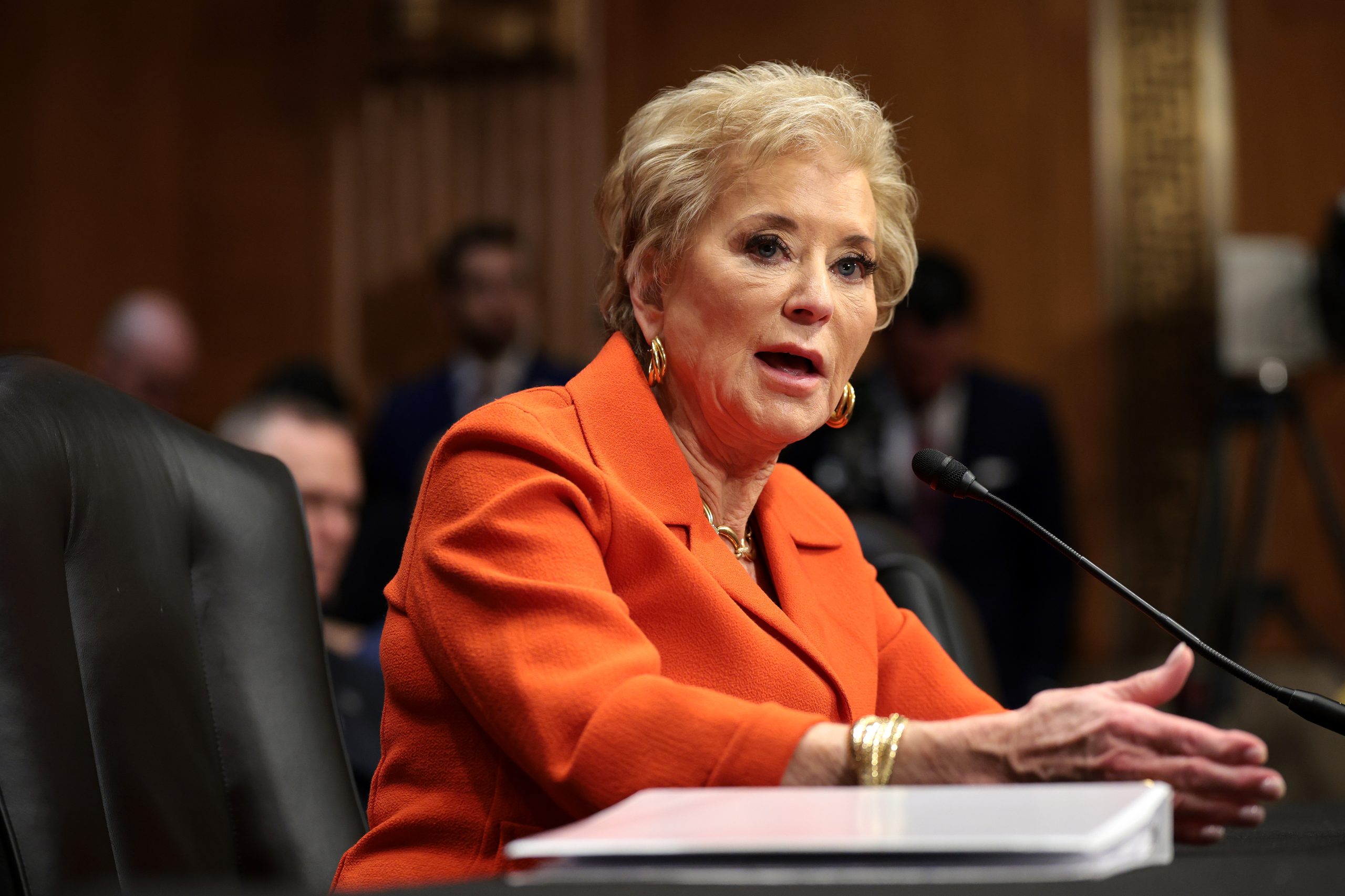
    Linda McMahon said she stands firmly behind President Donald Trump’s calls to gut the U.S. Department of Education at her confirmation hearing to lead the department.

    But she promised to work with Congress to do so — acknowledging some limits on the president’s authority as Trump seeks to remake the government through executive orders. And she tried to reassure teachers and parents that any changes would not jeopardize billions in federal funding that flows to high-poverty schools, special education services, and low-income college students.

    “We’d like to do this right,” McMahon said. “It is not the president’s goal to defund the programs, it is only to have it operate more efficiently.”

    Trump has called the Education Department a “con job” and said that McMahon, a former professional wrestling executive and billionaire Republican donor, should work to put herself out of a job. McMahon called this rhetoric “fervor” for change.

    The Trump administration’s chaotic approach to spending cuts so far raise questions about whether McMahon’s statements — an effort to neutralize the most significant criticism of plans to get rid of the Education Department — will prove true over time.

    Thursday’s hearing before the Senate Committee on Health, Education, Labor, and Pensions, punctuated by occasional protests, served as a referendum of sorts on the value of the Education Department. Republicans said it had saddled schools with red tape without improving student outcomes. Democrats said the department protects students’ civil rights and funds essential services.

    Democrats also pressed McMahon on Trump’s threats to withhold federal funding from schools that violate his executive orders and on the details of a potential reorganization — questions that McMahon largely deflected as ones she could better answer after she takes office.

    “It’s almost like we’re being subjected to a very elegant gaslighting here,” said Sen. Maggie Hassan, a Democrat from New Hampshire.

    Related: A lot goes on in classrooms from kindergarten to high school. Keep up with our free weekly newsletter on K-12 education.

    Even as Trump has called for the Education Department to be eliminated and schooling to be “returned to the states,” he’s also sought to expand its mission with executive orders threatening the funding of schools that employ diversity, equity, and inclusion practices or teach that racism and discrimination were part of America’s founding. The federal government is barred by law from setting local curriculum, as Republican Sen. Lisa Murkowski of Alaska pointed out during the hearing.

    In a tense exchange, Sen. Chris Murphy, a Democrat from Connecticut who’s championed school desegregation and diversity efforts in education, asked McMahon how schools would know if they were running a program that violates Trump’s executive order seeking to root out “radical indoctrination” in K-12 schools. Many schools have no idea what’s allowed, Murphy said, because the order doesn’t clearly define what’s prohibited.

    McMahon said in her view, celebrating Martin Luther King Jr. Day and Black History Month should be permitted, after Murphy noted that U.S. Department of Defense schools would no longer celebrate Black History Month in response to Trump’s order.

    But McMahon would not say that running affinity groups for students from certain racial or ethnic backgrounds, such as a Black engineers club or an after-school club for Vietnamese American students, was permitted. She also would not say whether schools might put their federal funding at risk by teaching an African American history class or other ethnic studies program.

    “That’s pretty chilling,” Murphy said. “You’re going to have a lot of educators and a lot of principals and administrators scrambling right now.”

    Later in the confirmation hearing, McMahon agreed schools should teach “the good, the bad, and the ugly” parts of U.S. history, and that it’s up to states, not the Department of Education, to establish curriculum.

    McMahon’s record on DEI has sometimes been at odds with the Trump administration. She backed diversity issues when she served on the Connecticut State Board of Education, the Washington Post reported.

    During her hearing, McMahon said DEI programs are “tough,” because while they’re put in place to promote diversity and inclusion, they can have the opposite effect. She pointed to examples of Black and Hispanic students attending separate graduation ceremonies — though those are typically held to celebrate the achievements of students of color, not to isolate them.

    Related: What might happen if the Education Department were closed?

    McMahon told the committee that many Americans are experiencing an educational system in decline — she pointed to sobering national test scores, crime on college campuses, and high youth suicide rates — and said it was time for a renewed focus on teaching reading, math, and “true history.”

    “In many cases, our wounds are caused by the excessive consolidation of power in our federal education establishment,” she said. “So what’s the remedy? Fund education freedom, not government-run systems. Listen to parents, not politicians. Build up careers, not college debt. Empower states, not special interests. Invest in teachers, not Washington bureaucrats.”

    Republican Senators reiterated these themes, arguing that bureaucrats in Washington had had their chance and that it was time for a new approach.

    They asked McMahon about Trump administration priorities such as expanding school choice, including private school vouchers, and interpreting Title IX to bar transgender students from restrooms and sports teams aligned with their gender identities.

    McMahon said she was “happy” to see the Biden administration’s rules on Title IX vacated, and she supported withholding federal funds from colleges that did not comply with the Trump administration’s interpretation of the law.

    Related: Trump wants to shake up education. What that could mean for a charter school started by a GOP senator’s wife

    Teachers unions and other critics of McMahon have said she lacks the proper experience to lead the Education Department, though McMahon and others have pointed to her time serving on the Connecticut State Board of Education, as a trustee of Sacred Heart University, and her role as chair of the America First Policy Institute, where she advocated for private school choice, apprenticeships, and career education.

    McMahon also ran the Small Business Administration in Trump’s first administration. Her understanding of the federal bureaucracy is an asset, supporters say.

    Sen. Tim Scott, a Republican from South Carolina, said McMahon’s background made her uniquely suited to tackle the pressing challenges facing the American education system today.

    Related: What education could look like under Trump and Vance 

    McMahon said multiple times that parents of children with disabilities should not worry about federal funding being cut for the Individuals with Disabilities Education Act, though she said it was possible that the U.S. Department of Health and Human Services would administer the money instead of the Education Department.

    But it appeared that McMahon had limited knowledge of the rights outlined in IDEA, the landmark civil rights law that protects students with disabilities. And she said it was possible that civil rights enforcement — a large portion of which is related to complaints about children with disabilities not getting the services to which they’re entitled — would move to the U.S. Department of Justice.

    Dismantling the education department by moving key functions to other departments is a tenet of Project 2025, the playbook the conservative Heritage Foundation developed for a second Trump administration. Most of these functions are mandated in federal law, and moving them would require congressional approval.

    McMahon struggled to articulate the goals of IDEA beyond saying students would be taken care of and get the assistance and technology they need.

    “There is a reason that the Department of Education and IDEA exist, and it is because educating kids with disabilities can be really hard and it takes the national commitment to get it done,” Hassan, the New Hampshire senator, said. “That’s why so many people are so concerned about this proposal to eliminate the department. Because they think kids will once again be shoved aside, and especially kids with disabilities.”

    McMahon also could not name any requirements of the Every Student Succeeds Act, the federal law that replaced No Child Left Behind. ESSA requires states to identify low-performing schools and intervene to improve student learning, but it gives states more flexibility in how they do so than the previous law.

    McMahon seemed open to reversing some of the cuts enacted by the U.S. DOGE Service, the cost-cutting initiative led by billionaire Elon Musk.

    She said, if confirmed, she would look into whether staff who’d been placed on administrative leave — including some who investigate civil rights complaints — should return. She also said she’d assess the programs that were cut when DOGE terminated 89 contracts at the Institute of Education Sciences and 29 training grants.

    Sen. Susan Collins, a Republican from Maine, said her office had heard from a former teacher who developed an intensive tutoring strategy that was used in a dozen schools in the state. The teacher had a pending grant application to evaluate the program and its effect on student outcomes, and the teacher worried it would be in jeopardy. Collins asked if the department should keep collecting that kind of data so it could help states determine what’s working for kids.

    “I’m not sure yet what the impact of all of those programs are,” McMahon said. “There are many worthwhile programs that we should keep, but I’m not yet apprised of them.”

    The Senate education committee is scheduled to vote on McMahon’s confirmation on Feb. 20.

    This story was produced by Chalkbeat and reprinted with permission. 

    The Hechinger Report provides in-depth, fact-based, unbiased reporting on education that is free to all readers. But that doesn’t mean it’s free to produce. Our work keeps educators and the public informed about pressing issues at schools and on campuses throughout the country. We tell the whole story, even when the details are inconvenient. Help us keep doing that.

    Join us today.

    Source link