

Tag: affects

  • Understanding how inflation affects teacher well-being and career decisions

    Understanding how inflation affects teacher well-being and career decisions

    Key points:

    In recent years, the teaching profession has faced unprecedented challenges, with inflation emerging as a significant factor affecting educators’ professional lives and career choices. This in-depth examination delves into the complex interplay between escalating inflation rates and the self-efficacy of educators–their conviction in their capacity to proficiently execute their pedagogical responsibilities and attain the desired instructional outcomes within the classroom environment.

    The impact of inflation on teachers’ financial stability has become increasingly evident, with many educators experiencing a substantial decline in their “real wages.” While nominal salaries remain relatively stagnant, the purchasing power of teachers’ incomes continues to erode as the cost of living rises. This economic pressure has created a concerning dynamic where educators, despite their professional dedication, find themselves struggling to maintain their standard of living and meet basic financial obligations.

    A particularly troubling trend has emerged in which teachers are increasingly forced to seek secondary employment to supplement their primary income. Recent surveys indicate that approximately 20 percent of teachers now hold second jobs during the academic year, with this percentage rising to nearly 30 percent during summer months. This necessity to work multiple jobs can lead to physical and mental exhaustion, potentially compromising teachers’ ability to maintain the high levels of energy and engagement required for effective classroom instruction.

    The phenomenon of “moonlighting” among educators has far-reaching implications for teacher self-efficacy. When teachers must divide their attention and energy between multiple jobs, their capacity to prepare engaging lessons, grade assignments thoroughly, and provide individualized student support may be diminished. This situation often creates a cycle where reduced performance leads to decreased self-confidence, potentially affecting both teaching quality and student outcomes.

    Financial stress has also been linked to increased levels of anxiety and burnout among teachers, directly impacting their perceived self-efficacy. Studies have shown that educators experiencing financial strain are more likely to report lower levels of job satisfaction and decreased confidence in their ability to meet professional expectations. This psychological burden can manifest in reduced classroom effectiveness and diminished student engagement.

    Perhaps most concerning is the growing trend of highly qualified educators leaving the profession entirely for better-paying opportunities in other sectors. This “brain drain” from education represents a significant loss of experienced professionals who have developed valuable teaching expertise. The exodus of talented educators not only affects current students but also reduces the pool of mentor teachers available to guide and support newer colleagues, potentially impacting the professional development of future educators.

    The correlation between inflation and teacher attrition rates has become increasingly apparent, with economic factors cited as a primary reason for leaving the profession. Research indicates that districts in areas with higher costs of living and significant inflation rates experience greater difficulty in both recruiting and retaining qualified teachers. This challenge is particularly acute in urban areas where housing costs and other living expenses have outpaced teacher salary increases.

    Corporate sectors, technology companies, and consulting firms have become attractive alternatives for educators seeking better compensation and work-life balance. These career transitions often offer significantly higher salaries, better benefits packages, and more sustainable working hours. The skills that make effective teachers, such as communication, organization, and problem-solving, are highly valued in these alternative career paths, making the transition both feasible and increasingly common.

    The cumulative effect of these factors presents a serious challenge to the education system’s sustainability. As experienced teachers leave the profession and prospective educators choose alternative career paths, schools face increasing difficulty in maintaining educational quality and consistency. This situation calls for systematic changes in how we value and compensate educators, recognizing that teacher self-efficacy is intrinsically linked to their financial security and professional well-being.

    Latest posts by eSchool Media Contributors (see all)

    Source link

  • Racial bias affects early math education. Researchers are trying to stop that

    Racial bias affects early math education. Researchers are trying to stop that

    The early years are a critical time to teach the foundations of math. That’s when children learn to count, start identifying shapes and gain an early understanding of concepts like size and measurement. These years can also be a time when children are confronted with preconceived notions of their abilities in math, often based on their race, which can negatively affect their math success and contribute to long-standing racial gaps in scores. 

    These are some of the motivating factors behind the Racial Justice in Early Math project, a collaboration between the Erikson Institute, a private graduate school focused on child development, and the University of Illinois Chicago. The project aims to educate teachers and provide resources including books, teacher tips and classroom activities that help educators combat racial bias in math instruction.  

    I sat down with Danny Bernard Martin, professor of education and mathematics at the University of Illinois Chicago, project director Priscila Pereira and Jennifer McCray, a research professor at the Erikson Institute, to learn more about their work. This conversation has been edited for length and clarity.

    What are some of the key examples of racial injustice that you see in early math education?

    Martin: If I say to you, ‘Asians are good at math,’ that’s something that you’ve heard, we know that’s out there. When does that kind of belief start? Well, there’s something called ‘racial-mathematical socialization’ that we take seriously in this project, that we know happens in the home before children come to school. Parents and caregivers are generating messages around math that they transmit to children, and then those messages may get reinforced in schools.

    Even at the early math level, there are research projects beginning to construct Black children in particular ways, comparing Black children to white children as the norm. That is a racial justice issue, because that narrative about white children, Black children, Asian American children, Latinx children, then filters out. It becomes part of the accepted truth, and then it impacts what teachers do and what principals and school leaders believe about children.  

    What does this look like in schools?

    McCray: Perhaps the math curriculum doesn’t represent them or their experience. We all know that often schools for children of color are under-resourced. What often happens in under-resourced schools is that the curriculum and the teaching tends to focus on the basics. There might be an overemphasis on drilling or doing timed tests. We also have those situations where people are doing ability grouping in math. And we know what the research says about that, it’s basically ‘good education for you, and poor education for you.’ It’s almost impossible to do any of that without doing harm. 

    One line of research has been to watch teachers interact with children and videotape or study them. And in diverse classrooms with white teachers … often it is observed that children who are Black or Latina aren’t called on as often, or aren’t listened to as much, or don’t have the same kind of opportunity to be a leader in the classroom.  

    What should teacher prep programs, administrators and families do to address racial justice issues in early math? 

    McCray: Maybe the white teacher is reflecting on themselves, on their own biases … trying to connect with families or communities in some way that’s meaningful. We want teachers to have that balance of knowing that sometimes you do want to teach a procedure, but you never want to be shutting down ideas for creative ways to solve a math problem, or culturally distinct ways to solve a math problem that might come from your students.

    It might be something like, you’re working on sorting in an early childhood classroom. And what if a child is thinking about a special craft that their parent does that’s like the [papel picado], or papers that get cut in very elaborate designs in Mexico. … If the teacher doesn’t have space to listen, it could be a shutdown moment, instead of a moment of connection, where the child is actually bringing something … that is associated with their own identity.

    Pereira: I do feel that sometimes the conversations of racial justice really put the weight on teachers and teachers alone. Teaching is part of a larger structure. Maybe your school will not allow you to do the work that is needed. I’m thinking about [a teacher] who was required to follow a scripted curriculum that did not promote the positive math identity for Black children. It needs to be a whole community effort.

    How is your initiative changing this?

    Pereira: There are resources in terms of opportunities that we offer to teachers to engage with our content and ideas: webinars, a fellowship and an immersive learning experience in the summer of 2026. These spaces are moments in which educators, researchers and people that are engaged in the education of young learners, can come together … and disrupt mainstream notions of understanding what is racial justice and how one gets that in the classroom.  

    Right now, research and initiatives zeroing in on race are under scrutiny, especially at the college level. Do you foresee any additional challenges to this work?

    Pereira: There was a National Science Foundation grant program focused on racial equity in STEM and we had been planning to apply for funds to do something there. … It’s gone. … The only place we’re welcome is where there’s a governor who is willing to take on Trump. We just have to keep doing the work, because we know what’s right. But it is challenging, for sure.

    Contact staff writer Jackie Mader at 212-678-3562 or [email protected]

    This story about racial justice in math was produced by The Hechinger Report, a nonprofit, independent news organization focused on inequality and innovation in education. Sign up for the Early Childhood newsletter.

    The Hechinger Report provides in-depth, fact-based, unbiased reporting on education that is free to all readers. But that doesn’t mean it’s free to produce. Our work keeps educators and the public informed about pressing issues at schools and on campuses throughout the country. We tell the whole story, even when the details are inconvenient. Help us keep doing that.

    Join us today.

    Source link

  • Data breach affects 10,000 Western Sydney University students – Campus Review

    Data breach affects 10,000 Western Sydney University students – Campus Review

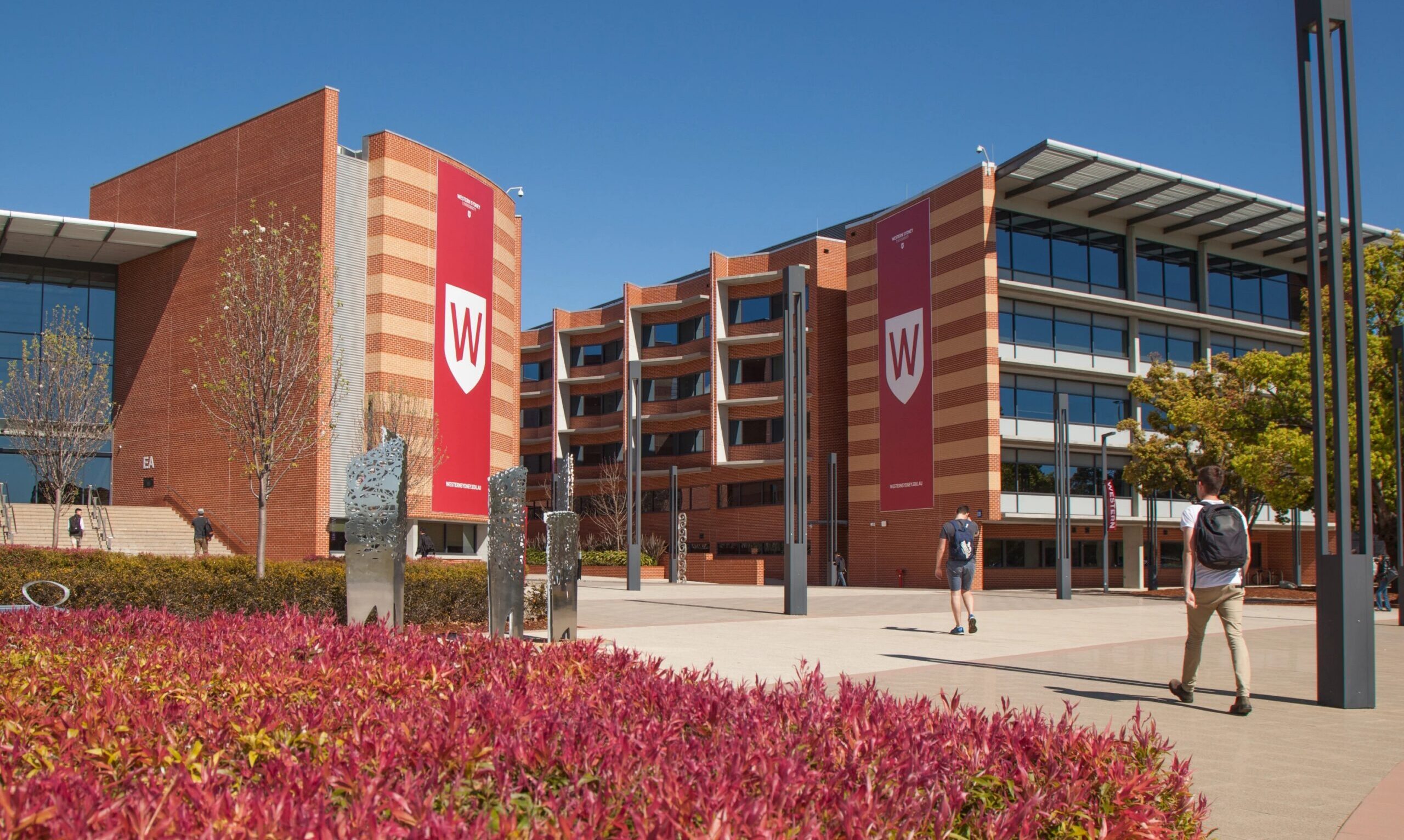
    Students from Western Sydney University (WSU) have had their data accessed and likely posted to the dark web in a data breach event.

    Please login below to view content or subscribe now.

    Membership Login

    Source link