Tag: Affirmative action

  • Kamehameha Schools’ Admission Policies May Face Legal Challenge – The 74

    Kamehameha Schools’ Admission Policies May Face Legal Challenge – The 74


    Get stories like this delivered straight to your inbox. Sign up for The 74 Newsletter

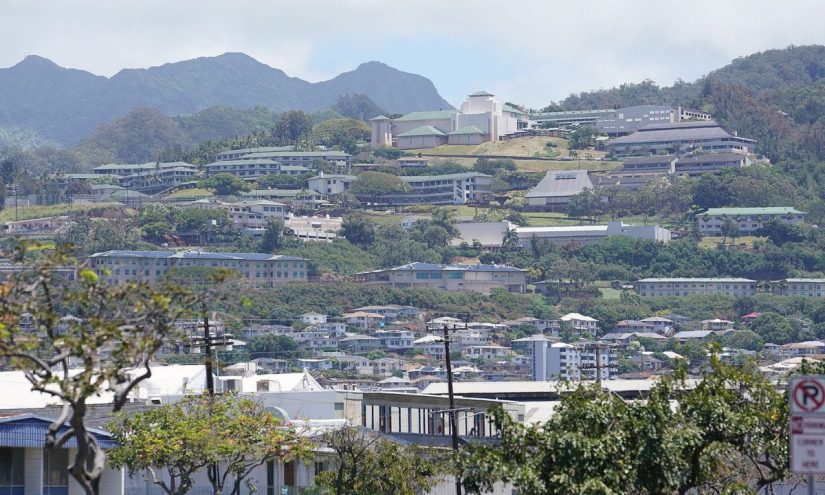
    A conservative mainland group whose lawsuit against Harvard University ended affirmative action in college admissions is now building support in Hawaiʻi to take on Kamehameha Schools’ policies that give preference to Native Hawaiian students.

    Students for Fair Admissions, based in Virginia, recently launched the website KamehamehaNotFair.org. It says that the admission preference “is so strong that it is essentially impossible for a non-Native Hawaiian student to be admitted to Kamehameha.”

    “We believe that focus on ancestry, rather than merit or need, is neither fair nor legal, and we are committed to ending Kamehameha’s unlawful admissions policies in court,” the website says.

    Kamehameha’s Board of Trustees and CEO Jack Wong said in a written statement that the school expected the policy would be challenged. The institution — a private school established through the estate of Princess Bernice Pauahi Bishop to educate Hawaiians — successfully defended its admission policy in a series of lawsuits in the early 2000s. The trustees and Wong promised to do so again.

    “We are confident that our policy aligns with established law, and we will prevail,” the statement said.

    The campaign also drew criticism from the Office of Hawaiian Affairs, established in the late 1970s for the betterment of Native Hawaiians. OHA’s Board of Trustees called it an “attack on the right of Native Hawaiians to care for our own, on our own terms.”

    “These attacks are not new — but they are escalating,” the trustees said in a written statement. “They aim to dismantle the hard-won protections that enable our people to heal, rise, and chart our future.”

    Several groups have tried and failed in the past to overturn Kamehameha’s admissions policy. Federal courts, siding with Kamehameha, have ruled that giving preference to Native Hawaiians helps alleviate historical injustices they faced after the overthrow of the Hawaiian Kingdom in 1893.

    In the 2006 decision upholding Kamehameha Schools’ admissions policy, a 9th Circuit Court of Appeals panel pointed to longstanding challenges Native Hawaiian students have faced in schools. 

    “It is clear that a manifest imbalance exists in the K-12 educational arena in the state of Hawaiʻi, with Native Hawaiians falling at the bottom of the spectrum in almost all areas of educational progress and success,” Judge Susan Graber wrote in the majority opinion. 

    These disparities persist. Just over a third of Native Hawaiian students in public schools were proficient in reading in 2024, compared to 52% of students statewide. Less than a quarter of Native Hawaiian students were proficient in math.

    The state education department has also fallen short of providing families with adequate access to Hawaiian language immersion programs, according to two lawsuits filed against the department this summer. The Hawaiian immersion programs are open to all students, not just those of Hawaiian ancestry.  

    Moses Haia III, a lawyer and former director of the Native Hawaiian Legal Corp., said that improving outcomes for Hawaiian students is Kamehameha’s primary reason for existing. He said this new challenge appears to be based on ignorance of Hawaiʻi’s history.

    “Ultimately, what I see is these people being uneducated,” Haia said of the mainland group. “Not knowing the history of Hawaiʻi, not knowing the reasons for Kamehameha’s existence, and just once again trying to push Hawaiians into this box… and wanting to be on top.”

    Past Challenges 

    The U.S. Supreme Court ruled in 1976 that private schools can’t discriminate based on race in a case called Runyon v. McCrary, which involved Black school students trying to gain admission to private schools that had yet to integrate non-white students.

    An anonymous student sued Kamehameha in 2003, invoking the 1976 ruling and alleging that the school’s policy of giving preference to Hawaiian children was discriminatory. The case eventually landed in the 9th U.S. Circuit Court of Appeals.

    A majority of the appeals court judges sided with Kamehameha. They used a part of the Civil Rights Act that prohibits discrimination in the workplace as a legal framework for looking at the admissions policy.

    Judge Graber wrote that a preference for Native Hawaiian students “serves a legitimate remedial purpose by addressing the socioeconomic and educational disadvantages facing Native Hawaiians, producing Native Hawaiian leadership for community involvement, and revitalizing Native Hawaiian culture, thereby remedying current manifest imbalances resulting from the influx of western civilization.”

    But it was a narrow victory for Kamehameha, an 8-to-7 vote. Dissenting judges wrote that admitting mostly Hawaiian students didn’t create a diverse student body; others said that the policy was clearly discriminatory.

    The anonymous student appealed to the U.S. Supreme Court. But Kamehameha entered a $7 million settlement with the student and their mother before the court decided whether to take up the case.

    While the settlement safeguarded the admission policy from a ruling by the nation’s highest court it also meant lawyers punted the issue.

    Another group of anonymous students challenged the admissions policy a few years later and again took that case to the Supreme Court. But the court declined to take up that case in 2011.

    Students for Fair Admissions previously brought two landmark cases against Harvard and the University of North Carolina, arguing that the two schools’ race-conscious admissions policies discriminated against Asian American and white applicants. The Supreme Court ruled in 2023 that colleges cannot use race as a factor in their admissions, although the decision didn’t specify what this could mean for K-12 schools.

    Last fall, the number of Black students enrolled at both universities fell, although some researchers cautioned that colleges might not see the full impact of the Supreme Court ruling until a few admissions cycles have passed. 

    The challenge to Kamehameha Schools’ admissions policies comes amid national pushback on efforts to promote diversity in schools. In February, the U.S. Department of Education said any colleges and K-12 schools using race-based practices in hiring and admissions could lose federal funding, although a court subsequently prevented the department from enforcing those requirements. 

    Kamehameha receives no funding from the federal government, according to its tax filings. The school, which is the state’s largest private landowner, has assets valued at about $15 billion.

    This story was originally published on Honolulu Civil Beat.


    Get stories like these delivered straight to your inbox. Sign up for The 74 Newsletter

    Source link

  • Experts knock new Trump plan to collect college admissions data

    Experts knock new Trump plan to collect college admissions data

    President Donald Trump wants to collect more admissions data from colleges and universities to make sure they’re complying with a 2023 Supreme Court decision that ended race-conscious affirmative action. And he wants that data now. 

    But data experts and higher education scholars warn that any new admissions data is likely to be inaccurate, impossible to interpret and ultimately misused by policymakers. That’s because Trump’s own policies have left the statistics agency inside the Education Department with a skeleton staff and not enough money, expertise or time to create this new dataset. 

    The department already collects data on enrollment from every institution of higher education that participates in the federal student loan program. The results are reported through the Integrated Postsecondary Education Data System (IPEDS). But in an Aug. 7 memorandum, Trump directed the Education Department, which he sought to close in March, to expand that task and provide “transparency” into how some 1,700 colleges that do not admit everyone are making their admissions decisions. And he gave Education Secretary Linda McMahon just 120 days to get it done. 

    Related: Our free weekly newsletter alerts you to what research says about schools and classrooms.

    Expanding data collection on applicants is not a new idea. The Biden administration had already ordered colleges to start reporting race and ethnicity data to the department this fall in order to track changes in diversity in postsecondary education. But in a separate memorandum to the head of the National Center for Education Statistics (NCES), McMahon asked for even more information, including high school grades and college entrance exam scores, all broken down by race and gender.  

    Bryan Cook, director of higher education policy at the Urban Institute, a think tank in Washington, D.C., called the 120-day timeline “preposterous” because of the enormous technical challenges. For example, IPEDS has never collected high school GPAs. Some schools use a weighted 5.0 scale, giving extra points for advanced classes, and others use an unweighted 4.0 scale, which makes comparisons messy. Other issues are equally thorny. Many schools no longer require applicants to report standardized test scores and some no longer ask them about race so the data that Trump wants doesn’t exist for those colleges. 

    “You’ve got this effort to add these elements without a mechanism with which to vet the new variables, as well as a system for ensuring their proper implementation,” said Cook. “You would almost think that whoever implemented this didn’t know what they were doing.” 

    Cook has helped advise the Education Department on the IPEDS data collection for 20 years and served on technical review panels, which are normally convened first to recommend changes to the data collection. Those panels were disbanded earlier this year, and there isn’t one set up to vet Trump’s new admissions data proposal.

    Cook and other data experts can’t figure out how a decimated education statistics agency could take on this task. All six NCES employees who were involved in IPEDS data collection were fired in March, and there are only three employees left out of 100 at NCES, which is run by an acting commissioner who also has several other jobs. 

    An Education Department official, who did not want to be named, denied that no one left inside the Education Department has IPEDS experience. The official said that staff inside the office of the chief data officer, which is separate from the statistics agency, have a “deep familiarity with IPEDS data, its collection and use.” Former Education Department employees told me that some of these employees have experience in analyzing the data, but not in collecting it.

    In the past, there were as many as a dozen employees who worked closely with RTI International, a scientific research institute, which handles most of the IPEDS data collection work. 

    Technical review eliminated

    Of particular concern is that RTI’s $10 million annual contract to conduct the data collection had been slashed approximately in half by the Department of Government Efficiency, also known as DOGE, according to two former employees, who asked to remain anonymous out of fear of retaliation. Those severe budget cuts eliminated the technical review panels that vet proposed changes to IPEDS, and ended training for colleges and universities to submit data properly, which helped with data quality. RTI did not respond to my request to confirm the cuts or answer questions about the challenges it will face in expanding its work on a reduced budget and staffing.

    The Education Department did not deny that the IPEDS budget had been cut in half. “The RTI contract is focused on the most mission-critical IPEDS activities,” the Education Department official said. “The contract continues to include at least one task under which a technical review panel can be convened.”  

    Additional elements of the IPEDS data collection have also been reduced, including a contract to check data quality.

    Last week, the scope of the new task became more apparent. On Aug. 13, the administration released more details about the new admissions data it wants, describing how the Education Department is attempting to add a whole new survey to IPEDS, called the Admissions and Consumer Transparency Supplement (ACTS), which will disaggregate all admissions data and most student outcome and financial aid data by race and gender. College will have to report on both undergraduate and graduate school admissions. The public has 60 days to comment, and the administration wants colleges to start reporting this data this fall. 

    Complex collection

    Christine Keller, executive director of the Association for Institutional Research, a trade group of higher education officials who collect and analyze data, called the new survey “one of the most complex IPEDS collections ever attempted.” 

    Traditionally, it has taken years to make much smaller changes to IPEDS, and universities are given a year to start collecting the new data before they are required to submit it. (Roughly 6,000 colleges, universities and vocational schools are required to submit data to IPEDS as a condition for their students to take out federal student loans or receive federal Pell Grants. Failure to comply results in fines and the threat of losing access to federal student aid.)

    Normally, the Education Department would reveal screenshots of data fields, showing what colleges would need to enter into the IPEDS computer system. But the department has not done that, and several of the data descriptions are ambiguous. For example, colleges will have to report test scores and GPA by quintile, broken down by race and ethnicity and gender. One interpretation is that a college would have to say how many Black male applicants, for example, scored above the 80th percentile on the SAT or the ACT. Another interpretation is that colleges would need to report the average SAT or ACT score of the top 20 percent of Black male applicants. 

    The Association for Institutional Research used to train college administrators on how to collect and submit data correctly and sort through confusing details — until DOGE eliminated that training. “The absence of comprehensive, federally funded training will only increase institutional burden and risk to data quality,” Keller said. Keller’s organization is now dipping into its own budget to offer a small amount of free IPEDS training to universities

    The Education Department is also requiring colleges to report five years of historical admissions data, broken down into numerous subcategories. Institutions have never been asked to keep data on applicants who didn’t enroll. 

    “It’s incredible they’re asking for five years of prior data,” said Jordan Matsudaira, an economist at American University who worked on education policy in the Biden and Obama administrations. “That will be square in the pandemic years when no one was reporting test scores.”

    ‘Misleading results’

    Matsudaira explained that IPEDS had considered asking colleges for more academic data by race and ethnicity in the past and the Education Department ultimately rejected the proposal. One concern is that slicing and dicing the data into smaller and smaller buckets would mean that there would be too few students and the data would have to be suppressed to protect student privacy. For example, if there were two Native American men in the top 20 percent of SAT scores at one college, many people might be able to guess who they were. And a large amount of suppressed data would make the whole collection less useful.

    Also, small numbers can lead to wacky results. For example, a small college could have only two Hispanic male applicants with very high SAT scores. If both were accepted, that’s a 100 percent admittance rate. If only 200 white women out of 400 with the same test scores were accepted, that would be only a 50 percent admittance rate. On the surface, that can look like both racial and gender discrimination. But it could have been a fluke. Perhaps both of those Hispanic men were athletes and musicians. The following year, the school might reject two different Hispanic male applicants with high test scores but without such impressive extracurriculars. The admissions rate for Hispanic males with high test scores would drop to zero. “You end up with misleading results,” said Matsudaira. 

    Reporting average test scores by race is another big worry. “It feels like a trap to me,” said Matsudaira. “That is mechanically going to give the administration the pretense of claiming that there’s lower standards of admission for Black students relative to white students when you know that’s not at all a correct inference.”

    The statistical issue is that there are more Asian and white students at the very high end of the SAT score distribution, and all those perfect 1600s will pull the average up for these racial groups. (Just like a very tall person will skew the average height of a group.) Even if a college has a high test score threshold that it applies to all racial groups and no one below a 1400 is admitted, the average SAT score for Black students will still be lower than that of white students. (See graphic below.) The only way to avoid this is to purely admit by test score and take only the students with the highest scores. At some highly selective universities, there are enough applicants with a 1600 SAT to fill the entire class. But no institution fills its student body by test scores alone. That could mean overlooking applicants with the potential to be concert pianists, star soccer players or great writers.

    The Average Score Trap

    This graphic by Kirabo Jackson, an economist at Northwestern University, depicts the problem of measuring racial discrimination though average test scores. Even for a university that admits all students above a certain cut score, the average score of one racial group (red) will be higher than the average score of the other group (blue). Source: graphic posted on Bluesky Social by Josh Goodman

    Admissions data is a highly charged political issue. The Biden administration originally spearheaded the collection of college admissions data by race and ethnicity. Democrats wanted to collect this data to show how the nation’s colleges and universities were becoming less diverse with the end of affirmative action. This data is slated to start this fall, following a full technical and procedural review. 

    Now the Trump administration is demanding what was already in the works, and adding a host of new data requirements — without following normal processes. And instead of tracking the declining diversity in higher education, Trump wants to use admissions data to threaten colleges and universities. If the new directive produces bad data that is easy to misinterpret, he may get his wish.

    Contact staff writer Jill Barshay at 212-678-3595, jillbarshay.35 on Signal, or [email protected].

    This story about college admissions data was written by Jill Barshay and produced by The Hechinger Report, a nonprofit, independent news organization focused on inequality and innovation in education. Sign up for Proof Points and other Hechinger newsletters.

    The Hechinger Report provides in-depth, fact-based, unbiased reporting on education that is free to all readers. But that doesn’t mean it’s free to produce. Our work keeps educators and the public informed about pressing issues at schools and on campuses throughout the country. We tell the whole story, even when the details are inconvenient. Help us keep doing that.

    Join us today.

    Source link

  • El College Board cancela programa de premios para estudiantes negros y latinos de alto rendimiento 

    El College Board cancela programa de premios para estudiantes negros y latinos de alto rendimiento 

    El College Board modificó este mes los criterios de concesión de becas del Programa Nacional de Reconocimiento o National Recognition Program, en una medida que podría desplazar decenas de miles de dólares de becas de estudiantes negros y latinos a estudiantes blancos. 

    Las universidades utilizaban los premios para contratar y ofrecer becas a estudiantes de alto rendimiento procedentes de grupos subrepresentados en la enseñanza superior. Anteriormente, el premio reconocía los logros académicos de estudiantes de cinco categorías: negros, hispanos, indígenas americanos, de primera generación y residentes en zonas rurales o ciudades pequeñas.  

    Las categorías raciales fueron eliminadas.  

    Ahora, los estudiantes que viven en ciudades pequeñas y zonas rurales pueden seguir obteniendo el premio si obtienen en el PSAT -precursor del SAT que se administra en las escuelas secundarias de todo el país- una puntuación que se sitúe en el 10% superior de todos los estudiantes de ciudades pequeñas y zonas rurales de su estado. Lo mismo ocurre con los estudiantes de primera generación, pero no con los de categorías raciales subrepresentadas. 

    Relacionados: ¿Le interesan más noticias sobre universidades? Suscríbase a nuestro boletín sobre educación superior quincenal gratuito

    Los críticos se mostraron decepcionados por la decisión del College Board. 

    “Creían que la desigualdad racial era algo importante que había que abordar ayer, y al cambiar eso, están dando a entender que no es algo importante por lo que luchar ahora”, dijo Rachel Perera,  investigadora de estudios gubernamentales en la liberal Brookings Institution.  “Esa es la cuestión central que se debate, aunque no se haga de forma explícita: ¿existe la discriminación racial?”.  

    En una declaración en su sitio web, el College Board recordó la sentencia del Tribunal Supremo de 2023 que prohibió el uso de la raza como criterio en las admisiones, aunque los premios del Programa Nacional de Reconocimiento se utilizaban para becas y contratación, no para admisiones. 

    “Las recientes acciones legales y regulatorias han limitado aún más la utilidad de estos premios para los estudiantes y las universidades”, dice la declaración. Además, el presidente Donald Trump ha dejado claro en repetidas ocasiones que desaprueba las políticas que tienen en cuenta la raza en la educación superior, y algunos estados han prohibido la consideración de la raza en las decisiones sobre becas.   

    En 2023-24, el College Board concedió 115.000 premios de reconocimiento y algo menos de la mitad correspondieron a categorías raciales. El año anterior hubo más de 80.000 premios y la mayoría fueron para estudiantes negros, hispanos e indígenas americanos. Aunque el College Board no reparte dinero por sí mismo, las universidades lo utilizan para seleccionar a los estudiantes que recibirán becas. Según Holly Stepp, directora de comunicaciones del College Board, éste no mantiene una lista de las instituciones que utilizaron las categorías raciales. 

    El College Board inició el programa en 1983 para reconocer a los estudiantes hispanos de alto rendimiento. En 2020, se añadieron las otras dos categorías raciales y las designaciones de ciudad pequeña y rural. Los estudiantes de primera generación pudieron ganar el premio a partir del año pasado. Las ciudades pequeñas podían incluir aquellas con ingresos modestos o enclaves ricos como Aspen (Colorado). Además, todos los estudiantes deben tener al menos una media de B+. 

    Relacionado: El recorte de las becas basadas en la raza bloquea el acceso a la universidad,  los estudiantes según

    Aunque ahora estudiantes de todas las razas pueden obtener los premios, la supresión de las categorías raciales afectará probablemente de forma desproporcionada a los estudiantes negros e hispanos.  

    En promedio, los estudiantes asiáticos y blancos obtienen puntuaciones más altas en el PSAT. La puntuación media de los estudiantes blancos en el PSAT del año pasado fue de 994, frente a los 821 de los estudiantes negros, lo que supone una diferencia de 173 puntos. La media de los estudiantes asiáticos fue aún mayor, 1108, mientras que la de los hispanos y los indígenas americanos fue de 852 y 828 puntos, respectivamente.  

    “Se trata de un avance hacia las categorías que no tienen en cuenta la raza, cuando sabemos que la educación y el acceso a la educación no son independientes de la raza”, afirmó Wil Del Pilar, vicepresidente senior de EdTrust, un grupo político de tendencia izquierdista. 

    Sin embargo, algunos conservadores elogiaron la medida, argumentando que los programas de becas y contratación en función de la raza eran formas de eludir las sentencias de la Corte Suprema sobre la acción afirmativa y que constituían una forma de discriminación inversa. 

    Jonathan Butcher, investigador principal de política educativa en la conservadora Heritage Foundation, dijo que cree que la discriminación racial existe y debe abordarse, pero que las políticas educativas que tienen en cuenta la raza son ilegales e ineficaces. 

    “Si se utilizan preferencias raciales, se está preparando a los estudiantes para que pierdan la confianza en sí mismos cuando se enfrenten a una situación para la que no están preparados”, afirma Butcher. 

    Relacionado: Cruzaron la frontera en busca de mejores escuelas. Ahora, algunas familias dejan EEUU

    En lugar de las categorías raciales, este año se ha añadido una nueva designación que reconoce a los estudiantes que obtienen una puntuación en el PSAT dentro del 10% de los mejores de su escuela secundaria.  

    Los expertos afirman que es poco probable que las universidades ofrezcan becas a todos los estudiantes que obtengan las mejores notas del 10% de todos las escuelas secundarias del país, dado el coste que ello supondría. Funcionarios de la Universidad de Nuevo México, por ejemplo, dijeron que dejarían de utilizar las designaciones del College Board a partir del año escolar 2026-27. 

    “Actualmente estamos analizando nuestra estrategia de becas, pero se harán cambios en todos los ámbitos”, dijo Steve Carr, director de comunicaciones de la universidad, en un correo electrónico. 

    En 2023-24, la Universidad de Nuevo México concedió becas por valor de 15.000 dólares cada una a 149 estudiantes negros, hispanos e indígenas americanos. 

    La Universidad de Arizona también ofreció becas a los estudiantes que obtuvieron premios del Programa de Reconocimiento Nacional en las designaciones raciales el año pasado. 

    “La universidad ya estaba evaluando su estrategia de becas y tendrá en cuenta el anuncio del College Board a la hora de determinar la mejor manera de avanzar y apoyar a nuestros estudiantes”, dijo Mitch Zak, portavoz de la Universidad de Arizona, en un correo electrónico. 

    Además de las puntuaciones obtenidas en el PSAT, los estudiantes pueden optar al premio del College Board si obtienen una puntuación de 3 o más en dos de los cinco exámenes de Colocación Avanzada o Advanced Placement realizados durante su noveno y/o décimo curso, aunque muchas escuelas secundarias no ofrecen de manera uniforme cursos AP a los estudiantes de primer y segundo año.  

    “No podemos hablar de méritos si no estamos todos en el mismo punto de partida en cuanto a lo que recibimos de nuestra educación primaria y secundaria”, dijo Del Pilar, “y cómo podemos desenvolvernos en el entorno de preparación de exámenes, o la falta de preparación de exámenes que reciben ciertas comunidades”. 

    Comunícate Meredith Kolodner en el 212-870-1063 o en [email protected] o en Signal en merkolodner.04 

    Esta historia sobre el College Board fue producida por The Hechinger Report, una organización de noticias independiente y sin ánimo de lucro centrada en la desigualdad y la innovación en la educación. Suscríbase al boletín de Hechinger

    The Hechinger Report provides in-depth, fact-based, unbiased reporting on education that is free to all readers. But that doesn’t mean it’s free to produce. Our work keeps educators and the public informed about pressing issues at schools and on campuses throughout the country. We tell the whole story, even when the details are inconvenient. Help us keep doing that.

    Join us today.

    Source link

  • College Board cancels award program for high-performing Black and Latino students

    College Board cancels award program for high-performing Black and Latino students

    The College Board this month changed the criteria for its National Recognition Program awards in a move that could shift tens of thousands of scholarship dollars from Black and Latino students to white students.

    Colleges used the awards to recruit and offer scholarships to high-performing students from groups underrepresented in higher education. The award previously recognized academic achievement by students in five categories — Black, Hispanic, Native American, first-generation and those living in rural areas or small towns.

    The racial categories have been eliminated.

    Now, students living in small towns and rural areas can still earn the award if they score in the top 10 percent among all small-town and rural students in their state on the PSAT — a precursor to the SAT that is administered in high schools around the country. The same is true for first-generation students but not for students in underrepresented racial categories.

    Related: Interested in more news about colleges and universities? Subscribe to our free biweekly higher education newsletter.

    Critics said they were disappointed by the College Board’s decision.

    “They believed racial inequality was something important to address yesterday, and by changing that, they’re implying that it’s not something important to fight for now,” said Rachel Perera, a fellow in government studies at the liberal Brookings Institution. “That’s the heart of the question that’s being debated — although it’s not being debated in explicit terms — does racial discrimination exist?”

    In a statement on its website, the College Board noted the 2023 Supreme Court ruling that prohibited the use of race in admissions, although the National Recognition Program awards were used for scholarships and recruitment, not admissions.

    “Recent legal and regulatory actions have further limited the utility of these awards for students and colleges,” the statement says. Also, President Donald Trump has repeatedly made clear his disapproval of race-conscious policies in higher education, and some states have banned consideration of race in scholarship decisions. 

    In 2023-24, the College Board issued 115,000 recognition awards, and a little less than half were in the racial categories. The previous year there were more than 80,000 awards and the majority were for Black, Hispanic and Native American students. While the College Board doesn’t hand out money itself, universities use it to select students for scholarships. The Board has not maintained a list of which institutions used the racial categories, according to Holly Stepp, College Board’s director of communications.

    The College Board started the program in 1983 to recognize high-performing Hispanic students. In 2020, the other two racial categories and the small town and rural designations were added. First-generation students could win the award starting last year. Small towns could include those with modest incomes or wealthy enclaves like Aspen, Colorado. All students must also have at least a B+ average.

    Related: Cutting race-based scholarships blocks path to college, students say

    While students of all races can now earn the awards, the removal of the racial categories will likely disproportionately affect Black and Hispanic students.

    On average, Asian and white students score higher on PSATs. White students’ average score on the PSAT last year was 994 last year compared with 821 for Black students — a gap of 173 points. Asian students’ average was even higher at 1108 while Hispanic and Native American students averaged 852 and 828 respectively.

    “It’s a move towards race-blind categories when we know that education and access to education isn’t race-blind,” said Wil Del Pilar, senior vice president at the left-leaning policy and advocacy group EdTrust.

    Some conservatives praised the move, however, arguing that race-conscious scholarship and recruitment programs were ways to get around the Supreme Court’s rulings on affirmative action and that they were a form of reverse discrimination.

    Jonathan Butcher, senior research fellow in education policy at the conservative Heritage Foundation, said he believes that racial discrimination does exist and should be addressed, but that race-conscious education policies were both illegal and ineffective.

    “If you are using racial preferences, you are setting students up for a loss of confidence when they struggle in a situation they’re not prepared for,” Butcher said.

    Related: How did students pitch themselves to colleges after last year’s affirmative action ruling?

    In place of the racial categories, a new designation has been added this year that recognizes students who score in the top 10 percent of their high school on the PSAT.

    Experts say colleges are unlikely to offer scholarships to all students who score in the top 10 percent of every high school in the country, given the cost that would entail. Officials at the University of New Mexico, for example, said they would stop using the College Board designations beginning in the 2026-27 school year.

    “We’re currently analyzing our scholarship strategy, but changes will be made across the board,” said Steve Carr, the university’s director of communications, in an email.

    In 2023-24, the University of New Mexico awarded scholarships based on the College Board designations worth $15,000 each to 149 Black, Hispanic and Native American students.

    The University of Arizona also offered scholarships to students who earned National Recognition Program awards in the racial designations last year.

    “The university was already evaluating its scholarship strategy and will consider the College Board’s announcement as we determine how best to move forward and support our students,” said Mitch Zak, spokesman for the University of Arizona, in an email.

    In addition to the PSAT scores, students are eligible for the College Board award if they score a 3 or higher out of 5 on two Advanced Placement exams taken during their ninth and/or 10th grade year, although many high schools don’t uniformly offer AP courses to freshmen and sophomores.

    “We can’t really have a conversation around merit if we’re not all at the same starting point in terms of what we receive from our K-12 education,” said Del Pilar, “and how we’re able to navigate the test prep environment, or the lack of test prep that certain communities receive.”

    Contact senior investigative reporter Meredith Kolodner at 212-870-1063 or [email protected] or on Signal at merkolodner.04

    This story about the College Board was produced by The Hechinger Report, a nonprofit, independent news organization focused on inequality and innovation in education. Sign up for the Hechinger newsletter.

    The Hechinger Report provides in-depth, fact-based, unbiased reporting on education that is free to all readers. But that doesn’t mean it’s free to produce. Our work keeps educators and the public informed about pressing issues at schools and on campuses throughout the country. We tell the whole story, even when the details are inconvenient. Help us keep doing that.

    Join us today.

    Source link

  • COLUMN: Trump is bullying, blackmailing and threatening colleges, and they are just beginning to fight back

    COLUMN: Trump is bullying, blackmailing and threatening colleges, and they are just beginning to fight back

    Patricia McGuire has always been an outspoken advocate for her students at Trinity Washington University, a small, Catholic institution that serves largely Black and Hispanic women, just a few miles from the White House. She’s also criticized what she calls “the Trump administration’s wholesale assault on freedom of speech and human rights.”

    In her 36 years as president, though, McGuire told me, she has never felt so isolated, a lonely voice challenging an agenda she believes “demands a vigorous and loud response from all of higher education. “

    It got a little bit louder this week, after Harvard University President Alan Garber refused to capitulate to Trump’s demands that it overhaul its operations, hiring and admissions. Trump is now calling on the IRS to rescind Harvard’s tax-exempt status.

    The epic and unprecedented battle with Harvard is part of Trump’s push to remake higher education and attack elite schools, beginning with his insistence that Harvard address allegations of antisemitism, stemming from campus protests related to Israel’s bombardment of Gaza following attacks by Hamas in October 2023.

    Related: Become a lifelong learner. Subscribe to our free weekly newsletter featuring the most important stories in education.

    Garber responded that “no government — regardless of which party is in power — should dictate what private universities can teach, whom they can admit and hire, and which areas of study and inquiry they can pursue” — words that Harvard faculty, students and others in higher education had been urging him to say for weeks. Students and faculty at Brown and Yale are asking their presidents to speak out as well.

    Many hope it is the beginning of a new resistance in higher education. “Harvard’s move gives others permission to come out on the ice a little,” McGuire said. “This is an answer to the tepid and vacillating presidents who said they don’t want to draw attention to themselves.”

    Harvard paved the way for other institutions to stand up to the administration’s demands, Ted Mitchell, president of the American Council on Education, noted in an interview with NPR this week.

    Stanford University President Jonathan Levin immediately backed Harvard, noting that “the way to bring about constructive change is not by destroying the nation’s capacity for scientific research, or through the government taking command of a private institution.”

    Former President Barack Obama on Monday urged others to follow suit.

    A minuscule number of college leaders had spoken out before Harvard’s Garber, including Michael Gavin, president of Delta College, a community college in Michigan; Princeton University’s president, Christopher Eisgruber; Danielle Holley of Mount Holyoke; and SUNY Chancellor John B. King Jr. Of more than 70 prominent higher education leaders who signed a petition circulated Tuesday supporting Garber, only a handful were current college presidents, including Michael Roth of Wesleyan, Susan Poser of Hofstra, Alison Byerly of Carleton, David Fithian of Clark University, Jonathan Holloway of Rutgers University and Laura Walker of Bennington College.

    Speaking out and opposing Trump is not without consequences: The president retaliated against Harvard by freezing $2.2 billion in grants and $60 million in contracts to Harvard.

    Related: For our republic to survive, education leaders must remain firm in the face of authoritarianism

    Many higher ed leaders think it’s going to take a bigger, collective effort fight for everything that U.S. higher education stands for, including those with more influence than Trinity Washington, which has no federal grants and an endowment of just $30 million. It’s also filled with students working their way through school.

    About 15 percent are undocumented and live in constant fear of being deported under Trump policies, McGuire told me. “We need the elites out there because they have the clout and the financial strength the rest of us don’t have,” she said. “Trinity is not on anyone’s radar.”

    Some schools are pushing back against Trump’s immigration policies, hoping to protect their international and undocumented students. Occidental College President Tom Stritikus is among the college presidents who signed an amicus brief this month detailing concerns about the administration’s revocation of student and faculty visas and the arrest and detention of students based on campus advocacy.

    “I think the real concern is the fear and instability that our students are experiencing. It is just heartbreaking to me,” Stritikus told me. He also spoke of the need for “collective action” among colleges and the associations that support them.

    Related: Tracking Trump: His actions to abolish the Education Department, and more

    The fear is real: More than 210 colleges and universities have identified 1,400-plus international students and recent graduates who have had their legal status changed by the State Department, according to Inside Higher Ed. Stritikus said Occidental is providing resources, training sessions and guidance for student and faculty.

    Many students, he said, would like him to do more. “When I’m around students, I’m more optimistic for our future,” Stritikus said. “Our higher education system has been the envy of the world for a very long time. Clearly these threats to institutional autonomy, freedom of expression and the civil rights of our community put all that risk.”

    Back at Trinity Washington, McGuire said she will continue to make calls, talk to other college presidents and encourage them to take a stronger stand.

    “I tell them, you will never regret doing what is right, but if you allow yourself to be co-opted, you will have regret that you caved to a dictator who doesn’t care about you or your institution.”

    Contact Liz Willen at [email protected]

    This story about the future of higher education was produced by The Hechinger Report, a nonprofit, independent news organization focused on inequality and innovation in education. Sign up for the Hechinger newsletter.

    The Hechinger Report provides in-depth, fact-based, unbiased reporting on education that is free to all readers. But that doesn’t mean it’s free to produce. Our work keeps educators and the public informed about pressing issues at schools and on campuses throughout the country. We tell the whole story, even when the details are inconvenient. Help us keep doing that.

    Join us today.

    Source link

  • OPINION: Here’s why we cannot permit America’s partnership with higher education to weaken or dissolve

    OPINION: Here’s why we cannot permit America’s partnership with higher education to weaken or dissolve

    Abrupt cuts in federal funding for life saving medical research. Confusing and misleading new guidance about campus diversity programs. Cancellation, without due process, of hundreds of millions of dollars in federal grants and contracts held by a major university. Mass layoffs at the Education Department, undermining crucial programs such as federal student aid.

    All of this, and more, in the opening weeks of the second Trump administration.

    The president has made clear that colleges and universities face a moment of unprecedented challenge. The partnership the federal government forged with American higher education long ago, which for generations has paid off spectacularly for our country’s civic health, economic well-being and national security, appears in the eyes of many to be suddenly vulnerable.

    America must not permit this partnership to weaken or dissolve. No nation has ever built up its people by tearing down its schools. Higher education builds America — and together, we will fight to ensure it continues to do so.  

    Related: Tracking Trump: his actions on education    

    Some wonder why more college and university presidents aren’t speaking out. The truth is, many of them fear their institutions could be targeted next.

    They are also juggling immense financial pressures and striving to fulfill commitments to teaching and research.

    But the American Council on Education, which I lead, has always stood up for higher education. We have done it for more than a century, and we are doing it now. We will use every tool possible — including litigation, advocacy and coalition-building — to advance the cause.

    ACE is the major coordinating body for colleges and universities. We represent institutions of all kinds — public and private, large and small, rural and urban — with a mission of helping our members best serve their students and communities.

    Let me be clear: We welcome scrutiny and accountability for the public funds supporting student aid and research. Our institutions are subject to state and federal laws and must not tolerate any form of discrimination, even as they uphold freedom of expression and the right to robust but civil protest. 

    We also know we have much work to do to raise public confidence in higher education and the value of a degree.

    However, we cannot allow unwarranted attacks on higher education to occur without a vigorous and proactive response.

    When the National Institutes of Health announced on Feb. 7 a huge cut in funding that supports medical and health research, ACE joined with the Association of American Universities, the Association of Public and Land-grant Universities and a number of affected universities in a lawsuit to stop this action.

    ACE has almost never been a plaintiff in a lawsuit against the federal government, but the moment demanded it. We are pleased that a federal judge has issued a nationwide preliminary injunction to preserve the NIH funding.

    When the Education Department issued a “Dear Colleague” letter Feb. 14 that raised questions about whether campus programs related to diversity, equity      and inclusion would be permissible under federal law, ACE organized a coalition of more than 70 higher education groups calling for the department to rescind the letter.      

    We raised concerns about the confusion the letter was causing. We pointed out that the majority opinion from Chief Justice John Roberts in the Students for Fair Admissions case acknowledged that diversity-related goals in higher education are “commendable” and “plainly worthy.”    

     We invited the department to engage with the higher education community to promote inclusive and welcoming educational environments for all students, regardless of race or ethnicity or any other factors. We remain eager to work with the department. 

    Related: Fewer scholarships and a new climate of fear follow      the end of affirmative action

    Unfortunately, in recent days the administration has taken further steps we find alarming.

    ACE denounced the arbitrary cancellation of $400 million in federal grants and contracts with Columbia University. Administration officials claimed their action was a response to failures to adequately address antisemitism at Columbia, though it bypassed well-established procedures for investigating such allegations. (The Hechinger Report is an independent unit of Teachers College, Columbia University.)

    Ultimately, this action will eviscerate academic and research activities, to the detriment of students, faculty, medical patients and others.

    Make no mistake: Combating campus antisemitism is a matter of utmost priority for us. Our organization, along with Hillel International and the American Jewish Committee, organized two summits on this topic in 2022 and 2024, fostering important dialogue with dozens of college and university presidents.

    We also are deeply concerned about the letter the Trump administration sent to Columbia late last week that makes certain demands of the university, including a leadership change for one of its academic departments. To my mind, the letter obliterated the boundary between institutional autonomy and federal control. That boundary is essential. Without it, academic freedom is at risk.

    Meanwhile, layoffs and other measures slashing the Education Department’s workforce by as much as half will cause chaos and harm to financial aid and other programs that support millions of students from low- and middle-income families. We strongly urge the administration to change course and Congress to step in if it does not.

    Despite all that has happened in the past several weeks, we want President Trump and his administration to know this: Higher education is here for America, and ready to keep building. Colleges and universities have long worked with the government in countless ways to strengthen our economy, democracy, health and security. We cannot abandon that partnership. We must fortify it. 

    Ted Mitchell is president of the American Council of Education in Washington, D.C.

    Contact the opinion editor at [email protected].

    This story about academic freedom was produced by The Hechinger Report, a nonprofit, independent news organization focused on inequality and innovation in education. Sign up for Hechinger’s weekly newsletter.

    The Hechinger Report provides in-depth, fact-based, unbiased reporting on education that is free to all readers. But that doesn’t mean it’s free to produce. Our work keeps educators and the public informed about pressing issues at schools and on campuses throughout the country. We tell the whole story, even when the details are inconvenient. Help us keep doing that.

    Join us today.

    Source link

  • As diversity rates at elite colleges hang in the balance, some students still face increased exclusion and barriers

    As diversity rates at elite colleges hang in the balance, some students still face increased exclusion and barriers

    Diversity rates at several elite colleges and universities have plummeted, a little over a year after the Supreme Court’s restriction on race-conscious admissions. It’s a divisive but unsurprising blow to historically underrepresented students seeking educational opportunity and access.

    While demographic data is still forthcoming, the challenges these students face to attend certain colleges continue to build. MIT, Amherst College, and Tufts have already seen sharp declines in the diversity of their student populations.

    But not all is lost. Ethnically diverse students have options to express their full identities, and organizations providing services to them have options to support these students’ overall success through postsecondary pathways.

    While assessing the state of race in higher education admissions, we cannot ignore its historical context in colleges in America. Colleges and universities were built by and explicitly served the educational needs of wealthy white men. For too long, the only people of color on campus were the (often enslaved) servants of white students.

    We should also bear in mind that, at elite universities today, the students who are overlooked in favor of race-neutral policies are not the only ones who miss out — students already on campus lose out on the richness that having a diverse array of educational experiences can provide, with their opportunities to encounter alternative viewpoints limited.

    Related: Interested in innovations in the field of higher education? Subscribe to our free biweekly Higher Education newsletter.

    Oftentimes, first-generation, Black, Hispanic and Native American students experience an inherent and often unspoken isolation on campus at predominantly white institutions.

    As a Black Chicana, I vividly remember being the singular student of color in my freshman-year seminar at Michigan State. My experience was not without the awkwardness of questioning my own merit and if I belonged there in the first place. We traveled to Ireland, and due to the humidity, I put on my silk bonnet to protect my hair. It was met with questions and stares.

    Here we are in 2025, discussing the all-too-familiar concept of racial bias in America, while institutions are bound by new laws that result in restricted access for the students whose right to educational access has historically been systematically denied. So what can we do?

    While it requires creativity, students can still highlight who they are in their applications by foregrounding their lived experiences outside of their grades, test scores and academic histories. For example, students can share the intricacies of being a historically marginalized person in America — from being asked to speak English to being pulled over for driving while Black. They can write about their experiences and identities in personal statements and on their resumes and through discussions of their community involvement. Students owe it to themselves to share their personal moments of overcoming barriers in everyday life.

    Related: What’s a college degree worth? States start to demand colleges share the data

    Institutions can ask essay questions that provoke such responses and allow students to share without prejudice or fear of reprisal. Students’ insightful perspectives should be applauded by educational institutions, and the power of their words should be respected.

    Underrepresented students also have options other than the traditional elite universities. Historically Black colleges and universities (HBCUs) and Hispanic-serving institutions (HSIs) are an alternative to predominantly white institutions like the ones mentioned above. Students can make the college experience what they want and need, and it is no different at smaller institutions like Lane College, an HBCU, or Colorado State University, Pueblo, an HSI.

    At these schools, a student’s culture and identity are revered and shared. Educational institutions that see the value in diversity should be reconsidered as the best option for ethnically diverse students.

    And, as educational institutions grapple with the effects of the Supreme Court ruling, they should support the students from historically marginalized populations already on their campuses to ensure that they feel welcome, supported and valued. Building robust affinity groups not only provides current students with communities they can co-create and adapt to their needs, but also demonstrates that the institutions are committed to creating spaces for all students.

    Scholarship providers and organizations that support underrepresented students will continue to play a vital role in fostering diversity on college campuses. Mission-driven organizations like the one I work for, the Sachs Foundation, still help Black students who lack the financial capacity or easy access to attend elite schools like MIT and Brown.

    Students deserve to have their whole selves valued, welcomed and supported when applying for higher education.

    Pamela Roberts-Mora is the chief operations officer at the Sachs Foundation, serving Black youth from Colorado through educational and community programs. She was a first-generation college student.

    Contact the opinion editor at [email protected].

    This story about college diversity was produced by The Hechinger Report, a nonprofit, independent news organization focused on inequality and innovation in education. Sign up for our higher education newsletter. Listen to our higher education podcast.

    The Hechinger Report provides in-depth, fact-based, unbiased reporting on education that is free to all readers. But that doesn’t mean it’s free to produce. Our work keeps educators and the public informed about pressing issues at schools and on campuses throughout the country. We tell the whole story, even when the details are inconvenient. Help us keep doing that.

    Join us today.

    Source link