This audio is auto-generated. Please let us know if you have feedback.
Dive Brief:
While the number of children receiving after-school snacks and suppers through the federal Afterschool Nutrition Programs increased slightly from October 2023 to October 2024, participation still remained below pre-pandemic levels, according to a report released Wednesday by the Food Research & Action Center.
The Afterschool Supper Programs, for instance, served 1.26 million students on an average weekday in October 2024 — a 2.8% rise from October 2023, FRAC found. Despite those gains, the report said, roughly 173,400 fewer children received after-school suppers in October 2024 compared to October 2019.
Many more children could benefit from after-school meals, FRAC said, adding that only 1 in 16 children who participated in the federal free or reduced price school lunch program in October 2024 received a meal from the Afterschool Supper Programs.
Dive Insight:
Even though the recent data shows more students were served after-school suppers compared to before the COVID-19 pandemic, the FRAC report said that the program reached “far too few children.”
Historic one-time federal pandemic emergency aid helped boost funding for after-school programs and ultimately expanded after-school meal access, but those federal dollars have mostly expired and been spent, the report added.
The two federal Afterschool Nutrition Programs are the Child and Adult Care Food Program and the National School Lunch Program, which both provide funding to serve snacks and suppers to children during educational and enrichment programming. The funding is distributed by the U.S. Department of Agriculture through state agencies, typically state departments of education, health or agriculture.
The CACFP At-Risk Afterschool Supper and Snack Program reimburses public and private
nonprofit schools, local government agencies, and private nonprofit organizations for serving food to children 18 years and younger during educational programs running after school, on weekends or during school holidays. NSLP also reimburses public and private nonprofit schools for providing after-school snacks to children, but it does not include supper.
The FRAC report noted that if every state served supper to 15 children out of every 100 who come from low-income families and participated in school lunch in October 2024, then over 1.8 million students would have received an after-school supper. That also means another $163.5 million in federal reimbursed funds would have been available to support after-school meal programs in that month alone if all qualified states participated.
Crystal FitzSimons, president of FRAC, said in a Wednesday statement that Congress and local communities must do more to help increase the number of children who access quality after-school programs that offer suppers and snacks.
“Families are facing rising food costs, and many parents are working long hours just to get by,” FitzSimons said. “The Afterschool Nutrition Programs help families stretch tight household budgets and ensure children get the nutrition and programming they need to learn and thrive.”
To boost student participation in after-school supper and snack programs, FRAC recommends some of these policy changes:
Consolidate after-school and summer nutrition programs. Many local organizations and government agencies have to switch between operating the Afterschool Meal Program under CACFP and the Summer Food Service Program, even though the same children are often served throughout the year. Consolidating the two programs into a single year-round operation under SFSP would allow programs to reach more children effectively.
Expand NSLP to allow school food authorities to also serve suppers. Schools would be more incentivized to serve suppers if NSLP didn’t limit their after-school programs to serving only snacks. Currently, schools must operate under the CACFP to serve a full meal during after-school hours, which adds “unnecessary administrative burden.”
Lower the area eligibility threshold. To qualify for after-school nutrition programs, sites must be in areas where at least 50% of children qualify for free or reduced price school meals. That eligibility percentage should drop to 40% to expand access to more communities, particularly in rural and suburban communities with high needs but less concentrated poverty.
For the first five years of children’s lives, many families are experiencing child care challenges — which have been at the center of discussions among the NC Task Force on Child Care and Early Education since Gov. Josh Stein established the group in March.
But gaps in child care do not disappear once children start kindergarten. Finding affordable, high-quality child care solutions for school-age children should be part of the state’s continuum of care, advocates and providers told the task force Monday.
“The parents I work with don’t experience child care as a 0 to 5 situation,” said Beth Messersmith, task force member and campaign director of MomsRising’s North Carolina chapter. “They experience it as a 0 to 12 situation, or older.”
Many families need care before and after the school day and during the summer months in order to work and keep students safe and engaged. However, four in five students in North Carolina do not have access to the out-of-school care they need, according to a report from the national Afterschool Alliance.
Students, including young children, are instead spending time unsupervised. About 3% of K-5 students, 11% of middle school students, and 34% of high school students spend an average of 5.7 hours without adult supervision per week, according to the same report.
Providers shared their struggles to serve children despite high demand and the benefits children, families, and businesses see when out-of-school care is accessible. After-school programs face many of the same challenges as child care programs. And some child care programs serving children before kindergarten also serve school-age children when school is out of session.
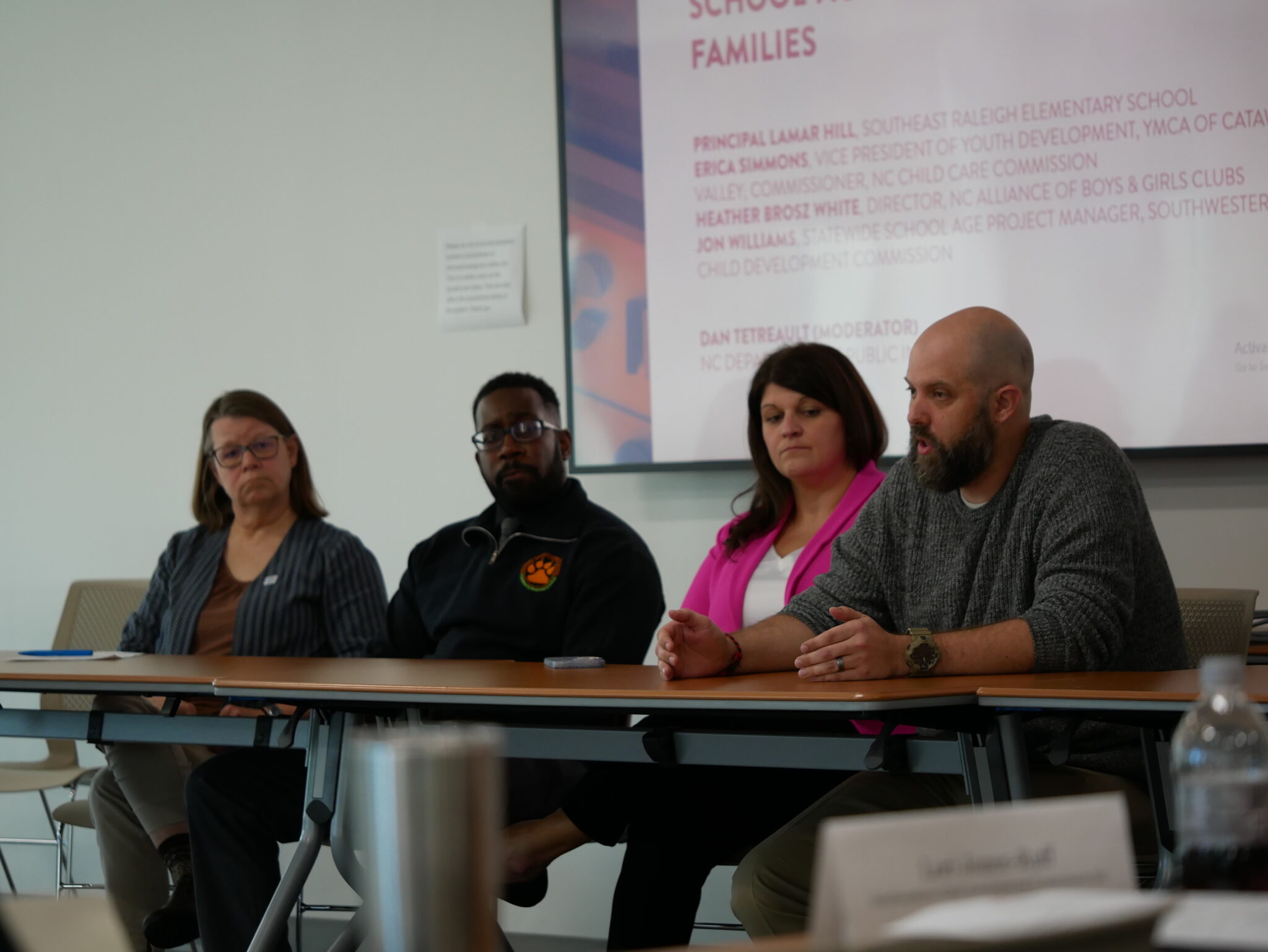
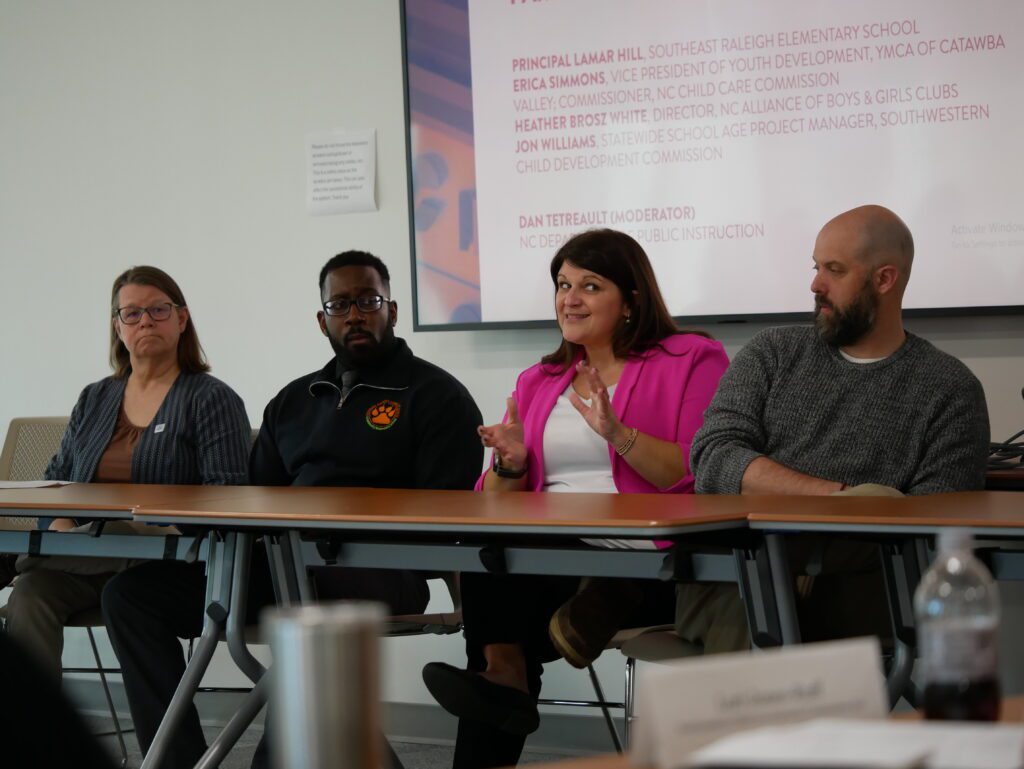
Erica Simmons, vice president of youth development at YMCA of Catawba Valley, shares her programs’ reach and barriers to that reach. (Liz Bell/EdNC)
Families need care that works with their schedules and engages students in activities that support them academically and socially, said Elizabeth Anderson, executive director of the North Carolina Center for Afterschool Programs, a nonprofit under the Public School Forum of North Carolina. That requires funding, workforce supports, transportation, and creative partnerships, Anderson and a panel of providers said.
“The more we can create a spectrum of opportunities for birth through grade 12, the more that children and families in our state are going to recognize the positive economic impacts of those investments,” Anderson said.
Report due in December on child care solutions ahead of short session
The governor’s task force will release a report by the end of December with recommendations on how the state should expand access to high-quality, affordable child care. Stein formed the group earlier this year as pandemic-era child care funding ran out and advocates across the state and country called for consistent public investment to meet families’ needs.
The state legislature did not allocate new funding for child care this year and did not pass a new comprehensive budget. Some new funding, though lower than advocates’ and state officials’ requests, was included in budget proposals from Stein’s office and the House and Senate, but those proposals were not ultimately passed.
The main child care legislation that was passed made regulatory changes to loosen staffing requirements and allow providers to serve more children in classrooms with appropriate space and teacher-to-child ratios.
The task force will meet again in February, though a date is not yet set. Ahead of next year’s short session, members on Monday discussed what role the group should play in moving policy solutions forward, including six recommendations in the group’s interim report released in June:
Set a statewide child care subsidy reimbursement rate floor.
Develop approaches to offer non-salary benefits to child care professionals.
Explore partnerships with the University of North Carolina System, N.C. Community Colleges System, and K-12 public school systems to increase access to child care for public employees and students.
Explore subsidized or free child care for child care teachers.
Link existing workforce compensation and support programs for early childhood professionals into a cohesive set of supports.
Explore the creation of a child care endowment to fund child care needs.
As the state faces many funding requests, federal funding uncertainty, and slim tax revenue, members said more legislators need to be aware of the state’s child care crisis and why it’s relevant to the state’s economy and future.
“Maybe we have some more work to do around actually educating and engaging members of the General Assembly to get this on their radar and build more champions,” said Susan Gale Perry, CEO of Child Care Aware of America and task force member.
Funding to address issues of access, quality, and affordability is needed, members said, and considering existing funding streams rather than new ones might be more politically feasible in the short term.
“Certain proposals about, ‘Let’s just go raise taxes,’ are probably not going to be something that is going to get across the aisle agreement, but it does create the opportunity to looking at areas where tax rates are already set, or certain revenue streams are already existing,” said Mary Elizabeth Wilson, task force member and the Department of Commerce’s chief of staff and general counsel.
Mary Elizabeth Wilson, task force member and the Department of Commerce’s chief of staff and general counsel, shares considerations for 2026. (Liz Bell/EdNC)
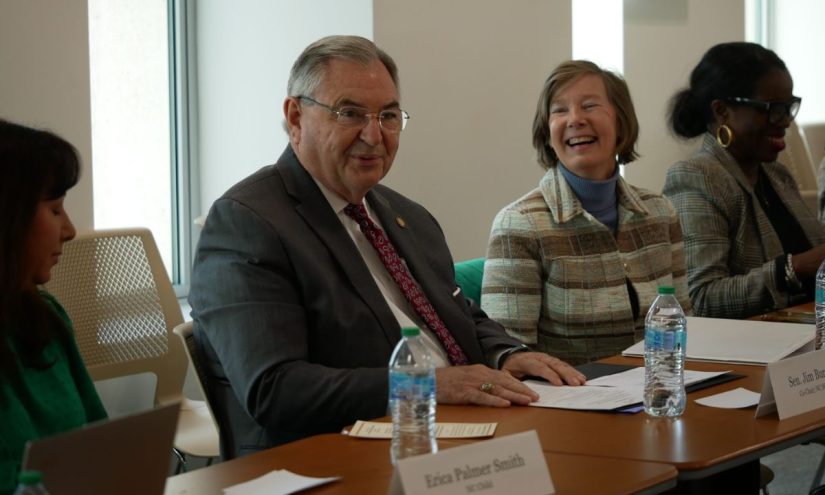
Sen. Jim Burgin, R-Harnett, who chairs the task force along with Lt. Gov. Rachel Hunt, said he and other legislators will be introducing legislation that would double the tax rates on sports gambling.
“If it’s for the children, everybody needs to support it,” Burgin said. “And I don’t believe in gambling … I’m doing it because we need the money.”
Child care fixes would also increase tax revenue, said Erica Palmer-Smith, executive director of nonprofit NC Child and task force member.
“(The generated revenue) would more than cover the overall cost that we would need to put in in the long run to fix the child care system,” Smith said.
‘The gap between 3 and 6 and between May and August’
Many families either do not have an after-school program nearby, do not have transportation to programs, or cannot afford programs, Anderson said in a presentation to the group Monday.
In 2025, 188,295 children participated in after-school programs, but 664,362 additional children would have if they had access, according to the presentation.
Programs are funded through a mix of private grant funding, public funding, and parent tuition. The two biggest funding sources are from the federal government: the Child Care Development Fund, which funds child care subsidies for young children and school-age children up through 12 years old, and 21st Century Community Learning Centers through the Department of Public Instruction.
After-school programs exist in all different types of facilities — community-based organizations, schools, faith-based organizations, and child care centers and home-based programs. Anderson described these programs as “folks stepping in to fill the gap between 3 and 6 and between May and August.”
Students benefit when they access out-of-school programs, she said. In the case of the 21st Century Community Learning Centers, 72% improved their attendance in the 2023-24 school year, 75% of students had decreased suspensions, and 90% improved their overall engagement in school.
Elizabeth Anderson, executive director of the North Carolina Center for Afterschool Programs, provides an overview of the demand for school-age care across the state. (Liz Bell/EdNC)
Anderson said the skills employers are seeking align with those that children are gaining from after-school programs, like problem-solving, teamwork and collaboration, communication, and leadership.
“We know that our after-school programs are an important place where children get to interact with one another and interact with mentors and positive adult figures that help them build these skills, which ultimately help them to become more successful, independent earners in the future,” she said.
Like child care programs in the early years, after-school programs not only help children, but allow parents to work. In a survey from the national report, 91% of parents said these programs help them be able to keep their job.
Families face particular challenges in the summer months. A national survey from LendingTree of more than 600 parents found this year that 66% of parents who seek summer care struggle to afford it, and 62% had taken on debt to pay for summer care.
Anderson said more conversations on child care should extend beyond the early childhood period. She pointed to research from the University of California that found educational and occupational attainment improvements were higher when children had access to both early care and education and out-of-school care once they entered school.
“It is something that parents need and want,” she said. “I think that we talk a lot about what happens for children birth to 5, but a child does not turn 5 years old and suddenly not need opportunity.”
Subsidy funding and reform would help, experts say
North Carolina is one of 23 states that does not have state level funding for after-school care, Anderson said. Anderson and panelists said funding is needed to retain teachers, increase access, provide transportation, and help families afford care.
Jon Williams, manager of the statewide School-Age Initiative at the Southwestern Child Development Commission, is focused on increasing the quality of out-of-school care across the state. He said the transient nature of school-age professionals disrupts consistency for children, families, and programs. A burdensome orientation process creates challenges for owners and directors constantly onboarding new people.
Williams said business training for after-school program directors would be helpful. Many have educational backgrounds and lack the business expertise to be successful in a challenging environment.
“They don’t have that financial background that is needed to run a business, and that creates a lot of financial instability,” Williams said. “If they don’t know how to orient or get new staffing in, that creates a huge problem.”
Jon Williams, manager of the NC School Age Initiative at the Southwestern Child Development Commission, says providers need funding and business training to improve the stability and quality of school-age care. (Liz Bell/EdNC)
A policy change that several panelists and task force members raised as a need is to align the eligibility requirements for child care subsidies across age groups. Right now, families who earn less than 200% of the federal poverty line are eligible for child care subsidies when their children are 5 years old or younger. But for school-age children, the threshold lowers: families must make less than 133% of the poverty line.
That disrupts care for families whose children need after-school care going to kindergarten or for families with multiple children of different ages who would prefer to send all of their children to one program.
A statewide subsidy floor, which is one of the policy priorities of the task force, would also help school-age care providers, said Erica Simmons, vice president of youth development at YMCA of Catawba Valley.
The floor would raise the per-child rate that child care programs receive to the state’s average rate. In cases where programs receive more than the average rate, they would continue receiving the same amount.
“(The floor) would make it a little more equitable,” Simmons said.
She said it costs similar amounts to provide care at her licensed programs in rural and urban communities. But the subsidy rates are much lower in rural areas.
“We have the same requirements for staff, we have the same programming requirements,” she said. “There’s no difference in the amount that we spend per program as an organization. However, there is a very big difference in what we are able to capture for subsidy. So there’s a big funding gap.”
Williams said there was a gap of $8,000 for one program just last month between the cost of services and the subsidy reimbursement. Annually, some programs in her network accrue around $100,000 in funding gaps for caring for children through subsidy.
Burgin asks a question of after-school program experts. (Liz Bell/EdNC)
Programs also receive subsidy payments retroactively. Changing the timing of funding could relieve some of the financial burden from programs, Williams said.
“I get paid via subsidy after I provide the services, and that’s a huge problem if I’m already in the red,” he said.
“… When we think about the mental health of our administration and our directors, that just adds fuel to the flame,” Williams said. “And it creates another gap, a 30-day gap, where I can say, ‘I can’t do this anymore,’ and then that care drops off. So we have to rethink how we get that money out in the state. We have to rethink the rates at which they are given.”
Panelists also shared that liability insurance rates have risen drastically. Williams said her program’s rates have increased by 44% over the last year, a trend among child care providers overall. A 2024 survey from the National Association for the Education of Young Children (NAEYC) found 80% of respondents saw their liability insurance costs increase in the last year and 62% reported difficulty finding or affording it.
Updates on care for public employees, workforce supports, and funding models
The task force has been split up into three subgroups which have been studying how to move toward the group’s six recommendations.
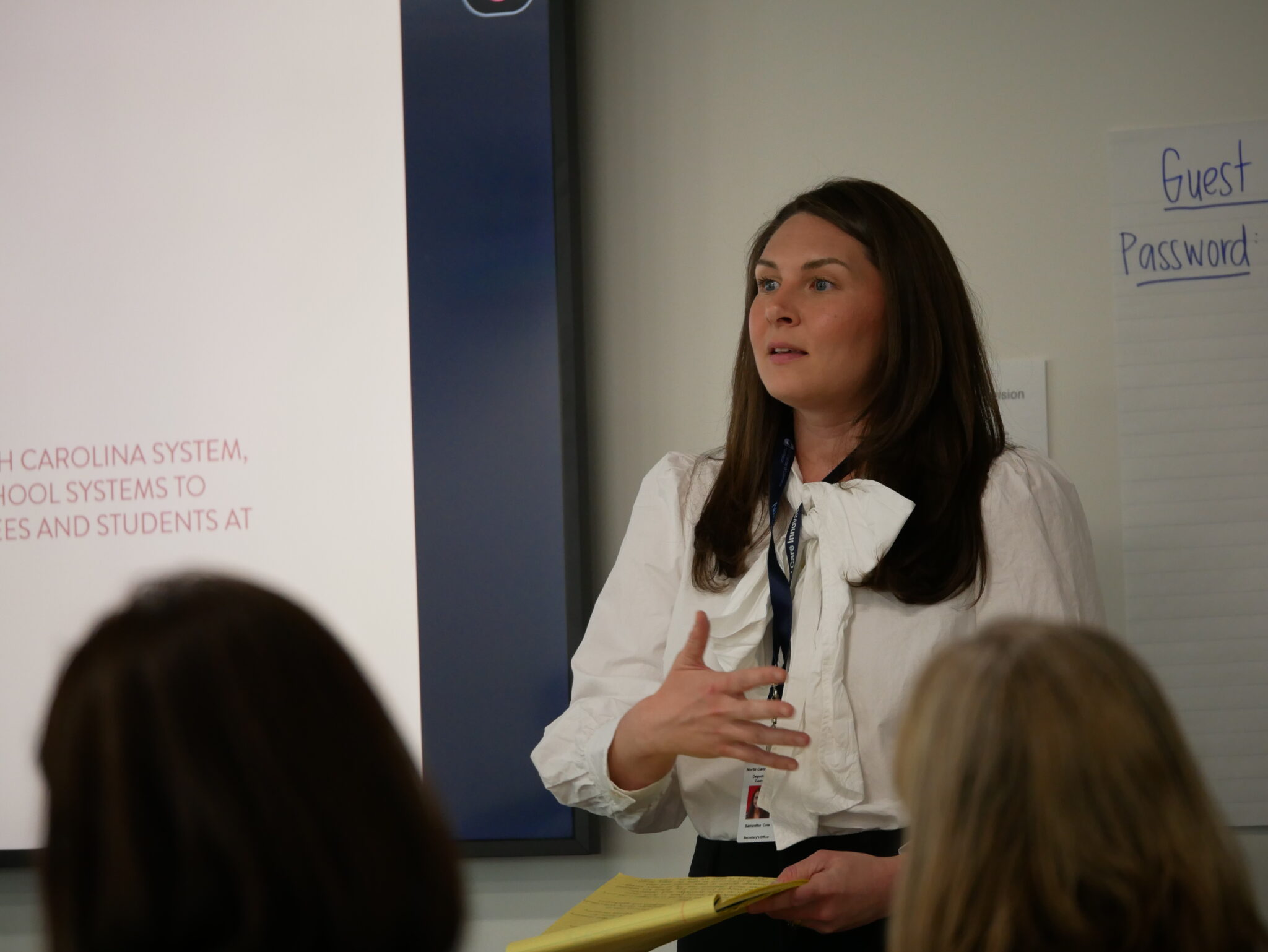
Samantha Cole, child care business liaison at the Department of Commerce, said a subgroup focusing on expanding child care access for public employees has looked at models across K-12, community college, and UNC-system schools to create child care solutions.
“We really see that there have been a lot of successes that have come about in these three examples and others, but they’re hyperlocalized,” Cole said. More external communication is needed for other campuses to understand how and why peer institutions are offering child care.
Madhu Vulimiri, senior advisor for health and families policy for Stein’s office, said the subgroup focused on workforce compensation and supports has been studying strategies to ensure early childhood teachers have access to non-salary benefits like health insurance.
They have studied the possibility of adding early childhood teachers as an eligible population for the State Health Plan, subsidizing ACA marketplace premiums through state dollars, and educating early childhood providers about the recently launched Carolina Health Works, which offers options for groups of small businesses.
The group is also studying how existing workforce supports like TEACH scholarships, child care academies, and apprenticeships could be more seamlessly tied together to strengthen the early childhood profession. They have requested that the Hunt Institute create a map to demonstrate what supports are available in what counties.
Samantha Cole, child care business liaison at the Department of Commerce, says some schools and colleges across the educational continuum have built models to provide child care specific to their local needs and resources. (Liz Bell/EdNC)
“That will help us see more holistically, where do we have resources and where are there gaps, and help us hopefully target future resources that we might have to expand those statewide,” Vulimiri said.
The third group, which is focused on financing, has been studying several states’ approaches to endowments and other funding mechanisms for child care, including Nebraska, Connecticut, Arizona, Montana, and Washington, D.C. They aim to develop a paper that weighs the options for North Carolina and analyses costs and benefits of each.
This audio is auto-generated. Please let us know if you have feedback.
Dive Brief:
The Trump administration will now release the federal funding for after-school and summer programs that districts and states expected to begin accessing July 1 but had been frozen by the Office of Management and Budget, OMB confirmed on Friday.
The $1.3 billion for 21st Century Community Learning Centers was under review by OMB to ensure the funding aligned with Trump administration priorities. The weekslong delay had already caused cancellations and other disruptions to summer and school-year student services, according to educators, families, education organizations and lawmakers.
Still under OMB review is about $5.6 billion in other K-12 funds, including programs for English learners, professional development, student academic supports, migrant services and adult education. OMB did not provide a time frame for the review or release of those funds.
Dive Insight:
In an emailed statement Friday to K-12 Dive, an OMB senior administration official verified the release of the after-school and summer program money and said, “Guardrails have been put in place to ensure these funds are not used in violation of Executive Orders.” The official did not say when the funds would be released to states.
Earlier this week, OMB said its preliminary findings found the grant programs “have been grossly abused to promote a radical leftwing DEI agenda” — referring to diversity, equity and inclusion initiatives — and directly violate Trump’s executive orders.
The 21st Century grant money for after-school and summer programming, and the other withheld funds, come from the federal fiscal year 2025 budget, which was approved by Congress and then signed into law by President Donald Trump in March. States and districts typically expect to access the funding in question on July 1 for the upcoming school year.
Federal Title I funds for low-income schools and districts and money for the Individuals with Disabilities Education Act was released on July 1 as expected.
The funding hold caused widespread concern among governors, Republican and Democratic senators, parents, education organizations and others calling for the federal government to release the money. Some 24 states filed a lawsuit against Trump, the U.S. Education Department and OMB, calling the funding freeze “contrary to law, arbitrary and capricious, and unconstitutional.”
Jodi Grant, executive director of the Afterschool Alliance, said in a Friday statement that “working parents in particular are breathing an enormous sigh of relief” with the news of the release of the summer and after-school funds.
But, she added, the funding delay “caused massive chaos and harm with summer learning programs abruptly shutting down and a large number of afterschool programs canceling plans to open in the fall.”
The uncertainty caused those programs to fall behind in hiring, outreach, contracting and other work, Grant said.
Relief at the funding release also came from David Schuler, executive director of AASA, the School Superintendents Association.
However, Schuler added, “Districts should not be in this impossible position where the Administration is denying funds that had already been appropriated to our public schools, by Congress. The remaining funds must be released immediately — America’s children are counting on it.”
CLEVELAND — In a public school cafeteria here, 6- and 7-year olds were taking turns sketching their ideas for a building made of toothpicks and gummy bears. Their task: to design a structure strong enough to support a single subject notebook.
It was a challenge meant to test their abilities to plan ahead, work as a team and overcome setbacks. But first, they had to resist the urge to eat the building materials.
Zayden Barnes, a first grader at Clara E. Westropp School of the Arts, picked up a blue gummy bear and sniffed it. “That smells good,” he said, licking his lips.
Mia Navarro, another first grader, held a green gummy bear to her nose and inhaled deeply. “I can’t stop smelling them!” she exclaimed. “I just want to eat it, but I can’t!”
The lesson in engineering and self-control was part of an after-school program run by the nonprofit Horizon Education Centers. It’s one of a dwindling number of after-school options in a city with one of the highest child poverty rates of any large urban area in the country.
Last year, Horizon and other nonprofit after-school providers reached more than 7,000 students in Cleveland public schools, buoyed by $17 million in pandemic recovery aid. But when the money ran out at the end of that school year, nonprofits here had to drop sites, shed staff and shrink enrollment. Horizon, which was in five public schools last year, is now in just one.
Similar setbacks can be seen across the country, as after-school programs struggle to replace billions in federal relief money. While a few states are helping to fill the gap, Ohio isn’t among them. And many providers fear more cuts are coming, as the Trump administration continues its campaign to slash government spending and end “equity-related” grants and contracts.
The after-school sector plays a critical role in the nation’s economy, providing close to 8 million students, or nearly 14 percent of all school-aged children, with a safe place to go while their parents work. It offers homework help, enriching activities, healthy snacks and physical exercise — often for a fee, but sometimes for free.
Done well, after-school programs can strengthen students’ social and emotional skills, increase their engagement with and attendance in school, and reduce their risk of substance abuse or criminal activity. In some cases, they can help improve grades and test scores, too.
Yet the sector, which has existed for more than 100 years, has long been hobbled by inadequate funding, staffing shortages and uneven quality. There are long waitlists for many programs, and low-income families often struggle to find affordable options.
In a recent survey by the nonprofit Afterschool Alliance, more than 80 percent of program leaders said they were concerned about their program’s future, and more than 40 percent said they worried they’d have to close permanently.
“The state of afterschool in America feels very grim,” said Alison Black, executive director of the Cleveland affiliate of America Scores, a nonprofit that teaches soccer and poetry to students in 13 cities across North America.
Students build a gummy bear structure in an after-school program run by Horizon Education Centers, in Cleveland. Credit: Grace McConnell for The Hechinger Report
After-school programs emerged in the second half of the 19th century, in philanthropic settlement houses that provided English courses and health care to the children of immigrants, according to a Rand Corporation report. They multiplied after Congress passed child labor laws in the 1930s, and again during World War II, when women entered the workforce in large numbers.
In those early days, the programs functioned mostly as child care, offering a solution to the problem of the “latchkey kid.” But they began to take on a broader role in the 1960s, when the programs started to be seen as a way to both reduce youth crime and provide kids with positive role models, according to Rand.
In the 1980s and 1990s, policymakers and funders began demanding that after-school programs play a part in closing the academic gaps between wealthier and poorer kids. High-poverty schools began setting aside some of their Title I funds to provide after-school programs.
But it wasn’t until 1998 that the federal government offered targeted support to after-school programs, in the form of competitive grants awarded by the states through the newly created 21st Century Community Learning Centers Program. The first year, Congress appropriated $40 million for the program; by 2002, that number had swelled to $1 billion.
Today, the after-school sector is made up of a mix of programs providing academic support, enrichment (sports, theater and the like) or some combination. Their goals and funding streams vary, from public dollars to philanthropic and corporate gifts. Many survive by stitching together multiple sources of funding.
The 21st Century program remains the only dedicated federal funding stream for after-school and summer learning, providing $1.3 billion in support to 10,000 centers serving close to a fifth of students in 2023.
After-school programs are popular among parents, and demand for slots far exceeds the supply. For every child in an after-school program, there are three more who would participate if an affordable, accessible option was available to their families, according to surveys by the Afterschool Alliance.
Gina Warner, CEO of the National Afterschool Association, says afterschool is a space where kids can try new things and take risks they wouldn’t take at school, where the stakes are higher. “Afterschool is still a place where kids can fail” without consequence, she said.
The programs also connect students with positive adult role models who aren’t their teachers or caregivers, said Jodi Grant, executive director of the Afterschool Alliance. “Our biggest strength, when it gets down to it, is relationships,” Grant said.
But sustaining those connections can be difficult in a sector with low pay and limited opportunities for advancement. Turnover rates are high, and when staff don’t stick around, “You’re missing one of the best benefits of afterschool,” said Warner.
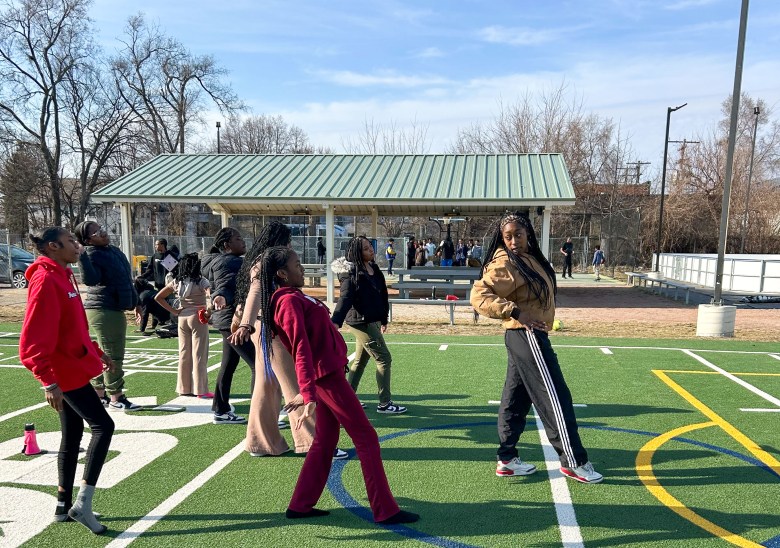
Students practice a dance routine at the Downtown Boxing Gym, in Detroit. Credit: Kelly Field for The Hechinger Report
For a sector accustomed to scraping by, the American Rescue Plan Act of 2021 was like a winning lottery ticket.
Over three years, after-school programs received roughly $10 billion in ARPA aid — money they used to add staff, improve pay and benefits and expand enrollment, according to the Afterschool Alliance. It estimates that programs were able to serve 5 million more kids as a result.
But the money has mostly been spent, and late last month, Education Secretary Linda McMahon told districts that their time to use any remaining funds was over. In Cleveland, which spent almost $28 million on out-of-school time programs between fiscal 2022 and 2024, Horizon and other nonprofits formed a coalition to try to convince the district to continue at least a portion of the aid. They held rallies, secured media coverage and brought parents to testify before the school board. But the district wouldn’t budge, said David Smith, Horizon’s executive director.
“There’s no opportunity to go back to the scale we were at during the pandemic, and we still have the same problems,” said Smith. “Kids are getting in trouble after school, and they still need the extra academic help.”
The Cleveland Metropolitan School District made significant gains under its last CEO, Eric Gordon, whose Cleveland Plan was credited with improved student outcomes, including a 25 percentage point increase in the high school graduation rate. But the pandemic erased some of those gains and Cleveland, like many districts, is still recovering.
The district’s new CEO, Warren Morgan, has defended his decision not to fund the nonprofit providers, noting that the district offers after-school sports and an arts program. But those extracurriculars vary by day and by school, and after-school advocates say many schools have been left without the consistent, comprehensive care working parents depend on.
“Our city is focused on workforce development without thinking about who cutting this care hurts,” said Black, of America Scores Cleveland.
Without continued support from the district, Black’s organization has had to dip into its rainy-day fund and drop fall soccer for middle schoolers. Serving elementary students feels more essential, she explained, since younger kids can’t stay home alone.
Other nonprofits have been harder hit. The Greater Cleveland Neighborhood Centers Association, or NCA, has closed half of its locations in the district, leaving programs in seven schools. The Boys and Girls Clubs of Northeast Ohio, which lost $3 million in pandemic relief dollars and other federal support this academic year, has shuttered 17 sites.
Dorothy Moulthrop, chief executive officer of Open Doors Academy, another nonprofit, thinks the losses might have been less severe if the after-school coalition had been able to show strong results for the federal money. Though individual programs handed over reams of data to the district, Moulthrop wasn’t able to get its leaders to share the data in a form that would allow providers to study their collective impact.
“We needed to be able to demonstrate our return on investment and we were not able to,” she said.
Students in a poetry class run by America Scores Cleveland. Credit: Grace McConnell for The Hechinger Report
Questions about whether after-school programs are a good investment of public dollars have dogged the sector since the early 2000s, when Mathematica Policy Research began publishing the results of an evaluation that found the 21st Century program had little impact on student outcomes.
The study, which is often cited by politicians seeking to gut after-school spending, was controversial at the time, and remains so. Defenders of afterschool argue the evaluation was methodologically flawed and point to other research that found that students who regularly attended high-quality programs saw significant gains. But one of the study’s two authors, Susanne James-Burdumy, said in an interview that it was the most rigorous of its time.
In the 20 years since the Mathematica reports were published, hundreds of dissertations and program evaluations have added to the evidence base for both sides of the debate. But large-scale, rigorous evaluations of after-school programs remain rare, and their findings are mixed, James-Burdumy and other researchers say.
Though some analyses have found after-school programs can boost reading and math achievement, promote positive social behaviors and reduce negative ones, other studies have shown little growth in those and other areas.
Some of that inconsistency likely stems from differences in the quality of programs, researchers and advocates say. When funding is tight, after-school programs tend to focus their dollars on services, rather than professional development or program evaluation.
“Quality often feels like an extra,” said Jessie Kerr-Vanderslice, a consultant at the American Institutes for Research who focuses on out-of-school time programs.
Advocates also note a misalignment between program goals and outcome measures: While after-school programs often prioritize relationships and social and emotional skill-building, their funders frequently focus on academic gains.
One variable that seems to matter in student outcomes is attendance: Studies have found that students who attend regularly reap greater benefits than those who show up sporadically.
Yet more than half of students who participated in programs paid for with 21st Century grants in 2022-23 attended for less than 90 hours, a program evaluation shows. That works out to just 30 days for a three-hour program.
At Clara E. Westropp Elementary in Cleveland, where Horizon Education Centers has been able to continue its after-school program with a 21st Century grant, 73 students are enrolled, but average daily attendance is less than half that.
Students descend the stairs during an after-school program run by America Scores Cleveland. Credit: Grace McConnell for The Hechinger Report
On the other side of Lake Erie, at Detroit’s Downtown Boxing Gym, students are required to attend at least three days a week. To keep them coming, the program offers a huge range of activities, from cooking to coding (but ironically, not boxing).
Inside the large building that houses the program, there’s a lab with a flight simulator and 3D printer, and a music studio paid for and built by one of Eminem’s former producers.
Outside, on a turf field where the program plans to build an addition that will enable it to double enrollment, a group of middle school majorettes was preparing for an upcoming dance performance.
Debra Beal, who became the caregiver to her niece’s two young sons when she was in her 50s, says the program saved her life — and theirs. It kept the boys, now 19 and 20, off the streets while she worked, provided them with exercise and tutoring, and even served them dinner. The staff became like family, supporting her when she struggled as a parent and offering to pay for counseling when one son lost his father and uncle from fentanyl overdoses on the same day.
“What they’re doing is life-changing,” said Beal, whose long denim coat had the word “Blessed” written in sequins on the back.
Financially, the Downtown Boxing Gym is on surer footing than its counterparts in Cleveland. The Michigan Legislature has provided $50 million in funding for after-school programs in each of the last two years, and the program recently received $3 million in funds from the state.
That doesn’t mean the program isn’t being pinched by the Trump administration’s cost-cutting campaign and purge of diversity, equity and inclusion programs, said Jessica Hauser, its executive director. Corporations the program was counting on for seven-figure gifts for the addition and program expansion are reconsidering their pledges, and a promised federal earmark now seems unlikely.
Hauser is also worried about potential cuts to federal child nutrition programs and student aid, which the program depends on for meals and college student tutors.
Back in Cleveland, the coalition Smith formed to fight for after-school funding has expanded to include the city, the county and a local foundation, which hired a consultant to come up with the cost to deliver quality after-school programming. To longtime advocates like Smith and Allison Wallace, executive director of the NCA, it feels like the sector is having to prove itself, yet again.
“They’re revisiting conversations we had 15 years ago, around best practices and identifying quality,” Wallace said. “We keep going over the same things, and we’re not getting any traction.”
Things could get even tougher in the next couple years, as the district shifts the costs of providing security and custodial services for after-school programs onto the nonprofit providers. Wallace estimates that the change will cost providers tens of thousands per site.
And future federal funding is far from guaranteed. Though the 21st Century program enjoys bipartisan support in Congress, Trump sought to eliminate it in every budget proposal he issued in his first term and is expected to do so again.
For now, though, after-school programs are still providing kids in Cleveland with caring staff, a safe place to spend the hours after school, and engaging activities like gummy bear construction.
The teams had 10 minutes to build structures that could support a notebook. When the timer went off, the structure built by Zayden and Mia’s group resembled a two-story house with a caved-in roof. Zayden wasn’t feeling optimistic.
“I think it’s going to fall,” he said.
“Think positive,” said Kathy Thome, a program administrator who is helping the group.
Ian Welch, the program’s site coordinator for Clara E. Westropp, picked up a notebook and approached the table. He reminded the teams that failure is part of the scientific method. If their structures collapse, they can try again, he said.
“It’s going to squish down,” Mia predicted.
She was right. But the flattened structure still held the notebook aloft. The kids jumped up and down, and Zayden did a little boogie.
“We’re so happy — we did it!” he said.
Welch rewarded their effort with some fresh gummy bears, and the kids, proud and hopped up on sugar, waited for their parents to pick them up.
Contact editor Caroline Preston at 212-870-8965, on Signal at CarolineP.83 or via email at [email protected].
This story was produced with support from the Education Writers Association Reporting Fellowship program.
The Hechinger Report provides in-depth, fact-based, unbiased reporting on education that is free to all readers. But that doesn’t mean it’s free to produce. Our work keeps educators and the public informed about pressing issues at schools and on campuses throughout the country. We tell the whole story, even when the details are inconvenient. Help us keep doing that.