Tag: Agenda

  • Civic 2.0 – the civic university agenda but with sustainable impact

    Civic 2.0 – the civic university agenda but with sustainable impact

    Given the likely media habits of Wonkhe’s astute and cerebral readership, you’ve probably had a good fill of Andy Haldane in recent days.

    The former chief economist of the Bank of England has hardly been off the news and current affairs shows. First describing the pre-budget speculation as a “fiscal fandango,” and then continuing his sharp critique by lamenting the prospects for economic growth following the announcement last week.

    Haldane is best known for his economic analysis but as the author of the Levelling Up white paper (RIP) he is also a thoughtful commentator on all things related to “place” and has taken a keen interest in the civic university agenda. If you are not feeling too over-saturated with Haldane content, it is worth revisiting his essay for the Kerslake Collection last year. In it he celebrated the impact of the civic movement within the sector and the great practice it has fostered, but politely pointed out that the Civic University Commission that Lord Kerslake chaired, and its aftermath, had very little impact on policy.

    A place to call home

    This government, like the last one, has often spoken about the importance of place. Whether we think of geographical inequality or “left behind places,” across the political spectrum it is recognised that this complex issue is behind much of the political instability we have seen over the last decade. When it comes to why this matters Cabinet Office minister Josh Simmons put it well the other day when he said “Everything we do in policy should focus on place. We all experience the world through where we live and who we live with.”

    Policy action has not always matched the rhetoric but to be fair to this government, while critics may argue there is a lack of much needed radicalism when it comes to place, there have been a range of welcome place-based initiatives announced during the budget and over the last few months including the Pride in Place strategy, place-based budget pilots, and local economic growth zones.

    For higher education policy specifically, the government has of course included civic engagement as one of its five priorities and the industrial strategy highlights universities as “engines of innovation and skills” that are key to driving economic growth. Nevertheless, it is fair to say that civic engagement is a priority the Whitehall machine is struggling to get to grips with. Universities are inherently policy-domain-spanning institutions – and yet policy ownership of their “civic mission” is restricted to one Whitehall department (Education), where the much more expansive role of universities in driving economic and social growth within their cities and regions is not considered alongside their role in skills and education.

    It is not just the fact universities are often thought of as “big schools” by government which limits their role in place-based policymaking, but, as the National Civic Impact Accelerator (NCIA)/Civic University Network outlined recently there is a “profound fragmentation in both policy and place.” The siloed nature of government departments adds complexity and can limit ambition and potential for unlocking the role of universities in supporting their place. As the NCIA report outlines, the different layers of devolution also presents a fragmented landscape in which universities work.

    Civic 2.0

    So, what can we do about it? Following the NCIA programme we want to build on the success they have had in developing great practice in the sector. We are delighted that the National Co-ordinating Centre for Public Engagement has agreed to host the Civic University Network, convene a national community of practice, and maintain the assets of the Civic University Network and National Civic Impact Accelerator. This ensures continuity for the sector and provides a platform for sharing knowledge and accelerating civic leadership.

    In addition to sector-practice we want to start making a difference to policy and overcoming the Haldane critique! A group of universities and funders – the universities of Birmingham, Newcastle and Queen Mary alongside Midlands Innovation and the NCCPE – have got together to establish a programme to develop policies and ideas which would enable universities’ place-based role to grow.

    We are at the start of this journey but our intended approach is to be both ambitious and pragmatic. What this means in reality is that we do not anticipate a radical departure from the current system in the near or medium term. While we recognise the higher education market and the way research is funded is often at odds with the place agenda, the fiscal environment and challenges faced by government means there is little appetite for structural change.

    Instead, we want to identify significant themes universities could play a role in tackling, such as social cohesion and rebuilding institutional capacity in local communities, as well as a small number of policy shifts or ideas across different parts of Whitehall to ensure universities are enabled to be more active players in supporting local growth and civic engagement over the next few years.

    In turn this will also help us to provide the sector with additional momentum, leadership and representation on the civic/place agenda – ensuring greater visibility, highlighting excellent practice, developing spokespeople and case-studies for policy makers to engage with and to facilitate partnerships between university leaders, other sectors and national/ regional policymakers.

    We are starting out as a small group of universities and funders committed to the civic agenda, but we recognise there are many other institutions from across the country with different missions and specialisms who really care about the role they play in the places they are part of.

    We would welcome you to join our programme, with the intention that over time we will be able to build a sustainable entity which wouldn’t just look at “civic wins” for the medium term but could also explore the system changes we need to better serve our places for the decades to come.

    More information on the Civic 2.0 programme can be found here.

    Source link

  • Bridging further education and higher education: A practical agenda for the post-16 reforms

    Bridging further education and higher education: A practical agenda for the post-16 reforms

    Author:
    Imran Mir

    Published:

    Join HEPI for a webinar on Thursday 11 December 2025 from 10am to 11am to discuss how universities can strengthen the student voice in governance to mark the launch of our upcoming report, Rethinking the Student Voice. Sign up now to hear our speakers explore the key questions.

    This guest blog was kindly authored by Imran Mir, Campus Head and Programme Lead at Apex College Leicester.

    The embedding of the further education and higher education sectors has been a longstanding policy goal, but recent reforms have caused an urgent need than ever. The UK government has set the ambitious goal of having at least two-thirds of young people go on to higher-level learning by age 25, with at least 10% of them pursuing higher technical education or apprenticeships. While such targets can be seen as overly ambitious, they will only come to fruition if the gap between further education and higher education is efficiently bridged. Without this, there is a risk of losing students during the transition from one educational stage to the next. These government ambitions highlight why bridging further education and higher education is so important. Aligning both sectors is essential to turning these national policy goals into real progress for learners.

    The persistent progression problem

    Although there has been some growth in participation in higher education, disparities remain. Students who come from disadvantaged backgrounds are four times less likely to have access to high-tariff universities. Whilst UCAS data for 2024 has shown growth in learner acceptances, this is largely down to an increase in the number of 18-year-olds, rather than a reduction in gaps between the most and least advantaged students. Further education is vital for social mobility; however, too many learners face major barriers when trying to transition into the higher education institutions of their choice.

    Five key levers to improve bridging

    1. Align curriculum and assessment
      When transitioning from further education to higher education, students will face a contrast in learning expectations. In the former, through A-Levels and vocational qualifications, assessments are exam-focused and often high-stakes. In comparison, higher education has a variety of assessment types, including coursework, presentations, and exams. These assessments are often less frequent, and a student’s grade is not as reliant on a single, high-stakes exam. To make this transition process smoother, higher education providers and further education providers should collaborate to co-design first-year assessments that look to integrate a blend of authentic tasks, ranging from portfolios to presentations. This would allow better preparation for students to progress into higher education while aligning expectations between further and higher education. This approach is supported by the Foundation Year Fee Cap Guidance, which explains the importance of curricula that support progression into higher-level study while avoiding the repetition of Level 3 content.
    2. Use admissions to recognise potential
      A large number of further education students, particularly those without access to enrichment activities, find it difficult to reach their potential, something which is not always recognised in higher education admissions. Many of these learners focus on technical or applied qualifications such as T Levels and Higher Technical Qualifications (HTQs), which develop valuable practical and professional skills. However, because these programmes may not include the same kinds of enrichment activities often valued in traditional academic routes, their achievements are sometimes overlooked in admissions decisions. Universities should value T Levels, Higher Technical Qualifications (HTQs), and other applied learning pathways. These routes must be recognised by universities. They must provide clear pathways showing how credits earned in further education can be transferred to the Lifelong Learning Entitlement (LLE). This would result in the system being more inclusive for students who come from non-traditional routes into higher education..
    3. Share data and pastoral insight
      The lack of continued student support is another barrier. Colleges and universities must work together in creating a standardised set of transition data that includes information on curriculum, assessment types, and available support measures. For example, shared data could help universities identify where incoming students may need additional academic or well-being support. To enable a smooth transition, both sectors need to agree on how to share this information. The OfS Regulatory Framework promotes transparency in data sharing to ensure positive student outcomes.
    4. Co-deliver first-year teaching
      In certain subjects, co-delivering first-year content between FE and HE providers could help students with transitioning from further education. Modules on study skills, digital literacy, and professional competencies could be delivered jointly; this approach would particularly benefit students who work or commute. This method aligns with the OfS Strategy 2025–2030 Guide, which clearly stresses student success and sector resilience as a major priority.  
    5. Make the LLE a ladder, not a maze
      The LLE offers an opportunity for modular, credit-bearing study across a lifetime. For this vision to come to fruition, higher education institutions must look to implement clear credit transfer rules, transparent pricing, and clear pathways for learners to progress from Level 4 to full degrees. By having routes which are clearly mapped out, students will be better able to understand how to continue their education without getting lost in a complex system. The House of Commons Library LLE Briefing outlines how this could be achieved.

    Reflecting on the recent Post-16 Education and Skills White Paper (DfE, 2025), there is clear intent to have a more connected tertiary system through plans such as the Lifelong Learning Entitlement and stronger employer-education partnerships. The proposal clearly acknowledges many of the issues outlined above, especially the need for smoother progression routes and credit transfer between further and higher education. However, questions will remain on how effectively these ambitions are going to be implemented. Without unified collaboration from both sides, clear accountability, and investment in teaching capacity and resources across both sectors, the reforms risk reinforcing the existing divides rather than bridging the gap.

    The prize

    For the government to achieve its goal of equity, further education students must not just enter higher education but also succeed once there. The reforms present an opportunity; they must be matched with the practical changes in how we align assessment, recognise technical routes in admissions, share data, work together where possible, and make the LLE more navigable. By taking these actions, policy ambitions can be translated into real-world success for students.   

    Source link

  • Students, Unions to Protest Trump’s Higher Ed Agenda Friday

    Students, Unions to Protest Trump’s Higher Ed Agenda Friday

    Members of the American Association of University Professors, the affiliated American Federation of Teachers and student groups are planning protests in more than 50 cities Friday against “the Trump administration’s broad assault” on higher ed, the AAUP announced in a news release.

    The AAUP said demonstrators will urge institutions to continue rejecting Trump’s “Compact for Academic Excellence in Higher Education” and instead “commit to the freedom to teach, learn, research, and speak out without government coercion or censorship.”

    “From attacks on academic freedom in the classroom to the defunding of life-saving scientific research to surveilling and arresting peaceful student protesters, Trump’s higher education policies have been catastrophic for our communities and our democracy,” AAUP president Todd Wolfson said in the release. “We’re excited to help build a coalition of students and workers united in fighting back for a higher education system that is accessible and affordable for all and serves the common good.”

    The protests are part of a progressive movement called Students Rise Up, or Project Rise Up. The Action Network website says there will be “walkouts and protests at hundreds of schools” Friday—the start of a buildup “to a mass student strike on May 1st, 2026, when we’ll join workers in the streets to disrupt business as usual.”

    “We’re demanding free college, a fair wage for workers, and schools where everyone is safe to learn and protest—regardless of their gender or race or immigration status,” the website says.

    Other groups listed as organizing or supporting the protests include the Campus Climate Network, College Democrats of America, Florida Youth Action Fund, Frontline for Freedom, Higher Ed Labor United, Ohio Student Association, Sunrise Movement, Dissenters, Feminist Generation, Gen-Z for Change, Generation Vote (GenVote), March for Our Lives, Oil and Gas Action Network, Socialist Alternative, Together Across America, Voters of Tomorrow, Blue Future, Get Free, and NOW Young Feminists.

    Asked for a comment from the Education Department, Madi Biedermann, deputy assistant secretary for communications, repeated statements the department previously made, saying, “The Trump Administration is achieving reforms on higher education campuses that conservatives have dreamed about for 50 years.”

    “Institutions are once again committed to enforcing federal civil rights laws consistently, they are rooting out DEI and unconstitutional race preferences, and they are acknowledging sex as a biological reality in sports and intimate spaces,” she wrote.

    Source link

  • Ambow Education Pushes AI Agenda Abroad While Raising Red Flags in the U.S.

    Ambow Education Pushes AI Agenda Abroad While Raising Red Flags in the U.S.

    Ambow Education, once linked to the Chinese Communist Party (CCP), is aggressively exporting its AI-driven education platform, HybriU™, to global markets—even as its footprint in the United States remains small and opaque. The company’s international ambitions raise questions about transparency, governance, and potential political influence.

    Ambow’s recent partnership with Bamboo System Technology aims to scale HybriU’s AI-education ecosystem across Southeast Asia, touting a deeper technology stack and expanded distribution. Yet outside China, Ambow’s record is spotty, and critics warn that the firm’s rapid expansion may outpace oversight or educational rigor.

    In the U.S., Ambow reportedly explored a partnership with Colorado State University (CSU), though details remain murky. Engagements like these, combined with its involvement with specialized institutions such as the NewSchool of Architecture and Design, suggest a strategy of targeting schools where oversight may be limited and innovation promises can be oversold.

    Despite these global ambitions, Ambow’s American presence is modest: a small office tucked in Cupertino, California, suggesting that the company may be testing the waters in the U.S. market rather than committing to a major operational footprint.

    For U.S. institutions, Ambow’s history—including prior CCP ties—and its small domestic footprint present a cautionary tale: a company that combines ambitious AI promises with a murky past and minimal transparency. Ambow’s expansion illustrates a growing challenge in higher education: navigating partnerships with foreign edtech firms while safeguarding institutional integrity, regulatory compliance, and academic quality.

    Sources: Ambow Education press releases, Bamboo System Technology announcements, Higher Education Inquirer reporting, corporate filings.

    Source link

  • Trump Administration Compact Demands Universities Align With Political Agenda

    Trump Administration Compact Demands Universities Align With Political Agenda

    The Trump administration has escalated its confrontation with higher education institutions by sending detailed policy demands to nine universities, conditioning their continued access to federal funding on compliance with the president’s political objectives.

    The unprecedented move, delivered via letters signed by Education Secretary Linda McMahon and other senior officials, presents a 10-page “compact” that outlines sweeping requirements affecting tuition pricing, international student enrollment, gender policy, and campus speech.

    The compact mandates that participating institutions freeze tuition rates for five years, place restrictions on international student enrollment, and adopt administration-approved definitions of gender. Universities must also commit to preventing any policies that the administration characterizes as punishing conservative viewpoints.

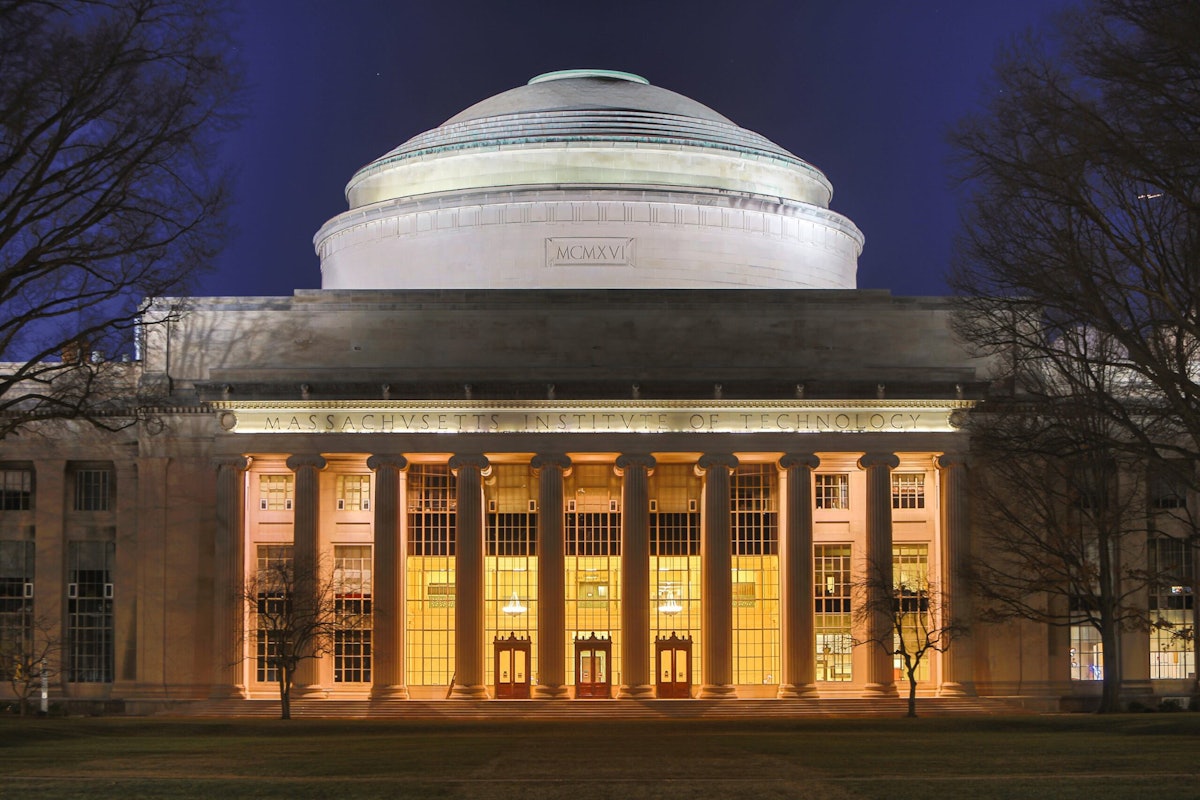
    The nine institutions that received letters on Wednesday include Dartmouth College, Brown University, Massachusetts Institute of Technology, University of Southern California, University of Arizona, University of Virginia, University of Pennsylvania, University of Texas, and Vanderbilt University.

    According to The New York Times, May Mailman, the White House’s senior adviser for special projects and a letter signatory, indicated the administration remains open to dialogue with contacted universities. “We hope all universities ultimately are able to have a conversation with us,” Mailman stated.

    The demands represent a significant threat to institutional autonomy and could have far-reaching implications for diversity, equity, and inclusion efforts on college campuses. The restrictions on international student enrollment raise particular concerns about the future of global education exchange and the presence of international scholars who contribute substantially to research and campus diversity.

    The administration’s approach effectively creates a two-tiered system where compliance brings preferential treatment in federal grant competitions. As one senior White House official told The Washington Post, universities would technically remain eligible for grants, but compliant institutions would gain a “competitive advantage.”

    This compact represents the latest escalation in the administration’s sustained campaign targeting higher education. Previous actions have included funding freezes, threats to revoke tax-exempt status, and attempts to eliminate universities’ authorization to host international students.

    The administration has particularly focused on policies related to international students, pro-Palestinian campus activism, transgender student athletes, and diversity, equity, and inclusion programming.

    Harvard University stands alone among major research universities in actively resisting the administration’s demands through litigation. In an April open letter to the Harvard community, President Alan Garber articulated the stakes for academic freedom: “No government—regardless of which party is in power—should dictate what private universities can teach, whom they can admit and hire, and which areas of study and inquiry they can pursue.”

    However, on Tuesday, President Trump claimed a deal with Harvard was nearing completion. The administration has already announced agreements with the University of Pennsylvania, Columbia University, and Brown University earlier this year.


    Source link

  • How Federal Courts Are Blocking Trump’s Higher Ed Agenda

    How Federal Courts Are Blocking Trump’s Higher Ed Agenda

    In the nearly seven months since President Trump took office again, academic associations, faculty unions, researchers and other groups have used the legal system to push back on the administration’s efforts to reshape higher education and the federal government.

    So far, district and appeals courts have largely suggested that the executive branch’s actions are unconstitutional and ruled in favor of university advocates, handing down preliminary injunctions, restraining orders and a few final judgments that have blocked the Trump administration’s goals. But based on the few cases that have reached the Supreme Court, some higher education experts worry the tide may be turning, and the high court’s conservative majority will ultimately side with the president.

    The lawsuits challenged bans on diversity, equity and inclusion programs; the administration’s crackdown on international students; the termination of thousands of grants; and the dismantling of the Department of Education.

    “What we’re seeing is that when the administration tries to impose a whole new set of rules and regulations based upon their particular ideology … the courts are saying, ‘Wait’ or ‘No,’ until it gets to the Supreme Court,” said Randi Weingarten, president of the American Federation of Teachers, a teachers’ union that has filed multiple lawsuits against Trump and notched a few victories.

    An Inside Higher Ed analysis of more than 40 lawsuits against the administration that are related to higher ed found that district judges have ruled against the executive branch in nearly two-thirds of the cases. Almost a quarter have yet to be decided. Of those in which a judge has ruled, 18 have been appealed, and only two were overturned. In both instances when the district court was overruled, it had to do with reversing injunctions that prevented the Trump administration from canceling grants based in part on the president’s executive order against DEI. The Supreme Court ruled in favor of the Trump administration in a separate but similar case.

    Nine cases have yet to receive a decision from an appeals court.

    For more updates on litigation against the administration, go to Inside Higher Ed revamped lawsuit tracker. The searchable database will be updated regularly.

    Of the cases Inside Higher Ed analyzed, the most frequent issue at hand was grant cuts, at 14 cases, followed by the Education Department’s reduction in force at eight.

    “A lot of the actions the administration is taking are very clearly being defined by the courts as patently illegal. They’re outside of the established law and they exceed executive authority,” said Jon Fansmith, senior vice president for government relations at the American Council on Education, which has sued the administration several times to challenge a proposed cap on reimbursements for indirect research expenses that would cost universities millions.

    Few cases that Inside Higher Ed is tracking have reached the Supreme Court, but so far the justices have overturned lower court rulings in three, allowing the Education Department to proceed with mass layoffs and to cut millions in grants for teacher training. They haven’t reached a decision in the other two cases, which are challenging grant cuts at the National Institutes of Health.

    Some worry that rulings from the conservative majority on the Supreme Court could be driven by party alignment more than the law. Fansmith said he was certainly concerned by the court’s rulings so far but was hesitant to call them an “interjection of partisan politics.”

    He noted that the rulings have come from the court’s shadow docket. This means they have made their decisions outside of the traditional case procedures with limited briefings, no oral argument and often no detailed explanations.

    For example, when it comes to the case challenging the Education Department’s layoffs, Fansmith said that the lawyers he’s talked to are “sort of confounded by the decision.” The justices didn’t offer an opinion on whether the department can legally fire half its employees, but did allow the administration to proceed with the process while the courts work through the case.

    “So it’s sort of a split decision in some ways; the merits haven’t yet been resolved finally,” he said.

    But the odds of the court making a final judgment that brings back the employees seems unlikely, some legal experts have said. And Weingarten noted that even if they do hear the cases this fall and make a final decision next spring, the damage will have been done.

    “The problem is that when you start talking about medical and scientific research, the moment that those things get stopped, there is irreparable damage and it’s hard to recreate them,” she said. “The Trump administration is really hurting what was an anchoring principle of American enterprise and innovation … that research has really been suffocated and used as leverage for the Trump administration to get its ideological whims adopted.”

    Still, many different plaintiffs—including Democratic attorneys general—continue to push back against the Trump administration’s agenda.

    Massachusetts AG Andrea Joy Campbell, who has challenged the president in multiple suits, believes that Trump and his cabinet have repeatedly demonstrated a willingness to use “unlawful abuses of power” to limit academic freedom. And as long as they continue to do so, she added, Democratic leaders will keep taking matters to court.

    “State attorneys general have the power to fight back to uphold the rule of law and protect our young people—and that’s exactly what we’re doing,” Campbell wrote in an email to Inside Higher Ed. “We’ve achieved significant victories in the vast majority of our cases, and we will continue to hold the line because our children and the future of our democracy depend on it.”

    Democracy Forward, a nonprofit legal group that has represented plaintiffs in a number of cases, also chimed in, saying the Trump-Vance “assault” on education will continue to be “met with force.”

    “These victories show just how essential higher education is to our democracy and why protecting it from political interference will remain a core part of our work,” said Skye Perryman, the group’s president and CEO.

    She added that while the Supreme Court’s decision to overturn some cases was “incredibly disappointing,” it’s not the end.

    “We win a lot, but if we’re not experiencing some setbacks, we’re not pushing hard enough,” she said.

    However, major concerns still loom among many higher education advocates as Trump officials continue to fight back, pushing for lawsuits to reach the Supreme Court and lambasting the district and appellate judges that rule against the executive branch, calling them “activist[s]” for disagreeing with the president.

    “There is a troubling and dangerous trend of unelected judges inserting themselves into the presidential decision-making process,” White House press secretary Karoline Leavitt said during a press conference in May.

    Leavitt’s comments were related to court decisions blocking certain immigration policies, but Madi Biedermann, press secretary for the Education Department, has also criticized judges that rule against Trump.

    In May, Biedermann called a district court judge who blocked the department’s mass layoffs a “far-left judge,” adding that he “dramatically overstepped his authority” and had “a political ax to grind.”

    Weingarten, on the other hand, says it’s Trump and the conservative Supreme Court that are thwarting academic freedom and violating constitutional rights for political power.

    What we’ve seen is “more the sign of an autocrat that tries to control as opposed to people who believe in freedom,” she said. “It’s all very, very dangerous for the future of America.”

    Source link

  • Embed! How to save the civic agenda

    Embed! How to save the civic agenda

    The Civic University Commission was interesting, rigorous, and almost perfectly timed.

    Coming off the back of Brexit, on the heels of Covid, and foreshadowing a putative levelling up agenda, it gave shape to things universities had always done and permission to discuss more openly the things they had always wished to do.

    The civic university agreements were sometimes a fresh coat of paint on already ongoing work but undoubtedly provided new momentum to an old idea. There has been significant debate on how to define civic, the National Civic Impact Accelerator (NCIA) happens to have a very good framework, but this is less important than the interest that was generated which made the debate worth having.

    The civic movement – and whether it is a movement is also debatable – has given an intellectual hinterland to a set of disparate activities. It is the wrapper through which anything can be presented as being civic. The research project in the heritage centre, the outreach programmes with school, and employing people, are no longer just things universities do but they are part of a grander civic mission.

    It can also all feel a bit hollow. The shell of the strategies break open to reveal a kind of saccharine sweetness of advertisement and gross value added appraisals that tell the world what a university is doing, but tell us very little about what has been done differently thanks to their renewed civic approach.

    Commissioning

    The test of whether a civic approach is working can’t be whether a university is doing things that are labelled civic. Every single university that employs anyone locally, or puts students in the NHS, or does any kind of access scheme in their local area, is doing something civic. Universities have to geographically exist somewhere (mostly) and therefore they are lashed to the mast of their places.

    Recent work by NCIA talks about civic capitals. These are the deep internal resources that allow civic work to happen:

    Civic capitals are resources that exist in an organisation that enable it and the individuals who work within it to achieve their civic goals. They include day-to-day resources such as the budgets that pay for staff time and activities, and the resources such as skills and knowledge that are built up over time and that individuals and teams draw on to do their work.

    This is not the same as how these resources might be structured. As the UPP Foundation note in their recent report emerging from a series of roundtables with sector leaders:

    Participants highlighted that the civic role doesn’t fall under typical funding or strategic pillars, and has in the past been prone to being seen as a ‘nice-to-have’ extra, rather than a necessary function of the university, making it vulnerable to cuts in times of financial pressure. With the Government’s renewed attention on civic purpose, universities should embrace the chance to re-embed this ambition into their work and future-proof it for the coming decades.

    Put together, the fundamental weakness at the heart of the civic agenda is that at the point it becomes separate from other business in the university it becomes vulnerable. It becomes far too easy to cut or quietly put away.

    Incentives

    The people I speak to across the sector give a sense that programmes of work are being scaled back and posts that were once devoted to civic work are being quietly not filled. Last week’s report from the National Civic Impact Accelerator appears to agree with these conclusions.

    Aside from the roles that are distinctly labelled as civic there is definite pressure on activities that are civic in and of themselves. It is much harder for universities to be good employers, or run significant school interventions, or co-build research projects, when there is such acute financial pressure facing the sector.

    Outside of anything that universities can do to maintain their civic work there are a set of incentives that militate against their ambitions. Their primary financial incentive is to recruit students whose fees are uncapped above any consideration for the local labour market or local recruitment cold spots. Their major research incentives are about quality, their university environment, and impact – but impact does not have to be in their places. And while the access regime is tilting toward school engagement the business of raising educational standards is expensive, difficult, and often gets comparatively few students through the door.

    The secretary of state has called for universities to “to shape and deliver the economic and social change that is needed across skills, research and innovation,” but this is hard to do with a range of incentives working against them doing things in skills, research, and innovation.

    Give up?

    The fatal risk in all of this is not that universities stop doing civic work. Every university, to a lesser or greater extent, is civic. The risk is that universities try to salami slice their civic activity in the same way they might other funding pots. The widespread harm would potentially fatally damage the whole civic project.

    The work of being civic should be everyone’s business but aside from finances and national incentives there are substantive barriers.

    The main one is that civic work, done properly, is a long-term endeavour. Improving school attainment, or deploying research for local impact, or shared capital ambitions, and the litany of things which actually improve the economic fortunes of a place and the people that live in it take years, sometimes decades, not months. The things that actually move the dial on civic impact will often live well beyond the tenure of any one vice chancellor.

    The problem is that it is often the case that investing in long-term civic capacity comes at a distinct short-term cost. Universities could do more to support school improvement, there are lots of examples universities who are, but often this will come from the same funding pot used for bursaries for current students. Embedded research projects which meet a local need require deep listening, trust, and expertise that cannot easily be built over a single REF cycle.

    The irony is that being civic is usually used as a proxy for being “nice” but to do it properly means making some very hard decisions. The most crucial is whether the greatest civic impact is achieved through the cumulation of small wins within an institution or through the longer-term, less immediately rewarding, and very difficult, capacity building out in the town or city.

    Put bluntly, every pound spent on the students of today is a pound not spent on the students of tomorrow.

    Embed

    A strategy, no matter how well thought out and how popular, is not the same as doing civic work well. There is no lack of excellent ideas. There are significant and ambitious pieces of work with widespread support on getting in, getting on, and getting out of higher education. There are universities like LJMU that have thought deeply about the needs of their local businesses and places and built new partnerships and programmes off the back of their analysis.

    The impact of civicness is sometimes achieved through the big-bang initiatives but more often civic impact is mundane. For example, the University of Derby is doing a lot of excellent things – but crucially civic is one of their key organisational purposes. It is not this fluffy sense of doing good but a series of embedded work packages with targets, staff, and a shared responsibility throughout the organisation for doing civic good.

    This means not a dramatic moment of civic leadership but the slow tedious grind of looking at every single activity through a civic lens and supporting and rewarding staff members who do so. Analysing not just how many students can be recruited but how recruitment would have to change to support more local students into university. Targeting not only research income but how much research funding is redistributed to civic, business, and education partners. Engaging not only in on campus developments but considering how the university estate should be shared, expanded, or condensed, to meet the needs of a place.

    The prize

    The government has not lost sight of the civic agenda and while it might no longer be called levelling up the idea that universities should make their places better is embedded in every major education and research strategy, missive, and ministerial statement. The government may not save universities on their own terms but they may save places where universities are key to their economic success.

    The tragedy would be that just as a constellation of industrial strategies, new modes of qualifications, and new research funds become available, the sector steps away from the civic strategy. It may save some short-term income but in the long-term it would close doors to future income, harm the prospects of a place, and make everything a university does with their partners that much harder.

    Source link

  • ATEC starts work with reform agenda – Campus Review

    ATEC starts work with reform agenda – Campus Review

    Tertiary education’s new steward will focus on allocating university funding, harmonising tertiary education and negotiating mission-based contracts, according to its Terms of Reference released on Tuesday.

    Please login below to view content or subscribe now.

    Membership Login

    Source link

  • We need a better quality of conversation about education and the skills agenda for the screen industries

    We need a better quality of conversation about education and the skills agenda for the screen industries

    Every few years, the drumbeat of the skills agenda grows louder in higher education.

    Those of us who teach media courses are reminded (again) that universities are held responsible for the screen sector’s talent pipeline. Policymakers and industry voices call for greater ‘relevance’ in our course content, and stronger ties between academia and the screen industries.

    Yet, genuine collaboration has remained elusive, in part, because of layers of misunderstanding about both HE and the media industries. A better quality of conversation is now needed.

    So, let’s start by clearing the ground and challenging several of the persistent myths that have undermined progress in this area. By myths, we simply mean common assumptions that are not always entirely false but collectively oversimplify and distort what is both possible and desirable for collaboration between these sectors.

    Universities exist primarily to serve the needs of employers

    Wrong. Universities serve a range of stakeholders and beneficiaries, but their priority is their students. Certainly, we put considerable energy and resources into improving our students’ chances of finding suitable work, but the model of employment has changed. Today’s graduate is unlikely to be heading for a stable, consistent, long-term occupation.

    Work in the screen industries is based on contingent work arrangements and ever-evolving skillsets. If employability is to mean anything it is in the notion of career readiness – being prepared to manage an individual career over time. Of course, we want to ensure that industry can draw on a broad skills base for the graduate workforce, but we do so by prioritizing the immediate and long-term interests of our students, rather than the shifting “needs of the employer”.

    The screen industries do not require a graduate workforce

    Wrong. Despite there being no formal qualification requirement for many jobs in the screen industries, a degree matters a great deal. It is true that the graduate nature of media work is often downplayed within the industry, not least by the culture of “paying one’s dues” – the idea that whatever their qualifications, new entrants must prove themselves in the menial aspects of the job before they can progress.

    But over 70 per cent of the workforce are graduates (and a higher proportion of new entrants). In the words of a recent report commissioned by the All-Party Parliamentary Group for Creative Diversity, “a degree will not guarantee an individual a job in the creative industries; but an individual is unlikely to get a creative industries job without a degree.”

    Media work requires media graduates

    Wrong. Media degrees are not a prerequisite for most screen industry roles. While certain degrees may offer added value for specific positions, the primary qualification sought is simply a degree.

    Media employers appear to be more interested in what used to be called “graduateness” – a broader set of skills, attributes, and intellectual capabilities not limited to subject-specific knowledge. Graduates who work within the screen industries, therefore, are drawn from the full gamut of science, social science and humanities degree programmes.

    The value of a media degree is determined by how well it prepares students for entry-level media jobs

    Wrong. Given that graduates working in the screen industries are not drawn in any systematic way from media courses, it must follow that media courses are not necessarily any better placed to provide successful new entrants than are others. Conversely, skills developed on media courses make for graduates employable in a range or roles and sectors.

    This is not to argue that these courses have no distinctive value for media industry employers. On the contrary, as employer-led entry-level training provision has been eroded, subject-specific knowledge, critical insight or practical media skills and experience can provide a valuable grounding for many media roles. Yet to fixate on ‘industry relevance’ is to miss the point that media work is now integral to all economic and cultural development and extends far beyond the screen industries.

    Practice-based and “practical” courses exist primarily to produce “set-ready” graduates for specific industry roles

    Wrong. This may be the pitch that many universities make to potential students and it may be the reason that students give when asked why they chose their degree programme. But both the complexity of student motivations and the critical purpose that practice plays within pedagogy are frequently misunderstood.

    Many students who choose courses that foreground their practical components identify themselves as practical people who learn in a practical way. For many such students, these courses provide a path through HE that others do not. Thus, in opening the door of the university to a wider constituency, courses that contain practical elements ensure a richer diversity of talent for employers to draw from. Put simply, the value of university-based media practice is less as an end, than as a means.

    Universities are a barrier to industry diversity

    Wrong. The greatest challenges for those from minority groups are their lower employment prospects following graduation. The UK screen industries have historically been affected by a conspicuous lack of diversity. This has remained a problematic feature of the sector and is currently getting worse.

    A more diverse industry is clearly an important goal towards which greater HEI-industry partnership and collaboration could profitably be focused, but this is unlikely to happen if the idea prevails that universities are the principal barrier.

    Beyond the mythos

    While collectively incoherent, these myths have tended to dominate initiatives for sector collaboration and partnership. Education and industry alike need to move beyond these unhelpful misconceptions to develop collaborative ventures based on authentic reciprocal relationships and a recognition that while employers bring industry insight and expertise, universities are leaders in education – a field in which industry is both a contributor and a beneficiary.

    But for this to happen, there must be greater honesty and pragmatism about both the nature of work in the screen sector and the responsibility of universities to develop the broader career readiness of their students.

    For a more detailed discussion of this topic, see our recently published open access article: Higher Education and the screen industries in the UK: the need for authentic collaboration for student progression and the talent pipeline

    Source link

  • A change agenda for the commuter student experience

    A change agenda for the commuter student experience

    In February, we launched our commuter student series, seeking to uncover how universities are responding to the increasing numbers of commuter students – students who continue to live at home whilst studying, rather than relocating to attend university, in contrast to “traditional” residential students.

    We sought to increase the visibility of commuters and share best practice, responding to demand for thought leadership and evidence-based interventions, with the aim of influencing pedagogy, practice and policy, within institutions and nationally.

    The series also followed the inclusion of commuter students on the Office for Students’ Equality of Opportunity Risk Register in England as a distinct group who experience inequality of opportunity.

    In our final article we look back at the series, reflecting on key learnings, before looking forward, setting out a change agenda for commuters that will make higher education more accessible, attractive and available to all.

    Commuter students are everywhere yet invisible

    Commuter students are part of every UK university.

    The proportion of commuters varies by institution – research by Susan Kenyon using 2022 HESA data, shows a range from 12 to 85 per cent.

    As such commuters need to be counted and made visible, acknowledged in pedagogy, policy and processes and, where necessary, considered as communities at risk in Access and Participation Plans (APPs) in England.

    And despite being everywhere, commuters can often be invisible and underserved.

    Earlier in the series Val Yates and Carolyn Oulton discussed how to build an institutional agenda for change by making commuters visible. Their agenda was one where commuters are embedded across the institution. Commuters don’t interact only with their lecturers – supporting commuters lies with academics, across professional services and into teams like IT and sustainability.

    We explored the diverse definitions of commuters in APPs, which often makes measuring progress difficult. In supporting commuters, it’s important we know we’re talking about the same group of students. Expanded definitions have considered those who live locally, use transport, have the same term time and home address but also those who relocate but live further away due to cost and housing pressures.

    Commuters need to be visible to their institution first before making them visible to each other through access programmes, networks and student societies.

    Commuter students are valuable

    Our series also reveals the cultural, educational and social value of commuters to our learning community.

    Commuters are passionate, engaged and committed. They bring diverse perspectives, experience and expertise to the classroom. As Martin Lowe, Adrian Wright and Mark Wilding write, they “are not just students, they are employees, caregivers, and active members of their communities,” bringing skills such as time management and the ability to balance multiple responsibilities, alongside discipline and an internal motivation to learn that can inspire and influence other students.

    And as Emma Maslin highlighted, there is a tendency to see commuters from a deficit perspective, as a disadvantaged group, whose experience needs to be “fixed.”

    Our authors don’t deny the academic, financial and social difficulties of being a commuter in a world designed for residential students, particularly when, as Elise Thornton discusses, commuting is often a financial necessity, rather than an active choice.

    But the opportunity to attend university as a commuter student can allow students to maintain community, employment and relationships that they value, whilst learning.

    Articles by Molly Pemberton and Susan Preston emphasise how valuable commuter students are to the wider student community. Commuters are campaigning for changes in policy, practice and spaces that reshape the university experience and bring benefits to all students.

    A common theme running throughout the series is that changes made to pedagogy, policy and processes, which initially aim to create a more inclusive environment for commuter students, benefit all students. And a lot of the time, they’re changes driven by students themselves.

    In designing services and learning for commuters, we’ve seen Tom Perou discusses the universal benefits of podcasts, which provide bite-sized learning in an alternative format; Kulvinder Singh described the importance of enhancing belonging in the classroom; and Susan Kenyon and Flic Lindo stressed the importance of improving information on the “rules of the game” and demystifying the “hidden curriculum.”

    Commuters are in the city

    In the traditional residential model, students remain largely in their defined area. But commuter students are integrated into the wider fabric of communities.

    Finding out where commuters are is often a good first step. David Kernohan analysed HESA data to help us understand what constitutes a local student and if local students aren’t going to your provider, where are they going?

    It’s common that local authorities don’t know how many students live locally, have relocated or are registered to vote, all of which inhibits the design of services to meet students’ needs. In the context of transport providers, bus fares and transport routes often don’t serve commuters because they don’t first understand that population.

    Joel Dowson’s article takes this further, outlining how universities and their students’ unions can leverage the financial value of students to transport providers, in terms of revenue and potential gains from reduced road congestion. At the Greater Manchester Student Partnership they have been lobbying for an improved commuter student experience, influencing the affordability and availability of transport services, to the benefit of all students.

    A commuter change agenda

    The aim of this series was to empower everyone in HE, whatever their role, to have a better understanding of the needs of commuter students.

    And as our contributions have evidenced, work happens everywhere – in professional services, in the classroom, in regional advocacy and with students.

    When thinking about where the work starts, it might be at your desk. There’s four categories to our change agenda, drawing on contributions from authors across the series: in the classroom, at the institution, with students and in national policy.

    In the classroom

    Supporting commuters in the classroom is about making them feel seen and making them visible to each other. Active pedagogies develop belonging and on-commute learning options such as podcasts, pre-recorded lectures or flipped learning are examples of inclusive learning delivery. Creating a reason to attend and articulating the benefits to students is important to sustain engagement.

    At the institution

    Institutions need to count commuters, then research, listen and review policies to ensure they work for all students. Practical steps include things like student-centric timetabling, consistent and empathetic attendance policies, providing clear information to commuters on application and offering accommodation options so that students can engage beyond the classroom. Institutions have influence with local governments and transport authorities and can be an effective conduit for making the city more commuter student friendly. And institutions can work towards building institutional empathy so colleagues understand that a lack of engagement may not be laziness, it may be a delayed bus or a train fare hike.

    With students

    Many APP interventions included co-creating solutions with students rather than for them which is undoubtedly the best step forward. It was students who led the way to making a commuter student lounge at Leeds University through the sharing of university rooms, giving them ownership, space and agency. In any project, involving commuters beyond consultation leads to successful interventions and outcomes.

    On a national level

    Measuring progress is difficult with different and diverse definitions, the sector needs to start with a shared agreement of who this student group is and how to measure them.

    The engagement barriers universities face are often tied to the cost of living crisis. Transport fares are expensive, so commuters make tactical, tough decisions about when and how to engage. Responding to consultations and calls for evidence on key transport policy with commuters helps shift transport service design in favour of students. And institutions are key agents in making change on a national level – at Sheffield Hallam SU, it was their VC support that got students in the room with their mayor to discuss bus prices.

    Whether it’s student-centric timetables, creating a commuter student lounge or working with the local transport authority, individuals across institutions want to feel empowered to enhance the commuter student experience themselves. So as institutions better understand, count and make visible the commuter student experience, the next step is for the work to start. And small things make a difference, simply talking about commuters in the classroom helps build community. Students experience enough delays on public transport, they don’t want to see the same delays happening with support at their institutions.

    Since publication, John Blake, Director for Fair Access and Participation at the Office for Students told us:

    Commuter students can sometimes get forgotten in the discourse around higher education. Yet they make up a significant proportion of the student body at all institutions, and at some comprise over three quarters of students. That’s why I really welcome Wonkhe’s focus on this issue. This series has helped identify who commuter students are, the enormous amount they add to the institutions where they study, and the work institutions are doing to support commuter students to get the most from their studies. The OfS has included commuter students in our equality of opportunity risk register, and a number of institutions are working with these students to develop creative solutions to some of the challenges they might face to access and succeed in higher education.

    Thank you to all the contributors to the series, if you would like to discuss supporting commuters in more detail, please do reach out to Susan Kenyon.

    Click here to read the rest of our commuter student series.

    Source link