Tag: Agreement

  • ‘A fair deal’ or a ‘surrender’? Stakeholders weigh in on Trump-UVA agreement

    ‘A fair deal’ or a ‘surrender’? Stakeholders weigh in on Trump-UVA agreement

    This audio is auto-generated. Please let us know if you have feedback.

    In the hours and days following the University of Virginia’s deal with the U.S. Department of Justice, the state’s governor cheered the agreement while some faculty and Democratic lawmakers have accused the public flagship of submitting to the Trump administration and enabling it to exert further pressure on other colleges.

    Under the four-page agreement, the DOJ will pause on five investigations in exchange for UVA’s adoption of the agency’s July guidance against diversity, equity and inclusion efforts. The public research institution, which had made DEI work a tentpole of its institutional mission in recent years, will also provide the DOJ with quarterly reports demonstrating its compliance.

    The deal — the first the Trump administration has struck with a public collegecould serve as a template moving forward, as the federal government takes other steps to exert control over the higher education sector.  

    ‘A sad day for UVA’ 

    UVA Interim President Paul Mahoney, who signed the bargain with the Trump administration, said that it came about “after months of discussions with DOJ” and input from the university’s leadership, governing board and internal and external legal counsel.

    The deal, he said in his late Wednesday announcement, is “the best available path forward” for UVA.

    The university will review its practices and policies to make sure they comply with federal law, Mahoney said, adding that “some work remains to be done to satisfy fully the terms of this agreement.”

    “We will also redouble our commitment to the principles of academic freedom, ideological diversity, free expression, and the unyielding pursuit of ‘truth, wherever it may lead,’” he said, quoting UVA founder Thomas Jefferson.

    If UVA “completes its planned reforms prohibiting DEI” through Dec. 31, 2028, the DOJ will formally close its investigations, the agency said in a Wednesday press release.

    Much of Mahoney’s announcement focused on what the deal does not include, noting it doesn’t require the university to pay the federal government or involve external monitoring. The deal also does not require UVA to admit wrongdoing, according to a university FAQ.

    But some faculty quickly voiced concerns.

    Kimberly Acquaviva, a nursing professor at UVA, shamed Mahoney and the university’s governing board “for trading UVA’s independence for federal favor.”

    “It’s a sad day for UVA,” she said on social media.

    Another UVA professor, Walter Heinecke, called the deal “a wolf in sheep’s clothing” that will “increase the likelihood that there’s a climate of fear.”

    It saddles the next president with expectations of monitoring that are highly problematic,” Heinecke told WVIR. “Which will in turn affect the way that faculty, students, staff think about what they can and cannot do.”

    UVA did not respond to questions Friday.

    Lawmakers weigh in

    Reactions from prominent lawmakers in Virginia — a contentious purple state with an election next month that could alter party control — have fallen along party lines.

    Virginia Senate Majority Leader Scott Surovell, a Democrat, called the deal a “surrender” on UVA’s part that has “significant constitutional problems.”

    The agreement “represents a huge expansion of federal power that Republicans have would have never tolerated in the past,” he said Wednesday. “We have the right to run our universities.”

    Republican Gov. Glenn Youngkin — who faces a fight with a Democrat-controlled Senate committee over his picks for UVA’s governing board — praised the agreement as “common sense and a fair deal” and said it embraces academic freedom and protects free speech.

    All UVA must do, he said in a social media post, is “fully comply with federal civil rights law.”

    Under the deal, the university will also operate under the DOJ’s wide-ranging DEI guidance. In addition to condemning race-focused scholarships and resources dedicated to specific racial or ethnic groups, the nine-page document warned colleges against using “facially neutral” criteria the agency deems to be proxies for federally protected characteristics, such as cultural competence. 

    Colleges or other institutions that violate the guidance, DOJ said, could lose federal funding.

    Source link

  • Another Florida College Signs Agreement With ICE

    Another Florida College Signs Agreement With ICE

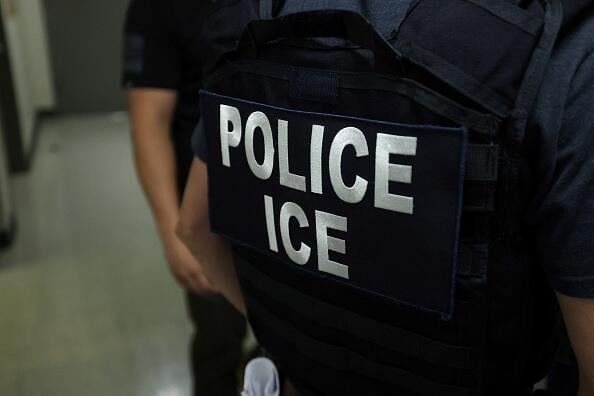
    Florida State College at Jacksonville has signed an agreement with U.S. Immigration and Customs Enforcement to allow its campus police department to enforce immigration laws.

    An ICE database shows the agreement is still pending.

    FSCJ joins more than a dozen other public institutions in Florida that struck similar agreements with ICE earlier this year, part of the state’s crackdown on immigration under Republican governor Ron DeSantis. 

    While police agencies in a number of other states have signed on to participate in the federal government’s immigration enforcement actions, the only campus police forces to join the effort are located in Florida, according to an ICE database that lists partners that have finalized agreements with the federal agency.

    College officials previously told the local news outlet Jax Today that they were under the impression that FSCJ’s police department was too small to be considered for an agreement with ICE. However, spokesperson Jill Johnson told Inside Higher Ed by email that is not the case.

    “Initially we thought that our police department was not large enough,” Johnson wrote. “This changed last week when we were notified that our officers were in fact eligible to go through the federal training necessary to be able to work with ICE officials, should the need arise.”

    Source link

  • The Value of Higher Education: An Unexpected Partisan Agreement

    The Value of Higher Education: An Unexpected Partisan Agreement

    Title: Varying Degrees 2025: Americans Find Common Ground in Higher Education

    Authors: Sophie Nguyen, Olivia Sawyer, Olivia Cheche

    Source: New America

    New America’s ninth annual survey on higher education in America found that despite the politicization and polarization of higher education, Americans are united in their understanding of the importance and value of a college degree.

    Varying Degrees 2025: Americans Find Common Ground in Higher Education report found more agreements than differences between Democrats and Republicans.

    Key report findings include:

    • Nine out of ten Americans believe colleges are responsible for equipping students for career success. Americans widely agree colleges are also responsible for bolstering a student’s writing and communication skills.
    • While about 40 percent of Americans believe the state of education is fine how it is, there are partisan differences across those who report seeing positive effects. Nearly three-fourths (74 percent) of Democrats see positive effects of higher education, in contrast with only 39 percent of Republicans.
    • Seventy-three percent of Americans believe college is worth the investment and needed to be successful in life. However, this belief in return on investment changes greatly depending on the type of college discussed. Many Americans think highly of community colleges, a majority think public colleges and universities are worth the investment, and significantly less believe in the cost of private colleges – especially private for-profit institutions. Regardless of degree type, two in three Americans believe it is easier to find a well-paying job with some college education.
    • Half of Americans surveyed believe college is unaffordable. The report finds that both Democrats and Republicans believe the cost of college is a major issue. Both parties identify the cost of college as one of the main reasons students choose not to enroll in postsecondary education.
    • Over 70 percent of Americans believe the government should invest more tax dollars on postsecondary education. Although there is a larger partisan divide on this belief – most Democrats (91 percent) and Republicans (58 percent) agree in the federal government’s responsibility to make higher education more affordable.

    Varying Degrees 2025 concludes that despite unprecedented legislation effecting higher education, targeted attacks on institutions of higher education from the White House, and media polarization of postsecondary education – Americans largely believe in the value of a college education.

    Read the full report here.

    —Harper Davis


    If you have any questions or comments about this blog post, please contact us.

    Source link

  • Columbia’s Agreement: A Win for Authoritarianism

    Columbia’s Agreement: A Win for Authoritarianism

    Columbia’s Agreement: A Win for Authoritarianism

    Elizabeth Redden

    Fri, 07/25/2025 – 03:00 AM

    The disastrous deal between Columbia and the federal government only strengthens illiberal rule behind a façade of liberal values, Austin Sarat writes.

    Byline(s)

    Source link

  • ‘A dangerous precedent’: Critics slam Columbia’s agreement with Trump administration

    ‘A dangerous precedent’: Critics slam Columbia’s agreement with Trump administration

    This audio is auto-generated. Please let us know if you have feedback.

    Federal officials hope their agreement with Columbia University will be a “template for other universities around the country,” U.S. Education Secretary Linda McMahon said Thursday. 

    Her remarks, made in a NewsNation interview, come as some critics publicly worry that the deal will spur the Trump administration to put financial pressure on other universities. Columbia law professor David Pozen, for instance, wrote in a blog post Wednesday that “the agreement gives legal form to an extortion scheme.”

    Despite praise for the deal from some corners of the university, critics have also accused Columbia of capitulating to the Trump administration’s attacks on higher education.

    The Trump administration has withheld federal funding from a long list of colleges, often claiming they are not doing enough to address antisemitism or otherwise violating civil rights laws. Columbia became the face of those battles in March, when the Trump administration canceled $400 million of the New York institution’s federal grants and contracts. 

    Under the deal reached Wednesday, Columbia agreed to a litany of policy changes and concessions, including paying the federal government $221 million, to settle civil rights investigations and to have the “vast majority” of $400 million in federal grant funding reinstated, according to the university’s announcement.

    Along with having most of the money reinstated, “Columbia’s access to billions of dollars in current and future grants will be restored,” the university said in Wednesday’s announcement. 

    The deal ends the Trump administration’s probes into whether Columbia had failed to protect Jewish students from harassment and the Equal Employment Opportunity Commission’s similar investigation into its treatment of employees. 

    The 22-page agreement is wide-ranging. Columbia agreed to provide the federal government with admissions data on both its accepted and rejected applicants, craft training “to socialize all students to campus norms and values,” and have an independent monitor oversee its compliance with the deal. It also said it would establish processes to ensure students are committed to “civil discourse, free inquiry, open debate, and the fundamental values of equality and respect.”

    Additionally, the university said it would decrease its financial dependence on international students — who make up roughly 40% of enrollment — and ask foreign applicants for their reasons “for wishing to study in the United States.” 

    And Columbia will codify measures it announced in March, which include banning masks meant to conceal one’s identity and having a senior vice provost review programming focusing on the Middle East, including the university’s Center for Palestine Studies; Institute for Israel and Jewish Studies; and Middle Eastern, South Asian, and African Studies. 

    That leader, Miguel Urquiola, will review those and other programs — including their leadership and curriculum — to ensure they are “comprehensive and balanced,” according to the agreement. 

    Columbia also agreed to appoint an administrator to serve as a student liaison to address concerns about antisemitism. That administrator will make recommendations to top officials about how the university can support Jewish students. 

    ‘A dangerous precedent’

    Claire Shipman, Columbia’s acting president, suggested the deal doesn’t undermine the university’s autonomy. “It safeguards our independence, a critical condition for academic excellence and scholarly exploration, work that is vital to the public interest,” she said in a Wednesday statement

    Indeed, the agreement says it does not give the federal government control over the university’s employee hiring, admission decisions or academic speech. 

    However, critics have swiftly and vociferously denounced the deal, arguing that the university has yielded to an authoritarian administration and harmed the higher education sector at large.

    Source link

  • University of Florida Signs Agreement With ICE

    University of Florida Signs Agreement With ICE

    The University of Florida has signed an agreement to partner with U.S. Immigration and Customs Enforcement to help crack down on undocumented students, according to The Independent Florida Alligator, a student publication.

    The Florida Phoenix confirmed the report with a UF spokesperson, who said the university had agreed to deputize campus police as immigration officers but did not provide more details.

    The news broke the day after UF students held a rally on campus to protest the arrest and self-deportation of a Colombian student whom ICE agents stopped in late March for driving with an expired registration.

    UF is not the first institution in the state to commit to working with ICE; Florida Atlantic University signed a similar agreement earlier this month.

    Source link

  • NLRB General Counsel Issues Memo on Recent Severance Agreement Ruling – CUPA-HR

    NLRB General Counsel Issues Memo on Recent Severance Agreement Ruling – CUPA-HR

    by CUPA-HR | March 27, 2023

    On March 22, National Labor Relations Board (NLRB) General Counsel Jennifer Abruzzo issued a memo to all field offices with guidance on the Board’s recent decision in McLaren Macomb, in which the Board decided that employers cannot offer employees severance agreements that require employees to waive rights under the National Labor Relations Act (NLRA), such as confidentiality and non-disparagement requirements. According to the NLRB’s press release, the memo is to be used as guidance to assist field offices responding to inquiries from workers, employers, labor unions and the public about implications stemming from McLaren Macomb.

    The memo offers guidance on the decision’s scope and effect of the McLaren Macomb decision. In the memo, Abruzzo stated that the decision has retroactive application, and she directed employers who may have previously offered severance agreements with “overly broad” non-disparagement or confidentiality provisions to contact employees to advise them that such provisions are now void and will not be enforced. Abruzzo also clarified that confidentiality clauses that are “narrowly tailored” to restricting dissemination of proprietary information or trade secrets may still be lawful “based on legitimate business justifications,” and that non-disparagement clauses that are limited to “employee statements about the employer that meet the definition of defamation as being maliciously untrue (…) may be found lawful.”

    With respect to supervisors, Abruzzo specified that supervisors are not generally protected by the NLRA, but she added that they are protected from retaliation if they refuse to offer a severance agreement with broad non-disparagement or confidentiality provisions to their employees.

    As a reminder, CUPA-HR will be hosting a webinar on the McLaren Macomb decision Thursday, March 30 at 1:00 p.m. ET. The webinar will cover the McLaren Macomb decision and this subsequent memo, and presenters will discuss how the decision may fundamentally change how and when colleges and universities may use confidentiality and non-disparagement provisions. Registration is required for participation, but free to all CUPA-HR members.


    Source link