Tag: Aid

  • Tennessee launches direct admissions pilot with student aid component

    Tennessee launches direct admissions pilot with student aid component

    Dive Brief: 

    • Tennessee is joining the ranks of states with direct admissions programs by launching a pilot this fall that will automatically offer certain high school students spots at the state’s two- and four-year colleges based on their academic records. 
    • The program, led by the Tennessee Higher Education Commission, will pair admissions offers with financial aid information for about half the high school students to test whether that boosts their chances of enrolling
    • In a statement Wednesday, THEC Executive Director Steven Gentile cast the initiative as a way to simplify the path to college. “For the first time in the nation, we are pairing direct admissions with personalized financial aid information, so students not only know where they’ve been accepted — they’ll also know how they can afford to go.”

    Dive Insight: 

    The TN Direct Admissions pilot is to launch in November, when roughly 41,000 students from more than 230 randomly selected high schools in the state will receive letters listing which participating colleges have automatically accepted them. Around half of those students will also get information about available state and institutional financial aid tailored to them based on their GPA, test scores or other criteria. 

    To participate, students will need to complete an application for the Tennessee Promise program by Nov. 1.

    Researchers will use the information from the pilot to study how providing this information influences college-going behavior. 

    They aim to find out whether high school students who receive both financial aid information and direct admissions bids are more likely to attend college than those who just get automatic admissions offers. They will also compare the data against that for students who don’t receive direct admissions letters at all. 

    “Through this study, we will learn not only about the impact of direct admissions and financial aid on students’ college enrollment, but how students feel about their direct admission experience,” Trisha Ross Anderson, a Harvard University researcher working on the project, said in a Wednesday statement. 

    The financial aid component — which THEC said in a Wednesday statement is the first of its kind for a direct admissions program — will inform students of their eligibility for institutional grants and scholarships, as well as for state programs such as the Tennessee Promise. That program covers remaining tuition and fees for students at state community or technical colleges after all other grant aid has been applied.  

    Overall, 53 colleges are participating in the fall pilot. That includes all 13 of the state’s community colleges and its 23 technical colleges, as well as 17 public and private universities. 

    Tennessee joins several other states that have recently launched direct admissions programs. Earlier this year, Illinois Gov. JB Pritzker signed a bill into law to send high school and community college students direct admissions offers to the state’s universities depending on their academic performance. 

    And last October, New York launched an effort to guarantee fall 2025 spots to at least one of its public universities for high school students graduating in the top 10% of their class. The nine initial participating colleges included the state’s two flagships, University at Buffalo and Stony Brook University.

    Source link

  • Higher Education Inquirer : College Financial Aid: How It Really Works

    Higher Education Inquirer : College Financial Aid: How It Really Works

    Crucial Insights: Understanding College Financial Aid Dynamics

    (00:02:56) Variety of College Financial Assistance Options
    (
    00:05:18) Scholarships: Balancing Merit and Financial Need
    (
    00:10:00) Student Selection Strategies in College Admissions
    (
    00:21:40) Financial Aid Strategy at Competitive vs. Smaller Schools
    (
    00:26:29) Major-based Financial Aid Allocation in Colleges

    Source link

  • Increased ID Verification for Financial Aid Raises Questions

    Increased ID Verification for Financial Aid Raises Questions

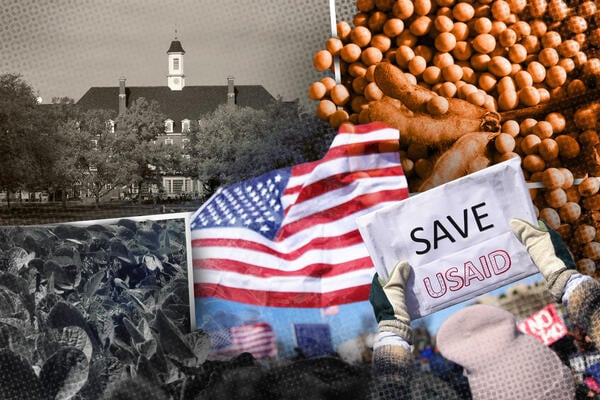
    Photo illustration by Justin Morrison/Inside Higher Ed | michaeljung and robas/iStock/Getty Images

    College financial aid offices and students’ advocates say that a Trump administration plan to crack down on fraud in the federal aid system could burden university staff and hinder access to college programs.

    Although they support fighting fraud as a concept, they particularly worry that real, eligible Pell Grant recipients will get caught up in the detection system and won’t be able to jump through the extra hoops to verify their identity.

    “In general, verification is a little bit of threading the needle between making sure that the right dollars are going to the right students, but also not putting up an inordinate number of barriers, particularly to low-income students, that are insurmountable,” said Karen McCarthy, vice president of public policy and federal relations at the National Association of Student Financial Aid Administrators. “You have to walk a fine line between those two things.”

    Department of Education officials, however, say their plan, announced June 9, is necessary to protect American taxpayers from theft and won’t become a burden for colleges. They aren’t worried about students losing access, either.

    Ultimately, the Trump administration plans to verify the identity of each financial aid applicant with the help of a new system that should be up and running “this fall,” according to the department’s announcement. Before then, the department is planning to screen more first-time applicants for verification—a process that could affect 125,000 students this summer and will be handled by financial aid offices. (About 40,000 students were checked last year, according to a department spokesperson.)

    McCarthy, however, is concerned that if the new system isn’t ready by the fall, “institutions will be assuming this larger burden for a longer, indeterminate amount of time.” The department’s botched launch of the 2024–25 Free Application for Federal Student Aid showed the challenges of standing up new systems quickly, she noted.

    A senior official at the Department of Education told Inside Higher Ed that the Office of Federal Student Aid and the department procurement team are in the process of purchasing an identity-validation product similar to the ones used by financial services companies like banks. The product would be incorporated into the online FAFSA portal.

    If an individual is flagged for potential fraud at any point while filling out the form, a pop-up box would appear with a live staff member on the other side, the official explained. The applicant would then be asked to display a government-issued ID. If that ID is deemed valid, the person could then continue.

    “Once that’s done, the process is over,” the official said. “That’s really as simple as that effort is. I believe rental car companies are using it, too.”

    The official was optimistic that the department could have the system up and running by early September, though that won’t be soon enough to get aid disbursed in time for the fall semester. The official also acknowledged that the timeline means that colleges may have to do some verification in person even in the fall, but that process should not be too much of a burden for the college or the student. Similar to the online process, a student would just need to show a valid ID to a college financial aid administrator, either in person or over a video call. Previously, when identity verifications were conducted, students had to present a Statement of Educational Purpose and submit a notarized copy of their identification document.

    But advocacy groups that work with low-income students worry that even requiring a government-issued ID could give some students a leg up over others when it comes to accessing financial aid and affording to enroll in college.

    “We want to see fraud eliminated as much as anyone else … We just need to make sure that gets balanced with a reasonable process for students,” said MorraLee Keller, a senior consultant for the National College Attainment Network. “A lot of low-economic kids may not have secured, for example, a driver’s license. If they don’t drive, they may not have a driver’s license, and that is probably the primary form of a government-issued valid ID that most people would be able to present.”

    Keller noted that some states may have alternate IDs available for those who do not drive, but even that may take time to obtain if a student doesn’t already possess it.

    “We want to make sure that timing doesn’t interrupt the aid getting credited to their account to pay their bills on time so that they could start classes, get refunds to go get their books and all those kinds of things,” she said. “So one of the questions that we still need answered is, what else would be considered a valid ID?”

    The California Community College system, which has grappled with increasing financial aid fraud, recently considered an application fee to help screen legitimate students from fraudsters. A spokesperson for the system said they are waiting on additional guidance from the department before they can know how big a deal this shift will be.

    “We wouldn’t be able to speculate on the level of concern among students and institutions until the federal guidance is known,” she wrote. But “financial aid fraud is a nationwide trend and additional identification verification processes will help in the fight against it.”

    Source link

  • Programs like tutoring in jeopardy after Linda McMahon terminates COVID aid spending extensions

    Programs like tutoring in jeopardy after Linda McMahon terminates COVID aid spending extensions

    This story was originally published by Chalkbeat. Sign up for their newsletters at ckbe.at/newsletters.

    HVAC projects to improve indoor air quality. Tutoring programs for struggling students. Tuition support for young people who want to become teachers in their home communities.

    More News from eSchool News

    Almost 3 in 5 K-12 educators (55 percent) have positive perceptions about GenAI, despite concerns and perceived risks in its adoption, according to updated data from Cengage Group’s “AI in Education” research series.

    Our school has built up its course offerings without having to add headcount. Along the way, we’ve also gained a reputation for having a wide selection of general and advanced courses for our growing student body.

    When it comes to visual creativity, AI tools let students design posters, presentations, and digital artwork effortlessly. Students can turn their ideas into professional-quality visuals, sparking creativity and innovation.

    Ensuring that girls feel supported and empowered in STEM from an early age can lead to more balanced workplaces, economic growth, and groundbreaking discoveries.

    In my work with middle school students, I’ve seen how critical that period of development is to students’ future success. One area of focus in a middle schooler’s development is vocabulary acquisition.

    For students, the mid-year stretch is a chance to assess their learning, refine their decision-making skills, and build momentum for the opportunities ahead.

    Middle school marks the transition from late childhood to early adolescence. Developmental psychologist Erik Erikson describes the transition as a shift from the Industry vs. Inferiority stage into the Identity vs. Role Confusion stage.

    Art has a unique power in the ESL classroom–a magic that bridges cultures, ignites imagination, and breathes life into language. For English Language Learners (ELLs), it’s more than an expressive outlet.

    In the year 2025, no one should have to be convinced that protecting data privacy matters. For education institutions, it’s really that simple of a priority–and that complicated.

    Teachers are superheroes. Every day, they rise to the challenge, pouring their hearts into shaping the future. They stay late to grade papers and show up early to tutor struggling students.

    Want to share a great resource? Let us know at [email protected].

    Source link

  • Education Department plans to propose regulatory changes to student aid programs

    Education Department plans to propose regulatory changes to student aid programs

    This audio is auto-generated. Please let us know if you have feedback.

    The U.S. Department of Education plans to propose changes to student aid regulations, including those governing the Public Service Loan Forgiveness Program and two income-driven repayment plans, it announced Thursday. 

    Under a process called negotiated rulemaking, the Education Department intends to bring together representatives from different factions of the higher education sector to hash out the details of new regulations

    If the representatives reach consensus on new policies, the negotiated rulemaking process requires the Education Department to adopt their regulatory language in its proposal, except in limited circumstances. If negotiators don’t reach agreement, however, the agency is free to write its own rules. 

    Before that process begins, the Education Department said it will seek public feedback on “deregulatory ideas” for Title IV student aid programs. 

    This process will focus on how the Department can rightsize Title IV regulations that have driven up the cost of college and hindered innovation,” Acting Under Secretary James Bergeron said in a statement. “Not only will this rulemaking serve as an opportunity to identify and cut unnecessary red tape, but it will allow key stakeholders to offer suggestions to streamline and improve federal student aid programs.”

    Part of the negotiated rulemaking process will focus on the Public Service Loan Forgiveness program. PSLF, enacted in 2007 by President George W. Bush, forgives the student loan balances of borrowers who make 10 years of payments and hold public service jobs, such as working for the government or a nonprofit. 

    The program has come under fire from President Donald Trump, who signed an executive order last month aiming to limit who is eligible. 

    The order alleges that the PSLF program has “misdirected tax dollars into activist organizations” and tells U.S. Education Secretary Linda McMahon to propose program revisions barring borrowers from receiving forgiveness if they work for organizations that “have a substantial illegal purpose.” 

    The directive also accused the program of providing premature debt relief to borrowers. The Biden administration temporarily relaxed PSLF rules to make it easier for borrowers to receive debt relief through the program, which had extremely high denial rates due to confusing eligibility requirements and chronic loan servicer issues

    Some groups have pushed back on the executive order, arguing that it’s an attempt to revoke student loan forgiveness eligibility for borrowers working for nonprofits with missions that the Trump administration doesn’t support. 

    In a statement, Mike Pierce, executive director of Student Borrower Protection Center, called the order “blatantly illegal and an all-out weaponization of debt intended to silence speech that does not align with President Trump’s MAGA agenda.” 

    The Education Department is also planning to review regulations for two income-driven repayment plans: Pay as You Earn and Income-Contingent Repayment. 

    The agency restored the ability for borrowers to enroll in these programs late last month after previously taking down the online application forms. The freeze on the programs came in response to an appeals court ruling blocking a Biden-era income-driven repayment plan — Saving on a Valuable Education. 

    The suspension of the plans drew a legal challenge from the American Federation of Teachers. The Education Department restored access to them less than a day after the union petitioned a judge for emergency intervention, according to a news release. 

    Plans for negotiated rulemaking come amid the Trump administration’s move to dismantle the Education Department and move its responsibilities to other agencies.

    For example, Trump said he plans to move the department’s student loan portfolio to the newly-downsized Small Business Administration. Both conservatives and liberals have expressed concern that the SBA won’t have the staff or expertise to perform the job. 

    Fully eliminating the Education Department would require congressional approval.

    Source link

  • How cuts at U.S. aid agency hinder university research

    How cuts at U.S. aid agency hinder university research

    Peter Goldsmith knows there’s a lot to love about soybeans. Although the crop is perhaps best known in America for its part in the stereotypically bougie soy milk latte, it plays an entirely different role on the global stage. Inexpensive to grow and chock-full of nutrients, it’s considered a potential solution to hunger and malnutrition.

    For the past 12 years, Goldsmith has worked toward that end. In 2013, he founded the Soybean Innovation Lab at the University of Illinois at Urbana-Champaign, and every day since then, the lab’s scientists have worked to help farmers and businesses solve problems related to soybeans, from how to speed up threshing—the arduous process of separating the bean from the pod—to addressing a lack of available soybean seeds and varieties.

    The SIL, which now encompasses a network of 17 laboratories, has completed work across 31 countries, mostly in sub-Saharan Africa. But now, all that work is on hold, and Goldsmith is preparing to shut down the Soybean Innovation Lab in April, thanks to massive cuts to the federal foreign aid funds that support the labs.

    A week into the current presidential administration, Goldsmith received notice that the Soybean Innovation Lab, which is headquartered at the University of Illinois, had to pause operations, cease external communications and minimize costs, pending a federal government review.

    Goldsmith told his team—about 30 individuals on UIUC’s campus that he described as being like family to one another—that, though they were ordered to stop work, they could continue working on internal projects, like refining their software. But days later, he learned the university could no longer access the lab’s funds in Washington, meaning there was no way to continue paying employees.

    After talking with university administrators, he set a date for the Illinois lab to close: April 15, unless the freeze ended after the government review. But no review materialized; on Feb. 26, the SIL received notice its grant had been terminated, along with about 90 percent of the U.S. Agency for International Development’s programs.

    “The University of Illinois is a very kind, caring sort of culture; [they] wanted to give employees—because it was completely an act of God, out of the blue—give them time to find jobs,” he said. “I mean, up until [Jan. 27], we were full throttle, we were very successful, phones ringing off the hook.”

    The other 16 labs will likely also close, though some are currently scrambling to try to secure other funding.

    Federal funding made up 99 percent of the Illinois lab’s funding, according to Goldsmith. In 2022, the lab received a $10 million grant intended to last through 2027.

    Dismantling an Agency

    The SIL is among the numerous university laboratories impacted by the federal freeze on U.S. Agency for International Development funds—an initial step in what’s become President Donald Trump’s crusade to curtail supposedly wasteful government spending—and the subsequent termination of thousands of grants.

    Trump and Elon Musk, the richest man on Earth and a senior aide to the president, have baselessly claimed that USAID is run by left-wing extremists and say they hope to shutter the agency entirely. USAID’s advocates, meanwhile, have countered that the agency instead is responsible for vital, lifesaving work abroad and that the funding freeze is sure to lead to disease, famine and death.

    A federal judge, Amir H. Ali, seemed to agree, ruling earlier this month that the funding freeze is doing irreparable harm to humanitarian organizations that have had to cut staff and halt projects, NPR and other outlets reported. On Tuesday, Ali reiterated his order that the administration resume funding USAID, giving them until the end of the day Wednesday to do so.

    But the administration appealed the ruling, and the Supreme Court subsequently paused the deadline until the justices can weigh in. Now, officials appear to be moving forward with plans to fire all but a small number of the agency’s employees, directing employees to empty their offices and giving them only 15 minutes each to gather their things.

    About $350 million of the agency’s funds were appropriated to universities, according to the Association of Public and Land-grant Universities, including $72 million for the Feed the Future Innovation Labs, which are aimed at researching solutions to end hunger and food insecurity worldwide. (The SIL is funded primarily by Feed the Future.)

    It’s a small amount compared to the funding universities receive from other agencies, like the National Institutes of Health, also the subject of deep cuts by Trump and Musk. But USAID-funded research is a long-standing and important part of the nation’s foreign policy, as well as a resource for the international community, advocates say. The work also has broad, bipartisan support; in fiscal year 2024, Congress increased funding for the Feed the Future Initiative labs by 16 percent, according to Craig Lindwarm, senior vice president for government affairs at the APLU, even in what he characterized as an extremely challenging budgetary environment.

    Potential Long-Term Harms

    Universities “have long been a partner with USAID … to help accomplish foreign policy and diplomatic goals of the United States,” said Lindwarm. “This can often but not exclusively come in the form of extending assistance as it relates to our agricultural institutions, and land-grant institutions have a long history of advancing science in agriculture that boosts yields and productivity in the United States and also partner countries, and we’ve found that this is a great benefit not just to our country, but also partner nations. Stable food systems lead to stable regions and greater market access for producers in the United States and furthers diplomatic objectives in establishing stronger connections with partner countries.”

    Stopping that research has negatively impacted “critical relationships and productivity,” with the potential for long-term harms, Lindwarm said.

    At the SIL, numerous projects have now been canceled, including a planned trip to Africa to beta test a pull-behind combine, a technology that is not commonly used anymore in the U.S.—most combines are now self-propelled rather than pulled by tractor—but that would be useful to farmers in Africa. A U.S. company was slated to license the technology to farmers in Africa, Goldsmith said, but now, “that’s dead. The agribusiness firm, the U.S. firm, won’t be licensing in Africa,” he said. “A good example of market entry just completely shut off.”

    He also noted that the lab closures won’t just impact clients abroad and U.S. companies; they will also be detrimental to UIUC, which did not respond to a request for comment.

    “In our space, we’re well-known. We’re really relevant. It makes the university extremely relevant,” he said. “We’re not an ivory tower. We’re in the dirt, literally, with our partners, with our clients, making a difference, and [that] makes the university an active contributor to solving real problems.”


    Source link

  • Struggling soup kitchens and hospitals in Sudan face uncertainty amid U.S. aid freeze (CBS News)

    Struggling soup kitchens and hospitals in Sudan face uncertainty amid U.S. aid freeze (CBS News)

    When President Trump ordered a 90-day freeze on foreign aid, no one felt the impact more than the people of Sudan. Two years of civil war has left more than 25 million Sudanese starving in what is the largest humanitarian crisis the world has ever seen. Debora Patta reports.

    Source link

  • How foreign aid helps the country that gives it

    How foreign aid helps the country that gives it

    In international relations, nation states vie for power and security. They do this through diplomacy and treaties which establish how they should behave towards one another.

    If those agreements don’t work, states resort to violence to achieve their goals. 

    In addition to diplomatic relations and wars, states can also project their interests through soft power. Dialogue, compromise and consensus are all part of soft power. 

    Foreign assistance, where one country provides money, goods or services to another without implicitly asking for anything in return, is a form of soft power because it can make a needy nation dependent or beholden to a wealthier one. 

    In 2023, the U.S. government had obligations to provide some $68 billion in foreign aid spread across more than 10 agencies to more than 200 countries. The U.S. Agency for International Development (USAID) alone spent $38 billion in 2023 and operated in 177 different countries. 

    Spreading good will through aid

    USAID has been fundamental to projecting a positive image of the United States throughout the world. In an essay published by the New York Times, Samantha Power, the former administrator of USAID, described how nearly $20 billion of its assistance went to health programs that combat such things as malaria, tuberculosis, H.I.V./AIDS and infectious disease outbreaks, and humanitarian assistance to respond to emergencies and help stabilize war-torn regions.

    Other USAID investments, she wrote, give girls access to education and the ability to enter the work force. 

    When President John F. Kennedy established USAID in 1961, he said in a message to Congress: “We live at a very special moment in history. The whole southern half of the world — Latin America, Africa, the Middle East, and Asia — are caught up in the adventures of asserting their independence and modernizing their old ways of life. These new nations need aid in loans and technical assistance just as we in the northern half of the world drew successively on one another’s capital and know-how as we moved into industrialization and regular growth.”

    He acknowledged that the reason for the aid was not totally humanitarian.

    “For widespread poverty and chaos lead to a collapse of existing political and social structures which would inevitably invite the advance of totalitarianism into every weak and unstable area,” Kennedy said. “Thus our own security would be endangered and our prosperity imperilled. A program of assistance to the underdeveloped nations must continue because the nation’s interest and the cause of political freedom require it.” 

    Investing in emerging democracies

    The fear of communism was obvious in 1961. The motivation behind U.S. foreign assistance is always both humanitarian and political; the two can never be separated. 

    Today, the United States is competing with China and its Belt and Road Initiative (BRI) for global influence through foreign assistance. The BRI was started by Chinese President Xi Jinping in 2023. It is global, with its Silk Road Economic Belt connecting China with Central Asia and Europe, and the 21st Century Maritime Silk Road connecting China with South and Southeast Asia and Africa and Latin America.

    Most of the projects involve infrastructure improvement — things like roads and bridges, mass transit and power supplies — and increased trade and investment. 

    As of 2013, 149 countries have joined BRI. In the first half of 2023, a total of $43 billion in agreements were signed. Because of its lending policy, BRI lending has made China the world’s largest debt collector.

    While the Chinese foreign assistance often requires repayment, the United States has dispensed money through USAID with no direct feedback. Trump thinks that needs to be changed. “We get tired of giving massive amounts of money to countries that hate us, don’t we?” he said on 27 January 2024. 

    Returns are hard to see.

    Traditionally, U.S. foreign assistance, unlike the Chinese BRI, has not been transactional. There is no guarantee that what is spent will have a direct impact. Soft power is not quantifiable. Questions of image, status and prestige are hard to measure.

    Besides helping millions of people, Samantha Power gave another more transactional reason for supporting U.S. foreign assistance.

    “USAID has generated vast stores of political capital in the more than 100 countries where it works, making it more likely that when the United States makes hard requests for other leaders — for example — to send peace keepers to a war zone, to help a U.S. company enter a new market or to extradite a criminal to the United States — they say yes,” she wrote.

    Trump is known as a “transactional” president, but even this argument has not convinced him to continue to support USAID. 

    Soft power is definitely not part of his vision of the art of the deal.


    Three questions to consider:

    1. What is “foreign aid”?
    2. Why would one country give money to another without asking for anything in return?
    3. Do you think wealthier nations should be obliged to help poorer countries?


    Source link

  • DOGE temporarily blocked from accessing Education Department student aid data

    DOGE temporarily blocked from accessing Education Department student aid data

    This audio is auto-generated. Please let us know if you have feedback.

    UPDATE: Feb. 12, 2025: The U.S. Department of Education on Tuesday agreed to temporarily block staffers of the Department of Government Efficiency, or DOGE, from accessing student aid information and other data systems until at least Feb. 17. 

    On that date, a federal judge overseeing the case is expected to rule on a student group’s request for a temporary restraining order to block the agency from sharing sensitive data with DOGE. 

    Dive Brief: 

    •  A group representing University of California students filed a lawsuit Friday to block the Elon Musk-led Department of Government Efficiency from accessing federal financial aid data.  
    • The University of California Student Association cited reports that DOGE members gained access to federal student loan data, which includes information such as Social Security numbers, birth dates, account information and driver’s license numbers. 
    • The complaint accuses the U.S. Department of Education of violating federal privacy laws and regulations by granting DOGE staffers access to the data. “The scale of intrusion into individuals’ privacy is enormous and unprecedented,” the lawsuit says. 

    Dive Insight: 

    President Donald Trump created DOGE through executive order on the first day of his second term, tasking the team, led by Tesla co-founder and Trump adviser Musk, with rooting out what the new administration deems as government waste. 

    DOGE has since accessed the data of several government agencies, sparking concerns that its staffers are violating privacy laws and overstepping the executive branch’s power. With the new lawsuit, the University of California Student Association joins the growing chorus of groups that say DOGE is flouting federal statutes. 

    One of those groups — 19 state attorneys general — scored a victory over the weekend. On Saturday, a federal judge temporarily blocked DOGE from accessing the Treasury Department’s payments and data system, which disburses Social Security benefits, tax returns and federal employee salaries. 

    The University of California Student Association has likewise asked the judge to temporarily block the Education Department from sharing sensitive data with DOGE staffers and to retrieve any information that has already been transferred to them. 

    The group argues that the Education Department is violating the Privacy Act of 1974, which says that government agencies may not disclose an individual’s data “to any person, or to another agency,” without their consent, except in limited circumstances. The Internal Revenue Code has similar protections for personal information. 

    “None of the targeted exceptions in these laws allows individuals associated with DOGE, or anyone else, to obtain or access students’ personal information, except for specific purposes — purposes not implicated here,” the lawsuit says. 

    The Washington Post reported on Feb. 3 that some DOGE team members had in fact gained access to “multiple sensitive internal systems, including federal financial aid data, as part of larger plans to carry out Trump’s goal to eventually eliminate the Education Department. 

    “ED did not publicly announce this new policy — what is known is based on media reporting — or attempt to justify it,” Friday’s lawsuit says. “Rather, ED secretly decided to allow individuals with no role in the federal student aid program to root around millions of students’ sensitive records.”

    In response to the Post’s Feb. 3 reporting, Musk on the same day posted on X that Trump “will succeed” in dismantling the agency. 

    Later that week, the Post reported that DOGE staffers were feeding sensitive Education Departmentdata into artificial intelligence software to analyze the agency’s spending. 

    The moves have also attracted lawmakers’ attention. Virginia Rep. Bobby Scott, the top-ranking Democrat on the House’s education committee, asked the Government Accountability Office on Friday to probe the security of information technology systems at the Education Department’s and several other agencies. 

    An Education Department spokesperson said Monday that the agency does not comment on pending litigation. 

    Source link

  • Alumni-in-residence programs aid student development

    Alumni-in-residence programs aid student development

    SDI Productions/E+/Getty Images

    A May 2024 Student Voice survey found 29 percent of students believe their college or university should prioritize or focus more on connecting students to alumni and other potential mentors.

    Colleges and universities often have connections to a wide range of successful graduates who can provide insight and support to current students, but creating organic relationships between the two groups can be a challenge.

    One initiative institutions have undertaken is establishing alumni-in-residence programs to offer career development opportunities for current students.

    How it works: Similar to a formal mentoring program, alumni in residence hold one-on-one conversations with learners to address the student’s career goals and answer questions related to work or life after college.

    The alumni-in-residence program, however, asks alums to serve in a variety of functions, including panel presentations, etiquette dinners and a networking reception, as needed.

    What’s the value: Alumni can offer specific insights into career pathways from their alma mater into their current role, helping highlight the student journey in a unique way. Involving former students in career services can also increase funding and support for the institution. A 2024 survey by Gravyty found alumni who have participated in a mentoring program say they are 200 percent more likely to donate in the future.

    Effective career services can also impact a student’s perception of their institution after graduation; 19 percent of alumni reported receiving strong career support from their institution, and those alumni are 2.8 times more likely to say their degree is worth the tuition, according to the 2023 National Alumni Career Mobility Annual Report.

    A 2025 analysis by Gravyty also found 46 percent of alumni rank career support and networking as the most valuable services their alma mater can provide, yet only 40 percent of engagement programs at universities include mentoring opportunities.

    Who’s doing it: Some of the institutions hosting an alumni-in-residence program include:

    Do you have a career prep tip that might help others encourage student success? Tell us about it.

    Source link