
Tag: air

  • School air quality bill that aims to strengthen EPA oversight reintroduced

    School air quality bill that aims to strengthen EPA oversight reintroduced

    This audio is auto-generated. Please let us know if you have feedback.

    Rep. Paul Tonko, D-N.Y., and Rep. Brian Fitzpatrick, R-Pa., on Wednesday reintroduced bipartisan legislation aimed at protecting students, teachers and others from poor indoor air quality by expanding the role of the U.S. Environmental Protection Agency. 

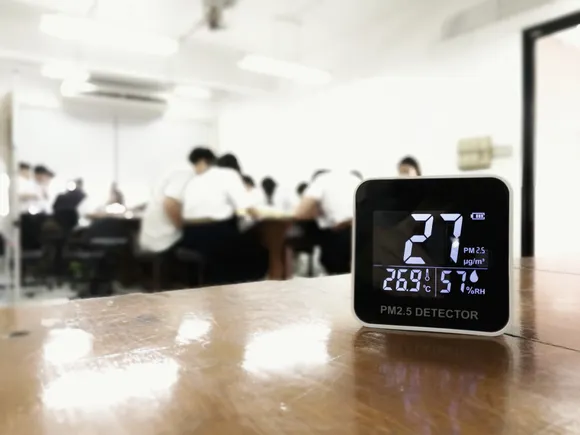
    The Indoor Air Quality and Healthy Schools Act, first introduced in July 2024, would require a nationwide assessment of indoor air quality in schools and childcare facilities and give schools and childcare centers tools to improve IAQ conditions. 

    “No one should have to suffer the consequences of poor indoor air quality, least of all our kids and students seeking an education at school,” Tonko said a statement. “Our bipartisan Indoor Air Quality and Healthy Schools Act protects the health of our communities by establishing science-based guidelines and delivering effective tools and best practices to minimize indoor health risks.” 

    The bill would update, expand and codify the work of EPA’s Indoor Environments Division and direct the agency to develop and recognize one or more voluntary certifications for buildings designed, operated and maintained to prevent or minimize indoor air health risks. 

    “Ultimately, it tries to establish a nationwide assessment of IAQ in schools and childcare facilities,” Jason Hartke, executive vice president of external affairs and global advocacy at the International WELL Building Institute, told Facilities Dive. “It goes back to the old adage that you can’t manage what you don’t measure. As these technologies get better and cheaper, it’s a huge opportunity for folks to tune the environmental quality to human health and well-being.” 

    The EPA’s Science Advisory Board has consistently ranked poor IAQ as a top five environmental risk to public health, with over 3 million people globally dying prematurely each year from disease exposure caused by poor IAQ, according to a fact sheet on the legislation. 

    Progress has been made to address outdoor air pollution, but studies show that indoor air contaminants can be two to five times, and occasionally 100 times, higher than outdoor contaminants, the fact sheet says. 

    The legislation would also support the development of technical assistance, guidelines and best practices to improve the IAQ conditions of schools and childcare facilities.

    “It’s a big deal because it targets some new tools to better assess indoor air quality in our nation’s schools,” said Hartke. “It’s a really powerful bill supported by dozens of organizations. 

    The legislation is supported by the Allergy and Asthma Network, American Federation of Teachers, ASHRAE, International Association of Sheet Metal, Air, Rail and Transportation Workers, IWBI, John Hopkins Center for Health Security and the U.S. Green Building Council, according to the lawmakers’ statements. 

    Source link

  • Students for Fair Admissions drops lawsuits against West Point, Air Force Academy

    Students for Fair Admissions drops lawsuits against West Point, Air Force Academy

    This audio is auto-generated. Please let us know if you have feedback.

    Dive Brief:

    • Students for Fair Admissions has dropped its lawsuits against the U.S. Military Academy at West Point and the U.S. Air Force Academy over race-conscious admissions — practices that are no longer in effect at either institution under the Trump administration.
    • Both academies axed admissions goals based on race, ethnicity and gender shortly after President Donald Trump’s defense secretary, Pete Hegseth, took office. 
    • SFFA had filed the lawsuits after the U.S. Supreme Court in 2023 sided with the anti-affirmative action group in its landmark ruling banning race-conscious admissions at colleges but allowed the practice to continue at military academies.

    Dive Insight:

    In a footnote to Chief Justice John Roberts’ majority opinion in Students for Fair Admissions v. Harvard — the case that ultimately ended decades of race-conscious admissions — the court said the decision did not address the practice at the nation’s military academies.

    While no military academy had been party to the case, the court effectively created a carve-out for race-conscious admissions at the institutions “in light of the potentially distinct interests that military academies may present.”

    In a friend-of-the-court brief to that case, the Biden administration wrote that “the Nation’s military strength and readiness depend on a pipeline of officers who are both highly qualified and racially diverse — and who have been educated in diverse environments that prepare them to lead increasingly diverse forces.”

    After the ruling came down, SFFA soon filed legal challenges against military academies and their race-conscious admissions policies. 

    In its 2023 complaint against West Point, SFFA alleged, “Instead of admitting future cadets based on objective metrics and leadership potential, West Point focuses on race.” 

    The lawsuit further argued: “West Point has no justification for using race-based admissions.” 

    SFFA’s cases against West Point and the Air Force Academy, along with another one against the U.S. Naval Academy, were in progress when Trump retook the presidency in January. 

    The group quickly found it had an ideological ally in the new administration, whose policies reflect SFFA’s goals.

    Hegseth banned race-based admissions at the nation’s military academies in January, days after being sworn in. In doing so, Trump’s defense secretary described diversity initiatives as “incompatible with the values of DoD,adding that “the DoD will strive to provide merit-based, color-blind, equal opportunities to Service members but will not guarantee or strive for equal outcomes.”

    Hegseth has gone much further than just rejecting race-conscious admissions at the academies. Under his leadership, the Pentagon ordered the military academies to purge hundreds of books from their libraries that deal with racism and gender issues, a move that has sparked outcry as well as lawsuits and at least one reversal.

    In June, the Justice Department and SFFA asked that the group’s lawsuit against the Naval Academy be declared moot, after that institution dropped race-conscious admissions under Hegseth’s directive. The case was under appeal at the time, after a federal judge upheld the institution’s policies in December. In July, an appeals court dismissed the case in response to the request from SFFA and the Justice Department.

    SFFA President Edward Blum said in a June statement, “We applaud this extraordinary accomplishment by the President and the Department of Defense which restores the colorblind legal covenant that binds together our military institutions.”

    Source link

  • Harvard: Indoor air quality even more important in early childhood

    Harvard: Indoor air quality even more important in early childhood

    This audio is auto-generated. Please let us know if you have feedback.

    Indoor air pollution has especially powerful effects on babies and young children, not only due to more time spent indoors but because they breathe more rapidly and inhale more air relative to their body size than adults, according to a working paper by the Center on the Developing Child at Harvard University.

    Most spend more than 90% of their time in enclosed buildings, where air pollutants can be two to five times higher than outdoor levels due to poor ventilation, say the researchers, citing estimates from the U.S. Environmental Protection Agency. 

    During early childhood, the amount of time spent inside is also due to the additional time spent in childcare facilities, schools, community centers, summer camp buildings, offices and homes, according to the paper. Elevated levels occur for those during pregnancy as well, the researchers say. 

    One example of volatile organic compounds, or VOCs, commonly found inside children-focused locations stems from the frequent use of cleaning products — particularly scented spray products — that result in a higher risk of wheezing in early childhood and the development of asthma and lower respiratory tract infections in childhood, the researchers say. 

    The paper notes that actionable solutions to improve indoor air quality exist. These range from policy and regulation to pollutant-free cleaners, healthier housing and furniture materials, new building technologies and “simply maintaining and using ventilation systems with high-quality filters.” 

    The EPA defines indoor air quality management as the control of airborne pollutants, introduction and distribution of adequate outdoor air and the maintenance of acceptable temperature and relative humidity. Key pollutants present in children’s environments that can cause serious harm when exposure occurs include VOCs; pesticides, phthalates, forever chemicals and flame retardants; particulate matter; wildfire smoke; germs, viruses, bacteria and allergens; gases; and heat, according to the Harvard research paper. 

    A balanced approach to cleaner indoor air means three approaches: protection, adaptation and prevention, the paper says. Facility managers can protect occupants by monitoring indoor air quality, switching to safer cleaning products, using hooded kitchen exhaust fans that vent to the outside, and utilizing portable, room-based air purifiers with HEPA filters, according to the paper. 

    Adaptation includes the reduction and absorption of emissions by creating vegetation barriers, transitioning to less polluting appliances and by making buildings healthier. According to the Healthy Buildings Program at the Harvard T.H. Chan School of Public Health, an approach to improving air quality includes the use of ventilation that controls indoor sources of pollutants, providing regulation maintenance of ventilation systems and implementing an integrated pest management plan. This plan should focus on preventative measures, such as sealing entry points, preventing moisture buildup and removing trash, according to the paper. 

    Operators should also install and maintain adequate ventilation and filtration systems in schools located in low-income neighborhoods and verify that building systems are operating as designed. The researchers noted that proper maintenance and use of these systems is “surprisingly rare,” citing a California study of schools with recently retrofitted HVAC systems that found only 5% of classrooms met minimum ventilation rates due to improperly selected equipment, incorrect fan control settings and maintenance issues. 

    Prevention measures include policy interventions and the development of health-based regulatory standards for indoor air quality, researchers say.   

    The EPA’s IAQ Tools for Schools program is one resource that operators can use to implement these strategies, including a framework for effective school IAQ management, guidance documents and an IAQ assessment mobile app that can be used to address critical building-related environmental health issues.

    Source link