51,000 alumni weigh in on giving priorities, engagement preferences, and more.
This blog features an excerpt from Howard Heevner, fundraising industry leader and co-author of the 2025 RNL National Alumni Survey.
RNL’s 2025 National Alumni Survey was just released and, while the insights gleaned from this report are always valuable, one could argue that this data is worth its weight in gold during times of extreme uncertainty like we are currently facing in our sector. After all, there are a few universal truths that strategic fundraisers understand, regardless of differing priorities, levels of experience, or overall philosophy:
“Hope”‘” is not a strategy.
Stewardship matters.
You will never regret confirming your flight departure time ahead of an important donor visit…
When in doubt, go straight to the source: your donors.
RNL’s National Alumni Survey gives fundraisers a valuable opportunity to refine their engagement strategies by focusing on what truly matters—understanding donor expectations. By analyzing responses from more than 51,000 alumni across generations and institutions of all types, this report sheds light on alumni sentiments toward their alma maters, their giving priorities, generational volunteer trends, and the motivations behind their contributions of time, talent, and financial support.
Facilitated by RNL’s Sarah Kleeberger, this report also benefits from the expertise of longtime RNL partner and industry leader Howard Heevner. Howard provides both a foreword and conclusion to the report, offering insightful commentary, practical applications, and a forward-looking perspective on the future of donor engagement.
Excerpt from the 2025 RNL National Alumni Survey Report, written by Howard Heevner:
Howard Heevner
As part of RNL’s second annual research study, we are again sharing the collective wisdom of 51,000 alumni representing a broad spectrum of higher education. The opportunity to provide a conduit for these voices to be heard is an honor, and along with the team at RNL, we are excited to share the feedback alumni from 21 institutions.
In higher education, we often spend our time looking inward or looking at other institutions instead of turning to those we wish to connect, engage, and inspire to be in a closer relationship with our institutions. For decades, we have been able to rely on an expectation of loyalty from our alumni because that’s how it’s always been. However, so many factors have changed the nature of that relationship and those expectations. Among them are the rising costs of education, the implied and often explicit promise that degree achievement will provide you with a pass to greater opportunity, and the increasing mistrust of institutions and higher education.
There is a growing concern for our pipeline of donors. We have seen a dramatic decrease in alumni donor counts across the United States over the past three decades. These trends pre-date the pandemic but seem to be exacerbated post-pandemic. Many schools are struggling to acquire new donors and are searching for new methodologies to do so. However, it seems most often we are taking the fractured giving structures that brought us here and bringing those into these new strategies. Maybe the issue isn’t our tools or strategies, but our ability to authentically connect with our alumni.
Since its founding in 1836, the Harvard Alumni Association (HAA) has sought to “renew that interest in Harvard’s welfare and glory which separation and absence have hitherto caused too long and lamentably to slumber.”
Today, as Harvard faces mounting challenges to its foundational commitment to Veritas(Truth) — steadily being replaced, it seems, by Pontius Pilate’s cynical sneer: Quid est veritas? (What is truth?) — a renewed interest among alumni in their alma mater’s “welfare and glory” is more vital than ever.
And the upcoming HAA Board elections offer Harvard alumni the perfect place to start. The task is to elect leaders who will champion free expression, viewpoint diversity, civil discourse, and academic freedom — the very tools that make the pursuit of Veritas possible.
Among the candidates seeking an elected director position, Allison Pillinger Choi, A.B. 2006, stands out with a compelling vision. Under the banner of “Building Balance,” Choi is campaigning for a Harvard where “all truth-seeking ideas — whether conservative, liberal, or otherwise — are heard, valued, and respected.”
Choi’s life story exemplifies the very balance she aims to promote. Born and raised in South Florida to a Korean immigrant mother and a third-generation Jewish American father, she mastered the art of equilibrium early on. This instinct for poise carried her through Harvard, where she balanced an economics degree, Division I varsity tennis, editorship on The Crimson’s business board, and shifts at various Cambridge eateries.
Allison Pillinger Choi with her husband, Brian, and two children in the Dunster House library at Harvard.
After a successful postgraduate career in finance and fitness — balancing checkbooks and barbells — she now lives in New York with her husband and two children while serving on local nonprofit boards dedicated to the arts, civics, and the environment. Most notably, she is the co-founder of Experiment in Dialogue, an initiative promoting conversations across ideological divides.
FIRE recently sat down with Choi to discuss her campaign for the HAA Board, her thoughts on free expression at Harvard, and how she envisions bringing balance to her alma mater. Below is our conversation, edited for readability.
How has your experience at Harvard, both as a student and alum, shaped your views on free expression and intellectual diversity?
As an undergraduate, I sensed unspoken limits on which political views were acceptable. In one instance, I remember taking a class on labor markets where the professor made it clear how he felt about unions. While I respected his research and affable style of teaching, as the daughter of a union worker, I knew the issue was more complex.
My father had explained to me and my brother that while unions can be a force for good, they also have downsides. I knew there was more to the argument than was offered in class, but I didn’t want to cross that invisible line — so I often just stayed quiet, went along with the prevailing view, and answered questions accordingly.
That experience stayed with me. Over the years, as an alum, I’ve heard even more troubling stories — students and faculty feeling pressured to hide their beliefs or adjust how they talk about certain issues to avoid backlash. It made me realize that maybe I was part of the problem by staying silent.
Now, I want to be part of the solution — not only by encouraging people to speak up but also by helping others see that viewpoint diversity is essential for genuine intellectual growth.
Your campaign focuses on “Bringing Balance.” Can you explain what that means and why you think it’s important right now, especially at Harvard?
The theme of my campaign, “Building Balance,” carries several layers of meaning. For one, it’s about fostering a diversity of viewpoints. This doesn’t mean insisting on a strict 50/50 split or symmetrical representation. Rather, it’s about broadening the spectrum of perspectives and opinions. It ensures that a wide range of voices are present. This approach helps prevent institutions from falling into the trap of echo chambers, where only reinforcing viewpoints are heard and where growth is limited.
“Building Balance” also refers to finding stability. Many higher education institutions today are navigating heightened tensions. I believe that embracing viewpoint diversity — by welcoming advocates from various personal and political backgrounds — can contribute to a healthier, more stable environment where all sincere, truth-seeking perspectives are respected and considered.
Finally, “Building Balance” is about recognizing and strengthening the extraordinary elements present at Harvard. It’s not about dismantling, it’s about building upon a strong foundation. I believe that viewpoint diversity, civil discourse, and academic freedom are the foundational elements of our university community, and integral to continued success.
What role do you see alumni playing in promoting free expression and viewpoint diversity at Harvard?
Alumni have numerous ways to contribute to the promotion of free expression and viewpoint diversity at Harvard. One of the most simple and effective actions is to just show up. Attend HAA events and broader Harvard community gatherings that highlight heterodox thinkers and speakers. And why not invite an alumni friend along? Extra credit if that friend brings a different political perspective!
The HAA is always looking for new ways to engage alumni and increase participation. With the growing number of initiatives supporting the classical liberal values of freedom and expression at Harvard, our community has more opportunities for anyone eager to champion viewpoint diversity. As an HAA elected director, I would support and expand these initiatives.
One of the unique — and often overlooked — aspects of being a viewpoint diversity advocate is that there’s no requirement to hold any particular opinion. All that’s needed is curiosity. However, if a viewpoint diversity advocate does have strong convictions, that’s perfectly fine, too. The key is to approach differing views with humility and charity. With these qualities, every alumnus is capable of both promoting and exercising free expression and viewpoint diversity.
Indeed, it’s an “exercise.” As Harvard professor Eric Beerbohm, head of the university’s new Civil Discourse Initiative, aptly puts it, “The ability to engage in empathetic disagreement is like a muscle — it grows stronger with deliberate practice. These kinds of scenarios, where participants are challenged to consider new perspectives and make tough decisions, provide exactly that kind of exercise.”
How can the HAA better engage alumni who feel disconnected or frustrated with the current campus climate?
As an elected director, I would love to help the HAA deepen alumni engagement and re-engage those who feel disconnected or frustrated. One effective approach is to expand the variety of event themes, particularly by hosting panel discussions that feature diverse viewpoints on a range of important topics.
While the panelists would be experts in their fields, each would offer a unique perspective and set of beliefs. The common thread among them would be their shared commitment to open inquiry and civil discourse.
These events could be modeled after the spirit of professor Michael Sandel’s renowned undergraduate course, “Justice,” one of Harvard’s most popular classes. In Sandel’s lectures, he regularly invited professors with opposing viewpoints to debate controversial topics, with the goal of seeking truth. Professors like Sandel understand that complex issues rarely have clear-cut answers.
It is only through the rigorous process of challenging and questioning that we improve our understanding, move closer to truth, and expand our communities. Alumni groups could carry forward Sandel’s legacy of viewpoint diversity by hosting events where renowned thinkers debate significant topics, fostering a space for respectful and productive dialogue among heterodox thinkers and doers.
If elected, what would success look like for you at the end of your term as an elected director?
If elected, success at the end of my three-year term would mean accomplishing at least two key goals. The first would be seeing more HAA volunteers actively contributing to viewpoint diversity initiatives within their areas of interest. With roughly 200 Harvard clubs and 60 shared interest groups covering a range of professional fields, academic disciplines, and personal identity backgrounds, there is so much opportunity to foster diverse perspectives!
While these HAA groups share common interests, each alumnus brings something unique. I believe we can proactively seek and encourage a diversity of viewpoints across our HAA communities.
The second goal is to establish an alumni event series that pays homage to the deep friendship between Justices Ruth Bader Ginsburg and Antonin Scalia — both former Harvard Law students. Their remarkable bond transcended the controversial issues they often disagreed on in their judicial decisions.
United by their shared love of country and opera, among other interests, they demonstrated how mutual respect and admiration can flourish despite ideological differences. I want to celebrate this sentiment through events that feature speakers of opposing views, followed by a post-debate social.
Allison Pillinger Choi’s candidacy for HAA Board is a call to action –– to awaken alumni from their “slumber” and take an interest in the “welfare and glory” of Harvard. If you are a Harvard alum and are interested in supporting Choi’s vision for “Building Balance,” be sure to make your voice heard in this important election.
The HAA Board election begins on April 1 and will remain open until 5 p.m. EST on May 20th. All Harvard degree holders as of Jan. 1, 2025 are eligible to vote. Alumni can cast their ballots online, via the alumni portal, or by paper ballot, which you will receive in the mail, to fill six openings among the HAA elected directors.
With your experience in the education field, you likely understand the benefits of cultivating strong relationships with current members of your school community. What many school administrators and marketers forget is that alumni, though they no longer attend a school, are invaluable to educational marketing strategy and an institution’s overall growth. If you haven’t already, it’s time to examine how your school can build a strong alumni network as part of your marketing efforts and general institutional development.
An alumni network is one of the most valuable assets a school can cultivate. Your graduates are living proof of your programs’ effectiveness. Their journeys from classroom to career serve as compelling testimonials that not only strengthen institutional reputation but also attract prospective students who seek assurance that your school can set them up for success. Join us as we discuss what an effective alumni network should look like, the benefits you can expect, and how to get started.
Struggling with enrollment?
Our expert digital marketing services can help you attract and enroll more students!
What’s an Alumni Network?
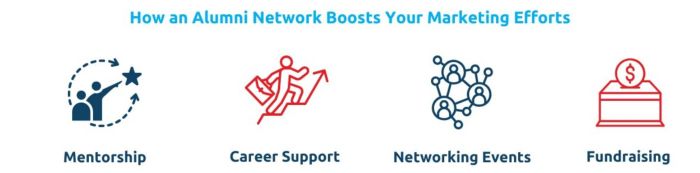
At its core, an alumni network is a community of former students who remain engaged with their alma mater. This engagement can take many forms, from mentorship opportunities and career support to networking events and fundraising initiatives. A well-developed alumni network fosters lifelong connections, enabling graduates to support each other while strengthening the institution that provided their foundation.
Enriching Education: The Power of an Alumni Network
When alumni feel connected to their school, they become brand ambassadors, willingly sharing their success stories and contributing to a culture of loyalty and pride. These graduates are more likely to participate in career panels, donate to scholarship funds, and advocate for your institution within their professional circles. Most importantly, their success becomes a tangible example of your school’s impact, which is a powerful marketing tool in itself.
Alumni relationships create a dynamic ecosystem of support, mentorship, and career growth. So in summary, why is alumni networking important? It plays a crucial role in helping graduates navigate their professional journeys, opening doors to job opportunities, industry insights, and collaborative ventures. An engaged alumni network ensures students are stepping into a lifelong professional community that enhances their career trajectory. For schools, this network fosters goodwill and credibility, proving that your programs produce graduates who thrive in competitive industries.
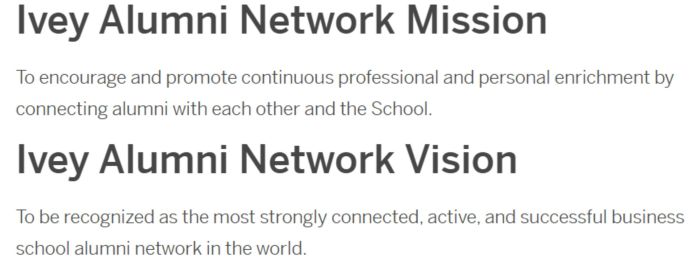
Example:On a dedicated alumni network page on their website, Ivey Business School plainly states the objective of their program” To encourage and promote continuous professional and personal enrichment by connecting alumni with each other and the school”. The alumni network is positioned as a resource for career development and support for graduates.
Source: Ivey Business School
The Unique Marketing Benefits of Alumni Networks
Now that higher education is increasingly competitive, the ability to showcase real-world success is crucial. What is the value of alumni networks when it comes to your marketing strategy? Alumni networks are excellent social proof, providing great opportunities for organic traffic, and showcasing how your school facilitates career development. Here’s how:
Your Alumni Network Offers Valuable Social Proof
In an education marketing context, social proof refers to the credibility and trust institutions build by showcasing the success and satisfaction of their alumni, current students, and faculty. When prospective students see tangible examples of graduates thriving in their careers, testimonials from successful alumni, or high employer satisfaction rates, they gain confidence that choosing your school is a worthwhile investment.
Social proof can take many forms, including video testimonials, alumni spotlights, employer endorsements, rankings, and word-of-mouth referrals. A strong alumni network serves as a powerful form of social proof, demonstrating that your institution provides quality education and equips graduates with the skills, knowledge, and professional connections necessary for long-term success.
Alumni success stories create a compelling narrative that validates the effectiveness of your curriculum, the strength of your career support services, and the credibility of your institution as a whole. Whether through personal testimonials, LinkedIn endorsements, or employer recommendations, alumni reinforce the value of your educational offerings in a way that no traditional marketing message can replicate.
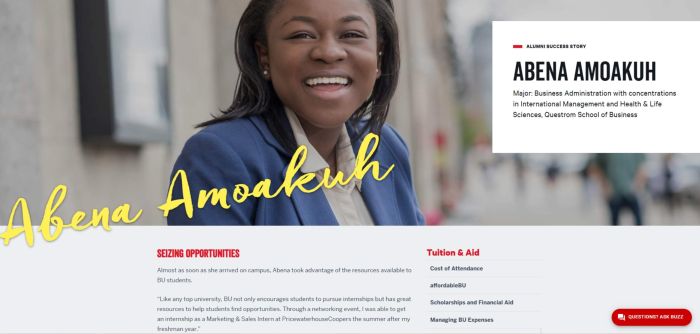
Example:On their website, Boston University showcases alumni success stories that highlight educational and career development opportunities like internships and networking events. The success of graduates provides valuable social proof for prospective students, who can identify with and look up to these role models.
Source: Boston University
Driving Organic Traffic
An engaged alumni network plays a crucial role in generating organic traffic through word-of-mouth marketing. When alumni have a positive experience with your institution, they naturally become enthusiastic advocates, sharing their journey with peers, family members, and colleagues. This organic promotion is highly credible because it comes from real-life experiences rather than institutional messaging.
Beyond personal referrals, alumni contribute to organic traffic through their online presence. When they mention your school on LinkedIn, post about their achievements on social media, or participate in professional discussions related to their field, they create a ripple effect that drives interest in your institution. Schools can amplify this impact by encouraging alumni to tag their alma mater in their career updates, engage in school-sponsored events, and contribute to online discussions within alumni groups.
Additionally, search engines favor authentic, frequently updated content. When alumni success stories are featured on your website, blog, or social media channels, they provide valuable, keyword-rich content that enhances search visibility. Prospective students searching for insights on career outcomes in their chosen field may stumble upon these stories, further reinforcing your school’s credibility and increasing inquiries and applications.
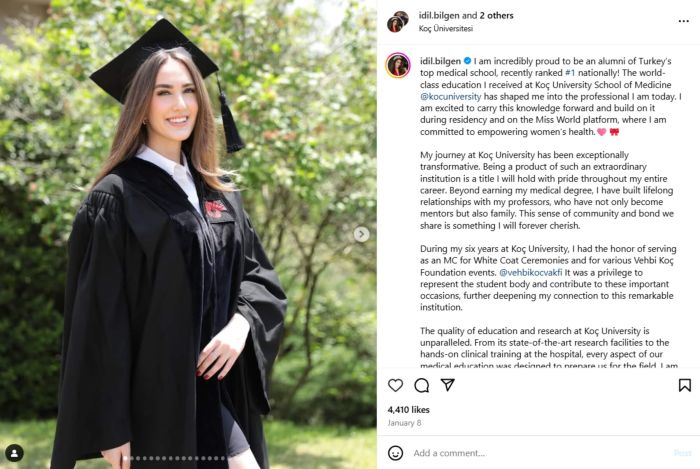
Example: Here an alumni from Koç University in Turkey posts a very valuable testimonial, even tagging her alma mater and citing it as the #1 medical school in the country. In addition to an official alumni network, encouraging UGC from graduates is an effective strategy that comes across as authentic and therefore, trustworthy. Ask alumni to tag your school in graduation posts or list you in the education section of their LinkedIn profiles for organic traffic.
Source: Instagram
Mentorship and Career Services as a Unique Selling Point
An active alumni network can significantly enhance a school’s career services by establishing mentorship opportunities and creating a direct pathway for graduates to secure employment. When alumni hold influential positions in various industries, they become a valuable resource for current students and recent graduates looking to break into their fields. Schools that foster strong alumni engagement can tap into this network to offer students real-world insights, industry-specific guidance, and professional connections that go beyond what traditional career services can provide.
By collaborating with alumni who have become hiring managers, entrepreneurs, or industry leaders, schools can develop a reliable talent pipeline that benefits both graduates and employers. Alumni who feel a deep connection to their alma mater are more likely to offer internship programs, job placements, and networking opportunities tailored specifically to students from their former institution. These partnerships not only enhance job placement rates but also reinforce the credibility of your programs, proving to prospective students that your institution delivers real career outcomes.
Moreover, alumni mentors can serve as role models, helping students navigate their career paths through professional guidance and hands-on training. Schools can structure formal mentorship programs where alumni are paired with students based on career interests, fostering long-term professional relationships that extend well beyond graduation. These interactions boost student confidence, provide practical career advice, and offer an inside look at industry trends and expectations.
When alumni return to recruit from their alma mater, it strengthens the institution’s reputation as a trusted source of skilled professionals. This cyclical relationship, where alumni continuously contribute to the success of new graduates, creates a sustainable ecosystem of career support and growth.
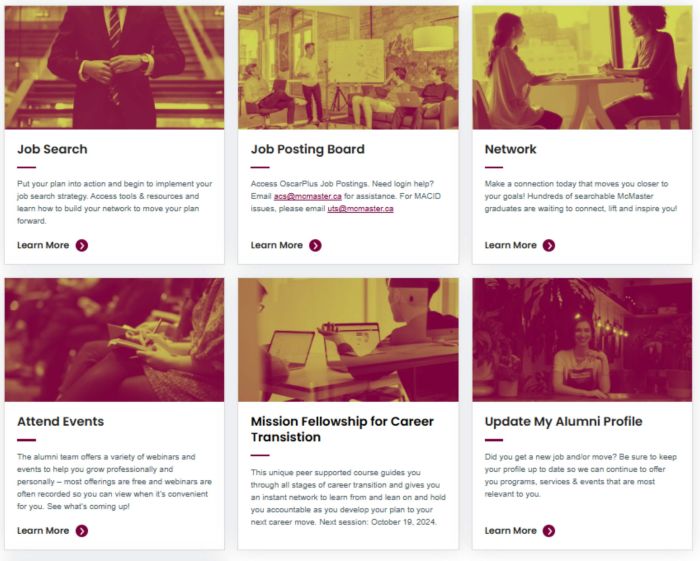
Example: McMaster University has an Alumni Services page that highlights all of the career advantages that come with being part of their alumni network. Be sure to put all of the career benefits that your alumni network offers on full display so that you can leverage them as part of the FAB marketing strategy (features, advantages, and benefits), an effective form of brand storytelling that encourages prospective students to vividly imagine their success at your institution.
Source: McMaster University
Building a Strong Alumni Network
If you want to harness the power of alumni networks, it starts with cultivating meaningful relationships from the moment students enroll. Establishing a culture of connection early on makes it easier to keep graduates engaged long after they receive their diplomas.
One of the most effective ways to build a thriving alumni network is through dedicated alumni associations. These groups should not merely exist on paper but should be actively nurtured with opportunities for engagement, such as career workshops, networking events, and mentorship programs. Leveraging digital platforms, such as LinkedIn and exclusive alumni portals, helps create spaces where former students can stay in touch, share job openings, and collaborate on projects.
Personalized outreach is key to maintaining long-term engagement. Schools that take the time to check in with alumni (through newsletters, exclusive events, or professional development opportunities) demonstrate continued investment in their graduates’ success. This encourages reciprocity, as alumni become more willing to give back, whether through donations, guest lectures, or referrals.
Video testimonials featuring alumni discussing how your programs shaped their careers are incredibly effective. Highlighting their professional achievements, career transitions, and personal growth builds trust with prospective students who are weighing their options. Success stories can be embedded into your website, showcased on social media, and included in email campaigns.
Featuring alumni in live webinars or Q&A sessions allows prospective students to ask direct questions about career outcomes. This real-time engagement adds credibility to your institution’s claims, reinforcing the message that your graduates excel in their fields. Schools that leverage alumni networks in these ways transform passive viewers into engaged applicants.
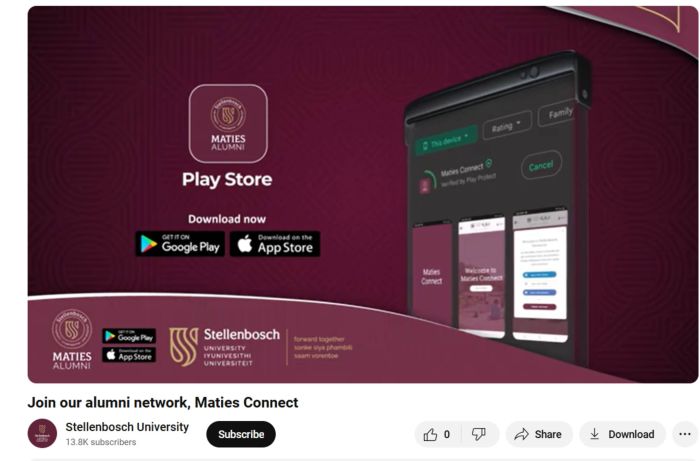
Example: Get creative with your alumni recruitment strategy! Here, Stellenbosch University promotes its alumni network app, Maties Alumni, on YouTube – an exclusive, all-in-one platform for nurturing alumni relationships, career opportunities, mentorship, and personal connections.
Source: Stellenbosch University | YouTube
Elevating Your School’s Reputation Through Alumni Success
Ultimately, the strength of your alumni network is a reflection of the strength of your institution. Schools that prioritize alumni engagement are not only fostering lifelong relationships but are also investing in an authentic, powerful marketing strategy. By celebrating alumni achievements, maintaining strong communication channels, and integrating success stories into recruitment efforts, you can build lasting credibility and attract the next generation of students eager to follow in their graduates’ footsteps.
If your institution is looking for ways to enhance engagement and incorporate alumni networks into your marketing strategy, Higher Education Marketing can help you develop targeted campaigns that amplify your alumni success stories and drive enrollment growth. Your graduates are your greatest success. Make sure their voices are heard!
Struggling with enrollment?
Our expert digital marketing services can help you attract and enroll more students!
Frequently Asked Questions
Question: Why is alumni networking important?
Answer: It plays a crucial role in helping graduates navigate their professional journeys, opening doors to job opportunities, industry insights, and collaborative ventures.
Question: What is the value of alumni networks?
Answer: Alumni networks are excellent social proof, provide great opportunities for organic traffic, and showcase how your school facilitates career development.
While the Black alumni reunion “has always been open to all individuals who have an interest in the event,” read a statement from the university, “based on OCR’s recent guidance related to Title VI compliance, some of the programming historically included in the event may need to be reimagined. The University is obligated to follow OCR’s guidance in order to protect our access to critical federal funding, including students’ continued access to federal financial aid.”
The statement also cited the impact of “proposed State of Ohio legislation,” without specifically mentioning SB 1, a bill the Senate has passed that calls for the elimination of DEI statements, offices and trainings.
“Without question, should this bill pass the House in its current form and be signed into law by the Governor, it will bring changes for all of us,” university president Lori Stewart Gonzalez wrote in an earlier message to the campus community. “However, to define today the specific changes we might make would preempt the legislative process on a bill that is not finalized.”
Still, all signature events planned for Black alumni reunion weekend, which was scheduled for April 10–13 in Athens, were canceled.
“While this is difficult news to share, we remain committed to honoring the legacy and accomplishments of Ohio University’s Black alumni,” said planning committee co-chairs Terry Frazier and Jillian Causey in the statement. “We will continue working with the University to develop a plan that aligns with evolving federal and state guidelines while preserving the significance of this gathering.”
In a time of skyrocketing paper and postage costs, alumni magazines are paradoxically enjoying a renaissance. After cutting back—or cutting down—print issues during the pandemic, many institutions are now pushing for expanded page counts, more copies, better photography, multimedia extras and more institutional support.
Why?
Because audiences appreciate the thought-provoking content and the tangible, premium reminder of the enduring connection with their alma mater. In a 2024 CASE readership survey, 68 percent of TCU Magazine’s readers reported spending 30 minutes or more with every issue. Almost half reported that the magazine was a go-to source for continuing education.
Journalists are pouring their passion and experience into institutional magazines because higher education shines glimmers of hope into an increasingly dark world. They highlight purpose-driven students who will tackle the problems of the future and brilliant faculty whose research is providing innovative solutions to the planet’s most pressing challenges.
Our readership analytics at TCU Magazine have long shown a strong audience appetite for well-researched and carefully written and edited feature stories about forward momentum and its relationship to education. Since 2015, our overall page views have experienced an astounding 1,300 percent growth. That number sounds outlandish, but I can assure you it is accurate.
Our alumni, parents, donors and internal stakeholders are and always have been the primary audiences. But they aren’t the only people who want to know about the students, faculty, staff and initiatives that thrive on our campus. TCU Magazine’s stories are crafted to be relevant far beyond our campus community and long after the initial date of publication.
In 2021, when all the rules were being rewritten, we proposed a partnership with our colleagues in marketing. We suggested a trial run of using existing magazine stories as peer marketing material, promoting those features to internet users who live in the proximity of the country’s top 150 colleges and universities. The goal was for other professionals in higher education to learn about TCU beyond our exceptional student experience and athletic success.
TCU’s marketing director agreed that long-form content could run alongside more traditional digital marketing materials. Why not? Serving stories about improving teacher retirement plans; developing free, open-source digital mapping tools; or better understanding mutations in the BRCA gene benefit us and all manner of readers.
Audiences learn something new and interesting about how research is shaping the future, and we achieve our goal of enhancing TCU’s academic reputation.
Win-win.
Together, we built a partnership with a digital marketing agency based in Fort Worth. With their expert guidance, we got a crash course in the differences between Google Display Network and SEM keywords, Demand Gen ad placements, bidding strategies, and the wisdom of narrowing ad placements in social media feeds.
We launched our first joint academic content campaign in April 2021 with a modest investment. The results were promising: In two months, we got the TCU initials in front of more than six million people around the country and enticed 87,000 of those people to click on the ad and come to the website to read the story.
Best of all, these were what we refer to as quality clicks, because the average reader spent almost two minutes on one of our stories, far above the internet’s long-form content average of less than 40 seconds. That small trial convinced our divisional leaders that magazine material could be marketing gold.
We didn’t need to reinvent the wheel or invest in outside development of marketing-specific content because we had a treasure trove already flowing from a steady creative stream inside our office.
We expanded the efforts in 2022, sharing new stories with 10.5 million pairs of eyes and bringing 116,000 more people to our site to learn about TCU research. That year, we got an email from Puerto Rico about French professor Benjamin Ireland’s research reuniting families torn apart during forced internment during World War II. “I am not sure why Facebook ‘promoted’ your article to me this morning,” the effusive author shared, “but something made me click to read more.”
We’ve continued to grow these campaigns. Though our mission at the magazine is and always will be to serve the TCU community first, we now factor in whether a proposed story might have a broader impact or might help us tell a more expansive tale about how the type of ethical leadership that flourishes here and makes the world a better place.
My opinion is that these campaigns have worked because they’re a perfect merger of marketing and communication. We’re doing what magazine writers and editors have always done—telling authentic stories about real people doing purpose-driven work.
What’s not to like?
Caroline Collier is director of editorial services at Texas Christian University and editor of TCU Magazine.
Late last year, a group of Arizona State University alumni gathered on the rooftop of the Canopy Hotel — high enough to see the headlights snake through the city of Tempe, but low enough to feel the pounding bass line of Mill Avenue’s nightlife.
Though the setting was casual, the conversation was anything but. A simple question had brought them together: What obligations do alumni have to their alma mater?
For most graduates, the answer is simple. Come back for Homecoming, buy the sweatshirt, scribble a check when the fundraising office calls. Thanks for your generosity!Click.
But for the assembled Sun Devils — spanning the classes of ’85 to ’24 — their connection to ASU is more than rah–rah nostalgia. They feel a duty to protect what made the university worth attending in the first place.
And so, that evening, they formed ASU Alumni for Free Speech. Their mission? “To promote and strengthen free expression, academic freedom, and viewpoint diversity, both on campus and throughout the global ASU community.”
The group’s inaugural chairman is Joe Pitts, ASU class of ’23 — whose beard, broad shoulders, and sage intellect belie his youth. For him, alumni should be more than mere spectators or “walking check books,” as he puts it, “endlessly giving and expecting little in return.” Instead, they should be invested stakeholders.
Pitts says it’s now fashionable to view a college diploma as little more than a fancy receipt. People think, I paid my tuition, endured the required courses, and behold: I’m credentialed! A neat little market transaction — no lingering ties, no ongoing investment.
But this mindset, Pitts argues, is both morally bankrupt and pragmatically wrong-headed. As a practical matter, he says, “the value of your degree is tied to the reputation of your school — if your alma mater improves over time, your degree becomes more prestigious. If it declines, so does the respect it commands.”
And in the cutthroat world of status-signaling and social capital that matters — a lot.
ASU alumni have already petitioned the Arizona Board of Regents, urging them to adopt a policy of institutional neutrality, which would prevent the university from taking positions on current political issues and weighing in on the cause-du-jour.
As a moral matter, “spending four years (or even more) at a university inevitably shapes you in some way,” Pitts says. “And in most cases, it’s for the better — even if we don’t exactly realize it at the time.” Think about it: how many unexpected friendships or serendipitous moments of clarity, insight, rebellion, and revelation do we owe our alma mater?
To discard that connection the moment you graduate — to treat it like an expired gym membership — isn’t just ungrateful. It’s a rejection of one’s own formation.
But beyond these considerations, Pitts insists that what united them on the Canopy Hotel rooftop last year was — love, actually. Not the saccharine, Hallmark kind or the fleeting thrill of a Tinder rendezvous, but the sort of love that drives men to build cathedrals and forge legacies.
Echoing St. Thomas Aquinas, Pitts says, “We love ASU, and to love is to will the good of the other — not to sit idly by.” And what is the good? It’s a campus where students unapologetically speak their minds; where professors dare to probe the perilous and the provocative; where administrators resist the temptation to do their best Big Brother impression!
Fortunately for ASU Alumni for Free Speech, their alma mater is already a national leader when it comes to free speech on campus — though, as Pitts notes, that’s “a damn low bar.”
ASU ranks 14 out of 251 schools in FIRE’s 2025 College Free Speech Rankings, and has maintained a “green light” rating from FIRE since 2011, meaning its official policies don’t seriously imperil free expression. In 2018, ASU adopted the Chicago principles, committing to the “free, robust, and uninhibited sharing of ideas” on campus.
The university didn’t stop there. This spring, ASU will launch a Center for Free Speech alongside an annual Free Speech Forum.
But despite these credentials, the specter of censorship still lingers at ASU, and the numbers tell the tale:
68% of ASU students believe shouting down a speaker is at least rarely acceptable.
35% believe violence can sometimes be justified to silence speech.
37% self-censor at least once or twice a month.
Over one-third of surveyed ASU faculty admit to self-censorship in their writing.
And so — like the cavalry cresting the hill — ASU Alumni for Free Speech arrives just in time.
“When controversy inevitably arises on a campus of 100,000 students,” Pitts argues, “the defense of free expression shouldn’t be left solely to outside organizations or political bodies. Instead, those speaking up should be people who genuinely care about ASU and have its best interests at heart.”
ASU Alumni for Free Speech aims to be that voice. “In the long run, we want to have a seat at the table,” Pitts explains. “We want to build relationships not just with the ASU administration but also with the Arizona Board of Regents.”
Along with FIRE, ASU alumni have already petitioned the Arizona Board of Regents, urging them to adopt a policy of institutional neutrality, which would prevent the university from taking positions on current political issues and weighing in on the cause-du-jour.
Pitts and the rest of ASU Alumni for Free Speech are tired of playing cheerleader. They’re here to ensure that ASU flourishes not just today, but for every Sun Devil yet to step onto Palm Walk for the first time.
“Sometimes that may look like applause,” Pitts says. “Other times, that may look like criticism.”
In either case, he insists, it’s an act of love.
If you’re ready to join ASU Alumni for Free Speech, or if you’re interested in forming a free speech alumni alliance at your alma mater, contact Bobby Ramkissoon at [email protected]. We’ll connect you with like-minded alumni and offer guidance on how to effectively protect free speech and academic freedom for all.
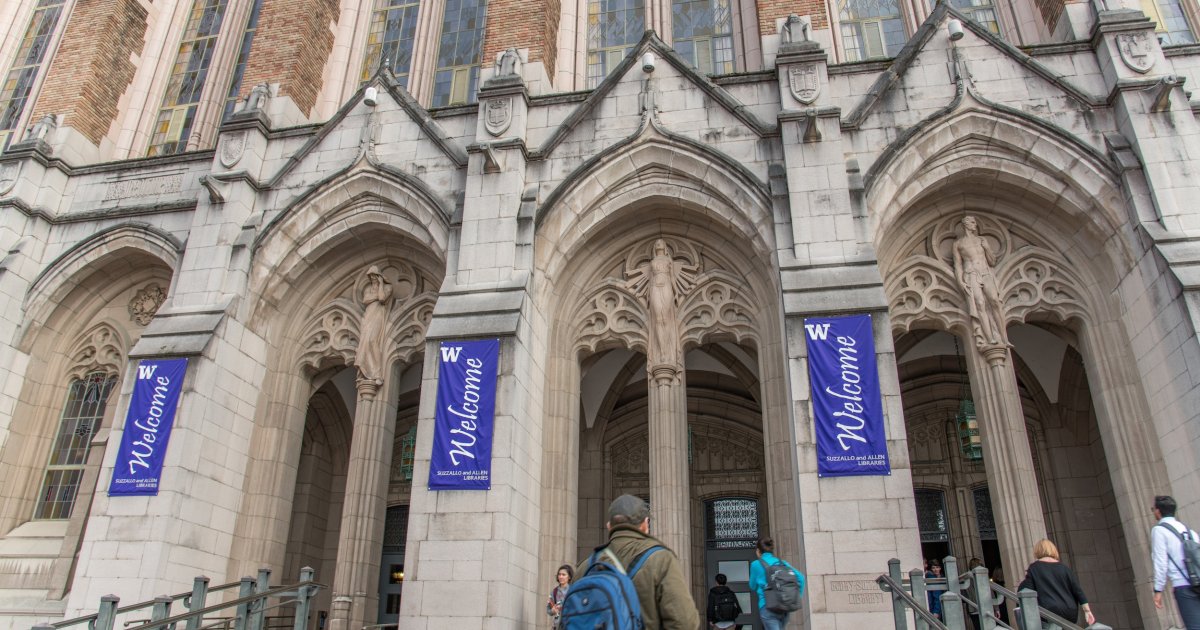
Amid the urban hum of downtown Seattle and the friendly clatter of a FIRE supporters’ meetup, a consequential alliance was born.
Two alumni of the University of Washington, separated by generations but united by a shared purpose, converged in conversation. Cole Daigneault, a freshly minted graduate from the class of 2024, and Bill Severson, a two-time UW graduate who earned his bachelor’s and law degree in the early 1970s, lamented over the encroaching illiberalism at their alma mater.
This new, independent UW alumni group has articulated a mission that is ambitious yet essential: “To reinvigorate free and open academic inquiry and to foster a campus ethos where civil discourse and intellectual courage flourish.”
“My hope with this alumni group,” Daigneault says, “is to rally former UW students, who like me, are concerned about the culture of discourse on campus. The group will also be a place for graduated students to continue the fight long after they leave.”
Daigneault’s early activism was catalyzed by the controversy surrounding UW professor Stuart Reges, whose parody land acknowledgment and subsequent legal battles with the university became a major flashpoint in the free speech landscape. Inspired by Reges’ story — and FIRE’s robust defense of him — Daigneault founded Huskies for Liberty in 2022, a UW student organization devoted to “the preservation of free expression and individual liberty on campus and beyond.”
The fight for free speech on campus, as history has long demonstrated, is never truly won. It must be waged anew by each generation.
Furthermore, through FIRE’s Campus Scholar Program, Daigneault organized “Free Speech Matters,” UW’s first student-led conference devoted to the enduring relevance of free speech, civil discourse, and academic freedom.
Alongside Daigneault, Bill Severson brings over a half-century of legal experience and an unabiding love for his alma mater. His concerns over the state of higher education were sparked by the 2017 debacle at Evergreen State College, where an angry mob of students confronted Professor Bret Weinstein for publicly objecting to a proposal that white students and professors leave campus for Evergreen’s annual “Day of Absence.”
“I was appalled by how that situation was handled,” Severson recounts. “It led me to explore thinkers like Jonathan Haidt and Steven Pinker and organizations like FIRE.”
Severson’s recollections of his time in school are colored with a mixture of nostalgia and grave concern. “When I attended UW in the late 1960s and early 1970s, the atmosphere on campus was markedly different than today. Then, as now, students and faculty leaned left, but it was not a monoculture and there was not such a marked intolerance of other viewpoints.”
The emergent partnership between Daigneault and Severson is not only remarkable, it highlights an enduring truth: The defense of free speech on campus is not a transient endeavor but a generational relay, requiring both the vigor of youth and wisdom of age. One without the other is as useful as a compass without a needle.
Daigneault and Severson’s decision to form Husky Alumni for Academic Excellence is timely, to say the least.
“Last year, free speech became a major campus issue due to widespread protests over the Israel-Hamas War,” Daigneault recalls. “Unfortunately, alongside many instances of protected expression, we also saw a rise in illiberal behaviors, such as shouting down speakers, preventing students from accessing public areas, and even vandalizing historic buildings on campus.”
Daigneault’s reflections are not mere anecdotes. They are substantiated by FIRE’s reports. UW has consistently languished near the bottom of FIRE’s College Free Speech Rankings (in 2022, UW was the lowest ranked public university). And 2024 was not much better: UW ranked 226 out of 257 schools.
The data is grim:
71% of students believe it is sometimes acceptable to shout down a speaker.
30% think using violence to silence a speaker is sometimes acceptable.
50% admit to self-censoring on campus at least once or twice a month.
Among the faculty and administration, the picture is scarcely brighter. According to FIRE’s 2024 Faculty Survey Report, over one-third of UW faculty respondents confessed to moderating their writing to avoid controversy, while 40% expressed uncertainty about the administration’s commitment to protecting free speech.
FIRE to Congress: More work needed to protect free speech on college campuses
News
FIRE joined Rep. Murphy’s annual Campus Free Speech Roundtable to discuss the free speech opportunities and challenges facing colleges.
“Educational institutions have lost their way,” he says, though he insists there is still hope. “Alumni can be a force to push schools back toward their mission — promoting honest inquiry, academic excellence, the pursuit of truth, and the dissemination of knowledge.”
In the burgeoning movement of alumni stewardship, Daigneault and Severson offer a clarion call to UW alumni who not only revere the university’s storied past (UW is one of the oldest universities on the West Coast), but also seek to reclaim it against the present maladies of orthodoxy and intellectual timidity.
The fight for free speech on campus, as history has long demonstrated, is never truly won. It must be waged anew by each generation. Daigneault and Severson have valiantly taken up the mantle. The question remains, who will join them?
If you’re ready to join Husky Alumni for Academic Excellence, or if you’re interested in forming a free speech alumni alliance at your alma mater, contact us at [email protected]. We’ll connect you with like-minded alumni and offer guidance on how to effectively protect free speech and academic freedom for all.