Tag: Amendment

  • Wave of state-level AI bills raise First Amendment problems

    Wave of state-level AI bills raise First Amendment problems

    AI is enhancing our ability to communicate, much like the printing press and the internet did in the past. And lawmakers nationwide are rushing to regulate its use, introducing hundreds of bills in states across the country.  Unfortunately, many AI bills we’ve reviewed would violate the First Amendment — just as FIRE warned against last month. It’s worth repeating that First Amendment doctrine does not reset itself after each technological advance. It protects speech created or modified with artificial intelligence software just as it does to speech created without it.

    On the flip side, AI’s involvement doesn’t change the illegality of acts already forbidden by existing law. There are some narrow, well-defined categories of speech not protected by the First Amendment — such as fraud, defamation, and speech integral to criminal conduct — that states can and do already restrict. In that sense, the use of AI is already regulated, and policymakers should first look to enforcement of those existing laws to address their concerns with AI. Further restrictions on speech are both unnecessary and likely to face serious First Amendment problems, which I detail below.

    Constitutional background: Watermarking and other compelled disclosure of AI use

    We’re seeing a lot of AI legislation that would require a speaker to disclose their use of AI to generate or modify text, images, audio, or video. Generally, this includes requiring watermarks on images created with AI, mandating disclaimers in audio and video generated with AI, and forcing developers to add metadata to images created with their software. 

    Many of these bills violate the First Amendment by compelling speech. Government-compelled speech—whether that speech is an opinion, or fact, or even just metadata—is generally anathema to the First Amendment. That’s for good reason: Compelled speech undermines everyone’s right to conscience and fundamental autonomy to control their own expression.

    To illustrate: Last year, in X Corp. v. Bonta, the U.S. Court of Appeals for the Ninth Circuit  reviewed a California law that required social media companies to post and report information about their content moderation practices. FIRE filed an amicus curiae — “friend of the court” — brief in that case, arguing the posting and reporting requirements unconstitutionally compel social media companies to speak about topics on which they’d like to remain silent. The Ninth Circuit agreed, holding the law was likely unconstitutional. While acknowledging the state had an interest in providing transparency, the court reaffirmed that “even ‘undeniably admirable goals’ ‘must yield’ when they ‘collide with the . . . Constitution.’”

    There are (limited) exceptions to the principle that the state cannot compel speech. In some narrow circumstances, the government may compel the disclosure of information. For example, for speech that proposes a commercial transaction, the government may require disclosure of uncontroversial, purely factual information to prevent consumer deception. (For example, under this principle, the D.C. Circuit allowed federal regulators to require disclosure of country-of-origin information about meat products.) 

    But none of those recognized exceptions would permit the government to mandate blanket disclosure of AI-generated or modified speech. States seeking to require such disclosures will face heightened scrutiny beyond what is required for commercial speech.

    AI disclosure and watermarking bills

    This year, we’re also seeing lawmakers introduce many bills that require certain disclosures whenever speakers use AI to create or modify content, regardless of the nature of the content. These bills include Washington’s HB 1170, Massachusetts’s HD 1861, New York’s SB 934, and Texas’s SB 668.

    At a minimum, the First Amendment requires these kinds of regulations to be tailored to address a particular state interest. But these bills are not aimed at any specific problem at all, much less being tailored to it; instead, they require nearly all AI-generated media to bear a digital disclaimer. 

    For example, FIRE recently testified against Washington’s HB 1170, which requires covered providers of AI to include in any AI-generated images, videos, or audio a latent disclosure detectable by an AI detection tool that the bill also requires developers to offer.

    Of course, developers and users can choose to disclose their use of AI voluntarily. But bills like HB 1170 force disclosure in constitutionally suspect ways because they aren’t aimed at furthering any particular governmental interest and they burden a wide range of speech.

    Because no reliable technology exists to detect whether media has been produced by AI, candidates can easily weaponize these laws to challenge all campaign-related media that they simply do not like. 

    In fact, if the government’s goal is addressing fraud or other unlawful deception, there are ways these disclosures could make things worse. First, the disclosure requirement will taint the speech of non-malicious AI users by fostering the false impression that their speech is deceptive, even if it isn’t. Second, bad actors can and will find ways around the disclosure mandate — including using AI tools in other states or countries, or just creating photorealistic content through other means. False content produced by bad actors will then have a much greater imprimatur of legitimacy than it would in a world without the disclosures required by this bill, because people will assume that content lacking the mandated disclosure was not created with AI.

    Constitutional background: Categorical ‘deepfake’ regulations

    A handful of bills introduced this year seek to categorically ban “deepfakes.” In other words, these bills would make it unlawful to create or share AI-generated content depicting someone saying or doing something that the person did not in reality say or do.

    Categorical exceptions to the First Amendment exist, but these exceptions are few, narrow, and carefully defined. Take, for example, false or misleading speech. There is no general First Amendment exception for misinformation or disinformation or other false speech. Such an exception would be easily abused to suppress dissent and criticism.

    There are, however, narrow exceptions for deceptive speech that constitutes fraud, defamation, or appropriation. In the case of fraud, the government can impose liability on speakers who knowingly make factual misrepresentations to obtain money or some other material benefit. For defamation, the government can impose liability for false, derogatory speech made with the requisite intent to harm another’s reputation. For appropriation, the government can impose liability for using another person’s name or likeness without permission, for commercial purposes.

    Misinformation versus disinformation, explained

    Issue Pages

    Confusingly, the terms are used interchangeably. But they are different — and the distinction matters.


    Read More

    Like an email message or social media post, AI-generated content can fall under one of these categories of unprotected speech, but the Supreme Court has never recognized a categorical exception for creating photorealistic images or video of another person. Context always matters.

    Although some people will use AI tools to produce unlawful or unprotected speech, the Court has never permitted the government to institute a broad technological ban that would stifle protected speech on the grounds that the technology has a potential for misuse. Instead, the government must tailor its regulation to the problem it’s trying to solve — and even then, the regulation will still fail judicial scrutiny if it burdens too much protected speech.

    AI-generated content has a wide array of potential applications, spanning from political commentary and parody to art, entertainment, education, and outreach. Users have deployed AI technology to create political commentary, like the viral deepfake of Mark Zuckerberg discussing his control over user data — and for parody, as seen in the Donald Trump pizza commercial and the TikTok account dedicated to satirizing Tom Cruise. In the realm of art and entertainment, the Dalí Museum used deepfake technology to bring the artist back to life, and the TV series “The Mandalorian” recreated a young Luke Skywalker. Deepfakes have even been used for education and outreach, with a deepfake of David Beckham raising awareness about malaria.

    These examples should not be taken to suggest that AI is always a positive force for shaping public discourse. It’s not. But not only will categorical bans on deepfakes restrict protected expression such as the examples above, they’ll face — and are highly unlikely to survive — the strictest judicial scrutiny under the First Amendment.

    Categorical deepfake prohibition bills

    Bills with categorical deepfake prohibitions include North Dakota’s HB 1320 and Kentucky’s HB 21.

    North Dakota’s HB 1320, a failed bill that FIRE opposed, is a clear example of what would have been an unconstitutional categorical ban on deepfakes. The bill would have made it a misdemeanor to “intentionally produce, possess, distribute, promote, advertise, sell, exhibit, broadcast, or transmit” a deepfake without the consent of the person depicted. It defined a deepfake as any digitally-altered or AI-created “video or audio recording, motion picture film, electronic image, or photograph” that deceptively depicts something that did not occur in reality and includes the digitally-altered or AI-created voice or image of a person.

    This bill was overly broad and would criminalize vast amounts of protected speech. It was so broad that it would be like making it illegal to paint a realistic image of a busy public park without obtaining everyone’s consent. Why make it illegal for that same painter to take their realistic painting and bring it to life with AI technology?

    Artificial intelligence, free speech, and the First Amendment

    Issue Pages

    FIRE offers an analysis of frequently asked questions about artificial intelligence and its possible implications for free speech and the First Amendment.


    Read More

    HB 1320 would have prohibited the creation and distribution of deepfakes regardless of whether they cause actual harm. But, as noted, there isn’t a categorical exception to the First Amendment for false speech, and deceptive speech that causes specific, targeted harm to individuals is already punishable under narrowly defined First Amendment exceptions. If, for example, someone creates and distributes to other people a deepfake showing someone doing something they didn’t in reality do, thus effectively serving as a false statement of fact, the depicted individual could sue for defamation if they suffered reputational harm. But this doesn’t require a new law.

    Even if HB 1320 were limited to defamatory speech, enacting new, technology-specific laws where existing, generally applicable laws already suffice risks sowing confusion that will ultimately chill protected speech. Such technology-specific laws are also easily rendered obsolete and ineffective by rapidly advancing technology.

    HB 1320’s overreach clashed with clear First Amendment protections. Fortunately, the bill failed to pass.

    Constitutional background: Election-related AI regulations

    Another large bucket of bills that we’re seeing would criminalize or create civil liability for the use of AI-generated content in election-related communications, without regard to whether the content is actually defamatory.

    Like categorical bans on AI, regulations of political speech have serious difficulty passing constitutional muster. Political speech receives strong First Amendment protection and the Supreme Court has recognized it as essential for our system of government: “Discussion of public issues and debate on the qualifications of candidates are integral to the operation of the system of government established by our Constitution.”

    Under strict scrutiny, prohibitions or restrictions on AI-modified or generated media relating to elections will face an uphill battle.

    As noted above, the First Amendment protects a great deal of false speech, so these regulations will be subject to strict scrutiny when challenged in court. This means the government must prove the law is necessary to serve a compelling state interest and is narrowly tailored to achieving that interest. Narrow tailoring in strict scrutiny requires that the state meet its interest using the least speech-restrictive means.

    This high bar protects the American people from poorly tailored regulations of political speech that chill vital forms of political discourse, including satire and parody. Vigorously protecting free expression ensures robust democratic debate, which can counter deceptive speech more effectively than any legislation.

    Under strict scrutiny, prohibitions or restrictions on AI-modified or generated media relating to elections will face an uphill battle. No elections in the United States have been decided, or even materially impacted, by any AI-generated media, so the threat — and the government’s interest in addressing it — remains hypothetical. Even if that connection was established, many of the current bills are not narrowly tailored; they would burden all kinds of AI-generated political speech that poses no threat to elections. Meanwhile, laws against defamation already provide an alternative means for candidates to address deliberate lies that harm them through reputational damage.

    Already, a court has blocked one of these laws on First Amendment grounds. In a First Amendment challenge from a satirist who uses AI to generate parodies of political figures, a federal court recently applied strict scrutiny and blocked a California statute aimed at “deepfakes” that regulated “materially deceptive” election-related content.

    Election-related AI bills

    Unfortunately, many states have jumped on the bandwagon to regulate AI-generated media relating to elections. In December, I wrote about two bills in Texas — HB 556 and HB 228 — that would criminalize AI-generated content related to elections. Other bills now include Alaska’s SB 2, Arkansas’s HB 1041, Illinois’s SB 150, Maryland’s HB 525, Massachusetts’s HD 3373, Mississippi’s SB 2642, Missouri’s HB 673, Montana’s SB 25, Nebraska’s LB 615, New York’s A 235, South Carolina’s H 3517, Vermont’s S 23, and Virginia’s SB 775.

    For example, S 23, a Vermont bill, bans a person from seeking to “publish, communicate, or otherwise distribute a synthetic media message that the person knows or should have known is a deceptive and fraudulent synthetic media of a candidate on the ballot.” According to the bill, synthetic media means content that creates “a realistic but false representation” of a candidate created or manipulated with “the use of digital technology, including artificial intelligence.”

    Under this bill (and many others like it), if someone merely reposted a viral AI-generated meme of a presidential candidate that portrayed that candidate “saying or doing something that did not occur,” the candidate could sue the reposter to block them from sharing it further, and the reposter could face a substantial fine should the state pursue the case further. This would greatly burden private citizens’ political speech, and would burden candidates’ speech by giving political opponents a weapon to wield against each other during campaign season. 

    Because no reliable technology exists to detect whether media has been produced by AI, candidates can easily weaponize these laws to challenge all campaign-related media that they simply do not like. To cast a serious chill over electoral discourse, a motivated candidate need only file a bevy of lawsuits or complaints that raise the cost of speaking out to an unaffordable level.

    Instead of voter outreach, political campaigning would turn into lawfare.

    Concluding Thoughts

    That’s a quick round-up of the AI-related legislation I’m seeing at the moment and how it impacts speech. We’ll keep you posted!


    Source link

  • Timothy Zick’s ‘Executive Watch’: Introduction – First Amendment News 457

    Timothy Zick’s ‘Executive Watch’: Introduction – First Amendment News 457

    By Timothy Zick, William & Mary Law School Robert & Elizabeth Scott Research Professor and John Marshall Professor of Government and Citizenship.


    I want to thank Ron Collins for inviting me to contribute a regular feature on the Trump administration and the First Amendment. To say I am delighted to be here masks a certain uneasiness with the project. 

    As Ron’s kind introduction noted, six years ago I published a book, “The First Amendment in the Trump Era,” that examined challenges to free speech and press during the 2016 campaign and roughly the first half of the first presidential term for Donald Trump. The fact that there was already enough material by then for a manuscript on the subject was deeply alarming. Matters did not improve. The book was published prior to (among other things) Trump’s threat to use military force to blanketly suppress all Black Lives Matter protests, and before Trump was accused of inciting the January 6 insurrection. 

    Skeptics at the time wondered how long the subject would be relevant — after all, how long could the First Amendment challenges of the “Trump Era” last? With the latest examples of disturbing suppressive actions, we now have at least a partial answer to that question. 

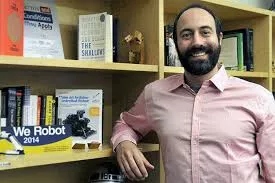
    Prof. Timothy Zick (William and Mary Law School)

    In all of this, it is important to keep at least three preliminary points in mind: First, suppression is not confined to a political party, be it Woodrow Wilson or Richard Nixon, and beyond. Second, since the First Amendment is a constitutional guarantee expressly limiting government power when it comes to free expression and faith, the primary focus is on suppression. Third, in this realm, as with any other controversial one, differences of opinion are inevitable. 

    That said, I have tried to confine my analysis to reasonably demonstrable claims of executive branch overreach and government-related forms of suppression. Although I acknowledge the difficulties in suing a president for First Amendment violations, the present concerns extend to the executive branch as a whole. In any event, I am interested not just in protecting individual rights but also the broader effect of executive actions on First Amendment institutions, values, and principles.

    While presidential actions have historically raised significant First Amendment concerns, the frequency and implications of Trump’s actions in this area are unprecedented. The current Trump administration has been described as “a kind of legal hydra, in which the defenders of the Constitution are facing one body with many heads, and those heads are acting in concert.” 

    While my book focused primarily on Trump, “Executive Watch” will take a broader view of the actions not just of the president himself but those working across the executive branch — as well as those, like Elon Musk and his underlings, who work on Trump’s behalf in a quasi-governmental capacity. While President Trump’s own statements, lawsuits, and executive actions will necessarily be part of the discussion, current threats to free speech and the press emanate from actors, institutions, and agencies beyond the Oval Office. Even early on, the Trump administration has initiated a whole-of-government effort that affects the First Amendment rights and interests of private speakers, reporters, legacy and social media, K-12 teachers and students, university students and faculty, government employees, and the public. 

    Starting to keep a record 

    President Trump’s litany of executive orders, including those relating to free speech and the press, have already received significant attention — some even positive. But given the general character and overall pace of things, it is easy to focus on the moment and miss the broader implications of the present time. When it comes to the First Amendment, in some notable ways the first Trump term and the second are related. However, this time the Trump administration’s actions will often be part of a more comprehensive agenda to challenge, and in some cases upend, bedrock First Amendment principles and values. 

    My hope is that “Executive Watch” will be a valuable resource for those interested in how the administration’s policies affect First Amendment concerns. As Ron notes, it is important that we compile and keep a record of this period for current and future reference. Toward that end, to close out this post I will provide a list of general First Amendment topics, with selected sources concerning each. I will update that repository as events unfold.

    Overview: Eight categories of threats to free expression

    With that introduction, this first installment of “Executive Watch” provides an overview and identifies various categories of First Amendment concerns relating to the Trump administration’s latest agenda. Subsequent contributions (which may be shorter) will place these actions in context and explain how specific executive branch actions relate to broader themes. I might also comment on notable executive policies as they are adopted and implemented, and in which ways they advance or curb free speech freedoms.

    ‘The lawsuit is the punishment’: Reflections on Trump v. Selzer — First Amendment News 453

    Blog

    First Amendment News is a weekly blog and newsletter about free expression issues by Ronald K. L. Collins and is editorially independent from FIRE.


    Read More

    In just a few short weeks, the Trump administration has taken an extraordinary number of actions implicating a range of First Amendment concerns. One of President Trump’s many recent executive orders expresses unwavering support for the First Amendment and promises to end censorship. However, some recent actions by  Trump and his administration are antithetical to those goals.

    1. Threats to the institutional press: “The First Amendment in the Trump Era” identified maintaining a free and independent press as a critically important bulwark against executive abuses of power. That concern has persisted — indeed, it has become more acute. As he did in his first term, Trump has continued to identify many in the institutional press as the “enemy of the American people.” This should not be treated as mere political hyperbole. The Trump administration has promised retribution and is targeting individual journalists. It has threatened to investigate reporters in national security cases, block media mergers, and deny outlets and reporters access to information. There is evidence these threats are already taking a toll on the press’s independence.
    2. Private lawsuits: One of Trump’s preferred strategies for bringing his critics to heel is the private lawsuit. Trump recently sued “60 Minutes” and CBS for allegedly editing an interview with then-Vice President Kamala Harris in ways that obscured or improved her answers to questions, ABC and George Stephanopoulos for statements that Trump had been found liable for rape in a civil case, an Iowa pollster and The Des Moines Register for publishing a flawed poll showing Trump trailing Harris in Iowa, and the Pulitzer Board for recognizing The New York Times for its reporting on the Russia investigation. Fearful of government overreach, some media outlets have already settled defamation lawsuits for millions of dollars, raising serious concerns about press obeisance and lack of independence. High-level executive branch appointees have warned that the press should expect more lawsuits based on allegedly biased or critical press coverage of the administration.
    3. Threats to broadcast media: Broadcast media are also in the Trump administration’s crosshairs. The Federal Communications Commission has instituted investigations of media outlets, ostensibly for violating their obligation to broadcast in the “public interest.” The agency recently compelled CBS to disclose the transcript of the Harris “60 Minutes” interview and is investigating CBS based on that broadcast. Agency officials have also indicated that broadcast licenses may be revoked or suspended based on editorial and advertising activities or simply for alleged “bias.” Trump and his allies have also proposed defunding all public broadcasting, including NPR and PBS, which present educational and other content including shows like “Elmo,” “Big Bird,” and “Fresh Air.”
    4. Threats to digital media: The Trump administration has likewise taken steps to influence and control the digital public sphere. Trump recently extracted a $25 million settlement from Meta (formerly Facebook) for banning him for his false and incendiary posts about the 2020 election. As president, Trump has refused to enforce a law requiring that TikTok divest from Chinese ownership, even though the Supreme Court upheld it. Whatever one makes of that ruling, after Trump’s effort to “save” TikTok, digital media moguls lined up to donate millions of dollars to his inaugural. Social media platforms also changed content moderation policies in ways that facilitate election denial, public health misinformation, and hateful expression. One thing Trump gets right in his executive order on free speech is that governmental efforts to coerce social media companies to remove content is problematic. However, unleashing online disinformation, misinformation, and threatening speech will fundamentally alter the culture of online expression.
    5. Threats to educational institutions: Similarly, the Trump administration has taken steps to control curricular and other expression in the nation’s educational institutions. An executive order calls for withholding federal funding from any K-12 school that teaches that the United States is “fundamentally racist, sexist or otherwise discriminatory.” Another order purports to “end radical indoctrination” in the nation’s K-12 schools by ordering various federal agencies to develop a plan to eliminate federal funding for instruction relating to “gender ideology” or “discriminatory equity ideology.” The same order requires agencies to adopt “patriotic education measures” for use in K-12 schools. The Education Department has also been ordered to scour the nation’s university campuses and classrooms for anti-Semitism and discussions about race, gender identity, and other disfavored topics. President Trump has also ordered the Department of Justice to crack down on student protesters. The federal government has advised universities to monitor the activities of their foreign students studying on visas — so that officials can deport them if they speak out in favor of Palestine or Hamas.
    6. Threats to government employees: Agency actions and executive orders have threatened the speech rights of agency employees and government contractors. There is a widespread effort underway to purge public employees based on their lack of loyalty to Trump, their real or perceived political biases, or their participation in lawful trainings and other activities. FBI employees recently filed privacy and free speech retaliation lawsuits against the Department of Justice, alleging the agency has targeted them for dismissal based on their work investigating January 6 cases. The DOJ has also fired prosecutors for working on January 6 prosecutions. At executive agencies, new rules bar federal employees, contractors, and agency materials from referencing gender identity or fluidity. Executive orders forbid the federal workforce from engaging in events or discussions relating to diversity, equity, and inclusion and even bar employees from using gender identification in email correspondence.
    7. Suppression of vital information: The federal government provides vital information to the public concerning health, the environment, and other matters. Since the election, however, many agency websites have gone dark. The Trump administration has ordered executive agencies to remove information from their websites concerning gender, gender identity, contraception, climate change, and other topics. It has also ordered agency employees not to share the results of their ongoing work and paused federal funding for scientific and other research. Although the executive branch can set agency policies and formulate public messaging, efforts to broadly curtail the public’s access to information affect both the press’s ability to report on such matters and the public’s ability to receive information about public health, the environment, and other topics.
    8. Imposing official orthodoxies and suppressing dissent: Many Trump administration proposals and measures are aimed at imposing an official orthodoxy concerning various topics and issues. Still others target protected political dissent. The administration is seeking to impose official definitions of gender and approved narratives regarding American history, race, and patriotism. Since his first term, President Trump has made no secret of his desire to crack down on protest and dissent. During the 2024 campaign, Trump vowed to “crush” the pro-Palestinian movement. He has long supported making flag burning a crime. Imposing official orthodoxies and suppressing dissent are two of the broad themes that tie many of the Trump administration’s recent actions together. 

    Media on the run: A sign of things to come in Trump times? — First Amendment News 451

    Blog

    First Amendment News is a weekly blog and newsletter about free expression issues by Ronald K. L. Collins and is editorially independent from FIRE.


    Read More

    Below is a topical sampling of reports and commentary about the risks recent Trump administration actions have posed to free expression. 

    Actions against the press and journalists

    Defamation and related lawsuits

    Broadcast and public media

    Social media

    Education

    Public Employees 

    Data, information, and transparency

    Orthodoxy and dissent

    Last scheduled FAN

    FAN 456: “Coming soon: ‘Executive Watch’ — Tracking the Trump Administration’s free speech record

    This article is part of First Amendment News, an editorially independent publication edited by Ronald K. L. Collins and hosted by FIRE as part of our mission to educate the public about First Amendment issues. The opinions expressed are those of the article’s author(s) and may not reflect the opinions of FIRE or Mr. Collins.
    Source link

  • Coming soon: ‘Executive Watch’ — Tracking the Trump Administration’s free speech record — First Amendment News 456

    Coming soon: ‘Executive Watch’ — Tracking the Trump Administration’s free speech record — First Amendment News 456

    To lift a line from the songwriter extraordinaire of our era, “the times they are a- changin’.” Indeed, they are — and this is certainly true in our own corner of the world, the world of free speech. 

    For better and worse, Donald Trump and his agents are rearranging the structure of free expression in America. Only a few weeks into his presidency, things are proceeding at a breakneck speed, with a flurry of executive orders flying out the windows of the White House. Even early on, there is a sense that what will follow may well mark one of those pinpoints in our history when that “experiment” of which Holmes spoke is tested. Whatever else happens, it is important that there is some record of these times and what happened in them. To that end, we will soon launch a new segment within FAN called “Executive Watch” to track it all: the President’s orders, the executive agencies’ actions, the activities of the President’s affiliates, and Mr. Trump’s personal undertakings.

    Enter Professor Timothy Zick, the William and Mary Law School Robert & Elizabeth Scott Research Professor and John Marshall Professor of Government and Citizenship. 

    Prof. Timothy Zick

    Zick is the author of five books on the subject: “Speech out of Doors: Preserving First Amendment Liberties in Public Places,” “The Cosmopolitan First Amendment: Protecting Transborder Expressive and Religious Liberties,” “The Dynamic Free Speech Clause: Free Speech and its Relation to Other Constitutional Rights,” “The First Amendment in the Trump Era,” and “Managed Dissent: The Law of Public Protest.” He is also the co-author of a First Amendment casebook, “The First Amendment: Cases and Theory.”

    For all of the above reasons and others, Professor Zick is well suited to undertake the “Executive Watch” bi-monthly feature of First Amendment News. 

    Even at this early stage, this project comes a time when news stories like the following 21 surface with increasing frequency:


    WATCH VIDEO: Trump Calls For Changes To First Amendment, Demands “Mandatory One-Year In Jail” For U.S. Flag Burning.

    By chronicling such information and then analyzing it, the hope is that our readers will have a more informed sense of the state of free speech at a time when so much is in flux. There is the hope that “Executive Watch” will prompt further discussion of that vital freedom that is at the core of constitutional government in America.

    FBI agents file First Amendment class action

    While FBI agents may be at-will employees who can, generally speaking, be fired for “any reason or no reason,” they can’t be fired for an unconstitutional reason, or as punishment for the exercise of their constitutional rights (e.g. he can’t fire all the African-American agents, or all the agents registered as Democrats).

    The Complaint, filed in DC District Court, is posted here. Plaintiffs are “employees of the FBI who worked on Jan. 6 and/or Mar-a-Lago cases, and who have been informed that they are likely to be terminated in the very near future for such activity.” They “intend to represent a class of at least 6,000 current and former FBI agents and employees who participated in some manner in the investigation and prosecution of crimes and abuses of power by Donald Trump, or by those acting at his behest.”

    Knight Institute on need for fact-checking platform

    [Recently] Meta announced changes . . . to its content moderation policies, including that it’s replacing third-party fact checking with a Community Notes model that allows users to publicly flag content they believe to be incorrect or misleading. 

    The following can be attributed to Katherine Glenn Bass, the Knight Institute’s research director:

    Katy Glenn Bass Research Director Knight Institute

    Katy Glenn Bass

    “Mark Zuckerberg’s announcement today is a stark reminder that many of the biggest platforms we use to communicate about issues of public importance are owned by billionaires who are not accountable to us. Apart from the obvious effort to signal political allegiance, the impact of the announced changes will not be clear for some time. But if we have any hope of measuring or understanding what is happening on these platforms, we need strong protections for the independent researchers and journalists who study them, and better mechanisms for ensuring they can access platform data.”

    In 2019, more than 200 researchers signed an open letter in support of the Knight Institute’s efforts to persuade Facebook to amend its terms of service to establish a “safe harbor” for public-interest journalism and research on the platform. Read more about that effort here.

    Shibley on Harvard’s anti-Semitism settlement

    Robert Shibley

    Robert Shibley

    Just one day after President Trump took office, Harvard agreed to settle two lawsuits brought against it by Jewish students that alleged the university ignored “severe and pervasive anti-Semitism on campus” and created “an unbearable educational environment” in the wake of the October 7, 2023, Hamas attack on Israel and the ongoing war in Gaza.

    While the settlement language itself does not appear to be public, a press release filed on the official docket of The Louis D. Brandeis Center for Human Rights Under Law v. President and Fellows of Harvard College included some details. Most notably, Harvard agreed to adopt the International Holocaust Remembrance Alliance’s (IHRA’s) definition of anti-Semitism. FIRE’s worry, shared by many others — including the definition’s primary author — is that, when added to policies used to punish discriminatory harassment on American campuses, the definition is too likely to be used to punish speech that is critical of Israel or its government but that is not motivated in animus against Jews or Israelis.

    FIRE has repeatedly proposed steps to address anti-Semitic discrimination on campus that would safeguard students from harassment while protecting freedom of speech, most recently in our inauguration-day letter to President Trump. Getting this right is important; any proposal that chills or censors protected speech on campus won’t pass constitutional muster at public universities, won’t square with free speech promises at private universities (like Harvard), and won’t effectively address anti-Semitism.

    Nevertheless, attempts to codify the IHRA definition of anti-Semitism into laws or regulations are nothing new. FIRE posted a roundup of the widespread civil libertarian opposition to its codification last year, when Congress considered adopting it as federal law. Among those opponents is the definition’s primary author, Kenneth Stern, who spoke at length with FIRE’s Nico Perrino on our So to Speak podcast about why it’s not the right tool for the job of regulating speech. As Stern wrote back in 2016 for The New York Times: “The definition was intended for data collectors writing reports about anti-Semitism in Europe. It was never supposed to curtail speech on campus. . . . And Jewish students are protected under the law as it now stands.” (Perhaps “as it is now written” would have been more precise; whether colleges follow the law is a different issue.)

    As Stern predicted in that piece:

    If this bill becomes law it is easy to imagine calls for university administrators to stop pro-Palestinian speech. Even if lawsuits alleging Title VI violations fail, students and faculty members will be scared into silence, and administrators will err on the side of suppressing or censuring speech.

    Stern’s prediction is about to receive ground testing at Harvard, and likely at other universities that may follow its lead.

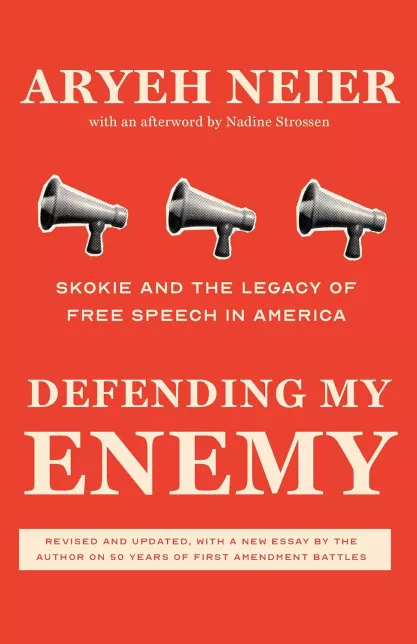
    Forthcoming book: New edition of Neier’s ‘Defending My Enemy’

    A new edition of the most important free speech book of the past half-century, with a new essay by the author on the ensuing fifty years of First Amendment controversies.

    Cover of the book "Defending My Enemy: Skokie and the Legacy of Free Speech in America" by Aryeh Neier

    When Nazis wanted to express their right to free speech in 1977 by marching through Skokie, Illinois — a town with a large population of Holocaust survivors — Aryeh Neier, then the national director of the ACLU and himself a Holocaust survivor — came to the Nazis’ defense. Explaining what many saw as a despicable bridge too far for the First Amendment, Neier spelled out his thoughts about free speech in his 1977 book Defending My Enemy.

    Now, nearly fifty years later, Neier revisits the topic of free speech in a volume that includes his original essay along with an extended new piece addressing some of the most controversial free speech issues of the past half-century. Touching on hot-button First Amendment topics currently in play, the second half of the book includes First Amendment analysis of the “Unite the Right” march in Charlotteville, campus protest over the Israel/Gaza war, book banning, trigger warnings, right-wing hate speech, the heckler’s veto, and the recent attempts by public figures including Donald Trump to overturn the long-standing Sullivan v. The New York Times precedent shielding the media from libel claims.

    Including an afterword by longtime free speech champion Nadine Strossen, Defending My Enemy offers razor-sharp analysis from the man Muck Rack describes as having “a glittering civil liberties résumé.”

    Praise for Defending My Enemy

    “Aryeh Neier’s Defending My Enemy is as relevant today as it was when it was first published. The book is a powerful reminder of why free speech matters—not just for the voices we agree with, but for the voices we abhor. Neier’s story of defending Nazis’ rights to speak in Skokie underscores a timeless truth: If we want to preserve freedom for ourselves, we must be willing to defend it for others, no matter how deeply we disagree. At a time when censorship is on the rise globally, Defending My Enemy stands as a bold and principled call to action. Every advocate of free expression needs to read this book—and more importantly, live its lessons.” — Greg Lukianoff

    Forthcoming scholarly article: ‘Output of machine learning algorithms isn’t entitled to First Amendment protection’

    Stanford Law Review logo

    Machine learning algorithms increasingly mediate our public discourse – from search engines to social media platforms to artificial intelligence companies. And as their influence on online speech swells, so do questions of whether and how the First Amendment may apply to their output. A growing chorus of scholars has expressed doubt over whether the output of machine learning algorithms is truly speech within the meaning of the First Amendment, but none have suggested a workable way to cleanly draw the line between speech and non-speech.

    This Article proposes a way to successfully draw that line based on a principle that we call “speech certainty” – the basic idea that speech is only speech if the speaker knows what he said when he said it. This idea is rooted in the text, history, and purpose of the First Amendment, and built into modern speech doctrines of editorial discretion and expressive conduct. If this bedrock principle has been overlooked, it is because, until now, all speech has been imbued with speech certainty. Articulating its existence was never necessary. But machine learning has changed that. Unlike traditional code, a close look at how machine learning algorithms work reveals that the programmers who create them can never be certain of their output. Because that output lacks speech certainty, it’s not the programmer’s speech.

    Accordingly, this Article contends that the output of machine learning algorithms isn’t entitled to First Amendment protection. With the Supreme Court signaling its intent to address unresolved questions of online speech, we are poised to enter a new era of First Amendment jurisprudence in the coming years. As we do, scholars, practicing attorneys, and judges can no longer ignore how the algorithms underlying online speech actually work – and how they have changed with the advent of machine learning. 

    Without recognizing this paradigm shift in algorithmic speech, we risk sleepwalking into a radical departure from centuries of First Amendment jurisprudence. By failing to distinguish between traditional and machine learning algorithms, current consensus about algorithmic speech suggests that the Constitution should, for the first time in its history, protect speech that a speaker does not know he has said. Speech certainty provides a novel and principled approach to conceptualizing machine learning algorithms under existing First Amendment jurisprudence. 

    Related

    More in the news

    2024-2025 SCOTUS term: Free expression and related cases

    Cases decided 

    • Villarreal v. Alaniz (Petition granted. Judgment vacated and case remanded for further consideration in light of Gonzalez v. Trevino, 602 U. S. ___ (2024) (per curiam))
    • Murphy v. Schmitt (“The petition for a writ of certiorari is granted. The judgment is vacated, and the case is remanded to the United States Court of Appeals for the Eighth Circuit for further consideration in light of Gonzalez v. Trevino, 602 U. S. ___ (2024) (per curiam).”)
    • TikTok Inc. and ByteDance Ltd v. Garland (The challenged provisions of the Protecting Americans from Foreign Adversary Controlled Applications Act do not violate petitioners’ First Amendment rights.)

    Review granted

    Pending petitions

    Petitions denied

    Last scheduled FAN

    FAN 455: “Eight free expression cases pending on SCOTUS docket

    This article is part of First Amendment News, an editorially independent publication edited by Ronald K. L. Collins and hosted by FIRE as part of our mission to educate the public about First Amendment issues. The opinions expressed are those of the article’s author(s) and may not reflect the opinions of FIRE or Mr. Collins.
    Source link

  • Eight free expression cases pending on SCOTUS docket — First Amendment News 455

    Eight free expression cases pending on SCOTUS docket — First Amendment News 455

    Thus far this term, the Supreme Court has rendered judgments in three free speech cases. In two of them, it vacated and remanded the matters for further consideration in light of Gonzalez v. Trevino (2024) (per curiam, First Amendment retaliation claims). In the other case, TikTok Inc. and ByteDance Ltd v. Garland, the Court rejected the First Amendment claim. 

    At this point, the following eight cases remain on the docket and involve everything from student speech to campaign financing to abortion clinic buffer zones and an occupational licensing case, among other things.

    The Eight Cases

    1. The university bias-response teams case

    Issue: Whether university bias-response teams — official entities that solicit anonymous reports of bias, track them, investigate them, ask to meet with the perpetrators, and threaten to refer students for formal discipline — objectively chill students’ speech under the First Amendment.

    Counsel for PetitionerJ. Michael Connolly of Consovoy McCarthy, former Director of the Free Speech Clinic at the Antonin Scalia Law School at George Mason University.

    2. The conversations between counselors and their clients case

    Issue: Whether a law that censors certain conversations between counselors and their clients based on the viewpoints expressed regulates conduct or violates the free speech clause of the First Amendment.

    Counsel for PetitionerJohn J. Bursch of the Alliance Defending Freedom.

    3. The public middle school that censored a T-shirt case

    Issue: Whether school officials may presume substantial disruption or a violation of the rights of others from a student’s silent, passive, and untargeted ideological speech simply because that speech relates to matters of personal identity, even when the speech responds to the school’s opposing views, actions, or policies. 

    Counsel for PetitionerJohn J. Bursch of Alliance Defending Freedom.

    4. The campaign limits on coordinated party expenditures case

    Issue: Whether the limits on coordinated party expenditures in 52 U.S.C. § 30116 violate the First Amendment, either on their face or as applied to party spending in connection with “party coordinated communications” as defined in 11 C.F.R. § 109.37.

    Counsel for PetitionerNoel J. Francisco of Jones Day, former Solicitor General.

    5. The occupational-licensing law case

    Issue: Whether, in an as-applied First Amendment challenge to an occupational-licensing law, the standard for determining whether the law regulates speech or regulates conduct is this Court’s traditional conduct-versus-speech dichotomy.

    Counsel for PetitionerSamuel B. Gedge of the Institute for Justice.

    6. The sidewalk abortion counseling case

    Issue: Whether the court should overrule Hill v. Colorado.

    Counsel for PetitionerPaul D. Clement of Clement & Murphy, also a former Solicitor General.

    7. Another sidewalk abortion counseling case

    Issue: Whether the court should overrule Hill v. Colorado.

    Counsel for PetitionerWalter M. Weber, senior counsel for the American Center for Law and Justice.

    8. The fee to speak to government officials about political issues case

    Issue: Whether — and if so, under what circumstances — the First Amendment permits the government to require ordinary citizens to register and pay a fee to communicate with their government representatives.

    Counsel for PetitionerKyle D. Hawkins of Lehotsky Keller Cohn, who served as a law clerk to Justice Samuel Alito.

    Revenge against political enemies: Executive tactic?

    In his first week in office, President Trump made clear that his promises to exact revenge on his perceived enemies were not empty campaign pledges — and that his retribution is intended not just to impose punishment for the past but also to intimidate anyone who might cross him in the future.

    By removing security protections from former officials facing credible death threats, he signaled that he was willing to impose potentially profound consequences on anyone he sees as having been insufficiently loyal. That included his former secretary of state, Mike Pompeo, and Dr. Anthony S. Fauci, who helped lead the pandemic response.

    Mr. Trump’s decision to try to scale back civil service protections was aimed at culling federal employees he believes slowed or blocked his first-term agenda and replacing them with loyalists.

    [ . . . ]

    [These and other measures taken] together . . . send a clear signal that Mr. Trump feels unconstrained about punishing the disloyal, that he is potentially willing to go further against his enemies than he had pledged on the campaign trail and that there will be a price for any opposition to come.

    Trump video clip


    WATCH VIDEO: Trump speech: ‘Bring back free speech to America’

    Related

    Controlling academic freedom: Another Executive tactic?

    Will Creeley

    FIRE Legal Director Will Creeley

    “There’s kind of a multifront threat right now as to whether or not you can express views that are unpopular with the folks in the White House and executive agencies and continue to enjoy the protections of the First Amendment on academic freedom,” said Will Creeley, legal director of the Foundation for Individual Rights and Expression, which fights both left- and right-wing infringements on free speech.

    [ . . . ]

    Creeley, at the Foundation for Individual Rights and Expression, predicts that many state legislatures, local officials and university trustees are going to enlist, either out of enthusiasm or expediency, in the crusade to bring the academic left to heel. “I think you’ll see professors investigated and terminated. I think you’re going to see students punished, and I think you’re going to see a pre-emptive action on those fronts,” he said.

    Just look at what’s happened at Harvard this week. On Tuesday it announced that, as part of a lawsuit settlement, it would adopt a definition of antisemitism that includes some harsh criticisms of Israel and Zionism, such as holding Israel to a “double standard” and likening its policies to Nazism. Though Harvard claims that it still adheres to the First Amendment, under this definition a student or professor who accuses Israel of genocidal action in Gaza — as the Israeli American Holocaust scholar Omer Bartov has — might be subject to disciplinary action.

    Trump suit against Pulitzer board — Ballard Spahr for the defense

    Charles Tobin lawyer at Ballard Spahr

    Charles Tobin for the defense

    On Monday, the board that awards the Pulitzer Prizes — which Mr. Trump sued in Florida in 2022 for defamation — said that the case should be put on hold because, as Mr. Trump has argued in two other cases, a state court should not be permitted to exert control over a sitting president.

    “Defendants agree,” wrote the law firm representing the board, Ballard Spahr. “To avoid such constitutional conflicts, the court should stay this case until plaintiff’s term in office has concluded.”

    Mr. Trump’s lawsuit accuses the Pulitzer board of defaming him, in essence, by continuing to honor The New York Times and The Washington Post for their coverage of Russian interference in the 2016 presidential election. A state judge in Florida last year cleared the case to proceed toward trial.

    The Pulitzer board’s filing on Monday leaned heavily on statements the president’s legal team had made in other cases. One involved a suit filed in 2017 by Summer Zervos, a former contestant on “The Apprentice” reality show, who accused the president of unwanted sexual advances. Mr. Trump’s team argued that her suit should be thrown out or delayed because dealing with it — including by producing records during discovery or being forced to appear in court — would “disrupt and impair” Mr. Trump’s ability to do his job. (The suit was settled in 2021, after he was out of office.)

    Mr. Trump’s lawyers repeated that argument last week in a different case in Delaware, in which he and his social media company are defendants.

    Excerpt from Trump v. Members of the Pulitzer Prize Board

    [Motion to temporarily stay civil action]

    It is well-established that “a trial court has broad discretion to grant or deny a motion to stay a case pending before it.” Shake Consulting, LLC v. Suncruz Casinos, LLC, 781So. 2d 494, 495 (Fla. 4th DCA 2001) (affirming trial court’s entry of stay). For three reasons, the Court should exercise that discretion and stay this action until Plaintiff’s term in office has concluded.

    First, as Plaintiff himself has argued, and continues to argue, allowing a lawsuit to proceed in state court while a party to that action is the sitting President would invite irresolvable constitutional conflicts arising from the Supremacy Clause.

    Second, the grounds for staying this action are particularly strong because the prize-winning articles concern — and discovery will thus need to probe — Plaintiff’s official actions during his first term.

    Third, entering a stay will not prejudice Plaintiff, whereas denying a stay would pose constitutional issues both by stopping him from seeking to stay future civil litigation that may arise in state court during his presidency and by raising due process concerns for the Defendants.

    Attorneys for the Defendants 

    Nunes loses defamation case

    Nunes and his family’s farm can’t sufficiently show damages, so the court doesn’t have to reach any of the other elements of defamation.

    Related

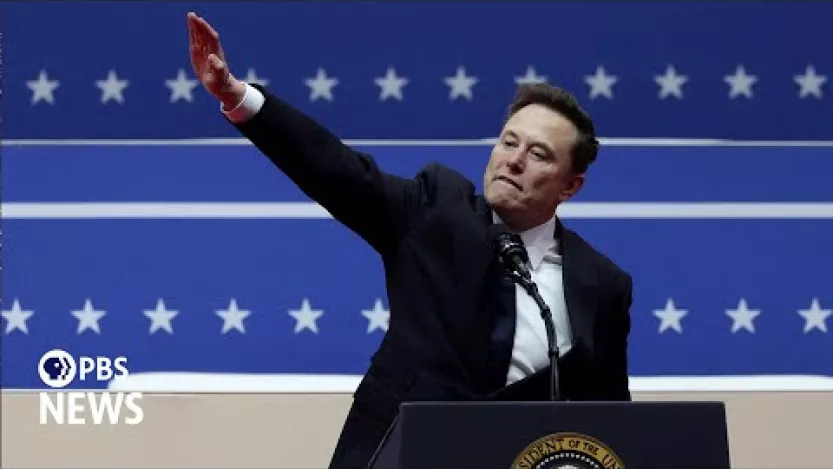
    Protected expression: Elon Musk’s controversial salute


    WATCH VIDEO: Elon Musk appears to give fascist salute during Trump inauguration celebration.

    New scholarly article: Calo on holding social media accountable

    Professor Ryan Calo University of Washington School of Law

    Prof. Ryan Calo

    Plaintiffs are beginning to test the boundaries of tort law once again to fit social media. Seattle and other public-school districts recently sued TikTok, YouTube, and other platforms on the age-old theory of nuisance, arguing that these companies endanger public health by fostering a toxic online environment. When two boys died in a high-speed accident trying to trigger Snapchat’s “Speed Filter,” the Ninth Circuit allowed a cause of action to proceed against the company for negligent design. Snap could be held responsible for the “predictable consequences” of its irresponsible feature, the court reasoned, even though the “Speed Filter” always accompanied user-generated content. Washington election officials successfully sued Facebook, over its Section 230 objection, for failing to keep records on political ads in the state. The emphasis, again, was on Facebook’s own conduct around the ads, rather than the content of the ads themselves.

    There is an admittedly fine line between attributing third party content to the platform, which federal law forbids, and holding the platform accountable for foreseeable harms to people and communities, which tort law encourages. What did TikTok do wrong in Anderson? They did not film or upload a dangerous challenge video, and they cannot be held liable for hosting, distributing, or even recommending it. But has TikTok invested enough time and resources in protecting children on the platform, especially considering what the company knows about the toxic content that appears there?

    Should families like Nylah’s be able to rely upon TikTok’s own community guidelines, which pledge to “[r]estrict content that is not suitable for youth”? Such questions sound less in derivative liability as non- and misfeasance. Section 230 was meant to be a shield, not a shibboleth. Courts should be trying to thread this needle, rather than pretending Section 230 does not exist. Obviously wrong interpretations of Section 230, like the Third Circuit’s in Anderson v. TikTok, Inc., only set the law back.

    Forthcoming scholarly article on AI and free speech

    This paper challenges the assumption that courts should grant outputs from large generative AI models, such as GPT-4 and Gemini, First Amendment protections. We argue that because these models lack intentionality, their outputs do not constitute speech as understood in the context of established legal precedent, so there can be no speech to protect. Furthermore, if the model outputs are not speech, users cannot claim a First Amendment right to receive the outputs.

    We also argue that extending First Amendment rights to AI models would not serve the fundamental purposes of free speech, such as promoting a marketplace of ideas, facilitating self-governance, or fostering self-expression. In fact, granting First Amendment protections to AI models would be detrimental to society because it would hinder the government’s ability to regulate these powerful technologies effectively, potentially leading to the unchecked spread of misinformation and other harms.

    Freedom Forum’s new ad campaign

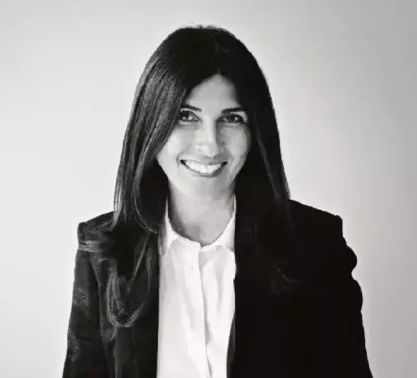
    Barbara Yolles, Ludwig CEO of LUDWIG+

    Barbara Yolles Ludwig, CEO of LUDWIG+

    LUDWIG+, a woman-owned brand actualization and business acceleration agency, is pleased to announce that they have been named as the creative agency for Freedom Forum’s new advertising campaign. Freedom Forum is the nation’s foremost nonpartisan advocate for First Amendment freedoms. As part of this collaboration, LUDWIG+ helped conceptualize and launch “Brought to You By the First Amendment,” a multichannel advertising campaign designed to drive awareness for the everyday freedoms made possible by the First Amendment.

    Today, Freedom Forum launched a dynamic and engaging digital experience with The Onion to further magnify the reach of this campaign. Combining The Onion’s satirical voice with Freedom Forum’s mission to foster First Amendment freedoms for all, this collaboration features onsite and social content strategically created and curated by LUDWIG+. The activation includes several articles published by The Onion that highlight First Amendment freedoms, as well as multiple digital infographics, videos and ad banners that showcase how freedom of speech is central to a thriving and diverse society.

    [ . . . ]

    “It’s an incredible honor to partner with Freedom Forum in championing our First Amendment freedoms and bringing the ‘Brought To You By the First Amendment’ campaign to life,” said Barbara Yolles Ludwig, Founder and CEO of LUDWIG+. “The First Amendment shapes our everyday lives — from the clothes we wear, the music we love, the books we cherish and the beliefs we hold. We look forward to bringing awareness to this paramount mission and the continued success of this campaign.”

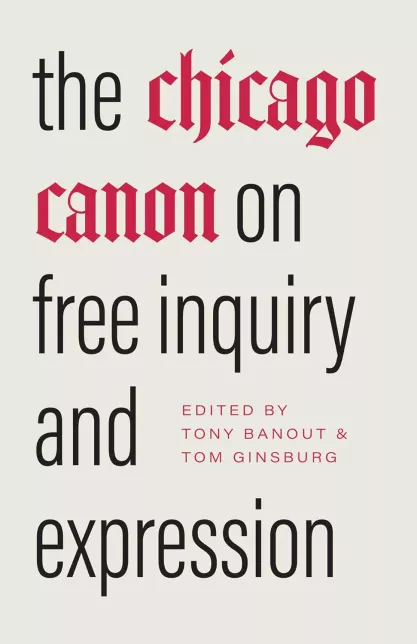
    New Book: The Chicago canon on free inquiry

    A collection of texts that provide the foundation for the University of Chicago’s longstanding tradition of free expression, principles that are at the center of current debates within higher education and society more broadly.

    Cover of "The Chicago Canon on Free Inquiry and Expression" by Tony Banout

    Free inquiry and expression are hotly contested, both on campus and in social and political life. Since its founding in the late nineteenth century, the University of Chicago has been at the forefront of conversations around free speech and academic freedom in higher education. The University’s approach to free expression grew from a sterling reputation as a research university as well as a commitment to American pragmatism and democratic progress, all of which depended on what its first president referred to as the “complete freedom of speech on all subjects.” In 2015, more than 100 years later, then University provost and president J.D. Isaacs and Robert Zimmer echoed this commitment, releasing a statement by a faculty committee led by law professor Geoffrey R. Stone that has come to be known as the Chicago Principles, now adopted or endorsed by one hundred U.S. colleges and universities. These principles are just a part of the long-standing dialogue at the University of Chicago around freedom of expression — its meaning and limits. The Chicago Canon on Free Inquiry and Expression brings together exemplary documents — some published for the first time here — that explain and situate this ongoing conversation with an introductory essay that brings the tradition to light.

    Throughout waves of historical and societal challenges, this first principle of free expression has required rearticulation and new interpretations. The documents gathered here include, among others, William Rainey Harper’s “Freedom of Speech” (1900), the Kalven Committee’s report on the University’s role in political and social action (1967), and Geoffrey R. Stone’s “Free Speech on Campus: A Challenge of Our Times” (2016). Together, the writings of the canon reveal how the Chicago tradition is neither static nor stagnant, but a vibrant experiment; a lively struggle to understand, practice, and advance free inquiry and expression.

    At a time of nationwide campus speech debates, engaging with these texts and the questions they raise is essential to sustaining an environment of broad intellectual and ideological diversity. This book offers a blueprint for the future of higher education’s vital work and points to the civic value of free expression.

    ‘So to Speak’ Podcast: Interview with the editors of ‘The Chicago Canon’

    The University of Chicago is known for its commitment to free speech and academic freedom. Why are these values important to the university? Where do they originate? And how do they help administrators navigate conflicts and controversies?

    Tony Banout and Tom Ginsburg direct the University of Chicago’s Forum for Free Inquiry and Expression, which received a $100 million gift last year. They are also editors of “The Chicago Canon on Free Inquiry and Expression,” a new book that collects foundational texts that inform the university’s free speech tradition.


    WATCH VIDEO: “So to Speak” podcast on the Chicago Canon.

    More in the news


    2024-2025 SCOTUS term: Free expression and related cases

    Cases decided

    • Villarreal v. Alaniz (Petition granted. Judgment vacated and case remanded for further consideration in light of Gonzalez v. Trevino, 602 U.S. ___ (2024) (per curiam))
    • Murphy v. Schmitt (“The petition for a writ of certiorari is granted. The judgment is vacated, and the case is remanded to the United States Court of Appeals for the Eighth Circuit for further consideration in light of Gonzalez v. Trevino, 602 U.S. ___ (2024) (per curiam).”)
    • TikTok Inc. and ByteDance Ltd v. Garland (The challenged provisions of the Protecting Americans from Foreign Adversary Controlled Applications Act do not violate petitioners’ First Amendment rights.)

    Review granted

    Pending petitions 

    Petitions denied

    Last scheduled FAN

    FAN 454: “Trump’s stated promise: ‘Stop all government censorship’ and his free speech Executive Order

    This article is part of First Amendment News, an editorially independent publication edited by Ronald K. L. Collins and hosted by FIRE as part of our mission to educate the public about First Amendment issues. The opinions expressed are those of the article’s author(s) and may not reflect the opinions of FIRE or Mr. Collins.


    Source link

  • Trump’s stated promise: ‘Stop all government censorship’ and his free speech Executive Order — First Amendment News 454

    Trump’s stated promise: ‘Stop all government censorship’ and his free speech Executive Order — First Amendment News 454

    Unprecedented.

    Let’s begin with President Donald Trump’s second inaugural address (Jan. 20), if only to contrast it with last week’s condemnation of his lawsuit against J. Ann Selzer, the Des Moines Register, and its parent company Gannett (see also FAN 451449 and 436). 

    Ready? Here it goes: 

    After years and years of illegal and unconstitutional federal efforts to restrict free expression, I will also sign an executive order to immediately stop all government censorship and bring back free speech to America.

    Never again will the immense power of the state be weaponized to persecute political opponents, something I know something about. We will not allow that to happen. It will not happen again. Under my leadership, we will restore fair, equal, and impartial justice under the constitutional rule of law.

    Never againIt will not happen againStop all government censorship

    And there’s more: When it comes to free speech, all views will be treated with “impartial justice.” Against that promissory note, let us turn to his unprecedented executive order as discussed below.

    Executive Order: Jan. 20, 2025

    By the authority vested in me as President by the Constitution and the laws of the United States of America, and section 301 of title 3, United States Code, it is hereby ordered as follows:

    What follows is a brief description of the Executive Order along with some preliminary comments.

    Section 1. Purpose

    This section opens with an attack on the Biden administration’s alleged “trampl[ing of] free speech rights” when it comes to “online platforms.” Such abridgments, it is asserted, were done in the name of combating “misinformation,” “disinformation,” and “malinformation” in order to advance the Biden administration’s “preferred narrative.” 

    Note at the outset that this section is primarily addressed to reversing the Biden administration’s apparent censorship of online expression. Even so, there is a generalized statement: “Government censorship of speech is intolerable in a free society.”

    Keep that in mind when it comes to what is set out in Section 4 below.

    Section 2. Policy

    This section focuses on four commitments: (i) securing free speech rights of all “American[s]”; (ii) mandating that “no [federal] agent engages in or facilitates” abridgments of free speech; (iii) ensuring that no “taxpayer resources” are used to abridge free speech; and (iv) identify and correct any past federal abridgments of free speech.

    Unlike Section 1, the explicit focus of this section is not confined to any free speech abridgments committed by the previous administration. The focus is on securing free speech rights of “citizens.” Hence, the policy is directed to an affirmative obligation of the Executive branch to protect free speech rights. The operative action words are “secur[ing],” “ensur[ing],” and “identify[ing].”

    Thus, there is a duty to ensure that no federal officers are used or taxpayer dollars expended in violation of the Speech Clause of the First Amendment. Also, unlike Section 1, much of Section 2 applies to all free speech rights and not those confined to social media. There is also a promise to investigate for any and all existing abridgments of free speech committed by “past misconduct by the Federal Government.”

    Section 3. Ending Censorship of Protected Speech

    Like Section 1, this section focuses on the actions of the past administration (i.e., abridgments committed “over the past four years”). This section, unlike section 2, explicitly applies to federal departments and agencies, though it also applies to federal officers, agents and employees. Such agencies and departments must comply with the requirements of Section 2.

    The second portion of this section deals with the investigative powers of the attorney general working “in consultation with the heads of executive departments and agencies.” Again, this investigation is confined to wrongs committed by the past administration. Following such investigations, a “report” shall be submitted to the President suggesting “remedial actions.”

    Much of this section seems repetitive of what is set out in Section 2, save for the references to federal departments and agencies and the need for investigation followed by a report to the President. Note that under Section 3, remedial action is suggested, whereas under Section 4, per this Executive Order, remedial action against the United States and its officers is prohibited.

    Section 4. General Provisions

    In order to appreciate the import of this clause, it is best to quote the final provision (sub-section (c) it in its entirety (with emphasis added):

    This order is not intended to, and does not, create any right or benefit, substantive or procedural, enforceable at law or in equity by any party against the United States, its departments, agencies, or entities, its officers, employees, or agents, or any other person.

    The opening provisions of this Section refer to authorizations of grants of executive power. The Order is to be implemented consistent with the “applicable law and subject to the availability of appropriations.”

    Importantly, While the First Amendment is a prohibition against the federal government and all its officers, this Executive Order:

    1. applies to free speech wrongs committed during “the last 4 years” or “past misconduct by the Federal Government” or abridgments occurring “over the last 4 years,” though there is a passing mention of securing the free speech rights of all “American[s].” 
    2. Yet even as against such past alleged free speech wrongs, the sole remedy is by way of corrective action taken by the Executive Branch. 
    3. If such corrective action, or any other actions taken by Executive officials in pursuance of this Executive Order, themselves abridge First Amendment rights, there is no independent remedy secured by the Order.

    Related

    FIRE weighs in with its own free speech recommendations to the President

    Below are the four general categories of recommendations made (see link above for specifics):

    1. Support the Respecting the First Amendment on Campus Act
    2. Address the abuse of campus anti-harassment policies
    3. Rein in government jawboning
    4. Protect First Amendment rights when it comes to AI

    “As president, Trump inherits the privilege and the obligation to defend the First Amendment rights of all Americans, regardless of their viewpoint — and FIRE stands ready to help in that effort.”

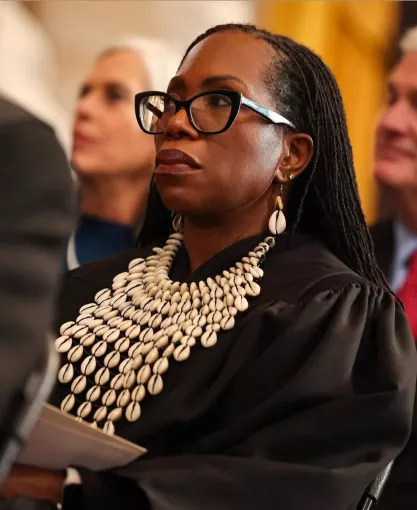
    Justice Ketanji Brown Jackson in free expression mode at the Inauguration?

    Justice Ketanji Brown Jackson at Trump Inauguration in 2024 wearing a distinctive collar adorned with cowrie shells, which are believed to offer protection from evil.

    Justice Ketanji Brown Jackson at the inauguration of Donald Trump on Jan. 20, 2024. (Imagn Images)

    According to Christopher Webb, such “a distinctive collar adorned with cowrie shells . . . are believed to offer protection from evil in African traditions.” (See also, Josh Blackman, “Justice Jackson Did Not Wear a Dissent Collar To The Inauguration. She Apparently Wore a Talisman To Ward Off Evil,” The Volokh Conspiracy (Jan. 21))

    Excerpts from Virginia Court of Appeals decision in Patel v. CNN, Inc.

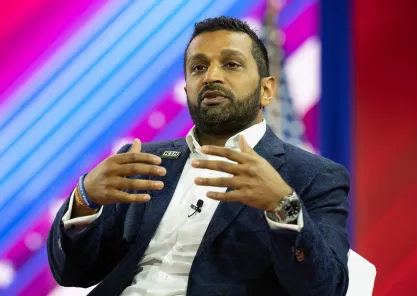
    Kash Patel at the 2023 Conservative Political Action Conference

    Kash Patel, seen here at the 2023 Conservative Political Action Conference, is President Donald Trump’s nominee to head the FBI. (Consolidated News Photos / Shutterstock.com)

    An excerpt from today’s Virginia Court of Appeals decision in Patel v. CNN, Inc., decided by Judge Rosemarie Annunziata, joined by Judge Vernida Chaney (the opinions weigh in at over 12,000 words, so I only excerpt some key passages).

    Abortion picketing case lingers on docket

    The cert. petition in the abortion picketing case, with Paul Clement as lead counsel, has been on the Court’s docket since July 16 of last year. It has been distributed for conferences seven times, the last being Jan. 21. In his petition, Mr. Clement (joined by Erin Murphy) explicitly called on the Court to “overrule Hill v. Colorado.” (See FAN 433, July 31, 2024))

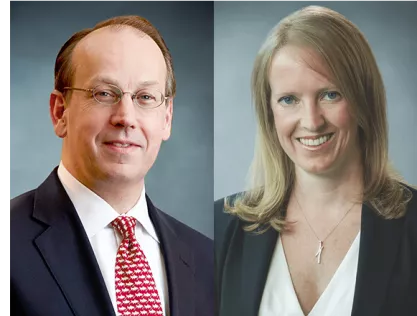
    Paul Clements and Erin Murphy

    Paul Clements and Erin Murphy

    More in the News

    2024-2025 SCOTUS term: Free expression and related cases

    Cases decided 

    • Villarreal v. Alaniz (Petition granted. Judgment vacated and case remanded for further consideration in light of Gonzalez v. Trevino, 602 U. S. ___ (2024) (per curiam))
    • Murphy v. Schmitt (“The petition for a writ of certiorari is granted. The judgment is vacated, and the case is remanded to the United States Court of Appeals for the Eighth Circuit for further consideration in light of Gonzalez v. Trevino, 602 U. S. ___ (2024) (per curiam).”)
    • TikTok Inc. and ByteDance Ltd v. Garland (The challenged provisions of the Protecting Americans from Foreign Adversary Controlled Applications Act do not violate petitioners’ First Amendment rights.)

    Review granted

    Pending petitions

    Petitions denied

    Last scheduled FAN

    FAN 453: “‘The lawsuit is the punishment’: Reflections on Trump v. Selzer

    This article is part of First Amendment News, an editorially independent publication edited by Ronald K. L. Collins and hosted by FIRE as part of our mission to educate the public about First Amendment issues. The opinions expressed are those of the article’s author(s) and may not reflect the opinions of FIRE or Mr. Collins.
    Source link

  • ‘The lawsuit is the punishment’: Reflections on Trump v. Selzer — First Amendment News 453

    ‘The lawsuit is the punishment’: Reflections on Trump v. Selzer — First Amendment News 453

    “I spent a couple of bucks on legal fees, and they spent a whole lot more. I did it to make his life miserable, which I’m happy about.” — Donald J. Trump

    That is the kind of mindset that lies in wait to ambush First Amendment values. Its aim: punitive. Its logic: force those who disagree with you to pay — literally! Its motivation: intimidation. Its endgame: muzzling critics.

    That kind of mindset is a form of cancel culture, insofar as once such practices are allowed to stand, the net effect is to chill critics into numbing silence.

    “Donald Trump is abusing the legal system to punish speech he dislikes. If you have to pay lawyers and spend time in court to defend your free speech, then you don’t have free speech.” — FIRE attorney Adam Steinbaugh

    As presented, that assertion helps to explain Trump v. Selzer — and a similar suit filed by The Center for American Rights, who are suing The Des Moines Register, its parent company Gannett, and Selzer. The case arises out of a flawed election poll conducted by the noted pollster J. Ann Selzer. As published in The Des Moines Register, she had Kamala Harris leading Donald Trump by three percentage points in Iowa. She was off — way off! Trump won the state by 13 points and then went on to a sizable victory nationwide. Hence, the Center for American Rights’ allegation that Selzer’s poll and the Register’s publication of it were “intentionally deceptive” or done with reckless disregard of the truth — a high bar to meet.

    Though Trump prevailed in the presidential election, and roundly so, he thereafter sought damages for the poll prediction that had him behind. Even after his victory, the very idea of that poll offended him.

    Iowa pollster J. Ann Selzer

    The injury to Selzer’s reputation over the mistaken prediction was not enough. Selzer and the Register found themselves on the wrong end of a lawsuit first filed by Alan R. Ostergren on behalf of the former president and now president-elect. Here are two key parts of what was alleged as a cause of action:

    This action, which arises under the Iowa Consumer Fraud Act, Iowa Code Chapter 714H, including § 714H.3(1) and related provisions, seeks accountability for brazen election interference committed by the Defendants in favor of now-defeated former Democrat candidate Kamala Harris (“Harris”) through use of a leaked and manipulated Des Moines Register/Mediacom Iowa Poll conducted by Selzer and S&C, and published by DMR and Gannett in the Des Moines Register on November 2, 2024 (the “Harris Poll”) (boldness added)

    However, “[i]f there is a bedrock principle underlying the First Amendment, it is that the government may not prohibit the expression of an idea simply because society finds the idea itself offensive or disagreeable.” Texas v. Johnson (1989).

    FIRE’s defense of pollster J. Ann Selzer against Donald Trump’s lawsuit is First Amendment 101

    News

    A polling miss isn’t ‘consumer fraud’ or ‘election interference’ — it’s just a prediction and is protected by the First Amendment.


    Read More

    As FIRE’s Adam Steinbaugh and Conor Fitzpatrick have observed:

    The lawsuit is the very definition of a “SLAPP” suit — a Strategic Lawsuit Against Public Participation. Such tactical claims are filed purely for the purpose of imposing punishing litigation costs on perceived opponents, not because they have any merit or stand any chance of success. In other words, the lawsuit is the punishment. And it’s part of a worrying trend of activists and officials using consumer fraud lawsuits to target political speech they don’t like.

    Steinbaugh and Fitzpatrick offer a compelling critique of this lawsuit, why it is statutorily and constitutionally flawed, and why it is more punitive in nature than persuasive in law. Their critique points to the need for a national Anti-SLAPP law similar to the ones that currently exist in some 34 states (Iowa is not one of them).

    FIRE, with Robert Corn-Revere as the lead counsel, is representing Selzer. Revere tagged the Trump lawsuit as “absurd” and “a direct assault on the First Amendment.”

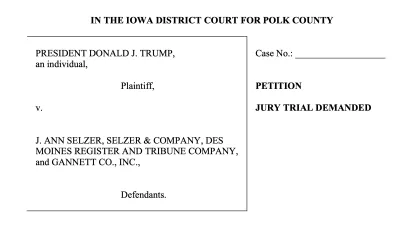
    Screenshot of the front page of the Trump v. Selzer lawsuit

    One need not be called to the witness stand in defense of George Stephanopoulos’ journalism to concede that the former president could well have a basis to seek legal relief against those who actually defame or otherwise cause him cognizable injury (see FAN 451) — or, consistent with Time, Inc. v. Hill (1967), that he might be able to demonstrate a reckless disregard for the truth.

    But Trump v. Selzer is a difficult case to fit into that legal peg. 

    Five Suspect Arguments

    1. The Tale of Two Predictions Argument: In both 2016 and 2020, Ann Selzer predicted Trump’s Iowa victories. In 2024, the Register commissioned her to do another poll and she predicted a Harris victory by a small margin — using the same methodology. Despite this, she and her publisher were slapped with two lawsuits. Can this really be the basis (albeit unstated) for a call to legal action?

    2. The Fraudulent Consumer Fraud Argument: The Iowa consumer fraud law pertains to deceit in the context of the advertisement or sale of “commercial merchandise.” Does polling information check that conceptual box? Is it a commercial “service” in the same way that fraudulently providing home insurance would be? Is the product that a newspaper produces “merchandise” as that word is commonly used? As a matter of statutory construction (duly mindful of overbreadth concerns), should courts conflate laws made to regulate commerce with political speech? Is the legal supervision of the marketplace of goods to be the same as in the marketplace of ideas? To quote Eugene Volokh:

    “I’m far from sure that, as a statutory matter, the Iowa consumer fraud law should be interpreted as applying to allegedly deceptive informational content of a newspaper, untethered to attempts to sell some other product.” 

    3. The No-Guidelines False Political Speech Argument: Once the government has elected to punish political speech by civil or criminal laws, what are the exact guidelines for determining falsity? And how great does such falsity have to be? Are such calls to be made by lawmakers or judges? Of all political figures, Donald Trump should be quite apprehensive of such arguments — given all the false speech he has been accused of disseminating.

    4. The Demand to Punish Newspapers for False Political Speech Argument: If the Press Clause of the First Amendment is to have any functional meaning, and if the era of sedition laws has taught us anything, it is that when it comes publishing political speech a news story is not, generally speaking, to be judged as being the same as the speech of a shyster used-car salesperson. Absent strong safeguards, allowing punitive or treble damages for political speech takes on a dangerous meaning when it comes to the Press. To again draw on Volokh:

    “[T]he First Amendment generally bars states from imposing liability for misleading or even outright false political speech, including in commercially distributed newspapers — and especially for predictive and evaluative judgments of the sort inherent in estimating public sentiment about a candidate.”

    And then there is this argument proffered by Laura Belin:

    “[T]he suit alleges that a story within the newspaper was misleading, therefore making the sale or advertisement of the newspaper misleading. In other words, they are attacking the content of the newspaper, not the sale or advertisement of the newspaper itself. The content of a media source, other than an advertisement for merchandise it might contain, is subject to strong First Amendment protection.”

    Moreover, such lawsuits create “an environment,” said Seth Stern, director of advocacy for the Freedom of the Press Foundation, “where journalists can’t help but look over their shoulders knowing the incoming administration is on the lookout for any pretext or excuse to come after them.”

    5. The Need to Deter “Radical” Pollsters Argument: The complaint seeks the relief it does (injunctive and otherwise) in order “to deter Defendants and their fellow radicals” from continuing to skew “election results.” And if alleged consumer falsity is the norm in the political speech realm (with the requisite intent, of course), will that not have an enormous chilling effect on all election pollsters? And what newspapers or other media outlets would be willing to publish election poll predictions if the liability Sword of Damocles hovered over their heads? And what of those campaigning for political office?

    Related

    Full Disclosure

    Robert Corn-Revere, FIRE’s chief counsel, represented me pro bono in a 2003 petition to the governor of New York to posthumously pardon Lenny Bruce. While FIRE hosts FAN, the content of this newsletter is determined free of any and all influence by FIRE.

    The TikTok case

    The Supreme Court on Friday seemed likely to uphold a law that would ban TikTok in the United States beginning Jan. 19 unless the popular social media program is sold by its China-based parent company.

    Hearing arguments in a momentous clash of free speech and national security concerns, the justices seemed persuaded by arguments that the national security threat posed by the company’s connections to China override concerns about restricting the speech either of TikTok or its 170 million users in the United States.

    Early in arguments that lasted more than two and a half hours, Chief Justice John Roberts identified his main concern: TikTok’s ownership by China-based ByteDance and the parent company’s requirement to cooperate with the Chinese government’s intelligence operations.

    If left in place, the law passed by bipartisan majorities in Congress and signed by President Joe Biden in April will require TikTok to “go dark” on Jan. 19, lawyer Noel Francisco told the justices on behalf of TikTok.

    Forthcoming book on ‘campaign to protect the powerful’

    Book cover of "Murder the Truth: Fear, the First Amendment, and a Secret Campaign to Protect the Powerful" by David Enrich

    The #1 bestselling author of Dark Towers, Enrich produces his most consequential and far-reaching investigation yet: an in-depth exposé of the broad campaign — orchestrated by elite Americans — to overturn 60 years of Supreme Court precedent, weaponize our speech laws, and silence dissent.

    It was a quiet way to announce a revolution. In an obscure 2019 case that the Supreme Court refused to even hear, Justice Clarence Thomas raised the prospect of overturning the legendary New York Times v. Sullivan decision. Though hardly a household name, Sullivan is one of the most consequential free speech decisions, ever. Fundamental to the creation of the modern media as we know it, it has enabled journalists and writers all over the country — from top national publications and revered local newspapers to independent bloggers — to pursue the truth aggressively and hold the wealthy, powerful, and corrupt to account.

    Thomas’s words were a warning — the public awakening of an idea that had been fomenting on the conservative fringe for years. Now it was going mainstream. From the Florida statehouse to small town New Hampshire to Trump himself, this movement today consists of some of the world’s richest and most powerful people and companies, who believe they should be above scrutiny and want to silence or delegitimize voices that challenge their supremacy. Indeed, many of the same businessmen, politicians, lawyers, and activists are already weaponizing the legal system to intimidate and punish journalists and others who dare criticize them.

    In this masterwork of investigative reporting, David Enrich, New York Times Business Investigations Editor, traces the roots and reach of this new threat to our modern democracy. Laying bare the stakes of losing our most sacrosanct rights, Murder the Truth is a story about power — the way it’s used by those who have it, and the lengths they will go to avoid it being questioned. 

    Douek and Lakier vs Volokh on private power and free speech

    New scholarly article on revenge porn and more

    Since our nation’s founding, the private sex lives of politicians have been a consistent topic of public concern. Sex scandals, such as those involving Alexander Hamilton, Bill Clinton, and Donald Trump, have consumed the focus of the public. With the advent of the internet and social media, a new dimension has been added to that conversation: now, details of a politician’s sex life often come accompanied by photo or video evidence. Outside of the election context, when someone shares an individual’s private explicit material without their consent, they have committed the crime of “revenge porn.” 

    Recent high-profile incidents have raised the question of whether the crime of revenge porn can still be prosecuted when the disclosure of private explicit materials involves a political candidate. In the election context, unique First Amendment concerns about chilling political speech result in heightened speech protections. Before prosecuting a case, prosecutors must grapple with the question: Does the First Amendment protect revenge porn when it is used to influence an election? This essay argues that the special First Amendment concerns about elections are diminished in the revenge porn context: the statutes are already tailored to address those concerns, and the state’s independent interest in enforcing revenge porn laws is still compelling. As such, it concludes that the First Amendment should not have extra force in a revenge porn case just because the disclosure occurred in the context of an election.

    New Book on ‘rethinking free speech’

    Book cover of "Rethinking Free Speech" by Peter Ives

    Clashes over free speech rights and wrongs haunt public debates about the state of democracy, freedom and the future. While freedom of speech is recognized as foundational to democratic society, its meaning is persistently misunderstood and distorted. Prominent commentators have built massive platforms around claims that their right to free speech is being undermined. Critics of free speech correctly see these claims as a veil for misogyny, white-supremacy, colonialism and transphobia, concluding it is a political weapon to conserve entrenched power arrangements. But is this all there is to say?

    Rethinking Free Speech will change the way you think about the politics of speech and its relationship to the future of freedom and democracy in the age of social media. Political theorist Peter Ives offers a new way of thinking about the essential and increasingly contentious debates around the politics of speech. Drawing on political philosophy, including the classic arguments of JS Mill, and everyday examples, Ives takes the reader on a journey through the hotspots of today’s raging speech wars.

    In its bold and careful insights on the combative politics of language, Rethinking Free Speech provides a map for critically grasping these battles as they erupt in university classrooms, debates around the meaning of antisemitism, the “cancelling” of racist comedians and the proliferation of hate speech on social media. This is an original and essential guide to the perils and possibilities of communication for democracy and justice.

    ‘So to Speak’ podcast interview with author of ‘Rethinking Free Speech’


    Is the free speech conversation too simplistic?

    Peter Ives thinks so. He is the author of “Rethinking Free Speech,” a new book that seeks to provide a more nuanced analysis of the free speech debate within various domains, from government to campus to social media.

    Ives is a professor of political science at the University of Winnipeg. He researches and writes on the politics of “global English,” bridging the disciplines of language policy, political theory, and the influential ideas of Antonio Gramsci.

    More in the news

    2024-2025 SCOTUS term: Free expression and related cases

    Cases decided 

    • Villarreal v. Alaniz (Petition granted. Judgment vacated and case remanded for further consideration in light of Gonzalez v. Trevino, 602 U. S. ___ (2024) (per curiam))
    • Murphy v. Schmitt (“The petition for a writ of certiorari is granted. The judgment is vacated, and the case is remanded to the United States Court of Appeals for the Eighth Circuit for further consideration in light of Gonzalez v. Trevino, 602 U. S. ___ (2024) (per curiam).”)

    Review granted

    Pending petitions

    Petitions denied

    Last scheduled FAN

    FAN 452: “Stephen Rohde: Federal court rejects lawsuit by Jewish parents and teachers that labelled an ethnic studies curriculum ‘anti-Semitic’ and ‘anti-Zionist’

    This article is part of First Amendment News, an editorially independent publication edited by Ronald KL Collins and hosted by FIRE as part of our mission to educate the public about First Amendment issues. The opinions expressed are those of the article’s author(s) and may not reflect the opinions of FIRE or Mr. Collins.

    Source link

  • FIRE’s defense of pollster J. Ann Selzer against Donald Trump’s lawsuit is First Amendment 101

    FIRE’s defense of pollster J. Ann Selzer against Donald Trump’s lawsuit is First Amendment 101

    It is hard to imagine a legal claim that violates basic First Amendment principles more thoroughly than does President-elect Donald Trump’s lawsuit against veteran Iowa pollster J. Ann Selzer and The Des Moines Register. 

    His civil lawsuit arises from a poll published before the November 2024 election that predicted Vice President Kamala Harris in the lead in Iowa. It seeks damages and a court order to prevent the newspaper from publishing any future “deceptive polls” that might “poison the electorate.”  

    Trying to punish newspapers for supposedly “false” reports is not a new phenomenon. Backlash to the Sedition Act of 1798, in which Congress criminalized “false” criticism of some politicians, laid the foundation of First Amendment doctrine. This lawsuit is just a new name for the same theory long rejected under the First Amendment.

    Trump’s lawsuit, brought under an Iowa law against “consumer fraud,” violates long-standing constitutional principles. It’s also entirely meritless under the Iowa law. 

    Enlisting the courts to settle political grudges is directly at odds with the First Amendment’s protection for political speech.

    The lawsuit is the very definition of a “SLAPP” suit — a Strategic Lawsuit Against Public Participation. Such tactical claims are filed purely for the purpose of imposing punishing litigation costs on perceived opponents, not because they have any merit or stand any chance of success. In other words, the lawsuit is the punishment. And it’s part of a worrying trend of activists and officials using consumer fraud lawsuits to target political speech they don’t like. 

    FIRE opposes SLAPP suits and is representing Selzer in order to vindicate her — and your — First Amendment rights.

    Every election has its outlier polls.

    Election polling is core First Amendment activity. It asks people how they will vote and shares an opinion — an educated guess — predicting the likely outcome. Every presidential election cycle brings hundreds of polls, and every cycle has outliers giving false hope (or added anxiety) to supporters of a given candidate.

    Selzer’s Iowa polls have long enjoyed “gold standard” status, accurately predicting Donald Trump’s victories in Iowa in 2016 and 2020. But despite using the same methodology as her previous polls, Selzer’s final 2024 poll, commissioned by the Register, was this cycle’s outlier, predicting a narrow Harris victory. 

    Selzer owned up to the margin between her poll and the eventual outcome of Trump comfortably winning Iowa. She acknowledged the “biggest miss of my career” and did what good pollsters do: She explained her methodology and publicly shared the poll’s crosstabs (results reported out by demographic and attitudinal subgroups), its questionnaire (with demographic information and weighted and unweighted responses), and her theories on the resultsinviting others to offer theirs in turn

    A bogus ‘consumer fraud’ lawsuit

    The post-election transparency Selzer provided wasn’t enough for Trump, despite his winning the presidency.

    During a press conference last month, Trump theorized that the poll was fabricated entirely and pledged to “straighten out the press” because it was “almost as corrupt as our elections are.” That evening, he sued Selzer, her polling company, the Register, and the newspaper’s parent company, Gannett, claiming the poll’s publication violated Iowa’s consumer fraud statute

    This lawsuit uses an inapplicable state statute as a cudgel to force Selzer and the Register to waste time and money on lawyers to respond to the allegations. Enlisting the courts to settle political grudges is directly at odds with the First Amendment’s protection for political speech. 

    Trump’s calls to investigate pollster put First Amendment at risk

    News

    President-elect Donald Trump called for an investigation after Des Moines Register pollster Ann Selzer predicted just days before the election that he would lose Iowa by three points.


    Read More

    Start with the law. Consumer fraud laws target sellers who make false statements to get you to buy something. They’re about the scam artist who rolls back the odometer on a used car, not a newspaper poll or TV weather forecast that gets it wrong.

    Just read the Iowa statute. Trump must identify a fraudulent or deceptive statement “in connection with the advertisement, sale, or lease of consumer merchandise, or the solicitation of contributions for charitable purposes.” Selzer’s poll did not advertise or solicit anything, much less “consumer merchandise,” which Iowa law defines as that intended for “personal, family, or household uses.” 

    Trump’s complaint also argues Selzer engaged in “brazen election interference.” But publishing a poll doesn’t constitute “election interference.” Under Iowa law, election “interference” is conduct like submitting a “counterfeit official election ballot,” encouraging someone to vote when you know they legally cannot, or other forms of direct interference with the conduct of the election. 

    Conducting and publishing a poll is protected First Amendment speech. It has nothing to do with “election interference.”

    The use of consumer fraud lawsuits collides with the First Amendment

    The notion that officials can recast the electorate as “consumers” to punish political speech or news they don’t like is squarely at odds with the First Amendment — yet it’s a theory increasingly advanced by partisans on both the left and the right. From the left, there are calls to regulate “misinformation” on social issues and, from the right, calls to impose “accountability” on news media for their political commentary. 

    Consumer fraud statutes have no place in American politics, or in regulating the news. But it has become an increasingly popular tactic to use such laws in misguided efforts to police political speech. For example, a progressive nonprofit tried to use a Washington state consumer protection law in an unsuccessful lawsuit against Fox News over its COVID-19 commentary. And attorneys general on the right used the same “we’re just punishing falsehoods” theory to target progressive outlets. Right now, Texas is arguing in a federal appellate court that it can use the state’s Deceptive Trade Practices Act to punish political speech even if it is “literally true,” so long as officials think it’s misleading.

    Any attempt — by Democrats, Republicans, or anyone else — to punish and chill reporting of unfavorable news is an affront to the First Amendment.

    Attempts to prohibit purportedly false statements in politics are as old as the republic. In fact, our First Amendment tradition originated from colonial officials’ early attempts to use libel laws against the press. 

    America rejected this censorship after officials used the Sedition Act of 1798 to jail newspaper editors for publishing “false” and “malicious” criticisms of President John Adams. Thomas Jefferson pardoned and remitted the fines of those convicted, writing that he considered the Act “to be a nullity, as absolute and as palpable as if Congress had ordered us to fall down and worship a golden image.” 

    The Supreme Court has since described our experience with the Sedition Act as the event that “first crystallized a national awareness of the central meaning of the First Amendment.” And it has held that government efforts to bar the publication of news reports are “the essence of censorship.” 

    Since then, courts have soundly and repeatedly rejected modern campaigns to regulate “false” speech because, under the First Amendment, “the citizenry, not the government, should be the monitor of falseness in the political arena.”

    SLAPPs chill speech because lawyers are expensive and lawsuits are stressful

    Even when a court dismisses a meritless lawsuit against a speaker, the person filing the lawsuit still “wins” because their critics must spend time and money on the legal process. As Trump once colorfully put it after losing a lawsuit: “I spent a couple of bucks on legal fees, and they spent a whole lot more. I did it to make his life miserable, which I’m happy about.” 

    Some states have anti-SLAPP statutes that require a plaintiff suing over speech to show his case has merit. If he cannot, the plaintiff has to pay the defendant’s legal fees — discouraging plaintiffs from chilling speech through the cost of a lawsuit. But Iowa is not among those states.

    So FIRE is stepping in to represent Selzer and her polling company, Selzer & Company, against this baseless suit. By providing pro bono support, we’re helping to remove the financial incentive of SLAPP suits — just as we’ve done when a wealthy Idaho landowner sued over criticism of his planned airstrip, when a reddit moderator was sued for criticizing a self-proclaimed scientist, and when a Pennsylvania lawmaker sued a graduate student for “racketeering.” (If you are a lawyer who wants to help provide pro bono support to people facing lawsuits for their speech, please join FIRE’s Legal Network.)

    Any attempt — by Democrats, Republicans, or anyone else — to punish and chill reporting of unfavorable news is an affront to the First Amendment. Hearing an opinion or prediction that turns out to be “wrong” is the price of living in a free society. And no American should fear that their commentary on American elections should subject them to liability.

    FIRE protects the First Amendment, whether it’s threatened by the president of the United States or your local mayor. And we do so for all Americans, whether you’re a conservative student unable to wear a “Let’s Go Brandon” sweatshirt, a professor censored under Florida’s STOP WOKE Act, or a libertarian mother arrested for criticizing her city’s mayor

    If your First Amendment rights are threatened, contact FIRE.

    Source link

  • Stephen Rohde: Federal court rejects lawsuit by Jewish parents and teachers that labelled an ethnic studies curriculum ‘anti-Semitic’ and ‘anti-Zionist’ – First Amendment News 452

    Stephen Rohde: Federal court rejects lawsuit by Jewish parents and teachers that labelled an ethnic studies curriculum ‘anti-Semitic’ and ‘anti-Zionist’ – First Amendment News 452

    From time to time, we here at FAN post op-eds on various timely issues. One such issue is who decides what is taught in public schools and what are the applicable constitutional restraints placed on attempts to restrict teachers’ educational objectives. A recent court ruling in Concerned Jewish Parents & Teachers of Los Angeles v. Liberated Ethnic Studies Model Curriculum Consortium, et al. (Cen. Dist., Nov. 30, 2024) places this issue in bold relief. 

    In the piece below, Stephen Rohdea First Amendment authority, analyzes the case and the First Amendment issues raised in it. 

    News items and the Supreme Court’s docket follow the op-ed. – rklc


    Stephen Rohde

    An important recent court ruling rejected attempts by Jewish parents and teachers in the Los Angeles Unified School District to remove an ethnic studies curriculum they labelled “anti-Semitic” and “anti-Zionist.” On Nov. 30, 2024, a federal judge reaffirmed that a system of education “which discovers truth out of a multitude of tongues” must allow teachers and their students “to explore difficult and conflicting ideas.” 

    In his 49-page ruling, U.S. District Judge Fernando M. Olguin wrote: “[W]e must be careful not to curb intellectual freedom by imposing dogmatic restrictions that chill teachers from adopting the pedagogical methods they believe are most effective.” Moreover, he stressed that “teachers must be sensitive to students’ personal beliefs and take care not to abuse their positions of authority,” but they “must also be given leeway to challenge students to foster critical thinking skills and develop their analytical abilities” (citing C.F. ex rel. Farnan v. Capistrano Unified Sch. Dist. (9th. Cir., 2019)).

    An international controversy

    The lawsuit (filed by Lori Lowenthal Marcus and Robert Patrick Sticht) came in the midst of a national — and indeed international — debate surrounding who controls the telling of the complicated history of Israel and the Palestinians and how criticism of Israel and its policies is being attacked with epithets such as “anti-Semitism” and “anti-Zionism.” It was an unprecedented attempt to convince a federal court to force the second largest public school system in the United States to adopt a single, one-sided interpretation of the hotly-contested political, religious, legal, military, and cultural histories of Judaism (spanning thousands of years), Zionism (which emerged in the late nineteenth century), and the State of Israel (founded in 1948). And all of this has been marked throughout the years by an endless variety of shifting perspectives by Jews and non-Jews alike.

    Lori Lowenthal Marcus

    Lori Lowenthal Marcus (Plaintiff’s counsel)

    Not incidentally, the ruling also represents a welcome rebuke to the efforts of Republican state legislators and conservative parent groups to restrict the teaching of comprehensive American and world history in public schools. This campaign includes attempts to ban books that examine racism, sexism, and LGBTQ issues as well as their efforts to eliminate programs that seek to ensure diversity, equity, and inclusion in American education.

    The LAUSD lawsuit is part of a well-financed, well-resourced campaign in the United States and around the world to impose an official, dogmatic pro-Israel narrative not only on Israel’s current war in Gaza and the West Bank, but on its entire 76-year history, and to silence any contrary or pro-Palestinian perspectives in the name of fighting “anti-Semitism.” 

    Ominous nature of lawsuit

    The ominous nature of the lawsuit can be seen in the breathtakingly overbroad injunction the plaintiffs had requested. Had it been granted, the injunction, as described in the plaintiffs’ own words, would have enlisted the powerful authority of a federal court to require the indoctrination of an entire school district, and all of its teachers and students, with false, misleading, highly-contested, and controversial claims, by prohibiting the following: 

    [A]ny language, in any teaching materials, asserting that Zionism is not a Jewish belief; denouncing the Jewish belief in the land of Israel as the land promised by God to the Jewish people, or the Jewish belief in Zionism, or asserting that the State of Israel, as the Nation-State of the Jewish people, is illegitimate, or asserting as a fact that the Jewish State is guilty of committing such horrific crimes against others as ethnic cleansing, land theft, apartheid or genocide, or that the Jewish people are not indigenous to the land of Israel or to the Middle East, or denying the State of Israel the right to self-defense; and/or denying the historical or religious connection between the Jewish people and the land of Israel.

    Had this handful of parents and teachers succeeded, more than 24,000 LAUSD teachers would have been forced by court order to teach more than 565,000 students the single dogma that Zionism, a movement that emerged a little over a hundred years ago, is “a Jewish belief,” when in fact there is a wide diversity of views among Jews on the issue of Zionism.

    In addition, if the injunction had been granted, all LAUSD teachers would have been banned by law from teaching or debating, for example, the fact that in Feb. 2022 Amnesty International issued a comprehensive 280-page investigative report entitled “Israel’s Apartheid Against Palestinians: Cruel System of Domination and Crime Against Humanity. As its title indicates, this report “analysed Israel’s intent to create and maintain a system of oppression and domination over Palestinians and examined its key components: territorial fragmentation; segregation and control; dispossession of land and property; and denial of economic and social rights.” The report then concluded that “Israel imposes a system of oppression and domination against Palestinians across all areas under its control: in Israel and the OPT [Occupied Palestinian Territory], and against Palestinian refugees, in order to benefit Jewish Israelis,” which “amounts to apartheid as prohibited in international law.”

    And if the plaintiffs had had their way, all LAUSD teachers would have been breaking the law if they taught that on Jan. 26, 2024, the United Nations International Court of Justice issued a detailed ruling, which found it “plausible” that Israel has committed “acts of genocide” that violated the Genocide Convention and ordered Israel to ensure that the IDF not commit any of the acts of genocide prohibited by the convention.

    And all those teachers would have been prohibited from teaching that on Nov. 21, 2024, the International Criminal Court issued arrest warrants against Israeli Prime Minister Benjamin Netanyahu and Yoav Gallant, former Minister of Defence of Israel, accusing them of being “responsible for the war crimes of starvation as a method of warfare and of intentionally directing an attack against the civilian population; and the crimes against humanity of murder, persecution, and other inhumane acts from at least 8 October 2023 until at least 20 May 2024.”

    The plaintiffs and their lawsuit

    In May 2022 a group calling itself “Concerned Jewish Parents and Teachers of Los Angeles,” comprised of what the lawsuit called “Jewish, Zionist” teachers in the LAUSD and “Jewish, Zionist” parents of students in the LAUSD, sued the school district, the United Teachers of Los Angeles, its president Cecily Myart-Cruz, the Liberated Ethnic Studies Model Curriculum Consortium, the Consortium’s secretary Theresa Montaño, and Guadalupe Carrasco, its co-founder. The defendants were represented by Mark Kleiman.

    As summarized by Judge Olguin, the plaintiffs claimed that the ethnic studies curriculum “denounces capitalism, the nuclear family, and the territorial integrity of the lower 48 states of the United States[,]” and is designed “to expunge the idea of Zionism, and the legitimacy of the existence of the State of Israel, from the public square[.]” They claimed that the challenged curriculum “seeks to make it unsafe and ultimately impossible for any person to express Zionist ideas or Zionist commitment in public in general and within LAUSD public schools in particular.”

    In addition to taking issue with the content of the challenged curriculum, the plaintiffs decried the individual defendants’ support for the challenged curriculum. According to the plaintiffs: “Defendants are injecting their views into the LAUSD curriculum” and “disseminating [the challenged curriculum] to teachers throughout Los Angeles” under the authority of the LAUSD, and “at times through stealth[.]” Plaintiffs also alleged that the defendants supported or participated in workshops that “led teachers to bring the [challenged curriculum] to their own classrooms.”

    It is noteworthy that the plaintiffs did acknowledge that the LAUSD “has the right to control the content of all Ethnic Studies classes taught in LAUSD schools” and specifically admitted that the LAUSD “has ultimate control over and responsibility for the use and public disclosure of any teaching materials in Los Angeles public schools other than those materials whose use is directed by the California State Board of Education.”

     Mark Kleiman

     Mark Kleiman (Defense counsel)

    The plaintiffs also conceded that the challenged curriculum had not been formally adopted by LAUSD, but nevertheless they claimed that they “are being harmed” and “will be harmed” by it. And they alleged that the challenged curriculum is being taught by at least two LAUSD teachers, one of whom is currently “using the LESMC including the discriminatory, hateful material on Israel at issue in this case.” Additionally, they alleged that defendant Cardona confirmed that “she is teaching from LESMC materials and would continue doing so in her LAUSD classroom.”

    As for their legal claims, the plaintiffs alleged that the challenged curriculum is “discriminatory” and violates their rights under the Equal Protection Clauses of the U.S. Constitution and California Constitution, the Free Exercise Clause of the U.S. Constitution, Title VI of the Civil Rights Act, and California Education Code.

    The court ruling

    At the outset of his decision, Judge Olguin called the lawsuit “confusing” and noted that the complaint is “difficult to understand and contains a morass of largely irrelevant — and sometimes contradictory — allegations, few of which state with any degree of clarity precisely what plaintiffs believe defendants have done or, more importantly, how plaintiffs have been harmed.” He pointed out that the lack of clarity was particularly troubling given that this was the plaintiffs’ fourth attempt to allege a valid complaint.

    The lack of standing issue

    Addressing threshold procedural issues, Judge Olguin found that the plaintiffs did not have standing to bring the lawsuit in the first place and that their claims were not ripe for adjudication. He observed that the “essence of plaintiffs’ alleged injuries appears to be that they are aware of the challenged curriculum, disagree with it, and fear it will be adopted or used in LAUSD classrooms.” But he found “it is far from clear that learning about Israel and Palestine or encountering teaching materials with which one disagrees constitutes an injury, citing long-standing Supreme Court and appellate precedents.” And he found that neither the parent-plaintiffs nor the teacher-plaintiffs identified “any personal injury suffered by them as a consequence of the alleged constitutional error.” Plaintiffs may not “sue merely because their legal objection is accompanied by a strong moral, ideological, or policy objection to a [purported] government action.” In other words, “the individual plaintiffs’ potential exposure to ideas with which they disagree is insufficient to support standing.”

    At its core, plaintiffs’ lawsuit sought to have the court “weigh in on whether instruction that may be critical of Zionism or Israel is antisemitic.” Judge Olguin recognized that courts do on occasion determine whether beliefs are religious in nature and whether they are sincerely held, but here, without a justiciable case or controversy that presented a cognizable, redressable injury, he could not — and would not — entertain “a generalized grievance.”

    Throughout his decision, Judge Olguin relied heavily on the Ninth Circuit appellate decision in Monteiro v. Tempe Union School District (1998). In that case, a parent sued a school district, on behalf of her daughter and other Black students, over the high-school curriculum’s inclusion of certain literary works, such as The Adventures of Huckleberry Finn and A Rose for Emily. The plaintiff in that case argued that because these works contain racially derogatory terms, their inclusion in the curriculum violated the Black students’ rights under the Equal Protection Clause. The Ninth Circuit rejected this argument and held that “objections to curriculum assignments cannot form the basis of a viable Equal Protection claim, because curriculum decisions must remain the province of school authorities.” Absent an allegation of an underlying racist policy, “plaintiffs cannot challenge the assignment of material deemed to have educational value by school authorities.” 

    In Monteiro, no underlying racist policy was found. Similarly, in the LAUSD case, Judge Olguin found that the plaintiffs “do not allege the existence of an underlying racist policy; instead, they challenge unspecified portions of a hypothetical curricular offering.” Although the plaintiffs asserted that they were targeting a curriculum “infected from top to bottom with racism and bias[,]” they did not direct the court to any allegations that supported their assertion. Nor were there any allegations to support an inference of a discriminatory policy. Thus, the lawsuit was a direct attack on curricula, and under Monteiro, “absent evidence of unlawful intentional discrimination, parents are not entitled to bring Equal Protection claims challenging curriculum content.”

    Failure to raise a free exercise claim

    Judge Olguin also found that the plaintiffs failed to allege a violation of their right to the free exercise of religion. According to the Supreme Court, “a plaintiff may carry the burden of proving a free exercise violation in various ways, including by showing that a government entity has burdened his sincere religious practice pursuant to a policy that is not neutral or generally applicable.” But the courts have also held that “offensive content” that “does not penalize, interfere with, or otherwise burden religious exercise does not violate Free Exercise rights,” even where such content contains material that plaintiffs may find “offensive to their religious beliefs.”

    In the LAUSD case, the plaintiffs did not allege that they “have somehow been prevented from practicing their faith, or that the parent-plaintiffs have been barred in any way from instructing their children at home.” In effect, the only hardship plaintiffs alleged was that the existence of the challenged curriculum — and its possible adoption — offended them. “But mere offense is insufficient to allege a burden on religious exercise,” stated Judge Olguin, citing court decisions holding that class materials offensive to Hindu or Muslim plaintiffs did not violate Free Exercise Clause. As Chief Judge Pierce Lively put it in a 1987 case: “[D]istinctions must be drawn between those governmental actions that actually interfere with the exercise of religion, and those that merely require or result in exposure to attitudes and outlooks at odds with perspective prompted by religion.”

    It is important to note that Judge Olguin could have simply found that the plaintiffs lacked standing to bring the lawsuit and dismissed it entirely. Instead, he went on to explain that even if the plaintiffs had established standing, they could not overcome the “significant First Amendment” obstacles their complaint presented. Because the non-LAUSD defendants are private parties, their speech and conduct are protected by the First Amendment. The court “cannot enjoin private parties from expressing their views on what an ethnic studies curriculum should or should not contain, let alone from using any ‘elements’ of the challenged curriculum, because doing so would violate the First Amendment.”

    Three First Amendment issues

    Judge Olguin then explained in detail the various First Amendment violations that the plaintiffs’ requests raised: 

    First, plaintiffs “take issue with the non-District defendants’ forms of discussion, expression, and petitioning in relation to the challenged curriculum,” such as “various UTLA and Consortium activities, including funding, supporting, promoting, and hosting of workshops and events that discuss Palestine and Israel.” The plaintiffs sought to have the court impose restrictions on the non-District defendants’ protected speech by requesting an injunction “prohibiting all Defendants from using the elements of the LESMC at issue in this case . . . in any training sessions funded by public funds, or for which salary points are awarded by LAUSD. 

    Judge Olguin made it clear, however, that “the non-District defendants have a right to express their views about the curriculum under the First Amendment and to petition for curricular changes.” And he went even further: “[E]ven if teaching the challenged curriculum were unlawful, and the non-District defendants encouraged the material to be taught, the non-District defendants’ activities would be protected, as plaintiffs have not alleged incitement to imminent lawlessness action.”

    Second, the plaintiffs had relied on the seminal 1969 Supreme Court decision in Brandenburg v. Ohio, arguing that the court may “prevent a speaker from counseling the commission of imminent lawless action [by LAUSD] when such counseling is likely to incite or produce such action.” But Judge Olguin found there were “no plausible allegations” in the complaint “to support such an assertion.” And in any event, “the assertion conflicts with plaintiffs’ contention that they, for example, ‘do not claim that UTLA is acting wrongfully by petitioning the government to include the challenged materials in the classroom, or to discuss with others what the curriculum should be or whether the law should be changed to allow Defendants to teach what they want.” Indeed, according to plaintiffs, “[t]here is no claim that it is illegal for UTLA to speak to teachers about Ethnic Studies and there is no request that this Court order UTLA to stop doing so.” Nor is there any claim “that the law is violated by Defendants’ conduct of seminars showing teachers how to teach [the challenged curriculum], and no relief is sought from the Court asking anyone to stop conducting such seminars.”

    Third, plaintiffs specifically targeted “classroom expression by public school teachers, on the clock and paid for with public money” and asked the court to enjoin LAUSD teachers from teaching the challenged curriculum.

    Judge Olguin held that “this request raises serious concerns about the First Amendment and principles of academic freedom.” Although high school teachers do not have freedom of speech to the full extent of the First Amendment, nonetheless according to Monteiro, there is no doubt that “allowing the judicial system to process complaints that seek to enjoin or attach civil liability to a school district’s assignment of” curricular material could have broader, potentially chilling effects on speech. In other words, “while teachers’ speech rights in the classroom may be reasonably abridged by their employers, such limitations are fundamentally different than speech restrictions imposed by a court at the behest of a group of private citizens.” 

    He added: “[S]tudents have a right to receive information and ‘lawsuits threatening to attach civil liability on the basis of the assignment of [curricular material] would severely restrict a student’s right to receive material that his school board or other educational authority determines to be of legitimate educational value,’” citing Monteiro.

    Judge Olguin recognized that “determining the content of curricula is a complicated, important matter, and it is for this reason that school boards generally retain broad discretion in doing so.” He stressed that “teachers must have some discretion and academic freedom in implementing and teaching the curriculum,” because “teachers and students must always remain free to inquire, to study and to evaluate, to gain new maturity and understanding.” He also warned that “it would be of great concern for the educational project and for academic freedom if every offended party could sue every time they did not like a curriculum or the way it was taught.”

    Teaching provocative and challenging ideas is painful but necessary

    Citing a 1949 Supreme Court decision that recognized that “[s]peech is often provocative and challenging,” Judge Olguin recognized that while the plaintiffs clearly considered the challenged curriculum to be “provocative and challenging,” nonetheless, “our legal tradition recognizes the importance of speech and other expressive activity even when — perhaps especially when — it is uncomfortable or inconvenient.”

    Consequently, Judge Olguin dismissed all of plaintiffs’ claims with prejudice, preventing them from filing a fifth amended complaint.

    No doubt the Jewish parents and teachers who brought this lawsuit were deeply concerned that their children and students would be exposed to sharply different and indeed highly negative perspectives about the State of Israel and the nature and history of Zionism — perspectives that conflict with what may have been taught at home. But when it comes to public education in America, no particular group of parents or teachers can restrict the curriculum designed for all students based on their personal views or because they are offended by some aspect of the curriculum.

    “At their best, public schools in the United States serve to produce a literate and informed citizenry imbued not only with knowledge but with a spirit of inquiry,” according to Jonathan Friedman, Director of Free Expression and Education at PEN America. “Diversity of thought has been the core of our pluralistic identity, and free expression — one of the central tenets of American democracy — is an essential value that ensures both the quality of our children’s education and the ability of our schools to prepare them to become engaged citizens in an increasingly complex world.”

    Friedman went on to explain that while there is no question that “parents have a central role in guiding, supporting, nurturing, and educating their children,” the so-called “parents’ rights” movement seeks to elevate “individual parents’ beliefs or preferences over the rights of all other parents.” He also noted that in many parts of the country, “individual parents are demanding the removal of books from schools they find unfavorable.” But in the United States, “it has been an abiding principle of our democracy to side with free speech over those who wish to restrict it. The freedom to learn, the freedom to read, and the freedom to think are inextricably bound.”

    “Preventing students from learning about the real world won’t protect them from it,” Friedman pointed out. Students “don’t deserve a chilled environment where teachers are unable to speak honestly for fear of upsetting any one parent.”

    Thirty-three years ago, the American Association of University Professors reiterated its long-held view that the “freedom of thought and expression” upon which education is based “often inspires vigorous debate on those social, economic, and political issues that arouse the strongest passions. In the process, views will be expressed that may seem to many wrong, distasteful, or offensive. Such is the nature of freedom to sift and winnow ideas.”

    The AAUP reminded us that on “a campus that is free and open, no idea can be banned or forbidden. No viewpoint or message may be deemed so hateful or disturbing that it may not be expressed.”

    The debate over Israel, Zionism, and the Palestinians, like all debates on serious issues, will not be resolved by convincing courts to mandate the views of one side or to silence the voices of the other side. The debate must be a free and open discussion informed by a rigorous and unflinching examination of history that respects the human rights and dignity of everyone.


    Sixth Circuit rules FCC lacked the authority to reinstate Net Neutrality rules

    A federal appeals court struck down the Federal Communications Commission’s landmark net neutrality rules on Thursday, ending a nearly two-decade effort to regulate broadband internet providers as utilities.

    The U.S. Court of Appeals for the Sixth Circuit, in Cincinnati, said the F.C.C. lacked the authority to reinstate rules that prevented broadband providers from slowing or blocking access to internet content. In its opinion, a three-judge panel pointed to a Supreme Court decision in June, known as Loper Bright, that overturned a 1984 legal precedent that gave deference to government agencies on regulations.

    “Applying Loper Bright means we can end the F.C.C.’s vacillations,” the court ruled.

    The court’s decision put an end to the Biden administration’s hallmark tech policy, which had drawn impassioned support from consumer groups and tech giants like Google and fierce protests from telecommunications giants like Comcast and AT&T.

    Levine and Schafer on ‘central meaning of the First Amendment’

    Last month, Carson Holloway argued in Law & Liberty’s forum on New York Times v. Sullivan that the Supreme Court “owes it to the nation” to reconsider and ultimately overrule this defining First Amendment case. He has made this argument in Law & Liberty before. He is mistaken.

    Sullivan declared that the First Amendment has a “central meaning”: that citizens in a democracy have a right to criticize government officials without fear of ruin. The Court made this principle a reality by establishing the “actual malice” requirement. Before enforcing a damages judgment or sending a citizen to jail, courts going forward were to require clear and convincing proof that the alleged defamer of a public official published the defamatory statement knowing it was false or with a high degree of awareness of its probable falsity.

    The rule has proven a potent protection for press freedom. But for Holloway, it is a modern invention that is not “based on the original understanding of the First Amendment.” We agree with Angel Eduardo that this argument is “at best . . . highly contested.” Having spent our careers defending press freedom (in the case of one of us, that includes two trips to the Supreme Court), we write to explain what exactly Holloway got wrong.

    Initially, Holloway’s originalism argument is a red herring. The defamation tort is a creature of state law and the First Amendment at the Founding only imposed limits on the federal government. (It is noteworthy, though, that Madison viewed his unsuccessful amendment that would have prohibited state infringements on liberty of the press as more valuable than the First Amendment.) So it should be expected that there is no evidence that the Founding generation understood the First Amendment as a limit on state libel law. (Even so, Jefferson, perhaps anticipating the Sedition Act of 1798, thought the First Amendment ought to impose limits on libel.)

    The TikTok case

    More in the News

    2024-2025 SCOTUS term: Free expression and related cases

    Cases decided

    • Villarreal v. Alaniz (Petition granted. Judgment vacated and case remanded for further consideration in light of Gonzalez v. Trevino, 602 U. S. ___ (2024) (per curiam))
    • Murphy v. Schmitt (“The petition for a writ of certiorari is granted. The judgment is vacated, and the case is remanded to the United States Court of Appeals for the Eighth Circuit for further consideration in light of Gonzalez v. Trevino, 602 U. S. ___ (2024) (per curiam).”)

    Review granted

    Pending petitions

    Petitions denied

    Last scheduled FAN

    FAN 451: “Media on the run: A sign of things to come in Trump times?

    This article is part of First Amendment News, an editorially independent publication edited by Ronald K. L. Collins and hosted by FIRE as part of our mission to educate the public about First Amendment issues. The opinions expressed are those of the article’s author(s) and may not reflect the opinions of FIRE or Mr. Collins.
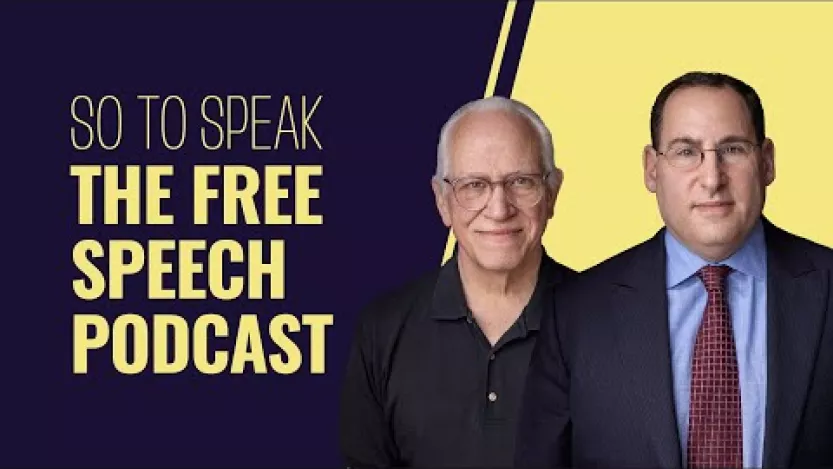
    Source link

  • FIRE to SCOTUS: TikTok ban violates Americans’ First Amendment rights

    FIRE to SCOTUS: TikTok ban violates Americans’ First Amendment rights

    Earlier this month, the U.S. Court of Appeals for the D.C. Circuit found that the law to ban TikTok in the United States did not violate Americans’ First Amendment rights. Never before has Congress taken the extraordinary step of effectively banning a platform for communication, let alone one used by half the country.

    The First Amendment requires an explanation of why such a dramatic restriction of the right to speak and receive information is necessary, and compelling evidence to support it. The government failed to provide either.

    What little Congress did place on the public record includes statements from lawmakers raising diffuse concerns about national security and, more disturbingly, their desire to control the American public’s information diet in a way that strikes at the heart of the First Amendment. 

    Today, FIRE and a coalition of organizations filed an amicus brief urging the Supreme Court to reverse the decision.

    FIRE is proud to be joined by the following organizations and individuals for today’s brief:

    • The Institute for Justice
    • Reason Foundation
    • The Future of Free Speech
    • The Woodhull Freedom Foundation
    • The First Amendment Lawyers Association
    • Stop Child Predators
    • The Pelican Institute for Public Policy 
    • CJ Pearson

    Will Creeley, legal director at FIRE: “The government doesn’t have the power to pull the plug on TikTok without demonstrating exactly why such a dramatic step is absolutely necessary. It has failed to publicly lay out the case for cutting off an avenue of expression that 170 million of us use. The First Amendment requires a lot more than just the government’s say-so. Fifty years after the publication of the Pentagon Papers, Americans understand that invoking ‘national security’ doesn’t grant the government free rein to censor. By failing to properly hold the government to its constitutionally required burden of proof, the court’s decision erodes First Amendment rights now and in the future.”

    Jacob Mchangama, executive director of The Future of Free Speech and senior fellow at FIRE: “For decades, the United States has been the global gold standard for free speech protections. The unprecedented bipartisan push to effectively shut down TikTok — an online platform where millions exercise their right to free expression and access information — represents a troubling shift from this proud legacy. If enacted, this ban would make the U.S. the first free and open democracy to impose such sweeping restrictions, drawing uncomfortable parallels with authoritarian regimes like Somalia, Iran, and Afghanistan, which use similar measures to suppress dissent and control their populations. This is not just about a single app; it is a litmus test for the resilience of First Amendment principles in the digital age. The Supreme Court must ensure that Congress is held to the highest standard before permitting actions of such profound consequence. A TikTok ban risks setting a dangerous precedent that undermines the very freedoms distinguishing democracies from autocracies.”

    The D.C. Circuit’s decision justifies the Act’s sweeping censorship by invoking “free speech fundamentals.” In so doing, it confuses the First Amendment values at stake, and sacrifices our constitutional tradition of debate and dialogue for enforced silence. The D.C. Circuit’s misguided reasoning is sharply at odds with longstanding First Amendment precedent, violating the constitutional protections it claims to preserve. Instead of following the instructive example set by Taiwan, which has eschewed a blanket TikTok ban in favor of robust counterspeech, the D.C. Circuit’s logic echoes the authoritarianism of North Korea and Iran.

    READ THE FULL BRIEF BELOW

    Source link

  • Media on the run: A sign of things to come in Trump times? — First Amendment News 451

    Media on the run: A sign of things to come in Trump times? — First Amendment News 451

    “[There is a] deeply troubling notion that anyone who dares to report unfavorable facts about a presidential candidate is engaged in ‘sabotage’ (as opposed to, say, contributing to the free exchange of information and ideas that makes our democracy possible).” – David McCraw (New York Times lawyer)

    While some liberals are busy pissing in the free speech pot with their PC campus cancel culture campaigns, some conservatives do likewise with their compliant support of Trump’s anti-free speech crusade.

    Mind you, this is not any equivalence dodge but rather further proof of Nat Hentoff’s damnatory maxim, “free speech for me — but not for thee.” 

    I continue to be amazed by the fact that so many so-called free speech supporters in the conservative and even libertarian camps are cowardly silent when Trump and his sycophantic serfs (e.g., his Attorney General candidate) make it abundantly clear that they intend to wage censorial war on their political opponents.

    ABC’s $15 million+ settlement

    Before I say more about anti-free speech Trumpsters, let me say a few words about ABC’s $15 million settlement (replete with an apology and another $1 million for attorneys’ fees) in the Trump defamation case involving George Stephanopoulos. ABC News agreed to pay that amount toward Donald Trump’s presidential library.

    Warranted or not, ABC’s settlement has drawn criticism. For example:

    Alejandro Brito, lawyer for Donald Trump.
    • Joyce Vance: “I’m old enough to remember — and to have worked on — cases where newspapers vigorously defended themselves against defamation cases instead of folding before the defendant was even deposed. . . . That, by the way, includes defamation cases brought by candidates for the presidency.”
    • Stephen Rohde: “I think the reasoning behind Judge Altonaga’s denial of ABC’s Motion to Dismiss was flawed and ABC should have sought appellate review before paying Trump’s non-existent ‘Presidential Library’ $15 million and his lawyers another $1 million. I think on the witness stand Stephanopoulos would have impressed the jury that he genuinely believed the defamation verdict meant that Trump had raped Carroll. Even before it got to the jury, ABC would have had a good motion for a nonsuit under NYT v Sullivan that Trump failed to prove Stephanopoulos subjectively possessed ‘knowledge of falsity’ or acted in ‘reckless disregard of the truth.’ And ABC’s lawyers would have a field day cross-examining Trump on his entire sordid past in order to show that his reputation as a sexual abuser, liar, and convicted felon was hardly damaged by this one broadcast.”

    Five possible reasons for ABC’s settlement

    Though ABC was represented by Nathan Siegel and Elizabeth McNamara (Davis Wright Tremaine), it is well to remember that while settlement agreements can be those urged by counsel, they are ultimately decided by the client even if their counsel urges otherwise. In other words, in the Trump case, counsel and client may have agreed on settling or disagreed, and the client’s wishes prevailed. However that might be, the following reasons might explain why ABC opted to settle:

    1. Fear of what discovery might reveal: Here, the concern would have to do with the possibility of making public damning e-mails or other communications that showed an animus towards Trump and/or a certain recklessness in how ABC conducted itself.
    2. Desire to shield Stephanopolous from deposition and/or cross-examination at trial: The concern here may have been that Stephanopolous might be dangerously vulnerable during discovery or at trial when pressed by Trump’s lawyer (Alejandro Brito).
    3. Fear of a potential hostile Florida jury: Trying a case before a South Florida jury could be dangerous given the possibility of sympathy towards Trump and/or the possibility of Dominion-sized damages (unlikely though still possible). 
    4. Best time to settle: After U.S. Magistrate Judge Lisette M. Reid ordered Trump to be deposed, ABC might have figured that this was the best time to cut a deal with the plaintiff and cut its losses.
    5. Desire to placate Trump moving forward: Here, fear of retribution going forward might have also played a role in ABC’s decision to settle.

    Going forward: Media on the run

    While not compliant in duplicitous ways, some in the media world are nonetheless guarded in how to proceed in Trump times.

    For example, “The news media is heading into this next administration with its eyes open,” said Bruce Brown, executive director of the Reporters Committee for the Freedom of the Press. “Some challenges to the free press may be overt, some may be more subtle,” Brown said. “We’ll need to be prepared for rapid response as well as long campaigns to protect our rights — and to remember that our most important audiences are the courts and the public.”

    That said, consider the following:

    1. Libel Lawsuits on the rise: “During the presidential campaign, Trump sued CBS News [for $10 million] for the way it edited an interview with opponent Kamala Harris. At his news conference, Trump said he was expecting to file a lawsuit against the Des Moines Register in Iowa for publishing results of a poll shortly before the election that suddenly had him behind Harris. He said that amounted to ‘fraud and election interference.’”

    UPDATE: Graham Kates, “Trump sues Des Moines Register over poll, promises more lawsuits against news outlets after ABC News settlement,” CBS News (Dec. 17)

    1. Licensing Threats: “Over the past several weeks, lawyers for Mr. Trump and two of his most high-profile nominees — Pete Hegseth, the potential defense secretary, and Kash Patel, whom Mr. Trump has picked to run the F.B.I. — warned journalists and others of defamation lawsuits for what they had said or written.”

    See also: Jon Brodkin, “Trump FCC chair wants to revoke broadcast licenses—the 1st Amendment might stop him,” Ars Technica, (Dec. 17):

    “Look, the law is very clear,” Brendan Carr [Trump’s pick for the FCC] told CNBC on Dec. 6. “The Communications Act says you have to operate in the public interest. And if you don’t, yes, one of the consequences is potentially losing your license. And of course, that’s on the table. I mean, look, broadcast licenses are not sacred cows.” Carr has said his FCC will take a close look at a complaint regarding a CBS 60 Minutes interview with Kamala Harris before the election. Trump criticized the editing of the interview and said that “CBS should lose its license.”

    [ . . . ]

    The Carr FCC and Trump administration “can hassle the living daylights out of broadcasters or other media outlets in annoying ways,” said Andrew Jay Schwartzman, who is senior counselor for the Benton Institute for Broadband & Society.

    1. Seizing Journalists’ Records: “News organizations are worried that a Justice Department policy that has generally prohibited prosecutors from seizing the records of journalists in order to investigate leaks will be reversed, and are already urging journalists to protect their work. ‘If you have something you don’t want to share with a broader audience, don’t put it on the cloud,’ ProPublica’s [Jesse] Engelberg said.”
    2. Ending Support for Public Radio and TV: “Sen. John Kennedy of Louisiana recently introduced a bill that would end taxpayer funding for public radio and television, a longtime goal of many Republicans that may get momentum with the party back in power.”
    3. Testing the Boundaries of Current Defamation Law“‘There’s been a pattern and practice for the past couple of years of using defamation litigation as a tactic to harass or test the boundary of case law,’ said Ms. [Elizabeth] McNamara, who represented ABC News and Mr. Stephanopoulos but was speaking in general.”

    See also: Angel Eduardo, “Why New York Times v. Sullivan matters more than ever,” FIRE (March 7, 2023):

    There have been numerous bids for the Supreme Court to overrule the Sullivan decision, and Justices Clarence Thomas and Neil Gorsuch have both expressed a willingness to revisit it. Politicians from former President Donald Trump to Florida Governor Ron DeSantis have publicly attacked the Sullivan decision and its underlying arguments, and Florida state legislator Alex Andrade filed a bill in February 2023 designed to effectively overturn it.

    1. Currying favor with Trump: A recent New York Times headline says much: “In Display of Fealty, Tech Industry Curries Favor with Trump.” That seems to be the trend:

    The $1 million donations came gradually — and then all at once.

    MetaAmazonOpenAI’s Sam Altman. Each of these Silicon Valley companies or their leaders promised to support President-elect Donald J. Trump’s inaugural committee with seven-figure checks over the past week, often accompanied by a pilgrimage to Mar-a-Lago to bend the knee.

    The procession of tech leaders who traveled to hobnob with Mr. Trump face-to-face included Sundar Pichai, Google’s chief executive, and Sergey Brin, a Google founder, who together dined with Mr. Trump on Thursday. Tim Cook, Apple’s chief executive, shared a meal with Mr. Trump on Friday. And Jeff Bezos, the founder of Amazon, planned to meet with Mr. Trump in the next few days. 

    [ . . . ]

    With their donations, visits and comments, they joined a party that has already raged for a month, as a cohort of influential Silicon Valley billionaires, led by Elon Musk, began running parts of Mr. Trump’s transition after endorsing him in the campaign.

    See also: “List of Tech Companies That Donated to Trump’s Inaugural Fund,” Newsweek (Dec. 13)

    Related

    TikTok takes its case to Supreme Court

    A group of TikTok users filed a separate application on Monday afternoon, also asking the court to block enforcement of the law.

    Social media giant TikTok and its parent company, ByteDance, on Monday asked the justices to block a federal law that would require TikTok to shut down in the United States unless ByteDance can sell off the U.S. company by Jan. 19. Unless the justices intervene, the companies argued in a 41-page filing, the law will “shutter one of America’s most popular speech platforms the day before a presidential inauguration.”

    The request came three days after a federal appeals court in Washington turned down a request to put the law on hold to give TikTok time to seek review in the Supreme Court. A panel made up of judges appointed by Presidents Barack Obama, Donald Trump, and Ronald Reagan explained that the companies were effectively seeking to delay “the date selected by Congress to put its chosen policies into effect” — particularly when Congress and the president had made the “deliberate choice” to “set a firm 270-day clock,” with the possibility of only one 90-day extension.

    Congress enacted the law, the Protecting Americans from Foreign Adversary Controlled Applications Act, earlier this year, and President Joe Biden signed it on April 24. The law identifies China and three other countries as “foreign adversaries” of the United States and bans the use of apps controlled by those countries.

    TikTok, which has roughly 170 million users in the United States and more than a billion worldwide, ByteDance, and others filed challenges to the law in the U.S. Court of Appeals for the District of Columbia Circuit.

    Related

    Oklahoma Settlement protects journalists’ right to cover education officials

    Oklahoma City, OK — After officials blocked reporters from attending state government proceedings, Oklahoma’s oldest television station has now secured a major victory for press freedom, reaching a settlement that ensures its reporters will have full access to state education meetings and officials. The win also includes a court-ordered permanent injunction that bars officials from ever repeating the behavior that led to the lawsuit.

    The agreement resolves the First Amendment lawsuit filed by the Institute for Free Speech and local counsel Robert “Bob” Nelon of Hall Estill on behalf of three reporters and their employer, the owner of Oklahoma City television station KFOR-TV, against Oklahoma Superintendent of Public Instruction Ryan Walters and Press Secretary Dan Isett. The settlement guarantees KFOR equal access to State Board of Education meetings, press conferences, and other media events.

    “This settlement vindicates the fundamental principle that government officials cannot declare themselves the arbiters of ‘truth,’ or pick and choose which news outlets cover their activities based on how favorable the reporting is,” said Institute for Free Speech Senior Attorney Charles “Chip” Miller. “The First Amendment protects the right of journalists to gather and report news, even — or especially — when the coverage scrutinizes government officials and holds them accountable to the public.”

    The agreement requires the Oklahoma State Department of Education to restore KFOR’s access to board meetings, press conferences, and media events. It also mandates KFOR’s inclusion in all press distribution lists and advance notifications of department activities. Additionally, the department agreed to re-establish a media line for journalists to attend board meetings.

    ‘So to Speak’ podcast: Whittington on academic freedom


    “Who controls what is taught in American universities — professors or politicians?”

    Yale Law professor Keith Whittington answers this timely question and more in his new book, “You Can’t Teach That! The Battle over University Classrooms.” He joins the podcast to discuss the history of academic freedom, the difference between intramural and extramural speech, and why there is a “weaponization” of intellectual diversity.

    Keith E. Whittington is the David Boies Professor of Law at Yale Law School. Whittington’s teaching and scholarship span American constitutional theory, American political and constitutional history, judicial politics, the presidency, and free speech and the law.

    Stephen Solomon on ‘Revolutionary Dissent’


    What persuaded our nation’s founders to reject the British laws that made it a crime to criticize government officials and, instead, guarantee freedom of speech and press? NYU Professor and First Amendment Watch editor Stephen Solomon told the story of the protests and controversy that led to the First Amendment in a recent talk at The Ferguson Library in Stamford, CT.

    More in the News

    2024-2025 SCOTUS term: Free expression and related cases

    Cases decided

    • Villarreal v. Alaniz (Petition granted. Judgment vacated and case remanded for further consideration in light of Gonzalez v. Trevino, 602 U. S. ___ (2024) (per curiam))
    • Murphy v. Schmitt (“The petition for a writ of certiorari is granted. The judgment is vacated, and the case is remanded to the United States Court of Appeals for the Eighth Circuit for further consideration in light of Gonzalez v. Trevino, 602 U. S. ___ (2024) (per curiam).”)

    Review granted

    Pending petitions

    Petitions denied

    Last scheduled FAN

    FAN 450: “‘What Is Free Speech? The History of a Dangerous Idea’ — Major new book coming next year

    This article is part of First Amendment News, an editorially independent publication edited by Ronald K.L. Collins and hosted by FIRE as part of our mission to educate the public about First Amendment issues. The opinions expressed are those of the article’s author(s) and may not reflect the opinions of FIRE or Mr. Collins.
    Source link