Tag: American

  • When American Greed is the Norm

    When American Greed is the Norm

    Greed is no longer a sin in America—it’s a system. It’s a curriculum. It’s a badge of success. In the American higher education marketplace, greed is not the exception. It’s the norm.

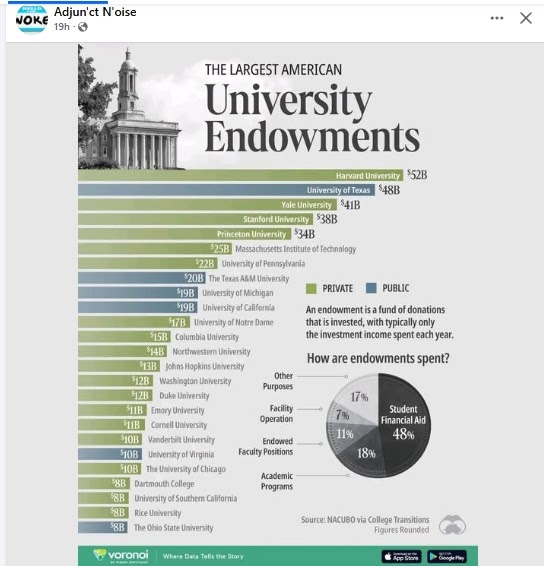
    We see it in the bloated salaries of university presidents who deliver austerity to everyone but themselves. We see it in billion-dollar endowments hoarded like dragon’s gold while students drown in debt. We see it in the metastasizing ranks of middlemen—consultants, online program managers, enrollment optimization firms—who profit off the dreams and desperation of working-class families.

    But greed in American higher education is more than a few bad actors or golden parachutes. It is institutionalized, normalized, and weaponized.

    The Student as Customer, the Campus as Marketplace

    It began with the rebranding of education as a “return on investment,” a transaction rather than a transformation. The purpose of college was no longer to liberate the mind but to monetize the degree.

    By the 1990s, under bipartisan neoliberal consensus, public colleges were defunded and forced to adopt the private sector’s logic: cut costs, raise prices, sell more. Tuition rose. Debt exploded. The ranks of administrators swelled while faculty were downsized and adjunctified. The market had spoken.

    But even that wasn’t enough. A generation of edu-preneurs emerged—Silicon Valley-funded disruptors, for-profit college chains, and online program managers—who turned learning into a scalable commodity. Robocolleges like Southern New Hampshire University, Purdue Global, and the University of Phoenix began operating more like tech platforms than institutions of thought.

    The result? Diploma mills at the front end and collection agencies at the back.

    Greed in the Name of God and Country

    Greed doesn’t always look like Wall Street. Sometimes it wears the face of morality. Religious colleges, some of them under the protection of nonprofit status, have become breeding grounds for political operatives and ideological grooming—while raking in millions through taxpayer-funded financial aid.

    Liberty University, Grand Canyon University, and a host of lesser-known Bible colleges operate under a warped theology of prosperity, turning salvation into a subscription plan. Meanwhile, they push anti-democratic ideologies and funnel money toward political causes far removed from the mission of education.

    Accreditation as a Shell Game

    The accreditors—the supposed watchdogs of educational quality—have been largely asleep at the wheel or complicit. When greed is the norm, accountability is an inconvenience. For-profit schools regularly reinvent themselves as nonprofits. Online program managers operate in regulatory gray zones. Mergers and acquisitions disguise collapse as growth.

    Accreditation agencies rubber-stamp it all, as long as the paperwork is tidy and the lobbyists are well-compensated.

    Debt as Discipline

    More than 43 million Americans carry federal student loan debt. Many will never escape it. This debt is not just financial—it’s ideological. It keeps the workforce compliant. It disciplines dissent. It renders critical thought a luxury.

    And those who push for debt relief? They are met with moral lectures about personal responsibility—from the same lawmakers who handed trillions to banks, defense contractors, and fossil fuel companies.

    Silicon Valley’s Hungry Mouth

    The new frontier of greed is AI. Tech giants like Google, Amazon Web Services, and Meta are embedding themselves deeper into education—not to empower learning, but to extract data, monetize behavior, and deepen surveillance. Every click, every quiz, every attendance record is a monetizable moment.

    Universities, starved for funding and afraid of obsolescence, are selling access to students in exchange for access to cloud infrastructure and algorithmic tools they barely understand.

    Greed Isn’t Broken—It’s Working as Designed

    In this system, who wins? Not students. Not faculty. Not society.

    The winners are those who turn knowledge into a commodity, compliance into virtue, and inequality into inevitability. Those who build castles from the bones of public education, then retreat behind walls of donor-backed endowments and think tanks. The winners are few. But they write the rules.

    A Different Future Is Possible

    If American greed is the norm, then what remains of education’s soul must be found in the margins—in the community college professor working three jobs. In the librarian defending open access. In the adjunct organizing a union. In the students refusing to be pawns in someone else’s game.

    The antidote to greed is not charity—it’s solidarity.

    Until justice is funded as well as football. Until learning is valued more than branding. Until access is more than a talking point on a donor brochure—then greed will remain not just a sin, but a system.


    Sources

    • U.S. Department of Education, National Center for Education Statistics

    • The Century Foundation, “The OPM Industry: Profits Over Students” (2023)

    • Chronicle of Higher Education, “Administrative Bloat and the Adjunct Crisis”

    • IRS Nonprofit Filings, Liberty University and Grand Canyon University

    • Debt Collective, “The State of Student Debt” (2025)

    • Public records and audits of Title IV institutions, 2022–2024

    • Higher Education Inquirer archives

    Source link

  • What the Fall of Rome Tells Us About the American Oligarchy

    What the Fall of Rome Tells Us About the American Oligarchy

    There are tax farmers squeezing a province dry. There are soldiers fighting for the emperor’s baton. And then there are a few who dread the empire’s fall and dream of the old republic.

    This is not just the story of ancient Rome. It’s also an apt metaphor for the state of contemporary America—a late-stage empire defined by extreme inequality, militarization, and a governing class that clings to power while the social fabric unravels.

    In Rome, the Senate once stood as the heart of the Republic, composed of elite Patrician families who wielded enormous religious, political, and economic influence. But as historian and economist Michael Hudson writes in The Collapse of Antiquity, these elites became entrenched creditors and landlords, a rentier class unwilling to compromise or adapt. They refused debt cancellation, land redistribution, or any reforms that might curb their power—transforming what was once a dynamic, if imperfect, republic into a brittle and parasitic empire.

    This refusal to evolve created an unsustainable system. Wealth concentrated in fewer hands. Small farmers and urban workers were crushed under debts. The rural economy collapsed as latifundia (large estates) displaced independent farmers. Military commanders, frustrated with elite gridlock, seized power for themselves. And the Senate, once a genuine force of governance, became a ceremonial shell. What followed was a long descent: civil wars, authoritarianism, economic stagnation, and eventually the re-feudalization of the West.

    Hudson’s view is clear: the Roman Senate and elite, by prioritizing their creditor rights over the common good, destroyed the economic base that sustained the Empire. In their greed and rigidity, they ensured the fall they feared.

    Now consider the United States. Like Rome, America has become dominated by a professional ruling class: oligarchs, financiers, tenured politicians, credentialed technocrats, and think-tank warriors. Institutions of higher education, once engines of democratic possibility, have increasingly become training grounds for this elite. And like the Roman Senate, they are largely unaccountable—privatizing gains, socializing losses, and suppressing reform.

    Just as Roman tax farmers drained the provinces, today’s student loan servicers, for-profit colleges, and hedge fund–backed housing firms squeeze the public to fund private empires. Just as Roman generals became emperors, today’s billionaires and media moguls wield near-sovereign power over public discourse, elections, and foreign policy. And just as the Roman elite clung to legal fictions while society crumbled, our ruling class insists the republic is healthy—even as inequality soars, infrastructure decays, and democratic norms erode.

    There are still those who long for a return to the “old republic”—to a time when education was a public good, when civic virtue mattered, and when government sought the common welfare. But those voices are increasingly drowned out in a landscape of imperial spectacle, culture wars, and managed decline.

    Hudson reminds us that ancient societies that survived economic collapse—like those in Mesopotamia—did so by recognizing the need for periodic resets. They canceled debts. They redistributed land. They prioritized stability over elite entrenchment. Rome—and perhaps America—refused to learn those lessons.

    In this moment of crisis, the choice is stark: will we continue down the path of empire, ruled by debt and extraction? Or will we recover some measure of republic, with institutions that serve people, not just capital?

    One thing is certain: empires fall. But their people don’t have to fall with them—if they choose to resist.

    Sources:

    • Michael Hudson, The Collapse of Antiquity: Greece and Rome as Civilization’s Oligarchic Turning Point, 2023

    • Mary Beard, SPQR: A History of Ancient Rome, 2015

    • Edward Gibbon, The Decline and Fall of the Roman Empire, 1776–1789

    • Kyle Harper, The Fate of Rome: Climate, Disease, and the End of an Empire, 2017

    • Higher Education Inquirer, ongoing coverage on student debt and elite university structures

    • U.S. Department of Education, data on student debt and institutional concentration of resources

    Source link

  • Higher Ed’s Broken Promises and the American Student

    Higher Ed’s Broken Promises and the American Student

    “I’m hung up on dreams I’ll never see.”

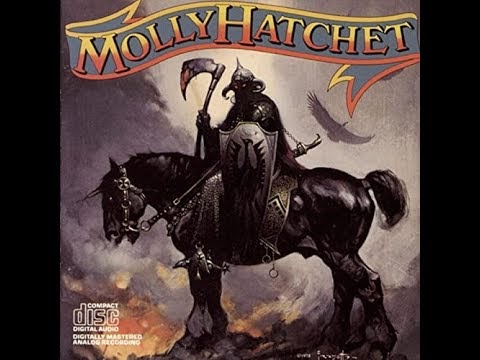
    That Southern rock refrain from Molly Hatchet captures the bitter reality faced by millions of Americans who invested in higher education only to be left with debt, shattered hopes, and uncertain futures.

    Educator Gary Roth’s The Educated Underclass points to a growing class of credentialed individuals caught in precarious economic and social positions—overqualified yet underpaid, burdened by debt without the stability education promised. Yet it is the borrowers’ own stories that reveal the human toll behind the numbers.

    Over the past month, The Higher Education Inquirer has chronicled the experiences of borrowers misled by predatory institutions—mainly for-profit colleges—through its Borrower Defense Story Series. These narratives shed light on the deeply personal consequences of institutional deception and a federal loan forgiveness process that is often slow, bureaucratic, and uneven.

    In one story, a single mother describes her experience at Chamberlain University School of Nursing. She followed every instruction, met every deadline, and committed herself fully to a career in health care. Yet she never earned her degree. Despite this, she remains burdened with thousands of dollars in student loan debt. Her borrower defense application has yet to yield relief.

    Another borrower shares her journey with Kaplan University Online, where promises of flexible learning and job placement proved empty. After transferring and completing her degree elsewhere, she still faces uncertainty as her borrower defense claim drags on, highlighting the emotional toll of navigating a broken loan forgiveness system.

    A third story critiques the broader system of higher education finance, describing how students—especially those without family wealth or institutional support—become trapped in debt relationships that limit their autonomy and economic mobility. Rather than offering a pathway to security, college becomes a mechanism of financial entrapment.

    Most recently, a former fashion student recounts how private loans—unlike federal loans—offered no path for borrower defense relief after she attended a program marketed with glowing career outcomes that never materialized. The result was devastating financial consequences with little recourse.

    These individual stories are not exceptions. As of April 30, 2024, over 974,000 borrowers had received more than $17 billion in loan discharges under borrower defense rules, mostly through group claims tied to scandals involving Corinthian Colleges, ITT Tech, and DeVry. Yet hundreds of thousands still await decisions, and many are excluded entirely due to private loans, school exclusions, or bureaucratic delays.

    The borrower defense rule was meant to shield students from fraud, but political interference, legal challenges, and an overwhelmed bureaucracy have marred its implementation. Behind the statistics are people deceived, indebted, and left behind.

    Meanwhile, elite institutions hoard resources, adjunct faculty struggle to survive, and the promise of higher education rings hollow for many.

    “I’m hung up on dreams I’ll never see.” This lyric is not just poetry but the lived reality for millions. Unless there is radical change—debt cancellation, labor protections, honest admissions, and accountability—the cycle of exploitation will only grow louder.

    Some were sold dreams they could never afford. Many of those dreams are now lost.


    Sources

    Roth, Gary. The Educated Underclass. Pluto Press, 2022

    National Center for Education Statistics. “Debt After College”

    The Institute for College Access and Success (TICAS). “Student Debt and the Class of 2023”

    American Psychological Association. “Mental Health Impacts of Student Debt”

    Bousquet, Marc. How the University Works. NYU Press, 2008

    McMillan Cottom, Tressie. Lower Ed. The New Press, 2017

    https://www.highereducationinquirer.org/2025/07/i-did-everything-right-and-im-still.html

    https://www.highereducationinquirer.org/2025/07/fashion-gone-bad-for-private-student.html

    https://www.gao.gov/products/gao-24-106530

    https://standup4borrowerdefense.com

    https://www.insidehighered.com/news/government/student-aid-policy/2023/10/24/colleges-concerned-about-rise-borrower-defense-claims

    Source link

  • Look to Your Culture (American Indian College Fund)

    Look to Your Culture (American Indian College Fund)

    Cheryl Crazy Bull, President and CEO of the American Indian College Fund, was the 2025 keynote speaker for Oglala Lakota College’s graduation ceremony. She acknowledges the difficulties Native communities are facing with the new administration’s budgets. Native experiences in the sixties and seventies led to a renaissance in Native communities and education and she cites the lessons they provide, based on Lakota culture, for surviving and thriving.

    Source link

  • American Higher Education and the Debt Trap

    American Higher Education and the Debt Trap

    They call it a “path to opportunity,” but for millions of students and their families, American higher education is just Flirtin’ with Disaster—a gamble with long odds and staggering costs. Borrowers bet their future on a credential, universities gamble with public trust and private equity, and the system as a whole plays chicken with economic and social collapse. Cue the screeching guitar of Molly Hatchet’s 1979 Southern rock anthem, and you’ve got a fitting soundtrack to the dangerous dance between institutions of higher ed and the consumers they so aggressively court.

    The Student as Collateral

    For the last three decades, higher education in the United States has increasingly behaved like a high-stakes poker table, only it’s the students who are holding a weak hand. Underfunded public colleges, predatory for-profits, and tuition-hiking private universities all promise upward mobility but deliver it only selectively. The rest? They leave the table with debt, no degree, or both.

    Colleges market dreams, but they sell debt. Americans now owe more than $1.7 trillion in student loans. And while some elite schools can claim robust return-on-investment, most institutions below the top tiers produce increasingly shaky value propositions—especially for working-class, first-gen, and BIPOC students. For them, education is often less an elevator to the middle class than a trapdoor into a lifetime of wage garnishment and diminished credit.

    Institutional Recklessness

    Universities themselves are no saints in this drama. Fueled by financial aid dollars, college leaders have expanded campuses like land barons—building luxury dorms, bloated athletic programs, and administrative empires. Meanwhile, instruction is increasingly outsourced to underpaid adjuncts, and actual student support systems are skeletal at best.

    The recklessness isn’t limited to for-profits like Corinthian Colleges, ITT Tech, and the Art Institutes, all of which collapsed under federal scrutiny. Even brand-name nonprofits—think USC, NYU, Columbia—have been exposed for enrolling students into costly, often ineffective online master’s programs in partnership with edtech firms. The real product wasn’t the degree—it was the debt.

    A Nation at the Brink

    From community colleges to research universities, institutions are now being pushed to their financial and ethical limits. The number of colleges closing or merging has skyrocketed, especially among small private colleges and rural campuses. Layoffs, like those at Southern New Hampshire University and across public systems in Pennsylvania, Oregon, and West Virginia, show that austerity is the new norm.

    But the real disaster is systemic. The American college promise—that hard work and higher ed will lead to security—is unraveling in real time. With declining enrollments, aging infrastructure, and increasing political pressure to defund or control curriculum, many schools are shifting from public goods to privatized risk centers. Even state flagship universities now behave more like hedge funds than educational institutions.

    Consumers or Victims?

    One of the cruelest ironies is that students are still told they are “consumers” who should “shop wisely.” But education is not like buying a toaster. There’s no refund if your college closes. There’s no protection if your degree is devalued. And there’s no bankruptcy for most student loan debt. Even federal forgiveness efforts—like Borrower Defense or Public Service Loan Forgiveness—are riddled with bureaucratic landmines and political sabotage.

    In this asymmetric market, the house almost always wins. Institutions keep the revenue. Third-party contractors keep their profits. Politicians collect campaign checks. And the borrowers? They’re left flirtin’ with disaster, hoping the system doesn’t collapse before they’ve paid off the last dime.

    No Exit Without Accountability

    There’s still time to change course—but it will require radical rethinking. That means:

    • Holding institutions and executives accountable for false advertising and financial harm.

    • Reining in tuition hikes and decoupling higher ed from Wall Street’s expectations.

    • Fully funding community colleges and public universities to serve as real social infrastructure.

    • Expanding debt cancellation—not just piecemeal forgiveness—for those most harmed by a failed system.

    • Ending the exploitation of adjunct labor and restoring the academic mission.

    Otherwise, higher education in the U.S. will continue on its reckless path, a broken-down system blasting its anthem of denial as it speeds toward the edge.

    As the song goes:

    “I’m travelin’ down the road and I’m flirtin’ with disaster… I got the pedal to the floor, my life is runnin’ faster.”

    So is the American student debt machine—and we’re all strapped in for the ride.


    Sources:

    • U.S. Department of Education, Federal Student Aid Portfolio

    • “The Trillion Dollar Lie,” Student Borrower Protection Center

    • The Century Foundation, “The High Cost of For-Profit Colleges”

    • Inside Higher Ed, Chronicle of Higher Education, Higher Ed Dive

    • National Center for Education Statistics

    • Molly Hatchet, Flirtin’ with Disaster, Epic Records, 1979

    Source link

  • A Call for Revolutionary Hope in American Higher Education

    A Call for Revolutionary Hope in American Higher Education

    In a fiery and prophetic address, the House Minority Leader Hakeem Jeffries invoked the memory of America’s original struggle for freedom, branding the tyranny of King George III in the years before the American Revolution as “Project 1775.” With bold clarity, he drew a straight line from that era of oppression to today’s rising authoritarianism—what he identified as “Donald Trump’s Project 2025” and the accompanying Trump Spending Bill. But rather than ending in despair, his speech was a call to courage and hope: just as Project 1775 gave birth to the Revolution of 1776, we are called to give birth to a new movement—Project 2026, a revolutionary vision of democracy, justice, and renewal.

    His message resonates beyond politics—it speaks deeply to the state of American higher education, which now stands at a crossroads. Under siege from authoritarian impulses, stripped of funding, and commodified by corporate greed, our colleges and universities reflect a nation in spiritual crisis. But as the Minority Leader reminded us, this moment is also one of great opportunity.

    “For God has not given us a spirit of fear, but of power and of love and of a sound mind.” (2 Timothy 1:7)

    Project 2026 is not merely a reaction to tyranny—it is a faith-driven declaration of agency. It is a call to restore education as a public good, not a private racket. It is a rejection of robocolleges, shadowy online program managers, and predatory lenders that have turned learning into a means of lifelong debt. And it is a stand against those who weaponize ignorance and rewrite history for their own gain.

    We are reminded in the New Testament that resistance is righteous, and that reform must be rooted in love, justice, and truth.

    “And you will know the truth, and the truth will set you free.” (John 8:32)

    This truth must guide the next phase of the American experiment—a truth that recognizes students not as consumers but as citizens; that sees teachers not as disposable labor but as bearers of light; and that understands education as liberation, not subjugation.

    Project 2026 can become our modern Sermon on the Mount, a blueprint for building a nation where colleges nurture both critical thinking and spiritual compassion, where public funding is a covenant—not a weapon—and where we “do justice, love mercy, and walk humbly with our God” (Micah 6:8).

    For decades, institutions of higher learning have drifted toward elitism, exclusion, and exploitation. Many have served as tools of empire, not vessels of enlightenment. Project 2026 offers a rebirth—a Great Awakening that opens the doors of education wide to the poor, the marginalized, and the weary. It speaks to the tired adjunct, the indebted graduate, the first-generation student, and the worker seeking dignity.

    “Blessed are those who hunger and thirst for righteousness, for they will be filled.” (Matthew 5:6)

    This is the moment to stand together. Project 2026 must not be left to chance or left in the hands of the powerful alone. It is a grassroots revolution of the mind and spirit—a multiracial, multigenerational, moral movement that calls upon students, faculty, parents, and communities to say: No more.

    No more austerity cloaked as fiscal responsibility.

    No more censorship masquerading as patriotism.

    No more debt for a degree that leads to precarious work and empty promises.

    Instead, let us build an education system worthy of democracy—a system animated by the values that once inspired a ragtag group of rebels in 1776. Let us be the generation that reclaims education as the soul of the Republic.

    “Do not conform to the pattern of this world, but be transformed by the renewing of your mind.” (Romans 12:2)

    The struggle ahead will not be easy. But neither was 1776. And yet from that fire emerged a new nation. With faith and fierce love, Project 2026 can become a new declaration—not just of independence, but of interdependence. A declaration of solidarity with the forgotten, the silenced, and the struggling.

    Let the tyrants tremble. Let the profiteers beware.

    A revolution is stirring in our hearts.

    And as Scripture reminds us:

    “If God is for us, who can be against us?” (Romans 8:31)


    Sources:

    • The Holy Bible, New Testament

    • House Minority Leader remarks, July 3, 2025

    • Trump-aligned Project 2025 blueprint (Heritage Foundation)

    • Trump Budget and Spending Bill (2025)

    • The Higher Education Inquirer archives on privatization, debt peonage, and adjunct labor in U.S. higher education

    Source link

  • Religion’s Ever-Shifting Role in American Higher Education

    Religion’s Ever-Shifting Role in American Higher Education

    Religion, particularly Protestantism, was central to the mission of the country’s first universities. Chapels were constructed at the center of campuses. University presidents, often devout, worried over the salvation of their students.

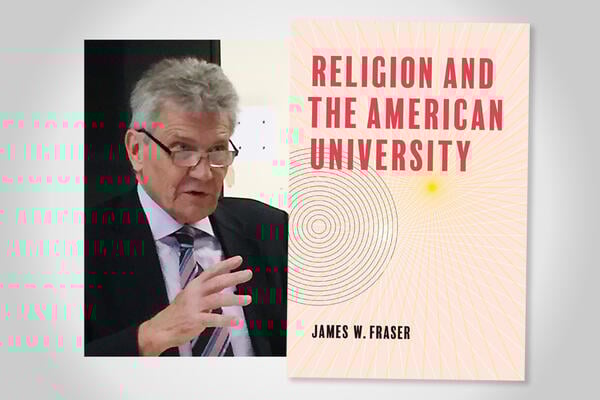
    James W. Fraser’s new book, Religion and the American University (Johns Hopkins University Press), offers a detailed history of how religion’s role in higher ed has been upended again and again by transformative events, including the discovery of evolution, the emergence of biblical criticism, the Industrial Revolution and the advent of the modern-day research university.

    It outlines how religion cropped up in students’ lives in new ways as they continued to grapple with moral and ethical questions and as various denominations and faiths vied for their attention and adherence. The book charts how the academic study of religion developed, how campus chaplains and religious student groups diversified along with student bodies, and how religious differences on campuses created new learning opportunities and tensions.

    Fraser, a professor emeritus of history and education at New York University and a United Church of Christ minister, argues that while much of academe pushes religion to its periphery, today’s students are still concerned with questions of spirituality and meaning.

    Fraser spoke with Inside Higher Ed about the new book. The conversation has been edited for length and clarity.

    Q: Your book details massive changes in the role of religion in higher ed, from Protestant-dominated universities to institutions with more diverse student bodies and chaplaincies, and from religion-centric to more secularized. You describe a shift away from the idea of colleges that “transmitted knowledge” to colleges that “created new knowledge” as research universities came about. What do you think higher ed has gained or lost in these transitions?

    A: There is no question that the transition from the old-fashioned teaching college to the research university has done a couple of really important things, not only for students but for society. One is that being able to invite students to be fellow researchers in the pursuit of knowledge is always a much better pedagogical approach than “You will learn this, and you will learn that,” and people can learn it and forget it pretty quickly.

    I also think for all of us who criticize the research university, we have to remember all of the extraordinary accomplishments. Human life is twice as long because of medical research. Food supplies are much more plentiful because of agricultural research. Educational studies have helped more and more students learn how to read. The list goes on and on. The breakthroughs of the research university are huge.

    In terms of what is lost, I think the clearest issue is in some ways described by Julie A. Reuben in The Making of the Modern University. The intellectual developments have gotten so much stronger than … attention to issues of meaning, purpose and belonging … Attention to issues of spirituality and faith have been marginalized significantly, and there’s certainly a norm in the research university now that scientific research—what you can count—counts the most. And what you care about and what you value count less. And that I find very problematic.

    Q: You discuss in the book how today’s students have a deep interest in meaning-making and spirituality, if not religion, per se. Do you think it’s part of a college’s role to address that, and if so, how should institutions go about it?

    A: I think it better be a part of colleges’ role, and I would say that for a couple of reasons. One is, asking questions of meaning, purpose, belonging, questions of faith, questions of morality, are pretty essential if we’re going to maintain and protect our democracy and our society in the 21st century. And if we simply say institutions are going to do this very specific kind of research and are going to teach professional skills, and we’re going to evaluate universities by how much money the students make when they graduate, we stop teaching about things that will sustain our society and will sustain human beings in the future. That’s a huge loss. The second issue is, I just think it’s stupid for universities to disregard student interest when it’s there. If students are interested in these things, we should find ways to talk about it.

    I also think—and this is an issue explored in the book a lot—it’s often in the extracurricular areas that the students are able to pursue these [questions]. They pursue them with chaplains, they pursue them with their own individual groups, whether it’s Baháʼí Fellowship or InterVarsity Christian Fellowship. They find other ways … But I don’t think that lets faculty off the hook to develop the kinds of courses [that] let it be done as part of the regular academic curriculum. That’s what we do as professors, and that’s something we ought to offer our students. I think it’s cheap letting ourselves off the hook when we say, “Oh well, they’ll find it elsewhere.”

    Q: In the book, you repeatedly highlight a tension within religious communities as to whether to invest in and urge students toward explicitly religious colleges or whether to prioritize building up religious infrastructure at unaffiliated colleges—like chaplains, Hillels and other religious student organizations. Do you think that tension plays out today, and if so, in what ways?

    A: I think it plays out very much today. There are people who feel like their young people will only be safe in religious institutions. And there are other people who say, “No, let’s go to the best college we can find. Let’s go to the best state university we can find.”

    I have a bias. I favor the religious groups that are finding ways to make a place for themselves in the larger universities. As a conclusion of this book, I talk about Baylor University, which is trying so hard to do both—to both be a religious school and a Research-1 university. And I wish them luck. I admire them. And I think it’s going to be more difficult than they think it’s going to be.

    But I think that for many universities … religion finds its own place on the margins, and that can be with chaplains, that can be with student groups. But students care about these issues, and they’re not going to disappear.

    Q: The book touches on the beauties of campus religious diversity but also some of the challenges, including the ways that campuses have been rocked by the October 2023 attack on Israel by Hamas and Israel’s invasion of Gaza. Since then, campus antisemitism has been a flash point for the Trump administration’s dealings with higher ed and institutions have been penalized for how they’ve handled pro-Palestinian protests. Having watched how these issues played out, is there anything you would have added to the book on the topic?

    A: I mentioned it in one paragraph in the end because it was just going to press, but I would have done a lot more with the challenges that religious diversity [brings]. We live in a world where the Trump administration is attacking diversity, and yet religious diversity is a kind of diversity. Chaplains are telling me they’re feeling tensions about that.

    I think the violence, particularly since the Hamas attack on Israel and Israel’s response in Gaza, has set student against student in a way that is going to take decades to recover. Whether you’re a Jewish chaplain or a Muslim chaplain or a chaplain of some other faith, trying to deal with that, with that kind of student pain and student anger and student lashing out and student response, is making it very difficult. Discussions about religion are more difficult than they were two years ago.

    And the same is true for religious studies. We’ve seen several examples of religious studies professors who have gotten in trouble. One got in trouble for showing a picture of the Prophet Muhammad in class when some interpretations of Islam say you can’t do it. Another professor lately, who The New York Times profiled, got fired. She was a Jewish professor, but she was outspoken in defense of Gaza, the Palestinian population, and she got fired for it. These things are going to happen. And the pressure on universities—a couple of chaplains have told me they feel like the administration is looking over their shoulders in a way that was not true two years ago and asking, “What are you saying to the students? What are they praying about? Why do we need this kind of disruption?”

    I was talking to one of my [former] students, a current chaplain, and he said that this last year has been the most difficult of his decades in chaplaincy. I think that’s not rare.

    Q: You focus a sizable chunk of the book on the role of religion at public universities, which aren’t necessarily the first institutions that come to mind when we think about higher education and religion. Why was it important to you to include these institutions and make them a focus?

    A: The obvious answer is the majority of American students go to public universities, by far. And to do a study of any aspect of American higher education that ignores public universities is simply silly. I’ve read some other studies that I thought were very thoughtful about religion that didn’t include public universities, and I thought, “But that’s where the students are. We’ve got to do that.”

    The second issue is, I found public universities’ relationship with religion very interesting and far more complicated than I thought. In the 1880s, University of Illinois expelled a student for not attending chapel. As late as the eve of World War II in 1939, a quarter of state universities had chapel services—not always required, but they offered them. So, state universities were … pretty much generic Protestant institutions until really the 1960s, 1970s. Faculty culture wasn’t particularly religious in the way it was in the 19th century, but the campus culture and the campus assumptions were.

    The other thing I found is that there’s a wily religious life on state university campuses of one sort or another. It’s often led by chaplains working around the margins, and they feel marginalized, but they’re also very effective working around the margins … I was intrigued.

    [For example,] I was intrigued by the University of Nevada, Reno, a public university barred by the state Constitution from supporting religion, but it fosters dialogue. I wish more universities were willing to do that. They hosted a conversation on the role of women in religion [in partnership with a local synagogue]. A public university cannot take a stand—we favor this or we favor that—but they don’t need to be afraid of hosting conversations on a variety of topics … That engages with the community. I think universities hold back from engaging with communities on all sorts of issues, but they certainly hold back from engaging with religious communities.

    Source link

  • Tech Titans, Ideologues, and the Future of American Higher Education

    Tech Titans, Ideologues, and the Future of American Higher Education

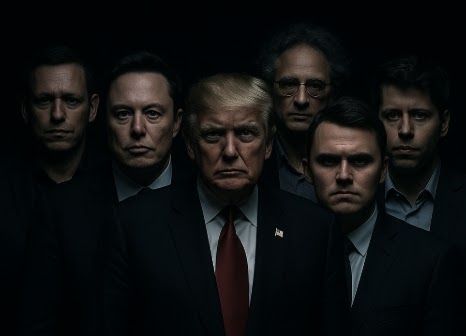
    American higher education is under pressure from within and without—squeezed by financial strain, declining enrollment, political hostility, and technological disruption. But the greatest challenge may be coming from a group of powerful outsiders—figures with deep influence in politics, technology, and media—who are actively reshaping how education is perceived, delivered, and valued. Among them: Donald Trump, Elon Musk, Peter Thiel, Sam Altman, Alex Karp, and Charlie Kirk. Each brings a different ideology and strategy, but their combined influence represents an existential threat to traditional colleges and universities.

    Donald Trump’s second rise to power has included a full-spectrum attack on elite and public institutions of higher learning. From threats to strip funding from schools that promote diversity, equity, and inclusion, to freezing billions in research grants at elite institutions like Harvard, Trump has positioned universities as enemies in a broader cultural and political war. His proposed education policy emphasizes trade schools and short-term credentials over liberal arts and research, while his administration has floated revoking accreditation from institutions that resist his agenda. Rather than investing in public education, the Trump agenda calls for punishment, privatization, and obedience. And for institutions that don’t comply, there are growing threats of taxation, defunding, and public humiliation.

    Elon Musk is undermining higher education in a different way. Musk has openly mocked the need for college degrees, suggesting that “you can learn anything online for free.” While that’s partly rhetoric, it’s also a blueprint for disruption. His experimental school Astra Nova already offers a glimpse into a post-institutional future—one that favors creative, independent thinking over traditional credentialing. Now, with plans to launch the Texas Institute of Technology & Science, Musk is betting that elite training can happen outside the bounds of accreditation and federal oversight. Musk’s future is technocratic and libertarian, with universities seen as bloated, slow-moving, and culturally out of touch.

    Peter Thiel’s vision is even more radical. Thiel has compared American higher education to the Catholic Church before the Reformation—rich, corrupt, and intellectually bankrupt. His Thiel Fellowship pays young people to skip college entirely, offering $100,000 to start companies instead of accumulating debt. He argues that universities reward conformity and delay adulthood. For Thiel, colleges don’t just fail to prepare students—they actively mislead them. His endgame is a decentralized, market-driven system in which talent rises through initiative and capital, not credentials.

    Sam Altman, CEO of OpenAI, presents yet another threat—this time from artificial intelligence. Altman doesn’t reject learning, but he does question the institutions that monopolize it. With tools like ChatGPT and future AI tutors, Altman envisions personalized, real-time learning for everyone, everywhere. In this model, universities risk becoming obsolete—not because they are wrong, but because they are too slow and too expensive. Altman has also pushed universities to take a more active role in shaping AI policy; if they don’t, the tech industry will do it for them. The message is clear: adapt or be replaced.

    Alex Karp, CEO of Palantir, is building a new kind of corporate university. Through programs like the Palantir Meritocracy Fellowship and “Semester at Palantir,” Karp is recruiting students directly out of elite schools—particularly those disillusioned by what he sees as anti-Israel sentiment or campus censorship. These programs offer practical, high-paid experience that bypasses traditional academic pathways. Karp’s vision doesn’t require the elimination of universities—it just renders them unnecessary for the most competitive jobs in tech and intelligence. His model suggests a future in which corporations, not universities, decide who is qualified.

    Charlie Kirk, founder of Turning Point USA, has weaponized the culture war to delegitimize higher education entirely. Kirk’s brand of activism portrays universities as corrupt, anti-American indoctrination centers. Through social media campaigns, donor networks, and student chapters, he has built an infrastructure of resistance against academic institutions. His goal isn’t reform—it’s replacement. Through efforts like the Freedom College Alliance, Kirk is helping to build a parallel educational system rooted in conservative Christian values, classical curricula, and ideological purity. In Kirk’s world, higher education isn’t broken—it’s the enemy.

    Together, these six men are shaping a new, fragmented future for American education. Some want to burn it down. Some want to replace it. Some want to privatize it or profit from its collapse. What they share is a conviction that traditional universities no longer serve their intended purpose—and that a new model, rooted in tech, politics, or religion, must take its place.

    This isn’t a theoretical debate. Universities are already responding—cutting liberal arts programs, racing to implement AI tools, rebranding themselves as career accelerators, and seeking favor with donors who increasingly resemble these disruptive outsiders. For those who resist, the future may include not just funding cuts, but political investigations, lawsuits, and public smear campaigns.

    Higher education faces a stark choice. It can double down on its public mission—defending critical thinking, civic engagement, and social mobility—or it can retreat into elite credentialing and survival mode. What it cannot do is ignore the forces gathering at its gates. These forces are rich, powerful, ideologically driven—and they are not waiting for permission to remake the system.

    Source link

  • Is the Partnership for American Innovation Gone? (opinion)

    Is the Partnership for American Innovation Gone? (opinion)

    In January I wrote a piece asking whether America’s research universities would make it to their 100th birthday, marking their birth with the creation of the National Science Foundation in 1950—its 75th birthday was May 10. The article built on concerns that our research universities are in a precarious state, with their resources stretched thin supporting their dual missions of education and research. At the end I added a new concern: with the beginning of the Trump administration would these institutions survive the year?

    In only the first 100-odd days, the precipitous cancellation of grants and freezing of research support and now the proposed slashing of the budgets of the NSF and the National Institutes of Health and dramatic increase in the tax on university endowments have made my worst fears real. Are we really trying to end the partnership that has led to the greatest period of innovation in history?

    With the creation of the NSF, the government and universities established a research partnership to feed the American economy and national defense and to train the R&D labor force. The partnership was supported by funding from both sides, coupled with an unrelenting commitment to research excellence and impact. By any measure it has been wildly successful, generating new knowledge, inventions and cures and educating generations to lead our economy and society.

    In 2022 alone, the 174 Carnegie R-1—very research intensive—universities filed more than 20,000 patent applications and were granted nearly 6,000. But perhaps to understand why sustaining this partnership is vital to our future we only need to recall that the mRNA vaccines that spelled the end of the COVID-19 pandemic were built on research supported over decades by the NIH.

    The scale of the partnership is apparent in the data: In 2022, university research spending totaled $97.8 billion, with $54.1 billion coming from the federal government. What has not been widely acknowledged is that universities contributed $24.5 billion of this total in the form of self-supported research and cost sharing, especially supporting the misunderstood indirect costs of research. Many of these expenses are not so “indirect,” as they support specialized spaces, facilities and instruments—you cannot do research in a parking lot.

    Universities invested 45 cents for each federal research dollar received— this is the financing of the partnership. It seems like a bargain for the government to contribute only 0.2 percent of GDP (or less than 1 percent of the federal budget) to fuel innovation and the labor force of the world’s largest economy. Federal support of university research has grown only 44 percent since 2010. This compares to China’s threefold growth in investment in its universities.

    The Chinese investment highlights the increasing competition for research talent, and we risk falling behind. Other countries are emulating us, building research universities and trying to attract the stream of talent that has come to the U.S. to learn, work and live. Our chilling climate for immigrants is making it much easier to lure this talent abroad.

    American universities have done what they can to stay in front, with their own support of research growing twice as fast as federal funding, up from 30 cents to a federal dollar in 2010. It will be difficult for universities to continue to grow this investment. Following the pandemic, inflation has taken its toll. Now the funding cuts already imposed, and the enormous ones in the administration’s proposed budget, will shift billions in research costs to universities—costs they cannot afford. The proposed 15 percent cap on indirect costs alone—spread across all federal support—could cost the R-1 universities more than $10 billion, doubling their support relative to the federal government.

    The result will be catastrophic, with universities retreating from research, essentially destroying in a few months the innovation ecosystem built over three-quarters of a century. The long-term impact will be devastating for all Americans, as measured in undiscovered inventions and cures, the global competition for ideas and people, and the country’s future economic prosperity.

    Our innovation ecosystem will be hamstrung by the loss of a generation or more of research talent, who are either not trained or who go elsewhere. Already our talent pipeline is being constricted by cutting in half the number of NSF fellowships awarded to the most promising scientists and engineers. Reports also are mounting of scientists moving to countries where they are warmly welcomed with substantial government support. Is this our national strategy to strengthen America’s knowledge-based economy?

    We are on the verge of an innovation winter that will last decades when we can ill afford it as we respond to demands to improve health care, compete for global dominance in AI and other critical technologies, and create a secure and peaceful world. Universities do face important challenges, such as expanding access, educating more Americans to be informed and thoughtful citizens, and giving them the skills to thrive in an AI-driven world. Universities can meet these challenges if they are supported.

    We must avoid the innovation winter by continuing the partnership so our research universities remain the beacons for innovation and education that they have been for three-quarters of a century. This is the only way to keep America at the forefront, not at the back of the pack.

    This choice is what is at stake for all of us.

    Robert A. Brown is president emeritus of Boston University.

    Source link