Tag: American

  • The Importance of Discussion in American History

    The Importance of Discussion in American History

    Reading Time: 3 minutes

    Psychologists call it choice paralysis. For me, it’s more like choice defeat. When confronted with too many options, I shut down. I still remember the first time this happened. I went to the mall for some new clothes (it was the ’90s and there was no internet). Almost immediately, my entire emotional world seemed to collapse. I was overwhelmed and had to leave. So, I drove home in my awesome Subaru Justy (I had a white one!)

    The choices are endless

    Fast forward 30 years, and the same thing happens to me when I’m selecting textbooks and primary sources for my United States history survey. There are so many amazing history textbooks. Each one has so much information with many broad points, specific examples, charts, maps, and student learning outcomes.

    Then, there’s the availability of primary sources, with millions upon millions of available documents. I’m thankful for resources like, Chronicling America and books.google.com, but still struggle. I feel awash in a sea of too many options.

    Major Problems in American History takes a different approach

    Major Problems in American History, Volume I

    I approached our new edition of “Major Problems in American History, Volume I and Volume II” to help educators like me. Instead of offering more content, I tried to offer better direction. I hoped that reading this text would be less like going to the mall for new apparel and more like receiving a curated clothing box. This new fifth edition of “Major Problems in American History” offers clear direction for students in various ways.

    Chapter structure

    Each chapter begins with succinct introductions (two–four pages) that invite students to explore the major themes and issues of a historical era. A timeline with about 10 key moments follows. Together, the short introduction and timeline don’t overwhelm the reader, but rather invite them to engage with the text. This quickly sets the stage for the primary sources later to come.

    Selection of primary sources

    The primary sources revolve around one or two central problems from each era. For example, the chapter on so-called “Jacksonian Democracy” asks: why did some Americans revere Andrew Jackson while others despised him? This fundamental issue, or “major problem,” determines which sources I included and how I ask students to approach them. By looking at sources related to the Indian Removal Act and its consequences, debates about state nullification of federal laws, and every high school teacher’s beloved Bank War, instructors can analyze with a purpose.

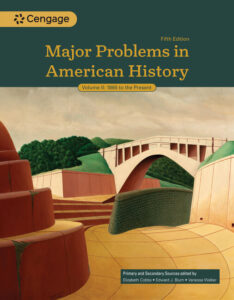
    Major Problems in American History, Volume II cover image
    Major Problems in American History, Volume II

    The purpose of secondary sources

    The primary sources and the major problem they address then take center stage in secondary sources where historians offer differing perspectives on the fundamental issue students are analyzing. Students follow how professional historians have dealt with the main problem, what sources they examine, and how they make meaning of the sources. In this way, the historical scholarship becomes a teaching tool. Secondary sources help teach students differing approaches to analysis.

    In the chapter on early English colonizing of North America, historians and source authors, Rachel Herrman and Rachel Winchcombe examine the “starving time” of Jamestown. Herrman looks at reports from this time to understand how the English continued to market colonization as reports of scarcity – and even cannibalism – became widespread. Winchcombe uses archeological evidence and even bone analysis to uncover what the people of Jamestown actually ate to understand how this experience of colonization influenced approaches to dietary behaviors. As students read the primary and secondary sources, they can reflect upon the major problem framed in each chapter, and hopefully embrace the complexities of the past and begin the challenging process of drawing their own conclusions about it.

    This edition of “Major Problems in American History” is for the instructors and students who want to maximize their time interpreting, discussing, and sinking their teeth into fundamental issues from the past. The goal is to avoid overwhelming amounts of content and data, and instead let students wrestle with issues from the past, many of which continue to impact people today.


    Written by Edward J. Blum, Professor of history at San Diego State University and co-author of “Major Problems in American History, Volume I and Volume II,” 5e


    Interested in learning more about “Major Problems in American History” by Edward J. Blum, Elizabeth Cobbs and Vanessa Walker? Check out Volume I and Volume II for your history course, coming later this spring, 2025, and browse other history titles on our discipline page. 

    Source link

  • Higher Education and the American Empire

    Higher Education and the American Empire

    The Higher Education Inquirer has had the good fortune to include scholars like Henry Giroux, Gary Roth, Wendy Lynne Lee, Bryan Alexander and Richard Wolff.  And their work certainly informs us about higher education. With those authors and others from the past and present (like Upton Sinclair, Craig Steven Wilder, Davarian Baldwin, and Sharon Stein), we can better understand puzzling issues that are rarely pieced together.  

    In 2023, we suggested that a People’s History of US Higher Education be written. And to expand its scope, the key word “Empire” is essential in establishing a critical (and honest) analysis. Otherwise, it’s work that only serves to indoctrinate rather than educate its citizens.  And it’s also work that smart and diligent students know is untrue.  

    A volume on Higher Education and the American Empire needs to explain how elite universities have worked for US special interests and the interests of wealthy people across the globe–often at the expense of folks in university cities and places around the world–and at the expense of the planet and its ecosystems. With global climate change in our face (and denied), and with the US in competition with China, India, Russia, in our face (and denied), this story cannot be ignored.

    This necessary work on Higher Education and the US Empire needs to include detailed timelines, and lots of charts, graphs, and statistical analyses–as well as stories. Outstanding books and articles have been written over the decades, but they have not been comprehensive. And in many cases, there is little to be said about how this information can be used for reform and resistance. 

    Information is available for those who are interested enough to dig. 

    Understanding the efforts of the American Empire (and the wealthy and powerful who control it) is more important than ever. And understanding how this information can be used to educate, agitate, and organize the People is even more essential.  We hear there are such projects in the pipeline and look forward to their publication. We hope they don’t pull punches and that the books do not gather dust on shelves, as many important books do. 

    Key links:

    The Best Classroom is the Struggle (Joshua Sooter)

    Higher Education Must Champion Democracy, Not Surrender to Fascism (Henry Giroux)

    Source link

  • A Q&A with the American Historical Assoc. executive director

    A Q&A with the American Historical Assoc. executive director

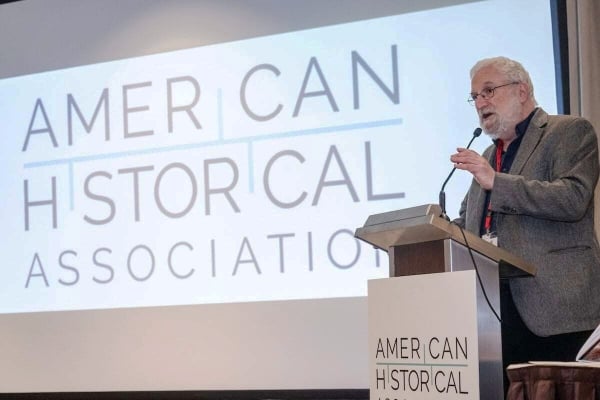
    A chapter of history is closing: Jim Grossman is retiring after 15 years as executive director of the American Historical Association, a group of more than 10,400 members. He began leading the scholarly organization after two decades at Chicago’s independent Newberry Library, where he was vice president for research and education. His own scholarly work focused on American urban history, especially of Chicago, and the Great Migration of African Americans.

    In the past decade and a half, the AHA and its members have commented on contemporary controversies that have arisen from or invoked historical events, such as the Charlottesville, Va., white supremacist rally; the debate over whether to remove Confederate monuments; the Jan. 6, 2021, U.S. Capitol insurrection; and more. Over that time, lawmakers in some states began restricting how history—especially when it’s relevant to current events—is taught.

    Grossman headed the AHA amid such controversies and has repeatedly spoken out in defense of the discipline. He’s denounced the first Trump administration’s 1776 Commission report, which criticized histories produced by Howard Zinn and The New York Times Magazine’s 1619 Project. Grossman called the report “history without historians.” He’s also pushed for other historians to do more public-facing work.

    The AHA has itself faced criticism during Grossman’s tenure, including for then-president Jim Sweet’s critique of The 1619 Project in 2022. This past weekend, it entered another current controversy when attendees of its annual conference overwhelmingly passed a resolution opposing “scholasticide” in Gaza and the U.S. government’s funding of Israel’s war.

    Inside Higher Ed interviewed Grossman shortly before that conference about his tenure and the current issues the history discipline faces. The questions and answers have been edited for clarity and length.

    Q: Why did you apply to become executive director in the first place?

    A: I had been involved in a variety of AHA activities. There were things I was trying to do in Chicago at the Newberry Library that involved increasing the public scope of historians. What the AHA provided was the opportunity to do some of those things on a national scale, rather than just within Chicago. How do we get historians to be more involved in public culture, more influential in public policy?

    Q: Why are you retiring now?

    A: I’m 72 years old. It’s time for somebody younger to be doing this work—not because I don’t enjoy it, but because I think it’s important for membership organizations to be directed by people who are generationally closer to the membership and the audience. And I’ve had 15 years to accomplish what I’ve tried to accomplish.

    Q: What have your biggest accomplishments been?

    A: At least getting started on helping the discipline rethink the definition of historical scholarship—to broaden the definition of scholarship for promotion and tenure. We came out with recommendations that departments are taking seriously about thinking about going beyond books and peer-reviewed articles. Reference books, textbooks, op-eds, testifying in legislatures and courts—all of these things are works of scholarship.

    Second is I think that we reoriented the AHA towards a much broader scope, so that the AHA and the discipline itself take teaching more seriously. Our annual conference is no longer “a research conference”; it includes all sorts of things that relate to teaching, that relate to advocacy, that relate to professional development. I also think that we have ramped up and broadened our advocacy work. We’re very active in state legislatures now; we’re very active in reviewing changes to state social studies and history standards for K-12 education. So, we’ve kept our focus on Capitol Hill and in Washington, but we’ve moved out to the states.

    Q: Why did you make such an emphasis during your tenure on broadening the focus of AHA? Is it because of a decline in tenure-track, traditional faculty jobs for new history Ph.D. earners?

    A: That was part of it. But that came later. I had that goal from the very beginning because I became a historian because I think historians are useful to public culture as well as academia. If I had my druthers, every time a decision was made at a table in government, private sector, nonprofit sector, I would want a historian at the table. Everything has a history, and since everything has a history, historical context always matters when you’re making decisions, when you’re trying to develop good judgment.

    That’s what someone learns in a history course. They learn judgment by thinking about the past. Historians don’t need to be working just as teachers and professors. Historians should be everywhere.

    Q: You’re saying you’ve gotten AHA more involved in state legislatures, in discussions of state standards—all of these things are political or politics-adjacent, right?

    A: Not necessarily. Let’s start with the federal level. We work on the Hill and in federal agencies to promote history. Our congressional charter, which goes back to 1889, says that we are here to promote history. So that’s not politics. It’s engaging in politics in order to promote history, yes. We are providing historical context to congressional staff so that they can make well-informed decisions when they make recommendations to their member. If you’re going to think about immigration policy, you need to know the door was closed for 40 years.

    There are times when we take stands that are perceived as political. We took a stand against the Muslim ban, for example. But we did so on the basis of what we’ve learned from history. State legislatures, it’s the same thing—we are promoting the integrity of history education. We are saying high school teachers need to be trusted as professionals, high school teachers should not be censored in the classroom; we are saying that state history standards should be good history.

    Q: What are the biggest issues within K-12 history—teaching and learning—and how do they actually impact colleges and universities?

    A: State legislatures have mandated that certain things have to be taught for years. What they have not done in the past is say certain things cannot be taught, which is censorship. There’s very little precedent for this. So that is one big challenge, which is fighting back against this notion that state legislatures can tell teachers you cannot teach X, Y or Z. And that affects college because if students don’t learn things in high school, then they’re less prepared when they get to college. If students don’t learn in high school that racism has been a central aspect of American history since Europeans came to the Americas—if students don’t learn that in high school, then the college professors are starting off at a much different level.

    If I had my druthers, every time a decision was made at a table in government, private sector, nonprofit sector, I would want a historian at the table.”

    —Jim Grossman

    We do know that young people are reading less. Instead of wringing our hands and saying they have to read more, we need to step back and ask ourselves, “How do we rethink our college courses for students who are now educated differently?” That doesn’t mean that we shouldn’t be pushing them to read, but it also means that we need to think about different ways of teaching history.

    Q: Has the discipline of history become increasingly polarized over your tenure?

    A: The discipline itself has not been polarized. Historians are still much more capable of disagreeing with each other in a civil manner than my neighbors in the capital. The larger polarization in public culture has harnessed the discipline of history in the same way it’s harnessed other disciplines and other aspects of life, but no, historians are still arguing with each other in a way that’s productive and constructive.

    Q: How do you expect the Trump administration and Republican control of both chambers of Congress to impact the discipline of history?

    A: I have no idea—that’s why we’re here to watch.

    Q: I know you’ve expressed concern about the 1776 Commission coming back.

    A: There has been talk among people who are part of the incoming administration of reviving the 1776 Commission and that notorious report, and so I’m concerned about that possibility, and I’m prepared for that possibility, and when things like that happen, we will speak out.

    Q: What impact has The 1619 Project had on the teaching of history and history scholarship? For instance, I know you were leading the AHA as it faced controversy over former association president Jim Sweet’s criticism of that work.

    A: Jim Sweet, like every historian, has a right to criticize any work of historical scholarship. The 1619 Project is not a work of historical scholarship. It’s—according to its compiler, its organizer—it’s journalism. And that’s fine, and there are aspects of it that I and many of my colleagues agree with, and aspects of it that I and many of my colleagues disagree with, just like any other piece of historical scholarship or journalism. It’s an easy target for people who want to take one thing that has been controversial and then use it for all sorts of other purposes.

    Controversies that ask people to ask questions are useful. It’s useful for teachers to be able to say to students, “So how do we think about the beginnings of a nation? Do we think of the beginning of a nation as the creation of its governing documents? Or do we think about the beginnings of a nation as the origins of its economy? Or do we think about the beginnings of the nation as the beginning of its culture, or as the origins of it, the roots of its culture?” Those are good historical questions, and The 1619 Project has initiated or nourished those questions.

    Q: What impact have the ongoing Israel-Hamas war and related U.S. higher education developments had on the teaching and study and scholarship of history?

    A: I think that many people who teach Middle Eastern history have probably been more careful, and I suspect that classroom management has been more difficult because it’s an emotional topic. But it’s different from The 1619 Project. The 1619 Project offered a certain way of understanding the history of the United States, and a controversial way of seeing the history of the United States—and offered, therefore, teachers an opportunity, or a nudge, to ask important questions and have students address them.

    That’s very different from a war that’s happening on the other side of the world. It’s important to the United States, it’s important to Americans, but it doesn’t have the same valence in teaching a course in American history, which is the most widely taught course in the United States. It does mean that historians have to balance sensitivity to diversity of students in their classroom with the integrity of the history that they teach.


    Source link

  • » The international student’s guide to American holidays and traditions

    » The international student’s guide to American holidays and traditions

    Holidays and traditions vary across the globe, from hemisphere differences to religious, cultural and historical observances.   

    In this article, we look at American holidays and traditions that may impact international students studying in the U.S.  

    The American holidays cycle

    The American holiday system is slightly different from the rest of the world. Most people in the U.S. reserve the term “holidays” for the Christmas period, using terms such as “break” or “vacation” to describe the other days and observances when schools and businesses are closed.

    Many states observe their own special dates, traditions and observances. California, for example, marks César Chávez Day on March 31; Floridians celebrate the state’s 1512 discovery every April 2; and Texas observes its very own April 21 independence day. However, all recognize the U.S. federal holidays. So holidays and observances may vary depending on which state you’re studying in. 

    Not all holidays fall on the same date every year. For example, Independence Day is celebrated annually on July Fourth, the day the U.S. signed the Declaration of Independence in 1776. But Thanksgiving – another important U.S. federal holiday – is observed on the fourth Thursday of November. 

    Federal holidays

    There are 11 recognized federal holidays in the U.S. and a 12th every four years following a presidential election. These cover traditional holidays celebrated across much of the globe, including New Year’s Day and Christmas, as well as unique American observances, such as Memorial Day and Labor Day.

    Here’s a list of federal holidays, along with their dates and a brief description of each.

    1. New Year’s Day – January 1: The first day of the year, celebrated around the world.
    2. Martin Luther King, Jr. Day – The third Monday of January: Celebrates the birthday of the iconic civil rights leader.
    3. Inauguration Day – Once every four years on January 20: Follows the November presidential election to swear in the president of the United States.
    4. Washington’s Birthday – Each third Monday of February: Marks the birthday of the first U.S. president, George Washington.
    5. Memorial Day – The last Monday every May: Commemorates the members of America’s armed forces who have lost their lives in service to their country.
    6. Juneteenth National Independence Day – June 19: A relatively new federal holiday (since 2021) to commemorate the end of slavery in the United States.
    7. Independence Day – July 4: Observes the ratification of the Declaration of Independence in 1776, officially establishing the United States of America. An important date in American culture. 
    8. Labor DayThe first Monday in September: Recognizes the U.S. labor movement and celebrates the achievements and contributions of workers in the United States. 
    9. Columbus Day – The second Monday in October: Marks the anniversary of Christopher Columbus’s arrival in the Americas. Some groups do not recognize this holiday or instead observe the day as Indigenous People’s Day
    10. Veterans Day – November 11: Honors the military veterans of the United States Armed Forces (also observed in most Western countries as Armistice or Remembrance Day).
    11. Thanksgiving Day – The fourth Thursday in November: A U.S. holiday where families and friends come together – usually over a large, home-cooked meal – to give thanks for the good things in life. 
    12. Christmas Day – December 25: Celebrates the birth of Jesus Christ and is widely celebrated.

    Many people don’t have to work on national holidays, and schools are often closed if the holiday falls during the academic term. 

    Unofficial American holidays and observances

    In some states and cities, Americans observe non federal holidays or traditional, religious and even political dates. These can vary significantly from state to state. The government doesn’t officially recognize these as days where businesses and schools are closed.

    Religious observances

    The U.S. values the right to celebrate religious observances without fear or prejudice. It’s not uncommon to see many different religious and cultural activities across the nation. 

    • Eid al-Fitr – Marks the end of the holy Muslim month of Ramadan. Eid, as this day is often called, generally falls on a different date each year.
    • Diwali – Usually falls between October and November and lasts for five days. This Hindu festival of lights is a popular observance among Indian Americans.  
    • Yom Kippur – The Jewish holiday often occurs during September and October and is seen as Judaism’s most important holiday. 
    • Easter – The Christian holy days of Good Friday and Easter Sunday mark the crucifixion and resurrection of Jesus Christ.

    American cultural observances

    While not official holidays, these American cultural observances are widely celebrated across the U.S. and enjoyed by almost everyone. 

    • Halloween – This popular celebration has spread worldwide, but Americans love to take it to another level. Creepy Halloween decorations and spooky events can be seen and enjoyed for days before the October 31 night of trick or treating. 
    • St. Patrick’s Day – Celebrated every March 17, no matter the day of the week. This popular date sees many people heading out to enjoy socializing in pubs and bars. 
    • Flag Day – The June 14 holiday commemorates the 1777 adoption of the American flag, popularly referred to as “Old Glory.” Though not a federal holiday, many American citizens use this day to express their patriotism to the U.S.

    Academic year breaks

    The American academic year for colleges varies widely. Most schools follow the two semester system, though there are many following quarter or trimester systems.  Typically, there are school breaks between academic periods. Here’s a general overview of  academic breaks: 

    • Winter break – Mid-December to early/mid-January | Around two to three weeks

    The winter break usually commences after final exams in December and includes Christmas and New Year’s. Centered around celebrating the Christmas season, this break is often a great opportunity to travel home to spend time with family and loved ones. 

    • Spring break – During March or April | one to two weeks

    The spring break holiday is known for being a time when young people can relax and unwind. Coming just as the weather in most U.S. states is warming up, the spring break often sees crowds heading to sunny spots around the country to enjoy a few days of fun in the sun. 

    • Summer break – Mid-May through late August | 12 to 16 weeks

    Summer break is the longest break of the academic year and runs 12 to 16  weeks. Americans usually head outdoors to enjoy the warm weather, so this is a great opportunity to explore the country. Several national holidays fall during the summer break. 

    • Fall break– Usually at the end of November | About five days

    Also called Thanksgiving break. May include a day or more before Thanksgiving Day and ends the day after the holiday. If time allows, many travel to spend time with their families.  

    American traditions on holidays and during observances

    There are many traditions and practices associated with American holidays. These unofficial activities and exercises celebrate the diversity of American culture and, in some cases, hold special meaning to the people participating in them. 

    Here are a few iconic examples:

    • Independence Day often involves outdoor barbeques or cookouts with friends and family followed by fireworks displays at dark. Some campuses host Independence Day events in the lead-up to the holiday. 
    • Thanksgiving traditions revolve around traveling to visit family to enjoy quality time with loved ones over a large meal. These meals often include staples like mashed potatoes, corn and turkey. Americans have a tradition of inviting people unable to travel over the break to Thanksgiving dinners, so don’t be surprised if you receive an invite or two. 
    • Saint Patrick’s Day is a well-known religious and cultural holiday in the U.S. Celebrated worldwide but especially prominent in the U.S., many love to dress up in green and head out for a drink. Saint Patrick’s Day often coincides with the beginning of spring break and includes large-scale events like parades in cities with a strong Irish heritage such as Boston and Chicago – which even dyes its river green. 
    • Halloween is an unofficial holiday revered in the U.S. Kids look forward to Halloween, excited to go “trick-or-treating” for candy after sunset on the last day of October. Many young people and adults attend costume parties to mark the observance.
    • Christmas is an important day on the traditional calendar. While many families around the world open gifts on Christmas Eve, Americans prefer doing so on Christmas morning. Christmas traditions in the U.S. also include making eggnog, singing Christmas songs and wearing Christmas-themed sweaters. 

    How holidays impact international students in the U.S.

    American holidays, breaks and observances provide a great chance for international students to take some time off from their studies. They’re also perfect opportunities to engage with American culture or travel home to visit friends and family. 

    Whatever you choose to do during these periods, remember to plan well and be safe. 

    Here are some tips and pointers for planning before an American holiday or observance:

    • Travel smart – Americans love to travel over the holidays. Whether hopping onto a flight, hitting the road or taking the bus, the holidays can be a very busy time. Try to avoid traffic and make your plans and reservations well in advance. 
    • Spending – Some popular holiday destinations and cities tend to raise prices during the busy season. From skyrocketing accommodation and travel costs to premium charges for entertainment, holiday activities and even food, draw up a realistic holiday budget and stick to it. 
    • Local customs and laws – Rules and regulations vary from state to state, so be careful not to break local laws or violate customs unintentionally. A quick check online or chatting to a local on arrival at your holiday destination should prepare you adequately to avoid this. 
    • Remember to recharge – While the holidays can be a lot of fun and a great time to socialize and meet new people, remember to rest and recuperate. Returning to class with renewed vigor and energy is always a good idea. 
    • Stay focused – Don’t forget to check in with your teachers and course administrators to ensure you’re not missing out on any important holiday assignments. Also, avoid skipping opportunities to earn extra credit at summer schools or other on-campus holiday events. Review your financial aid or scholarship contracts for any holiday conditions. 

    Enjoying the holidays responsibly

    One of the best things about studying in the U.S. is the opportunity to engage with the rich and vibrant American culture. Holidays are a great way to experience what the U.S. has to offer, and Americans take their national holidays, traditions and observances seriously. 

    Getting familiar with American holidays and traditions before starting your academic journey will help you to optimize your planning and get the most out of your time. Remember to be safe during the holidays and engage with locals for a truly American experience. For more on getting your international student journey started, visit International Student or check out our blog.

    You can skip to the end and leave a response. Pinging is currently not allowed.

    Source link

  • First-year student diversity in American colleges and universities, 2018-2022

    First-year student diversity in American colleges and universities, 2018-2022

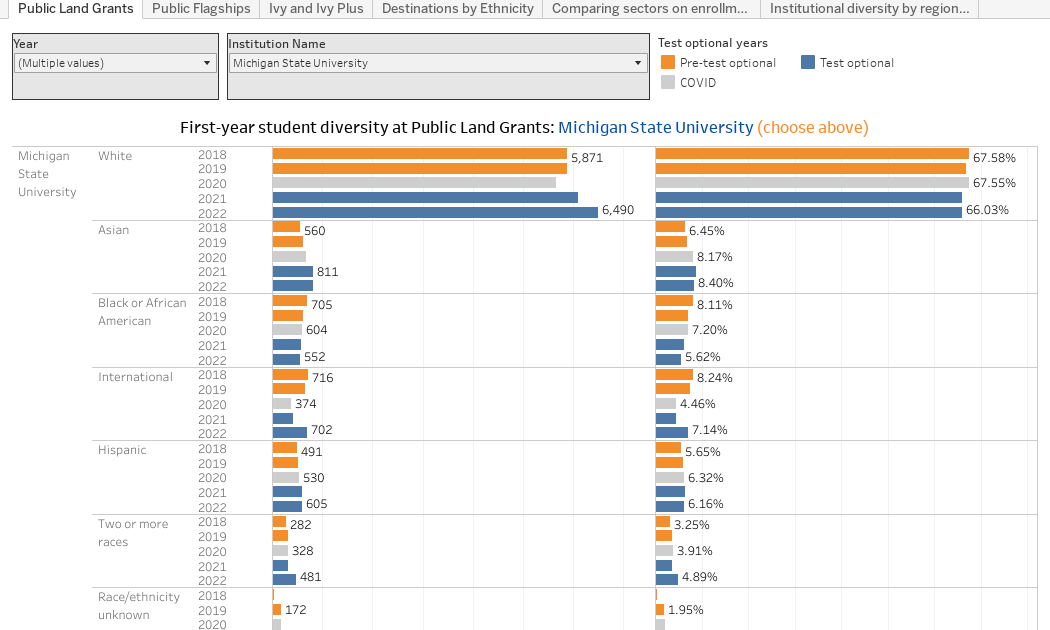
    I started this visualization to show how first-year classes at the highly rejective colleges had changed since COVID-19 forced them all to go to a test-optional approach for the Fall of 2021.  But it sort of took on a life of its own after that, as big, beefy data sets often do.

    The original point was to help discount the conventional wisdom, which is propped up by a limited, old study of a small set of colleges that showed test-optional policies didn’t affect diversity.  I did this post last year, after just one year of data made it fairly clear they did at the institutions that had the luxury of selecting and shaping their class. 

    This year I took it a little farther.  The views, using the tabs across the top, show the same trends (now going to 2022) for Public Land Grants, Public Flagships, the Ivy and Ivy+ Institutions.  In each case, choose one using the control.

    Note that I had colored the years by national trends: 2018 and 2019 are pre-test optional, gray is COVID, and blue is post-test optional.  This is not to say that any individual college selected either required tests or went test-optional in those years, but rather shows the national trend.  And remember these show enrolling students, not admitted students, which is why gray is critical; we know COVID changed a lot of plans, and thus 2020 may be an anomalous year. 

    The fourth view shows where students of any selected ethnicity enroll (again, use the dropdown box at the top to make a selection); the fifth view breaks out ethnicity by sector; and the final view allows you to look at diversity by sector and region (to avoid comparing diversity in Idaho, California, and Mississippi, for instance, three states with very different racial and ethnic makeups.)

    On all views, hovering over a data point explains what you’re seeing.

    If you work at a college or university, or for a private company that uses this data in your work, and want to support my time and effort, as well as software and web hosting costs, you can do that by buying me a coffee, here. Note that I won’t accept contributions from students, parents, or high school counselors, or from any company that wants to do business with my employer.

    And, as always, let me know what jumps out at you here. 

    Source link

  • Dean Hoke Appointed President and CEO of the American Association of University Administrators – Edu Alliance Journal

    Dean Hoke Appointed President and CEO of the American Association of University Administrators – Edu Alliance Journal

    BLOOMINGTON, Ind. – March 21, 2023 — Dean Hoke, of Bloomington, Indiana, has been chosen to serve as the next President and Chief Executive Officer of the American Association of University Administrators (AAUA), currently based in Glen Mills, Pennsylvania. His appointment is effective July 1st when the current President & CEO, Dan L. King will retire after nineteen years of service in that position.

    A highly successful and internationally recognized higher education administrator, Mr. Hoke first affiliated with the Higher Colleges of Technology in the United Arab Emirates in 2009 as Head of Marketing and Institutional Development; that experience was followed by four years at Khalifa University with the UAE Advanced Network for Research and Education. In 2014 he became Co-Founder in a new educational management consulting firm, Edu Alliance Ltd. based in the UAE; three years later Edu Alliance Group opened its US office in Bloomington serving as the Managing Partner.

    Mr. Hoke has extensive experience in the fields of higher education, marketing, communications and e-Learning. He has held a number of senior higher education administrative positions; and co-founded the Connected Learning Network, a provider of online educational services for educational institutions. In the field of broadcasting he served as an executive and CEO of four public broadcasting stations, and executive vice president of a cable network. He currently serves on the Advisory Board of the School of Education of Franklin University in Ohio and is a member of the Advisory Board of Higher Education Digest. He recently served as president-elect for the United States Distance Learning Association and chaired the Global Partnership Committee.

    Mr. Hoke currently produces and co-hosts the podcast series Higher Ed Without Borders. He holds a B.A. degree from Urbana University and an M.S. degree from the University of Louisville. He also completed the Executive Management Program at The Wharton School of the University of Pennsylvania.

    AAUA Board of Directors chairperson William Hill, assistant dean of the College of Education at Wayne State University, said, “Mr. Hoke is, without a doubt, the best person to step up and take over the executive administration of this organization. His background and his wide range of experiences will be useful. Moreso, his enthusiasm for leading AAUA to new programming ventures which should lead to expanded membership is contagious!”

    When interviewed, Mr. Hoke remarked, “It is a great honor to be selected as the AAUA’s next President and CEO. I am grateful to the Board for their unanimous support and to Dan King, who has led the organization for several years.”

    He continued, “AAUA sees a high percentage of administrators leaving the higher education profession. They are frustrated over the lack of opportunities for advancement, work challenges, and readily available professional development. The AAUA board of directors and I will work with our membership to build new and innovative professional development programs and services which will address a higher level of training and increase retention of our higher education administrator colleagues.”

    Departing chief executive, Dan King remarked, “I had planned to leave my AAUA responsibilities over two years ago but my departure was delayed by the COVID pandemic. The delay turned out to be fortuitous because it was during this time that I developed a closer professional tie with Mr. Hoke and was able to recruit his candidacy for this position. AAUA is ready for new direction, and Mr. Hoke has the perfect combination of personality, vision and enthusiasm to lead it to new heights. I look forward to watching the association improve and grow.”

    Source link

  • Why Do So Few American Students Study Abroad? – Edu Alliance Journal

    Why Do So Few American Students Study Abroad? – Edu Alliance Journal

    Why is that a problem?

    December 5, 2022 by Dean Hoke: In the newest edition of the 2022 Open Doors Report, US university’s international student enrollment shows encouraging signs. International students coming to the United States are reported at 948,519, which nears the pre-pandemic level. However, the number of Americans studying abroad in 2020-21 was 14,549 compared to 162,633 in 2019-20 and the high watermark of 350,000 in 2018-19.

    The chart below shows how long US students study overseas.

    Of the 350,000 students in 2018-19 who studied overseas, the majority either studied abroad for a summer or a short term.

    What is the profile of the American student who studies abroad?

    The number of US students who study abroad represents only 2.7% of the American university students who attend four-year and above institutions. Students who study abroad tend to be juniors or seniors in undergraduate school, female, Caucasian, have financial means, and study in Europe.

    What countries have the largest number of students studying abroad?

    T.I.M.E. Association, located in France, conducted a study in 2021 of UNESCO mobility data which reported 5.6 million international students worldwide to determine the top countries with the most outgoing students studying in another country. They looked at the “long-term mobility of students to complete a whole study cycle and acquire a degree (Bachelor, Master or PhD) abroad. The top countries university students leave to study abroad are:

    • China – 993,367
    • India – 375,055
    • Germany – 122,538
    • Viet Nam – 108.527
    • South Korea – 101,774
    • France – 99,488
    • United States – 84,349 (long-term studies)

    Students from other countries study abroad primarily due to the:

    • Future Employment Opportunities, be it at home or abroad
    • Quality of institution and program
    • Meet a diverse range of people
    • Study and learn differently
    • Self-reliance and being on your own
    • Meeting new friends and lifelong networking
    • Seeing your culture from a different point of view

    How important are students studying abroad to the business community as future employees?

    Businesses worldwide are putting a higher emphasis on international experience. Most big and small companies are trying to attract business and partnerships with international partners.  In a 2014 survey titled U.S. Business Needs for Employees with International Expertise, 800 executives in US companies were surveyed to identify the demand for corporate employees with international competence, including international skills and/or knowledge of foreign languages and world areas. The results of the 2014 survey call for a continuing need for international business education in the US, with increased emphasis on intercultural communication, foreign language skills, and international experience. The 800 represented a broad cross-section of Industries and the number of employees.

    Some interesting facts come out:

    • 39% failed to fully exploit international business opportunities due to insufficient internationally competent personnel in the past five years
    • 39% have no foreign offices, and all international operations are handled in the US
    • 43% state that overall business would increase a great deal if more international expertise were available on staff
    • 60% state that an appreciation for cross-cultural differences is of great importance for professional staff, followed by Understanding country legal and government requirements (59%) and understanding of local markets and business practices (58%)
    • 83% state their company will place a greater emphasis on international competence among management and employees over the next ten years

    Additional studies support that studying abroad helps employers and helps students get jobs. In 2016, The Institute for the International Education of Students (IES), founded in 1950, conducted a comprehensive survey of 1205 of its alumni. 

    Here are the key points from the study:

    • 93% who entered the workforce were employed within six months
    • 89% of those who entered graduate school earned admissions in their first or second-choice school
    • 50% felt that their IES Abroad Program experience helped them to get this first job

    The American Passport Project

    How can we encourage and support students to study abroad?

    In a recent interview with Higher Ed Without Borders  (in which I am a co-host), we asked Dr. Allan Goodman, CEO of the IIE, about a new program they established in 2021 titled The American Passport Project. Dr. Goodman commented that studying abroad is one of the best ways that students can acquire global skills and create personal and professional opportunities. Furthermore, it’s a part of IIE’s mission to increase participation and diversity in studying abroad and extend these benefits to all students regardless of socioeconomic status.  However, students of limited financial means find it more difficult to participate in studying abroad due to financial hurdles, which could bar them from moving forward.

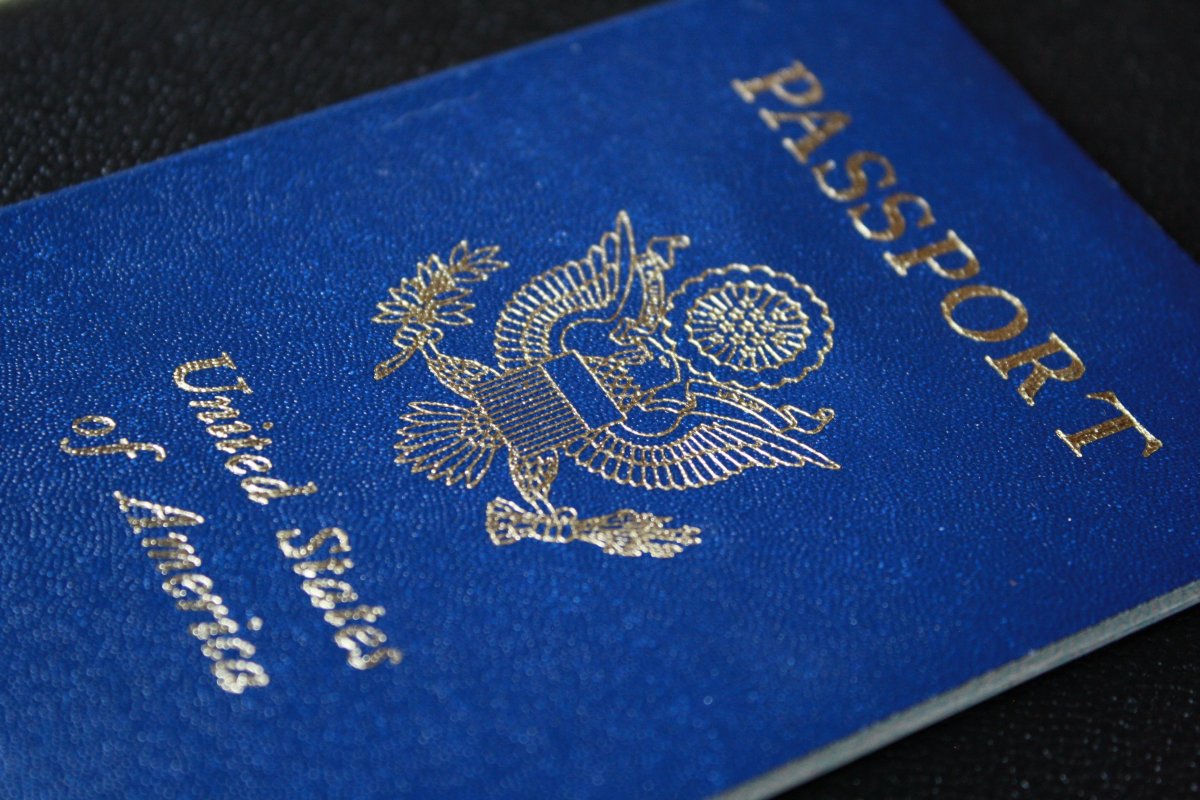
    The American Passport Project plans to have enabled 10,000 students to be awarded passports by the end of this decade. IIE will help 1,000 college students obtain U.S. passports annually by awarding funds to 40 U.S. colleges and universities in the IIE Network. Each institution will identify 25 of its first-year students who are eligible for Pell grants. Eligibility will be limited to first-year students to ensure that they have ample time remaining in their college career and receive guidance from their advisors to map out a study abroad plan. Competitive institutions will demonstrate grant need, support obtained, and impact on study abroad participation.

    First Year Results

    • In the inaugural year, nearly 200 institutions applied for the grant to support students obtaining U.S. passports. These institutions informed IIE of the various ways they could utilize the grant to support targeted student populations.
    • Forty institutions were selected, and more than 50% of institutions chosen represent minority-serving student populations (HBCU, HSI, MSI) or are community colleges.
    • Nearly 50% of U.S. states are represented (33% South, 32% Midwest, 25% Northeast, and 10% West).
    • The majority are expanding their diversity, equity, access, and inclusion efforts by targeting these top 4 student populations: students with demonstrated financial need, racial/ethnic minorities, students who have never traveled abroad, and first-generation students.

    In a follow-up interview with Lindsay Calvert, IIE’s lead for the Passport Project, I asked about the program’s status and the number of students approved by IIE as of November 2022.

    • One thousand one hundred twenty-two students have been nominated by their awarding institutions and approved by IIE to be supported with the IIE-granted funds to help them obtain their U.S. passport and engage them in study abroad planning.
      • 778 students from the first cohort
    • 344 from the second cohort)
    • Some institutions can quickly able to identify, nominate, and confirm students. Others have been challenged with their outreach and recruitment, so this process can span over a year to fulfill the goal of 25 students per campus.
    • Since the Passport Project aims to support first-year students, they anticipate them to study abroad in the 2023/24 academic year and subsequent years of their undergraduate term.

    The Senator Paul Simon Study Abroad Program

    In November 2022, The Senator Paul Simon Study Abroad Program Act of 2022 , was introduced by U.S. Senators Dick Durbin (D-Ill.) and Roger Wicker (R-Miss.) and U.S. Representatives Cheri Bustos (D-Ill.) and John Katko (R-N.Y.) The act seeks to expand access to study abroad for U.S. college students by enhancing the State Department’s Increase and Diversify Education Abroad for U.S. Students (IDEAS) program and formally renaming it as the “Senator Paul Simon Study Abroad Program.” Inspired by the vision of the late Sen. Paul Simon (D–Ill.) and the recommendations of the congressionally-appointed Commission on the Abraham Lincoln Study Abroad Fellowship Program, the legislation would advance four national goals:   

    1. One million U.S. college students will study abroad annually for credit
    2. Study abroad participants will more closely represent the demographics of the undergraduate population in terms of gender, ethnicity, students with disabilities, income level, and field of study
    3. A significantly greater proportion of study abroad will occur in nontraditional destinations outside Western Europe  
    4. Higher education institutions will make studying abroad a critical component of a quality higher education

    U.S. higher education institutions could apply for federal grants, individually or in a consortium, to help them institute programs that would move the country toward achieving these objectives. 

    Conclusion

    I have long wondered why so few Americans go overseas to study, even for a summer. Aren’t they seeing the benefits that students from other countries see? Are they not aware that by studying abroad, they increase their chances of graduation and employment? Perhaps most university students are unaware of studying overseas or believe they can’t afford the cost or cannot give up a part-time job to be away for the summer.

    Organizations like IIE are helping address increasing study abroad opportunities with its American Passport Program by emphasizing minorities and non-elite schools. The proposed Simon bill also helps address the issue and pushes for a million students to study abroad, but it remains to be seen if it will pass. It will take bi-partisan support and a higher public profile to get through the upcoming Congress. Last and not least are higher education institutions themselves. While the larger state institutions and elite privates have programs and resources to help promote study abroad, that is not necessarily the case with thousands of other colleges and universities. While most schools have international affairs offices, they need more personnel and budget to adequately promote or financially support students. Their priority in fundraising for such programs is lower than other needs.

    We need businesses that will benefit from these students and federal and state governments to help promote and partially subsidize. If companies and governments want to compete for an increasing share of international business successfully, they need employees who have spent time abroad.


    Dean Hoke is Co-Founder and Managing Partner Edu Alliance a higher education consulting firm located in Bloomington, Indiana and Abu Dhabi, United Arab Emirates. Dean received his Bachelor of Arts degree from Urbana University in Ohio, his Master of Science from The University of Louisville, and a graduate of the Wharton School of Business Executive Management program. Since 1975 Dean has worked in the higher education and broadcasting industry, serving in senior leadership roles specializing in international education, marketing, communications, partnerships, and online learning.

    He currently serves as Chairperson Elect of the American Association of University Administrators , Advisory Board of the School of Education, Franklin University and is Co-Host of the Podcast series Higher Ed Without Borders  and Distance Learning Roundtable. Dean is actively engaged in consulting projects in international education, branding, business intelligence, and online learning leading projects in the United States, the Middle East, Africa, and Asia. Dean resides in Bloomington, Indiana

    Source link

  • Why You Should Be A Member of the American Association of University Administrators – Edu Alliance Journal

    Why You Should Be A Member of the American Association of University Administrators – Edu Alliance Journal

    April 11, 2020 by Dean Hoke – When I came back to the United States in 2017-18 I wanted to re-engage with the US university community. I joined NAFSA primarily due to my work in International Higher Education but I also wanted to be a part of a smaller organization where I could get to know the people better and attend conferences that would continue my professional development. I decided to join in 2018 The American Association of University Administrators (AAUA).

    Who is AAUA

    AAUA is a non-profit professional organization founded in 1970 for higher education leaders and administrative personnel. It is the only professional association for individuals who are interested in the entire range of higher education management (from department chair/unit director through president) in the entire diverse set of American colleges and universities (two- and four-year; public, private non-profit, private for-profit; comprehensive, research-focused, special mission).

    Membership in AAUA helps support the association’s mission. In addition, membership provides—for those members who have an interest—opportunities for professional networking and leadership. In addition to enrolling and serving a significant complement of administrators at the most senior levels, the association is also interested in assisting early-career practitioner administrators build/enhance their leadership portfolios by providing leadership opportunities through service on association committees, boards, and taskforces. Opportunities to collaborate on offering professional development services are available as well.

    Professional Development Opportunities

    Annual Leadership Seminar: In particular this is my favorite because of the networking and the presentations. The 50th Leadership Seminar of the American Association of University Administrators is scheduled for June 9-10, 2022. It will be held as a hybrid event, with in-person sessions meeting at the Marriott Stanton South Beach Hotel (Miami, Florida). In-person sessions are planned for June 9 (morning and evening) and June 10 (morning). On-line sessions will be held on the afternoon of June 9th. I will be attending in person.

    AAUA Professional Development Fellows Program : The Fellows Program is an individually designed, year-long, mentored professional development experience during which the candidate uses his/her day to-day responsibilities as the spring board for improving a set of self-identified professional skills to enhance his/her administrative competence.

    Cross-Institution Visits : Recognizing the value of learning from administrative peers at other institutions (both similar in nature and of radically different structure or purpose), AAUA facilitates short-term (one to three week) cross institution visits between like-role administrators. The association also occasionally organizes and conducts small group (6-10 people) two- and three-day visits to clusters of institutions for the purpose of learning about notable or unique programs.

    So What is the Cost of Membership?

    There are two types of memberships. One is Individual and the other is Institutional

    Individual: An active Membership (Open to any person interested in the administration of higher education) is $100. The Student (Open to any graduate student enrolled in an institution of higher education who is interested in the field of higher education administration. is $35.

    Institutional: Any college/university or any other organization/firm may sponsor the membership of individuals on the following basis:

    • 1-6 Supported Members – Total membership dues rate: $500
    • 7-15 Supported Memberships – Total membership dues rate: $1,000
    • 16-24 Supported Memberships – Total membership dues rate: $1,500
    • 25 or more Supported Memberships: $2,000

    I would encourage you to consider becoming a member of the AAUA. I have found the people you get to know are outstanding, the conferences educational and enjoyable and the cost of membership is well worth the value.

    If you have questions or wish to join feel free to contact me or better yet contact:

    Dan L. King, Ed.D., President, and Chief Executive Officer
    American Association of University Administrators
    1 Ralph Marsh Drive, Glen Mills, Pennsylvania 19342 (USA)Phone: 814-460-6498
    Email: [email protected]

    Dean Hoke is a Managing Partner of Edu Alliance Group in the United States and Co-Founder of Edu Alliance Ltd. in the United Arab Emirates. Dean has decades of progressively responsible and visionary leadership roles in higher education, communications & online learning. He has led numerous initiatives that have created innovation & positive change in the higher education & non-profit sector. 

    Dean began his career in 1975 with Bellarmine University working in various roles, including admissions and external relations. In 1983 he entered the broadcasting field, serving as a senior executive for Public Broadcasting System stations and a cable network. In 1998 he co-founded The Connected Learning Network, a full-service online learning company. In 2009 accepted an invitation to move to the United Arab Emirates serving in senior positions at Higher Colleges of Technology & Khalifa University.

    He participates in numerous advisory & consulting projects in the fields of international education, branding, business intelligence, and online learning. He is an active speaker and writer in the field of global higher education and distance learning. Dean has presented and written worldwide on leadership, higher education, and distance learning. Dean is a member of the Board of the American Association of University Administrators, the Franklin University School of Education Advisory Board, and a member of NAFSA. Mr. Hoke has a B. A from Urbana University, an M.S from the University of Louisville, and a Certificate in Executive Management from the University of Pennsylvania Wharton School.

    Source link