Tag: Americas

  • Oil, Crypto, and the Struggle for Latin America’s Universities

    Oil, Crypto, and the Struggle for Latin America’s Universities

    Latin America—a region of thirty-three countries stretching from Mexico through Central and South America and across the Caribbean—has spent more than a century fighting against foreign exploitation. Its universities, which should anchor local prosperity, cultural autonomy, and democratic life, have instead been repeatedly reshaped by foreign corporations, U.S. government interests, global lenders, and now crypto speculators. Yet the region’s history is also defined by persistent, courageous resistance, led overwhelmingly by students, faculty, and Indigenous communities.

    Understanding today’s educational crisis in Latin America requires tracing this long arc of exploitation—and the struggle to build systems rooted in equity rather than extraction.

    1900s–1930s: Bananas, Oil, and the Rise of the “Banana Republics”

    Early in the 20th century, American corporations established vast profit-making empires in Latin America. United Fruit Company—today’s Chiquita Banana—dominated land, labor, and politics across Guatemala, Honduras, and Costa Rica. Standard Oil and Texaco secured petroleum concessions in Venezuela and Ecuador, laying foundations for decades of foreign control that extracted immense wealth while leaving behind environmental devastation, as seen in Texaco’s toxic legacy in the Ecuadorian Amazon between 1964 and 1992.

    Universities were bent toward these foreign interests. Agricultural programs were geared toward serving plantation economies, not local farmers. Engineering and geological research aligned with extractive industries, not community development.

    Resistance did emerge. Student groups in Guatemala and Costa Rica formed part of early anti-oligarchic movements, linking national sovereignty to university reform. Their demands echoed global currents of democratization. Evidence of these early student-led struggles appears in archival materials and Latin American scholarship on university reform, and culminates in the influential 1918 Córdoba Manifesto in Argentina—a radical declaration that attacked oligarchic, colonial universities and demanded autonomy, co-governance, and public responsibility.

    1940s–1980s: Coups, Cold War Interventions, and the Deepening of U.S. Oil Interests

    During the Cold War, exploitation intensified. In Guatemala, the CIA-backed overthrow of democratically elected President Jacobo Árbenz in 1954 protected United Fruit’s land holdings. Universities were purged or militarized, and critical scholars were exiled or killed.

    In Chile, the 1973 overthrow of Salvador Allende—supported by American corporate giants such as ITT and Anaconda Copper—ushered in a brutal dictatorship. Under Augusto Pinochet, thousands were murdered, tortured, or disappeared, while the Chicago Boys imported radical neoliberal reforms that privatized everything, including the higher education system.

    Throughout the region, oil deals disproportionately favored American companies. Mexico and Venezuela saw petroleum wealth siphoned off through arrangements that benefited foreign investors while leaving universities underfunded and politically surveilled. Scholarship critical of foreign intervention was marginalized, while programs feeding engineers and economists to multinational firms were expanded.

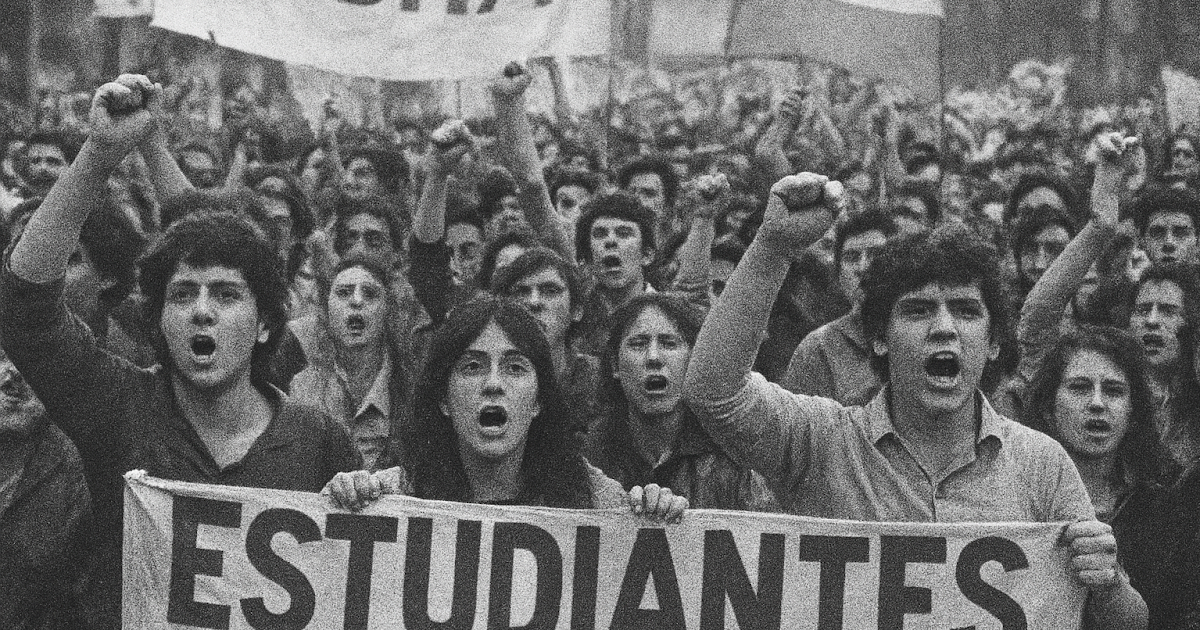
    Student resistance reached historic proportions. Chilean students and faculty formed the core of the anti-dictatorship movement. Mexico’s students rose in 1968, demanding democracy and university autonomy before being massacred in Tlatelolco. CIA declassified documents reveal that student uprisings across Latin America in the early 1970s were so widespread that U.S. intelligence considered them a regional threat.

    1990s–2000s: Neoliberalism, Privatization, and the Americanization of Higher Education

    In the 1990s, neoliberalism swept the region under pressure from Washington, the IMF, and the World Bank. After NAFTA, Mexico’s universities became increasingly aligned with corporate labor pipelines. In Brazil, Petrobras’ partnerships with American firms helped reshape engineering curricula. Private universities and for-profit models proliferated across the region, echoing U.S. higher ed corporatization.

    Hugo Chávez captured the broader sentiment of resistance when he declared that public services—including education—cannot be privatized without violating fundamental rights.

    Students fought back across Latin America. In Argentina and Brazil they contested tuition hikes and privatization. In Venezuela, the debate shifted toward whether oil revenue should fund tuition-free universities.

    Indigenous Exclusion, Racism, and the Colonial Foundations of Inequality

    One of the greatest challenges in understanding Latin American education is acknowledging the deep racial and ethnic stratification that predates U.S. exploitation but has been exacerbated by it. Countries like Ecuador, Bolivia, Peru, Mexico, Brazil, and Guatemala have large Indigenous populations that, to this day, receive the worst education—much like Native American communities relegated to underfunded reservation schools in the United States.

    Racism remains powerful. Whiter populations enjoy greater economic and educational access. University admission is shaped by class and color. These divisions are not accidental; they are a machinery of control.

    There have been important exceptions. Under President Rafael Correa, Ecuador built hundreds of new schools, including Siglo XXI and Millennium Schools, and expanded public education access. In Mexico, the 2019 constitutional reform strengthened Indigenous rights, including commitments to culturally relevant education. Bolivia—whose population is majority Indigenous—has promoted Indigenous languages, judicial systems, and education structures.

    But progress is fragile. Austerity, IMF conditionalities, and elite resistance have led to cutbacks, school closures, and renewed privatization across the region. The study you provided on Ecuador documents Indigenous ambivalence, even hostility, toward Correa’s universal education plan—revealing how colonial wounds, cultural erasure, and distrust of state power complicate reform and provide openings for divide-and-conquer strategies long exploited by ruling classes.

    These contradictions deepen when Indigenous movements—rightfully demanding no mining, no oil extraction, and protection of ancestral lands—collide with leftist governments reliant on resource extraction to fund public services. This tension is especially acute in Ecuador and Bolivia.

    2010s–Present: Crypto Colonialism and a New Frontier of Exploitation

    Cryptocurrency has opened a new chapter in Latin America’s long history of foreign-driven experimentation. El Salvador’s adoption of Bitcoin in 2021, promoted by President Nayib Bukele, transformed the country into a speculative test lab. Bukele has now spent more than $660 million in U.S. dollars on crypto, according to investigative reporting from InSight Crime. Universities rushed to create blockchain programs that primarily serve international investors rather than Salvadoran students.

    In Venezuela, crypto became a survival tool amid hyperinflation and economic collapse. Yet foreign speculators profited while universities starved. Student groups warned that crypto research was being weaponized to normalize economic chaos and distract from public-sector deterioration.

    Resistance has grown. Salvadoran students have protested the Bitcoin law, demanding that public resources focus on infrastructure, health, and education. Venezuelan students call for rebuilding social programs rather than chasing speculative financial technologies.

    Contemporary Student Resistance: 2010s–2020s

    Across the region, student movements remain powerful. The Chilean Winter of 2011–2013 demanded free, quality public education and challenged Pinochet’s neoliberal legacy. The movement culminated in the 2019 uprising, where education reform was central.

    Mexico’s UNAM students continue to resist corruption, tuition hikes, gender violence, and the encroachment of corporate and foreign interests. The 1999–2000 UNAM strike remains one of the longest in modern higher education.

    Colombian students have forced governments to negotiate and invest billions in public universities, framing their struggle as resistance to neoliberal austerity shaped by U.S. policy.

    Argentina continues to face massive austerity-driven cuts, sparking protests in 2024–2025 reminiscent of earlier waves of resistance. Uruguay’s Tupamaros movement—largely student-led—remains a historical touchstone.

    Every country in Latin America has experienced student uprisings. They reflect a truth that Paulo Freire, exiled from Brazil for teaching critical pedagogy, understood deeply: education can either liberate or oppress. Authoritarians, privatizers, and foreign capital prefer the latter, and they act accordingly.

    Today’s Regional Education Crisis

    The COVID-19 pandemic pushed the system into further crisis. Children in Latin America and the Caribbean lost one out of every two in-person school days between 2020 and 2022. Learning poverty now exceeds 50 percent. Entire generations risk permanent economic loss and civic disenfranchisement.

    Infrastructure is collapsing. Rural and Indigenous communities suffer the worst conditions. Public investment is chronically insufficient because governments are trapped in cycles of debt repayment to international lenders. Ecuador has not seen a major public-investment program in a decade, as austerity and IMF repayments dominate national budgets.

    The result is a system starved of resources and increasingly vulnerable to privatization schemes—including U.S.-style online coursework, ideological “instruction kits,” and for-profit degree mills.

    Latin American Universities as Battlegrounds for Sovereignty

    Latin America’s universities are shaped by the same forces that have dominated the region’s history: oil extraction, agribusiness, foreign capital, neoliberalism, structural racism, debt, and now crypto speculation. Yet universities have also been homes to transformation, rebellion, cultural resurgence, and hope.

    Across more than a century, students—Indigenous, Afro-descendant, mestizo, working-class—have been the region’s fiercest defenders of public education and national sovereignty. Their resistance continues today, from Quito to Buenos Aires, from Mexico City to Santiago.

    For readers of the Higher Education Inquirer, the lesson is clear: the struggle for higher education in Latin America is inseparable from the struggle for democracy, racial justice, Indigenous autonomy, and freedom from foreign domination. The region’s ruling elites and international lenders understand that an educated public is dangerous, which is why they starve, privatize, and discipline public schools. Students understand the opposite: that education is power, and that power must be reclaimed.

    The next chapter—especially in countries like Ecuador—will depend on whether students, teachers, and communities can defend public education against the dual forces that have undermined it for more than a century: privatizers and fascists.


    Sources (Selection)

    National Security Archive, CIA Declassified Documents (1971)
    InSight Crime reporting on El Salvador Bitcoin expenditures
    Luciani, Laura. “Latin American Student Movements in the 1960s.” Historia y Memoria (2019)
    The Córdoba Manifesto (1918)
    UNESCO, World Bank data on learning poverty (2024)
    Latin American studies on United Fruit, Standard Oil, Texaco/Chevron in Ecuador
    LASA Forum: Analysis of Indigenous responses to Correa’s education reforms
    Periodico UNAL: “The Student Rebellion: Córdoba and Latin America”
    Multiple regional news sources on Argentina’s 2024–2025 education protests

    Source link

  • Abbott’s blacklist: America’s tradition of branding dissent as treason

    Abbott’s blacklist: America’s tradition of branding dissent as treason

    This week, Texas Gov. Greg Abbott labeled the Council on American-Islamic Relations a foreign terrorist organization, and prohibited them from purchasing land in the state. That move doesn’t just have practical ramifications for CAIR’s ability to operate in Texas — it follows an all-too-familiar pattern in American history. In moments of perceived crisis, public officials cast unpopular ideological minorities as internal enemies, exploiting “security” concerns to trample on speech and belief. 

    CAIR is a D.C.-based, national organization whose mission is to “enhance understanding of Islam, protect civil rights, promote justice, and empower American Muslims.” CAIR has been fiercely critical of Israel and American efforts to support Israel’s military campaign in Gaza. Recently, CAIR successfully sued Abbott’s administration over executive orders that targeted pro-Palestinian campus protesters. CAIR also defended EPIC City, a Muslim-oriented development in Texas that Abbott investigated in September. 

    Against that backdrop, Abbott’s order designating CAIR cites to the organization’s protected speech and viewpoints, alleges that CAIR supports terrorism, and says they are “radical extremists” who “are not welcome in our state.” He then offers the vague assertion that CAIR wants “to forcibly impose Sharia law and establish Islam’s ‘mastership of the world.’” CAIR has since sued Abbott’s administration for the terror designation.

    Using the language of “terrorism” and “foreign enemy” is not a new tactic to quash disfavored speech. In 1918, on the heels of World War I and the ensuing anti-German and anti-Bolshevik fervor, Montana passed its Sedition Act. The Act made it a crime to “utter, print, write or publish any disloyal, profane, violent, scurrilous, contemptuous, slurring or abusive language” about the U.S. government, Constitution, flag, military, or any language “calculated to incite or inflame resistance” to federal or state authority during the war. In other words, it made criticizing the U.S. illegal. 

    Under Montana’s Sedition Act, hundreds of Montanans were arrested and 79 ultimately convicted for things as minor as making offhand anti-war remarks in a bar. One convict, Slovenian native Josef Gocevar, said “President Wilson had no business getting into this war.” He was sentenced to six years in prison. Another convict, Fay Rumsey, made the mistake of saying that he “wished the Germans would come in and clean up the U.S.” He received a two-year sentence. By proscribing one side of the debate over the war, Montana’s Sedition Act effectively criminalized dissent. 

    When First Amendment rights are at stake, such speculative connections are nowhere near sufficient to impose sweeping punishments.

    The Sedition Act also proved useful for pressuring anti-war Montanans into violating their consciences by buying war bonds. Local patriotic councils created lists of dissenters. Mobs weaponized the lists, threatening to report fellow citizens to the authorities if they did not purchase war bonds. It worked: One council boasted that Montana subscribed to war bonds at a level “far exceeding national projections.” 

    When men pressured Earnest V. Starr, an Ohio native who moved to Montana, to buy war bonds and kiss an American flag, Starr refused, stating that the flag was “nothing but a piece of cotton with a little paint on it.” Starr was sentenced to 10 years in prison and had to pay a $500 fine, which is about $9,000 in today’s dollars. Another mob threatened to lynch German immigrant Herman Bausch for refusing to buy war bonds, instead interrogating him for several hours. After Bausch admitted that he was “opposed to war” and that he would “not contribute financially to this world calamity,” he was convicted and sentenced to four years in prison.

    Dissenters during the Second World War fared similarly, particularly Jehovah’s Witnesses. Jehovah’s Witnesses are pacifists, and categorically opposed the war. Their opposition — and refusal to salute the American flag — drew accusations that they were fifth columnists, a term for a group that secretly sympathizes with the enemy. Between 1940 and 1942, there were hundreds of attacks on Jehovah’s Witnesses in the US, almost always with the support of local law enforcement. In a sick twist, Nazi Germany similarly persecuted Jehovah’s Witnesses for refusing to participate in Hitler’s patriotic exercises. Many were ultimately murdered in Nazi concentration camps. 

    The Jehovah’s Witnesses and the First Amendment

    Between 1938 and 1943, the Jehovah’s Witnesses had an astonishing 30 cases before the Supreme Court that mostly expanded First Amendment liberties. The result was a much stronger and richer jurisprudence.


    Read More

    In Minersville School District v. Gobitis (1940), the Supreme Court held that public schools did not violate the First Amendment when they compelled Jehovah’s Witnesses to salute the American flag and recite the Pledge of Allegiance. Within days of the Gobitis ruling, members of the American Legion (in conjunction with the local police chief) in Richwood, West Virginia, forced Jehovah’s Witnesses to drink castor oil and march to the post office to salute the flag. Similar attacks were carried out elsewhere: Litchfield, Illinois jailed all 60 Witnesses in the town, while a mob burned a Witness building to the ground in Maine. As one Southern sheriff put it: “they’re traitors; the Supreme Court says so. Ain’t you heard?” 

    But the Jehovah’s Witnesses persevered. Only three years after the Gobitis-inspired fervor, the Supreme Court reversed course. In West Virginia State Board of Education v. Barnette (1943), the Court overruled Gobitis, famously holding that the government cannot “prescribe what shall be orthodox in politics, nationalism, religion, or other matters of opinion.” 

    That reversal fit into a broader rethinking of how far officials can go to marginalize “disloyal” speech. Early World War I prosecutions under the federal Sedition Act ended in victories for the government. But in Abrams v. United States (1919)Justices Brandeis and Holmes cautioned in dissent that punishing unpopular dissidents for their words alone was incompatible with a free society. It took decades, but their view eventually prevailed: Brandenburg v. Ohio (1969) held that even ugly, extremist advocacy is protected unless it is intended and likely to spur imminent lawless action. The logic that undergirded Montana’s Sedition Act no longer holds water, which should make us very skeptical when today’s officials reach for “national security” to silence opposition. 

    Yet in Texas today, you can hear the same soundtrack playing underneath Abbott’s rhetoric about CAIR. He says CAIR has taken “actions . . . to support terrorism across the globe and subvert our laws through violence, intimidation and harassment” and calls them “radical extremists” who “are not welcome in our state.” That line about support for terrorism does the same work as “disloyal, profane, scurrilous . . . language” in the Montana Sedition Act: It collapses speech and advocacy into treason. Much like Gobitis’ effect on Jehovah’s Witnesses during World War II, Abbott’s decision singles out CAIR as a potential fifth column — and asks the state government to treat it as such.

    Of course, if CAIR has broken the law, state law enforcement may follow its regular processes for criminal or civil investigations. That means opening investigations based on actual evidence of legal violations, not based on a target’s viewpoints and speech. When constitutional rights are at stake, evidence like Abbott’s is too thin. For example, Abbott cites an FBI agent who claimed that CAIR was a “front group” for Hamas, but that was only one agent, 17 years ago, and the federal government (across Democratic and Republican administrations) has brought zero material support for terrorism charges against CAIR. Abbott also cites a War on Terror-era case where a judge denied CAIR’s motion to file an amicus brief. In denying the motion, the judge suggested that CAIR was connected to terrorists. But that’s not an evidence-based ruling by a judge — it’s an aside in a decision that didn’t touch the core issues of the case. When First Amendment rights are at stake, such speculative connections are nowhere near sufficient to impose sweeping punishments.

    The Montana Sedition Act and Gobitis should mark the outer boundary for what we should tolerate in a free society. States cannot demand ideological conformity from individuals, interest groups, or religious minorities to operate in their state. If a blue state banned pro-Israel or Jewish groups — claiming that those groups sponsored violations of international law by supporting the war in Gaza or violence in the West Bank — that would be just as much of a red flag for civil liberties as Abbott’s order. Whether one agrees with CAIR or not, the entire point of the First Amendment is that government officials do not get to decide which critics are patriots and which are enemies of the state.

    Source link

  • What America’s Declining Happiness Means — and How Higher Education Fits In

    What America’s Declining Happiness Means — and How Higher Education Fits In

    A recent report has sounded an alarm: happiness in the United States is falling more sharply than in almost every other developed nation. According to coverage by CBS News, Americans increasingly report loneliness, deep political division, and diminished life satisfaction. While this trend is worrying in itself, a closer look shows that it’s not just a problem of individual melancholy — it reflects a broader weakening of social structures, civic trust, and community cohesion. Historically, these phenomena have been central to the nation’s sense of coherence; now, they may be eroding.

    Historical Roots and the Social Capital Framework

    To understand the scale of what’s happening, it helps to go back. Over two decades ago, Robert D. Putnam’s seminal Bowling Alone documented a dramatic decline in American “social capital” — the network of associations, civic participation, and interpersonal trust that undergirds a functioning democracy. Putnam traced declines in everything from civic organizations to informal social gatherings, arguing that this fraying of social infrastructure had profound consequences. 

    Social capital theory provides a useful lens here: trust between citizens, engagement in local institutions, and time spent in shared civic life are not just feel‑good extras, but foundations for collective resilience.

    Later empirical work has revisited these concerns. Weiss, Paxton, Velasco, and Ressler (2018) developed a newer measure of social capital and found evidence that the decline persists. Inequality also appears to play a role: as income gaps widen, interpersonal trust tends to decrease. In research published in Finance & Development, economists found that rising inequality explained a substantial portion of the decline in social trust in the United States.

    More recently, political scientists have documented how perceived political polarization erodes social trust. In a nationally representative panel study, Amber Hye‑Yon Lee showed that when people believe their country is deeply divided, their trust in fellow citizens drops — even beyond partisan loyalties. Pew Research Center data further illustrate this generational shift: younger cohorts, raised in a more polarized and atomized society, report lower social trust than earlier generations. 

    At the same time, the digital revolution hasn’t necessarily filled the gap. Sabatini and Sarracino (2014) found that while people are more active on social media, this does not compensate for lost in-person connection — and may even undermine trust. During the COVID-19 pandemic, researchers observed increased remote communication, but also stronger political echo chambers: in a study of 41,000 Americans’ social networks, political homophily (interacting mostly with those who share one’s partisan identity) increased. 

    Well-Being, Health, and Mortality

    The decline in social trust and cohesion is not just a sociological problem — it is deeply linked to health. A growing body of epidemiological research ties subjective well‑being to longevity and mortality. For instance, a widely cited study by Lawrence, Rogers, and Wadsworth found that lower happiness is associated with higher all‑cause mortality risk in U.S. adults. In another longitudinal study, researchers followed more than 30,000 adults over 14 years and found that individuals with low life satisfaction lived, on average, 8–10 years less than those with high satisfaction — even after controlling for sociodemographic and behavioral variables. 

    These findings suggest that declining happiness is not just a matter of mental distress or cultural malaise — it translates into concrete health inequities and life expectancy gaps.

    Recent Trends and the Global Context

    Over the past decade, the United States has slid in global happiness rankings, according to the World Happiness Report. Some analyses suggest that the U.S. now falls behind peer nations on measures of life evaluation, meaning that Americans are increasingly less satisfied with their lives in a broad, reflective sense. 

    Meanwhile, epidemiological studies of happy life expectancy — the number of years people spend in a state of subjective well‑being — show that although well-being improved from 1970–2000, gains were uneven by race and gender. The recent reversal or stagnation in happiness is thus especially alarming in light of these prior gains.

    The Role of Higher Education: Past, Present, and Potential Futures

    Given this historical and empirical context, higher education institutions have a complex and potentially pivotal role in responding to declining well-being.

    On one hand, universities could help rebuild social capital. Institutions of higher learning have unique capacity to foster cross-partisan civic engagement, to embed community-building in pedagogy, and to support students’ social and emotional development. By investing in mental health infrastructure, peer networks, and service-based learning, colleges could act as local laboratories for restoring trust and social cohesion.

    Higher education also has a research function: universities can produce evidence about what strengthens well-being, what interventions mitigate loneliness or political fragmentation, and how different models of community engagement impact long-term health outcomes. Through partnerships with public policy institutions, universities can help translate these findings into programs that bolster social infrastructure outside campus walls.

    However, higher education also runs risks. If institutions remain fragmented, politically polarized, or focused on prestige rather than public mission, they may contribute to social fragmentation rather than healing it. Elite universities, in particular, may be perceived as disconnected from broader communities, undermining trust rather than reinforcing it. In such a scenario, higher education may reproduce the very inequalities and isolation that are driving declining well‑being.

    Moreover, without deliberate strategies, campus networks may reinforce echo chambers: social connections among students may mirror broader partisan divides, especially in environments where political homogeneity is common.

    Health Equity Implications

    The decline in American happiness intersects directly with issues of health equity. Lower well-being and eroded trust disproportionately affect marginalized communities — those with fewer economic resources, less social support, and weaker civic infrastructure. When universities take an active role in promoting well-being and rebuilding social capital, they not only support individual students but may contribute to reducing structural health disparities.

    Conversely, if higher education plays a passive role, or if access to supportive, socially rich campus environments is limited to privileged groups, the decline in happiness may deepen existing inequities. The gap in life expectancy tied to subjective well-being suggests that we cannot ignore the social determinants of happiness: economic inequality, community fragmentation, political polarization, and institutional trust all matter.

    A Call to Action

    To address this crisis, higher education leaders, policymakers, and public health practitioners should consider the following:

    1. Reinforce community-building: Colleges should invest in programs that promote cross-group interaction, civic participation, and social trust.

    2. Prioritize mental health: Expand counseling, peer support, and proactive well-being initiatives, especially for students who might otherwise fall through the cracks.

    3. Align research with public value: Fund and promote research on social cohesion, well-being interventions, and the relationship between trust and health, and ensure that findings inform public policy.

    4. Foster institutional humility and outreach: Universities should engage with local communities, not as isolated centers of prestige, but as partners in building social infrastructure and resilience.

    5. Measure what matters: Beyond graduation rates and research output, institutions should track well-being metrics — social trust, belonging, mental health — as central indicators of their impact.


    It Doesn’t Have to Be This Bad 

    The decline in happiness across the United States is not a passing phase or a matter of individual pathology. Rather, it reflects deep shifts in social trust, political cohesion, and community infrastructure. Historically, scholars like Putnam sounded the alarm on social capital’s erosion. Today, health researchers warn that falling well‑being shortens lives and exacerbates inequalities.

    Higher education, if reoriented toward building connections, purpose, and trust, could play a vital role in reversing this trajectory. But if universities remain inward-looking or inequality-driven, they risk accelerating the very forces that undermine societal well-being. The stakes are high — not only for individual students, but for the future health and cohesion of the nation.


    Scholarly Sources:

    • Lee, Amber H. Y. “Social Trust in Polarized Times: How Perceptions of Political Polarization Affect Americans’ Trust in Each Other.” Political Behavior, 2022. PMC

    • Weiss, Inbar, Pamela Paxton, Kristopher Velasco, and Robert W. Ressler. “Revisiting Declines in Social Capital: Evidence from a New Measure.” Social Indicators Research, 2018. PMC

    • Lawrence, Elizabeth M., Richard G. Rogers, and Tim Wadsworth. “Happiness and Longevity in the United States.” Social Science & Medicine, 2015. PMC

    • Study on life satisfaction and mortality (14-year follow-up): PMC

    • Research on income inequality and trust: “In Equality, We Trust” (IMF / Finance & Development) IMF

    • Study of happy life expectancy, 1970–2000: PMC

    • Putnam, Robert D. Bowling Alone: The Collapse and Revival of American Community. (on social capital history) Wikipedia+1

    Source link

  • Higher Education Inquirer : America’s Creepiest College Presidents

    Higher Education Inquirer : America’s Creepiest College Presidents

     Across the United States, a quiet but unmistakable chill has settled over many college campuses. It isn’t the weather. It’s the behavior of a particular class of leaders—the college presidents whose decisions, priorities, and public personas have begun to feel, for lack of a better word, creepy. Not criminal, necessarily. Not always abusive in the legal sense. Just profoundly unsettling in ways that undermine trust, erode shared governance, and push higher education further into the shadows of authoritarianism and corporate capture.

    This piece introduces criteria for what makes a college president “creepy,” highlights examples of the types of leaders who fit the mold, and invites reader feedback to build a more accountable public record.


    Criteria for a “Creepy” College President

    “Creepy” here is not about personality quirks. It’s about behavior, power, and material consequences. Based on the reporting and analysis at HEI, we propose the following criteria:


    1. First Amendment Hostility

    Presidents who suppress speech, restrict student journalism, punish dissent, or hide behind overbroad “time, place, and manner” rules fall squarely into this category. The creepiness intensifies when universities hire outside PR firms or surveillance contractors to monitor campus critics, including students and faculty.

    2. Student Rights Violations

    Presidents who treat students as risks rather than people, who hide data on assaults, who enable over-policing by campus security, or who weaponize conduct codes to silence protest movements—from Palestine solidarity groups to climate activists—fit the profile.

    3. Civil Rights Erosion

    Administrators who undermine Title IX protections, retaliate against whistleblowers, protect abusive coaches, or ignore discrimination complaints are not just negligent—they’re institutionally creepy. Their public statements about “inclusion” often ring hollow when compared with their actions behind closed doors.

    4. Worker Rights Suppression

    Union busting. Outsourcing. Wage stagnation. Anti-transparency tactics. Presidents who preach community while crushing collective bargaining efforts, freezing staff pay, or firing outspoken employees through “restructuring” deserve a place on any such list.

    5. Climate Denial or Delay

    Presidents who sign glossy climate pledges yet continue fossil-fuel investments, partner with extractive corporations, or suppress environmental activism on campus epitomize a uniquely twenty-first-century creepiness: a willingness to sacrifice future generations to maintain donor relationships and boardroom comfort.


    Examples: The Multi-Modal Creep Typology

    Rather than name only individuals—something readers can help expand—we outline several recognizable types. These composites reflect the emerging patterns seen across U.S. higher education.

    The Surveillance Chancellor

    Obsessed with “campus safety,” this president quietly expands the university’s security apparatus: license plate readers at entrances, contracts with predictive-policing vendors, facial recognition “pilots,” and backdoor relationships with state or federal agencies. Their speeches emphasize “community,” but their emails say “monitoring.”

    The Union-Busting Visionary

    This leader talks the language of innovation and social mobility while hiring anti-union law firms to intimidate graduate workers and dining staff. Their glossy strategic plans promise “belonging,” but their HR memos rewrite job classifications to avoid paying benefits.

    The Donor-Driven Speech Regulator

    Terrified of upsetting trustees, corporate sponsors, or wealthy alumni, this president cracks down on student protests, bans certain speakers, or manipulates disciplinary procedures to neutralize campus activism. They invoke “civility” while undermining the First Amendment.

    The DEI-Washing Chief Executive

    This president loves diversity statements—for marketing. Meanwhile, they ignore racial harassment complaints, target outspoken faculty of color, or cut ethnic studies under the guise of “realignment.” Their commitment to equity is perfectly proportional to the next accreditation review.

    The Climate Hypocrite

    At Earth Day, they pose with solar panels. In the boardroom, they argue that divesting from fossil fuels is “unrealistic.” Student climate groups often face administrative smothering, and sustainability staffers are rotated out when they ask uncomfortable questions.


    Why “Creepiness” Matters

    Creepy leaders normalize:

    • an erosion of democratic rights on campus,

    • the quiet expansion of surveillance,

    • the targeting of vulnerable students and workers, and

    • a form of managerial governance that undermines the public purpose of higher education.

    Higher education is supposed to be a refuge for inquiry, dissent, creativity, and collective imagination. Presidents who govern through fear—whether subtle or overt—pose a deeper threat than those who merely mismanage budgets. They hollow out the civic core of academic life.


    A Call for Reader Feedback

    HEI is building a more comprehensive and accountable registry of America’s Creepiest College Presidents, and we want your help.

    • Who on your campus fits these criteria?

    • Which presidents (past or present) deserve examination?

    • What specific stories, patterns, or documents should be highlighted?

    • What additional criteria should be added for future reporting?

    Send your confidential tips, analyses, and suggestions. Together, we can shine light into administrative corners that have remained dark for far too long.

    Higher Education Inquirer welcomes further input and encourages readers to share this article with colleagues, student groups, labor organizers, and university newspapers.

    Source link

  • America’s first free speech crisis — the Sedition Act of 1798

    America’s first free speech crisis — the Sedition Act of 1798

    We’re joined by award-winning author, Charles (Charlie)
    Slack
    , to discuss his book,
    Liberty’s First Crisis: Adams, Jefferson and the Misfits Who Saved
    Free Speech
    .

    Slack focuses on the infamous
    Sedition Act of 1798
    , which sparked the first major
    controversy over freedom of speech in America.

    Timestamps:

    00:00 Intro (including note about Charlie Kirk)

    03:59 Book origins

    12:05 What were the Alien and Sedition Acts?

    16:00 Prosecutions under the Act and their free speech
    implications

    25:35 Free speech during the Revolutionary era

    28:14 Adams’ perspective on the Sedition Act

    46:02 Was Supreme Court Justice Samuel Chase a
    partisan hack?

    53:57 Sedition Act fallout

    01:01:02 Outro

    Enjoy listening to the podcast? Donate to FIRE today and
    get exclusive content like member webinars, special episodes, and
    more. If you became a FIRE Member
    through a donation to FIRE at thefire.org and would like access to
    Substack’s paid subscriber podcast feed, please email [email protected].

    Source link

  • 2026 College Free Speech Rankings: America’s colleges get an ‘F’ for poor free speech climate

    2026 College Free Speech Rankings: America’s colleges get an ‘F’ for poor free speech climate

    • Claremont McKenna takes the top spot, while Barnard College, Columbia University, and Indiana University come in last.
    • 166 of the 257 schools surveyed got an F for their speech climate.
    • For the first time ever, a majority of students would prevent speakers from both the left and right who express controversial views, ranging from abortion to transgender issues, from stepping foot on campus.

    WASHINGTON, D.C., Sept. 9, 2025 – If America’s colleges could earn report cards for free speech friendliness, most would deserve an “F”— and conservative students are increasingly joining their liberal peers in supporting censorship.

    The sixth annual College Free Speech Rankings, released today by the Foundation for Individual Rights and Expression and survey partner College Pulse, show a continued decline in support for free speech among all students, but particularly conservatives. Students of every political persuasion show a deep unwillingness to encounter controversial ideas. The survey, which is the most comprehensive look at campus expression in the country, ranked 257 schools based on 68,510 student responses to a wide array of free speech-related questions.

    The rankings come at a notable moment for free speech on college campuses: clashes over the Israeli-Palestinian conflict, a vigorous and aggressive culture of student activism, and the Trump administration’s persistent scrutiny of higher education. 

    “This year, students largely opposed allowing any controversial campus speaker, no matter that speaker’s politics,” said FIRE President and CEO Greg Lukianoff. “Rather than hearing out and then responding to an ideological opponent, both liberal and conservative college students are retreating from the encounter entirely. This will only harm students’ ability to think critically and create rifts between them. We must champion free speech on campus as a remedy to our culture’s deep polarization.”

    The best colleges for free speech

    1. Claremont McKenna College
    2. Purdue University
    3. University of Chicago
    4. Michigan Technological University
    5. University of Colorado, Boulder
    6. University of North Carolina, Greensboro
    7. Vanderbilt University
    8. Appalachian State University
    9. Eastern Kentucky University
    10. North Carolina State University

    The worst colleges for free speech

    1. Loyola University, Chicago

    2. Middlebury College

    3. New York University

    4. Boston College

    5. University of California, Davis

    6. Northeastern University

    7. University of Washington

    8. Indiana University

    9. Columbia University

    10. Barnard College

    EXPLORE THE RANKINGS

    For the second time, Claremont McKenna has claimed the top spot in the rankings. Speech controversies at the highest-rated schools are rare, and their administrations are more likely to support free speech. The schools that improved their score the most, including Dartmouth College and Vanderbilt University, worked to reform their policies and recently implemented new programs that support free speech and encourage open discourse. 

    The lowest-rated schools are home to restrictive speech policies and some of last year’s most shocking anti-free speech moments, including threats to press freedom, speaker cancellations, and the quashing of student protests.

    “Even one egregious anti-free speech incident can destroy students’ trust in their administration and cause a school to plummet in the rankings,” said FIRE Vice President of Research Angela C. Erickson. “If campus administrators, faculty, and students want to enjoy an atmosphere of trust on campus, they can start by protecting each other’s rights.”

    Other key findings from the report include:

    • 166 of the 257 schools surveyed got an F for their speech climate, while only 11 schools received a speech climate grade of C or higher.
    • Only 36% of students said that it was “extremely” or “very” clear that their administration protects free speech on campus.
    • A record 1 in 3 students now holds some level of acceptance – even if only “rarely” — for resorting to violence to stop a campus speech.
    • 53% of students say that the Israeli-Palestinian conflict is a difficult topic to discuss openly on campus. On 21 of the campuses surveyed, at least 75% of students said this — including 90% of students at Barnard.
    • For the first time ever, a majority of students oppose their school allowing any of the six controversial speakers they were asked about onto campus — three controversial conservative speakers and three controversial liberal ones.

    “More students than ever think violence and chaos are acceptable alternatives to peaceful protest,” said FIRE Chief Research Advisor Sean Stevens. “This finding cuts across partisan lines. It is not a liberal or conservative problem — it’s an American problem. Students see speech that they oppose as threatening, and their overblown response contributes to a volatile political climate.” 

    Explore the full rankings here.


    The Foundation for Individual Rights and Expression (FIRE) is a nonpartisan, nonprofit organization dedicated to defending and sustaining the individual rights of all Americans to free speech and free thought—the most essential qualities of liberty. FIRE recognizes that colleges and universities play a vital role in preserving free thought within a free society. To this end, we place a special emphasis on defending the individual rights of students and faculty members on our nation’s campuses, including freedom of speech, freedom of association, due process, legal equality, religious liberty, and sanctity of conscience.

    CONTACT 

    Katie Stalcup, Communications Campaign Manager, FIRE: 215-717-3473; [email protected] 

    Source link

  • From Non-Traditional Learners to the New Traditional Learners: Investing in America’s Future Workforce

    From Non-Traditional Learners to the New Traditional Learners: Investing in America’s Future Workforce

    Title: Online by Design: Improving Career Connection for Today’s Learners

    Authors: William Carroll and Brenae Smith

    Source: The Center for Higher Education Policy and Practice

    The Center for Higher Education Policy and Practice (CHEPP) recently published a report on building new career services and strengthening work-based learning strategies for the ever-growing share of adult, working, and online learners at institutions of higher education.

    CHEPP found that “new traditional learners”—which represent the one-third of all students who are adult learners, the two-thirds of all students who are working while in school, and the more than half that are enrolled in online courses—face increasing barriers to four-year institution’s traditional in-person career services. Research shows that work-based learning improves career and employment outcomes upon graduation, yet these opportunities are significantly difficult to pursue for online learners and working adults who cannot forgo their online status, working hours or wages to participate.

    The report introduces a taxonomy of career connection strategies which categorize effective programs that can be implemented by colleges and integrated into curriculum to better serve new traditional learners.

    Some of the key strategies outlined in the taxonomy include:

    • Workforce-aligned curriculum: Learning outcomes of a program are mapped to specific career skills and competencies.
    • Career exploration, exposure, and skills assessment: Institutions can create individualized and efficient pathways towards student career goals based on prior learning, work experience, and certifications.
    • Career services and advising: Institutions can utilize community employer partnerships to provide more meaningful resume development, professional development, and career exposure programming.
    • Work-based learning: Institutions are responsible for alleviating barriers to entry in work-based learning that affect new traditional learners, like adequate compensation, connecting students with relevant and authentic work experience, and comprehensive supports through mentorship.

    The report concludes that ultimately better data is needed on this relatively new student group and how these groups interact with career strategies. Further data will inform institutions and policymakers which strategies are most effective. CHEPP also finds that while there are substantial trade-offs when prioritizing new traditional learners, bolstering the integration and accessibility of career connection strategies will only strengthen the nation’s workforce.

    Read the full report here.

    —Harper Davis


    If you have any questions or comments about this blog post, please contact us.

    Source link

  • How America’s top tribal arts college silenced a student — and made him homeless

    How America’s top tribal arts college silenced a student — and made him homeless

    TAKE ACTION

    David John Baer McNicholas sleeps every night next to a bomb.

    The worst thing about being homeless is the weather, he says. Santa Fe gets so cold that sometimes diesel fuel turns to gel. At those temperatures, frostbite hits in minutes.

    In The Martian, Matt Damon’s character Mark Watney uses a radioactive isotope to keep his rover warm. In the Martian landscape of New Mexico’s Chihuahuan Desert, McNicholas keeps his van warm with a rusty five-gallon propane tank hissing beside his bed.

    It’s not just the cold of the desert at night, either. Santa Fe is also the highest state capital in America, at 7,000 feet above sea level. That’s higher than the base lodge at most ski resorts. To stay warm, he keeps a pile of old covers and shirts in his van. A top from TJ Maxx. A blanket from a friend. An oversized green-and-black fleece from his sister who died of cancer.

    But in the thick of winter, it’s nowhere near enough. So he fires up the heater hooked to the propane tank beside his bed. Burning an open flame inside a flammable structure filled with combustible fuel isn’t exactly safe, so he keeps a carbon-monoxide detector on his pillow. It’s a thin safeguard since these alarms can, and do, fail. But it’s better than nothing. To avoid freezing to death, he has to risk burning alive.

    Summer brings no relief either. “The average temperature in the van during summer is about 110 degrees,” he says. “There’s only so much shade in Santa Fe, especially considering most people don’t want you parking near them.”

    And if the weather doesn’t get you, there are a hundred other little things about being homeless that surely will. For one, his van is tiny, and he’s tall. Cooking involves a camp stove that makes his clothes stink of grease, increasing the risk of fire, and turning his van into a dripping sweatbox. Not to mention, the constant anxiety of knowing his belongings are not safe. Or that his home could be towed. Or having to move multiple times a day to avoid such an outcome. Or having to pee into a plastic bottle every night. Or having to find a place to dump the bottles every morning.

    “I go to bed every night thinking, this could be it,” he says, reflecting on how his propane tank might blow up and kill him in his sleep. “I might not wake up.”

    He adds, after a pause, “All my troubles would be over.”

    The moment of truth

    McNicholas is a student journalist who studies creative writing at the Institute of American Indian Arts (IAIA) in Santa Fe, and he is on track to graduate this spring with a 4.0 GPA. He often writes about life on the road. His poem “Flatbed,” which earned the 2022 Betty and Norman Lockwood Poetry Prize from the Academy of American Poets, captures a cross-country adventure he took with his father when he was 15.

    In New Mexico, over half of students face food insecurity. When a whistleblower at IAIA uncovered evidence that school officials might have misused a $50,000 grant meant to support campus food pantries, McNicholas thought it was clearly newsworthy. When students claimed school officials retaliated against the whistleblower who raised the alarm, he published their allegations.

    This was groundbreaking journalism. Food scarcity in Native American communities is a dire problem, so a food-pantry scandal at the nation’s top indigenous arts college is a five-alarm fire. Native Americans are twice as likely to face food insecurity compared to white Americans, and sometimes three times higher. In fact, the entire Navajo Nation, which overlaps New Mexico, is considered a food desert.

    But instead of being celebrated for such journalistic work, David McNicholas was fired. Put on probation. Evicted. Homeless. 

    One of the two anonymous student submissions published in The Young Warrior

     McNicholas’s clash with IAIA leadership began in 2024, after he published two anonymous submissions in his student-run zine The Young WarriorOne piece accused school officials of bullying a beloved student advisor, Karen Redeye, out of her job. Redeye herself later confirmed this, writing:

    I resigned from IAIA due to repeated lack of support from my superiors, maltreatment and bullying from my direct supervisors. It elevated to the point of affecting me physically and my workspace did not provide me emotional safety … I loved my job but it became a hostile workplace and I could not continue on with my position.

    The second piece accused Dean of Students Nena Martinez of misappropriating the $50,000 food-security grant. After publishing, McNicholas says he received a flood of thanks and support from his fellow students. Many of them, like McNicholas, depended on the food pantry for survival. 

    But the administration was not so grateful. They hit back hard, claiming McNicholas was “bullying” university staff. They opened a formal investigation with consequences sure to follow.

    “Oh shit,” McNicholas remembers thinking at the time. “They’re going to throw everything at me.”

    Learning to hide

    Painting of David McNicholas by his mother

    “Wonder” by McNicholas’ mother Mary Alice Baer, depicting her son

    I grew up in the 1980s near the poverty line, raised by a single mom. The McNicholas residence was a one-car garage with a few rooms tacked on the back in Newington, New Hampshire. Mom was an artist who scraped by doing cleaning jobs. She struggled with alcoholism. Dad was absent until I was 12, but sent $150 a month in child support. Mom didn’t really cook, but she could make a pot of beans. Most nights, we ate TV dinners. It was more than some folks had.

    I had undiagnosed autism as a kid, so as you can imagine, school was hell. I learned to keep my mouth shut or get beaten up. Most of the torment from my peers was psychological. I was terrified and lonely. But work was different. In high school, I worked part-time at Market Basket, on the front end. Got hired as a bagger, promoted to keyholder within a day. I found it easier to talk to the cashiers and baggers my age because there, our roles were clearly defined.

    Life at school was harder. Blending in became its own kind of hobby. I spent years studying people like an anthropologist, trying to fit in. And I spent years ostracized and harassed for being different. But every year, I got better at hiding myself.

    I had traditional hobbies too, you know. I liked computers. I even thought I might study computer science. But I changed my mind at the close of senior year because I knew I had to study people more if I was ever going to have a normal life.

    I could only take so much. I started drinking and ended up living in parking lots, storage closets, and couch-surfed for over a decade. But eventually I got sober, bought a house, even started a business. The startup life was too stressful, though. I lost everything — except my sobriety. I entered IAIA to study creative writing. I did my first two years at IAIA while living in my van. In my third year, I moved into the dorms. It was a chance at more stability. And life began to make sense.

    I entered at 42, while my peers were mostly 19, so there wasn’t the same pressure to make friends. I contextualize my social life at IAIA as work. Most of my peers are half my age and I am a trusted mentor. These clearly defined roles make me comfortable. Around this time, I was diagnosed with autism, and that helped make sense of things. I also started The Young Warrior, and people liked it. I was part of a community.

    When I got into trouble for publishing those pieces, I did what I always do. I tried to study my way out of the problem. I went to the archives and read about old IAIA publications. I read Dean Spade’s “Mutual Aid” and FIRE’s “Guide to Free Speech on Campus.” I studied other undergrad publications and wrote an official proposal and operations manual for what I hoped would be the new Young Warrior.

    But overall, life was going well. I haven’t had a drink or drug in 13 years. IAIA has been a huge part of my continued sobriety. And my creative studies have given me the space to unpack the person I hid away so long ago.

    Going public

    Anticipating housing sanctions barring him from his dorm room, McNicholas left campus before they were formally applied and started living out of his van. But the school’s vicious overreaction in moving to evict him only convinced him it was trying to cover something up. In addition, McNicholas says when Dean of Students Martinez heard the allegations about school officials robbing the food pantry, she simply dismissed the need for food pantries to begin with. According to him, she said, “Students have meal plans. They don’t need food pantries.”

    But that explanation didn’t sit right with McNicholas, who lives below the poverty line and depends on food pantries to survive. The situation escalated, he says, when the administration denied that the grant even existed. On March 21, 2024, after McNicholas, acting as press officer for the Associated Student Government (ASG), re-posted an image on Instagram summarizing the scandal, Provost Felipe Colón emailed ASG officers:

    It has come to my attention over the last 24 hours that in response to the resignation of Student Success Adviser, Karen Redeye, several students, including members of ASG, have been involved in bullying, defamation, and possibly legally actionable slander and liable [sic] against members of the IAIA staff.

    He then suggested that the ASG officers invite him to discuss “Karen’s departure, and particularly to receive information about the pantry grant fund and re-stocking process which has been repeatedly and grossly misrepresented.”

    When McNicholas and other ASG members met to discuss the matter with Colón, McNicholas didn’t come empty-handed. An anonymous source had already given him a photocopy of the grant-award letter for $50,000. But when Colón denied the existence of the grant, and McNicholas brandished the proof, Colón tried to explain it away.

    Not only that, but university President Robert Martin later threatened to sue them all.

    McNicholas was floored. But given the school’s history, he wasn’t surprised. IAIA has a pattern of silencing critics — especially those trying to improve the school’s performance where it falls glaringly short. During a faculty meeting with the Board of Trustees in February 2022, former sculpture professor Matthew Eaton cited an academic paper by a former IAIA department head that showed a staff turnover rate of 30%. According to McNicholas, “They came down on him hard.” 

    Colón told Eaton he had embarrassed Martinez and demanded that Eaton write a public apology. Eaton wrote the coerced apology and quit the next day. In it, he said citing the high turnover rate was “disparaging” to Martinez as well as “a direct assault” against her.

    But McNicholas’ main concern was for his fellow students. The lack of food, coupled with legal threats and the intense stress of having to deal with an administration that appeared to prey on its students rather than support them, had taken an emotional toll on him and his peers. And that toll was beginning to show.

    McNicholas on IAIA campus

    David McNicholas on IAIA campus

    One day, the ASG called yet another meeting to discuss the situation, but this time they only invited ASG members because the students feared they couldn’t trust their own advisors. When the meeting began, the ASG president showed up in tears. She had just come from a one-on-one meeting with President Martin, who had delivered shocking news — the school was seriously considering suing ASG and her over the bad publicity. 

    “She came to us and said, ‘They told me to fix it,’” McNicholas says. “She was in tears. And that made me mad.”

    At the next ASG meeting, now that the existence of the grant was proven, Colón changed his tune. McNicholas says, “He showed up and said, ‘Oh, you know what? I did some looking, I researched it, and I think I found the grant that you guys were talking about. And I’d like to come and explain how it was spent.’” 

    “I was like, yeah,” says McNicholas, “I bet you do.”

    McNicholas was unable to attend the meeting, but he got the sheet Colón handed out, which showed budget-to-actual figures. When pressed to release the ledger, however, Colón claimed bank statements might not go back that far. “We’re talking a year,” says McNicholas, “maybe two at most. I think he thought he could get away with that because he was in a room full of 19-year-olds. If I’d been there, I would’ve pushed back.”

    In all this, what got under his skin the most, he says, was how the school treated his fellow students, such as the girl who had posted the original Instagram summary of the scandal. “I can’t stand that they did the same thing [they did to me] to a 19-year-old freshman for making an Instagram post,” he says. “They kicked that person out, kept their money, and made a 19-year-old student homeless. As far as I’m concerned, that’s unconscionable.”

    IAIA anti-bullying policy

    IAIA’s anti-bullying policy

    Meanwhile, Colón concluded his investigation, finding McNicholas guilty of violating IAIA’s highly restrictive anti-bullying policy, which broadly bans “unwanted, aggressive behavior” and includes constitutionally-protected expression as examples of prohibited conduct. That is, he accused McNicholas of bullying administrators by publishing claims that those administrators had bullied others. McNicholas later successfully appealed his ban from campus housing and recovered about $2,000 in lost fees, but much of the damage was already done. Given this victory, he could move back into housing this upcoming semester, but continues to live in his van where IAIA can’t kick him out.

    The sanctions against him not only sent him back to homelessness, but cost him work too, including a federal work-study opportunity that should have been protected from administrative meddling. “I was hired to be an orientation mentor at the end of last summer,” says McNicholas. “And the day before I was going to start, I got a call from the director of that program who said, ‘Yeah, you can’t participate because you’re on institutional probation.’”

    Finding himself ruthlessly targeted by the administration, McNicholas turned to the press. Teaming up with a few peers, they went to the Santa Fe Reporter, and the article that followed made an immediate impact. “When that article came out,” he says, “both the interim director and dean of students were gone within days. Like, they were gone.” 

    Breaking through

    After the Santa Fe Reporter exposé and the ensuing leadership shakeup, the food pantry underwent a striking transformation. The 20-foot-long conference table in the Student Success Center, once a barren surface lined with unused cans of tomatoes, is suddenly overflowing with fresh groceries. McNicholas’s journalistic work, for which he was evicted from campus housing, has not only been vindicated, but has helped make his campus a better place.

    As for himself, McNicholas is about to enter his fifth and final year at IAIA. He is applying to MFAs this fall and says he hopes all this doesn’t affect his chances. “But,” he adds, “I chose to stick up for my community — and to incur the costs of doing so.”

    That said, he remains shaken by the experience. “The school administration violated my rights and treated me like a criminal, offering no meaningful due process, and protecting themselves over the community at every turn.”

    Indeed, IAIA has offered little in the way of accountability. The school has refused FIRE’s demands to clear McNicholas’s disciplinary records or those of any other student punished and threatened for speaking out, including the ASG president. It has also failed to revise its vague and censorial anti-bullying policy, still found in the publicly-available student handbook — leaving open the possibility of IAIA silencing other students the same way they did McNicholas. On top of all this, IAIA leadership has also failed to offer any legal or moral justification for its actions.

    Following President Martin’s retirement this July, one can only hope that the newly minted president, Shelly C. Lowe, breaks from his administration’s legacy of censorship and authoritarianism. IAIA’s crackdown on student dissent must be challenged. Oversight from the school’s Board of Trustees and the Bureau of Indian Education is essential to help push IAIA in the right direction. Because no student should ever be left homeless for telling the truth.

    Each night, McNicholas returns to his van. On cold nights, the propane tank hisses beside him, threatening him in whispers. On hot nights, he lies there sweating. But he remains unshaken. In one of his poems, McNicholas describes chopping through six feet of ice, the water “fixed like concrete,” his hands burning in the cold “with thin gloves or nothing.” It’s a searing image. McNicholas is nothing if not resilient.

    “I want my uncredited legacy to be a small part of the student handbook,” he says, “enshrining the right to free speech that we all fought for.”

    Source link

  • America’s child care system relies on immigrants. Without them, it could collapse

    America’s child care system relies on immigrants. Without them, it could collapse

    ALBUQUERQUE, N.M. — Maggi’s home in a suburban neighborhood here is a haven for local families. It’s a place where after just a few weeks in Maggi’s family-run child care program this spring, one preschooler started calling Maggi “mama” and Maggi’s husband “papa.” Children who have graduated from Maggi’s program still beg their parents to take them to her home instead of school.

    Over the past few months, fewer families are showing up for care: Immigration enforcement has ramped up and immigration policies have rapidly changed. Both Maggi and the families who rely on her — some of whom are immigrants — no longer feel safe. 

    “There’s a lot of fear going on within the Latino community, and all of these are good people — good, hard-working people,” Maggi, 47, said in Spanish through an interpreter on a recent morning as she watched a newborn sleep in what used to be her living room. Since she started her own child care business two years ago, she has dedicated nearly every inch of her common space to creating a colorful, toy-filled oasis for children. Maggi doesn’t understand why so many immigrants are now at risk of deportation. “We’ve been here a long time,” she said. “We’ve been doing honest work.”

    Immigrants like Maggi play a crucial role in home-based child care, as well as America’s broader child care system of more than 2 million predominantly female workers. (The Hechinger Report is not using Maggi’s last name out of concern for her safety and that of the families using her care.) Caregivers are notoriously difficult to find and keep, not only because the work is difficult, but because of poverty-level wages and limited benefits. Nationwide, immigrants make up nearly 20 percent of the child care workforce. In New York City, immigrants make up more than 40 percent of the child care workforce. In Los Angeles, it’s nearly 50 percent. 

    The Trump administration’s far-reaching war on immigration, which includes daily quotas for immigrant arrests, new restrictions on work permits and detainment of legal residents, threatens America’s already-fragile child care system. Immigrant providers, especially those who serve immigrant families, have been hit especially hard. Just like at Maggi’s, child care providers nationwide are watching families disappear from their care, threatening the viability of those businesses. In America, 1 in 4 children under the age of 6 has at least one foreign-born parent. Some kids who could benefit from experienced caregivers are now instead at home with older siblings or elderly relatives, losing out on socialization and kindergarten preparation. Some immigrant workers, regardless of status, are too scared to come to work, exacerbating staffing shortages.  And in recent days, the administration announced that it would bar undocumented children from Head Start, the federally funded child care program for children from low-income families.

    Related: Young children have unique needs and providing the right care can be a challenge. Our free early childhood education newsletter tracks the issues. 

    “Anti-immigrant policy can and will weaken our entire caregiving infrastructure,” said Karla Coleman-Castillo, senior policy analyst at the National Women’s Law Center. Home-based programs in particular will feel the squeeze, she said, since they tend to serve more immigrant families. “Anything that threatens the stability of families’ ability and comfort accessing early childhood education — and educators’ comfort entering or remaining in the workforce — is going to impact an already precarious sector.”

    For Maggi, the fallout has been swift. In February, just a few weeks after the first changes were announced, her enrollment dropped from as many as 15 children each day to seven. Some families returned to Mexico. Others became too nervous to stray from their work routes for even a quick drop off. Some no longer wanted to give their information to the state to get help paying for care.

    Maggi plays with a child in the back yard of her child care program. Maggi runs one of a few child care programs that provides 24/7 care in her town. Credit: Jackie Mader/The Hechinger Report

    By May, only two children, an infant and a 4-year-old, were enrolled full time, along with six kids who came for before- or after-school care. She accepts children who pay privately and those who pay with child care subsidies through the state program for low-income children. She brings in about $2,000 a month for the infant and preschooler, and a couple hundred more each week for after-school care — down significantly from the $9,000 to $10,000 of late 2024. For parents who don’t receive a state subsidy, she keeps her rates low: less than $7 an hour. “They tell me that I’m cheap,” Maggi said with a slight smile. But she isn’t willing to raise her rates. “I was a single mom,” she said. “I remember struggling to find someone to care for my children when I had to work.” 

    Related: 1 in 5 child care workers is an immigrant. Trump’s deportations and raids have many terrified

    Like many child care providers who emigrated to the United States as adults, Maggi started her career in an entirely different field. As a young mother, Maggi earned a law degree from a college in Mexico and worked in the prosecutor’s office in the northern Mexico state of Coahuila. Her job required working many weekends and late evenings, which took a toll on her parenting as a single mother. “I really feel bad that I was not able to spend more time with my daughters,” she added. “I missed a lot of their childhood.” 

    For a year when her girls were in elementary school, Maggi enrolled them in a boarding school, dropping them off Sunday nights and picking them up Friday afternoons. On some weekends, she took the girls to her office, even though she knew it wasn’t a place for children. Maggi longed for a different job where she could spend more time with them. 

    She started thinking seriously of emigrating about 15 years ago, as violence escalated. Her cousin was kidnapped and police officers she worked with were killed. Maggi received death threats from criminals she helped prosecute. Then one day, she was stopped by men who told her they knew where she lived and that she had daughters. “That’s when I said, this is not safe for me.”

    In 2011, Maggi and the girls emigrated to America, bringing whatever they could fit into four suitcases. They ended up in El Paso, Texas, where Maggi sold Jell-O and tamales to make ends meet. Three years later, they moved here to Albuquerque. Maggi met her husband and they married, welcoming a son, her fourth child, shortly after. 

    In Albuquerque, Maggi settled into a life of professional caregiving, which came naturally and allowed her to spend more time with her family than she had in Mexico. She and her husband went through an intensive screening process and became foster parents. (New Mexico does not require individuals to have lawful immigration status to foster.) Maggi enrolled her youngest in a Head Start center, where administrators encouraged her to start volunteering. She loved being in the classroom with children, but without a work permit could not become a Head Start teacher. Instead, after her son started elementary school, she started offering child care informally to families she knew. Maggi became licensed by the state two years ago after a lengthy process involving several inspections, a background check and mandatory training in CPR and tenets of early childhood care.

    It didn’t take long for Maggi to build up a well-respected business serving an acute need in Albuquerque. Hers is one of few child care programs in the area that offers 24/7 care, a rarity in the industry despite the desperate need. The parents who rely on her are teachers, caregivers for the elderly and people answering 911 calls.  

    In Maggi’s living room, carefully curated areas allow children to move freely between overflowing shelves of colorful toys, art supplies parked on a miniature table and rows of books. Educational posters on her walls reinforce colors, numbers and shapes. She delights in exposing the children to new experiences, frequently taking them on trips to grocery stores or restaurants. She is warm, but has high expectations for the children, insisting they clean up after themselves, follow directions and say “please” and “thank you.”

    “I want them to have values,” Maggi said. “We teach them respect toward animals, people and each other.” 

    By the end of 2024, Maggi’s business was flourishing, and she looked forward to continued growth. 

    Then, Donald Trump took office.

    Related: Child care centers were off limits to immigration authorities. How that’s changed

    Data has yet to be released about the extent to which the current administration’s immigration policies have affected the availability of child care. But interviews with child care providers and research hint at what may lie ahead — and is already happening. 

    After a 2008 policy allowed Immigration and Customs Enforcement to check the immigration status of people taken into custody by local police, there was a marked decline in enrollment in child care among both immigrant and non-immigrant children. There was also a decrease in the supply of child care workers. Even though women were the minority of those deported, researchers found the policy sparked fear in immigrant communities, and many pulled back from their normal routines.

    In the child care sector, that’s problematic, experts say. Immigrants in the industry tend to be highly educated and skilled at interacting with children positively, more so even than native workers. If a skilled portion of the workforce is essentially “purged” because they’re too afraid to go to work, that will lower the quality of child care, said Chris Herbst, an associate professor at Arizona State University who has studied immigration policy’s effect on child care. “Kids will be ill-served as a result.”  

    Home-based programs like Maggi’s are among the most vulnerable. Children of immigrants are more likely to be in those child care settings. In the decade leading up to the pandemic, however, the number of home-based programs declined by 25 percent nationwide, in part due to financial challenges sustaining such businesses

    Related: Trump’s deportation plan could separate millions of families, leaving schools to pick up the pieces 

    On a recent morning, Maggi stood in her living room, wearing white scrubs adorned with colorful cartoon ladybugs. Last year, the room would have been buzzing with children. Now, it’s quiet, save for chatter from Kay, the sole preschooler in her care each day. (The Hechinger Report is not using Kay’s full name to protect her privacy.) While Kay sat at a table working on a craft, Maggi cradled the infant, who had just woken up from a nap. The baby’s eyes were latched onto Maggi’s face as she fawned over him. 

    “Hello little one!” she cooed in Spanish. He cracked a smile and Maggi’s face lit up. 

    As one of her daughters took over to feed the newborn, Maggi followed Kay outside. The preschooler bounced around from the sandbox to the swings to a playhouse, with Maggi diligently following and playing alongside her.

    Advocates and experts say upticks in immigration enforcement can cause stress and trauma for young children. In America, 1 in 4 children under the age of 6 has at least one foreign-born parent. Credit: Jackie Mader/The Hechinger Report

    Finally Kay came to a standstill, resting her head against Maggi’s hip. Maggi gently patted her head and asked if she was ready to show off her pre-kindergarten skills. The pair sat down at a small table in the shade and Kay watched eagerly as Maggi poured out small plastic trinkets. Kay pulled three plastic toy turtles into a pile. “Mama, look! They’re friends!” Kay said, giggling. 

    Kay came to Maggi’s program after her mother pulled her out of another program where she felt the girl wasn’t treated well. Here, Kay is so happy, she hides when her mom comes back to get her. Still, a key aspect of the child care experience is missing for Kay. Normally, the girl would have several friends her own age to play with. Now when she is asked who her friends are, she names Maggi’s adult daughters.

    Maggi worries even more about the children she doesn’t see anymore. Most are cared for by grandparents now, but those relatives are unlikely to know how to support child development and education, Maggi said. Many are unable to run around with the children like she does, and are more likely to turn to tablets or televisions for them.

    She has seen the effects in children who leave her program and come back later having regressed. “Some of them are doing things well with me, and then when they come back, they have fallen behind,” she said. One child Maggi used to care for, for example, had just started to walk when the mother pulled them out of full-time care earlier this year, at the start of the immigration crackdown. In the care of a relative, Maggi found out they now spend much of the day sitting at home. 

    Related: They crossed the border for better schools. Now some families are leaving the US 

    Before the second Trump administration began, the child care landscape looked bright in New Mexico, a state with a chronically high child poverty rate. In 2022, New Mexico started rolling out a host of child care policy changes. Voters approved a constitutional amendment guaranteeing a right to early childhood education, with sustained funding to support it. The state now allows families earning up to 400 percent of the federal poverty level, or nearly $125,000 a year, to qualify for free child care. That includes the majority of households in the state. Among the other changes: Providers are now paid more for children they enroll via the state’s assistance program. 

    The increase has been helpful for many providers, including Maggi. Before the pandemic, she received about $490 a month from the state for each preschooler enrolled in her program, compared to $870 a month now. If she enrolls infants who qualify for child care assistance, she gets paid $1,100 a month, nearly $400 more than pre-pandemic. She needs children enrolled to get the payments, however. Running her program 24 hours a day, seven days a week helps. She earns extra money from the state when caring for children evenings and weekends, and she is paid monthly to cover the cost of housing foster children.

    Child care advocates in New Mexico are concerned that immigration policy will affect the industry’s progress. “I am worried because we could be losing early childhood centers that could help working families,” said Maty Miranda, an organizer for OLÉ New Mexico, a nonprofit advocacy organization. “We could lose valuable teachers and children will lose those strong connections.” Immigration crackdowns have had “a huge impact emotionally” on providers in the state, she added. 

    State officials did not respond to a request for data on how many child care providers are immigrants. Across the state, immigrants account for about 13 percent of the entire workforce. 

    Many local early educators are scared due to more extreme immigration enforcement, as are the children in their care, Miranda said. They are trying to work regardless. “Even with the fear, the teachers are telling me that when they go into their classrooms, they try to forget what’s going on outside,” she added. “They are professionals who are trying to continue with their work.”

    Maggi said she’s so busy with the children who remain in her care that there is no extra time to work an additional job and bring in more income. She won’t speculate on how long her family can survive, instead choosing to focus on the hope that things will improve.

    Maggi’s biggest fear at the moment is the well-being of the children of immigrants she and so many other home-based providers serve. She knows some of her kids and families are at risk of being detained by ICE, and that interactions like that, for kids, can lead to post-traumatic stress disorder, disrupted brain development and behavior changes. Some of Maggi’s parents have left her with emergency numbers in case they are detained by immigration officials. 

    Many of the children Maggi cares for after school are old enough to understand that deportation is a threat. “They show fear, because their parents are scared,” Maggi said. “Children are starting to live with that.” 

    Amid the dizzying policy changes, Maggi is trying to keep looking forward. She is working on improving her English skills. Her husband is pursuing a credential to be able to help more in her program. All three of her daughters are studying to become early childhood educators, with the goal to join the family business. Eventually, she wants to serve pre-K children enrolled in the state’s program, which will provide a steady stream of income. 

    In spite of all the uncertainty, Maggi said she is sustained by a bigger purpose. “I want them to enjoy their childhood,” she said on a sunny afternoon, looking fondly at Kay as the girl flung her tiny pink shoes aside and hopped into a sandbox. It’s the type of childhood Maggi remembers from her earliest days in Mexico. Kay giggled with delight as Maggi crouched down and poured cool sand over the little girl’s feet. “Once you grow up, there’s no going back.” 

    Contact staff writer Jackie Mader at 212-678-3562 or [email protected]

    This story about immigrants in New Mexico  was produced by The Hechinger Report, a nonprofit, independent news organization focused on inequality and innovation in education. Sign up for the Hechinger newsletter.

    The Hechinger Report provides in-depth, fact-based, unbiased reporting on education that is free to all readers. But that doesn’t mean it’s free to produce. Our work keeps educators and the public informed about pressing issues at schools and on campuses throughout the country. We tell the whole story, even when the details are inconvenient. Help us keep doing that.

    Join us today.

    Source link

  • America’s future depends on more first-generation students from underestimated communities earning an affordable bachelor’s degree

    America’s future depends on more first-generation students from underestimated communities earning an affordable bachelor’s degree

    I recently stood before hundreds of young people in California’s Central Valley; more than 60 percent were on that day becoming the first in their family to earn a bachelor’s degree.

    Their very presence at University of California, Merced’s spring commencement ceremony disrupted a major narrative in our nation about who college is for — and the value of a degree.

    Many of these young people arrived already balancing jobs, caregiving responsibilities and family obligations. Many were Pell Grant-eligible and came from communities that are constantly underestimated and where a higher education experience is a rarity.

    These students graduated college at a critical moment in American history: a time when the value of a bachelor’s degree is being called into question, when public trust in higher education is vulnerable and when supports for first-generation college students are eroding. Yet an affordable bachelor’s degree remains the No. 1 lever for financial, professional and social mobility in this country.

    Related: Interested in innovations in higher education? Subscribe to our free biweekly higher education newsletter.

    A recent Gallup poll showed that the number of Americans who have a great deal of confidence in higher education is dwindling, with a nearly equal amount responding that they have little to none. In 2015, when Gallup first asked this question, those expressing confidence outnumbered those without by nearly six to one.

    There is no doubt that higher education must continue to evolve — to be more accessible, more relevant and more affordable — but the impact of a bachelor’s degree remains undeniable.

    And the bigger truth is this: America’s long-term strength — its economic competitiveness, its innovation pipeline, its social fabric — depends on whether we invest in the education of the young people who reflect the future of this country.

    There are many challenges for today’s workforce, from a shrinking talent pipeline to growing demands in STEM, healthcare and the public sector. These challenges can’t be solved unless we ensure that more first-generation students and those from underserved communities earn their degrees in affordable ways and leverage their strengths in ways they feel have purpose.

    Those of us in education must create conditions in which students’ talent is met with opportunity and higher education institutions demonstrate that they believe in the potential of every student who comes to their campuses to learn.

    UC Merced is a fantastic example of what this can look like. The youngest institution in the University of California system, it was recently designated a top-tier “R1” research university. At the same time, it earned a spot on Carnegie’s list of “Opportunity Colleges and Universities,” a new classification that recognizes institutions based on the success of their students and alumni. It is one of only 21 institutions in the country to be nationally ranked for both elite research and student success and is proving that excellence and equity can — and must — go hand in hand.

    In too many cases, students who make it to college campuses are asked to navigate an educational experience that wasn’t built with their lived experiences and dreams in mind. In fact, only 24 percent of first-generation college students earn a bachelor’s degree in six years, compared to nearly 59 percent of students who have a parent with a bachelor’s. This results in not just a missed opportunity for individual first-generation students — it’s a collective loss for our country.

    Related: To better serve first-generation students, expand the definition

    The graduates I spoke to in the Central Valley that day will become future engineers, climate scientists, public health leaders, artists and educators. Their bachelor’s degrees equip them with critical thinking skills, confidence and the emotional intelligence needed to lead in an increasingly complex world.

    Their future success will be an equal reflection of their education and the qualities they already possess as first-generation college graduates: persistence, focus and unwavering drive. Because of this combination, they will be the greatest contributors to the future of work in our nation.

    This is a reality I know well. As the Brooklyn-born daughter of Dominican immigrants, I never planned to go away from home to a four-year college. My father drove a taxi, and my mother worked in a factory. I was the first in my family to earn a bachelor’s degree. I attended college as part of an experimental program to get kids from neighborhoods like mine into “top” schools. When it was time for me to leave for college, my mother and I boarded a bus with five other students and their moms for a 26-hour ride to Vanderbilt University in Nashville, Tennessee.

    Like so many first-generation college students, I carried with me the dreams and sacrifices of my family and community. I had one suitcase, a box of belongings and no idea what to expect at a place I’d never been to before. That trip — and the bachelor’s degree I earned — changed the course of my life.

    First-generation college students from underserved communities reflect the future of America. Their success is proof that the American Dream is not only alive but thriving. And right now, the stakes are national, and they are high.

    That is why we must collectively remove the obstacles to first-generation students’ individual success and our collective success as a nation. That’s the narrative that we need to keep writing — together.

    Shirley M. Collado is president emerita at Ithaca College and the president and CEO of College Track, a college completion program dedicated to democratizing potential among first-generation college students from underserved communities.

    Contact the opinion editor at [email protected].

    This story about first-generation students was produced by The Hechinger Report, a nonprofit, independent news organization focused on inequality and innovation in education. Sign up for Hechinger’s weekly newsletter.

    The Hechinger Report provides in-depth, fact-based, unbiased reporting on education that is free to all readers. But that doesn’t mean it’s free to produce. Our work keeps educators and the public informed about pressing issues at schools and on campuses throughout the country. We tell the whole story, even when the details are inconvenient. Help us keep doing that.

    Join us today.

    Source link