English/language arts and science teachers were almost twice as likely to say they use AI tools compared to math teachers or elementary teachers of all subjects, according to a February 2025 survey from the RAND Corporation that delves into uneven AI adoption in schools.
“As AI tools and products for educational purposes become more prevalent, studies should track their use among educators. Researchers could identify the particular needs AI is addressing in schools and–potentially–guide the development of AI products that better meet those needs. In addition, data on educator use of AI could help policymakers and practitioners consider disparities in that use and implications for equitable, high-quality instruction across the United States,” note authors Julia H. Kaufman, Ashley Woo, Joshua Eagan, Sabrina Lee, and Emma B. Kassan.
One-quarter of ELA, math, and science teachers used AI tools for instructional planning or teaching in the 2023–2024 school year. Nearly 60 percent of surveyed principals also reported using AI tools for their work in 2023-2024.
Among the one-quarter of teachers nationally who reported using AI tools, 64 percent said that they used them for instructional planning only, whether for their ELA, math, or science instruction; only 11 percent said that they introduced them to students but did not do instructional planning with them; and 25 percent said that they did both.
Although one-quarter of teachers overall reported using AI tools, the report’s authors observed differences in AI use by subject taught and some school characteristics. For instance, close to 40 percent of ELA or science teachers said they use AI, compared to 20 percent of general elementary education or math teachers. Teachers and principals in higher-poverty schools were less likely to report using AI tools relative to those in lower-poverty schools.
Eighteen percent of principals reported that their schools or districts provided guidance on the use of AI by staff, teachers, or students. Yet, principals in the highest-poverty schools were about half as likely as principals in the lowest-poverty schools to report that guidance was provided (13 percent and 25 percent, respectively).
Principals cited a lack of professional development for using AI tools or products (72 percent), concerns about data privacy (70 percent) and uncertainty about how AI can be used for their jobs (70 percent) as factors having a major or minor influence on their AI use.
The report also offers recommendations for education stakeholders:
1. All districts and schools should craft intentional strategies to support teachers’ AI use in ways that will most improve the quality of instruction and student learning.
2. AI developers and decision-makers should consider what useful AI applications have the greatest potential to improve teaching and learning and how to make those applications available in high-poverty contexts.
3. Researchers should work hand-in-hand with AI developers to study use cases and develop a body of evidence on effective AI applications for school leadership, teaching, and learning.
Laura Ascione is the Editorial Director at eSchool Media. She is a graduate of the University of Maryland’s prestigious Philip Merrill College of Journalism.
Highlighting excellence in community college education, Achieving the Dream (ATD) has named 23 institutions as either Leader Colleges or Leader Colleges of Distinction for 2025, celebrating their commitment to student success and institutional reform. The announcement was made last week at the organization’s annual meeting in Philadelphia.
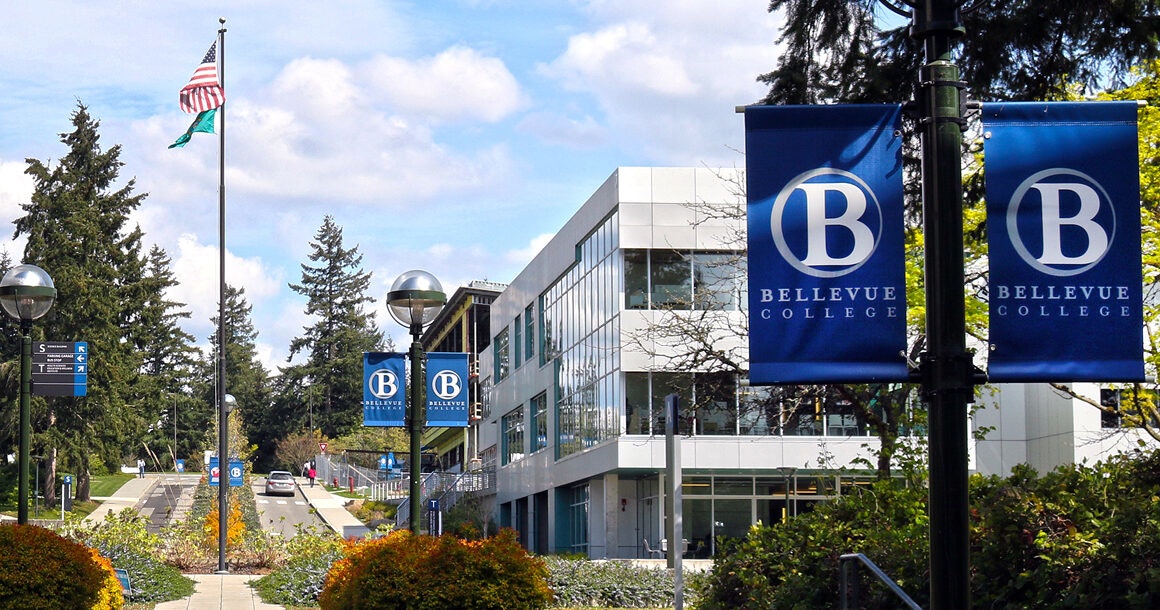
Among the honorees is Bellevue College, which earned its first Leader College designation since joining the ATD Network in 2017.
The honor recognizes institutions that have demonstrated measurable gains in student outcomes and fostered meaningful institutional change. Eight colleges achieved the prestigious Leader College of Distinction status, including three first-time recipients: College of Lake County (Illinois), Little Priest Tribal College (Nebraska), and Southwestern Oregon Community College.
Bellevue College’s recognition as one of ten new Leader Colleges reflects its successful efforts to transform the student experience.
“We are honored Achieving the Dream selected our institution as a Leader College,” said Bellevue College Provost Dr. Jess Clark. “Since joining ATD, Bellevue College has seen increased markers of student success and retention. We look forward to continuing our commitment to transforming the student experience so that all students will find success at Bellevue College.”
The designation as a Leader College is particularly significant as these institutions play a crucial role in accelerating the adoption of effective practices across higher education. Leader Colleges are recognized for their work in whole-college reform and their innovative approaches to sharing knowledge about evidence-based reform strategies with other institutions.
Dr. Karen A. Stout, president and CEO of Achieving the Dream, noted the importance of these recognitions.
“These colleges exemplify excellence within the ATD Network, achieving measurable gains in student outcomes and fostering impactful change within their institutions and communities,” she said. “Their dedication to using data-informed approaches to create meaningful opportunities for students and their communities serves as a powerful example for all institutions of higher education.”
The 2025 cohort also includes five colleges that have recertified their Leader College status: Community College of Beaver County (Pennsylvania), Highline College (Washington), Lone Star College System (Texas), Passaic County Community College (New Jersey), and Wallace State Community College (Alabama).
ATD’s Leader College of Distinction award, created in 2018, sets an even higher bar for institutional achievement. Recipients must demonstrate improvement in three or more student outcome metrics, including completion or transfer rates, and show reduced equity gaps for at least two student groups. This year’s five returning Leader Colleges of Distinction include Chattanooga State Community College (Tennessee), Lemoore College (California), North Central State College (Ohio), Odessa College (Texas), and Pierce College (Washington).
As a partner to more than 300 community colleges nationwide, Achieving the Dream focuses on what it calls “Whole College Transformation,” providing integrated support for everything from leadership and data analysis to equity initiatives and student support strategies. The organization’s vision centers on helping colleges become catalysts for equitable and economically vibrant communities, driving improvements in access, completion rates, and employment outcomes for all students.
For institutions like Bellevue College, this recognition validates their ongoing commitment to student success and institutional improvement. As part of the ATD Network, these colleges continue to work toward creating meaningful opportunities that transform not just individual students’ lives, but entire communities through the power of education.
A new year is underway, but many colleges are still reeling from the fiscal challenges of 2024.
With yawning budget gaps and bleak financial projections at some campuses, administrators are cutting jobs, academic programs and athletics options to plug holes and stabilize their finances.
Here’s a look at cuts announced in January.
Sonoma State University
Facing a budget deficit estimated at nearly $24 million, the California State University campus is enacting deep cuts that will include dismissing dozens of faculty members, eliminating multiple programs and dropping athletics, according to an announcement from interim president Emily F. Cutrer.
“The University has had a budget deficit for several years. It is attributable to a variety of factors—cost of personnel, annual price increases for supplies and utilities, inflation—but the main reason is enrollment,” Cutrer wrote in an announcement last month.
She added that Sonoma State’s enrollment has dropped by 38 percent since 2015.
On the personnel side, 46 faculty members, including tenured as well as adjunct professors, will not have their contracts renewed for the next academic year. An unspecified number of lecturers will also receive notices that “no work will be available in fall 2025,” Cutrer wrote. Four management and 12 staff positions are also being eliminated as part of Sonoma State’s cost-cutting measures.
In addition, more than 20 programs have been identified for closure and others will be combined. University officials are also looking to close a half dozen academic departments.
All 11 SSU athletic programs, which compete at the NCAA Division II level, will be eliminated. However, SSU coaches have announced plans to file a lawsuit in an effort to save their sports.
California State University, Dominguez Hills
Anticipated budget cuts also drove layoffs at this CSU campus in Southern California, which let go 32 employees last month, many probationary or temporary workers, LAist reported.
“While these layoffs will be disruptive to our operations, the vast majority of our staff will remain employed at CSUDH continuing to provide the high level of support to our community that we are known for,” President Thomas Parham wrote in an email.
Other institutions across California are also likely to introduce cost-cutting measures in the coming months due to anticipated decreases in state appropriations that will limit funding. The 23 institutions in the CSU system are bracing for state budget cuts of nearly $400 million.
University of New Orleans
After consolidating five colleges into two in December, the University of New Orleans laid off 30 employees last month as it chips away at a $10 million budget deficit, NOLA.com reported.
Additionally, the university announced furloughs for full-time, nontenured employees last month, which local media outlets reported will affect nearly 300 workers.
“While these actions are necessary, we are deeply sensitive to the hardship they undoubtedly will cause. We remain fully committed to supporting those who are affected through this transition,” President Kathy Johnson said in a January announcement. “Our focus remains on protecting UNO’s academic mission and its vital role in the New Orleans region. We are pursuing long-term strategies to increase enrollment, secure new funding, and enhance operational efficiency to avoid similar measures in the future.”
St. Francis College
The financially struggling institution in New York laid off 17 employees last month, The City reported. It follows other moves administrators have made in recent years—including previous layoffs, the sale of the Brooklyn campus and the elimination of athletic programs—to help fix St. Francis’s financial woes.
Despite the institution’s recent struggles and multiple years of operating losses, President Tim Cecere offered the news outlet an optimistic outlook, noting that cost-cutting measures have put the college on a path toward sustainability.
“The college hasn’t been this strong in years,” Cecere said. “We have zero debt, which not a lot of colleges can say. Every dollar that comes in is optimized for the benefit of the students.”
St. Norbert College
Jobs and programs are on the chopping block as the small Catholic institution in Wisconsin navigates financial issues, The Green Bay Press Gazette reported.
At least 13 majors will be cut, including chemistry, computer science, history and physics.
An unspecified number of faculty members are also expected to be laid off, the newspaper reported, as the college aims to shave $7 million in expenses ahead of the next fiscal year.
Cleveland State University
Efforts to cut spending prompted Cleveland State University to drop three athletic programs—wrestling, women’s softball and women’s golf—Ideastream Public Media reported.
Cleveland State will also move its esports team from athletics to the College of Engineering.
The move comes as the university whittles down a budget deficit that reportedly stands at $10 million. Last summer 50-plus faculty members took buyouts as part of cost-reduction efforts.
Indiana University
More than two dozen jobs were eliminated from the state flagship’s athletics department last month—part of a cost-reduction effort in response to the House v. NCAA settlement, which will require IU and other institutions to begin sharing revenue with athletes starting in the 2025–26 academic year, The Indianapolis Star reported.
Of the 25 positions eliminated, 12 were reportedly vacant.
Western Illinois University
Furloughs for administrative employees who are not in a bargaining unit are expected as the regional public institution seeks to cut expenditures, Tri States Public Radio reported.
WIU is reportedly dealing with a $14 million deficit for fiscal year 2025.
The furlough program will run from the beginning of February through July 31 and is tiered by annual salary. Administrators making more than $150,000 will be required to take three unpaid days off each month, while those earning between $100,000 and $149,000 will be asked to take off two unpaid days each month and those making $99,999 to $75,000 will have to take off one unpaid day per month.
Catholic University of America
With the Catholic research university in Washington, D.C., facing a $30 million structural deficit, administrators are considering merging departments and potentially closing the Benjamin T. Rome School of Music, Drama, and Art, Catholic News Agency reported.
Officials did not specify publicly whether job cuts would be included as part of the overall changes, which are expected to go before CUA’s Board of Trustees for approval in March.
University System of Maryland
Amid state budget cuts, Maryland’s public university system will likely be forced to lay off employees.
Anticipating a funding cut of $111 million across the 11-campus system, officials may eliminate as many as 400 jobs through layoffs as well as closing vacant positions, The Baltimore Banner reported, which they estimate will save $45 million. Though a timeline for cuts was not announced, system chancellor Jay Perman said some jobs will be student facing, including advising, counseling and mental health services. Perman also noted that some faculty positions across the system will likely go unfilled.
New research from CUPA-HR on the state of the professional workforce in higher education shows that women and people of color are not only being paid less than White men in the same position, but also are less likely to hold higher-paying positions.
CUPA-HR’s research team analyzed data from the Professionals in Higher Education Survey, a comprehensive data source that collects salary and demographic data on more than 293,000 professionals in 409 positions from approximately 985 higher ed institutions, to evaluate representation and pay equity for women and professionals of color from 2016-17 to 2023-24.
The Findings
Women and people of color have lower representation among the highest-paying professional jobs. Women and people of color have lower representation among six-figure (i.e., paid more than $100,000) jobs in comparison to all other professional jobs. White men held 40% of six-figure jobs but held 28% of jobs paying less than $100,000.
Pay equity has improved slightly for women over the past eight years, but women of most races/ethnicities are still paid less than White men. Except for Asian women, women of all other examined races/ethnicities were paid less than White men in 2023-24.
Over the past eight years, the representation of people of color increased among higher ed professionals; the increase in the representation of women of color was more than double the increase in the representation of men of color. The representation of people of color increased from 22% of professionals in 2016-17 to 26% of professionals in 2023-24. During this time, women of color had more than two times the increase in their representation than did men of color (26% increase for women versus 10% increase for men).
Older women experience greater pay gaps than younger women. Women over age 42 had larger pay gaps relative to White men than did women age 42 or younger.