
Tag: announce

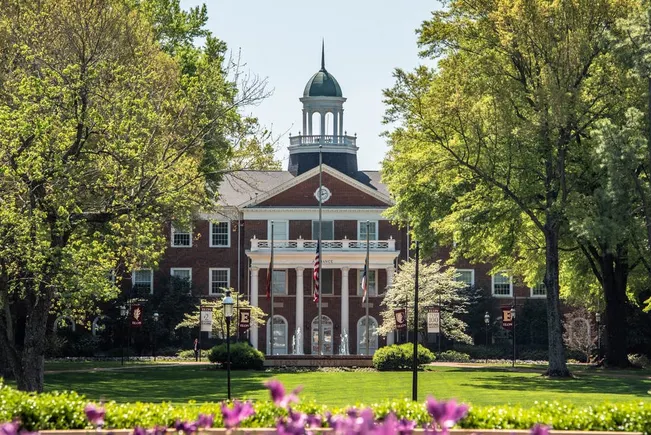
  • Elon University and Queens University of Charlotte announce intent to merge

    Elon University and Queens University of Charlotte announce intent to merge

    This audio is auto-generated. Please let us know if you have feedback.

    Dive Brief:

    • Elon University and Queens University of Charlotte plan to merge by summer 2026, the private North Carolina institutions said Tuesday. 
    • While leaders are still ironing out the details, Elon intends to operate Queens “in partnership” with the latter’s leaders once the merger is complete, according to a joint news release. The universities said more details about the new institution’s leadership structure and programming details will be released in early 2026.
    • Leaders from Elon and Queens plan a fall listening tour in the Charlotte area to get feedback on the proposed merger from students, faculty, staff, alumni and civic leaders, and they will use the input to help develop a plan for the combination, the institutions said.

    Dive Insight:

    Elon and Queens, which sit about 115 miles apart, framed their intent to merge as complementary for each institution and a way to help meet the educational needs of the Charlotte area in the coming years. 

    The combination “creates new advantages of scale, bringing together resources, faculty expertise, research capacity and student services across both universities,” they said in the release. 

    The trustees of both institutions unanimously supported the proposed merger and will hold a joint meeting next month ahead of planning for integrating the institutions’ operations, the universities said. The boards are expected to finalize the partnership details in November.

    Students at both universities will be able to continue their programs uninterrupted, according to a merger FAQ.

    Elon is by far the larger institution, and the one on a growth trajectory. Between 2018 and 2023, fall enrollment rose 3.1% to 7,207 students. During that same period, Queens’ fall headcount dropped 27.2% to 1,846.

    Of the two institutions, Elon also has deeper financial resources, with assets amounting to $1.3 billion in fiscal 2024 compared to $337.8 million for Queens. 

    Queens’ budget has suffered from falling tuition revenues and a decline in government grants and contracts, in addition to rising expenses. In 2024, it reported a total deficit of $8.7 million. Meanwhile, Elon logged a hefty surplus of $70.4 million during the same year.

    But in the FAQ, the universities said their plan to merge did not stem from financial distress and is “not driven by crisis.”

    Instead, they pointed to the workforce needs of the Charlotte area, noting growing demand for graduate degrees as well as a growing shortage of nurse practitioners, physician assistants and lawyers in the area.

    The merger would “accelerate new programs across vital industries” and expand access to Elon’s law school in Charlotte — the only one in the city today, the institutions said.

    Queens has deep roots in Charlotte. It was founded in 1857, initially as a women’s college before becoming fully coed in the 1980s. Elon was founded in the city of the same name in 1889.  

    Queens has long been a leader in undergraduate and graduate education, deeply connected to Charlotte’s civic and business community and committed to shaping the region and nation through thought leadership,” Jesse Cureton, who took over as acting president of Queens this summer, said in a statement. 

    He added that the merger with Elon “ensures continuity for our students and faculty while creating bold new opportunities to expand our impact and strengthen Charlotte’s role as a hub for higher education.” 

    Elon President Connie Ledoux Book said that the combination “unites two institutions deeply committed to student success, and together, we will expand relevant, high-impact programs that connect academic excellence with real-world opportunity in service to the Charlotte region.”

    Source link

  • NJCU, Kean announce plans to pursue merger

    NJCU, Kean announce plans to pursue merger

    New Jersey City University has agreed to pursue a merger with nearby Kean University, a move encouraged by state officials to help stabilize NJCU after financial struggles in recent years.

    On Wednesday, NJCU’s Board of Trustees voted 7 to 0 to enter merger negotiations with Kean.

    The vote comes two and a half years after NJCU declared a financial emergency, revealing that a surplus gave way to a budget deficit, prompting job cuts and state scrutiny. Then-NJCU president Sue Henderson stepped down in June 2024 amid backlash.

    NJCU’s financial situation was so dire at the time that the state threw it a $10 million lifeline.

    As NJCU has sought to dig out of its financial hole, state officials essentially sent a message to the public, four-year institution that it needed to find a partner—whether it wanted to or not.

    A March 2024 report from an independent state monitor assigned in the aftermath of NJCU’s financial collapse urged the university to sell assets and “explore any type of affiliation or partnership that could help create long-term financial sustainability with improved student outcomes.”

    Last April the Office of the Secretary of Higher Education set a deadline of March 31, 2025, for the university to identify potential partners as part of a transition plan that also called for the board to take actions to increase revenue and lower debt, among other efforts to fix NJCU’s finances.

    Going Forward

    NJCU’s board voted Wednesday “to enter into negotiations with Kean University for a Letter of Intent outlining the terms of a strategic merger,” according to the board resolution.

    Kean’s proposed plan would rename NJCU as Kean Jersey City. The proposal notes that in addition to being near one another, the two universities are both minority- and Hispanic-serving institutions that “share a profound commitment to transformative urban education.”

    Kean’s proposal emphasizes the integration of shared services, “streamlined administrative functions” and the “strategic alignment of academic programs”; it also touts its relative financial strength. Athletic programs would be combined as a “unified entity” under the merger plan.

    Kean’s Board of Trustees would govern the merged institutions, though the proposal notes that membership could expand to include seats for representatives from the NJCU community. Potential board members would be appointed by the governor’s office.

    NJCU interim president Andrés Acebo addressed the potential merger in a statement to campus, writing that there is more due diligence work ahead and promising transparency.

    “I encourage every member of our community—students, faculty, staff, and alumni—to remain engaged as we build a future that honors our past while embracing new opportunities. With unwavering hope and a shared resolve, we will continue to shape NJCU into a beacon of opportunity and excellence for generations to come,” Acebo wrote in Wednesday’s message.

    In a separate message, Kean president Lamont Repollet noted that “this is the beginning of a process that will unfold over the months and years to come and will include our faculty, staff, students and communities.” Repollet even used language that the Trump administration—which has taken aim at DEI efforts—has sought to banish.

    “Both Kean and NJCU share missions dedicated to fostering an inclusive learning environment that empowers students to succeed,” Repollet wrote Wednesday. “By merging our strengths, we can deepen our commitment and resources to diversity, equity and inclusion, ensuring that every student has the support they need to thrive and persist through graduation.”

    State officials issued their own messages applauding the move toward a merger.

    In a joint statement from New Jersey’s Democratic governor, Phil Murphy, and state secretary of higher education Brian Bridges, officials said they were encouraged by the progress at NJCU.

    “The NJCU Board’s intent to pursue a strategic merger with Kean University continues this commitment and marks the beginning of a thorough and deliberative process to unify these mission-aligned institutions. We look forward to working with state and institutional leaders on the path to a successful transition that empowers student success and long-term resilience,” they wrote.

    Merger Outlook

    The potential merger between NJCU and Kean—which still requires additional approvals, including by state officials and accreditors—appears to be the first one of the year.

    News that the two institutions are taking steps toward a strategic partnership comes shortly after the collapse of a planned merger between the University of Findlay and Bluffton University. The two private, religiously affiliated institutions in Ohio first announced merger plans in March 2024. But despite a year of planning, Findlay’s board pulled out abruptly last week, surprising Bluffton.

    One sticking point seemed to be athletics, as both intended to maintain separate programs, with Findlay competing at the NCAA Division II level and Bluffton remaining in Division III. But a statement from Findlay officials last week indicated that their efforts were hobbled by regulations that required a separate process for financial aid distribution and that “prohibit the sharing of resources and sports facilities, resulting in fewer synergies in those areas than originally anticipated.”

    Last year brought multiple mergers and other strategic partnerships for both public and private colleges, many driven by financial issues and the search for efficiency.

    Source link